A fund in Georgia is responding to restrictive legislation with a familial kind of care.
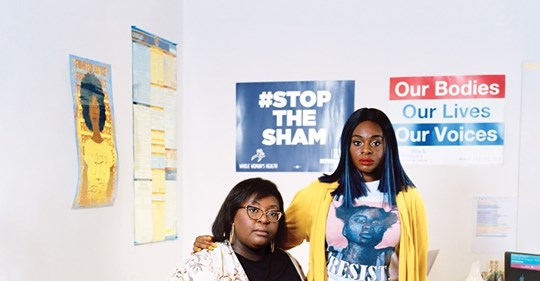
Oriaku and Dirichi Njoku, of the abortion fund arc-Southeast.Photograph by Andrew Lyman for The New Yorker

n June, 1994, at a pro-choice conference in Chicago, twelve black women gathered together to talk. One, Loretta Ross, was the executive director of the first rape crisis center in this country. Another, Toni Bond, was the executive director of the Chicago Abortion Fund. A third, Cynthia Newbille, was the leader of the National Black Women’s Health Project, which was among the first national organizations to be devoted to the wellness of black women and girls. After the first day of the event, which was hosted by the Illinois Pro-Choice Alliance and the Ms. Foundation, the group met in a hotel room. “We did what black women do when we’re in spaces where there are just a handful of us,” Bond, who is now a religious scholar, recalled. “We pulled the sistas together and talked about what was missing.”

Abortion had been decriminalized in 1973, with the Supreme Court’s Roe v. Wade decision, but, with the passage, in 1977, of the Hyde Amendment, which banned federal funding for almost all abortions, the procedure had become too expensive for many women. In 1993, Bill and Hillary Clinton had proposed an overhaul of the health-care system, but reproductive-health coverage was sacrificed to make the reforms more palatable to Republican lawmakers. To the women in the hotel room, the conversation at the conference about reproductive health focussed too narrowly on “choice.” There had been no discussion of the services that black women needed most, such as fibroid-tumor screenings, mammograms, and pre- and postnatal care. (Black women have a higher risk of fibroids than white women, higher percentages of late-detected breast cancer, and a maternal-mortality rate that is more than three times higher.) Nor was there an acknowledgment that the reproductive and parenting decisions of black women were limited by poverty, unequal pay, lack of access to adequate housing and schools, and the abuses of the policing and criminal-justice systems.“No one was talking about black women’s health as a whole,” Ross told me, not long ago. “Too many people were examining policies through the lens of white supremacy.”

The women created the term “reproductive justice” to describe the scope of their activism. They were inspired by the work of the black legal scholar Dorothy Roberts, whose research traced the history of efforts in this country to control black women’s reproductive freedom, beginning with the forced procreation of enslaved women. Abuses had continued into the nineteen-seventies, when thousands of women—including some who were receiving public assistance in North Carolina and others who were incarcerated in California—were involuntarily sterilized. In Arizona, South Carolina, Tennessee, and Washington, state-court judges often offered black female defendants reduced prison sentences if they agreed to get birth-control shots or implants. (This practice was happening as recently as two years ago.) As Roberts observed, black people had turned to their families, friends, and neighbors for the family-planning services and child care that the government had denied them. Bond said, “Reproductive justice offers us an opportunity to talk about the ways in which black women have exercised agency and been resilient even in the midst of reproductive and sexual oppression.”

The twelve women called themselves Women of African Descent for Reproductive Justice. After the meeting in the hotel room, they bought full-page ads in the Washington Post and Roll Call, publishing a letter to Congress that argued for “unimpeded access to abortion as part of the full range of reproductive health services offered under health care reform,” which should be available “regardless of ability to pay, with no interference from the government.” The letter stressed that reform should be comprehensive, and “must include strong anti-discriminatory provisions.”

During the following months, Ross and some of the other women led a reproductive-justice discussion in Cairo, Egypt, and wrote a public letter in support of Joycelyn Elders, the former Surgeon General, whom Bill Clinton had asked to resign after she said that she approved of educating children about masturbation to avoid the spread of aids. In 1997, with funding from the Ford Foundation, sixteen groups representing African-American, Asian-American, Pacific Islander, Latina, and indigenous women came together to form SisterSong, a national collective advocating for the reproductive and sexual health of women of color. SisterSong was based in Atlanta, the birthplace of the civil-rights student protests and the home of several historically black colleges; the city also had the largest black gay population in the South. Activists there had already created a parallel system of care, encompassing the Feminist Women’s Health Center, an abortion and gynecological clinic in the North Druid Hills, which grew out of a women’s self-help health group, in 1976; the National Black Women’s Health Project (now the Black Women’s Health Imperative); and SisterLove, founded, in 1989, to tackle H.I.V./aids.

In the next few years, the leaders of SisterSong and of newer reproductive-justice organizations—such as Spark Reproductive Justice Now, founded, in 2007, to include queer perspectives in the movement—held round-table discussions and met up for dinners and happy hours, as well as get-togethers at Charis Books, a feminist bookstore downtown. In 2004, after the passage of the Partial-Birth Abortion Ban Act, SisterSong, Planned Parenthood, and the National Organization for Women, among other groups, put together the March for Women’s Lives on the National Mall in Washington, D.C. In 2010, after the passage of the Affordable Care Act, several Atlanta-based reproductive-justice groups sent their members to D.C., to protest the Stupak-Pitts Amendment, which aimed to prevent federal funds from being used to pay for insurance plans that covered abortions. The current Democratic Presidential candidate Julián Castro, one of several politicians who have recently spoken about the importance of reproductive justice, told me that he was thankful to the Atlanta community who had launched the movement. “Their voices are crucial, especially now, to get us out of our comfort zone,” he said.

Oriaku Njoku was twenty-five when she visited Atlanta, in October, 2010, to attend the Atlanta Pride Festival. The daughter of middle-class Nigerian immigrants, Njoku had grown up in a mostly white neighborhood in Bowling Green, Kentucky. While attending the University of Kentucky, she came out to her siblings, then to her parents, and participated in L.G.B.T.Q. activism. After graduating, she worked in retail in Kentucky and Indiana. At the Pride celebrations, she was drawn to Atlanta, with its ambitious black residents and its queer scene, and moved there a few months later. In January, 2013, she attended an event held by Spark that was an introduction to reproductive-justice organizing, and later volunteered on a Spark initiative to stop the practice in Georgia prisons of shackling pregnant women during childbirth. “Doing reproductive-justice work has been the one place where I feel like I can bring my full self to the table,” she told me recently. “Being a first-generation queer black Southern fat femme, I can bring all those identities to work and do it unapologetically.” Njoku, who is now thirty-four, calls herself “a giver.” She has the Southern female tendency to go out of her way to put others at ease, filling in an awkward silence with a caring question, a compliment, or a wavering “um.” When she is frustrated, she is just as accommodating, but her voice takes on a slight edge. She likes to wear Igbo dresses and head wraps in vivid colors, and has a sprawling tattoo on her forearm that reads “Love is lifeforce”—a quote from the queer Jamaican-American poet and activist June Jordan.

After the 2013 Spark event, Njoku started travelling to other reproductive-justice gatherings, including the annual summit held by the National Network of Abortion Funds, where people talked about intersectionality and abortion access. She briefly dated a trans man, a human-rights defender from Uganda, who was seeking asylum and trying to bring his children to the United States; she realized that trans men also had trouble exercising their reproductive rights. She began to ask people for their gender pronouns.

In February, 2014, Njoku got a job taking patients’ information and making appointments at the Atlanta Women’s Center, an abortion clinic near the wealthy enclave of North Buckhead. As of that year, legislatures in Georgia and twenty-five other states had enacted laws restricting the coverage of abortion in the Affordable Care Act health-insurance marketplaces. Women who contacted the clinic were often struggling to come up with the money for their abortions, which became more expensive as their pregnancies progressed.

Njoku regularly directed such women to call the National Abortion Federation, which, in 2014, donated to more than a hundred thousand women based on their needs, with the expectation that the women would raise as much as they could themselves. Its hotline was often busy for hours on end. When Njoku looked for regional sources of assistance, she discovered only one in Georgia: the Magnolia Fund, which helped women pay for abortions performed at the Feminist Women’s Health Center. (Magnolia closed last year.)

In May, 2014, Njoku and two colleagues decided to set up their own abortion fund to help women in Georgia, Alabama, Florida, Mississippi, South Carolina, and Tennessee. “I was, like, We gotta do right by our people,” she recalled. “There’s no reason that our folks should be calling multiple numbers and waiting on hold forever to try and get in touch with someone for basic health care.” Kwajelyn Jackson, of the Feminist Women’s Health Center, called abortion funds “the conduit through which people are going to be able to get connected with care in the long run.” That November, Njoku took a job at Summit Medical Associates, assisting in the operating room and caring for women in post-abortion recovery. Meanwhile, she approached the National Network of Abortion Funds for advice. Njoku and her colleagues worked from coffee shops and buffet restaurants, applying for grants and organizing fund-raisers, including a fish fry. Their fund, Access Reproductive Care-Southeast, began operating in May, 2015. Its first grant paid for a headquarters, in an airy arts center in downtown Atlanta. By January, 2016, Njoku was working there full time.

The following spring, Njoku went on a tour of the Deep South, hoping to form relationships with employees at independent clinics, which, in that part of the country, are more numerous than Planned Parenthood centers. At each one, she made note of the affordable hotels nearby, the schedules for intakes and procedures, waiting lists and patient backlogs, and whether there were translators on hand. The fund set up a hotline in July, 2016. As it received more calls, she needed more volunteers to take women to and from appointments. (Clinics require that women receiving sedation have someone with them to take them home.)

That year, arc-Southeast gave funding and assistance to about fifty women each month; it now serves more than three hundred a month. The average cost of an abortion is around five hundred dollars, with later-term abortions sometimes in the thousands of dollars. arc-Southeast gives most women between seventy-five and a hundred dollars. The fund now employs a staff of seven, who are mostly black and queer, and has more than a hundred volunteers. They provide a kind of care that might be considered familial, booking travel and hotel rooms, taking women out for meals, and even putting them up for a night or two in their own homes. “We try to lead with love,” Njoku said. In 2017, Njoku’s sister Dirichi, who goes by Chi Chi, joined the organization to run the hotline. A former nurse, Chi Chi had little knowledge of reproductive justice, but she felt a connection to the fund’s mission. When she was nineteen, she got pregnant after being raped by a friend and had an abortion, an experience she often shares with callers.

arc-Southeast has found rooms for homeless women who would otherwise have spent the night outside the clinic, and counselled mothers and daughters who needed abortions at the same time. Not long ago, the fund referred an undocumented Honduran woman living in Atlanta with her two children, whose husband had been detained by Immigration and Customs Enforcement, to the National Abortion Federation, which agreed to pay for her procedure. The woman was twenty-six weeks pregnant, six weeks past the limit for abortions in Georgia. She could have taken a bus to a state where the gestational limit was higher, but she’d heard that immigration raids on buses were common. Njoku decided that the fund’s hotline operator, Crystal Zaragoza, who had previously run a clinic for queer migrants in Phoenix, should drive the woman in a rental car to a clinic in Bethesda, Maryland. Zaragoza and the woman stayed in an Airbnb for four days. The fund paid more than a thousand dollars for the car, the accommodation, the woman’s medication, and care for her children while she was away.

Abortion in Georgia is legal up to the twentieth week of pregnancy, and fourteen of the state’s seventeen clinics are in the Atlanta area. Calls come in to the fund from all over the Deep South; for some women, the clinics near them have closed, or offer only limited services. In South Carolina, there are just three abortion clinics. In 1995, the state put into place regulations requiring that all clinics terminating second-trimester pregnancies meet the same design and construction standards as “ambulatory surgical facilities.” Ostensibly meant to insure women’s safety, the regulations dictated, in overwhelming detail, specifications including the width of the corridors, the number and size of procedure rooms, and the size of the janitor’s closet. Pro-choice organizations and physicians agreed that the regulations were politically motivated; the necessary changes would be too costly for most clinics to make, and, ultimately, they would do little to improve patients’ care. More than half of the South Carolina women who had abortions in 2017 travelled outside the state for their procedures.

Spring is the fund’s busiest season. (As Chi Chi put it, “People get it on in the winter.”) In April, 2018, arc-Southeast assisted a hundred and eighty-two women. This past April, it helped three hundred and ninety-seven callers, and Njoku spent much of her time in her car. One morning, she woke up early to pick up a woman from her home in south Atlanta and took her to the Atlanta Women’s Center, in the northeast of the city. There, she met up with another woman, who was accompanied by her partner and their child, and gave her cash for food and a hotel. Then she took the first woman home and headed back to the office. In the parking lot, she received a call from Chi Chi about Naomi (a pseudonym), a woman who was waiting at Summit Medical Associates, four miles away, in need of an escort. Naomi had driven more than two hundred miles that morning, from Columbia, South Carolina, for her appointment. She believed that she was fourteen weeks pregnant. Twenty minutes after the call, Njoku arrived at the clinic and signed Naomi in. The process for second-trimester abortions, known as “dilation and evacuation,” usually takes place over two days. After the first appointment, Njoku gave Naomi a ride to her motel and learned that she and her partner were not speaking, that her best friend had wanted her to have the baby, and that she hadn’t told her parents she was pregnant, because she was too ashamed. Naomi knew that she needed an escort, but another friend, who had agreed to accompany her, had cancelled at the last minute. She had hoped to persuade the clinic to make an exception.

When I recently talked to Naomi, she still hadn’t told her family about her abortion, and she said she would take the secret of it to the grave with her. On her first night in Atlanta, she recalled, she had been in pain and lonely, and had slept badly. In the morning, when Njoku picked her up for her second appointment, Naomi was amused to see Njoku’s Pomeranian-Shiba Inu mix, Marley, in the passenger seat. She felt comforted by Njoku’s presence. “I didn’t have nobody there with me, and just in the moment of time being in that car with her—that really meant a lot,” Naomi said.

This past spring, after the confirmation of Brett Kavanaugh to the Supreme Court, in October, 2018, legislatures in Alabama, Arkansas, Georgia, Kentucky, Louisiana, Mississippi, Missouri, Ohio, and Utah all passed bills that placed restrictions on abortion, which were intended to undermine Roe v. Wade. In May, Alabama passed a bill that, if it goes into effect, would outlaw abortion, even when pregnancies are the result of rape or incest, except in cases where the mother’s life is at risk; doctors who performed the procedure could go to jail for up to ninety-nine years. The new law is being challenged in federal court by the American Civil Liberties Union and Planned Parenthood on behalf of Alabama abortion providers.

As Missouri teeters on the brink of becoming the first state with no abortion clinics, a new Planned Parenthood center just across the Illinois border could help take patients who can’t get abortions back home.

Planned Parenthood said it is opening a new 18,000-square-foot health center in Fairview Heights, Illinois — just 15 miles from Missouri.
Planned Parenthood's Anita Murphy works in the new Illinois facility ahead of its mid-October opening.

“We are thrilled to be able to better serve our patients through this new center, both in Southern Illinois and around the region,” said Yamelsie Rodriguez, president and CEO of Planned Parenthood of the St. Louis Region and Southwest Missouri.
The new facility is scheduled to open in mid-October. It will also provide annual exams, cancer screenings, birth control, testing for sexually transmitted diseases, and HIV prevention services.
It could see an influx of patients from Missouri, which this year passed a law that bans most abortions after eight weeks. US District Judge Howard Sachs in August blocked the law from going into effect.
The law “conflicts with the Supreme Court ruling that neither legislative nor judicial limits on abortion can be measured by specified weeks of development of a fetus; instead, ‘viability’ is the sole test for a State’s authority to prohibit abortions where there is no maternal health issue,” Sachs wrote.
Missouri is one of several states that recently passed laws limiting abortions to eight weeks or fewer. Illinois, on the other hand, allows abortions until the point of the fetus’ viability.
Courts have typically blocked early-term abortion laws from going into effect, saying they’re unconstitutional.
But anti-abortion activists say they hope legal challenges will go all the way to the US Supreme Court, which now has a conservative majority, so justices can reconsider Roe v. Wade, the 1973 ruling that legalized abortion nationwide.

A federal court on Tuesday rejected arguments that a Georgia law didn’t “ban” abortions before viability, but merely “restricted” them.

Georgia was one of seven states with Republican legislative majorities this year to pass some version of an extreme abortion ban designed to challenge the durability of Roe v. Wade and abortion rights.
Elijah Nouvelage / Getty Images

Georgia Republicans’ effort to outlaw abortion around six weeks into pregnancy was temporarily blocked by a federal judge Tuesday.

Georgia’s GOP-held legislature in the spring enacted one of the most extreme abortion bans in the United States. The draconian law would both ban abortion as soon as fetal cardiac activity can be detected in a pregnancy, which can be before many know they are pregnant, and establish fetal personhood.

District Judge Steven C. Jones rejected every one of the state’s arguments in defending HB 481, the Living Infants Fairness and Equality Act (LIFE). Signed into law in May by Gov. Brian Kemp (R), HB 481 bans abortion after a “fetal heartbeat” is detected and attempts to establish fetal “personhood” by asserting that it is the “policy of the State of Georgia to recognize unborn children as natural persons.” Advocates challenged the law in court in June, arguing it is a patently unconstitutional pre-viability ban, one that has the potential to cause particular harm to Black women and other women of color.

Attorneys for the State of Georgia defended the measure, claiming the law around whether states can ban viability before abortion is “unsettled.” They argued that the law was not a ban on abortion but merely a “regulation” since patients would still be able to have an abortion “up to the point” that a “heartbeat” is detected and HB 481 contains a narrow exception for “medical emergency, rape, or incest.”

“This is a victory for people in Georgia and a reminder that these attacks on abortion access are illegal,” Talcott Camp, deputy director of the American Civil Liberties Union’s Reproductive Freedom Project, said in a statement. “Abortion is still legal in all 50 states.”

Judge Jones’ 47-page decision rejecting the State of Georgia’s arguments is, frankly, unremarkable. It is a straightforward application of over 40 years of precedent that clearly establishes states cannot ban abortion before viability. It’s a sober rejection of attempts to create disagreement in the law around issues of fetal viability and state power where none exist. And for that reason, the opinion is a breath of fresh air. 

“[T]he Supreme Court has repeatedly and unequivocally held that a State may not ban abortion prior to viability,” the opinion states. “By prohibiting abortions once a fetal heartbeat is detected, months before the point of viability, Section 4 of H.B. 481 does exactly that.”

Judge Jones rejected Georgia’s claims that HB 481 is anything other than an extreme and unconstitutional abortion ban. 

“In the face of this clear Supreme Court precedent, established nearly a half-century ago in Roe and reaffirmed decades later in Casey and subsequent cases, the State Defendants insist that the law on this matter is ‘unsettled,’” Jones writes. “The Court, however, disagrees.” 

That’s as much as Judge Jones says in response to Georgia’s claim that the law around when states can ban abortion is unsettled. It’s a powerful rebuke to basically disregard an argument, and that’s exactly what Jones’ opinion does.

“The State Defendants further insist that the Supreme Court has recognized the State’s interest in protecting the life of the unborn and that the ‘precise contours’ of that interest remain undefined. What is clearly defined, however, is that under no circumstances whatsoever may a State prohibit or ban abortions at any point prior to viability, no matter what interests the State asserts to support it.”

Georgia was one of seven states with Republican legislative majorities this year to pass some version of an extreme abortion ban designed to challenge the durability of Roe v. Wade and abortion rights. Not a single measure has yet to take effect, and that itself is a testament to the power of court precedent in protecting abortion rights. But the fact that anti-choice advocates continue to advance these measures with the hopes that one of them will be upheld is a testament to their belief that precedent can’t hold for much longer. 

Attorneys for the State of Georgia are expected to appeal Tuesday’s decision to the conservative U.S. Circuit Court of Appeals for the 11th Circuit.

Source: https://rewire.news/article/2019/10/02/judge-blocks-georgia-gops-six-week-ban-abortion-law-is-not-unsettled/


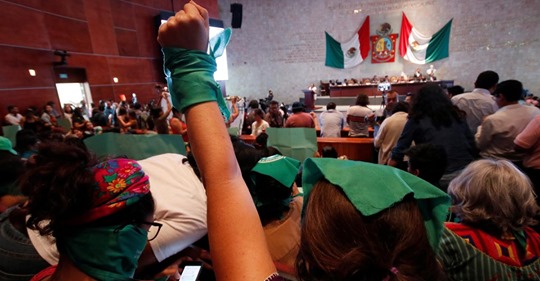
A pro-choice demonstrator rises her fist during a session of the local congress as lawmakers are due to vote on legislation that would decriminalize abortion in Oaxaca, Mexico September 25, 2019.
REUTERS/JOSE LUIS PLATA

The Mexican state of Oaxaca on Wednesday approved a bill to legalize abortion, making it only the second region of the predominantly Roman Catholic country after Mexico City to permit the procedure.

Amid raucous shouts of protest from opponents, the local Congress voted by 24 lawmakers in favor to 10 against to allow abortions during the first 12 weeks of pregnancy in Oaxaca, a southern state that has long been among Mexico’s poorest.

The state Congress is dominated by the leftist National Regeneration Movement of President Andres Manuel Lopez Obrador, who has avoided taking a clear stand on abortion.

Approval of the measure came just a few days after Lopez Obrador sent a bill to the federal Congress that would grant an amnesty to women serving jail terms for abortion.

Outside of the Mexican capital, which legalized abortion in 2007, the procedure has been illegal in all states until now except under certain circumstances, such as rape.

Source: https://mobile.reuters.com/article/amp/idUSKBN1WA30Y?fbclid=IwAR0TLOs-4cD3knKvNPAY5iad0mryvW4_LEukO3iNTCzRNeC6G0VqCmrZLGU

I’m a doctor at the only abortion clinic in Kentucky. Providing safe, compassionate medical care has been my life’s calling, and my patients’ well-being is always my first priority. But Kentucky politicians — determined as usual to interfere with access to reproductive healthcare — are trying to force me to harm and humiliate the patients who entrust me with their welfare. That’s why I’m joining with the ACLU today to ask the Supreme Court to keep Kentucky lawmakers’ insulting, anti-abortion political agenda out of the exam room.

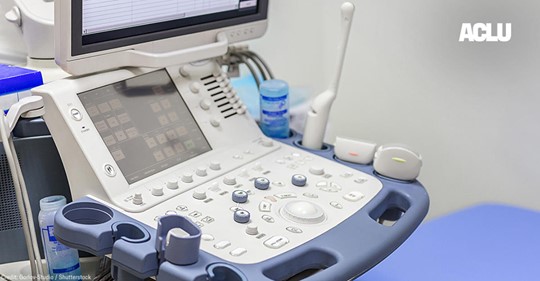
H.B. 2, the law we’re asking the Supreme Court to review, is cruel and offensive. It mandates that I display an ultrasound to every abortion patient, describe it in detail, and play the sound of the fetal heartbeat — even if the patient does not want it, even if in my medical judgment I believe that forcing it on them will cause them harm. The law forces me to do this to a patient who is half-naked on the exam table, usually with their feet in stirrups and an ultrasound probe inside their vagina. With my patient in this exposed and vulnerable position, the law forces me to keep displaying and describing the image, even when the patient shuts her eyes and covers her ears.

Take a moment to imagine what this must be like. To tell your doctor, “thank you, but I don’t want to hear you describe the ultrasound,” and to have your doctor tell you that you have no say in the matter — that you must lie there, undressed, with an ultrasound probe inside of you, and have the images described to you in government-mandated detail over your objection. Even if the patient has already had one or more ultrasounds performed. Even if the fetus has been diagnosed with a condition incompatible with survival. Or even if the patient is pregnant as a result of sexual assault, and having to watch and listen to the ultrasound over their objection forces them to relive that trauma.

We have had patients burst into tears when we tell them that they must undergo an unwanted narrated ultrasound and that they must close their eyes and cover their ears if they want to avoid the speech Kentucky politicians insist we force upon them. I’ve had patients sob through the experience, and others pull their shirts up over their faces to cover their eyes.

As physicians who have dedicated our professional lives to providing compassionate medical care, being ordered by politicians to force this unwanted and harmful experience on patients who have sought our help is appalling. It goes against the very fundamentals of our role as healers and violates the trust at the heart of the physician-patient relationship.

My patients’ health and well-being come first, and if there is anything I can do to protect them from politicians trying to barge into the exam room, I will do it. Today, that includes asking the Supreme Court to put an end to this insulting political intrusion.

Enough is enough.

Source: https://www.aclu.org/blog/reproductive-freedom/abortion/kentuckys-abortion-law-forces-me-humiliate-my-patients?fbclid=IwAR3HSvjTVioMcrrHFdvY2dB_g1dnm61h0hPHN9Gy5Ieb4Pmn5HENUTnwI5Q

Washington lawmakers have enacted some of the country’s most progressive policies to protect reproductive health care. But these measures have run up against the state’s high concentration of religious facilities.

As a Catholic hospital, St. Joseph Medical Center restricts many types of reproductive care. But it’s the only hospital in Bellingham—and for at least 30 miles beyond.
Shutterstock

There’s a single hospital in Bellingham, a picturesque coastal city 20 miles from the Canadian border in Washington. So when a Bellingham mental health counselor named Alison started bleeding three months into her pregnancy in 2013, PeaceHealth St. Joseph Medical Center was her only option.

Alison had first gone to her OB-GYN’s private practice, where her doctor, C. Shayne Mora, diagnosed her with a possible case of placenta previa, a serious condition where the placenta blocks the cervix. He told her to go to the hospital if she started bleeding again. When that happened the next day, Alison went to the St. Joseph emergency room. After an ultrasound showed the fetus was viable, the hospital discharged her. Providers recorded a clinical impression of “threatened abortion,” meaning Alison was at risk of miscarrying. They told her to return if she bled more heavily or ran a fever.

Alison, who asked us to withhold her last name for professional reasons, had never thought much about the fact that St. Joseph is part of PeaceHealth, a Catholic system that runs ten hospitals across Washington, Oregon, and Alaska. Catholic facilities, which make up a growing swath of the health-care landscape, follow rules written by the U.S. Conference of Catholic Bishops that ban sterilization, abortion, most contraception, and in vitro fertilization. Washington is one of five states where more than 40 percent of acute-care hospital beds are Catholic. That leaves many patients like Alison with one option: a hospital where care may be restricted by religion without their knowledge.

The next day, Alison started soaking through a menstrual pad an hour and returned to the ER. Her medical records show she was again discharged with plans to see Dr. Mora in his office. Three days later, she woke up in the middle of the night bleeding. Around noon, she passed a blood clot the size of a jawbreaker. In the ER for a third time, she described her pain as a seven out of ten. She was running a fever of 100.4 with an elevated white blood cell count, a classic sign of infection. “Appears anxious,” staff noted in her medical records. But the hospital discharged Alison again, this time telling her that her pain might be the result of appendicitis.

Alison and her husband, Richard Bennett, clung to that idea, because it meant the pregnancy might be safe. At no point, they said, did anyone at the hospital mention that Alison had the option of ending her pregnancy with surgery to address the brewing infection that would end up putting her life at risk. Alison’s records at the time of her third discharge still show a working diagnosis of threatened abortion.

By the next morning, Alison was in significant pain and her fever wasn’t responding to medication. She and Bennett returned to the ER. There, records show, a doctor ordered an abdominal MRI to rule out appendicitis and a chest X-ray to rule out pneumonia.

Then Mora arrived. He did a vaginal exam, and Alison arched off the bed in agony.

“It felt like something from the Exorcist, just like flailing from the pain,” she said. Bennett remembers Alison screaming when the doctor pressed on her abdomen. Alison, who recalls having refused pain medication out of fear it might harm the pregnancy, told Rewire.News that the agony radiating from her infected uterus was worse than non-medicated childbirth. Medical records show her fever had spiked to 101.1. One of Alison’s mothers, Lin Skavdahl, clung to Alison’s hand. Overcome, watching her daughter writhe, Skavdahl stepped away and fainted, sliding toward the floor and putting her hands over her head.

Mora moved quickly. He explained to Alison that she had an infection and needed surgery to end the pregnancy. Bennett asked whether there was any way to save the baby. Mora was firm: No. In fact, Alison’s life might be in danger.

Records show Alison had sepsis, a potentially deadly condition caused by the body’s response to infection. But Mora explained that he couldn’t proceed until the hospital’s ethics committee approved the surgery. Citing Catholic policy, PeaceHealth bans abortion unless its “direct purpose” is the “cure of a proportionately serious pathological condition of a pregnant woman” and it “cannot be safely postponed until the unborn child is viable.” In other words, the hospital would permit the life-saving surgery only if the committee considered Alison sick enough.

Skavdahl remembers Mora saying that if he couldn’t secure the approval, he planned to send Alison in an ambulance 90 miles south to Seattle, a drive that can take well over two hours on the congested highway. “And I’m just thinking, ‘What? You have to get a bunch of people together?’” Skavdahl recalled. “And he goes, ‘Well, it’s not quite as bad as it sounds. I can get them on the phone, it’s not like they all have to get here, but I don’t know how long it will take.’”

It’s unclear from the records how long the committee deliberated, but Alison said it felt like around an hour. “I remember being scared about that,” Alison said. “You’re telling me this is really serious and that my life is in danger, and we have to wait, and these people have to say it’s OK for you to have this procedure you absolutely need.”

Mora’s notes show that the ethics committee approved the surgery because of the risk to Alison’s health. At some point, records indicate she was given misoprostol to soften her cervix. But before she made it to the operating room, Alison miscarried into the toilet. She felt so sick that she thought she might be hallucinating when she saw the white form in the water. She sobs recalling it, six years later.

“I didn’t have to suffer like that,” Alison said through tears during an interview in June. “Everyone deserves adequate medical attention, and information, and choices.”

Alison and her husband said that besides Mora, no one at St. Joseph mentioned the possibility of surgery to end Alison’s pregnancy. She said providers “ignored that whole area,” and neglected to do a vaginal exam, even as they ran tests on her abdomen and chest. During her final visit to the ER, Alison, having searched online for possible causes of her pain, said she asked a doctor if it might be a uterine infection; she said the doctor wouldn’t make eye contact and told her to talk with her OB-GYN. Mora and PeaceHealth declined to comment on Alison’s case. The Catholic health system directed Rewire.News to its statement of common values, which says it “strives to promote the sanctity of all human life.”

“Our care embraces women and their children both during and after pregnancy,” the statement reads. “Because we believe in the sacredness of life’s journey from conception until natural death, direct abortion is not performed in any PeaceHealth-owned, operated or leased facilities.”

But Alison believes her life was put at risk.

“If I had been in an ambulance in traffic for hours, I really could have died,” Alison said. “I feel lucky that I didn’t die.”

Washington lawmakers have enacted some of the country’s most progressive policies to protect reproductive health care. But these measures have run up against the state’s high concentration of religious facilities like PeaceHealth, which are unwilling to carry out the legislature’s mandates. Washington state has the third-highest concentration of Catholic hospital beds in the country, according to the most recent MergerWatch report from 2016. Doctors and advocates told Rewire.News that it’s not uncommon for miscarrying patients to have their care dangerously delayed or be forced to travel, sometimes dozens of miles, because of the ban on abortion in Catholic facilities.

Washington law has long declared birth control and abortion to be a fundamental right and required public hospital districts that provide maternity care to provide abortions. Last year, legislators passed a law requiring insurance plans to cover abortion if they cover maternity services. But Washington, like nearly all states, also has policies that allow institutions and providers to refuse to perform abortions. A decade ago, Washington voters legalized death with dignity—but as with abortion, many hospitals, including Catholic ones, refuse to offer it. Meanwhile, the Trump administration has moved to empower hospitals to deny care on religious grounds and has sided with providers who refuse to participate in abortion care.

Some Catholic hospitals in the state also have imposed blanket bans on insurance coverage for gender-affirming services; Pax Enstad, a transgender teenager, sued PeaceHealth after the company denied him coverage for top surgery in 2016. This year, Washington lawmakers passed a ban on these blanket denials that takes effect in January. The Reproductive Health Access for All Act also required all hospitals to fill out a checklist designed by the state health department to publicly disclose on the department’s website which specific reproductive health services they offer. As of September 24, 72 of the state’s 95 hospitals had submitted their forms in compliance with a September 1 deadline, a department spokesperson told Rewire.News. “We will begin citing hospitals during our routine on-site compliance surveys if the new reproductive health services form has not been submitted,” the spokesperson said.

But these progressive laws have so far not stopped Catholic hospitals from denying care to patients like Alison. And mergers and affiliations have expanded the influence of Catholic health systems in a state known for its relatively progressive politics.

“When I first moved here, I didn’t even fully understand or essentially believe—because it’s such, in some ways, a progressive and liberal state—that there could be such restrictions on care when it came to things like miscarriage management,” Leah Rutman, health care and liberty counsel at the ACLU of Washington, told Rewire.News. “As I started to hear story after story after story I was horrified by the fact that all these great laws can exist on the books and there can be such a feeling of access to care … but people and women can still be in emergency situations and not get the care they need.”

 “This Is Not a Rare Event”

A few years ago, Dr. Brigit Brock, a maternal fetal medicine specialist, was working at her outpatient consultation clinic in Everett, about 30 miles north of Seattle, when a patient arrived in preterm labor. At 20 or 21 weeks pregnant, before the fetus is viable, the patient’s cervix was open; her amniotic sac and parts of the umbilical cord were in the vagina, Brock told state lawmakers last year. She was testifying in favor of a bill—which failed to pass amid opposition from hospitals—that would have prohibited health-care entities from limiting the ability of a provider to give patients comprehensive information and to provide services when the failure to do so would put the patient at risk. (A weakened version of the bill failed to pass again this year.)

The patient needed to be hospitalized immediately, Brock said. So she and her colleagues sent her to Providence Regional Medical Center Everett, a Catholic hospital attached to Brock’s outpatient clinic.

But the labor and delivery nurse told the patient and her husband that the Catholic hospital didn’t participate in abortions, Brock told lawmakers. “She’s in pain and this is a devastating thing for them to go through, and they were not allowed even to step onto the labor and delivery floor,” Brock said. When the patient returned to the outpatient clinic, Brock knew that if she called an ambulance, it might take some time to arrive and would likely take the woman back to Providence. So she told the patient’s husband to drive her to Swedish Medical Center in Seattle, which would take up to an hour in traffic.

Dr. Nari Heshmati, the former chief of obstetrics at Providence Everett, said in an interview that he didn’t remember the specific case Brock described, although Brock recalled that he was involved. He said that hypothetically, in a case where a patient showed up with those symptoms, the protocol would be to transfer the patient to Swedish for more advanced care than Providence Everett can offer. In a written statement, the hospital declined to comment on specific cases, saying, “Each patient’s unique needs are evaluated on a case-by-case basis, and all treatment decisions are made privately between our patients and their care teams.”

But Brock said it’s not the only time she’s seen this kind of case. “People think this is a rare event. This is not a rare event. This happens frequently,” she told lawmakers. Brock often works at Swedish Medical Center in Seattle, where she told Rewire.News she sometimes “rescues” patients from Catholic hospitals in surrounding communities by pulling them into the Swedish system.

Like many non-Catholic hospitals, however, Swedish is partly subject to the Catholic rules. That’s because it affiliated with Providence in 2012 and agreed to stop performing abortions unless there is a threat to the patient’s life. Brock said that in her experience, Swedish typically trusts doctors to make this call. “If we say, ‘Hey, this is life-threatening,’ we don’t get a lot of pushback,” she told Rewire.News.

The Unexpected Consequences of a Delay in Care

It’s not always easy for staff in Catholic hospitals to decide when a pregnancy is life-threatening enough to merit action—as Meghan Eagen-Torkko’s story shows.

In 2004, Eagen-Torkko was about seven weeks pregnant when she had an incomplete miscarriage. She worked as a labor and delivery nurse at Providence in Everett, and her insurance covered her only at that hospital. Her debacle shows how the laws promoting abortion and contraception access in Washington can be blunted by religious facilities; if insurance plans only cover Catholic options, comprehensive coverage of reproductive health services won’t help. (Her former employer, Providence, recently announced it planned to enter the health insurance exchange in Washington state and invoke its religious principles to limit coverage of abortion.) There was no other high-risk obstetrics facility in the area, Eagen-Torkko says. Like Alison, Eagen-Torkko’s only option when she was bleeding and needed urgent care was a Catholic facility.

As a nurse, Eagen-Torkko knew she needed a procedure called an aspiration to remove the remaining tissue from her uterus and stop her bleeding. But care providers at Providence were worried that her fetus might still have a heartbeat. For hours, they performed ultrasound after ultrasound, searching for a heartbeat that wasn’t there, afraid to get in trouble if they missed it. After about six hours, they finally performed an aspiration. During this ordeal, Eagen-Torkko lost enough blood to require a transfusion.

The consequences of this transfusion would become apparent later, when Eagen-Torkko was pregnant again. She had been transfused with blood containing an antigen called Kell. While Eagen-Torkko, like most people, was Kell negative, her ex-husband was Kell positive—as were her pregnancies. Because she was sensitized to Kell by the transfusion, her body produced antibodies that put her next pregnancy at risk of sudden fetal demise. Doctors told her that her fetus could die with no warning and no way to predict it. “It’s a very hard position to be put in knowing that your body could essentially kill your baby, which is what happens with Kell,” Eagen-Torkko told Rewire.News. 

Eagen-Torkko dissociated from the pregnancy, declining to buy anything for her daughter until she was about 30 weeks pregnant. While she had planned for a vaginal birth, when her daughter started showing signs of stress once she was far enough along to deliver, her Kell status made Eagen-Torkko more inclined to accept her doctor’s recommendation for a C-section, she said.

Years later, Eagen-Torkko, who is now a midwife, said she doesn’t blame her providers, who might have been afraid to get in trouble or lose their admitting privileges. But she said her case shows how hard it is to apply religious doctrine to real-life crises.

“I don’t think people understand how gray this is and how everybody is cobbling things together sort of on the fly,” Eagen-Torkko said. “I think we’re setting up this idea that there is some sort of a clear, bright line between life-threatening and non-life-threatening and it just doesn’t exist.”

“A Very Narrow Definition of Protecting Life”

There are 39 hospitals in Washington that are federally designated critical access facilities, which typically means the nearest alternative is more than 35 miles away. At least six of those hospitals are Catholic, a Rewire.News analysis found. On San Juan Island, off the coast of Bellingham, PeaceHealth runs the island’s only hospital, meaning patients have to travel by boat or air to get to another option. In Centralia, a city of 16,000 south of Olympia, the sole community hospital—another, similar federal designation—is Catholic. For patients in these communities, there is no accessible option not restricted by religion. In fact, Alison had to return to St. Joseph to deliver her son two years after her ordeal, because it remains Bellingham’s only hospital.

Even more of the state would likely be under Catholic health-system control if not for grassroots efforts over the years to fend off mergers. In Skagit County, between Alison’s hometown of Bellingham and Seattle, activists formed People for Health Care Freedom and helped defeat a series of affiliations that threatened to leave Washington with only Catholic hospitals from Seattle to the Canadian border.

Their concern was well founded: The Church sees mergers with secular systems as a way to spread its religious message. “New partnerships can be viewed as opportunities for Catholic health care institutions and services to witness to their religious and ethical commitments and so influence the healing profession,” the Catholic Bishops wrote in the 2009 edition of the Catholic Ethical and Religious Directives. “For example, new partnerships can help to implement the Church’s social teaching.”

Buckling down on their enforcement of this teaching in their latest version of the directives, the Bishops tightened the rules for mergers and partnerships, emphasizing that a Catholic institution must “ensure that neither its administrators nor its employees will manage, carry out, assist in carrying out, make its facilities available for, make referrals for, or benefit from the revenue generated by immoral procedures.” That means even institutions that are secular, like Swedish in Seattle, may be required to adopt Catholic restrictions.

But Washington’s policies intended to address this wave of Catholic mergers have inadvertently revealed concerns about secular facilities too. In 2014, Gov. Jay Inslee (D) mandated that all Washington hospitals disclose their reproductive health-care policies on their websites and the health department website. When Hilary Schwandt, an associate professor at Western Washington University, reviewed these policies in 2016, she found very little concrete information. “Most hospital reproductive health policies, regardless of Catholic affiliation, provided more confusion than clarity in terms of abortion and contraception service provision,” Schwandt and her colleagues wrote in a report.

Even among non-Catholic hospitals, only 13 percent said they provided both medically and non-medically indicated abortions. One non-Catholic hospital had an approval process for abortion that required “at least six individuals from the hospital, paperwork on behalf of the patient and the provider, a minimum waiting period of 48 h[ours], and a social service referral,” researchers found. Another required 11 hospital personnel and 13 hospital procedures before it would allow a medically indicated abortion. In an interview with Rewire.News, Schwandt attributed these restrictions to the pervasive stigma against abortion and reproductive health-care across all medical facilities.

Like Alison, Schwandt lives in Bellingham. After concluding her research, she said she’s unsure where she would tell a friend to go if she were miscarrying. “To be honest, I would be really afraid to go anywhere,” she said. In March, Schwandt testified in favor of legislation—later incorporated into the Reproductive Health Access for All Act, signed by Inslee in May—that requires hospitals to disclose their reproductive health-care services on a form developed by the state. In line with Schwandt’s recommendation, the state designed a checklist of services like abortion and emergency contraception that should make it harder for hospitals to release only vaguely worded policies. The law doesn’t outline specific penalties, leaving enforcement up to the health department.

For Alison’s mother, Steffany Raynes, this transparency is only a first step toward preventing what happened to Alison from happening again.

“I want PeaceHealth and other Catholic hospitals to have to disclose what their policies are, and limitations, and make available appropriate care for women who might want to make different choices,” Raynes told Rewire.News. “I don’t want anybody to have to die because of a very narrow definition protecting life.”

Source: https://rewire.news/article/2019/09/25/miscarriage-catholic-hospital/

At a routine ultrasound when she was five months pregnant, Hevan Lunsford began to panic when the technician took longer than normal, then told her she would need to see a specialist.

Lunsford, a nurse in Alabama, knew it was serious and begged for an appointment the next day.

That’s when the doctor gave her and her husband the heart-wrenching news: The baby boy they decided to name Sebastian was severely underdeveloped and had only half a heart. If he survived, he would need care to ease his pain and several surgeries. He may not live long.

Lunsford, devastated, asked the doctor about ending the pregnancy.

“I felt the only way to guarantee that he would not have any suffering was to go through with the abortion,” she said of that painful decision nearly three years ago.

But the doctor said Alabama law prohibits abortions after five months. He handed Lunsford a piece of paper with information for a clinic in Atlanta, a roughly 180-mile (290-kilometer) drive east.

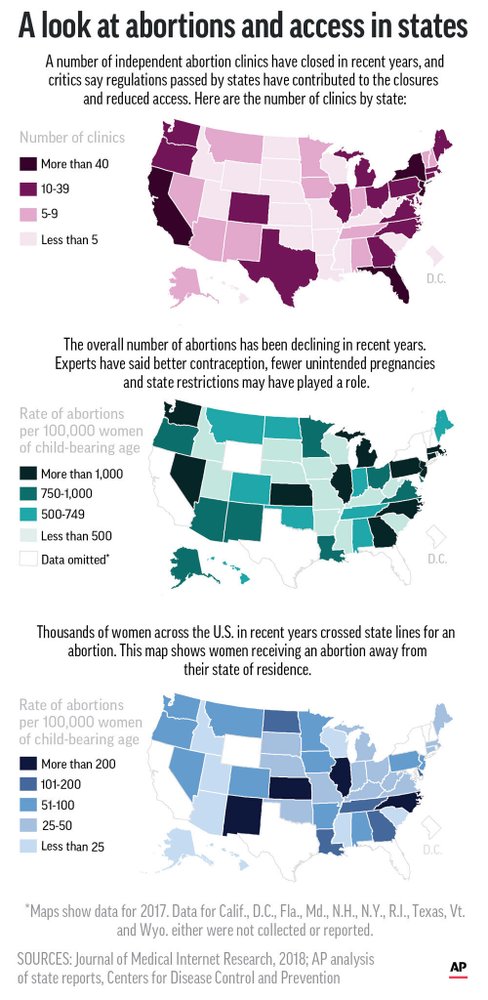
Lunsford is one of thousands of women in the U.S. who have crossed state lines for an abortion in recent years as states have passed ever stricter laws and as the number of clinics has declined.

Although abortion opponents say the laws are intended to reduce abortions and not send people to other states, at least 276,000 women terminated their pregnancies outside their home state between 2012 and 2017, according to an Associated Press analysis of data collected from state reports and the U.S. Centers for Disease Control and Prevention.

In New Mexico, the number of women from out of state who had abortions more than doubled in that period, while Missouri women represented nearly half the abortions performed in neighboring Kansas.

“The procedure itself was probably the least traumatic part of it,” Lunsford said. “If it would have been at my hospital, there would have been a feeling like what I was doing was OK and a reasonable choice.”

While abortions across the U.S. are down, the share of women who had abortions out of state rose slightly, by half a percentage point, and certain states had notable increases over the six-year period, according to AP’s analysis.

In pockets of the Midwest, South and Mountain West, the number of women terminating a pregnancy in another state rose considerably, particularly where a lack of clinics means the closest provider is in another state or where less restrictive policies in a neighboring state make it easier and quicker to terminate a pregnancy there.

“In many places, the right to abortion exists on paper, but the ability to access it is almost impossible,” said Amy Hagstrom Miller, CEO of Whole Women’s Health, which operates seven abortion clinics in Maryland, Indiana, Texas, Virginia and Minnesota. “We see people’s access to care depend on their ZIP code.”

___

Nationwide, women who traveled from another state received at least 44,860 abortions in 2017, the most recent year available, according to the AP analysis of data from 41 states.

That’s about 10% of all reported procedures that year, but counts from nine states, including highly populated California and Florida, and the District of Columbia were not included either because they were not collected or reported across the full six years.

Thirteen states saw a rise in the number of out-of-state women having abortions between 2012 and 2017.

New Mexico’s share of abortions performed on women from out of state more than doubled from 11% to roughly 25%. One likely reason is that a clinic in Albuquerque is one of only a few independent facilities in the country that perform abortions close to the third trimester without conditions.

Georgia’s share of abortions involving out-of-state women rose from 11.5% to 15%, while North Carolina saw its share increase from 16.6% to 18.5%. North Carolina had one of the highest shares of out-of-state abortions in 2017. While both states have passed restrictive laws, experts and advocates say they are slightly more accessible than some of their surrounding states.

In Illinois, the percentage of abortions performed on non-residents more than doubled to 16.5% of all reported state abortions in 2017. That is being driven in large part by women from Missouri, one of six states with only a single abortion provider.

Even that provider, in St. Louis, has been under threat of closing after the state health department refused to renew its license.

Missouri lawmakers also passed a law this year that would ban almost all abortions past eight weeks of a pregnancy, but it faces a legal challenge.

About 10 miles (16 kilometers) from St. Louis, across the Mississippi River, is the Hope Clinic in Granite City, Illinois, which has seen a 30% increase in patients this year and has added two doctors, deputy director Alison Dreith said.

About 55 percent of its patients come from Missouri, and it also sees women from Indiana, Kentucky and Ohio. All those states have mandatory waiting periods to receive an abortion, a requirement Illinois does not have.

Dreith called it a scary time for women in states with highly restrictive laws and few clinics.

“The landscape that we’re seeing today did not happen overnight, and it was not by accident,” she said.

And Illinois isn’t the only place Missouri women are heading for abortions.

In 2017, Missouri women received 47% of all abortions performed in Kansas. That is in large part because the only access to the procedure throughout western Missouri, particularly the greater Kansas City area, is across the state line in Overland Park, Kansas.

Beth Vial, who didn’t learn she was pregnant until 26 weeks after chronic medical conditions masked her symptoms. (AP Photo/Moriah Ratner)

___

Between 2011 and May 31 of this year, 33 states passed 480 laws restricting abortion, according to the Guttmacher Institute, a research organization that supports abortion rights.

In 2019 alone, lawmakers approved 58 restrictions primarily in the Midwest, Plains and South — almost half of which would ban all, most or some abortions, the group said.

The most high-profile laws, which face legal challenges that could eventually test the U.S. Supreme Court’s Roe v. Wade decision, would ban abortion after a fetal heartbeat can be detected — as early as six weeks.

Advocates say that if the Supreme Court upholds the latest restrictions, it will become more common for women to seek an abortion in another state.

“The intent of these lawmakers is to completely outlaw abortion and force people not to have abortions. But in reality, it pushes people farther and wider to access the care they want and need,” said Quita Tinsley, deputy director of Access Reproductive Care Southeast.

ARC Southeast is part of the National Network of Abortion Funds, a collective of 70 abortion support groups for women in six Southeast states. Some provide money to women to pay for abortions, while others also help with transportation, lodging and child care.

A third of women calling the group’s hotline for help end up traveling out of state for abortions, Tinsley said. Many choose Georgia because it’s convenient to get to and considered slightly less restrictive than some other states in the South.

In Georgia, which has a mandatory waiting period, a woman is not required to come to a clinic twice, like they are in Tennessee. But if Georgia’s new fetal heartbeat law survives a court challenge, it would have one of the earliest state-imposed abortion bans.

That would force many women to go even farther from where they live to terminate their pregnancies.

___

Of all states, New Mexico has seen the biggest increase in the number of women coming from elsewhere for an abortion — a 158% jump between 2012 and 2017, according to AP’s analysis.

The New Mexico Religious Coalition for Reproductive Choice helps an average of 100 women a year but is on track to assist 200 this year. Some of its 55 volunteers open their homes to women coming from out of state.

Executive director Joan Lamunyon Sanford said her group is doing what faith communities have always done: “Care for the stranger and welcome the traveler.”

Joan Lamunyon Sanford, executive director of the New Mexico Religious Coalition for Reproductive Choice. (AP Photo/Susan Montoya Bryan)

Lamunyon Sanford said the need is growing as barriers increase and women are unable to access care where they live.

“They have to figure out so many details and figuring out how they are going to get the funding for everything,” she said. “Sometimes it’s just too much. And then they become parents.”

The coalition helped Beth Vial, who didn’t learn she was pregnant until she was six months along after chronic medical conditions masked her symptoms.

As a 22-year-old college student living in Portland, Oregon, Vial was beyond the point when nearly every abortion clinic in the country would perform the procedure.

Vial’s only option for an abortion was New Mexico, where a volunteer with the New Mexico Religious Coalition for Reproductive Choice drove her to and from the clinic in Albuquerque and brought her meals.

The support she received inspired her to join the board of Northwest Access Abortion Fund, which helps women in Oregon, Washington, Idaho and Alaska.

“To have people I didn’t even know support me in ways that I didn’t even really know I needed at the time was unlike anything I have ever experienced,” said Vial, now 24. “It has encouraged me to give back to my community so other people don’t have to experience that alone.”

___

Abortion opponents say the intent of laws limiting the procedure is not to push women to another state but to build more time for them to consider their options and reduce the overall number of abortions.

“I have been insistent in telling my pro-life colleagues that’s all well and good if the last abortion clinic shuts down, but it’s no victory if women end up driving 10 minutes across the river to Granite City, Illinois, or to Fairview Heights,” said Sam Lee, director of Campaign Life Missouri and a longtime anti-abortion lobbyist.

Anti-abortion activists also hope a broader cultural shift eventually makes these issues disappear.

“We are seeing this trend toward life and a realization of what science tells us about when life begins,” said Cole Muzio, executive director of the Family Policy Alliance of Georgia who advocated successfully for new abortion limits there. “Just because something is legal does not mean that it is good.”

Before the recent wave of legislation focused on limiting when an abortion can be performed, opponents largely worked to regulate clinics. Critics say those regulations contributed to more clinics closing in recent years, reducing access to abortion in parts of the country and pushing women farther for care.

Texas lost more than half its clinics after lawmakers in 2013 required them to have facilities equal to a surgical center and mandated doctors performing abortions have admitting privileges at a nearby hospital.

Even though the U.S. Supreme Court struck down key provisions of the law in 2016, most clinics have not reopened.

Candice Russell was among those who felt the impact. When she sought an abortion in Dallas in 2014, she was told she would have to wait more than two weeks because of an influx of patients from other parts of Texas where clinics had closed.

She feared she would not be able to miss work for back-to-back appointments, required under Texas’ mandatory waiting period, so she told the bar where she worked that a relative died and took out a payday loan to buy an airplane ticket to California. She had the procedure the next day.

“Even though I had to take on that horrendous loan and entered a debt spiral that lasted until about two years ago, I am really, really lucky,” said Russell, now 36 and working as deputy director of the Yellowhammer Fund, which helps women in Alabama seeking abortions. “There are a lot of people who just can’t do that. They can’t get on a plane and fly 1,500 miles for an abortion.”

Nationwide, 168 independent abortion clinics have closed since 2012, and just a handful opened over that time, according to the Abortion Care Network, a clinic advocacy group.

Some resulted from providers retiring and an overall decline in unplanned pregnancies, but advocates say many shut down because of restrictive laws.

“It’s not about safety of patients,” said Nikki Madsen, executive director of the Abortion Care Network. “It’s about closing clinics.”

For Lunsford, it took two years before she could begin managing the grief of losing her son, compounded by the hurdles she faced to carry out that painful decision — the drive to Atlanta, staying in a hotel and going to a clinic with doctors she didn’t know.

Lunsford, now 31, said she thinks about how she couldn’t hold her baby, an intimate goodbye that might have been possible if she had the abortion at a hospital. Before she left Atlanta, she asked the clinic’s staff to use the inkpad and paper she brought so she could keep her son’s footprints and handprints.

“Most of the laws I navigated, there was no reason for them,” she said. “None of them prevented my abortion. It just made it where I had to travel out of state.”

Source: https://apnews.com/4ced42150e3348328296e28559c2143b?fbclid=IwAR2T0VxNmxMjmkkHaZQIm7C4sphBHdxhBRhLDrfjxqbbobUsIt1CJ47FpwY

A federal judge will hear the arguments Monday for the first time from opponents of Georgia’s new anti-abortion law as they ask him to stop the measure from going into effect.

Gov. Brian Kemp in May signed one of the nation’s strictest abortion laws, outlawing the procedure in most cases once a doctor can detect fetal cardiac activity. It is scheduled to go into effect Jan. 1.

The American Civil Liberties Union of Georgia has asked U.S. District Judge Steve C. Jones to stop the law from going into effect while the case makes its way through the court system.

The ACLU argued in a June complaint that the law violates a woman’s constitutional right of access to abortion until about 24 weeks of pregnancy, as established in the U.S. Supreme Court ruling in Roe v. Wade.

The ACLU has argued that “politicians should not be second-guessing women’s health care decisions.”

In its response, the state said Georgia’s new anti-abortion law is “constitutional and justified” and asked Jones to dismiss the lawsuit challenging the measure.

“Defendants deny all allegations in the complaint that killing a living unborn child constitutes ‘medical care’ or ‘health care,’” attorneys wrote.

The state hired Virginia-based attorney to represent Gov. Brian Kemp, Georgia Attorney General Chris Carr, Department of Public Health Commissioner Kathleen Toomey, members of the Georgia Composite Medical Board and its executive director.

ACLU is representing SisterSong Women of Color Reproductive Justice Collective, Feminist Women’s Health Center, Planned Parenthood Southeast and other abortion rights advocates and providers.

Source: https://www.ajc.com/news/state–regional-govt–politics/georgia-anti-abortion-law-gets-first-day-court/sqtUx82D8tN4PS8mXfwygJ/?fbclid=IwAR0MHykcLCjeOpf1_OCa1TnpaDpUT8eFOitra1WKmm1uNKAfgpo3x6J7dP4

In a year when we’ve seen states throughout the South and Midwest move to ban abortion and restrict access to reproductive health, California could soon cement its reputation as a leader in reproductive freedom. This past week, the state legislature passed SB 24 to ensure that medication abortion is available to college students in public universities.

Jessy Rosales, a UC student, struggled with paying for care and dealing with the complexities of insurance plans when she needed an abortion. She had to go off campus to three different providers, which took time away from class, work, and other responsibilities. Jessy’s grades slipped as she tried to navigate the obstacles to getting an abortion. Such financial, logistical, and emotional tolls are completely unnecessary.

Every month, approximately 500 students at the UC and CSU campuses seek the abortion pill at off-site health care facilities. On average, a student seeking abortion in California will have to wait one week for the next available appointment at the facility closest to their campus — and that’s assuming they can make it to the appointment. More than half of all students in UC and CSU universities are low-income and over two-thirds of UC students and one-third of CSU students do not have a car, so cost and transportation are critical barriers for many. Students of color, low-income students, first-generation college students, and students who are already parents or supporting their families are particularly harmed by barriers to accessing comprehensive reproductive care.

State Sen. Connie M. Leyva (D-Chino) authored the groundbreaking bill to require every University of California (UC) and California State University (CSU) campus to provide the abortion pill — a safe and effective method to end a pregnancy — at student health centers. The law would eliminate barriers currently faced by students who struggle to travel off campus to obtain an abortion, which results in unnecessary hardship and delay. California’s effort to improve access to abortion care is a bright point in a national landscape that has seen access to abortion decrease significantly. In the first nine months of 2019 alone, seven states banned all or most abortions. And the Supreme Court is likely to further gut abortion rights, even if it doesn’t immediately overturn Roe v. Wade.

Student health centers already provide a range of reproductive health services including testing and treatment for sexually transmitted infections, pregnancy tests, pregnancy options counseling, and contraception. It just makes sense that the abortion pill — safe, effective, and simple to provide — should be among the services offered.

Research shows that student health centers are well equipped to offer the abortion pill, and private funders have come forward to pay the costs of implementation and training.

In addition, students and allies from across the state have built a groundswell of support for SB 24. Six in 10 Californians support providing the full range of reproductive health care including the abortion pill, including majorities of every age bracket. The ACLU of California is proud to be one of seven organizational sponsors of SB 24, which has received support from over 130 organizations, including the American College of Obstetricians and Gynecologists, the American Academy of Pediatrics, and other medical groups; reproductive health, rights, and justice organizations; and community groups from every part of the state. The Los Angeles Times editorial board came out in support of the measure, calling it a “sensible and smart addition to the healthcare services.”

Last year, California narrowly missed a chance to make history and support its students when a similar bill (SB 320) was vetoed by Governor Jerry Brown. At that time, now-Governor Gavin Newsom said he supported the bill. Today, SB 24 sits on his desk awaiting his signature.

The future of abortion rights in the U.S. may be uncertain, but California is poised to lead the nation in expanding access. SB 24 is a testament to California’s spirit of innovation, the drive of our young people, and our commitment to a better future. It sets a new standard for campus care that we can all be proud of.

Source: https://www.aclu.org/blog/reproductive-freedom/abortion/california-ready-ensure-every-public-college-student-has-access

Abortion costs tend to rise after the first trimester, partly due to the amount of time and level of skill required to perform the procedure

Nine in 10 abortions are performed within the first 13 weeks of pregnancy, according to the CDC.

Laws that require abortion seekers to wait a period of time between counseling and the procedure can drive up the share of women of having riskier second-trimester abortions, suggests a new study distributed by the National Bureau of Economic Research. What’s more, their abortion costs are likely to go up.

Researchers from Texas A&M University analyzed the impacts of Tennessee’s mandatory waiting period (MWP), which was enacted in 2015 and requires that a minimum of 48 hours elapse between in-person counseling and a woman’s abortion.

Laws requiring two visits to a clinic are associated with a $107 increase in the price of an abortion, according to one 2015 analysis.

The policy increased the share of Tennessee women getting second-trimester abortions in 2016 by 4.1 percentage points, they found — a 62% increase from 2014. The number of abortions fell overall by 6%, though the authors cautioned that estimate had “limited statistical power.”

The waiting period also carried an added financial cost of up to $929, the study authors estimated. “In total, the mandatory waiting period could increase the monetary cost of obtaining an abortion by a total of over $900 when accounting for fees, transportation costs, lost wages, and child-care,” they wrote.

The Guttmacher Institute, a reproductive-health think tank that supports abortion rights, points out that “first-trimester abortions are much less expensive than second-trimester procedures, often by several hundred dollars.”

Study co-author Jason Lindo, an economics professor at Texas A&M and research associate at NBER, has served as “an expert witness in litigation regarding abortion regulations, including litigation regarding the regulation examined in this study,” the paper discloses.

Anti-abortion groups say the unborn have a right to life, believe life begins at fertilization and object to abortion on moral grounds.

The anti-abortion advocacy group National Right to Life says that many single mothers “find free help and support from local pregnancy care centers.” The group also suggests giving the baby up for adoption as an alternative for people who can’t afford to care for a baby.

Republicans say they oppose “taxpayer-funded abortion.” Anti-abortion groups say the unborn have a right to life, believe life begins at fertilization and object to abortion on moral grounds. They comprise a range of views from those who believe abortion is wrong under any circumstance to others who believe it’s acceptable in cases of rape, incest or when a woman’s life is at risk.

That said, some 71% of voters oppose overturning Roe v. Wade, a July poll from The Wall Street Journal and NBC News found.

Nine in 10 abortions are performed within the first 13 weeks of pregnancy, according to the Centers for Disease Control and Prevention. And, as the American College of Obstetricians and Gynecologists notes, “abortion-related mortality increases with each week of gestation” — though the risk of childbirth-related death remains far higher.

Women are required to get counseling before they can have an abortion in 34 states, 14 of which require the counseling be delivered in person, according to the Guttmacher Institute. Twenty-seven of those states mandate a typically 24-hour waiting period from counseling to procedure, and waiting periods can stretch as long as 72 hours in states like Arkansas, Missouri and North Carolina.

Women who obtained second-trimester abortions paid an average of $854, compared to the average of $397 paid by first-trimester patients.

“In states in which the counseling must be obtained in person (rather than via mail, fax, Internet or phone) and the woman must then wait a specified time period … between the counseling and the procedure, the woman is effectively required to make two trips to the health care provider in order to obtain an abortion, a requirement that could constitute a hardship for some women,” Guttmacher says.

Indeed, laws requiring two visits to a clinic are associated with a $107 increase in the price of an abortion, according to one 2015 analysis of two-visit and Targeted Regulation of Abortion Providers laws.

Advocates for mandatory waiting periods, meanwhile, “argue that they ensure women will receive information about pregnancy and abortion and will have ample time to weigh their options before deciding to terminate a pregnancy,” the present study’s authors note.

Abortion costs tend to rise after the first trimester, partly due to the amount of time and level of skill required to perform the procedure, Guttmacher Institute principal research scientist Rachel Jones previously told MarketWatch; 2013 research co-authored by Jones found that women who obtained second-trimester abortions paid an average of $854, compared to the average of $397 paid by first-trimester patients.

Six months after being denied an abortion, women were less likely to be employed full-time and more likely to be dependent on public assistance.

Three in four women who obtain abortions are low-income, and almost half live below the federal poverty level, research shows. Meanwhile, women who are denied abortions are more likely to endure long-term “economic hardship and insecurity” than women who receive abortions, according to a 2018 study published in the American Journal of Public Health.

Six months after being denied an abortion, women were less likely to be employed full-time and more likely to be dependent on public assistance, it added. The findings indicated that women who were denied a wanted abortion had four times greater odds of having a household income below the federal poverty level and three times greater odds of being unemployed after six months.

“The additional financial costs for a woman to obtain an abortion caused by Tennessee’s mandatory waiting period over and above prior costs can amount to a very large share of women’s monthly income,” the Texas A&M researchers wrote.

Source: https://www.marketwatch.com/story/mandatory-waiting-periods-can-make-abortions-nearly-1000-more-expensive-2019-09-10?fbclid=IwAR2LpvZ9srkuDxHmmqIODsv9D-FBvDZWRLIY0w1RIrkCeyZ1I9yIAEWmGXo