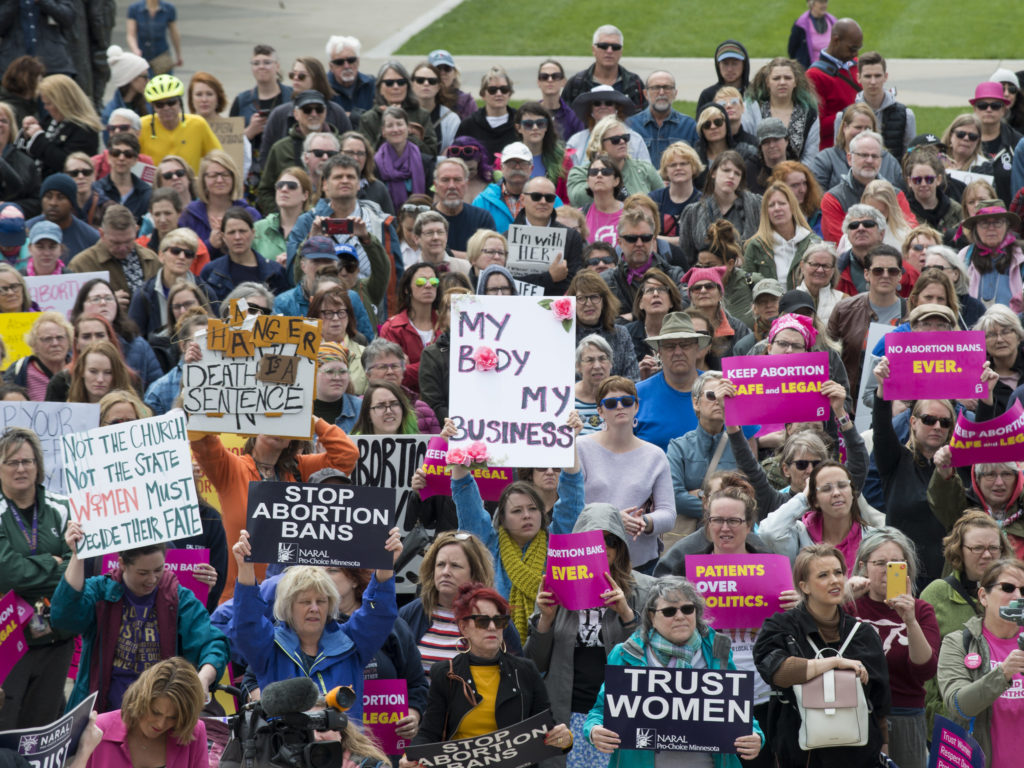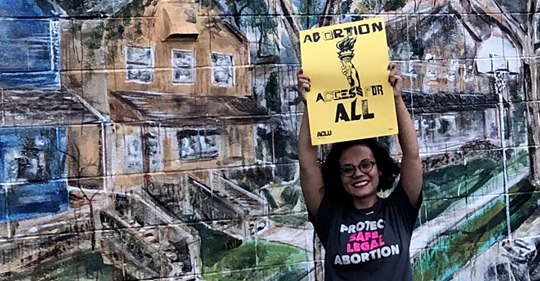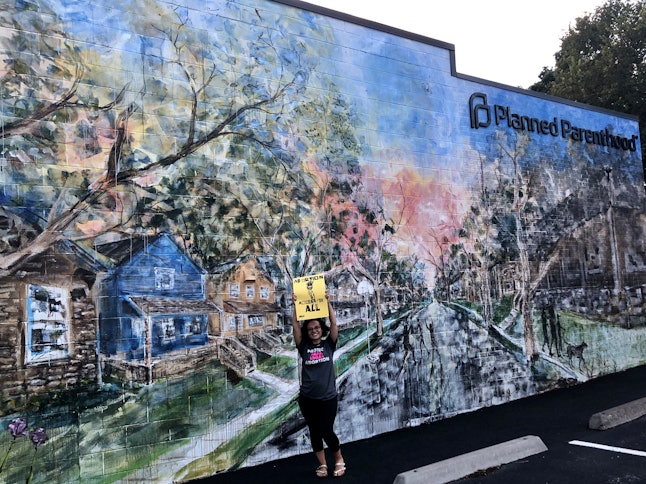
The Trump administration’s domestic gag rule is already hurting women across the country. Planned Parenthood, many state and local public health clinics, and countless independent family planning clinics have been forced to withdraw from the Title X program so they can continue to provide comprehensive medically accurate guidance on reproductive health and abortion to millions of low-income patients.

In the months to come, we may begin to see the damage of this alarming policy—limited access to affordable birth control, STI treatments, cancer screenings and even the closure of some family planning clinics.

In the meantime, pro-choice forces continue to fight back against this outrageous rule: Oregon, Illinois, New York, Washington and Hawaii have refused Title X funds under the new regulations; and 19 states and the District of Columbia, Planned Parenthood and the American Medical Association are seeking a permanent injunction against it.

(Fibonacci Blue / Creative Commons)

Independent clinics all across the country are disproportionately affected by these draconian rules. Many lack Planned Parenthood’s fundraising capabilities, and are not located in states that have additional funding to make up the loss. They are facing the very real possibility of being forced to reduce their staff, cutting back on hours and services, discarding sliding-scale payments or even closing their doors permanently.

The Trump-Pence Gag Rule punishes low-income patients and the health care professionals who serve them. We cannot allow this ruthless policy to continue to threaten Title X clinics—and we can win this by demanding that our policymakers rescind these rules immediately.

Act now to protect access to comprehensive reproductive healthcare.

The money once funded some 4,000 U.S. clinics offering services like STI testing, cancer screenings, and birth control.

The Trump administration’s attempt to carve abortion-related services out of the only federal program dedicated to funding family planning has driven entire states to leave it.

At least six states no longer have access to the money provided by the Title X program, which once funded some 4,000 U.S. clinics offering services like STI testing, cancer screenings, and birth control. Rather than comply with the administration’s decree that these providers no longer refer patients for abortions — which reproductive health advocates say amount to an unethical “gag rule” — state health departments and individual organizations across the country have decided to leave the program entirely.

Not having access to that money could cripple states’ ability to provide services to the 4-million low-income people, largely women of color, served by Title X.

“They may have to have longer waiting periods for appointments because they’ve had to cut back on clinic hours,” said Alina Salganicoff, senior vice president and director of women’s health policy for the Kaiser Family Foundation. “The clinics may cut back on education and outreach services. You may have to be referred to another site if you want an IUD or an implant because they no longer stock them or offer those services, because it’s too costly.”

In Oregon, Illinois, Vermont, and Washington state, state health departments have all announced that they will no longer operate on Title X dollars. There are zero clinics in those states now using Title X. In two other states, Utah and Maine, the only proprietors of Title X money have also chosen to pull out of the program, effectively cutting the state off from the funding, too.

State health departments in Massachusetts and Maryland are also leaving Title X, but other program recipients remain, according to a Kaiser analysis.

At least four of those states have pledged to try to use their own budgets to cover the loss.

In total, more than one in five of all Title X-funded clinics in the United States will no longer take money from the program, Kaiser found.

The Trump administration first announced in mid-July that Title X clinics were officially barred from referring patients for abortions, and that they needed to financially separate any abortion-related services from their other offerings. As of next year, clinics will also need to physically separate out those services.

“We’re gonna see women driving hundreds of miles just to access birth control, like an IUD.”

Though 21 state attorneys general had sued to stop the changes from going into effect, some of their home states have since decided to stay in the program, for now. The governor of Hawaii also announced that the state would leave Title X rather than comply with the changes. But the state is currently in limbo.

“At this time, Hawaii has not withdrawn from the program, and the administration will not draw funding from Title X, at least pending the outcome of the current lawsuit challenging the new rules and concurrent efforts to consider procurement options,” Cindy McMillan, communications director for Gov. David Ige’s office, told VICE News in an email.

To further complicate the state of play in the Title X network, not every state has an government-run agency that serves as a Title X “grantee.” Grantees are the funnel of the Title X network: They receives money directly from the federal government, then often disperse those dollars to their own clinics and, often, to other organizations. Some states also have more than one grantee.

In Maine, the sole grantee is the nonprofit Maine Family Planning, which announced its departure from Title X hours after the Trump administration’s announcement. Sarah Nelson, a patient at a rural, northern Maine Family Planning clinic, told VICE News last month that she hadn’t had insurance in years. Around early July, Nelson started feeling a vicious pain in her abdomen.

Without Maine Family Planning, she would have had no choice but to make an expensive visit to the emergency room. Instead, Nelson got an appointment at her local clinic, where she found out she only had a cyst.

“So I only ended up having to pay $40, thanks to Maine Family Planning. If it wasn’t for that, like I said, I’d be in debt probably a grand or two,” Nelson said. “My income varies, because I wait tables. I never know what I’m gonna make from one day to the next.”

Similarly, the only grantee in Utah is Planned Parenthood — or rather, it was. Last week, Planned Parenthood announced that it would also leave Title X. The organization, which is also the largest Title X grantee in Alaska, Connecticut, and Minnesota, is surrendering a reported $60 million in funding.

It’s a devastating blow to the people who participate in Title X, as the reproductive health care giant serves about 40% of all Title X patients across the country.

“We are committed to doing some emergency funds to help our patients get through, but it will have an impact. It really does vary state by state,” Alexis McGill Johnson, acting president and CEO of Planned Parenthood Federation of America, told reporters on a press call last week. While Planned Parenthood might do some fundraising to offset their funding losses, “It’s like holding an umbrella during a tsunami.”

“We’ve already seen the impact of women having to drive these impossible distances just to access abortions,” McGill Johnson went on. “We’re gonna see women driving hundreds of miles just to access birth control, like an IUD.”

Cover image: FILE – In this, Feb. 25, 2019, file photo, Dr. Erin Berry, Washington State Medical Director for Planned Parenthood of the Great Northwest and the Hawaiian Islands, holds a folder as she listens at a news conference announcing a lawsuit challenging the Trump administration’s Title X “gag rule” in Seattle. (AP Photo/Elaine Thompson, File)

Source: https://www.vice.com/en_us/article/7xgn5b/trump-administration-just-gave-clinics-until-september-to-prove-theyre-not-referring-women-for-abortions?fbclid=IwAR1EfBkZBLi0-5YX8XjJCS7gc-RZMG9TWRmN555_ZXh0DiLQwQe424alRxM

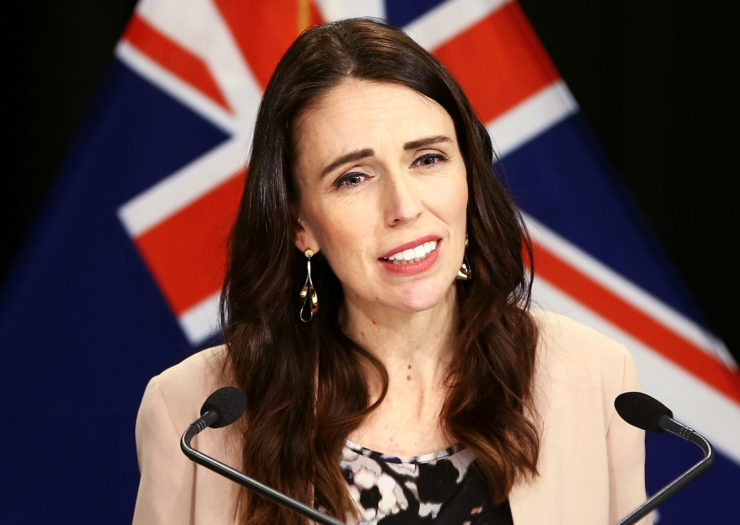
New Zealand Prime Minister Jacinda Ardern’s government has introduced a bill to reform the country’s outdated abortion law.

Ministers from both major parties say they recognize change is necessary for gender equality and note that people have always sought abortions, but the difference is now we actually talk about it. Prime Minister Jacinda Ardern describes abortion as a health service just like any other.
Hagen Hopkins / Getty Images

Abortion in New Zealand has been considered a crime, outside narrow circumstances, for more than 40 years. But the tide is turning against the criminalization of reproductive health care for the 4.8 million people in the country.

Minister for Justice Andrew Little this month announced legislation to remove abortion from the nation’s Crimes Act, an antiquated law that restricts abortion before 20 weeks into a pregnancy and permits the health service only in cases of life endangerment, serious danger to the pregnant person’s physical or mental health, a fetal anomaly, or incest. The new legislation will allow abortions in the first 20 weeks of pregnancy without requiring prior permission or authorization, as is the case under the current law. Given the advances in medical technology and public attitudes toward reproductive health, progress in reforming abortion policy has been a long time coming and is welcomed by many in New Zealand.

Current law in New Zealand, passed in 1977, states that a person seeking abortion care must first receive authorization from two medical practitioners who certify that giving birth would cause danger to the pregnant person in one of the ways listed in the Crimes Act. Other factors like rape and age can be taken into consideration by the certifying doctors, but are not in themselves grounds to approve an abortion. After 20 weeks of pregnancy, the rules are even more restrictive: Doctors can only approve abortion on the grounds of saving the pregnant person’s life or preventing permanent injury. Without meeting this criteria, anyone who provides abortion care or undergoes a self-managed abortion is committing a crime under the 1961 Crimes Act.

This policy disempowers and disadvantages women in many ways. The grounds required for accessing an abortion in New Zealand ignore the socio-economic and personal factors that can play a huge role in a pregnant person’s decision. In maintaining this criteria, legislators are ignoring women’s fundamental human rights according to key international treaties, including CEDAW (Convention on the Elimination of All Forms of Discrimination Against Women), particularly in the way the law disregards sexual violence and rape as valid grounds for abortion. Put simply, this is an impediment to women’s ability to make decisions.

Under the proposed bill, people who are more than 20 weeks pregnant will be able to have an abortion as long as the doctor providing the procedure believes it’s “appropriate with regard to the pregnant woman’s physical and mental health, and well-being.” And within the first 20 weeks, pregnant people will be able to refer themselves to an abortion provider without needing the authorization of two medical professionals. This is a significant change: People will be able to access abortion earlier by skipping the time-intensive process of finding two medical practitioners to sign off on it. The time delay can make getting an abortion on the grounds of fetal abnormality an issue, because diagnosis often cannot be made until after 20 weeks have passed.

The bill would also allow the government to create “safe areas” around abortion clinics where protesting and harassment would be banned.

Of course, the proposed changes have been met with some debate. Critics of the bill like March for Life NZ say it is “anti-human rights,” using the so-called personhood argument that a fetus should be given the rights of a person. Anti-abortion activists argue that the government has failed to include safeguards for young people who may be seeking abortion because of coercion from partners or family members. And they argue that there is no need for reform because pregnant people can already access abortion up to 20 weeks if they receive doctors’ authorizations.

Despite its critics, the bill has cross-party political support. Ministers from both major parties say they recognize change is necessary for gender equality and note that people have always sought abortions, but the difference is now we actually talk about it. Prime Minister Jacinda Ardern describes abortion as a health service just like any other.

The bill passed its first reading in early August, and now the National Council of Women New Zealand is working with our members to respond to the bill. Any New Zealander can make a submission to the select committee on the abortion legislation before the bill goes to a second reading and then to a committee of the whole house. If it passes, it will go to a third reading before being given royal assent to be translated into law.

Submissions are open until September 19, which coincides with New Zealand’s Suffrage Day, celebrating 126 years since women were given the vote.

The sweeping support the bill decriminalizing abortion has received means its eventual passage is likely. The Gender Attitudes Survey in 2017—commissioned by the organization I lead, the National Council of Women New Zealand—showed that at least 66 percent of New Zealanders believe women should have the right to choose. A 2018 resolution by members of the National Council of Women New Zealand in support of abortion law reform passed with 80 percent support. This is undoubtedly a positive indication of how the New Zealand public feels about abortion rights.

Source: https://rewire.news/article/2019/08/28/its-time-to-decriminalize-abortion-care-in-new-zealand/

Missouri’s eight-week abortion ban was temporarily blocked from being implemented by a federal judge on Tuesday. The regulation was scheduled to go into effect on Wednesday.

State legislators in May passed the “Missouri Stands for the Unborn Act,” a sweeping piece of anti-abortion legislation. In addition to banning the procedure after eight weeks into a woman’s pregnancy, the legislation includes a “trigger law” and a ladder of less-restrictive time limits ranging from 14 to 20 weeks, depending on what the courts find to be constitutional.

In late July, Planned Parenthood, the American Civil Liberties Union, and Paul Weiss LLP — the law firm that successfully fought to legalize gay marriage — challenged the law, arguing that Missouri’s ban on abortion after eight weeks is in violation of Supreme Court precedent that protects access to abortion.

Tuesday’s injunction only covers the state’s pre-viability abortion bans and not the law’s ban on abortions based solely on race, sex or a “prenatal diagnosis, test, or screening indicating Down Syndrome or the potential of Down Syndrome.”

“Like Attorneys General who came before him, Attorney General Eric Schmitt is tasked with defending the laws of the state and is dedicated to protecting Missourians, born and unborn,” Chris Nuelle, spokesperson for the Missouri Attorney General, said in a statement provided to CBS News on Tuesday. “We’re currently reviewing the judge’s ruling and are deciding on next steps.”

If Missouri’s eight-week ban were to be implemented, it “would prohibit more than two thirds of [Planned Parenthood of St. Louis] patients from obtaining abortions,” U.S. District Judge Howard Sachs wrote in his written decision Tuesday. That clinic is the last remaining abortion provider in the state.

Alexis McGill Johnson, Planned Parenthood’s acting president and CEO, said the judge’s decision “blocks a harmful law that bans abortion before many know they’re pregnant.”

“What little abortion access in Missouri is left, will stay in place for the time being. In the meantime, we cannot ignore the part of this law that remains in place, which allows politicians to interfere with the patient-provider relationship,” Johnson said in a statement to CBS News. “Let’s be very clear: these severe restrictions on abortion access do nothing to address disability rights or discrimination. They only stigmatize abortion and shame the people who seek that care.”

In an unprecedented flood of anti-abortion legislation, state lawmakers introduced over 300 bills restricting access to the procedure in the first half of 2019, according to data compiled by the Guttmacher Institute, a reproductive health research organization. Six states, including Missouri, passed so-called “heartbeat” bans, laws that would prohibit abortion after a fetal heartbeat is detected in the early weeks of pregnancy. Alabama went a step further, passing a law that bans the procedure in nearly all cases.

Planned Parenthood and the ACLU have been on the front lines, bringing legal challenges to those laws. Federal judges in every state have granted preliminary injunctions to block the laws from implementation with the exception of Georgia, where the court has yet to make a decision.

In Missouri, abortion access is already difficult, even without the eight-week ban in place. Women seeking an abortion are required to undergo a 72-hour waiting period and receive state-mandated counseling designed to dissuade them from receiving an abortion. Various other regulations have closed all but one clinic in the state: a lone Planned Parenthood in St. Louis.

Source: https://www.cbsnews.com/news/missouri-abortion-law-eight-week-ban-blocked-hours-ahead-of-implementation-today-2019-08-27-live-updates/?fbclid=IwAR3MFjmc6Dw8M0tmonCnMnMljYnTOCCxfcQPo5VpYkS5YIzc9hDQeCGKSyc

In the US south and beyond, getting an abortion is not only logistically and emotionally difficult – it can push someone over the financial edge

or the third time in a week, LT stood at the reception in the abortion clinic in Shreveport, Louisiana, more than 90 minutes away from her home. She was – again – looking for the right paperwork to show her boss why she had taken time off work from her busy job at a chain restaurant in north-eastern Louisiana.

LT had first showed him a $550 receipt from the clinic. No, he told the 22-year-old single mother, he wanted a doctor’s note from the clinic. So – using the last $25 she had in her bank account – she drove back because, without it, her manager refused to put her back on the schedule.

And LT could not afford to miss any shifts.

Many women did not want to be identified because only a handful of people knew of their situation. They also worried about stigma in their small, southern communities.

But LT’s is a common story and not close to one of the worst. In this poor, rural corner of the American south, the process of getting an abortion is logistically difficult, emotionally fraught and often a battle against poverty.

It is also getting harder. A wave of anti-abortion bills have spread across the US, especially parts of the conservative south. The aim is to make abortion more difficult, with more paperwork, bureaucracy and early deadlines and, perhaps, one day outlaw it. That would force already poor women to travel even longer distances to get abortions and spend even more money – or have them take risks for illegal procedures.

Kathaleen Pittman, director of the Hope Medical Group for Women, said more than 80% of the women who come in to her Shreveport clinic self-identify as living below the poverty line.

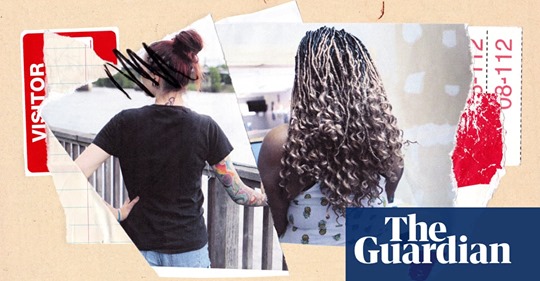
LT a week after getting an abortion. Both her mother and her partner pushed her to get one, though she wasn’t sure if she wanted to terminate the pregnancy.
 LT a week after getting an abortion. Both her mother and her partner pushed her to get one, though she wasn’t sure if she wanted to terminate the pregnancy. Photograph: Khushbu Shah/The Guardian

Last week, a counselor at Hope met a woman who drove from New Orleans because the clinic there charged twice as much. A not-for-profit had given her $500 towards the procedure. The woman, who lives in her car and showers at the gym with her $10 membership, knew it wasn’t enough. She called Hope, who gave her the remaining funds, and with those in hand, barely made her appointment before the 16-week cutoff .

The procedure itself equalled two months of LT’s rent for the four-bedroom trailer she lives in with her sister. Her partner paid for half of it. She’s behind in bills by more than $2,500. Her tuition at a community college is $2,000 a semester for her associate degree in Biological Sciences. Her bank account is negative. She has a four-year-old to feed and keep in childcare.

This is life on the financial edge and an abortion can push someone over it. But it’s far less than the cost of an unwanted pregnancy, LT said.

“Neither [my boyfriend] and I are either financially or mentally ready to bring another child into the world. It’s hard for me being a single mom working two jobs and a full-time student with one child alone. So I couldn’t imagine doing it with two,” LT said.

Louisiana has passed a six-week abortion ban and if it goes into effect, LT would have had to rush the decision or drive across state lines to Arkansas or Texas, neither a trip she could afford. Multiple women called the abortion clinic during the days the Guardian visited, asking if they could still get an abortion.

“It’s already a tedious process for a woman to get an abortion in Louisiana,” Pittman said.

A woman must receive state-mandated counseling and wait 24 hours. In recent weeks, after passage of the new law, patients must also be informed, in writing, of the doctors’ credentials at the clinic, their board certifications, if they have medical malpractice insurance and the last 10 years of practice history.

One of the licensed physicians in Shreveport, who also does not want to be identified, comes in to do the the state-mandated counseling sessions. One of the patients he saw that day is Dominique, 34.

Pittman estimated 70% of those who come in are women of color, like Dominique.

“How many kids do you have?” the doctor asked. “Good spacing on those three, girl,” he said after she responded. Immediately, she laughed and relaxed. The abortion will be her first. She can’t go on birth control because her blood pressure is too high, she told him, so most of the time she uses condoms.

The doctor peered at her through his glasses. “That’s the kicker. Most of the time!”

Dominique: ‘You can have all the opinions in the world but your opinions are not going to affect me or my child.’
 Dominique: ‘[Mom] doesn’t believe in abortion. She thinks they’re a sin.’ Photograph: Khushbu Shah/The Guardian

He calculated she’s pregnant in the fourth week of her pregnancy, early enough that even if the state’s six-week abortion ban had been in effect, she would have still been able to get an abortion.

The next day, at her second job in her small town across the state line in Texas, Dominique picks up two extra shifts, a favor from her best friend who is her manager, to pay for her abortion. She has $150 put aside. The clinic is giving her another $100, but they told her she wasn’t the worst off they had seen that day, so they couldn’t give her more. Her boss is giving her the next paycheck a couple days early, even though she doesn’t believe in what her friend is doing. That still leaves her $30 short. The man who got her pregnant hasn’t offered to help her pay.

She can’t ask her mother for the money because she refuses to tell her.

“[Mom] doesn’t believe in abortion. She thinks they’re a sin.”

But she has made her decision.

“At the end of the day, I have to feed the baby. At the end of the day I have to deal with whatever repercussions fall down, not you. So you can have all the opinions in the world but your opinions are not going to affect me or my child,” she said.

Source: https://www.theguardian.com/us-news/2019/aug/14/abortions-louisiana-us-rural-south-poverty-battle?fbclid=IwAR14iw2yBRjryeYOLVDzikcu4eCbHNvNdWbE2YXTI1JUnCkYQbRufyuDYHU

A year after Justice Brett Kavanaugh’s confirmation, “women are organizing like our lives depend on it, because they do,” Women’s March COO Rachel Carmona said.

Advocates see the placement of Justice Kavanaugh, following on the heels of the confirmation of Justice Neil Gorsuch, on the Court as a direct threat to the constitutional right to abortion given their conservative records.
CHRIS KLEPONIS/AFP/Getty Images

Exactly one year after Brett Kavanaugh was sworn in on the U.S. Supreme Court, the Women’s March, Demand Justice, and the Center for Popular Democracy Action plan to mobilize women, survivors, and their members to hold the nation’s highest court accountable amid a slew of attacks on reproductive health and rights.

The action, to be held on October 6 in Washington, D.C., will seek to put pressure on congressional lawmakers as the Court’s landmark abortion rights case, Roe v. Wade, is in jeopardy. Advocates see the placement of Justice Kavanaugh, following on the heels of the confirmation of Justice Neil Gorsuch, on the Court as a direct threat to the constitutional right to abortion given their conservative records.

“We protested Kavanaugh’s appointment to the Supreme Court last year because we knew that right-wing extremists would respond by pushing reckless anti-abortion laws. President Trump repeatedly promised on the campaign trail that Roe v. Wade would be overturned ‘automatically’ once he had his choice of justices on the Supreme Court,” Women’s March Chief Operating Officer Rachel Carmona said. “We won’t be silent while the GOP subverts the will of the people by cheating our democratic processes. Women are organizing like our lives depend on it, because they do.”

Katie O’Connor, senior counsel at Demand Justice, told Rewire.News that the organizations hoped to “tap into [the] energy” of the women who mobilized for the Women’s March in 2017 and protested Kavanaugh’s confirmation the following year. Now, the groups are inviting activists to take action and demand “that the Congress do better,” such as by more closely reviewing Kavanaugh’s record.

Marking the anniversary of Kavanaugh’s confirmation is important because “we really think of it as unfinished business,” O’Connor said.

The announcement of the action comes after House Judiciary Committee Chair Jerrold Nadler (D-NY) sent a letter to the National Archive in early August requesting the records from Kavanaugh’s work in the George W. Bush administration.

“There’s a lot that the Senate never investigated last year and that the American public deserves to have investigated,” O’Connor said.

During Kavanaugh’s confirmation process, only a small fraction of the estimated 3.85 million total pages of documents pertaining to his time working in the White House were reviewed.

“While [Kavanaugh] was staff secretary to the George W. Bush administration, the so-called partial-birth abortion ban was passed,” O’Connor said. “Partial-birth abortion” is a term created by anti-choice activists referring to an uncommon method of abortion. “We have no idea what he worked on while he was there. We have no idea whether he was part of the administration’s decision to sign that bill.”

Answering those questions could make a difference at a critical time for abortion rights in the United States. “Depending on what we find in these documents, we can at least question his impartiality about abortion cases and potentially asked him to recuse himself,” O’Connor said.

“Kavanaugh was almost certainly put on this court to overturn Roe, as was Gorsuch,” she said. “That was President Trump’s campaign promise.” And both Kavanaugh and Gorsuch received support from anti-choice groups during the confirmation process.

“We have no reason to believe that he’s not going to do what everyone knows he was put there to do,” she said.

Source: https://rewire.news/article/2019/08/28/exclusive-advocates-will-mobilize-to-reclaimthecourt-on-kavanaughs-confirmation-anniversary/

Imagine living in a place where legislators banned abortion after eight weeks, with no exceptions for rape, human trafficking, incest, or fatal abnormalities. Then, if someone manages to confirm a pregnancy within this period — often, it takes people up to 12 weeks to verify that they are pregnant — they might have to travel more than 200 miles to the state’s lone, persecuted abortion clinic. Along the way, they can expect to see car license plates emblazoned with “Choose Life,” a campaign that funnels money from these plate sales into anti-abortion organizations. They might also stumble upon one of the state’s estimated 69 tax-funded crisis pregnancy centers, which masquerade as real health clinics but peddle religious sentiments and misinformation.

When they finally arrive at an abortion provider and undergo a 72-hour waiting period, it’s legally mandated that they’re given medically inaccurate information, including a pamphlet that states, “The life of each human being begins at conception. Abortion will terminate the life of a separate, unique, living human being.”

This might sound like a scenario ripped straight from a dystopian hellscape created by Margaret Atwood, but these real-life policies play out every day in Missouri, where I live and where public defenders are warning that, beginning Aug. 28, people who need abortion services after eight weeks of pregnancy could potentially face prison time if they attempt to perform or induce their own abortion.

It’s against this dehumanizing backdrop that I began volunteering at Planned Parenthood six months ago, as a wave of restrictive abortion laws swept the Midwest. Suddenly, the news alerts that bombarded my phone and my Twitter feed forced me to reexamine my values.

Throughout college, I’d taken gender studies courses that encouraged me to present my womanhood in any way I wanted, to embrace sex positivity and to demand diversity in pop culture. I saw myself as sort of a fourth-wave feminist, committed to a women-heavy reading list and to keeping my last name, but not having to fight for basic equality like the suffragettes. I chanted the c-word on stage in front of my grandma as part of a performance of The Vagina Monologues and wore T-shirts that proclaimed, “The future is female.”

But none of that well-intended girl power sufficed when extremist laws encroached on my and others’ bodily autonomy. With a newfound sense of fury and fear fueling me, I signed up to volunteer for the only reproductive rights organization that I knew had a century-long history of defending and advancing women’s rights.

I talked to people who, like myself, supported abortion rights but had rarely taken action.

Just stepping into the back room of the clinic in Kansas City, Missouri, shifted my perspective. I heard a chorus of determined voices transform the day’s headlines into calls for action. Ten phone bank volunteers were calling strangers on both sides of the Missouri-Kansas state line, urging them to contact their senators and express support for abortion rights. I realized that, in 2019, my feminism needed to be something that it had never been before: urgent, inconvenient, and even impolite. Once I began making these calls myself, I noticed that it marked the most times I’d ever uttered the word “abortion.” That alone awakened me to the fact that I needed to do better.

Courtesy of Kara Lewis

While working the phone bank, I received support from some people on the other end of the line, but also heard curse words, rants, and mansplaining. One woman screamed that I was going to hell and was “personally responsible for murder.” Before, remarks like these would’ve made me hang up the phone or scared me out of making the next call altogether. In college, I once walked across an entire soccer field to avoid protesters holding gory pictures of fetuses, convinced that engaging with them would prove pointless and even traumatic.

However, volunteering showed me that emotionally charged, divisive conversations are instrumental to creating change. I talked to a woman who had an undecided opinion on abortion, and encouraged her to contemplate the level of choice she’d want for her daughter. I talked to people who, like myself, supported abortion rights but had rarely taken action, convincing them to participate in town halls, rallies, and even visits to the state capitol.

This shift from passive to active feminism has rippled into other areas of my life, too. My increased advocacy pushed me to leave my job at a daily newspaper, because when I was asked if I could cover my right to my own body and men who made laws without knowing anything about female anatomy “objectively,” I knew the answer was no. I ended a friendship when a close friend compared abortion to the Holocaust in a Facebook post. I’m now reevaluating whether to shop at retailers like Hobby Lobby, which refuses to cover certain birth control for employees, and CVS, which donated to Trump through its political action committee.

As with all revolutions — both personal ones and on a wider scale — many people have labeled my actions as dramatic. Fortunately, Planned Parenthood’s long history serves as the perfect guide for how to react. Just nine days after it first opened in 1916, police raided the clinic and arrested its founders for sharing information related to birth control. They didn’t back down — while in jail, Margaret Sanger provided the same reproductive education to her fellow inmates. More than a century later, Planned Parenthood now operates without critical Title X funding from the federal government, so they can continue to offer abortion.

Led by these examples, I now refuse to be shut down, even when being vocally pro-choice seems socially unacceptable. When I ask friends, partners, and family members about their views on abortion, I no longer care if it makes them blush. Despite societal conditioning, I’d rather be rude than a human incubator who cannot decide if and when to carry a child. Volunteering for my and others’ reproductive rights has helped me embrace one of the most important, radical feminist tenants of all: The personal truly is political.

Source: https://www.bustle.com/p/i-volunteered-for-abortion-rights-in-missouri-it-made-me-rethink-my-entire-life-18687253

FILE PHOTO: An exam room at the Planned Parenthood South Austin Health Center is shown following the U.S. Supreme Court decision striking down a Texas law imposing strict regulations on abortion doctors and facilities in Austin, Texas, U.S. June 27, 2016. REUTERS/Ilana Panich-Linsman

CHICAGO (Reuters) – Illinois will defy enforcement of the Trump administration’s rule barring federally subsidized family planning clinics from making abortion referrals, the governor said on Thursday, vowing the state would step in to fund most of those clinics itself.

Illinois’ action comes a week after a federal appeals court cleared the way for the administration to cut off Title X grants for reproductive healthcare and family planning for low-income women at clinics that refer patients to abortion providers.

Governor J.B. Pritzker, a Democrat, said the state would forgo all federal Title X funding while the Trump administration continues to impose its restriction – branded by critics as a “gag rule” designed to silence doctor-patient communications about abortion options.

Instead, the Illinois Department of Public Health will provide state funding to the 28 local clinics that normally receive Title X money through the agency, making up for an estimated $2.4 million in federal dollars they otherwise stand to lose for the rest of the fiscal year, Pritzker said.

“President Trump’s gag rule undermines women’s health care and threatens the providers that millions of women and girls rely on, and we will not let that stand in the state of Illinois,” the governor said in a statement.

Officials for the U.S. Health and Human Services Department, which administers Title X, did not immediately respond to requests from Reuters seeking comment on Illinois’ action.

The Illinois Republican Party denounced Pritzker’s willingness to turn away federal funding of “non-abortion-related medical care for women and girls because of his unrivaled zeal for forced taxpayer funding of abortions.”

At least two other states, Maryland and Massachusetts, took similar pre-emptive countermeasures months ago, enacting legislation to temporarily opt out of Title X if the new rule takes effect, and to provide state funding in its place.

Maine Family Planning, a nonprofit, sole recipient of Title X funds in that state, has also said it would withdraw from the program rather than abide by the new rules. The Democratic governors of four other states – New York, Hawaii, Oregon and Washington state – threatened to end participation in Title X.

Planned Parenthood, an organization that provides abortions and other health services for women under Title X, has already said it would likewise reject Title X money under the new rules, relying instead on private donations and emergency funds to make up the difference.

Planned Parenthood operates 17 clinics in Illinois, said Julie Lynn, a spokeswoman for the state organization.

AIMED AT PLANNED PARENTHOOD

The administration’s policy is aimed at fulfilling President Donald Trump’s campaign pledge to end federal support for Planned Parenthood, the largest single provider of abortions in the United States.

The administration’s new policy also requires financial and physical separation between facilities funded by Title X and those actually providing abortions.

Federal judges in Washington state, California and Oregon, among nearly two dozen states challenging the administration’s rule in court, issued preliminary injunctions against enforcement of the rule earlier this year. It had been slated to take effect in May.

The 9th U.S. Circuit Court of Appeals on June 20 lifted those injunctions, and the same court rejected emergency bids to overturn that decision last week. That allowed the restrictions to go back into effect while court challenges proceed.

Congress appropriated $286 million in Title X grants in 2017 to Planned Parenthood and other health centers to provide birth control, screening for diseases and other reproductive health and counseling to low-income women.

That funding already was prohibited from being used to pay for abortions, but abortion opponents have long complained that the money in effect subsidizes Planned Parenthood as a whole, including its abortion services.

Planned Parenthood provides healthcare services to about 40% of the 4 million people who rely on Title X funding annually.

Source: https://www.reuters.com/article/us-usa-abortion/illinois-to-defy-trump-administrations-abortion-referral-gag-rule-idUSKCN1UD32V?fbclid=IwAR0QfVcBfwy5DNtFBglAroSE-bXIH1lUHXWRhN5IkvZzHjXaH3TNQcnaHsg

While debate around abortion in recent years has been centred on America, a parliamentary vote here has now turned the spotlight on the issue in Northern Ireland. 
Marisa Bate speaks to three women campaigning for change

In recent months, there has been international outcry over the draconian abortion bills being passed in some American states, with Alabama, Ohio and Georgia (among others) recently signing bills to severely restrict women’s abortion rights. But what about the abortion crisis in our own backyard? In Northern Ireland, abortion is illegal. Even in cases of rape and incest, it is a crime punishable by life imprisonment, which also extends to the doctors who administer the procedure. But banned abortions don’t result in fewer abortions. According to the Department of Health and Social Care, 1,053 women from Northern Ireland travelled to the UK for an abortion in 2018 – which marks 
a 22 per cent increase on the year before. Clearly, free, safe and legal abortions are desperately needed.

However, on 9 July, a historic window of opportunity opened as an overwhelming majority voted in Westminster for an amendment tabled by MP Stella Creasy, which would see abortion become decimalised in Northern Ireland, falling under the 1967 Abortion Act that currently exists in England and Wales. But, this will only come to pass if Stormont – the currently collapsed Irish Assembly caught in a stalemate – does not restore by 21 October 2019.

In other words, there’s still some way to go. If Stormont restores, the issue will fall back to a government that has fiercely opposed abortion. Even if the abortion laws are relaxed, Stormont would have the right to amend them.

Despite the long road ahead, campaigners are celebratory. Grainne Teggart, Amnesty International’s Northern Ireland campaign manager, told Marie Claire, ‘This is a significant defining moment for women’s rights in Northern Ireland. The grave harm and suffering under Northern Ireland’s abortion regime is finally coming to an end. At a time when prosecutions are still a grim reality, this cannot happen quickly enough.’

For now, though, that grim reality is still something women are facing. Here, we explore the complexities of the debate through stories of women personally affected by this issue.

‘I had to fly alone to England to have a safe, legal abortion’

Karen*, 37, from Northern Ireland, is a mother of two and a pro-choice campaigner

‘When I found out I was pregnant for the third time, my kids were six and eight months. I was still on maternity leave and had been suffering with postnatal anxiety. I couldn’t sleep, 
I found it hard to leave the house and had panic attacks. Then, just as I was starting to feel better, I got pregnant. I was terrified of getting pulled back into a black hole that I had barely started to climb out of.

‘As a pro-choice campaigner, I always thought I was fighting for this so other women have freedom, but I would never personally have an abortion. And then I was in that position myself. You never know what situation you’re going to find yourself in. Straight away I started making calls.

‘I spoke to the Abortion Support Network first. I didn’t need to ask them for money, but I got really good logistical advice. There’s no one else to give you that – you can’t get information from GPs, they’re too scared to tell you. Next I called the British Pregnancy Advisory Service and booked a clinic in Liverpool. I had to wait a week and, in that time, 
I went to the Family Planning Association, which has sadly now closed. They were a lifeline.

‘My husband couldn’t come with me as he had to look after the kids, and I didn’t feel I could ask a friend because she would have to take the day off work or get childcare and then pay £180 for the flights. But I really regretted going alone. I left super early and I was back by 6.30pm, in time to give the kids a kiss goodnight, which really struck me. If it was in your own city, it would be such a small thing, yet it felt like such a massive journey because of the impact of having to get up and go somewhere totally unfamiliar. I was scared throughout the entire experience.

‘I had to have a surgical abortion because I was flying home that day – pills induce heavy bleeding and pain too severe for travel – but the general anaesthetic freaked me out a bit, so I phoned my husband, then had a bit of a cry. That’s when I wished he or a friend had been there. I was in the theatre waiting room with three other women from the UK, and I’ll remember that for the rest of my life. In that moment, we all shared our stories. I heard all kinds, from domestic violence to drug addiction. There’s such complexity in people’s circumstances.

‘When I came round, the sense of relief was unbelievable. I felt so grateful. It was amazing to me that all these people work in this place that gives you this incredible gift of being able to walk out of there and get on with your life.

‘Between 30 and 35, I was pregnant five times. It was the most intense period of my life. I had two kids, two miscarriages and one abortion. I think people need to understand that is what women’s lives are like when we make that decision to have children. That it brings with it all the stuff – the bad with the good.’

‘Our clients range from 12 to 53 years old’

Mara Clark is founder of The Abortion Support Network, which is based in England to help women access safe and legal abortions

‘In 2002, I was living in New York and I read an article about the women travelling to the city to have abortions because it had a 24-week time limit. They had to pay $2,000 [about £1,600] for the procedure and stay overnight, and some were having to sleep in their cars. The article featured the Haven Coalition, a group of volunteers who let people stay in their homes. Even though I lived in a teeny studio, I began inviting women and girls coming to the city for an abortion to stay. And that’s where it all started for me.

‘When I moved to the UK, I looked for something similar to support women in Ireland and Northern Ireland, but people were telling me there was just no need for it now there were credit cards and RyanAir, but I knew that couldn’t be right.

‘So, in 2009, I started The Abortion Support Network with five friends for women in Northern Ireland, Ireland and the Isle of Man. As a charity, we give information on the process, provide travel and accommodation arrangements, pay for abortions and find the cheapest way to make the trip. When someone contacts us, we never ask them how they got pregnant or why they want an abortion, because that is none of our business. After all, rich women don’t need to justify themselves.

‘Last year, our clients ranged from 12 to 53 years old. Our largest group is women in or escaping from abusive relationships. Reproductive coercion is a big problem: abusers won’t use birth control or they sabotage it to keep women pregnant because it’s harder for them to leave.

‘Every bit of research shows that banning abortion doesn’t stop it; it just stops safe abortion for poor women. Because women with money have the ability to travel, and women without money don’t. And that’s just not fair.

‘What makes it an ordeal is you have to get on a plane. The law in Northern Ireland takes what should be a five-minute outpatient procedure and turns it into 
a 16-hour ordeal. And let’s talk about the other obstacles: say they’re in an abusive relationship – what happens if they’ve got children to look after? What if they have insecure work status or have to care for a parent? Abortion highlights the other issues people who are already marginalised face. And that’s the difficult part of our work; we can only solve one problem.

‘Over the years, we’ve been told we’re hysterical, too politically correct, that 
we should lighten up. But when Donald Trump was elected, people started saying: “How can I help?” That’s what is great about Alabama, and the light it has shone on Northern Ireland. People are saying, “How can I help?”’

‘
The state hates women’

Emma Gallen is a stall coordinator at Alliance4Choice, a campaign group for abortion rights in Northern Ireland

‘I coordinate an information stall in Belfast city centre on Saturday afternoons encouraging people to sign up to our mailing lists and running different campaigns, writing to politicians. When you’re on the stall, reactions vary. If some of the pro-life groups are out on the street, people tell us how upsetting they find them. They have images of foetuses and signs that say: “Abortion won’t unrape you”. Yet, in some ways, they are our biggest recruiter.

‘A lot of people approach us to talk about how wrong they think it is that women have to travel, but don’t necessarily support abortion. For years, you had to pay for abortions in England. It’s only been since 2017 that there’s been any funding, and that comes from 
the government’s equalities budget. Scotland, where there are free abortions, is an option but it’s not practical: you have to be there for a week, see a GP, then go to a hospital as there’s no private clinics. Also, if you’re in England, the state pays for some childcare. We don’t have that here, which makes things even harder. The state hates women.

‘Alongside the stalls, Alliance4Choice also delivers workshops to change the way people talk about abortion. There’s also political lobbying of Westminster to keep Northern Ireland’s abortion laws on the agenda. For years, we have petitioned them to act; to decriminalise abortion here. The UN has said that Westminster has to act because what women are enduring is torture, not tantamount to torture, but torture. Forcing someone to continue with a pregnancy for 12 weeks when they know the child is going to die or not offering support for rape victims is torture. Awful things are happening. A story came out in the Women’s and Equalities Committee inquiry of a 12-year-old rape victim who had to go to England with a police escort so they could collect the foetus for evidence.

‘If you’re a feminist in England, you can lobby your MP, and they can actually make life better for women in Northern Ireland. But, instead, people protest about Trump or the abortion laws in Alabama and Georgia – and they are not as restrictive as the ones in Northern Ireland. It is frustrating. When people ask me, “Why didn’t your government act?” I often reply, “Why didn’t yours sooner?”’

Source: https://www.marieclaire.co.uk/reports/abortion-northern-ireland-663242?fbclid=IwAR3N1jDCidxpT3LG8B2shDzYCYJK6qFyopBaXArGiT0A7skKyeWUejlDTBI

Discussion of the Helms Amendment hasn’t bubbled up much so far this election cycle, but it was a topic of discussion in the 2016 race

At least ten Democrats vying for the Democratic nomination for 2020 have come out in opposition to the Helms Amendment, an anti-choice ban on using foreign assistance funds for abortion.
Scott Olson / Getty Images

At least ten Democrats vying for the 2020 Democratic nomination have come out in opposition to the Helms Amendment, a ban on using foreign assistance funds for abortion.

The U.S. Congress passed the Helms Amendment in 1973 as part of the Foreign Assistance Act in the wake of the U.S. Supreme Court’s landmark decision in Roe v. Wade legalizing abortion in the United States. It states, “No foreign assistance funds may be used to pay for the performance of abortion as a method of family planning or to motivate or coerce any person to practice abortions.” Though no language in the amendment specifies doing so, the ban has long been enforced without exceptions for rape, incest, and life endangerment—leaving those facing sexual violence in conflict zones especially vulnerable.

Discussion of the Helms Amendment hasn’t bubbled up much this election cycle, but it was a topic of discussion in the 2016 race. In that election cycle, eventual nominee Hillary Clinton and Sen. Bernie Sanders (I-VT) voiced their opposition to Helms during the primary, while the Democratic Party’s official platform for the first time included ending the Helms Amendment.

This time around, the issue of foreign aid funding bans on abortion hasn’t gone entirely undiscussed. Rebecca Traister reported in The Cut in March that in 1981, Joe Biden introduced a measure “prohibiting foreign aid to be used in any biomedical research related to abortion.” Biden’s campaign didn’t respond to Rewire.News about his stance on the Helms Amendment—but the 2020 campaigns of ten other Democrats running for president did.

Spokespeople for the campaigns of Sens. Elizabeth Warren (D-MA), Kirsten Gillibrand (D-NY), and Cory Booker (D-NJ), as well as entrepreneur Andrew Yang, confirmed to Rewire.News that the candidates opposed the Helms Amendment. Other campaigns specified their stances and how they factored into their platform on reproductive rights.

The campaign for Sen. Bernie Sanders (I-VT) in a statement doubled down on Sanders’ promise to work with Congress to end Helms permanently and stated that he would sign an executive order allowing for U.S. foreign aid to fund abortion services.

“Sen. Sanders believes health care is a human right, and reproductive care, including the right to abortion, is a fundamental part of health care,” a campaign spokesperson said. “As president, he will repeal the Trump administration’s global gag rule, which is a disgraceful assault on women’s rights, and sign an executive order to allow for U.S. foreign aid to pay for abortions services. He will also work with Congress to permanently repeal both the Hyde and Helms amendments.”

Washington Gov. Jay Inslee’s presidential campaign also noted that Inslee would take executive action on Helms. “Governor Inslee believes that all women should have access to abortion and reproductive health care. As such, he opposes the Helms Amendment and its ban on the provision of abortion and reproductive care in foreign assistance funding,” a spokesperson said. “Governor Inslee would exercise executive authority to relieve the burden created by the Helms Amendment, and would aim to repeal it along with the Hyde Amendment.”

Marianne Williamson also vowed to take prompt action to address Helms. “I would immediately give an interpretation of the Helms Amendment to include exceptions for situations outside of family planning—namely for rape, incest, and a threat to the woman’s life. I would work to completely overturn the ban in Congress,” she said in a statement.”

A spokesperson for former Rep. Beto O’Rourke’s presidential campaign said, “Beto supports the repeal of the Helms Amendment to ensure the United States government does not stand between women and the access to the health care they need. As president, Beto would allow organizations that receive federal U.S. financial aid to both offer information on, and provide comprehensive, reproductive health care, including abortion.”

A spokesperson for Julián Castro’s campaign said that the former U.S. Housing and Urban Development secretary supported repealing Helms but didn’t specify how he would address the issue. “Secretary Castro supports both repealing the Helms Amendment that restricts foreign assistance funding for a full range of family planning services, including abortion, and rescinding the global gag rule/Mexico City policy, which makes organizations that conduct such activities ineligible for U.S. foreign assistance funding for family planning,” the spokesperson said.

The campaign of billionaire Tom Steyer, who launched his presidential bid last month, noted his opposition to Helms as well. “Tom opposes all attempts to deny women health care services, including the Helms Amendment,” a campaign spokesperson said. “Tom’s Five Rights Plan includes the Right to Health, and reproductive health services are absolutely key health care services for women around the world…We must support women around the globe not make their health care choices for them.”

Source: https://rewire.news/article/2019/08/21/these-2020-democrats-support-repealing-the-helms-amendments-ban-on-foreign-assistance-funding-for-abortion/?fbclid=IwAR1lthBNHvwxLboOBwnf8b0SbF5EYFzicxnUNGHejf9dRJvPoSQ-CCip8iY