Alabama Gov. Kay Ivey signed the nation’s strictest abortion ban into law in May, 2019

A UN official blasted the policy of outlawing abortionin some US states as “torture” and said there was a coordinated effort to attack women’s rights.

“We have not called it out in the same way we have other forms of extremist hate, but this is gender-based violence against women, no question,” United Nations deputy high commissioner for human rights, Kate Gilmore, told The Gaurdian.

“It’s clear it’s torture – it’s a deprivation of a right to health.”

Gilmore said that a UN committee has declared that absolute prohibition of abortion is against human right.

“This is a crisis. It’s a crisis directed at women,” she said, adding that the recent laws in Missouri and Alabama that seek to outlaw or curtail most abortions are “deeply distressing.”

The World Health Organization found that 30 women die for every 100,000 unsafe abortions in wealthy countries. But in poorer countries the number rose to 220 while it soars to 520 in sub-Saharan Africa.

“We have to stand with the evidence and facts and in solidarity with women, and in particular young women and minority women who are really under the gun,” Gilmore told the paper.

“This doesn’t affect well-off women in the same way as women with no resources, or able-bodied women the way it affects disabled women, and urban women the way it affects rural women,”

The American Medical Association is suing North Dakota to block two abortion-related laws, the latest signal the doctors’ group is shifting to a more aggressive stance as the Donald Trump administration and state conservatives ratchet up efforts to eliminate legal abortion.

The group, which represents all types of physicians in the U.S., has tended to stay on the sidelines of many controversial social issues, which, until recently, included abortion and contraception. Instead, it has focused on legislation affecting the practice and finances of large swaths of its membership.

But, says AMA President Patrice Harris, the organization feels that, in light of new state laws in the U.S. that would force doctors who perform abortions to lie to patients—put “physicians in a place where we are required by law to commit an ethical violation”—it has no choice but to take a stand. One of these laws, set to take effect Aug. 1, requires physicians in North Dakota to tell patients that medication abortions—a procedure involving two drugs taken at different times—can be reversed. The AMA said that is “a patently false and unproven claim unsupported by scientific evidence.” North Dakota is one of several states to pass such a measure.

The AMA, along with the last remaining abortion clinic in North Dakota, is also challenging an existing state law requiring doctors to tell pregnant women that an abortion terminates “the life of a whole, separate, unique, living human being.” The AMA argues in a statement on the lawsuit that law “unconstitutionally forces physicians to act as the mouthpiece of the state.”

It’s the second time this year the AMA has taken legal action on an abortion-related issue. In March, the group filed a lawsuit in Oregon in response to the Trump administration’s new rules for the federal family planning program. Those rules would, among other things, ban doctors and other health professionals from referring pregnant patients for abortions.

“The Administration is putting physicians in an untenable situation, prohibiting us from having open, frank conversations with our patients about all their health care options—a violation of patients’ rights under the [AMA’s] Code of Medical Ethics,” wrote then-AMA President Barbara McAneny.

It’s an unusually assertive stance for a group that has taken multiple positions on abortion-related issues over the years.

Mary Ziegler, a law professor at Florida State University who has written several books about abortion, says the AMA’s history on abortion is complicated. In general, she says, the AMA “didn’t want to get into the issue because of the political fallout and because historically there have been doctors in the AMA on both sides of the issue.”

In its earliest days, the AMA led the fight to outlaw abortion in the late 1800s, as doctors wanted to assert their professionalism and clear the field of “untrained” practitioners like midwives.

Abortion was not an issue for the group in the first half of the 20th century. The AMA became best known for successful fights to fend off national health insurance. Leading up to Roe v. Wade, the 1973 Supreme Court decision that legalized abortion nationwide, the AMA reentered the fray, and appeared to soften its opposition. In 1970, the AMA board called for abortion decisions to be between “a woman and her doctor.”

But the organization declined to submit a friend-of-the-court brief to the high court during its consideration of Roe. Then, in 1997, in a surprise move, the AMA endorsed a GOP-backed measure to ban what opponents called “partial-birth abortions,” a little-used procedure that anti-abortion forces likened to infanticide.

In recent years, the AMA has taken mostly a back seat on abortion issues, even ones that directly addressed physician autonomy, leaving the policy lead to specialty groups like the American College of Obstetricians and Gynecologists, which has consistently defended doctors’ rights to practice medicine as they see fit when it comes to abortion issues.

Ziegler said it is not entirely clear why the AMA has suddenly become more outspoken on women’s reproductive issues. One reason could be that the organization’s membership is skewing younger and less conservative. This year, for the first time, the AMA’s top elected officials are all women.

One reason the organization may be moving on the issue now could be shifting public opinion on abortion. In 1997, the abortion procedure ban that the AMA endorsed “polled well and allowed abortion opponents to paint the other side as extremist,” Ziegler says.

Exactly the opposite is true today, she says: most public opinion polls show a majority of Americans want abortion to remain legal in many or most cases.

“As abortion opponents take more extreme positions”—as states pass abortion bans more sweeping than those seen at any time since Roe v. Wade— “the AMA is probably a little more comfortable intervening,” Ziegler says.

Molly Duane, a lawyer from the abortion-rights legal advocacy group Center for Reproductive Rights, who is arguing the case for the AMA and North Dakota’s sole remaining abortion clinic, says the laws they’re challenging are “something all doctors should be alarmed by.… This is an unprecedented act of invading the physician-patient relationship and forcing words into the mouths of physicians.”

Leana S. Wen is an emergency physician and the president and chief executive of Planned Parenthood Federation of America.

The turkey sandwich I always had for lunch tasted different. My colleague’s perfume was suddenly overpowering. I could hardly keep awake; when I slept, I had leg cramps and vivid dreams.

I knew before I took the test: I was pregnant.

I was thrilled. My husband and I had been trying for months. We wanted another child, a sibling for our son, Eli, now almost 2. I’m 36; my husband is 44; we didn’t want to wait much longer. Though I worried about how I would do my demanding job with two small children, I also believed that fulfilling my deep desire to expand our family would send a strong message for the organization I represent: We support all people in their decisions when and whether to become parents.

We got more and more excited as we planned for Baby No. 2. If it was a girl, we had a name picked out; if it was a boy, we’d have to go through the baby-name books again. We measured the spare room to turn it into a nursery. We started teaching Eli to be more gentle. I began to plan my maternity leave.

Then, just as suddenly as they’d come on, my nausea, exhaustion and other symptoms went away. I knew even before I went to my doctor that I’d had a pregnancy loss.

When the test results confirmed it, I felt numb. Then I felt the guilt. I knew this was not rational — as many as 1 in 5 pregnancies result in miscarriage, with unsurvivable genetic issues as a major cause of early pregnancy loss. In the emergency room, I’ve counseled many patients who suffered miscarriages. I told myself what I’ve told dozens of women and families, that no one knows what caused the miscarriage, and there’s nothing that could have been done differently. Yet, I couldn’t stop the self-blame: Was it all the travel? Was it the late nights? What if I’d had less stress?

A few days later, I was on a work trip when I started having heavy bleeding and cramping. At the same time I was going through my miscarriage, I was being asked to respond to the breaking story of 27-year-old Marshae Jones facing manslaughter charges (later dropped) for undergoing the same bodily process. Someone shot her in the belly, resulting in her miscarriage, and — incredibly — she was the one accused of a crime. As I spoke, it was hard for me to hold back my tears. How would I have felt if I were Jones — suffering severe bodily harm and mourning the loss of a potential life, while at the same time facing the prospect of imprisonment?

Over the past several months, I’d been on the front lines of the fight against dozens of extreme legislative efforts to ban abortion care. Now, I pictured myself as a woman having a miscarriage in Alabama, Missouri and Georgia. Not only have these states passed bans on abortion early in pregnancy, before many women even know that they’re pregnant, but their new laws also would allow the investigation of women who have had miscarriages to determine whether they, in fact, had an abortion. To be enforceable, any laws that criminalize doctors in this way would require that women be investigated. What cruelty would that be, to compound the trauma of my miscarriage with the indignity of a government investigation into my personal medical records?

Already, in recent years in Tennessee, Wisconsin, Alabama and numerous other states, women have been arrested for endangering their pregnancies by using addictive substances, or falling down the stairs, or taking medications legally prescribed by their doctors. In 2012 in Pennsylvania, Jennifer Whalen brought her 16-year-old daughter to the ER because she was having bleeding and cramping. In the hospital, Whalen admitted that she helped her daughter obtain an abortion by purchasing pills on the Internet. Eventually, she was arrested, convicted and received a jail sentence of nine to 18 months.

If pregnant people are too terrified to seek medical care, they will be forced to make impossible trade-offs, at the cost of their health and lives. I once treated a woman in her late 20s who had a miscarriage complication. If she’d received care early, she could have had a simple outpatient procedure. But by the time she came to the ER, she had such a severe infection that she had to have a hysterectomy and was in the ICU for weeks. My patient suffered serious injury and almost died because she didn’t have health insurance — a situation no one should face — just as no one should have to decide how close to death she needs to be to risk imprisonment for health care.

I was able to return home and visit my regular doctor to receive follow-up care. As I recover over the Fourth of July weekend with my family, I decided to write about my experience because I want to break the silence and shame that often come with pregnancy loss. I also write because my miscarriage has made my commitment to women’s health even stronger. If we truly care about the health of women, children and families, we must commit to policies that provide pregnant women with the care, humanity and dignity that all people deserve.

Source: https://www.washingtonpost.com/opinions/leana-wen-my-miscarriage-has-made-my-commitment-to-womens-health-even-stronger/2019/07/05/43962668-9f3f-11e9-b27f-ed2942f73d70_story.html?fbclid=IwAR2GndwWOJWT4q5i4E5C4YzPbhOSdLnIfD3BJ2iOoPNc_RWOZnHlV45Bl-g&utm_term=.a96c0ec14fce

We’ve marched, we’ve tweeted, we’ve asked nicely but now we want to take the government to court over abortion rights in Northern Ireland, writes Cara Sanquest

Living in London for the past few years, I’ve found that two facts often surprise people here. First, that Northern Ireland is part of the UK; second, that abortion is illegal in Northern Ireland.

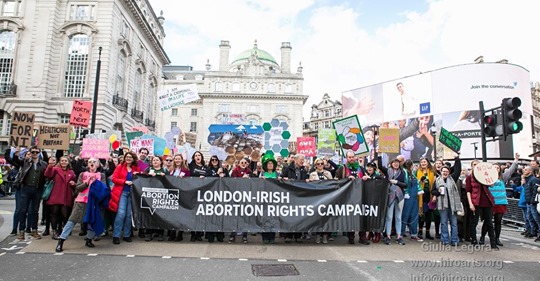
Three years ago, I co-founded a campaign group, the London-Irish Abortion Rights Campaign. We have marched, we have protested. We have written to our MPs, we have tweeted, we have chanted. Women have spoken out about their personal stories, women’s homes in Northern Ireland have been raided by police looking for abortion pills. And nothing has changed. We’ve been ignored by the UK government. We’ve been told that it’s a devolved matter. We’ve been told now is not the right time. We’ve been told to wait.

But we know that ‘waiting’ really means continuing the denial of basic healthcare, risking our lives and our health, sacrificing our autonomy, and keeping quiet while politicians wring their hands. I’m from the Republic of Ireland, and was part of an army of women who fought to repeal the total ban on abortion. We know what happens when change comes too late. I will never forget waking up to the news, in 2012 , that Savita Halappanavar had died in an Irish hospital because doctors would not give her a potentially life saving abortion after being told ‘This is a Catholic country’. In that moment something inside me changed – we were all culpable.

In 2010, Enda Kenny, our then Taoiseach said abortion was ‘not of priority’ when the European Court of Human Rights ruled against Ireland because the total ban forced a woman to travel to England for an abortion while having chemotherapy. In 2014, even after Savita Halappanavar died, the horrors of the Eighth Amendment came thick and fast. Miss Y, an asylum-seeker who had been raped, was turned back from an English port while travelling for an abortion. She went on hunger strike, became suicidal, and underwent a forced C-section. In the same year, a pregnant woman who was clinically dead was kept alive against her family’s wishes.It was called ‘experimental medicine’ and deemed unlawful.

It’s hard to fathom now how the Irish political establishment could claim that calling a referendum was not a priority sooner. Over 35 years, approximately 200,000 women and girls travelled from Ireland to England for abortion. Now, we are seeing the same intransigence in Westminster. How long will this government put its deal with the DUP ahead of providing healthcare to women and girls in Northern Ireland? How long will the government pledge to protect the ‘precious union’ of the UK, but treat women and girls in Northern Ireland as second class citizens? A prominent DUP MP, Sammy Wilson, was ‘not embarrassed’ about Northern Ireland’s abortion laws and said that without them children would be ‘discarded and put in a bin before they were ever born’. How long will the government hide behind devolution to defend its inaction on one of the harshest abortion laws in the world?

On November 18th, the mother of a 15-year-old girl (pregnant as a result of statutory rape) will stand trial in Northern Ireland for getting abortion pills for her daughter who was in an abusive relationship. The police were supplied with the daughter’s confidential GP records without her knowledge.These are the same pills that are available in England. On the NHS. And have been for the past 50 years.

Abortion in Northern Ireland is punishable by up to life in prison. There are no exceptions for rape or incest, or where the foetus will not survive after birth. The United Nations has called the abortion law in Northern Ireland “tantamount to torture”, the UK Supreme Court has “radical reconsideration’  is required and that the law ‘treats women like vehicles’. The UN is clear that devolution is no excuse, but the government continues to use this to justify inaction.

In 2017, an amendment by the Labour MP Stella Creasy, with wide cross-party support, forced the government agreed to waive the fees for women from Northern Ireland to England for abortion. In October last year, a further amendment tabled by Creasy and Conor McGinn passed by a huge majority. This time, it sought to hold Karen Bradley, the secretary of state for Northern Ireland accountable for the human rights violations associated with denial of abortion care and equal marriage rights. But Bradley and the government have continued to pass the buck to Stormont.

But Stormont has not sat for over two and a half years, and next week the government will kick the can farther down the road by postponing elections for another five months. Next week, Creasy will again table a series of amendments to compel the government to take responsibility for its human rights obligations on abortion in Northern Ireland.

Human rights rest on the accountability of governments, but this government seems content with using women and girls human rights as a bargaining chip to stay in power. On Friday, we began legal proceedings against the government, and launched a crowdfund to fund our case. We are a volunteer, grassroots campaign and we are worried about the costs of taking the government to court, but this is happening on our watch, and we are ready to push for change through every route. We might not win our case, but we will keep going. The North doesn’t need to be next. It needs to be now.

Source: https://www.huffingtonpost.co.uk/entry/northern-ireland-abortion_uk_5d23047ae4b0f3125686a6d2?fbclid=IwAR3XVuuyZ8DhykhqdMrNBook3krp4UPnUJqlBj2f6fWTA_Xl7OSMUjTg2T0&guccounter=1&guce_referrer=aHR0cHM6Ly93d3cuZmFjZWJvb2suY29tLw&guce_referrer_sig=AQAAAIHtUKG4w8bBx-ugF7zfXdkj20GF0kEdOXLRpncXcuxOwnIaYBlm-vXeETR73G1K2NO9_Ln8O-7BNdLEyGefDUFlsJsnS5Aj-IOuzGG7z8c6IfckbNp9nLCSdktMklHEWhpzcAxeelctGUw9regAD8wdTx2dw2BG_Hp1YN6hJAXM

“Thank you for helping save my life by allowing me to choose,” one woman wrote to an abortion fund that helps pay for women to have abortions they couldn’t otherwise afford.

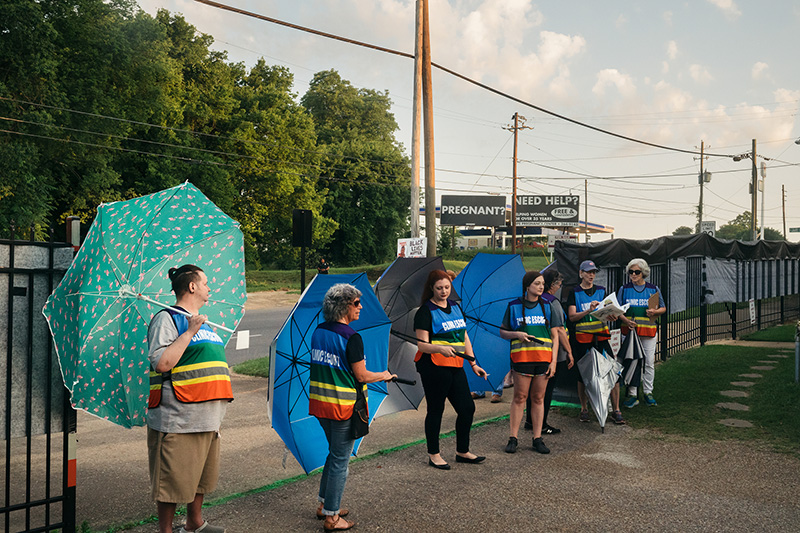
A worker from the Mississippi Reproductive Freedom Fund walks using an umbrella loaned to her by the clinic escorts at Little Rock Family Planning Services to shield herself from anti-abortion protesters.

Karen Musick wears comfortable shoes and holds a large rainbow umbrella, not to protect herself from the sun or rain but to shield women entering and leaving the clinic from the gaze or comments of the anti-abortion protesters outside.

Musick has been volunteering outside the Little Rock Family Planning Services abortion clinic for nearly five years, she told BuzzFeed News. She began as a volunteer clinic escort in 2013, during the annual 40 Days for Life campaign in which anti-abortion protesters gather outside the clinic, and others around the world, in larger numbers than usual for 40 days, typically in the fall, often proselytizing and holding up signs as women come in and out. But over time it became clear, she said, that they were needed more than just those 40 days every year. As abortion has increasingly become a hotly contested issue in Arkansas — which recently passed a ban on abortion after 18 weeks — and around the country, clinic escorting has become a year-round job for Musick and other volunteers.

After about a year and a half of escorting, Musick and two other volunteers decided to start the Arkansas Abortion Support Network (AASN), an abortion fund that helps Arkansas women pay for the procedure and helps get them to the clinic.

Abortion funds exist all over the US, working with local abortion clinics to help provide financial and practical support for women facing barriers to getting abortions. Some, like the Mississippi Reproductive Freedom Fund, provide any form of help they can, including helping women pay their bills or transporting them across state lines. AASN, however, is relatively young and only helps women within the state. But that’s still a lot of women.

Clinic escorts use large umbrellas to shield patients from anti-abortion demonstrators at the Reproductive Health Services center in Montgomery, Alabama, on May 24.

“In the three years we’ve existed, we’ve helped well over 200 women from Arkansas [with] in excess of $40,000 [in funding],” Musick told BuzzFeed News, standing outside the clinic and keeping one eye on the entrance in case someone was coming in who needed her help.

AASN helps supplement the cost of the abortion procedure or sometimes pays for it entirely. The network’s volunteers transport women seeking abortions who live within a 50-mile radius of the clinic and sometimes help arrange rides outside of that range. They also help women find lodging in the area if they don’t live in Little Rock and need to stay overnight for a two-day appointment, or if it’s more convenient for the women to stay in the area during Arkansas’s mandatory 48-hour waiting period between a consultation for an abortion and the actual procedure. Women can’t take children into the clinic with them during the procedure, so AASN will often help look after the kids during that time.

One day earlier this month, as Musick was standing outside the clinic, a staff member came outside for a smoke and a chat and handed Musick a manila envelope.

“There’s some good ones today,” she told Musick, smiling.

In the envelope were about a dozen anonymous letters to AASN that women had handwritten that day in that very clinic. While Musick was outside, the women were waiting to have their abortions in the clinic and writing the messages, thanking AASN for its help.

“These are always so powerful,” she said.

At BuzzFeed News’ request, Musick opened the envelope and began reading the letters aloud, standing in the shade outside the clinic door.

Toward the end of the letters, tears came to her eyes.

One woman wrote:

I struggle with a somewhat abusive, unstable relationship in which we already have one kid. He means the world to me, but I didn’t want to bring another kid into this world with the chance of his father not supporting adoption or abusing me about putting it up for adoption.

Early trimester abortion helped put me back on track with my life goals, and that was only possible thanks to the Arkansas Abortion Support Network and [the National Abortion Fund]. It helped a lot because I didn’t have the money and didn’t know how I would be able to take care of two kids with no help, thanks a lot I really appreciate the help and support.

Another woman wrote:

I’m 37 years old, I have two children ages 12 and 1. My 12-year-old was diagnosed with a serious disease at the age of 1, my 1-year-old has been having trouble talking and I’m concerned she has autism. Daycare for her is $600 a month, she gets sick so much from daycare I ended up losing my job as a result. Now I have no source of income and I’m facing being evicted.

A third letter read:

Thank you so much for your help. I am doing this procedure because I am battling with financial issues and I have a child that has a medical condition, so I’m doing this alone. I’m 28 and separated. I’m also a full-time grad student.

The father of my children got involved in federal drug trafficking, he has since changed his life but he faces a very lengthy prison sentence in a few weeks. Due to mandatory minimum sentencing laws passed by Congress, he’ll be in prison at least 10 years. That leaves me to raise two kids, and one completely alone. Having another child would be financial suicide. Things are going to be hard enough as it is.

Thank you for helping save my life by allowing me to choose.

Listen to the letters from women waiting to get abortions

Abortion fund volunteer Karen Musick reads letters women wrote while waiting outside the Little Rock Family Planning Services abortion clinic to get their abortions.

This was an exercise AASN started a few years ago. The clinic workers ask women the fund has helped if they want to write their stories down while they await the procedure. The vast majority say yes, Musick said.

The Little Rock clinic’s director, Lori Williams, told BuzzFeed News that the work that AASN and other abortion funds are doing is critical for their patients.

“The funds have been extraordinarily helpful in getting our patients the care they need, essential in some cases,” Williams said. “We talk to every patient about their ability to access funding and programs that are available if they qualify.

“Travel is the biggest barrier patients face, and having to do multiple visits. As patients have more need and need to travel more with the loss of clinics, these funds have become more and more essential,” Williams said. “That’s been the most dramatic effect — not so much changes in the laws in gestation, but closure of clinics that push more patients from out of state into needing to come here.”

After five years of doing this nearly every week — and almost every day since she retired about a year ago — Musick knows everyone at the clinic. Throughout the day, clinic workers will come up to her to chat, sometimes offering her food and asking how the protesters outside are behaving.

There were only three that day, standing outside the gate. A middle-aged couple stood silently wearing sun hats and holding signs with Bible verses written on them. Another man stood near them, preaching through a bullhorn.

“Mind your own business!!” one of the medical assistants stood up from the bench and yelled at the protesters. “I’ll shove that bullhorn up your ass,” she added more quietly. Her colleagues laughed.

Andrea Morales for BuzzFeed News

A painted rock with an illustration of a hanger crossed out is part of a display outside Little Rock Family Planning Services.

The clinic workers and escorts know most of the protesters by their first names and say the protesters know them by theirs. It’s usually the same people out there every day, the workers said. Some are quiet and just stand there, mostly not bothering anyone unless they are spoken to, but some of them yell all day at the patients and anyone else coming into the clinic.

“One day the protesters started showing up in our vests, in the same color, with umbrellas and clipboards, looking like us,” Musick told BuzzFeed News. The escorts cycled through several different vest colors to try to differentiate themselves, but the protesters would soon show up with the same ones and they had to start all over again. Eventually the clinic escorts decided to wear rainbow colors, thinking wearing the symbol of LGBTQ pride would finally dissuade the protesters from imitating them. But it didn’t.

“Thank you for helping save my life by allowing me to choose.”

This is a newer method used by anti-abortion activists who find the more traditional methods of clinic protesters — fear tactics and shaming, for example — crass and ineffective. Instead, the “sidewalk advocates,” as they refer to themselves, attempt to blend in with the clinic escorts and approach the women to ask them if they really want to have an abortion, and refer them to the anti-abortion clinic that is usually nearby.

“We’re used to it being crazy out here sometimes,” another clinic worker told BuzzFeed News, puffing on a cigarette. “Look at where we are and what we do; you gotta grow a thick skin.”

A medical assistant standing nearby chimed in, saying she’s worked at the clinic for seven years.

“I can’t be out and proud about where I work. I can’t tell people where I work, but I love fighting the good fight, I really do, and I’m gonna continue to fight the fight.” she told BuzzFeed News.

“You know, I gave my first baby up for adoption and that wasn’t for me, just like abortion isn’t for everybody. Doing that killed me,” she added. “We deserve to have a right, to have a choice; that’s all it is.”

Source: https://www.buzzfeednews.com/article/emaoconnor/abortion-fund-women-letters-arkansas?fbclid=IwAR3nWMTFdL24en9-DstTi-hL3fjH3UbEeaVgezejlvrBF_3iZDEhMb4JaeQ

Can the same tactics work now?

n April 1992, Kathryn Kolbert walked into the chambers of the Supreme Court to argue the biggest case of her career—one that would decide whether abortion would remain legal in the United States.

Kolbert had spent years in court defending clinics against anti-abortion legislation, but when she stood before Supreme Court justices that spring to defend Planned Parenthood against Pennsylvania legislation threatening to overturn Roe v. Wade, she didn’t think her previous experience would help much. She knew there were only two justices who supported Roe. The remaining justices had track records for opposing the 1973 decision, and one of them had been among the two dissenters of the original abortion ruling.

Kolbert believed there was nothing she could do to win the case, Planned Parenthood v. Casey—and she felt certain that as a result, Roe would fall.

“If you’re arguing a case before the Supreme Court, you have to find five votes, and there’s no substitute for that,” said Kolbert, who was an attorney with the American Civil Liberties Union (ACLU) at the time. “We did not see the fifth vote.”

Instead of focusing on winning over the minds of Supreme Court justices hostile to Roe—unwinnable, in her estimation—Kolbert shifted her attention outside the courtroom. Her goal was to make sure the rest of the country understood what was at stake, and strengthen the pro-choice movement so Americans could win back abortion rights through federal legislation after the justices inevitably overturned Roe v. Wade. She would work closely with pro-choice groups and hammer home in her arguments that what the justices decided in Planned Parenthood v. Casey was really a decision on Roe. Yet even with this aggressive strategy she was sure she would lose.

But the justices surprised Kolbert, and much of the country, when in June 1992, they upheld Roe in a 5-4 ruling. It was almost otherwise—Justice Anthony Kennedy changed his mind at the last minute, persuaded by Justices Sandra Day O’Connor and David Souter. “Kennedy thought there was nobility in judging; saving Roe would show the world that the justices were something more than mere pols,” Jeffrey Toobin wrote in his 2008 book on the Supreme Court, The Nine.

Kolbert believes the outrage from pro-choice activists helped sway Kennedy, and convinced other conservative members of the court they should uphold Roe.

“There was such an outcry from people who were fearful of losing their rights that justices became concerned about the institutional integrity of the court,” Kolbert explained.

Twenty-seven years after the Casey decision, abortion-rights advocates find themselves in a strikingly similar position. Since January, nine states have passed abortion bans, some of which have no allowances for rape and incest. Conservative lawmakers are more forthcoming than ever about their longtime strategy of passing increasingly severe laws to get them before the nation’s highest court. President Donald Trump, who pledged to appoint only “pro-life judges” to the court, has given it a conservative-leaning majority once again. And though justices recently declined to rule on an Indiana abortion law, they are expected to take up a challenge to a Louisiana law in the coming months. If they decline to hear that one too, there are several other cases in the pipeline that could serve as vehicles for overturning or dismantling Roe.

Once again, supporters of abortion rights believe a future without federal abortion protections is just around the corner; for their opponents, victory seems well within reach.

Revisiting Planned Parenthood v. Casey can help explain much of the current climate. Though the lesser-known abortion ruling reaffirmed Roe v. Wade, it also established the “undue burden” test, a looser interpretation of Roe that has allowed conservative politicians to pass hundreds of incremental restrictions on the state level, chipping away at abortion rights over decades. But the case also gave the pro-choice movement a historic organizing opportunity, helping it become the political force it is now—and preparing its advocates for the fight ahead.

“We weren’t as strong then as we are today,” said Eleanor Smeal, the founder and president of the Feminist Majority Foundation. “We’re much better organized now, and we know what we have to do.”

In Planned Parenthood v. Casey, justices ruled on an omnibus of abortion restrictions crafted by Stephen Freind, a Republican state representative in Pennsylvania. Known as the 1989 Abortion Control Act, the legislative package included a spousal notification requirement, a parental consent requirement, a 24-hour waiting period, and a mandate that abortion clinics provide the state with extensive information about patients who receive abortion care. Planned Parenthood sued the state, arguing that Roe v. Wademade such restrictions blatantly unconstitutional because the decision guaranteed Americans’ constitutional right to abortion before fetal viability, and these requirements put that right in jeopardy. (The “Casey” in the suit was Pennsylvania Governor Bob Casey, who signed the restrictions into law; he was the father of current Senator Bob Casey Jr., a “pro-life” Democrat.)

“We weren’t as strong then as we are today. We’re much better organized now, and we know what we have to do.”

The anti-abortion measures weren’t without precedent—seven years earlier, Pennsylvania had attempted to enact a slightly different set of restrictions, only for the law to be deemed unconstitutional by the Supreme Court in 1986. But conservative Pennsylvania lawmakers remained undeterred: Freind, who led the state’s attacks on abortion rights, knew he still had the votes to push through similar measures restricting abortion. During his tenure, the Pennsylvania state legislature passed an anti-abortion law nearly every year; Freind brags he never lost a vote.

“Legislators in other states would call me for advice on how to advance [anti-abortion] legislation,” Freind said. “I was terrified because I was the point man, and because everyone was watching us.”

On the pro-choice side, Smeal and other feminist leaders were plotting a plan of attack for what they felt certain would be a losing fight. In the years leading up to Planned Parenthood v. Casey, Smeal, who was just beginning her tenure at the Feminist Majority Foundation, said there had been several “emergency meetings” about the escalating threats to Roe, but when they discussed organizing mass demonstrations in protest, there were concerns about the movement’s numbers and organizing power.

“Legislators in other states would call me for advice on how to advance anti-abortion legislation. I was terrified because I was the point man, and because everyone was watching us.”

When Smeal proposed the March for Women’s Lives on the National Mall in 1986, she said some feared not enough women would come out to make an impact. Instead, about 100,000 people attended the march, and, three years later, the group turned out at least 300,000 for protests in advance of the Supreme Court’s Webster v. Reproductive Health Services decision, which allowed states to restrict the use of public funding and facilities for abortion care, and bar public employees from performing abortions.

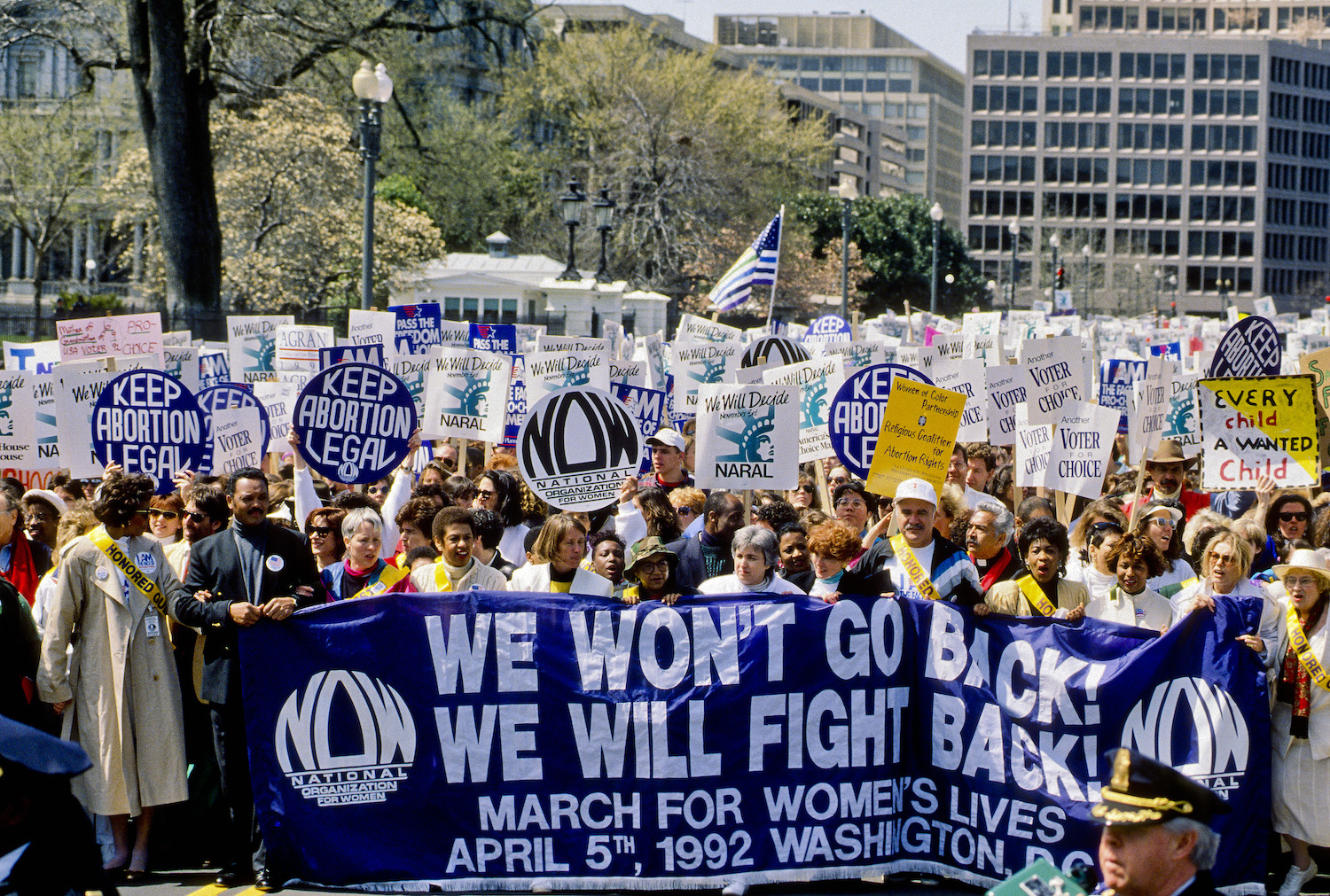
By the time 1992 came around, Smeal said, the movement had gotten stronger and more organized. Feminist groups held another March for Women’s Lives, days before arguments began for Planned Parenthood v. Casey, where at least half a million people gathered—one the largest crowds ever to march in the Capitol at the time.

The 1992 March for Women's Lives in Washington D.C.

At least half a million people attended the April 1992 March for Women’s Lives rally in Washington D.C. ahead of the Planned Parenthood v. Casey decision. (Mark Reinstein/Getty Images)

Toni Van Pelt, the president of the National Organization for Women (NOW), said that for many women, the 80s protests surrounding conservative Supreme Court appointments, as well as the marches for abortion rights that followed, were political awakenings—much like the 2017 Women’s March or the outrage over Brett Kavanaugh’s Supreme Court confirmation. These demonstrations helped pro-choice activists grow their movement, and gave them an opportunity to show their adversaries just how many people they would alienate if abortion rights were overturned.

“We were leading protests in the streets, calling our legislators, and we’d also been opposing these Supreme Court justices as soon as they were appointed,” Van Pelt said. In short, she continued, it was a time when the pro-choice movement developed the “playbook” it relies on now.

It was also a time that the feminist movement became more inclusive. Just two years before Casey, scholar Kimberlé Crenshaw invented the term “intersectionality” in a seminal paper on Black women’s oppression, asserting that race, class, gender, and other social factors combine to create people’s specific life circumstances. With Crenshaw’s theory in mind, mainstream feminist organizations like NOW, then led by Patricia Ireland, reached out to civil rights and LGBTQ groups to broaden their message.

“Intersectionality wasn’t so much a new concept, but it got a name,” Ireland said. “I would like to think something of a hallmark of my presidency [was] that I enhanced and expanded NOW’s connections with other social justice movements—that was the only way we were going to win.”

Pro-choice organizers began to argue that the fight to preserve Roe was no longer just about abortion rights, but “reproductive justice”—an emerging term that acknowledged the full matrix of socioeconomic factors that influence women’s ability to control their own bodies. While the term had been circulating before Casey, black feminists officially coined “reproductive justice” at a 1994 pro-choice conference.

“We were talking more about how poor women had a harder time gaining access to contraception and abortion, as well as having children and raising them to be healthy,” Ireland said. “So yes, we were very focused on abortion, but we also began to focus on a much bigger concept we now call ‘reproductive justice.’”

Kolbert relied heavily on this network of abortion rights organizers when she was litigating Casey. She had regular meetings with the leaders of some 40 to 50 pro-choice groups at the time, where they would discuss strategy and messaging.

Inside the courtroom, she wanted to make it clear that the Supreme Court’s decision would be a direct ruling on Roe—an implication some justices wanted to dodge, according to Toobin. “[Justice David] Souter did not want to acknowledge that the only choice in Casey was to make an up-or-down judgment on Roe,” he wrote in The Nine. “He wanted the flexibility to rule on the specifics of the Pennsylvania statute, without necessarily passing on the ultimate issue of Roe v. Wade.”

Kolbert squashed that idea in the very first sentence of her opening statement: “Whether our Constitution endows government with the power to force a woman to continue or end a pregnancy against her will is the central question in this case,” she said.

Emphasizing this point was among the central missions of pro-choice activists at the time, some of whom were concerned about confusion among the general public. “You had to wake people up and get them to understand that this wasn’t just about abortion rights in Pennsylvania,” Smeal said. “We had to make sure everyone knew it would affect everyone if we lost the standard Roe established.”

Kolbert also wanted to make Planned Parenthood v. Casey as political as possible. With the 1992 presidential election fast approaching, Kolbert sought to make sure the Supreme Court handed down its decision overturning Roe v. Wade in time for voters to express their outrage at the ballot box. Kolbert expedited the trial as much as she could, first by appealing directly to the Supreme Court rather than asking the Third Circuit appeals court to rehear the case, then taking just three weeks to file a petition to the court to take up the case despite the three-month deadline she’d been given. Meanwhile, pro-choice groups flexed their growing numbers with protests and demonstrations intended to show anti-choice politicians that they would pay the price on Election Day.

With the 1992 presidential election fast approaching, Kolbert sought to make sure the Supreme Court handed down its decision overturning Roe v. Wade in time for voters to express their outrage at the ballot box.

“We wanted to show the extent to which there was going to be political consequences to taking away the right for women to make this decision,” Smeal said. “Women were going to remember in November.”

Feminist leaders say that’s just one more thing that’s different now: Organizing can happen much faster, and large swaths of the American electorate appear to understand more clearly the gravity of anti-abortion legislation. In the hours after Alabama Governor Kay Ivey signed a near-total abortion ban last month, people flooded local and national abortion funds, leading to a massive spike in donations. Days later, thousands of abortion rights supporters attended the more than 400 “Stop the Bans” rallies across the country, with calls to protectRoe v. Wade.

Women in particular have become unapologetic about speaking out for abortion rights, Kolbert said—a huge boon for the contemporary movement to preserveRoe. “The vast majority of Americans believe in choice, and that’s a place of political power,” Kolbert said. “What I learned in Casey more than anything is that, up until [1992], we didn’t want to assert that power. It felt uncomfortable. Women didn’t want to make waves.”

Some believe female outrage, now widely recognized as an effective political tool, has a big role to play in fighting current threats to federal abortion rights. If the Supreme Court doesn’t want to be perceived as a political body, if it cares about its institutional integrity, and if it has any modicum of concern about public opinion, perhaps the best way to protect Roe v. Wade is being as loud as possible about it.

“I think we’re going to see women continue to not play nice on this one,” said feminist author and journalist Jill Filipovic. “The response to these encroachments [on abortion rights] isn’t just going to be, ‘I’ll donate money to Planned Parenthood.’ It’s going to be angry, and loud, and visible. I’m hopeful the judges on the court will see that and calculate the cost.”
March for Women's Lives 1992

Protesters leading the 1992 March for Women’s Lives. (Mark Reinstein/Getty Images)

Not every justice on the court may be equally invested in the public perception of it, Filipovic said, but she believes there’s still an opportunity to impact how it rules on Roe, or if it decides to take up a case challenging federal abortion rights to begin with.

“I do think the public can still sway the court on this question,” she continued. “Keeping pressure on the court can be tremendously effective.”

Not everyone agrees on which lessons from Casey are applicable to current events. Despite Kolbert’s belief that public outcry had a degree of influence on the Supreme Court’s decision to uphold Roe, she also cautions against optimism that the same tactic will work in 2019. “I was surprised it was effective in ‘92, but I would be more surprised if it were effective today,” she said.

Kolbert insists that the fact that justices decided against overturning Roe v. Wadein 1992 doesn’t disprove her initial calculation—that she needed five votes to win and had no path forward short of that. As she puts it, she merely had a fifth vote she didn’t know she had in Kennedy, who defected from the court’s bloc of Republican-appointed justices in the 5-4 decision.

“I was surprised it was effective in ’92, but I would be more surprised if it were effective today.”

It turned out that the court had a vested interest in preserving its integrity, and following its own precedents—something justices on the current court have shown little regard for as of late. Last June, the court overturned its own rulingin Janus v. AFCME, and in May did the same in Franchise Tax Board of California v. Hyatt. Neither case had to do with abortion, but each erased 40 years of precedent.

Many consider the tax case a sign that justices would not shy from doing the same with Roe v. Wade, including the court’s liberal justices: In his dissenting opinion on Hyatt, Stephen Breyer cited Planned Parenthood v. Casey in a warning to his conservative colleagues about overturning precedent. “Today’s decision can only cause one to wonder which cases the Court will overrule next,” Breyer wrote. When the Supreme Court voted to override its own ruling once again on Friday, Justice Elena Kagan added: “Well, that didn’t take long.”

That doesn’t mean political organizing is for naught. Pro-choice organizers say that since they can no longer depend on the court to stand by its past rulings, the fight to protect abortion rights must now be fought primarily through electoral politics—just as Kolbert recognized in 1992. NOW said that it has no intention to organize another March for Women’s Lives; the group has said it’s currently putting its resources toward the 2020 election. “We are encouraging our members to march to the polls in November!” the site’s FAQ page reads.

Pro-choice organizers say that since they can no longer depend on the court to stand by its past rulings, the fight to protect abortion rights must now be fought primarily through electoral politics.

The Feminist Majority Foundation, NARAL, and Emily’s List are also focused on flipping seats in state legislatures, winning gubernatorial races, and regaining a majority in the U.S. Senate, where Democrats could pass federal legislationsecuring abortion rights in the absence of Roe with enough votes—and with a Democratic president who would sign it.

Indeed, many of the new protections for abortion rights have come about because of progressive gains at the state level, like in Maine, where Governor Janet Mills has expanded abortion access since defeating her Republican predecessor, Paul LePage, in November. Other states like New York, Nevada, Illinois, Vermont, and Rhode Island have also passed legislation to enshrine abortion rights in state law, and all in 2019 alone.

That wasn’t the case in 1992, and some say it puts the pro-choice movement in a better position to protect abortion rights in the absence of Roe than 27 years ago.

“Frankly, I was more worried in 1992 than I am now,” Smeal said. “But there is a real, clear and present threat. We should be signaling the alarm.”

Source: https://www.vice.com/en_us/article/xwnpeq/the-history-of-planned-parenthood-v-casey-and-pro-choice-activism-roe-v-wade?fbclid=IwAR2ILtNdmZre_27EAEopE6yikR6JyxCyHNruUgmZ51BM87lyp5lZBjoQQX8

Federal Judge Sarah Evans Barker blocked a new law in Indiana that would make it a felony for doctors to perform second trimester abortions just days before it was set to go into effect.
The law, which would have come into force on July 1, is not criminalizing all second trimester abortions, but it is being criticized for prohibiting one of the safest and most effective proceduresIndyStar reports. After issuing the temporary injunction, Barker said in a statement the law “prohibits physicians from utilizing the most common, safest, often most cost effective, and best understood method of second trimester abortion, requiring them instead to resort to alternatives that are medically riskier, more costly, less reliable, and in some instances simply unavailable, while accomplishing little more than expressing hostility towards the constitutionally fundamental right of women to control their own reproductive lives.”
During a hearing earlier this month, Barker questioned the reasoning behind why Indiana would want to eliminate dilatation and evacuation abortions, leaving women with “highly risky,” alternative procedures such as prematurely inducing labor or the injection of fatal drugs, the Associated Press reported.
Indiana legislature passed the law in April. Should the new law be implemented, doctors who perform dilation and evacuation abortions could face up to six years in prison as well as felony charges. American Civil Liberties Union lawyers sued the state on behalf of two doctors arguing that this new law would put a “substantial and unwarranted burden on women’s ability to obtain second-trimester, pre-viability abortions.” Attorneys representing the state of Indiana maintain that the state has the authority to limit types of abortion procedures that are made available.
The preliminary injunction doesn’t permanently prevent the law from being implemented; however, it does create an opportunity for the law to be reconsidered or altered. Until there has been a chance for a new hearing, the previous laws will be upheld.

Reproductive rights advocates said in an open letter that restrictions on medication abortion are part of a larger anti-choice agenda to end legal abortion in the United States.

Reproductive rights advocates said anti-choice misinformation campaigns have largely stymied efforts to make medication abortion pills more accessible in the United States.
Wochit News / YouTube

Four months after the U.S. Food and Drug Administration (FDA) warned online service Aid Access to stop shipping abortion pills to patients in the United States, dozens of reproductive rights advocates have come out against unnecessary regulation of medication abortion by mail.

In an open letter released Monday, the organizations and experts explained the online service’s importance as states continue to pass laws putting abortion care out of reach for many. More than 100 anti-choice members of Congress encouraged FDA officials in May to continue its crackdown on Aid Access and other overseas online providers of medication abortion pills.

Aid Access has prescribed and mailed mifepristone and misoprostol, commonly known as abortion pills, to people seeking to end their pregnancies in the United States since 2018.

“We stand against punishing people for seeking health care, and we stand against using the FDA as a pawn to advance a political agenda that aims to deprive people of their dignity and humanity as well as their constitutional right to make intimate decisions about their pregnancies,” the letter says. “We urge the FDA, state legislators, and all policy-making bodies to be guided by the science and support the removal of unnecessary regulatory barriers that make safe and effective abortion medications inaccessible to people who need them.”

The open letter characterized restrictions on medication abortion as part of a larger anti-choice agenda to end legal abortion across the country: “The anti-abortion politicians and activists who propose and enact abortion restrictions are attempting to legislate legal abortion out of existence. They are well aware that the FDA’s restrictions and actions are a key element in the success of their own efforts to make abortion inaccessible.”

The letter pointed out that five states have laws criminalizing self-managed abortion, or abortions conducted outside a medical facility. At least 21 people have been arrested in the United States since 2000 “for ending their own pregnancy or helping someone who has made the decision to do so.”

Reproductive rights advocates said anti-choice misinformation campaigns have largely stymied efforts to make medication abortion pills more accessible in the United States.

“I don’t think the public knows very much about medication abortion in the United States, or how available it is worldwide,” Dr. Ghazaleh Moayedi, a fellow with Physicians For Reproductive Health who signed the open letter, told Rewire.News. “Just to the north of us, Canada approved mifepristone many years after it was available in the U.S., but it is much easier to access since it is available through pharmacies without the restrictions we have in the U.S. It is an encouraging example of how scientists, health-care providers, and activists were able to use research to dramatically change abortion access. Now Canada is now leading the way in expanding access to medication abortion.”

In Ireland, where Aid Access’ founder has provided a similar online service, research found patients “are able to safely use the medications as directed and self-refer to a health care provider when needed,” according to the open letter.

Abortion rights advocates told Rewire.News the recent passage of near-total abortion bans in several states make access to medication abortion more critical than it was even a couple years ago.

Yamani Hernandez, executive director of the National Network of Abortion Fundsone of the letter’s signatories—said medication abortion is “over regulated” across the United States, contributing to abortion stigma. “There isn’t enough access to clinical care in this environment where restrictions on abortion are increasing,” Hernandez said, adding that 90 percent of U.S. counties don’t have an abortion clinic. “We know people will turn to services like Aid Access, and [medication abortion] should be as legal and accessible as possible.”

Traveling—sometimes hundreds of miles—for abortion care isn’t feasible for many people who lack the resources and time off work to make such a trip, Hernandez said. That makes Aid Access and sites like it all the more important for people in the United States.

“We know not everybody is going to be able to travel for myriad reasons,” Hernandez said. “Our main aim is having decriminalization [of self-managed abortion] as part of our agenda, to make sure folks are getting the care they need while not being criminalized in the process.”

Source: https://rewire.news/article/2019/07/01/reproductive-rights-groups-tell-fda-to-stop-restricting-medication-abortion/

Justice Clarence Thomas said that while he agreed with the Supreme Court’s decision Friday not to hear a case on surgical abortions in Alabama, he wants the high court to consider rolling back historical precedent on abortion — an encouraging message to the slew of conservative state legislatures who have rolled out abortion bans this year.

An Alabama law prohibiting a type of surgical abortion will remain blocked after justices declined to consider the case — a separate measure from Alabama’s near-total ban on abortion that takes effect on November 15.
But Thomas made clear that it was time for the court to address abortion, as red and blue states have clamored to codify abortion on their terms in anticipation of a possible reckoning with Roe v. Wade, the landmark 1973 Supreme Court ruling that legalized abortion nationwide.
The West Alabama Women’s Center, represented by the American Civil Liberties Union, argues the law prohibiting physicians from performing what are clinically referred to as dilation and evacuation abortions would outlaw “the most commonly used method for performing pre-viability second trimester abortions.”
In court briefs they argue that “starting around 15 weeks,” dilation and evacuation is the “only abortion method that can be performed outside a hospital; it accounts for 95% of second-trimester abortions nationally and 99% of abortions after 15 weeks in Alabama.” They also dispute the robustness of the health exception for women.
Thomas agreed that the court should not have taken up this case because a lower court had held that other abortions methods available in Alabama were “too risky.” He reiterated, however, that the Supreme Court should revisit its precedent on abortion.
He described the high court’s abortion jurisprudence as having “spiraled out of control” and urged the justices to take up the issue soon.
“Although this case does not present the opportunity to address our demonstrably erroneous ‘undue burden ‘standard, we cannot continue blinking the reality of what this court has wrought,” Thomas added.
CNN Supreme Court analyst Steve Vladeck said it wasn’t surprising that the justices declined to take up the “narrow and specific” Alabama case.
“But Justice Thomas, who has been sending strong signals about overruling precedent throughout this term, sent another one — suggesting that in an appropriate future case, the court should revisit the entire ‘undue burden’ framework, which, in essence, would mean revisiting whether the Constitution has anything to say about how states limit access to abortions,” Vladeck, a professor at the University of Texas School of Law, added.
“That would obviously be an enormously controversial case, and Thomas is effectively saying he’d like to see it happen sooner rather than later,” Vladeck said.
Thomas could have his pick of recent state laws. Controversial bills banning abortion upon the detection of a fetal heartbeat — as early as six weeks into a pregnancy, before many women even know that they are pregnant — have been signed into law in GeorgiaLouisianaMississippiand Ohio. Gestational bans have also sprung up, banning abortions at eight weeks in Missouriand at 18 weeks in Arkansas.
But abortion rights advocates have challenged several of the laws — as many conservative lawmakers anticipated, having advanced the measures in hopes of eventually overturning Roe.
The ACLU and Planned Parenthood sued Alabama last month and Arkansas and Georgia this week, alleging in federal court that the laws were unconstitutional.
Some judges have already acted, rejecting heartbeat bills in Iowa and Kentucky as well as an 18-week ban in Utah.

Get ready for these new legal restrictions on abortion if you live in Arkansas, Idaho, Indiana, Ohio, South Dakota, or Tennessee.

Arkansas Gov. Asa Hutchinson signed several anti-abortion laws set to take effect July 24.
Alex Wong / Getty Images

Editor’s Note: This piece will be updated throughout July as cases progress through the courts. 

It’s been a banner year for legislative assaults on reproductive rights.

In the past six months, legislators have introduced nearly 400 anti-choice measures in states across the country. Sixteen states have considered banning abortion once a fetal “heartbeat” is detected. At least 15 have considered laws that would place the rights of a fetus over those of a pregnant person. Twelve states have considered measures that would prohibit abortion at 20 weeks’ gestation. Conservative state lawmakers introduced total abortion bans, laws requiring physicians to lie to their patients about the efficacy of “abortion reversal,” laws criminalizing certain methods of abortion, and laws forcing unnecessary regulations on abortion providers.

This is the culmination of years of teamwork between state lawmakers and anti-choice groups. They’re trying to tee up a challenge to overturn Roe v. Wade—and they’re making abortion care increasingly difficult to access in the meantime.

At least 26 abortion bans have already been enacted in 2019. Unless the courts do something to stop them, here are the laws that will go into effect in July.

Arkansas

Several abortion restrictions are set to become law next month in the state of Arkansas. Let’s start with the unconstitutional abortion bans. Beginning July 24, it will be illegal to perform or induce an abortion after 18 weeks’ gestation or when a patient is seeking the procedure due to a diagnosis of fetal Down syndrome

Except in cases of medical emergency, or when a pregnancy is the result of rape or incest, the “Cherish Act” makes it a felony punishable by up to six years in prison to perform an abortion if a fetus has reached 18 weeks’ gestational age. Prior state law prohibited abortion at 20 weeks’ gestation. Lawmakers in Utah this year passed a nearly identical ban which has already been temporarily blocked.

The “Down Syndrome Discrimination by Abortion Prohibition Act” makes it a felony, also punishable by up to six years in prison, for a physician to perform an abortion if they know the pregnant person is seeking it due to a possibility the fetus has Down syndrome. Before the procedure, a doctor must ask the patient if they’re aware of any test result or diagnosis suggesting that the fetus may have Down syndrome. If they are, the doctor must review the patient’s medical history to see if they’ve ever had an abortion in the past after becoming aware that the fetus may have had Down syndrome. This requirement also creates a forced waiting period, as physicians are prohibited from performing an abortion until at least two weeks have passed, ostensibly in order to obtain the pregnant person’s medical records.

This type of anti-choice legislation—which targets a pregnant person’s “reason” for an abortion—attempts to pit reproductive rights against the rights of people with disabilities. The courts have blocked similar measures in IndianaKentuckyLouisiana, and Ohio. Utah also passed a “reason” ban this year, but that law won’t take effect until a “court of binding authority”  upholds a similar law.

With the passage of SB 448, which will also go into effect July 24, any person performing an abortion must now be licensed to practice medicine in the state of Arkansas and be board-certified or board-eligible in obstetrics and gynecology.

Planned Parenthood, the American Civil Liberties Union (ACLU), and the ACLU of Arkansas filed a lawsuiton Wednesday challenging the 18-week ban, the “reason” ban, and SB 448. The lawsuit argues the bans are unconstitutional and that the OB-GYN requirement is “arbitrary” and would “severely limit abortion access in the state.”

A handful of other regulations targeting abortion providers are also set to take effect in July. SB 278requires abortion facilities be located within 30 miles of a hospital that provides gynecological or surgical services and requires physicians report any abortions that result in a live birth—an extraordinarily rare occurrence. The measure also increases the state’s medically unnecessary waiting period before an abortion from 48 to 72 hours, making Arkansas the sixth state (after Missouri, North Carolina, Oklahoma, South Dakota, and Utah) to require pregnant patients wait three days after their initial consultation to obtain an abortion.

The “Perinatal Palliative Care Information Act” requires doctors to inform patients carrying a fetus with a life-threatening anomaly of the availability of perinatal palliative care services. Physicians must offer the services—which include support for the pregnant person and their family from the time of diagnosis through the postpartum period after the birth and death of the fetus—as an alternative to the abortion. A physician who fails to provide the information before an abortion would have their medical license revoked.

SB 3 requires health-care providers to file a report within three days to the state health department any time they diagnose or treat someone for a complication that may be the result of an abortion. The law imposes fines for each violation and revokes the medical license of any provider who amasses three violations.

SB 341 clarifies what information abortion providers need to give their patients about medication abortion “reversal.” In 2015, Arkansas became one of the first states to require physicians to provide information about so-called reversal—an experimental and unproven treatment that has yet to be supported by major medical organizations. The new measure requires doctors to give a pregnant person a written notice containing “reversal” information after the first dose of abortion-inducing drugs. Seven other states currently require physicians to provide abortion “reversal” information: IdahoKentuckySouth DakotaUtahNebraskaNorth Dakota, and Oklahoma (the latter three’s laws are set to take effect later this year). A similar law in Kansas was vetoed earlier this year.

As if all that weren’t enough, Republican Gov. Asa Hutchinson also signed a ban on public funding of certain types of research involving human embryos—set to take effect next year—and a “trigger law” criminalizing abortion, which will take effect if Roe v. Wade is overturned.

Idaho

Beginning July 1, Idaho will once again enforce a ban on so-called partial-birth abortion—which is not a thing. The political and non-medical term was coined by anti-choice advocates to describe an intact dilation and evacuation abortion, or “D and X” abortion—an uncommon medical procedure that has since been banned by the federal government. The revised state law updates the Idaho Partial-Birth Abortion ban, which has been unenforceable since 1999, so that it is consistent with federal law. The original ban was ruled unconstitutional for being vague and lacking exceptions to protect the life of the pregnant person.

Indiana

Two anti-choice measures are scheduled to take effect in Indiana on July 1: a ban on the most common method of second-trimester abortion and a religious imposition measure allowing certain health-care providers to refuse to participate in abortion care.

HB 1211 prohibits someone from performing a “dismemberment abortion”—a non-medical term used to describe dilation and evacuation (D and E) procedures—unless it’s necessary to prevent serious health risks to the pregnant person or to save their life. A person who performs such an abortion would be committing a felony punishable with up to six years in prison and a $10,000 fine. D and E abortions are currently prohibited in Mississippi and West Virginia, but courts have blocked or temporarily enjoinedsimilar bans in eight states. A nearly identical ban was enacted in North Dakota this year, but that measure won’t take effect unless the Eighth Circuit Court of Appeals or the U.S. Supreme Court declares such bans constitutional.

The American Civil Liberties Union and the ACLU of Indiana have already filed a legal challenge against HB 1211. A federal judge granted a temporary injunction blocking the law on June 28, after initial publication.

The other anti-abortion measure taking effect in July allows nurses, physician assistants, and pharmacists to refuse to participate in an abortion or to dispense a medication abortion if doing so would be contrary to their religious or moral beliefs. The state’s existing religious exemption law only applied to physicians or employees of hospitals and abortion facilities. Similar religious refusal or “conscience protection” measures—which pose a significant danger to patients—have been considered this year in ArkansasNew MexicoOregon, and Texas.

Mississippi

A law banning abortion as early as six weeks into a pregnancy—before many people even realize they’re pregnant—is technically scheduled to take effect in Mississippi on July 1. But thanks to a court order, that won’t be happening. Except in cases of medical emergency, SB 2116 prohibits performing an abortion on a pregnant person once a fetal “heartbeat” has been detected. But here’s the thing: Ultrasounds can detect electrical activity very early into a pregnancy, even before a heart has actually been developed. It isn’t a heartbeat, yet conservative lawmakers have successfully employed that terminology to pass near-total abortion bans in several states this year.

These laws are clearly unconstitutional, as they prohibit abortion prior to viability. The Center for Reproductive Rights filed a legal challenge against SB 2116, and the law has been temporarily blocked as the case proceeds.

Ohio

Another unconstitutional near-total abortion ban is set to take effect July 1, this time in Ohio. Except in cases of medical emergency, a physician may not perform or induce an abortion when a fetal “heartbeat” has been detected—which again, is just electrical activity depending on the stage of the pregnancy. The law doesn’t contain any exceptions for rape or incest. A person who performs an abortion in violation of this law would face felony charges punishable by six to 12 months in prison and a fine.

The ACLU of Ohio has filed a legal challenge, but no decision has been handed down as of publication.

South Dakota

Republican Gov. Kristi Noem signed a handful of anti-abortion bills scheduled to take effect July 1. One measure—HB 1177—requires doctors to offer pregnant patients an “opportunity” to view a sonogram and hear the heartbeat of the fetus prior to an abortion. (It is not clear whether the definition of “heartbeat” in the law includes fetal electrical activity.) The bill was originally introduced as a forced ultrasound measure, which would have carried felony charges for doctors who failed to perform ultrasounds prior to an abortion. The revised law also requires doctors to document the pregnant person’s response to the ultrasound offer.

A separate measure, HB 1190, requires physicians to include the number of pregnant people who agreed to view a sonogram image and/or hear the fetal heartbeat in each abortion report they submit to the state. Current state law requires the South Dakota health department to issue a public report of all the abortion-related data compiled from physician reporting forms by November of each year. Lawmakers this session passed a measure that revises the deadline from November to July.

And finally, it will now be a crime to cause an abortion against a pregnant person’s will. HB 1193 makes it a felony punishable by life in prison to threaten a pregnant person with homicide, murder, manslaughter, aggravated assault, or kidnapping if they don’t undergo an abortion. There is limited data on how often people are forced to end a pregnancy—and most, if not all, abortion clinics have counseling policies in place to address coercion—but anti-abortion advocates say such laws are necessary to protect pregnant people. Opponents of coercion laws say these policies ignore the broader issue of domestic violence and do nothing to combat abusive partners trying to force their partner to get pregnant or carry an unwanted pregnancy to term.

Tennessee

Beginning July 1, physicians in Tennessee will be required to report any suspected sexual abuse of a minor when asked to perform an abortion on anyone under 18. Under existing state law, a physician has reasonable cause to report the sexual abuse of a minor seeking an abortion if they are under the age of 13. The new law states that if the minor who requests an abortion is between ages 13 and 17, and the physician has reasonable cause to suspect child sexual abuse, then the physician must report that suspected abuse.

Still More to Come

Several more anti-abortion measures are scheduled to take effect before the year is out. Laws requiring doctors to inform patients that they may be able to “reverse” a medication abortion are scheduled to take effect later this year in NebraskaNorth Dakota, and Oklahoma. Starting in August, Louisiana’s abortion clinic licensing law will apply to medication abortion in addition to surgical abortion. In September, the state of Texas will punish doctors who fail to provide the appropriate degree of care to a child born aliveafter an abortion (which isn’t a thing that happens), block local and state funding of abortion providers, and place more requirements on doctors when it comes to informed consent materials. And finally, total and near-total abortion bans in MissouriAlabama, and Georgia are scheduled to take effect in August, November, and January, respectively—but they’re all facing legal challenges and will likely be blocked.

So, yeah, it’s been a rough six months—and things are only going to get worse.

Source: https://rewire.news/article/2019/06/28/here-are-all-the-anti-abortion-laws-going-into-effect-next-month/