The bill repeals Illinois laws that placed restrictions on abortion, and is expected to be signed into law by Gov. J.B. Pritzker.
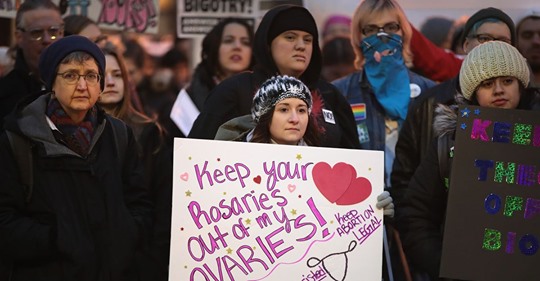
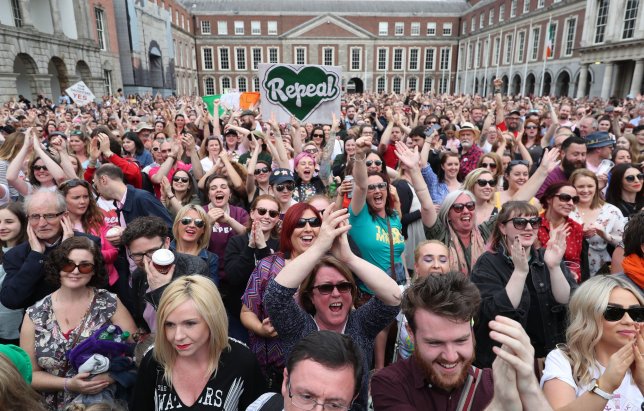
Abortion access activists rally in Chicago, Illinois. Scott Olson/Getty Images

As states across the US pass laws restricting access to abortion, Illinois passed legislation declaring a pregnant person has a “fundamental right” to terminate their pregnancy and stating that a “fertilized egg, embryo, or fetus does not have independent rights.”

The new legislation, passed Friday, repeals a 1975 state law that required spousal consent, waiting periods, placed restrictions on abortion facilities, and outlined procedures for pursuing criminal charges against abortion providers. The bill also rolls back some state restrictions on late-term abortions by repealing Illinois’ Partial Birth Abortion Ban Act, the Chicago Tribune reported. Many provisions in the two newly negated laws had not been enforced due to court injunctions, according to the paper.

“We’re not going back,” said Sen. Melinda Bush, who sponsored the bill in the Illinois Senate, as she argued for the bill. “We’re not going back to coat hangers, we’re not going back to dying. We’re not going back. And I am proud to say Illinois is a beacon for women’s rights, for human rights.”

Democratic Governor J.B. Pritzker said he would sign the bill, called the Reproductive Health Act; it passed the Illinois House of Representatives early last week and Friday night the Senate voted 34-20 to approve it.

Illinois lawmakers pointed to the possibility of a conservative Supreme Court majority overturning Roe v. Wade as a reason for choosing to shore up abortion rights on a state level now.

“We can no longer rely on bad law protected by federal injunctions,” said Illinois state Rep. Kelly Cassidy, who sponsored the bill in the House.

Cassidy told her colleagues that a medically necessary abortion in her first pregnancy saved her life and allowed her to go on to become a mother to her three sons. She also criticized Illinois’ neighboring states that have recently passed restrictive abortion laws.

“To our neighbors in Illinois who hear the news around the country and worry that this war on women is coming to Illinois, I say, not on my watch,” Cassidy said. “To the people in Missouri and Alabama and Georgia and Kentucky and Mississippi and Ohio, I say, not on my watch.”

New, restrictive abortion laws are cropping up across the country

The move to expand abortion rights in Illinois comes as states including Alabama, Georgia, Ohio, Missouri, Indiana, Kentucky, and Mississippi have all passed laws restricting access to abortion. Lawmakers in some of those states have said they championed the restrictive laws in the hope of triggering court challenges that will force the US Supreme Court to revisit its Roe v. Wade decision, which guarantees a Constitutional right to abortion. These lawmakers believe the court’s new conservative majority will overturn Roe.

In May, Alabama passed the “Human Life Protection Act,” which criminalizes all abortion. Doctors who perform abortions under the ban could be sentenced to up to 99 years in prison unless the pregnant person faces serious health complications that place their life at risk. The law makes no exceptions for cases in which a pregnant person seeks an abortion after rape or incest.

Alabama now has the nation’s strictest abortion law, but other states have also severely narrowed abortion access through the passage of so-called “heartbeat bills” that ban abortions after doctors are able to detect a fetal heartbeat. Heartbeats can sometimes be detected as early as six weeks into a pregnancy — before many know they are pregnant.

Ohio passed its heartbeat abortion ban in April and was quickly followed by Georgia, Mississippi, and Louisiana. Heartbeat bills in some states — like in North DakotaArkansasIowaKentucky, and Mississippi — have been blocked by courts. Ohio’s ban is currently facing a legal challenge. Planned Parenthood and the American Civil Liberties Union are among the parties suing to prevent the heartbeat laws from going into effect.

The Planned Parenthood Action Fund reports that so far in 2019, there have been 300 anti-abortion bills introduced in 36 states.

“This is an extremely dangerous time for women’s health all around the country,” Leana Wen, president of the Action Fund, told the Washington Post.

Anti-abortion activists hope to overturn Roe v. Wade, but last week, the Supreme Court signaled it is not quite ready to address the landmark ruling. In its decision regarding an abortion law passed by Illinois’ neighbor, Indiana, justices struck down one provision while affirming another part of the law, largely avoiding the question of whether abortion should be legal.

As Vox’s Anna North reported:

In a case involving an Indiana abortion law, the justices gave a kind of compromise ruling, according to the Washington Post. They allowed one portion of the law, which requires that fetal remains be buried or cremated, to stand. But they declined to take up another portion of the law, which bans abortions based on the fetus’s sex, race, or diagnosis of a disability. As a result, a lower court’s decision to strike that portion of the law will stand, and the ban will not go into effect.

The decision was hotly anticipated because if the Court had decided to hear the case, it could have been an opportunity for the justices to revisit Roe v. Wade, the landmark 1973 case that established Americans’ right to an abortion. Abortion opponents around the country are eager to see the Court overturn the decision, but previous moves have suggested that the justices aren’t ready to weigh in yet. Tuesday’s decision was more of the same.

But in a concurring statement, Justice Clarence Thomas wrote that the Court would need to make a decision soon on laws like Indiana’s. His words were a reminder that while a Supreme Court battle over abortion isn’t happening today, it might not be far in the future.

The laws are also having the effect of limiting access to abortion. In Missouri, which last week passed a law banning abortion after eight weeks with no exceptions for rape or incest, there is only one abortion provider left. And that provider — a Planned Parenthood clinic in St. Louis — was almost forced to close after state lawmakers refused to renew its license, citing its “deficient practices.” The state said that if all of its physicians submitted to interviews, it might be able to keep its license; however, doctors refused to comply for fear the interviews could lead to criminal prosecutions, North reported.

A judge’s temporary restraining order issued Friday will keep the clinic open — for now. The next hearing in the case comes on June 4; should Planned Parenthood lose its case, the people of Missouri will have to travel to another state, like Illinois, for abortion care.

Other states in addition to Illinois are working to protect access to abortion rights. Some 13 states including New Mexico, Rhode Island, and Nevada have proposed bills to include a right to abortion in their Constitutions. While many of those efforts are still in their early stages, Vermont passed a bill to include the protection in its Constitution last week.

Source: https://www.vox.com/2019/6/1/18648506/illinois-abortion-bill-2019-fundamental-right-repeal-restrictions?fbclid=IwAR3UXetWgtHJ1qKihaqiNGnjD4URqzuvec3HvZ77t_Vv0qUiqyMXzvW-DGM

If the Trump administration gets its way, be prepared for an outpouring of stories that bear a resemblance to this one, but don’t wrap up so neatly.

A coworker recently asked me where she should go to get an IUD, and I told her to steer clear of Georgetown University Hospital. But where can I tell her to go now? Where is safe?
Shutterstock

I’ve always had a contentious relationship with contraception. When I started taking the pill at 18 years old, I could feel something in my body shifting, perhaps irrevocably. My breasts grew two sizes, making exercise uncomfortable and inviting commentary from the opposite sex that made me feel unsafe. My posture worsened as I tried to hide the alien entities, and my moods felt out of control and unpredictable. After eight years on the pill, I was in a stable, monogamous relationship—about to get married, in fact—and ready to see what life might be like without a hormonal contraceptive.

I was nervous and excited about the consult for my first intrauterine device (IUD) at MedStar Georgetown University Hospital. After a brief conversation, Dr. Case (a pseudonym) asked me to get off the exam table and follow her to her office for a “chat.” But in her office, when the door was safely shut, my excitement slowly started to fade. “Well, first things first, this is a Catholic hospital,” she said in a mock whisper.

“Oh,” I said, not hiding my surprise. She explained that Georgetown University Hospital does not prescribe birth control for the sole purpose of preventing pregnancy. “Do you have heavy cramping?” she asked. “Because we could prescribe hormonal birth control for heavy cramping.”

“No, I don’t have heavy cramping,” I said, wondering how on earth I had ended up in this situation. A month earlier, I had set up an appointment at MedStar Health for a physical. After two years of living abroad, I had a lot of questions about some symptoms I found troubling; hair loss and fatigue I thought could be linked to a thyroid problem. “Most young, menstruating women are a little anemic,” the doctor responded when I told him about my symptoms. Perhaps I should have left right then. But my main aim was a referral to a gynecologist so that I could get Paragard, a copper IUD. He seemed delighted in my decision, even saying he wanted to learn how to put in IUDs himself, and wrote me a referral to the woman I was now chatting with at Georgetown University Hospital.

Dr. Case went on to explain that when she took this gig, she knew it would mean she wouldn’t be able to help young women in all the ways she wanted to. But there was a workaround. She ripped a piece of paper in half and wrote a phone number on it in blue pen. “Call this number,” she said, passing me the paper in a way I can only describe as illicit.

I was confused by the process, and the implications of what it meant to be a woman asking for reproductive health services at a Catholic hospital, and Dr. Case could tell. She gave me detailed instructions about how to connect with a provider who could give me the contraception I sought.

Afterward, looking at the ring on my finger, she said, “Tell me about your fiancé.” I gave her the spiel: We’d been together for seven years, on and off, and we were getting married in the winter.

“And why do you want an IUD?” she asked.

“We’re hoping to start trying for kids in five to six years, so the timing would be perfect for me,” I said.

She gasped. “Well, that makes me sad!”

“Excuse me?” I said, wondering if I’d heard correctly.

“You’ve been with this man for seven years; you’re the perfect age to have children. It makes me so sad.”

In my shock, I told her the first thing I could think of: the truth.

“We recently decided not to get a cat, because if the cat got sick, we don’t think we could cover possible medical bills.”

I wasn’t trying to be funny. The silence in the room took on a palpable form.

She looked at my chart, trying to ease the tension. “Well, you could still safely start conceiving until you’re 32,” she said with a shrug. Though my head was spinning, it wasn’t lost on me that she was passing judgment rather than stating fact. While fertility rates do begin to decline after age 35 for most people, many women over 40 have successfully conceived.

On my way out of the labyrinthian building, I scrunched up the unofficial paper in my hand. The ripped edges felt sharp against my skin. In the Uber ride home, after paying transportation to and from my apartment to a world-class hospital and forking over a $50 copay for unsolicited advice about my vagina, I cried.

When I told the story to my fiancé, he was indignant. Friends couldn’t believe it. Some wouldn’t believe it. “Doctors don’t say that,” some said. “Is that even legal?” asked others.

At first, I blamed myself. Clearly, I hadn’t done my homework. ‘There must be clear verbiage on the website,” I thought. After a frustrating hour-long search, here’s a summary of what I found:

  • Georgetown University Hospital was ranked #1 Hospital in the Washington Region by U.S. News & World Report for three years in a row, including 2018-2019.
  • Georgetown University Hospital was founded in the Jesuit principle of cura personalis—caring for the whole person—and it’s stated mission is “to provide physical and spiritual comfort to our patients and families.”
  • Georgetown University Hospital puts the patient first: “We strive to deliver the best to every patient every day. The patient is the first priority in everything we do.”
  • Georgetown University Hospital values respect: “We treat each individual, those we serve and those with whom we work, with the highest professionalism and dignity.”
  • Georgetown University Hospital values professionalism: “We project a professional image at all times and demonstrate expertise in our professional practice.”
  • Georgetown University Hospital believes that patients have rights and responsibilities: “You have the right to respectful and considerate care and to be free from neglect, exploitation, abuse, or harassment. You have the right to receive treatment without discrimination as to age, race, ethnicity, color, religion, culture, language, physical or mental disability, sex, sexual preference or orientation, national origin, disability, gender identity or expression or socio-economic status.”

Here’s what I did not find: Any language that stipulates Georgetown University Hospital adheres to religious directives issued by the United States Conference of Catholic Bishops governing Catholic health services and will prohibit a range of reproductive health services, including contraception, sterilization, many infertility treatments, and abortion care.

But it does adhere to religious directives. And it does prohibit a range of reproductive health services, including the insertion of the IUD that I sought. Changes to the site since I first checked now reflect that fact. (I also confirmed in a phone call to the hospital this week that it only prescribes contraception for medical purposes—such as constant bleeding, long periods—and not if someone seeks birth control solely because they don’t want to get pregnant.)

Even so, why, when I asked my doctor for a referral to a gynecologist so that I could get Paragard, a form of contraception that exclusively prevents unwanted pregnancy, did he send me to a Catholic hospital? And why aren’t patients given more information about what it means for a hospital to follow religious directives?

The answer to that question may no longer be as important as I once thought. On May 2, the Trump administration issued a final “conscience rule” granting protection to health-care professionals who refuse to provide care that violates their religious beliefs. The future seems clear: Already vulnerable groups—women and members of the LGBTQ community, especially in underserved and rural areas where access to family planning and reproductive services is already a systemic issue—will be most affected. But this will affect all of us.

A co-worker recently asked me where she should go to get an IUD, and I told her to steer clear of Georgetown University Hospital. But where can I tell her to go now? Where is safe?

Months later, during a pregnancy scare, I decided to get the copper IUD for emergency contraception. But also because I still wanted it. Despite the shaming experience at the No. 1 hospital in the nation’s capital, I still knew my own mind. We found an abortion clinic, carafem, that took my insurance, didn’t require referrals, and offered same-day insertion.

In the midwife’s comfortable office, my story came out slowly, then all at once. She made no effort to hide her disgust. “Friends told me I should share this, but I was really, really ashamed,” I told her. She called my fiancé into the room and told both of us that no matter how long it took me to muster the courage to tell this story, I should. Because no woman needs a reason to not want to have a child right now. Or ever.

Unfortunately, this safe, supportive environment for women who know their own minds may soon be only a comforting memory. In February, the Trump administration released the text of its rule barring any clinic that provides or refers patients for abortions, clinics like carafem, from federal family planning funds under Title X. A federal judge did issue a nationwide injunction in April, preventing the rule from taking effect, but President Trump is only ramping up his anti-contraception and anti-abortion rhetoric.

Reproductive health-care clinics like carafem and Planned Parenthood are often the only option for low-income people across the country. If the Trump administration gets its way, be prepared for an outpouring of stories that bear a resemblance to this one, but don’t wrap up so neatly.

Source: https://rewire.news/article/2019/05/24/catholic-hospitals-deny-contraception/?fbclid=IwAR2pT2t74D6G8hz52c-aCgWilEGI8UT9oL_aE-Po_C9170ciP06mj_QHXPg

A St. Louis circuit judge granted Planned Parenthood a restraining order against the state on Friday afternoon, allowing the abortion clinic to continue operating even after Missouri health officials had refused to renew the clinic’s license.

Had the license lapsed, the clinic would have been forced to stop providing the procedure, effectively ending legal abortion in the state. Missouri would have become the first state to not have a legal abortion clinic since Roe v. Wade was decided in 1973.

On Friday afternoon St. Louis circuit judge Michael Stelzer wrote “a temporary restraining order is necessary to preserve the status quo and prevent irreparable injury” to Planned Parenthood, which had “demonstrated that Immediate and irreparable injury will result” if the license expired.

“This is a huge victory,” said Dr. David Eisenberg, the clinic’s medical director, in a press conference on Friday afternoon. “It is my duty to protect and serve the patients that come here no matter what.”

In an interview with CBSN, Dr. Leana Wen, the president and CEO of Planned Parenthood Federation of America, said, “We want our patients to know that we will never abandon the women of Missouri.”

Wen tweeted after the ruling: “This is a victory for women across Missouri, but this fight is far from over. We have seen just how vulnerable access to abortion care is in Missouri—and in the rest of the country. We’ll keep fighting these attempts to end access to healthcare—no matter what.”

Planned Parenthood will be back in court on June 4 to ask the court for a preliminary injunction. Missouri Governor Mike Parson said state officials will pursue their case in court.

“Following today’s ruling, the State will soon have the opportunity for a prompt legal review of our state health regulators’ serious health and safety concerns regarding Planned Parenthood’s abortion facility in St. Louis,” Parson said in a statement Friday afternoon. “We are committed to and take seriously our duty to ensure that all health facilities in Missouri follow the law, abide by regulations, and protect the safety of patients.”

Friday’s decision comes after several weeks of back and forth between the clinic at Missouri’s state health department. The agency had refused to renew Planned Parenthood’s license to perform abortions unless it could complete an investigation into the clinic, including interviews with seven physicians who worked at the clinic.

Planned Parenthood said it could offer interviews only with two who are its employees. The other five physicians working at the facility are residents in training and not employed by Planned Parenthood. The state has indicated that the result of those interviews could be “board review” in addition to “criminal proceedings,” a spokesperson for Planned Parenthood said. The medical residents declined to be interviewed for the state’s investigation.

In a letter to Planned Parenthood and reviewed by CBS News, the Department of Health wrote that it could not “complete our investigation until it interviews the physicians involved in the care provided in the potential deficient practices,” and that “the investigation needs to be completed and any deficiencies resolved before the expiration of [the clinic’s] license on May 31, 2019.”

Dr. Colleen McNicholas, a Planned Parenthood physician in St. Louis who agreed to be interviewed by the state, said the agency hasn’t shared details of the investigation or the potential concerns.

“We are 100 percent committed to the best care that we can provide for patients. So certainly if there is an issue with the care we’re providing we want to know about it,” she said. “We want to be able to address that. But we can’t do that when we’re being attacked.”

Source: https://www.cbsnews.com/news/missouri-abortion-clinic-planned-parenthood-st-louis-to-stay-open-judge-rules-today-2019-05-31-live-updates/?fbclid=IwAR1jAtnyLUX4JIT7zDKfoLgV3DwaA-3Zf0xixajdWAuRlszsdeKc8FXTqXI

The state joins others in banning the procedure as early as six weeks into pregnancy.

Protesters dressed as characters from The Handmaid’s Tale march through the French Quarter of New Orleans on May 25, 2019, demonstrating against a bill that would ban abortion as early as six weeks into pregnancy. Emily Kask/AFP/Getty Images

Louisiana Gov. John Bel Edwards on Thursday signed into law a bill banning abortion after a fetal heartbeat can be detected, one of many near-total bans on abortion to pass around the country in recent months.

The bill, which has no exceptions for rape or incest, would ban abortion as early as six weeks, before many people know they are pregnant. It passed the state House of Representatives on Wednesday. The bill states that it will not take effect unless a similar law in Mississippi, which has been challenged in court, is upheld.

Most of the recent abortion bans passed in other states have been sponsored by Republican state legislators, but Louisiana’s was authored by a Democrat, according to the New York Times. Edwards, a longtime abortion opponent, is also a Democrat.

Though the party affiliation of its backers is somewhat unique, the bill is similar to legislation passed in Mississippi, Kentucky, Ohio, and Georgia this year. Meanwhile, Alabama passed a law banning abortion at any stage of pregnancy. None of these laws have yet gone into effect, and many of them have been challenged in court.

But in many cases, that’s the point: Backers of the legislation hope it will serve as a vehicle for the Supreme Court to overturn Roe v. Wade, allowing any state in the country to ban abortion if it so chooses.

The law is part of a larger effort to overturn Roe

The Louisiana law is part of a wave of “heartbeat” bills around the country, beginning late last year.

While the bills share a common source — model legislation written by the group Faith2Action — they differ in the penalties they impose and exceptions they offer. Louisiana’s version contains exceptions only for abortions necessary to prevent a pregnant person’s death or the “substantial and irreversible impairment of a major bodily function,” or if a pregnancy is “medically futile” and the fetus will not survive past birth, according to CNN. Doctors who violate the law could face up to two years in prison.

Some anti-abortion bills passed recently, such as a ban on abortion at any stage of pregnancy in Alabama, contain language that ensures pregnant people themselves will not face criminal penalties for seeking abortion. Louisiana’s law does not appear to contain such language, meaning that pregnant people who perform their own abortions with medication could potentially face criminal penalties under the law.

In general, heartbeat bills do not cite a specific gestational time limit for abortions, but reproductive rights groups say they amount to a ban on abortion at about six weeks’ gestation. That’s when a doctor can detect “a flicker of cardiac motion” on a transvaginal ultrasound, according to Dr. Catherine Romanos, a doctor who performs abortions in Ohio and a fellow with the group Physicians for Reproductive Health.

Six weeks’ gestation is just shortly after most pregnant women miss their first period, meaning many women don’t know they are pregnant at this stage.

Some reproductive rights groups argue that the term “heartbeat” bill is a misnomer since the fetus does not yet have a heart at six weeks’ gestation — the cardiac activity detectable at that time comes from tissue called the fetal pole, as OB-GYN Dr. Jen Gunter has writtenPlanned Parenthood refers to the bills as six-week bans.

Several architects of recent anti-abortion bills have said they hope to challenge Roe v. Wade, the 1973 Supreme Court decision that established the right to an abortion. But it’s not clear if the effort will succeed. As Clarke Forsythe, senior counsel for the anti-abortion group Americans United for Life, told Vox earlier this month, the Supreme Court has signaled that it wants to move slowly when it comes to revisiting Roe.

When it does so, it will have many options — more than a dozen abortion cases are already one step away from the Court, and the justices could use any one of them to reexamine Roe. Many observers think it’s more likely that the Court will choose to weaken the protections inRoe, giving states more leeway to restrict the procedure.

Still, abortion is already out of reach for many and could become more difficult to access even if Roe remains intact. Due to increasing restrictions on clinics and a dispute with state regulators, the last abortion clinic in Missouri could close as soon as this week.

As of February, there were three abortion clinics operating in Louisiana, a state with more than 1 million people of reproductive age who can become pregnant.

Source: https://www.vox.com/2019/5/30/18645952/louisiana-abortion-ban-heartbeat-bill-edwards

As incredible as the vote on the 25th May was, it is a far cry from the care people need and deserve (Picture: Niall Carson/PA Wire)

A year ago today, Ireland voted by an overwhelming majority to repeal the Eighth Amendment (which imposed a near total ban on abortion) from its Constitution, paving the way for abortion services to be offered on request in early pregnancy.

The result was monumental. Not only did it enable the roll-out of services across the country in less than a year, it sent a powerful message: that the Irish public respected women and pregnant people’s rights to make decisions about their own bodies and lives.

For years, countless dedicated individuals had campaigned to change Ireland’s restrictive abortion laws. And organisations like ours had been supporting people who were forced to travel to another jurisdiction to access healthcare they should have received at home.

Those without the money or means to pay for flights to the UK. Those who often resorted to desperate and dangerous measures to no longer remain pregnant before finding out about Abortion Support Network (ASN) and the support we can offer.

We’re still getting those calls. Still helping those people. Because as incredible as the vote on the 25th May was, it is a far cry from the care people need and deserve. And it’s a very far cry from making ASN redundant.

Ireland’s new legislation leaves many behind. There is a stigmatising and non evidence-based mandatory waiting period, sparse provision in certain parts of the country, doctors interpreting the law overly cautiously for fear of criminal sanctions. And a cut-off period of less than 12 weeks of pregnancy.

The problems with the new law were stressed persistently before it came into effect. We are not a campaigning organisation but our founder Mara Clarke even wrote to the Irish Health Minister and warned him of all the people this legislation would create additional barriers for – homeless people, those without EU passports, people with disabilities, those in abusive relationships, parents. The list goes on.

Sadly, these concerns weren’t listened to and people who fall through the cracks of the new system are still being forced to travel. And they’re not the only ones.

Despite the fact that it is part of the United Kingdom, in Northern Ireland abortion is prohibited in almost all circumstances – and punishable by life imprisonment. To contextualise, the Northern Irish law is even more restrictive than the proposals we’ve seen come out of Alabama in recent weeks.

People in Northern Ireland who find themselves pregnant when they don’t want to be are forced to either travel across the Irish sea or over the Irish border (where they face the three-day waiting period, inconsistent provision and a €450 fee).

We don’t need a referendum to change this. Westminster has the power – more than that, a duty – to act and extend abortion provision to Northern Ireland without delay. The Irish Government too, has a responsibility to provide accessible and affordable abortion services to people in Northern Ireland. To paraphrase a popular hashtag, the time is long overdue for NI.

When thinking about the changes between last year and now, a few things stick out. ASN is seeing less clients from Ireland and have been able to extend services to people in Malta and Gibraltar, where abortion is also extremely restricted. That said, we are dealing with more complex cases since the referendum. People needing more support and more funding. Which is why we’re incredibly grateful to every person who donates or fundraises for us.

To end on a positive, when people reach out to us for help now, they appear less apologetic about exercising their right to basic healthcare.

The enduring stigma surrounding abortion, which made many feel like they had to excuse or apologise for their choices, seems to have eroded somewhat since last May. And that is incredibly powerful. Now when clients contact us, they simply say ‘I need an abortion. Can you help me?’ And we can. And we will. For as long as we’re needed.

Source: https://metro.co.uk/2019/05/25/repealing-the-8th-amendment-was-monumental-but-some-women-still-cant-access-abortions-9689604/?fbclid=IwAR20OeSTSCE5dt0F6j96m7MxJxw8HIQgdJLcKGWGmqdePX0ct57AEY8SYrE

In a state where access hangs in the balance, a culture of stigma can make things even harder. One former pageant queen wants to change that.

m from a small town in Alabama called Guntersville, about 45 minutes south of Huntsville. People say my town has more churches than people—and all the people go to church. Growing up, my father owned his own packaging company, but on Sundays, he preached at Victory Cornerstone church, in nearby Arab, Alabama. He started preaching there a couple years after my brother died of cancer when I was nine, and he’s still doing it. But after everything that’s happened, I don’t go to that church anymore.

Guntersville has always been a conservative place where women, my mom included, played by the rules that were impressed upon them. Each decision was a family decision and you needed to consult your husband about everything. Women were taught to ask permission. I didn’t love growing up there—I never felt like I was allowed to develop my own thoughts.

When I was 17, I had a boyfriend who was a year older than me. We’d talked about getting married, but I really wanted to go to college first. Then I found out I was pregnant.

I was really shocked, because I was on the Pill—I’d had severe endometriosis for years, and the Pill helped me manage it. At first, when I was late, I didn’t even consider that I could be pregnant, since I’d always been irregular. But then I started feeling queasy, like I was going to pass out at any minute. I thought, On the off-chance I am pregnant, it’s better to know. So I took a ring from my mom’s jewelry box and wore it to the drugstore to buy a pregnancy test. I didn’t want the lady at checkout thinking I was unmarried and having sex. When the test came up positive, I threw up.

image
Jenna as a child with her parents and two older siblings.

COURTESY JENNA KING-SHEPHERD

Almost immediately, I had terrible morning sickness and panicked delusions. You know when you scrape your leg and you can almost feel your heartbeat in the cut? I was having mental pictures where every time I looked at my stomach I’d see a heartbeat there. I felt like there was something in me that I need to get out. I couldn’t even look in the mirror without having a panic attack.

My boyfriend didn’t even believe I was pregnant at first. He wanted me to get another test and then drive to his house and take it in front of him. I did, but I was enraged. I thought, This is not someone I should be with right now, let alone for the rest of my life. When the test came up positive again, I stormed out to my car. I knew that having a baby was not what I needed to do. I needed to go to college. I needed to get out of this relationship.

image
Competing in a pageant.

COURTESY JENNA KING-SHEPHERD

I called my older sister, who said, “I’ll drop everything and come down there.” Years ago, when she came out as gay, my parents were not ok with it, and they still aren’t. It was through that experience that I learned, My parents are right about a lot of things, but maybe they’re not right about everything. I saw firsthand how not allowing people to live their truth can destroy people and families and communities. My dad basically cut my sister out of his life over her sexuality.

But she is like a second mother to me, and having her support made me feel brave. So after I got off the phone with her, I called the abortion clinic in Birmingham, about an hour and a half away. They told me I’d have to make two trips down there: One for “counseling,” and one for the actual procedure.

Next I called my parents. Not telling them wasn’t really an option; I was so dependent on them. I figured I’d just tell them and get it over with and we’d never talk about it again and everything would be okay.

“I SAW FIRSTHAND HOW NOT ALLOWING PEOPLE TO LIVE THEIR TRUTH CAN DESTROY FAMILIES AND COMMUNITIES.”

But I’ll never forget what my dad said when I told him. He said, “One of my kids had cancer and died and I hate that. One of my kids is gay and I hate that. And my other kid is pregnant and having an abortion and I’m ashamed and I hate that.” Here I was, this golden child who competed in pageants and got good grades and had only ever wanted to make my dad proud, letting him down. Still, I never wavered in my decision. I knew that this was hands down the only choice for me at that point in my life.

When my sister arrived, she gave me a robe that had been given to her by my dad’s secretary at his church—the first person she came out to. The woman had told her to put it on whenever she felt alone or depressed. Now my sister gave it to me and said, “This is your body, Jenna, and your life.” It felt good to have someone tell me that, even though I already knew it in my gut.


Not long after my abortion, I went off to college. For years, I was just living my life trying to erase the shame I felt. My dad is all about trophies. He loves a trophy. So I wanted to be a trophy daughter. I studied sports broadcasting, hoping to be on ESPN like Erin Andrews. I placed in the top five twice in the Miss Alabama pageant. I dated a football player. I married a football player. He went on to the NFL, signing with the Minnesota Vikings. My husband and I started a charity that gives football tickets to sick kids. I was leading this really charmed life, but I still felt this emptiness. Like, Who am I? It was like I was harboring this huge secret and nobody really knew who I was. I didn’t know who I was. When you live your life like that, it’s so hard to form authentic connections to other people. I was afraid to let people in because I didn’t think they’d like what they saw. I hadn’t even told my husband about my abortion.

image
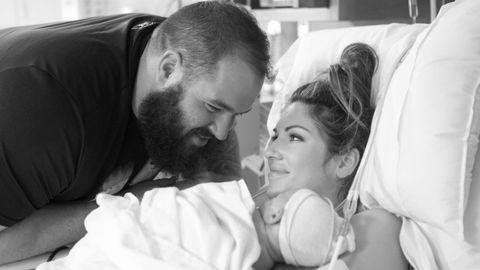
Jenna and her husband right after the birth of their son, Barron.

COURTESY JENNA KING-SHEPHERD

In 2016, when I was pregnant with my son, I moved back to Guntersville so he could be near both sets of grandparents and I could take on a bigger role at my dad’s company. My husband was between teams and I just wanted to give birth somewhere familiar. I still seemed like this happy girl with a perfect life, but inside I was really struggling. I’d flex on Instagram all the time. Here’s me and my nice car, here are pictures of me in pageants, here’s this body I’m starving myself to have, here’s this vacation I’m taking with my family, even though they don’t allow any of us to be who we really are. Looking back, I’m ashamed that so much of what I put out there barely scratched the surface of who I was.

“I HADN’T EVEN TOLD MY HUSBAND ABOUT MY ABORTION.”

Then, last year, I saw that Alabama was voting on an amendment that would recognize “the right to life” of unborn children. I got chills. I was just so fed up with having to fake it and I decided right then and there that I would stop. One of the big supporters of the bill was the Lieutenant Governor, who is from my town and is friends with my father. Another supporter was a state senator from my district. I took them both out to lunch individually and told them that I’d had an abortion and that I was personally against the amendment. They were shocked. Neither really knew what to say.

After that, I felt something shift inside of me. It was like, “Okay—you’re an advocate now.” So I kept going. I talked to women in my dad’s office, where I was a sales representative. I talked to my parents about it for the first time in a long time and they were extremely uncomfortable. I tried to host a “Vote No” part at my house and lots of people RSVP’d that they were coming. Then on the day of the party, everyone cancelled at the last minute except for literally one person. My friends all said they didn’t want people to see their cars at my house now that I was telling people I had an abortion. Or that they didn’t want their husbands to find out they were supporting the “Vote No” movement.

image
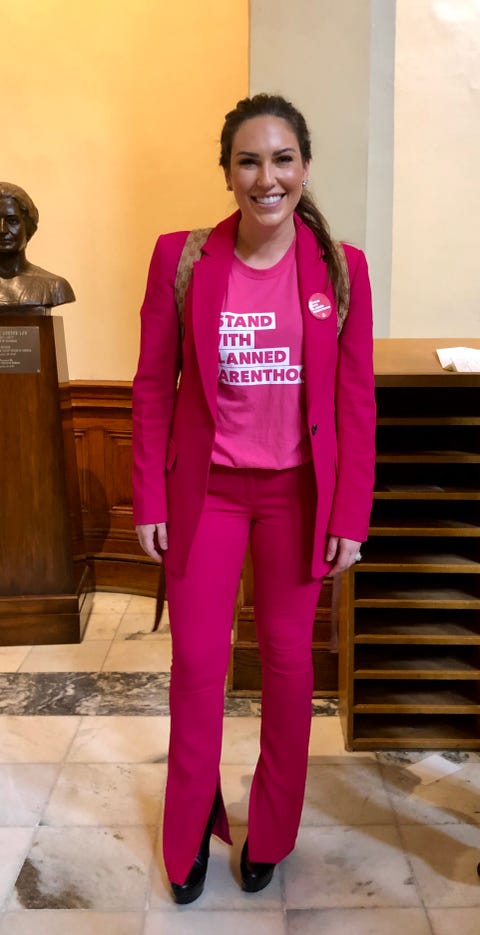
At the Georgia State Capitol for Pink Out the Halls, an event hosted by Planned Parenthood.

COURTESY JENNA KING-SHEPHERD

When I learned that the amendment had passed, I just got so mad. These laws speak to the full invasion of a woman’s body. They give the government control of women. When you have politicians talking about the death penalty for women who have abortions but not any kind of punishment for the man who impregnated the woman, that just shows how backwards we are.

I decided that I wanted to dedicate my life to fighting for reproductive rights—especially in Alabama, which is ground zero for this kind of work. I started studying for the LSAT. I went even more public with my story by speaking with a local news reporter that some activists at Planned Parenthood had connected me with. I knew that when the article came out, people would say I’m a murderer who should’ve kept her legs closed, and they did. Friends and family and perfect strangers commented on Facebook that I was a monster and a terrible human being and that I should’ve used protection. I wanted to write back that I had used protection.

My jaw really hit the floor when my aunt, who wasn’t able to have her own children, told me I had robbed her of ten years of raising a precious baby and that she couldn’t forgive me. Then my life insurance agent “accidentally” bcc’d me on an email with a link to the article that he sent out to a ton of people in my hometown, saying I was an evil and immoral woman. I replied asking if he would like to discuss the issue with me directly. He wrote back that he must have been hacked.

People from my dad’s church started posting the article all over Facebook, writing things like, “This is disgusting.” Or they’d call me up and say, “You’re a murderer.” The associate pastor at my dad’s church posted a lot of really hateful things. When I reached out to him and said, “You can’t possibly think this is right,” he told me that everyone missed seeing me at church and wanted me to come back.

image
PATRICK KOLTS/ACLU

A lot of people wouldn’t talk to me directly. They just wanted to talk about me—I was a hot piece of gossip. It was weird to know I was being talked about wherever I went and that I was basically the villain of the town. But I tried to let it roll of my back. One good thing to come of this is that for the first time in my life, I no longer care what other people think.

When my dad found out about the article, he texted me and said, “I can’t believe you did that, you’re a loser and a joke. Another terrible decision on your part. STUPID! Everyone is going to talk about me.” Reading his text, all I could think was that he was acting like a two-year old. And I knew, because I had a two-year old.

When we finally spoke, I said, “Dad, do you really think what I did was wrong, having an abortion?” And he said, “Well, you were having panic attacks, so it was probably the right choice for you.” In other words, my abortion was okay until other people knew about it.

At the same time, there were a lot of women, including women in my own family, who reached out to tell me, “I had an abortion too, and no one knows.” Or “I took my best friend to have an abortion and no one knows.” Or “My daughter had an abortion and no one knows—and it was the right thing to do.”

“PEOPLE FROM MY DAD’S CHURCH STARTED POSTING THE ARTICLE ALL OVER FACEBOOK, WRITING THINGS LIKE, ‘THIS IS DISGUSTING.'”

My husband was also super-supportive. By the time I spoke out, I’d already told him about the abortion in couples counseling, and he was surprised, but totally behind the decision I made and also my decision to start talking about it.

But this has definitely impacted a lot of my other relationships. Now I only surround myself with people who are uplifting and not critical. I kinda love being exposed because people know what they’re going to get with me and I no longer have to pretend. I feel like I can finally exhale for the first time in ten years.

image
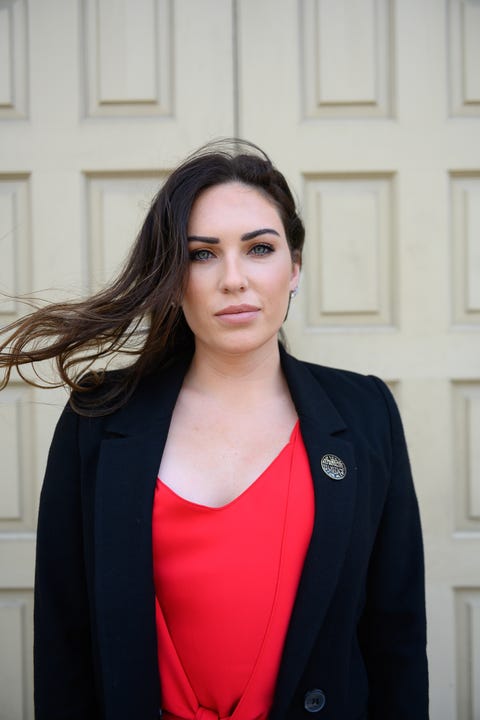
In Birmingham, Alabama for the ACLU’s March for Reproductive Freedom in May 2019.

PATRICK KOLTS/ACLU

What I hope is that through telling my story, other women will be inspired to tell theirs, because I think that’s how we’re going to make change happen. Real change is change that happens in people’s hearts and minds. Among women in my state, I am actually really lucky—I was able to access an abortion when I needed one, and I was able to pay for it. That’s why I now feel obligated to use my privilege to bust through stigma and speak out about this issue in a way that a lot of other women tell me they wish they could.

Last week, the governor of Alabama signed a bill that will make performing any abortion a felony. In Georgia, since a 20-week ban was signed into law in 2012, the maternal mortality rate has doubled. If the legislators in my state actually looked at the facts, they would see that the laws they’re using to get re-elected or to make a statement impact people’s lives in real and terrible ways. They particularly impact poor women and women of color.

I want to help start a conversation about this. I want to say, “Here I am. I am Jenna, and I had an abortion. And guess what? A lot of other women have abortions too.”

Source: https://www.cosmopolitan.com/politics/a27572832/i-had-abortion-in-alabama/?fbclid=IwAR3B46P3c0lve0skb8vy1v6gKHQMvQLLt-qGPROVjv-tOQoaNzAJPaIbpio

The Women’s Health Protection Act would reaffirm every woman’s right to an abortion, no matter where she lives.

A bill that would protect abortion access across the country was reintroduced to Congress on Thursday by Rep. Judy Chu (D-Calif.) and Sen. Richard Blumenthal (D-Conn.).

The Women’s Health Protection Act would bar states from imposing restrictions on abortion that are medically unnecessary and interfere with a woman’s ability to access care. The bill was first introduced in 2013 and has been reintroduced in each congressional session since.

“We face a five-alarm fire in the danger to women’s reproductive rights,” Blumenthal said at a news conference Thursday, urging men to get involved. “We need to command the urgency and immediacy that all of our lives are at risk.”

The legislation has 42 co-sponsors in the Senate and 171 co-sponsors in the House of Representatives. All seven senators running for president have signed onto the bill.

States have for years been passing burdensome restrictions on abortion, such as forcing women to undergo mandatory counseling before the procedure or requiring providers to perform tests that doctors have deemed unnecessary.

States enacted 338 new abortion restrictions between 2010 and 2016, according to a Guttmacher Institute report. In effect, whether a person can access a safe abortion in a timely fashion often depends entirely on where they live.

Lourdes Rivera, senior vice president at the Center for Reproductive Rights, said the goal of the WHPA is to ensure that everyone, no matter their zip code, can access legal abortion.

“In Roe v. Wade, the Supreme Court recognized the right to abortion as a fundamental liberty, protected under the 14th Amendment,” she said. “But that right has not been equally realized across the U.S. because of the layer upon layer of restrictions that have been introduced by state houses across the country. The Women’s Health Protection Act is going to address this inequality of access.”

The bill would ban prohibitions on abortion prior to fetal viability, which would include so-called “fetal heartbeat” bills, which have passed in a handful of states this year. It would also ban restrictions on abortion that single out abortion services or makes abortion services more difficult to access without advancing women’s health or improving safety.

Source:

One clinic discovered nails sprinkled in its parking lot, according to a new report on violence against abortion providers.

Abortion clinic staff reported a stark increase in hate mail, harassing phone calls, trespassing, vandalism and obstruction in 2018, according to new findings by the National Abortion Federation, the professional association of abortion providers.

The organization has been tracking incidents of violence and harassment at abortion clinics since 1977. On Thursday, it released its 2018 report, coinciding with a wave of extreme anti-choice legislation that has cropped up in conservative states.

REAL LIFE. REAL NEWS. REAL VOICES.
Help us tell more of the stories that matter from voices that too often remain unheard.

Among its findings: Picketing of clinics has skyrocketed, increasing over threefold from 2015 to 2018. And with more protesting came more confrontations between anti-abortion activists and those trying to seek health care inside the clinic’s doors.

In 2018, abortion providers reported a 78 percent increase in acts of obstruction, which is defined as attempts to interfere with a clinic’s business, or preventing people from entering or exiting an area. In one case detailed in the report, anti-abortion protesters covered a clinic’s parking lot with nails, damaging the tires of patients and clinic staff.

Under federal law, it is a crime to use force or threat of force or physical obstruction to “injure, intimidate or interfere with” someone entering a reproductive health care facility.

Abortion clinics also reported a marked increase in hate email and internet harassment, with members reporting 21,252 incidents up from 15,773 the previous year. “If one murders, they must pay with their life,” one clinic protester wrote online. “If we start doing this, abortion stops.” Harassing phone calls and hate mail sent to clinics rose as well.

At another clinic, a protester threatened staff, telling them, “I have a bullet with your name on it.” The incident is currently under investigation by law enforcement. Trespassing at clinics increased in 2018 to more than 1,135 incidents — the highest number since the organization began collecting data on it.

The Very Reverend Katherine Ragsdale, Interim President and CEO of the National Abortion Federation, said the findings echo a similarly dramatic increase in 2016 and 2017, which she noted corresponded to President Donald Trump’s rise to power.

“When violent, incendiary rhetoric takes place, you watch the violence escalate,” she said. “What makes these last couple of years different is that it used to be that kind of demonizing rhetoric came from extremists. And now it’s coming out of the mouth of the president.”

So far this year, four states have enacted so-called fetal heartbeat bills, which ban abortion around six weeks, before many women even know they are pregnant: Georgia, Ohio, Kentucky and Mississippi. Alabama’s legislation is even more extreme, banning abortion at all stages of pregnancy, except when the woman’s life is at serious risk. On Friday, Missouri’s governor signed a bill into law that would ban abortion at eight weeks, with no exceptions for rape or incest. None of the new bans have gone into effect yet, and all will likely be challenged in court.

In the wake of renewed anti-abortion fervor, abortion providers have reported feeling increasingly nervous about their safety at home and online ―  fears which Ragsdale said were completely reasonable.

“When you start calling doctors murderers, it’s demonizing and dehumanizing and it sets targets on people’s backs,” she said. “It makes it somehow seem okay to extremists to inflict violence on these folks.”

Source: https://www.huffpost.com/entry/abortion-clinics-see-surge-in-harassment-and-hate_n_5ce81832e4b0cce67c8a6890

“This is not a drill,” one expert said.

Amid a wave of aggressive state-level anti-abortion laws, Missouri is poised to enact one of the country’s most restrictive, banning most abortions after eight weeks of pregnancy.

Gov. Mike Parson (R) signed the bill into law on Friday. The measure is not expected to go into effect until late August.

Just across the border from Missouri, in Granite City, Illinois, sits the Hope Clinic for Women, which already performs abortions for many out-of-state patients. Missouri has only one abortion provider left, and the state already has stringent restrictions in place, such as a mandatory 72-hour waiting period. Many women find it easier to travel to nearby Illinois, a state with relatively few abortion restrictions, to seek care.

HuffPost spoke with Dr. Erin King, executive director of the Hope Clinic. King, who performs abortions at the clinic in Illinois and also provides gynecological care (but not abortions) in her home state of Missouri, opened up about the changes she anticipates should the eight-week ban go into effect later this summer and not be held up by legal challenges similar to those targeting other new anti-abortion laws around the country.

Missouri already has such limited access to abortion care. So how big a change would this new law be for women there?

It would have a huge impact on my patients, both those at the Hope Clinic who come to us from Missouri and my day-to-day patients at my OB-GYN practice. If all parts of the legislation go into effect, there is not only the restriction on when you can have an abortion; there are changes in the consent regulations and for providers that will make access even more difficult.

We’re expecting to see an increase in the volume of patients, and in the number of women who have faced a lot of barriers by the time they get to us. We’re talking much longer driving distances; more money spent on travel; more money spent on child care … even just barriers trying to schedule appointments with the relatively few abortion providers in the area. We anticipate we will be seeing women later in their pregnancies.

Are you getting questions from patients?

We are getting several calls a day, every day, from people asking if they can still get an abortion. We had one patient tell us that her partner told her he was going to report her abortion and that she was going to go to jail because that’s the new law. We have had patients who arrive at our clinic saying, “I scheduled this appointment before I heard about all of these bans. Is it still legal for me to have this procedure?”

There is already so much confusion and stigma around abortion care. Additional confusion is really detrimental to our patients. So right now we’re trying to make it very clear that this care is still available to our patients. That hasn’t changed at all.

You’ve been an abortion provider working adjacent to (and in) areas with severely limited abortion access for a long time now. Does what’s happening right now feel different to you in any way?

Oh, I think we are in a major crisis. I’ve told a couple of my friends and colleagues: “This is not a drill.” There is no question, to me, that we are facing down a huge battle over abortion, both at the Supreme Court level and in the upcoming election. There was this glimmer of hope a few years ago when the Supreme Court heard Whole Woman’s Health v. Hellerstedt, and there was talk about science and evidence … and now a lot of these bans have language in them that is so medically inaccurate, I can’t even respond to them because they don’t make sense.

So you’re worried?

I still feel like even though there’s all this media attention and advocacy attention, and there has been some wonderful support for the abortion providers, I don’t think the general public, on their day-to-day radar screen, is seeing that this is as big a crisis as it really is.

Source: https://www.huffpost.com/entry/a-doctor-explains-how-missouris-anti-abortion-law-is-already-affecting-women_l_5ce6e60ee4b0cce67c877cdd

Vermont’s Republican governor told Rewire.News he would not stand in the way of protecting abortion rights amid the looming threat to Roe v. Wade.

Advocates celebrated, called for Scott’s support, and planned to participate in a nationwide #stopthebans rally Tuesday evening to condemn the legislative assaults on abortion access in Alabama, Georgia, Missouri, and other states where near-total abortion bans have been signed into law.
ANDREW CABALLERO-REYNOLDS/AFP/Getty Images

As Republican-controlled state legislatures across the United States pass near-total abortion bans, Vermont Democrats are looking to establish the country’s most comprehensive abortion rights protections.

The pro-choice effort in Vermont is two-pronged: a constitutional amendment via Proposition 5 to guarantee personal reproductive liberty, and bill H 57, which codifies the right to an abortion and prohibits public entities from interfering with a person’s right to choose.

Vermont’s Democratic-majority house and senate have passed both measures this session, and H 57 will soon head to the governor’s desk, where he can either sign it, allow it to become law by taking no action, or veto it. Vermont Gov. Phil Scott (R) does not plan to veto H 57, his spokesperson told Rewire.News.

Proposition 5 is a more longterm endeavor: It requires another pair of votes in the legislature during the next biennial session before it can appear on the ballot as a public referendum in November 2022. If passed by voters, it would protect access to reproductive health care in the event that Roe v. Wade and any state abortion laws are overturned.

“For those values and those rights to be protected definitively, they must be enshrined in our state constitution. The time is now,” Rep. Ann Pugh (D-South Burlington) said on the house floor when reporting Proposition 5. “While the right to reproductive autonomy and particularly abortion care remains for the time being a fundamental right at the national level, it has been and is under serious attack. In this turbulent time, clarity is called for.”

H 57 would give Vermonters unrestricted access to abortion care even if conservative justices on the U.S. Supreme Court strike down Roe v. Wade. It would be one of the most comprehensive abortion rights laws in the country.

The bill recognizes “the fundamental right of every individual to choose or refuse contraception or sterilization,” and “the fundamental right of every individual who becomes pregnant to choose to carry a pregnancy to term, to give birth to a child, or to have an abortion.” The legislation aims to “safeguard the existing rights to access reproductive health services in Vermont by ensuring those rights are not denied, restricted, or infringed by a governmental entity.”

Scott dodged questions in 2016 about whether he’d support abortion restrictions, but last week he said he believes government should stay out of the decision. While confirming he would not veto the bill, Scott acknowledged the messages he’s received from abortion rights opponents who feel the bill goes too far, NBC Channel 5 reported.

There are 147,165 women of reproductive age in Vermont, according to 2017 Census estimates. In 2014, around 1,400 abortions were provided in Vermont; the state’s abortion rate increased by three percent between 2011 and 2014, according to the Guttmacher Institute.

Many in the liberal Northeast state, like Elizabeth Deutsch, 49, hope Scott will sign the bill.

“Women’s health is health care,” said Deutsch, a nurse. “This is not about a philosophical decision, this is not a religious decision. This is a health-care choice and women should not have government interference in their health care. It is not up to anybody else or their religious belief to litigate what women can do with their bodies.”

No one is trying to regulate Viagra, vasectomies, or prostate when it comes to men’s health, Deutsch said. Unlike men complaining about the cost of pregnancy and abortion care when discussing universal health care, “we don’t hear women jumping up and down saying we don’t want to cover men’s prostate exams or their prostate cancer,” she said. “This is dangerous.”

State Sen. Virginia “Ginny” Lyons (D-Chittenden) said she hopes Scott will sign the abortion rights legislation into law.

“It is critical to establish fundamental rights to contraception, sterilization, pregnancy to birth and to abortion. These rights are basics to the human condition—in particular for women who comprise 51 percent of the population,” Lyons said in an email. “Any change to Roe v. Wade could eliminate women’s rights in many ways. Having legislation in place that articulates the past nearly 50 years of practice will protect Vermont values.”

“Governor Scott has stated publicly, as well as in our 2018 candidate survey, that he supports a woman’s right to choose and that he will always firmly defend the rights of all women. We appreciate his support of reproductive rights and we expect he will sign H 57 into law,” Lucy Leriche, vice president of public policy at Planned Parenthood Vermont Action Fund, said in a statement.

Other states with Democratic legislative majorities have moved to safeguard abortion rights amid the looming threat to Roe. In New York, Democrats passed a law in January repealing criminal abortion statutes, permitting abortion after 24 weeks when the pregnant person’s health is at risk or when the fetus is not viable, and allowing nurse practitioners and physicians’ assistants to provide abortions. It also amended an archaic law that would have endangered abortion rights if Roe were overturned. In New Mexico, a group of conservative Democrats joined Republicans in March to end an effort to repeal a pre-Roe abortion ban.

Vermont legislators have not passed any laws restricting access to abortion since Roe was decided in 1973, Lyon noted.

“The ignorance reflected in other states suggest a cultural bias against women—the aging men and women conspiring to eliminate reproductive liberty have no clue about what it means to be a woman—to be part of a diverse society of humans. H 57 will protect rights to abortion while the constitutional amendment [Proposition 5] is put in place,” Lyons said.

“H 57 would neither enhance nor restrict current access to abortion in Vermont. The goal of this law is to preserve the status-quo and prevent government interference between a patient and her healthcare practitioner and to allow healthcare practitioners to provide the highest quality, evidence-based, compassionate care that aligns with a patient’s goals,” according to the Vermont Medical Society.

The governor’s decision to let the law go into effect—or even sign it himself—could put Scott at odds with Republicans in states advancing a bevy of anti-choice legislation, including total and near-total abortion bans widely unpopular among the public.

Advocates gathered at the state house Tuesday evening to call for Scott’s support and to participate in a nationwide #stopthebans rally to condemn the legislative assaults on abortion access in Alabama, Georgia, Missouri, and other states where near-total abortion bans have been signed into law.

“With increased threats to abortion care at the national level, Vermonters want to protect people’s health and ensure that abortion care remains safe and legal here in Vermont,” ACLU of Vermont Policy Director Chloé White said in an email. “H 57 and the constitutional amendment are simply an affirmation of Vermonters’ long-held values.”

Deutsch, who has been a vocal supporter of the reforms in Vermont, described it as a civil rights issue.

“I am fighting this fight because I am a nurse, because I believe everyone has the right to their own health care choices, and because I believe that my daughter and my step-daughters are entitled to the best health care they can have,” she said. “It’s not up to anybody else to make decisions about their health care.”

Source: https://rewire.news/article/2019/05/22/how-one-state-has-become-a-model-for-protecting-abortion-rights-from-supreme-court-conservatives/