It is monumental that we have removed antiquated laws that criminalize the provision of routine medical care.

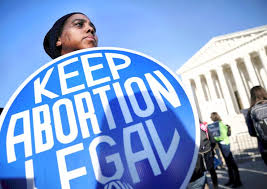
Previously, under New York’s outdated abortion law, those seeking abortion care later in pregnancy had to travel out of state to receive the procedure. Alex Wong / Getty Images

On Tuesday, the 46th anniversary of landmark court decision Roe v. Wade, which legalized abortion in the United States, New York state lawmakers passed their own historic legislation—the Reproductive Health Act (RHA). The RHA enshrines the protections of Roe into state law, removes abortion from the criminal code, and clarifies that trained health-care providers acting within their scope of practice can provide abortion care.

As an abortion provider at Planned Parenthood of New York City, I’m thrilled to see our legislators recognize how critical abortion access is to the health and well-being of our communities, especially with mounting attacks on our care from Washington.

The vast majority of abortions in the United States take place early in pregnancy. According to the Guttmacher Institute, only slightly more than 1 percent of abortions are performed at 21 weeks or later. Often (but not always), patients at this stage choose abortion after a doctor has detected a life-threatening fetal abnormality.

Previously, under New York’s outdated abortion law, those seeking abortion care later in pregnancy had to travel out of state to receive the procedure. This is often a logistical nightmare that includes the stress of finding a provider out of state, raising funds for the procedure itself and the associated travel, and dealing with insurance coverage. These issues are particularly difficult, and often insurmountable, for those with low incomes.

The decision to end a pregnancy is deeply personal. It is often tied to complex variables in a person’s life related to their socioeconomic status, whether or not they already are a parent, if they’re in a stable relationship, or have achieved certain personal goals in life yet, like education or career success. Terminating a later pregnancy can also have an added layer of emotional and personal complexity when the pregnancy was very much wanted.

Take, for example, the case of reproductive health activist Erika Christensen, who, at 31-weeks pregnant, carrying a pregnancy she and her husband desperately wanted, learned that her baby would be unable to survive outside the womb. Due to New York’s abortion law at the time, which housed the procedure in the criminal code, Christensen had to travel to Colorado. The procedure alone cost her $10,000. This is an unthinkable amount for most, even for a necessary medical procedure.

It’s unacceptable that up until now, some people in New York seeking abortion care later in pregnancy had to go through what Christensen went through. What’s also unacceptable is that so many have been unable to access the abortion care they needed at all due to New York’s laws.

As a medical provider, I firmly believe that sexual and reproductive health decisions should be made by no one but a patient and their doctor, certainly not politicians. What can already be a complicated experience for many is made that much more difficult by a culture that shames people for making their own decisions about their bodies, and a government that seeks to control our reproductive futures.

With passage of the Reproductive Health Act, New York can finally grow to be a model of what sexual and reproductive health care should be. This legislation is a resounding endorsement of an individual’s autonomy to determine if and when to parent. It is also monumental that we have removed antiquated laws that criminalize the provision of routine medical care.

I’m grateful about how this positions providers like myself to be able to continue offering high-quality, evidence-based care while minimizing the impact of the potential overturning of Roe v. Wade. This legislation now enables us to function as a potential sanctuary for those who need this care should the landscape become even more restrictive. Moving forward, to make good on the promise of expanded access that the RHA provides, we must tackle issues of affordability, insurance coverage, and comprehensive provider training when it comes to abortion.

Our patients do not come to us with a political agenda. They just want support, resources, and medical care. Thanks to the progressive leaders in office, New York providers are one step closer to creating the community we all deserve—one where every person is able to make the best sexual and reproductive health decisions for themselves and their families.

Source: https://rewire.news/article/2019/01/25/im-an-abortion-provider-this-is-what-new-yorks-reproductive-health-act-means-to-me/

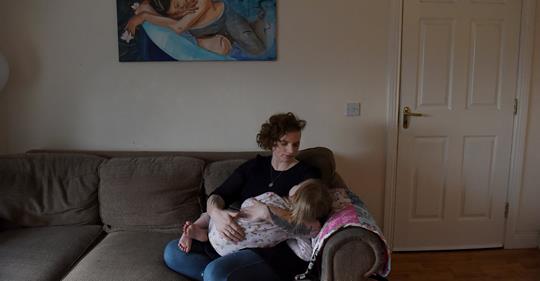
“We’re back in hushed tones,” Erin Darcy, an abortion rights activist, said at her home near Galway, Ireland.CreditCreditMary Turner for The New York Times

DUBLIN — The abortion clinic’s website pops up at the top of a Google search for “free ultrasound,” its content and color scheme mimicking the government’s new support service for unplanned pregnancy.

“Looking for abortion advice?” “How far along am I?” The bright orange speech bubbles attached to stock images of smiling medical experts purport to inform women about abortion options that became legally available in Ireland on Jan. 1.

The brick-and-mortar version of the Dublin clinic, however, is less inviting. Its true purpose is to obstruct abortions: Hanging out front, like a graphic warning on a cigarette pack, is a giant poster of a 15-year-old girl who died after receiving an abortion in London. Inside sits an ultrasound machine in a small, narrow room that has the air of a back alley medical facility.

In May, Ireland voted decisively to cast aside one of the world’s most restrictive abortion bans, approving a new law that guarantees unrestricted abortion up to the 12th week of pregnancy, and longer in situations in which there is a serious risk to the life or health of a woman, or in which there are fatal fetal abnormalities.

The historic result was hailed as an extraordinary victory for women’s rights, sealing a pronounced shift toward social liberalism — including in recent years the approval of same-sex marriage and the election of a gay prime minister — in a society that had long been dominated by the Roman Catholic Church.

A crowd in Dublin cheered the landslide approval in May of a referendum legalizing abortion.CreditPaulo Nunes dos Santos for The New York Times

But as Irish women are now discovering, the mere passage of a law cannot wipe away deeply held beliefs. Women seeking abortions are finding they must still contend with a deeply ingrained opposition that is hobbling the government’s efforts to make safe and efficient abortion services readily available.

An emboldened anti-abortion movement has started employing United States-style tactics like fake abortion clinics and protests outside legitimate ones. But it is not just the anti-abortion activists who are limiting women’s options.

Worried about the stigma attached to abortion, doctors have been slow to sign up to provide the service, and hospitals have lagged in establishing facilities. Women seeking abortions say that the entire process is still hush-hush, and some say they do not feel comfortable discussing it with their family physician.

“I spent three days on the phone before I found both a doctor willing to do it and a clinic which had the medicine,” said one woman who did manage to have an abortion this month. She gave only her middle name, Arlene, so that her family would not find out. “I felt quite scared and alone. It felt like what I imagine it was like before the referendum, like you’re doing something underground and illegal.”

Last month, she had considered traveling to Britain for the procedure, as generations of Irish women did before her, but opted to wait for the free service at home. As the days passed, though, she grew increasingly concerned that the stigma and deep divisions surrounding the issue would result in a rocky introduction of the service.

The referendum result was the latest turn away from the Roman Catholic Church’s longstanding domination of Irish society.CreditMary Turner for The New York Times

The hardest part of the process for her was having to travel to another town to see her doctor and wait for three days as part of a mandatory “cooling off” period that has no medical basis but was written into the law to placate anti-abortion politicians.

“I could have gone back home for those days, it was only a 40-minute drive, but I didn’t want to be around anyone that I knew,” she said. “I was worried that if anyone found out they would try to change my mind, and I suppose that’s what those three days are for.”

One of the biggest complaints about the new legislation is that it requires doctors who agree to perform abortions to opt in to the service, rather than having doctors opt out if they object to it.

So far, in a country with over 4,000 general practitioners of medicine, more than 200 doctors have signed up to provide the procedure — enough to meet current demand, health executives say — but the system has left women having to guess whether their local doctors are for or against the service.

“We’re back in hushed tones,” Erin Darcy, an abortion rights activist, said in an interview at her home near the harbor city of Galway on Ireland’s west coast. In those days, she said, it was taboo even to utter the word abortion.

The Galvia West Medical Center, which offers abortion services, has been targeted by protesters.CreditMary Turner for The New York Times

Sitting across from her at the kitchen table, her friend Gina recalled going to a family planning clinic in Galway 13 years ago and saying, “I’m pregnant and I need to not be.”

In secrecy, Gina ended up traveling alone to the Netherlands to get the procedure. Even when she came back and developed a post-abortive infection that caused her to hemorrhage at work and spend four days in the hospital, she told no one.

“Now, we’re in a position where we have to approach our doctors in a nice, smiley way and try and figure out what side they are on, if we can talk about it,” she said with a sarcastic laugh. “Will they help me knowing I’m pro-choice, or am I going to have to find a new G.P. because now I can’t trust them to care for me?”

Irish women are not entirely on their own. The government has set up an anonymous support line to help them navigate the new system. But even that service got off to an unsteady start after the lines were jammed by anti-abortion activists posing as women seeking abortions so they could identify doctors willing to assist in the procedures and picket their clinics.

“Generally speaking, women’s health services in Ireland have been underfunded for many years,” said Dr. Peter Boylan, an adviser to the Irish Department of Health. “This is a new service that is coming in on top of an already existing service, which is stretched, so that’s causing challenges.”

Eamonn Murphy, an abortion opponent, runs a clinic in Dublin called My Options, the same name as the government’s abortion information service.CreditMary Turner for The New York Times

At the fake abortion clinic in Dublin with the giant poster out front — a place called My Options, the same name as the government’s abortion information service — its director, Eamonn Murphy, recalled the shock of the referendum and how it spurred him into action.

“It was kind of a crucifixion moment,” he said. “But there was a resurrection the same day,” when he decided to establish his operation on an inner-city street, where it is often confused with a women’s health center next door.

“This is new life,” he continued, as he shuffled through pictures of dead fetuses and studies purporting to link abortion to breast cancer that he shows to women seeking abortions. “This meant more women than ever would be saved from cancer and suicide and depression and drug addiction and abandonment than ever before this law came in.”

In recent weeks, anti-abortion activists have staged a series of “silent protests” outside medical centers.

Maria Mahoney, an anti-abortion activist and classics teacher, participates in protests outside the Galvia West Medical Center in Galway several times a week in hopes of persuading some of the women to bring their baby to term.

Audience members listened to Peadar Toibin, an anti-abortion politician, during a public meeting in Galway.CreditMary Turner for The New York Times
Image

Audience members listened to Peadar Toibin, an anti-abortion politician, during a public meeting in Galway.CreditMary Turner for The New York Times

“We are hoping that the women will engage with us like they do in other countries,” she said. “Sometimes they are just looking for someone to tell them not to do it and show them a better way.”

The stakeouts have spread so widely that abortion rights groups have begun calling for “exclusion zones” around abortion facilities.

Dr. Caitriona Henchion, the medical director of the Irish Family Planning Association, which provides legitimate abortion services, said the main aim of the protests was to intimidate doctors.

“People are really afraid, I think particularly in rural parts,” she said at her clinic, which has been at capacity since the service started at the beginning of the year. “Doctors sending their kids to the local school don’t want them to be abused or shouted at because it becomes known that their mother or father is offering abortion services.”

The clinic has been working around the clock to ensure that women do not miss the 12-week mark that would force them to go abroad for the procedure. Although the services are running far more smoothly now than they were at the beginning of the month, Dr. Henchion said, many women still worry about the limited options in some facilities, especially at hospitals, and the continuing difficulty in getting an abortion.

“I was one of the first women to get an abortion in Ireland,” Arlene, the woman who had to travel to a town 40 minutes away for the procedure, said. “I know this is huge, but my case was pretty straightforward, and even then it was complicated.”

“The fact that women are still traveling shows that there are problems with the legislation,” she said. “I’m sure that once everyone catches their breath from the referendum, there will be protests.”

And abortion rights groups fear they can already see the first stirrings of a sustained effort to overturn the results of the referendum, along the lines of the anti-abortion movement in the United States. Earlier this month, Peadar Toibin, a former member of the Sinn Fein party who left over his stance on abortion, established an anti-abortion party that aims to give political representation to the movement.

“We know that opposition will continue, as it does in other countries,” said Ailbhe Smyth, a co-director of the Together for Yes campaign in support of the referendum. “However, given the overwhelming majority for ‘yes,’ we are not concerned about a serious threat to the legislation in the foreseeable future. The longer future, though, that’s always another matter.”

Source: https://www.nytimes.com/2019/01/28/world/europe/ireland-abortion.html?smid=fb-nytimes&smtyp=cur&fbclid=IwAR2Y9eOsG2DpikCAgceTnDh43k_-b-NHqQc4glB-RXCMUlkRKLj3Pin5GV4

Health-care providers would be able to refuse to provide treatment, referrals, or assistance with procedures if these activities would violate their stated religious or moral convictions.

Discrimination already discourages LGBTQ people from seeking health care, which exacerbates their health disparities; LGBTQ people are more likely to experience HIV infection, mental health conditions, and complications related to deferred preventive care.
Shutterstock

The Department of Health and Human Services (HHS) announced last week that it is close to finalizing a conscience protection rule that would allow people to discriminate in health-care settings under cover of law.

The final rule is at the Office of Management and Budget for review and not available to the public. But under the draft rule, which has been made public, health-care providers would be able to refuse to provide treatment, referrals, or assistance with procedures if these activities would violate their stated religious or moral convictions. The deliberately vague language could apply to everyone from receptionists refusing to book appointments to scrub nurses refusing to assist with emergency surgery.

This could be devastating for many marginalized people in the country seeking health care. But it could be especially dangerous for LGBTQ people, who have fought hard to establish legal protections that would guard them against exactly these kinds of denials. When your very body and existence are considered objectionable, seeking health care at the best of times can be dangerous.

“Trans and gender nonconforming people already face really severe discrimination in health-care settings,” said Bridget Schaaff, If/When/How’s reproductive justice federal policy fellow at the National LGBTQ Task Force. Rules like these “are going to make this even harder.”

HHS already finalized two rules that would allow businesses and other entities, like churches, to refuse to pay for insurance coverage that includes birth control or abortion services if it violates their religious or moral convictions. Enforcement of these rules is currently on hold due to legal decisions, with judges in Pennsylvania and California ruling in favor of challengers. The agency also recently proposed another rulethat would create a significant administrative burden for insurance companies that include abortion in their policies, effectively incentivizing them to drop this coverage.

Now, this latest regulation would “ensure that persons or entities are not subjected to certain practices or policies that violate conscience, coerce, or discriminate.” These updates to existing precedent spread across 25 laws and regulations would substantially extend the reach of “conscience protections.” A doctor might, for example, refuse to give a pregnant patient information about an obstetrician if they suspect the patient might request an “objectionable” treatment like abortion from that obstetrician. The HHS Office of Civil Rights would be responsible for enforcing what critics call a “right to discriminate.”

The draft rule draws on laws like the Religious Freedom Restoration Act to argue that health-care providers and other entities should not be compelled to participate in activities like performing abortions or sterilizations, providing birth control, participating in physician-assisted suicide, or being “morally complicit” in other health care that violates religious beliefs. This includes activities like requiring crisis pregnancy centers to post signage with comprehensive information about full-spectrum reproductive health services. The extension of conscience protections to moral attitudes as well as religious ones offers even more ammunition for those who want to refuse health care.

The Family Research CouncilAmericans United for Life, and United States Conference of Catholic Bishops have all identified regulations like the draft rule as a priority. Lobbying from groups like these led HHS to develop an entire division on “conscience and religious freedom” that focuses explicitly on the concerns of a vocal minority of conservative Christians. A 2017 National Women’s Law Center survey found that 61 percent of voters oppose religious exemptions like these.

Reproductive rights and justice communities are concerned about the clear implications of a rule that could exacerbate an already-documented problem: health-care refusal for people seeking reproductive health services, including abortion and birth control. This issue is particularly extreme at Catholic hospitals, which are experiencing explosive growth around the United States. Abortion in particular has been repeatedly targeted for “conscientious objection,” for example by nurses who refuse to assist in abortion and sometimes even miscarriage care.

And for members of the LGBTQ community, especially trans people, the stakes of this rule are high. One in four respondents to the 2015 Trans Survey had experienced insurance denials associated with their gender, while one in three encountered “negative experiences” like being refused treatment. In a 2017 Center for American Progress survey, 8 percent of LGBQ people were denied care because of their perceived sexual orientation.

The “conscience protections” outlined in the draft rule could include things like a pharmacist refusing to fill a prescription for hormones or a surgeon declining to perform a transition-related procedure. But they could technically apply even more widely, and the lines may only become clear in court. As long as a provider could come up with a “moral” reason to decline care, it might be hard for someone to push back, whether it’s a tooth cleaning or breast cancer treatment. A pediatrician could refuse to care for the child of lesbian parents. The rule as drafted did not contain guidance about emergency situations, raising concerns that a lethal refusal of care—such as an ambulance crew leaving a trans woman to die—could be justified.

Discrimination already discourages LGBTQ people from seeking health care, which exacerbates their health disparities; LGBTQ people are more likely to experience HIV infection, mental health conditions, and complications related to deferred preventive care. Disability is also more prevalent in the trans community than the cis population, including disabilities that may require complex, lifelong care, like mental illnesses.

Thanks to systemic prejudice, LGBTQ people are also much more likely to live in poverty, especially trans women of color; the majority of Black trans people in Washington, D.C., earn less than $10,000 annually. Poverty is a known driver of health-care disparities. Trans people are also un- or under-insured at much higher rates than the general population—one reason Section 1557 of the Affordable Care Act, which bars discrimination on the basis of race, sex, disability, age, or national origin, was so important. The Obama administration interpreted Section 1557 to mean that insurers could not deny coverage to transgender people on the basis of their gender identity.

Section 1557, said Schaaff, is directly at risk from rulemaking like this. “It’s a back door to discriminate,” they say, noting that the Obama administration very deliberately did not include religious exemptions in its rulemaking on discrimination in health-care settings, while it did explicitly include gender identity.

Within months of Donald Trump’s inauguration, the HHS had removed the “gender identity” language from its website and indicated an intent to stop enforcing gender identity discrimination complaints.  By tasking its civil rights office with enforcement of this rule, HHS effectively says enshrining the right to refuse care is a civil rights matter—for the person denying the care, not the vulnerable patient.

Even if the rule didn’t allow objectors to deprive patients of access to information about health-care providers who will treat them, people limited by geography, insurance coverage, the inability to pay out of pocket, and emergency situations may be unable to find anyone else. This could be particularly dangerous for those with urgent needs, like people seeking abortions in states with narrow legal windows to do so, trans people in mental health crisis, or patients experiencing emergent complications from chronic illnesses or disabilities.

“By giving legal cover for discrimination, the Trump-Pence administration is encouraging providers to deny people health care based on their own homophobia or misogyny, while worsening health care access and forcing some to forgo care altogether,” Dr. Leana Wen, president of Planned Parenthood Federation of America, told Rewire.News in a statement.

Source: https://rewire.news/article/2019/01/28/the-trump-administration-is-trying-to-make-it-easier-for-doctors-to-deny-care-to-lgbtq-people/

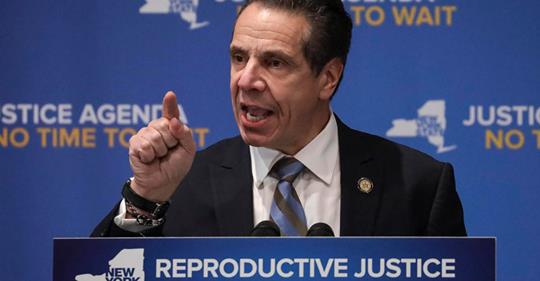
New York state has enacted strong new legal protections for abortion rights. The new law, signed by Governor Andrew Cuomo on Tuesday, safeguards rights laid out in Roe v. Wade and other court rulings, including a provision permitting late-term abortions when a woman’s health is endangered, The Associated Press reports. The state’s previous law, which had been on the books for nearly 50 years, only permitted abortions after 24 weeks of pregnancy if a woman’s life was at risk.

Governor Cuomo celebrated the passing of the bill in the Democrat-led Senate and Assembly on Tuesday, which happened to be the 46th anniversary of the Roe decision. “In the face of a federal government intent on rolling back Roe v. Wade and women’s reproductive rights, I promised that we would enact this critical legislation within the first 30 days of the new session — and we got it done,” Cuomo said in a statement. He directed state landmarks like the spire of One World Trade Center to be lit up in pink to “shine a bright light forward for the rest of the nation to follow.”

“We’re saying here in New York, women’s lives matter. We’re saying here in New York, women’s decisions matter,” Senate Majority Leader Andrea Stewart-Cousins said.

Sarah Weddington, the Texas attorney who successfully argued Roe before Supreme Court, was at Cuomo’s side when he signed the Reproductive Health Act into law.

“Thank you for what you’ve done for women,” Weddington told the governor, lawmakers and advocates.

The Reproductive Health Act replaces a 1970 state abortion law that was passed three years before Roe legalized abortion nationwide.

The new law moves the section of state law dealing with abortion from the penal code to health statutes. It also authorizes midwives and physician assistants to perform some abortions, CBS New York reports.

Abortion rights supporters pushed for years to update the law. When Democrats gained control of the state Senate this year, the act became easier to pass in both chambers. Supporters said the election of President Donald Trump and the nomination of conservative justices helped galvanize efforts to pass this law.

Republicans who opposed the bill offered proposals to create new legal penalties for harming pregnant women. Some critics argued the bill could make it harder for prosecutors to bring charges when a woman is assaulted and loses her pregnancy, the AP reports, although Democrats disputed that. Some opponents also predicted the bill will lead to more late-term abortions.

According to the New York State Department of Health,285,127 induced abortions occurred in the state between 2012 and 2014. The average number of live births for the same three years was 237,499. Nationwide, the vast majority of abortions take place in the first trimester.

The AP reports nine other states including California, Washington and Oregon have also put protections for abortion rights in their state statutes, to preserve legal access in those states if Roe is overturned.

Source: https://www.cbsnews.com/news/new-york-passes-abortion-bill-late-term-if-mothers-health-is-at-risk-today-2019-01-23/?ftag=CNM-00-10aab6a&linkId=62756228

Meanwhile, Oklahoma state Sen. Joseph Silk prefiled another ridiculous piece of legislation to restrict abortion.

Lawmakers in Colorado, Indiana, and Texas want to criminalize abortion, a lawmaker in Oklahoma is trying to prohibit abortion when the sex of the fetus is known, and transgender students are being targeted again in Indiana and South Dakota.
JIM WATSON/AFP/Getty Images

Lawmakers in Colorado, Indiana, and Texas want to criminalize abortion, a lawmaker in Oklahoma is trying to prohibit abortion when the sex of the fetus is known, and transgender students are being targeted again in Indiana and South Dakota.

Colorado

Last Monday, lawmakers in the state house of representatives introduced the “Protect Human Life at Conception Act,” a fetal homicide bill that would prohibit terminating or causing the termination of a pregnancy, beginning at the moment of conception. The measure would completely ban abortion and make it a felony—punishable by life imprisonment or even the death penalty—to perform an abortion or cause the termination of a pregnancy. It contains an exception to save the life of the pregnant person, but not for cases of rape or incest. A pregnant person who has an abortion would not be charged. Despite containing personhood language, the bill clarifies that the sale, prescription, and use of contraception would not be prohibited.

Indiana

Colorado wasn’t the only state to see a total abortion ban presented last week. On Tuesday, state Rep. Curt Nisly (R-Goshen) introduced HB 1430, which would completely ban abortion in the state of Indiana. The measure doesn’t include exceptions for rape, incest, or medical emergency. The bill asserts that “human physical life” begins at fertilization and that federal courts have no jurisdiction to interfere with Indiana’s interest in “protecting human physical life from the moment that human physical life begins.” Under this measure, all abortions in Indiana would be considered murder. The language of the bill is so broad that miscarriages could be considered manslaughter, and IVF could also be considered illegal.

Last Monday, state Rep. Gregory Porter (D-Indianapolis) introduced HB 1426, which would allow a parent to request a certificate of birth resulting in stillbirth when the fetus had a gestational age of less than 20 weeks. The bill stops short of actually requiring a stillbirth that occurs prior to 20 weeks’ gestation to be registered with the state. Stillbirths are typically defined as any natural fetal death that occurs after 20 weeks of pregnancy. Anything prior to that is usually considered a miscarriage since the fetus isn’t considered viable.

On Thursday, state Rep. Bruce Borders (R-Jasonville) introduced HB 1525, a measure to ban transgender students from using school facilities or participating in an athletic program that corresponds with their gender identity. The bill would require student facilitieslocker rooms, restrooms, or shower roomsin public school buildings to be designated for use by female students or male students according to their biological sex as identified at birth. The same goes for any athletic program or team that a student may wish to join.

On the other side of the chamber, one lawmaker wants to end fetal stem cell research. State Sen. Elizabeth Brown (R-Fort Wayne) introduced SB 584, which would prohibit any fetal stem cell research by the state, a state educational institution, or a political subdivision that receives public funds. In 2016, the state enacted an omnibus anti-choice measure that regulated the use of aborted fetal tissue. The law was blocked in federal court and a petition for review is still pending at the U.S. Supreme Court.

Mississippi

More “heartbeat” bans! Two more measures prohibiting abortion once a fetal heartbeat is detected were introduced in the Mississippi House last week (following a ban filed in the state Senate earlier this month). Both bills require physicians to test for a fetal heartbeat prior to the performance of an abortion, but there are some slight differences. HB 529 would require physicians to use an abdominal ultrasound to check for a heartbeat—which typically detect fetal heartbeats anywhere between nine and 12 weeks’ gestation. HB 732 doesn’t specify what type of ultrasound to use—so it could ban abortion as early as six weeks into a pregnancy. The measure also requires physicians to inform patients of the statistical probability of bringing the fetus to term.

Two pieces of legislation aimed at curtailing the use of aborted fetal tissue were also introduced last week in the state. HB 621 would make it a felony to use stem cells in any research or therapy procedures if they were derived from aborted fetal tissue. SB 2171 would establish requirements for the final disposition of fetal remains, and prohibit the sale or transfer of fetal remains obtained from an abortion. The measure—sponsored by state Sen. Michael Watson (R-Pascagoula)—is based off model legislation drafted by Americans United For Life (AUL).

State Sen. Watson also introduced SB 2170, which would prohibit the use of public funds from being used for an abortion, or for training to perform an abortion. The “Defunding the Abortion Industry Act” would also ban any public institution, facility, equipment, or other physical asset controlled by the state from being used for the purpose of performing or assisting an abortion. State hospitals would be prohibited from entering into a contract with abortion providers. State-based health clinics would be prohibited from performing, counseling, or referring for abortion services, or dispensing emergency contraception.

New York

Last Monday, lawmakers in New York introduced a measure to allow any person or fetus in any stage of gestation to be the victim of an assault or homicide. The “Unborn Victims of Violence Act” would not apply to lawful abortions or any otherwise necessary medical treatment that results in a fetal death. The bill is similar to several previously failed measures in New York—and with Democrats now in complete control of the state government, it will likely fail.

North Dakota

The North Dakota House Human Services Committee heard testimony Monday on a measure that would ban the most common method of performing second-trimester abortions. Except in cases of a medical emergency, the “Human Dismemberment Abortion” ban would make it a felony to perform dilation and evacuation (D and E) procedures. North Dakota is the fourth state this year (after IndianaRhode Island, and South Carolina) to introduce such a measure. Ohio became the tenth state to enact a D and E ban last month, but the law is blocked in seven states.

Oklahoma 

Lawmakers in Oklahoma last week continued prefiling legislation in anticipation of the 2019 legislative session set to begin next month. Freshman state Rep. Tammy Townley (R-Ardmore) prefiled HB 1396, which would prohibit performing an abortion if the pregnant person knows the sex of the fetus. The measure would require physicians to ask pregnant patients if they know the sex of the fetus they are carrying. If they do—and absent any medical emergency—the physician would be prohibited from going through with the abortion. Contrary to the racist arguments in favor of such measures, sex-selective abortion is not a widespread problem in the United States. Sex-selective bans usually prohibit abortion if the sex of the fetus is the reason for the abortion. This bill goes even further and bans abortion if a patient simply knows the sex of the fetus.

On Thursday, state Sen. Joseph Silk (R-Broken Bow) prefiled yet another ridiculous piece of anti-choice legislation. The so-called “Life Appropriation Act” would prohibit state funding of abortion because such funding would be an endorsement of “nonsecular conduct that is inseparably linked to the religion of Secular Humanism.” And if there is one thing conservative lawmakers hate, it’s favoring one religion over another. The measure refers to certain abortions as “convenience abortions” and claims that abortion clinics “erode community standards of decency by encouraging promiscuity and normalizing false permission-giving beliefs about sex.” Silk made headlines last month when he prefiled a measure to make abortion a homicide. Still, he doesn’t get all the credit for this new measure. The “Life Appropriation Act” was actually drafted by a group that calls themselves the “Special Forces of Liberty.” The group is led by Chris Sevier, who has spent the last few years trolling state and federal courts with lawsuits in an attempt to gut LGBTQ rights. He was also behind measures filed last year in MissouriSouth Carolina, and Wyoming that sought to end recognition of same-sex marriage by defining them as “parody marriage.”

Measures to classify abortion as unprofessional conduct were prefiled in both chambers of the state legislature. With slight variations, HB 1182 and SB 867 would revoke the medical license of a physician who participates in the performance of an abortion that isn’t necessary to save the life of a pregnant patient. The measures would also amend state law regarding who may perform abortions to prohibit any person from performing or inducing an abortion.

Two other measures prefiled last week target abortion clinics. SB 857 would require all abortion clinics to be licensed by the state department of health. A person who operates an abortion clinic without a valid license would be guilty of a misdemeanor. The department would need to establish rules for conducting inspections and investigations pursuant to complaints received by the state and made against any abortion facility—allowing anyone to harass a clinic and cause repeated and unnecessary inspections. SB 327 would require the state department of health to maintain on its website a list of all infractions discovered through investigations and inspections conducted at abortion facilities.

On Thursday, state Sen. Julie Daniels (R-Bartlesville) prefiled a measure to require abortion providers to inform their patients that it may be possible to reverse the effects of a medication abortion—a treatment medical organizations warn is “unproven and unethical.” A physician who performs an abortion and fails to inform a pregnant person of the possibility of reversing the effects of medication abortion would be guilty of a felony. SB 614 would also require abortion providers—at the risk of a fine—to post a sign in the building containing information on reversing the effects of medication abortion. Despite being an unproven treatment, four states (Arkansas, Idaho, South Dakota, and Utah) require providing abortion “reversal” information.

South Dakota

Last Monday, conservative lawmakers in the state senate introduced a measure to ban transgender high school students from participating in athletic programs consistent with their gender identity. The bill would directly override the authority of the South Dakota High School Activities Association, which allows participation for all students regardless of their gender identity or expression in an environment free from discrimination. The measure would designate the sexual identity noted on a student’s birth certificate as the sole determinant of sexual identity for the purpose of participating in high school athletics. Similar measures in the state—along with a handful of bathroom panic bills—have all failed to pass. The bill is scheduled for a hearing this Thursday with the state senate education committee.

Texas

On Thursday, state Rep. Tony Tinderholt (R-Arlington) reintroduced a measure to criminalize abortion at any stage. Similar to the measure prefiled last month in Oklahoma, the “Abolition of Abortion in Texas Act” would completely ban abortion—even for pregnancies that result from rape or incest, or those with severe genetic anomalies. If passed, all parties involved in an abortion (physicians, nurses, the pregnant patient, etc.) may face murder charges. State Rep. Tinderholt originally introduced the measure in 2017, and at the time defended the proposal by saying criminalizing abortion would “force” women to be more “personally responsible” when it comes to sex.

On Friday, state Sen. Donna Campbell (R-New Braunfels) introduced a measure to further restrict state funding of abortion. SB 389 would prohibit a governmental entity from entering into a taxpayer resource transaction with an abortion provider or an affiliate of a provider. Prohibited transactions would include a sale, purchase, lease, donation of money, goods, services, or real property, or any other transaction that provides the abortion provider or affiliate something of value from state or local tax revenue. The bill is similar to a handful of measures which failed to pass during the 2017 legislative session.

Utah

State Rep. Cheryl Action (R-West Jordan) prefiled on Wednesday a measure to ban abortion after 15 weeks (Utah currently bans abortion after 20 weeks). HB 136 would only allow for the performance of an abortion after 15 weeks’ gestation if it’s necessary to save the life or prevent an irreversible impairment of the pregnant patient; if the fetus has a lethal defect; or if the pregnancy is a result of rape or incest, and a physician verifies it has been reported to law enforcement. Louisiana and Mississippi last year enacted laws banning abortion after 15 weeks’ gestation. A federal judge struck down the 15-week ban in Mississippi, declaring the law “unequivocally” unconstitutional. Mississippi has appealed. The law in Louisiana will only take effect if the U.S. Court of Appeals for the Fifth Circuit upholds Mississippi’s ban.

Virginia

Last Tuesday, state Rep. Kathy Byron (R-Bedford) introduced a joint resolution that proposes an amendment to the state constitution to prohibit taxes or any other state revenue from being used to pay for abortions, unless such funds are used to preserve the life of the pregnant person. A similar constitutional amendment prohibiting the funding of abortion was approved by voters in West Virginia last year.

Washington

Anti-choice lawmakers in Washington last week introduced a measure to require parental notification of a minor seeking an abortion. SB 5185 would prohibit any person from performing an abortion upon a pregnant minor unless that person has given at least 48 hours notice (in person or over the phone) to a parent or legal guardian. A person who fails to provide the required notice would be guilty of a misdemeanor. Notification wouldn’t be required if there is a medical emergency or if the minor obtains a court order.

Wyoming

Last Tuesday, conservative lawmakers in Wyoming introduced a measure to impose a 48-hour waiting period before an abortion is be performed. HB 140 would only allow the mandatory waiting period to be waived when there is a medical emergency that endangers the pregnant person. The bill was scheduled to have it’s first hearing today, January 22, with the state house judiciary committee.

Source: https://rewire.news/article/2019/01/22/legislative-lowlights-total-abortion-bans-proposed-in-colorado-indiana-and-texas-last-week/

On the anniversary of Roe v. Wade, we are proud of our members who provided abortion care before Roe and helped fight for the landmark decision to protect women’s right to make their own private reproductive decisions. We are also proud of our members who provide abortion care today and keep reproductive choice a reality for so many. Unfortunately, the fight isn’t over.

Whether it’s the violence and disruption anti-abortion extremists use to harass and intimidate patients and abortion providers or the constant stream of medically-unnecessary anti-abortion laws politicians propose, the rights recognized by Roe v. Wade are constantly under attack.

Anti-choice lawmakers are determined to undermine women’s access to abortion care-here are 46 regulations in the U.S. that are designed to chip away at the right to reproductive choice by reducing access, shaming patients, and more. You can follow along with us on Twitteron Facebook, or see all 46 here. This is just a small sample of what abortion providers and women are forced to navigate in order to make Roe a reality for the 1-in-4 women who will access abortion care by the time they’re 45 years old.

There is good news, though! We are working with our members and partners to fight back against these attacks! Pro-active, pro-choice laws are being introduced throughout the country this week. The Reproductive Health Act (RHA) has passed the New York State Senate and New York’s Governor Andrew Cuomo has already promised to sign it if it reaches his desk. The RHA removes abortion from New York’s criminal code and puts it where it belongs, in the public health law. If Roe v. Wade is overturned, the RHA can help ensure qualified health care providers will be able to provide the abortion care their patients need.

Thank you for all you do to support our members, their patients, and our work at NAF.

We are in this together.

Donate: https://prochoice.org/about-naf/support-naf/

This year’s March for Life claims that “being pro-life is not in opposition to science,” though many of its positions fly in the face of evidence.

The pseudoscience promoted at March for Life will drive another year of policymaking.
EVA HAMBACH/AFP/Getty Images

The 46th annual March for Life in Washington, D.C., has adopted “Unique from Day One” as its theme, an apparent declaration of the extreme anti-choice position that life begins at conception. The event not only asserts this view as a moral position but also claims that “being pro-life is not in opposition to science.”

This co-opting of science is in line with a strategy and infrastructure that the anti-choice movement has been building for some time.

In 2011, the Susan B. Anthony List (SBA List), which supports policies and lawmakers who seek to end legal abortion, created what it called a “research” organization called the Charlotte Lozier Institute (CLI). CLI has since been a prominent voice in promulgating myths about abortion under the pretense that it conducts research and values “science.”

Take the American College of Pediatricians (ACPeds) as another example. In 2002, a few conservative members of the established American Academy of Pediatrics (AAP) were angry when the AAP took the public health position that pediatricians should support the adoption of children by people in same-sex relationships; they broke away to form their own organization. This group, ACPeds, has since been designated a hate group by the Southern Poverty Law Center and has advocated for positions with no scientific basis, including “conversion therapy.” It has equated parental support of transgender children to “child abuse,” and it joined a court brief against the dilation and evacuation abortion—the safest and most common second-trimester abortion. And yet March for Life includes an ACPeds link in its “pro-life is pro-science” list of online resources.

These are just two institutions created recently to provide the anti-choice movement and groups like March for Life with an arsenal to validate its myths.

Knowing that the myths promoted at March for Life may drive another year of policymaking, correcting this narrative before Friday’s event is important. In the list below, the evidence about abortion appears first. Because leading with the real science—the science backed by evidence, and supported by leading experts all over the country—is the best way to drown out the misinformation.

Abortion Is Extremely Safe

Each year the U.S. Centers for Disease Control and Prevention (CDC) releases statistics about abortion in almost all 50 states, and the data clearly shows that complications from abortion are minimal. Of the 652,639 abortions reported to the CDC for 2014, the last year for which data is currently available, only six women were reported to have died from medical complications related to abortion. This government data paints the same picture as reputable studies and reports from the country’s leading medical and health organizations.

A 2014 analysis from University of California, San Francisco’s Advancing New Standards in Reproductive Health (ANSIRH) center confirmed that abortion is extremely safe. Research ANSIRH conducted using 2009-2010 data in California found that 0.23 percent of abortions done through the state’s Medicaid program resulted in a major complication. That is less than a quarter of one percent. A 2014 ACOG committee opinion also promoted the safety of abortion.

The myth that abortion is unsafe has been perpetuated by the anti-choice movement and by sympathetic media. In addition to supporting the creation of groups like CLI and ACPeds, the movement has built a network of people who use their academic accreditation to publish flawed studies and testify as “experts.” Many of these people are profiled in Rewire.News’ False Witnesses database. For example, Dr. Byron C. Calhoun, a proponent of the myth that complications from abortion are common, has had his research disputed and discredited, but he has still had the ear of lawmakers on abortion policy issues and has testified in the U.S. Congress in favor of abortion bans.

D and E Abortions Are Safe—and the Language Used to Describe Them Was Invented by Anti-Choice Activists

Dilation and evacuation (D and E) abortions are the most common second-trimester abortions, and are supported in their safety by leading medical groups such as the American College of Obstetricians and Gynecologists (ACOG).

Despite this, the anti-choice movement has deployed political and linguistic attacks to try and ban all second-trimester abortions. The movement has invented non-medical terms like “partial birth abortions” and “dismemberment abortions,” and has been successful in getting these terms used in legislation and the media. Through the 2007 U.S. Supreme Court ruling in Gonzales v. Carhart, the anti-choice movement successfully advocated for some second-trimester abortions procedures to be bannedStates have since used this legal decision to start banning D and E abortions. Now the fight around the method is on the horizon for the Supreme Court as state bans on the procedure are being challenged.

Abortion Does Not Cause Mental or Physical Health Problems

This reality continues to be confirmed by evidence, including research from ANSIRH. Its groundbreaking ‘Turnaway Study” looked at the impact that having an abortion and being denied a wanted abortion had on the lives of women, including their mental and physical health. After five years, ANSIRH researchers confirmed that “a wanted abortion was not associated with mental health harms.” ANSIRH’s findings are in line with the views of leading medical organizations, including the American Psychological Associationand ACOG.

ANSIRH found that “policies based on the notion that abortion harms women’s mental health are not supported by rigorous evidence.” Yet eight states still require that a person receiving an abortion must first be counseled on the myth that it can cause long-term mental health problems.

Abortion’s lack of long-term health effects is not just limited to mental health. People can and do remain physically healthy after having abortions. This belies one prominent anti-choice falsehood: that abortion is linked to breast cancer. ACOG, the National Cancer Institute, and the American Cancer Society are among the leading medical groups that have released statements confirming this is a myth. But in five states, people who seek an abortion are still required to receive counseling to the contrary. The basis of this myth originated in methodologically flawed studies from prominent anti-choice advocates who now are asked to testify on the issue in state legislatures and courts.

A Fetus Cannot Feel Pain 20 Weeks After Fertilization

Leading medical groups, such as ACOG and the Royal College of Obstetricians and Gynecologists, agree that a fetus cannot begin to feel pain until after viability, which occurs around 24 weeks’ gestation. Nevertheless, 21 states have enacted 20-week abortion bans. The U.S. Congress has even considered a federal ban. But the bill—which was backed by President Donald Trump—was unconstitutional (Roe v. Wade made clear that states cannot completely ban abortion before viability) and based on junk scienceACOG pointed this out in a press release opposing the policy: “This bill ignores scientific evidence regarding fetal inability to experience pain at that gestational age. In addition, the phrase ‘probable post-fertilization age’ is not medically or clinically meaningful .… It is an unconstitutional attempt to intimidate health care providers and prevent them from providing the safe care their patients want and need.”

So-Called Heartbeat Bans Are Arbitrary and Unconstitutional

At around six weeks, when a pregnancy is still an embryo, doctors can detect cardiac activity with an ultrasound. This is far before the point of fetal viability and before a heart has fully formed. As Dr. Rebecca Cohen, assistant professor of obstetrics and gynecology at the University of Colorado, told HuffPost in early 2017, “It’s not a fully formed heart like you would understand from looking at an adult or even a young child …. It’s a very early structure. We can see it on the ultrasound, but it’s not a heart, a fully developed organ, by any means.’”

So-called heartbeat bans, which would ban abortion at six weeks—before most people know they are pregnant—are sweeping the nation, and are being supported by groups like March for Life. These bills have picked up momentum since first proposed in 2011 in Ohio. And as Rewire.News’ Imani Gandy and Brie Shea predicted, many states (so far four and counting) will propose similar bills in 2019. These bills are unconstitutional, but the motivation behind them is clear, as Gandy and Shea explained: “To provide the Supreme Court as many opportunities as possible to reverse course on abortion rights.”

In addition to the obvious legal issues, medical groups, including ACOG, oppose these policies. In opposition to a federal version of a ban, ACOG wrote: “This bill bans abortion long before the point of viability. Whether a fetus is viable is a medical determination and occurs much later in pregnancy. This bill violates the Constitution, will serve as [an] outright ban on abortion for most women, and will prohibit health care providers from providing ethical, necessary care to their patients.”

Fetal Tissue Research Has Led to Important Medical Advances

Research using fetal tissue has been conducted since at least the 1930s and has been funded by the federal government through the National Institutes of Health (NIH) since the 1950s. This research has been regulated for decades, presently falling under the purview of the NIH Revitalization Act of 1993, which was passed with bipartisan support. Because of the significant potential contributions of this research, NIH provided $98 million for fetal tissue research in 2017 alone. This funding went to support a variety of research projects on issues such as HIV, Zika virus, and various cancers. Already, research using fetal tissue has led to monumental medical advancements, including developing vaccines for polio, rubella, measles, chicken pox, hepatitis A, tetanus, and rabies. These advancements have saved lives and pushed health care forward.

But since Roe v. Wade was decided in 1973, fetal tissue research has been targeted by the anti-choice movement. The most recent attacks under the Trump administration gained steam in September 2018 when a company that provides fetal tissue for research had its contract canceled by the Department of Health and Human Services (HHS). March for Life was among many anti-abortion groups that celebrated this contract termination. Since then, Congressional hearings on fetal tissue research tenability and alternatives have been underway. The hearings included testimony from people tied to the Charlotte Lozier Institute, and the effort to block fetal tissue research is likely to continue given HHS is heavily stacked with anti-choice advocates who are receptive to the movement’s lobbying activities.

Source: https://rewire.news/article/2019/01/16/six-facts-about-abortion-to-counter-march-for-lifes-junk-science/

The administration acknowledges the rule could increase the out-of-pocket cost of abortion care.

“This proposed rule would require insurers who offer plans in the marketplaces that include abortion coverage, of course beyond the limited exceptions of the life endangerment, rape. and incest, to offer a … ‘mirror plan’ in the same area that includes all the same benefits without the abortion coverage,” Megan Donovan said.
BRENDAN SMIALOWSKI/AFP/Getty Images

The Trump administration proposed a rule Thursday that includes a provision restricting insurance coverage for abortion care. Health-care experts said the rule is meant to steer insurers away from covering abortion services.

The abortion restriction was included in a proposed “2020 Payment Notice” from the Centers for Medicare & Medicaid Services (CMS), a division of the U.S. Department of Health and Human Services (HHS). If finalized, it would “require that insurance companies that offer [Affordable Care Act] plans covering abortions of pregnancies that do not threaten the life of the mother or result from rape or incest must also offer at least one identical plan in the same geographic area that does not cover these abortions,” according to a press release Friday touting the administration’s recent anti-choice policies.

“The rule would not apply in states with abortion coverage mandates,” the press release noted.

Megan Donovan, senior policy manager at the Guttmacher Institute, told Rewire.News Friday that the administration’s proposed rule was “another attempt to disincentivize insurers from offering abortion coverage—to restrict abortion coverage to the full extent that they can and just make it that much harder for insurers to include coverage in their plans by putting on another requirement.”

“Under the ACA, insurers can choose whether to cover abortion in the plans that they offer in the marketplaces subject to state law—and of course, there are 26 states that restrict abortion coverage in the exchanges and four states that require plans to cover abortion,” she said. “But in the absence of a state law with a requirement or a ban … insurers can choose whether or not to include abortion in the coverage that they provide in the plans offered on the exchanges.”

“This proposed rule would require insurers who offer plans in the marketplaces that include abortion coverage—of course beyond the limited exceptions of the life endangerment, rape, and incest—to offer a …  ‘mirror plan’ in the same area that includes all the same benefits without the abortion coverage,” Donovan said.

The proposal acknowledges that the change could “potentially reduce the availability of non-Hyde abortion coverage in insurance, thereby increasing out-of-pocket costs for some women seeking those services.” Donovan pointed to that language and said this could “possibly make it difficult for people to obtain the care entirely because if they can’t meet that out-of-pocket cost there is significant financial barriers to getting the care that they need.”

The new Trump administration proposal “piles on top of the proposed rule from [November] that would create an onerous requirement that insurers offering insurance coverage in the marketplaces try to collect separate payment for that coverage,” Donovan said.

That rule, proposed by the Trump administration in November, would require insurers to bill customers and collect payments separately “for the portion of the consumer’s premium attributable to certain abortion services.” The comment period on that rule closed last week.

“This is part of what is clearly an ongoing effort to restrict private insurance coverage of abortion in the marketplaces,” Donovan continued.

“It is really telling that in the midst of a government shutdown the administration is pushing out new proposed restrictions on abortion coverage and the Senate was taking a vote on extreme anti-abortion coverage language yesterday while federal employees and contractors and the service-industry workers who rely on their business are … turning to nonprofits and community members to meet basic needs for food, housing, and diapers,” she said.

Source: https://rewire.news/article/2019/01/18/trump-administration-wants-new-restriction-on-abortion-coverage/

The 5th U.S. Circuit Court of Appeals lifted an injunction forbidding Texas from stripping Planned Parenthood of Medicaid funds Thursday, while stridently criticizing the abortion provider for its rhetoric and medical practices.

“Planned Parenthood’s reprehensible conduct, captured in undercover videos, proves that it is not a ‘qualified’ provider under the Medicaid Act, so we are confident we will ultimately prevail,” Texas Attorney General Ken Paxton said in a statement after Thursday’s ruling.

The case arose after a pro-life group called the Center for Medical Progress released videos purporting to show Planned Parenthood violating medical and ethical standards codified in federal law and state regulations. Texas terminated its Medicaid provider agreement with Planned Parenthood shortly thereafter, citing infractions documented in the videos.

In turn, Planned Parenthood asked a federal court to restore its Medicaid funding. Thursday’s ruling—which related to a jurisdictional issue in that case—is especially striking for its numerous rebukes of Planned Parenthood. Judge Edith Jones, a Ronald Reagan appointee, delivered the opinion.

Perhaps the most noteworthy of the decision’s reprimands is a graphic depiction of post-abortion fetal remains taken from a Center for Medical Progress video on the fourth page of the opinion. A small arm is visible in the picture. Texas cited the manner in which Planned Parenthood disposes of fetal remains as one reason for terminating its Medicaid eligibility.

In another instance, the decision all but accuses Planned Parenthood of breaking federal law banning partial-birth abortions. The ruling highlights a Center for Medical Progress video in which an administrator called Dr. Tram Nguyen said doctors at one facility could evacuate an intact fetus—thereby breaking federal law—provided they sign a form that they did not “intend” to do so. Such procedures allow researchers to recover organs like the thymus or the liver.

Later in the opinion, the panel chides Planned Parenthood for failing to address Nguyen’s comments in court filings.

“The plaintiffs’ briefing with regard to the substance of the discussions contained in the videos is curiously silent,” the decision reads.

Planned Parenthood has denied it intentionally alters abortion procedures for impermissible reasons.

The panel also dismissed Planned Parenthood’s claim that the Center for Medical Progress videos were “deceptively edited,” a soundbite that redounded across the press after the tapes first appeared.

“The record reflects that [the Texas Office of Inspector General] had submitted a report from a forensic firm concluding that the video was authentic and not deceptively edited,” a footnote in the decision reads. “And [Planned Parenthood] did not identify any particular omission or addition in the video footage.”

Finally the panel accused the judiciary of politicking on abortion cases. Ordinarily, providers like Planned Parenthood must challenge Medicaid termination decisions in an administrative forum and state court before seeking a federal court’s intervention. By allowing Planned Parenthood to skip directly to federal court—as the trial court did here—the 5th Circuit said judges are engaging in ideological favoritism.

“Had [Texas] terminated the Medicaid provider agreements of any other type of health care provider, the incongruity of allowing that provider to use patient litigation proxies to avoid administrative review and [reach] federal court would be obvious and unacceptable,” the ruling reads.

The decision comes as pro-life activists gather in Washington in advance of Friday’s March for Life.

The question before the 5th Circuit did not relate to abortion directly: After Texas disqualified Planned Parenthood from Medicaid eligibility, the abortion provider sued, claiming the federal Medicaid statute allowed it to do so. A federal district judge agreed, allowing the lawsuit to proceed. The 5th Circuit had to decide whether that decision was correct.

The federal appeals courts are divided over the answer to that question. Though the Supreme Court generally intervenes when the circuits disagree over the same question of law, the justices denied review in a related controversy from Kansas in December, drawing a vigorous dissent from Justices Clarence Thomas, Samuel Alito, and Neil Gorsuch that accused the court of playing politics.

In that instance, Chief Justice John Roberts and Justice Brett Kavanaugh joined with the court’s liberal bloc, effectively preserving a pro-Planned Parenthood decision in the lower court.

The 5th Circuit’s Thursday decision concluded that it is bound by precedent to find Planned Parenthood can proceed with its lawsuit in federal court under the Medicaid statute, though Jones wrote a concurrence to her own majority opinion urging the full 5th Circuit to revisit that question.

However, the 5th Circuit gave Texas a partial victory, finding the trial court assessed Planned Parenthood’s request for an injunction under the wrong standard. The panel lifted the injunction, and ordered the lower court judge to reconsider Planned Parenthood’s request under a different standard that is more accommodating of Texas.

As such, the state has a much better chance of prevailing when the matter returns to the trial court for further proceedings.

Texas awards approximately $3.4 million to Planned Parenthood affiliates through Medicaid annually. The decision notes this is a “smidgen” of the revenue Planned Parenthood’s Texas affiliates generate each year, which runs over $57 million.

Source: https://www.dailysignal.com/2019/01/18/a-federal-appeals-court-just-took-a-big-swing-at-planned-parenthood/

Pro-choice campaigners said the change in the law was “long overdue”

Women on the Isle of Man will soon be able to request an abortion within the first 14 weeks of pregnancy.

Tynwald President Steve Rodan said the Abortion Reform Act had received Royal Assent, meaning that the UK’s Ministry of Justice has given its approval.

The Manx government is yet to announce when the new law, proposed by Ramsey MHK Alex Allinson, will be introduced.

Currently abortions can only be carried out after a rape or because of concerns about the mother’s mental health.

Under the changes, Manx women will also be able to seek an abortion up to 24 weeks in cases of foetal anomalies of if there are serious social reasons.

Health Minister David Ashford MHK said: “We will now be working with clinicians to develop the service so that we can bring forward an appointed day order at the earliest practical opportunity and open a new chapter in our island’s healthcare provision.”

‘Long overdue’

The Campaign for Abortion Law Modernisation (CALM) said the group was “delighted” by the “long overdue” change in the law.

“It’s taken 24 years to update this cruel, discriminative law and decriminalise abortion and make abortion care part of reproductive healthcare,” a spokeswoman added.

The changes were brought forward by Dr Allison in a private member’s bill last year.

He said decriminalisation “changes abortion from being a criminal justice issue to a health matter, as it should be”.

“This is the culmination of years of campaigning by numerous people across the island to improve our law and stop women having to cross the Irish Sea to access essential healthcare,” he added.

‘Dark and sad day’

Sue Richardson, of pro-life campaign group Humanity and Equality in Abortion Reform (HEAR), said it was a “dark and sad day for the Isle of Man”.

“We will never stop fighting for the recognition of the humanity, dignity, and rights of every member of the Manx and human family,” she added.

In Scotland, England and Wales abortion is legal up to 24 weeks, provided certain conditions are met, but not decriminalised entirely.

Northern Ireland only allows abortions in cases where the woman’s life is at risk.

In a referendum last year, people in the Republic of Ireland overwhelmingly voted to overturn its ban on abortion.

https://www.bbc.com/news/world-europe-isle-of-man-46879046?fbclid=IwAR1LN1DV4qYFCSvUziCITUUG82AJVnTa4imtDZ0pEa2cgDwmyMKeW8sWxNE