A federal judge on Tuesday blocked a Mississippi state law that sought to forbid most abortions after 15 weeks of pregnancy, writing a sharply worded opinion with implications for states weighing similar measures.

Gov. Phil Bryant signed H.B. 1510, also known as the Gestational Age Act, in March, pledging his “commitment to making Mississippi the safest place in America for an unborn child.”

The law made exceptions only for medical emergencies or cases in which there’s a “severe fetal abnormality.” There were no exceptions for incidents of rape or incest.

The next day, the sole facility providing abortion services in Mississippi sued to prevent the law from taking effect, setting off months of legal challenges culminating in Tuesday’s ruling.
US District Judge Carlton Reeves of Mississippi’s Southern District, who was appointed by President Obama, wrote that the law “unequivocally” infringes upon a woman’s 14th Amendment due process rights and defies Supreme Court precedents.
Citing evidence that viability begins at between 23 and 24 weeks, Reeves wrote that “there is no legitimate state interest strong enough, prior to viability, to justify a ban on abortions.”
“The state chose to pass a law it knew was unconstitutional to endorse a decadeslong campaign, fueled by national interest groups, to ask the Supreme Court to overturn Roe v. Wade,” Reeves wrote. “This court follows the commands of the Supreme Court and the dictates of the United States Constitution, rather than the disingenuous calculations of the Mississippi Legislature.”
Furthermore, he called the Legislature’s professed interest in women’s health “pure gaslighting,” pointing to evidence of the state’s high infant and maternal mortality rates.
“Its leaders are proud to challenge Roe but choose not to lift a finger to address the tragedies lurking on the other side of the delivery room, such as high infant and maternal mortality rates,” he wrote in a footnote.
“No, legislation like H.B. 1510 is closer to the old Mississippi — the Mississippi bent on controlling women and minorities.”
The governor’s office did not reply to a request for comment. Proponents of the bill previously said the law would do what’s best for women.
“Beyond the obvious debate of trying to save the lives of innocent babies, there is the often less discussed issues that relate to the health of the mother who receives an abortion,” Mississippi State Rep. Dan Eubanks said in March after Bryant signed the bill into law.
“When did looking out for the life, health and overall well-being of a child or its mother start getting labeled as extreme in this country?”
Critics of the law called it one in a string of efforts to diminish access to abortions in an already restrictive state.
Mississippi is the only state in the country that requires physicians who perform abortions to be board-certified or board-eligible obstetrician-gynecologists. It also requires in-person counseling and a 24-hour waiting period before receiving an abortion, which means women must make repeat trips to the facility, a fact that’s especially burdensome for those living outside Jackson.
The Center for Reproductive Rights, which sued on behalf of Jackson Women’s Health Organization, said the opinion reaffirms other courts’ decisions that struck similar bans on abortions before viability.
“Our victory today means that women in Mississippi will maintain the ability to make their own decisions about whether and when to terminate a pregnancy,” said Nancy Northup, president and CEO of the Center for Reproductive Rights.
Reeves noted that Mississippi already has a trigger law that will ban abortions in the event Roe v. Wade is overturned. Until then, he said Roe is the controlling law in the United States and expressed frustration that the Legislature passed 1510 knowing that it could face legal challenges at taxpayers’ expense.
He also noted what he called the “sad irony” of men like him deciding women’s reproductive rights, recalling what the lawyer for Jane Roe argued to the Supreme Court in 1971: “A pregnancy to a woman is perhaps one of the most determinative aspects of her life.”
“The fact that men, myself included, are determining how women may choose to manage their reproductive health is a sad irony not lost on the court,” he wrote.
“As a man, who cannot get pregnant or seek an abortion, I can only imagine the anxiety and turmoil a woman might experience when she decides whether to terminate her pregnancy through an abortion.
Respecting her autonomy demands that this statute be enjoined.”
Source: https://edition.cnn.com/2018/11/20/health/mississippi-abortion-ban-15-weeks-ruling/index.html?fbclid=IwAR3ErBmVBKsKqmgCGYzj0wIX-9gySBWHgOHNfkOhv-DMVL7m1MFxt144IwA


Abortion is illegal in the central American nation.

Salvadoran women march claiming for the decriminalization of abortion in San Salvador, on September 28, 2017. / AFP PHOTO / MARVIN RECINOS (Photo credit should read MARVIN RECINOS/AFP/Getty Images)

A rape victim jailed for allegedly attempting to abort her unborn child is facing 20 years behind bars in El Salvador.

Imelda Cortez, who became pregnant aged 18 after being raped by her stepfather, denies trying to abort her baby, which is a crime under any circumstances in the central American nation.

Judges will consider medical evidence presented by doctors to determine if Cortez intentionally tried to induce an abortion and either convict her on attempted murder charges, or decide to set her free. Her daughter is now nearly two years old.

“Imelda is despondent. Her case could go either way,” her lawyer Alejandra Romero said.

“But if the judge is objective and looks at the evidence, which doesn’t show she harmed her child and committed a crime, Imelda should be set free,” she said.

Regardless of Cortez’s guilt or innocence, the harsh penalty she faces has revived debate about El Salvador’s total ban on abortion under any circumstances, even for rape victims.

“Imelda was repeatedly raped by her stepfather from the age of eleven. DNA tests prove her child is the daughter of her stepfather,” said Romero, adding the stepfather has since been imprisoned on charges of raping a minor.

“Yet Imelda is being treated as a criminal, not a victim of sexual violence,” said Romero, who works for the Citizen Group for the Decriminalisation of Abortion (CDFA) in El Salvador.

Cortez is one of about 25 women in jail accused of inducing abortions, who say they were wrongfully jailed for murder, when instead they suffered miscarriages, stillbirths or pregnancy complications, according to the CDFA.

Lawyers at CDFA say convictions for such crimes are often based on flimsy medical evidence as it is difficult for doctors to prove if someone has had an abortion, let alone attempts to do so.

Earlier this year, the United Nations called on El Salvador to revise its abortion law and review all such cases in which women have been jailed.

In Cortez’s case, she was taken to a hospital after giving birth where doctors said she intentionally tried to induce an abortion, despite the fact the child was born healthy, according to Romero.

Mariana Ardila, a lawyer at rights group Women’s Link Worldwide, said judges have a duty to consider the circumstances surrounding the pregnancy, even if they find Cortez guilty.

“It is crucial that the judiciary, while dispensing justice in crimes related to pregnancy, take into account the individual circumstances and background of women and girls,” said Ardila.

“In this case, the circumstances related to the sexual violence Imelda faced and the afterward consequences on her life.”

An online petition has so far collected nearly 45,000 signatures calling on authorities to release Cortez from prison.

“While the law remains so restrictive, such cases will only continue,” Romero said.

Source: https://www.huffingtonpost.co.uk/entry/el-salvador-woman-who-had-her-rapists-baby-could-be-jailed-for-20-years_uk_5be95008e4b0e8438899b7a9?ncid=fcbklnkukhpmg00000001&fbclid=IwAR0kbNhH0duuOLjciTnGK4iciKNrI_WBonMYiIblXtJbA7E48985yrjQXls

Late last month, Cosimo Borraccino, a left-wing member of the regional council for Apulia, in southern Italy, proposed passing a local law to require the enforcement of national legislation granting women access to abortion. His opponents on the council, mostly from center-right parties, said the bill was unnecessary and that Mr. Borraccino was “slamming into a wall of self-evidence.”

Yet when it comes to reproductive rights in Italy, respect of the law is anything but self-evident. In fact, 9 out of 10 gynecologists in Apulia refuse to perform abortions, even though the right to obtain one has been legal since 1978. Nationwide statistics are only slightly less staggering: Seven out of 10 gynecologists in Italy won’t terminate a pregnancy.

They can do that because the very law that legalized abortion nearly 40 years ago also exempts medical personnel from providing the procedure if “they have a conscientious objection, declared in advance.” More and more conscientious objectors — many of them Catholic — have joined gynecological wards, women’s clinics and pharmacies since, and as a result getting an abortion in Italy today can be as hard as in countries where abortions are illegal.

Some 20,000 unsafe and illegal abortions are said to be performed in Italy every year, compared with about 100,000 legal ones. The number of illegal procedures is increasing, advocates for women’s rights say, even as the number of legal ones is decreasing. According to 2015 figures from the health ministry, the most recent available, less than 60 percent of public hospitals in Italy even provided abortions. Earlier this year, one woman in Padua, a city in the northeast, had to go to 23 hospitals before she found one that would terminate her pregnancy.

For this, Italy has been repeatedly chastised by the Council of Europeand the United Nations Human Rights Committee. The government has responded demurely, at times claiming that the number of medical personnel who are not conscientious objectors has remained steady for 30 years.

Yet, according to official figures, the share of conscientious objectors among gynecologists rose from 59 percent in 2005 to 70 percent in 2013. (The government has stopped releasing the data in recent years.) And Noemi di Iorio, an activist with the women’s collective La Mala Educación, told me during a women’s rights rally in Bologna on Sept. 28 — International Safe Abortion Day — that “the presence of religious conscientious objectors in women’s health clinics has reached a peak.”

A pitched battle certainly now seems to be underway — in hospitals and on the streets, in local assemblies and courts throughout the country.

Early this year, a major public hospital in Rome listed two job openings for gynecologists, specifying that it was seeking candidates who were not conscientious objectors. The Italian Bishops’ Conference denounced the ad as discriminatory, but a local court said it was legal. In August, an administrative court in Rome ruled that medical personnel could not invoke conscientious objection to refuse prescribing birth-control pills or withhold certificates of pregnancy, which women seeking an abortion need. Local media called the decision a “revolution.”

Almost as soon as Law 194 was passed in 1978, the Church and its political proxy then, the Christian Democratic Party, tried to have it repealed. A referendum was held in 1981, but voters rejected the idea — roundly, by a margin of 2 to 1. Having failed to change the law, the Church then set out to exploit its internal contradictions — which it had helped create.

Even as Law 194 guarantees the right to an abortion, it “recognizes the social value of motherhood.” According to Angela Balzano, a researcher in philosophy and bioethics at the University of Bologna, that built-in tension, along with “the loophole provided by the clause on conscientious objection,” was an attempt to mediate between “two irreconcilable positions” in the late 1970s: the abortion-rights agenda of the Radical Party, a leading left-wing party, and the anti-abortion Catholics. She called this “a clear case of judicial antinomy.”

Four decades later, it’s apparent who has benefited from that weakness, and this result is no accident. Pope Francis himself, speaking at a gathering of Italian Catholic physicians in 2014, encouraged doctors to make “brave choices that go against the current,” referring pointedly to conscientious objection and abortion.

Although the Christian Democrats are no longer, Catholicism remains a major political force. The religious movement Comunione e Liberazione (Communion and Liberation), whose stated mission is to promote the “education to the Christian faith” and comes under the pope’s direct authority, has thousands of supporters — some say many thousands — including in hospitals, universities and women’s clinics, and among politicians in center-right parties, like those who opposed Mr. Borraccino’s law in Apulia.

In addition to legalizing abortion, Law 194 called for establishing specialized women’s clinics. But after years of cuts to the state health care system, many clinics today are Catholic, and those refuse to provide even information or basic services to women seeking an abortion. What’s more, they are partly funded with taxpayer money: 0.8 percent of personal taxes are directly allocated to the Church, unless taxpayers specifically ask to opt out. So much for the separation of Church and state.

The law granting women access to abortion has been gutted, Assunta Sarlo, a journalist and activist with the feminist group Usciamo dal Silenzio (Let’s End the Silence), told me, partly “because the religious forces have been able to count on political allies in what remains a strongly Catholic country.” But it’s also, she said, “because the reputation of abortion is such that choosing to be a gynecologist who carries out this type of procedure is akin to career suicide.”

Opinion polls suggest that the vast majority of Italians still support access to abortion. But some three-quarters of the population also call themselves Catholic, and so even for some Italians who support women’s right to terminate a pregnancy, abortion still carries a stigma. And that’s just the kind of tension that the Church has been expert at exploiting — at a great cost to women, as well as the rule of law, in Italy.

Source: https://www.nytimes.com/2017/11/13/opinion/abortion-italy-conscientious-objectors.html?smid=fb-nytimes&smtyp=cur&fbclid=IwAR39xwmhMknyfocpxnGI_5lWfdGknn_77ZvGU8I-Ucj6GfOzTtp-sEUszcI

Thousands of protesters demonstrated in Norwegian cities on Saturday against restricting women’s access to abortion, the subject of talks between the ruling minority coalition and a small party seeking to join the government.

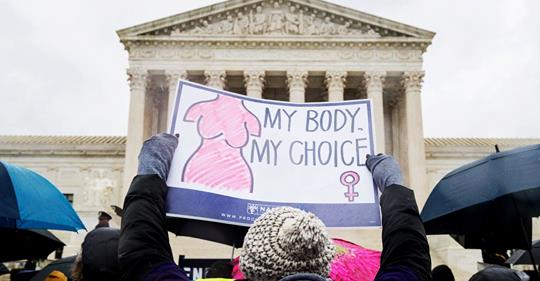
A woman holds a placard during a demonstration against changes of the country’s abortion law in Oslo, Norway November 17, 2018. Sign reads “My body, my rights”. REUTERS/Lefteris Karagiannopoulos

In Norway’s capital Oslo, the demonstrators, some pushing children in strollers, marched through the city center carrying banners with slogans such as “My body my right” and “Defend abortion”.

“The new law that’s proposed is limiting women’s rights,” said Ine Lund, a 22-year-old criminology student. “I feel it should be up to the woman to choose.”

When the Christian Democrats opened talks on teaming up with the opposition Labour Party to bring down the Conservative-led government, Prime Minister Erna Solberg intervened, offering to discuss tightening abortion rules.

The argument helped persuade rank-and-file members of the socially conservative, Lutheran-based party to vote for talks to join the ruling coalition, potentially securing Solberg a majority in parliament until the next election in 2021.

The Christian Democrats want further restrictions or an end to terminations after the twelfth week of pregnancy, potentially reining in exemptions for genetic conditions or injuries.

The party also wants to make it more difficult, or stop altogether, selective abortions in multi-fetal pregnancies.

“It is discriminating to select on the basis of having different skills … Children with Down syndrome should have the same legal rights as other children,” Kjell Ingolf Ropstad, deputy leader of the Christian Democrats, told public broadcaster NRK earlier this month.

Since 1978, a termination after 12 weeks must be authorized by a panel of two hospital doctors. If the panel refuses, the decision can be appealed.

In an effort to quell a backlash within her own party, as well as from the opposition, Solberg said any changes to the abortion law would not undermine women’s rights.

“In practice this will mean that, in future, women who seek an abortion after the twelfth week of pregnancy will as much as before have the right to have an abortion,” she told parliament on Wednesday.

Some 68 percent of Norwegians are against changing the abortion law, while 16 percent are in favor, according to a poll published in daily VG on Nov. 9. The phone survey by Respons Analyse polled 1,000 participants aged 18 and over.

Source: https://www.reuters.com/article/us-norway-politics-abortion-idUSKCN1NM0HR?utm_campaign=trueAnthem%3A+Trending+Content&utm_content=5bf0352f04d3017287312b7b&utm_medium=trueAnthem&utm_source=facebook&fbclid=IwAR0JeDGMsrtSA0aDimGP1PkqPNrOmmRzjfr8u0Dpk2dDX97fdHWtF8D6CRI

If Ohio’s “heartbeat” ban becomes law, it would be the second state this year to enact a near total abortion ban.

The bill passed this week in Ohio is similar to the 2016 heartbeat abortion ban that was vetoed by Gov. John Kasich (R).
Paul Brady Photography / Shutterstock.com

Republican lawmakers in Ohio resurrected its “heartbeat” ban on abortion, and while most state legislatures are on break or finishing up last minute business, Texas and Arkansas are already gearing up for the 2019 legislative session.

Ohio

In a 60-35 vote Thursday, Ohio’s GOP-controlled state house passed a bill to ban abortion once a fetal heartbeat is detected—which can occur as early as six weeks into pregnancy and well before many people even realize they’re pregnant. Except in cases of emergency, HB 258would make it a felony for providers to perform an abortion without first determining whether there is a detectable fetal heartbeat. The bill is similar to the 2016 heartbeat abortion ban that was vetoed by Gov. John Kasich (R). The bill now heads to the state senate. If it passes, Kasich could veto it again, but the GOP-controlled legislature may have enough votes to override it. If that happens, Ohio would be the second state this year to enact a near-total abortion ban. Iowa enacted a six-week abortion ban in May, which was quickly challenged in court. That law is temporarily blocked while the case is being decided. Both laws are clearly unconstitutional. But now that Brett Kavanaugh has joined the U.S. Supreme Court, the durability of Roe v. Wade isn’t so certain. Brigitte Amiri, deputy director of the ACLU Reproductive Freedom Project, issued the following statement:

Today’s passage of an abortion ban in the Ohio House of Representatives is part of a broader strategy by anti-abortion politicians to push abortion care out of reach state by state, and is unfortunately a harbinger of what’s to come once anti-abortion state legislatures gavel back into session in 2019. This is also one of the first legislative attempts that takes direct aim at the constitutional right to abortion after the Supreme Court’s recent changes. The ACLU’s response if the Ohio bill becomes law? We’ll see you court.

On Wednesday, the state senate judiciary committee took up HB 36, a bill that would prohibit the state from requiring ministers to perform a marriage that goes against their religious belief—a right that is already protected under the First Amendment of the U.S. Constitution. But the “Pastor Protection Act,” which passed the state house in June, takes it a step further and allows undefined “religious societies” to deny the use of their buildings and property for any marriage ceremony that goes against their religious beliefs. If passed, any “religious society” could discriminate against same-sex couples—or even interfaith couples and others—without the threat of litigation. No hearing has been scheduled yet.

Texas

On Monday, state Sen. Bob Hall (R-Edgewood) filed legislation proposing a state constitutional amendment granting the right to life to “unborn children” and prohibiting abortion to the extent authorized under federal constitutional law. This isn’t the first time Hall has attempted to pass a “personhood” amendment—he had an identical bill in 2016 which failed to pass. If the bill makes it through the legislature this time around, the amendment would be presented to voters in November of next year. If this sounds familiar, it’s because it’s the exact same thing that just happened in Alabama. There, voters actually approved granting rights to fertilized eggs and fetuses—potentially paving the way to criminalize abortion in the state.

The newly re-elected state senator—who in the last four years has sponsored or co-sponsored at least two dozen bills targeting reproductive and LGBTQ rights—also filed legislation Monday to allow certain counseling professions to discriminate against LGBTQ people. SB 85 would allow psychologists, marriage and family therapists, professional counselors, social workers, behavior analysts, and even chemical dependency counselors to refuse to provide services to a person if doing so would violate their “sincerely held” religious belief.

In the other chamber, state Rep. Valoree Swanson (R-Spring) filed legislation to prohibit physicians—at the risk of losing their medical license—from performing abortions. HB 47 would prohibit physicians and applicants for a medical license from performing an abortion unless it’s necessary to save the pregnant person’s life or avert a serious physical injury. The bill also provides exceptions for removing ectopic pregnancies and when, in the case of a multiple pregnancy, it’s necessary to ensure at least one “unborn child” is born alive. Swanson filed an identical bill in 2017 that failed to pass.

And now we have to talk about SB 154. Here at Legislative Lowlights, we usually only focus on all the bad stuff moving through state legislatures. But sometimes it’s complicated. Sometimes there are good bills that also have flaws. This is one of those times. Filed by state Sen. José Rodríguez (D-El Paso), this bill would allow a person to change the name and sex designation on their birth certificate if they provide proof to the state registrar that they have undergone a “clinically appropriate treatment for the purpose of transitioning to another sex.”

Currently in Texas, if a person wants to change the sex designation on their birth certificate, they would need to petition a judge for an order stating they are now male or female and provide proof of surgery. According to the National Center for Transgender Equality, the state “does not have a specific gender marker provision in its birth certificate amendment statute, and current case law and evidence indicates that some Texas officials and judges are adverse to issuing the necessary court orders.”

This means SB 154 would actually be an improvement for transgender rights in the state. It would allow people to bypass the courts—a process that can be time-consuming, expensive, and often unsuccessful. The bill doesn’t add any restrictions or additional hoops for transgender folks to jump through in order to obtain a birth certificate that accurately reflects their gender identity. It also ensures that the new birth certificate not include the applicant’s prior name and sex if that information is no longer accurate.

That being said, if this piece of legislation were introduced in California, Iowa, New York, Oregon, Vermont, or Washington—all states that do not require surgery for those applying to change a birth certificate—this would be considered a restrictive, anti-trans bill. That’s because it’s not clear if SB 154 actually removes the surgery requirement. Requiring a person to undergo some form of treatment or surgery can pose undue hardships on transgender folks, especially when it’s not clear what type of treatment would qualify. And not all transgender people require, or can even access, such procedures. Transition-related care can be expensive and not all state and private insurance providers will cover the costs.

But at the end of the day, this bill was introduced in a state that could use all the transgender protections it can get—a fact the bill’s author also seems to realize. In addition to SB 154, Rodríguez filed legislation to prohibit discrimination in public accommodation on the basis of sexual orientation or gender identity; to repeal the criminal offense of homosexual conduct, which is still on the books in Texas for some reason; and to make statutory changes to accurately reflect and address same-sex marriages and parenting relationships. So we’ll be keeping an eye on this bill—and we hope improved legislation will soon follow.

Michigan

Michigan’s telemedicine abortion ban is set to expire at the end of the year, and at least one Republican lawmaker doesn’t want that happening. Passed in 2012, the law requires doctors to personally perform a physical examination of the patient prior to prescribing a medical abortion. When prescribing a medical abortion, the doctor must be physically present at the location of the abortion when the drug is dispensed and may not use any type of web camera to facilitate the process. Last week—possibly in anticipation of an incoming Democratic governor—state Sen. Tom Casperson (R-Escanaba) introduced SB 1198, which would eliminate the sunset provision and make the ban on telemedicine abortion permanent. The bill was referred to the state senate health policy committee, and no hearing has been scheduled.

Arkansas

State Sen. Trent Garner (R-El Dorado) filed legislation Thursday requiring physicians and health-care facilities to file a report with the health department regarding each person under their care who has been diagnosed or treated for a complication that may be the result of an abortion. The bill is similar to an Idaho law passed earlier this year that is currently being challenged in court.

Garner also filed legislation prohibiting physicians from performing or attempting to perform an abortion if they know the pregnant person wants it due to a possibility that the fetus has Down Syndrome. This restriction is similar to one found in a blocked provision of a 2016 Indiana law that might end up being reviewed by the U.S. Supreme Court. Additionally, the “Down Syndrome Discrimination by Abortion Prohibition Act” includes an ambiguous forced waiting requirement. The bill requires doctors to request the medical records of the pregnant person relating directly to their entire pregnancy history. The physician would be prohibited from performing an abortion until “reasonable time and effort is spent” to obtain the pregnant person’s medical records.

Source: https://rewire.news/article/2018/11/16/legislative-lowlights-ohio-state-house-passes-heartbeat-ban/

International Development Minister Marie-Claude Bibeau rises in the House of Commons during question period in Ottawa, June 7, 2018.

MONTREAL — Canada’s international development minister says that access to family planning services such as contraceptives and abortion is key to fighting poverty.

Marie-Claude Bibeau says Canada will continue to speak frankly with other countries on the need for such services, even if it remains controversial in some circles.

Bibeau is in Rwanda today ahead of a four-day international conference on family planning that runs until Thursday.

She tells the Canadian Press in a phone interview that some countries are willing to discuss the topic but don’t always follow up with concrete commitments.

She says reproductive and sexual education and access to contraception are important steps in eliminating poverty, especially among women.

Source: https://globalnews.ca/news/4653371/canada-international-development-abortion-contraception/

There’s little doubt Josh Hawley, who has worked for years to undermine abortion rights, will push his anti-choice views in the U.S. Senate.

Josh Hawley, Missouri’s current attorney general, is a vocal foe of abortion rights and proponent of so-called religious liberty.
Scott Olson/Getty Images

Republican Josh Hawley’s defeat of Sen. Claire McCaskill (D-MO) adds yet another hardline opponent of abortion rights in federal office at a critical time for reproductive rights.

McCaskill’s Senate seat had long been a target for those hoping to maintain an anti-choice majority in Congress—and with a candidate like Hawley on the ballot, it’s easy to see why abortion rights foes focused on flipping her seat. Susan B. Anthony (SBA) List, an anti-choice groupwith close ties to the Trump administration, deployed a “field team of 117 canvassers [and] visited more than 310,000 Missouri voters” in an effort to boot McCaskill from office. In conjunction with its PAC, the group “undertook a six-figure independent expenditure campaign to mobilize pro-life voters across Missouri to support Josh Hawley.”

Hawley, Missouri’s attorney general, is a vocal opponent of abortion rights and a proponent of so-called religious liberty. It’s a position highlighted front and center on his campaign site. “Josh has been a dedicated advocate for religious liberty, both as attorney general and for his entire professional career,” the site claimed in the candidate’s biography. “Before he became Attorney General, Josh fought Obamacare at the Supreme Court—and won—as one of the lead attorneys in the landmark Hobby Lobby case.”

The reference to Hawley’s work on Hobby Lobby refers to the U.S. Supreme Court’s 2014 decision granting employers the right to deny insurance coverage for contraception citing religious beliefs. He has touted his work on the case and faced questions about whether he had exaggerated his role in the effort during his 2016 bid for attorney general. As the Missouri Times reported, Hawley was listed as one of the case’s lawyers on its brief, though he did not argue the case himself. However, the conservative Becket Fund, which prepared the case, has said Hawley was an “integral part of” it. “In both cases, his work and Supreme Court expertise were critical to our success at every stage of the litigation,” the Becket Fund said in a statement.

Hawley has been outspoken about his belief that access to abortion care should be restricted. Speaking to LifeSiteNews in 2016 during his run for attorney general, Hawley discussed how criminalizing abortion was his ultimate goal and vowed to use his office to act on the matter if he was elected.

“Abortion is not a right,” he told the site. “It is a violent act against the defenseless. It violates every principle of morality and should be barred by American law. Until that day, I fully support bans on partial-birth abortion, third-trimester abortion, and indeed every limit that can receive public support.”

“In general, I would support any restriction on abortion that can garner enough votes to become law,” Hawley said at the time. “And I would vigorously defend such laws in court, all the way to the Supreme Court, if necessary.”

It’s a promise he acted on since taking that office. As Missouri’s attorney general, Hawley has defended the state GOP’s aggressive attacks on reproductive health care.

U.S. District Judge Howard F. Sachs issued a preliminary injunction against the Missouri GOP’s admitting-privilege requirements, or TRAP law, in April 2017, ruling that the “abortion rights of Missouri women, guaranteed by constitutional rulings, are being denied on a daily basis, in irreparable fashion.” Hawley said the “decision [was] wrong” and appealed it.

When another court allowed the state’s omnibus anti-choice restriction, SB 5, to proceed, Hawley claimed, according to Reuters, that the law offered “sensible regulations that protect the health of women” and promised that his office would “continue to vigorously defend” such restrictions. That law requires a medically unnecessary forced counseling and waiting period before patients are allowed to receive abortion services.

The court also granted the state’s attorney general the power to have concurrent original jurisdiction throughout the state to prosecute any violation of the state’s abortion laws, essentially widening Hawley’s ability to enforce anti-choice laws. Reproductive rights advocates feared such a move would empower Hawley to prosecute abortion providers.

“I’m pro-life … and that’s something that is very important to me … it’s core to who I am,” Hawley said in a Facebook Live interview conducted by the Star’s editorial board, when asked about the expansion of the state’s attorney general powers to make abortion-related prosecutions. Hawley again praised the regulations on abortion services by claiming they were about safety—a common piece of misinformationpushed by anti-choice activists and politicians.

Now that he has come out on top in Missouri’s Senate race, there’s little doubt Hawley will push his anti-choice views in Congress. Anti-choice groups like Susan B. Anthony List, Students for Life, and Family Research Council all lauded his looming presence in the nation’s capital.

Hawley has already been vocal about his support for a later abortion ban, tweeting in January that he would “be a strong ‘yes’” on a 20-week restriction if elected. And in May after receiving the endorsement of Missouri Right to Life, Hawley noted the importance of the Senate in advancing the goals of the anti-choice movement and promised that if he was elected he would “send the right-to-life movement in a stronger direction moving forward” by voting to appoint “constitutionalist, pro-life judges” to the courts, as the Springfield News-Leader reported.

With a Republican majority that includes Hawley in the Senate, social conservatives are poised to “continue shifting the ideological balance on the federal courts” as the New York Times reported. And if he has any say in the matter, that will extend to the Supreme Court.

The high court’s makeup already suggests abortion is at risk. Should President Donald Trump have the opportunity to appoint a third justice to the Court, Hawley would eagerly approve a judge likely to join conservative justices’ assault on reproductive freedoms. He’s made clear that he believes Roe “was wrongly decided.”

“I think that Roe should be overturned,” he said, according to Politico. That promise could prove a deathblow to legal abortion in the United States should the U.S. Supreme Court weigh in again on Roe v. Wade or another similar case.

Source: https://rewire.news/article/2018/11/14/its-core-to-who-i-am-new-gop-senator-josh-hawley-is-determined-to-overturn-roe/

The Christian crusade inside President Trump’s Department of Health and Human Services rages on

A record number of women — mostly Democrats, many of them galvanized by the threat the Trump administration poses to reproductive freedom — were swept into Congress during in the 2018 midterm elections. The results were still being tabulated on Wednesday when Trump’s Department of Health and Human Services quietly finalized two rules empowering employers, universities and nonprofits to refuse birth control coverage to women.

A third rule, also announced Wednesday, would require insurers on the Affordable Care Act marketplace to charge women a separate monthly bill for abortion coverage — a change that advocates say would be so prohibitively expensive it could force insurers to stop offering the procedure altogether.

Under the Obama administration, only certain churches and religious organizations were exempt from an ACA provision requiring employers to offer insurance plans with coverage for birth control. The new rules, set to take effect in January 2019, would make it much easier for any organization to deny coverage — all they have to do is claim they have “sincerely held religious beliefs” or “non-religious moral convictions” against birth control. The new rules make any coverage, essentially, voluntary: “Entities that object to covering some, but not all, contraceptive items would be exempt with respect to only those methods to which they object.”

There was a certain irony to the timing of HHS’s birth control announcement, just hours after Trump fired Attorney General Jeff Sessions. Sessions’ Department of Justice helped pave the way for these, and other religious refusal rules across the federal government. In October 2017, a few months after Trump issued an executive order broadening the definition of “religious liberty,” Sessions issued guidance to all federal agencies explaining how they could legally apply the new executive order.

As Dena Sher, with Americans United for the Separation of Church and State explained to Rolling Stone a few months ago, the policy ”significantly weakens the principle of church-state separation and serves as a blueprint for using religion to discriminate.”

HHS first debuted the birth control rules at that time, last October, but they fumbled the rollout, trying to rush them through without a federally mandated notice and comment period. Multiple lawsuits followed, and judges in two states issued preliminary injunctions blocking the rules. It’s unclear at this point what bearing those cases, both of which are ongoing, will have on the rules finalized Tuesday.

How Trump Accidentally Helped Democrat Kyrsten Sinema Flip Jeff Flake’s Arizona Senate Seat
Advocacy groups were apoplectic about the new rules Tuesday.

“Women resoundingly rejected the Trump-Pence agenda, so Trump and Pence took direct aim at women’s health coverage for birth control and abortion,” Dawn Laguens, Planned Parenthood’s executive vice president, said in a statement. “Women will remember this attack on their basic health care.”

Rachel Laser, president of Americans United for the Separation of Church and State accused the Trump administration of “weaponizing ‘religious freedom’ to justify hurting the millions of women who depend on contraception for their health and equality.”

“The political temper tantrum would almost be laughable if the repercussions on women’s health weren’t so serious,” said Mary Alice Carter, of the HHS watchdog Equity Fwd, in a statement. “Today’s rules are further evidence that Congress must hold HHS accountable for the great harm they are causing the millions of women and men who rely on the agency’s programs.”

The new rules were announced just hours after voters in Alabama overwhelmingly approved a constitutional amendment granting full legal rights to fertilized eggs — a law so far-reaching that not only would it ban abortion in the state if Roe v. Wade is overturned, reproductive rights groups say it could ultimately mean the criminalization certain types of birth control, including IUDs and the morning after pill.

https://www.rollingstone.com/politics/politics-news/trump-birth-control-abortion-753010/?fbclid=IwAR3CIpi-0GQhH59oLc_dMtKMRUSyEPBYVSU72gvcPmocJT6651et_Qbt6WI

Most of the world’s decades-old abortion laws don’t reflect the advent of the abortion pill, and they permit the punishment of people who end their own pregnancies and nonmedical providers.

Activists protest the arrest of a young woman for using the abortion-inducing drugs misoprostol and mifepristone in Belfast, Northern Ireland, in January 2016. Abortion remains effectively banned in Northern Ireland, but more and more women there are finding ways to access abortion by pills.
Charles McQuillan/Getty Images

In countries with a range of laws regulating abortion, there is growing evidence that people are safely self-managing their abortions outside a clinical context—sourcing and using misoprostol alone or in combination with mifepristone, on their own and with the help of family and friends, or with community-based support.

Recognizing the potential of abortion pills to expand access to safe abortion, feminist collectives across the world have mobilized to create reliable resources about self-managed abortion. Activists run telephone hotlines, email help desks, and groups to provide information about self-management. Women often obtain the medicines through online services, community distribution networks, or pharmacies.

However, these innovative nonclinical providers are criminalized under the law. In fact, concerns about legal safety are routinely referenced within these community networks.

Abortion laws around the world fail to accommodate practice. Most of the world’s abortion laws are decades-old, reflecting the science of their time and legislators’ politics to control women’s bodies. For the most part, laws criminalize abortion overall but then carve out protections for certain clinicians, deemed adequately skilled to provide abortion legally at the time the law was written. Abortion laws passed before the 1990s generally required a medical doctor to provide abortion because safety was equated with physicians’ skills to empty the uterus through dilation and curettage. Since then, simpler methods of abortion have been developed, including vacuum aspiration and abortion with pills. Abortion pills have been used since the 1980s outside health-care systems and within them since the 1990s.

These laws were created to regulate abortion within health-care systems and based on the assumption that safe services must happen under the control of trained health-care providers. In some cases, these laws are attempts to control the self-help movements that have blossomed around the world. Current laws reflect a model of care where all power and knowledge are presumed to reside with the trained health-care provider.

Criminal abortion laws are also a mechanism of exercising control over women’s bodies through medicalization. An analysis of 196 countries’ laws using the World Health Organization’s (WHO) Global Abortion Policies Database (which omits U.S. laws), reveals that all but Canada and China criminalize abortion outside of the health-care system. Through criminal law, lawmakers impose penalties of imprisonment upon all who provide abortion without the education, training, certificate, or license required by statute. Those who procure abortions on their own and the individuals that help could face criminal penalties in nearly every country in the world.

In many countries, activists and other nonclinical providers continue to link women with medical abortion information and drugs without interference with the criminal justice system. In others, they must operate in secrecy, at risk of arrest or harassment by law enforcement authorities. Legal risk in a particular country can change over time, subject to the whims of elected officials and prosecutors.

The criminal law secures power in the hands of clinicians and thereby misses opportunities to protect public health. In fact, in many countries where abortion is provided in health systems, the risk that those self-managing their abortions face is more legal than medical. In the United States, for example, where abortion is legal through the second trimester for all indications, 21 women have been arrested for self-managing their abortions. In countries including Bolivia and Rwanda, women are being arrested for ending their pregnancies with pills, even where the abortion law would have deemed the reason for the abortion legal. In Bolivia, a woman was arrested when she attempted to induce abortion with pills. While she received treatment for complications, she was chained to her hospital bed with handcuffs.

The laws that contain the fewest barriers to abortion care generally reflect standards of WHO recommendations of the time they were written. In some of these countries, government officials make decisions informed by exposure to global norms and technical experts; in others, they may explicitly incorporate specific recommendations from the World Health Organization.

However, even these more progressive laws put those self-managing their abortions at legal risk. For example, even in countries where there are no restrictions as to reason for termination, such as South Africa or Nepal, the criminal code sets out requirements for legal abortion that criminalize abortions without a health professional. Thus, community health workers and in most cases women themselves are subject to prosecution for using abortion pills outside of the formal health-care system, even when self-use can be safe, effective, and a key tool for reducing maternal injury, illness, and death from unsafe abortion.

In addition, human rights authorities have recognized that laws that criminalize abortion infringe upon women’s dignity, autonomy, and right to privacy, among other rights. When governments require a health professional to be involved with the abortion, they fail to respect the human rights to dignity, privacy, and autonomy of women who seek abortion without a health professional (though no United Nations human rights treaty monitoring body has recognized yet that women should be able to self-manage their abortions without a clinician).

Laws change slowly, and abortion laws are no exception. As medical technology continues to develop and communities make use of these technologies, many abortion laws remain rooted in the power relations and medicalized technology at their time of their inception, criminalizing abortion provided with later-developed safe methods. Abortion pills provide a perfect example of a technology that has outpaced current legal restrictions—which may have been originally intended to promote health and safety, but now impede progress.

Decriminalization of self-managed abortion is an ethical, harm reduction, and rational principle. As the evidence about the safety of self-management and the practice itself grows, the regulation of abortion should be removed from criminal law. The practice of self-managing an abortion challenges the classic legal definitions of “provider” and creates new possibilities for expanding access to safe abortion care. Current laws keeping health professionals as the only legal providers of care, thus criminalizing self-management, do not guarantee safe abortions but stand in the way of it. Lawmakers and health systems must recognize the realities of those engaging in user-initiated care practices and/or providing care outside of the traditional health system channels and find ways to support this practice.

It is time to take abortion out of the criminal codes in every country. Existing abortion laws reflect discrimination against women rather than medical safety, as made stark by the widespread criminalization of self-induced abortion. Criminal law is ill-suited to regulate evidence-based aspects of health care and is influenced by the politics of those in power. It is time to decriminalize abortion.

Source: https://rewire.news/article/2018/11/12/self-managed-abortion-decriminalize/

In a post-midterms one-two punch to ObamaCare, the Trump administration on Wednesday finalized major rule changes aimed at rolling back the Affordable Care Act’s contraceptive coverage mandate and tightening restrictions to ensure that taxpayer subsidies aren’t used to fund abortions.

The Department of Health and Human Services (HHS) announced that the changes would allow some employers with religious or moral objections to opt out of providing no-cost birth control for female workers.

Last year, the White House vowed to provide “full protection” to a wide range of companies and organizations that claim a “religious or moral objection” to providing the coverage.

Under former President Barack Obama’s health care law, most employers must cover birth control at no charge as a preventive service for women. Accommodating religious objections has been a sticking point with conservatives for years, and was the subject of legal challenges.

The new regulations apply mainly to religious organizations, nonprofits and small businesses. Women’s rights groups already suing the administration over an earlier version of the opt-out vowed to continue their court battle.

“The religious and moral exemptions provided by these rules also apply to institutions of education, issuers, and individuals. The Departments are not extending the moral exemption to publicly traded businesses, or either exemption to government entities,” HHS said in a statement.

The rule, set to take effect after a 60-day comment period, does not bar any employer from providing contraceptive coverage.

Starting next year, the new Democratic majority in the House is expected to scrutinize the administration policies on women’s health.

And while Republicans — who had suggested prior to Tuesday’s midterms that repealing ObamaCare entirely might be possible if the GOP had held onto the House — cannot take another realistic crack at completely dismantling Obama’s health care law for the next two years, they can encourage the president to take additional executive action to weaken its effectiveness.

“No American should be forced to violate his or her own conscience in order to abide by the laws and regulations governing our health care system,” HHS press secretary Caitlin Oakley said when the rollback was announced last year.

Trump’s administration has broadened narrower exemptions and workarounds than Obama permitted, moves favored by social conservatives who are staunch supporters of the president.

Also on Wednesday, the administration proposed tighter rules on ObamaCare plans that cover abortion. The administration said those changes are intended to ensure that taxpayer-provided subsidies for health insurance are not used to pay for abortions.

The vast majority of employers offer birth control benefits through their health plans. Large companies whose stock is sold to investors won’t be eligible for the opt-out, and neither will governmental employers.

It’s unclear how many women will be affected by the new policy.

Fox News’ Brooke Singman and The Associated Press contributed to this report.

Source: https://www.foxnews.com/politics/trump-neuters-obamacare-birth-control-coverage-mandate-with-limits-on-plans-covering-abortion?fbclid=IwAR3qkFSWEXa-LBvoQIebIvv-LlLhT0f33UDzRF_-d1M8pRL_ErX-lWyssd4