Governor works late to sign or veto bills on last day of session
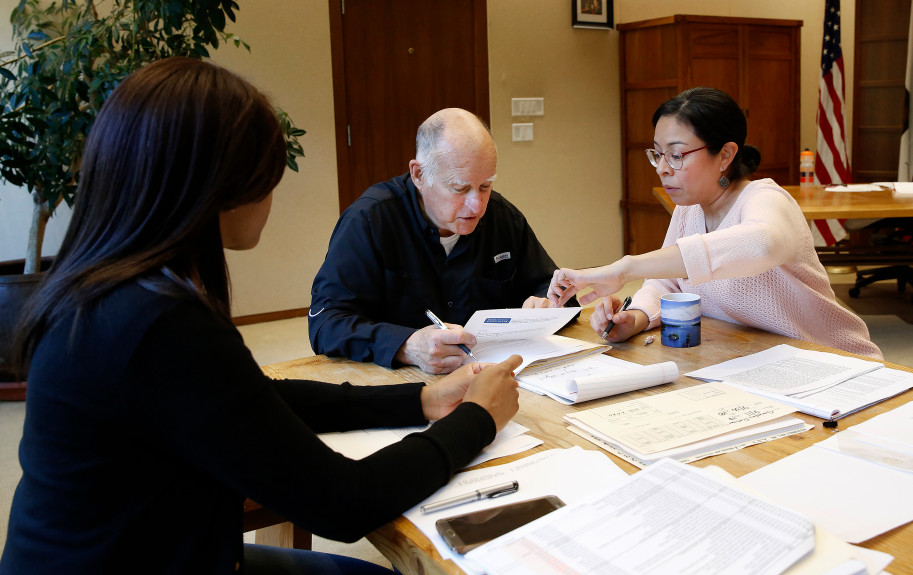
Gov. Jerry Brown reviews a measure with staff members Camille Wagner, left, Graciela Castillo-Krings at his Capitol office, Sunday, Sept. 30, 2018, in Sacramento, Calif. Sunday is the last day for Brown to approve or veto bills passed by the legislature. Brown, who will be leaving office in January, is acting on some on the last pieces of legislation in his tenure as governor. (AP Photo/Rich Pedroncelli)

Gov. Jerry Brown on Sunday vetoed a measure that would have required public university student health centers to provide abortion medication by no later than Jan. 1, 2022.

Brown noted in his veto message that “the average distance to abortion providers in campus communities varies from five to seven miles, not an unreasonable distance.”

“Because the services required by this bill are widely available off-campus, this bill is not necessary,” he wrote.

To pay for the cost of implementation, the bill would have required $9.6 million in private funding to provide a $200,000 grant to all public universities. It also would have provided a $200,000 grant to both the University of California and California State University systems to provide 24-hour telephone patient support for abortion medication recipients.

When the bill’s author, Connie Leyva, D-Chino, introduced the bill, she said that “a woman should always have the right to decide when she incorporates a family into her life.”

She vowed Sunday to reintroduce the proposal next session“As the Trump Administration continues to unravel many of the critical health care protections and services for women, legislation such as this is urgently needed to make sure that Californians are able to access the full range of reproductive care regardless of where they may live,” Leyva said in a statement.

“As the Trump Administration continues to unravel many of the critical health care protections and services for women, legislation such as this is urgently needed to make sure that Californians are able to access the full range of reproductive care regardless of where they may live,” Leyva said in a statement.

Also Sunday, Brown signed Assembly Bill 1976, which starting next year, requires employers to provide their workers with a private area that is not a bathroom to pump.

The measure, by Assemblywoman Monique Limón, D-Goleta, allows businesses to apply for an exemption if they can show that making a space available for breast pumping would be an undue hardship.

Existing law already requires employers to make a reasonable effort to provide both a lactation space that is not a bathroom stall and breaks for workers who need to pump breast milk.

Proponents of AB 1976 argued that the bill would create cleaner and safer areas for pumping. They noted that the American Academy of Pediatrics recommends children be fed breast milk until at least six months of age, but an unsupportive work environment presents a significant hurdle to many mothers, especially women of color.

Opponents said the bill would be onerous for employers, and that it will expose them to frivolous lawsuits.

Brown vetoed another measure, Senate Bill 937, that would have gone even further by requiring amenities such as access to a power source and either a refrigerator or cooler in the private pumping area.

California will also require its workers to take regular sexual harassment training and forbid secret settlements when they sue their employers.

Brown on Sunday signed several bills that aim to prevent workplace harassment and help victims of sexual misconduct seek justice.

After explosive reporting last fall uncovered widespread abuse by Hollywood producer Harvey Weinstein, the #MeToo movement ignited a national discussion on sexual harassment, including in California politics.

Lawmakers responded this session by passing more than a dozen measures that experts said could make the state a national leader on the issue.

Among the proposals Brown signed were:

▪ Senate Bill 820, by Sen. Connie Leyva, D-Chino, which prohibits secret settlements and non-disclosure agreements in sexual harassment cases. While a victim could choose to keep his or her name private, the perpetrator’s identity cannot be confidential. “For decades, secret settlements have been used by wealthy and well-connected perpetrators to offend repeatedly with no public accountability,” Leyva said in a statement. “This critical legislation will empower victims and offer them the opportunity to finally say #TimesUp to those that have hurt them.”

▪ Senate Bill 1300, by Sen. Hannah-Beth Jackson, D-Santa Barbara, which forbids companies from requiring their workers to sign releases of liability as a condition of continued employment or in exchange for a bonus. “California is stating clearly that we believe and support victims,” Jackson said in a statement.

▪ Senate Bill 1343, by Sen. Holly Mitchell, D-Los Angeles, which expands a biannual sexual harassment training mandate to nearly all California employees.

▪ Assembly Bill 1619, by Assemblyman Marc Berman, D-Palo Alto, which provides victims up to a decade to seek civil damages from a sexual assault.

▪ Senate Bill 419, by Sen. Anthony Portantino, D-La Cañada Flintridge, which prohibits the Legislature from firing or discriminating against an employee or lobbyist who files a harassment complaint. It also requires the Senate and Assembly to maintain records of harassment complaints for at least 12 years.

▪ Assembly Bill 2055, by Assemblyman Marc Levine, D-Greenbrae, which adds information about the Legislature’s sexual harassment policy to ethics training for lobbyists.

▪ Assembly Bill 3118, by Assemblyman David Chiu, D-San Francisco, which requires a statewide audit of untested rape kits. “Given the current national conversation around sexual assault, it is more important now than ever that survivors of sexual assault know that California is working to get them the justice they deserve,” Chiu said in a statement.

Brown vetoed a handful of bills that he said went too far, including:

▪ Assembly Bill 1867, by Assemblywoman Eloise Reyes, D-Grand Terrace, which would have mandated that large companies maintain records of sexual harassment complaints for at least five years after the end of the alleged harasser’s employment. Brown said in his veto message that the time expansion, which could lead to even unsubstantiated claims being maintained for decades, was “unwarranted.”

Assembly Bill 2713, by Assemblyman Freddie Rodriguez, D-Pomona, which requires the state to publish an annual report on sexual harassment reports and settlements in California government agencies. The Bee reported last year that the state does not officially track such cases across departmental lines. Brown said the measure “covers an important topic but current management practices are taking the necessary steps to assure a suitable work environment.”

Earlier in the year, the Legislature extended whistleblower protections to Capitol employees and developed a new process for reporting and investigating internal complaints of sexual harassment.

Current and former staff had complained of a culture of fear and retaliation, which women said discouraged them from reporting pervasive harassment and allowed it to go unpunished. Three members ultimately resigned amid public allegations of sexual misconduct, and complaints were lodged against at least four more.

Sacramento Bee staff writer Andrew Sheeler contributed to this report.

Source: https://www.mercurynews.com/2018/09/30/abortion-pill-mandate-for-state-universities-vetoed-by-brown/


‘In your memory, and towards our liberation, we continue the fight for reproductive justice’

Emma Warson has written an open letter to Dr Savita Halappanavar, who died in 2012 at the age of 31 after being denied an abortion in Ireland.

Dr Halappanavar, who worked as a dentist, had been 17 weeks pregnant with her first child when she and her husband found out that she was extremely likely to experience a miscarriage.

After asking if she could have an abortion to terminate the pregnancy, Dr Halappanavar and her husband Praveen were told that it wasn’t allowed “under Irish law”, unless there was evidence that her life was at risk.

On October 28 2012, Dr Halappanavar died from cardiac arrest caused by a septic miscarriage.

Her death made a huge impact in Ireland and spurred a movement in the country to repeal the eighth amendment, the law in the constitution that banned abortion in almost all circumstances, and stated that a pregnant woman and a foetus have an “equal right to life”.

In Watson’s letter, which is published in Porter magazine, she opens saying: “Dear Dr Savita Halappanavar, you didn’t want to become the face of a movement; you wanted a procedure that would have saved your life.

“When news of your death broke in 2012, the urgent call to action from Irish activists reverberated around the world – repeal the eighth amendment of the Irish constitution.”

She continues, highlighting the significance of the “historic feminist victory” that took place in Ireland when the country voted to repeal the eighth amendment of its constitution on May 25 this year.

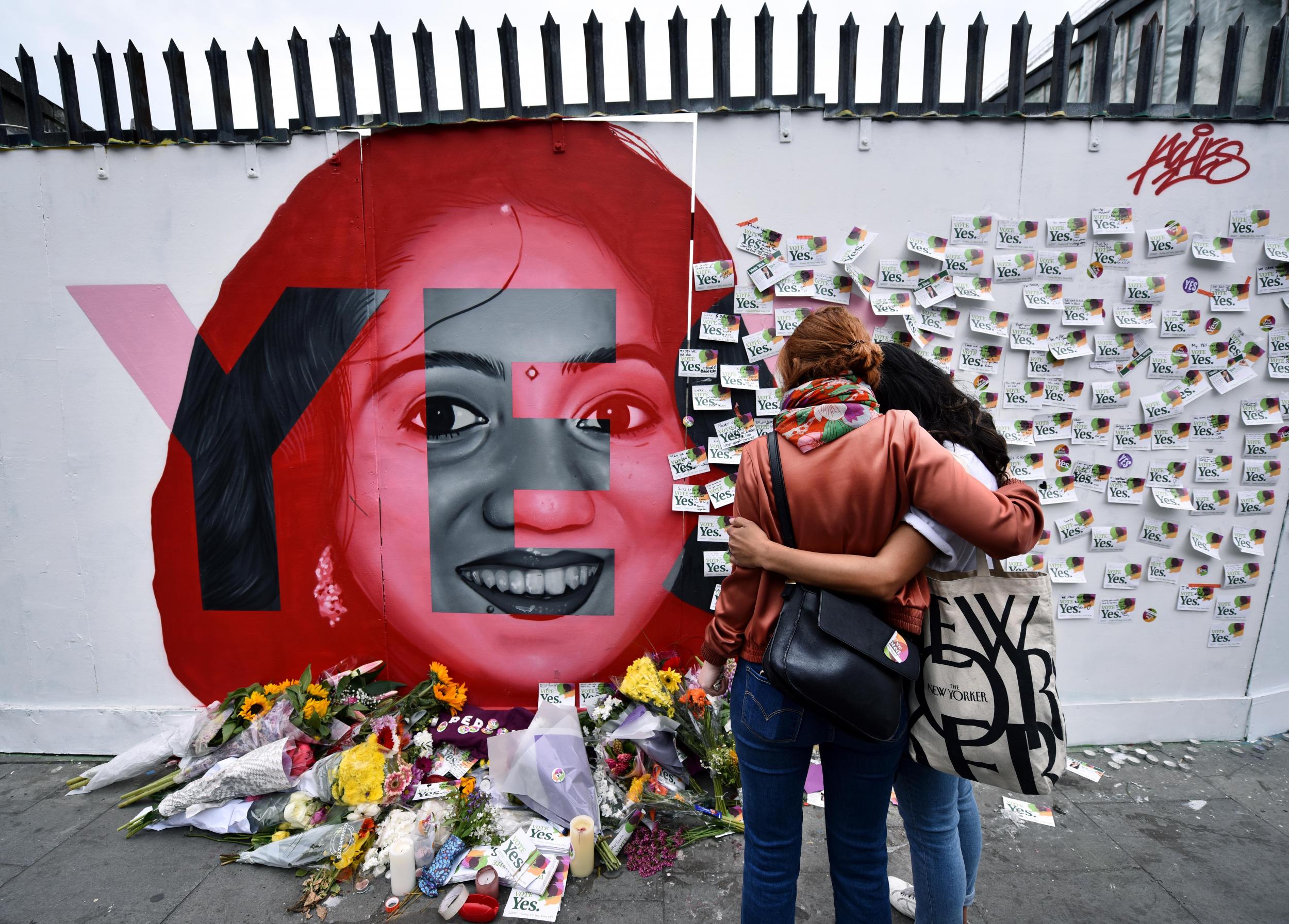
As people in Ireland voted to repeal the eighth amendment in May, many also left flowers and messages at the site of a mural of Dr Halappanavar in central Dublin, which had been created in tribute to her.

“A note on your memorial in Dublin read, ‘Because you slept, many of us woke.’ That the eighth amendment enabled valuing the life of an unborn foetus over a living woman was a wake-up call to a nation,” Watson writes.

Following the referendum in Ireland, there have been multiple calls for abortion law in Northern Ireland to also be reformed.

According to the Guttmacher Institute, there are currently 26 regions around the world where abortion is completely outlawed, with no exceptions.

These regions include Egypt, Madagascar, Iraq and the Philippines.

“From Argentina to Poland, restrictive abortion laws punish and endanger girls, women and pregnant people,” Watson writes.

The mural of Savita Halappanavar in Dublin, Ireland, on May 26 (Photo by Charles McQuillan/Getty Images)

“Still, Northern Ireland’s abortion law predates the lightbulb.

“In your memory, and towards our liberation, we continue the fight for reproductive justice.”

You can read the full letter in Porter magazine here.

Source: https://www.independent.co.uk/life-style/women/emma-watson-savita-halappanavar-abortion-ireland-death-miscarriage-letter-porter-magazine-a8563131.html?utm_medium=Social&utm_source=Facebook#Echobox=1538410798

Up to one in five U.S. voters may not know what the law really is.

Ever since Roe v. Wade established the constitutional right to abortion, federal and state policymakers have been chipping away at what it really means for people seeking abortion care. Since 2011, states have passed more than 400 abortion restrictions. Now, with President Donald Trump’s promise to appoint justices to the U.S. Supreme Court committed to overturning Roe v. Wade (such as current nominee Judge Brett Kavanaugh), the threat of government action to more fully undermine abortion access looms large.

Based simply on laws already on the books, if Roe v. Wade were overturned, abortion would automatically be banned in four states and could become more restricted in 12 additional ones. This urgent threat to people’s ability to obtain abortion care has been the focus of recent advocacy campaigns, particularly when spurring opposition to Kavanaugh’s nomination.

These efforts assume that people have a basic idea of what is at stake. But they might not.

A recent poll by the California-based marketing and opinion research firm Probolsky Research, which I analyzed, assessed knowledge of abortion legality. Over a 12-day period in March and April 2018, 1,000 U.S. voters were asked: “As far as you know, is abortion legal in your state?” Nearly 8 in 10 voters answered “yes,” but 12 percent responded that they did not know and 8 percent thought it was illegal.

Knowledge of abortion legality did not differ by race and ethnicity, age, or gender. Instead, education and political climate were the main characteristics associated with knowledge. Some 35 percent of polled voters with a high school degree or less did not know if abortion was legal in their state compared to 16 percent of voters who were college graduates. Living in a state with abortion restrictions was also associated with lower levels of knowledge. At the time the poll was conducted, the Guttmacher Institute considered 29 states to be hostile to abortion rights because they had enacted four or more key restrictions. In hostile states, nearly 24 percent of voters did not know if abortion was legal compared to 11 percent in states that were supportive of abortion rights. This association between policy climate and knowledge remained constant even when we controlled for education levels and other personal characteristics

The idea that individuals with less education have less accurate knowledge has been found to apply to a range of political and other issues. Associations between abortion policy climate and awareness of abortion legality require a little more explanation. A number of states considered hostile to abortion rights have enacted numerous abortion laws over the last decade. These restrictions were quite controversial in some states and received extensive local, and even national, media coverage. For example, when HB 2 was enacted in Texas, more than half of the abortion facilities closed, and this was covered by domesticand international news agencies. Abortion restrictions imposed in smaller states may not have received as much national attention, but were covered by local media. Some individuals, particularly those living in restrictive states, may have been “passively” exposed to this coverage. They may not have paid close attention to the content of the stories, but merely noted that one or more abortion laws had been passed. They may have assumed that these laws made abortion illegal or, upon being questioned about the legality of the procedure, realized they did not know how the laws affected abortion in their state.

The data discussed in this article is not without its flaws. Like polls conducted by Pew and Gallup, this one had a low response rate, and the information cannot be considered to be representative of all U.S. voters. Still, there is undoubtedly some truth in the patterns that emerged from information provided by 1,000 respondents. It is possible that accurate knowledge of the legality of abortion is even lower among nonvoting individuals—as voters are more educated, on average, than non-voters.

Abortion rights have always been embattled and have become more so over the last decade. This situation promises to get worse if the Supreme Court becomes increasingly hostile to abortion access. Even in the absence of an anti-choice individual being appointed to the Court, state-level efforts to restrict or abolish legal abortion will undoubtedly persist. Abortion restrictions not only make it harder for individuals to terminate their pregnancies, but attention around them may have the secondary effect of making people question whether abortion is even legal. Findings from this poll suggest that efforts to oppose state and national abortion restrictions need to be placed in a larger context. If people don’t even know that abortion is legal, they may not realize just how much is at stake.

https://rewire.news/article/2018/09/20/as-danger-to-roe-grows-many-voters-may-not-even-know-that-abortion-is-legal/

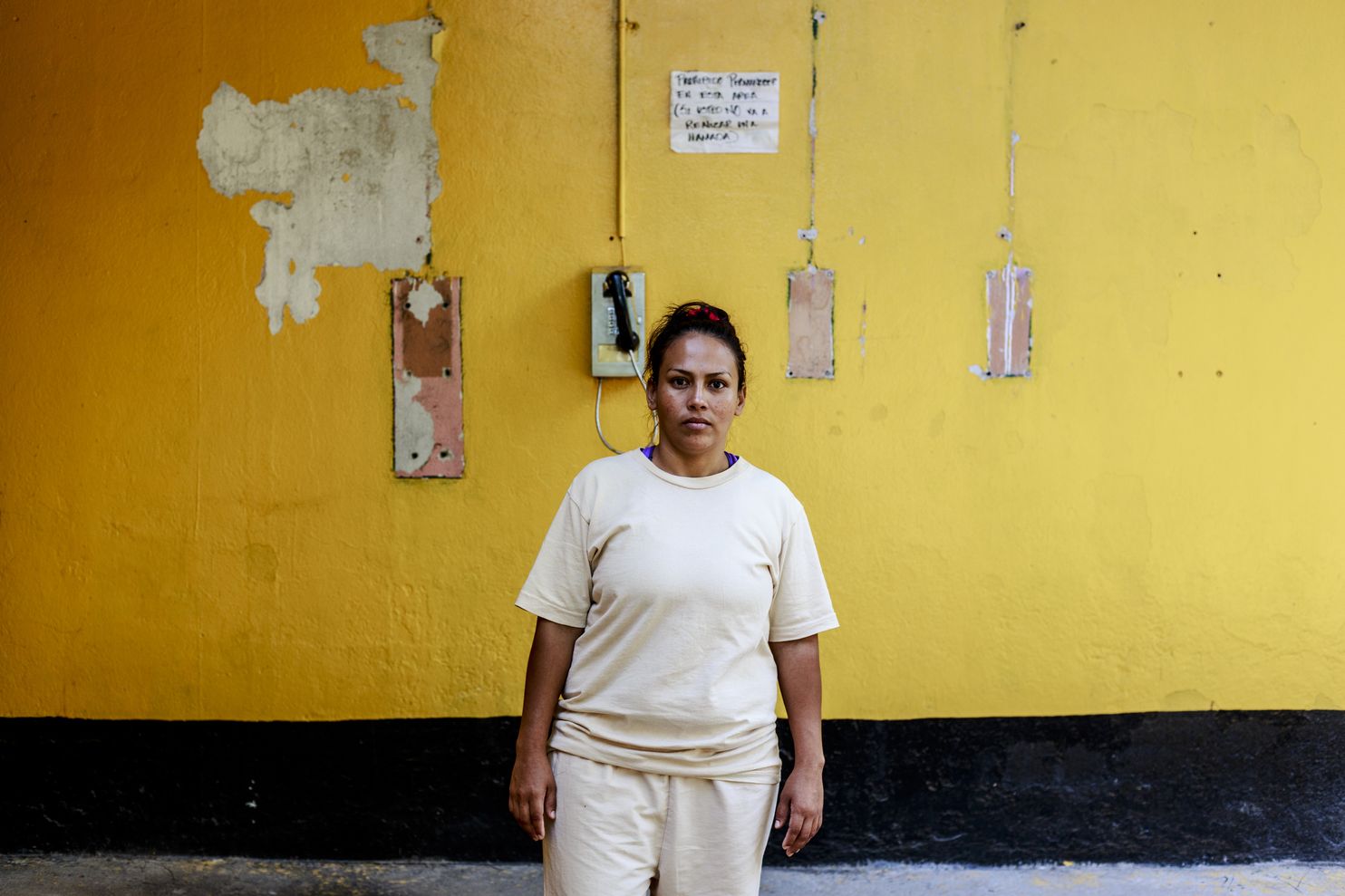
Alba Lorena Rodríguez poses for a portrait inside of Ilopango women’s prison on Sept. 3.

 Alba Lorena Rodríguez was five months pregnant when she started to feel sharp pains in her stomach while at home in December 2009. She fainted.

When she awoke, she says, she realized she had lost her baby.

Rodríguez, now 39, says she had a miscarriage. But the state accused her of killing the fetus, and she was convicted of aggravated homicide in a suspected abortion case. She denies having an abortion and says she mourned her miscarriage.

“Tell me, if I had intended to kill the baby, would I have held a vigil?” Rodríguez said during an interview at Ilopango women’s prison on the outskirts of San Salvador, where she has served eight years of a 30-year sentence.

Rodríguez is one of at least 25 women who have been incarcerated — many facing decades-long sentences — since El Salvador made abortion illegal under all circumstances in 1998. Most of these women claim to have had late-term obstetric emergencies or stillbirths. Many have been separated from their children while in prison.

Two of them were released this year after they successfully appealed their convictions. Now, Rodríguez is petitioning to have her sentence shortened based on a lack of evidence. Lawyers, activists and legislators are hoping the rulings to release these women will eventually translate into a more lenient abortion law.

El Salvador is one of 26 countries with an absolute ban on abortions, and its battle over abortion rights is echoed around the globe, with several countries grappling with changes to legislation. Ireland, Brazil and Chile, among others, have made moves to loosen restrictions on abortion in recent months.

In other places, including ­Poland and parts of the United States, abortion rights are facing renewed challenges. In August, legislators in Argentina voted by a narrow margin against legalizing abortion for pregnancies of up to 14 weeks.

In El Salvador, Rodríguez is part of a group of women referred to as “Las 17” — “The Seventeen” — for the 17 identified cases of women imprisoned under the country’s abortion laws when the campaign to release them began in 2013.

Victor Hugo Mata, a lawyer with the Citizens’ Group for the Decriminalization of Abortion, which works to free the women, said he thinks bias plays into ­judges’ decisions to condemn these women.

“When [these types of miscarriages] happen to a woman, judges assume it’s because there’s something more there. To them, it’s not possible that they could be innocent,” Mata said. “There are very few judges who see it differently.”

Rodríguez said she was barely given a chance to speak at her trial. Her attorney, a public defender she had met that day, knew few details about her case, she said. On July 15, 2010, Rodríguez was sentenced to 30 years in prison.

Thousands of Salvadoran women have abortions each year. The most recent statistics from the Salvadoran Health Ministry report an estimated 19,290 clandestine abortions from 2005 to 2008. Women who can afford it pay for abortions at private clinics or travel outside the country to have an abortion, according to activists.

The Salvadoran state has started to review cases and release some of the imprisoned women. In ­February, Teodora del Carmen Vásquez was released after 10 years behind bars for aggravated homicide for what she says was a late-term miscarriage.


Women cry outside the Isidro Menendez Judicial Center after a December 2017 hearing to review the sentence handed down to Teodora del Carmen Vásquez in 2008 under a draconian antiabortion law. (Oscar Rivera/AFP/Getty Images)

After reviewing Vásquez’s case, the Salvadoran Supreme Court ­determined that there was not enough evidence to prove that she had caused harm to the fetus. The court stated that “justice, equity and other legal reasons” led to the decision to commute her sentence.

One month later, in March, Maira Verónica Figueroa Marroquín, who was accused of aggravated homicide in 2003 at age 19, was released when the Salvadoran Justice Ministry determined that her charges were “excessive and immoral.”

The Citizens’ Group has been successful in securing the release of some women, but passing progressive legislation has been more challenging.

Two proposals in El Salvador’s legislature this spring gave abortion rights activists new hope.

Johnny Wright Sol, a member of the right-wing ARENA party, broke with his party line to introduce a bill that would legalize abortions in two cases — the rape of a minor and when the mother’s life or health is in danger.

A bill by Lorena Peña of the left-wing FMLN party went further, proposing that abortions be allowed in all cases of rape and cases of an unviable fetus.

In April, evangelical and Catholic groups showed their dis­approval for the proposals in a “March for Life” through the streets of San Salvador.

“We see the legislation proposed in our country, proposed by representatives from FMLN, mainly Lorena Peña, to depenalize abortion as a danger and a threat,” evangelical pastor Numa Rodezno, one of the organizers, told local media on the day of the march.

But the two proposals were not brought for a vote before the Salvadoran national assembly. On May 1, new representatives took office, and the right-wing ARENA party, which now holds the most seats in the assembly, is unlikely to consider any measures decriminalizing abortion.

Yet activists believe the proposals contributed to a shift in attitudes on abortion in El Salvador. A 2018 public opinion poll by the University of Central America showed that more than 50 percent of Salvadorans support legalizing abortion when a mother’s life is in danger or when the fetus is not viable.

“The discussion in the public sphere generated by the proposals to depenalize abortion has caused other people and groups, besides just the feminist groups that were already talking about the issue, to take a stand,” said Sara García of the Citizens’ Group.

As of September, Rodríguez remains behind bars while awaiting a decision on her appeal. She said the worst part of being imprisoned is being separated from her two daughters, now 10 and 14.

“My daughters always ask me, ‘When are you going to leave here, Mom? When are you going to be home with us?’ ” Rodríguez said. “And I tell them that I’m leaving soon and that I’m going to be with them soon.”


People demand the release of Teodora del Carmen Vásquez in front of the Isidro Menendez Judicial Center in San Salvador in December 2017. Vásquez was released in February 2018. (Oscar Rivera/AFP/Getty Images)
Source: https://www.washingtonpost.com/world/the_americas/women-serving-decades-long-prison-terms-for-abortion-in-el-salvador-hope-change-is-coming/2018/09/26/0048119e-a62c-11e8-ad6f-080770dcddc2_story.html?noredirect=on&utm_term=.89b4681c68bc

She argued one of recent history’s most important abortion cases. And now, with her Lawyering Project team, she’s pushing beyond the tried-and-true legal playbook.

The night before the U.S. Supreme Court’s decision in Whole Woman’s Health v. Hellerstedt, Stephanie Toti spent hours baking—pound cake, banana bread, cookies—to calm her nerves.

Toti, then 37 years old, was a lawyer at the Center for Reproductive Rights (CRR), and this landmark abortion rights case was her first appearance before the nation’s highest court. When the court ruled 5-3 in favor of the clinics on June 27, 2016, it marked the culmination of years of work and a new beginning.

In September 2017, Toti started her own nonprofit, the Lawyering Project, which builds off the Whole Woman’s Healthprecedent to strengthen protections for reproductive rights. Toti had never thought about starting her own law practice before, but the Supreme Court’s decision, along with the election of Donald Trump four months later, felt like a watershed moment.

“I thought there was an opportunity, and maybe a need, for some innovation and some experimentation. And I was in a position to do that,” Toti said in a phone interview with Rewire.News. “The best way to do that would be at a small organization that had more freedom to take risks and experiment with new strategies.”

Before the Whole Woman’s Health decision, Toti said the reproductive rights movement had been somewhat risk-averse in terms of legal strategy. Cases tended to be reactive, focused on blocking new anti-choice laws as they popped up, rather than proactive. There was also reluctance to bring cases that didn’t seem like clear wins, which meant many harmful laws went unchallenged. Amy Hagstrom Miller, the president and CEO of Whole Woman’s Health, said she took flak for bringing Whole Woman’s Health v. Hellerstedt due to concerns it would lose and set precedent that could potentially even further restrict reproductive rights in the United States.

“People were nervous about us bringing this case because it could set a standard that was harmful,” Hagstrom Miller said. “That was one of the reasons the repro movement had not brought a case [to the U.S. Supreme Court] in ten to 15 years: People were afraid it could get worse.”

When the Supreme Court ruled in favor of Whole Woman’s Health, the decision galvanized the reproductive rights movement and demonstrated that taking legal risks could pay off. Toti wanted to build on that momentum with new kinds of lawsuits, representing new kinds of plaintiffs, that aimed to have a larger impact. With its staff of eight—six lawyers and two program managers, spread out across the country—the Lawyering Project is using the precedent to pioneer a legal strategy that is bold, fresh, and intersectional. It’s a small organization, but it’s taking big swings.

In June, the Lawyering Project filed two “comprehensive repeal” lawsuits in Texas and Indiana that challenge five categories of abortion restrictions, encompassing dozens of laws, in one fell swoop, including: targeted regulation of abortion provider (TRAP) laws; restrictions on medication abortion and telemedicine abortionmandatory counseling requirementsparental consent laws for minors; and those that criminalize abortion providers. Some of these laws have been on the books for decades.

“Rather than focusing on a single law that is restricting access, we look at the whole landscape of laws to highlight the ways they work together to impose obstacles on people seeking care,” said Toti. “It’s not just the ban on telemedicine or the mandatory delays or the forced ultrasound or the inaccurate medical disclosures. It’s all of those things working together.”

Another part of the Lawyering Project’s legal strategy is to include a greater diversity of plaintiffs in the litigation process. Abortion providers have traditionally served as plaintiffs in abortion litigation, while smaller, grassroots organizations, like abortion funds, were not involved, even though the cases affected the people they served. In the Whole Woman’s Health decision, the Supreme Court recognized that just because abortion is accessible to some doesn’t mean it’s accessible to all. Many women do not have access to the money, transportation, child care, or flexible working hours that enable them to drive long distances or make multiple trips to a clinic, and that represents an undue burden.

To illuminate these disparities, Toti and her team are partnering with abortion funds and reproductive justice organizations, many which have never participated in this type of litigation before. The goal is to represent a broader array of voices and perspectives in court.

“We are demonstrating how these laws not only interfere with abortion care, but also how they have a disproportionate impact on disadvantaged communities and those battling other forms of oppression, like racism and poverty,” Toti said.

In Indiana, the Lawyering Project is representing Whole Woman’s Health Alliance (the nonprofit arm of Whole Woman’s Health) and All-Options Pregnancy Resource Center in a comprehensive repeal suit. Located in Bloomington, All-Options helps people navigate decision-making around pregnancy, parenting, abortion, and adoption and connects them to resources, whether it’s abortion funding or free diapers.

Executive Director Parker Dockray said this full-spectrum approach gives the organization a unique perspective on how abortion restrictions fit into the larger framework of reproductive justice. When the Lawyering Project asked if All-Options would be interested in serving as a plaintiff, the team eagerly said yes.

“It’s exciting for us to bring the voices of people who may never become patients at an abortion clinic because they can’t actually get to the abortion,” Dockray said. “For people who are denied abortion care or do not have the resources, we see their struggle from their beginning. That’s a powerful perspective, and I think it makes us a great plaintiff.”

In the Texas case, plaintiffs include Whole Woman’s Health Alliance; the Afiya Center, a Dallas-based reproductive justice organization; abortion funds Fund Texas Choice, North Texas Equal Access Fund, West Fund, and Lilith Fund; and physician Bhavik Kumar.

Lilith Fund provides direct financial assistance to people seeking to end unwanted pregnancies and provided $298,817 in support to 1,475 people in 2017. Executive Director Amanda Williams said participating in litigation fits into Lilith Fund’s overarching mission.

“While abortion funding is and has always been central to our mission, we know that if we don’t work to fight back against attacks in systemic ways, things will never change,” Williams said in an email to Rewire.News. “What we accomplish with the lawsuit will lay important groundwork for influencing policy at local, state, and federal levels going forward. We should take any and every opportunity to expose the web of unnecessary restrictions the Texas legislature puts in the way of its people.”

To Pepis Rodriguez, who joined the Lawyering Project as a litigation counsel in March 2018, the organization’s commitment to partnering with grassroots plaintiffs was a big draw. Rodriguez graduated from Georgetown Law School in 2015 and spent two and a half years as a staff attorney at the Center for HIV Law and Policy. The Lawyering Project’s innovative, intersectional approach to reproductive rights litigation appealed to him as a new attorney.

“It strikes me as courageous lawyering,” he said. “We’re trying new things and telling new stories. Being able to bring in more voices and expand the kinds of evidence in the record that carry weight, that’s very important and exciting. In my view, that’s the way the work should be done.”

The Lawyering Project is a new addition to the constellation of organizations that are using the Whole Woman’s Health decision to protect and advance reproductive rights in the Trump era. Over the past two years, the American Civil Liberties Union, the CRR, and Planned Parenthood have filed dozens of lawsuits across the country that build off the precedent. Because these larger institutions are so active about blocking new abortion restrictions as they pop up, Rodriguez said this creates space for the Lawyering Project to pursue more unconventional strategies, push boundaries, and take risks that could have a seismic impact if successful.

“Those organizations are like this doorstop that keeps new restrictions from piling up,” he said. “Great, y’all are handling that. Meanwhile, we are going to try to dismantle the entire scheme and bring the whole thing down.”

Source: https://rewire.news/article/2018/09/26/litigate-and-innovate-in-abortion-law/

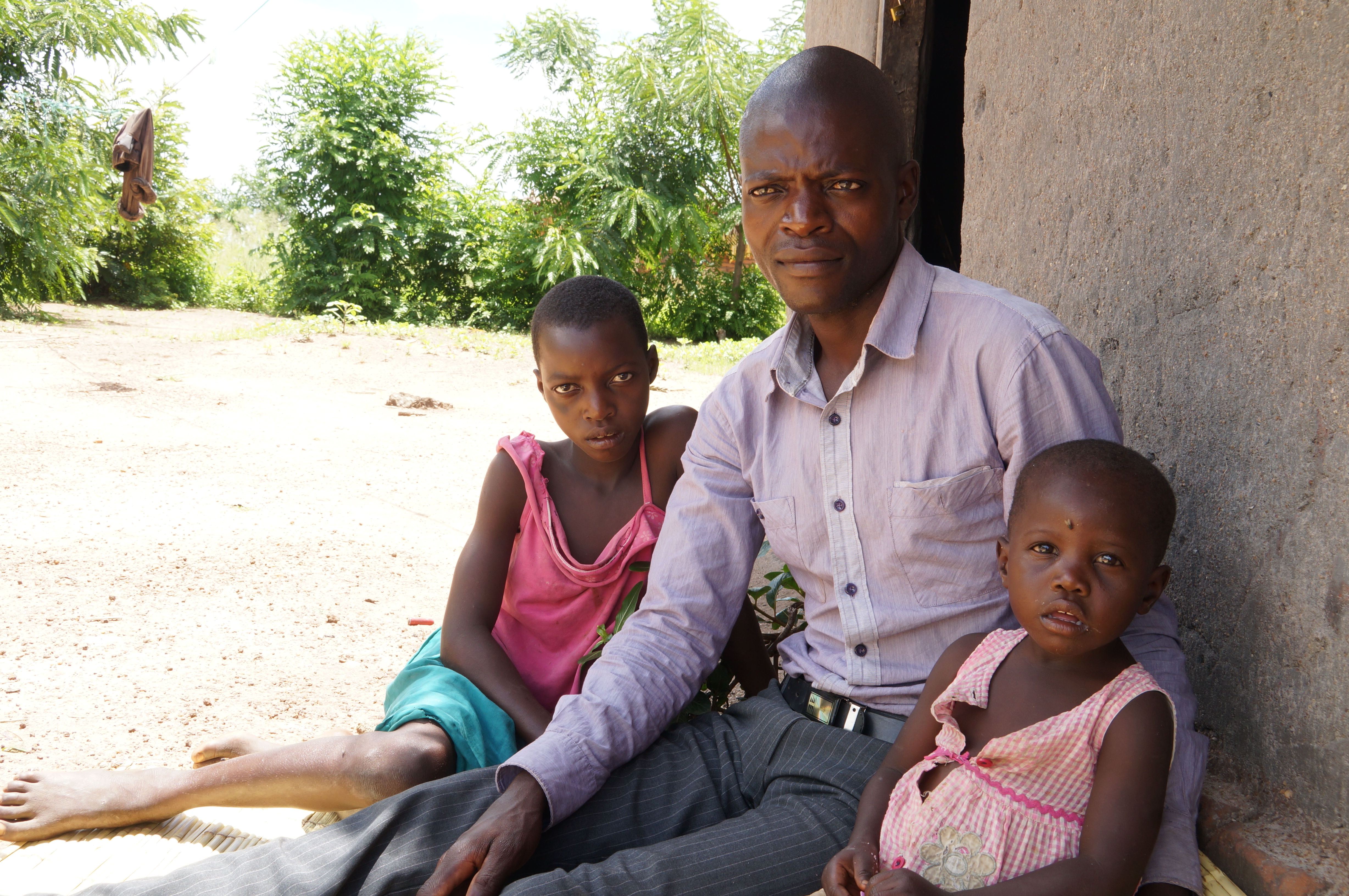
Blantyre, Malawi — David Minyatso holds the voter registration card of his late wife, Selina.
The last time he saw her, she had just found out she was pregnant with their fourth child.
“She told me she was feeling symptoms of pregnancy. She left for her home village two days later to visit her parents,” 36-year-old Minyatso said, standing in the doorway of their thatched-roof home in Kaseleka village, his daughters playing in the dirt yard outside.
“I was later told that she went to a traditional healer to seek abortion-induced drugs which killed her.”
Selina Black is among hundreds of women who die every year in Malawi as a result of the government’s restrictive abortion law, which only permits the procedure in cases where the woman’s life is at risk. Obtaining an abortion for any other reason is punishable by seven to 14 years in prison; while people supplying drugs or instruments to procure abortion can face three years in jail.
In Malawi, home to one of the highest maternal mortality rates in the world, unsafe abortion is estimated to account for 6%-18% of all maternal deaths, according to research conducted by Guttmacher Institute, a US-based reproductive rights think tank, and the Centre for Reproductive Health at the University of Malawi College of Medicine.
Entrance to maternity ward at Queen Elizabeth Central Hospital in Blantyre.

But a draft “Termination of Pregnancy” bill is seeking to loosen the country’s 157-year-old law. If approved, the bill would allow an abortion when the pregnancy threatens the physical or mental health of the woman, fetal abnormalities affect the life of the baby, or in cases of rape, incest and defilement.
The bill, which is currently being scrutinized by Cabinet ministers before it moves to Parliament for debate, has faced strong resistance from influential religious bodies in the country. About 81% of Malawi’s population is Christian, according to a 2014 national survey.
In the three years that have passed since the draft bill was first introduced thousands more women have resorted to risky clandestine abortions — 141,000 in 2015 alone, according to the Guttmacher report.
Minyatso says he was devastated when he heard that Selina was dead. The couple were still contemplating whether they would keep the baby, and he believes Selina’s decision to go ahead with the abortion was influenced by other family members.
Minyatso with his children at their home in Kaseleka.

“I don’t have any plan to marry again,” Minyatso, who struggles to work as a farmer and tend to his young family, said. “I will never find a woman who will take care of the children as Selina did.”
Chrispine Sibande, a human rights lawyer and former coordinator for the Coalition for Prevention of Unsafe Abortion (an abortion rights body comprising 45 health rights organizations lobbying for liberalized laws), says the draft abortion bill would allow women like Selina Black to access legal abortion safely.
“The 1861 law, under section 243 of the penal code, says abortion can only be performed by a skilled person through operation. Now you and me would ask ‘who is this skilled person’? So the new law clarifies that,” he said, underlining that while the current law allows abortion to save the life of the mother, the language is unclear.
In the absence of legal routes, many women seeking abortion in Malawi, like Selina Black, turn to traditional healers.
A traditional healer shows some of the abortion-inducing concoctions.

A healer, who asked not to be identified for fear of being arrested, said he has been providing abortion services to women since he started his trade a decade ago.
“I assist these women because they are currently desperate,” he said, adding that doing so is against the constitution of the International Traditional Medicine Council of Malawi, a group of accredited traditional healers of which he is member.
He gives the women a concoction of what he calls “abortion-inducing” herbs.
“But still I advise my clients to immediately seek medical help if they notice any serious complications,” he explains.
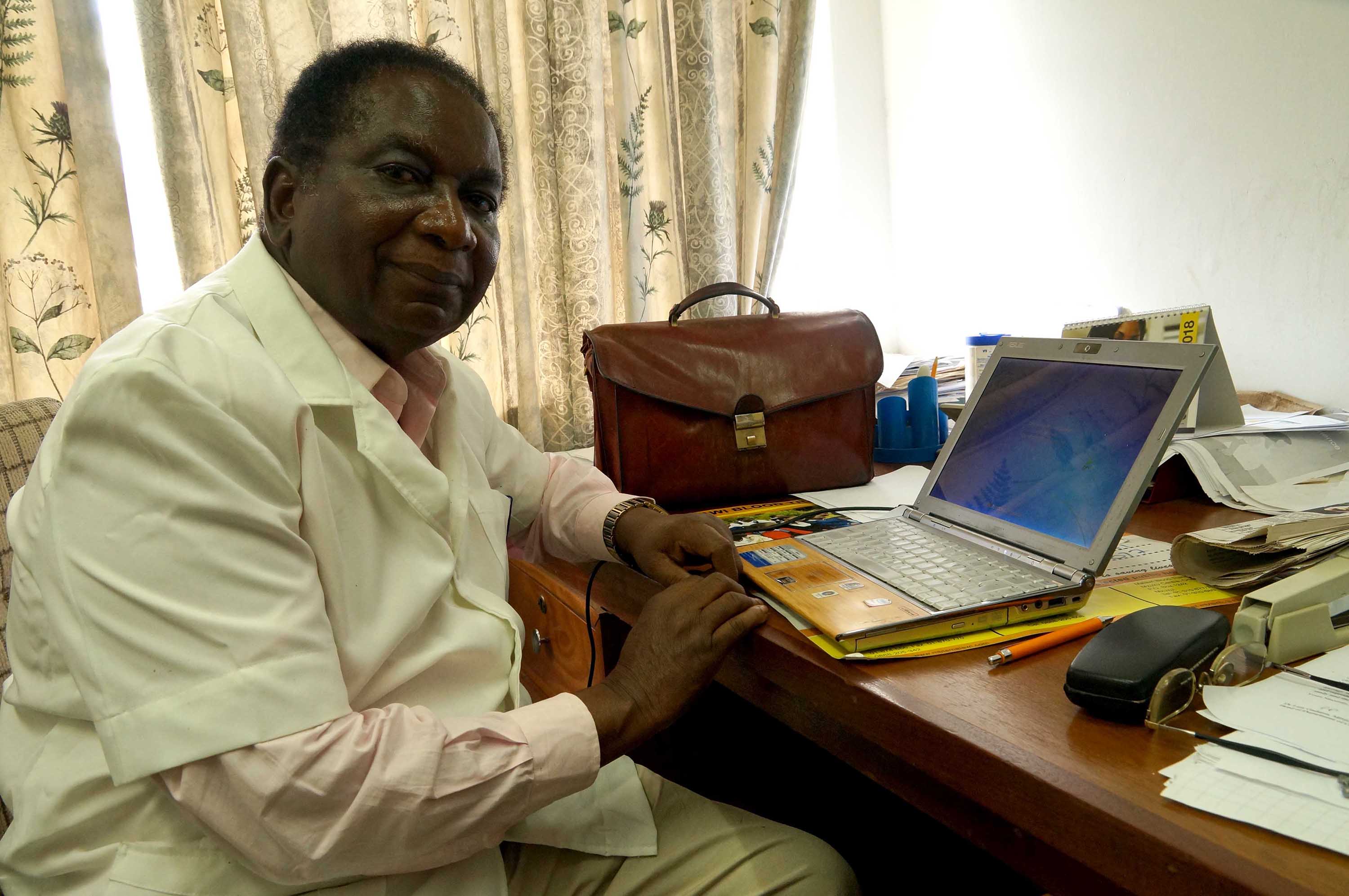
Chisale Mhango an obstetrician at Malawi’s largest referral health facility, Queen Elizabeth Central Hospital, says he receives between 20 and 30 patients with post-abortion complications every day.
“The complications include injury to reproductive health organs because some of them use sticks to poke [the fetus] so that they can cause an abortion. And through that, they get infection which is a serious problem that would lead to things like surgery that may require removing the womb. And there is hemorrhage,” he said.
Mhango says the post abortion care is also costly for the national health system.
“In 2015, the studies suggested that we were spending more than $2 million just to manage complications of unsafe abortion and yet the Ministry of Health budget is not increasing,” he said. One recent report estimated that the Malawi government spends closer to $1 million annually on post-abortion care.
Gynecologist Dr. Mhango in his office at Queen Elizabeth Central Hospital in Blantyre.

“I was rushed to the hospital,” Kawala, a 46-year-old single mother of of three, said. “There, the doctors said I was losing a lot of blood because my uterus had burst and they had to remove it.”
A year after she lost her uterus, her husband left her.
“He said he wanted a wife who could give him another child. He left for good, and now, he has married another woman,” Kawala said.
Margret Kawala preparing porridge at her home.

Though she struggles to feed her three children, and wishes she had the help of a partner, Kawala says she still feels lucky. Many other women in her area have died as a result of unsafe abortions.
“I have nothing to hide. That’s why I speak openly about my situation. I want government authorities to know the gravity of harm that restrictive abortion laws have caused to women,” Kawala said.
Still, parliamentarians are noncommittal about their position on the draft bill, and refer to their religion when discussing its merits.
Aisha Mambo of Mangochi-Nkungulu Constituency said she wouldn’t comment until she had scrutinized the final bill: “And I will base my position on what my religion says about abortion because I can’t act against the teachings of my religion.”
Back in Malawi’s largest referral health facility, Mhango says the issue has nothing to do with religion.
“The debate is not about whether abortion is good or not,” Mhango said, adding that the law needs to change if it can’t be properly enforced.
“The debate is women are dying in increasing numbers in spite of the fact that there is a law in this country specifically to prevent women dying from unsafe abortion when their lives are in danger.”
Source: https://edition.cnn.com/2018/09/26/health/malawi-abortion-law-as-equals-africa-intl/index.html

Both assault and denial of control over pregnancy thrive on stigma, secrecy, and shame about human sexuality.

The apotheosis of what the “pro-life” movement stands for and plans to achieve has arrived in the form of Judge Brett Kavanaugh, hand-picked by President Donald Trump to create the enduring five-seat majority on the U.S. Supreme Court that will end the federal constitutional right to abortion. The allegations about Kavanaugh emerging over the last two weeks are not inconsistent with what it truly means to be “pro-life”: Denial of agency, autonomy, and human rights are the core outcomes of this worldview.

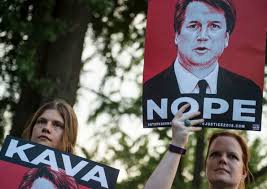
That he would tip the balance of power against Roe v. Wade is not the only reason Brett Kavanaugh is the quintessential “pro-life” poster boy. If anything, the allegationsthat as a teenager he trapped Christine Blasey Ford in a bedroom, pinned her to a bed, attempted to remove her clothes, and placed his hand over her mouth so she could not scream make him an even better fit. That a second set of allegations—this time from Deborah Ramirez, who says Kavanaugh exposed himself to her at a party while they were students at Yale—has emerged only reiterates this.

The line connecting sexual assault with denial of control over pregnancy and birth is short: Both are abuses of power in which an individual or the state denies a person’s human right to bodily autonomy. Both are forms of sexual oppression. Both thrive on stigma, secrecy, and shame about human sexuality. To be clear, I believe Christine Blasey Ford, Deborah Ramirez, and sexual assault survivors in general. It’s believable to me, then, that a teenager who found himself personally entitled to take control of someone’s body without her consent would become a judge who would later decide in favor of denying a detained immigrant minor’s right to abortion. In this disturbing way of thinking, young people have agency—so long as they are young, white, cisgender men. Otherwise, good luck.

The allegations are credible; Ford passed a lie detector test, and more than 1,000 women who attended Holton-Arms School with her have signed a letter supporting her. Ramirez came forward after Trump attacked Ford’s credibility on Twitter, and she was surely aware of the bullying she will endure as a result. The fact that their allegations have become public and Kavanaugh still remains a contender for the Supreme Court is also peak “pro-life” because it’s a blatant display of white male privilege, reminiscent of all-male panels testifying against access to birth control. It’s simply impossible to imagine an all-female panel testifying before Congress against life-saving medication primarily used by men, just as it’s simply impossible to imagine a woman nominee in Kavanaugh’s position holding her head high, insisting upon her innocence, and receiving support from senators who demand she be confirmed within the next few days without a thorough investigation.

Tellingly, Harriet Miers withdrew as a Supreme Court nominee during the George W. Bush administration—not because of misconduct allegations, but in part because abortion opponents worried she didn’t have an explicit track record against abortion.

And, of course, abortion opponents are continuing to stand by Kavanaugh. Following the news of Ford’s allegations, Susan B. Anthony List Vice President Mallory Quigley released a statement beginning with, “We have no reason to change our support for Judge Kavanaugh,” and concluding that while both sides should be heard, the vote to confirm Kavanaugh should “continue without delay.”

piece in HuffPost with the headline “Abortion Foes Say Christine Blasey Ford Should Be Heard” is great publicity for abortion opponents wishing to appear soft and gentle without yielding on substance, especially considering that the messages provided in the piece from anti-choice leaders include ongoing support for Kavanaugh’s nomination. To be clear, when they say they want her to “be heard” they are marching to the drumbeat led by Senate Judiciary Chair Chuck Grassley (R-IA), who is going through hasty motions to feign concern so long as he can ensure a confirmation vote takes place in the immediate future—before more women such as Ramirez potentially come forward. No FBI investigation is taking place as it did for Anita Hill, who is now widely understood to have been mistreated by leaders of both parties during the Clarence Thomas confirmation hearings; the hearing format provided by Kavanaugh supporters is a sham checking of the box.

Kristan Hawkins, president of Students for Life of America, told HuffPost, “We still see Judge Kavanaugh as the qualified candidate who is in the political battle of his life because of the abortion lobby’s efforts to keep Roe v. Wade the law of the land.” Not exactly sensitive, as Ford and her family have had to flee her home due to death threats.

Perhaps the most revealing statement from abortion opponents has come from Ross Douthat at the New York Times:

My suggestion is that if the cloud can’t be cleared [over Kavanaugh], the country’s interests and the interests of conservative partisans might converge. The G.O.P. is at risk of losing women voters by extraordinary margins under Trump, and the pro-life movement has no future, even if Roe is overturned, if its anti-abortion vision is seen as just the recrudescence of patriarchy. With both those problems in mind, shifting to a different, unclouded nominee—even, dare one say, a female nominee—seems like an adaptive move for the long run, however much stress it would create.

In other words, abortion opponents need Kavanaugh to do their bidding at the Supreme Court, but they also need voters to see them as woman-friendly over the long term because they know they are going to lose at the polls. Even in Ireland, which has historically been much more conservative on abortion, voters overturned the kind of total ban on abortion sought here with Kavanaugh or potential nominee Amy Coney Barrett’s rubber-stamp.

It is also vital to recall the sexual assault allegations about the man who appointed Kavanaugh in the first place—who has also been idolized by the bulk of the anti-choice movement. Though Donald Trump hardly seems to be the natural object of adoration for a movement that at least pretends to be about conservative sexual morality, abortion opponents have enthusiastically embraced him. Earlier this year, Susan B. Anthony List president Marjorie Dannenfelser called him “the most pro-life president in our nation’s history.”

Ultimately, the “pro-life” movement has a brand, and its thinkers and supporters know it. The brand is a white man who hates women, such as Donald Trump, the most “pro-life” president ever. The brand is a white man who is accused of sexually assaulting a woman in high school while powerful white male senators align behind him, rushing his nomination through as quickly as possible. The brand is also white women rushing to claim that the clearly disrespectful white man is a paragon of honor and integrity. That brand is correctly seen as a liability with a large number of women and the U.S. people. The rush to confirm Brett Kavanaugh is a brutal expression of white male dominance, thus making it totally and completely “pro-life.”

Source: https://rewire.news/article/2018/09/24/brett-kavanaugh-is-the-pro-life-poster-boy/

“We still see Judge Kavanaugh as a qualified candidate,” said Kristan Hawkins, president of Students for Life of America.

While some anti-choice groups say Ford’s allegations deserve to be heard, they did not back off from vocal support of Kavanaugh.
Drew Angerer/ Getty Images

Anti-choice groups and abortion rights opponents are standing by Judge Brett Kavanaugh, President Trump’s pick for the U.S. Supreme Court, amid accusations that he sexually assaulted a young woman while in high school.

Christine Blasey Ford, a professor at Palo Alto University, spoke publicly for the first time about the alleged attack in an interview with the Washington Postpublished Sunday. While some anti-choice groups say Ford’s allegations deserve to be heard, they did not back down from their support of Kavanaugh, whose nominationthey have lauded.

Father Frank Pavone, national director of Priests for Life, said that allegations should be heard, but he criticized their inclusion in Kavanaugh’s confirmation process. “Everyone should be heard, but those who are being heard should not be used for political purposes by Democrat Senators who have turned this confirmation process, predictably, into an ideological, obstructionist circus,” he said in a statement to Rewire.News

Kristan Hawkins, president of Students for Life of America, said in a statement to Rewire.News that the organization wanted to see the allegations against Kavanaugh examined, but she stood by its support for Supreme Court nominee. “We want to see the process go forward to vet the current allegations, but, in looking at the way in which the charges were handled (hidden until the hearings were over and handled by those who have been very public about their goal to oppose this nominee no matter what), we still see Judge Kavanaugh as a qualified candidate who is in the political battle of his life because of the abortion lobby’s efforts to keep Roe v. Wade law of the land,” Hawkins said.

“Considering Judge Kavanaugh’s transparency during the hearings, including releasing a record number of records, meeting with Senators, and testifying for three days of contentious hearings, we think it is good that he is open to answering more questions,” she continued. “When this is over, it will be impossible for anyone to claim he has not been thoroughly vetted.”

Susan B. Anthony List, an anti-choice group closely aligned with the Trump administration, didn’t back down from its support for Kavanaugh. The organization has traveled the United States to encourage what they refer to as “vulnerable red-state Democratic senators” to confirm the judge. “Obviously Ms. Ford’s allegations are serious and should be heard,” Mallory Quigley, a spokesperson for the group, toldMcClatchy.  “Judge Kavanaugh should also have an opportunity to respond. This should be done as quickly as possible so that the vote can continue without delay.”

“We have no reason to change our support for Judge Kavanaugh,” Quigley added.

Operation Rescue Senior Vice President Cheryl Sullenger suggested in a blog post that Blasey Ford was “not credible” and compared the news to what she implied were unfounded allegations against conservatives like Roy Moore and Trump.

The organization’s president, Troy Newman, doubled down on his support for Kavanaugh. “It’s shameful that Democrats would try to destroy yet another man’s life and drag his family through the mud without cause,” he said. “It’s time for conservatives to stand up to the baseless allegations trotted out by Trump-hating politicians who have no other argument than slander and sexual smear tactics. Operation Rescue stands strong in our support of Judge Kavanaugh’s nomination to the U.S. Supreme Court.”

Bryan Fischer, who hosts a talk-radio program for the American Family Association, used a blog post on the organization’s website to reject the accusations against Kavanaugh and attempt to cast doubt on Ford’s allegations by pointing to her political views. He said that should the accusations against the judge derail his confirmation, Kavanaugh would become a victim.

“Here’s what should happen. Ms. Ford’s accusations should be dismissed with extreme prejudice, Mr. Kavanaugh’s nomination should be sent to the floor of the Senate this Thursday as scheduled, the Senate should vote to confirm him as soon as possible, and he should take his rightful place on the Supreme Court bench by the first Monday in October,” Fischer wrote. “Anything else is a travesty of a mockery of a sham, making Brett Kavanaugh a victim of a gross miscarriage of justice before he ever dons the robe of the Supreme Court.”

Americans United for Life, which voiced its support for Kavanaugh upon his nomination, has not publicly stated whether it maintains support for the judge. The group did not respond to requests for comment.

Source: https://rewire.news/article/2018/09/18/abortion-rights-foes-arent-backing-down-from-kavanaugh-support/

The judge’s record shows he would help dismantle Roe v. Wade, and Sen. Susan Collins should vote no.

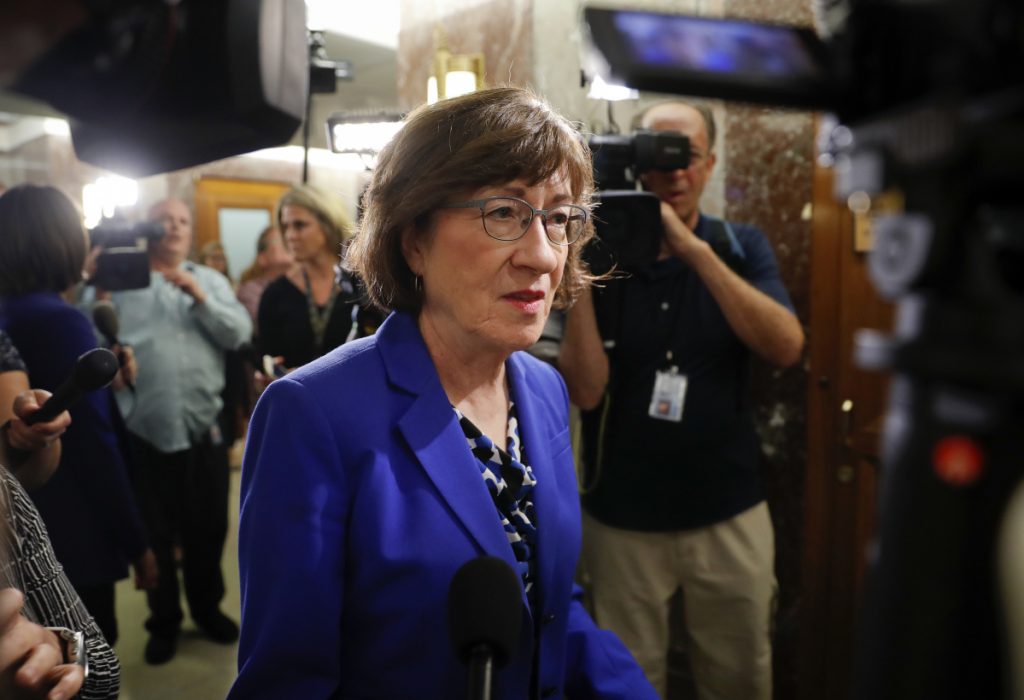
Sen. Susan Collins, R-Maine, said of Brett Kavanaugh and his accuser: “It seems to me what we should be doing is bringing these two individuals before the (Senate Judiciary Committee). If we need additional help from the FBI, then the committee can ask for it.” Associated Press/Pablo Martinez Monsivais

The New York Times recently published an email written by Judge Brett Kavanaugh in which he questions whether Roe v. Wade is the “settled law of the land.” Also, when asked if Roe and subsequent cases upholding reproductive rights were “correctly decided,” Kavanaugh refused to say “yes.”

Anyone who refuses to respect precedent and women’s bodily autonomy is far less than what the American people deserve. President Donald Trump has been clear that he is out to overturn Roe v. Wade, the Supreme Court decision that has protected women’s right to safe and legal abortion for more than 40 years. Should Kavanaugh be confirmed, Trump will achieve his goal.

Although Sen. Susan Collins has stated that she did not see hostility to Roe from Judge Kavanaugh, her belief is obviously contradicted by Kavanaugh’s record. Simply look to the case of Garza v. Hargan. An undocumented 17-year-old girl identified as Jane Doe who had been arrested and placed in a Texas detention center discovered she was pregnant eight months after her arrest. When she decided to terminate her pregnancy, the Trump administration barred her from leaving the detention center for her medical appointment.

Enter Judge Kavanaugh, one of the three judges on the Circuit Court panel.

The precedent set by Roe and its progeny are clear: The government cannot place an undue burden on a woman’s constitutional right to terminate a pregnancy. Yet Judge Kavanaugh held that the government could force Doe to continue her pregnancy for multiple weeks until it identified an immigration sponsor. Kavanaugh was aware that a state court had already ratified Jane Doe’s ability to make decisions about her body, even in the absence of approval from a parent or sponsor. He knew that, if the procedure were delayed, either Jane Doe’s pregnancy could advance to the point that her abortion would be illegal, or she could be dissuaded by government-created obstacles.

Perhaps Kavanaugh has not said outright that he wants to overturn Roe, but does he have to? His lack of respect for the precedent is clear: If a nine-week delay for accessing abortion does not constitute an “undue burden,” it is unclear what would.

As a college student, I have grown up with Roe v. Wade as the law of the land. Although the precedent has been in effect for decades, state-level restrictions on reproductive rights have prevented our nation from realizing Roe’s promise. I still deal with internalized shame and the effects of receiving only limited education on sexual and reproductive rights. The stigma associated with sexual health manifests in debilitating anxiety over routine tests for sexually transmitted infections, long overdue OB/GYN appointments, and confusion over whether my health insurance will cover a birth control method that does not result in depression, extreme weight gain, or anxiety.

Our country’s history of eugenics means that historically for women of color, reproductive justice might look like the very ability to be pregnant. This administration has made itself clear on numerous occasions that it does not care about the marginalized or the vulnerable, and Kavanaugh would be no exception.

Like millions of other students, I hope to start my career, fall in and out of love, and create a life for myself. My future will be a time, I imagine, of great adventure — great love and great loss, great triumph and great failure. There will be plenty of parts of this adventure that I will have no control over. I hope whether or not I become a mother is not one of them.

It is unthinkable that Collins would ally herself with Trump and place my rights, and the rights of other Mainers, on the chopping block.

Sen. Collins, if you care about the futures of young people in Maine, you must vote “no” on Kavanaugh. If he ascends to the Supreme Court, he will dismantle the already limited protections that Roe affords and threaten the safety and well-being of millions of Americans like me. You were elected to represent the people. Listen to us when we say we won’t go back.

Source: https://www.centralmaine.com/2018/09/21/maine-compass-kavanaugh-a-threat-to-abortion-rights/

The U.S. Supreme Court’s ruling won’t discourage Hartford officials from enforcing a new rule against deceptive pregnancy centers.

An anti-choice center in Hartford, Connecticut imitated the signs and language of a real clinic across the courtyard, trying to trick people seeking abortion care.
Shutterstock

Officials in Hartford, Connecticut, rolled out an ordinance Wednesday to prevent deceptive advertising practices at faith-based pregnancy centers that use anti-choice propaganda to target those seeking abortion and contraception services.

They’re hopeful the ordinance will stand up to court scrutiny despite the recent U.S. Supreme Court ruling supporting anti-choice clinics, commonly known as crisis pregnancy centers, in California.

“We are confident our ordinance can withstand legal challenge because it is more narrowly crafted than California’s law was,” Howard Rifkin, the city’s legal counsel, told Rewire.News. “We require only that these centers disclose whether they have medically licensed personnel providing or supervising services. We do not require additional disclosures about what services they may or may not offer.”

Effective October 1, the ordinance requires pregnancy centers to disclose to prospective clients if they do not have a licensed medical provider on site.

“Our ordinance is based on the simple principle that women should be told the truth when they’re making decisions about their bodies, their health, and their lives,” Mayor Luke Bronin said Wednesday at a press conference. “We have seen young women, often young women with few resources who don’t have access to regular medical care, deceived and ‘lured’ away from women’s health centers that offer the full range of reproductive healthcare. We should all agree that’s wrong, no matter how you feel about abortion. These common-sense rules say that if you don’t have a licensed medical provider on site, you should disclose that fact.”

Hartford considered the ordinance after a particularly aggressive anti-choice clinic tried to usher away patients coming in for appointments at clinic that offered real reproductive health care. To further confuse patients, the anti-choice center imitated the signs and language of the real clinic across the courtyard, as reported by Rewire.News.

The Hartford ordinance passed last December and was set to take effect July 1, but Rifkin said they delayed implementation to make sure the rules would stand up in court.

California’s Reproductive Freedom, Accountability, Comprehensive Care, and Transparency Act, or the FACT Act, required licensed clinics to inform patients and callers that free or low-cost abortions and contraceptives are available in the state, and provide telephone numbers of agencies that could connect them to such providers. Unlicensed centers were required to post disclaimers in their advertisements to clarify, in several languages, that their services do not include licensed medical help. Anti-choice clinics argued the law violated their First Amendment rights and religious beliefs.

Hartford’s ordinance is different, Rifkin said. It says if you are defined as a pregnancy service center, you have to disclose to patients and callers whether you have a medical professional on staff. Rifkin said he does not believe this impinges on any First Amendment rights and described it as “a fair and rational disclosure to women seeking reproductive health services.”

The clash between free speech and the right to abortion services led to the Supreme Court’s NIFLA v. Becerra ruling in June, a 5-4 decision that nullified the California law. Advocates worry the ruling could topple similar laws in Hawaii and Illinois.

Connecticut is also considering a statewide law based on Hartford’s ordinance. Mayor Bronin has testifiedin favor of House Bill 5416, “An Act Concerning Deceptive Advertising Practices of Limited Services Pregnancy Centers.” The bill faced a public hearing in March before the legislative session ended, and advocates are hopeful it will be taken up again in the Democratic-majority legislature.

A reproductive rights roundtable organized by Connecticut State House Majority Leader Matthew Ritter (D-Hartford) received bipartisan support this summer, said Sarah Croucher, executive director of NARAL Pro-Choice Connecticut. “The hardest issue for us was getting people to aware of what [fake clinics] are because it’s hard for people to understand that these places really exist.”

After over 18 months of advocacy, there is more public awareness and political momentum statewide to regulate anti-choice clinics that deal in myths spread by abortion rights foes, she said.

“As fundamental reproductive rights are under threat at the national level, this is an important step at the local level that underscores Hartford’s commitment to reproductive freedom for all women. We hope the state will follow suit and protect women around Connecticut from these deceptive practices,” Croucher said in a statement.

Source: https://rewire.news/article/2018/09/20/can-this-connecticut-city-regulate-anti-choice-clinics-without-court-interference/