A decision to allow women to take abortion pills at home in Wales has been welcomed as a “significant” move.

Until now they have had to take two trips to clinics to take medication to terminate the pregnancy, sometimes miles from home.

A charity said women had experienced cramping and bleeding, at times on public transport, trying to get home after taking the pill.

The Royal College of Midwives said it was a “sensible and practical move”.

The change brings Wales in line with Scotland, where women have been allowed to take the tablet at home since last year, and with other countries such as Sweden and France.

The British Pregnancy Advisory Service (BPAS), an abortion care charity which runs clinics, said Welsh Government move meant women would be able to take the tablet at home where they felt “safe and comfortable” and called on England to follow suit.


What does the change mean?

Image copyrightGETTY IMAGES

There were 8,578 terminations of pregnancy in Wales in 2017, more than three out of four – 79.2% – were medical rather than surgical procedures.

Under the current system women having a medical abortion, which is only available in the first nine weeks of pregnancy, have to visit a clinic twice to take two tablets within 72 hours of each other.

The first tablet, called Mifepristone, blocks the action of the hormone progesterone, which is needed to maintain the pregnancy.

The second tablet, called Misoprostol, can be given on the same day, or 24, 48 or 72 hours apart.

But the change in Wales will mean that from Friday women will have the choice whether to take Misoprostol – in a clinical setting or take it at home.

Women would still need to attend a clinic to take the first pill, Mifepristone, where they would also get the second tablet.


Within an hour of taking Misoprostol women can experience heavy bleeding – sometimes on the way home from the clinic.

“This is a massive issue. You don’t know when it is going to start,” said retired nurse Bronwen Davies, a member of the group Abortion Rights Cardiff.

Ms Davies explained women could become unwell on the “long journey” home, especially in areas of rural Wales, as well as having difficulties taking time off work and paying travel costs to attend clinics.

Katherine O’Brien, from BPAS, said with how fast the medication could work some women were “effectively forced to miscarry on the way home”.

She said: “It’s incredibly traumatic and difficult, and fairly common for symptoms to come quickly.

“We know women who’ve asked a taxi to pull over at a hotel and check into a room because they couldn’t make it home.”

‘Cramping and bleeding’

Helen Rogers, director for Wales at the Royal College of Midwives, said: “This is a sensible and practical move by the Welsh Government. It enables women to have more choice and control over their own reproductive health and well-being.

“It is a welcome announcement that will make a significant difference to women using these services.”

Health Secretary Vaughan Gething said the decision had been made after listening to clinicians and women’s groups.

Mr Gething said: “This change in practice offers additional choice to women requesting an abortion and enables them to complete treatment in an environment where they feel most comfortable.

“It will also reduce the burden currently placed on clinical resources, increase the availability of appointments for women who want to access termination of pregnancy services and enable a greater number of women to access abortion provision at an earlier point in their pregnancy.”

Last month, the Department of Health said its priority was to ensure that care is safe and of a high quality and that it will continue to monitor the evidence surrounding abortions at home.

BBC Wales contacted ProLife Alliance and Society for the Protection of Unborn Children to see if they wished to comment.

Source: https://www.bbc.com/news/uk-wales-44643459

© Getty Images

The Iowa Supreme Court is blocking a recent law that requires women to submit to a 72-hour waiting period before they can get an abortion.

The Associate Press reports that the court ruled on Friday that the requirement, which was signed into law in 2017, violated Iowa’s state constitution.

The ruling comes after Planned Parenthood and the American Civil Liberties Union (ACLU) sued the state over the waiting period requirement. The law had peen placed on hold during the challenge, according to the Des Moines Register.

“We conclude the statute enacted by our legislature, while intended as a reasonable regulation, violates both the due process and equal protection clauses of the Iowa Constitution because its restrictions on women are not narrowly tailored to serve a compelling interest of the state,” Chief Justice Mark Cady wrote in Friday’s ruling. “The state has a legitimate interest in informing women about abortion, but the means used under the statute enacted does not meaningfully serve that objective. Because our constitution requires more, we reverse the decision of the district court.”
The AP notes that the waiting period is part of a law that bars women from from getting an abortion after 20 weeks of pregnancy. The 20-week ban was not a part of the legal challenge filed by Planned Parenthood and the ACLU.

The court’s rejection of the 72-hour waiting period requirement is also separate from a law that Iowa lawmakers passed in May that blocks an abortion once a heartbeat is detected.

The law, which is on hold pending a legal challenge, would prohibit the procedure for most women by six weeks of pregnancy, among the strictest abortion legislation in the U.S.

Source: http://thehill.com/homenews/394819-iowa-court-rejects-law-requiring-72-hour-waiting-period-for-abortion

Potential nominees shortlisted by Trump are believed to be jurists who would overturn the landmark decision Roe v Wade

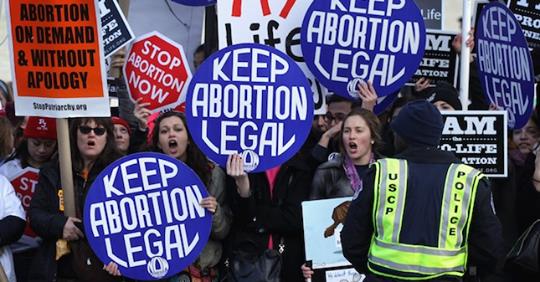
The US supreme court legalized abortion in 1973. Now, 45 years later, activists say the departure of the court’s moderate, Justice Anthony Kennedy, represents the most direct threat to reproductive freedom since abortion was legalized.

Pro-choice advocates said Kennedy’s retirement represents a “dire, immediate danger” to women’s reproductive freedom. Though the supreme court is not expected to rule on abortion matters in the near future, all of the potential nominees shortlisted by the Trump administration are believed to be jurists who would overturn the landmark decision, Roe v Wade, given the opportunity.

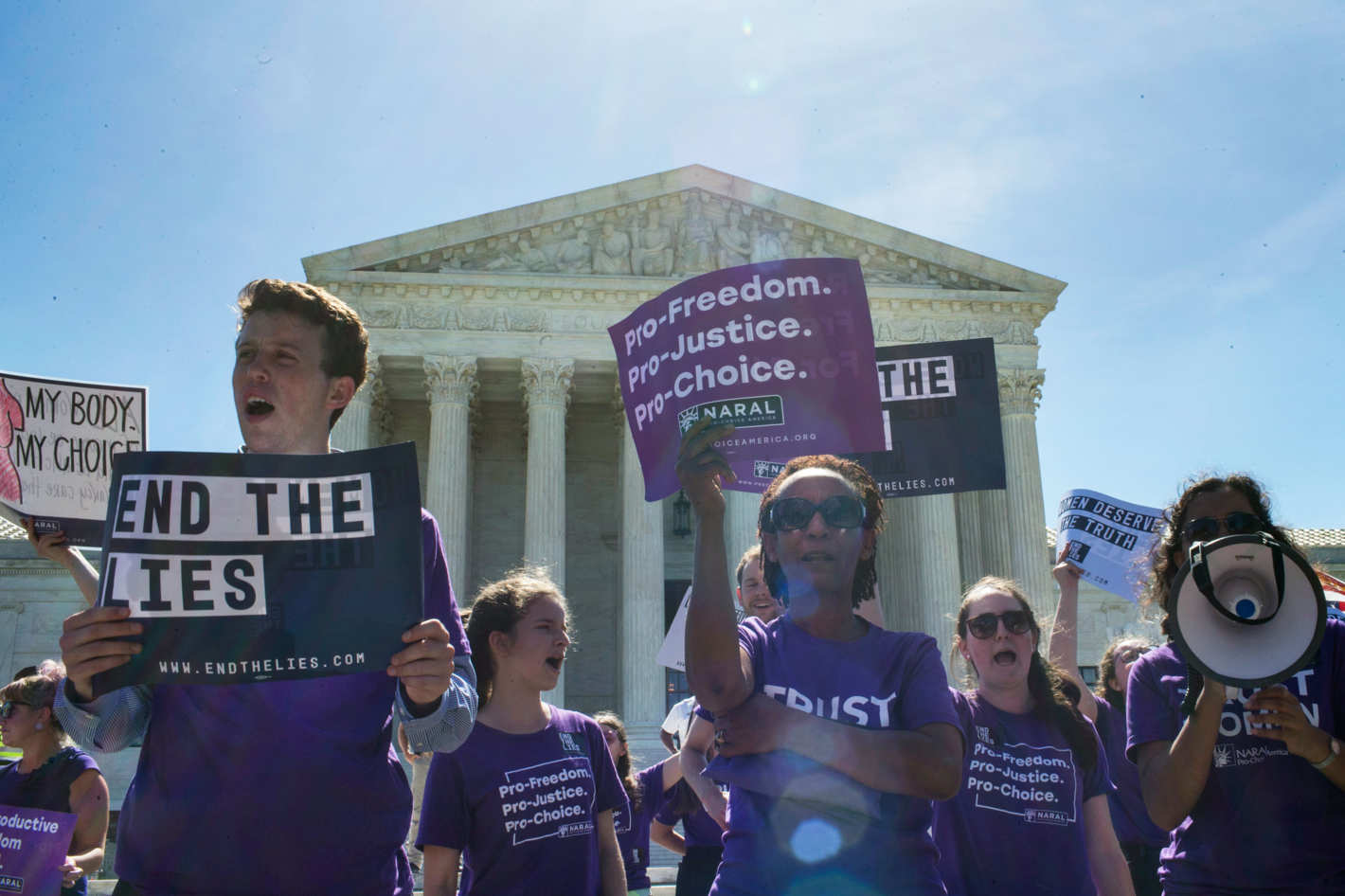
“Today, Justice Kennedy announced his retirement, and because President Trump will nominate the next supreme court justice, a woman’s constitutional right to access legal abortion is in dire, immediate danger – along with the fundamental rights of all Americans,” said Ilyse Hogue, president of NARAL Pro-Choice America.

“Our country faces a moment of deep crisis – a crisis of rights, of values and of leadership,” she said. “The deeply-divided decisions from the supreme court this week are a clear warning that our most cherished values are in jeopardy, and now hang in the balance. Womenwill not go back to the days when abortion was illegal in this country.”

Anti-abortion activists, meanwhile, described Kennedy’s retirement as a turning point in the movement.

“Justice Kennedy’s retirement from the supreme court makes a pivotal moment for the fight to ensure every unborn child is welcomed and protected under the law,” said Susan B Anthony List president Marjorie Dannenfelser.

For decades, American anti-abortion activists have chipped away at reproductive freedoms, as legislatures piled on restrictions. That strategy was developed, in part, to avoid court decisions that could strengthen Roe’s precedent. Kennedy’s retirement is likely to further embolden anti-abortion activists, who have already started to pass some of the world’s most restrictive anti-abortion laws.

For example, in Iowa, activists successfully passed a ban on abortion after a fetal heartbeat is detected, roughly six weeks into a pregnancy. That is before most women know they are pregnant.

At the time, activists intended for the law to end up in court, which it has, where it could be appealed to higher and higher courts. Eventually, they hoped, it would land in the supreme court. Trump has also made dozens of conservative nominations to lower courts, making it more likely for Roe to be challenged in the supreme court.

Kennedy’s departure is Trump’s second opportunity to nominate a justice to a lifetime supreme court seat. There are nine justices, four conservative and four liberal. Kennedy, 82, considered a moderate conservative, was an unpredictable swing vote.

Trump pledged to use the same shortlist of justices released when he nominated his first supreme court justice, conservative Neil Gorsuch. The list was assembled with help from the Federalist Society, an anti-abortion, conservative legal organization.

Among those on the shortlist is William Pryor, an Alabama judge who once called Roe the “worst abomination in the history of constitutional law”. He also wrote that the decision “led to the slaughter of millions of innocent unborn children”.

Another shortlisted judge is Charles Canady of Florida. As a congressman, Canady coined the term “partial birth abortion” to describe the surgical procedure, and introduced a bill to ban the practice in 1995. The bill was vetoed by former president Bill Clinton, but later approved by former president George W Bush.

“We also know that for decades, a multimillion-dollar, extreme, anti-choice movement has quietly and aggressively chipped away at that right in state legislatures, in lower courts, and now from within the Trump administration,” said Hogue. “Their stated goal, clearly and loudly, is overturning Roe v Wade.”

Since Trump took office, he has instituted a “global gag rule” that bars doctors receiving US aid from providing abortion information, created a department to protect health workers who have religious objections to procedures or policies, and Republicans have moved to defund Planned Parenthood, the nation’s largest women’s healthcare provider.

Source: https://www.theguardian.com/world/2018/jun/27/abortion-rights-immediate-danger-anthony-kennedy-retires

A narrow majority of the Court finds a First Amendment right to deceive. Photo: Zach Gibson/Getty Images

The long-standing cold war between abortion rights advocates seeking to inform women of their rights and anti-abortion advocates trying to talk women out of exercising those rights just got a bit hotter thanks to the U.S. Supreme Court. In a 5-4 decision, with the opinion written by conservative ideologue Clarence Thomas, the Court sent a challenge to a California disclosure law aimed at “crisis pregnancy centers” back to a lower court with a strong indication that the law in question violated the First Amendment rights of the centers.

The 2015 law in question was basically intended to force these pro-life advocacy centers — nationally, there are three times as many of themas there are abortion clinics — to come clean about what they do and don’t do and inform the women who show up there of their other options, including state-supported contraceptive and abortion services. The lower courts regarded these disclosure requirements as involving standard medical information that didn’t trigger the tougher judicial scrutiny that protected speech enjoys. Five Justices disagreed.

Thomas’ opinion carves out a very expansive notion of protected speech in a professional context that will warm the hearts of “pharmacists of conscience” and others who wish to pick and choose which duties they will fulfill. It throws into doubt not just the requirement that licensed centers disclose medical alternatives, but the requirement that unlicensed centers provide notice that they are unlicensed.

The concurring opinion written by Anthony Kennedy (in which Roberts, Alito and Gorsuch joined) focused on the California legislature’s animus towards crisis pregnancy centers, claiming it represented a form of “viewpoint discrimination” the courts have always frowned upon. Kennedy actually accused California of behaving like “relentless authoritarian regimes” by targeting those with unpopular opinions.

Meanwhile, Stephen Breyer’s dissent, in which the other liberal Justices joined, pretty clearly pointed to a potentially unintended consequence of this decision. He justified California’s law by examining Court precedents (especially the landmark 1992 Planned Parenthood v. Casey decision) involving state anti-abortion laws deemed acceptable by judicial conservatives. As long as the required information is factually accurate and doesn’t involve efforts to persuade women to have or not have an abortion, say the dissenters, this can’t be regarded as “compelled speech” in violation of the First Amendment. The majority’s view, Breyer suggests, could create a new avenue for restricting state requirements clearly aimed at making abortion providers make information available that they would not choose to disclose otherwise.

Every Supreme Court decision touching on abortion rights is going to get a lot of passionate attention regardless of its importance. In this case, California may have gone too far in singling out crisis pregnancy centers for corrective action, though it’s hard to feel much sympathy for institutions that rely so heavily on deception (the staff in many wear hospital garb without providing any actual medical services) to lure women through their doors. But at this point, what we are mainly seeing is what happens when four Members of a nine-member Court hostile to abortion rights can find grounds for a fifth–Anthony Kennedy, whose self-perception as a defender of the First Amendmentis important to him–to form a majority. If Kennedy resigns while Donald Trump is president, we could soon see a Court that will need no such pretext to restrict reproductive rights.

Source: http://nymag.com/daily/intelligencer/2018/06/supreme-court-protects-anti-abortion-centers-from-ca-law.html

The pharmacist said it went against his personal beliefs and refused to sell the medication.

Nicole Arteaga

A heartbroken mom’s Facebook post has attracted thousands of comments after she described how a Walgreens pharmacist refused to fill a prescription for medication that she needed to end her pregnancy.

“He has no idea what its like to want nothing more than to carry a child to full term and be unable to do so. If you have gone thru a miscarriage you know the pain and emotional roller it can be,” Nicole Arteaga, a school teacher from Peoria, Arizona, wrote in her post on Friday. “I left Walgreens in tears, ashamed and feeling humiliated by a man who knows nothing of my struggles but feels it is his right to deny medication prescribed to me by my doctor.”

Arteaga, 35, told BuzzFeed News that she was nine weeks pregnant when her doctor told her last week that her baby had stopped growing and didn’t have a heartbeat.

Arteaga chose to take medication to end her pregnancy, rather than undergo a surgical procedure, and her doctor issued her a prescription for misoprostol.

But when she went to the Walgreens near her home to pick it up, the pharmacist asked if she was pregnant. When she said yes, he refused to sell it to her.

“I asked him why he wouldn’t sell it to me, and he said it was his ethics,” Arteaga said.

In a statement to BuzzFeed News, Walgreens spokesperson James Graham confirmed that company policy “allows pharmacists to step away from filling a prescription for which they have a moral objection.”

Arteaga said she told the pharmacist her baby was not viable and that she did not have a choice, but “he still said no.” The pharmacist offered to send her prescription to another location but could not guarantee that the pharmacist there would sell her the pill.

Arteaga tried calling her doctor and left the pharmacy in tears.

“I had a difficult time getting to sleep with all these thoughts going through my mind about how a person could control or have control over something that I needed for my well-being,” she said. “After waking up in the morning I realized that this is something that is not OK, and that I wanted people to know.”

On Friday morning, she posted a message on Facebook, along with a photograph of the pharmacist’s business card. By Saturday evening, the post was shared more than 14,000 times and thousands of messages of commiseration poured in.

In an update on Saturday, Arteaga added that the pharmacist had transferred her prescription to another Walgreens location in Phoenix, a 20-minute drive away, where she was able to pick up her medication.

Arizona is one of six states in the US where it is legal for a pharmacist to refuse prescriptions related to contraception if it conflicts with their religious or moral beliefs, Kelli Garcia, the director of reproductive justice initiatives and senior counsel at the National Women’s Law Center, told BuzzFeed News.

Cases like Arteaga’s are not uncommon. Women’s health advocates oppose such “conscience clauses” because they can limit women’s access to necessary medication if they cannot find another pharmacy, like if they live in a rural area, Garcia said.

Also, being turned away adds to the trauma of an already painful event.

“Pharmacists shouldn’t be in the business of deciding what medical care a patient gets — that decision should be between a person and her doctor,” Garcia said.

Walgreens said it was sorry about the incident and apologized to Arteaga.

Source: https://www.buzzfeed.com/nidhisubbaraman/a-walgreens-pharmacist-denied-a-womans-prescription-for?utm_term=.qpBvgmv9W#.ngq5vA5z2

And putting women’s health—and, in some cases, their lives—at severe risk by doing so.

Photo by Ivo de Bruijn, via Stocksy.

In 2012, a woman in Spain who was seven months pregnant learned that her baby would not survive outside the womb because of a fetal congenital anomaly. Paula (a pseudonym) sought an abortion at a nearby hospital, but the doctor refused for moral reasons, according to Spanish newspaper El País. Ultimately, local health authorities decided that “in order to respect the professionals’ right to objection on moral grounds,” the newspaper reported in 2016, they would refer her to a clinic in Madrid. It was 354 miles away.

By the time Paula arrived, she was bleeding heavily and had to undergo an emergency C-section, which resulted in the removal of her uterus. She nearly died. “The doctors’ right to object almost cost me my life,” she told El País in an interview. “It was really traumatic.”

Her horrifying story is just one of the accounts included in a new report from the International Women’s Health Coalition (IWHC), which sheds light on the growing trend of healthcare providers refusing abortion services based on religious or moral objections. The work is the result of a three-day summit held last August in which 45 experts from 22 countries gathered together to discuss the ethical, legal, and real-life consequences of policies that allow providers to refuse abortion services based on their individual beliefs.

Known as a “conscience claim” or “conscientious objection,” the practice “goes against everything medicine stands for,” said Françoise Girard, president of IWHC, in a statement. “Policies that allow health care providers to invoke their personal views to deny medically sound, evidence-based, needed and wanted health care, are unethical, discriminatory, inhumane and a violation of patients’ human rights.”

While the laws vary in different countries, at least 70 jurisdictions across the world have provisions in place that allow doctors to opt out of abortion care due to claims that the procedure goes against their personal beliefs, the report states. In some areas, providers are required to inform national health officials that they will exercise conscientious objection to avoid terminating a pregnancy: For example, 70 percent of OB/GYNs in Italy were on record for refusing to perform abortions because of their individual feelings. In Uruguay, the report states, up to 80 percent of gynecologists (depending on the area surveyed) won’t perform abortions.

When providers deny patients important—and legal—access to abortion, the consequences can be dire, including continuing an unintended pregnancy or risking her health or life by resorting to an unsafe procedure. Additionally, the report’s authors write, “[a] provider’s refusal to perform abortion services compounds the effects of the many barriers women face in health care: discrimination, stigma, financial burdens, lack of information, transportation difficulties, and limited autonomy to make decisions about their own bodies.” Meanwhile, they add, doctors who promised “to do no harm” are rarely subjected to any consequences.

Susan Wood is IWHC’s director of program, learning, and evaluation, and author of the report. She tells Broadly they first noticed this issue emerging after Uruguay essentially decriminalized abortion in 2012. Soon after, they found that doctors were refusing to provide care using conscience claims that were allowed by law. And then they began to notice a pattern.

“Where the law changes and abortion becomes legal, or partially decriminalized, there was an increase in providers using conscience claims,” she says. “We know it’s going to be an issue in Ireland [whose citizens recently voted to legalize abortion]. It’s come up in Argentina, where there’s progress being made to decriminalize the law. And we see it in the US with a proposed rule from Department of Health and Human Services that would expand the use of conscience claims.” (The proposed rule was announced shortly after HHS opened a new branch dedicated to investigating claims of health care workers being “coerced” to do duties conflicting with their religious or moral beliefs.)

According to the IWHC report, policies that give providers this kind of right of refusal have been utilized by abortion opponents as “a bargaining chip” in countries where restrictive abortion laws are under review. It becomes another barrier, Wood says, for reproductive rights activists to work to overcome.

Otherwise, she adds, patients who are denied abortion services walk away with a profound, and disheartening, message: “That the provider’s personal beliefs are more important than her health, her needs, or her rights … [and] that’s very delegitimizing. It communicates to her that she’s doing something wrong.”

Source: https://broadly.vice.com/en_us/article/a3a9zk/doctors-deny-abortions-religious-beliefs


© Getty Images

As health-care providers who work day in and day out with women, we are deeply worried about the unregulated growth of fake health centers that seek to actively deceive women facing unplanned pregnancies.

These so-called “crisis pregnancy centers” often advertise free pregnancy testing and pregnancy-options education. But once a woman steps into the facility she is presented with factually inaccurate and misleading information, often by untrained staff pretending to be medical personnel, to dissuade her from pursuing an abortion.

From Harlem to Hartford, there are more than 200 of these centers in the tristate area alone. We both work near or practically next door to these facilities. We are aware of how they strategically set up shop next to OB-GYN facilities that provide comprehensive reproductive care, including abortions, in order to lure patients away.


We have noticed how they choose names that are almost identical to family planning clinics to confuse women. We have even seen members of their staff open their doors as our patients walk by to bring them into their facility and provide them with false information about abortion.

On March 20, the Supreme Court heard National Institute of Family and Life Advocates (NIFLA) v. Becerra, a case challenging a California law that requires these facilities to provide factual information about the availability of free and low-cost government health-care services, including contraception, prenatal care and abortion care.

What we hope the Court will consider are the women who step into these facilities, sometimes scared and unsure in the face of an unplanned pregnancy. She may have simply googled or walked by the facility hoping that she would be provided judgement-free, compassionate care and advice about her options. Many of these facilities are purposely located in low-income areas where women have less resources and information about medical care.

We know the court will assess if it’s legal to actively deceive women during their time of need. But shouldn’t we also ask ourselves is this right?

Is it ethical to allow untrained staff to present women with medically inaccurate materials to scare her away from exercising her right to pursue a safe abortion in a timely manner? Is it just to deny women who are struggling to make ends meet information about government assistance for reproductive care? Is it fair to impose your morality on someone else when they will live the rest of their lives with the decision you lured them into.

We both went into reproductive health care because of our deeply-held faith. We both revere the right of every woman make her own moral and ethical decisions over her body. We care deeply about our neighbors, and that includes providing them with compassionate care in their time of need.

We both feel an abiding responsibility to guide our patients with compassion and empower them with comprehensive information about the options available to them. That of course includes not allowing our religious views to interfere with what our patients deem is best for them.

God gave us all free will. And that is why we believe deeply in supporting and empowering our patients with the information that will allow them to live their lives to their full potential. That is why we hope others will join us in upholding what is right and that our lawmakers stand up to say misleading women should not be sanctioned under law. It is neither just nor kind.

Dr. Albert G. Thomas is a former Catholics for Choice Board Member and an OB/GYN New York, N.Y. Jamie Beers, former clinic administrator at Hartford GYN Center, Hartford, Conn.

Source: http://thehill.com/opinion/healthcare/393074-women-need-compassionate-comprehensive-health-care-not-lies

A federal lawsuit filed Thursday in Indiana argues many of the state’s abortion laws are unconstitutional, in the latest test of the strength of the abortion rights win in Whole Woman’s Health v. Hellerstedt.

Advocates are challenging five categories of Indiana abortion laws.
 Saul Loeb/AFP/Getty Images

Fresh off filing a lawsuit seeking to undo a web of Virginia anti-choice restrictions, reproductive rights advocates in Indiana filed a federal lawsuit Thursday challenging laws they claim place ideological opposition to abortion rights above patient health in the Hoosier state.

The lawsuit, brought by attorneys on behalf of Whole Woman’s Health Alliance and All-Options Pregnancy Resource Center, challenges dozens of Indiana abortion restrictions they allege impose medically unnecessary burdens on patients, require doctors to lie to their patients, and have led to the closure of clinics across the state. 

Advocates are challenging five categories of Indiana laws. The first are targeted regulation of abortion providers laws or TRAP laws. Those laws, among other things, mandate that abortion providers have admitting privileges at a nearby hospital, require licensing that applies only to abortion clinics, and mandate that only physicians perform abortions.  

The lawsuit challenges laws that advocates claim deny abortion patients the benefits of scientific progress. These include restrictions on medication abortion and telemedicine restrictions, as well as Indiana’s forced 24-hour waiting period and its requirement that doctors provide patients state-mandated, scientifically unproven information about abortion care. 

Indiana’s parental involvement and judicial bypass laws are also challenged, as are Indiana laws that place criminal liabilities on abortion providers.

“In Texas, Virginia, and now in Indiana, we have joined forces with our allies to fight for women’s access to quality abortion care without a maze of obstacles,” Amy Hagstrom Miller, president of Whole Woman’s Health Alliance, said in a statement. “The Whole Woman’s Health Supreme Court victory was game-changing—affirming that abortion laws must be based on medical evidence. We’re using this new standard to challenge dozens of restrictions, some dating back decades, that are based on ideology, not health or science.”

The U.S. Supreme Court in 2016 struck down several provisions of Texas’ anti-choice law HB 2 in a landmark case, Whole Woman’s Health v. Hellerstedt. Many of the provisions challenged in the Indiana and Virginia lawsuits mirror provisions struck by the Court in Whole Woman’s Health.

“Indiana’s abortion laws make it harder for everyone to get abortion care in Indiana, but they compound the difficulties faced by low-income people, people of color, and immigrants, making it exponentially harder for them to access abortion care,” said Dipti Singh, senior counsel and strategy director at the Lawyering Project, in a statement following the lawsuit. “This lawsuit aims to ensure that abortion access for these communities is a right in reality—not just on paper.”

The lawsuit seeks to have each provision blocked and declared unconstitutional. Attorneys for the State of Indiana have not yet responded to the complaint. 

Source: https://rewire.news/article/2018/06/22/advocates-set-sights-indiana-abortion-restrictions-new-lawsuit/

Wednesday’s letter follows several instances of the Trump administration coordinating with anti-choice and anti-LGBTQ rights groups to create policy.

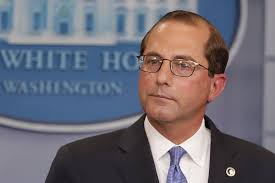
Congressional Democrats sent a letter to U.S. Department of Health and Human Services (HHS) Secretary Alex Azar on Wednesday requesting documents about the Trump administration’s proposed Title X domestic gag rule.

The letter, signed by all 18 Democratic members of the U.S. House Oversight Committee, requests documents detailing the actions of HHS staff in regards to the proposed rule, including communications and meeting schedules between agency staff and non-governmental entities.

“This is not the first time the Trump administration has sought to curtail the reproductive rights of women and their access to information,” the letter said. It described a February letter from Oversight Committee ranking member Elijah Cummings (D-MD) to HHS Deputy Secretary Eric Hargan detailing a whistleblower’s account that anti-choice group Alliance Defending Freedom was behind an effort to allow states to terminate family planning providers from Medicaid programs.

The Trump administration’s proposed domestic “gag rule” is an anti-choice regulation directed at the federal Title X family planning program. It would eliminate a requirement that clinics receiving Title X funding offer counseling and referrals for all pregnancy options; require “physical and financial separationof abortion related activities from Title X project activities”; and prohibit “Title X projects from engaging in activities that encourage, promote, or advocate abortion.”

The Trump administration has long coordinated with anti-choice and anti-LGBTQ rights groups to create policy. Last July, Vice President Mike Pence denied he had met with anti-choice groups despite tweeting a photo of the meeting in progress. The meeting was not listed on Pence’s daily schedule.

Shortly after the White House released its written policy banning transgender troops from the military, Slate and ThinkProgress reported that the Heritage Foundation’s Ryan T. Anderson and other anti-trans activists coordinated with Pence to write the discriminatory policy.

Many top HHS administrators have worked at anti-choice organizations. Since they were hired, the agency has repeatedly leveled attacks on access to abortion care and reproductive health care.

Source: https://rewire.news/article/2018/06/21/democrats-want-know-helped-craft-trump-administrations-domestic-gag-rule/

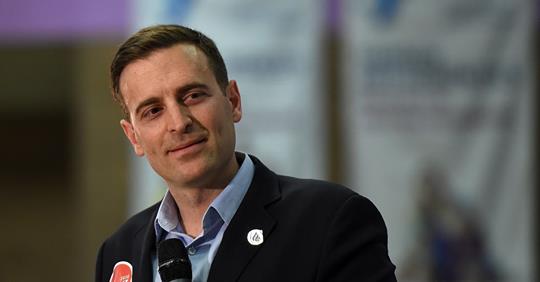
Attorney General Adam Laxalt suggested that, if elected governor, he’d take aim at a voter referendum that protects the right to abortion. Now his campaign says he has “zero interest” in doing just that.

In response to Laxalt’s statements, NARAL Pro-Choice Nevada announced it will hold a press conference on Tuesday. The reproductive rights organization said its 38,000 grassroots members “will not stand for a candidate for governor who wants to roll back our reproductive rights, including access to abortion.”


The Republican gubernatorial candidate in Nevada is backing away from an anti-choice stance he took last week, now accusing a local news outlet of mischaracterization.

The furor stems from a comment made by state Attorney General Adam Laxalt. Laxalt suggested that, if elected governor, he’d take aim at a popular voter referendumthat protects the right to abortion, telling ABC station KOLO, “We’re going to look in to it.”

The comment has created an uproar in a tight gubernatorial race, prompting a swift “clarification” from Laxalt’s camp.

The seat, held by termed-limited Gov. Brian Sandoval (R), is considered a toss up. Democrats outnumber Republicans in the state, with about 650,000 registered Democrats compared to 552,000 registered Republicans, according to the most recent voter rolls. Hillary Clinton won Nevada by 2.4 percentage points in the 2016 presidential election, while Barack Obama won the state by almost 7 percentage points in 2012.

Laxalt campaign manager Kristin Davison in a statement called the news reports on Laxalt’s comments a “totally false characterization” taken “out of context.” Laxalt has “zero interest in ‘undoing’ the 1990 law in question. None,” she added.

But in the on-camera interview with KOLO, Laxalt said of abortion, “we’re going to have that debate” and said he would “err on the side of life.”

The Nevada ballot measure that Laxalt said he wanted “to look in to,” Question 7, passed in 1990 with 63 percent of the vote. The measure protects the right to abortion up to 24 weeks into a pregnancy. It “will remain in effect and cannot be amended, repealed or otherwise changed, except by a direct vote of the people,” according to language from the state’s voter guide.

Laxalt’s campaign did not respond to requests for an interview or comments. In a statement to KOLO, the campaign took jabs at Laxalt’s gubernatorial opponent, calling the controversy, “an attempt to distract from Steve Sisolak’s extreme view that there should be zero limits on abortion and taxpayer funding for abortion providers.”

Sisolak, the Democratic candidate and chair of the Clark County Commission, said in a forum last month he would not support abortion restrictions, according to the Nevada Independent.

In contrast, Laxalt, in a recent Q & A with the Reno Gazette-Journal, said he supports bans on later abortion care. He sidestepped a question on whether Planned Parenthood should receive federal money, saying the matter is up to the state’s representatives on Capitol Hill.

In response to Laxalt’s statements, NARAL Pro-Choice Nevada announced it will hold a press conference on Tuesday. The reproductive rights organization said its 38,000 grassroots members “will not stand for a candidate for governor who wants to roll back our reproductive rights, including access to abortion.”

“Laxalt trying to walk back his stance on repealing abortion rights after getting negative feedback is perfectly on brand for him,” said Caroline Mello Roberson, NARAL Pro-Choice Nevada state director. “Laxalt claims his words were ‘taken out of context’ but it’s clear that even his own campaign knows Laxalt is an extremist out of touch with every day Nevadans that voted 28 years ago to trust women with their own reproductive health care choices.”

Almost three-quarters of Nevadans identify as pro-choice, according to the organization.

As attorney general, Laxalt signed the state of Nevada on to an amicus brief defending a Texas ban on the most common procedure for second trimester abortions and supporting cases brought by California fake clinics, or crisis pregnancy centers.

The Nevada State Democratic Party last month filed a public records request seeking communications between Laxalt’s office and anti-choice organizations, including National Right to Life, Nevada Right to Life, and the Pro-Life League of Nevada, as the Nevada Independent reported. The records are expected to be released next month.

Nevada Right to Life did not respond to requests for comment.

Source: https://rewire.news/article/2018/06/19/gop-candidate-nevada-governor-walks-back-anti-choice-comments/