Patients seeking care in Catholic facilities have been turned away while bleeding and made to wait until they sicken to receive miscarriage treatment.

About one in six women in the United States name a Catholic facility as their go-to hospital for reproductive health care.

But more than a third of these women are unaware that their hospital is Catholic, according to a survey revealing an “information gap” about Catholic hospitals, where religious rules dictate access to contraception, sterilization, and abortion services.

Patients seeking care in Catholic facilities have been turned away while bleeding and made to wait until they sicken to receive miscarriage treatment. Cesarean section patients in Catholic hospitals often can’t have their tubes tied at the same time they give birth, requiring a second surgery elsewhere. Transgender patients have had gender-affirming surgeries canceled on religious grounds.

Among women who listed a Catholic hospital as their primary facility for reproductive care, only 63 percent knew that the hospital was Catholic, researchers found. The study, published in the journal Contraception, did not address whether respondents knew how Catholic hospitals restrict care.

Women with annual incomes under $25,000 are less likely to realize their hospital is Catholic than women who make more than $100,000 a year, the researchers found, underscoring how these barriers disproportionately affect marginalized patients. A January report found women of color are more likely to give birth in Catholic hospitals and thus bear the brunt of these religious restrictions.

If a hospital has a “very religious” name, such as St. Joseph, patients are nearly three times more likely to identify it as Catholic than if it has a non-religious name. Older patients and those who live in metropolitan areas are more likely to correctly identify their hospital as Catholic, the study found.

The researchers called on hospitals to better advertise their Catholic affiliations. “Efforts are needed to increase hospital transparency and patient awareness of the implications that arise when health care is restricted by religion,” they wrote.

This appears particularly urgent because women overwhelmingly want to be informed about religious restrictions: Eighty-one percent say it’s important to know these barriers when they decide where to go for care.

Source: https://rewire.news/article/2018/06/06/hospital-catholic-many-dont-know/

Abortion refusal laws are not about religion, but about control

Cultural commentary, lawsuits and court cases on religious and moral exemptions and refusals have been on the rise and have garnered primetime coverage across the country. The main point of concern — to those seeking expanded refusal rights — is the threat they see of doctors and nurses being forced to perform abortions, transgender consultations, STI tests or any other routine and normal health-care practice they don’t agree with.

But doctors and nurses are already protected from performing abortions and other procedures they object to. In fact, the fear, as baseless and discriminatory as it may be, has been a forceful reason why abortion care has been pushed into their own clinics.

Isolating abortion providers from the medical community has been the longstanding strategy to limit resources and access to these providers. The ownership of hospitals by religious organizations has further pushed providing abortion care — even at serious and fatal risks to the woman — out to independent clinics with no or few connections to the hospital.


But abortion care is not any different from any other private medical treatment. In fact, it’s just that. Abortion is health care.

What I think I find most puzzling is the push to alleviate doctors and nurses from performing procedures they don’t want to do. What about alleviating the burden of an unwanted pregnancy from a woman? What about the oath to do no harm as a doctor?

Why does a doctor or a pharmacist have more rights to refuse treatment or to fill a prescription than the other person who seeks the health-care option that’s right for them?

It’s because the right to refuse is about control, not religion.

Forcing a doctor to perform a procedure they do not agree with or do not wish to perform is not legal, period. They have the right to practice in the many fields that do not include procedures they disagree with. If you have a problem with abortion, become a pediatrist.

Another thing to note is that while doctors are never forced to perform procedures that they morally or religiously object to, they may not be able provide the best care of their patients. Any doctor whose own moral convictions outweighs the patient’s needs tarnishes the medical community as a whole.

Conscientious objections in medicine utilize the attending medical practitioner’s position of trust and authority to impose their personal beliefs on patients, who are completely dependent on them for health care. The dynamic between doctor and patient is inherently unbalanced. Moreover, in rural and underserved communities it may be worse. Patients may have no other health-care options, as the conscientious objector may be the only provider for miles.

Abortion patients and LGBTQ patients are often denied services by these professionals or institutions simply on the basis of who they are or the choices that they’ve made. This is systemic discrimination at a foundational level.

Seemingly, President Trump’s religious liberty policy shifts are about controlling people. His most recent policy change — barring federal money from any clinic that performs abortions or any facility that refers a patient or discusses abortion as a health-care option — is a domestic gag rule. It seeks to make abortion even less accessible by holding the medical community hostage to federal funding.

Religious liberty, as specified in the First Amendment, allows the free practice of religion — so long as the practice of that religion does no harm to others. That is the foundation of religious freedom in this country and the weaponization of religious exceptions and “conscience objections” in medicine do harm people. Medical professionals take an oath promising to do the exact opposite.

By weaponizing protections for religious objections, this administration is  denying constitutionally protected rights that are afforded to all Americans. There is nothing religious or moral about refusing care and referrals to patients.

We need to recognize that any further exemptions from a profession chosen by an individual is granting special rights to those seeking to discriminate. Conscientious objections to providing full and accurate health care to patients is not about protecting religious freedom, it’s about power and control.

Julie A. Burkhart is the founder and CEO of Trust Women Foundation. Trust Women opens clinics that provide abortion care in underserved communities so that all women can make their own decisions about their healthcare. Follow her on Twitter @julieburkhart. 

Source: http://thehill.com/opinion/healthcare/390968-abortion-refusal-laws-are-not-about-religion-but-about-control

Groups that claim abortion leads to mental illness are misleading people, experts say

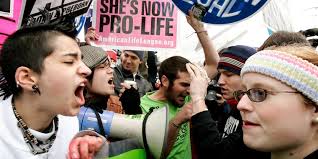
Pro-choice activists argue with anti-abortion-rights activists on abortion issues in front of the U.S. Supreme Court in Washington on January 23, 2006. A new study debunks the claim that having an abortion can lead to depression.Alex Wong / Getty Images file

Abortions don’t cause depression, although women who have depression and anxiety may be more likely to have abortions, researchers reported Wednesday.

The study is the latest to show no evidence that abortion causes depression. Policies that cite damage to mental health as a reason to restrict access to abortion are not based in fact, the researchers wrote in the Journal of the American Medical Association’s JAMA Psychiatry.

“The repercussions of abortion for mental health have been used to justify state policies that limit access to abortion in the United States,” the team, led by Dr. Julia Steinberg of the Department of Family Science at the University of Maryland, wrote.

It’s a difficult thing to study, as no researchers could ethically randomly assign pregnant women to either have an abortion or not have one. The next best thing is to study a large group of women, some of whom became pregnant and some not, and some who had abortions and others who did not.

They used Denmark’s large national database covering nearly 400,000 women born after 1980.

Steinberg’s team compared women who filled prescriptions for antidepressants to women who did not. The Danish database also carries details of abortions — something that may less accurately show up in U.S. data, where abortions may or may not be recorded.

“Compared with women who did not have an abortion, those who had an abortion had a higher rate of antidepressant use,” the researchers wrote. “A close look at the data, however, suggests that the higher rates of antidepressant use had less to do with having an abortion than with other risk factors for depression among women who had an abortion.”

“That is, the increased risk of depression did not change from the year before to the year after an abortion. And contrary to previous claims that abortion has long-term adverse effects, the risk of depression decreased as more time elapsed after the abortion,” they added.

Women who had babies had an initially lower rate of antidepressant use — perhaps because of a reluctance to take any medications while breastfeeding and caring for a newborn. But then rates of antidepressant use went up more among women who had children than among those who did not.

The findings should not surprise anyone who has looked at medical studies of abortion rates, said Dr. Nada Stotland of Rush University and Dr. Angela Shrestha of the University of Illinois at Chicago.

“Despite decades of studies showing that abortion does not cause mental illness, misinformation abounds,” they wrote in a commentary.

Some anti-abortion-rights groups claim that psychiatrists have a diagnosis called “post-abortion syndrome” or “post-abortion stress syndrome”, although no such diagnosis exists in medical texts.

Women who are already in stressful circumstances may choose abortions because they cannot cope with pregnancy and child rearing, Stotland, a former president of the American Psychiatric Association and Shrestha, a psychiatry resident, wrote.

Nearly a third of U.S. women have an abortion by the age of 45, they noted.

“They have abortions for reasons: ongoing mental illness, including alcohol and substance use disorders; current obligations; intimate partner violence, including coerced or forced sex; immaturity; poverty; the need to complete an education; and insufficient social support,” they wrote.

Plus, the language around stress, anxiety and mental health is unclear.

“The English language lends itself to a confusion between mental illnesses, such as mood and anxiety disorders, with normal human experiences, such as sadness and anxiety,” they wrote.

“This confusion has been exploited by antiabortion activists both in scientific publications and in public policy.”

Anti-abortion-rights activists have misstated other medical facts to justify limiting access to abortion, including the often-debunked claim that abortion raises the risk of breast cancer. That includes a brief incident under the presidency of George W. Bush when federal agencies under the Health and Human Services Department made the false claim in brochures.

Source: https://www.nbcnews.com/health/health-news/abortion-does-not-cause-depression-new-study-finds-n878706

WASHINGTON — The Supreme Court issued a narrow decision this morning vacating an appeals court ruling that allowed a young immigrant woman, known as Jane Doe, to obtain an abortion over the objections of the Trump administration. The decision does not affect the ongoing-class action lawsuit challenging the government’s policy barring young immigrant women in government custody from getting abortions.

The case will now go back to the lower courts where the American Civil Liberties Union has already obtained a preliminary injunction blocking the administration’s policy. The Supreme Court’s decision considered only whether the trial court’s decision requiring the government to provide abortion access to Jane Doe had become moot, given that she had the abortion. It did not reverse or comment on the appeals court’s reasoning and did not address the underlying claims regarding access to abortion.

“Today’s decision doesn’t affect our ongoing efforts to ensure that all Janes can get an abortion if they need one. The district court has blocked the Trump administration’s cruel policy of obstructing unaccompanied immigrant minors’ access to abortion while the case continues, and we won’t stop until we strike it down once and for all,” said Brigitte Amiri, deputy director of the ACLU Reproductive Freedom Project.

After the administration barred Doe, an unaccompanied immigrant minor in federal custody at a government-funded shelter, from obtaining an abortion for a month, a federal court found that the government’s interference with her decision likely violated her constitutional rights and ordered the government to step aside. The U.S. Court of Appeals for the D.C. Circuit rejected the government’s request to put a hold on that order.

The Trump administration could have taken an immediate appeal to the Supreme Court, but failed to do so, and Doe had her abortion the next day. Nine days later, under pressure from abortion opponents, the Department of Justice asked the Supreme Court to vacate the appeals court’s ruling.

Today’s ruling vacates the appeals court’s decision, but does not affect the trial’s court decision certifying a class of pregnant immigrant minors and preliminarily blocking the Trump administration’s policy.

“In the time since we succeeded in stopping the Trump administration from blocking Jane Doe’s abortion, at least three more young women have come forward who were being barred from getting abortions,” Amiri said. “To the Janes out there, we’ll keep fighting for you. To the government, we’ll continue to see you in court.”

The Department of Justice has attempted to blame the ACLU for the government’s failure to file an appeal with the Supreme Court in time to block Doe’s abortion, arguing that the ACLU acted unethically by not informing the Department of Justice about the precise timing of the abortion. But legal experts have explained that had the ACLU done so, it would have been contrary to their client’s interests and their ethical obligations, and they have described the administration’s request as an alarming attempt to intimidate civil rights lawyers from doing their jobs. The Supreme Court declined the government’s request to sanction the ACLU lawyers.

“We are gratified that the court rejected this extraordinary request,” said David Cole, national legal director of the ACLU. “In protecting a woman’s access to abortion, the lower courts did what they are supposed to do. And the ACLU did what lawyers are supposed to do, namely, pursue the best interests of our clients.”

Doe’s treatment is part of a new Trump administration policy to block access to abortion for young immigrants in detention. Since Doe was allowed to obtain her abortion in October, the three women who came forward saying they were being blocked from getting abortions have become plaintiffs in the ACLU’s lawsuit challenging the policy. On March 30, the district court ruled that the case could proceed as a class action, and it blocked the policy while the case continues.  The government has pursued an appeal of that order.

Carter Phillips of Sidley Austin LLP was lead counsel on the case in the Supreme Court.  ACLU lawyers on the case include Amiri, David Cole, Meagan Burrows, Jennifer Dalven, Lindsey Kaley, and Daniel Mach; Arthur Spitzer, Scott Michelman, Shana Knizhnik of the ACLU of the District of Columbia; Melissa Goodman of the ACLU of Southern California; Elizabeth Gill of the ACLU of Northern California; and Mishan Wroe of Riley Safer Holmes & Cancila LLP.

Source: https://www.aclu.org/news/supreme-court-issues-decision-jane-doe-abortion-case

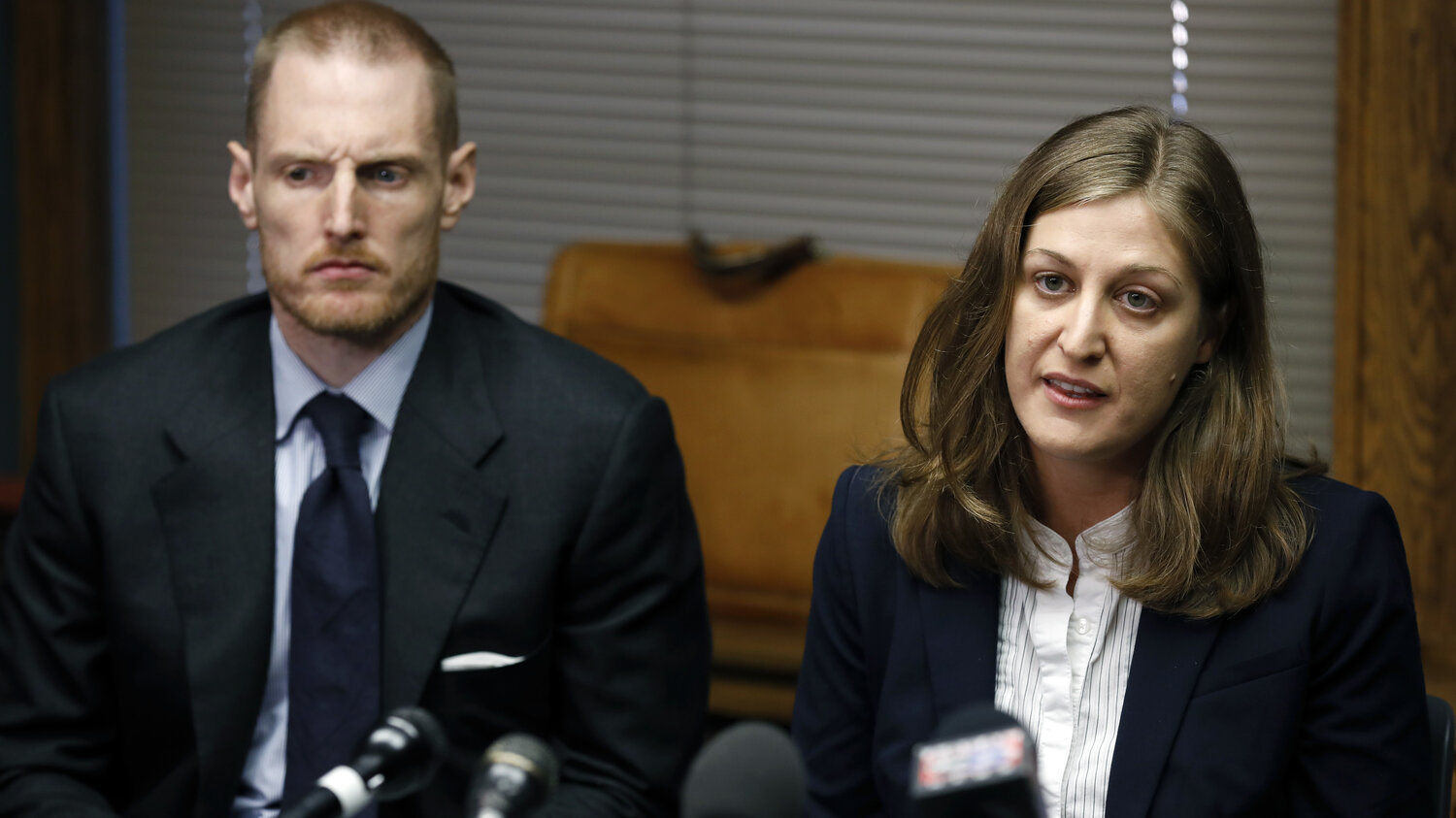
ACLU of Iowa legal director Rita Bettis, shown with Emma Goldman Clinic attorney Sam Jones, said a judge’s decision to temporarily block Iowa’s newly passed abortion law removes uncertainty as a legal challenge to the law proceeds.

Charlie Neibergall/AP


A judge in Iowa has placed a temporary injunction on the state’s “heartbeat law,” one of the most restrictive abortion measures in the United States. The controversial new law bans nearly all abortions once a fetal heartbeat can be detected, at about six weeks of pregnancy, and was slated to take effect July 1.

The law quickly drew a legal challenge from Planned Parenthood and the ACLU of Iowa, which said the measure would make abortions illegal in cases in which women might not have realized they’re pregnant.

“Not only is this law blatantly unconstitutional — it’s extremely harmful to women,” Planned Parenthood said of the lawsuit filed on behalf of Planned Parenthood of the Heartland and the Emma Goldman Clinic in Iowa City.

Katarina Sostaric of Iowa Public Radio reports that “the lawyers for the state agreed to the injunction” to postpone the law while the suit moves forward.

Sostaric adds via Twitter, “Court proceedings to decide the fate of the fetal heartbeat abortion law will take months, if not longer.”

Iowa Gov. Kim Reynolds signed the legislation into law in early May, banning abortions once a fetal heartbeat has been detected. The law provides some exceptions — as in cases of rape or incest, fetal abnormalities or to save the mother’s life.

When she signed the bill, Reynolds issued a statement that reads in part, “I believe that all innocent life is precious and sacred, and as governor, I pledged to do everything in my power to protect it. That is what I am doing today.”

ACLU of Iowa’s legal director, Rita Bettis, lauded the judge’s decision putting the law on hold.

“Women in Iowa don’t have to live with the burden of that uncertainty of knowing whether or not they’ll have abortion rights come July 1,” Bettis said, according to Sostaric.

“In terms of next steps,” Bettis added in a statement to NPR, “the attorneys defending this ban will have to file an answer to our petition, which is their opportunity to respond to our allegations.”

Source: https://www.npr.org/sections/thetwo-way/2018/06/01/616136014/court-puts-temporary-stop-on-iowas-heartbeat-abortion-law

The 15-week abortion ban will only go into effect if a federal court upholds a similar law in Mississippi.

SB 181, sponsored by Democratic state Sen. John Milkovich, prohibits a physician from performing an abortion after 15 weeks’ gestation.
 Joe Raedle/Getty Images


Louisiana’s Democratic Gov. John Bel Edwards on Wednesday signed a bill establishing one of the most extreme abortion bans in the United States, representing the latest victory for anti-choice activists’ coordinated effort to “eradicate Roe.”

SB 181, sponsored by state Sen. John Milkovich (D-Shreveport), prohibits a physician from performing an abortion after 15 weeks’ gestation, except in the case of a medical emergency. While a patient seeking abortion care could not be criminally charged under the law, a doctor who performs an abortion could face up to two years in prison and a $1,000 fine.

While Milkovich praised the governor’s decision to sign the bill, it will only take effect if the U.S. Court of Appeals for the Fifth Circuit upholds a similar Republican-backed law in Mississippi.

Mississippi Gov. Phil Bryant (R) signed a bill criminalizing abortion providers on March 19. That same day, the Center for Reproductive Rights filed a lawsuit challenging the law. U.S. District Court Judge Carlton Reeves on March 20 blocked the law, citing its “dubious constitutionality.”

“The Mississippi law is blatantly unconstitutional,” said Jessica Mason Pieklo, vice president of law and the courts for Rewire.News. “It should be an easy call for the Fifth Circuit to continue to block the measure which would also keep Louisiana’s similarly unconstitutional abortion ban from taking effect.”

Amy Irvin, executive director of the New Orleans Abortion Fund, said in a statement that the Louisiana anti-choice law “blatantly ignores” the longstanding U.S. Supreme Court precedent that guarantees the right to decide whether to end a pregnancy.

“Women are moral agents, and we call on Louisiana legislators to respect a woman’s right to follow her own conscience when making moral decisions,” Irvin said.

“As an ob/gyn in Louisiana, I believe it’s my duty to meet my patients’ needs without judgment,” Dr. Valerie Williams, a board member of Physicians for Reproductive Health, said in a statement. “Not only do restrictive laws make it harder for me to do my job, but this abortion ban is also an assault on patients in my state and would have drastic effects on access to abortion care,” Williams said.

The Louisiana and Mississippi laws appear to be part of a legislative effort by the Alliance Defending Freedom (ADF), a Christian legal advocacy firm classified as an anti-LGBTQ hate group by the Southern Poverty Law Center.

In recent years, lawmakers in several states have passed increasingly severe abortion bans as a “vehicle” to attack constitutional protections for abortion care.

Williams said these types of anti-choice laws “endanger the health of women.”

“For my patients’ sake, I urge the Legislature and Governor Edwards to turn their attention to policies that will improve the health and lives of the people of Louisiana, rather than enacting medically unsound restrictions on abortion,” Williams said.

Source: https://rewire.news/article/2018/05/31/louisianas-bipartisan-abortion-ban-latest-go-roe/

Simon Harris

The Government is to make it illegal to harass patients or protest within a certain distance outside premises providing abortion services.

Sources say Health Minister Simon Harris wants to create exclusion zones, or ‘buffer zones’, to protect patients from abusive behaviour or offensive images.

The proviso will form part of legislation currently being drawn up to introduce abortion in to the State.

The minister is said to be conscious of balancing any such prohibitions with the well- established right to freedom of expression, of which the right to protest is key.

However, during the referendum, the use of graphic imagery, and the over-bearing presence of anti-abortion campaigners outside maternity hospitals and schools caused considerable upset to patients and parents.

Gardaí were called to the Rotunda Maternity Hospital in Dublin at one point when doctors became concerned about the psychological impact such activity was having on women and their families.

Billboards were placed in such a way that the images were unavoidable, and gardaí said they had no authority to order the protesters to leave.

Meanwhile, the Government is also considering subsidising the cost of the GP service for abortion to ensure no woman is disadvantaged because of her economic circumstances.

“Our priority is that no woman is treated differently because of her economic circumstances – part of the reason we legalised abortion is to ensure women no longer turned to the web for abortion pills,” a source told the Irish Independent.

Some GPs have said the cost of an appointment for abortion services would be in excess of the basic fee as it would be more comprehensive and take longer. In addition, women will have to pay for at least two appointments because of the 72-hour mandatory period of reflection. The cost of the process could reach €300, pricing some women out of the service.

But sources also say that while the Department of Health is only beginning negotiations with GPs about how to provide the service, Mr Harris is said to be eager to ensure access to abortion forms part of State-provided healthcare for women, as it is in most EU member states such as Spain, Portugal and Germany. It may even come under the Maternity and Infant Care Scheme, which provides State-supported family doctor and hospital care.

“We want women to have a full range of options open to them, and while some will opt to have a termination after the 72-hour pause period, others will not,” said the source.

Another element of the Government’s thinking is to prevent the creation of an abortion-provider industry by keeping the service strictly within the state system.

“In the UK, private clinics like Marie Stopes are charging €400 for an abortion pill – the department wants to keep that industry out. This is not the UK system, which is much more dated,” said the source.

The Health Products Regulatory Authority (HPRA) is now open to receive applications from drug companies for the license to provide Mifepristone and Misoprostol, the two tablets taken in a medical abortion. This is likely to happen through mutual recognition procedure by a company operating in another EU state.

Source: https://www.independent.ie/irish-news/politics/harris-planning-exclusion-zones-to-stop-protesting-outside-abortion-centres-36963852.html

And because Planned Parenthood couldn’t find any doctors willing to contract with its two Arkansas clinics, which only perform medication abortions, the organization now has to cease offering the procedure in the state.

“Arkansas is now shamefully responsible for being the first state to ban medication abortion. This dangerous law immediately ends access to safe, legal abortion at all but one health center in the state,” Dawn Laguens, Planned Parenthood’s executive vice president, said in a statement. “If that’s not an undue burden, what is?”

While the text of the Arkansas measure doesn’t explicitly outlaw medication abortions, enacting the law constitutes an effective ban on the procedure. Only one abortion clinic, in Little Rock, can still able to offer abortions.

A patient undergoing a medication abortion takes two pills several hours apart. The procedure is overwhelmingly safe: A landmark study on the safety of American abortion from National Academies of Sciences, Engineering, and Medicine found earlier this year that complications arose after medication abortion in “no more than a fraction of a percent of patients.”

In 2015, however, Arkansas lawmakers passed a measure mandating that doctors who hand out abortion-inducing pills maintain a contract with a physician who has hospital admitting privileges, to handle all potential complications. Planned Parenthood, which operates clinics in Fayetteville and Little Rock that offer only medication abortions, reached out to every OB-GYN in the state, according to court records. None were willing to contract with the organization.

Planned Parenthood started notifying patients Tuesday morning that they couldn’t continue with their planned procedures, even if they wanted to or medically needed to.

A federal district court initially blocked Arkansas’ law from going into effect after the judge found the provisions would likely pose an unconstitutional “undue burden” to women in the state who wanted abortions. A three-judge panel for the United States Court of Appeals for the Eighth Circuit then vacated that decision, after the judges found that “the district court failed to make factual findings estimating the number of women burdened by the statute.”

In its appeal to the Supreme Court, Planned Parenthood contended that the court didn’t need that information to issue a preliminary injunction against the law. After all, Supreme Court hadn’t asked for such data in past abortion cases like Whole Woman’s Health v. Hellerstedt — a case in which the justices struck down a Texas abortion restriction similar to Arkansas’.

“This [law] will particularly affect women who strongly prefer medication abortion, including those who find it traumatic to have instruments placed in their vaginas because they are victims of rape, incest, or domestic violence, as well as women for whom medication abortion is medically indicated and safer than surgical abortion,” Planned Parenthood lawyers wrote in their briefs to the Supreme Court.

As usual, the justices didn’t explain why they declined to review the case.

“As Attorney General, I have fully defended this law at every turn and applaud the Supreme Court’s decision against Planned Parenthood today,” Arkansas’ Republican Attorney General Leslie Rutledge said in a statement to the Associated Press. “Protecting the health and well-being of women and the unborn will always be a priority. We are a pro-life state and always will be as long as I am attorney general.”

Planned Parenthood, however, is now scrambling to ask the district court for “emergency relief” from the law.

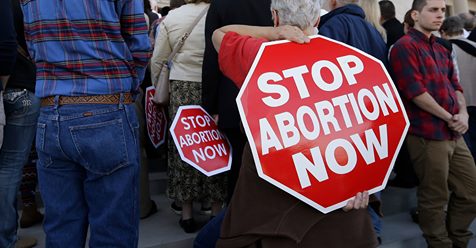
Cover image: A woman carries an anti-abortion sign on her back during a rally at the Arkansas state Capitol in Little Rock, Ark., Sunday, Jan. 18, 2015. (AP Photo/Danny Johnston)

Source: https://news.vice.com/en_us/article/mbk7d3/planned-parenthood-just-had-to-cancel-womens-abortions-in-arkansas-after-supreme-court-decision?utm_source=vicenewsfb

“It would make Arkansas the only state to effectively ban medication abortion,” Planned Parenthood said.

WASHINGTON — The U.S. Supreme Court declined Tuesday to consider whether a controversial Arkansas law restricting access to medication abortions unconstitutionally burdens a woman’s access to abortion services.

By rejecting the legal challenge, the justices allowed a lower court order to lapse that had blocked enforcement of the law, which was passed in 2015. As a result, the restriction will soon take effect.

It applies to medication abortions, which do not require surgery and are available only in the early stages of pregnancy. Patients are given a pill in a doctor’s office and take a second one at home a few days later.

Arkansas Attorney General Leslie Rutledge said in a statement that as the state’s top law enforcement official, “I have fully defended this law at every turn and applaud the Supreme Court’s decision against Planned Parenthood today.”

“Protecting the health and well-being of women and the unborn will always be a priority. We are a pro-life state and always will be as long as I am attorney general,” Rutledge said.

The Arkansas law, the Abortion-Inducing Drugs Safety Act, requires doctors providing medication abortions to have a contract with another doctor, who must have hospital admitting privileges. Its sponsors described it as a safety measure helping to assure that complications arising at home could be quickly treated.

Planned Parenthood sued to block the law, calling it medically unnecessary. In the rare case when complications arise, the group said, patients are at home and typically seek treatment at a hospital emergency room. And it said because its clinics could not find any doctors willing to accept a contract with a Planned Parenthood-affiliated physician, clinics in Little Rock and Fayetteville would stop offering abortion services if the law went into effect.

“Arkansas is now shamefully responsible for being the first state to ban medication abortion. This dangerous law also immediately ends access to safe, legal abortion at all but one health center in the state,” Dawn Laguens, Planned Parenthood’s executive vice president, said in a statement. “If that’s not an undue burden, what is? This law cannot and must not stand. We will not stop fighting for every person’s right to access safe, legal abortion.”

The state countered that the procedure is not common, with just 14 percent of Arkansas abortion patients opting for a medication abortion, and that those who seek it are more likely to experience complications.

Arkansas also called the law “a carefully targeted response to medication abortion’s unique risks profile” and said it would impose a system similar to one adopted earlier by Texas which required abortion providers to have a working arrangement with a doctor who had hospital admitting privileges.

A federal judge in Little Rock blocked enforcement of the law, finding it similar to a Texas law declared unconstitutional by the Supreme Court two years ago. It required doctors providing abortion services to have admitting privileges at nearby hospitals.

But the Eighth Circuit Court of Appeals ordered the lower court’s stay to be lifted and sent the case back to the trial judge for further proceedings to find an estimate of how many women would be burdened by the contract physician requirement. The appeals court allowed the stay of enforcement to remain in effect until the Supreme Court decided whether to hear the case.

Source: https://www.nbcnews.com/politics/supreme-court/supreme-court-declines-hear-arkansas-abortion-fight-allowing-controversial-law-n878151

As legislators around the nation mount challenges to curtail the landmark 1973 Roe v. Wade decision legalizing abortion in the U.S., advocates here are pushing the state to stand up for women’s rights and choice.

Four months after the Massachusetts Senate unanimously agreed to repeal “archaic” laws targeting women’s access to health care, the NASTY Women Act is still waiting to be called for a vote in the state house.

An Act Negating Archaic Statutes Targeting Young Women (S 2260) is also known as the “NASTY Women Act” in reference to Republican President Donald Trump taunting Democrat Hillary Clinton in the 2016 presidential election cycle. The measure, sponsored by state Acting Senate President Harriette L. Chandler (D-Worcester), would repeal three antiquated laws previously overturned by state and federal courts so they couldn’t be used in practice: a 19th-century ban on all abortions, a state requirement that all non-emergent abortions after the 12th week of pregnancy be performed in a hospital, and a ban on contraception use for unmarried women.

“We are living in a time when leaders at the highest levels of power in our country are demeaning women and attempting to roll back their rights,” Chandler said in a statement after the bill passed in the state Senate on Jan. 25. “Massachusetts must affirm its commitment to protecting women’s rights to essential health care and expunge these dangerous laws.”

As legislators around the nation mount challenges to curtail the landmark 1973 Roe v. Wade decision legalizing abortion in the U.S., advocates here are pushing the state to stand up for women’s rights and choice.

“We don’t believe Massachusetts can truly lead the nation as a beacon of reproductive freedom unless it gets archaic statues off the books that could be used to limit access to abortion care if Roe fell,” Rebecca Hart Holder, executive director of NARAL Pro-Choice Massachusetts, told Rewire.News on Wednesday.

S 2260 is currently under review in the house Ways and Means Committee, chair and state Rep. Jeffrey Sánchez (D-Boston) told Rewire.News in an emailed statement. If passed there, it must then be called up for a vote on the state house floor.

Sanchez did not comment on the current legislation but noted that the state house has been proactive on other legislation related to women’s rights and reproductive health.

Often the first in the nation to pass progressive measures like the legalization of same-sex marriage, Massachusetts recently passed new laws protecting pregnant women and new mothersequal pay, and free birth control.

Holder said the time is right to continue the momentum by passing the NASTY Women Act in 2018. “We think there is no better time to send a statement about the value of women to the Commonwealth of Massachusetts than by taking this antiquated law off the books,” she said

Advocates warn it will not be an easy vote as several Democrats are reluctant to discuss abortion issues, much like in neighboring Rhode Island, where some Democratic leaders remain staunchly anti-abortion.

Rhode Island House Speaker Nicholas Mattiello (D-Cranston) recently said the push to codify abortion rights into state law in the Ocean State, is “irrelevant.”

But already the Guttmacher Institute has counted 347 measures to restrict access to either abortion or contraception in 37 states during the first quarter of 2018, and ten abortion restrictions have been adopted in five states this year.

Thomas Koch, the mayor of Quincy, Massachusetts, and a staunch Catholic, recently left the Democratic party over the abortion issue, the Patriot Ledger reported.

As Trump continues to wage war on reproductive rights, advocates warn that even states considered more liberal like Massachusetts have to be vigilant about laws that could be deployed to outlaw abortion if Roe v. Wade is overturned.

We all know that states across the country have passed more than 1,000 laws restricting access to abortion since 1973. These restrictions in states like Texas and Iowa often capture the media’s attention, but what often goes unnoticed are the antiquated, pre-Roe laws that even many of our ‘blue’ states still have on the books that criminalize abortion, as is the case in Massachusetts and New York. In both states, these laws would be deployed to push abortion out of reach if Roe v. Wade gets eroded. Indeed, these laws are already being used to criminalize women who self-manage their abortions,” Andrea Miller, president of the National Institute for Reproductive Health said to Rewire.News in an emailed statement.

“In both Massachusetts and New York, there are bills pending in the legislatures to change these antiquated laws. Those bills should be at the top of legislators’ list of priorities,” added Miller.

Source: https://rewire.news/article/2018/05/25/will-massachusetts-democrats-undo-states-archaic-reproductive-rights-laws/