Women who were denied an abortion are three times more likely to be unemployed than women who were able to access one.
Many women were already struggling financially when they sought abortion care—half of those in the study had incomes below the federal poverty level and three-quarters reported not having enough money to pay for basic living expenses. John Moore/Getty Images
When she heard a woman who ran an abortion clinic wonder what happened to those turned away, researcher Diana Greene Foster embarked on a landmark study comparing the lives of women who got an abortion with those who were “turned away” and forced to carry to term.
The latest findings of Advancing New Standards in Reproductive Health’s (ANSIRH) longitudinal “Turnaway Study,” which recruited participants from 30 abortion facilities across the United States for nearly 8,000 interviews between 2008 and 2015,indicate that limiting women’s access to abortion increases their chances of poverty, unemployment, and dependence on public assistance programs.The research, published last month in the American Journal of Public Health, found that those denied abortion access because they were too far along in a pregnancywere nearly four times as likely to be below the federal poverty level compared to those who received care.
Take the case of one 19-year-old woman with a 9-month-old son who was turned away from a Midwestern clinic. She was working full time as a housekeeper but wanted to go to school to become a registered nurse, according to a case study shared by Foster, professor and director of research at ANSIRH, a collaborative research group at the University of California, San Francisco.
When she was first interviewed, the woman was receiving public assistance through Temporary Assistance for Needy Families (TANF), Supplemental Nutrition Assistance Program (SNAP), Women, Infants and Children (WIC), and Medicaid. She had been receiving treatment for depression, obsessive-compulsive disorder, and post-traumatic stress disorder that she said stemmed from being molested and abused in her youth. She said she did not want to continue her pregnancy because she couldn’t afford it. In a year, she expected her life would be harder with a baby as she tried to go to school.
Three weeks after her son was born, she was 20 and living with her boyfriend and two children in a duplex. She had a monthlyhousehold income of $900 that she said met her basic living needs “most of the time.” She wasn’t working and was attending technical school full time, but wasn’t sure when she would graduate. She was not being treated for any of her mental health conditions, though she had thoughts of ending her life and said her problems made it “very difficult” for her to livenormally. She no longer wished she could havehad an abortion but said she felt “disappointed” about both becoming pregnant and being turned away from the clinic.
She was interviewed again a year later. By then, she had begun working full time after finding daycare. But she was homeless with her two children, had zero income the previous month, and had not received the $1,000 in child support for which she was eligible. She did not have health insurance and had been to the doctor just once in the past six months for a birth control shot.
Her story is just one example of how those turned away after seeking abortion care can become further trapped in poverty. Being denied a wanted abortion led some women and their families to become even more financially insecure.
“If you ask women why they want an abortion, the most common reasons have to do with finances. They feel they can’t afford to have a child, and it’s in the economic outcomes that we see the biggest difference between a woman who has received and a woman who was denied an abortion,” Foster told Rewire.
Foster’s report indicates that many women were already struggling financially when they sought abortion care—half had incomes below the federal poverty level and three-quarters reported not having enough money to cover basic living expenses.
Six months after being denied an abortion, women were three times more likely to be unemployed than women who were able to access abortion care. They were also more likely to be enrolled in welfare programs.
The study’s findings match what women seeking abortions say they fear, Foster said—that the denial of abortion care leads tofurther economic insecurity.
Prior to this study, there was little comparative research on abortion that went beyond looking at women’s mental healthor drug and alcohol use. Comparisons of women who had abortions to women who did not seek one andchose to continue a pregnancy were inherently biased, the authors noted.
The study comes as access to abortion care faces increasing hurdles in the United States, Jenny Abrams, a doctor in Seattle and a fellow with Physicians for Reproductive Health, told Rewire.
“This study shows that restrictive legislation really harms women and children’s health, and that the people who should be making those decisions are the patients—the women,” she said. “Restricting someone’s capacity to move up or out of poverty is a huge implication.”
The findings were not surprising to Abrams and mirror what she sees in her own practice as a family medicine doctor and abortion provider. “I often see women who already have large families who feel they just can’t take care of one more kid,” she said. “I also see many low-income families with lots of kids and [I see] the strain it puts on their parents to work multiple jobs and do everything they can to stay afloat.”
Given the false rhetoric around abortion in politics and the bills being pushed denying people abortion access, Foster said it is notable how there is a lot of talk of fetuses but that women are almost absent from the conversation.
“If you only think of abortion as a political issue then you can forget that there are real women making decisions about their real lives, that they are balancing a lot of lives—the children they already have and the children they want to have.”
An estimated 40,000 Irish people living abroad are eligible to vote in a planned referendum on abortion.
Campaigners are urging emigrants to return home to cast their ballot and have their say on whether to change restrictive laws on termination of pregnancy.
The Irish Government backed proposals to hold a referendum on abortion, expected to be held in May.
The London-Irish Abortion Rights Campaign has kicked off its #HomeToVote social media drive.
We’re teaming up with our #repealthe8th colleagues from around the world for #HomeToVote. We want as many eligible voters as possible to make the journey back to Ireland for the referendum. More details coming very soon. Stay tuned. #trustwomen#ldnirish4choice
Dubliner Mary Jane Fox, who moved to the UK at the beginning of the year, has already pledged to make the journey home.
“Even though I’m fresh off the boat in London, I’ll be making the journey and encouraging everyone I know to go back too,” Ms Fox said.
“It is ironic that so many Irish women are forced to make the same trip in reverse to have an abortion.
“I want to travel home to make sure this comes to an end.”
The organisers said they want to emulate the surge in interest by emigrants who came back to Ireland to vote in support of gay marriage reform in May 2015.
The Home to Vote campaign aims to encourage any citizen living abroad for less than 18 months to return to vote in favour of repealing the Eighth Amendment of the Constitution, which imposes strict limitations on abortion in Irish law.
More than 30,800 Irish people emigrated in the 12 months to the end of April 2017, according to the latest official figures.
It is estimated a further 20,000 emigrated in the second half of last year.
Taoiseach Leo Varadkar outlined last week that voters would be asked whether they wanted to repeal the controversial amendment and replace it with new wording to allow the Dáil to legislate on abortion in the future.
Terminations are only allowed in the Republic when the life of the mother is at risk and the maximum penalty for accessing an illegal abortion is 14 years in prison.
Last December, a report by a specially convened parliamentary committee found the Eighth Amendment was not fit for purpose and should be repealed.
That followed recommendations from members of Ireland’s Citizens’ Assembly to liberalise the law on terminations.
The committee also recommended abortion be available up to 12 weeks of pregnancy without a woman having to explain her decision.
For years, anti-abortion groups have pushed pseudoscience that maintains doctors can reverse a medication-induced abortion. But the “abortion reversal” technique is a scientifically unproven treatment disavowed by the medical community. Yet, that didn’t stop a top Trump administration official from suggesting an undocumented teen undergo the so-called treatment.
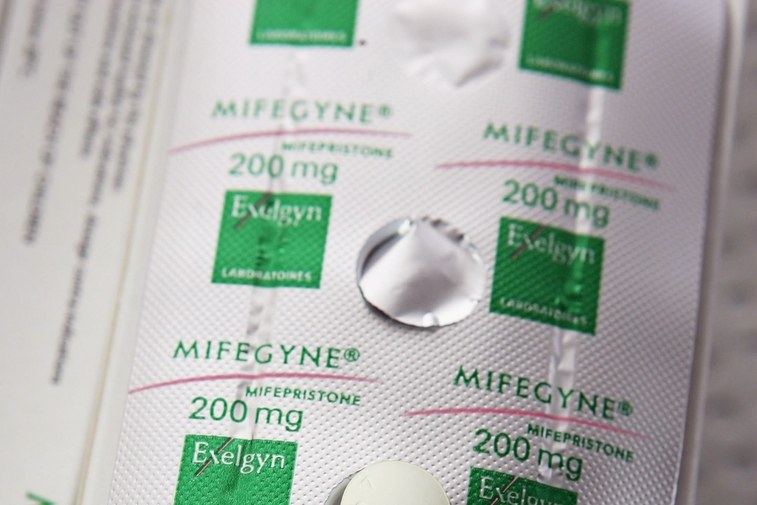
On January 31, Vice Newsbroke the story that abortion opponent Scott Lloyd, director of the Office of Refugee Resettlement — the agency that oversees undocumented youth who come to the United States unattended — had talked with staffers about reversing a medication abortion undergone by a pregnant teen in their custody. Medication abortions consist of taking two pills — the first is mifepristone, and the second is misoprostol. Together, these medications work to block progesterone, a hormone you need to stay pregnant. When people talk about reversing this process, they seem to be talking about intervening after someone has taken mifepristone, but not yet misoprostol. The teen in question was ultimately allowed to complete the abortion, according to Vice News, but the situation has raised concerns among reproductive health advocates and health care providers about how far a disavowed theory on abortion has infiltrated government agencies.
“It’s very concerning that they would consider using an unproven theory in this situation,” Dr. Daniel Grossman, director of Advancing New Standards in Reproductive Health, tells Teen Vogue. “How could this young woman make an informed choice about this treatment when she’s being told about [it] by the people holding her in custody? There’s no way that this could not be coercive.”
The myth of the “abortion reversal” relies heavily on pseudoscience championed by noted anti-choice physician Dr. George Delgado. In 2012, Delgado published a case study in the Annals of Pharmacotherapy journal that claimed four out of six women who took mifepristone — the first pill in the two-pill medication abortion regimen — were able to continue their pregnancies after getting a high dosage shot of progesterone, the sex hormone responsible for thickening the uterine lining and making it friendly to pregnancy. But the study did not comply with the minimal standards for medical research, such as using a control group or applying for ethical approval, according to the Guttmacher Institute.
On top of that, a 2015 systematic review of existing literature published in the journal Contraceptionlargely discredits Delgado’s study, concluding that there is “insufficient” scientific research to suggest medication abortions can be reversed by injecting progesterone as opposed to not taking the second pill in the regimen.
“There is no evidence that any kind of treatment will make it more likely for a woman to continue a pregnancy,” says Grossman, who authored of the Contraception study.
The “abortion reversal” myth is also rejected by the wider medical community. Three years ago, the American Congress of Obstetricians and Gynecologists strongly came out against claims that a person can reverse a medication abortion, citing in a one-page memo the dearth of reliable research as the basis for their position. The professional association also advised against administering such a high progesterone dose because, “while generally well tolerated,” the hormone can lead to “significant cardiovascular, nervous system and endocrine adverse reactions as well as other side effects.”
“This is not the kind of treatment that is supported at all by any major medical group,” says Chicago-based OB/GYN Dr. Ben Brown, a member of ACOG and Physicians for Reproductive Health, a doctor-led national advocacy group. “It’s not even treatment. It’s just not a part of our medical care.”
So why does the “abortion reversal” myth continue to persist, then? Grossman suggests it’s because anti-abortion activists can use the so-called technique as a way to build what’s been dubbed a “narrative of regret” — and therefore inspire legislators to introduce bills that severely weaken abortion rights.
“It allows them the opportunity to talk about how women regret their decisions, how they change their minds, how they are forced too quickly into having an abortion by their providers,” Grossman tells Teen Vogue. “None of which is really supported by evidence.”
Quite the opposite is true, actually: Research shows that most people don’t regret having an abortion. A 2015 study published in the journal PLoS One found that 95% of U.S. women surveyed who underwent an abortion still felt they made the right decision a week after the procedure; the same percentage held true three years later. Any negative emotions women did experience around their abortions were more associated with community abortion stigma and lack of social support, according to the study. But those negative feelings eventually subsided over time. Additionally, in the “rare” situation that someone did wish to discontinue the abortion process after taking just the first part of the abortion pill, the ACOG notes “doing nothing and waiting to see what happens is just as effective as intervening with a course of progesterone.”
Yet, despite the lack of credible evidence, conservative lawmakers continue to push legislation that would legitimize this idea of abortion reversal. In 2015, Arkansas became the first state to require, by law, that doctors inform people seeking medication abortions that the procedure could be reversed, according to the Guttmacher Institute. Arizona and South Dakota followed suit, passing their own mandatory abortion reversal counseling laws. Arizona’s law was challenged in court and eventually repealed in 2016.
Some state legislatures have found other ways to restrict access to medication abortion. According to the Guttmacher Institute, 19 states have implemented laws requiring a clinician to be physically present while administering abortion medication, precluding the use of telemedicine, even though research shows that telemedicine is as safe as visiting your doctor.
These pieces of legislation are “not only an affront to a woman’s decision-making ability, but it interferes with the doctor-patient relationship,” says Vicki Saporta, president and CEO of the National Abortion Federation (NAF). “The personal ideologies of anti-choice politicians should not trump credible scientific evidence and the expertise of health care providers.”
Not all states have been successful in passing “abortion reversal” bills, though. The same year Arkansas enacted its law, anti-choice lawmakers in Louisiana planned to introduce similar legislation that would mandate counseling on medication abortion “reversal,” according to Rewire. But a year later, state lawmakers passed a House resolution ordering the Louisiana Department of Health to investigate claims that the medication abortions can be reversed.
The Louisiana department dealt anti-abortion activists a significant blow in April 2017: A 2017 Louisiana Office of Public Health report found “neither sufficient evidence nor a scientific basis to conclude that the effects of an abortion induced with drugs or chemicals can be reversed.”
In other words, “There’s no other medication that can stop [the abortion pill] from working,” Brown tells Teen Vogue.
In his latest column, Brooks tries to barter essential health benefits for more votes. But he fundamentally misunderstands his subject.
Photo illustration by Slate. Photo by Bryan Bedder/Getty Images for The New Yorker.
To: David Brooks From: One of Many Democratic Women Re: Comprehensive Medical Care for half the population
Dear Mr. Brooks,
You are a scholar. I have read your commentary for years and while I often disagree with you, I respect your civility and academic perspective. However, as a woman, an OB-GYN, and a mother, I read your column, “The Abortion Memo,” with great dismay. Though you pride yourself on your intellectualism, your article shows a genuine lack of ability to differentiate between far-right buzzwords that are little more than reproductive dog whistles and the reality of women’s medical care. At the heart of it, you distill the choice issue down to a numbers game: If only the Democrats threw away the concerns of the women who needed second trimester terminations, they could “win” more. Haven’t we heard that somewhere before?
I’m disappointed you even brought up “ninth month” terminations. That’s not a medical procedure. It’s simply not an issue. No one wakes up at 36 weeks of pregnancy and thinks, “Let’s have an abortion today.” You are propagating a false issue and that is beneath you.
Yes, most terminations are in the first trimester. In fact, only 7 percent of abortions are after 14 weeks, and less than 2 percent are after 20 weeks. Far and away, these women and families are ending loved and wanted pregnancies due to grave health concerns for either mother or fetus. I assure you, no one wants to have a second-trimester abortion. I certainly didn’t. But in 2009, faced with the alternative of my loved son Thomas horribly suffocating upon delivery, I chose to instead compassionately end the pregnancy. I assume, Mr. Brooks, that you have not witnessed the death of a child whose lungs aren’t developed. It is agonizing. If you had, you might realize that these procedures are intrauterine palliative care and should be viewed as such.
“Late term” abortion is a wastebasket term used by the anti-choice zealots to describe a spectrum of procedures and needs. It is nonspecific and conjures up the worst images, likely on purpose. Most procedures beyond 20 weeks do occur before 24 weeks, the long-standing threshold for viability, but most of these babies would not be viable if they reached term anyway. The reason there is no comfortable upper threshold for ending a pregnancy is that lethal anomalies can be discovered late in a pregnancy. Should a mother be condemned to carry her anencephalic fetus (which would be born without any brain tissue but a brainstem) to term because she received late prenatal care? What is the argument for that?
You distill this issue to a cold statistical strategy. Second-trimester abortions make people uncomfortable. Ultrasound images of babies are very cute. Polls show people love babies. Why not sacrifice the minority of women and families who need these services so we can “win” on other issues?
But only men are spared reproductive complications. For you sir, in your privilege of maleness, whiteness, and economic comfort, this can be an dispassionate intellectual discussion. But for millions like me, it is devastatingly personal. Maternal medical and fetal reasons for these procedures cut across all lines of economics, race, religion, and state. Reproduction does not play favorites. Absolutely any woman can walk this path of grief, and our medical care should not be negotiable, nor should it be dependent on the state in which one lives.
You argue that because some states may maintain legality, it would be acceptable to restrict care in other states. My ability to treat my patients would forever be at the whim of the current state legislature. Rich women would be able to travel, but most women would not.
Multi-day procedures across state lines require money for travel, hotels, and time off of work. Current TRAP laws show what happens with geographic disparity: an increase in maternal mortality. Women deserve more than medical care dictated by ZIP code.
In fact, Mr. Brooks, it is Donald Trump who has normalized this attitude of throwing away the needs of a minority for the comfort of the majority. We are asked to tolerate racism in exchange for purported “economic benefits.” But the Democratic Party is about standing up for what is right because those whose voices are quieter still have needs, and they are no less relevant. We should not sell out women. We should not sell out immigrants. We should not sell out racial minorities. We should not sell out those in poverty. Democrats are, and should continue to be, the party of the moral high ground—who fight tooth and nail to do what is right—even when it is not easy. Even when it makes “winning” harder.
“This bill attempts to make an extreme law—one that does not exist anywhere else in the country, and has already been declared to likely be found unconstitutional—even more extreme.”
Three dozen South Dakota Republican lawmakers have signed onto legislation calling for a “mandatory pregnancy help center consultation” prior to the common medical procedure. Saul Loeb/AFP/Getty Images
Anti-choice politicians in South Dakota are attacking the state’s last abortion clinic to score political points at taxpayer expense, according to reproductive rights advocates.
At the center of the controversy is state-directed informed consent counseling required before a person can receive abortion care—counseling currently offered at a Planned Parenthood clinic.
Three dozen South Dakota Republican lawmakers have signed onto legislation calling for a “mandatory pregnancy help center consultation” prior to the common medical procedure. A state Senate committee advanced the bill on Friday, and it could come for a floor vote Tuesday, according to the Rapid City Journal.
South Dakota lawmakers passed a similar bill in 2011 that included a 72-hour forced waiting period, one of the longest in the United States. Attorneys for Planned Parenthood and the American Civil Liberties Union sued, and a federal judge blocked the provision pertaining to crisis pregnancy centers (CPCs), or fake clinics.
Political observers believe the new GOP bill, which targets a Planned Parenthood clinic in Sioux Falls—the state’s sole abortion clinic—amounts to an election year stunt while the court case is ongoing. Planned Parenthood is mentioned in the bill 14 times, and the state-mandated counseling it performs is described as hostile and “unreliable.”
“The vast majority of this bill has no legal effect and is nothing more than political grandstanding,” Heather Smith, executive director of the American Civil Liberties Union of South Dakota, said in a statement. “South Dakota politicians are not only attacking Planned Parenthood, but also the women seeking their vital services.”
South Dakota law bans abortion after 20 weeks gestation, restricts insurance coverage of abortion care, requires parental notification, and would outlaw abortion if Roe v Wade were overturned, according to the Guttmacher Institute.
Under the bill, counselors at fake clinics would discuss “the physical or psychological risks to a woman posed by an abortion.” Patients would be told a fetus is “a whole, separate, unique, living human being.”
A 2016 study by Rutgers University of informed consent material in nearly two dozen states found medical inaccuracies in nearly one-third of state-mandated counseling materials. The authors found nearly a quarter of the information in South Dakota’s informed consent pamphlet was medically inaccurate.
In enjoining provisions of the 2011 law, a federal judge warned that the court must decide whether the fake clinic counseling requirement might “constitute a substantial obstacle that will deter women from exercising their constitutional right to obtain an abortion.”
“This is all about forcing women to visit biased centers whose purpose is to provide ideological and non-medical information in an attempt to interfere in a woman’s decision to have an abortion,” Sarah Stoesz, president and CEO of Planned Parenthood Minnesota, North Dakota, South Dakota, told Rewire.
However, the Republican backers of the new legislation argue that fake clinics are best equipped to counsel those seeking abortion care. One of the chief architects of the bill, attorney Harold Cassidy, said Planned Parenthood has “no expertise to help the woman make that decision. They’re there to give abortions, that’s it,” as SDPB radio reported.
The head of the Planned Parenthood affiliate said it adheres to state laws, and a twice-yearly audit by the South Dakota Department of Public Health has consistently found the clinic in compliance.
“This bill attempts to make an extreme law—one that does not exist anywhere else in the country, and has already been declared likely unconstitutional—even more extreme,” said Planned Parenthood CEO Stoesz.“This will only add to the current costs of litigation for South Dakota.”
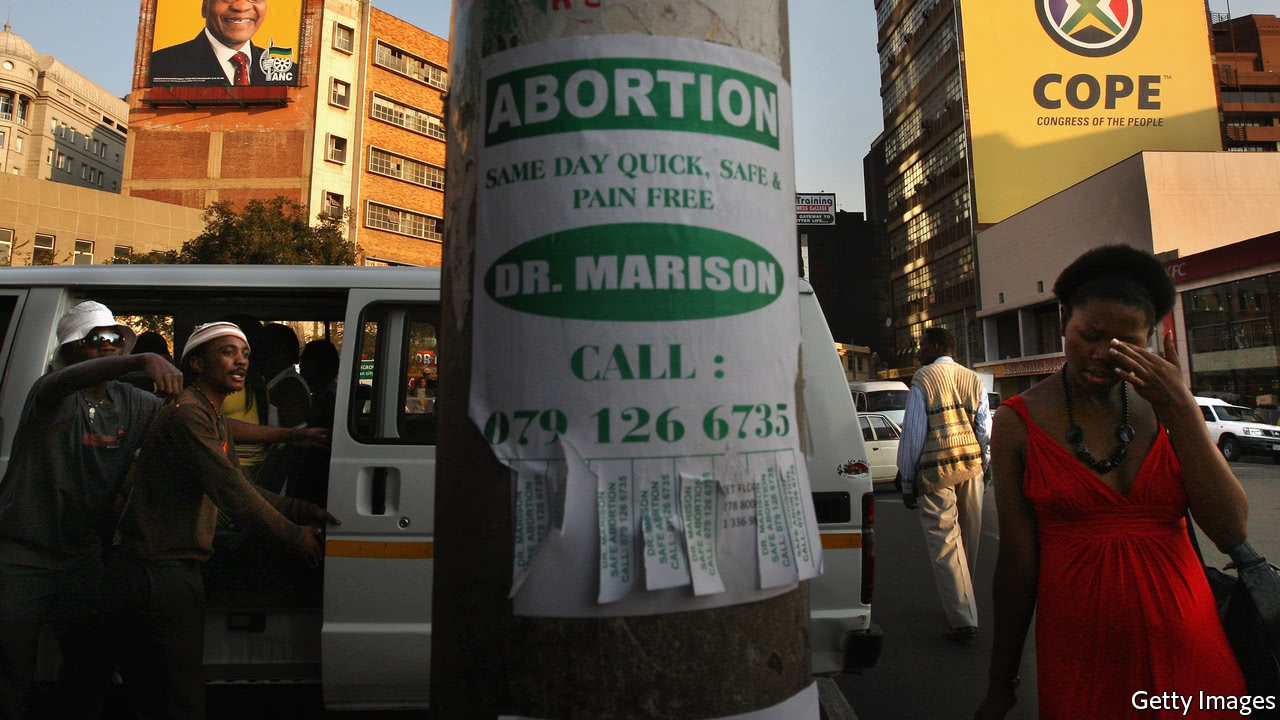
NEARLY every lamp post, rubbish bin and brick wall in Johannesburg’s downtown is plastered with garish ads offering abortions that are “quick, safe and pain-free”, and just a phone call away. So when Busi, a student, unintentionally fell pregnant while far from home in her first year of university, calling a number from a lamp-post ad seemed the easiest fix. Fear crept in when the “doctor” handed her pills in a shabby room. “I was too ashamed to tell my family,” she recalls. “It could have gone so wrong.”
Abortion, banned during apartheid, was legalised in 1996, partly to stop the dangerous backroom procedures that were taking the lives of more than 400 women a year. But many South African women still find themselves in the shady backrooms and unlicensed clinics advertised on the streets. About half of all abortions happen outside proper hospitals and clinics. “This tells you there is definitely something wrong,” says Shenilla Mohamed, the executive director of Amnesty International, a campaign group, in South Africa. “People don’t feel safe to go to designated health-care facilities.”
Although South Africa’s laws and constitution are progressive, social attitudes do not always match. Women going for abortions worry they will be criticised by nurses and doctors, many of whom treat them rudely. Some say they are told they will go to hell.
Clinicians who perform abortions are sometimes shunned by colleagues and neighbours. Dr Eddie Mhlanga, who specialises in obstetrics and gynaecology, used to think that abortion should not be legalised. It took the death of a close friend from a botched illicit procedure to change his mind. “I opened her up and found her womb was rotten,” he says. Now he is a vocal advocate for safe abortion, but has faced criticism even from officials in the health department. One bigwig said: “Now I am shaking the hand of one who is dripping in blood.”
Some health professionals working for the state refuse to offer abortion services because they are against it for personal and religious reasons. It can therefore be hard to find a place willing to perform a legal abortion, especially in rural areas. Only 264 of 3,880 health facilities in the country are licensed to provide them, according to research by Amnesty International. Moreover, surveys show that a great many women think that abortion is still illegal in South Africa.
For dodgy providers, this shortage is a business opportunity. Some approach women waiting in queues outside state-run clinics. And for many women who brave the queues, long waiting lists mean that by the time they are seen they are too far along in their pregnancies to have a legal procedure (13 weeks is the usual limit unless there are special circumstances).
“The vultures are waiting for them at the gates of the hospital,” says one nurse. Visits to quacks can end very badly. According to the government, “septic abortion” is a major cause of death for women in South Africa, alongside cervical cancer and diseases related to AIDS. Those who break laws are rarely held to account.
Instead of risking dangerous backstreet abortions, some women have babies in secret and then dump them. A charity in Johannesburg runs a “baby bin” where women can leave unwanted children in a safe place.
“We’ve got wonderful laws, a wonderful constitution,” says Edwin Cameron, a Constitutional Court judge. “But at the level of practice, we fall desperately short.”
Imagine you’ve just found out you are unexpectedly pregnant and don’t know what to do. You decide to go to a clinic for help; you’d like to talk through your options with a health care professional. You search online and find a clinic that sounds perfect, but realize shortly after you get there that you’ve been deceived.
Instead of providing you with supportive, affirming health care services based on science and evidence, the clinic personnel try to shame and scare you away from choosing abortion. This scenario is familiar to too many pregnant women across the country.
This spring, the U.S. Supreme Court will hear National Institute of Family and Life Advocates (NIFLA) v. Becerra, a challenge by abortion opponents to a California law that requires unlicensed centers in the state to tell the truth about their licensure.The law also requires clinics that offer pregnancy-related care to provide women with factual information about the availability of free and low-cost government health care services, including contraception, prenatal care and abortion care.
The centers at issue in NIFLA v. Becerra — often called “crisis pregnancy centers” or CPCs — are anti-abortion organizations posing as comprehensive health care clinics, many of which intentionally lie to and mislead women to dissuade them from obtaining abortion care.
This is the first time that the Supreme Court will weigh in on a law that curbs the harmful practices of CPCs.
As the court prepares to hear this important case, we’re calling out four key ways that fake clinics harm women.
1. Fake clinics deceive women
The deception starts before women walk through the door, as many of these clinics use online advertisements in which they imply that they offer comprehensive reproductive health services. In addition, fake clinics are often camouflaged as health care facilities and located near abortion clinics in an effort to lure women away from facilities that can actually meet their needs. Additionally, some states provide free advertising for fake clinics by including them in materials that doctors are required to give to women.
The deception often continues once a woman enters a fake clinic, which may be designed to mimic a comprehensive health center, complete with ultrasound rooms and urine collection procedures.
2. Fake clinics mislead women
When a woman enters a fake clinic for any type of service, she may be forced to undergo biased counseling or religious seminars. Often, she hears false claims about fetal development and the health effects and safety of abortion care (which is one of the safest medical procedures in the United States). Personnel at fake clinics regularly peddle lies that have been repeatedly discredited by extensive scientific research and the country’s most prominent medical associations.
During an ultrasound, staff and volunteers at fake clinics sometimes compound the dishonesty by presenting inaccurate medical information, providing erroneous readings or even misrepresenting how far along a woman is in her pregnancy.
3. Fake clinics shame women
Some staff at fake clinics use cruel strategies to try to emotionally manipulate women, even describing their attempts to “protect” women from abortion as similar to how “an adult tells a child not to touch a hot stove.”
They may pray for the woman and fetus or ask for an invitation to the baby shower while administering an ultrasound. A 2015 investigative report by Cosmopolitan describes a needlepoint in a center bathroom that reads, “You will live with the guilt for the rest of your life knowing you made the choice to kill the precious life God placed in your womb for you to love.”
4. Fake clinics delay abortion care
In an effort to delay abortion care, some fake clinic personnel inflate the miscarriage rate to make a woman believe that her pregnancy will end before she has to decide about abortion. Convincing women who are considering abortion to wait often means the cost of the care increases while the ability to access it decreases.
In addition, the (often untrained) people administering ultrasounds at these centers may misrepresent gestational stage, either leading women to believe they have more time to obtain abortion care than they do or falsely suggesting they are too far along to access care.
Deceiving, misleading, shaming or delaying care for pregnant women is just plain wrong. We urge the Supreme Court to make clear that women have the right to transparent, truthful information from entities claiming to provide health care services.
The Senate GOP’s unconstitutional 20-week ban was always destined to fail, but anti-choice advocates and their allies in Congress pushed ahead for the sake of politics.
So far, McConnell has held firm against pressure from Trump to end the filibuster altogether, even though a simple majority would enable the 20-week abortion ban to become law. Alex Wong/Getty Images
Monday evening’s failed vote on an unconstitutional 20-week abortion ban was part of a coordinated effort between congressional Republicans and their far-right base to try to set up vulnerable Democrats in red states to lose in the 2018 midterm elections. Their strategy, however, could just as well backfire.
A combination of new polling, GOP vulnerabilities, and longstanding legislative and judicial backstops reveals a political reality at odds with the wisdom of these tactics.
Legislation without unanimous consent requires an initial 60 votes in the U.S. Senate to bypass the threat of a filibuster, or unlimited debate on an issue. (Remember Democratic Sen. Chris Murphy and his 15-hour hold over the Senate floor over gun control back in 2016? That was a filibuster.)
Senate Majority Leader Mitch McConnell (R-KY) no doubt knew he didn’t have enough votes to pass a 20-week abortion ban, as was the case in 2015 when he brought a similar ban to the floor even though President Barack Obama had threatened to veto it. Once again, the vote was always meant to be primarily about politics, not policy—this time forcing several Senate Democrats from red states to go on the record about an issue that abortion foes have done their best to vilify.
Under a GOP-held U.S. House of Representatives where only a simple majority of votesis needed to pass “shock value” abortion bills, and a Trump administration where unelected bureaucrats dictate restrictions on abortion, birth control, and LGBTQ health care, anti-choice Republicans and their allies know how much more they could achieve with absolute control over the Senate. So they’re trying to force out enough Democrats to secure a GOP supermajority in the Senate come this November.
And McConnell was willing to do his part.
“We’ve talked to him many times about this,” Susan B. Anthony (SBA) List President Marjorie Dannenfelser told Rewire in an interview shortly before House Republicans passed a related 20-week ban last October. McConnell, she said, “has no problem bringing it up on the floor as an important thing to get people on record for, to have the conversation, to build the vote ’til next time.”
Abortion opponents are hoping that when the bill comes up next time, Republicans will have increased their Senate majority and ended the legislative firewall between a nationwide prohibition on legal abortion care at 20 weeks, further eroding access as they work to do away with it entirely.
This scenario would require the elusive Senate GOP supermajority, or close to it. Republicans hold 51 seats in the chamber, but two of those belong to Sens. Susan Collins (ME) and Lisa Murkowski (AK), who have mixed records on reproductive rights, though so far they’ve been reliable “no” votes on 20-week bans. Democrats, meanwhile, have 47 seats and can depend on favorable reproductive rights votes from the two Independents who caucus with them. When it comes to the 20-week ban, Democrats lose three members: Sens. Joe Manchin (WV), Joe Donnelly (IN), and Bob Casey (PA). All three backed the latest version of the legislation.
Within minutes of Monday’s vote, SBA List was at work to unseat Senate Democrats who had opposed it. The organization announced ad campaigns against four of them: Sens. Sherrod Brown (OH), Claire McCaskill (MO), Heidi Heitkamp (ND), and Jon Tester (MT)—all from states that President Trump won.
“Those senators who voted against this life-saving bill need to know that we saw what they did and will fight to hold them accountable—and defeat them,” Dannenfelser wrote in a Tuesday email soliciting donations from supporters.
Political Pitfalls Mar Anti-ChoiceStrategy
Though anti-choice advocates hope that highlighting the abortion rights positions of vulnerable Democrats may help them secure an allied Senate GOP supermajority, recent polling indicates that Democratsacross the boardcould, in fact, benefit at the ballot box from embracing abortion rights. That’s because according to findings released earlier this month by the nonpartisanresearch firm PerryUndem, “Republicans have more voters ‘outside the tent,’” or with different positions on the issue, than Democrats.
Per the polling, 71 percent of Democrats and 31 percent of Republicans are more likely to vote for candidates who support the right to abortion. So are 46 percent of Independents. At the opposite end of the spectrum, a much smaller 8 percent of Democrats and a comparable 36 percent of Republicans are more inclined to vote for candidates who oppose the right to abortion. Only 15 percent of Independents would join them.
“Between now and November’s midterm elections, we’ll surely hear more arguments about the wisdom of compromising on reproductive rights,” Vox’s Anna North wrote of the poll. “But the PerryUndem findings suggest that when it comes to the issue of abortion, tacking right may not be smart politics.”
Doing so could instead amount to flushing pro-choicepolitical capital down the drain at a time when it could prove critical. Democrats may be well positioned to win back the House, thanks to GOP defections from vulnerable seats and the public’s dissatisfaction with Trump. On abortion specifically, Republicans have used the House to cultivate restrictions, such as its recent debut of a federal “heartbeat bill,” or total abortion ban. Democrats in charge of the House could put an end to the parade of GOP abortion restrictions, even if Republicans maintain control of the Senate.
Unless, that is, Democrats pander to the imaginary crowd of abortion opponents in their ranks.
Several high-profile Democrats in 2017 repeatedly cast off the notion of an abortion “litmus test” as an indicator of party loyalty, going so far as to invite anti-choice candidates into the fold. SBA List pounced on the self-inflicted vulnerabilities to shame Democrats and later abortion care.
“Odds are, we’re not going to win this vote [on the 20-week ban],” Dannenfelser told Rewire last year. “But Democrats, evidenced by the big arguments within the Democratic Party about whether this is a litmus test, are really having trouble advancing late-term abortion as a humanitarian cause. That’s what we want to highlight.”
Dannenfelser and her allies are fudging the facts on abortion, especially later abortion care. The overwhelming majority—89 percent—of all abortions occur within the first trimester. The 1.3 percent that occur after 20 weeks’ gestation, or a little more than midway through the second trimester, can be attributed to a variety of factors, from medical issues that threaten a pregnant person’s health or life, to the discovery of nonviable pregnancies, to GOP-driven state-level restrictions that delay the ability to access care.
Their casting of later abortion care in a particularly negative light doesn’t conform with public opinion either. Americans were evenly split, 46 percent to 46 percent, in their support or opposition to 20-week abortion bans in their state, according to a January 2017 Quinnipiac University poll. But public support was higher in a 2016 Harvard T.H. Chan School of Public Health survey that injected nuance into the questions. Sixty-one percent of Americans said they opposed legal abortion after 24 weeks. But 59 percent supported it when provided with an example—in this case, Zika—of a severe risk to a fetus’ health.
Altogether, the findings give credence to some basic inferences. By shifting right on abortion, Democrats running for office risk alienating core voters, especially Black women who face disproportionate consequences from anti-choice policies and deliver victories for reproductive rights and Democratsalike, even in traditionally red states like Alabama. And while abortion foes have bet big on demonizing later abortion care, their caricature of it may be a harder sell to the public than they counted on.
Abortion Opponents Challenge the Rules
Though some so-called establishment Republicans and anti-choice groups may have been playing politics in setting up the Senate’s 20-week vote, they still hope to pass the ban sooner rather than later.
At least one lawmaker—Sen. James Lankford (R-OK), a former Bible camp director behind perennial congressional GOP-led efforts to criminalize a common medical procedure used after miscarriages and during second-trimester abortions—downplayed the political machinations behind the Senate’s 20-week ban. “I want to pass it,” Lankford said, according to a CQ Roll Callreport. “So our goal is not just to make messages; it’s to get it done.”
Twenty-week abortion bans with varying exceptions have alreadybeen enacted in 21 states: Alabama, Arkansas, Arizona, Georgia, Idaho, Indiana, Iowa, Kansas, Kentucky, Louisiana, Mississippi, Nebraska, North Carolina, North Dakota, Ohio, Oklahoma, South Carolina, South Dakota, Texas, West Virginia, and Wisconsin. Federal courts have blocked 20-week bans in two of those states: Arizona and Idaho.
Additional legislative and judicial backstops, however, complicate efforts against legal abortion care and the Democrats who support it.
Legal experts believe 20-week bans are unconstitutional because they undermine a key provision of Roe v. Wade, the 1973 U.S. Supreme Court case that established the right to an abortion until fetal viability. Fetal viability differs for each pregnancy, but generally occurs around 24 weeks’ gestation. For now, in theory, the courts could stop a nationwide 20-week ban that somehow managed to pass the full Congress and garner Trump’s promised signature into law.
Trump and Senate Republicans have, of course, partnered to remake the federal judiciary in their anti-choice image, clearing the way for a 20-week ban and other abortion restrictions to reach the Supreme Court and potentially clash with Roe.Senate Judiciary Committee Chair Chuck Grassley (R-IA) is pushing through Trump’s radical nominees, even if that means spitting in the face of Senate tradition that allows individual lawmakers—i.e., Democrats—to object in committee. Senate Republicans have then easily confirmed anti-choice nominees to lifetime slots on the federal bench, thanks to a rule change under the chamber’s former Democratic majority leader, Harry Reid (NV), who eliminated the filibuster and allowed a simple 51-vote majority to confirm most presidential picks.
McConnell last year went a step further in “nuking” the filibuster for Neil Gorsuch’s path to the Supreme Court. So far, McConnell has held firm against pressure from Trump to end it altogether, even though a simple majority would enable the 20-week abortion ban to become law. And thanks to the conservative pipeline to the judiciary, a federal ban could survive an all but certain Supreme Court challenge should Trump appoint, and Senate Republicans confirm, more justices in Gorsuch’s mold.
At least one anti-choice group has picked up where Franks left off.
“Pro-life Americans would finally have a groundbreaking victory for life in the U.S. Senate if the vote passed with majority rules as it should,” Students for Life of America President Kristan Hawkins said in a statement. “It’s time for a rule change.”
Sen. Lindsey Graham (R-SC), the Senate bill’s lead sponsor, opposes the change. “It’s frustrating, but you know, we won’t always be in charge, and I think most people in the pro-life community understand that,” he told Politico last year.
And still, intra-movement fighting poses another threat to the strategy around the 20-week ban.
Rep. Steve King (R-IA), a prominent white nationalist, recently told LifeSiteNews that there’s a “turf battle” brewing among anti-choice groups. King expressed resentment that House Majority Whip Kevin McCarthy (R-CA) and the anti-choice group National Right to Life have prioritized the 20-week ban and the “shock value” Born-Alive Abortion Survivors Protection Act over his total abortion ban.
Ultimately, the anti-choice end runs have shown conservatives’ electoral hand. Whether they win is not as certain as it is transparent.
The U.S. Senate blocked a proposed national ban on abortions after 20 weeks gestation following a closely divided 51-46 vote on Jan. 29.
The Pain-Capable Unborn Children Protection Act, which passed the House last year after a 237-189 vote, did not earn the 60 votes it needed to clear the Senate, marking a defeat for anti-abortion proponents such as Senate Majority Leader Mitch McConnell (R-Ky.).
franckreporter/Thinkstock
If passed, the bill would have made it a crime for physicians to perform or attempt to perform an abortion if the probable post-fertilization age of the fetus was 20 weeks or more. Exceptions would exist for victims of rape or incest or to save the life of a pregnant woman.In a Jan. 29 statement, Sen. McConnell said the Pain-Capable Unborn Child Protection Act reflects a growing consensus that unborn children should not be subjected to elective abortion after 20 weeks.
Sen. Mitch McConnell (R-Ky.)
“There are only seven countries left in the world that still permit this,” he said in the statement. “That includes the United States along with China and North Korea. It is long past time that we heed both science and common-sense morality and remove ourselves from this undistinguished list.”After the vote, President Trump said in a statement that it was “disappointing that despite support from a bipartisan majority of U.S. Senators, this bill was blocked from further consideration.”
The American College of Obstetricians and Gynecologists (ACOG) denounced the legislation in a Jan. 26 statement, calling it an attack on women’s access to comprehensive health care, including abortion care.
Dr. Haywood L. Brown
“This bill ignores scientific evidence regarding fetal inability to experience pain at that gestational age,” ACOG President Haywood L. Brown, MD, said in the statement. “In addition, the phrase ‘probable post-fertilization age’ is not medically or clinically meaningful, as it is impossible to know the precise date of fertilization, except where fertilization is achieved through assisted reproductive technology. This language creates ambiguity that would leave abortion providers vulnerable to unwarranted punishment.”The vote was primarily split along party lines. Only three Democrats voted for the bill – Sens. Robert P. Casey Jr. of Pennsylvania, Joe Donnelly of Indiana, and Joe Manchin III of West Virginia. The three are all up for reelection this year in states in which Trump won in 2016.
The drive to ban the medical procedure eight weeks into pregnancy is the latest iteration of state and federal level policies designed to erode abortion access.
A pro-choice activist holds up a sign in support of abortion care during a March for Life rally.
Lauryn Gutierrez / Rewire
New Hampshire Republicans in the state house have put forward a bill that would effectively ban abortion after eight weeks. HB 1511 modifies a so-called fetal homicide bill passed in 2017 by the state’s Republican-held legislature.
The eight-week abortion ban is at odds with the Granite State’s commitment to personal freedoms, Dr. Julie Johnston told Rewire.
“This bill would make it illegal for a woman to have full control of her body after eight weeks of pregnancy,” said Johnston, a family medicine physician in New Hampshire and a fellow with Physicians for Reproductive Health.
Eight weeks seems to be a new marker for anti-choice activists and politicians, said Jessica Mason Pieklo, Rewire’s vice president of law and the courts, who wrote this week about the GOP’s failed 20-week abortion ban in the U.S. Senate.
“By 8 weeks after fertilization, the unborn child reacts to touch. After 20 weeks, the unborn child reacts to stimuli that would be recognized as painful,” the Republican Senate bill stated—although evidence-based physicians refute such claims.
Ushma Upadhyay, an associate professor at the University of California at San Francisco’s Advancing New Standards in Reproductive Health (ANSIRH), told Rewire she has grave concerns about New Hampshire’s eight-week ban.
“There is absolutely no science that would support a cutoff at eight weeks. I have no idea what science they are basing it on. Usually, viability is at 24 weeks and even that is debatable,” she said. “The concern is that laws like these will drive many abortions outside of the clinical system and it will cause more harm to women.”
Nearly 90 percent of abortions take place in the first 12 weeks of pregnancy, with two-thirds occurring in the first eight weeks. About 1 percent of all abortions in the United States take place after 20 weeks, according to data from the Guttmacher Institute.
“[Denying access to abortion care at] twenty weeks is horrible, even 24 weeks is horrible for many women. I don’t think there is an acceptable cutoff for all people and all situations because there are so many specific situations women are in, and women will need access to abortion throughout the pregnancy,” Upadhyay said. “It really is a medical decision that should be made between the woman herself in consultation with her doctor.”
Devon Chaffee, executive director of American Civil Liberties Union New Hampshire, is concerned that last year’s fetal homicide bill will “lead to a slippery slope that threatens women’s health and women’s rights.”
“In the 2018 legislative session we have already seen legislation proposed that would expand the fetal personhood provisions to effectively ban abortion at eight weeks and erode specific exemptions intended to protect healthcare providers. We are going to have to be ever vigilant moving forward to protect the health and reproductive rights of all women in our state,” she said.
While it is not clear what impact the fetal homicide bill has had yet, Molly Cowan, communications manager of Planned Parenthood of Northern New England, pointed out that along with HB 1511, New Hampshire has several other bills filed that are “direct attempts to chip away at reproductive freedom and constitutional rights.” These include a later abortion ban, an “informed consent” bill, religious imposition legislation that would allow health-care providers to “conscientiously object” to performing abortions, and a bill to protect women from so-called coercive abortions, a policy that has been deemed “wildly divorced from reality.”
“In each instance, the New Hampshire Legislature is seeking to disrupt and intervene in the relationship between a woman and her health care provider. Abortion bans, waiting periods, and ‘provider refusal’ bills are bad policy because they would prevent a woman from making her own personal, private decision about her health and medical care,” Cowan said.
Local community organizer Crystal Paradis, who lives in Somersworth, called HB 1511 an “anti-choice attack” against people in her state.
“It redefines a fetus’ embryo stage from the 20th to the eighth week—a huge leap with no medical or scientific basis,” she told Rewire in an email. “This extreme legislation is not in line with our values as Granite Staters. We believe that medical decisions should remain between a patient and their medical provider, including decisions around abortion care.”
Upadhyay said she has a hard time believing an eight-week ban would pass legal muster, given Roe v. Wade, but she agreed that bills curbing access to abortion care using unscientific time markers are a growing trend.
“Women who are denied an abortion due to gestational age are four times as likely to be below the federal poverty level compared to women who received a wanted abortion,” she said, citing a recently released study published in the American Journal of Public Health.
Nearly one in four women in the United States will receive abortion care in her lifetime, according to the Guttmacher Institute. The majority, Johnston said, are mothers who make that decision for the sake of their health and family.
“I often see women who are already mothers and become pregnant again despite using birth control and know that they cannot afford the care of another child at that time. These women are hardworking, may have three jobs, and care for several children as a single parent. Many of these patients do not have health coverage for effective birth control,” she said.
One of Johnston’s patients, for example, was diagnosed with breast cancer early on in her pregnancy. Chemotherapy was needed to save her life but could not be administered while she was pregnant. She made the difficult decision with her husband and physician to end the pregnancy so she could receive crucial medical care and live, Johnston said.
“Even when abortion is outlawed, it does not go away,” Johnston said. “We cannot move back on women’s health. We should move forward towards improved access and coverage of methods that prevent pregnancy instead of criminalizing a safe medical procedure.”
![[Photo: A woman walks by an abandoned house.]](https://rewire.news/wp-content/uploads/2018/02/GettyImages-486091596-740x525.jpg)





![[Photo: People rally outside of the U.S. Capitol in support of Planned Parenthood.]](https://rewire.news/wp-content/uploads/2018/02/GettyImages-802117594-740x525.jpg)



![[Photo: Mitch McConnell speaks to members of the media.]](https://rewire.news/wp-content/uploads/2018/02/GettyImages-906165422-740x525.jpg)


 Abortion - Abortion Clinics, Abortion Pill, Abortion Information