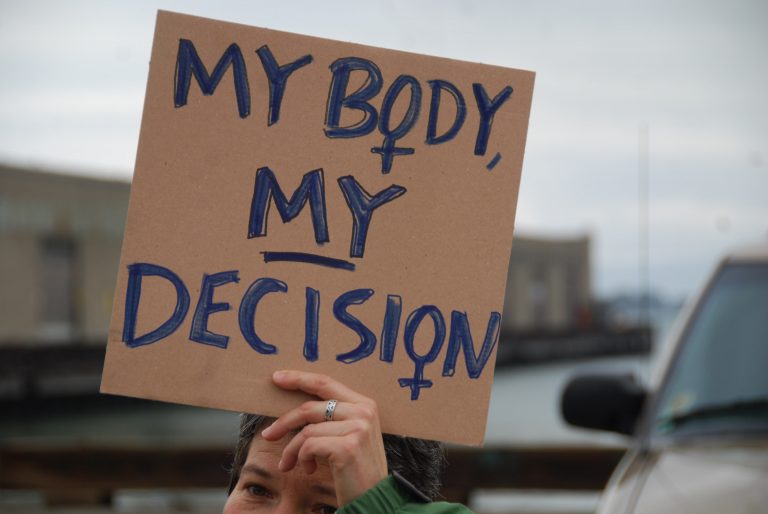
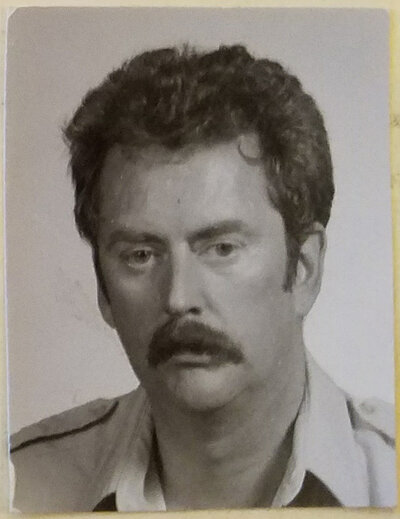
The news comes at a time when Planned Parenthood is increasingly under attack from Republicans in Congress and the Trump administration.

Planned Parenthood’s longtime president, Cecile Richards, will reportedly step down.

Richards helms both parent organization Planned Parenthood Federation of America and its political arm, Planned Parenthood Action Fund. She’s held the top position for more than a decade.

Two sources confirmed the impending departure to BuzzFeed News, which first broke the story on Wednesday. One of the sources told BuzzFeed that Richards “has informed at least some members of the organization’s board of directors.”

Planned Parenthood would not directly address the report when asked by Rewire. “Cecile plans to discuss 2018 and the next steps for Planned Parenthood’s future at the upcoming board meeting,” a spokesperson said.

The meeting is reportedly scheduled for next week.

Republicans in the U.S. Congress have long targeted Planned Parenthood because the organization provides abortion care among its reproductive health-care services, which also include contraception, mammograms, and Pap smears. GOP lawmakers in 2015 coordinated a smear campaign with David Daleiden, the since-indicted Center for Medical Progress leader behind deceptively edited videospurporting to show that Planned Parenthood profited from fetal tissue donations.

Three Republican-led congressional committee investigations13 states, and a Texas grand jury have disproved Daleiden’s allegations. But the claims are gaining new traction under the Trump administration. The U.S. Department of Justice indicated it may launch a criminal investigation based on a powerful Senate committee’s report propping up the same baseless allegations. Rep. Marsha Blackburn (R-TN), who worked closely with Daleiden on a $1.59 million “witch hunt” that turned up no credible findings, pulled the same talking points for her 2018 Senate campaign.

Emboldened Republicans in April gutted federal safeguards that allowed four million low-income Title X patients, including 1.5 million Planned Parenthood patients, to access reproductive health care. The move was intended to punish Planned Parenthood for providing abortion care with its own funds, in accordance with federal law set forth by the Hyde Amendment. More recently, Trump’s U.S. Department of Health and Human Services last week rolled back an Obama-era effort to stop states from cutting off Planned Parenthood’s Medicaid funding,

Republicans in Congress and the Trump administration, however, have thus far failed to reach their ultimate goaldefunding Planned Parenthood. Independent polling from Quinnipiac and Kaiser Family Foundation underscored the public’s opposition to 2017’s defunding efforts.

“I think that [Richards] has to take a lot of credit for the fact that Planned Parenthood is one of the most respected and supported organizations in the country. Most Americans understand the fight,” Rep. Jan Schakowsky (IL), the top Democrat on Blackburn’s investigation, told Rewire in an interview.

“And Cecile, by being such a great articulator of what’s at stake here, what it’s really about, can take a lot of that credit.”

Billionaire Democratic donor Tom Steyer told The Washington Post that Richards, the daughter of former Texas Gov. Ann Richards (D), is “someone we have partnered with very happily.”

“If she stops, I hope it’s because she’s doing something new and important,” Steyer told the Post. “If she ran for any office, I’d support her.”

Richards’ next moves are unclear. Her memoir, Make Trouble, is scheduled to publish in April.

Source: https://rewire.news/article/2018/01/25/planned-parenthoods-cecile-richards-reportedly-stepping/

Anti-abortion conservatives think women are thoughtless and irresponsible. Research shows the opposite is true

Before he was murdered by an anti-abortion terrorist in 2009, Kansas physician Dr. George Tiller had a simple but profound motto: Trust women. “I’m a woman-educated physician,” Dr. Tiller explained in an interview for the 2001 documentary “Voices of Choice.” “Abortion is about women’s hopes and dreams and potential for the rest of their lives. Abortion is a matter of survival for women.”

Monday marks the 45th anniversary of the decision in Roe v. Wade, in which the Supreme Court ruled that women have a right to terminate unwanted pregnancies. In the four and a half decades since, the religious right, aided by the Republican Party, has tried to strip that right away. The ostensible reason for anti-abortion activism is the oft-repeated belief that “abortion is murder.” However, most anti-abortion activists also take a dim view of feminism, gay rights and comprehensive sex education, while also voting for politicians who reject actual life-affirming policies, such as universal health care or a robust social safety net.

In reality, the struggle over abortion goes back to Dr. Tiller’s slogan. The question is whether or not women can be trusted to make decisions for themselves like adults, or whether they should be relegated to second-class status, stripped of the right to bodily autonomy. Recent research, published over the past month, highlights how central this question is to the abortion debate and demonstrates that despite widespread skepticism about women’s basic decision-making capacity on the right, women are highly competent when it comes to knowing what they need and quite capable of taking control of their lives — if they are allowed to.

“The polling data that exists on abortion is so one-dimensional,” Tresa Undem, a researcher for the polling firm PerryUndem, told Salon. So Undem conducted focus groups and polling meant to go deeper, and find out what people really think about women who get abortions. What she found out was that, among those who oppose abortion, there’s a widespread belief the women who have abortions are unintelligent, irresponsible and thoughtless.

Anti-abortion respondents also seemed to believe that men understood abortion better than women. When asked whether men whose partner was having an abortion understood that it was ending a potential life, 51 percent of abortion opponents said yes. But when asked if women getting abortions understood the procedure, only 36 percent of anti-choicers agreed that a woman knows what she is doing. Abortion foes were also more likely to say they were more comfortable when women were housewives instead of seeking careers.

“I feel like a lot of people that get abortions are younger, like teenagers, and they don’t fully understand what is happening,” said one woman in a focus group of anti-abortion women.

Another suggested abortion was for “women that want to … like, be a big dog somewhere in some company, and they don’t want anything to inconvenience their path.”

The reality, however, is much different. Women who get abortions are stereotyped as young and ignorant, but research repeatedly shows that most women who get abortions are mothers already, and therefore have a pretty good handle on what pregnancy and parenting is about. New research from the University of California, San Francisco’s Advancing New Standards in Reproductive Health digs even deeper into the question and finds that women who get abortions have a good understanding of their own lives and know what the consequences will be if they don’t get the abortions they seek.

Researchers went into abortion clinics and surveyed patients, some of whom got the abortions and some of whom were turned away because they were past the gestational limit. When asked why they wanted an abortion, as researcher Diana Greene Foster explained it to Salon, their “most common reason was not being able to afford to have a child or raise a child,” though that was often coupled with other concerns.

“What women feared will come true does come true,” Foster continued. Women who get abortions “stay on track to have improvements in their life,” but women who don’t are “derailed from that.” The result is that women who were denied abortions were three times as likely to be unemployed six months later, and four times as likely to be living below the federal poverty line.

Women are good judges of their own lives, this data shows, and also of the whether it’s the right time for them to have a baby. Another interesting study, this one from Ibis Reproductive Health, also highlights both how capable women are and how determined when it comes to abortion. The study looked at whether women in Peru, a nation that has outlawed most abortions, Peru, can navigate a system that throws a bunch of needless obstacles in their way. What they discovered was that, when given adequate access to information, women do pretty well by themselves.

“Abortion is common in Peru despite the fact that clinic access is extremely limited,” explained researcher Sarah Baum. “Many women in Peru rely on self-induced abortion because clinic access to safe abortion is just so limited.”

The study looked at a clinic that had employed a harm reduction model, where women seeking abortion were able to get information from clinic workers on how to take misoprostol, a drug that can induce miscarriage but is also widely available for other purposes. What the study found was that, even though women couldn’t get an abortion from the clinic, nine out of 10 women who opted to take the drug used the information they were given to end their pregnancies completely.

Having access to a trusted clinic also meant there were high rates of follow-up, with 80 percent of the women who got abortions speaking with a clinic worker either on the phone or in person. Post-abortion contraception use was higher for women who got follow-up care. Once again, women show they can handle themselves just fine if they are given the opportunities and information necessary.

At this year’s “March for Life,” Donald Trump stood in front of a crowd of religious conservatives organized around the idea that women cannot be trusted to manage their own lives and need the law to make intimate decisions about sex and child-bearing for them. The irony couldn’t be more blatant, as the week’s news had been dominated by a story of Trump allegedly sleeping with a porn actress soon after his third wife gave birth, and then paying the woman off during the campaign to keep her quiet. Meanwhile, congressional Republicans were holding health care funding for 9 million children — actual children, not hypothetical ones — hostage in an effort to bully Democrats into voting for a funding bill that the Republican leadership couldn’t get passed despite commanding a majority. on its own.

This is the crowd that wants to judge women who have abortions for their supposed immorality and irresponsibility, and argues they can’t be trusted to make important life decisions on their own.

Source: https://www.salon.com/2018/01/22/on-abortion-its-time-to-start-trusting-women-they-know-what-theyre-doing/

“People don’t need the state to force them to think about their family-making plans, people already do that naturally.”

State-level GOP lawmakers are ready to unleash a new crop of medically unnecessary proposals to force people to wait a day or two—or three—before they receive abortion care.

Mandatory waiting periods are among the most common restrictions that have been pushed by abortion rights foes and approved by legislatures in recent years. Already in 2018, Republicans in New JerseyNew Hampshire, and Coloradohave introduced forced waiting period bills.

Reproductive rights advocates told Rewirethat waiting periods are arbitrary restrictions that are medically unnecessary, create financial barriers, and constitute an undue burden for access to abortion. The continued GOP push for waiting period laws comes after a major legal setback for anti-choice legislators backing such measures.

A Florida judge on January 9 permanently blocked a state law that forces a pregnant person to complete a 24-hour waiting period before having an abortion. The law forces a pregnant person seeking abortion care to make an extra trip to the physician in order to listen to state-mandated counseling prior to obtaining the abortion.

Circuit Judge Terry Lewis wrote in the decision that no other state law “subjects no other medical procedure, including those that pose greater health risks than abortion, to a mandatory delay,” and declared the law unconstitutional. “A law that forces a patient to delay medical care to the detriment of her health cannot be the least restrictive means of furthering any compelling state interest,” Lewis wrote.

The lawsuit was filed in 2015 by the Center for Reproductive Rights, the American Civil Liberties Union (ACLU), and the ACLU of Florida on behalf of Bread and Roses Women’s Health Center in Gainesville.

Autumn Katz, senior staff attorney at the Center for Reproductive Rights, said in a statement that it is “cruel and unconstitutional” for the state to force pregnant people to delay care for reasons that are medically unnecessary.

“Women know what’s best for their lives and futures and don’t need politicians getting in the way of their health care decisions,” Katz said.

Florida Republican Gov. Rick Scott’s spokesperson Lauren Schenone told Reuters that the governor’s office is “reviewing the ruling,” and did not comment on whether the ruling will be appealed to the state supreme court.

Scott signed the bill into law in June 2015. When the bill was passed by the GOP-controlled state legislature, proponents of the law claimed it was intended to empower women.

“If all this bill does is have one woman—just one—after some time of reflection, after some time of thought say, ‘I’m going to make the decision to have this baby’ … I will consider that be a huge success,” said state Sen. Anitere Flores (R-Miami).

Similar justifications have been echoed by lawmakers and activists in other states.

Twenty-seven states require a pregnant person to wait a specified amount of time prior to obtaining an abortion, according to the Guttmacher Institute. There are 18 states that require 24-hour waiting periods, three states that require 48-hour waiting periods, and five states that require 72-hour waiting periods.

Elizabeth Nash, senior state issues manager at the Guttmacher Institute, told Rewire that in the years following the landmark Roe v. Wade U.S. Supreme Court decision, legislators in several states passed laws mandating 24-hour waiting periods for abortion.

“In 2010, we had a real change in the state legislative level, and started to see states enact 72-hour and 48-hour waiting periods,” Nash said. “Often times they were combined with the in-person counseling requirement, and that’s really a difficult combination of requirements to meet from both a patient and provider perspective.”

There have been dozens of bills introduced by state lawmakers in recent years to either create waiting periods or increase the length of time required for waiting periods.

Utah’s GOP-majority legislature in 2012 became the first state to enact a law that required pregnant people complete a 72-hour waiting period before having an abortion.

Lawmakers and anti-choice activists who supported the law said those seeking abortion care should be required to compete a waiting period to allow time to “fully understand and think about the consequences of that choice.”

Dr. Leah Torres, a Utah-based physician and OB/GYN who provides abortion and reproductive health care, told Rewire that her patients are often surprised when she informs them that they will have to wait three days to have the common medical procedure.

“They often either didn’t know about it or thought it was 24 hours,” Torres said. “Either way, they’re willing to do whatever it takes to have the abortion they need, though they feel judged by the state and explain that they’ve ‘known for more than three days’ that they’ve wanted an abortion.”

Research that studied the law’s impact found that the 72-hour forced waiting period did not dissuade the vast majority of pregnant people seeking abortion care, and only made it more difficult and expensive to obtain the procedure.

Torres said that there are other consequences caused by the forcing pregnant people to delay abortion care.

“Pregnancies don’t stop growing and the three extra days will push them into having higher risks with the procedure, including no longer having the option of a medical abortion and being forced to have a surgical procedure,” Torres said. “Cost increases in this situation, and other situations such as going from 14 weeks and five days to 15 weeks and one day.”

Studies of waiting periods in other states have found similar impacts. In Arizona, most pregnant people “reported one or more financial or logistical challenges in obtaining abortion care” due to the state’s 24-hour waiting period, according to a study published in Women’s Health Issues.

“Unnecessary risk increase along with unnecessary cost increase is all that is really accomplished with any waiting period,” Torres said. “People don’t need the state to force them to think about their family-making plans, people already do that naturally.”

Nash said that waiting periods only serve to make it “much more difficult” to both provide and access abortion care. “The idea that a reflection period is necessary for them is really out of step with reality, and there’s no medical literature that says this is medically necessary,” Nash said.

Laws that restrict access to abortion have a disproportionate impact on low-income communities and communities of color, and waiting periods can create a significant financial burden for pregnant people seeking abortion care.

“From the patient perspective you have to go to the facility twice, and you have to do it within at least 48 hours or 72 hours later,” Nash said. “That is very difficult for many patients, because it requires all of the logistics to fall into place—be it child care, or travel, or work schedule.”

Mississippi is one of a handful of states with one abortion clinic, and in addition to a 24-hour waiting period there are a number of other legal restrictions to access to abortion care.

Laurie Bertram Roberts is the co-founder of the Mississippi Reproductive Freedom Fund (MRFF), an organization that provides financial assistance and practical support for pregnant people in the state seeking abortion care. MRFF receives an average of 70 calls per week from pregnant people seeking assistance, and Roberts said that around 80 percent of the people who call are Black women, and that practically every caller has a low income.

“There’s far more that we can’t fund than we do fund; the need far outweighs the demand,” Bertram Roberts said. “This week we’ve gotten about 40 calls, and we’ll only be able to provide two of them with direct funding and we’ll only be able to help four of them with practical support.”

“For many callers, state-mandated waiting periods multiply other barriers they have,” Bertram Roberts said. “If child care, travel, or getting off work or school is a barrier, now it’s times two. This can often delay their care not by days, but weeks, even months as they get money and arrangements together.”

Bertram Roberts said that many callers are often confused as to why laws mandating waiting periods exist, feel insulted and ask why lawmakers would do this to them. “All I can say is they believe you should have to stay pregnant,” Bertram Roberts said.

Source: https://rewire.news/article/2018/01/23/republicans-forced-waiting-period-laws-proliferate-2018/

Formed in 1965, Jane was an underground network in Chicago that counseled and helped women who wanted to have abortions. (From left) Martha Scott, Jeanne Galatzer-Levy, Abby Parisers, Sheila Smith and Madeline Schwenk were among the seven members of Jane arrested in 1972.

Courtesy of Martha Scott

In 1971, Winnette Willis was a 23-year-old single mom in Chicago when she became pregnant again. “I was terrified of having another child,” she tells Radio Diaries.

Before the Supreme Court’s decision in Roe v. Wade 45 years ago, abortion was illegal in most of the United States, including in Illinois.

Women like Willis who wanted to terminate their pregnancies had limited and often frightening options. She wasn’t sure what to do. And then one day, while she was waiting on an L train platform, she saw a sign.

“The sign said, ‘Pregnant? Don’t Want to Be? Call Jane.’ And a phone number,” Willis remembers. “So, I called.”

“If you really care about something, you have to act on it”

“Jane” was an underground network in Chicago that counseled and helped women who wanted to have abortions. The service was launched in 1965 by Heather Booth, then a 19-year-old student at the University of Chicago. Her friend’s sister was pregnant and desperately wanted an abortion. Booth found a doctor who was willing to perform the procedure secretly.

More calls started coming in.

“By the third call, I realized I couldn’t manage it on my own,” Booth says. “So I set up a system. We called it ‘Jane.’ ”

At first, Jane connected women with doctors. But eventually, the group’s members started performing abortions themselves. With time, Jane grew into an all-women network with dozens of members, ranging from students to housewives.

Martha Scott was 28 at the time and a stay-at-home mom with four children under the age of 5. She was motivated to join Jane because she felt women who wanted an abortion deserved to have a safe and inexpensive option. The fact that it was illegal did not deter her.

“I just thought, if you really care about something, you have to act on it,” Scott says.

Martha Scott, a stay-at-home mom, joined Jane and learned to perform abortions. “It wasn’t perfect, by any means,” she says. “But we were dealing with women who really didn’t have other options.”

Courtesy of Martha Scott

The dangers faced by women seeking abortions in the pre-Roe v. Wade era are well-documented. In 1930, abortion was listed as the official cause of death for almost 2,700 women in the United States, though there were likely many more unrecorded mortalities. After antibiotics were introduced in the 1940s, the number of women dying from illegal abortions dropped dramatically. However, every year, thousands of women continued to be admitted to hospitals nationwide for complications of illegal abortions.

How Jane worked

The women of Jane ran a finely tuned operation. “It was very clandestine and secretive,” according to Leslie J. Reagan, a professor of history at the University of Illinois Urbana-Champaign and the author of When Abortion Was a Crime.

When women called Jane, they would hear an answering machine message asking for their phone number, name and the date of their last period. A member of Jane would then call them back and set up a meeting to discuss the procedure.

“There were lots of points along the way where they could have said, ‘No, I change my mind,’ ” says Scott. “I don’t think anyone chooses to have an abortion lightly.”

Jeanne Galatzer-Levy was 20 when she joined Jane.

“I hadn’t had so much as a speeding ticket. But abortion really was the front line, it was where women were dying,” she says.

Jeanne Galatzer-Levy was a member of Jane. The group charged women $100 for an abortion; doctors would often charge $500.

Courtesy of Jeanne Galatzer-Levy

Jane rented apartments all over Chicago, two at a time. One was called “The Front.” That was the address given to women such as Willis, where they would await the procedure. At the appointed time, the women were driven to a second location, where the abortion was performed.

“It felt very underground,” Willis says. “But I remember looking at the people who performed the surgery, and I felt relief, that somebody was going to help me.”

Jane wasn’t the only abortion counseling service that existed in the United States. “The thing that made Jane so unique was that they decided they were going to take the practice of abortion into their own hands,” says Reagan. “That was a stunning decision.”

The women of Jane were transparent with their clients.

“We told them up front we were not doctors,” says Galatzer-Levy.

When the women of Jane got trained to perform abortions themselves, it meant they could reduce the price of the procedure and reach a larger, and more diverse, population. Doctors often charged $500 to perform the procedure. Jane charged $100 but took whatever the clients could pay, Galatzer-Levy says. They used the money they got from their clients to pay for supplies, rent and other expenses.

At their peak, Jane was performing abortions four days a week and typically serving 10 women a day. Galatzer-Levy says that to the best of her knowledge, the group never turned anyone away.

Usually, they gave their clients a muscle contractor and an antibiotic before performing a dilation and curettage surgical procedure, in which the cervix is dilated and a medical instrument is inserted to remove tissue from the uterus.

“By and large, we were dealing with healthy women pregnancies,” says Galatzer-Levy. “We were not qualified to deal with somebody with real medical problems.”

Scott says she performed hundreds of abortions. It’s a relatively simple procedure, but she acknowledges that there were risks to what they were doing. Some clients ended up in the emergency room; some had to undergo hysterectomies.

“You’re messing around inside somebody else’s body. It’s not necessarily given that you won’t do harm,” Scott says. “It wasn’t perfect, by any means. But we were dealing with women who really didn’t have other options.”

In the seven years Jane was active, the group performed approximately 11,000 first- and second-trimester abortions. No deaths were ever reported of women who had abortions through Jane.

Busted by the police

For years, Jane operated under the radar of the Chicago police. But in 1972, two Catholic women walked into a police station, reporting that their sister-in-law was planning to have an abortion.

“To them, 1) it was a sin, and 2) they didn’t want a child killed. That’s how they felt,” says Ted O’Connor, the then-31-year-old homicide detective who was put on the case.

O’Connor and his partner tracked Jane to an apartment in Chicago’s South Shore neighborhood. Scott vividly remembers when the police arrived.

“They came in and looked around and said, ‘Where’s the doctor?’ Looking for the guy, but there wasn’t any guy, there was just us,” she says.

The policemen took all the women into custody, and they were charged with 11 counts of abortion and conspiracy to commit abortion.

Ted O’Connor was a young homicide detective in Chicago sent to investigate Jane in 1972. He followed a client to an elegant apartment building in Chicago’s South Shore neighborhood, near Lake Michigan, and ended up arresting seven members of Jane that day.

Courtesy of Ted O’Connor

Looking back, O’Connor has no qualms about arresting the women, who were breaking the law. But he says he can see both sides of the issue.

“My side is I don’t want to see a life destroyed. That life is helpless, it has no choice in this. And that angers me,” he says. “On the other hand, I’ve never been pregnant. And never will be. It’s a tough issue.”

The Supreme Court decides Roe v. Wade

The arrests occurred while abortion laws were being debated on the national stage. Beginning in 1970, Alaska, Hawaii, New York and Washington repealed their anti-abortion laws.

Six months after Jane was busted, on Jan. 22, 1973, the U.S. Supreme Court legalized abortion in the United States with their decision in Roe v. Wade. The charges against Jane were dropped.

Ultimately, Roe vs. Wade brought an end to Jane because women then had access to legal abortion providers.

Roe v. Wade made such an enormous difference. It was a very important victory. At that point, we all sort of scattered, moved onto other things,” says Scott, who went on to work at a women’s health clinic and remained an activist.

Abortion continues to be one of the most divisive issues in American life and politics.

“I mean, we really thought, the fact that it was legal, it wouldn’t be as political anymore, that it would fade a lot as any kind of a social issue,” she says. “But we were wrong. We were wrong.”

Source: https://www.npr.org/2018/01/19/578620266/before-roe-v-wade-the-women-of-jane-provided-abortions-for-the-women-of-chicago?utm_source=facebook.com&utm_medium=social&utm_campaign=npr&utm_term=nprnews&utm_content=20180119
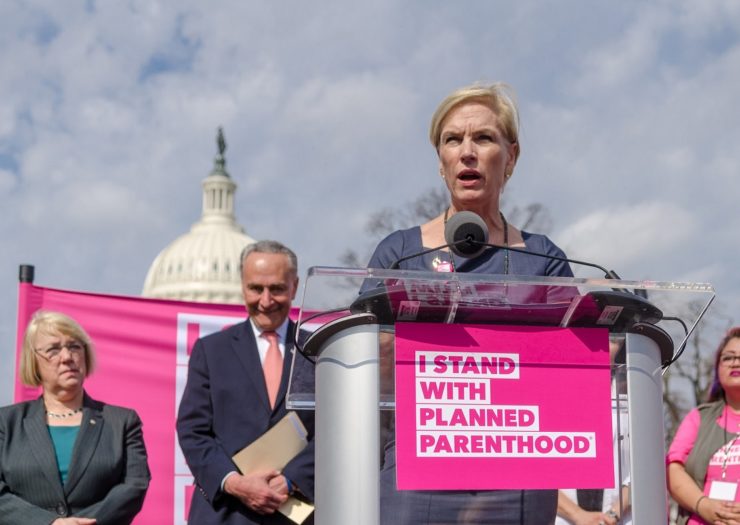
Marco Grob for TIME
By SEN. ELIZABETH WARREN

January 21, 2018
IDEAS
Elizabeth Warren is a U.S. Senator from Massachusetts.

When I was a girl growing up in Oklahoma, women got abortions. But because those procedures were illegal, many of them ended up with back alley butchers. And we all heard the stories: women who bled to death or died from an infection.

One of my older brothers and I can argue left-right politics all day and all night, but when it comes to reproductive rights, we see it the same way: A woman should make this very personal decision — and the government should stay out of it.

We’re in step with most of America. Nearly 70% of all Americans agree that a woman’s reproductive decisions should stay between her and her doctor.

On the 45th anniversary of Roe v. Wade, I think about what has changed since abortions became legal. Our health care system has pretty much dealt with the safety issue: thanks to Roe v. Wade, abortion is now safer than getting your tonsils out. A lot of women are alive today because of Roe.

But Roe has had another enormous impact. Access to safe abortion services has changed the economic futures of millions of women.

As any parent knows, starting a family is a big commitment — in part because the decision to have children carries massive economic consequences. The totals are striking: middle-income parents with two kids will spend roughly $13,000 a year to raise a child from birth through age 17. But the cost of car seats and baby strollers is only the tip of the iceberg. Immediately after having children, women experience a measurable decline in take-home pay — a decline that continues throughout their lives and on into retirement.

For a young couple with modest wages and piles of student loan debt, the decision to start or expand a family is a powerful economic issue. For a woman working two jobs with two kids in day care, an unplanned birth can put her entire family at risk. For a student still in high school or working toward her college degree, an unexpected pregnancy can derail her most careful plans for financial independence.

This reality is not limited to American women. A recent analysis conducted across 14 countries found that “socioeconomic concerns” was one of the most commonly-cited reasons for terminating a pregnancy. From Ghana to Turkey, Belgium to Nepal, women reported getting abortions because of “financial problems,” a “lack of money,” or because they “can’t afford a baby” or “leave [their job]” to take care of one. In the United States alone, 40% of women report seeking abortions because they aren’t “financially prepared” to have a child.

That’s why access to affordable reproductive health services is so important. Today, women pay an average of $480 to have an abortion during the first 10 weeks of pregnancy and pay even more in the second trimester. As states erect more barriers to abortion, women are forced to travel farther, take more time off work and pay higher fees to terminate pregnancies. These financial barriers fall hardest on the three-fourths of abortion patients who are young and have little income.

Abortion rights are under threat across the country, as anti-choice politicians push for policies that restrict women’s access to abortion services. And they have an ally in President Trump, who spent his first year in office relentlessly attacking women’s reproductive rights. And it’s not just abortion rights. Services that would help women prevent unplanned pregnancies, or care for children after having them, are at risk. Affordable health care, accessible contraceptives and other programs that support working women and families are on the line, too.

When making policy about women’s bodies, government officials should trust the women whose lives and futures are on the line. Safety and economic security — that’s what Roe v. Wade is still all about.

I lived in a world of back alley butchers and wrecked lives. We’re not going back — not now, not ever.

Source: http://time.com/5110722/elizabeth-warren-roe-v-wade-abortions/

Story highlights

  • Trump administration bolsters anti-abortion cause with two initiatives Friday
  • Doors open for states to cut Medicaid funding to Planned Parenthood
  • Rule protects providers with religious objections to health care procedures

(CNN)Coinciding with Friday’s March for Life in Washington, President Donald Trump’s administration announced new measures to support the anti-abortion cause.

Included is a move that may allow states to cut Medicaid funding to reproductive healthcare programs like Planned Parenthood.
Specifically, the Department of Health and Human Services issued a letter to state Medicaid directors rescinding an Obama administration directive from April 2016, which warned cuts to family planning providers would break federal law.
“We are reinstating flexibility for state Medicaid directors to establish reasonable standards and protect program integrity in their own state programs,” said Charmaine Yoest, assistant secretary of public affairs at HHS, in a Friday press call.
“It’s essential to protect and defend the prohibition of Medicaid coverage from most abortion procedures. … This is part of the Trump administration’s commitment to rolling back regulations the Obama administration put out to radically favor abortion,” said Yoest, who formerly served as the president and CEO of Americans United for Life, an anti-abortion group.
This development threatens to do more than combat abortion access; it could block birth control access and other preventative care by denying Medicaid patients coverage from the only health care provider they have, Planned Parenthood argues.
“On the anniversary of the historic Women’s March, the Trump-Pence administration makes their agenda crystal clear: They are laser-focused on using their power to control women’s bodies and lives,” Dawn Laguens, executive vice president for Planned Parenthood Action Fund, said in a written statement.
“They couldn’t get the votes to pass it in Congress, so now they are pushing states to try and block care at Planned Parenthood,” she said. “Longstanding protections within Medicaid safeguard every person’s right to access care at their qualified provider of choice.”
Also on the Friday call was Roger Severino, a former director at the conservative Heritage Foundation, where he then spoke out against attempts by the Obama administration to protect transgender patient care. Now he is the director of HHS’ Office of Civil Rights.
On Thursday his office introduced a new unit, the Conscience and Religious Freedom Division, meant to protect health care providers “from being coerced into participating in activities that violate their consciences, such as abortion, sterilization, or assisted suicide,” a press release stated.
His office laid out on Friday a 216-page proposed rule — “Protecting Statutory Conscience Rights in Health Care; Delegations of Authority” — to bolster the mission.It requires, for instance, that providers seeking federal grants certify compliance with conscience-protection statutes.
“America’s doctors and nurses are dedicated to saving lives and should not be bullied out of the practice of medicine simply because they object to performing abortions against their conscience,” Severino said in a press release. “Today’s proposed rule will provide our Conscience and Religious Freedom Division with enforcement tools that will make sure our conscience laws are not empty words on paper, but guarantees of justice to victims of unlawful discrimination.”
Ever since the announcement of this new division, there’s been speculation about how this idea of “conscience protection” might play out in real life. Could a health care provider who objects to the LGBTQ community deny treatment of, say, a transgender woman who has the flu?
“We want people from all walks of life to be served and to be able to serve so that everybody has an equal seat at the table in the receipt of medical care and the provision of care regardless of their religious beliefs or moral convictions,” he said during Friday’s call. “The way these conscience claims work is that providers do not deny service to patients because of identities. What happens is providers choose not to provide or engage in certain procedures at all.”
A quick word search in the 216-page proposed rule shows that the word “abortion” is mentioned 155 times, while “transgender” does not appear once.
But this gives little comfort to organizations like Lambda Legal, which works on behalf of the LGBTQ community.
“The proposed rule doesn’t just protect health care institutions and medical providers who refuse care on religious grounds, it shields anyone who claims a ‘moral’ objection too,” Camilla Taylor, acting legal director for Lambda Legal, said in a written statement. “Health workers would not only get to refuse to provide care themselves; they will be protected even when they refuse to give a patient a referral.”
The rule succeeds in “weaponizing HHS’s Office of Civil Rights against us,” she said. “It turns the Hippocratic Oath into the Hypocritical Oath and violates the most basic tenets of medical ethics.”
Other organizations, including the United States Conference of Catholic Bishops, commended HHS’ new initiatives.
“For more than 40 years — dating back to the Church amendment of 1973 — Congress has enacted federal laws protecting rights of conscience in health care,” the conference chairmen said in a written statement. “We are grateful that HHS is taking seriously its charge to protect these fundamental civil rights.”
How frequently health care providers will file complaints on religious or moral grounds remains to be seen. Over the past eight years, there have been a total of 10 religious complaints filed, Serevino said.
But as of mid-January, 34 complaints have come in this year, which he credits to the new administration.
Follow CNN Health on Facebook and Twitter
“Since the election of President Donald Trump and the change in tone we’ve communicated to Americans that their rights will be respected, their cases will be investigated and treated appropriately,” Serevino said. And the spike in numbers show that “the issues are real … the complainants are there, and that we’ve opened the doors and let people know that we actually will take your complaint seriously and intend to enforce the law.”
Source: http://edition.cnn.com/2018/01/19/health/hhs-medicaid-abortions-conscience-protections/index.html

The GOP bill “would codify into law fake clinics that oppose abortion and judge, shame, and intentionally try to trick women out of getting the care they are seeking.”

GOP lawmakers in Florida are poised to pass legislation requiring the state to permanently contract with an organization that funnels taxpayer dollars to fake clinics, commonly known as anti-choice crisis pregnancy centers (CPCs).

More than a dozen other states provide funding to fake clinics, which have come under increased scrutiny in recent years, as investigations have revealed they disseminate misinformation to people seeking abortion care and neglect to follow proper medical protocols.

Florida would be the first state to codify into law a requirement to contract with a specific organization to distribute grants to anti-choice organizations seeking to discourage people from obtaining abortion care.

Mark Ferrulo, executive director of Progress Florida, told Rewire that while the proposal is not unprecedented, directing state funding to organizations is typically done through the budget process—not through codification.

“They have named individual corporations or networks in the budget process, but it is uncommon to name a specific entity, in this case the Florida Pregnancy Care Network, in statute—especially in a law that creates a no-bid contract indefinitely,” Ferrulo said.

State Sen. Aaron Bean (R-Fernandina Beach) presented SB 444 to the senate appropriations committee on Thursday. The bill was approved by the committee in a 12-6 vote, and on Friday it was placed on the calendar for a floor vote. The companion bill, HB 41, was passed by the house on January 12 by a 73-29vote.

The Republican bill would require the Florida Department of Health to contract with the Florida Pregnancy Care Network (FPCN) for the management and delivery of pregnancy support and wellness services to eligible clients.

The contract would require FCPN to establish a network of subcontractors to provide pregnancy support and wellness services. The organization would only be able to approve subcontracts with providers that “exclusively promote and support childbirth.” The bill specifies that services provided by subcontractors may not include any religious content.

“SB 444 would codify into law fake clinics that oppose abortion and judge, shame, and intentionally try to trick women out of getting the care they are seeking,” Laura Goodhue, executive director of Florida Alliance of Planned Parenthood Affiliates, said in a statement. “These sham health clinics have been known to mislead, judge and shame women to prevent them from obtaining abortions.”

Since 2009, FPCN has been awarded more than $22 million in state contracts. It was awarded a $3.95 million contract in 2017.

FPCN manages subcontracts with 61 direct service providers operating 105 facilities, according to a legislative analysis by the Florida House Health and Human Services committee. FPCN reported more than $3.6 million in government grants during 2015, according to the organization’s tax documents. During that time period, FPCN awarded $2,356,550 in reimbursements to 52 organizations.

The Florida Catholic Advocacy Network, the political arm of the Florida Conference of Catholic Bishops, has campaigned in favor of the legislation. Michael Sheedy, executive director of the Florida Conference of Catholic Bishops, sent a letter in support of the bill to members of the senate committee.

Organizations associated with the Catholic church are the largest beneficiary of the program’s funding, receiving more than $494,000 in reimbursements in 2015. Since 2012, organizations associated with the church have received more than $1.65 million in reimbursements.

Catholic Charities Diocese of St. Petersburg, which operates four Foundations of Life Pregnancy Centers in Tampa Bay, received $227,644 in reimbursements in 2015. The Foundations of Life website contains medically inaccurate information about abortion procedures and the risks associated with abortion care.

Rose Llauget, director of pregnancy and adoption services for Catholic Charities Diocese of St. Petersburg, told the Tampa Bay Times that birth control pills are linked to cancer—a disproven anti-choice myth—and that women who have abortions are being “duped.”

Ferrulo said that organizations that promote this medically inaccurate information should not get state funding. “Women want objective, accurate information and comprehensive, professional counseling in order to make the best decision about their pregnancy,” Ferrulo said.

During Thursday’s committee hearing, Bean said any information the organization provides to clients must be medically accurate. “The Department of Health overseas the literature provided by the network,” Bean said. “They’re the ones that make sure that it is indeed medically accurate.”

But state Sen. Lauren Book (D-Plantation) said that claim was contradicted by state officials. “When I contacted the Department of Health, they said that they currently do not review or approve any of the brochures or other materials that are funded through [state funds],” Book said.

Ferrulo said that it is “unconscionable and indefensible” that lawmakers support sending state funding to “unlicensed, largely unregulated” organizations, rather than supporting qualified and licensed health care providers who offer a full range of comprehensive reproductive health care.

“Crisis pregnancy centers offer the exact opposite of that. They deceive, they intimidate, and they shame Florida women,” Ferrulo said. “To send taxpayer dollars to operate these fake clinics is a gross failure of leadership by Florida legislators.”

Source: https://rewire.news/article/2018/01/19/florida-republicans-permanently-fund-fake-clinics/

A group of women graduate students in Texas knew not getting pregnant was key to getting their education. When they started a network to help women get birth control via a public phone, they unleashed something even bigger.

The road to Roe v. Wade arguably started in the living room of University of Texas at Austin (UT) science graduate student Judy Smith in the fall of 1968. As the late Smith’s longtime boyfriend Jim Wheelis joked, “If I had known this would be historical, I would have taken notes.”

In 1965, the Supreme Court ruled in Griswold v. Connecticut that a constitutional right to privacy protected a married couple’s right to purchase birth control, overturning the state law that prohibited the use of contraceptives. Similar protection was extended to single women in Eisenstadt v. Baird seven years later, in 1972.

But married or not, young UT students sought the pill in the late 1960s from doctors on and off campus. Smith and another UT graduate student, Victoria Foe, met in early 1968 while working with one of the few male faculty who accepted female students. Both had a hard time finding an advisor in the science program. Male faculty refused to take on female students, arguing that women would become pregnant and drop out of school. Smith and Foe quickly realized that control over reproduction directly affected a woman’s education.

While the pill was available to married women in the late 1960s from private doctors and at the UT health center, doctors did not prescribe it freely. According to Foe, some doctors believed a “woman who was taking birth control pill was willing to sleep with you or that you could fondle her.” Foe remembered that there were “doctors who would do one of two things: They would either give you a lecture on morality as if it was any of their business or they felt they could make a pass at you.”

Smith saw the demand for easily accessible contraception as a starting point for a women’s rights organization in Austin.

Early in the semester, Smith approached Foe and explained that she was holding a meeting at her house to discuss women’s issues. That night was the first meeting of the group Austin Women’s Liberation, and the women agreed their first goal was to compile a list of doctors who prescribed birth control without harassing women.

By November, the Birth Control Information Center (BCIC) was operating in the University YMCA in a tiny, closetlike space next to the underground radical newspaper The Rag. According to Foe and Wheelis, the women tracked which doctors were accused of sexual harassment and advised women on who willingly prescribed the pill. The group ran advertisements in The Rag, which listed the BCIC’s number as the pay phone in the hallway of the Y. The birth control service had office hours where people could drop in or call, and if no volunteers were available, the newspaper’s staff would take messages and get them to the BCIC.

A Birth Control Information Center advertisement that the Austin Women’s Liberation group placed in a local radical newspaper


Soon after opening the BCIC, Foe and Smith began to receive calls from women seeking abortions. Abortion had been illegal in Texas since the mid-19th century. Texans with means in the late 1960s traveled to New York or England for the procedure. However, broke college students and working-class women in the larger Austin area couldn’t just pick up and travel for an already expensive medical procedure. According to articles in The Rag, abortions cost anywhere from $150 to $1,000 in Texas. Many women opted to travel to England, where they were sometimes guaranteed their abortion would be performed by a medical professional. But the airfare alone cost hundreds of dollars.

Foe herself had an abortion along the Texas-Mexico border and knew that doctors paid local officials to look the other way. As a result, Smith and Foe traveled to the Mexican town of Piedras Negras across the U.S. border to assess which doctors performed the procedure. As Foe recounted, the BCIC gave women access to licensed doctors operating out of medical clinics in Mexico, complicating the idea that dirty and corrupt back-alley abortionists performed all abortions before legalization.

Once the women located and vetted doctors, the BCIC evolved to include abortion referrals. Women anonymously called the Y payphone and left a message with a BCIC volunteer or a Rag staffer who happened to answer.

As Wheelis, Foe, and former Rag staffers recalled during interviews, the students who rented space in the university Y knew the payphone was bugged. Because The Rag published socialist, radical, and New Left articles that often directly challenged the leadership of then-President Lyndon B. Johnson, the UT Board of Regents—the university’s governing body—and the FBI kept a close eye on the groups organizing out of the space across the street from campus.

Smith returned calls from a secure line, sometimes adding her home phone number to the newspaper ads. As Wheelis recalled, women called Smith at home to set up an appointment. Smith then borrowed Wheelis’ truck to transport the women to the clinics, occasionally in San Antonio, Waco, or Dallas, but mostly in Mexico.

Although the handful of BCIC volunteers kept records, they did not preserve them over the years and there’s no way to know how many women the BCIC served between 1968 and 1973. While the majority of the women successfully ended their pregnancies, volunteers at the BCIC remembered the occasional failed abortion, such as that of one woman who remained pregnant after the procedure; however, the activists excused this error, thinking she must have been carrying twins.

The women continued to help other people access abortion into the 1970s, but Smith and Foe took different paths in their continued activism. Smith continued to focus on helping women on a community level, and Foe began to work at the Texas legislature to help representatives tasked with rewriting the Texas abortion laws.

While the women at the BCIC continued the referral service, the UT Board of Regents took The Rag to court in an attempt to ban the sale of the paper on campus. The volunteer student- and community-operated staff challenged the university head on and won its case in September 1970. A group of 20-something-year-old college students won in court, and Judy Smith believed women could follow their lead by challenging the Texas restrictions on abortion.

Smith met Sarah Weddington, the attorney who would argue Roe v. Wade before the Supreme Court, through their boyfriends, who were law school classmates. Weddington could not find work as a lawyer after graduation, and Smith needed someone willing to take on the case for free.

This moment is where the well-known narrative of Roe (which was decided on January 22, 1973), begins. Weddington agreed to file the case, and the trio worked with Linda Coffee of Dallas, who was Weddington’s former law school classmate and clerk to U.S. District Judge Sarah T. Hughes. They were hoping that filing the case in Dallas, against District Attorney Henry Wade, would land them in front of Hughes, who they hoped would be friendly to their case.

Their gamble paid off. Foe, Smith, the other BCIC volunteers, and Weddington were in their 20s when Roewas filed. Most of them were students.

Speaking about today’s young activists in a phone interview for my research about Texas abortion organizing, Foe added that it often only takes a small group of people working hard to make change.

“The worst thing you can do is think, ‘There is nothing I can do about this.’”

Source: https://rewire.news/article/2018/01/19/how-roe-started-pay-phone/

The decisions that these zealots make will affect the lives of millions of women decades from now
Judges need to be fair-minded thinkers able to consider legal questions without bias, not narrow-minded ideologues working to curtail reproductive rights at any price.

Iwas 19 years old when I first visited a Planned Parenthood health center. It was 1973, the same year the supreme court recognized a constitutional right to abortion in the landmark Roe v Wade decision. Decades later, who possibly could have thought that my daughter’s generation would still be fighting for the legal right for women to control our own bodies?

Anti-choice activists and lawmakers have been systematically chipping away at reproductive freedom at all levels of government, and too often doing so under the radar so that few will notice. In my travels I have met educated, successful women who have no idea of the restrictions being enacted in their own states. I’ll never forget a woman I met in Houston who, after I mentioned that Texas had passed a mandatory waiting period for abortions, responded: “No, I would know that.” But we don’t always know – and that’s part of the success of the anti-choice movement.

After years of this type of erosion, the Trump administration is now taking big and permanent swings at reproductive rights by nominating extreme anti-choice figures to serve as judges in lifetime positions.

The first attack came in the form of the supreme court justice Neil Gorsuch, who has a disturbing record of ruling against women’s rights, but it goes far beyond the high court. At all levels of the federal judiciary, Republicans are pushing through Trump’s staunchly anti-abortion judges at a rapid clip and putting reproductive rights in jeopardy for generations to come.

These men (yes, his nominees are mostly men and overwhelmingly white) are the textbook definition of extreme. Consider Mark Norris, whom Trump nominated for a lifetime position on a district court in Tennessee. Norris is an anti-choice Republican state senator who believes that a woman’s right to access abortion should be “very limited”. He co-sponsored a proposal to empower that state to ban abortion even when a woman’s life is at risk, a position considered fringe even among the anti-choice crowd. And now Trump wants him to become a federal judge.

Judges need to be fair-minded thinkers able to consider legal questions without bias, not narrow-minded ideologues working to curtail reproductive rights at any price.

Other Trump nominees, including Howard Nielson and Kyle Duncan, have supported laws aimed at shutting down abortion clinics through medically unnecessary regulations. Another, Matthew Kacsmaryk, disputes the reasoning of the Roe decision and uses quotation marks when writing about the “fundamental right” to abortion, presumably to emphasize his disdain for such an outrageouscharacterization.

For these nominees, the Senate still can, and absolutely should, reject their nominations. But many of Trump’s disturbing picks have already been confirmed by the Senate – a fact that Trump likes to brag about during news conferences. John Bush, a Trump nominee who is now a judge on a powerful appeals court, has compared abortion to slavery, calling them “the two greatest tragedies in our country”.

Steven Grasz, now an appellate court judge, wrote a law review article on “Why There is No Constitutional Right to Kill a Partially-Born Human Being” and has argued that Medicaid coverage should be denied to women seeking abortions after surviving rape. He was confirmed by Republicans for a lifetime position as a federal judge despite being rated unanimously as “not qualified” by the American Bar Association. After another Trump nominee memorably could not answer even the most basic legal questions during his Senate hearing, it’s clear that Republicans are selling out our judicial system with embarrassingly unfit nominees to get the agenda they want.

To say that our reproductive rights are not safe in these hands is a wild understatement, and the decisions that these zealots make will affect the lives of millions of women for decades to come.

This month marks the 45th anniversary of the Roe v Wade decision. I wish we could rest on our laurels and celebrate the progress that has been made, but the reality is that Trump filling the judiciary with anti-choice judges could reverse all of that progress, leaving a destructive legacy that will far outlast his presidency. Executive orders and even legislation can be undone, but judges are there for a lifetime. Senators only have one opportunity to put the brakes on Trump’s anti-choice court-packing campaign – and it’s right now.

  • Kathleen Turner is an advocate and Academy Award-nominated actor and serves on the board of People For the American Way’s affiliated PFAW Foundation.

Source: https://www.theguardian.com/commentisfree/2018/jan/17/trumps-judges-threaten-reproductive-rights-for-generations-to-come

“This decision—not so coincidentally timed around the March for Life—is a cheap attempt by President Trump to pander to ultraconservative special interests that got him into power.”

The U.S. Department of Health and Human Services (HHS) is doubling down on so-called conscience protections that give an out to health-care providers who don’t want to treat LGBTQ patients or provide reproductive health care, including contraception, miscarriage management, and abortion care.

The Trump-era HHS, stacked with anti-choice extremists, on Thursday announced the launch of the Conscience and Religious Freedom Division, a wing of the agency’s Office of Civil Rights. The division is a precursor to an imminent rule expected to bolster such “religious freedom,” or religious imposition, measures at the expense of vulnerable patients. Its launch comes a day before Friday’s annual March for Life in the nation’s capital.

Politico first reported the news of the rule, which is listed as pending review within the White House’s Office of Management and Budget—the final regulatory step before its release. A new “conscience and religious freedom” landing page within HHS’ sprawling online presence already allows people to file complaints about alleged violations. The landing page includes a photo of a person who appears to be a female Muslim doctor—even though patients living at the intersections of, say, a marginalized religion and race, gender, sexuality, income, ability, and immigration status are most likely to bear the consequences of the agency’s actions in their health-care access and outcomes.

Roger Severino, the virulently anti-LGBTQ head of the HHS civil rights office, said the new division would “help guarantee that victims of unlawful discrimination”—health-care providers with objections to caring for disproportionately vulnerable patients—”find justice.”

“No one should be forced to choose between helping sick people and living by one’s deepest moral or religious convictions,” Severino said in a statement. He emceed a ceremony unveiling the agency’s plans at HHS headquarters on Thursday morning.

Severino’s assessment is notable in two respects. First, the HHS civil rights chief omitted the fact that LGBTQ people are most often the real “victims of unlawful discrimination” in the health-care arena. LGBTQ people routinely face “discrimination and mistreatment” from their providers, according to new data from the Center for American Progress. The discrimination and mistreatment results in “delays or denials of medically necessary care”:

For example, after one patient with HIV disclosed to a hospital that he had sex with other men, the hospital staff refused to provide his HIV medication. In another case, a transgender teenager who was admitted to a hospital for suicidal ideation and self-inflicted injuries was repeatedly misgendered and then discharged early by hospital staff. He later committed suicide. Discrimination affects LGBTQ parents as well: In Michigan, an infant was turned away from a pediatrician’s office because she had same-sex parents.

Second, the HHS-led rollback of the birth control benefit created a hotly contested moral exemption for reproductive health care. Severino is now further opening the door for doctors, clinicians, pharmacists, and other providers to turn away patients based on who they are, including their gender identity and sexual orientation, and what care they require.

This kind of state-sanctioned discrimination won’t be easy for the administration to pull off.

“Thankfully, HHS cannot eliminate the right of individuals to sue or to challenge discrimination in court,” Harper Jean Tobin, director of policy for the National Center for Transgender Equality, told Rewire. “What they can do is promote the belief that discrimination is legal. And encourage providers to discriminate and discourage patients from standing up for their rights.”

The Conscience and Religious Freedom Division’s statement of organization dates to December 2017. Additional documents from the same time outline the division’s legal authority to enforce and investigate both the Religious Freedom Restoration Act (RFRA), including religious imposition claims, and the Affordable Care Act section that outlines coverage of abortion services.

Under the Affordable Care Act, Section 1557 expressly prohibits anti-transgender discrimination and refusals to provide reproductive health care. The Trump administration stopped defending Section 1557 from GOP state-level legal challenges, but the underlying law remains in effect. It’s an important tool in combating discrimination in the delivery of health-care services.

“Ultimately, 1557 and our other civil rights laws that apply to health care, they give rights to patients that HHS can’t take away,” Tobin said. “The courts, when it comes to discrimination against transgender people, have been quite clear. The courts overwhelmingly say discrimination against a transgender patient is illegal.”

Expect the administration to push the boundaries of law, according to Gretchen Borchelt, vice president for reproductive rights and health at the National Women’s Law Center.

Trump-era officials “have been willing to take the law as far as they can and then violate the law [in order] to enshrine one set of religious beliefs,” Borchelt said in an interview. “They don’t care what the harm is to individuals. Whatever the [George W.] Bush administration did, I think we would expect to see it taken at least one to two steps further, if not as far as possible beyond that.”

At HHS headquarters, Severino credited President Trump’s religious imposition executive order in May with setting the stage for the wide-scale discrimination now coalescing under his watch.

Acting HHS Secretary Eric Hargan also paid homage to Trump. With the Conscience and Religious Freedom Division, “we’re taking a significant step to implement President Trump’s vision,” Hargan said at the ceremony.

Hargan promised the administration would “vigorously enforce federal laws [in the form of] robust protections for religious freedom.”

Federal and state laws already provide a web of conscience protections for health-care workers. For example, the “Church Amendments” allow people and entities to raise religious or moral objections to performing or assisting in abortion or sterilization procedures. The Weldon Amendment protects physicians, hospitals, and insurance plans from repercussions for refusing to pay for, provide, or offer referrals for abortions. Another law, the Public Health Service Act, prohibits “abortion-related discrimination in governmental activities regarding training and licensing of physicians.”

Even the Affordable Care Act contains provisions protecting the conscience rights of health-care providers.

Conscience protections have long undermined reproductive health care, whether that’s in the form of contraception or common medications and procedures to facilitate a miscarriage or an abortion.

Source: https://rewire.news/article/2018/01/18/trump-carves-health-care-discrimination-wing-civil-rights-office/