California nursing regulators have flip-flopped again on whether they will allow a notorious abortion-rights foe to offer nursing classes teaching unproven abortion pill “reversal.”
The board’s latest decision paves the way for Heartbeat International to continue providing abortion pill “reversal” training for continuing ed credit. Shutterstock
Evidence provided to Congress by state attorneys general and health departments proves that abortion is both extremely safe and highly regulated. Searchable by state.
California nursing regulators have again given the green light to a class teaching nurses about unproven abortion pill “reversal,” marking the third time the oversight agency has reversed course on the continuing ed class.
Dr. Joseph Morris, the chief of the nursing board, issued the approval in a December 19 letter to an attorney for Heartbeat International, an Ohio-based anti-choice nonprofit that offers the class to nurses from around the United States.
So-called abortion pill reversal is an experimental treatment advanced by abortion rights foes absent rigorous peer-reviewed research. The treatment purports to stop the effects of a pill-induced abortion with a large dose of the hormone progesterone after the first abortion pill. A pill-induced, or medication abortion, requires two medications to be effective.
The board reinstated Heartbeat International’s ability to teach so-called abortion pill reversal for continuing ed credit, “having considered the information provided during the informal conference December 11, 2017, with representatives of Heartbeat International,” according to a letter signed by Morris.
The California Board of Registered Nursing has for months flip-flopped over the class. Emails obtained by Rewire suggest board officials fear denying the class will prompt a lawsuit from anti-choice groups. In one email, Morris, the chief of the nursing board, warned two board members, Donna Gerber and Trande Phillips, the “issue has the potential to go viral.”
A board spokesperson told Rewire the board’s recent decision was “based on the course satisfying the Board’s regulatory requirements for continuing education and not on a threat of a lawsuit.”
The controversy came to a head last summer when the nursing board said the abortion pill “reversal” class met scientific standards, but reversed course less than two months later, when Morris issued a cease-and-desist letter to stop the class. Heartbeat International appealed the decision.
Best known for its network of anti-abortion crisis pregnancy centers, or fake clinics, Heartbeat International has been a board-approved continuing education provider since 2012, and has taught abortion pill “reversal” for years. Rewire’s reporting first brought the class to the board’s attention in 2016.
A spokesperson for Heartbeat International said it will offer the newly re-approved class at a national conference in Anaheim in April.
The course has become a political hot potato in the state capitol, according to documents Rewire obtained through a public records request that included emails from top officials. In recent months, legislative aides, attorneys, and nursing board officials debated whether the board had grounds to prohibit the abortion pill “reversal” class amid dueling legal opinions.
In emails last fall, nursing officials circulated a Facebook post in which Heartbeat International threatened to sue the board. In one email exchange, a state senate aide shared a legal opinion suggesting the board and staff would be “safe” in the event of a lawsuit.
“Thanks! I was asked this question several times today,” replied Morris, the board chief.
In another, the aide told Morris, “Yes the board would be exposed to litigation, but it would win. Is the board completely risk adverse to the extent of not defending any standards?”
The American Congress of Obstetricians and Gynecologists has condemned abortion pill “reversal,” saying it is “not supported by the body of scientific evidence.” A Heartbeat International nursing instructor, Martha Shuping, has acknowledged abortion pill “reversal” is “not actually an accepted procedure.”
Emails Rewire obtained among staff for Assemblyman Jim Patterson (R-Fresno) and the head of the nursing board also suggest the lawmaker met with Morris and others on behalf of Heartbeat International after the board ordered the organization to stop teaching abortion pill “reversal.”
Patterson’s office did not respond to repeated requests for comment about the meetings. Patterson consistently opposes pro-choice positions, according to voting scorecard from the California Pro-Life Council.
State code requires nursing courses to be related to “scientific knowledge” or patient care. But documents Rewire obtained show that attorneys diverged on the legal standard for prohibiting the class and ousting Heartbeat International as a continuing ed provider.
Spencer Walker, attorney for the state Department of Consumer Affairs, the umbrella agency for the nursing board, wrote in an August 2017 memo that the abortion “reversal” course met state standards and was “clearly science-based.”
But in an earlier opinion in February 2017, state Legislative Counsel Diane Boyer-Vine wrote the nursing board could apply a different standard—where the yardstick was whether the course was “relevant to the practice of nursing.” Boyer-Vine held the board could withhold approval on that basis.
The nursing board is expected to consider revising regulations of continuing ed courses that teach “new and experimental healthcare treatments” at an upcoming meeting, a board spokesperson told Rewire.
Jay Hobbs, spokesman for Heartbeat International, commended the board for “resisting an overtly political attack that strips women of the right to choose against abortion,” in an email to Rewire.
The abortion pill “reversal” course is among several continuing-ed classes that first came to the board’s attention through Rewire’s reporting in 2016. Rewire revealed how Heartbeat International and other national anti-choice groups capitalized on a loophole in state law to teach unproven notions to nurses for state credit. Care Net and National Institute of Family and Life Advocates also taught anti-choice classes for state nursing credit.
Soon after, state Sen. Jerry Hill (D-San Mateo) introduced legislation to require continuing education courses to be based on science and the nursing board to routinely audit continuing ed providers. The law, approved by California’s governor in September 2016, went into effect in January 2017. That same month, a state nursing auditor warned Heartbeat International not to offer abortion pill “reversal” instruction as a California-approved provider. Susan Engle, a registered nurse and auditor, wrote:
… content related to medications used to reverse abortion, including but not limited to, Update on Abortion Reversal Abortion, Abortion Reversal and Your Clinic, and Reversing RU-486 does not meet the scientific knowledge required for the practice of nursing in accordance with CCR section 1456.
In October, the American Civil Liberties Union filed a lawsuit against the Food and Drug Administration in an effort to change the regulations surrounding the abortion pill. Right now, mifepristone — one of two components that comprise the abortion pill (while referred to as “the abortion pill,” the medication often comes in the form of two pills)— is heavily regulatedand one of the medications isn’t available from pharmacies, only through providers that meet a specific set of standards. But, the abortion pill has been found to be a safe and effective way to end a pregnancy within the first 70 days. On top of that, Melissa Grant, chief operations officer for carafem Health, previously told Teen Vogue that having access to the abortion pill could become a crucial part of keeping women seeking to end their pregnancies safe as more and more restrictions on abortion appear. In 2016 alone, at least 14 states passed measures to make abortions harder to get, and those efforts at restricting abortion are continuing in 2018. With all that going on, the American College of Obstetricians and Gynecologists (ACOG) has now released a statement officially opposing efforts to criminalize self-induced abortions.
According to the statement released on January 3, the ACOG opposes prosecuting women for allegedly causing harm to their fetus, including efforts to criminalize self-induced abortion, in part because they say self-induced abortions may start happening more frequently.
“The reasons why women attempt to self-induce an abortion are varied and include barriers to accessing clinic-based care, including cost, distance to the facility, and lack of knowledge of where and how to access care, as well as a preference for self-care,” the statement said. “Due to the growing restrictions on abortion access and the closure of facilities providing this service, self-induced abortion attempts may become more common.”
According to the Self Induced Abortion Legal Team at the Center on Reproductive Rights and Justice of University of California, Berkeley, there had been 17 known arrests or convictions related to self-induced abortions as of 2017. Ultimately, the ACOG pointed out that criminalizing self-induced abortion may make the process even less safe.
“The threat of prosecution may result in negative health outcomes by deterring women from seeking needed care, including care related to complications after abortion,” the statement said.
Daniel Grossman, one of the physicians who helped write the ACOG’s position statement, told Broadly that is wasn’t one thing that spurred the group’s opinion, it was the realization that self-induced abortions aren’t going away. In 2015 , the ACOG pointed out that there were more than 700,000 Google searches for information on self-induced abortion in the United States.
While criminalizing self-induced abortion may be an attempt at restricting abortion overall, Grant previously told Teen Vogue that it’s counterintuitive.
“Efforts to end abortion through restrictive laws only increases the shame and desperation for those seeking abortion,” she said. “It does nothing to decrease the number of unintended pregnancies or the number of abortions.”
Running a family planning clinic without electricity has proven a monumental challenge, with little hope for improving conditions in the coming months. “There is still a lot of work to be done to overcome the devastation in our neighborhoods.”
A nurse takes a patient’s vital signs at Clínica Celestina Zalduondo in San Juan. The Puerto Rican clinic still lacks reliable power nearly four months after Hurricane Maria. Profamilias
Texas has seen some of the nation’s most regressive abortion restrictions in recent years. This series chronicles the fall-out of those laws, and the litigation that has followed.
Running family planning clinics without electricity on the island of Puerto Rico has become routine for Blanca Cuevas, executive director of Profamilias.
Small generators power two Profamilias clinics in San Juan, the capital, more than three months after Hurricane Maria tore through the commonwealth. A larger generator is on order from the Dominican Republic.
The strongest hurricane to hit the island in nearly a century, Maria ripped roofs off some 250,000 homes, flooded neighborhoods, and toppled tens of thousands of power lines. The hurricane raked an island already mired in a debt crisis and reeling from the effects of Hurricane Irma just two weeks earlier.
The plight of Profamilias, its patients, and employees reflect widespread struggles on the island to regain a semblance of normalcy in a post-Maria world. Cuevas called the pace of government assistance “slow and inadequate.”
Dark streets, she said, have become dangerous. Shops have closed. Residents lack basic necessities. Workers are left jobless. Hundreds of thousands have fled.
For Cuevas, among “the hardest challenges have been to open the clinics without electricity,” she told Rewire.
Profamilias operates two clinics in San Juan, and eight family planning centers around the island. Its clients are largely folks with low incomes who rely on the facilities for affordable gynecological services, sexually transmitted infections tests, contraceptives, and sex ed, among other services.
In a physical sense, Profamilias was lucky.
Two Profamilias clinics are in what Cuevas described as an old working class residential area of San Juan. The mostly concrete and cement structures were spared major damage. The clinic had prepared for the worst, protecting vulnerable equipment.
Downed trees remain in the parking lot of the Profamilias clinic in Puerto Rico. (Profamilias)
Still, signs of devastation have scarred the surrounding neighborhood, Cuevas said. Downed trees clog the San Juan clinic parking lot. Fallen power lines, electric cables, and debris have been pushed off the streets and now block sidewalks. No one has cleared the wreckage.
“There is still a lot of work to be done to overcome the devastation in our neighborhoods,” Cuevas said.
Cuevas has watched two clinic workers and untold patients leave the island, seeking stability and steady work. Reports suggest more than 200,000 Puerto Ricans have fled to Florida.
Running a health-care clinic without electricity, phones, or internet access is not an exercise for the faint of heart. In the days after the hurricane, Profamilias warned patients on Facebook of the closures, with a promise to reopen. “We continue to work hard for the restoration of services,” said an October 6 Facebook post. The pharmacy reopened a few weeks later, in late October. Clinical services restarted in mid-November.
The clinics rely on generators that were never intended as a full-time power supply. Profamilies must turn away patients when the generators break down. Cuevas said spare parts and repair services for the generators are in short supply. Profamilias is not alone in this plight. Estimates suggest as much as 90 percent of the island runs on small gas- and diesel-powered generators.
Cuevas, who has been with Profamilias for two decades, said she’s never seen a catastrophe on this scale. The aftermath of the hurricane brought widespread shortages of food, water, gasoline, batteries, propane tanks, and hygiene products. Infectious diseases broke out from mosquito bites and contaminated drinking water.
Residents in the countryside fare worse. Despite dangerous road conditions, Profamilias and other volunteer organizations have mounted a mobile health brigade to bring remote residents a range of free services, including mammograms and contraceptives. Last month, “Caravana Violeta,” as it’s called, traveled to Arecibo, on the northern coast about 50 miles from San Juan. The brigade has visited the towns of Mayagüez, Ponce, and Río Piedras.
Along the way, Cuevas has met people who still lack food and safe drinking water. She’s seen families without a roof over their heads and children without schools.
“The pain of seeing people living in homes without roofs or walls, abandoned homes, small businesses closed, and thousands of children without access to their schools, this has definitely touched my heart,” she said. “It is very sad to witness the suffering of so many people.”
Before the hurricane, close to half of Puerto Rico’s residents lived below the poverty line. One study suggests the number will grow to nearly 60 percent if relief efforts drag on.
The caravan, for Cuevas, is an exercise in heartbreak and hope. She said she expects the need for the kind of services Profamilias provides to only increase as more residents are gripped by poverty. She’s already planning how to meet their needs.
The show that focuses on technology’s twisted effects couldn’t figure out something pretty simple: the difference between emergency contraception and medication abortion.
Unfortunately, Black Mirror’s storyline just perpetuated myths and misunderstandings about the drugs we have in the real world. Netflix / YouTube
Religious imposition laws are designed to shield private individuals and businesses from complying with nondiscrimination laws based on a religious objection to that service.
This Week in Sex is a summary of news and research related to sexual behavior, sexuality education, contraception, sexually transmitted infections, and more.
Show Gets Emergency Contraception All Wrong
We here at This Week in Sex are not regular Black Mirror viewers, but if you are and have not yet watched the episode titled “Arkangel,” you might not want to read this yet.
The science fiction show’s second episode of the season mixed up emergency contraception (EC) and medication abortion. And the internet let the show’s creator, Charlie Brooker, and the episode’s director, Oscar-winner Jodie Foster, know that they’d screwed up.
Black Mirror, a Netflix original in its fourth season, is like the Twilight Zone for a new generation. Each episode tells a different story that takes place in an alternate version of our world where advanced technology is key. The technology that is front and center in “Arkangel” is a chip that can be implanted into a person’s brain to allow constant and complete surveillance.
The episode follows Marie, a mom who is using the chip and its accompanying software to monitor her teenage daughter, Sara. Through the chip, Marie learns that Sara is pregnant and takes it upon herself to terminate the pregnancy by crushing pills into Sara’s food.
While there are many ethical issues that are brought up in the scenario—privacy, bodily autonomy, and informed consent, to name a few—there is also a big problem with the facts themselves.
Sara learns that she has been given the pills when she visits the nurse after throwing up in school. The two have the following exchange:
“It was the EC pill that made you sick,” the nurse says.
“EC?” Sara replies.
“Emergency contraception. For terminating a pregnancy,” the nurse tells her.
“It will work in spite of the vomiting. You don’t have to worry about that. You’re not pregnant anymore,” the nurse explains.
Sara looks visibly confused. She didn’t know she had taken pills and may not even have known she was pregnant.
The show is set in a slightly different world than our own, so maybe its writers thought they could get away with having pills that can cause an abortion instantly with one dose. In fact, many of us would be thrilled for a world in which that was not just possible but easily available.
But, unfortunately, Black Mirror’s storyline just perpetuated myths and misunderstandings about the drugs we have in the real world.
While medication abortion does exist and is highly effective, it is not as simple as walking into a pharmacy and then crushing pills into a smoothie. More importantly, it is not the same thing as emergency contraception, which does not end a pregnancy.
As for medication abortion, there is a combination of drugs—mifepristone and misoprostol—that can together terminate a pregnancy. Mifepristone is usually given by health-care provider in a clinic setting. It blocks the body’s production of progesterone, which is needed to continue a pregnancy. The pregnant person later takes misoprostol, which causes the uterus to cramp and bleed similar to a very heavy period or an early miscarriage.
Most emergency contraceptive pills (ECPs) contain levonorgestrel, a synthetic progestin that is also found in many birth control pills. These pills—sold under brand names like Plan B One-Step and My Way—are available over-the-counter in drug stores. They can be taken up to five days after unprotected sex, but are most effective if taken within the first three days. Another type of ECP, sold as ella, relies on a medicine called ulipristal; it’s just as effective on day five but only available by prescription.
Both types of ECPs work by delaying ovulation. Sperm can only live in a woman’s reproductive tract for about five days. If there is no egg available to be fertilized in that time, then the woman will not get pregnant.
ECPs also do not affect an already established pregnancy. If a woman is already pregnant when she takes the pills, she will still be pregnant.
Conflating ECP and medical abortions is dangerous and irresponsible—even in a show about an alternate world. Dr. Daniel Grossman, director of Advancing New Standards in Reproductive Health (ANSIRH), a research institute at the University of California, San Francisco, toldThe Lily: “It’s quite clear that there are efforts under way to undo the contraceptive coverage guarantee under the Affordable Care Act. There’s been increasing restrictions on abortion. It’s very much clear that reproductive health and rights is under attack and, unfortunately, by highlighting this confusion between EC and abortion-causing medications, in some ways plays into that further.”
Yet Another Reason to Get the HPV Vaccine
In the final installment of This Week in Sex last year, we wrote about a study that found males who had not yet had penetrative sex were nonetheless at risk of contracting HPV (most likely from other sexual behavior), and reminded everyone of the importance of getting young people vaccinated early to prevent HPV which is known to cause cancer.
Now it’s a new year, and we have a new reminder of how important this vaccine is: The rate of head and neck cancers caused by HPV (likely contracted through oral sex) is rising.
These results come from a retrospective study funded by the National Cancer Institute. Researchers reviewed almost 150,000 cases of head and neck cancers diagnosed between 2002 and 2012.
The good news is that the incidence of head and neck cancers overall decreased slightly in each of those years, a trend the authors believe may be attributed to decreased cigarette smoking
At the same time, the incidence of HPV-related head and neck cancers rose 2.5 percent each year and even more so in men (2.89 percent each year). In fact, men with HPV-related head and neck cancers out number women by four to one. The researchers say that compared to patients with other types of head and neck cancers, those who have cancers caused by HPV tend to be white, younger, and have higher levels of education. They also tend to have more sexual partners but use alcohol and drugs less.
The researchers think that the rise in HPV-related head and neck cancers can be attributed to changes in sexual behavior such as having sex at younger ages, a higher number of lifetime partners, and increased engagement in oral sex. As for why men are more at risk, they note vaccine discrepancies between sexes. The vaccine was originally just recommended for women, and many people associate it only with cervical cancer.
So, we’ll start 2018 with this reminder: The vaccine now protects against the nine types of HPV known to cause cancer. The Centers for Disease Control and Prevention recommend that all young people get the vaccine at age 11 so they can be fully protected before they become sexually active. But the vaccine is available to people up until age 26.
A Male Contraceptive Will Start Clinical Trials This Year
Male birth control has supposedly been just around the corner of the calendar for decades. But nothing—other than the ever-reliable condom and the permanent-solution vasectomy—has been made available to men yet.
Researchers at the National Institutes of Health have been working with the Population Council to develop a gel that can block sperm production. The gel contains two synthetic hormones. The first is a version of progestin that blocks the testes from making enough testosterone to produce sperm. The second is a form of testosterone itself to make up for the hormone imbalance that is caused when the body doesn’t make its own (testosterone is generally responsible for sex drive and characteristics such as facial hair, muscle mass, and a deeper voice). The gel is applied to the upper arm, not the genitals, and blocks sperm production for 72 hours. Men need to use it every day regardless of whether they are having sex in order to keep their sperm count down.
This combo gel will start a four-year clinical trial in April. Researchers are recruiting more than 400 opposite-sex couples in Chile, Italy, Kenya, Sweden, the United Kingdom, and the United States. The men will be required to use the gel every day while their female partners continue to use another method of birth control for at least the first few months. The men’s sperm count will be closely monitored. Once it drops below one million sperm per milliliter of ejaculate, the women will be asked to go off birth control. Then the couple will use the gel as their only form of contraception for one year, which will allow researchers to evaluate its efficacy.
Dr. Stephanie Page, a researcher at the University of Washington and the principal investigator on the trial, told the MIT Technology Review: “I am very confident that if men put the gel on every day and apply it correctly, it will be effective.”
Of course, before we see it on pharmacy shelves, we’ll have to find out if men will actually use the gel every day, if the side effects are manageable, and if there’s actually a market for male contraception after all.
“We know there’s a growing momentum to engage around a more affirmative agenda.”
Pro-choice activists gather in D.C. during the #TrumpGlobalGag protest on March 8,2017.
Lauryn Gutierrez / Rewire
Texas has seen some of the nation’s most regressive abortion restrictions in recent years. This series chronicles the fall-out of those laws, and the litigation that has followed.
State lawmakers’ efforts in 2017 to repeal or reform archaic and unconstitutional laws restricting access to abortion care were among several achievements by state-level policymakers to “advance reproductive health, rights, and justice policies,” according to a new report by the National Institute for Reproductive Health (NIRH).
Andrea Miller, president of NIRH, told Rewire that NIRH’s fourth annual report is intended to “lift up and recognize” the efforts of elected officials, advocates and health care providers that have pushed back against legislative efforts to restrict or outright eliminate access to abortion.
State lawmakers and advocates saw successes in the repeal or reform laws that criminalize abortion care. There were 645 bills introduced in 2017 that sought to protect access to reproductive health care, and 86 of these bills were passed into law, according to the report. That represents a marked uptick in pro-choice measures considered in state legislatures, as 191 pro-choice bills were introduced in 2016.
“Although generally unenforced, some of these clearly unconstitutional laws remain on the books, causing providers uncertainty about what is legally permissible and sometimes limiting the type of care they can offer to their patients,” the report states.
There are 18 states that have laws that could be theoretically enforced if Roe v. Wade were to be overturned, including ten states that have retained their unenforced, pre-Roe abortion bans, according to the Guttmacher Institute.
Miller said some of the pre-Roe abortion bans date back to the 1800s while others were modified in the 1960s and 1970s. Some of these laws have “criminal components to them that are problematic” for pregnant people and health-care providers.
Delaware Gov. John Carney (D) in 2017 signed into law a bill that repealed the state’s pre-Roeunconstitutional and unenforceable abortion ban.
Lawmakers in New York and New Mexico advanced legislation that would “bring the states in line with constitutional standards and decriminalize abortion,” according to the report.
New York’s AB 1748, which would repeal the state’s unenforceable abortion ban and codify the protections of Roe, was passed by the state assembly and is currently pending in the state senate. New Mexico’s HB 473, which would repeal the state’s unenforceable abortion ban, was favorably passed by committee, but lawmakers failed to bring it up for a floor vote in the house. This year, lawmakers in New Mexico have reintroduced an identical bill.
So-called trigger laws, which would automatically criminalize abortion if Roe were to be overturned, have been passed by states including Louisiana, Mississippi, North Dakota, and South Dakota.
Illinois Gov. Bruce Rauner (R) signed into law a bill that expanded insurance coverage of abortion care for people with low incomes and repealed the state’s trigger law that would outlaw the medical procedure if conservatives on the U.S. Supreme Court overturned the Roe precedent.
Miller said it’s important to build on the progress made during the past year in expanding and protecting reproductive rights even as GOP-held legislatures find new ways to erect barriers to the procedure.
“We know there’s a growing momentum to engage around a more affirmative agenda,” Miller said. “We want to make sure that we’ve laid out the kind of road map that people might need to be able to say, ‘Here’s what we could do, this is something another state did, let’s look at how we could tailor that to our circumstances and try to make progress in our state.’”
U.S. Attorney General Jeff Sessions holds a news conference at the Department of Justiceon Dec. 15, 2017, in Washington.Chip Somodevilla/Getty Images
As Americans were preparing to ring in the new year over the weekend, the Trump administration fired a new retaliatory salvo in its war against undocumented teenagers who seek lawful abortions in contravention of the government’s wishes. In November, the Department of Justice asked the Supreme Court to sanction the ACLU attorneys who secured one minor’s right to abortion access, an unscrupulous act of attempted retribution. Now the DOJ wants to punish a minor by revealing her private medical information to an uncle who threatened to “beat” her if she terminated her pregnancy.
Justice Department attorneys launched their latest offensive in response to yet another judicial rout of the administration policy that attempts to bar undocumented minors from getting abortions, even in the case of rape. On Dec. 18, 2017, U.S. District Judge Tanya Chutkan ordered the Trump administration to allow two more undocumented teenagers in federal custody, known as Jane Poe and Jane Roe, to obtain abortions. She also prohibited the government from divulging information about their pregnancies or abortions “to anyone.” Both women promptly underwent the procedure, according to an ACLU court filing. Then, on Thursday, the ACLU asked Chutkin to extend her restraining order by continuing to bar the government from disclosing Poe and Roe’s abortion statuses.
This request was quite reasonable, as Poe and Roe have a constitutional right to privacy in their medical information. But the Justice Department decided to oppose the ACLU’s motion for two reasons. First, the DOJ argued that Roe does not deserve privacy protections because she is 19 and therefore subject to a different set of rules from undocumented minors. (Roe says she is 17 and was initially treated like a minor, but the government located a birth certificate indicating that she is actually two years older.) Second, with regard to Poe—who is indisputably 17—the government demanded the ability to disclose her abortion information “to medical providers” in order “to vet potential sponsors.”
The government does not persuasively explain why it might need to disclose Poe’s abortion status to her doctors instead of simply letting her do it. But what’s more disturbing is the notion that Trump administration officials would want (or need) to tell Poe’s possible sponsors about her procedure. A sponsor, typically a family member, houses an undocumented minor until she reaches the age of majority, acquires lawful status, or gets deported. Poe’s most likely sponsor is her uncle—who told Poe that he would “beat” her if she terminated her pregnancy. The government requests the authority to inform Poe’s uncle—as well as her parents, who made the same threat—that she went through with the abortion.
Bizarrely, the Justice Department claims that the government may disclose Poe’s abortion status because other people already know about it. It points to the ACLU court filing that implies Poe obtained the procedure and notes that “it will be obvious in a matter of months” to her parents. The DOJ asserts that the First Amendment grants Poe’s parents the right to discuss their daughter’s abortion status once they find out about it. It then suggests that freedom of expression alsoprotects the government’s authority to disclose Poe’s medical history. “Here,” the DOJ claims, “just as Ms. Poe’s parents are permitted to act based on information lawfully obtained, so, too may ORR.” (That’s the Office of Refugee Resettlement, which oversees undocumented minors.)
In this startling passage, the government is essentially arguing that it holds a First Amendment right to reveal Poe’s abortion status to her abusive family. Why? Because ORR is “acting in the place of [Poe’s] parent” and thus holds similar “custodial responsibilities” and rights—including, apparently, the ability to disseminate her medical information. As Greg Lipper, First Amendment attorney and current litigation partner at Clinton Brook & Peed, told me on Tuesday, this theory is deeply flawed.
“The argument goes off the rails,” Lipper said, “because parents have rights to do all sorts of things—require their children to attend church, regulate their children’s speech, ground them without due process of law, etc.—that the government plainly may not do to people in its custody.” Actual parents hold rights that ORR does not, even when the agency acts as a parent. The First Amendment forbids the government from abridging free expression; it does not grant government actors free-speech rights to violate a minor’s right to medical privacy.
Within a day of the DOJ’s filing, the ACLU hit back, writing that the response “demonstrates precisely why” Chutkin must extend the restraining order. ORR officials “affirmatively seek to tell Jane Poe’s parents and potential sponsor about her abortion,” the ACLU wrote, “which is stunning given that Ms. Poe’s parents and potential sponsor have threatened to physically harm her if she obtained an abortion.” Moreover, government officials “do not possess a First Amendment right to tell others about Ms. Roe’s and Ms. Poe’s abortion decision[s]. To the contrary … they are bound by the Constitution—unlike a minor’s parents—to protect Ms. Roe’s and Ms. Poe’s privacy.”
On New Year’s Eve, Chutkin granted the ACLU’s request over the DOJ’s objections, extending the restraining order to proscribe the government from disclosing Poe or Roe’s abortion status. It is not yet clear whether the DOJ will appeal Chutkin’s order. What is distressingly evident is that the Trump administration’s anti-abortion crusade has become bitterly retributive. The government does not only wish to force undocumented minors to carry unwanted pregnancies; it also wants to penalize the lawyers who defend those teens as well as the women themselves. And so, while claiming to “promote life,” the administration is seeking to subject Poe to the threat of physical abuse—in the name of protecting her “best interest.” That’s not pro-life. It’s just cruelty.
An Illinois judge dealt a blow to anti-abortion groups Thursday, dismissing a lawsuit aimed at stopping a law that’s about to take effect that would expand Medicaid and state-employee group health insurance to cover abortions.
Associate Circuit Judge Jennifer Ascher ruled that the judiciary should not intervene in “political questions” in the General Assembly, such as a law’s effective date or whether there’s an appropriation to fund it.
Those are the pillars of the lawsuit seeking to stop the law from taking effect Monday. It was filed by the Catholic Thomas More Society on behalf of 11 conservative and Christian groups and a dozen legislators.
State Rep. Peter Breen, a Republican from Lombard and special counsel to the Thomas More Society, said he will appeal the ruling on Friday in Springfield’s 4th District Appellate Court and seek the same injunction he sought from Ascher.
Breen argued that lawmakers passed the measure too late in the year for it to take effect Jan. 1 and that they didn’t appropriate funding to cover the cost of the abortions through the publicly funded insurance plans. Despite the ruling, he remained upbeat after the hearing.
“After today’s argument, I’m more confident than ever in the truth and the correctness of our position,” Breen said. “I heard nothing today … that caused me to think that somehow, the General Assembly has done its job any more than it had a few days ago.”
John Wolfsmith, an assistant attorney general representing the Illinois Department of Healthcare and Family Services and other defendants, claimed Breen’s clients are simply trying to buy time by delaying the law’s implementation to June 1.
Breen contends that taxpayers will be billed for 30,000 elective abortions annually in Illinois. They will cost $1.8 million, according to the state health care agency.
Democrats in the General Assembly initially sold the measure as a way to keep abortion legal in Illinois if a U.S. Supreme Court, bolstered by anti-abortion justices President Donald Trump has promised to appoint, reverses the 1973 Roe v. Wade decision legalizing abortion.
After Roe, Illinois restricted public funding for abortions under the 1977 Hyde Amendment — named for Illinois Congressman Henry Hyde — to women who were victims of rape or incest or in cases where pregnancy endangers a mother’s life.
More than two dozen states follow the Hyde Amendment, according to the Guttmacher Institute, a research group supporting abortion rights. But a state can use the state portion of Medicaid state-federal program funding for women seeking abortions for other reasons. Seventeen states do that, 13 because of a court order.
The issue generated a subplot when Rauner signed the plan in September. The private equity investor ran for governor in 2014 supporting abortion rights and maintaining that he had no social agenda. But after signaling last spring that he would veto it, his signature so infuriated conservatives that he invited a primary challenge from state Rep. Jeanne Ives, a Republican from Wheaton who is a plaintiff in the abortion-funding case.
The country’s most vulnerable youth often aren’t able to access necessary care.
For the roughly quarter-million girls in foster care in the United States, access to contraception is a matter of luck. Without clear oversight and regulations regarding their health-care needs, advocates for foster youth say they often struggle for basic care. Shutterstock
As an attorney with the Bronx Defenders, Kara Wallis routinely attends permanency hearings, which occur when a foster youth is either being returned to their home, placed with adoptive parents, or beginning independent living. As part of these hearings, judges read a set of directives for the guardian overseeing custody, such as providing the youth with a passport or a driver’s license. For foster youth transitioning to independent living, these directives include things like job counseling.
“Never have I heard an order regarding reproductive rights, though,” Wallis said. She explains that some judges use a standard directive, and others might create their own. But in her experience, without exception, they lack an acknowledgment of contraception or reproductive health needs.
This issue is not confined to permanency hearings, but is rather illustrative of a wide systemic problem. For the roughly quarter-million girls in foster care in the United States, access to contraception is a matter of luck. Without clear oversight and regulations regarding their health-care needs, advocates for foster youth say they often struggle for basic care.
Statistics show that girls and young women in foster care are twice as likely as their peers outside of foster care to become pregnant. While rates of teen pregnancy are steadily declining across the board nationwide, the rate of teen pregnancy among foster youth continues to climb. One study conducted at the University of Chicago of over 700 young people from three states found that of the foster youth surveyed, almost 35 percent were pregnant by age 17 or 18, compared to roughly 15 percent of youth living outside of the system. And by 19, 46 percent of those youth had experienced a repeat pregnancy, compared to 34 percent for youth living outside of foster care who had already been pregnant once. Another study found that almost 50 percent of girls in foster care they surveyed became pregnant by 19. Research shows that unwanted pregnancies and births outnumber wanted pregnancies and births among foster teens. And while federal policies and legal precedent exist to protect the reproductive rights of foster youth, expertsfind that these often fall short of achieving their intended goal, instead creating loose guidelines that are seldom followed.
One of the most consequential cases on the issue was heard in 1988, when the District Court of New York handed down a decision in Arneth v. Gross that cemented the rights of minors in foster care to obtain contraception. Plaintiffs in the case filed a suit against Mission of the Immaculate Virgin, a religiously affiliated foster home, for implementing policies that prohibited minors in its care from using contraception. At the time, the court designated foster youth as a certified class for the sake of litigation, and ruled that as such, requiring the Mission to provide contraception for them was not in violation of the Mission’s religious liberty.
Furthermore, foster youth are entitled to reproductive health-care insurance coverage—including contraception—under Medicaid. According to the National Center for Youth Law (NCYL), states must offer a program called “Early and Periodic Screening, Diagnostic and Treatment,” which specifies a package of benefits, including family planning services, for youth enrolled in Medicaid. Additionally, states are required to cover family planning services with no additional out-of-pocket cost under section 1396d(a)(4)(C) of the Medicaid Act.
But as senior NCYL attorney Rebecca Gudeman explained to Rewire, that doesn’t always translate into access, or the ability to use those services.
In much of the country, foster care is privatized, and the oversight of foster care programs is often handed over by the state to religious organizations like Catholic Charities or the United States Conference of Catholic Bishops; this includes both oversight of foster parents and direct implementation of policies, like running group homes. This means that federal regulations that are opaque at best are left up to interpretation, oftentimes from religious organizations with deep-seated opposition to contraception. Advocates believe this system can place “political and religious ideology” over the ability of foster youth to access adequate education about sex and pregnancy prevention, as Wallis wrote in her law review article, “No Access, No Choice: Foster Care Youth, Abortion, and State Removal of Children.” This, they say, puts youth at an especially high risk for unsafe sex and unintended pregnancy.
New York City, for example, contracts with more than 30 nonprofits to provide foster care, many of which are religiously affiliated. Despite a series of lawsuits in the 1980s and ’90s aimed at ensuring foster youth have access to contraceptive care, it took until 2014 for the city’s Administration for Children’s Services to implement a policy prohibiting agency staff from imposing their religious or moral objections on foster youth. At the time, however, little indication was given as to how this policy would be implemented.
Through her work at Bronx Defenders, which provides “criminal defense, family defense, civil legal services, social work support and advocacy to indigent people of the Bronx,” Wallis sees firsthand how these discrepancies in federal policy and state care play out.
Wallis explains that within a system that is already so depleted of resources, reproductive health care like contraception gets even further marginalized, especially when access is overseen by organizations or individuals who see it as elective or unnecessary. She also points out that while agencies should be affirmatively having conversations about reproductive health with foster youth, they often aren’t. This means foster youth who are living with unfamiliar people are put in a difficult, even impossible situation—self advocating for contraceptive care.
So, while Medicaid ensures that contraceptive care is covered monetarily, actual access is a different story. Everything—from getting to and from an appointment, to being able to safely discuss their contraception issues with an adult—becomes a challenge.
“The law is right,” she said. “But what does that look like?” She explains that the overburdened foster care system in New York City leaves foster youth struggling to get access. And the privatization of foster care in New York state means that foster care organizations are balancing a set of dual incentives: fiduciary—including the responsibilities the state or federal law requires, like providing youth with access to education about reproductive health—and how to abide by any of their religious beliefs. Wallis notes that while access to reproductive health care, including contraception, is fraught both in private and state-run foster care, religious organizations create an added element where foster parents and caseworkers are even more likely to harbor religious biases, and foster youth are going to be even more reticent to bring up issues like contraception knowing that.
Beyond that, she points out that private religious foster care agencies often hand-pick the doctors that they allow foster youth in their care to see—and it is not unlikely that these are doctors they know hold beliefs about reproductive health care that are in line with those of the organization, or that it is assumed foster parents have chosen these particular organizations based on their religious mission statement.
A lack of specificity in policy allows for negative judicial and organizational intervention as well.
“I get very concerned about the bench weighing in on reproductive access,” Wallis said. For example, although judges may not issue directives ordering parents to allow youth access to foster care, she says she has seen discussion of reproductive rights hinder a biological parent’s case. She says that depending on the caseworker, a biological parent discussing birth control with their teen can be deemed to be encouraging risky behavior, and can be used against the parent at any time during their case. Caseworkers act, in many cases, as a liaison between the family and the courts: making visits to the homes, and then reporting back with suggestions, usually to a family court judge. For example, if the state is deciding whether to remove a teen from their home, or if a teen is ready to return to their home, the caseworker assigned can argue that a parent’s discussion of contraception should count against them.
“This is where the difference between privatized and state-run foster care really comes into play,” she explained. Wallis says that while there are a number of barriers to accessing birth control in state-run foster care, like a lack of mandating affirmative conversations with foster youth, and the omission of reproductive health care from the directives in permanency hearings, it’s still possible to have a caseworker who is not hostile to reproductive health; who might, for example, look approvingly on a biological parent discussing birth control with their teen. But when it comes to foster care agencies with a religious mission, she said, “The chances of getting a caseworker from an agency with a religious mandate who is trained in conversations on reproductive health, or supportive of a biological parenting discussing birth control, may be less likely than if the youth were in state run care.”
Wallis points out that for many of these young people, the best outcome when it comes to accessing contraceptive care, and stability more generally, is to stay within their biological family whenever possible. Aside from religious restrictions, for many foster youth the lack of familiarity they have with foster families presents an especially crucial challenge when it comes to reproductive health care; removing them from their homes and relocating them has the potential to remove any connection they had with a trusted family or community member to whom they could go with these questions. And research backs this up—teens feel unsure or uncomfortable when it comes to talking about contraception, for a number of reasons including uncertainty about who can make those decisions for them.
The more nuanced issues of interpersonal relationships between foster youth and their placements present a unique set of challenges—one that a group of advocates in California is trying to ameliorate by pushing for policies.
In 2016, lawyers from NCYL and the law firm Keker, Van Nest & Peters filed a complaint against Promesa Behavioral Health, which operates group homes for foster youth in California, on behalf of the California Planned Parenthood Education Fund and three former foster youth. Their complaint outlined how Promesa “regularly searched the belongings of foster youth for contraceptives, such as condoms, and confiscated any contraceptives found.” It also stated that Promesa “forced foster youth to waive their right to confidential reproductive health care, required foster youth to sign an agreement that they would not engage in sexual activity, and punished them when they sought or received reproductive health services.” It’s worth noting that while Promesa had religious affiliations at its inception, it was not a religiously affiliated organization at the time of the complaint.
Gudeman said that when NCYL brought these issues to the attention of the state, it was immediately “responsive and collaborative.” As a result, the state of California, working with NYCL, implemented new policies that more explicitly outline the ways in which foster youth are entitled to contraceptive care and other reproductive health services, including a state plan to reduce unintended unwanted pregnancy, an all-county letter that details the sexual health rights of youth, and clear and direct guidelines for social workers and caregivers regarding their obligations under federal and state law. These directives include requirements that case managers provide youth with “age-appropriate, medically accurate information,” “ensure personal biases and/or religious beliefs are not imposed upon foster youth,” and that foster parents “facilitate access and transportation to reproductive and sexual health related services.”
“Their right to services is clear. What has been left unwritten historically, though, is exactly what child welfare agencies and foster parents are obligated to do to ensure youth are connected to the contraceptive and reproductive health services they want. That absence of policy allowed for explicit and implicit restrictions to flourish,” said Gudeman. She noted that the directives translated existing law “into clear and concrete guidelines,” meaning “child welfare agencies and foster caregivers now understand exactly what they must, may, and must not do.”
Beyond religious agencies, religious parents acting as individuals may serve to deliberately obstruct contraceptive care. But others are simply confused about how much they are allowed, or obliged, to do. About them, Gudeman said, “Many caregivers actually appreciate this clarity because it gives them permission to act where they may not have been sure they had permission to act before.” She hopes California becomes a model state with these policies: “Clear and concrete guidelines mean there is no room for grey or disparate application.”
Still, there is work to be done. Barbara Facher, a health-care social worker with the Alliance for Children’s Rights in California, which provides free legal services, advocacy, and support for foster youth, said in her experience, L.A. County, where she is based, has good policies. However, she notes, implementing these policies still requires work—”the devil’s in the details,” as she put it—and says the task at hand now is to partner with local agencies to ensure that these policies are becoming realities.
This is where California’s SB 245 comes into play. The law, which was passed earlier this year, goes beyond the policies arising from the Promesa case. It ensures foster youth receive “age-appropriate pregnancy prevention information” and mandates a curriculum for caseworkers and foster care providers that includes issues related to sexual and reproductive health. By mandating age-appropriate reproductive health information and requiring social workers to document how they are providing access to reproductive health care and pregnancy prevention, the law works to ensure the reproductive rights of foster youth are protected, not only in the abstract. The law also mandates training for judges, group home personnel, and foster family agencies in accordance with a statewide curriculum.
A spokesperson for the Alliance for Children’s Rights says that until SB 245 was implemented, laws existed that outlined foster youth’s rights, but it was unclear who was responsible for what. And although she said the penalties for refusing to obey the law are complex, minors who want contraception and can’t get it could reach out to organizations like the Alliance for support.
It is unclear whether efforts like these will be mirrored on the federal level, but the Alliance for Children’s Rights believes SB 245 is a good example of “the continued effort required in order to clarify the responsibility for connecting a young person in foster care to reproductive health services, including pregnancy prevention,” said the spokesperson. She points out that in order for it to be a success not only in theory but in practice, it needs to make “perfectly clear where the responsibility lies for supporting youth in enacting that right.”
Beyond that, its representatives believe in addressing the need for access to birth control holistically. This means concrete strategies and setting clear guidelines for caseworkers and foster parents about providing information about and access to contraceptives, while taking into consideration the many factors that make foster youth more likely to have unintended pregnancies, as well as other issues, like commercial exploitation, self-harm, relationship violence, and substance abuse. Laurie Rubiner, the president and CEO of the Alliance for Children’s Rights, says that young people who experience trauma, abuse, and neglect enter the foster care system with a unique set of vulnerabilities. She told Rewire that every aspect of their health care, including reproductive health care, needs to be addressed while considering this context. She notes that some foster youth may also look at getting pregnant as their chance to start a family of their own and would need support, and that the foster youth they work with also travel through an average of seven placements, which creates an instability that impedes their ability to foster trusted relationships.
“You can legislate a lot of things,” said Facher. But you can’t legislate trusted behavior. … We know that a lot of these kids are not having the right interventions and the right conversations. One of the reasons we always objected to minor consent or notification laws is not everyone has that relationship with a parent. With [foster youth] you take that and you magnify it tenfold.”
The Trump administration has chipped away at women’s access to contraception and other health services but an all-out assault may just be a question of time
Activists protest against the Trump administration and rally for women’s rights during a march to honor International Woman’s Day on 8 March 2017 in Washington. Photograph: Brendan Smialowski/AFP/Getty Images
The year 2017 was supposed to be when reproductive health battles simmering in the states boiled over into national policy.
Not only did Republicans retain control of Congress in last year’s election, Donald Trump stocked his administration with people opposed to not only abortion but everything from sex education to insurance coverage for contraception.
But while the administration did make moves that will limit access to abortion and reproductive care, Trump’s first year in office was not the all-out assault public health advocates feared.
“It’s not as though the federal government has been inactive, but there were a lot of distractions,” said Elizabeth Nash, who tracks reproductive rights policy and legislation for the Guttmacher Institute, a progressive thinktank. “They haven’t gotten their anti-abortion agenda on track yet.”
Perhaps the biggest coup for opponents of abortion rights is one that may not pay dividends for several years. Trump successfully nominated Neil Gorsuch to the US supreme court, where his vote could tip future cases in favor of contraception and abortion restrictions.
“Gorsuch has all the makings of an extreme anti-abortion justice,” David Cohen, a Drexel University law professor and a board member of the Abortion Care Network, told the Guardian upon Gorsuch’s confirmation. In his years as a federal appellate judge, Gorsuch ruled in favor of employers with moral objections to providing employee healthcare plans which covered contraception.
Some of those very same employers notched another victory in October, when Trump’s health department rolled back Obama-era rules requiring most insurance policies to cover a range of contraceptive methods. Under Obama, those rules helped millions of women gain access to contraception with no out-of-pocket costs. Now, companies with religious objections will no longer have to provide that coverage.
But other efforts by the administration or Republicans in Congress faltered. A nationwide ban on abortion after 20 weeks passed the House but has yet to be introduced in the Senate, where even anti-abortion advocates doubt they have the votes.
Congress failed to repeal major portions of the Affordable Care Act, which has expanded maternity and contraceptive medicine to millions of women. And two of the Republican senators who helped doom the repeal efforts, Lisa Murkowski and Susan Collins, were partly motivated by the fact that the repeal would have cut federal funding for Planned Parenthood. The nation’s largest reproductive healthcare provider receives more than $500m a year as reimbursement for treatments it provides to hundreds of thousands of women insured by Medicaid.
Trump’s inauguration inspired the largest protest ever on US soil, whose themes included the protection of reproductive rights. Next steps after the Women’s March have seen a backlash against states which aggressively limit abortion and reproductive rights.
“We’ve seen real progress happening on abortion and reproductive health access,” Nash said. “Granted, these are states where you’d think, ‘Oh, right, of course.’ But there’s something new happening there. There are some legislators who are listening, responding to the overwhelming number of restrictions we’ve been seeing.”
New York, Oregon, Delaware and Illinois all passed laws to expand insurance coverage for abortion or guarantee the right to abortion in the event it is ever rolled back at the federal level. And as the Trump administration took aim at the Obamacare provision of contraception, several states, including Maine, Massachusetts and Nevada, passed laws to make contraception easier for women to obtain.
Still, Nash is expecting an onslaught of victories for reproductive rights foes.
Many states have passed new laws to ban specific methods of abortion that will be fought in federal court in the coming year.
The Trump administration has already cut more than $213m invested in teenage pregnancy prevention under Obama and is incentivizing programs that focus on abstinence in its place. The health department is weighing a plan to allow individual states to kick Planned Parenthood out of Medicaid; its decision could deal the group a serious blow.
“I fear that’s coming,” said Nash. “They have too many people in place now for that not to be coming … We’re just waiting for these other shoes to drop.”
While many find comfort in fetal burial programs, imposing these practices on everyone who loses or ends a pregnancy can cause profound shame and distress, a Rewire investigation found.
Public documents and interviews obtained by Rewire reveal that St. Joseph Regional Medical Center—a Catholic hospital that made headlines in 2013 for its role in the Purvi Patel case—pressed its fetal burial program on patients, a coercive approach to pregnancy loss to which Mike Pence sought to give the blessing of law.
Terry Blas / Rewire
Texas has seen some of the nation’s most regressive abortion restrictions in recent years. This series chronicles the fall-out of those laws, and the litigation that has followed.
Tethered to an IV, naked under her hospital gown, Kate Marshall felt trapped as the chaplain approached her bed. It was 2015, and Marshall was awaiting surgery at St. Joseph Regional Medical Center in Indiana after losing a much-wanted pregnancy. She had not asked to speak with a chaplain, but the man had nonetheless entered her room and then pressed her to sign a consent form that would allow the Catholic hospital to bury her 11-week fetus in a cemetery plot.
Marshall, a University of Notre Dame English professor who wanted nothing more than to have a baby, planned to send the fetal remains for testing, hoping to understand what had caused her miscarriage and thus avoid having another. She also did not want her fetus buried in a grave as if it were a full-grown person.
But the chaplain scorned her decision, Marshall told Rewire in an interview.
Gutted by the sudden loss of her pregnancy, and conscious every moment of the dead fetus that was still inside her body, Marshall asked him to leave five times before he finally did, according to a written complaint she filed with regulators the next day.
Then the second chaplain entered her room.
More aggressive than the first, she refused to leave, and accused Marshall of “sending my baby’s remains into a medical slush pile,” Marshall wrote in her complaint.
Kate’s sister watched the chaplains bring Kate to tears.
“They were sending this woman into surgery and she was, I mean she was shaking and crying,” Kelly Marshall told Rewire in an interview. “I felt like I let her down by not blocking them at the door.”
At the time, the hospital’s In God’s Arms program—which invites families who lose pregnancies before 20 weeks to gather for graveside memorial ceremonies—was optional, at least in theory. But if Vice President Mike Pence had his way, patients like Marshall would not have a choice about whether their miscarried fetuses are treated like dead people.
Legislation Pence signed as Indiana governor last year required all fetal remains to be cremated or buried, rather than disposed of as medical waste, as they have been in the United States for much of the last century. Based on religious beliefs about fetal “personhood,” the measure’s sole purpose was, in Pence’s words, to “ensure the dignified final treatment of the unborn.”
In a perverse twist, until recently, the law applied only to miscarriages, although it’s unclear to what extent it was enforced. That’s because the American Civil Liberties Union (ACLU) of Indiana successfully halted parts of the law in federal court last year, but did not initially challenge the miscarriage requirements. Then, this fall, U.S. District Court Judge Tanya Walton Pratt blocked both the miscarriage and abortion requirements for pre-viable fetuses, without defining viability. The state has vowed to appeal her decision to strike down those and other provisions of the law.
While many find comfort in fetal burial programs, imposing these practices on everyone who loses or ends a pregnancy can cause profound shame and distress, a Rewire investigation found. Indeed, even before Pence signed the legislation, St. Joseph had shown just how damaging this approach can be.
Public documents and interviews obtained by Rewire reveal that St. Joseph—a Catholic hospital that made headlines in 2013 for its role in the Purvi Patel case—pressed its fetal burial program on patients, a coercive approach to pregnancy loss to which Pence sought to give the blessing of law.
“Even If Other People Don’t Respect Life, We Feel Like We Need To”
In March, Rewire attended an In God’s Arms ceremony at Southlawn Cemetery in South Bend, Indiana, where we spoke with the program’s coordinator, Linda DeHahn—the second chaplain to enter Marshall’s room. DeHahn expressed horror at how she said fetal remains were treated before the In God’s Arms program began in 2006.
“The babies got handled the same way tissues from surgery get handled: They go to the lab and they go out for incineration, basically,” DeHahn told Rewire, her face registering her distress. “As a Catholic facility and organization we just felt that didn’t reflect who we were. And even if other people don’t respect life, we feel like we need to.”
Kate Marshall felt morally condemned by DeHahn and the other chaplain.
“In that moment there’s all kinds of conclusions you can draw, like somehow it’s your fault that you’ve lost this kid; you weren’t caring enough,” Marshall told Rewire. “I was being made to feel like I was the unfeeling, uncaring party in that transaction—that if this was a life that I valued I would be participating in that program, and that’s just none of their business. And it doesn’t matter, either, but in my particular case it was a life whose possibility I had cherished.”
The day after her surgery, Marshall fired off complaints to regulatory agencies.
“The abuses of these clergy members significantly exacerbated what already was a very stressful and emotionally devastating experience,” Marshall wrote in her complaint. “I am aware that the ‘In God’s Arms’ program can be helpful to many patients, but in this case it was invasive and damaging.”
The In God’s Arms plot in South Bend, Indiana (Amy Littlefield and Marc Faletti / Rewire)
Ultimately, Marshall’s fetal remains did get sent for testing. She went on to deliver her baby, Evelyn, the following year.
The Indiana State Department of Health investigated her complaint at the direction of the U.S. Centers for Medicare and Medicaid Services, records show. In interviews with investigators, chaplains confirmed that Marshall repeatedly declined the In God’s Arms program, although the first chaplain noted that he asked for permission to enter her room. DeHahn acknowledged to investigators that she approached Marshall even after being told that she didn’t want to see a chaplain, but denied making the “medical slush pile” comment, saying she told Marshall, “Let me be clear that you want the lab to do what they usually do with tissue.”
In a follow-up interview with Rewire in October, DeHahn confirmed her role in the case and said she has retired from her full-time position at the hospital. She referred questions to spokespeople for St. Joseph—which, shortly after Marshall’s visit, rebranded itself as Mishawaka Medical Center, under the umbrella of St. Joseph Health System.
“In God’s Arms is an optional program that offers comfort to families who experience an early pregnancy loss,” Jessica Shirley, public relations manager for St. Joseph Health System, wrote in an emailed statement. “For parents who choose not to participate in the program, the hospital honors these lives privately.”
St. Joseph has embraced anti-choice ideology in more overt ways. Financial records show the hospital’s foundation has donated about $100,000 annually in recent years to Women’s Care Center, a chain of crisis pregnancy centers—anti-choice fake clinics that often use disinformation to deter people from abortion. Under Pence, Women’s Care Center benefited from millions in public funding intended for poor families.
The hospital is also known for treating Purvi Patel, who was sentenced to 20 years in prison for charges including feticide in 2015 after delivering what she said was a stillborn fetus at home; her convictions were later vacated. The St. Joseph doctor who called the police on Patel belonged to an anti-choice medical association. Prosecutors also relied on testimony from hospital employees about Patel’s “flat affect” and lack of apparent distress.
In Marshall’s case, investigators ultimately found St. Joseph failed to follow its own policy affording patients the right to choose who visits them and to withdraw consent to such visits at any time. But the failure was not enough to threaten the hospital’s Medicare funding, records show. In a plan of correction responding to the findings, the hospital outlined procedures for documenting when patients decline a chaplain’s visit, and said it had revised its fetal remains consent form to allow chaplains to sign off if a patient declines to do so. St. Joseph Health System did not respond to a detailed list of questions from Rewire, including whether chaplains can authorize burial even if a patient opts out of the program.
“The In God’s Arms program is a widely respected and beloved service at St. Joseph’s Health System [sic] and what you described is not consistent with their approach to offering spiritual care,” Eve Pidgeon, a spokesperson for St. Joseph’s parent system, Trinity Health, said in a written statement to Rewire.
Here’s where Mike Pence enters the picture.
In their response to Marshall’s complaint, hospital officials noted they were “mindful of the requirements” of a law Pence signed in 2014 requiring health-care facilities to inform patients of their right to determine the final disposition of miscarried fetuses. Championed by the anti-choice Thomas More Society, the measure was part of an agenda to advance fetal “personhood” that would come to full flower in Indiana in 2016, with the passage of a bill known as HB 1337.
Among the most sweeping anti-choice measures ever passed in the United States, HB 1337 required burial or cremation of all fetal remains, regardless of whether the pregnancy ended in miscarriage or abortion.
In addition to the fetal burial requirement, the law banned abortions sought because of fetal disability, race, or sex, and it required patients to undergo an ultrasound 18 hours before an abortion, among other medically unnecessary restrictions.
It was so extreme that even some anti-choice Indiana lawmakers denounced it.
But the fact that Pence supported such draconian legislation should hardly come as a surprise. During his 12-year stint in Congress, he was an early leader of the Republican crusade to defund Planned Parenthood, a cause for which he threatened to shut down the federal government in 2011. Among the anti-choice bills he backed was one to let Catholic hospitals deny emergency abortions, even if patients would die without them. During his subsequent four years as Indiana governor, he signed every anti-choice bill to cross his desk—numbering at least eight. His best-known overreach was a so-called religious freedom law to sanction discrimination against LGBTQ people, which sparked a national outcry.
When the Indiana ACLU challenged HB 1337 on behalf of Planned Parenthood, it targeted the fetal burial requirements as they applied to abortion, which left the miscarriage requirements intact when a federal judge stopped sections of the law just before it took effect last summer. Then, this fall, the judge blocked the burial provisions for both miscarried and aborted fetuses pre-viability. Indiana Attorney General Curtis Hill has vowed to appeal.
The law was part of the anti-choice movement’s growing fixation on fetal remains.
In 2015, the Center for Medical Progress (CMP) released deceptively edited videos to falsely claim Planned Parenthood profits from fetal tissue. In response, the anti-choice behemoth Americans United for Life unveiled an updated model bill requiring “dignified final disposition” of fetal remains. Such measures gained traction in the aftermath of the CMP videos, particularly after the U.S. Supreme Court struck down other avenues of restricting access to abortion care. Texas, Louisiana, and Arkansas all passed versions of fetal burial legislation.
But Indiana’s version represented an extreme paradigm shift, Tanya Marsh, a Wake Forest University School of Law professor who studies funeral law, told Rewire.
“What Indiana did was say … ‘We’re going to reclassify all fetal remains after the moment of conception as human remains, and we’re going to put them under the jurisdiction of the funeral industry,’” Marsh said.
Kate Marshall, by then pregnant with Evelyn, watched the bill’s passage with dread; it felt, she said, as if the state was giving its approval to the mistreatment she had experienced at St. Joseph.
Even before it came into force, the law had a chilling effect on pregnant people in Indiana, as the story of Ali Brown in our companion piece shows.
Kate Marshall (Jenn Stanley / Rewire)
“We Felt Like We Were Being Judged”
Programs like In God’s Arms are not unique to Indiana, nor is the tendency of a growing number of Catholic hospitals to impose religion on patients.
Chrissy Helton, for example, told Rewire she went to a Catholic hospital in Edgewood, Kentucky, in 2001, still reeling from the news of her miscarriage and expecting surgery to remove the remains. But the hospital induced labor without giving Helton another option. Helton said she felt pressured to hold the fetus, which staff called a “baby,” and have portraits taken and a blessing administered; she said staff told her that she wouldn’t be able to do these things later, and that she might regret it if she refused. Finally, they removed the fetus from her hospital room and said they would bury it in a cemetery plot, requesting a donation for the purpose.
“I felt very pressured into everything that they threw out there on the table,” Helton told Rewire. “Then, later, realizing what had happened—that if I chose not to hold it, if I chose not [to take] the pictures, it didn’t make me less of a person, it didn’t make me less of a mother later on.”
A spokesperson for St. Elizabeth Healthcare said he could not comment on specific cases, but confirmed the hospital has a fetal burial program.
“We give the mothers the option: They can release their baby to a funeral home of their choice, they can receive the baby for a private burial, and if they refuse, which unfortunately it does happen sometimes … we have a site at St. Mary’s Cemetery here in northern Kentucky … and we do a ceremonial service … one time each year,” spokesperson Guy Karrick told Rewire. “It’s up to them if they want to be a part of it or not; it’s not coerced on anyone.”
Catholic hospitals control one in six acute-care beds nationwide; in Indiana, that number is about one in four. While reaping billions in public funding, these hospitals also generally restrict access to basic services, including abortion, sterilization, contraception, gender-affirming surgery, fertility treatments, and end-of-life care, under directives from the U.S. Conference of Catholic Bishops. The consequences for patients can be life threatening: The ACLU in 2015 sued St. Joseph’s parent company, Trinity Health, for a “repeated and systematic failure” to provide emergency abortions to people suffering pregnancy complications. Another ACLU lawsuit exposed how a Trinity hospital in Michigan sent a patient in excruciating pain home twice while she was miscarrying. (Both lawsuits were dismissed.) And thanks to the Trump/Pence administration and Supreme Court, these hospitals are poised to have broad new leeway to infringe on the rights of patients and employees.
But even secular hospitals have adopted practices that may unintentionally shame patients who don’t wish to bury or cremate their fetuses. In response to Pence’s 2014 miscarriage law, Indiana University Health, a leading academic medical center, adopted a consent form for pregnancy losses before 20 weeks that informs patients of their “right to choose to have a private cremation or burial service, or have the hospital arrange for common cremation for the baby’s body or miscarriage remains,” with a burial service offered for the ashes every six months.
While some of these offerings are longstanding, laws like the one Pence signed last year could make them compulsory, imposing civil penalties if health-care facilities fail to ensure burial or cremation. If patients choose a disposition option other than what the hospital typically uses, they are legally responsible for the cost. While the Indiana ACLU argued the law places no limitations on patients who choose to take custody of their remains, critics worried it was vague enough to apply to all miscarriages, even those that happened at home. Around the time of the law’s passage, DeHahn, the St. Joseph chaplain, said she received calls from surrounding hospitals who were interested in taking part in the In God’s Arms program.
“A Baby Who Deserved a Mother Better Than You”
After she suffered a miscarriage that required surgery at St. Joseph in 2012, Caroline and her husband carefully considered whether to participate in the In God’s Arms program. Caroline is Protestant and her husband, Matthew, is a devout Catholic. Rewire is withholding their real names at their request.
Sitting behind her desk in the South Bend area during an interview with Rewire, Caroline ticked off on her fingers the number of hours her children spend in religious activities: Catholic school, three to four religious services a week, Sunday school, youth group, church music classes. The couple waited for marriage to have sex; they do not use contraception, because, Caroline said, “We welcome children.”
On the ultrasound, her fetus had looked like a “sac collapsing on itself,” Caroline told Rewire. Neither she nor her husband felt attached to the fetus the way they did to their three children. They didn’t want to dwell on the loss.
But after the couple declined the In God’s Arms program, the St. Joseph chaplain, whose name Caroline does not remember, insisted on going through a packet of information. When they declined again, the chaplain pushed back. Had she mentioned that the program was free? She had.
Then came a series of forms, including one to allow St. Joseph to “properly care for the remains,” as Caroline recalled the chaplain describing it. Her words seemed to carry an implicit rebuke.
“The way it sounded to me as the patient was, since you clearly do not believe that you lost a child, since you do not want to participate in acknowledging this child’s death, you must think of this as medical waste, and only we will be responsible for properly caring for your child,” Caroline said.
Caroline’s husband, Matthew, recalled the chaplain emphasizing that if they opted out of the program, the fetus would be treated as medical debris. Rather than convince him, this approach clashed with the religious traditions he knew.
“If you want to talk to a minister or a priest or counseling, you invite them or you go to them,” Matthew told Rewire. “They don’t just come barging in [like] it’s their responsibility to get involved in your life and tell you what you’re feeling or supposed to be.”
After Caroline signed the paperwork allowing the hospital to bury her fetus, she said, the chaplain delivered what felt like a final insult, inquiring, “And how far along were you, may I ask?”
Caroline felt as if her religious beliefs had been placed on trial. Like Kate Marshall, she looked for an outlet, which she found by submitting an anonymous monologue to a local storytelling production.
“You do not recognize a child of God, a baby who deserves burial, a baby who deserves to be mourned just like any other person who has died,” Caroline wrote, describing the chaplain’s unspoken reproach. “A baby who deserved a mother better than you.”
This rigid view of pregnancy loss was echoed by Sister Laureen Painter, a St. Joseph Health System official who helped start the In God’s Arms program. Speaking to Rewire after the ceremony in March, Painter praised what she sees as an increasing reverence for fetal life in society.
“I think that as time has gone on, and as more and more people … understand that [at] that moment of conception, that life begins so quickly … I think that’s taken it more to the realization that you can’t just throw babies away,” she said.
Painter welcomed what she saw as the triumph of these religious beliefs becoming enshrined as the law of the land.
“Faith has dictated the law,” she said.
“The Path Through Grief and Loss Is a Very Personal One”
On the Sunday of the In God’s Arms ceremony, the mourners huddled under a green awning at the back of the cemetery. They sat on metal folding chairs, facing a sleek, black memorial, grasping white carnations to lay on the grave at the appointed time. Some unfurled umbrellas and opted to stand. Over the patter of rain, Chaplain Linda DeHahn welcomed them.
“To lose someone to death, at any age, is a tragedy,” she said. A man, dressed in black, wiped his eyes and kissed his partner on the top of her head.
Jennifer Jones holds prints of the hands and feet of her stillborn son, Levi. (Amy Littlefield / Rewire)
Among those who have found comfort in these rituals is Jennifer Jones. In 2009, Jones carried twin boys until 29 weeks, when one was stillborn, and the other born prematurely by cesarean section. Amid a blur of extremes—grief over her loss and joy at her son’s birth—Jones said a nurse at the secular Memorial Hospital of South Bend suggested she might want to think about a funeral home. As a matter of policy, nurses at the hospital cannot recommend a specific facility; to “remain unbiased,” they allow patients to make their own decisions, a spokesperson told Rewire.
It hadn’t occurred to Jones that she would have to think about her stillborn son Levi’s remains, but once the nurse mentioned it, Jones knew what she wanted.
She had attended an In God’s Arms ceremony with a friend who was treated for an ectopic pregnancy at St. Joseph, and felt comforted by the idea of burying Levi’s remains in that plot with the remains of other people’s lost pregnancies.
“He had always been right next to his brother,” Jones told Rewire in an interview. “I didn’t want him to be alone.”
While the In God’s Arms program is intended for earlier losses, Kerry Palmer, co-owner of Palmer Funeral Homes, assured Jones that he would take care of Levi. Palmer, whose business helped establish the In God’s Arms program, declined to comment at length for this article.
“My only comment is that we at Palmer, we help families through the loss of a baby at no charge,” Palmer told Rewire.
At the ceremony less than two weeks after her delivery, Jones, who is now training to become a counselor, felt bolstered by a sense of commonality with the other women there. It didn’t matter to her that she had been much further along in her pregnancy when she lost Levi.
“If it’s a pregnancy that you have tried for and you’ve given your body up for and you’re changing your lifestyle, you make sacrifices and you are injecting that idea with so much possibility of the future and so much hope,” Jones said. “I think that, to me, is what I could see in these other women’s eyes, was the loss of those hopes.”
Jones had a first-trimester miscarriage just before getting pregnant with her twins. But she hadn’t grown attached to that pregnancy in the same way. If anyone had tried to push her toward the fetal burial program then, she would have been furious, she said.
“I’m glad I had this resource when I needed it but I’m also really, really glad I wasn’t pressured into responding any ‘appropriate’ way for the other occasion,” Jones said. “The path through grief and loss is a very personal one and it needs to be handled that way.”


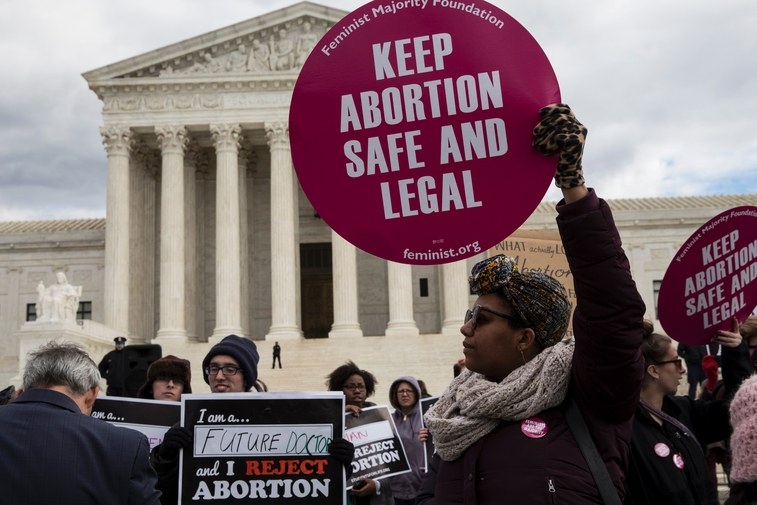









 Kate Marshall (Jenn Stanley / Rewire)
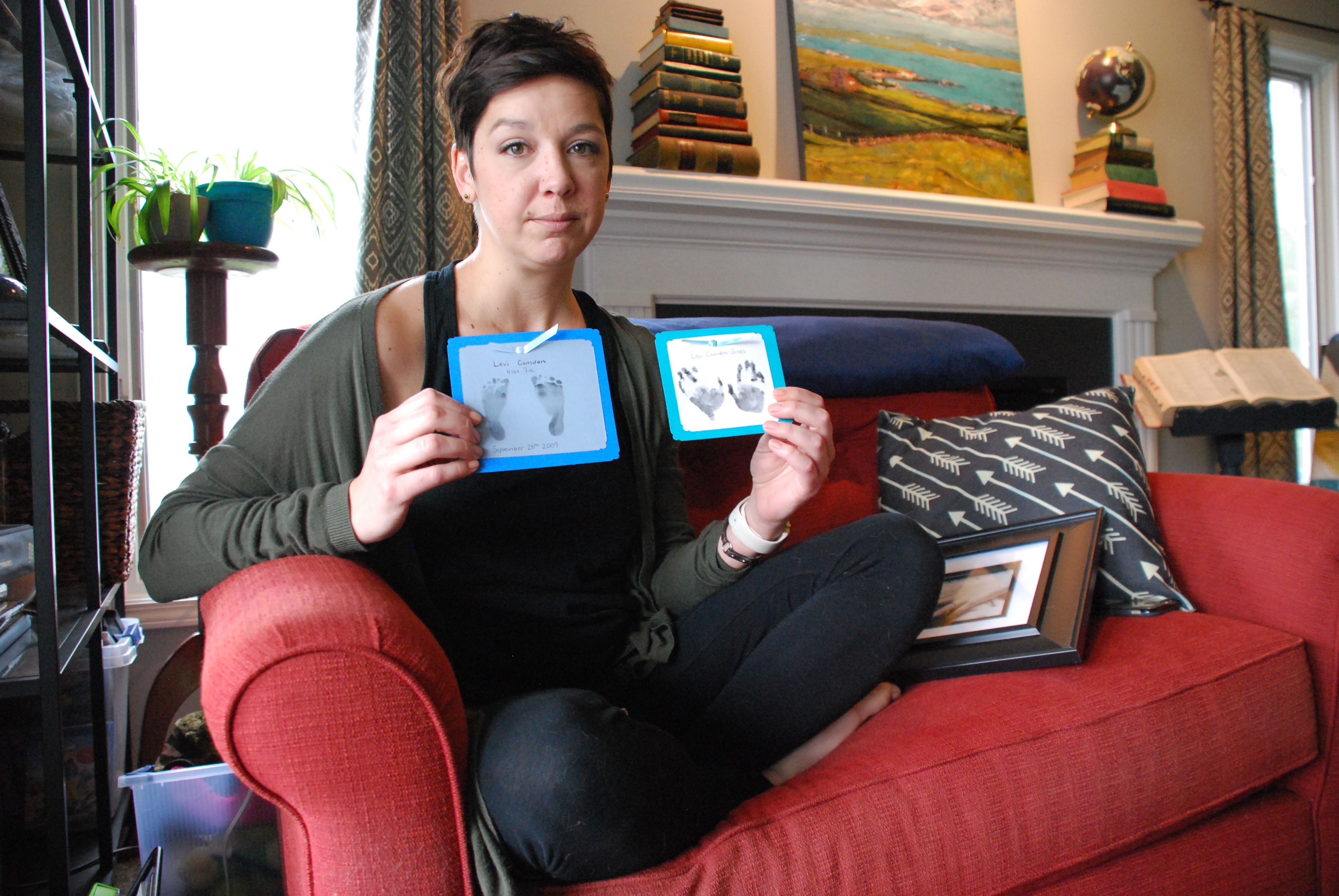 Jennifer Jones holds prints of the hands and feet of her stillborn son, Levi. (Amy Littlefield / Rewire)


 Abortion - Abortion Clinics, Abortion Pill, Abortion Information