Newfoundland and Labrador still hasn’t said whether it will cover the $300 price tag

Newfoundland and Labrador has just two providers of surgical abortion province-wide.

Newfoundland and Labrador has just two providers of surgical abortion province-wide. (Phil Walter/Getty Images)

Accessing abortion services for all Canadians seemed to become much easier with Health Canada’s 2015 approval of, and recent easing of restrictions on, Mifegymiso, commonly known as the “abortion pill.”

“Seemed” is the key word here, however. It’s still tougher to get access in Newfoundland and Labrador than it is in many other parts of Canada.

Why? The hefty $300 price tag.

Alberta, Ontario, New Brunswick, Nova Scotia and Québec have all pledged universal cost coverage of the abortion pill, but we are still waiting on a statement from the government of Newfoundland and Labrador regarding this issue.

Considering the geographic limitations of accessing a surgical abortion in this province — with the only two providers being located in St. John’s — it’s clear that the province is grossly under-serviced. The abortion pill offers a less invasive and theoretically more accessible alternative to a surgical abortion, but the cost could very well be prohibitive for some individuals in the province.

Abortion Pill

Full cost coverage from the government for the abortion pill would transform access to abortion services in rural and remote areas of the province. (Charlie Neibergall/Associated Press)

A surgical abortion can involve one or two appointments, depending on which provider an individual selects. The cost for the procedure itself is covered by the provincial health care plan, but those who live outside of St. John’s are on the hook for associated expenses including travel, accommodations, child care, and so forth.

An individual from Labrador, for example, may have to pay over $100 per night for hotel accommodations and as much as $1000 for a round-trip flight to St. John’s (along with meals, child care and rental car fees, of course), not to mention loss of income due to absence from work.

The abortion pill practically eliminates these costs, but still presents a financial burden of its own with its $300 price tag. Full cost coverage from the government would transform access to abortion services in rural and remote areas of the province.

Mifegymiso consists of two drugs – mifepristone, which stops the production of the hormone progesterone that is necessary for pregnancy, and misoprostol, which causes uterine contractions, essentially inducing a miscarriage. Health Canada approved Mifegymiso in July 2015 for use in the first nine weeks of pregnancy and the drug can be obtained through a prescribing health professional or pharmacist.

But the fact that the cost of Mifegymiso is covered in some provinces but not others calls into question the universality of our health care system. This has really been a prolonged question, considering the total lack of access to abortion in P.E.I. until very recently. (At the time of writing, the P.E.I.’s government has made no indications as to whether it plans to cover the cost of the abortion pill).

Unequal access

Universality is a key principle of the Canada Health Act, meaning that all insured residents of the Canadian health care system should be able to receive the same level of care, regardless of where they live. Yes, everyone in Canada theoretically has access to the abortion pill, but only those of certain financial means truly have access if they live in certain parts of the country.

This essentially creates a two-tiered system, which Darrah Teitel of Action Canada for Sexual Health and Rights argues is a violation of the Canada Health Act. Health Minister Ginette Petitpas Taylor said in late Octoberthat her office is prepared to “speak to all [their] provincial and territorial officials to see if [they] can move forward on this,” adding that they “want to ensure that all women have access to the reproductive health services that they need.”

That’s a positive sign, but it means very little to those in Newfoundland and Labrador and other provinces who might need Mifegymiso now, but can’t pay the cost.

Having the right to choose is only meaningful when all options are available for selection. The World Health Organization (WHO) lists Mifegymiso as an essential medicine with proven efficacy and low rates of major complications. So, the question is this: if certain provinces, the federal government and the WHO have identified Mifegymiso as essential to optimizing access to abortion services, then why hasn’t the provincial government here done the same?

http://www.cbc.ca/news/opinion/mifegymiso-cost-nl-1.4395267

“The Center appears to be advertising abortion services that it intends not to offer in apparent violation of the law.”

A consumer watchdog group has filed a complaint with Massachusetts Attorney General Maura Healey accusing an Attleboro crisis pregnancy center, or fake clinic, of breaking state law by masquerading as an abortion clinic.

The Campaign for Accountability sent the complaint Thursday after Rewire revealedhow the website for Attleboro Women’s Health Center offers detailed information about abortion procedures, cost estimates, and appointments “to discuss the abortion methods that may be available to you.”

That offer “seems incompatible” with the fact that the center does not provide or even refer for abortion care–a reality it concedes at the bottom of the website’s “About” page, the complaint notes.

“The Center appears to be advertising abortion services that it intends not to offer in apparent violation of the law,” Katie O’Connor, legal counsel with the Campaign for Accountability, wrote in the complaint.

O’Connor’s complaint accuses the fake clinic of deceptive business practices and misleading advertising. In addition to “deliberately trying to confuse and deceive” abortion patients, the website has inaccuracies about the purported psychological risks of abortion care and the unproven claim that a medication abortion can be reversed, O’Connor notes.

The center is located about half a mile from Four Women Health Services, an abortion clinic whose mission statement Attleboro Women’s Health Center appears to have copied nearly verbatim on its website.

The complaint also alleges the fake clinic is making unauthorized use of a corporate name. That’s because Attleboro Women’s Health Center shares an address and business hours with Abundant Hope Pregnancy Resource Center, a self-described “Christian pro-life ministry.”

“We are under that umbrella,” a representative at the health center told Rewire, when asked if the health center is the same organization as Abundant Hope.

The health center’s website is registered to Darlene Howard, executive director of Abundant Hope, an affiliate of Heartbeat International, which describes itself as the world’s largest network of crisis pregnancy centers, and instructs these anti-choice clinics to conceal their intentions by scrapping religious language, for example.

“Abundant Hope appears to be operating as Attleboro Women’s Health Center, yet does not appear to have filed an amendment to its articles of incorporation in apparent violation of Massachusetts law,” O’Connor wrote in her complaint.

Howard was unavailable for comment on the complaint.

Attempts to regulate crisis pregnancy centers at the state, county, and city levels have faced legal challenges. But Attorney General Healey has taken steps to protect abortion access, reaching a settlement agreement this year to prohibit a Boston-based firm hired by anti-choice groups from targeting “abortion-minded women” in Massachusetts with digital propaganda while they visit abortion clinics. The settlement also followed a Rewire investigation.

“Massachusetts has really robust consumer protection laws and obviously an attorney general who’s willing to enforce those laws,” O’Connor told Rewire. “We’re hopeful in this pretty egregious case that she would decide to investigate.”

A spokesperson for Healey confirmed the office has received the complaint about Attleboro Women’s Health Center and will review it. The violations detailed in the complaint can carry fines or even imprisonment, but O’Connor said her hope is that Healey’s office stops the fake clinic from deceiving people.

“I think what I would most like to see is the Attleboro Women’s Health Center having a website that more accurately describes what it actually does,” O’Connor said.

https://rewire.news/article/2017/11/09/watchdog-massachusetts-fake-clinic-illegally-deceives-abortion-patients/

Anti-abortion lawmakers push ‘Conscience Protection’ bill
© Greg Nash

Anti-abortion lawmakers in the House and Senate are pushing for language in the end-of-year spending bill that they say would protect health-care professionals who don’t want to take part in abortions because of their personal objections.

The Conscience Protection Act would allow health-care providers like nurses and doctors to sue if they’re coerced into participating in abortions or if they face discrimination at work for refusing to do so.

It would also provide legal recourse for hospitals, health systems, religious charities, churches and insurance companies who are required to participate in or provide coverage for abortion.

Current law prohibits discrimination against health-care providers who refuse to participate in abortions, but doesn’t allow for those who say they’re discriminated against to pursue legal action.“Congress needs to act now,” said Rep. Diane Black (R-Tenn.), a sponsor of the bill and the chairwoman of the House Budget Committee.

“It is time for this comprehensive, reasonable and modest bill to be voted on so we can allow millions of Americans who believe as I do in the sanctity of life to abide by those beliefs without having them trampled on by their own government,” said Black, who is running to be governor of her state.

The bill’s language was included in the fiscal year 2018 House appropriations package passed earlier this year, and supporters say they’re pushing for it to be included in the end-of-year spending package in December.

Congress must approve a new spending bill by Dec. 8 or the government will shut down.

The conservative House Freedom Caucus and the Pro-Life Caucus have pushed unsuccessfully for similar language to be included in past year-end spending bills.

Supporters of abortion rights argue the proposal would facilitate discrimination against women seeking abortion care.

Anti-abortion lawmakers push ‘Conscience Protection’ bill

“The right to abortion is meaningless if you can’t afford to pay for it.”

Alana found herself in a bind this summer when she discovered the abortion care she wanted would cost $650—more than she could afford.

“I was really close to having enough, but it was kind of like the difference between paying a bill, and not paying a bill,” said the 29-year-old Seattle woman, who is uninsured. Rewire is withholding her last name for privacy.

Alana was referred to The CAIR Project, a Washington-based abortion fund.

“I was really surprised it existed, I don’t know why,” Alana said. “It’s kind of an amazing thing.”

This week, The CAIR Project merged with Oregon’s Network for Reproductive Options. The new fund, known as the Northwest Abortion Access Fund, is the nation’s largest abortion fund by geography, serving Washington, Oregon, Alaska, and Idaho.

More than 70 abortion funds operate through the United States, often flying under the radar or discovered only in times of crisis. A pregnant person might lack health insurance, or find the deductible is beyond their means, or live in a state like Idaho where Republican lawmakers have largely banned abortion coverage in public and private health plans. Half of calls to what is now the Northwest Abortion Access Fund come from Idaho. In other cases, it’s the cost of travel or accommodations that are prohibitive.

The unintended pregnancy rate among women living below the poverty line is five times higher than the rate for those at or above the poverty line, according to the Guttmacher Institute. Most abortion patients say they’re unable to afford another child. They say adding to their family will interfere with their job, schooling, or ability to care for their family. A five-year study of about 1,000 women seeking abortion care indicated that the cost of the procedure and logistics like travel amounted to more than one-third of their monthly income.

“The right to abortion is meaningless if you can’t afford to pay for it,” Nadia Piedranhita, a board member with Northwest Abortion Access Fund, said in a statement. “Our callers are forced to choose between paying rent or paying for their abortion. One caller had to pawn her wedding ring. Another had to return the Christmas gift she’d bought for her toddler.”

The two abortion funds fielded up to 70 calls per week before the merger. Piedranhita said some were military service members shocked to find their insurance doesn’t cover abortion services because of the discriminatory Hyde Amendment, which blocks federal funding of abortions with few exceptions.

Alana lives in Washington state, where Medicaid and many private insurers cover comprehensive reproductive health care, including abortions. But her income level puts her in a bind: She makes too much to qualify for Medicaid and too little to afford insurance on the Affordable Care Act exchange, she told Rewire. The unplanned pregnancy had her scrambling.

“You kind of beat yourself up because you didn’t intend to be a mother, and you don’t like the situation where you are,” she told Rewire.

The CAIR Project paid $150 so she could afford to end her pregnancy.

Not everyone is so fortunate. With a weekly budget of around $3,300, the money for the average grant, which is $180, often runs out by Tuesday or Wednesday, according to the fund. Those that need assistance must then reschedule their appointments, ask for time off of work, or find a sitter and a ride. The fund helps pay for travel and lodging, and gave out $32,000 in 2016, according to a statement.

Alana said the financial strife took a toll. She said her only alternative would’ve been to ask her mother for money.

“She’s really religious. She would have done it, but it would’ve hurt our relationship,” Alana said. “She definitely would’ve wanted me to have the baby.”

Alana was glad she didn’t have to.

https://rewire.news/article/2017/11/03/countrys-largest-abortion-fund-launched-week/

Arizona doctors blasted Republicans for backing the state law, branding it as “tantamount to quackery.”

The state of Arizona is on the hook for more than $600,000 in legal fees over a 2015 Republican-backed law promoting an unproven treatment described as abortion reversal.

A federal judge signed the legal fees order Monday, as the Associated Press reported. Arizona now owes a total of $1.7 million in legal fees to opponents over the state’s anti-choice laws, according to a statement from Planned Parenthood Arizona.

A group of advocates, including Planned Parenthood Arizona, had sued to block the state law that required doctors to tell patients it was scientifically possible to undo a medication abortion. As the case wound its way through court, the state failed to produce a single credible expert to vouch for that claim, as Rewire‘s Sofia Resnick reported. Last year, a federal judge dismissed the lawsuit after Arizona’s governor signed a bill repealing the measure.

“No one should be forced to hear medically inaccurate information because of politics,” Jodi Liggett, vice president of public affairs for Planned Parenthood Arizona, said in a statement. “When politicians use junk science and things go wrong, they hand taxpayers the bill.”

It’s unclear how Arizona will come up with the money to cover the legal expenses. The governor’s office didn’t respond by publication time to a Rewire inquiry by phone and email.

Medication abortion requires that two medications, mifepristone and misoprostol, be taken in the span of a few days to be effective. Only a single published report supports the notion a medication abortion may be reversed when a woman doesn’t take misoprostol and is, instead, injected with a dose of the hormone progesterone. The paper relies on anecdotes from a tiny sample—seven women in total—and was conducted without an ethics oversight review.

Arizona doctors blasted Republicans for backing the state law, calling it “tantamount to quackery.” A systematic review of medical literature found that failing to take the second medication, misoprostol, may be just as likely to forestall an abortion as injecting women with progesterone.

“In the extremely rare case that a patient changes their mind before taking the second pill, watchful waiting and inaction appears to be just as effective as the ‘reversal’ treatment,” wrote Renee Bracey Sherman, a reproductive justice activist, and Dr. Daniel Grossman, director of a reproductive rights research group at the University of California, San Francisco, in a recent opinion piece for the Guardian.

Arizona isn’t the sole state to amass sizable legal fees over anti-choice laws. Texas owes upward of $4 million, Wisconsin is on the hook for $1.6 million, Alaska spent nearly $1 million, and Idaho must pay more than $150,000.

https://rewire.news/article/2017/08/17/arizona-owes-600000-pushing-unproven-abortion-reversal/

AP/REX/Shutterstock

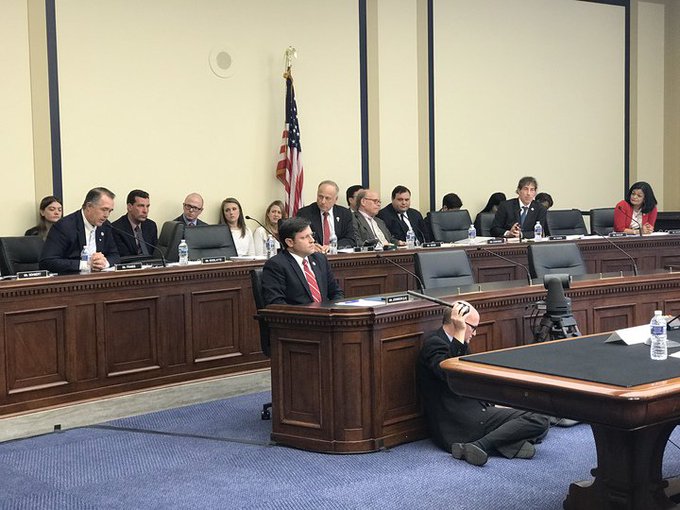
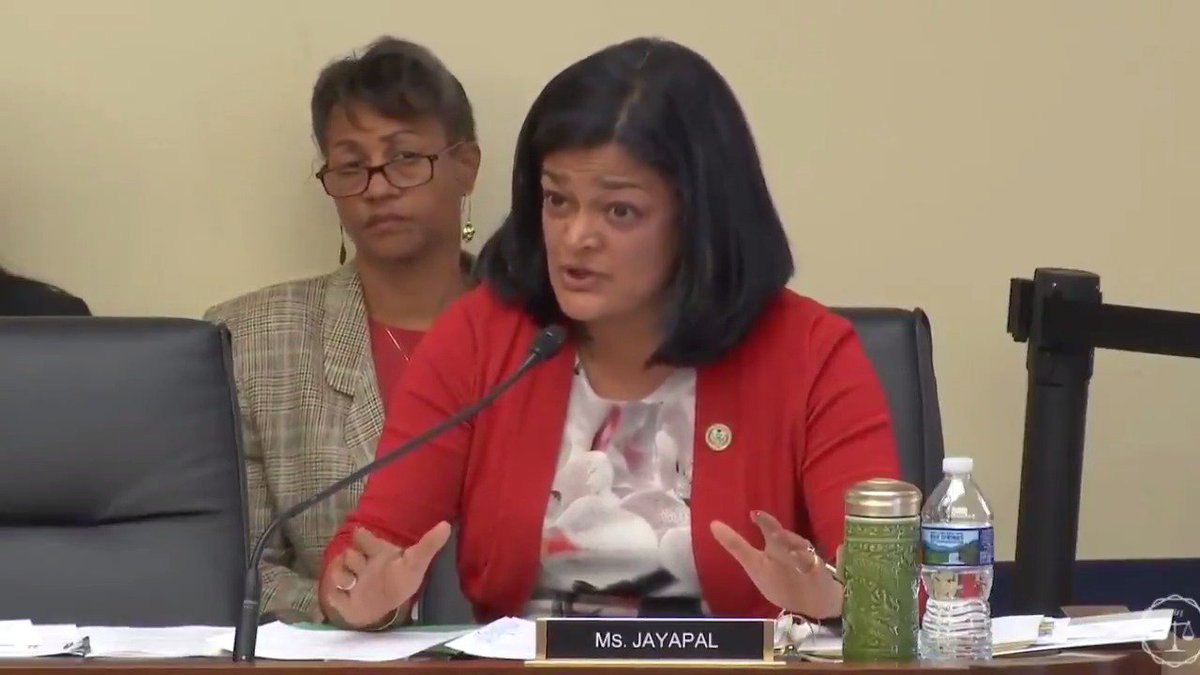
On Wednesday, the Subcommittee on the Constitution and Civil Justice held a hearing on a bill that has raised concern and criticism from pro-choice activists. Lawmakers are debating HR 490, which basically determines when it is valid to get an abortion. And yet, the discussion about women having reproductive freedom was dominated by men, a fact that was made clear by Washington Rep. Pramila Jayapal, the only woman invited to speak on the abortion subcommittee.

“As the only woman on the dais, it was incredibly disturbing to see Republican men attempt to strip away my constitutional rights and privacy of women,” Jayapal tells Bustle.

Iowa Rep. Steve King introduced the H.R. 490 bill, known as the Heartbeat Protection Act, in January to demand that the United States “prohibit abortion in cases where a fetal heartbeat is detectable.” The remarkably limited nature of HR 490 has been criticized by observers as a blanket ban on virtually all abortions.

King’s proposal, if it becomes law, would ban abortion procedures as soon as a fetal heartbeat is detected and that can happen as early as six weeks. The six-week marker in the bill would hurt women, as many aren’t even aware that they are pregnant at such an early point. In fact, there are multiple cases wherein a woman is entirely unaware that she is expecting.

“The six-week abortion ban bill is simply unconstitutional,” Jayapal says. “It restricts the constitutionally protected right for women to make decisions about our own bodies, and similar state bills have already been struck down in the courts.”

With HR 490, the GOP is trying to take our reproductive rights away. As the only woman lawmaker in the room, I’m saying  EVER.

The bill heavily goes after physicians. It states there is no leniency or exception even if the pregnancy is a product of rape or incest. The only time the bill makes an exception is if a woman’s life is in danger, though it makes clear that it is only when a “life is endangered by a physical disorder, physical illness, or physical injury.” It makes clear that the bill does not make an exception for “psychological or emotional conditions.”

If the bill becomes law, physicians who are convicted of violating its rules will be punished with imprisonment. According to the bill, a medical practitioner who performs an abortion on a fetus that has a “detectable heartbeat” could face five years behind bars.

Jayapal has long been a vocal critic of the bill. She cited a Pew Research Center study from January that estimated seven out of 10 Americans were opposed to overturning Roe v. Wade and also mentioned that states like North Dakota and Arkansas with similar bans on abortions were ultimately declared unconstitutional.

“There is no reason to believe that law would face a different fate in the Supreme Court,” Jayapal told the subcommittee.

It is a woman’s right to choose what happens with her body. It’s between her and her doctor—not her, her doctor and the GOP. 

And during the hearing, Jayapal made sure everyone knew she was the only woman representing Americans in the hearing. She wrote on Twitter, “With HR 490, the GOP is trying to take our reproductive rights away. As the only woman lawmaker in the room, I’m saying #NoAbortionBan EVER.”

Jayapal added that she believes the Republican men who were in the room with her debating women’s freedom are hypocrites. She tells Bustle, “Republicans and their witnesses say they are on the side of life, yet they continuously cut CHIP and health care for single mothers, attack programs meant to improve the lives of women and children, and undermine access to critical contraception.”

https://www.bustle.com/p/what-pramila-jayapal-thought-about-being-the-only-woman-debating-the-anti-abortion-heartbeat-bill-3204922

Notre Dame reverses decision to end no-cost contraceptive coverage

© Getty

The University of Notre Dame has reversed its decision to end free contraceptive coverage for employees.

The insurance company used by employees at Notre Dame will keep a plan with contraceptive coverage with no co-pay, US News & World Report reported Tuesday.

“The University of Notre Dame, as a Catholic Institution, follows Catholic teaching about the use of contraceptives and engaged in the recent lawsuit to protect its freedom to act in accord with its principles,” the university said in an email Tuesday.

“Recognizing, however, the plurality of religious and other convictions among its employees, it will not interfere with the provision of contraceptives that will be administered and funded independently of the University.”

The university had previously said it would stop coverage for employees of the university on Jan. 1.

The original decision came after the Trump administration rolled back an ObamaCare requirement that employers include birth control coverage in their health insurance plans.

The Trump administration last month published rules that said any for-profit or nonprofit employer or insurer can stop following the birth control mandate on moral and religious grounds.

ObamaCare mandated that employers offer health insurance that covers birth control without a co-pay, with exemptions for houses of worships and some companies.

Notre Dame reverses decision to end no-cost contraceptive coverage

A new exhibition aims to show the wide range of reasons women have abortions. “Sometimes life is complicated,” its creator said.

My Body, My Life

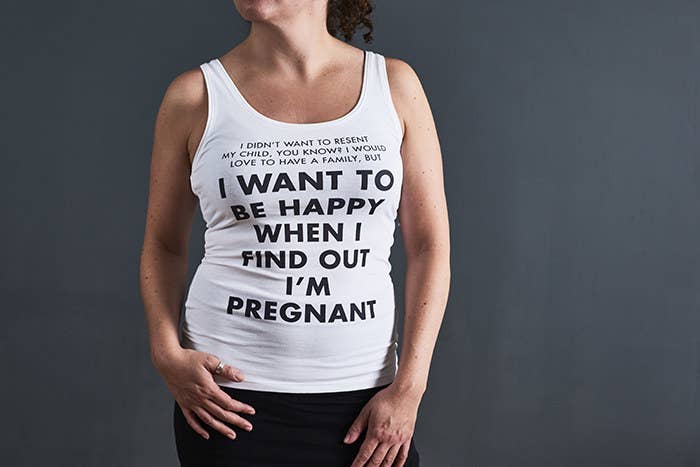
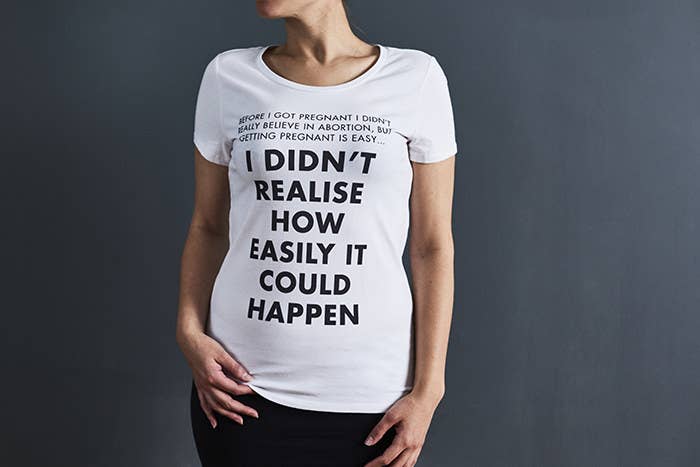
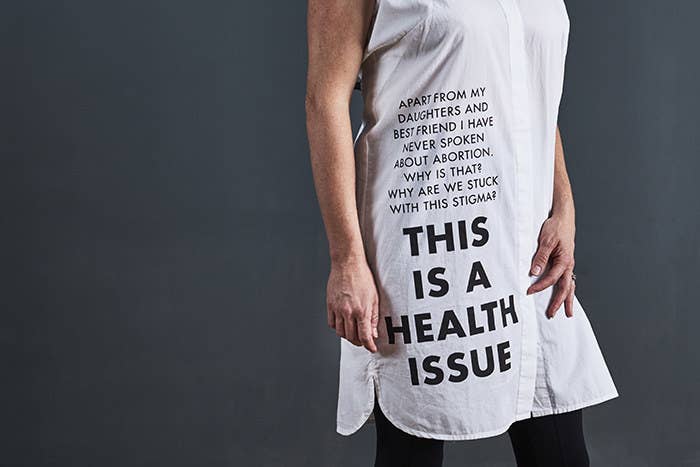
Women have been sharing their stories about why they chose to have abortions in the hope that a greater understanding of their reasons might help to tackle stigma around the procedure.

Last year almost 200,000 women in England and Wales chose to terminate a pregnancy, and one in three women will have an abortion in her lifetime, but the topic still remains relatively taboo.

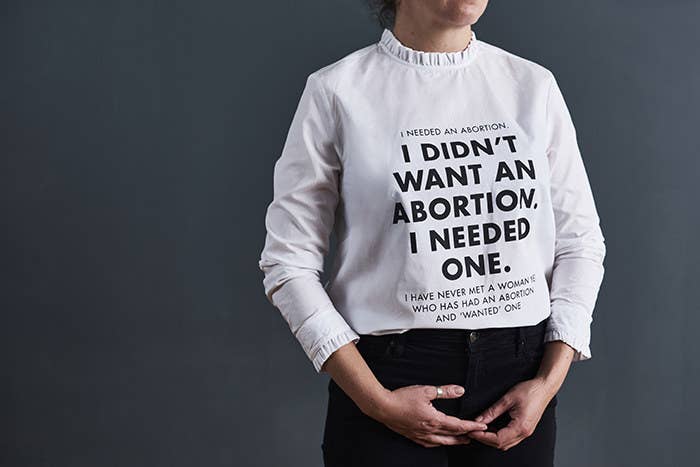
In a new exhibition, My Body, My Life, opening at The Old Fire Station in Oxford on 7 November, clothing printed with women’s abortion stories will be displayed to help demonstrate the complexities of those women’s decisions.

My Body, My Life

Lesley Hoggart, from the Open University, and Imogen Goold, associate professor of law at the Oxford University, collected the stories and created the exhibition to show the huge variety of women who get abortions.

“We have these stereotypical ideas that it’s only younger women getting abortions, but it’s a huge range, from women in their early teens, right up to women in their late 40s, who think they’re going through the menopause,” Goold told BuzzFeed News. “I really wanted all of that shown.”

My Body, My Life

“Many women who get pregnant are using contraception of some kind,” she continued.

“Those kind of facts help us understand why women need abortions. I particularly want to get rid of this idea that it’s just laziness, or they should have tried harder, or it’s all their fault.

“Sometimes life is complicated.”

Earlier this year, Labour MP Diana Johnson put forward a parliamentary bill to loosen restrictions on abortion in the UK, and the 50th anniversary of Britain’s current abortion law, the Abortion Act 1967, has prompted discussions over whether medical advances mean it is no longer suitable.

My Body, My Life

But Goold said she was keen for the exhibition not to be politicised, and the views of women who are both for and against abortion are represented.

“Some women are happy about their abortions, some regret it and some are conflicted,” she said. “We are keen not to just have a pro-choice message, it’s meant to be about the fact that abortion is complicated and to understand that, we need to understand a whole range of experiences that women have reported.”

Instead the aim of the exhibition is to encourage women to share their stories and experiences. The items of clothing are laid out on a rail and visitors to the exhibition are invited to chat as they browse through them. During a recent previous version of the exhibition at the Edinburgh Fringe, Goold said she saw several women strike up conversations around abortion.

My Body, My Life

“We had women talking to us, and talking to their friends, but also talking to strangers, which was great,” she said. “What I’ve noticed in conversations with women is you say your story, and all of a sudden other women will start sharing theirs.”

Goold hopes that an increased openness about abortion, and the range of women who have them, will go a long way to reducing stigma, which often leaves women feeling guilty or ashamed.

My Body, My Life

“I think it’s important that when we think about abortion law reform we actually think about the women who are having them,” she said.

“If you’re thinking about those women, you might think about it from other perspectives.”

https://www.buzzfeed.com/laurasilver/women-sharing-their-abortion-stories-hope-to-tackle-the?utm_term=.cu79JpWLw#.lcm594DaM

Abdul El-Sayed vowed to use the governor’s office to block anti-choice measures if Republicans maintain the majority in Michigan’s legislature.

DETROIT—When Michigan Democratic gubernatorial candidate Abdul El-Sayed thinks about reproductive justice, he thinks “about it as building the space within which women are empowered to make their best decision at every point along which they might make a decision about their fertility, and their reproductive choices.”

That’s what he told Rewire on Saturday during an interview at the Women’s Convention in Detroit, where he was a speaker for a plenary session on engaging new voters in 2018 elections. El-Sayed is running in Michigan’s Democratic primary in hopes of replacing term-limited Gov. Rick Snyder (R).

His campaign website engages in both reproductive rights and justice, noting that the latter “goes beyond health care” and touches on other issues such as jobs and pay. “This is something that I believe in deeply,” he said, pointing to the experiences he and his wife, who is nine months pregnant with their first child, have had. “She’s a doctor, and the set of challenges that she’s had to face around thinking about child care, around what we can do together to create the best means for raising our daughter and empowering my wife as she continues forward in her medical career—those are hard things to deal with.”

“And you know, we’re really privileged,” he continued. “But there’s a lot to think about there: Breastfeeding, how we want to feed the child, what access to child care we have and where we want to go. Those are complications that when people just talk about you know, pro-choice, pro-life, right, they don’t get baked into the picture. Now, you can imagine if Sarah and I didn’t have the means that we had, or Sarah had to make this decision alone—those are deep, complicated choices, but it reaffirms the point to me that this always is an individual decision and we have to empower women to make that decision whichever way it works out.”

El-Sayed, 32, was born and raised in Michigan, the son of Egyptian immigrants. He would be the nation’s first Muslim governor if elected. He faces an August 7, 2018, Democratic primary against candidates including former state Sen. Gretchen Whitmer.

He served as the executive director of Detroit’s Health Department, where he helped build the SisterFriends program. According to its website, the program “connect[s] pregnant moms and families to existing programs and resources—and to each other” in order to address the high rates of infant mortalityin Detroit. El-Sayed described the effort as “a partnership program where the health department helps to train sister friends, or partners, who are interested in taking on a little sister—somebody who is facing pregnancy—and being a partner, role model, resource for that individual as she moves through her pregnancy and into the first year of life.”

Noting that he had worked on the program prior to leaving the Department of Public Health and that it launched just after his departure, he said he was “very proud of it.”

El-Sayed said “the best way to prevent an abortion is to prevent an unwanted pregnancy in the first place.” Under his leadership as public health commissioner in Detroit, the department worked to addressunplanned teen pregnancy, and he has discussed the importance of providing contraception such as long-acting reversible options in reducing poverty.

If elected to the governor’s office, El-Sayed told Rewire that advocacy would be a part of putting his pro-choice views into action. “One of things that you have as the governor is a position on which to weigh in on critical issues, and I will always use that position to advocate for pro-choice policy and to advocate for Planned Parenthood, and to advocate based on my own experiences and the data we have in Michigan,” he said.

Part of that would mean applying his positions on health care to the state’s budget, he suggested. “Our public health budget Michigan is 1.5 percent of the overall budget,” said El-Sayed. “That is crazy in a state that poisoned 9,000 kids in Flint, right? And the level to which we have invested in family-planning services and empowering women across the extent of their capacity to choose, I think is very limited, and I think there is a responsibility for us to really invest there because, well, if you’re empowering women to make their best choice, it has knock-on effects over the long-term.”

“That’s a great investment in public health as a public-health practitioner,” he continued.

El-Sayed said he would “want to appoint cabinet-level leaders who believe in the responsibility to empower women in the right to choose.”

“I’d want to make investments that signal that,” he said, “to how we invest as a state, to how we advocate around federal policy, to how we empower local health departments to work.”

Given that Republicans hold the majority in Michigan’s state legislature, El-Sayed vowed to use the power of his office to block anti-choice measures that came across his desk. “I have a pretty strong pen as a governor, you know, and I’ll veto anything that comes along my desk that would limit a woman’s right to make her best choice,” he said.

He mentioned what he saw as a “responsibility we have to push a broader narrative about why this matters” and to “personalize these conversations” about reproductive rights. “I think if we bring empathy to this conversation,” he said, “share people’s stories and empower them to share their stories, I think it changes the conversation.”

“It is an area that I will unabashedly lead on because I think in a civilized society like ours we need to be able to empower people to be able to make their best decisions about when and with whom and how and what circumstances to bring a person into the world,” El-Sayed said.

https://rewire.news/article/2017/11/02/gubernatorial-candidate-says-unabashedly-lead-protecting-reproductive-rights-michigan/

Yes, he said this in 2017.

This week, the Wisconsin State Assembly voted to approve a bill that would prevent health insurance plans for state employees from covering abortions, except in the cases of rape, incest, or to save the mother’s life.

While the bill passed on party lines, there was one legislator, Rep. Scott Allen (R), who said the law didn’t go far enough.

“Often in public debates people are afraid to say it, but let me just say it: Abortion is wrong,” Allen said, as reported by Mitch Reynolds of WIZM. “Although it may be legal we should in no way shape or form should we provide public funding for abortion.”

Allen then went on to argue that abortion was wrong for economic reasons, essentially saying that all women should be forced to have babies in order to grow the labor market.

“Labor force shortages are tied to population declines. Labor force shortages are a limiting factor in economic growth,” Allen said. “And limited economic growth poses a problem when government tries to pay for public services and infrastructure. In spite of this Mr. Speaker, ironically, the democrats continue their effort to support the abortion industry.”

According to the Capital Times in Wisconsin, the state Department of Employee Trust Funds already specifies that it will only cover abortions for “medically necessary” procedures. But this bill takes that a step further and makes sure “medically necessary” is clearly and concretely defined.

Democrats in the Wisconsin State Assembly tried to add two amendments to the bill — one to clarify that the measure would not impede the use of contraception, and another to get rid of the requirement that the victim of sexual assault or incest report the crime to law enforcement before being eligible for an abortion. Both amendments were rejected; those votes also were split strictly on party lines.

Speaking of party lines, it’s worth noting that the Wisconsin state assembly maps are considered to be the result of some of the most aggressive partisan gerrymandering in the country — in fact, they are currently under review by the Supreme Court.

Gov. Scott Walker (R-WI) announced earlier this month that Wisconsin’s total labor force reached an all-time high in September.

https://thinkprogress.org/abortion-restrictions-labor-force-fd5a0d7689cb/