IUDs
Illustration by Miles Donovan for TIME

Should you use birth control pills, condoms or an intrauterine device (IUD)? Women choose their birth control based on many factors, like effectiveness or comfort—but cost has been less of a consideration, ever since the Affordable Care Act. A provision in the act required employers to provide contraception to all women in their health plans without charging a copay or coinsurance fee. Estimates suggest that more than 55 million women had access to birth control without co-pays because of the mandate.

Going forward, the price of birth control may matter more. On Oct. 6, President Donald Trump rolled back that coverage and issued a new rule that offers exemptions for any employer, regardless of industry, who objects to offering contraception coverage due to his or her personal religious beliefs or moral convictions.

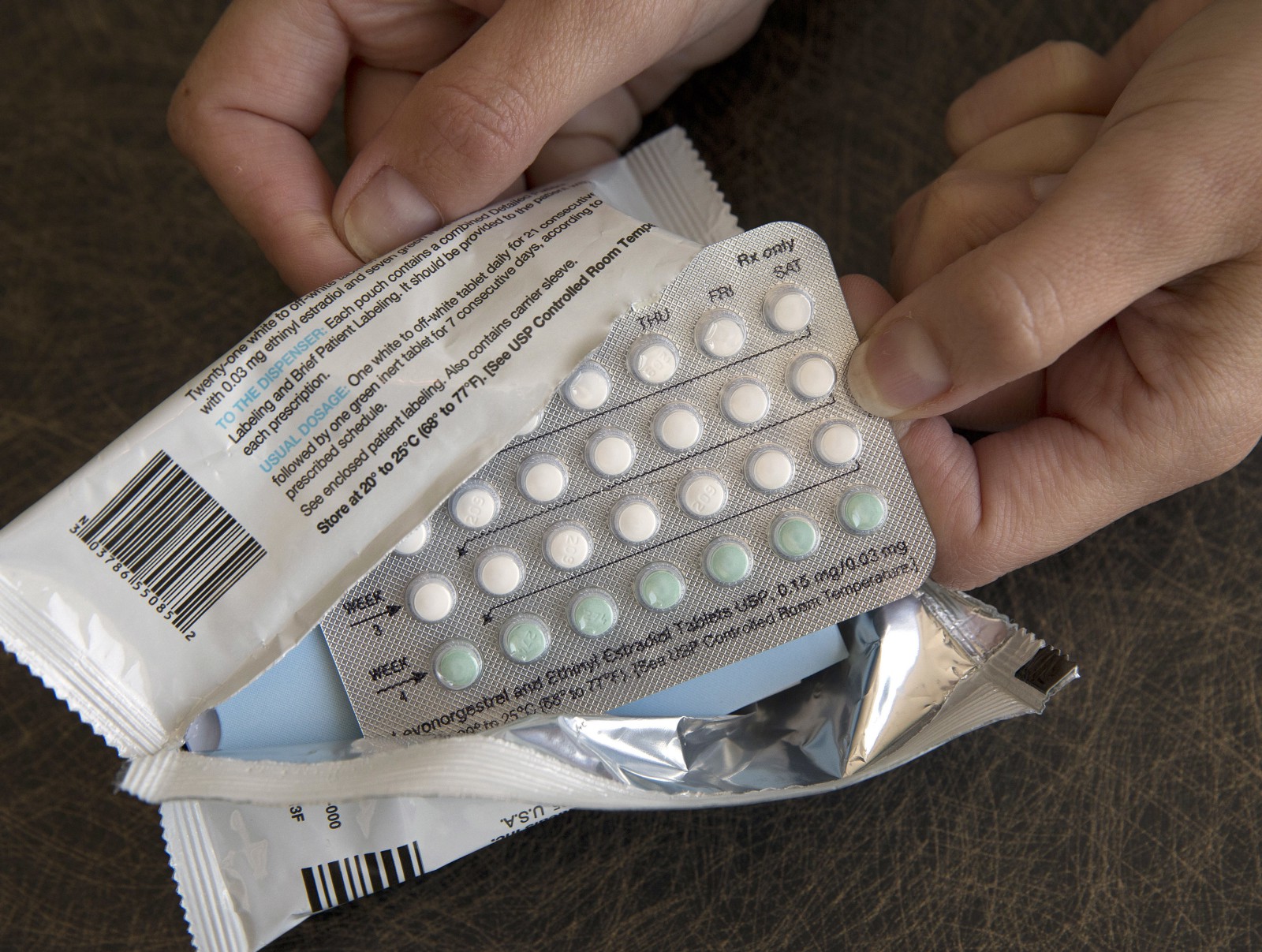
Experts don’t yet know what effect the new rule will ultimately have on women’s ability to access birth control. But some worry that the IUD—one of the most effective and low-maintenance types of birth control—could become prohibitively expensive. Without insurance, it’s one of the priciest methods up front, costing about $900. And though an IUD may be a better financial investment over time, since women can use the device for several years, such a high initial price tag is beyond the means of many women.

Health care analytics company Amino analyzed billions of health insurance claims from 2014 to mid-2017 to understand how much an IUD could cost women if their insurance no longer covered it. They analyzed the Mirena and the Skyla IUD, which use the hormone progestin, and the ParaGard IUD, a non-hormonal copper-releasing device.

On average, an IUD could cost about $1,000 out of pocket across the country, the group reported. Below is an interactive map using data from Amino of what the typical cost of an IUD could be in each state. (The price estimates are for the total cost of an IUD, including the insertion procedure.)

Cost of IUDs by State
MACTDCRIDE$1,494$937
Click a state to see the cost and rank.

Source: Amino

As the data show, the lowest estimated cost is about $800. “[An IUD] is not cheap, and the median price is well outside affordability for many women,” says Sohan Murthy, a data scientist at Amino.

Compared to the condom, which has a typical use failure rate of 18%, or the birth control pill, which has a failure rate of 9%, the IUD has a failure rate of 0.8% or less. IUDs also require little to no maintenance for years, and hormone-free versions are available. Once IUDs became more affordable under the ACA, public health groups across the nation launched public awareness campaigns to encourage more women to consider using long-acting reversible contraception like the IUD.

The method is growing more popular. About 6% of women in the U.S. had tried the method in 2002, but that grew to 15% in 2011-2015. Studies have also shown that when women have access to all forms of birth control without financial barriers, they are more likely to choose the kind that’s most effective. A long-term study based out of St. Louis called the The Contraceptive CHOICE Project enrolled nearly 10,000 women and found that when the women were counseled about all methods of birth control, 75% chose a long-active reversible method, like the IUD.

Even before the new rule was announced, many women sought IUD consultations with providers, potentially in anticipation of changes to insurance coverage of birth control. A January report found that the number of women who visited their physician to discuss the birth control method rose nearly 19% after Donald Trump was elected as President.

Methodology

Data is from Amino. Cost per state is determined by taking the median cost of the three types of IUDs in each state.

http://time.com/4985605/iud-birth-control-health-insurance/

If the undocumented teen would have been granted access to abortion care when she initially requested it, the procedure would have taken ten minutes.

A teenage immigrant who had been barred by federal officials from accessing abortion care can now have the medical procedure after the full U.S. Court of Appeals for the D.C. Circuit on Tuesday overruled a three-judge panel of the court that had temporarily blocked the teen from having an abortion.

It has been an arduous legal battle for the unaccompanied 17-year-old from Central America, who has been “held hostage” by the Office of Refugee Resettlement (ORR), the agency that oversees unaccompanied immigrant minors. Advocates told Rewire that ORR Director Scott Lloyd, who is vehemently anti-choice and refuses to allow the teen to access abortion care, is a sign of “anti-choice fanaticism” making its way into the federal immigration system.

After having an initial emergency order denied that would have allowed the teen to access abortion care, the American Civil Liberties Union (ACLU), acting on behalf of Jane Doe, sought a second emergency order last week. U.S. District Court Judge Tanya S. Chutkan on Wednesday ordered the federal government to allow the teenager to have the medical procedure, but the Trump administration late Wednesday filed an appeal with the D.C. Court of Appeals asking for an emergency ruling to block the ruling recognizing Jane Doe’s right to abortion care. The circuit court on Thursday issued an administrative stay, which delayed abortion care for the undocumented teenager. A three-judge panel heard arguments from the government and ACLU attorney Brigitte Amiri on Friday, later issuing a 2-1 decision on Jane Doe’s case, giving the undocumented teen until October 31 to secure a sponsor. Once a sponsor is secured, Jane Doe would be released from the custody of Health and Human Services (HHS), which oversees ORR, and she could access the medical procedure.

On Sunday night, the teen’s attorneys petitioned for en banc review, “asking the full bench of a federal appeals court in Washington to permit her to have an abortion immediately,” Politico reported.

Jane’s Due Process, a Texas organization that helps pregnant teens with legal issues, is assisting the ACLU with Jane Doe’s case. In a statement Friday, the organization said the court’s decision avoids “addressing the issue before them: whether the federal government holding Jane hostage and refusing to release her to obtain the abortion care to which she won the right to consent without anyone telling her parents or legal guardian causes her irreparable harm and violates her constitutional rights.”

Jane Doe, who is being detained at a shelter in Texas, has complied with all of the state laws required to access abortion care, including obtaining a judicial bypass when she was nine weeks pregnant. This week she will be 16 weeks pregnant. The state of Texas bans abortion after 20 weeks and in the Rio Grande Valley, where Jane Doe is detained, there is only one clinic.

“Every additional day she must remain pregnant against her will places a severe strain on [Jane Doe], both physically and emotionally. Every additional week the government delays her abortion increases the risks associated with the procedure,” the teen’s attorneys wrote in the petition for en banc review. “In a matter of weeks, J.D. will no longer be able to get an abortion at all, and the government will have forced [Jane Doe] to have a child against her will.”

Source: Jane’s Due Process

Jane’s Due Process outlined how as ORR forces Jane Doe to carry an unwanted pregnancy, not only do her chances of accessing abortion care become slimmer, but the procedure becomes more complicated. If the undocumented teen would have been granted access to abortion care when she initially requested it, the procedure would have taken ten minutes.

There are far-reaching concerns for Jane Doe’s case, including whether ORR will now make a practice of attempting to veto or block teens in its care who are granted judicial waivers to access abortion care.

The government’s stance is that its refusal to facilitate transportation for Jane Doe’s abortion care, meaning its refusal to provide transportation and its refusal to allow her guardian to provide transportation, does not constitute an undue burden.

Jane Doe could have accessed an abortion by now if she were an adult in an immigrant detention center overseen by Immigration and Customs Enforcement or as an undocumented adult in prison for committing a crime. But because she is a minor in legal custody of ORR—and ORR maintains an interest in “fetal life and child birth,” as it made clear in Friday’s arguments—the teen is being forced to carry an unwanted pregnancy.

https://rewire.news/article/2017/10/24/federal-government-cant-stop-immigrant-teen-abortion-appeals-court-rules/

STORY HIGHLIGHTS

  • The court set an October 31 deadline for the government to find Jane Doe a sponsor
  • ACLU files emergency petition for a rehearing by the full appeals court

(CNN)The ACLU is asking a federal appeals court for help in clearing the way for an undocumented teen in detention in Texas to end her pregnancy.

The group filed an emergency petition Sunday night in the matter of 17-year-old “Jane Doe,” who is 15-and-a-half weeks pregnant and wants an abortion. “Every additional week the government delays her abortion increases the risks associated with the procedure,” it stated.
The case was heard last week by a three-judge panel, but the ACLU is now asking it to be reviewed by the entire appellate court.
Because the teenager is a minor, Texas law required that she get parental consent or a judicial waiver to obtain an abortion. She came to the US without her parents, so she went to court with a guardian and was granted the right to consent to the abortion herself. However, the shelter in which she is living — which houses unaccompanied immigrant minors and is run by the Office of Refugee Resettlement — refused to transport her to have the procedure.
The ACLU filed a lawsuit on October 13 against the Trump administration.
“This administration has no shame and no regard for a woman’s health or decisions,” said Brigitte Amiri, senior staff attorney with the ACLU Reproductive Freedom Project. “Weeks ago, our client decided to end her pregnancy. Her decision has been disregarded and she’s now been dragged into a protracted legal battle over her ability to get the care she needs.”
The teen’s case has bounced around the court system for weeks.
On Wednesday, a federal judge ordered officials at the Department of Health and Human Services to allow her to be transported by a guardian or attorney “promptly and without delay” to an abortion provider to obtain state-mandated counseling and then to obtain the abortion.
But a three-judge panel from the DC Circuit Court of Appeals issued an administrative stay of that ruling Thursday — with one judge dissenting — to “give the court sufficient opportunity to consider the emergency motion” filed by the government.
On Friday, after hearing oral arguments, the panel of judges ruled the teenager could have the abortion but delayed the process. The ruling set a deadline of October 31 for the US Department of Health and Human Services (HHS) to get a sponsor for the girl.
But in a declaration filed Sunday with the DC District Court, Robert Carey — who served as director of the Office of Refugee Resettlement from March of 2015 to January of this year — said it will take weeks or even months to approve a sponsor.
“The entire process involves many steps, including: ‘the identification of sponsors; the submission by a sponsor of the application for release and supporting documentation; the evaluation of the suitability of the sponsor, including verification of the sponsor’s identity and relationship to the child, background checks, and in some cases home studies; and planning for post-release,'” the declaration says.
“Under the panel’s order, she will be pushed into November, pushing her closer to the point at which abortion is barred under Texas law,” according to the ACLU. Texas law restricts most abortions after 20 weeks.
The ACLU says that the teen is not seeking assistance from the government to obtain the abortion, as her court-appointed representatives will transport her to the health facility and private funds will pay for the procedure.
“Our government has held her in this unlawful position for almost a month; this Court should not allow this injustice to continue any longer,” the ACLU stated.
Texas Attorney General Ken Paxton issued a statement Friday saying he was “disappointed” with the federal appeals court’s decision because it gives the federal government time to find a sponsor for the teen “so she can be taken for an abortion.”
“Unlawfully present aliens with no substantial ties to the US do not have a right to abortion on demand,” Paxton said. “Texas must not become a sanctuary state for abortions.”
The HHS division that presumably would be responsible for finding a sponsor — the Administration for Children and Families — issued a statement Friday night saying, “For however much time we are given, the Office of Refugee Resettlement and HHS will protect the well-being of this minor and all children and their babies in our facilities, and we will defend human dignity for all in our care.”

Justine Greening announces funding for previous pledge to stop charging women who undergo procedure

A pro-choice rally In Belfast
 A pro-choice rally In Belfast this month. Around 700 women a year travel from Northern Ireland to England, Wales or Scotland for abortions. Photograph: Charles McQuillan/Getty Images

The UK government has revealed plans to provide free abortion services in England for women from Northern Ireland, which has some of Europe’s most restrictive laws on terminations.

The government announced a change of policy in June in an attempt to head off a Tory rebellion in a vote on the Queen’s speech. Dozens of Conservatives had suggested to whips that they would vote on an amendment spearheaded by the Labour MP Stella Creasy to give Northern Irish women free access to termination.

Northern Irish women are charged around £900 to have a termination in other parts of the UK. Creasy withdrew her amendment after Justine Greening, the equalities minister, said the charge was an injustice and the government would change its stance.

By the end of the year Northern Irish women will have the right to access free abortion services, and a central telephone booking system will be set up for women to arrange an appointment with a healthcare professional in England.

Fifty years ago on Friday the Abortion Act legalised terminations in England, Wales and Scotland but not Northern Ireland.

Greening said the three main providers of abortions in England had not been charging Northern Ireland residents since her announcement in June and the government would be reimbursing them for these services.

“The funding will be accessed via a grant scheme that will be administered by the Department of Health,” she said in a written ministerial statement announcing the change. “The cost of this service will be met by the Government Equalities Office with additional funding provided by HM Treasury. A small number of procedures will continue to be provided through the NHS where this is necessary for medical reasons.”

Prior to Creasy’s amendment and the threat of a Tory rebellion, the Department of Health had gone to the supreme court to defend its policy of not funding abortions for Northern Irish women in England, arguing that to do so would undermine Stormont.

Research suggests around 700 women a year travel from Northern Ireland to England, Wales or Scotland for the procedure. Those on incomes of less than £15,276 or receiving income support will now also get their travel and accommodation paid.

Creasy said women in Northern Ireland were being denied a basic human right and the new scheme was a step forward. “Today we also pledge to keep standing with them until they have equal access to abortion services in Northern Ireland itself,” she said. “Our sisters need to have their human rights to be upheld and we won’t give up until they have so.”

On Tuesday the UK’s supreme court will hear a case to overturn the restrictions on abortions in Northern Ireland on the grounds that the laws breach human rights.

https://www.theguardian.com/world/2017/oct/23/northern-irish-women-offered-free-abortion-services-in-england

Trump reportedly may tap a former pharmaceutical company executive for the post who worked at HHS under George W. Bush and has given extensively to Republican candidates for office.

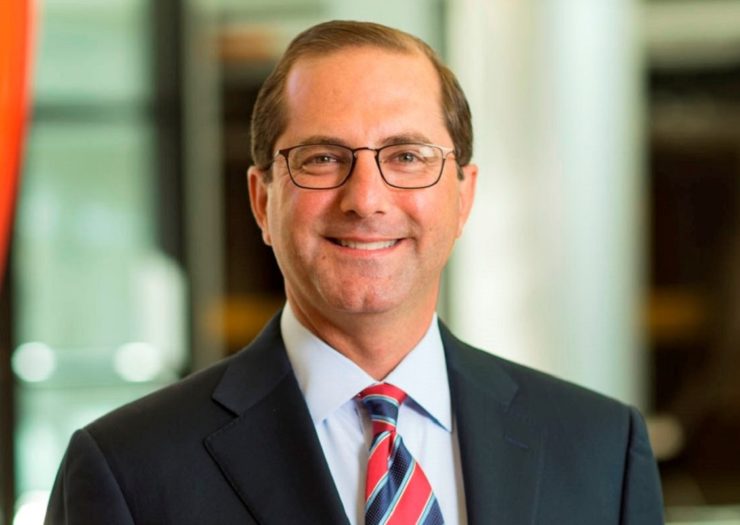
Alex Azar, whose resume includes stints as a pharmaceutical executive, working in George W. Bush’s Department of Health and Human Services (HHS), and clerking for the late Supreme Court Justice Antonin Scalia, is reportedly being considered by the Trump administration to lead HHS.

Trump “is leaning towards” nominating Azar to replace Tom Price after the HHS secretary resigned last month, according to a Tuesday report from Politico.

Azar worked from 2001 to 2007 at HHS under the Bush administration, first as general counsel and later as its deputy secretary. During his tenure at the agency, Azar worked on stem-cell research policy, among other areas. After departing HHS, Azar moved to pharmaceutical company Eli Lilly and Company from 2007 until January 2017, the last five years of which he spent as president of its U.S. affiliate, Lilly USA, LLC.

Lilly and Company is listed as a corporate sponsor of Population Services International (PSI), whose work includes training abortion providers and providing supplies for medical abortions. The pharmaceutical company worked with PSI on its diabetes prevention and management program in India. Lilly and Company’s CEO also signed onto a 2015 letter opposing then-Indiana Gov. Mike Pence’s signature religious imposition law, which gave businesses the green light to discriminate against LGBTQ people.

The company also gave money to the Republican Governors Association.

Data accessed through the National Institute on Money in State Politics reveals that Azar has donated to Vice President Mike Pence’s campaigns, including a $2,950 donation to his 2012 gubernatorial campaign, $1,000 to his gubernatorial re-election efforts in 2016 prior to becoming the nominee for vice president, and another $500 to Pence’s successful 2010 bid for the U.S. House of Representatives.

Pence is hardly the only Republican to have received campaign funds from Azar. In July 2016, he gave $2,700 to the Trump Victory fund, a joint fundraising venture between the Trump campaign and the Republican National Committee, campaign finance records show. Other members of the party who have received donations from Azar include former U.S. senator and current Director of National Intelligence Dan Coats, Sens. Todd Young (IN), Mitch McConnell (KY), and Orrin Hatch (UT), along with failed presidential candidate Jeb Bush.

Azar didn’t just support Jeb Bush’s 2016 presidential campaign financially, he served on his campaign’s Indiana steering committee, according to a report from the Indy Star. Bush was a vocal opponent of abortion rights and repeatedly pushed his anti-choice record as Florida governor. He told the Associated Press in January 2016 that he would like to see Roe. v. Wade overturned and vowed to expand funding for anti-choice crisis pregnancy centers if elected—something he did in his home state.

Health Care in Azar’s Own Words

In a video published on YouTube by the Zetema Project, a group of health-care stakeholders that meet to discuss the industry, Alzar spoke positively of block granting Medicaid. “I think there’s a lot to commend a block grant approach because the states are the laboratory for experimentation,” he says. “Block granting really says … ‘Here’s an amount of money, you figure out the best way to provide insurance to those who are unable to afford it in your state.’ It makes them better stewards of the money. It becomes their money again to make the choices.”

But converting Medicaid to block grants “would do irreparable damage to the safety net at a time when demand for publicly funded family planning continues to grow,” Audrey Sandusky, the director of advocacy and communications at the National Family Planning & Reproductive Health Association, toldRewire in March. The increased flexibility given to states through block grants could also open the door for some to restrict access to certain kinds of reproductive health care and restrict access to some providers. It could also hamper states’ ability to deal with public health crises and economic downturns by capping how much the government allots to states annually.

Though Medicaid expansion has drastically improved access to health care for people with low incomes, in another video for the Zetema Project, Azar said he didn’t believe that the expansion under the Affordable Care Act (ACA) had been successful though he did not say why. Instead, he said, expansion efforts should have instead “chosen vehicles that actually harnessed the private sector.”

An analysis from the nonpartisan Kaiser Family Foundation released last month overviewing findings from 153 studies on Medicaid expansion found that, “the large body of research on the effects of Medicaid expansion under the ACA suggests that expansion has had largely positive impacts on coverage; access to care, utilization, and affordability; and economic outcomes, including impacts on state budgets, uncompensated care costs for hospitals and clinics, and employment and the labor market.”

Azar, since departing from Lilly, has appeared on Fox Business Network to discuss health care. When Congressional Republicans continued their efforts to repeal the ACA despite warnings from the Congressional Budget Office (CBO) that the House version of the bill could leave as many as 23 million more people uninsured, Azar defended the legislation during a July appearance on Fox Business Network and claimed it would leave the country “better than where we are under Obamacare now.”

During the interview, he chided Republicans for not speaking enough about what he called the “benefits” of the legislation and joined the conservative media network in its crusade to cast doubt on the nonpartisan CBO. Though Fox News host Stuart Varney and Azar alluded to the GOP talking point that CBO estimates for the ACA were off, as media watchdog Media Matters for America noted in March, “According to an independent analysis of the CBO’s Affordable Care Act estimates from the Commonwealth Fund, the office’s health care policy analysis regarding the ACA actually ‘proved to be reasonably accurate’ and was thrown off by Supreme Court decisions and GOP political obstruction that it had no way to forecast.”

Azar appeared in July on Neil Cavuto’s Fox show, when he discussed what then-HHS Secretary Price could legally do to address problems with the ACA. He said that if he were head of HHS, he would “grant waivers to states to create much more flexibility in his exchanges.”

“I would do a top to bottom comprehensive rewrite of the regulations of Obamacare, imposing as much free market, localized flexibility as humanly possible,” said Azar.

Azar also appeared on the network’s Mornings with Maria program in June. He confirmed that he had been at the White House that week and had discussed ACA repeal efforts with Pence, according to transcript of the segment.

https://rewire.news/article/2017/10/19/meet-trumps-reported-top-choice-health-human-services-secretary/

Better access to birth control could be contributing to a decline in the abortion rate.

Abortion is a common, safe, and legal procedure that’s a key part of reproductive health. And while there’s no shame in having one, it turns out that women across the country are having fewer abortions, and it’s quite likely for a good reason.

While the procedure is still common — one in four women will get an abortion by age 45 — the abortion rate in the United States has “fallen dramatically,” according to new research detailed by The Washington Post, dropping a whopping 25% from 2008 to 2014. Part of the reason could very well be better access to birth control.

Co-authors of the research, Rachel K. Jones and Jenna Jerman, suggested in the report that reproductive health improvement has been the main reason for the abortion decline. Notably, the biggest decline (46%) was among teens ages 15 to 19, and Jones and Jerman highlighted evidence that a growing acceptance of longer-acting contraceptives like IUDs is responsible. Debra Hauser, president of Advocates for Youth, told Teen Vogue via an emailed statement that the shift indicates abortion is “still an incredibly common practice” and that “numbers are down in part because of greater access to effective contraception,” but that there are also “far too many unnecessary obstacles to obtain this critical care” of abortion.

In January, the Guttmacher Institute found that the national abortion rate was at an all-time low since Roe v. Wade declared the procedure legal, in 1973. While the Guttmacher Institute noted access to birth control (thanks to affordable birth control measures under the Obama administration) and other family planning efforts could contribute to that, it also added that abortion restrictions could be behind the decline. In 2016, 14 states passed measures to make abortions harder to get, and those affronts to abortion access have continued. Earlier this month, the House of Representatives passed a bill banning abortion after 20 weeks of pregnancy (though the measure is likely to fail when it hits the Senate floor).

With recent political moves under the Trump administration, it’s difficult to tell how the abortion rate will be affected by recent legislation. “Just last week the House passed legislation that restricted abortion access even further, continuing a trend of more abortion restrictions passed in the last five years than in the entire decade prior.” The Trump administration also rescinded an Obama-era rule making birth control more accessible, instead allowing organizations or employers to opt out of covering birth control on insurance plans.

Hauser highlighted that it’s “now more important than ever to center the stories of people who have had abortions in the conversation about reproductive health access,” adding that the decision on whether or not to have children is a “fundamental right.”

“Just as fundamental is access to a full spectrum of reproductive health care services, including birth control, care during and after pregnancy, and abortion,” she said. “And we will not be shamed into silence. Not now; not ever again.”

https://www.teenvogue.com/story/abortion-rate-birth-control?mbid=social_facebook

STORY HIGHLIGHTS

  • The court sets an October 31 deadline for the government to find her a sponsor
  • Only then can the girl, who is a minor, seek an abortion, the court says

(CNN)A federal appeals court Friday ruled that an undocumented teenage immigrant held in detention in Texas may obtain an abortion, but it delayed the process, giving the Trump administration 11 days to find a sponsor to take custody of the girl beforehand.

The ruling set a deadline of October 31 for the US Department of Health and Human Services (HHS) to get a sponsor for the girl, who is a minor.
The 17-year-old, identified in court documents only as “Jane Doe,” came to the United States without her parents and is staying in a shelter for unaccompanied immigrant minors run by the Office of Refugee Resettlement, according to court documents.
“If a sponsor is secured and J.D. is released from HHS custody to the sponsor, HHS agrees that J.D. then will be lawfully able, if she chooses, to obtain an abortion on her own pursuant to the relevant state law,” according to the order from the US Court of Appeals for the DC Circuit.
Texas Attorney General Ken Paxton issued a statement Friday saying he was “disappointed” with the court’s decision because it gives the federal government time to find a sponsor for the teen “so she can be taken for an abortion.”
“Unlawfully-present aliens with no substantial ties to the U.S. do not have a right to abortion on demand,” Paxton said. “Texas must not become a sanctuary state for abortions.”
Thursday, the DC Circuit Court of Appeals issued an administrative stay of a ruling that would have allowed the teenager to obtain an abortion. That ruling, from a federal judge on Wednesday, ordered the government to allow the girl to get an abortion after the Trump administration denied her access to one.
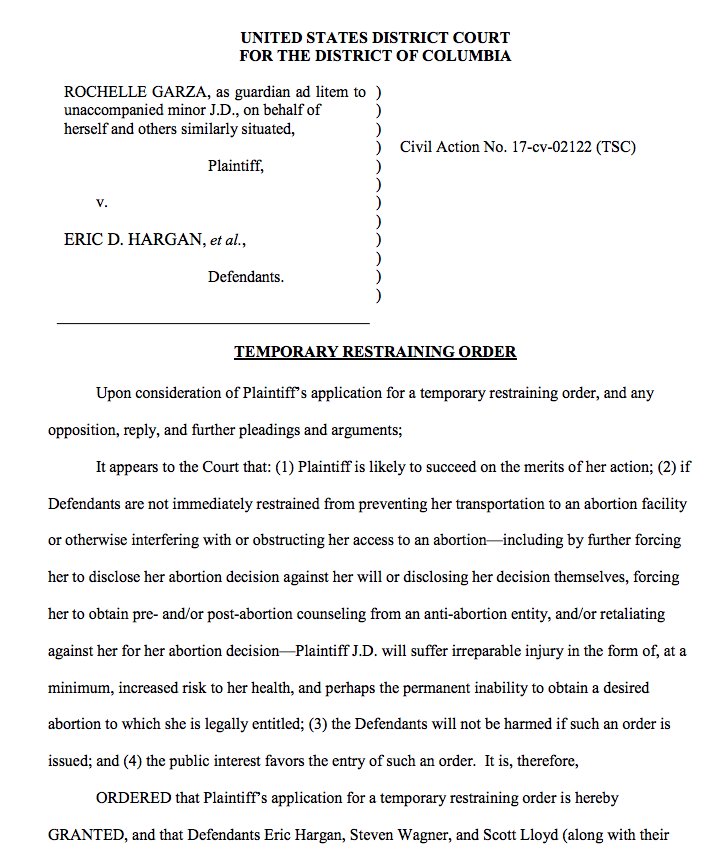
In a two-page decision, DC District Judge Tanya Chutkan ordered officials at the Department of Health and Human Services to allow the teen to be transported by a guardian or attorney “promptly and without delay” to an abortion provider to obtain state-mandated counseling and then to obtain the abortion.
The order also barred those officials from “interfering or obstructing” the girl’s access, from forcing her to make her decision known to anyone and from “retaliating” against her and the facility where she is in regards to her decision.
But the Court of Appeals issued a stay on the ruling Thursday to “give the court sufficient opportunity to consider the emergency motion” filed by the government. That ruling came Friday.
The ACLU, which is representing the girl, filed a lawsuit late last week against the administration.
“This administration has no shame and no regard for a woman’s health or decisions,” said Brigitte Amiri, senior staff attorney with the ACLU Reproductive Freedom Project. “Weeks ago, our client decided to end her pregnancy. Her decision has been disregarded and she’s now been dragged into a protracted legal battle over her ability to get the care she needs.”
The HHS division that presumably would be responsible for finding a sponsor — the Administration for Children and Families — issued a statement Friday night saying, “For however much time we are given, the Office of Refugee Resettlement and HHS will protect the well-being of this minor and all children and their babies in our facilities, and we will defend human dignity for all in our care.”

Minister ‘grappling’ with legislation and says Constitution not place to address abortion

Minister Simon Harris said he had heard very difficult and upsetting cases and met people “who have felt this country has been a very lonely place that has left them feeling very isolated” in difficult circumstances. Photograph: Dara Mac Dónaill

Minister Simon Harris said he had heard very difficult and upsetting cases and met people “who have felt this country has been a very lonely place that has left them feeling very isolated” in difficult circumstances. Photograph: Dara Mac Dónaill

The Eighth Amendment is not working in this country and should be repealed, Minister for Health Simon Harris has said.

Referring to Article 40.3.3 of the Constitution, which put the life of a woman on equal footing with the life of the foetus she is carrying, the Minister said it was his personal view that no new restrictions on abortion should be enshrined in the Constitution.

“I don’t believe the Constitution is the best place to address this issue,” he said.

He said when the Eighth Amendment was enshrined in the Constitution it had unintended consequences.

“I don’t think it in any way has worked for women, has worked for infants, and … it has limited our ability to actually make laws to look after women, their health and infants as well,” he said.

The Minister said he was currently “grappling” with the issue of legislation. People of his generation and a generation older never had an opportunity to have a say, he said. He had heard very difficult and upsetting cases and met people “who have felt this country has been a very lonely place that has left them feeling very isolated” in difficult circumstances.

“I have met women and their partners overjoyed to find out they are pregnant, only to be hit with a terrible tragedy . . . when they find out their expected child has fatal foetal abnormality; I want to see this addressed,” he said.

‘Intrigued’

Referring to an appearance before the Oireachtas Committee on the Eighth Amendment by Dr Peter Boylan, former master of the National Maternity Hospital, Mr Harris said he was “somewhat intrigued as an observer of the committee” why medical experts were being asked about “ethical or moral views”.

“I attach a greater degree of weight to any medical advice given at an Oireachtas committee, particularly when I’m not a clinician and most of my colleagues in the Oireachtas aren’t either,” he said.

He also said he believed if the Irish people made a decision to make a health service available, it should be available in the public health service.

“Hospitals in this country are funded to operate under the law of the land and to deliver our public health services,” he said.

Mr Harris welcomed the “degree of clarity” provided by the committee on Wednesday when it agreed the Eighth Amendment should not be retained in full. He also said the Oireachtas and the committee would very shortly find “it’s gone as far as it can with this matter and it will ultimately be a matter for the Irish people”.

Launch

The Minister was speaking in Dublin on Thursday at the launch of the implementation plan for the National Maternity Strategy.

The strategy, launched in 2016, centres on providing nationally consistent, high quality and women-centred maternity care. It plans to replace the current model of obstetrician-led services with midwife-led care for women with low-risk pregnancies, and obstetrician care for women with medium and high-risk pregnancies.

Services will be organised in maternity networks, in the same way that centres of excellence and networks were established under the cancer strategy. The changes will be overseen by the National Women and Infants Health Programme Office, which began its work in March this year.

The implementation plan sets out a 10-year time line for the strategy, and includes 230 actions. Detailed costing to implement the first year of the plan was not available on Thursday, and projected staff numbers were also not available. They will be included later in the year when the health service plan is published.

Killian McGrane, programme director, said over the 10-year life cycle of the plan “a very significant number” of additional staff will be required, including 100 additional obstetricians.

https://www.irishtimes.com/news/health/no-new-restrictions-on-abortion-should-be-in-constitution-harris-1.3262442

“President Trump wants to make birth control about ideology, but let’s be clear: For women and their families in the 21st century, birth control is about being healthy and financially secure.”

Congressional Democrats have introduced legislation to block the Trump administration from unilaterally undermining a signature Affordable Care Act feature—widely guaranteed contraception without a co-pay.

Under the Protecting Access to Birth Control Act, the administration’s bombshell rules providing religious and moral exemptions for any employer “shall have no force or effect, and shall be treated as though such rules had never taken effect,” according to yet-to-be-filed bill text. An estimated 62.4 million cisgender women and an untold number of transgender and gender nonconforming people rely on the popular birth control benefit as of 2017, at a $1.4 billion savings on birth control pills alone in 2013.

Democrats in the GOP-controlled U.S. Congress can’t stop the Trump administration from axing the birth control benefit and pursuing other discriminatory reproductive health-care policies through their regulatory war; that’ll be up to the courts, where lawsuits challenging the administration are underway. But through legislation, Democrats can publicly oppose such policies and foment public opinion against them. In the first days of the Trump administration, Rep. Nita Lowey (D-NY) and Sen. Jeanne Shaheen (D-NH) introduced the Global Health, Empowerment, and Rights (HER) Act to repeal Trump’s expanded global gag rule prohibiting U.S. foreign aid to organizations that provide abortion care abroad using their own funds.

Now, the Protecting Access to Birth Control Act puts members of Congress on the record against unraveling one of the law known as Obamacare’s most popular provisions. A new Politico/Morning Consultpoll found that 46 percent of registered voters strongly support and 20 percent somewhat support requiring health insurers to cover contraceptive care. Such findings are consistent over time. In 2015, the National Campaign to Prevent Teen and Unplanned Pregnancy found that 86 percent of adults across party lines backed policies that ease access to “the full range of birth control methods” for people aged 18 and older; 71 percent backed the same for teens.

The Democratic legislation brings together lead sponsors Reps. Diana DeGette (CO), Louise Slaughter (NY), Judy Chu (CA), and Lois Frankel (FL) in the House of Representatives and Sens. Patty Murray (WA) and Bob Casey (PA) in the Senate. DeGette and Slaughter co-chair the House Pro-Choice Caucus; Murray is a vocal advocate of reproductive rights, while Casey, an anti-abortion Democrat, typically supports contraception.

“President Trump wants to make birth control about ideology, but let’s be clear: For women and their families in the 21st century, birth control is about being healthy and financially secure—and that’s why Democrats are going to keep fighting back against his shameful attacks on women with this bill and any other way we can,” Murray, the top Democrat on the Senate Health, Education, Labor, and Pensions Committee, said in a statement.

https://rewire.news/article/2017/10/19/congressional-democrats-tell-trump-nope-shameful-birth-control-interference/


TD Ruth Coppinger. Photo: Colin O'Riordan1
TD Ruth Coppinger. Photo: Colin O’Riordan

“I believe if the people make a decision about a health service, it should be available in the public service,” he added.

Mr Harris also said he did not believe that religious ethos would see some hospitals opting out, pointing out the experience of the operation of the Protection of Life During Pregnancy Act is that publicly funded facilities operate under the law of the land.

He was speaking after the Oireachtas committee on abortion voted not to retain the Eighth Amendment in full.

However, internal divisions within the committee continued to rage after it emerged Solidarity TD Ruth Coppinger had written to other members urging them to take another vote and clarify the recommendations of the committee.

She claimed Wednesday’s vote was “not a vote for repeal or even for a repeal referendum and potentially leaves the way open for little or no change”.

Mater Hospital psychiatrist Dr Patricia Casey has also withdrawn from giving evidence to the committee next week, saying the process has become “deeply imbalanced”.

“There are 25 on the pro-choice side with four on a pro-life or neutral perspective.

“Ireland deserves better than that,” she said.

Mr Harris said his personal view is that the Eighth Amendment should be repealed – but he declined to reveal how far he believes any legislation on abortion should go.

The views of Mr Harris were echoed by Children’s Minister Katherine Zappone yesterday, who also said it should be removed from the Constitution with the issue of abortion dealt with by legislation.

Responding to reporters’ questions, Taoiseach Leo Varadkar said the committee vote gave him “some assurance” that the cross-party group of TDs would be able to come to conclusions on the matter by the end of December.

He was “confident” that the committee would reach conclusions that the Government could then take forward in the new year.

The December deadline is important to allow enough time to organise a referendum on abortion as planned by May of June next year.

Mr Harris also said he and his officials welcomed the “direction of travel” following the committee’s vote as they have to start the work of preparation for potential legislation, reviewing various scenarios.

“I have been tasked to prepare for a referendum. I am very conscious of that, without wishing to pre-empt the work of the Oireachtas committee,” he added.

“I am in favour of a referendum being held on the issue.”

The Eighth Amendment had led to a lot of unintended consequences for women, the minister added.

He had been told of parents who had been left “lonely” and “isolated” by the current restrictions.

Mr Harris was speaking at the launch of the implementation plan for the National Maternity Strategy.

The wide-ranging strategy, which was launched nearly two years ago, aims to put more measures in place to safeguard safety and also provide women who are pregnant with more choice.

Dr Peter McKenna, a former master of the Rotunda Hospital who is clinical director for the strategy, said it was too early to say how services would respond in the event of a referendum to widen the grounds for abortion.

Currently, the proposals are too “nebulous” to give any firm picture, he added.

Questioned by reporters, he said: “Our role is to implement the law of the land as safely as possible.”

http://www.independent.ie/irish-news/health/the-state-will-fund-abortions-if-people-vote-for-change-harris-36244824.html