I’m a pediatrician. My patients need access to birth control.

A woman holds birth control pills in Washington in 2001. Tim Matsui/Getty Images

In 2012, the United Nations declaredaccess to contraception a “basic human right.” Last Friday, the Trump administration made moves to decimate women’s access to birth control — thereby continuing his administration’s war against women.

Last week, the Trump administration announced the rollback of an Obama-era requirement that employers to provide women with insurance that covers birth control. Under the new rule, employers can exempt themselves from this requirement for “religious or moral” reasons. Any employer, regardless of the business, can now opt out of covering contraception. If you are a woman, whether you have to pay for birth control out of your own pocket will soon be dictated by the religious and moral opinions of your employer.

As a pediatrician, I see how access to contraception improves patients’ lives. I have many patients who rely on it to prevent pregnancy so that they can finish their education. Parents of my younger patients also rely on contraception to ensure their pregnancies are planned. Some patients need birth control to regulate heavy or irregular periods. Access to birth control has been proven over and over again to be good not only for women’s health but also for the health of their families. Planned pregnancies result in healthier pregnancies and higher educational and economic attainment for both parents. But I am now worried that some of them won’t be able to afford birth control without health insurance coverage.

I remember taking care of a patient who wanted to try to use the contraceptive patch because she was worried she couldn’t remember to take the Pill every day. When she went to the pharmacy, she learned it was not covered by her insurance without prior authorization proving she had failed another method. Even with coverage under the ACA, the requirement was only to provide coverage for a method in each category, often leaving it up to physicians to determine which was covered for which insurance company. There was no way my patient would be able to pay for it out of pocket — the patch costs up to $55 a month without insurance coverage.

It took my office weeks of back and forth with the insurance company to provide sufficient documentation for her — and this all happened in the post-ACA world of health care, an overall improvement in birth control coverage. These bureaucratic and financial barriers will multiply and, for some women, become insurmountable under the new rules.

Of the 61 million women ages 15 to 44, 62 percent of them are using a contraceptive method. The importance of the ACA contraceptive coverage mandate is highlighted in data showing how many women benefit from this coverage. In just two years between 2012 and 2014, the percentage of women accessing the birth control pill — the most common form of contraception — without any cost rose from 15 percent to 67 percent.

Similar gains were found in other forms of contraception as well. And the results of this contraceptive coverage have spoken for themselves. There have been declines in both unplanned pregnancy rates and teen pregnancy rates nationally. The unplanned pregnancy rate declined 18 percent between 2008 and 2011. Research shows that these declines can be completely attributed to use of contraception, not people having less sex.

The Trump administration has asserted that Obamacare’s birth control mandate encouraged “risky sexual behavior” in young women. But no study has shown that access to contraception causes significant change in sexual behaviors. In fact, the largest studyexamining same-day access to all forms of contraception showed that while there were no changes in sexual behavior, rates of unplanned pregnancy and abortion dropped substantially. These are outcomes that our government should be seeking. Instead, the Trump administration has signaled that the religious and moral views of employers are more important than women’s human rights.

This change has the potential to affect all women of childbearing ages. Nine out of 10 women use contraception at some point. In fact, more married women use contraception than unmarried women. And plenty of religious women use birth control: 89 percent of women who identify as Catholic and 90 percent of Protestants report using some form of contraception.

Although four states have taken action to safeguard against continued efforts at the federal level, this leaves a patchwork of access throughout the rest of the country. Your contraceptive method will be covered while you live in one state, but take a job or go to another state that doesn’t have these protections and you may have to change contraceptive methods or start paying out of pocket for the method you’re using. Women require access regardless of where they live or work.

As a doctor, the health of my patients matters most to me — and this is a perfect case where the interests of my patients, especially women, are getting sidelined by political forces. And people will suffer as a result.

This isn’t just about women’s health. We have a right to have sex.

The average age of onset of sexual activity for both men and women is 17 years old in the United States, and that age has not changed substantially since the 1940s. What has changed is the average age that women have their first child and marriage — meaning there are more years to protect against an unplanned pregnancy. It seems clear that regulations around contraception do not affect whether people choose to have sex. It only makes it more unsafe and, in particular, forces women to navigate unnecessary obstacles to engage in normal human activity.

Women use birth control primarily to plan their pregnancies, but birth control is also used as a medical treatment for irregular or heavy periods, and as a preventive therapy for women with medical conditions that make pregnancy unsafe. In fact, 14 percent of women report using contraceptives for reasons unrelated to pregnancy planning.

The administration reasons that the Obamacare mandate places undue religious and moral burden on employers. But the religious objections of a boss do not supersede the importance of basic rights for women. The new religious exemptions allow employers to treat their workers differently simply based on their gender. It’s worth noting that during the Hobby Lobby controversy, the same Catholic groups that supported pulling coverage for birth control often covered the costs of drugs for men suffering from erectile dysfunction. (The ACA, however, does not require coverage of drugs for ED.)

In our health care system, financial access is everything

Studies show that fewer women will use contraception — and rely on less effective options — when it costs more out of pocket. A national survey done before Obamacare found that a third of women using a less effective contraceptive method, such as the Pill, would switch to another more effective method if they didn’t have to worry about the cost. Women who don’t use contraception or don’t use it reliably account for 95 percent of the unplanned pregnancies in the US. And the costs of unplanned pregnancy add up — studies have also shown that spending money on contraception is ultimately more cost-effective. In fact, for every dollar spent on family planning through Medicaid, $6 is saved in ultimate taxpayer costs.

But without coverage, birth control quickly becomes expensive. The most effective forms of birth control, long-acting forms of reversible contraception such as intrauterine devices, can easily cost over $1,000 out of pocket and are used for between three to 12 years. Even the birth control pill’s monthly cost of $20 to $50 per month will be a burden for most women. With the rollback in coverage, many women will rely on methods that are cheaper or less effective, or choose to use nothing at all.

Under Obamacare’s rules, many young adults are covered under their parents’ insurance plans long into their 20s. But after the rollback, it’s possible that their access will be determined by choices made by their parents’ employers. This is out of my patients’ control. When a patient’s parent was employed as a janitor at a small religious institution, her access to contraception was jeopardized. Although neither my patient nor her family had a religious objection to using birth control, the employer insurance plan did not cover it. Employers’ religious beliefs have no place in these private decisions.

The administration asserts that the government “already engages in dozens of programs that subsidize contraception for the low-income women” who are most at risk for unintended pregnancy. But the problem of unplanned pregnancies is not limited to the poor.

Currently 45 percent of all pregnancies in the US are unplanned, and that number is closer to 85 percent when you look at teen pregnancies. All women need access to contraception regardless of their socioeconomic status or place of employment. Moreover, in a remarkable act of cynicism, many of the programs for low-income women that the administration cites are facing funding cuts under Trump, including Planned Parenthood, Medicaid, and the teen pregnancy prevention program.

This new rule reflects a disturbing trend in both the Trump administration and the current Congress to dismantle women’s rights. The contraception coverage rollback does nothing to advance health, and the claims put forward to defend it are not supported by evidence. It’s a cruel, purely ideological gesture that will hurt real women — and the men and children in their lives.

https://www.vox.com/first-person/2017/10/12/16464204/patients-suffer-trump-new-birth-control-rule

In a victory for women’s rights, a demonstrator has been found guilty of breaching safe access zones in Victoria

International women's day march
 ‘The court’s decision is a victory for women’s rights, upholding the right to access health services free of intimidation or harassment and with due respect for women’s privacy, dignity and reproductive autonomy.’ Photograph: Joe Raedle/Getty Images

A14-year-old girl, scared and vulnerable, realises that she is pregnant. A 43-year-old unemployed mother of five whose husband is recently deceased discovers she is pregnant and does not know how she will cope with another child. A 36-year-old woman with a planned pregnancy is processing a diagnosis of severe foetal abnormality.

Each year many Australian women deal with problem pregnancies. Some decide to continue with the pregnancy and some decide to terminate the pregnancy. Whatever the decision, they have a right to seek unbiased professional counselling and appropriate medical care; and they have a right to do so without being harassed, intimidated or interfered with as they are entering a clinic that provides the full range of reproductive health services. This is why Victoria’s safe access zone legislation, which prohibits certain conduct within 150m of a clinic at which abortions are provided, is so important.

In the Melbourne magistrates court this week, anti-abortion protester Kathleen Clubb became the first person to be convicted of breaching Victoria’s safe access zone legislation when she approached a couple entering a clinic and attempted to hand them anti-abortion pamphlets. The 51-year-old mother of 13 and active member of the anti-choice group known as Helpers of God’s Precious Infants was found guilty of “prohibited behaviour” within a safe access zone outside the Fertility Control Clinic in East Melbourne and was fined $5,000. The court’s decision is a victory for women’s rights, upholding the right to access health services free of intimidation or harassment and with due respect for women’s privacy, dignity and reproductive autonomy.

A not-guilty verdict would have inevitably led to further testing of the parameters of the legislation, which would have seen patients and staff outside abortion clinics once again become the subjects of targeted harassment. We are all too aware of what that testing would entail, and the devastating effect it would have on patients and staff.

In recent months, we have been interviewing staff at Victorian clinics to gauge the effectiveness of the safe access zones. We have heard that before the zones were established, protesters would intrude into the personal space of patients and staff, block patients from exiting cars and bar entry to clinics or access along footpaths outside clinics.

They would display graphic imagery of dismembered foetuses, thrust brochures and foetal dolls into people’s hands and provide frightening misinformation about the consequences of abortion. Their unwelcome intrusions were described as a form gender-based vilification (comparable to racial vilification) and violence against women. The protesters created an atmosphere of stress and stigmatisation and made staff and patients feel unsafe. Their actions were particularly damaging for women with a history of sexual or physical violence or other vulnerabilities.

Anti-abortion protest action has created barriers to access, particularly in rural and regional areas. Some patients have delayed treatment or failed to attend follow-up appointments in order to avoid the protesters and some have continued with problem pregnancies because they have not been able to access the health care that they require. We have been told about doctors who stopped terminating pregnancies and health services that ceased operating because of the activities of anti-abortion protesters.

Safe access zones in Victoria have been operating to prevent protesters from targeting individuals. Protesters remain free to express their views about abortion, but at a distance from clinic patients and staff. Staff working in clinics have described safe access zones as an acknowledgement of women’s equality and autonomy and the need to address gender-based vilification and violence against women.

Victoria’s safe access zones legislation protects rights which have been undermined by anti-abortion protesters with impunity for decades. It is clear that Clubb and the Helpers of God’s Precious Infants oppose the legislation and its operation. For others contemplating anti-abortion protest within a safe access zone, Magistrate Luisa Bazzani’s decision has sent an important message of deterrence. It is to be hoped that the four Australian states who have yet to introduce such protective measures will act to prioritise women’s right to health, privacy and dignity and will introduce safe access zones in the near future.

https://www.theguardian.com/commentisfree/2017/oct/13/anti-abortion-protestors-have-acted-with-impunity-for-decades-that-ends-now?utm_content=bufferbbc3c&utm_medium=social&utm_source=facebook.com&utm_campaign=buffer

This bill is a moral and scientific atrocity. Call your senators and tell them to vote No.

“Congressperson, I am your constituent. May I have an abortion?”

Said no one ever.

Our state representatives are practicing medicine without a license. They do not even have the smallest amount of training, and I am certain they have never attended a medical school class.

Yet, in supporting a national 20-week abortion ban, they are telling doctors what may or may not be done regarding evidence-based medicine. Imagine your congressperson telling your surgeon which approach to use when taking out your gallbladder—laparoscopic or open. As a surgeon myself, I have asked other ob/gyns for advice regarding surgical approaches, but never have I sought an opinion from any of my state legislators.

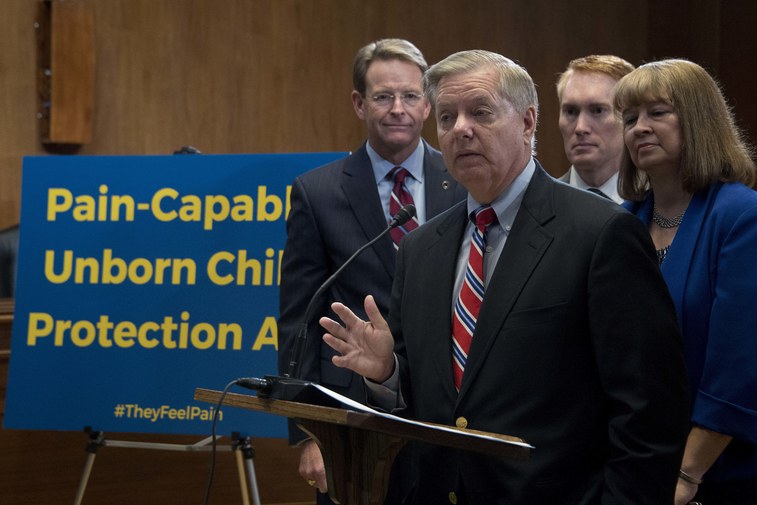
The Senate will be voting on the Pain-Capable Unborn Child Protection Act, a misnomer in and of itself, after the bill passed the House on Tuesday. No scientific evidence exists to support the idea that a fetus of 5 months gestation can “feel pain.” The scientific community agrees that the neurons responsible for conducting and interpreting pain responses are not even present (meaning they haven’t formed yet) until the 3rd trimester (28 weeks).

But let’s pretend Senator Graham and the 45 co-sponsoring senators of the bill are correct—a fetus at 20 weeks gestation can feel pain (but even as we’re pretending, let’s remember: they cannot). Sounds ethical and moral to ban abortion at or after this gestational age then, right? Here is a list of what else they deem ethical and moral by supporting this bill:

  • Women who are sexual assault survivors must relive their trauma and risk further harm by reporting their assault to authorities if they want an abortion.
  • A 20-week fetus without kidneys that will be unable to survive at birth must be carried for five more months and then suffer and die while its parents watch.
  • If a doctor performs the evidence-based medicine that they are trained for, they will face prison time.
  • Fetuses after 20 weeks, though feeling pain, will not be required to be given pain medicine at the time they are pushed out of their mother’s birth canal, despite this process taking hours in many instances. Also, preterm babies in the ICU will not be required to receive pain medicine for all the poking and prodding (IVs, blood draws, spinal taps) they undergo. Circumcisions will continue to be performed with little to no anesthesia.
  • It is perfectly acceptable for a pregnant person to suffer, but by god no fetus will suffer if our government has anything to say about it.

I implored my state representative Mia Love to vote no on this bill, yet she perpetuated the misinformation and rhetoric that has harmed so many Americans to this day. I urge you to call your state’s senators and tell them to vote No on this inhumane and reprehensible bill. Regardless of your opinion on abortion, I think we can all agree that when politics interfere with evidence-based medical practice, horrible things happen.

https://www.self.com/story/the-fetal-pain-myth-is-only-one-of-the-problems-with-the-20-week-abortion-ban?utm_content=buffer73e16&utm_medium=social&utm_source=facebook.com&utm_campaign=buffer

Drew Angerer/Getty Images News/Getty Images

American women have 99 problems on their minds these days, any given day of the week. How is it even possible to choose the one that comes out on top, when you’re accosted daily with news of potential nuclear war, years of sexual harassment cover-ups, and bickering among the very people in the country who are charged with keeping the nation safe? But when you really delve into it, the single most pressing issue facing American women today is the one that underlies everything. The issue that is, sometimes on a day-to-day basis, very literally a matter of life and death. And while it may seem like an issue that can be compartmentalized and only discussed in certain situations, it actually pervades everything else, especially for the nation’s most vulnerable individuals. It’s health care.

You’ve been hearing a lot about the Trump administration’s attack on women’s rights, particularly reproductive rights, and reasonably so. The administration, and fellow Republicans in the legislature, advocate for health care plans that essentially punish women for the unavoidable situation of having been born female, by threatening to slash required coverage of birth control, abortions, and maternity care. The people making those decisions, a majority of whom are men, seem to not have given any thought to how things like access to contraception and abortion are actually men’s issues, too.

These attacks, unfortunately, aren’t only coming from the religious right, either. Progressive darling Bernie Sanders infamously maintained that abortion access was an “identity issue” that could be dismissed in favor of the economic issues that, he argued, were really more important. As colorblind as this take on the issue of reproductive rights is, it offers the perfect springboard from which to delve into how health care, for the people who lack it, is irrevocably tied to the (very real and pervasive) economic issues that Sanders is always harping on.

For women, particularly low-income women and women of color, unequal access to health care is one of the many factors perpetuating the economic gap that is perpetuating problems in the country. It’s all the more difficult to give your children, for example, the support they need to succeed in school when you get pregnant unexpectedly, don’t have access to an abortion, and then have another child to provide for. You can’t invest in the sorts of things that would make your life more secure — property, for example — when too much of your salary goes toward the medicine that keeps sick family members alive. And with the home-oriented and caregiving tasks still falling overwhelmingly on the shoulders of women, access to comprehensive health care — including reproductive health care — is of paramount importance for America’s women.

DAVID MCNEW/AFP/Getty Images

So, health care is a big problem facing millions of people in the United States, both men and women. But even during an administration that seems dead-set on taking away coverage for millions come hell or high water, there are still things that you can do to make sure that more and more Americans have the coverage that they need.

You’ve heard a lot about calling your congresspeople or getting in touch with them in literally any other way, and that advice still applies, even when there’s not a repeal effort currently underway. But what often goes forgotten is that it’s not just your representatives at the federal level that matter; representatives at the state level can also make a big difference, and they have fewer constituents to take care of, anyway. This means that if you make the effort to track down your state and local officials, they might be more receptive to your thoughts than someone at the national level, whose office may be fielding hundreds of calls a day.

When it comes down to it, though, the most important thing you can do in order to ensure health care for everyone is to get out and vote for candidates who support universal health care (or at least the next steps toward that) in every single election that you possibly can — municipal, state, and midterm elections includedDemocrats historically have lower turnout during midterm elections, which are coming up in 2018 — and if this remains true for the upcoming election, that could launch Republicans into even more significant majorities in Washington and in state assemblies around the country. Look up your municipal elections, see what’s going on in your state, and find a way to vote, no matter what it takes — because you can bet that Republican congressmen and the people who support them are going to do that, too.

Justin Sullivan/Getty Images News/Getty Images

It looks like a long road now — but this problem is absolutely solvable. There are countries all over the world where women don’t have to worry about whether they’ll be able to get an abortion; where they are guaranteed time off to take care of new babies; where there’s no question about whether or not their birth control will be free.

There’s no reason that this couldn’t happen in the United States too, with continued, intense pressure on the politicians who run the country. There’s no better time than now to really take on this issue — and there’s no better person than you to take part in it. Live by that, and eventually the changes will come.

https://www.bustle.com/p/what-is-the-biggest-issue-women-in-america-face-it-falls-under-this-one-umbrella-2899062?utm_content=buffer13766&utm_medium=social&utm_source=facebook.com&utm_campaign=buffer

“Beatriz was our friend, a warrior, who never stopped fighting for her life,” said the local feminist group Agrupacion Ciudadana por la Despenalización del Aborto, in a statement.

Beatriz Garcia, whose fight against El Salvador’s draconian prohibitions on abortion moved the country—and the world—in 2013, died October 8 from complications after a motorcycle accident a few days prior.

Garcia, who chose to be known only as “Beatriz” during her struggle to interrupt her life-threatening pregnancy in 2013, suffered from the autoimmune disease discoid systemic lupus erythematosus, which was aggravated by lupus nephritis, an incurable disease that affects multiple organs. According to the Salvadoran Institute of Forensic Medicine, the lupus, combined with a case of hospital-acquired pneumonia, ultimately led to her death.

“Beatriz was our friend, a warrior, who never stopped fighting for her life,” said the local feminist group Agrupacion Ciudadana por la Despenalización del Aborto, in a statement.

In 2013, Beatriz, a then-22-year-old rural woman living in poverty, became pregnant for the second time. She had a 1-and-a-half year-old son. Her physicians at the public hospital in San Salvador advised her that, due to the lupus, the pregnancy was a potentially fatal threat to her life. In addition, they determined that the fetus was anencephalic, or lacking a brain. At most, they said, it would survive only a few hours outside her uterus. Their medical recommendation was to interrupt the pregnancy.

Although all concerned were well aware that abortion was illegal under all circumstances in El Salvador, Beatriz requested an abortion from the government. The Agrupacion, along with other feminist and human rights groups, mounted a campaign for Beatriz’s right to terminate her pregnancy based on the risks to her life and the fact that the fetus was not viable.

Rewire reported in April 2013:

Within the past few days Amnesty International has initiated a petition asking for life-saving medical care, including an abortion; the United Nations has spoken; and the Salvadoran Minister of Health, Dr. Maria Isabel Rodriguez, has requested that the Supreme Court approve the request. Dr. Rodriguez emphasized that Beatriz’s kidney function continues to deteriorate as the pregnancy advances, and that the public health system is ready to perform an abortion. The Salvadoran Attorney General for Human Rights also supports the request.

Beatriz’s story wove together the threads of multiple inequity that affected—and still affect—the lives of Salvadoran women:

Beatriz’s life is threatened by her health conditions and a high-risk pregnancy. However, the deeper threats come from an intractable and misogynistic political and religious system which criminalizes women for being young, poor, rural women. Right now the eyes and voices of the world constitute Beatriz’s hope for life. She wants to live.

Her struggle forever changed the consciousness of the movement and the country.  Activists such as Mariana Moisa from the Agrupacion talk about Beatriz’s story as the “parting of the waters.”

“There will always be ‘before Beatriz and after Beatriz,’” Moisa told Rewire in an unpublished 2016 interview.

Salvadoran families who had never discussed the topic of abortion watched news stories about a young woman with whom they could identify. There had never been anyone who went public asking for an abortion before Beatriz. The subject was so taboo that the word was rarely used out loud, even by feminists. Because of the social and religious taboos and the illegality, it just wasn’t discussed. Although procedures continue to be clandestine, Beatriz helped shift the image of an abortion patient to that of a young mother with a serious medical condition who wanted to live and raise her child.

As reported for Rewire in 2013:

The Salvadoran feminist organization Agrupación Ciudadana por la Despenalización del Aborto … petitioned the Salvadoran Supreme Court on April 15 to intervene and to direct medical personnel to provide without fear of criminal prosecution the procedures Beatriz needs to save her life. Under current law, both Beatriz and any medical personnel involved in an abortion would face criminal charges and prison time. The court responded with a temporary directive that medical personnel provide the care necessary to guarantee her life and health while they make a decision regarding the petition for an abortion. Medical personnel were also directed to present to the court within five days a report on the condition of the mother and the fetus to inform their deliberations.

At a May 2013 event, feminists confronted then-President Mauricio Funes with a banner asking, “Mauricio Funes, if Beatriz were your daughter, would you let her die?” He was forced to respond publicly for the first time, saying, “Beatriz has the right to make decisions about her life.”

As the October 9 statement from the Agrupacion explained, the Salvadoran Supreme Court did not provide an adequate response to Beatriz’s situation. “Her case went to the Inter-American Human Rights Commission and Court, which issued measures under which a cesarean section was performed in the 26th week of pregnancy,” on June 3, 2013. Her baby lived about five hours, as was expected.

As the statement noted, following a motorcycle accident on October 4, Beatriz was taken to National Hospital of Jiquilisco for “mild cranial brain trauma.” She was then transferred to the Usulután National Hospital, after the Jiquilisco Hospital was flooded with rains from tropical storm Nate. Two days after the accident, and after her discharge from the hospital, she began to have respiratory difficulties: a combination of her lupus and the pneumonia she had contracted while in the hospital.

She died in San Miguel early Sunday.

According to the Agrupacion, Beatriz’s death was at least in part a result of the health system ineffectively treating her lupus. Since 2013, the group says it has been trying to access more comprehensive health care for her. Though the details of her death are still unclear, the group’s statement said, “For the second time, the State failed Beatriz. The public health system did not guarantee quality care, nor understand her condition, similar to what happened in 2013 when physicians in the public network did not interrupt her pregnancy for fear of being criminally punished under the laws which prohibited all abortions and criminalized both the woman and physicians.”

As the Agrupacion statement noted, in November 2013, Beatriz sued the Salvadoran state for “not allowing her to undergo a therapeutic abortion and for all the violations she and her family suffered during the 81 days the process lasted when she requested to have her pregnancy terminated.”

“The petition, filed before the Inter-American Commission on Human Rights, seeks to prevent other Salvadoran women from repeating the same torture that Beatriz lived,” the statement continued.

That case is ongoing.

And the same law that prevented Beatriz from obtaining an abortion in a timely manner is still on the books, despite years of intense activism seeking legislative change.

Hasta siempre, Beatriz, until always, Beatriz,” the group’s statement concluded. “We will continue to transform our pain, anger, and indignation into struggle until there is justice for all the Beatrizes in El Salvador.”

https://rewire.news/article/2017/10/11/beatriz-brought-el-salvadors-abortion-ban-world-stage-dies-following-motorcycle-accident/

Advocates for a pregnant 17-year-old girl held in a Texas facility for immigrant children who have crossed the border alone are asking a federal judge to allow her to get an abortion, over the opposition of U.S. and state officials.

A federal magistrate judge in San Francisco has scheduled a hearing Wednesday on a request filed by the American Civil Liberties Union of Northern California, which accuses the U.S. Department of Health and Human Services of refusing to let the girl be taken for the procedure.

Rochelle Garza, a lawyer appointed to represent the girl’s legal interests, told The Associated Press on Tuesday that she may be up to 14 weeks pregnant. Texas state law prohibits most abortions after 20 weeks.

Garza says the teen is from Central America, like most people caught crossing the U.S.-Mexico border without legal permission. She declined to give the girl’s name or identify the specific country where she was from, citing the girl’s privacy as a minor, but said that the girl wanted an abortion in part because she had seen her parents abuse another sibling who was pregnant.

With Garza’s help, the girl obtained a judicial waiver under a Texas law requiring a minor seeking an abortion to get consent from a parent. But staff at the facility where she’s being held refused to take her to her appointments with a doctor to seek an abortion, or let the attorney take her, even though private groups that support abortion rights have raised money for the procedure, Garza said.

Instead, she was taken to a crisis pregnancy center. Such centers encourage pregnant women not to have an abortion.

“I feel like they are trying to coerce me to carry my pregnancy to term,” the girl said in a declaration filed in federal court last week.

The ACLU of Northern California sued HHS last year over what it said was the denial of abortion and contraception to girls in its custody.

Unaccompanied Central American children apprehended at the U.S.-Mexico border are generally turned over to facilities run by private operators on behalf of HHS. Many facilities are affiliated with religious organizations that oppose abortion like the U.S. Conference of Catholic Bishops. Nearly 3,000 unaccompanied children were caught by Border Patrol agents at the border in August, the most recent month for which data is available.

U.S. lawyers representing HHS argued that the ACLU’s request for a temporary restraining order allowing an abortion to go forward was wrong on technical grounds, since the original lawsuit argued HHS was violating the First Amendment by allowing religious groups to allegedly refuse access to abortion. In this case, the 17-year-old is not being held in a facility with a religious affiliation, government lawyers said.

It was not immediately known how long the girl would be held at the facility, or whether she would eventually be transferred.

Texas Attorney General Ken Paxton went further in a separate filing Tuesday. Paxton, who is a strident opponent of abortion rights like most leaders in the nation’s largest conservative state, argued that people in the United States illegally without some type of established ties to the country did not have a “constitutional right to an abortion on demand.”

If the court rules in the girl’s favor, “the ruling will create a right to abortion for anyone on earth who enters the U.S. illegally,” Paxton said in a statement. “And with that right, countless others undoubtedly would follow. Texas must not become a sanctuary state for abortions.”

Paxton was joined in filing the brief by the attorneys general of Louisiana, Missouri, Nebraska, Ohio, Oklahoma, and South Carolina.

Garza argued the girl’s case “really has nothing to do with her immigration status,” and that she had complied with the state’s abortion laws.

“As far as I’m aware, abortion is legal in this country,” Garza said. “Nobody has the right to force her to have a child against her will.”

http://www.chicagotribune.com/news/nationworld/ct-texas-teen-detainee-abortion-20171010-story.html

The US Health Department is quietly trying to redefine life as beginning at “conception”
Participants at the International Gift of Life Walk, an anti-abortion event in New York City. Rainmaker Photo/MediaPunch

The Department of Health and Human Services is adding language to a draft of its “strategic plan” that echoes language used by anti-abortion activists to stigmatize abortion in the U.S.

A line in the overview section of the new document, first discovered by Politico, states: “HHS accomplishes its mission through programs and initiatives that cover a wide spectrum of activities, serving and protecting Americans at every stage of life, beginning at conception.”

Defining human life as “beginning at conception” has long been a key tenet of anti-abortion platforms, attempting to redefine the termination of any pregnancy as an act of murder.

In 2017 alone, multiple conservative state legislatures have introduced bills that would do everything from forcing a woman seeking an abortion to read anti-abortion literature about life beginning at conception, to redefining the concept of life under state law to make abortion illegal — a measure that has historically been found to be unconstitutional by the courts.

The plan was likely drafted before Tom Price’s departure from his role as Health and Human Services secretary. Price had previously served as a member of Congress with a strongly anti-abortion voting record.

Since Price’s resignation over his extravagant use of private charted flights on taxpayers’ dime, anti-abortion activists have been calling on Trump to choose a replacement that mirrors Price’s views on the issue.

The draft document also goes beyond promoting anti-abortion talking points by incorporating a number of other conservative reproductive care priorities, including repeated references to “faith-based” organizations, a likely nod to the fight over religious freedom exemptions in the Affordable Care Act for things like contraception.

Last week the Trump administration expanded one of those religious liberty exemptions, effectively ending the requirement under the Affordable Care Act that employer-provided health insurance cover contraception.

As Politico noted, the plan also avoids talking about the the specific health needs of certain minority communities, as HHS strategic plans have in the past. Instead, the new plan speaks more generally about “populations at high risk.”

If Trump were to appoint a new secretary of Health and Human Services in the coming month, the department’s overall objectives could be subject to changes. The public will have until Oct. 27 to provide public comment on the new strategic plan before it takes effect.

https://mic.com/articles/185119/the-us-health-department-is-quietly-trying-to-redefine-life-as-beginning-at-conception#.HQ52BcFat

An Oklahoma judge has again overturned a state law restricting women’s access to drug-induced abortions, according to attorneys for the state and for the groups challenging the law.

Oklahoma County District Judge Patricia Parrish on Friday overturned a 2014 state law that banned “off-label” use of medication used for abortions.

“(The) ruling elevates science over politics and ensures Oklahoma women can get the care they need when they have made the decision to end a pregnancy,” said attorney Autumn Katz with the New York-based Center for Reproductive Rights, which filed the lawsuit on behalf of two nonprofit organizations, the Oklahoma Coalition for Reproductive Justice and Nova Health Systems, which operates Reproductive Services.

Parrish had earlier ruled the law was unconstitutional on the grounds that it was special legislation and the state appealed. The state Supreme Court in 2016 overturned that ruling and sent the case back to Parrish, but said the law still could be unconstitutional on other grounds.

Katz said Parrish’s latest ruling, which was not immediately published, noted that the Federal Drug Administration has updated the label for the drug mifepristone, sometimes called RU-486, to include it for use in medical abortions.

Oklahoma Attorney General Mike Hunter and the governor’s office issued statements saying they are disappointed by the judge’s decision.

The law “prevents abortion providers in Oklahoma from using abortion methods that are so dangerous even Planned Parenthood has discontinued the methods,” Hunter, a Republican, said. “We intend to appeal this ruling to the Oklahoma Supreme Court.”

Michael McNutt, a spokesman for Republican Gov. Mary Fallin, also said the drugs pose a potential danger.

“This law would protect women’s health and possibly save lives. We are confident the attorney general’s office will competently challenge (the) ruling,” McNutt said.

Alex Gerszewski, a spokesman for Hunter, said Parrish’s ruling might not be published for weeks.

A similar law in Arkansas is on hold pending a legal challenge.

Under the new FDA label, a smaller dose of mifepristone can be used up to 70 days after the beginning of the last menstrual period instead of the 49-day limit in effect under the old label adopted in 2000. Also, the second drug in the protocol, which follows a day or two later, can be taken by a woman at home and doesn’t have to be administered at a clinic, reducing the number of office visits a woman must make.

http://abcnews.go.com/US/wireStory/oklahoma-judge-overturns-medical-abortion-restriction-50343233

“Stop trying to deny women their right to live a life of dignity, health, and self-determination.”

In this op-ed, Dr. Willie Parker, Board Chair of Physicians for Reproductive Health, an abortion provider and a Christian, discusses the 20-week abortion ban recently passed by the House of Representatives.

It is not merely a sad day when politicians are willing to outright lie to pass a law; it represents a very dangerous time. On Tuesday, just days after the failure of the latest effort to dismantle the Affordable Care Act, members of the House of Representatives passed the bill that seems to never die: H.R. 36. It was not the House’s first time voting on a version of this medically unnecessary abortion-ban bill. And it passed in the House for the third time.

While H.R. 36 was defeated in 2015 when it came up in the Senate (where it’s headed to next), we cannot dismiss the danger this represents to women and families across our country. The danger I am referring to stems from junk science — in other words, complete and utter lies.

H.R. 36 criminalizes abortion through arbitrary cutoff points. It denies necessary health care to women who are already facing complex circumstances as they seek an abortion later in pregnancy. In addition to shaming and endangering the lives of patients, H.R. 36 imposesextremely harsh criminal penalties (up to five years in jail) on the medical providers who might attempt to give these patients the compassionate care they deserve.

As an obstetrician-gynecologist who provides abortion care and a man of Christian faith, I believe the most important thing you can do for another human being is to help them in their time of need. I wake up every day knowing that I am protecting the sanctity of autonomy and a patient’s right to make a decision about their own health, as well as the heartfelt decision when couples choose to mitigate suffering for their child when a pregnancy prognosis involves intractable suffering at best, and certain death at worst.

The author of H.R. 36, Representative Trent Franks of Arizona, has never been in my position in the examining room, nor will he ever be in the position of a woman who needs an abortion. He is a politician, not any type of medical professional, who is trying to interfere in medical decisions where he does not belong. Representative Franks and the additional 236 members of the House of Representatives who voted to pass this bill represent an attack on the value of a woman’s life and her ability to take control over her life and future.

While I do not claim to be an expert on many issues, I do feel comfortable discussing matters of comprehensive reproductive health care — I have been practicing medicine for more than 20 years, have advanced postgraduate training in this area, and pride myself in the fact that my work is rooted in evidence, facts, and the human stories of the patients I serve.

Representative Franks claims his dangerous bill is rooted in his concern for the safety of women. We know that abortion, no matter when it occurS in pregnancy, is one of the safest medical procedures provided in this country, due in large part to the skill and expertise of abortion providers who offer high-quality care to women. That’s why groups like the American Congress of Obstetricians and Gynecologists and the American Academy of Pediatrics opposethese types of bills.

Bans on abortion harm the patients that I serve in Alabama and Mississippi, and I would challenge Representative Franks to take the time to get to know some of them. Patients like Tina, who was a lawyer and staff for an elected official on Capitol Hill. With her spouse, she came to me for care, devastated by the diagnosis that their very much desired first pregnancy was lethally flawed by a condition detected at 21 weeks’ gestation. I met them at 24 weeks, as they pursued every test and medical opinion to confirm the diagnosis. When they accepted the diagnosis and decided to spare the child that would be born with such intense suffering and death after birth, as well as to preserve Tina’s fertility by avoiding obstetric complications that could occur with an ongoing pregnancy, I was able to safely and compassionately provide them with the care they needed, though they had the added indignity of lacking insurance coverage for their care because of limits in their federal insurance. A couple of years later, they thanked me and invited me to a dedication service of their healthy firstborn. This would not have been possible if Representative Franks had gotten his way earlier.

Patients like Tina are the common victims of legislation that restricts access to health care. Young women, women of color, low-income women, and immigrant women are disproportionately affected by bills like H.R. 36, which deepen the inequities they face when they try to access care. It’s another barrier for young people, who already often forced to delay their care as they navigate parental consent restrictions depending on which state they live in. I cannot stand idly by while their stories, freedoms, and lives are swept under the rug by politicians who have no place or right to make life-changing decisions for women and their families.

Politicians who truly value the health, well-being, and lives of women should focus on policies that advance healthy pregnancies, reduce maternal mortality, and address the very serious and real needs of women who seek abortion care throughout their pregnancies. The need for abortion care will not disappear even if it is criminalized.

We must let our elected representatives know that we cannot stand for this attack on access to comprehensive, affordable, and compassionate reproductive health care. Stop trying to deny women of their right to live a life of dignity, health, and self-determination.

https://www.teenvogue.com/story/abortion-ban-dr-willie-parker#intcid=dt-recirc-cral2_1

As street tensions increase, pro-choice group says a London council must curb ‘harassment’ of women at Marie Stopes clinic

Police Officers Removing Abortion Rights Demonstrators
 Police officers tackle a crowd of pro-choice abortion rights activists in New York. Photograph: Viviane Moos/Corbis via Getty Images

A London council will decide on Tuesday whether to pursue a public space protection order to prevent the harassment and intimidation of women accessing abortion services at the Marie Stopes clinic in Ealing, west London.

In the first case of its kind, Ealing council will debate the move after a petition from local pro-choice group, Sister Supporter, which demanded action to stop anti-abortion protesters holding vigils six days a week outside the clinic and approaching patients.

The protection orders, which replace asbos and are more commonly used to stop antisocial behaviour such as public drug-taking and drinking, make it possible to prosecute predefined activities within a geographical area. They have never been used in connection with abortion clinics.

“We’re hoping Ealing sets a precedent to stop the growing harassment of women using abortion services. What happens here could start a domino effect for other councils to follow,” said Anna Veglio-White, spokesperson for Sister Supporter.

The debate comes amid rising concern over increasing anti-abortion demonstrations around Britain, some of which have taken on a ferocity more usually associated with the US.

John Hansen-Brevetti, clinical operations manager at the Ealing centre, said other Marie Stopes clinics had reported an increase in protests and a more aggressive tone, prompting calls for new legislation. Anti-harassment laws are insufficient for this new mood, say pro-choice campaigners.

Anyone passing the Ealing clinic routinely sees large photos of foetuses on the pavement near the entrance, where one anti-abortion demonstrator hands leaflets to patients while a group stands nearby. The anti-abortion Good Counsel Network has reportedly also handed out plastic foetuses and testimonies collected by Sister Supporter include reports of women’s approaches to the clinic being streamed on Facebook Live.

The council meeting on Tuesday is the culmination of months of standoffs outside the clinic between the anti-abortion group and Sister Supporter, which has grown to 500 members since it was founded 18 months ago. Every week a large group of supporters, clad in pink hi-vis vests, form a picket line in an effort to block anti-abortion demonstrators approaching patients.

Clare McCullough, centre manager of the Good Counsel Network, which also holds vigils outside two other Marie Stopes clinics, claimed her group had to request a police presence on Saturdays to stop “intimidation by Sister Supporter”, whose members she accused of “seeking to foment violence”.

The network was set up by a group of Roman Catholics but is not now church-affiliated, she said.

“We’ve been holding vigils in Ealing for 23 years and no one has ever been charged with harassment,” said McCullough, adding that if the protection order was introduced, “we will continue to do what we do, just further down the road”.

Pro-choice campaigners
Pinterest
 Pro-choice campaigners from Sister Supporter outside the Marie Stopes abortion clinic in Ealing, London.

But for Veglio-White, the increasing hostility of the protesters was a concern. “Local people were saying there should be a counter-demonstration. Unless there is a clinic near them, people don’t see how aggressive the pro-life movement in the UK is becoming.”

Hansen-Brevetti said the harassment had crossed a line into endangering women’s safety. “What people don’t know is that they face this when they leave the clinic too. We’ve done everything we can to get them in a better place physically and emotionally and then they are hounded down the road as they leave.”

He backs the motion to be debated, which states that it is explicitly not in favour of or against abortion but seeks to stop the intimidation of women.

The campaign to stop the anti-abortion protests has been backed by Dr Rupa Huq, Labour MP for Ealing Central and Acton, who has raised the issue in the Commons. She said: “The people who frustrate the rights of women accessing NHS-provided services and obstruct the pavement in the name of religion using moral blackmail are bullies of the worst kind that need stopping in their tracks.

“The council route is great but, in the meantime, as part of a wider strategy to address deficiencies in existing public order legislation that see the police hamstrung all over the country … I am working with BPAS [British Pregnancy Advisory Service] to amend forthcoming domestic violence legislation in order that a cordon sanitaire can be introduced around these facilities, so that women can use their services, free from harassment.”

One clinic worker, who did not want to give her name, said the anti-abortion protesters could be heard inside the building, and distressed patients had begged staff to stop the vigils. The disruption has also drawn complaints from residents.

Jodie Vickery, whose flat is opposite the clinic, said: “I have had the church group follow me into the park preaching at me quite forcefully and their presence makes residents feel uncomfortable. It’s also a waste of police time.”

Siobhan Appleton, who passes the clinic on the way to work, said the protests had raised difficult discussions with her children. “These vigils put you in the position of having to explain to your kids why these people are there. A discussion on the merits or otherwise of our abortion laws is one I’d like to have with my kids when they are ready – not because of this group.”

https://www.theguardian.com/world/2017/oct/07/us-abortion-uk-intimidation-london-marie-stopes