Trump’s latest birth control rollbacks seem like a victory for the religious right. But why?


Birth control has not historically been an evangelical issue Shutterstock

The Trump administration announced Friday that it would roll back the Affordable Care Act’s mandate that employers cover workers’ birth control. During the Obama administration, the initial wave of companies granted an exemption from the rule argued that paying into a plan that covered birth control would violate their religious beliefs. But the new normal in American health care looks to be a victory for the religious right, particularly evangelicals, the only religious group in which a majority opposed the mandate, according to a 2012 Public Religion Research Institute poll.

Hours later, the Christian advocacy group My Faith Votes, whose founding honorary chair is Housing and Urban Development Secretary Dr. Ben Carson, released a statement praising Trump’s decision, saying, “The Affordable Care Act mandate forced countless business owners to pay for abortion drugs and contraceptives, even if doing so went directly against their deeply held religious beliefs or moral convictions.”

Yet among evangelical Protestants, at least, birth control — and who has access to it — has only recently become a major political issue. Unlike Catholics, whose catechism denounces use of most forms of contraception as a sin, evangelical Protestants by and large do not. (Because of the disparate nature of evangelical Protestantism, which includes hundreds if not thousands of separate denominations, it’s difficult to speak of a “formal stance” in the way we can of Catholics.) But alongside Catholic organizations like Little Sisters of the Poor, it’s evangelical-led companies like Hobby Lobby that have been on the forefront of opposition to the ACA birth control mandate.

In this, the evangelical stance on the ACA birth control mandate reflects a wider issue: the increased convergence of Catholics and evangelical Protestants — hardly historical allies — on social issues in the past few decades, as issues like the same-sex marriage debate and abortion have united the two socially conservative groups. As David Talcott, professor of philosophy at King’s College and an expert in Christian sexual ethics, told Vox, “Catholic and conservative evangelicals have become allies of certain kinds,” each defending the interests of other, as theological and philosophical overlap between the two.

Recent research supports the idea of overlap between traditional Catholic and Protestant thought. Earlier this fall, a Pew Research Center study found that average Protestants more often than not assert traditionally Catholic teachings about, among other things, the nature of salvation or the role of church teaching, reflecting a cultural crossover — however unconscious — between the two groups.

In contrast to the Catholic stance, the current set of evangelical objections to the ACA birth control mandate have less to do with any formal doctrine about birth control per se than they do about wider cultural issues, including the abortion debate, the aftermath of the sexual revolution, and precedents for religious exemptions more generally.

Hobby Lobby and similar groups object to the use of birth control that could be considered abortifacients, not birth control itself

When Hobby Lobby filed its 2012 lawsuit objecting to the mandate on religious grounds — with the Supreme Court ultimately ruling in its favor — it didn’t do so because of a general objection to birth control. Rather, it did so because certain forms of birth control, including Plan B, also known as the “morning after pill,” could be considered an abortifacient because it prevents implantation of an already fertilized egg. Hobby Lobby founder David Green wrote in a 2012 op-ed for USA Today: “Being Christians, we don’t pay for drugs that might cause abortions. Which means that we don’t cover emergency contraception, the morning-after pill or the week-after pill. We believe doing so might end a life after the moment of conception, something that is contrary to our most important beliefs.”

The extent to which this line of reasoning applies to other forms of contraception has been a subject of debate among evangelicals, particularly in regard to the pill, which critics have argued — often in the absence of conclusive scientific evidence — may prevent the implantation of an already-fertilized egg. But these are often academic arguments — confined to scholars or pastors at conferences — rather than ones that apply to the average evangelical Christian’s lived experience.

As Talcott put it: “Most evangelicals accept [contraception]. If you go ask any evangelical or evangelical pastor, they’ll say if a married couple wants to use contraception or use the pill, then that’s fine. It hasn’t really been a moral issue within evangelicalism … if you ask random evangelicals, whatever, they’re going to use the Pill and not think about it.”

The evangelical right’s anti-abortion stance is more recent than you’d think

Meanwhile, despite the evangelical right’s current commitment to anti-abortion policies, this was not always the case. As late as the 1960s, abortion seems to have been a debated issue among the Christian right. According to an excellent article by Rob Shryock at Salon, a 1968 document produced at a conference co-sponsored by Christianity Today and the Christian Dental and Medical Association treated the question as unresolved: “Whether the performance of an induced abortion is sinful we are not agreed, but about the necessity of it and permissibility for it under certain circumstances we are in accord. … When principles conflict, the preservation of fetal life … may have to be abandoned to maintain full and secure family life.”

But amid the culture wars of the late 1970s and the ’80s, evangelicals disillusioned by Jimmy Carter’s first term used the 1973 Supreme Court decision for Roe v. Wade as a rallying cry for conservative Christians to deny him another one. Evangelical Protestants joined their Catholic brethren — whose position against abortion and contraception had long been more established — in understanding life to begin at conception.

It’s worth noting that not all evangelicals support Trump’s wider efforts to court the religious right through similar “religious freedom” initiatives. On Friday, the Baptist Joint Committee for Religious Liberty released a statement to journalists criticizing Trump’s Department of Justice memo on religious liberty, released the same day as the birth control decision, which focused in part on religiously-motivated business’s rights: “The [new] guidance treats complicated legal issues, such as the definition of ‘substantial burden’ on religious exercise and the interplay between religious autonomy and government funding, in an overly simplistic way.” This reflects the committee’s general wariness toward the conflation of government and religion. The same group filed an amicus brief in this summer’s Trinity Lutheran v. Comer court decision, over state-level funding for a church playground, arguing against the potential for setting a precedent for “coercive government” interfering in individual religious affairs.

Some evangelical attitudes toward birth control reflect wider attitudes toward the sexual revolution

While, for most evangelicals, birth control (within a heterosexual marriage) is a non-issue, some cultural changes among evangelical Protestants have politicized contraception.

“There are a lot of people who think that the social and cultural changes of the past 50 years especially related to sex have been pretty bad,” Talcott told me, “the whole process by which we find partners, get married. I think both men and women find it unsatisfying for the most part.” While he cautioned that such evangelicals did not represent the mainstream, he noted that for some, the widespread availability of contraception contributed to their uneasiness with the sexual revolution more generally.

Talcott noted that objection to birth control among evangelicals had been more prevalent prior to the developments of the 20th century. Christians disenchanted by the outcomes of the sexual revolution, he said, might find themselves “attracted to the older view, the historic forms of marriage and Christianity and trying to see what resources are maybe there for trying to help us figure out what to do today in this sort of Wild West of Christianity. … The marriage debate, transgender issues, are [all] forcing on the conservative wing evangelicals to think about what marriage is, and how birth control can fit into that.”

For those evangelicals, birth control — particularly the Pill — represents the worst excesses of the sexual revolution: a change in mentality from one that venerated reproduction and family life to one that focused on the individual’s (and, particularly, the individual woman’s) right to transcend their personal biology in pursuit of personal or sexual fulfillment. As Agnieszka Tennant, writing about her disillusionment with the Pill in Christianity Today, puts it: “Could Mircette have changed not just the hormonal makeup of my cells, but also what cannot be seen under a microscope? Could it have served as one more safety lock on the door not just to my womb, but also to my figure, my marriage, my home, my career, my gym routine?”

Likewise, evangelical couples like Sam and Bethany Torode published books like 2002’s Open Embrace: A Protestant Couple Rethinks Contraception, which argued that taking medical steps to delay childbearing went against God’s plan for creation and contributed to an ethos of selfishness (the two ultimately divorced after nine years and four children, retracting their position on contraception and leaving the evangelical church).

A 2015 article in Al Jazeera profiled a number of evangelical Christians who took this stance, including Andrew Walker, director of policy studies at the Southern Baptist Convention’s Ethics and Religious Liberty Commission, who said, “The idea of talking about children as a ‘scare’ and viewing them as an obstacle to the American dream, that’s not a Christian way of looking at family. … That’s what I like to tell young couples: The family is actually a pretty adaptable institution. It doesn’t necessarily have to put a brake on your life.”

For some evangelicals, furthermore, birth control is synonymous not just with the sexual revolution but with feminism more generally. In 2001’s Lies Women Believe, a popular evangelical book by Christian radio host Nancy Leigh DeMoss, treats contraception as indicative of a much more insidious feminist mindset, coding it as a diabolical celebration of female selfishness that leads “to the legitimization and promotion of such practices as contraception, sterilization, and family planning. As a result, unwittingly, millions of Christian women and couples have helped further Satan’s attempts to limit human reproduction and thereby destroy life.”

This perspective reached its apex with fringe movements like “Quiverfull,” whose best-known representatives, the Duggars, rose to reality TV fame. This movement mandated that good Christian families devote themselves entirely to raising as many children as possible in the faith.

Evangelical suspicion of Obama more generally intensified this trend, as the debate over the ACA combined two different hot-button questions: Is birth control acceptable and what should the government pay for? A distrust of government intervention — particularly that of the government of a “liberal” president — as well as a desire to solidify the evangelical stance on religious exceptions more generally, made the ACA birth control mandate an ideal political weathervane.

As Ron Henzel, an evangelical pastor at Midwest Christian Outreach, told me, “If there are any [evangelical] moral objections to subsidizing contraception, they’re generally not based on the notion that birth control … is evil, but rather on the more ideological question of what the government should or should not be paying for. Is birth control a legitimate form of health care, and is it the role of government to pay for it? … Here is where evangelicals who do not have a problem with contraception are now broadly sympathetic with Roman Catholics who oppose it. … We don’t want to see anyone being forced by the government to compromise their religious views, even when we disagree with their religious views.”

But that will make little difference to the women working for these employers if — or when — they are denied the coverage they need.

https://www.vox.com/identities/2017/10/7/16259952/birth-control-evangelical-agenda

Women read from the Bible at El Salvador's Ilopango prison, which teaches inmates skills such as knitting, piata-making, painting, dancing, aerobics, reading, and cosmetology, among others.

Story highlights

  • Alice Driver: Passage of a recent bill in the House of Representatives shows that for some Republicans, criminalizing abortion is a priority
  • If Americans want to know what women’s lives are like in a country where abortion is a crime, they should listen to women in El Salvador, she writes

Alice Driver is a freelance journalist and translator whose work focuses on migration, human rights, and gender equality. She is currently based in Mexico City. Driver is the author of “More or Less Dead: Feminicide, Haunting, and the Ethics of Representation in Mexico.” The views expressed this commentary are solely the author’s.

(CNN)During his presidential campaign, Donald Trump famously said that there should be “some form of punishment” for abortion. Although he later tried to walk these remarks back, he and his mostly male fellow Republicans have quietly been making headway since he took office on an agenda to make sure women have as few options as possible for reproductive choice and education, including limited access to birth control and the preventative care offered by Planned Parenthood.

This week, the House of Representatives passed the “Pain-Capable Unborn Child Protection Act,” a bill criminalizing abortions after 20 weeks. The White House, through a statement of administration policy released on Monday night, backed the measure, meaning President Trump plans to sign it if it passes the Senate. Courts have recently struck down similar bans for violating Roe v. Wade and other rulings about abortion. In 2014, for instance, the Supreme Court declined to hear the case on Arizona’s 20-week ban, letting stand a ruling from the 9th US Circuit Court of Appeals, which said Arizona’s law violated multiple Supreme Court rulings, including Roe v. Wade.
In July, the Trump administration proposed a cut of $213.6 million from teen pregnancy prevention programs and research, even though those programs have been proven to decrease unwanted pregnancies and abortion.
If Americans want to know what the lives of women are like in a country where abortion and even miscarriage have criminal penalties, they should listen to women in El Salvador, where I have been reporting for a project on women in prison.
In El Salvador, abortion is illegal, with no exceptions for rape, incest or the life of the mother. Often, women who are poor are charged with aggravated homicide even in cases of miscarriage. To put the situation of sexual and reproductive rights in El Salvador in context, it has one of the highest rates of teen pregnancy in Latin America, where, as a health official told Reuters in 2016, more than a third of all pregnancies occurred among girls aged 10 to 19. Nearly two in every five pregnancies among girls in El Salvador aged 10 to 12 are the result of rape and incest but the rapists often go unpunished, according to the UN Population Fund. Since 1998, at least 150 women have been prosecuted under El Salvador’s abortion ban.
In 2013, the case of 22-year-old “Beatriz” reached the Supreme Court in El Salvador. Due to various medical conditions, her pregnancy put her life in danger, and she wanted to have an abortion. The court ruled against her and she was forced to carry the fetus, which was delivered via C-section and lived for five hours.
At 20 years old, Adriana, from San Salvador, El Salvador, gave birth at home alone to a child that wasn’t breathing. Adriana requested that her name be changed for her safety. “My body was shaking. It was midnight. There was no transportation,” she described. By the time she made it to the hospital, Adriana said that the staff — rather than providing her with medical attention — accused her of homicide and called the police. She was sent to Ilopango Women’s Prison where she spent five months while her case went to court. The judge charged her with aggravated homicide and gave her the maximum sentence — 30 years.
According to María Rosa Cruz, 50, a psychologist in San Salvador who has worked to help women imprisoned for abortion to adjust to life after prison, in El Salvador “there is a hospital to prison pipeline” for poor women who suffer miscarriages. “Basically, these are poor, young women who have never been taught their sexual and reproductive rights, and many of them are victims of abuse — you won’t see any rich women in prison,” explained Rosa Cruz.
Educating people about women’s bodily autonomy in a country where abortion is a crime is a battle some women have been fighting for decades in El Salvador. Morena Herrera is the founder and president of the Citizen’s Group for the Decriminalization of Abortion in San Salvador, and is all too familiar with cases like that of Adriana. Herrera helped fight for the rights of a group of women known as “Las 17” who were sentenced to up to 30 years in jail following reported miscarriages between 1999 and 2011. As she describes, “The problem is that abortion isn’t understood as a human rights, public health or social justice issue.”
She talked about the psychological damage caused by obligating a woman to have a child after rape or sexual violence or when the child is dead or deformed. “I know women who have children who are the result of rape,” she said. “I remember a friend telling me, ‘I saw my baby breast feed, and I promised I would transmit only love and not the hate of my rapist in my veins, but there are times when her gestures or her expressions are like his, and I can’t deal with it.'”
As recently as this past July, El Salvador enforced a law that made it possible for rapists to marry the underage girls that they had raped. For example, in 2017 a 12-old-girl who was raped by a 34-year-old was later forced to marry him, and the case was covered widely in the media because many women’s rights organizations were galvanizing efforts to end the law.
Iris Liseth Campos Reyes, 29, who describes herself as a feminist, has spent nine years as a social justice organizer in San Salvador, including the past two working with Youth Voices for Reproductive Choice. She has a personal connection to the injustice of the way rape victims were treated. She explained, “At 14 my mother was raped by a 64-year-old neighbor. She was raped over a period of years,” and gave birth to four of her siblings as a result. “This law makes me think of my mom.” Reyes, who has a nine-year-old daughter of her own, says she is inspired by her daughter to work in poor communities to teach women about their sexual and reproductive rights.
Suggesting that women be punished for having abortions isn’t the only risky similarity to observe between the United States and El Salvador. In March Oklahoma state Rep. George Faughtclaimed that rape and incest were part of God’s will. In addition, in 2017 Republican legislators in Missouri proposed a bill to provide religious liberty protections for crisis pregnancy centers which often open next to abortion clinics and try to convince women not to have abortions.
This type of religious rhetoric is also employed in El Salvador, where the church plays a strong role in government decisions. Anti-abortion signs and slogans in the streets of San Salvador, often featuring religious symbols like rosaries, read, “It’s not your body — it’s your child” or show a photo of a baby that reads, “My life is in your hands.” In fact, as Amnesty International outlines in the report “On the Brink of Death: Violence Against Women and the Prohibition of Abortion in El Salvador,” it was a campaign on the part of the Catholic Church that produced the 1998 law making abortion illegal with no exceptions.
As women in the US face a reality in which they have fewer and fewer reproductive choices, in which teen pregnancy prevention programs are cut, birth control is not covered by insurance, and abortion is technically legal but not available in many areas due to the closure of clinics — the situation in El Salvador provides an example of what we could look forward to if Republicans achieve their long-held goal of reversing Roe v. Wade. When I visited Ilopango Women’s Prison, where women young and old have been jailed for decades for abortion, I looked at their faces and thought of the friends and family I know, including my own mother, who have had abortions. According to Ministry of Health data cited by Amnesty International, between 2005 and 2008 there were 19,290 abortions, of which 11% resulted in the death of the mother.
I imagined how their different their lives — and mine — would have been if they had spent them in jail.

As the country prepares to hold a referendum on abortion, religiously-motivated opposition to it may be on the wane.

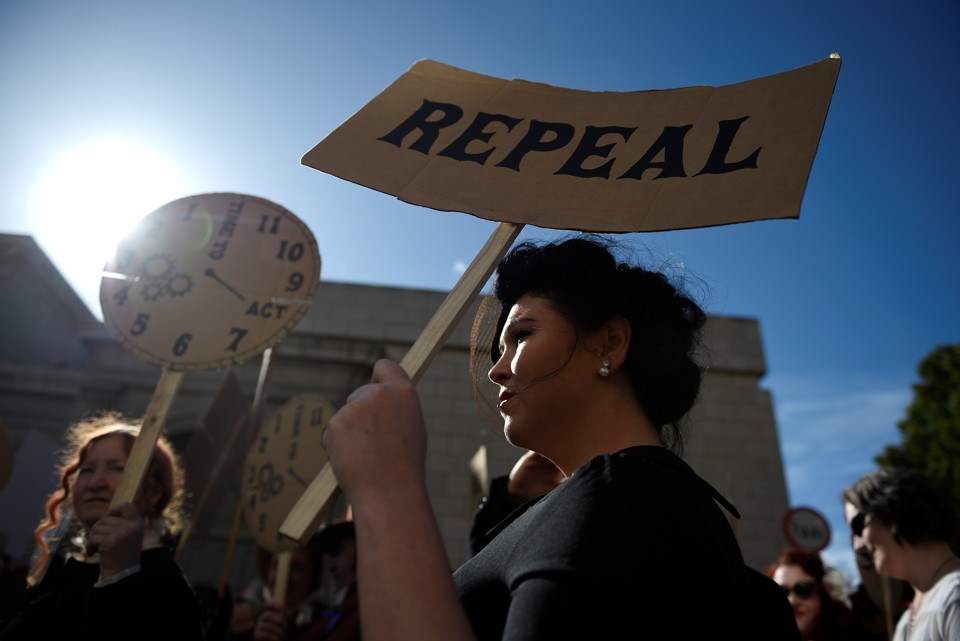
Pro-choice advocates protest in favor of more liberal Irish abortion laws in Dublin, Ireland on September 30, 2017. 
Pro-choice advocates protest in favor of more liberal Irish abortion laws in Dublin, Ireland on September 30, 2017. Clodagh Kilcoyne / Reuters

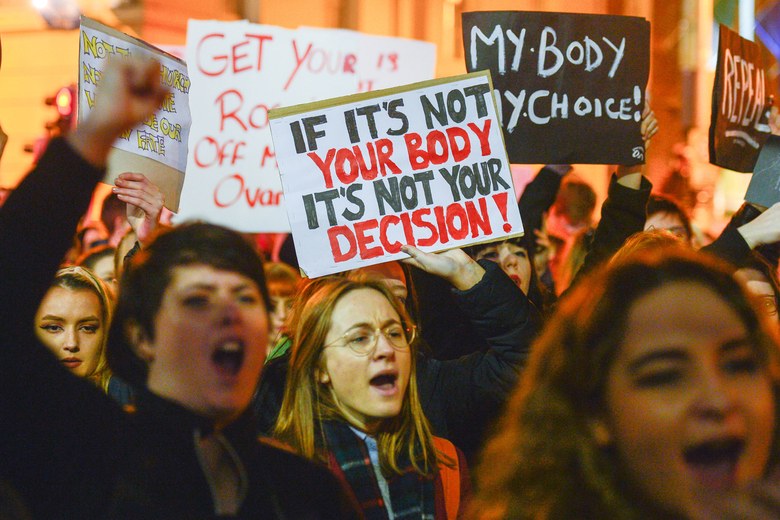
Tens of thousands of people gathered in Dublin Saturday for the annual March for Choice, a demonstration calling on Ireland’s government to ease its near-total abortion ban. It was the first major rally organized by pro-choice advocates since the government announced an upcoming referendum: Next summer, the country will vote on whether it should change its abortion laws. The advocates told me that if the referendum works out in their favor, they may not have to organize any more marches.

But it’s not yet clear how likely the laws are to change, or even what changes will be proposed. The exact wording of the vote is not expected to be determined before December.Leo Varadkar, Ireland’s Taoiseach, or prime minister, said the referendum would consider whether the country should amend its constitution, which, under its Eighth Amendment, gives an unborn child equal right to life to that of a pregnant woman. Though the amendment effectively outlaws abortion in all cases, a law passed in 2013 put into effect new rules allowing for abortion if the pregnancy poses a risk to the woman’s life because she is physically ill or suicidal. Unlike most other European countries, Ireland does not allow abortion in the case of rape, incest, or severe or fatal fetal abnormality. But women are permitted to travel to other countries, like the United Kingdom, to access abortion services—without facing prosecution when they return home.

Pro-choice advocates like Clare Lanigan believe Ireland’s laws are far too restrictive. A member of the Abortion Rights Campaign and one of the organizers behind Saturday’s march, she wants the referendum to address repealing the Eighth Amendment. But Lanigan told me that outright repeal may not be what the government has in mind. “It’s not yet clear what will be on the ballot,” she said. “We’re reserving judgment until we see what exactly is proposed, because if it’s only going to allow abortion in extremely restrictive cases … it won’t help the majority of people in Ireland who need abortions.”Anti-abortion activists in Ireland have advocated that the Eighth Amendment stand as is, arguing that any attempt to repeal it, partially or fully, would be a mistake. “Once you start changing the Eighth Amendment at all—if you start removing any part of it or changing any of the words—you are interfering with the right to life of a baby in the mother’s womb,” Cora Sherlock, a spokeswoman for the Pro Life Campaign, a non-denominational anti-abortion group, told me. “Over time it would lead us to a situation where we would have abortion on wide-ranging grounds. That is what has happened in every other country in the world, and there is no reason to think that Ireland would be any different.”

Ireland’s decision to hold a referendum comes months after a report was issued by the Citizens’ Assembly, a 99-member group appointed by the government to advise it on some of the country’s most divisive issues. After five months of deliberation, the group issued its recommendations calling for unrestricted abortion access. But it’s unclear to what extent the government will adopt the Assembly’s recommendations when it drafts the referendum. Several ministers within the ruling center-right Fine Gael party said they don’t think the recommendations would pass muster in the country’s parliament, let alone in a public referendum. This is presumed in part because abortion has long been taboo among the country’s Roman Catholic majority.

But opposition to abortion, particularly on religious grounds, may be waning, Emer O’Toole, a writer and professor of Irish studies at Concordia University, told me. “There is no doubt that Ireland’s Catholic history and the strength of the Catholic Church in Ireland right now has an influence on our relationship to things like women’s reproductive rights,” she said. “However, when people think about why they are opposed to abortion, I don’t think their minds go to ‘because the priest said so’ anymore.”Sherlock said that some oppose abortion on religious grounds, but that certainly isn’t the sole reason. “Generally what we find in Ireland more and more is that people are coming from the position that they want to keep the Eighth Amendment because they are aware of personal stories, because they know there are people out there who are alive because of the Eighth Amendment,” she said, adding that “abortion isn’t something that’s normalized in Ireland. Because we don’t have abortion clinics here, people have a bit of time to assess what that means for them.”

Ireland remains a predominantly Catholic country. Although a 2016 census found that the total number of people identifying as Catholic fell by 132,200 between 2011 and 2016 (a decline that corresponds with the rise in those who identify as having no religion), an overwhelming 78.3 percent still identifies with the Church. But the extent to which the religion’s beliefs and practices govern Irish society has, over the years, undergone a gradual shift—one that some attribute to the weakening of the Church’s status following revelations of clerical child abuse in the 1990s. This shift was marked by a number of other milestones regarded as proof of Ireland’s mounting progressivism, from its 2015 referendum legalizing same-sex marriagein 2015, to the election of Varadkar, the county’s first openly gay premier, in June.

“For a lot of people, myself included, there was a great sense of hope after the marriage-equality referendum passed that finally the Eighth Amendment could be addressed head-on,” Lanigan said. “There’s definitely a sense that with progress comes other progress. … The vast majority of the Irish population voted for it, even though the majority of the Irish population still identifies as Catholic, so that shows that being Catholic and being progressive are not mutually exclusive.”

Indeed, a March survey conducted by the Irish Times and pollster Ipsos MRBI found that an overwhelming majority of Irish people believe the country’s constitutional ban needs reform to account for certain circumstances, though they still reject the idea of legalizing abortion outright. Twenty-eight percent of those surveyed said the Eighth Amendment should repealed, wheres 38 percent said it should instead be replaced with another amendment allowing for greater access. Sixteen percent said it should not be repealed at all.Ailbhe Smyth, a co-founder and chair of the Coalition to Repeal the Eighth Amendment, told me pro-choice advocates regard repealing the amendment as the “crucial first step” to reforming abortion access in Ireland, noting that a failure to do so would force women to seek abortions by illegal means or by leaving the country—an option some 5,000 women avail themselves of every year. “What we actually say to women is, ‘Abortion is wrong, thou shalt not have an abortion because it’s a crime. However, we don’t mind if you go to some other country and have an abortion, and you can come back to Ireland and we won’t prosecute you for that,” Smyth said. “We can pretend it doesn’t happen here, but it does. It’s just that we outsource the doing to another country.”

She added: “We are really living in what can only be called a state of dishonesty. People say it’s hypocritical, but it’s a little bit worse than that.”

I raised this point with Sherlock, who told me the Pro Life Campaign is opposed to “abortion anywhere,” adding that: “We’re not trying to stop anyone from traveling. That’s not something we’re doing in Ireland. … Just because something that we don’t agree with in this country is legal elsewhere is not a reason for us to do it here.”Despite the changes in public opinion over the years, O’Toole, the Concordia professor, said the longstanding Irish taboo against abortion shouldn’t be underestimated. “The reality at this point is that the vast majority of people in Ireland support some change to our current abortion regime … but they don’t support the idea that women should be able to have an abortion on request, even in the first trimester of pregnancy,” she said, adding that much of this sentiment is informed by the abortion education taught in schools, the vast majority of which are run by the Catholic Church. “I wasn’t pro-choice on leaving school, because I couldn’t have been. There’s no way you could have left my secondary school in the west of Ireland and been pro-choice.”

Though the outcome of the referendum will depend on what the government ultimately decides to put on the ballot—repeal versus reform, legalization versus increased access—Smyth said she’s optimistic. “I’ve been involved since the end of the 1970s and … I’ve never seen such a big and wide and deep social movement here for change on this issue,” she said. “I wouldn’t be doing this if I didn’t believe we can win this, and we can win this. Whether we will or not is another day’s work.”

https://www.theatlantic.com/international/archive/2017/10/ireland-abortion-referendum/541527/

It’s misleading and medically inaccurate.

GETTY

“Late-term abortion.” By now you have probably heard the phrase everywhere. In their third and final debate, Donald Trump and Hillary Clinton fought over whether “late-term, partial birth” abortions, in the words of moderator Chris Wallace, should be legal in the United States. Media outlets publish the phrase regardless of whether the publication leans to the right or to the left. (Cosmopolitan has used it in the past too.) And while advocacy groups who oppose abortion use the term nonstop, well, even those that support abortion rights use it occasionally, too.

But in reality, no one should be using it. There is no specific medical definition for a “late-term abortion,” and because of that, abortion opponents are using it to mean anything they want.

“Even medical professionals commonly misuse abortion terminology,” Dr. David Grimes, author of Every Third Woman in America, How Legal Abortion Transformed Our Nation, wrote for the Huffington Post in 2014. Grimes, who provided abortions professionally for decades and even before the Roe v. Wade decision, may not be considered the most unbiased of sources, but the American College of Obstetricians and Gynecologists (ACOG)– the country’s largest professional group for those who provide medical care to pregnant people – agree.

“Though many media reports and other literature use the phrase ‘late-term abortion,’ it is not accurate and should not be used,” Hal Lawrence, M.D., executive vice president and CEO of ACOG, said in an email. “A full-term pregnancy is defined as a pregnancy with a gestational age between 39 weeks and 40 weeks, 6 days. ‘Late term’ refers to a pregnancy with a gestational age of 41 weeks to 41 weeks, 6 days. Abortions are not performed at ‘late term.’”

He added, “Because different methods of inducing abortion are effective at different stages of pregnancy, abortions are sometimes categorized by whether they occur in the first or second trimester. Clinicians sometimes use the term ‘early abortion’ to refer to abortions that occur up to 70 days gestational age, when medication abortion using mifepristone and misoprostol are highly effective. The term ‘later abortion’ is sometimes used to describe abortions that occur after 12 weeks gestational age. Describing these abortions as ‘late-term’ is simply inaccurate.”

The problem is that this medically inaccurate terminology has already become ingrained in the rhetoric of how people talk about abortions, and for many abortion opponents, it is a phrase that they have been using almost as long as abortion itself has been legal. According to Johanna Schoen, associate professor of history at Rutgers University and author of the book Abortion After Roe, “late-term abortion” has been used by anti-abortion activists even as early as the mid- or late-1980s as a way of describing any abortion after the first trimester, but it didn’t work its way into mainstream use until the early 1990s when the public began debating Intact Dilation and Extraction (Intact D&E) or what would eventually be known as a “partial birth abortion” – a procedure involvingdilating the pregnant patient’s cervix then delivering the fetus’s body, then collapsing the skull in order to remove it more easily from the birth canal. Like “late-term abortion,” the phrase “partial birth abortion” is an evocative, highly politically charged term that has no actual medical definition that applies.

According to Schoen, the use of the phrase “late-term abortion” is actually meant to group together any procedure after the first trimester and erase any distinction in developmental along the gestational period of the pregnancy. “It immediately makes the conceptual jump to the idea of a viable fetus, and implies that they are all viable at that point,” she said. “There is no longer a second trimester. Instead they hope to make the emotional jump to just a viable baby. If it’s not a first-trimester abortion, then it is a viable baby, and there is nothing in terms of development in between.”

When abortion opponents define “late-term abortion” themselves, their words sound very similar to Schoen’s. According to the report “The Reality of Late-Term Abortion Procedures” published by Charlotte Lozier Institute, an anti-abortion research organization, “Late-term abortion is not an exact medical term, but it has been used at times to refer to surgical dilation & evacuation (dismemberment) abortions as well as intact dilation & extraction (partial-birth) abortions performed in the second (13-27 weeks) and third (27-39 weeks) trimesters.”

Public debate over abortion is already extremely challenging. But it’s even more challenging once it becomes clear that the terms being used have different meanings depending on the audience. It is impossible to have a meaningful dialogue if the public believes experts, activists, and politicians are discussing the moral issues of aborting fully developed baby just week or two away from an uncomplicated delivery and a long, healthy life, when abortion opponents are actually referring to a period in gestation where live delivery will at a minimum require months of hospitalization and potentially years of special medical care – in the very rare case that the baby survives at all.

The reality is simple when the language is used correctly: the House will soon vote on a ban on abortion at 22 weeks gestation (commonly known as the “20-week abortion ban”) – with no exception for fetal anomalies and a requirement that if a woman is raped, she must undergo mandatory counseling at least 48 hours before her procedure or have had a medical exam after the assault. It is a ban on abortion at the very cusp of viability, at a point when only a “tiny minority” of those who are born at that gestation and medically treated will survive without severe medical conditions, according to even the most recent and exhaustive of scientific study on extremely preterm babies.

It is a later abortion ban that would go into effect halfway through the second trimester, and one that would affect those who either receive a new and unfortunate diagnosis about the pregnancy, or who had too many hardships – either financially, logistically or both – to obtain a termination earlier.

But it is not a “late-term” abortion ban, and it is up to those who support abortion rights to explain that, and push back on anyone who uses that phrase – our friends and families, the media and politicians, and yes, even our own allies. Because if we continue to allow abortion opponents to mislead the public and erase the distinction between a developing fetus and a viable baby ready to be born, then we allow them to completely erase the physical and emotional needs of the pregnant person, as well as any ability for them to make the medical decisions that are best for them, their families and, yes, sometimes even the fetus itself.

http://www.cosmopolitan.com/politics/a12766188/late-term-abortion-20-week-ban/

For women in rural areas, the nearest abortion provider can be a day’s drive away.

Carlos Ciudad Photos/Getty Images

There’s a clinic that’s right in Kelsey’s town of Sioux Falls, S.D., that performs abortions, but she still drove hours away to get one.

Back in 2015, she was going through a difficult time — recently laid off, had to move suddenly, helping a close family member through some personal struggles — when she found out she was also pregnant.

“I kind of knew right away that this was just not the time or place to have a child. I mentally wasn’t ready, financially wasn’t ready,” she says. “The whole situation really wasn’t very good.”

When Kelsey decided to end her pregnancy, she found herself navigating a maze of legal restrictions, in a part of the country where providers are few and far between. NPR is not using her last name to protect her privacy.

South Dakota has a 72-hour waiting period for abortions and requires women to meet with their doctor in advance of the procedure. Kelsey, a nurse, had recently started a new job and couldn’t take the time off to go to two appointments at the clinic in her city.

She was just a few weeks along, and it was important to her to end the pregnancy early.

“I just knew that I didn’t want to wait on this too long,” she says. “Everybody has their own feelings about what is appropriate for them to have an abortion … how far they want to wait and things like that. I just knew I just wanted to do it.”

She called several providers throughout the region, some hundreds of miles away, before she finally found an appointment in Minneapolis, about a four-hour drive away, on a day she happened to have off work.

Kelsey’s story is similar to that of many women across the country, according to a report released Tuesday by the Guttmacher Institute, a reproductive health research organization that supports abortion rights.

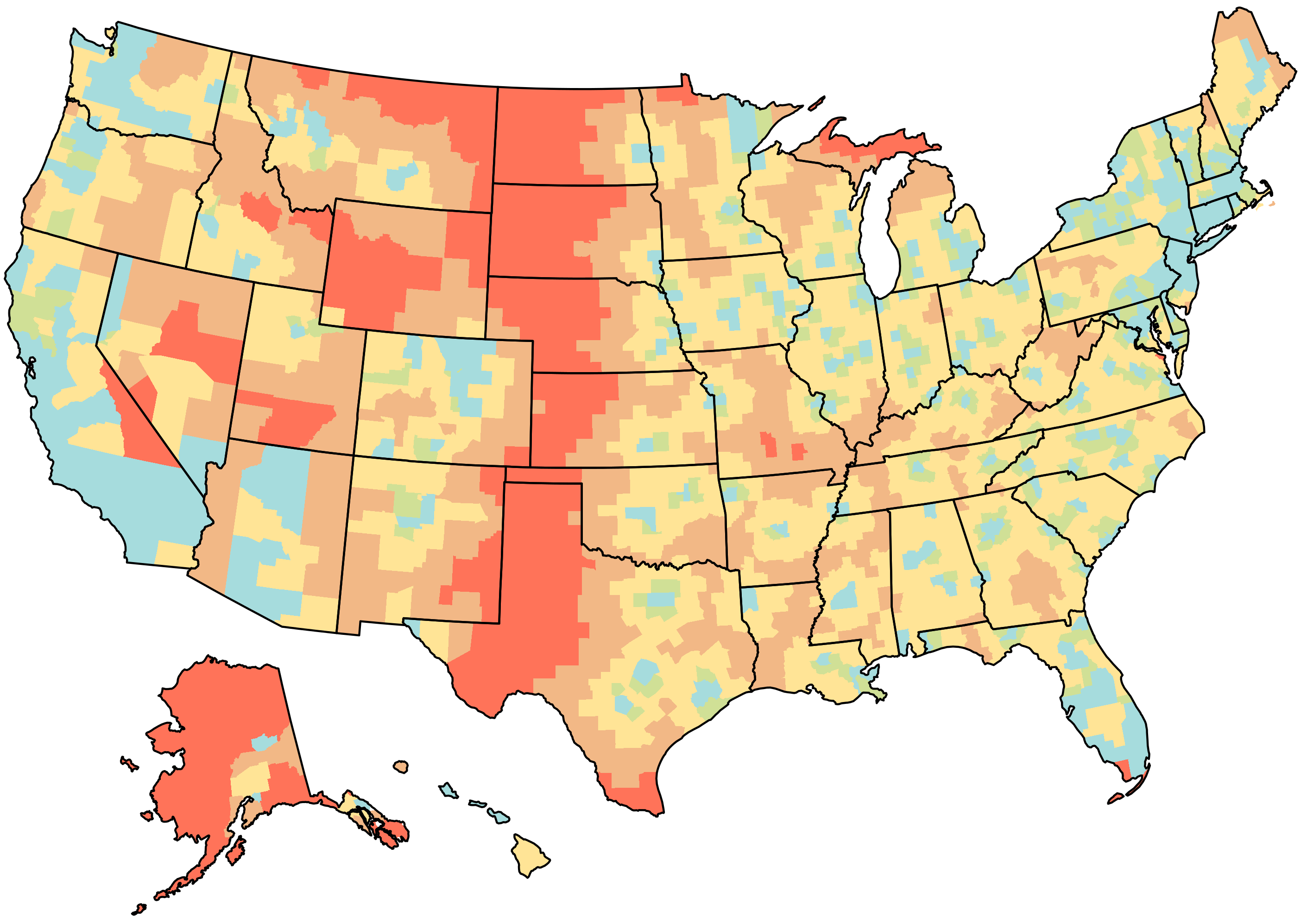
The report, published in The Lancet Public Healthincludes an analysis by Guttmacher researchers of the distances women must travel to obtain abortions in the United States. For 1 in 5 women, the report finds, the trip is more than 40 miles one way.

The trip is often longest for women in rural areas, with some in South Dakota driving more than 330 miles, according to Jonathan Bearak, a senior research scientist with Guttmacher and lead author of the report.

“I think there’s an unfortunate extent to which access to abortion is a bit contingent on your ZIP code, and that doesn’t need to be the case but it is,” he says.

  • 180 miles or farther
  • 90-179 miles
  • 30-89 miles
  • 15-29 miles
  • Nearer than 15 miles

Bearak says that increasing the use of options like telemedicine to provide medication abortion and reducing legal barriers to the procedure, like cumbersome health regulations on clinics and providers, could help improve access.

Social pressure is another factor that deters some doctors, midwives and nurse practitioners from providing those services, Bearak says.

“I think right now the issue is that it’s hard to do that because there are so many barriers in place to providing that care — not just the patients, but the doctors are affected by stigma,” Bearak says.

In South Dakota, where patients like Kelsey struggle with limited access to abortion services, Planned Parenthood has had to find creative ways to staff its local clinic. There’s no full-time abortion provider there, so Planned Parenthood flies a doctor from Minneapolis to Sioux Falls and back twice each week — first to consult with patients, as required by law, and then to perform the abortions.

Dr. Carol Ball has been making that trip for about a decade. She said local doctors are unwilling or unable to provide abortion services.

“I’ve been told by a supportive physician here that basically providing abortions for a South Dakota physician in Sioux Falls would be — quote unquote — ‘career suicide,’ ” Ball says. “Because I believe that the feeling is that there would be consequences to their practice.”

Ball says many of her patients travel hundreds of miles, some from out of state, to obtain an abortion at the clinic in Sioux Falls.

“It means that they have to find time away from their jobs and find child care for their children and all of the other sort of logistical things that it takes for us to stop and go to a doctor’s appointment,” Ball says. “They have to do that twice.”

Planned Parenthood’s Upper Midwest region has been flying abortion providers in and out of Sioux Falls for more than 25 years. Communications director Jen Aulwes says women there have limited options for abortion services.

“They’re very few and far between. They’re very spread out.” Aulwes says. “There’s, over the years, fewer and fewer clinics that that are providing abortion.”

http://www.npr.org/sections/health-shots/2017/10/03/555166033/for-many-women-the-nearest-abortion-clinic-is-hundreds-of-miles-away?utm_source=facebook&utm_medium=post&utm_campaign=healthfb&utm_content=access-october17

He schooled this politician

Following a bill approved by the House of Representatives earlier this week that would ban abortions after 20 weeks, there’s been a lot of discussion about that number. But when Arizona Rep. Trent Franks tweeted claiming that “it’s science” that fetuses feel pain by 20 weeks alongside a picture of baby feet, one doctor had something important to say about that so-called “science.”

On Tuesday, Daniel Grossman, M.D. — a practicing physician, public health researcher and a professor of obstetrics, gynecology, and reproductive servies at the University of California, San Francisco — quote-tweeted Franks’ claim and unleashed a brilliant thread that quickly went viral. “Hi Rep. Trent Franks. I’m a researcher and abortion provider,” he tweeted. “This isn’t actual science. I’d be happy to educate you about it if you like.”

Following the initial tweet, which has been retweeted over 67,000 times, Dr. Grossman tweeted some important facts, including that “late-term abortion” is not a medical term and was created by anti abortion activists; that that there are a variety of medical reasons why patients would need abortions past the 20-week mark; and that restrictions on access pushed by anti-abortion activists are a huge component to patients not being able to get first-trimester abortions.

Hi Rep. Trent Franks. I’m a researcher and abortion provider. This isn’t actual science. I’d be happy to educate you about it if you’d like.

He also delved into the concept of fetal pain, adding that based on research and studies, the best evidence indicates that the earliest a fetus can perceive pain is the third trimester at 26 weeks.

Fetal Pain

Context Proposed federal legislation would require physicians to inform women seeking abortions at 20 or more weeks after fertilization that the fetus feels pain and to offer anesthesia administered…

Dr. Grossman, a director at Advancing New Standards in Reproductive Health (ANSIRH), described the thread’s response as “overwhelmingly positive.” “It’s great to see that people are very interested in science, and making sure that legislation is informed by evidence-based research, not ideology,” he told Teen Vogue via email. “People crave facts and data, which they can assess for themselves and make a more informed opinion.”

Many have thanked him for sharing his expertise and keeping the political debate informed and based in fact. “The doctor-patient relationship is sacred,” he explained, “and I think people like being able to hear from a trusted medical [expert] rather than an elected official.”

This especially resonates because, as Dr. Grossman notes, multiple medical organizations signed on to a letter opposing this bill — but legislators didn’t take their advice. “As a physician, I find it frustrating when elected officials decide to legislate the practice of medicine without consulting experts in our field,” he said.

What particularly touches Dr. Grossman, however, are the people who have shared their abortion stories while sharing the thread. “[T]hat has been an honor,” he told Teen Vogue. “I appreciate all who speak up and speak out about their experiences.”

The 20-week myth can be traced down to research by University of Tennessee’s Kanwaljeet Anand, M.D., who argued that since fetuses can respond to certain stimuli at 20 weeks, an abortion later than that causes “severe and excruciating pain.” According to Mother Jones, a study published in the Journal of the American Medical Association in 2005 found little evidence to support this claim. Dr. Grossman believes that claim gained steam because of stigma.

“Anti-abortion advocates believe that if they can somehow make an abortion procedure seem gruesome or painful, fewer people will support it or will want to have it, so they’ve made up non-medical terms that sound awful to scare the general public,” he told Teen Vogue. “But, if I were to describe any other surgery, or even childbirth, the average person might shy away.”

The 20-week claim is far from the only one Dr. Grossman would debunk if given another opportunity. Another stigma associated with abortion he would expel is that continuing a pregnancy is safer than getting an abortion. The myth of abortions being dangerous, Dr. Grossman explained, is largely the way some lawmakers are able to garner support for anti-abortion legislation.

“The reality is that abortion is very safe — about 12-13 times safer than continuing the pregnancy to term,” he said. “There are much bigger public health issues that women face, including the high rate of maternal mortality. But legislatures spend a lot more time focused on abortion than they do on the important health issues facing our nation.”

https://www.teenvogue.com/story/viral-abortion-tweet

Anti-Abortion Activists Protesting Dr. Henry Morgentaler Receiving Honorary Degree At University Of Western Ontario
Hundreds of anti-abortion activists marched through the streets of London, Ontario and demonstrated outside a University of Western Ontario event on June 16, 2005.  Peter Power—Toronto Star/Getty Images

Canada’s most populous province has introduced legislation that would limit anti-abortion protests by creating “safe access” zones around abortion clinics, homes of doctors and staff, and pharmacies and hospitals that offer abortion services.

If the bill passes, Ontario activists opposed to abortion would not be allowed to protest within at least 50 meters (164 feet) of an abortion clinic or within 150 meters (nearly 500 feet) of clinic staff homes, according to the Toronto Star.

Ontario’s eight abortion clinics would automatically receive the buffer zone, and other locations such as pharmacies, hospitals or health centers like Planned Parenthood would have to apply. All these places could also apply to extend their zones to 150 meters.

The law would also prevent protesters from harassing doctors or clinic staff at any time, whether they are at work or not, according to the Star.

Protesters who violate the law would face a $4,000 fine and/or six months in jail for a first offense, and up to $8,000 and a year in jail for further offenses.

“The idea is simple, women should have free and easy access to these clinics without somebody stopping them or subjecting them to imagery that could be very traumatic and disturbing,” Ontario’s Attorney General Yasir Naqvi, who announced the legislation, told reporters on Wednesday, according to The Globe and Mail.

Ontario is not the first place in Canada to create these safe access zones. In fact, British Columbia, Quebec, Newfoundland and Labrador all have similar laws, according to BBC.

But recent incidents of clashes between anti-abortion protesters and those seeking abortion services prompted Ontario’s government to look into the issue, the Star reported. Naqvi said he hopes it will help women access health services “without fear,” according to the newspaper.

“While I strongly support everyone’s fundamental right to freedom of expression, our laws must balance that right with keeping people safe,” he said.

http://time.com/4971613/canada-ontario-anti-abortion-protest-ban-outside-clinics/

Graham brings 20-week abortion ban to Senate with 45 co-sponsors
© Getty Images

Sen. Lindsey Graham (R-S.C.) introduced a 20-week abortion ban in the Senate on Thursday with the support of 45 GOP senators, two days after a similar bill passed the House.

The “Pain-Capable Unborn Child Protection Act,” which faces long odds in the upper chamber, would make it illegal for any person to perform or attempt an abortion after 20 weeks of pregnancy with the possibility of five years in prison, fines or both.

“I don’t believe abortion, five months into pregnancy, makes us a better nation,” Graham said.

“America is at her best when she’s standing up for the least among us, and the sooner we pass this legislation into law, the better. We are on the right side of history,” he said.

The bill has exceptions for rape if the woman has received medical treatment or counseling at least 48 hours prior to the abortion or if she has reported the rape to law enforcement.

There are also exceptions if the pregnancy is the result of rape or incest against a minor that has been reported to either social services or law enforcement.

The exceptions note that the abortion can only proceed in a manner that provides the “best opportunity” for the fetus to survive unless that would pose a greater risk of death or serious bodily injury to the pregnant woman.

The abortion provider must receive informed consent from the woman certifying that she has been provided the gestational age of the fetus, a description of the law and her rights under it.

The bill would also require that abortion doctors submit annual data to the National Center for Health and Statistics about abortions carried out after 20 weeks.

The House on Tuesday passed its own 20-week abortion ban, 237-189, largely along party lines.

The legislation is likely to face a tough sell in the Senate. A similar bill passed the House in 2015 but was blocked by Democratic senators.

With only a 52-seat majority, it would be unlikely Senate Republicans could gather the 60 votes needed to move the legislation to President Trump’s desk. Graham still said he’s “100 percent confident” Senate leadership would bring the bill to the floor for a vote.

While the bill’s House sponsor, Rep. Trent Franks (R-Ariz.), has pushed for the Senate to end the legislative filibuster to get the bill passed in the upper chamber, Graham dismissed that idea.

Trump has also repeatedly called for the Senate to nix the filibuster in order to pass his agenda.

The White House said Monday that it “strongly supports” the bill and “applauds the House of Representatives for continuing its efforts to secure critical pro-life protections.”

The bill is a top priority of anti-abortion groups, which argue a fetus can feel pain at 20 weeks gestation and later.

Tuesday’s vote in the House of Representatives was a win for basic human decency,” said Marjorie Dannenfelser, president of the Susan B. Anthony List, an anti-abortion group based in D.C.

“Now it’s time for the pro-life majority in the Senate, led by pro-life champion Lindsey Graham, to force vulnerable pro-abortion Senators up in 2018 to either stand with their pro-life constituents and vote for this bill, or stand with the extreme abortion lobby and vote in favor of late-term abortion on-demand,” she said.

Democratic senators have criticized the legislation as extreme and harmful.

“I hope Senate Republican leaders make the right choice — commit not to bring this extreme, harmful legislation up for a vote — and start sending a message to the people across the country looking to us for solutions that Congress is putting them first, not partisan politics,” said Sen. Patty Murray (Wash.), the ranking Democrat on the Senate Health Committee.

http://thehill.com/policy/healthcare/354032-graham-graham-introduces-20-week-abortion-ban-with-45-cosponsors

Attorneys for Planned Parenthood of Heartland argued that the forced waiting period poses an undue burden on a pregnant patient’s right to due process under the Iowa Constitution.

After a two-day trial, a district court in Iowa on Tuesday upheld a state law that, among other provisions, requires a 72-hour waiting period for patients seeking abortion care.

SF 471, which then-Gov. Terry Branstad (R) signed into law on May 5, requires pregnant patients to certify 72 hours in advance of obtaining an abortion that they have undergone an ultrasound, that they have been given an opportunity to view and hear a description of the ultrasound image, and that they have received certain state-mandated materials.

Planned Parenthood of the Heartland (PPH), represented by Planned Parenthood Federation of America and ACLU Iowa, immediately filed for an injunction arguing that the GOP-backed law infringed on patients’ due process rights because it imposes an undue burden on their right to obtain abortion care. On the day Branstad signed the bill into law, the Iowa Supreme Court issued a temporary injunction blocking its enforcement while the case proceeded to trial.

Attorneys for PPH, during the two-day trial in July, argued that the forced waiting period poses an undue burden on a pregnant patient’s right to due process under the Iowa Constitution because it imposes an undue burden on patients seeking an abortion.

Iowa Fifth Judicial District Court Judge Jerry Farrell, however, ruled that the law was constitutional. He found that there was no material distinction between Iowa’s informed consent law and Pennsylvania’s informed consent law at issue in the landmark U.S. Supreme Court case Planned Parenthood v. Casey in 1992.

“The Iowa Act is different from the Pennsylvania Act in that the mandatory delay is 72 hours rather than 24,” Farrell wrote in his order.

“PPH characterizes this difference as triple the delay, but the court does not find the extra two days to be material in light of the case law and the record.”

PPH contended that the court should apply a “strict scrutiny” standard because it brought the case under the Iowa Constitution, not the U.S. Constitution. Attorneys for the state argued that the federal undue burden standard applies to claims brought under the Iowa Constitution just as it applies to claims brought under the U.S. Constitution.

Judge Farrell sided with the state.

The Iowa Supreme Court had the opportunity to abandon the undue burden standard in 2015 when it considered for the first time whether the Iowa Constitution protects a person’s decision to terminate a pregnancy, Judge Farrell noted in his order.

In that case, Planned Parenthood of Heartland v. Iowa Board of Medicine, the Iowa Supreme Court ruled that a ban on abortion via telemedicine violated the Iowa Constitution. The state’s Supreme Court evaluated PPH’s state constitutional claims using the federal undue burden standard. If the court had not seen fit to abandon the federal undue burden test when considering Iowa’s telemedicine ban, there was no reason to abandon it when evaluating Iowa’s mandatory delay law, according to Judge Farrell.

“The undue burden standard has been in place for 25 years. It has been applied by a number of federal and state courts when considering other challenges to mandatory delay laws. While the Iowa Supreme Court could use a different legal standard under the Iowa Constitution in a future case, the court did not do so in 2015 when given the opportunity,” Judge Farrell wrote.

The court agreed with PPH that a 72-hour waiting period would force people to make two trips to a PPH clinic—one to get an ultrasound and certify to the informed consent and another for the procedure. The court acknowledged the financial hardships on Iowans who live farthest from a Planned Parenthood center and the impact on domestic abuse victims who might be forced to reveal their pregnancy to their abuser if required to make two visits to a clinic. The court likewise acknowledged that scheduling delays could result in a loss of the option to choose a medication abortion, which is safer.

The court nevertheless balanced those concerns against Iowa’s interest in potential life, an interest which it said “cannot be denied under the law” and found Planned Parenthood’s concerns on behalf of its patients wanting.

“The undue burden standard has been criticized, but it fairly balances the two competing interest of a woman’s right to choose an abortion versus the public’s interest in potential life,” Farrell wrote.

The court found that PPH had not met that standard.

Casey makes clear that the issue at stake is whether the burden serves as a substantial obstacle to a woman exercising her right to choose an abortion, and not whether there are additional costs imposed,” he wrote.

“There is no question that the second trip will have some impact on low-income women and those who have to drive longer distances. However, the fact that there is some burden is not dispositive if the Act does not place a substantial obstacle in the way of women getting an abortion .… There will be some costs and confidentiality concerns, but these are the same concerns that were considered and rejected in Casey.”

The court implemented a 30-day stay to give PPH time to appeal the ruling to the Iowa Supreme Court.

PPH and the ACLU already filed an appeal of the ruling and will seek a temporary injunction of the law from the Iowa Supreme Court, according to the Gazette.

“If this law indeed goes into effect, it will leave Iowa with one of the most restrictive abortion laws in the country,” Suzanna de Baca, president and chief executive officer of Planned Parenthood of the Heartland, said in a statement, as reported by the Gazette.

“This unconstitutional disregard by lawmakers—including Gov. Kim Reynolds —for women and their right to abortion access, is unacceptable. We will fight with every available resource until we ensure that all women have access to the care they need.”

https://rewire.news/article/2017/10/04/judge-upholds-iowas-forced-72-hour-waiting-period/

FILE – In this April 1, 2014, file photo, U.S. Rep. Tim Murphy, R-Pa., chairman of the House Energy and Commerce subcommittee on Oversight and Investigations, questions General Motors CEO Mary Barra about safety defects and the recall of 2.6 million cars with faulty ignition switches, during a hearing on Capitol Hill in Washington. On Tuesday, Oct. 3, 2017, the Pittsburgh Post-Gazette reported the newspaper obtained text messages suggesting Murphy asked a woman with whom he was having an extramarital affair, Shannon Edwards, to have an abortion when he thought she might be pregnant. Edwards, it turned out, wasn’t pregnant. (AP Photo/J. Scott Applewhite, File)

PITTSBURGH (AP) — An anti-abortion congressman asked a woman with whom he was having an extramarital affair to get an abortion when he thought she might be pregnant, a newspaper reported Tuesday.

The Pittsburgh Post-Gazette said it obtained text messages between Republican U.S. Rep. Tim Murphy of Pennsylvania and Shannon Edwards. A Jan. 25 text message from Edwards said the congressman had “zero issue posting your pro-life stance all over the place when you had no issue asking me to abort our unborn child just last week when we thought that was one of the options,” according to the paper.

A text message from Murphy’s number in response said the staff was responsible for his anti-abortion messages: “I’ve never written them. Staff does them. I read them and winced. I told staff don’t write any more.”

Edwards, it turned out, wasn’t pregnant.

Murphy’s spokeswoman had no comment on the report.

The revelation came as the House on Tuesday approved Republican legislation that would make it a crime to perform an abortion after 20 weeks of fetal development. Murphy, a member of the House Pro-Life Caucus, is among its co-sponsors. He avoided the media in Washington after voting for the legislation, and efforts by reporters to talk to him were unsuccessful.

The bill faces certain defeat in the Senate, where Democrats have enough votes to kill it.

NARAL Pro-Choice America quickly criticized “the height of hypocrisy” displayed by Murphy’s support for the legislation.

“You shouldn’t have to be a member of Congress just to access your right to abortion,” said Sasha Bruce, a vice president for the pro-abortion rights group.

Murphy recently acknowledged his affair with Edwards, which became public as a result of her divorce proceedings.

He is serving his eighth term representing a district in southwestern Pennsylvania.

https://www.yahoo.com/news/report-anti-abortion-us-rep-asked-girlfriend-one-215812228.html?soc_src=social-sh&soc_trk=fb