Stop Anti Abortion Terrorism
I looked President Clinton directly in the eye and, shaking his hand, said “Thank you Mr. President for helping to protect our clinics.”
In the last week, I’ve been reading with great interest how President Obama’s Department of Justice has been aggressively using the Freedom of Access to Clinic Entrances Act (“FACE”), a law passed in 1994 designed to protect abortion clinics, abortion patients and the clinic staff from certain anti-abortion activity.
As a staff person for the National Coalition of Abortion Providers , in the early 1990’s I attended a number of meetings with the Clinton Administration’s staff about the need for federal protection from anti-abortion zealots. At that point, any prosecution of such activity was carried out generally by the state and, well, there were a number of states that did not give a crap about protecting abortion clinics. But the Clinton folks were in a quandary because, as they told us, they had no jurisdiction in these cases because there was no federal law protecting clinics. So, they urged us to try to pass the “FACE” Act, which had been introduced a while ago but was languishing in the Congress. Our meetings were very frustrating because we knew – we just knew – that one day the violence would escalate. And on March 10, 1994, it did go to a new level when Doctor David Gunn was murdered as he entered his clinic.

Abortion Clinic
Doctor Gunn’s death and the incredible amount of publicity it generated gave pro-choicer groups more ammunition to pass the FACE Act and to give the Department of Justice jurisdiction over these crimes. Congressional hearings were held, the pro-choice lobbyists worked hard to get support for the bill and ultimately the bill passed both houses of Congress.
By this time, I had become good friends with David Gunn, Jr. and his sister, Wendy. In fact, after a while David basically became the national spokesman for NCAP, going so far as to pose for a picture that was used in a full page New York Times ad to help us raise money. We were both on “The Donahue Show” together and on various other shows as well.
Abortion
After the Congress passed the FACE Act, I got a call a call from one of Clinton’s staff people inviting me to attend the signing of the bill in the White House. Needless to say, I was totally thrilled, having never been to the White House except for that crappy little public tour. Then, that night I got a call from David, Jr. and he told me that he and Wendy had been invited to the White House as well and he asked me if I could pick them up that morning and drive over with them. They were both very nervous and what they didn’t know was I was probably just as nervous.
So, I picked them up at their hotel that morning and we drove over. I actually found a parking space pretty close to the White House so we had just a short walk. We entered through the North Gate and were escorted to the West Wing to a room with about 75 chairs and a podium. I was standing next to David and Wendy, trying to soak it all in when an official came over and said to us “Excuse me, but the President would like a few words with you.” They started to follow him and David looked back and waved me to follow him. But I was stopped at the door and when it opened, I caught a glimpse of the President standing behind his desk in the Oval Office. I mean, that was pretty cool…
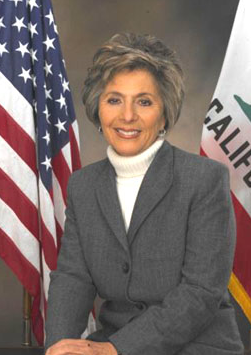
After about 10 minutes, the three of them came out and the audience sat down. I was in the front row, sitting next to California Senator Barbara Boxer. The President spoke about the need for this bill, about how his administration would protect the clinics (while guaranteeing the first amendment rights of the protestors) and that was that. He actually didn’t have the bill in front of him to sign, so I didn’t get one of those pens for a souvenir. Then he was done, and we all started to mingle.
At one point, I took a step backwards and bumped into somebody. When I turned around to apologize, I was face to face with the President. Shaking, I stuck out my hand and thanked him for his help. I will never forget how he looked at you straight in the eye, as if he was clinging to your every word, just you and him in the White House. It was mesmerizing and I guess that is what made him such a great politician.
It took a while for the Clinton Administration to get its feet wet enforcing the new law and, of course, when the Bush crew came in not much happened. I am now happy to see that the Obama Administration is going to aggressively enforce the law. But it’s sad to think that after all of this time, it is a law that still needs to be enforced.
Related articles
- Using “FACE” Again (abortion.ws)
- Obama’s abortion absolutism and the 1st Amendment (pprnnews.wordpress.com)
- White House may take bigger role in vetting costly regulations ahead of 2012 (thehill.com)
- Obama Administration Cracks Down On Abortion Clinic Protesters [Roe V World] (jezebel.com)



 Abortion - Abortion Clinics, Abortion Pill, Abortion Information