A day after Elisabeth Moss won an Emmy for her work in The Handmaid’s Tale, we learned that she will be starring in another project focused on women’s rights. Her upcoming movie Call Jane is based on the story of an underground network of women who provided abortions in the 1960s. The film is being directed by Simon Curtis (My Week With Marilyn) and production is set to begin in early 2018. Here’s what to know about the remarkable true story of — and real women behind — the Jane Collective.

Abortion in the 1960s

Before the Supreme Court cast its historic vote on Roe v. Wade in 1973, abortion had long been illegal in the United States. The procedure was officially criminalized around 1880. According to Leslie Reagan, an expert on the history of abortion, this was the result not just of a moral stance on abortion and concern about its health risks, but also part of a broader political effort to limit a budding women’s rights movement.

Of course, the law did not deter women from seeking abortions — but it did make the procedure less safe. Abortions were performed in secret, oftentimes without the aid of a doctor or nurse. In the 1930s, the Great Depression led increasing numbers of women to seek illegal, and hence often risky, abortions in an effort to cope with dire economic conditions.

In the 1950s and ’60s, the Guttmacher Institute estimates that between 200,000 and 1.2 million illegal abortions took place, accounting for at least 18 percent of pregnancy-related deaths during those years. Low-income women and women of color were the most affected, being the least likely to have the resources to pay for a safe operation or the ability to travel to other countries where abortion was legal. As author Patricia G. Miller has written in her book The Worst of Times, complications from botched or self-inflicted abortions were so common that most major hospitals had a “septic abortion ward.”

How the Jane Collective Was Created

The Jane Collective was founded in 1969 and was active until abortion was legalized in 1973. In 1965, Heather Booth, a student at the University of Chicago, learned that a friend’s sister was pregnant and “nearly suicidal.” Booth successfully found a doctor who would be willing to perform an abortion. She was subsequently flooded with so many similar pleas for help that she decided to get organized with other women in Chicago and founded the Abortion Counseling Service of Women’s Liberation in 1969. The group gained the code name “Jane” in underground circles and eventually grew to have around 100 members.

Initially, after offering abortion counseling, the Jane Collective secretly brought women to a safe house — sometimes even blindfolding the patients to ensure anonymity — where a doctor performed the procedure in safe conditions. Eventually, a small number of its members learned how to perform abortions themselves, which gave them more freedom and enabled them to keep costs down for the patients. One of the members, Laura Kaplan, has written that the group helped more than 10,000 women during its existence.

In 1972, seven members of the Jane Collective were arrested after a raid by law enforcement. They were indicted, but the charges were dropped after Roe v. Wade was decided by the Supreme Court. Once abortion became legal, the group disbanded, its services no longer needed. Heather Booth continues to work as a political activist to this day.

In 1998, a documentary was made about the Jane Collective, and another feature film about the group, the indie Ask For Jane, reportedly began production in New York this Summer.

Why This Story Matters Today

Although abortion has been legal in the United States for more than four decades and the Supreme Court overturning Roe v. Wade is highly unlikely, access to the procedure has been greatly limited due to a wave of state-level legislation in recent yeas. Conservative politicians continue to work to make it harder for women in certain states to find a doctor or facility that performs abortions. Texas is one of the worst offenders. In 2013, the state instituted a law that required doctors in abortion clinics to have hospital privileges and for clinics to follow unrealistic and often prohibitively costly hospital-level standards, which forced half of the state’s 40 clinics to shut down. Although the law was overturned by the Supreme Court in 2016, Republicans in Texas are now pursuing other paths to restrict abortion, such as trying to pass a bill that would revoke most abortion doctors’ medical licenses.

Meanwhile, on a national level, President Donald Trump has suggested women should be “punished” for abortions and signed legislation in April to cut funding to Planned Parenthood, one of the largest providers of women’s health care in the country. Trump’s budget also proposes to cut all federal funding to the organization.

These actions by state politicians and the federal government to limit access to abortion reveal how fragile the rights guaranteed by Roe v. Wade remain. Now is a fitting time to commemorate the true story of the Jane Collective with a film — both as a reminder of how things used to be and as a reminder that the fight for agency over our own bodies is far from won.

https://www.popsugar.com/news/Elisabeth-Moss-Abortion-Movie-Call-Jane-Jane-Collective-44049752

Nearly one in five women cite controlling circumstances, including partner violence and partner or family control, as reason for not accessing formal abortion services


abortion.jpgDespite abortion being legally available in Britain, some women find it challenging or at times “impossible” to access abortion care through current service models, research finds Getty/istock

Women in the UK are seeking abortion services outside the formal healthcare system due to access barriers, privacy concerns and controlling circumstances, research has found.

New findings indicate that despite it being legally available in Britain, some women find it challenging or at times “impossible” to access abortion care through current service models.

Research from the University of Texas reveals that nearly half of women who sought abortions outside the formal framework cited long waiting times, distance to a clinic, work or childcare commitments and prior negative experiences of abortion care.

Privacy concerns including lack of confidentiality of services, perceived or experienced stigma and preferring the privacy and comfort of using pills at home also deterred women from the statutory healthcare system, with 30 per cent citing this as the reason.

Nearly one in five women (18 per cent) meanwhile said the reason involved controlling circumstances, including partner violence and partner or family control.

The peer-reviewed study, published in Contraception, an international reproductive health journal, examined the demographics and circumstances of all women requesting early medication abortion through the online telemedicine initiative Women on Web (WoW) over a four-month period.

It then analysed a sample of their anonymised emails to the service to explore their reasons for seeking help. During that time, 180 women reported 209 reasons for seeking abortion outside the formal health care setting.

Abigail Aiken, author of the report and an assistant professor at the LBJ School of Public Affairs at The University of Texas at Austin, said current provision of abortion services in the UK made it “almost impossible” for women to access it.

“These are some of the most vulnerable women. Many of them have got a violent family or partner that controls them, which can make it almost impossible for them to get an abortion through the formal system,” she told The Independent.

“These are barriers that for some women are insurmountable. Many are in desperate situations. And there is a risk that these women resort to unsafe methods. We know from global studies that women who want and need abortions aren’t going to give up, and it could be dangerous.

“In the four months since I conducted the research, the number of women accessing the service has risen to 1,032. That’s a striking number of people given that we think we have a safe method for women. And these are only the ones we know about.”

Ms Aiken said that in order to ensure the most vulnerable and marginalised women are able to access safe abortions, a new approach is needed that will see the service delivered to them.

“This study shows that making health care services available does not automatically make them accessible or acceptable. To close the health care gap for the most vulnerable and marginalised, we need to find innovative ways to bring services to people where they are,” she said.

“We have to find some other way of providing for them from home – a more women-centred approach, which could see the service delivered to them.

“Our findings show that many women have already identified telemedicine as a viable way of obtaining early medication abortion. Making these services a reality would require a policy change to allow new models of service delivery.”

Clare Murphy, director of external affairs at the British Pregnancy Advisory Service (BPAS) described the figures as “staggering” and called for a “thorough overhaul” of abortion laws to ensure women are able to access the relevant care.

“The numbers of women in Britain seeking abortion pills online documented in this study are quite staggering‎, particularly given that it covers just one service over a four month period,” she said.

“It really underlines the need for a thorough overhaul of our abortion laws so that no woman faces clinically unnecessary obstacles in accessing care. It also concerns us deeply that women using pills bought online are at risk of life in prison if caught.

“Ultimately if we do not think that a woman who turns to online pills to end her own pregnancy should go to prison, we should no longer accept a law that says she should.

“As we prepare to mark the 50th anniversary of the 1967 Abortion Act next month, it’s high time to create a framework that meets the needs of women today, respects their ability to make their own decisions about their own pregnancies, and provides them with accessible high quality healthcare services to exercise that choice.”

A spokesperson for Marie Stopes International added: “In every country where we work, we are seeing increasing numbers of women buying abortion pills, either from pharmacies or online. Britain, where women have benefited from access to safe, legal abortion services for 50 years, is no exception to this global trend.

“In Britain, the number of women buying pills online remains a fraction of the 190,000 women each year who have an abortion through the NHS. However, any insight into the reasons why women are choosing a less safe method is valuable.”

Responding to the findings, a Department of Health spokesperson said: “All women who require abortion services should have access to high quality and safe care.

“It is a widely available procedure that is safe and regulated, with around 180,000 women accessing abortions a year. All abortion providers must have protocols in place for helping vulnerable groups. In addition to information on NHS Choices, there are also helplines set up to provide advice.”

http://www.independent.co.uk/news/uk/home-news/women-abortions-uk-nhs-outside-formal-healthcare-barriers-immigration-right-free-treatment-a7957141.html

Women would ‘bear the brunt’ of the bill’s funding cuts and weaker regulations, says policy analyst, with access to reproductive healthcare particularly affected

Lindsey Graham, one of the bill’s co-sponsors, speaks with the media.
 Lindsey Graham, one of the bill’s co-sponsors, speaks with the media. ‘The Graham-Cassidy bill is an assault on healthcare, period,’ says a policy analyst. Photograph: Michael Reynolds/EPA

new Republican attempt to reform the American healthcare system would have a disproportionate impact on women, experts have warned.

Republicans have pitched changes to the American health system which focus on “flexibility” for states to opt in or out of the coverage they believe they need.

But experts said funding cuts and weaker insurance regulations would leave more female patients worse off, hitting access to reproductive health hardest.

“The Graham-Cassidy bill is an assault on healthcare, period. But I really think women, particularly poor women, are bearing the brunt of this,” said Jessica Schubel, a senior policy analyst at the progressive Center on Budget and Policy Priorities.

At the heart of the bill, brought forward by the Republican senators Lindsey Graham and Bill Cassidy, is a proposal to change how the federal government pays for health programs, handing over more control to states through finite budgets called “block grants”. States stand to lose up to $4tn over 20 years, the Washington DC-based consulting firm Avalere health estimated.

In a setback for the proposal on Friday, Senator Susan Collins of Maine, a Republican, said she’s “leaning against” the bill, despite new pressure from her state’s GOP governor, Paul LePage, who cited research that the state could gain funding (while other states lose out). Collins, though, said there are lots of numbers floating around, and she’s awaiting an analysis by the Congressional Budget Office (CBO) before she makes a final decision.

Republicans have repeatedly attempted to undo the Affordable Care Act (ACA), better known as Obamacare, as part of a push to fulfill seven years of campaign promises and undermine a signature achievement of the Obama administration that provided health insurance to an estimated 20 million Americans.

Nevertheless, despite controlling both houses of Congress and the White House, Republicans have repeatedlyfailed to do so. Republicans hope to push this latest bill through the Senate within a week.

One of the most concerning provisions in the Graham-Cassidy bill, advocates said, was a push to defund the reproductive health provider Planned Parenthood.

The not-for-profit organization provides abortion services, which is why Republicans want to defund it. However, it also provides cancer screenings, sexually transmitted infection tests and contraceptive services at 650 clinics across the country. Planned Parenthood is already barred from using federal funds to provide abortion.

“The biggest issue is defunding of Planned Parenthood,” said Schubel. “In some areas, they’re the only game in town – so to speak – that’s affordable for low-income women.”

The bill would make Planned Parenthood ineligible for Medicaid funding, which pays for the care of many of the poor women who use the clinics.

In Texas, after Planned Parenthood was defunded, teen birth rates surged and up to thousands of women faced gaps in health coverage. Earlier this year, a public health expert told the Guardian: “I hate to say it, but I think an awful lot of women just opted to go without care.”

More negative impacts from Graham-Cassidy are dictated by simple demographics. Most people in America get insurance through their job, but many women receive benefits through their husband’s employer.

That means if women are widowed or divorced, they are at a greater risk of becoming uninsured. This risk would be even greater under the Graham-Cassidy bill, simply because of funding cuts. There would be fewer subsidies for private health insurance plans, and less money for Medicaid, a government health insurance program for the poor and disabled.

Further, proposed cuts to Medicaid could affect millions of pregnant women and elderly women who rely on the program. Almost half of all births in the United States are paid for by Medicaid, and four of five nursing home residents older than 85 are women, largely supported by Medicaid.

The Graham-Cassidy bill would also allow states to opt out of certain insurance regulations, such as a requirement that insurance companies offer maternity benefits. In that case, the annual cost to buy such coverage could be $17,000, the Congressional Budget Office has estimated in its appraisal of earlier Republican efforts to reshape healthcare.

“The whole thing is egregious,” said Katie Martin, vice-president of health policy and programs at the National Partnership for Women and Families. She called the bill “an absolute disaster for women and families who rely on affordable healthcare to thrive in society”.

https://www.theguardian.com/us-news/2017/sep/22/republican-healthcare-bill-graham-cassidy

Moore, a candidate in an upcoming special election to fill a U.S. Senate seat, has connections to the most radical parts of the anti-choice movement.

Roy Moore, a Republican vying for his party’s nomination in the special election for a U.S. Senate seat in Alabama, is touting the endorsement of an anti-choice activist who once signed a letter endorsing the murder of abortion care providers as a “justifiable” act.

The endorsements listed on Moore’s campaign website list the Rev. Matt Trewhella as a key supporter of the Alabama Republican’s Senate bid, as People of the American Way’s Right Wing Watch first reported.

“Trewhella has long been an activist on the far fringes of the anti-choice movement,” Right Wing Watch’s Miranda Blue wrote. “In the early 1990s, he was one of 34 anti-abortion extremists to sign a statementdeclaring that the murder of abortion providers is ‘justifiable.’ Another signer of the statement, Paul Hill, went on to murder an abortion provider and the provider’s bodyguard. Around that time, Trewhella was videotaped calling for churches to arm children in order to form militias.”

Moore’s campaign site identifies Trewhella as the “author of ‘The Doctrine of the Lesser Magistrate.’” In a blog post for what is his website of the same name, Trewhella defended President Trump’s notorious suggestion on the campaign trail that women who have an abortion should face “some form of punishment” should the medical procedure be made illegal, calling it a “no brainer.”

“If abortion is murder—and it is—the woman should be punished,” wrote Trewhella, going on to suggest abortion is a “capital crime.”

“When we are asked what the punishment should be for women who have illegal abortions, we should unashamedly respond—whatever the penalty is for murder in the state where it takes place,” he wrote.

Trewhella served time in jail for actions associated with his anti-choice activism, as Rewire reported. He co-founded the anti-choice group, Missionaries to the Preborn, and was “one of a half dozen anti-abortion activists [then] under investigation as possible conspirators in a campaign of violence against abortion clinics,” according to an August 1994 report from Newsweek.

Though Trewhella later removed his name from the aforementioned statement suggesting that the murder of an abortion doctor was “justifiable,” he nonetheless “was a mentor for potentially violent anti-abortion extremists” according to a Newsweek investigation.

Trewhella is a part of an arm of the anti-choice movement advocating that states ignore federal law and court decisions that safeguard abortion rights. Moore has twice been removed from his position as a justice on Alabama’s Supreme Court, including once for refusing to comply with the U.S. Supreme Court’s landmark marriage equality decision.

Moore has numerous ties to anti-choice extremists, including Operation Save America, according to another report from Right Wing Watch. The anti-choice group’s leader, Rusty Thomas, has donated toMoore’s campaign, and Moore has spoken to the group’s supporters and accepted an award from it.

The campaign’s website notes endorsements from anti-abortion radicals, Operation Rescue’s Troy Newman and Personhood USA’s Jason Storms.

Moore faces Sen. Luther Strange in Alabama’s runoff for the Republican nomination for the special election for U.S. Senate on September 26. The winner will face Democrat Doug Jones in the December general race.

https://rewire.news/article/2017/09/22/roy-moore-endorsed-activist-suggested-murder-abortion-provider-justifiable/

How the anti-abortion movement uses children to legitimize its message.

JENAVIEVE HATCH/HUFFPOST
Kids link arms outside A Preferred Women’s Health Center in Charlotte to protest abortion access. 

Annie* was just 8 years old when her Southern Baptist parents started taking her to protest outside abortion clinics in Southern California. She marched in anti-abortion rallies, stood outside clinics with signs, and volunteered at crisis pregnancy centers.

Now, looking back at age 29, Annie wishes her parents hadn’t pushed her so hard to actively participate in a cause she didn’t quite understand at the time.

“I know, somewhere,” she told HuffPost, “there’s a picture of me holding a sign as a kid that read, ‘Would You Kill Me, Too?’”

“[Being forced to protest at such a young age] made me yell slogans for an issue I did not comprehend, and I deeply regret the hurt I probably caused as a child,” said Annie. “I remember women walking past me into a clinic, crying when they saw me.”

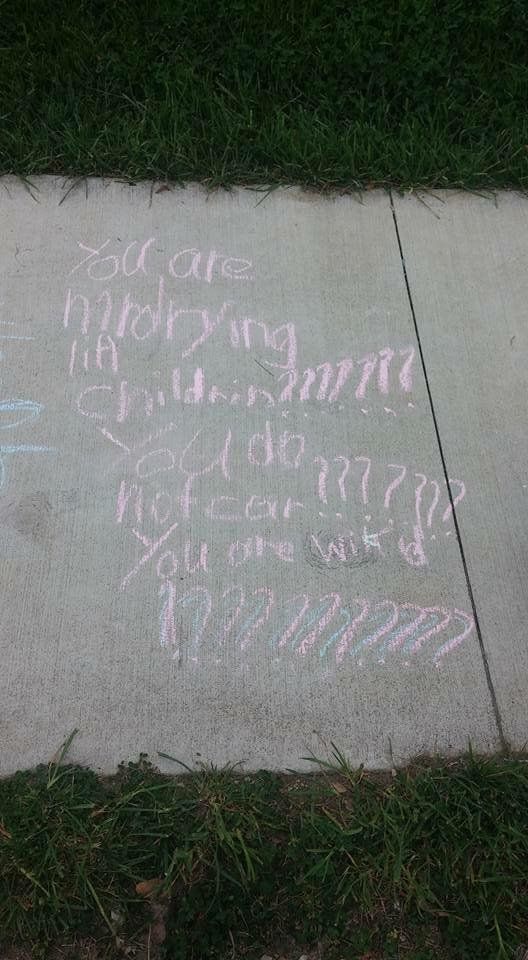
Annie’s experiences as a young child in the anti-abortion movement (if not her feelings about those experiences) are far from unique. Across the U.S., kids of all ages are woken up early on Saturday mornings and brought to local abortion clinics to protest with their parents. They pray, sing, pass out fliers, decorate sidewalks with chalk, or hold signs and posters.

While passing down religious and political beliefs is a natural part of parenting, and certainly not a bad thing, many patients, companions, clinic escorts and abortion providers that HuffPost spoke to question the role children are pushed to play in the anti-abortion movement. While anti-abortion leaders see children as an integral part of their protesting strategies, abortion rights advocates see young people being used as pawns to harass women making private health care decisions.

JEAN-MARC GIBOUX VIA GETTY IMAGES
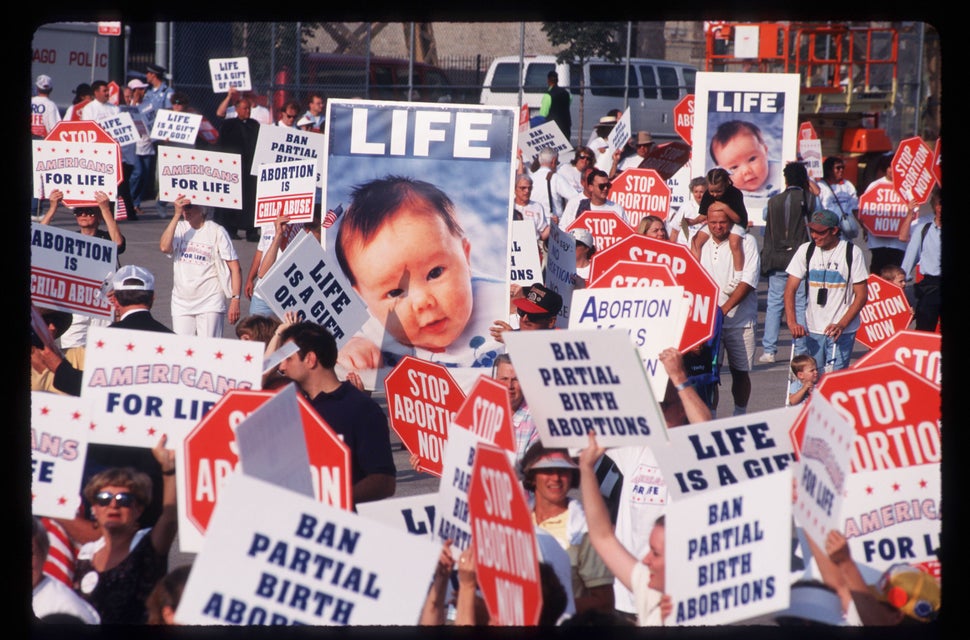
A 1996 protest in Chicago, Illinois during the Democratic National Convention.  

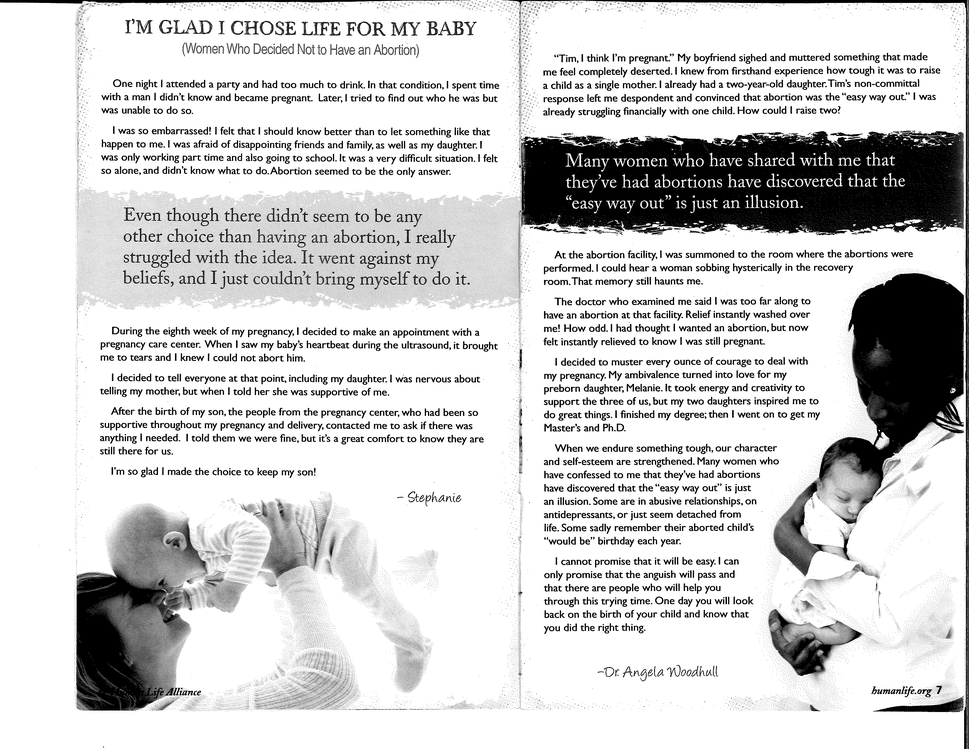
The anti-abortion movement has long used images of children in their marketing materials and posters. Protesters might carry posters featuring a baby or a young child’s face,  with words like, “Would you kill me, too?” overlaying the photo. Many volunteers at Crisis Pregnancy Centers pass out pamphlets and fliers outside abortion clinics that include photos of happy-looking families or smiling children.

HUFFPOST
A page from a Human Life (crisis pregnancy center and anti-abortion organization) pamphlet. 

But the role children play extends outside of appearing on posters.

Kids are also leading prayers or engaging in group prayers led by religious leaders, speaking anti-abortion rhetoric into megaphones or microphones, and passing out literature from crisis pregnancy centers.

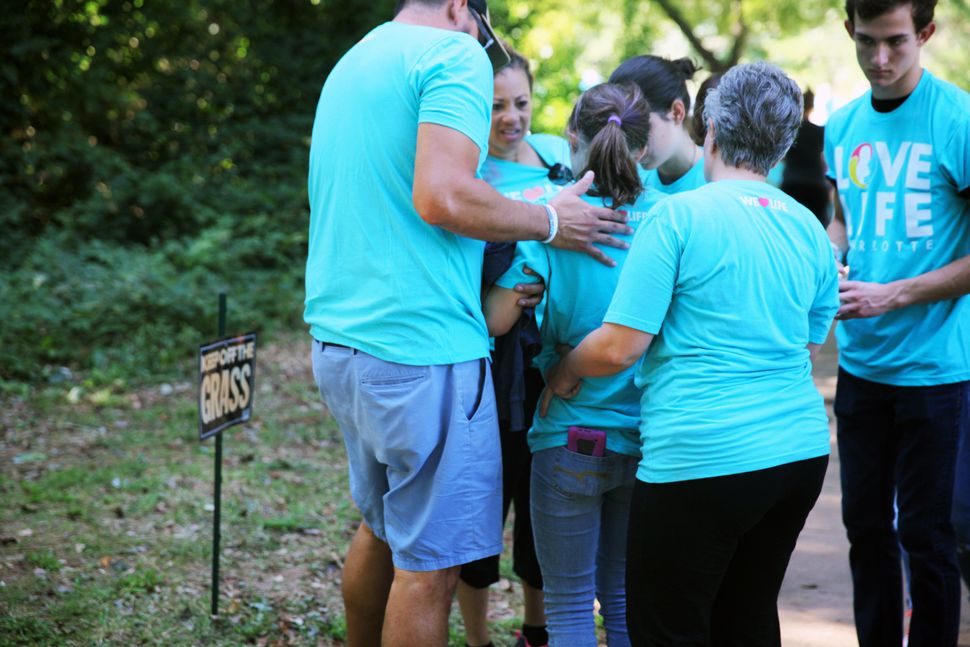
There is perhaps no better manifestation of the movement’s use of children than last Saturday morning’s Youth For Life march in Charlotte, North Carolina, outside of A Preferred Women’s Health Center (APWHC), one of the biggest abortion providers in the south.

Love Life Charlotte, a conglomeration of churches in the Charlotte area who have come together to protest abortion access, was granted a parade permit by the city for Saturday morning for their Youth For Life march. According to Love Life Charlotte, about 40 churches bused in children of all ages to march outside the clinic.

Justin Reeder, the founder of Love Life Charlotte, told HuffPost that the event was an opportunity for youth members to “see how being pro-life is not just being against abortion but also offering love and life to those who feel abortion is their only option.”

“As our nation continues to become more pro-life (Editor’s note: a recent Gallup poll showed that 49 percent of Americans currently identify as “pro-choice” while 46 percent identify as “pro-life”) it’s important for young people to see how much love and life the Church can bring to those who feel abortion is their only option,” Reeder said. “The youth are not engaging people, but rather praying that God ushers in a culture of love and life to a place where mothers feel so alone and afraid.”

The youth march drew close to 1,000 participants on Saturday, according to Love Life Charlotte. The patients and patient companions that HuffPost heard from said that the sheer number of people marching outside the clinic coupled with the noise that they were making ensured an overwhelming and distressing experience for anyone moving in and out of APWHC. Two volunteer clinic escorts were so upset by the number of children participating in the demonstration that they left in tears.

Though Reeder said that the aim of the march was not to “engage” with the clinic’s patients, the protest very much affected the appointments of APWHC’S  patients. Although the participants never touched any of the patients, they did address them, often directly.

At one point, a 17-year-old member of Love Life Charlotte wept into a microphone, begging women who she called “Mom,” not to murder their babies. A small group of kids performed live music into microphones so that their songs could be heard from inside the clinic.

A Preferred Women’s Health Center is located at the bottom of Latrobe Drive, home to various local businesses on a wide two-lane road. Because Love Life Charlotte had been granted a parade permit, they were able to block off one of those lanes, thus disrupting the usual flow of traffic.

Members of the Charlotte-Mecklenburg Police Department were present to direct traffic and make sure members of all parties ― Love Life Charlotte, other anti-abortion groups, and Pro Choice Charlotte counter-protesters ― were abiding by all of the rules.

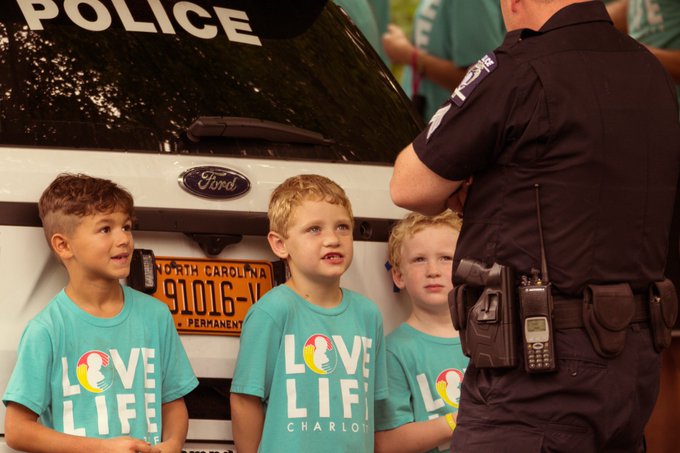
Calla Hales, clinic administrator at APWHC, has been skeptical of the police presence at these protests for a long time ― especially after an incident this summer in which members of CMPD were seen entertaining young kids from Love Life Charlotte while their parents prayed and protested outside APWHC.

(HuffPost reached out to CMPD for comment about this incident and did not hear back in time for publication.)

View image on Twitter

On Saturday morning, in preparation for the youth march, Hales created confidential questionnaires for patients to fill out once they’d made their way into the clinic. Just entering the clinic on Saturday meant passing not just the parade of children praying and singing at them, but also the usual gamut of aggressive protesters, and  the three mobile crisis pregnancy centers and their nurses who often try to divert traffic away from the clinic.

Of the 22 patients or patient companions who filled out the questionnaires, which were obtained by HuffPost, 12 of them said that the number of people on the street made them consider leaving their already-hard-to-get appointments.

One woman wrote, “I was scared to death of all those protesters.” Another person, who was a patient’s companion, commented, “I should not have to watch my friend be shamed and emotionally attacked for one of the hardest personal choices she has ever made.”

“They yelled into my car and embarrassed and upset my friend,” a second patient companion wrote on their feedback form. “Music ridiculously loud, able to hear inside the clinic. Very disturbing.”

And one woman, who had brought her daughter to the clinic, complained in her feedback form that on her way down Latrobe Drive to get to the clinic, she had been told by anti-abortion protesters to park “way way away from where I was supposed to be ― I am also handicapped.”

PORTLAND PRESS HERALD VIA GETTY IMAGES
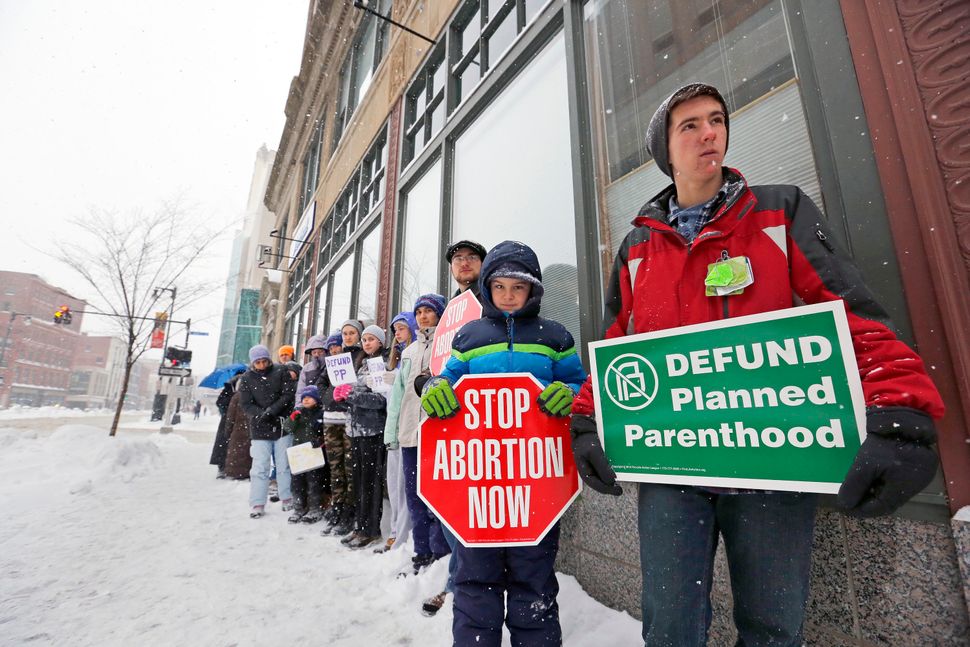
Children protest in the snow outside of Planned Parenthood’s Portland, Maine clinic last Februrary.  

While Love Life Charlotte’s youth march was an extreme example of child-based anti-abortion demonstrating, children all over the country are party to anti-abortion protests at the behest of their parents and their parents’ religious groups. According to patients and clinic staffers that spoke to HuffPost, this participation sometimes crosses the line from simply attending a protest to engaging in harassment.

One volunteer clinic escort based in Atlanta, Karen, told HuffPost that at the clinic she volunteers at, she’s seen an increase in this kind of harassment since the 2016 election.

“Since the election, we have a group from Abolish Human Abortion (AHA) and they often bring at least one little girl to participate in holding giant signs and speaking into the wireless-amplified megaphone,” Karen said. “The little girl will read from the Bible or from an AHA script. It’s clear [these girls] have no real understanding of what they are reading.”

Karen recalled an incident in which one of these young girls looked at her and called her “evil.”

“With direct eye-contact she asked me, ‘Why are you doing this? Why do you want to make money off of murdering babies? Do you know you are evil? Do you know you will burn in hell?’” Karen told HuffPost. “It’s chilling to see young children used this way … I’ve seen babies being carried as props, and toddlers tagging along as props with the AHA group.”

In Michigan at Northland Family Planning, one anti-abortion protester, Elvis Kesto, regularly brings his son, a toddler, to stand outside and protest with a sign that says, “Babies Are Murdered Here.” Kesto regularly posts photos of this onto his Facebook page.

Jessica James, a clinic escort at Northland Family Planning, argues that forcing children to engage in the abortion debate outside clinics is akin to “religious and emotional abuse.”

“My issue is with the long-term effects of what I consider to be religious and emotional abuse on a child that doesn’t have a choice in the matter,” Gird, who is training to be a social worker, told HuffPost.

FACEBOOK
At the Planned Parenthood in Columbus, Ohio, two young girls regularly use chalk to write messages on the sidewalk by the clinic.

Steven Meyers, clinical psychologist and professor of psychology at Roosevelt University in Chicago, told HuffPost children that young “have limited perspective taking abilities, so they will have difficulty understanding what others experience.”

“Their emerging cognitive abilities mean that they don’t understand the complexity of issues and are more likely to perceive events in black-and-white terms,” he said. “Their stage in moral development involves mainly pleasing their parents and avoiding punishment rather than having the ability at this point to grapple with abstract or complicated decisions.”

In other words, anti-abortion protesters’ kids will follow the lead of their parents, regardless of the emotional consequences it will have on patients, because of their innate want to do right by their mother and father.

Of course, parents across the political spectrum encourage their kids to engage in political discourse. There were many children at the Women’s March on Washington the day after President Donald Trump’s inauguration, and many of their photos and posters went viral.

Meyers sees a clear difference between the Women’s March ― or any other peaceful march in a neutral space ― and anti-abortion protests, which often involve targeting individuals outside of clinics.

“The main difference between [the Women’s March and anti-abortion protests] is the amount of conflict and negative emotion that children are exposed to at these events,” he said. “Peaceful and orderly marches have the advantage of allowing parents to share their values with their children in ways that are more likely to be constructive teaching experiences. High conflict demonstrations can become more volatile and potentially distressing to young children.”

Annie, whose political views have changed since she held signs outside her area abortion clinic, agrees with this assessment.

“I remember first hearing about the concept of abortion when I was 6, I believe, when Bill Clinton got elected,” Annie told HuffPost. “My parents said it was a crime, for he wanted to kill babies.”

She also said that she’s had a hard time engaging in political demonstrations, because it brings back uncomfortable memories.

“I tried to attend an anti-Trump [protest] recently, and almost had a panic attack at the yelling, because it reminded me of the hurt I probably caused as a kid,” she said. “Whenever I see kids in any sort of political protest now, I just want to hug them and hide them away, even if I fundamentally agree with the idea they’re protesting.”

By 11am on Saturday, after the Youth For Life rally and over an hour of marching and praying in the humid North Carolina end-of-summer heat, two young girls from Love Life Charlotte fainted.

JENAVIEVE HATCH/HUFFPOST
A young member of Love Life Charlotte tries to stand up after suffering dehydration and heat exhaustion on Saturday.

The two young teenagers were too faint to stand up. They were both ultimately fine, but the rest of Love Life Charlotte, including Reeder, carried on up the hill to finish their parade, while only a handful of youths and a couple of adults waited with the girls.

As all of this was happening, a member of another anti-choice group, Cities4Life, yelled prayers into a microphone, and begged women to come out of the clinic.

“Abortion is child abuse,” he said.

Women will soon be able to book abortions directly, province to cover abortion pill

Nova Scotia women will soon be able to get an abortion without a doctor's referral.

Nova Scotia women will soon be able to get an abortion without a doctor’s referral. (Shutterstock)

Nova Scotia will soon no longer be the only province in Canada where women must get a referral from a doctor before booking an abortion.

The province announced Friday that women will be able to book a surgical abortion directly through the termination of pregnancy unit at the QEII Health Sciences Centre in Halifax.

The Nova Scotia Health Authority will also be setting up a phone line so women can call and make appointments. The new measures are expected to take effect in the next few months. The actual phone number hasn’t been decided on yet.

“We believe that women should have control over their reproductive health and that’s why we’ve made that decision,” Kelly Regan, the minister responsible for status of women, told reporters at Province House.

Advocates have said Nova Scotia has some of the highest barriers in Canada to getting an abortion; women have been required to get a doctor’s referral for a surgical abortion, there are lengthy wait times for the time-sensitive procedure and no provincial coverage for medical abortions using pills.

Abortion pill to become free

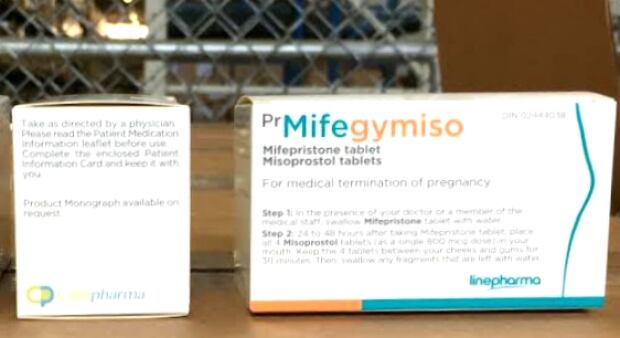
As part of Friday’s announcement, the province said it will make the abortion pill Mifegymiso available for free to all Nova Scotia women looking to terminate an early pregnancy, up to 49 days.

Beginning in November, women with a valid health card and prescription will be able to get the drug at pharmacies.

“If they already have a health benefits plan we would ask them to use that and then any remainder the province will cover,” Regan said. “If they don’t have a health plan, we will cover that cost.”

The province expects the measure to cost up to $200,000 per year.

Mifegymiso

Mifegymiso is a drug treatment for women to end pregnancies. (CBC)

To receive the abortion pill, women must get a prescription and have an ultrasound performed to rule out health risks and confirm how far along they are in the pregnancy.

Women seeking the pill will be given “same-day and urgent access” to ultrasound equipment in the diagnostic imaging department of the QEII, according to Kim Munroe, the Nova Scotia Health Authority’s director of ambulatory care.

The province said it’s working on ensuring the same standard is in place outside metro Halifax.

On its own, the pill would cost about $350.

In August, Health Minister Randy Delorey said the practice of requiring a referral for an abortion was likely “historical practice,” not law.

Not all family doctors and pharmacists in Nova Scotia have been trained to prescribe Mifegymiso. The province said that as of Sept. 16, 15 physicians and 55 pharmacists in Nova Scotia had take the online course for prescribing the pill.

http://www.cbc.ca/news/canada/nova-scotia/nova-scotia-abortion-no-referral-pill-mifegymiso-1.4301943


Abortion protesters at the A Preferred Women's Health Center of Charlotte go too far, and the city lets them.

Controversial reproductive health bill awaits Governor Brown’s signature
KMTR – Springfield, OR

Oregon Gov. Kate Brown held a signing ceremony Monday to commemorate a new law making abortion free for everyone in the state, including illegal immigrants.

The event was attended by members of the state legislature and pro-choice advocates, who regularly broke into rousing cheers and applause to celebrate the enactment of the Reproductive Health Equity Act.

“To lead productive and thriving lives, Oregonians must have the ability to control their bodies and make informed decisions about their health care,” Ms. Brown, a Democrat, said in a statement. “I am proud to sign legislation that expands access to basic reproductive health services for all Oregonians regardless of where they live, where they come from, or how they identify as a person.”

Jonathan Lockwood, a spokesman for the Oregon Senate Republicans, said celebrating abortion may be macabre, but it’s not surprising given that Ms. Brown was an abortion rights lobbyist before entering public life.

“Gov. Brown celebrating abortion and averting moderation is nothing new,” Mr. Lockwood said.

Ms. Brown officially signed HB 3391 on Aug. 15. The $10.2 million legislation allocates $500,000 to pay for abortions for women who would otherwise be eligible for the state’s Medicaid program, if it weren’t for their immigration status.

State Rep. Jeff Barker, a Democrat and chief sponsor of the legislation, said the law “ensures Oregonians can use these health care services when they need them, regardless of their economic status, their gender identity or their citizen status.”

“Oregon has a long history of defending reproductive freedom,” Mr. Barker said, “but rights don’t matter if you can’t afford access to them.”

He also read a postcard that he said was from his daughter thanking him for standing up for women’s reproductive health.

“It says, ‘Dad, thanks for being a sponsor of HB 3391. As your daughter, it means a lot to me that you take women’s health care so seriously,’” Mr. Barker read, drawing appreciative noises from the audience. “‘I love you. Thanks. Your daughter, Heather.’”

The first-of-its-kind law went into effect immediately after it was signed and requires Oregon insurers to provide 100 percent of the cost of abortions without co-pays or deductibles.

Qualifying state residents covered by Providence Health Care, a nonprofit Catholic insurance company that does not provide abortions, will be reimbursed for the procedure by the state.

Linda Roman, director of health policy and government relations of Oregon Latino Health Coalition, said the abortion law is a “validation of humanity in every Oregonian.”

“At the heart of the Reproductive Health Equity Act was always the deep belief that no one should be denied health care just because they are low income, people of color, transgender or undocumented,” Ms. Roman said at the signing ceremony.

http://www.washingtontimes.com/news/2017/sep/18/oregon-governor-celebrates-law-abortions-free-all/

Dude said it was a joke after I shared my abortion advocacy job while online dating. I wasn’t amused.

Last week, online dating giant OKCupid announced a partnership with Planned Parenthood. Site users can choose to answer a question about the health-care organization and earn an #IStandwithPP badge for their dating profiles. OKCupid says that about 200,000 people have now identified themselves as Planned Parenthood supporters.

This move, which allows me to see if someone disagrees with efforts to defund Planned Parenthood, couldn’t come at a better time for me. Last week, I had a run-in with the shadiest of online dating characters: the secretly anti-choice guy. We met on OKCupid and matched on a number of variables. We both have young kids; we both like travel and the outdoors.

I thought he was cute, so I suggested moving off the site to text, adding a humorous pre-admonishment not to send dick pics. I didn’t realize this would be nearly prophetic.

He texted, “What type of work do you do?” I replied, “abortion rights.”

I work in abortion rights advocacy in North Carolina. No lie, it’s a sweet gig and I’m super proud of it. I’ve worked for more than a decade for feminist causes, and it’s such a personal victory to say my career is specifically in abortion access.

But sure enough, my would-be-dreamboat showed me his—metaphorical—dick.

“Ugh your [sic] a baby killer.”

In that moment, I was the physical manifestation of the “typing” ellipses that tell you when someone begins typing but hasn’t hit send. I sat agog, staring at the hateful words.

Working in abortion advocacy means knowing some people find your work controversial. When I go to a clinic or step into the halls of my state’s legislature, I steel myself for the attacks. I harden myself against those who would take away the rights of others who choose abortion.

But when I’m online dating, I’m a bit softer. I have an expectation that the guys trying to hook up with me—the guys who had to see a picture of me holding a pro-abortion sign to reach my profile—will treat me with a modicum of respect.

While I sat in shock, another text followed.

“Hahah jkjk I believe it’s choice”

And another.

“I was looking for a fire up on your end.”

Oh, buddy. You have no idea what kind of fire you just set.

There is a rich tradition of men being offensive and then gaslighting those who don’t laugh, accusing them of not being able to take a joke. It felt like I was being set up to fail, no matter how I replied. Since the forum was online dating—in theory, a lighthearted space—I could feel my own internalized pressure to laugh it off and reassure this man that he was still in my good graces.

It was frightening to respond with my own truth.

“I mean, it’s not a great joke,” I wrote back after some consideration. “It’s my life’s work, you know?”

Long pause from my suitorduring which I experienced the self-doubt and adrenaline dump that confrontation brings.

Clearly, this should have been it. I should have written off the guy and moved on to other prospects. But because I am a communicator, a consensus seeker, and a glutton for punishment (and maybe because I just wanted to win, dang it), the conversation continued. If I were in any other career, I argued, it’d be offensive for him to make a joke at my expense.

“I’m not sure when it was made clear to me you were passionate about … oh well as I said I didn’t mean to offend you,” he wrote.

I wished him best of luck in his endeavors and closed the chat window.

As a woman, my body is a target. As a public-facing abortion rights activist, my work can be in the crosshairs. I receive hateful, even threatening Facebook messages almost weekly. Some even question my parenting abilities. I’ve been called a “baby killer” more times than I could ever count. I have no expectation that abortion rights is a 40-hour-a-week endeavor. But when it creeps into my dating life, I’m knocked off kilter.

A few years ago, newly divorced and fresh to the world of dating, I went out with a guy who didn’t know about my work before we sat down for drinks. When talk turned to careers, he asked me, “Don’t you think some people use abortion as birth control?” To my shame, I quickly changed the subject; I was more afraid of losing his attention than I was passionate about standing up for my values.

This time was different. Although I didn’t respond with anger and outrage, at least I pushed back. I had to wonder: How would have this been different if I were in a professional context?

Had I been on a street with a protest sign, I would have spoken with authority, telling him how his words were incorrect, and how they hurt women. If I were on the record with a TV station or a newspaper I would have quoted statistics or given a powerful quote.

But since I was in the odd interstitial space of online dating, where we are all concurrently strangers and also potential intimate partners, I didn’t have a snappy clapback waiting in the wings.

Two years ago when I built my first-ever online dating profile, I listed my profession as “nonprofit communications” and left my profile pictures apolitical. Since that time, I’ve had some good dates—great dates even—where I revealed my work, and I’m lucky that I seldom encountered negative responses.

That luck is probably more a statement about my liberal bubble. Stigma against abortion—and against those working in abortion advocacy—is very real and documented. Many of us don’t tell our potential dates what we do—at least not at first—because you don’t know what response we’ll get. People who work in abortion, like me, often cluster together to avoid the violence, harassment, and pain involved in dealing with people who accuse you of murder.

Unfortunately in online dating, there is no true safe space and no way to really cluster with like-minded individuals. An online badge like #IStandWithPP could even be a method creepy anti-choicers use to gain access to abortion advocates like me.

If I sound paranoid, I’m not. A local abortion provider recently revealed that she’d been raped by an online dating match, who talked about her work while assaulting her.

I’ve realized that I concealed the true nature of my work not out of personal privacy, but because I was afraid of rejection based on it. Realizing the absurdity of working specifically in abortion communications while being shadowy on OKCupid, I switched to a more “out loud” dating profile. My number of responses immediately went down, but the quality went up.

“I love the work you do! Get it!” wrote one anonymous dude a few weeks ago.

I just checked, and my gaslighting chat companion doesn’t have the #IStandWithPP flare on his profile. Then again, neither did I until a few days ago when I read about the promotion. It might be a helpful sign in the uncertain universe of online romance, but like any bumper sticker, yard sign, or T-shirt, it can’t be the only sign of a paramour’s convictions.

I join OKCupid in standing with Planned Parenthood, but I also stand with every woman who has been gaslighted in an interaction with a man—especially by a stranger on a dating site.

OKCupid, could you make a badge for that? It might save us all some hassle.

https://rewire.news/article/2017/09/20/match-called-baby-killer/

The Graham-Cassidy bill has all the problems of its predecessors — and some new ones.

Supporters of Planned Parenthood at a rally in Los Angeles on June 21, 2017.
 MARK RALSTON / Getty Images

Republicans’ latest effort to repeal Obamacare may look a little different from previous attempts — sponsors argue, for instance, that the plan lets states keep Obamacare if they want to. But when it comes to reproductive health care, the bill sponsored by Sens. Bill Cassidy (R-LA) and Lindsey Graham (R-SC) is a lot like previous repeal bills, except in areas where it’s much harsher.

Like previous bills, Graham-Cassidy imposes new restrictions that would make it harder for people to get insurance coverage for abortion, and for low-income patients to visit Planned Parenthood. Also like the other bills, it threatens Medicaid coverage and makes it easier for states to get rid of maternity care requirements.

A new element in this bill is that its program of block grants would create new ways for the federal government to restrict abortion coverage. Republican-led state legislatures have been working to curtail abortion access and pull funds away from Planned Parenthood for years now; Graham-Cassidy would accomplish both goals on a national scale.

Graham-Cassidy includes a lot of familiar abortion restrictions

The bill includes a provision, similar to those in previous repeal bills, that would effectively bar the use of federal Medicaid funds to pay for care at Planned Parenthood clinics. This would mean low-income patients who rely on Medicaid wouldn’t be able to get care at Planned Parenthood. Backers of such provisions have often claimed that community health centers would be able to fill in the gaps left by Planned Parenthood, but many reproductive health experts say this is unrealistic, since those centers would have to double or even triple the number of patients they saw for certain services. In order to replace Planned Parenthood’s contraceptive services, one of the many services they offer, health centers would have to see 2 million extra patients nationwide, according to the Guttmacher Institute.

What’s more, Planned Parenthood is a trusted and familiar provider for many patients, who may not necessarily know anything about their local community health center. As Dan Ramos, a state representative from Ohio, told the New York Times last year, “If someone doesn’t know where to turn, they know that Planned Parenthood provides a service that they might need.”

Like its forebears, Graham-Cassidy also includes restrictions on abortion coverage. Patients who got a tax credit to buy insurance on the individual market wouldn’t be able to use it to purchase insurance with abortion coverage, and small businesses that received a tax credit for providing insurance to their employees wouldn’t be able to offer plans covering abortion. Over time, this would mean fewer people would be able to buy individual plans that covered abortion, and so fewer insurers would offer them. Patients who can’t get insurance coverage for abortion are sometimes forced to forgo food or other necessities to pay for the procedure and may try to self-induce an abortion, which can be dangerous.

Graham-Cassidy would let states cut requirements that insurers cover essential health benefits, meaning insurance companies could stop offering maternal care or prescription drug benefits. Thirteen million women could lose access to maternal care.

Finally, the bill would end the Medicaid expansion, potentially depriving millions of low-income Americans of coverage. (The Congressional Budget Office announced on Monday that it would release a “preliminary” analysis of the bill early next week, but that won’t include an estimate of how many would lose coverage.) One in five women of reproductive age get their health insurance through Medicaid, and cuts to the program would put essential reproductive health services out of reach of many low-income Americans, especially black and Latino patients. More than half of all births and three-quarters of publicly funded family planning services are currently covered by Medicaid.

The bill also adds a new way for the federal government to restrict abortion at the state level

The new concerns for reproductive rights in Graham-Cassidy largely stem from its block grant program. As Vox’s Sarah Kliff explains, the bill would repeal Obamacare’s individual tax credits and the Medicaid expansion in 2020, and replace them with grants to the states. Those grants could then be spent in a variety of ways — on high-risk pools, for instance, or on programs “to help individuals purchase health benefits coverage.” But, crucially, none of the money from the grants could be spent on insurance coverage for abortion.

Many states already have restrictions on insurance coverage for abortion. But Graham-Cassidy would require all states to ban abortion coverage in any program that gets federal block grant money. If it took money to offer subsidies for individual coverage or otherwise bolster the individual market, then it would have to restrict abortion coverage on that market. If it used federal funds to offer subsidies to employers, the ban on abortion coverage would affect the employer market too.

Essentially, the federal government would have the states over a barrel — if they wanted money to help keep their residents covered, they’d have to sacrifice abortion coverage to get it.

Because there’s no telling yet exactly what states would do with the block grants, or how the law would be interpreted, it’s not clear what the impact of the abortion restrictions would be. But the block grant program would certainly offer the federal government a new and powerful tool to restrict abortion coverage, including in states that have few restrictions in place now.

It’s also worth noting that spending for the bill would expire in 2026, meaning that unless Congress acted to replace the block grant money somehow, anybody who relied on that money for any reproductive health care — or, indeed, any health care at all — would be out of luck.

Moderates in the Senate have expressed reservations over past repeal bills that would have left millions of low-income Americans uninsured. Sens. Lisa Murkowski (R-AK) and Susan Collins (R-ME) have opposed stripping funding from Planned Parenthood — and have votedagainst every repeal bill so far. As Vox’s Dylan Scott reports, the bill still needs a CBO score and the approval of the Senate parliamentarian before it can come to a vote, and in order to pass it, the bill’s sponsors can only afford to lose two Republican votes.

Graham-Cassidy would leave millions without coverage and severely curtail reproductive health coverage nationwide. It remains to be seen if that’s enough to kill it.

Correction: This article originally stated that the Graham-Cassidy bill would require states that got federal block grant money for their Medicaid programs to stop using state Medicaid funds to cover abortion. The bill would not do this.

https://www.vox.com/policy-and-politics/2017/9/19/16328928/obamacare-repeal-cassidy-graham-health-care-women