Anti-abortion rights activists say prayers during a prayer vigil outside Planned Parenthood on Jan. 21, 2014, in Washington, D.C.

Anti-abortion rights activists say prayers during a prayer vigil outside Planned Parenthood on Jan. 21, 2014, in Washington, D.C.
IMAGE: ALEX WONG / STAFF / GETTY IMAGES
It’s hard to understand what it feels like to be confronted or bullied outside a women’s health center — until it happens to you.

I’d never had that experience until last year, while reporting on the Supreme Court case Whole Woman’s Health v. Hellerstedt. Before visiting the Whole Woman’s Health clinic in San Antonio, I expected some type of encounter.

What I couldn’t anticipate was the surge of adrenaline and mild panic I felt when, after I opened my car door, a middle-aged man wearing sunglasses thrust pamphlets at me and said, “There’s a lot of killing that goes on in there.”

I wasn’t there for an abortion or any of the routine gynecological services offered by Whole Woman’s Health, but I felt threatened and intimidated. I can only guess how the exchange might have affected me had I been a patient who lived nearby.

We don’t know how many people have this experience, but a 2013 survey of abortion clinic providers found that 92 percent were concerned about the safety of patients when they approached their facilities. And Planned Parenthood wants more of the public to understand it in a way it never has before.

That’s why the nonprofit organization — whose clinics see their share of anti-abortion rights protesters — created a virtual reality film called Across the Line last year to simulate a trip to a women’s health clinic punctuated by painful encounters with protesters. Now, new research suggests it’s having a positive impact.

A still image from 'Across the Line.'

A still image from ‘Across the Line.’

IMAGE: PLANNED PARENTHOOD / ACROSS THE LINE

Across the Line uses 360-degree video and computer-generated imaging to place the viewer in the body of someone entering a clinic to receive abortion care. The experience draws on real audio of people shouting, documentary footage, and scripted scenes.

Seeing the experience unfold in virtual reality was jarring for some.

“In the early viewings [of the film] you’d have to counsel people … to stay with it for a minute and imagine this is someone you love going through this,” says Molly Eagan, vice president of Planned Parenthood Experience and an executive producer of Across the Line.

“Who is going to walk through a group of protestors and subject themselves to that?”Planned Parenthood hoped that the film, which it showed last year to film festival participants and to dozens of people with moderate-to-conservative views on abortion, would increase empathy for people who have abortions, reduce tolerance for bullying, and even prompt people to act supportively by, for example, becoming a clinic escort or advocating for certain types of legislation.

Virtual reality is generally thought to cultivate empathy, but Planned Parenthood now has preliminary research to suggest that it can achieve that and more.

The researchers, commissioned by the nonprofit, randomly split up viewers into two groups. In one group, people were surveyed about their views on clinic harassment before they watched the film; in the other, people were surveyed after.

The results showed that the group that had seen the film before they were surveyed expressed more disapproval of clinic harassment than those who hadn’t yet watched it. They were also more inclined to dislike certain types of behavior, including individuals photographing patients, and protesters who demonstrated outside clinics.

A scene from 'Across the Line.'

A scene from ‘Across the Line.’

IMAGE: PLANNED PARENTHOOD / ACROSS THE LINE

The people who saw the film at festivals last year were predominantly highly educated white men who identified as somewhat or very liberal.

When the researchers conducted comprehensive interviews in Kansas City and Atlanta, however, they largely spoke to women between the ages of 20 and 45 who never had an abortion and held moderate political beliefs.

After watching the film, those participants were more empathetic toward women seeking an abortion and were open to talking about clinic bullying with friends. They were also willing to sign a petition against harassment on social media, though they were less interested to share it with their networks. Few said they would volunteer to escort women through crowds of protesters.

“They were very upset because they didn’t realize this was the level of harassment their loved ones may have endured.” Eagan says the encouraging results give Planned Parenthood useful information on how to shape public opinion of clinic protests. In the past year, the film has been distributed to college campuses across the country. Planned Parenthood affiliates also have discussion guides complete with a Google Cardboard VR set, which can be used to view the film.

Planned Parenthood is in the early stages of showing the film to legislatures and law enforcement groups so that policymakers and police officers, who often regulate clinic protests, better understand the effects of harassment.

The stigma surrounding abortion, Eagan says, typically keeps people from talking about their experiences at clinics, which in turn means their family and friends don’t fully grasp what it’s like to encounter protesters.

Even liberal viewers often had little knowledge of the kinds of harassment that can occur at a women’s health clinic.

“They were very upset,” Eagan says, “because they didn’t realize this was the level of harassment their loved ones may have endured.”

Source: Marshable

http://mashable.com/2017/05/19/virtual-reality-empathy-abortion-planned-parenthood/#PqKojcQu2EqA

Abortion opponents have long sought to strip public funding from Planned Parenthood and other groups that provide abortions. In Texas, they succeeded.

Lawmakers in other states who want to follow suit should first visit Texas, which offers a case study of the severe consequences of attacks on women’s health.

In 2013, organizations that provide abortions in Texas were cut off from receiving family planning funds. The number of women covered by the state family planning program dropped by 30,000. Reimbursements for long-acting reversible contraceptives like IUDs, some of the most effective forms of pregnancy prevention, fell by more than 35 percent after the exclusion of Planned Parenthood. Pregnancies among women covered by Medicaid rose 27 percent.

To carry out its cuts, Texas had to give up federal money for family planning programs, since the Obama administration would not allow states to exclude specific providers. But now Texas is asking the Trump administration to restore the money. If the application is granted, more states could take Texas’ path.

Photo

Kristy Anderson testifying as a “Texas woman” in support of Planned Parenthood during a Texas Women’s Health Advisory Committee meeting in Austin on Monday. CreditIlana Panich-Linsman for The New York Times

Experts expect legal challenges, since federal law says patients must be able to use Medicaid at any provider that meets their needs. The change could also require a budget appropriations process in Congress. But this may not keep President Trump or his health and human services secretary, Tom Price, a longtime opponent of Planned Parenthood, from saying yes.

Restoring federal money to Texas would not necessarily bring new health centers to underserved areas where Planned Parenthood and other clinics have closed. Moreover, Planned Parenthood is a trusted provider, known for offering comprehensive and nonjudgmental care. Any program that excludes it, even if fortified with federal money, would unfairly restrict women’s options.

Several states have already followed Texas in directing family planning funds away from Planned Parenthood. This year, Missouri established a program that excludes the group. The governor of Iowa recently signed a bill to do the same.

The administration first signaled its intent in January when the president directed the secretary of state to develop a plan to expand the Mexico City policy. At that time, the International Planned Parenthood Federation estimated that it would lose $100 million over four years as a result and be forced to reduce services in at least 30 countries.

Texas offers proof that limiting choices for health services harms women. Unfortunately, the Trump administration is willing to put women and their families at risk in poor countries around the world.

Source: NY Times https://www.nytimes.com/2017/05/19/opinion/the-way-texas-treats-women.html?emc=edit_tnt_20170520&nlid=15062368&tntemail0=y

Mom Planned Parenthood

COURTESY OF CBS

MAY 18, 2017 | 05:50AM PT

Producers and stars of the CBS/Warner Bros. TV sitcom “Mom” have decided to make a $250,000 donation to Planned Parenthood rather than mount an Emmy campaign this year.

“Mom” star Allison Janney and series co-creator/exec producer Chuck Lorre on Thursday launched the effort to raise awareness of the threat to Planned Parenthood funding as the Republican-backed American Health Care Act makes its way through Congress. Janney and Lorre are expected to appear on “CBS This Morning” to encourage fans to donate to the non-profit family planning and health care org through a special link established as part of the “Mom” campaign.

 “In Los Angeles County alone, we answer approximately 2,000 calls each day from people asking us for help,” said Sue Dunlap, president-CEO of Planned Parenthood Los Angeles. “Across the country, millions of women and men are relying on Planned Parenthood health centers for their basic care — like birth control, life-saving cancer-screenings, and STD testing and treatment. We are committed to being here for them, no matter what. Generous support from our community fuels this work, and we are honored that the team behind “Mom” is launching this campaign at this critical time.”

Support for Planned Parenthood has become a rallying cry for activists and others who are organizing to fight aspects of the Trump administration’s political agenda. Planned Parenthood’s role as a provider of birth control and abortions has made the org a target of anti-abortion activists and some conservative lawmakers. The health care bill designed to repeal Obamacare would also bar access to Planned Parenthood services by anyone receiving Medicaid, a crippling blow to those in need of low-cost birth control options and women’s health services.

“Mom” stars Janney and Anna Faris as a mother and daughter who are both recovering from alcohol and drug abuse and other challenges. The show is known for its bold mix of comedy and drama in tackling real-life issues faced by people from all walks of life. Janney won back-to-back supporting comedy actress Emmys for her work on the show in 2014 and 2015. “Mom” was renewed in March for a fifth season.

Janney has long been an active supporter of Planned Parenthood. Lorre, one of TV’s most successful producers, has a record of supporting public health organizations including the Venice Family Clinic, where he established the Robert Levine Family Health Center in his father’s name. Faris is a champion of the Global Alliance to Prevent Premature and Stillbirth (GAPPS), a org devoted to preventing premature births and stillbirth.

Planned Parenthood serves some 2.5 million people a year, more than half of them in rural communities and areas underserved by affordable health care facilities.

The “Mom” team’s move to forgo traditional kudos campaigning in favor of social activism recalls the decision in February by UTA to table its Oscar-night party in order to make a $250,000 donation split between the ACLU and the refugee-oriented International Rescue Committee.

Source: Variey

http://variety.com/2017/tv/news/mom-planned-parenthood-allison-janney-chuck-lorre-donation-1202431555/

Meet Trump's Terrifying, Ignorant 'A-Team' of Anti-Abortion Zealots
 The Trump administration is giving extreme anti-abortion activists the ability to make major policy decisions. As a physician, I know firsthand how disastrous this will be for women.

Earlier this month, Vice President Mike Pence spoke at a gala for Susan B. Anthony’s list, a powerful anti-abortion group. To rapturous applause, he gloated that President Trump had assembled an “A-Team” of “great pro-life leaders”: Tom Price, who twice sponsored legislation that would give full constitutional rights to zygotes; Ben Carson, who once likened abortion to slavery; Rick Perry, who signed Texas’ notorious abortion restrictions—which were eventually declared unconstitutional by the Supreme Court—into law.

Two new members have been recently welcomed to that team: Charmaine Yoest, the former head of Americans United for Life, and Teresa Manning, an outspoken anti-abortion activist. Both Yoest and Manning have been selected for leadership positions at the Department of Health and Human Services (HHS), the federal agency tasked with protecting the health of the American public; both are strongly opposed to abortion and several methods of contraception. The problem is not that Yoest and Manning have strong views on these subjects—it’s that those views are not grounded in reliable evidence, and that both women have dedicated their professional lives to advocating for policies that aren’t evidence-based, either. These appointments are a stunning example of what happens when willful ignorance gains a powerful platform.

Yoest, who will serve as the department’s assistant secretary of public affairs, has made a career out of spreading false information, insisting that there’s a link between abortion and breast cancer—despite the fact that this claim has been debunked by several leading medical organizations, including the American Cancer Society. She also claims that contraception doesn’t reduce the abortion rate, and dismisses reliable evidence that contradicts her positions by claiming the entire scientific community is controlled by an “abortion lobby.” She has clearly stated that she wants to make abortion illegal, even in cases of rape and incest.

Manning, who will oversee Title X, a family planning program that has provided contraceptive services to low-income and uninsured people for over 40 years, holds the peculiar and medically incorrect view that contraception doesn’t actually workto prevent pregnancy. As a former lobbyist for the National Right to Life Committee, she has advocated against both intrauterine devices (IUDs) and emergency contraception on the grounds that they cause early abortions (they don’t). She once remarked that family planning should be “what occurs between a husband and a wife and God.”

In reflecting what these appointments might mean for actual people, I think of my patients. I remember speaking with a woman in the early days of the Zika crisis, when so much was unknown, who had traveled to a Zika-affected area and was terrified of the possibility of becoming pregnant before she could be certain she had not contracted the virus. IUDs, which both Yoest and Manning oppose, are among the most effective methods for preventing pregnancy. Will the CDC’s new messaging withhold or minimize the evidence regarding the efficacy of IUDs because Yoest thinks they cause abortion?

Charmaine Yoest. Screenshot via Youtube

What will become of adolescents who rely on Title X clinics to obtain contraception safely and confidentially? Teresa Manning could push to change Title X guidelines and require parental involvement in teens’ health care decisions. While most young people involve a trusted adult in the decision to start birth control, the ones who choose not to often have compelling reasons to do so. I’ve cared for young people who were cut off financially, disowned, and even physically abused when their parents discovered that they had been sexually active. Mandating parental involvement can place vulnerable adolescents at risk of retaliation by unsupportive parents or guardians.

In 2016, the FDA (an agency within HHS) relaxed the guidelines for the abortion pill, extending the window in which pregnant women can take the medication and decreasing the amount of required doctor’s visits. What will happen if HHS’s new anti-choice leadership reverses these evidence-based changes? Patients could be forced to make three or more trips to the clinic just to swallow pills in the presence of a provider, or could be made to drive hundreds of miles so that they can take a pill in an ambulatory surgical center (which is essentially a mini hospital). We know that barriers to safe, legal abortion care disproportionately impact low-income women, people of color, young people, and rural women—groups of people who already experience health care disparities.

It’s challenging to overstate the potential ominous impact of these appointments on reproductive health. In this hostile climate, it can be easy to slip into despair. As we push back against the administration’s repeated assaults on access to abortion and contraception, I hold tight to a vision of what I’d like to see for my patients.

I imagine a world in which people’s reproductive decisions are respected and supported. Abortion is routine health care and should be treated as such—fully covered by insurance, including federally administered plans, and available without politically motivated barriers. Every person who wants to prevent pregnancy should be able to choose from a full range of contraceptive options and not be limited by financial constraints. Paid family leave, comprehensive maternity care, birth support, affordable child care, clean air and water, and safe neighborhoods and schools should be a reality for those who choose to parent. Health care policy must be informed by the best available medical evidence, and not ideology or theology.

Source: Broadly

https://broadly.vice.com/en_us/article/meet-trumps-terrifying-ignorant-a-team-of-anti-abortion-zealots

He is going way further than past Republican presidents did to silence health workers on abortion.

WASHINGTON ― President Donald Trump’s administration announced the details Monday of the president’s unprecedented international anti-abortion policy, which drastically expands the “global gag rule” that past Republican presidents have placed on U.S. health assistance funds.

The gag rule, also known as the Mexico City policy, blocks international family planning assistance through the U.S. Agency for International Development to any groups or programs that provide or even mention abortions to women, or speak out about abortion laws in their own countries. It was last implemented by President George W. Bush and then was repealed by President Barack Obama.

Trump’s plan, called Protecting Life in Global Health Assistance, goes much further than that. The policy applies the anti-abortion rule to $8.8 billion in global health funding furnished by the State Department, USAID and the Department of Defense, instead of only $600 million in family planning funding. This means that a clinic receiving U.S. assistance for HIV or Zika relief will lose all that money if it so much as gives pregnant women information about safe abortion care.

“The pro-life policy will apply to global health assistance funding for international health programs, such as those for HIV/AIDS, maternal and child health, malaria, global health security, and family planning and reproductive health,” a White House official told Christian Broadcasting Network News.

CBN News’ David Brody called the policy “yet another evangelical victory under this administration.”

Unsafe abortion accounts for 13 percent of maternal deaths ― about 47,000 deaths per year ― worldwide. And because the U.S. is the largest funder of global health programs in the world, the policies governing U.S. foreign aid can have a significant chilling effect on abortion and contraception access for women and girls in developing countries.

Sen. Jeanne Shaheen (D-N.H.) called Trump’s expansion of the gag rule an “ideological crusade” that ignores “decades of research” on preventing unplanned pregnancies and protecting maternal health.

“Today, the Trump administration confirmed our worst fears regarding this new, drastically expanded global gag executive order,” Shaheen said. “This administration’s pathetic rebranding of this policy ‎is a thinly veiled attempt to hide the tremendous harm it has around the world. President Trump’s dangerous obsession with rolling back reproductive rights has severe consequences for millions of vulnerable women and children, and grossly undermines our nation’s humanitarian leadership around the globe.”

Source:  Huffington Post

http://www.huffingtonpost.com/entry/donald-trump-global-abortion-policy_us_5919bacae4b0031e737f382e?utm_source=nar.al&utm_medium=urlshortener&utm_campaign=FB&ncid=inblnkushpmg00000009

When Representative John Shimkus questioned, during a debate in March, why men have to pay for prenatal care, it was a sign of things to come. Soon Sean Spicer, the White House press secretary, was joking that older men didn’t need maternity care. When asked about repealing a requirement of the Affordable Care Act, Senator Pat Roberts replied, “I wouldn’t want to lose my mammograms.”

These sophomoric jokes and flippant disregard for women’s health by Republicans would have been bad enough had they not been followed by the passage in the House of the American Health Care Act.

If it becomes law, it will harm millions of Americans, including the poor, sick and elderly. But it will be especially disastrous for women. Among other damaging provisions, it:

STRIPS FUNDING FROM PLANNED PARENTHOOD About half of the 2.5 million patients who visit Planned Parenthood centers every year, and about 20 percent of women of reproductive age nationwide, rely on Medicaid for their health coverage. Under the House bill, they would no longer be able to use Medicaid for care at Planned Parenthood centers, more than half of which are in rural or underserved areas. In 105 counties, Planned Parenthood operates the only clinic offering a full range of reproductive health services.

PUTS ESSENTIAL SERVICES AT RISK The House bill eliminates the Affordable Care Act requirement that insurers cover certain essential services. Many of these services, like mammograms, birth control, and prenatal and maternity care, are used primarily by women. Women are more likely than men to use mental health care and prescription drugs, both of which are considered essential under the Affordable Care Act. If the requirement is scrapped, plans could choose not to offer such services. Plans that offer maternity care could become prohibitively expensive.

SLASHES MEDICAID By cutting $880 billion from Medicaid over 10 years, the House bill removes a crucial source of coverage for many women’s health services. Almost half of all births in the country, and 75 percent of publicly funded family planning services, are covered by Medicaid. Slashing Medicaid funds would be especially harmful to black and Latina women, who are more likely than white women to be insured through Medicaid.

ELIMINATES PRE-EXISTING CONDITION PROTECTIONS The bill allows states to waive the requirement that insurers cover people with pre-existing conditions without charging higher premiums. While it’s not yet clear how insurers would respond, many of the conditions that prompted insurers to deny coverage or raise premiums before the requirement was in place, including depression, lupus and multiple sclerosis, are more common in women. Some insurers also denied coverage or charged higher premiums to women who had given birth by C-section.

ENDANGERS ABORTION COVERAGE The bill bars anyone from using federal subsidies to buy insurance that covers abortion. It also bars small employers from using tax credits to pay for plans that cover abortion for their employees. The likely result: Most insurers would drop abortion coverage, and the few plans that did cover abortion would become prohibitively expensive.

The bill now goes to the Senate, where the majority leader, Mitch McConnell, initially convened a health care working group composed of 13 men and no women. Following widespread criticism, the group invited Senator Shelley Moore Capito, Republican of West Virginia, to a meeting, but it is unclear whether she will become a regular member.

Meanwhile, Senator Susan Collins, Republican of Maine, is at work on her own health care plan. She and Senator Lisa Murkowski, Republican of Alaska have opposed efforts to strip funding from Planned Parenthood. Senators from states like Ohio that took the Medicaid expansion have also expressed reservations about the A.H.C.A.’s cuts to that program. Republican moderates will have a crucial role to play in the coming months, as the Senate decides what, if any, provisions of the House bill it will keep. It will be up to them to make sure women’s health is not treated as a joke.

Source: NY Times https://www.nytimes.com/2017/05/12/opinion/the-health-care-bills-insults-to-women.html?&moduleDetail=section-news-0&action=click&contentCollection=Opinion&region=Footer&module=MoreInSection&version=WhatsNext&contentID=WhatsNext&pgtype=article


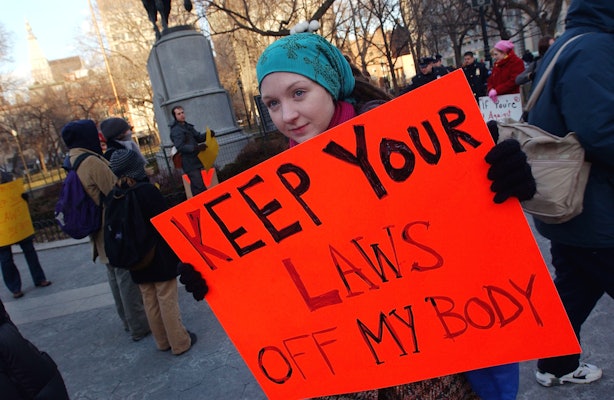
Demonstrators hold up signs outside the Supreme Court in Washington in 2016. (Andrew Harrer/Bloomberg)

Like a steady drip from a broken faucet, a lot of blame has been thrown around since Hillary Clinton’s shocking loss in November. Predictably, and without any evidence, some have begun drawing connections between Clinton’s loss and her support of abortion rights, specifically her call to end the Hyde Amendment, the law first passed in 1976 that effectively denies low-income women insurance coverage for abortion. A common thread has emerged: Women’s issues and racial justice — both of which intersect in support of abortion rights — are being positioned as a key vulnerability of today’s Democratic party, rather than part of its core.
Add to this argument Sen. Bernie Sanders’s (I) recent statements during the Democratic National Committee “unity tour” throwing abortion rights under the bus. The Vermont senator argued that Democrats need to back antiabortion candidates “if we’re going to become a 50-state party.” This isn’t really a surprise: In 2015, Sanders bluntly set economic issues against reproductive health: “Once you get off of the social issues — abortion, gay rights, guns — and into the economic issues, there is a lot more agreement than the pundits understand.”

Smack in the middle of this flirtation with abandoning support for abortion rights, where women’s health, racial justice and family economics intersect, sits the Hyde Amendment. Lifting the Hyde Amendment, and more broadly supporting legal, affordable abortion, isn’t an isolated idea. For many of us, it is deeply connected to our support for women’s health and rights, inseparable from economic and racial justice, and intrinsic to freedom from political interference with our most personal decisions.

The reality is that the public is more supportive of abortion rights than ever. In late 2016, polling from Pew Research Center found the highest levels of support for legal abortion since 1995, largely driven by a rise in support among Democratic women. Recent data show a majority of Americans oppose blanket bans on abortion coverage, and polling conducted last year by Hart Research Associates for All* Above Action Fund shows that 3 in 4 battleground voters agree with the statement, “However we feel about abortion, politicians should not be allowed to deny a woman’s health coverage for it just because she’s poor.” There is broad consensus on this point across party lines. The poll also found that a majority of voters in battleground states would support a bill requiring Medicaid to cover abortion. Opposition to the Hyde Amendment is especially strong among millennials, African Americans and Latinos, rebutting some ridiculous claims to the contrary.

Here’s what we do know: Abortion is important to voters, and is often used as a metric to judge a candidate’s other values. The most reliably Democratic voters — namely black and Asian American Pacific Islander women, Latinas, unmarried women and educated urbanites — want abortion to be legal and accessible.

Democrats are scrambling: The loss of the presidency was unexpected and painful. They feel like the ship is sinking around them, so they’re looking around, desperately, trying to jettison anything not needed to stay afloat. But support for abortion rights and a commitment to end the Hyde Amendment are not disposable issues or dead weight — they’re part of the engine that keeps the party moving forward and a piece of the moral fabric that gives the party integrity and relevance to people’s lives. Throwing abortion access and coverage overboard won’t keep the ship from sinking, but it may well leave it dead in the water.

Source: Washington Post

https://www.washingtonpost.com/opinions/dont-blame-democrats-problems-on-support-for-abortion-rights/2017/05/10/ce030264-34f5-11e7-b412-62beef8121f7_story.html?utm_term=.b6c89afc2fdc

State’s request could pave the way for other states to adopt the same aggressive tactics to defund the nation’s largest reproductive healthcare provider

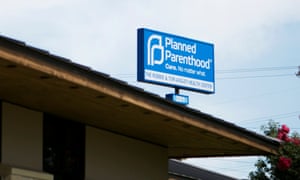
A Planned Parenthood center in Austin, Texas on 27 June 2016.
A Planned Parenthood center in Austin, Texas on 27 June 2016. Photograph: Ilana Panich Linsman/Reuters

Texas will ask the Trump administration to green-light the state’s unprecedented efforts to defund Planned Parenthood, according to documents seen by the Guardian.

The request could pave the way for dozens of other states to adopt the same aggressive tactics to defund the nation’s largest reproductive healthcare provider.

Under the Obama administration, Texas lost millions in federal family planning funds as a consequence of its unlawful efforts to block Planned Parenthood from participating in Medicaid.

In the aftermath, Texas created a state-funded family planning program which critics say failed to adequately replace the services of Planned Parenthood.

Now, in a letter obtained by the Guardian, Texas officials ask the US health department to fund its state program – the same one the state created after it defied federal laws that prohibit defunding Planned Parenthood.

In its letter, which is expected to be sent to the Trump administration as early as this week, Texas makes no indication that the state plans to comply with those laws and reinstate Planned Parenthood’s funding.

“We’re all terrified,” said Elizabeth Nash, senior state issue manager at the Guttmacher Institute, a think tank that supports abortion rights. “This is really huge, if they let Texas do this.”

A half dozen other states have attempted to exclude Planned Parenthood from their Medicaid programs. But only Texas, by giving up millions in such funding, has been successful.

If the Trump administration was to reinstate Texas’s funding, it would signal that other states could follow suit without suffering a financial hit.

“It would let all of these states start kicking Planned Parenthood out of Medicaid,” Nash said. “And Medicaid is by far the largest form of public funding for family planning.”

A report commissioned by the state of Texas found that its state-funded women’s health program served 30,000 fewer women than the old program. An independent study concluded that reimbursement claims for the most effective forms of contraception dropped by more than 30% after it defunded Planned Parenthood.

The cuts also forced several Planned Parenthood clinics to close, leaving patients to find another provider. “I hate to say it,” a community health provider in Midland recently told the Guardian, “but I think an awful lot of women just opted to go without care.”

A spokesman for the US health department declined to confirm whether Texas has already submitted the letter seen by the Guardian, and a spokeswoman for the Texas health department did not respond to similar inquiries.

But the state appears firmly committed to making its request official: an appropriations bill just introduced in the state Senate projects that the state will receive $90m in federal funds annually in fiscal years 2018 and 2019.

Texas has gone to greater lengths than any other state in its quest to defund Planned Parenthood.

In years prior, the state received roughly $30m a year to reimburse providers that offered no-cost contraception, cancer screenings, STI tests and treatment and well woman exams to low-income women.

By federal law, abortion services were not eligible for reimbursement. But in 2011, Texas lawmakers who opposed Planned Parenthood’s role as an abortion provider nevertheless voted to cut off its access to Medicaid funds for family planning.

The vote placed Texas in violation of a federal law that gives Medicaid enrollees the right to visit any qualified healthcare provider. Courts have said this means that states cannot exclude a provider just because it provides abortions. Texas was thus ineligible to receive any more federal Medicaid family planning funds – funds that accounted for 90% of state spending on family planning.

But instead of backing down, the state announced that it would provide 100% of the funding for a new women’s health program, one with rules that excluded all abortion providers.

Now Texas is seeking for the federal government to restore its Medicaid family planning funding – without having reinstated Planned Parenthood’s participation in the program.

“This shell game they’re playing has enormous implications,” said Dr George Benjamin, president of the American Public Health Association. “And while they’re focused on abortion providers today, if the Trump administration approves this, some other state can come along and object to any other type of provider for ideological reasons.”

Many public health experts cite evidence that defunding Planned Parenthood was devastating for Texas women. Previously, Planned Parenthood treated nearly 40% of women enrolled in the state’s women’s health program.

“We know public health has deteriorated in Texas. We know fewer women are getting care,” said Dr. Benjamin. “They clearly didn’t get the performance that they got when Planned Parenthood was part of the program.”

Texas maintains that its state-funded replacement, which was consolidated with another health program and renamed Healthy Texas Women, provides low-income women with a robust safety net. In its letter to request federal funding, the state makes no mention of the controversial origins of the program or potential conflict with federal law. Instead, it says provider participation has more than doubled.

The letter asks for “federal participation” in the state’s women’s health program “as soon as possible”. The request is addressed to the federal Centers for Medicare & Medicaid Services, the division of the health department that stripped Texas of its Medicaid funding in 2012.

Without the federal funding, the Senate budget bill states, “reductions to program funding or service levels” are a possibility.

The state would request the funding via a Medicaid waiver, a measure intended to help states experiment with delivering better healthcare to Medicaid recipients. Final authority rests within the agency run by Tom Price, a longtime advocate of defunding Planned Parenthood.

“It would be immensely troubling if this administration used their authority to grant this waiver, when these waivers are meant to actually expand access to healthcare,” said Adam Sonfield, executive policy manager at Guttmacher.

Planned Parenthood and its allies would likely launch a legal challenge if the health department reinstated federal funds for Texas’ program.

But there are signs the Trump administration may be willing to grant Texas its waiver.

Donald Trump recently signed a billencouraging states to cut off other forms of federal funding to Planned Parenthood. And the legislation the House of Representatives passed one week ago to repeal the Affordable Care Actincludes a provision to cut off all Medicaid reimbursements to Planned Parenthood, some $500m annually.

Supporters of defunding Planned Parenthood argue that the nation’s community health centers can provide the same services without the moral compromise that occurs when then government hands money over to an abortion provider.

But the evidence for their assertion is dubious, at best. As of 2010, in 67% of counties with a Planned Parenthood clinic, the organisation served at least half of women obtaining contraception through the public safety net. In 103 counties, Planned Parenthood is the only safety net provider for family planning.

In regions where targeted cuts have forced Planned Parenthood clinics to close, county health officials report that they have struggled to replace its services.

One of the best examples may be Texas.

“Texas’s experience illuminates what may happen on a larger scale,” Joseph Potter, a UT Austin researcher, said. His study found lower rates of contraception use and higher rates of unplanned pregnancy in regions of Texas where Planned Parenthood was suddenly slashed out of the safety net.

“These results … contradict the claim that Planned Parenthood could be removed from a statewide program with little or no consequence,” the study warned. “[They] should be cautionary to states considering similar measures.”

Source: The Guardian

https://www.theguardian.com/us-news/2017/may/11/texas-federal-financing-defund-planned-parenthood-healthcare

Page for Women on Web, which connects doctors with women in places that restrict abortion access, deleted over ‘promotion or encouragement of drug use’

This is the second censorship row between Facebook and Women on Web.
This is the second censorship row between Facebook and Women on Web. Photograph: Regis Duvignau/Reuters

Facebook has censored the page of an organization that helps women obtain abortion pills, citing its policy against the “promotion or encouragement of drug use”.

Women on Web, which is based in Amsterdam, helps connect women with doctors who can provide abortion pills if they live in countries where abortion access is restricted. It is a sister organization to Women on Waves, which provides abortions and other reproductive health services on a ship in international waters.

Women on Waves announced that the page had been “unpublished” on its own Facebook account, writing: “Women on Web provides life-saving information to thousands of women worldwide. Its Facebook page publishes news, scientific information and the protocols of the World Health Organization and Women on Web has answered over half a million emails with women who needed scientific, accurate information essential for their health and life.

“We expect Facebook will [undo] this action soon enough, as access to information is a human right.”

This is the second censorship row between Facebook and Women on Web. In January 2012, Facebook deleted the profile photograph of the group’s founder and director, Dr Rebecca Gomperts. The image contained instructions for inducing an abortion using Misoprostol. Gomperts was locked out of her account for two days after re-posting the image, but Facebook subsequently apologizedand reinstated both the image and her account.

Facebook did not immediately respond to a request for comment.

With nearly 2bn users, the social media site plays a crucial role in disseminating news and information around the world. But Facebook has struggled to meet competing demands to allow for the free flow of information while cracking down on graphic material (such as the livestreamed murder of a baby in Thailand in April).

In 2016, the company faced international condemnation over its decision to censor the iconic Vietnam War photograph of a naked girl fleeing a Napalm attack. Facebook subsequently altered its policy to allow for editorial judgments about newsworthiness.

On 3 May, amid criticism over its handling of graphic videos, Facebook announced that it would hire 3,000 more content reviewers. Such content reviewers are tasked with applying the company’s “community standards”, often with uneven results.

Facebook’s has faced particular difficulty enforcing its rules for “regulated goods” – prescription drugs, marijuana, firearms, and ammunition. The company bars “attempts by private individuals to purchase, sell, or trade” such items, but has struggled to halt gun sales.

The company has cracked down aggressively on pages related to legal medical marijuana, however. In 2015, the site temporarily banned business publication Crain’s for promoting a cover story about medical marijuana.

Source: The Guardian

https://www.theguardian.com/technology/2017/may/11/facebook-women-on-web-censored-abortion-pills

Decades after the Supreme Court ruled unconstitutional state laws banning abortions, the topic hasn’t become any less controversial. Anti-abortion advocates nationwide have fought to ban the procedure ever since Roe v. Wade, and in some states, they have succeeded in enacting abortion restrictions that aren’t based in science at all. Ironically, that particular fact is scientifically-backed: According to a recent analysis by the Guttmacher Institute, a reproductive health research organization, at least 10 major categories of abortion restrictions are based on “assertions not supported by rigorous scientific evidence.” In other words, although it’s a medical procedure, many policies regarding abortion conflict with established medical facts.

The report, released on Tuesday, analyzed the justification for abortion regulations across the country. The authors identified 10 abortion restrictions that have no basis in science, despite purporting to “protect women’s health” in many instances. They acknowledge that the new presidential administration is a source of concern for many reproductive health advocates, especially given its tendency to espouse “alternative facts.” However, the researchers also point out that anti-abortion rhetoric has historically relied on emotional appeal rather than fact, which is how reproductive rights has come to occupy an “evidence-free zone” today.

Chip Somodevilla/Getty Images News/Getty Images

Abortion is an emotional subject for many people, and unfortunately, that emotion is easily exploited by anti-abortion advocates. Some restrictions on the procedure may claim to have “women’s best interests” in mind, but upon closer inspection, they appear to be designed to punish women rather than help them get through a difficult time in their lives. According to a separate Guttmacher study, for example, prospective patients in 13 states receive “counseling” that includes information about a fetus’s ability to feel pain (even though it’sbeen proven that  fetuses can’t feel pain at the 20 week mark), and six states require women to be told personhood begins at conception.

To read the recent Guttmacher report in its entirety, head over to the organization’s website. However, here are seven restrictions highlighted by the study that make zero scientific sense.

1Counseling Requirements

Spencer Platt/Getty Images News/Getty Images

According to the Guttmacher Institute, 35 states require counseling for women before an abortion is performed. Sometimes, this is designed to adhere to informed consent, but in many cases, researchers found that the information given to women was based on incorrect or unproven assumptions. In six states, for example, women are told that abortion is linked to mental health problems, but a growing heap of research studies have found no such association.

The same story plays out again and again in regards to other topics. There’s no demonstrated association between abortion and breast cancer or infertility, despite the information provided by counseling sessions in some states.

In more than half of the United States, counseling is followed by a mandated waiting period before the procedure can be performed. This period usually lasts between 18 hours and several days, often requiring multiple appointments. As NPR reported in 2015, several of these states are actually increasing the length of time someone must wait before receiving the procedure.

The idea is that women need time to reconsider their decision, but according to research, this time is unnecessary. As the Guttmacher Institute points out, multiple studies have found that by the time they make an appointment to have an abortion, the vast majority of people seeking abortions have already made up their minds. What’s more, the majority of people who get abortions don’t regret them later.

Source: Bustle

https://www.bustle.com/p/7-abortion-restrictions-that-scientifically-make-no-sense-according-to-research-56939