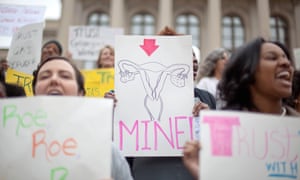
Being pro-life is not only about trying to reduce the abortion rate. And the GOP health-care plan will probably raise it anyway.
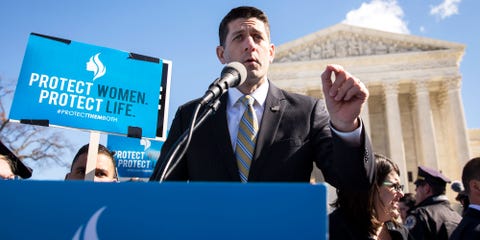
paul ryan at pro-life rally

For all their talk about being the pro-life party, Republicans in the House of Representatives struck a deathblow to their own anti-abortion platform with the passing of the American Health Care Act (AHCA). The move to repeal the Affordable Care Act (ACA; commonly known as Obamacare) is the biggest and most egregious affront to a pro-life stance that we’ve seen from this Congress and administration, and it happened at the hands of the Republicans themselves.

I consider myself pro-life, but to me, that does not just mean reducing the abortion rate in this country. To be pro-life means to be pro-all-of-life, not just up until the moment of birth, and it means valuing all of life, regardless of one’s gender, race, income, immigration status, or ability. The Republicans in Congress have routinely failed to grasp this concept, and the health-care vote just reinforces their ignorance or indifference.

Access to health insurance is an explicitly pro-life issue.

For those of us who want to reduce the number of abortions, a good place to start is giving women access to affordable contraception and therefore more control over whether they get pregnant. It’s widely known that access to free birth control reduces the rate of abortions, and since Obamacare was signed into law, more than 55 million women gained access to zero-copay birth control. Birth control, when used correctly and depending on the method, is up to 99.9 percent effective, but without health insurance, birth control can cost around $1,200 out-of-pocket (including the required physician visits) per year, a crippling amount for poor and low-income women. Since the ACA passed, we have seen abortion rates drop to historic lows — the lowest since the procedure became legal via Roe v. Wade in 1973.

But the GOP bill seeks to undo all of these protections and provisions that were put into place in the Obama era. The Congressional Budget Office has yet to grade the newest version of the bill on its fiscal impact, but when it analyzed an earlier draft of the bill in March, it estimated that 24 million people would lose their health insurance with the repeal of the Affordable Care Act, which includes access to prescription contraceptives. Pro-life, indeed.

The ACA also mandated that insurers cover certain “essential benefits,” including maternity and newborn care and pediatric services, and it’s estimated that 9.5 million previously uninsured women gained access to maternity and prenatal care with the Affordable Care Act. That means 9.5 million women were able to access ultrasounds, gestational diabetes screenings, lab studies, medications, hospitalization, newborn baby care (including NICU services), lactation consulting and breast pumps, postpartum mental health care, and more for the very first time if they became pregnant. This was a monumental achievement for women and newborn children — one the GOP seems content to roll back.

There’s a lot of speculation about what exactly could happen with the GOP health-care bill in regards to preexisting conditions, and there is a lot of false information floating around on social media. But in short, under the Republican plan, pregnancy could deny you health insurance at worst, or force it to be more expensive at best. According to the Washington Post, “Under the GOP’s proposal, states are given the option of dumping an Obamacare rule that requires insurers to provide maternity coverage to all women and safeguards them from fee increases in the event of a pregnancy. In other words, maternity coverage, as dictated by the federal government, would no longer have to be an ‘essential benefit.’”

Here’s the thing about having babies. It often happens in hospitals, under the direction of medical care. And this medical care can be very expensive if you don’t have insurance — often more than $10,000 for an uncomplicated birth. But when women do have access to health insurance, evidence suggests they may be less likely to seek an abortion. If pregnancy qualifies as a preexisting condition and women can’t get coverage, what do Republicans in the House think is going to happen? By making health insurance less accessible to women of reproductive age, Republicans have undermined their own stated goal of eradicating abortion. Pro-life, indeed.

Lastly, President Barack Obama expanded Medicaid, our country’s dual-funded state and federal health insurance program for low-income and at-risk people that covers children, the elderly, the disabled, and people living in poverty who receive federal assistance, and gave coverage to an additional 11 million people. The new House bill would not only end that expansion, it would cut and restructure the Medicaid program, disproportionately affecting the ability of women — particularly women of color — to receive health care. The new GOP health-care bill also proposes to strip Medicaid of its funding by a whopping $880 billion over the next decade, which would make it nearly impossible for individual states to keep providing the same amount of coverage to everyone enrolled in Medicaid, including around 15 million women of reproductive age. In 2015, 20 percent of women of reproductive age in the U.S. were able to rely on Medicaid for no-cost birth control, maternity and prenatal coverage, cancer screenings, and all of their health-care coverage needs.

There are always a lot of moving parts when it comes to massive budget cuts. But if this deep Medicaid cut actually happens, it’s hard to imagine a scenario where there wouldn’t be a significant scale-back of family planning services and critical maternal care (which would only increase our rate of infant and maternal mortality). By slashing Medicaid and remaining strongly anti-abortion, the House GOP is putting women in an impossible position. Pro-life, indeed.

If Republicans had any interest in being truly pro-life, they would work to create a culture in which the lives they so vociferously defend would have a chance to thrive and flourish. If Republicans were truly pro-life, they wouldn’t want to give a woman another reason to choose abortion. But it seems to me that Republicans in the House want to force women to have their babies, but refuse to help give them the means in which to do so.

Pro-life, indeed.

Source: Cosmopolitan

http://www.cosmopolitan.com/politics/a9267429/ahca-abortion-contraception-pro-life-republicans/

Hard-working families across the country have a lot on their minds these days. They care about good schools for their kids, earning enough at work to cover ever-growing expenses and keeping their health care affordable and accessible when they need it. These are the concerns of the Pennsylvania families I talk to every day. Yet there are still some politicians who would rather spend their time waging ideological battles instead of helping families get ahead.

Recently, we’ve seen a nationwide trend of disturbing bills designed to restrict women’s ability to make decisions about their own families and access the health care services they need. These attacks are spreading despite the fact that they undermine women’s status as equal members of our society and can make it more difficult to raise a family. In Oklahoma, legislators have presented a bill that would require women to get written consent from the fetus’ father before getting an abortion. In Arkansas, the governor signed a law that allows husbands to sue their wives’ doctors in order to stop their spouses from getting a particular type of abortion. In Wyoming, lawmakers assigned two anti-abortion bills to the Senate Agriculture committee — literally treating women like pigs.

Each of these examples shows politicians wasting time debating whether women deserve the right to make decisions about their own families rather than focusing on policies that would put more money in the family bank account.

I can’t change what happens in Oklahoma, Arkansas or Wyoming. But as governor of Pennsylvania, I can do something when similar restrictions crop up in my home state. Here, it’s my job to put the needs of Pennsylvanians ahead of partisan ideology. As a father and a husband, I believe that women should have the same opportunities as men. That’s why I am ready to veto a plan moving through the state legislature that would criminalize abortion, even in cases of rape and incest, and drastically restrict women’s access to health care.

This legislation, Senate Bill 3, has been pushed through the state legislature without a single public hearing that would allow Pennsylvanians the ability to express their concerns. I’ve heard from women across Pennsylvania who shared their heartbreaking stories with me. This bill would criminalize very personal and difficult decisions that should be between a woman and their doctor. This bill is also opposed by the Pennsylvania Medical Society, but that hasn’t stopped politicians in Harrisburg from pushing it through the legislature.

The legislation is wrong and the people of Pennsylvania deserve better from their elected representatives.

I’m proud to support the women I represent and to advance reproductive freedom and equality for every member of our society. I don’t pretend to know what’s best for a woman and her health, but everyone can get behind the idea that all women should have the same opportunity as men to make their own health care decisions.

If the politicians behind this unconstitutional bill truly want to help Pennsylvania’s families, they should champion policies that are proven to lift up women and families. This means expanding access to affordable health care, protecting pregnant women from discrimination at work and giving working people access to paid family leave so they can take care of their families without risking their jobs.

Until that happens, I will keep standing shoulder-to-shoulder with the vast majority of Pennsylvanians who support a woman’s constitutional right to make her own decisions about her body. It’s not my place to judge a woman’s personal decisions or to try and make them for her — and it’s not the state legislature’s place to make those decisions for other people, either. And if they try to do so, my veto pen will be ready.

Source: Motto

http://motto.time.com/4767933/pennsylvania-governor-tom-wolf-on-anti-abortion-bill/

Dr. Willie Parker with his family at a church in Montgomery, Ala., in a film still from “Trapped,” a documentary about abortion clinics in the South. CreditTrilogy Films

No issue in America is more toxic than abortion, and that’s partly because it is today so closely associated with religion. While many feminists see abortion as a matter of choice, some Christians see it as murder.

Then there are people like Dr. Willie Parker. Dr. Parker is black, feminist and driven by his Christian faith to provide abortions in the South, where women seeking to terminate a pregnancy have few options.

“I believe that as an abortion provider, I am doing God’s work,” Parker writes in his new memoir, “Life’s Work.” “I am protecting women’s rights, their human right to decide their futures for themselves, and to live their lives as they see fit.”

Since childhood, Parker had been taught that abortion was wrong, and for the first half of his career as an OB-GYN, he refused to perform abortions. But then he had what he calls his “come to Jesus moment,” an epiphany that his calling was to help women who wanted to end their pregnancies.

If that seems incongruous, let’s remember that conservative Christianity’s ferocious opposition to abortion is relatively new in historical terms.

The Bible does not explicitly discuss abortion, and there’s no evidence that Christians traditionally believed that life begins at conception. St. Thomas Aquinas, the father of much of Catholic theology, believed that abortion was murder only after God imbued fetuses with a soul, at 40 days or more after conception.

One common view was that life begins at quickening, when the mother can feel the baby’s kicks, at about 20 weeks. When America was founded, abortion was legal everywhere until quickening, and it wasn’t until the 19th century that states began enacting laws prohibiting abortions, beginning with Connecticut in 1821.

Even in the modern era, religion has taken a more complex view of abortion than is generally realized. In the 1960s, ministers and rabbis formed the Clergy Consultation Service on Abortion, advising pregnant women how to obtain abortions. More than 100,000 women sought their services.

In 1968, a symposium held by Christianity Today suggested that “family welfare” concerns were good enough reasons for an abortion. The Southern Baptist Convention passed resolutions in 1971, 1974 and 1976 calling on church members to work for the legalization of abortion in some situations.

In 1972, a Gallup survey found that Republicans were more likely (68 percent) than Democrats (59 percent) to say abortion should be “a decision between a woman and her physician.” That’s partly because abortion was seen as a Catholic issue but not a Protestant one, and most Catholics were Democrats.

“I have always felt that it was only after a child was born and had a life separate from its mother that it became an individual person,” the Rev. W. A. Criswell, one of America’s Southern Baptist leaders, said in agreeing with the Supreme Court’s legalization of some abortions in Roe v. Wade in 1973.

Yet today it’s taken as self-evident among conservative Christians that life begins at fertilization — without realizing that this would have astonished many Christians throughout the ages.

Parker accepts that a fetus is alive — but says that life doesn’t begin at conception, because an egg is alive as well, and so is a sperm. “Life is a process,” he writes. “It is not a switch that turns on in an instant, like an electric light.”

Parker is outraged at the profusion of laws around the country chipping away at abortion rights, and he objects that much of the critique of abortion is based on bad science — yet doctors are sometimes legally obliged to provide incorrect information to patients. Medical opinion is that a fetus cannot feel anything like pain until about 29 weeks, long after most abortions occur, he notes.

Parker tells of seeing a woman whose fetus had Potter syndrome, in which the lungs do not develop. The woman declined an abortion for religious reasons, and a baby girl was born at full term — and then, as was inevitable, died a painful death because she couldn’t breathe.

“In this case, an absolute reverence for life led to a situation that, to my eyes, consisted of nothing less than pure cruelty,” he writes.

In another case, a 12-year-old girl was with her mother in the waiting room of an abortion clinic in Alabama. When the mother stepped outside to smoke, another patient tried to offer maternal guidance and steer the girl away from boys. “Who were you messing with?” the woman asked. “Don’t you know not to go around with those boys?”

“He isn’t a boy,” the girl replied. “He’s 53 and he’s my daddy.”

Dr. Parker reminds us that abortion is complicated. And that is why, in my view, we need choice.

Source: NY Times https://www.nytimes.com/2017/05/06/opinion/sunday/meet-dr-willie-parker-a-southern-christian-abortion-provider.html?_r=0

Illustration by Jim Cooke/GMG

Earlier this month, Donald Trump quietly signed a bill allowing states to withhold federal family planning funds from organizations that provide abortion services.

 A few weeks before that, the president offered a strange ultimatum to Planned Parenthood, proposing that his administration would stop its defunding efforts if the health care provider would stop performing abortions. (The offer was rejected.)

Proposals like this aim to make abortion inaccessible for as long as it remains legal. They can be incredibly effective, and there will be more of them. The United States is already a country in which one in four women with Medicaid coverage subject to the Hyde Amendment report carrying an unwanted pregnancy to term due to lack of insurance coverage for the procedure. A country where a lack of affordability or regional access or both means that women delay the procedure or come up short on rent, groceries, and utilities just to cover the expense.

Anne got pregnant at 25 and wasn’t ready to have a kid. Brittany got pregnant at 22 and wasn’t ready, either. Anne could afford the abortion. Brittany couldn’t.

These are their stories.


Anne, 38, Brooklyn

 It was the end of 2003 in Brooklyn, and my boyfriend and I got carried away and had sex without a condom. The next morning, I found the nearest hospital to get a prescription for the morning-after pill. Now it’s available over the counter, but it wasn’t back then, and your options were even more limited if you didn’t have insurance, which I didn’t at the time.

They gave me a pregnancy test at the hospital and it was negative, but they wrote me a prescription for the morning-after pill. Still, their pharmacy didn’t stock it. I still can’t get over that all these years later— it felt almost mean-spirited, making you jump through hoops like that. But because I had just been told I wasn’t pregnant, I didn’t rush to another drug store right away.

 Instead, I went and got it later that day. I followed all the directions and thought everything was fine. The information on the package said it would likely mess with the schedule of my cycle, so I didn’t think too much of it when I didn’t get my next period. But around five weeks later, I still hadn’t gotten my period.

I took another home pregnancy test. Of course, I was pregnant.

I had just lost a job, and I didn’t have any insurance. I lived in a 400 square foot apartment. My boyfriend was living 3,000 miles away. I wasn’t ready to have a baby in any practical or emotional sense, so I went to Planned Parenthood and had an abortion.

 I’m extremely thankful Planned Parenthood was available, and that I was able to afford it. It wasn’t easy coming up with the $300, but I was able to do it. It was stressful, but ultimately I was able to go back to my life as it was. And today I don’t have a 12-year-old child.

Brittany Mostiller, 32, Chicago

 This was 2006, when I was 22 years old. A lot was happening that year. I was a parent of two and involved with the father of my children, but we weren’t in a relationship or anything. I was sharing an apartment with my sister, my niece, and my two other children. I can’t remember if I was working or not at the time, but I do know that I was poor. That has been the story of my life.

By the time I found out I was pregnant I was about 13 or 14 weeks along, and I knew I didn’t want to have another child right then. I remember thinking that I would just use my insurance, my Medicaid, to pay for the procedure. That wasn’t the case, obviously. I couldn’t use it, and I couldn’t come up with the money. I couldn’t even borrow the money.

There was no “choice” either way. Because of my income, and because Medicaid wouldn’t cover the procedure, there was just no choice. That really hit me I guess when I was 17 or 18 weeks into the pregnancy, after I had been calling around about the insurance and knew I couldn’t afford it. I thought, “OK, this is what it is.” I was forced to carry the pregnancy to term, and I didn’t want to. That’s rough. That was really rough for me.

It wasn’t anything I wanted at that time, but she was coming and ain’t a thing I could do about it. That was just it. To even say that aloud, even now—you don’t wish that on anyone. I wanted to have a happy experience, I wanted to look forward to seeing my child and meeting her. There was no moment when it felt like “This is OK,” there was no moment when I felt, “Let me get happy.” There was no switch for me to turn on. It’s still something I struggle with, that feeling. I struggle with it now even trying to talk about it.

The pregnancy was hard for me. I was stressed, I was in a lot of pain, and I would just cry. I was depressed. It was just not a good space for me, mentally or physically. And I’m still trying to be a parent through all of this. I think it all had an effect. My water broke early—32 weeks—and I delivered at 33 weeks. She was my tiniest baby.

I love her dearly, but I know that wasn’t what I wanted. I didn’t have an option. After she was born, I guess I went into autopilot. That was the story of my life for a long time, being a parent, being a black woman, trying to support my family. I couldn’t feel or process anything, any emotion. I needed to make sure I had diapers, that I had onesies, that I could get on food stamps. I had to make sure I was able to physically take care of my children. That was it. There wasn’t room for anything else.

When she was two months old I had to call back my previous employer at a local grocery chain and literally beg for my job back. I had left the job when I was 19, walked out like, “That’s it.” I was young. But I begged them for my job back, told them I had grown and matured and that I had a larger family and really needed the work. It wasn’t an option to hit the pavement with a newborn and two small children.

After that, I got another job, something full-time. I worked both jobs for a while and then eventually quit the grocery store and kept my full-time job as a manager at a bagel joint. I was still sharing an apartment with my sister, and now it was five of us in the two bedroom house.

This is my first time talking about this. I have spoken to a few folks about it briefly because I am trying to figure out how to tell this story. I don’t want my daughter to ever think that she is not loved. She doesn’t feel that way, I don’t think, but I don’t want her to read or hear about it at some point in her life and ever think it.

I struggle with this a lot, though. I’m still trying to figure out the language around it. I know people will try to take this and of course tear me down. You are damned if you do, and damned if you don’t. People will use my story however they want. I love my daughter, but if I’d had the money I would have had an abortion. I did not choose to have a child at that time. And that takes a toll on you—mentally, emotionally, physically, financially. Everything.

And people who are anti-abortion will try to use my story to say, “See, you can make it work. You struggle through it.” I don’t even have the language for that, but I want to counter it by saying it’s wrong. That’s not the truth. If people want to have an abortion, they should be able to.

Not everyone is resilient. I know it’s a feel good story—build yourself up! Overcome those obstacles! That work is taxing. It is hard. It is also not everybody’s story. Things can go a lot of different ways other than choosing to love a child that you did not choose to carry.

I think it gets even stickier because people can try to use it to feed a narrative that black people—especially black women—are bad parents. Someone is going to take all of your circumstances and frame it however they want to. That’s what I mean when I say you’re damned if you do and damned if you don’t.

Now I hear stories from the women who call the Chicago Abortion Fund and they are so similar to mine. It’s not just that they can’t afford or access abortion, but I can hear their despair. God, the desperation of it. They are tired of struggling. This is not just about abortion or carrying a pregnancy to term. Folks are out here really struggling financially, mentally, and emotionally just trying to be a person. Some don’t have running water, they have no support.

I hear these everyday experiences of folks where carrying the pregnancy to term is just not an option for them. But sometimes they do it because they simply couldn’t afford an abortion. It’s such a disservice to people. I feel them, and I feel like I am listening to myself when I was 22 and pregnant with my third child.

I love my babies. And I hate having to say that—I obviously love them. Anyone who has met me or my children can see that they are loved. And I feel, right now, like the total opposite of the person I was 10 years ago. I have been mentored by an amazing community, by amazing people. I really learned to love myself, and that helped me love my children in an entirely new way. But if someone else is experiencing what I went through ten years ago, and I can be any sort of comfort to them, then that’s what I want.

My third daughter was not something I chose, but then she was here. I needed to make sure she was loved. But I had just blocked out so much, stuffed my emotions so far down just so I could survive that time. That was my defense mechanism, to shut down. People who saw me parenting through it thought I was doing great, but inside I felt like I had to shut down just to make sure we could all see another day.

Source: Fusion

http://fusion.kinja.com/neither-of-these-women-wanted-to-be-pregnant-only-one-1794668225

Imagine a stay-at-home mom who can do an abortion. Or a college student. Imagine she knows how to administer local anesthesia, has the medicines to induce miscarriage, can dilate a cervix, scrape a uterus. Imagine a group — with no medical training — performing dozens of abortions a week, in secret, at great risk to themselves, their families and the women they serve.

That is the story of Jane, an underground group in Chicago that carried out thousands of abortions between 1969 and 1973, when abortion was illegal. It’s a story of code names and safe houses, a story of women taking control of their lives and teaching other women to do the same.

Abortion providers and the women they serve now fear that such an underground service may again become necessary. Abortion remains legal, but one conservative justice has just joined the Supreme Court and many are concerned that another will follow. This month the president signed a bill to cut funding to Planned Parenthood and other providers. Many states have enacted laws that make obtaining an abortion exceedingly difficult: About 90 percent of counties have no abortion clinics. In many areas, the procedure is nearly as inaccessible as it was in the days of Jane.

Back then, if a woman was pregnant and didn’t want to be, doctors would not help her. Abortion was a felony in 49 states. Many “back alley” abortionists could not be trusted. What to do? Call Jane.

In 1965, a University of Chicago student, Heather Booth, then 19, helped a friend’s sister find a doctor willing to do an abortion. “I was told she was nearly suicidal,” Ms. Booth told me. “I viewed it not as breaking the law, but as acting on the Golden Rule. Someone was in anguish, and I tried to help her.”

 Ms. Booth was eventually deluged by so many similar pleas for help that she “saw the need to set up some kind of system.” By 1969, she had enlisted a group of women who formed the Abortion Counseling Service of Women’s Liberation. They advertised in student and underground newspapers: “Pregnant? Need help? Call Jane.” (Why “Jane”? One member just liked “sweet names.”)

By 1970, Jane was referring two dozen women a week to a few willing doctors for abortions. Callers left a message on an answering machine. “Callback Jane” would collect information and pass it on to “Big Jane,” who would supply an address — “the front” — where patients would receive counseling. Eventually they’d be taken to a different address — “the place” — such as a member’s home or a motel room, where a doctor would induce miscarriage or perform a surgical abortion. Patients were sometimes blindfolded so that they couldn’t identify who’d helped them. Each was sent home with antibiotics and instructions for follow-up care.

Soon, it was not only college students who called. Many patients were already mothers, many of them poor, some of them abused. The Janes — all of them women — took careful notes on each caller and held weekly meetings to discuss safety. They were troubled by the male abortionists’ tendency to shame patients and the procedure’s high cost ($500 to $1,000).

Then, in 1971, the group discovered that one of the abortionists was not, as he’d claimed, a doctor. But he was performing up to 20 abortions a day and was “more skilled than a doctor who performed only a few abortions a year,” writes Laura Kaplan, a former Jane member, in her book, “The Story of Jane.” The women realized, “If he can do it, then we can do it, too.”

One of the Janes persuaded him to teach her. Within months she had learned the procedure and soon trained others. The Janes were able to cut ties with back alley abortionists, dispense with blindfolds and lower the price to $100, with poor women paying less.

Only about four of the 100 or so women who joined Jane ever became skillful enough to perform surgical abortions. The others mostly answered calls, found safe apartments and assisted by sterilizing instruments and changing bedsheets. They acted as counselors, chauffeurs, nurses. No woman is known to have died at the hands of the Jane abortion providers. One Chicago obstetrician, who had agreed to provide follow-up visits to Jane patients, attested that these practitioners had a safety rate roughly the same as that of the legal clinics then operating in New York.

 In 1972, the police raided an apartment where Jane operated. Three patients waiting for abortions were taken to a hospital. Seven Jane members were arrested, among them a high school English teacher, several housewives with young children, and a student who was about to adopt a baby. In the police van, one removed from her purse a stack of 3-by-5 cards with contact information for women who’d called for help. They ripped off the corners with the patients’ names and addresses, and swallowed them.

The “Abortion Seven” were indicted. But before their case went to trial, the Supreme Court legalized abortion in the 1973 Roe v. Wade decision. The charges were dropped. Jane disbanded.

Ms. Booth is now an organizer with the consulting group Democracy Partners. “We will never go back underground,” she said. “Women and men assume that abortion will be available, that women can determine when or whether to have a child. That change is enormous.”

And yet abortion restrictions are once again so widespread that some activists are preparing for a modern-day service like Jane. Elizabeth Ziff, a member of an “underground feminist group,” is one of them. “They — this administration — are coming for all of it, the morning-after pill, birth control, abortion, all of it,” said Ms. Ziff, who is also a singer and guitarist for the feminist rock band Betty. “Women will suffer if we aren’t willing to take radical steps. And that includes learning how to perform abortions.”

But the situation for women seeking abortions and the activists who might help them is today far different from that of the Jane era. Charlotte Taft, a former director of the Abortion Care Network, said no one should “unravel a coat hanger,” especially now that “medication can create abortion far into a pregnancy.”

A woman who wishes to end a pregnancy up to 10 weeks, when most abortions happen, can get pills from a doctor — a combination of mifepristone and misoprostol — and miscarry at home. If she cannot arrange or afford an appointment with a doctor, there is another way, though it is risky and illegal. The medications can be ordered online and taken with instructions available from groups like the International Women’s Health Coalition — but the drugs aren’t always from safe sources, and several women have been prosecuted for doing this.

 And what if surgery is required? Dr. Paul Blumenthal, a professor of obstetrics and gynecology at Stanford University School of Medicine, points out that in developing countries, laypeople are trained to do many procedures normally performed by doctors in the West, including C-sections. “You can train anybody to do just about anything,” he said. “Would I figure out a way to have a safe house somewhere? Would I teach? I might.”

Groups like the National Network of Abortion Funds already offer financial and logistical assistance to women seeking abortions. Ms. Ziff thinks things might get much worse. “We’re stockpiling the morning-after pill, everything,” she said.

No woman wants an abortion from a rock musician or the mom down the street. Abortion is a normal medical procedure and belongs in the mainstream of health care, safe, legal and accessible. But if that is no longer the case, women will call for it anyway, as they always have, and there’s no doubt that modern-day Janes will answer, ready to help.

Source: NY Times

Anti-abortion activist Charmaine Yoest, whom President Donald Trump on Friday named assistant secretary for public affairs at the Department of Health and Human Services, has gone on record as saying she believes that having an abortion increases a woman’s risk of breast cancer.

From 2008 to 2016, Yoest, herself a breast cancer surivor, served as president and CEO of an anti-abortion organization that makes the same claim, in all caps, on its website. “Abortion is associated with an increased risk of breast cancer,” according to Americans United for Life (AUL), an Arlington, Va.-based group that describes itself as the “legal architect of the pro-life movement.”

“The association between having an induced abortion and a subsequent increased risk of breast cancer has been examined in 70 studies,” according to AUL. “Of these studies, 57 showed a positive association between having an abortion and developing breast cancer, 34 of which were statistically significant.” In part because of model legislation drafted by AUL, five states require that women be counseled about the purported breast cancer link before they undergo an abortion.

And yet, the National Cancer Institute (NCI)–which, like the rest of the National Institutes of Health, the Centers for Disease Control and Prevention and the Food and Drug Administration, falls under the HHS umbrella–has concluded that induced abortion does not affect breast cancer risk. So have the World Health Organization, the American Cancer Society, the American College of Obstetricians and Gynecologists and Susan G. Komen. (Interestingly, Komen decided to defund Planned Parenthood as a result of a 2011 AUL report entitled “The Case for Investigating Planned Parenthood.”)

In this July 1, 2010, file photo, anti-abortion activist Charmaine Yoest testifies on Capitol Hill in Washington.  Donald Trump has appointed Yoest to a top post at the Department of Health and Human Services, spurring critics to wonder how someone they say disregards the latest scientific evidence about the safety of abortion can help lead a department that oversees most of the federal agencies  responsible for Americans’ health. (AP Photo/Pablo Martinez Monsivais, File)

As far as I can tell, only anti-abortion organizations such as AUL, the American Association of Prolife Obstetricians and Gynecologists and the American College of Pediatricians claim research shows that having an induced abortion–one performed surgically or with medication–increases a woman’s breast cancer risk. These groups argue that since a full-term pregnancy at a young age appears to protect against breast cancer, terminating a pregnancy must increase a woman’s risk of the disease.

 Scientists are pretty much agreed that women who deliver a full-term baby before age 20 have a lower risk of one type of breast cancer than women who don’t have their first baby until after age 30. But that doesn’t necessarily mean that ending a pregnancy before it is full term raises a woman’s breast cancer risk above that of someone the same age who has never been pregnant.

The confusion, say the scientific bodies that found no connection between abortion and breast cancer, stems from the fact that earlier studies of a possible link between the two were flawed.

For the most part, that research took the form of “case-control” studies in which scientists would compare the abortion histories of breast cancer patients and women who did not have the disease. These studies sought information about medical history from the women themselves, not from their medical records. The problem is that women diagnosed with breast cancer, eager to find an explanation for their illness, are more likely to reveal that they had an abortion than healthy women, a tendency referred to as “recall bias.”

Newer studies, on the other hand, collected data about abortion history and other purported or known breast cancer risk factors from large numbers of women who had not yet been diagnosed with the disease. Scientists then followed the women over time, collecting information about their health from their medical records. These prospective studies have consistently found no connection between induced abortion or miscarriage–which, of course, also ends a pregnancy before it is full term–and breast cancer risk.

As described on the HHS website, the assistant secretary for public affairs “serves as the principal point of contact regarding communications and press issues” for the department, raising concerns that, under Yoest’s direction, agencies such as the NCI will scrub their websites of scientific information that is not politically correct under the Trump administration. After all, HHS Secretary Tom Price, an orthopedic surgeon, has been a member of the Association of American Physicians and Surgeons, which opposes abortion.

“Someone who opposes abortion and contraception, along with other forms of reproductive healthcare, has no business shaping policy or handling communications for our nation’s health department,” Andrea Miller, president of the National Institute for Reproductive Health, said in a prepared statement about Yoest’s appointment.

Yoest’s beliefs shouldn’t supersede the science, says Dr. David Grimes, a retired obstetrician/gynecologist who formerly served as chief of the abortion surveillance branch at the Centers for Disease Control and Prevention. One chapter in Grimes’ 2014 book, Every Third Woman in America: How Legal Abortion Transformed Our Nation, is entitled “Breast cancer: the jury is in.”

“I don’t know about the claims of Yoest, but her beliefs are unimportant. As are mine,” Grimes told me. “The important thing is the evidence…and the judgments of major medical and public health organizations around the world.”

“What insight might Ms. Yoest have that has escaped notice at the WHO, CDC, NIH, etc.? And by virtue of what special training and expertise does she reach her opinion? What are her scientific credentials? What research has she done in this field?”

 Well, Yoest did earn a Ph.D. from the University of Virginia in 2004. But it was in American government, not a STEM field.

“Women rely on HHS for accurate information about their health,” Cindy Pearson, executive director of the National Women’s Health Network, a nonprofit advocacy organization based in Washington, D.C., told me. “How can we trust HHS if their spokesperson  has supported requiring doctors to lie to women” about an abortion-breast cancer link?

Source: Forbes

https://www.forbes.com/sites/ritarubin/2017/04/30/trumps-new-hhs-appointee-yoest-thinks-abortion-raises-breast-cancer-risk-but-wheres-the-evidence/2/#d54467d5aacd

This is not the advocate you’re looking for.

Ivanka Trump, daughter and adviser of U.S. President Donald Trump arrives for the W20 summit in Berlin, Tuesday, April 25, 2017. CREDIT: Michael Kappeler/dpa via AP

Ivanka Trump wants the world to know that she’s a feminist. Under the hashtag #womenwhowork (also the title of her new book on women in business, which was released on Tuesday), she’s spent the past few years building a brand based on how to be a woman who “has it all” — the adorable children, the high-powered job, and the tasteful Ivanka Trump™️ sheath dress, too, of course.

Now, as the first daughter and as an official White House aide, Ivanka has said she plans to be a “moderating” force on her brash father, and wants to turn her focus on women’s empowerment from selling pumps to crafting policy.

The problem? Ivanka’s advocacy is often all style and no substance, and she has repeatedly revealed fundamental misunderstandings about the actual barriers facing many women and gender non-conforming people who don’t benefit from the privileges afforded to men.

Last week, she championed economic empowerment for women around the globe in an op-ed, without mentioning that the Trump administration is actually gutting funding for aid programs focused on women, girls, and entrepreneurship. During the campaign, she offered a parental leave policythat would primarily benefit wealthy women like herself.

And on Tuesday, a line in a New York Times profile on Tuesday highlighted yet another area of ignorance: reproductive rights.

Here is the relevant section, from near the end of the article (emphasis mine).

“with congressional Republicans threatening to cut all funding to Planned Parenthood (even though the women’s health organization says it receives no federal funding for abortions), Ms. Trump approached its president, Cecile Richards, to start a broader dialogue. She also had a proposal: Planned Parenthood should split in two, Ms. Trump suggested, with a smaller arm to provide abortions and a larger one devoted to women’s health services.”

Firstly, Planned Parenthood doesn’t just say it doesn’t receive federal funding for abortions — it doesn’t, full stop. That’s because it’s currently illegal under the Hyde Amendment, which prohibits taxpayer funds from paying for abortion.

In reality, most of Planned Parenthood’s federal funding comes from Medicaid payments for basic health care services. That means that congressional Republicans’ current crusade to defund Planned Parenthood is actually a push to prevent low-income people on Medicaid from going to the organization’s clinics for care such as cancer screenings, birth control consultations, prenatal care, and STD tests. Stripping federal funding from the group will mean preventing many low-income people from being able to access this care at all.

But Ivanka’s solution — to segregate Planned Parenthood’s abortion care from its other health care services — also betrays a deep misunderstanding of the interconnected nature of reproductive health.

Abortion care is health care. It cannot be neatly separated from other medical decisions; for many people, having control over when and if to have a child is fundamental to their health and economic well being. And though abortion care may represent a small percentage of Planned Parenthood’s overall services, it is central to the group’s mission of providing reproductive care.

Source: Think Progress

https://thinkprogress.org/ivanka-trump-doesnt-understand-how-reproductive-health-care-works-cdab743f60fe

Law professor Teresa Manning once claimed ‘contraception doesn’t work’

Planned Parenthood says Manning ‘promotes myths about birth control’

Manning’s appointment would give her oversight of Title X, a quarter-of-a-billion dollar federal program that provides contraceptive services to low-income and uninsured women and men.
Teresa Manning’s appointment would give her oversight of Title X, a quarter-of-a-billion-dollar federal program that provides contraceptive services to low-income and uninsured women and men. Photograph: David Goldman/AP

Donald Trump has reportedly appointed to a position overseeing the US’s family planning safety net a law professor who once stated that “contraception doesn’t work” and “family planning is something that occurs between a husband and a wife and God, and it doesn’t really involve the federal government.”

The prospect of Teresa Manning becoming deputy assistant secretary for population affairs at the Department of Health and Human Services, first reported by PoliticoPro, has led reproductive rights activists to demand that Trump withdraw the appointment, saying his choice could jeopardize the federal program responsible for preventing millions of unplanned pregnancies, and by extension, abortions.

Manning’s appointment would give her oversight of Title X, a quarter-of-a-billion-dollar federal program that provides contraceptive services to low-income and uninsured women and men, and a hand in guiding the federal government’s policy toward teen pregnancy, family planning, and pregnancy prevention.

“Teresa Manning’s appointment is unacceptable,” said Dawn Laguens, Planned Parenthood’s executive vice-president. “This is the fox guarding the hen house, and women with low incomes will pay the price. We are at the lowest rate of unintended pregnancy in 30 years and a historic low for teen pregnancy because of access to birth control. Someone who promotes myths about birth control and reproductive care should not be in charge of the office that is responsible for family planning at HHS.”

Manning is an adjunct law professor teaching legal research and writing at George Mason University. She previously worked with the National Right to Life Committee, an anti-abortion group, and the Family Research Council, an arch-conservative lobbying group known for its virulent opposition to LGBT rights.

Manning once sued the University of Iowa law school for passing her over for a professorship, claiming the dean of the law school had discriminated on the basis of her political views. (The school claimed that Manning didn’t offer to fulfill all of the job’s requirements.)

The administration has not publicly confirmed Manning’s appointment, but PoliticoPro reports that she already appears in the agency’s directory.

Manning made her comments on contraception and family planning during a 2003 media tour to promote a book she had edited about the future of the anti-abortion movement.

“I always shake my head,” she told C-Span, explaining her views on family planning. “You know, family planning is something that occurs between a husband and a wife and God, and it doesn’t really involve the federal government, much less the United Nations, where we hear about family planning all the time. What are they doing in that business?”

In an interview with Boston’s NPR affiliate, Manning, who at the time went by Teresa Wagner, claimed that “contraception doesn’t work”.

“Its efficacy is very low,” she said, “especially when you consider over years – which, a lot of contraception health advocates want to start women in their adolescent years, when they’re extremely fertile, incidentally, and continue for 10, 20, 30 years. The prospect that contraception would always prevent the conception of a child is preposterous.”

In fact, many types of contraception, particularly IUDs and other implants designed to stay in the body for long periods of time, have a nearly 100% success rate at preventing pregnancy.

The federal family planning program which Manning will oversee has provided thousands of such devices to US women.

In 2014, Title X provided contraceptive drugs, devices, and counseling for nearly 4 million women who rely on the public safety net for their family planning needs. The same year, the program prevented nearly 1 million unintended pregnancies and more than 300,000 abortions.

Earlier this year, in a move that could weaken the network of family planning clinics that use Title X funds, Trump signed legislation encouraging states to divert Title X funding away from Planned Parenthood.

Manning is not the first opponent of reproductive rights to receive a high-level appointment in the Trump administration.

Tom Price, the head of the HHS, opposes the Obama-era requirement that health insurance plans cover contraception with no co-pay and once challenging a reporter to “bring me one woman” who struggled to afford contraception on her own.

In February, Trump named a health policy aide to the White House Domestic Policy Council, Katy Talento, who believes that taking birth control before pregnancy can lead to miscarriages and infertility, assertions unsupported by any medical evidence.

And on Friday, the administration named Charmaine Yoest, the former president of Americans United for Life, to head the health department’s public communications strategy. Yoest is a longtime foe of abortion rights who dismisses the notion that contraception has a role to play in reducing abortions as a “red herring”.

Source: The Guardian

https://www.theguardian.com/us-news/2017/may/01/trump-teresa-manning-family-planning-role

Kaylie Hanson Long is the national communications director for NARAL Pro-Choice America

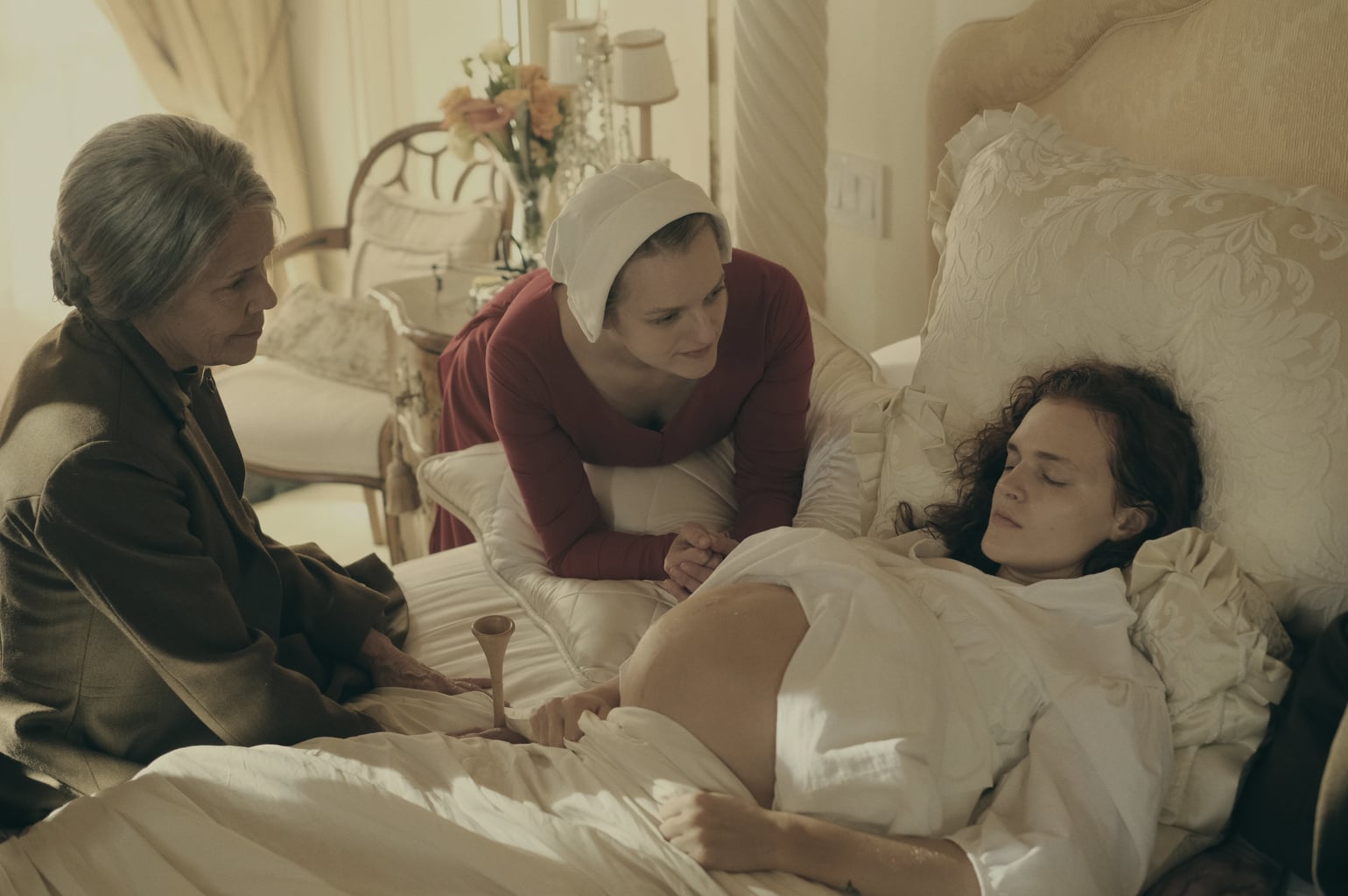
With the TV adaptation of Margaret Atwood’s The Handmaid’s Tale, people across the world will get a visceral preview of what happens when a regime defined by misogyny, cynicism, and a distaste for facts rises to power. Atwood’s dystopian vision depicts a fictional world in which women are nothing more than childbearing vessels, nothing more than domestic servants, and nothing more than wives whose sole claim to power rests in the hands of their husbands. Women who think, who rebel, who choose — and also women who fail to bear children, who fail to live up to an idea of “womanhood” that has nothing to do with humanity and everything to do with biology — are declared “unwomen.”

Sound familiar?

If you’re a woman in 2017, you might recognize this world thanks to the rise of politicians who have felt less and less pressure to hide the misogyny driving their attempts to control the most intimate aspects of a woman’s life. And this rise has been made possible by none other than President Donald Trump.
The government of The Handmaid’s Tale is fueled by a misogynist agenda and systematically enacts policies that rob women of their autonomy. After the leadership’s rise to power, the main character of The Handmaid’s Tale stops by a convenience store to pick up a pack of cigarettes before work only to learn that her bank account has been shut down. When she arrives at work, she learns that this isn’t a fluke: the government has not only frozen every woman’s bank account but has also made it illegal for women to hold a job and hold property at all.

“It’s only a job,” the central character’s husband says when she returns home that day. “You know I’ll always take care of you.” It is clear that he has missed the point.

In our reality, women are already treated like second-class citizens in so many ways: women of color make as little as 58 cents for every dollar their white male counterparts make. Pregnant women lose their jobs because they need an extra bathroom or water break. Republicans in Congress want to drag us back to the days of charging women more for our health care and when being a woman was considered a pre-existing condition. And the onslaught of antichoice legislation in this country has chipped away at our fundamental right to control our bodies and decide whether, when, how, and with whom to start or grow a family.
President Trump’s misogynist agenda only promises to pull us backward and erase the progress we have made on the road toward gender equality. He has laid bare the real motive behind the war on reproductive rights waged by antichoice politicians and extremist groups: it has very little to do with abortion and everything to do with keeping women in our place by limiting our options and freedom.

Trump let the cat out of the bag last year when he matter-of-factly claimed “there has to be some form of punishment” for women who choose abortion. Of course the people who cheer him on are the same people who believe that birth control pills and IUDs — the most basic tools women use to control their futures — should be illegal. One even claimed that a world without these forms of contraception would be “ideal.” And antichoice state legislators from Wyoming to Missouri make their real feelings about women clear when they compare us to livestock and quip that we should go to zoos to access basic health care.

The examples are endless, and it is clear that the rise of a reality where women do not have basic rights is made possible not only by politicians bent on controlling women, but also by a populace that tells itself, “That can’t happen here.”

“There were marches, of course,” writes the unnamed narrator of The Handmaid’s Tale, reflecting on the protest movements women led against the rise of this catastrophic and misogynist theocracy, “but they were smaller than you might have thought.”
The good news for us is that our marches have not been small. Across the country and the world, people have made it clear that the majority does not believe in the dystopian worldview peddled by extreme antichoice groups and politicians like President Trump and Vice President Mike Pence. Seven in 10 Americans believe abortion should be legal and accessible, and the same number think the Supreme Court should not overturn Roe v. Wade. This majority is fueling the resistance against the dangerous antiwoman, antifamily agenda pushed by President Trump and his Republican allies from Washington to the state legislatures.

Luckily, leaders at every level of government are getting the message, and they understand that Americans will support those who stand strong behind reproductive freedom and gender equality. In states like Nevada and Washington, legislators are leading a proactive resistance by working to make birth control even more accessible. States like Massachusetts, Oregon, and Tennessee are also working on laws that would require insurance providers to cover a broad range of birth control, not just certain types or brands.

It is no surprise that America’s appetite for dystopian fiction skyrocketed after President Trump’s election. We must look to it not only as a warning of what could be, but also as a guide to how we can push history in the right direction. We must stand up, stand strong, and stand together in support of the fundamental idea that every woman deserves the same opportunity and freedom as men to control her body and her future.

Source: Pop Sugar

https://www.popsugar.com/news/Handmaid-Tale-Reproductive-Rights-43473588?utm_source=nar.al&utm_medium=urlshortener&utm_campaign=Facebook

The Senate bill passed out of committee, despite both women voting against it

Two weeks after President Donald Trump signed a bill that will make it easier for states to defund Planned Parenthood, the South Carolina Senate has taken a major step in conservatives’ effort to make abortions impossible within their borders.

 On Wednesday, Sens. Mike Gambrell, Rex Rice, and Scott Talley voted in favor of a so-called “personhood” bill that would legally define a human being as a fertilized human egg, according to a report by The Post and Courier. The the two female senators on the panel voted against the measure.

The personhood bill is very unlikely to be passed by the time the 2017 legislative year ends next month. When the full Senate Judiciary Committee convenes next year, the bill will be held under consideration.

Critics of the bill claim that it will effectively outlaw abortion in all circumstances (including during rape, incest, or when the life of the mother is in jeopardy). They also note that the bill would have far-reaching ramifications beyond the issue of abortion, potentially undermining access to birth control, in vitro fertilization, and even cancer treatments that could potentially harm a fertilized egg. The state lobbyist for Planned Parenthood, Vicki Ringer, has also argued that it will be very expensive for the state of South Carolina to defend the personhood bill against the inevitable judicial challenges if it passes. Nevertheless, Ringer also told The Post and Courier that she recognized her testimony against the bill on Wednesday was “an exercise in futility.”

Source: Salon

http://www.salon.com/2017/04/27/south-carolina-is-close-to-basically-outlawing-abortion-through-a-personhood-bill/