President Trump’s appointment legitimizes the former president and CEO of Americans United for Life, an anti-choice copycat legislation mill looking to restrict access to comprehensive reproductive health care.
President Trump on Friday installed virulent anti-choice activist Charmaine Yoest as assistant secretary for public affairs at the U.S. Department of Health and Human Services (HHS).
In other words, Yoest will communicate the policy decisions of her boss, who believes “there’s not one” woman who can’t afford birth control, to the press and the public.
Yoest’s record on reproductive rights is arguably even more extreme than Price’s.
Trump’s appointment legitimizes the former president and CEO of Americans United for Life (AUL), an anti-choice copycat legislation mill looking to restrict the right to access comprehensive reproductive health care nationwide. The federal courts have largely blocked AUL’s efforts.
By tapping Yoest, the Trump administration sends a clear signal that it plans to use HHS to restrict reproductive rights as much as possible, no matter how much money that will cost taxpayers.
“It is unacceptable that someone with a history of promoting myths and false information about women’s health is appointed to a government position whose main responsibility is to provide the public with accurate and factual information,” Dawn Laguens, executive vice president of Planned Parenthood Federation America, said in a statement. “Charmaine Yoest has spent her whole professional life opposing access to birth control and a woman’s right to a safe, legal abortion. While President Trump claims to empower women, he is appointing government officials who believe just the opposite.”
As Emily Bazelon wrote in a 2012 profile of Yoest for the New York Times, the anti-choice activist’s “end goal isn’t to make abortion safer. She wants to make the procedure illegal.”
“She leaves no room for exceptions in the case of rape or incest or to preserve the health of the mother,” Bazelon wrote. “She believes that embryos have legal rights and opposes birth control, like the IUD, that she thinks ‘has life-ending properties.’” Yoest reportedly dismissed using contraception to bring down the abortion rate as a “red herring.”
Yoest worked as a senior adviser to Mike Huckabee’s failed 2008 presidential campaign.Huckabee holds a hardline opposition to abortion rights, and in 2015 suggested he would be open to the idea of using federal troops to stop legal abortion. Yoest also worked as vice president at Family Research Council, which has been classified as an anti-LGBTQ hate group by the Southern Poverty Law Center.
Yoest is one of many anti-choice advocates installed at HHS since Trump took office. Paula Stannard, who ProPublica reports was hired to the agency as a “beachhead” in January, worked at HHS in the George W. Bush administration. Anti-choice activist Hadley Arkes has claimed that during Stannard’s time at HHS she worked on dubious “born-alive” efforts.
“Trump has broken nearly all of his promises to the American people in his first 100 days, but he has certainly stuck to his pledge to erode the constitutional right to abortion, punishing women in the process,” said Ilyse Hogue, president of NARAL Pro-Choice America. “This nomination helps fulfill that twisted promise and speaks volumes about the Trump administration’s continued disdain for reproductive freedom and women’s rights.”
Yoest has already influenced the U.S. Supreme Court for decades to come, per White House pool reports. Yoest, along with other prominent anti-choice activists who helped guide the process, convened at the White House on February 1, the day after Associate Justice Neil Gorsuch’s nomination.
Congressional Republicans are already pressuring HHS officials to wield regulatory power undermining reproductive rights.
A day before Yoest’s appointment, Republicans in the U.S. House of Representatives met with Price to discuss so-called conscience protections, according to a press release from House Majority Leader Kevin McCarthy (R-CA). McCarthy, House Budget Committee Chair Diane Black (R-TN), Rep. Chris Smith (R-NJ), and other prominent anti-choice lawmakers swayed Price to examine the Weldon Amendment, which prohibits states that receive federal family planning funding from discriminating against health-care plans based on whether they cover abortion care.
Congressional Republicans have falsely alleged the Weldon Amendment doesn’t go far enough and forces doctors to provide abortion care. They sought to codify and expand it last year in a successful House vote, but the legislation failed to advance to the U.S. Senate.
McCarthy said the Republicans are “fully confident” that their meeting with Price would yield a “fresh look” at the “controversy and other conscience violations.”
The Montana GOP’s “Pain-Capable Unborn Child Protection Act” relies on junk science claiming a fetus can feel pain at 20 weeks’ post fertilization.
Montana’s Democratic governor plans to veto legislation that outlaws abortion care at 20 weeks, a spokesperson told Rewireon Thursday.
Gov. Steve Bullock “strongly believes a woman’s medical decision should stay between herself, her doctor, her family, and her faith,” said Bullock’s press secretary, Marissa Perry.
SB 329, known as the Pain-Capable Unborn Child Protection Act, relies on junk science claiming a fetus can feel pain at 20 weeks post fertilization—which doctors call 22 weeks’ gestation, calculated from the first day of a person’s last menstrual period. The bill bans abortions at 20 weeks’ fertilization, except in cases of serious physical health risk or life endangerment. In those instances, the emphasis remains on the fetus, with medical practitioners instructed to end the pregnancy in a way that gives the “best opportunity for the unborn child to survive.”
Violators of the Republican-backed measure could face fines of $1,000 or up to five years behind bars.
Perry said Bullock had not yet seen the bill, but said the governor has a record of vetoing anti-abortion legislation. Bullock has ten days from when legislation reaches his desk to veto it, or the bill becomes law without his signature, Perry said.
Republicans control both of Montana’s legislative chambers. The bill’s lead sponsor, state Sen. Keith Regier(R-Kalispell), has backed various anti-choice bills over the years. He sponsored failed legislation to make abortion a homicide, and an unsuccessful ban on administering abortion pills via telemedicine. Regier was behind a 2012 fetal homicide bill, which went into law without the governor’s signature.
The influential anti-choice groups Americans United for Life and the National Right To Life Committee drafted the first “Pain-Capable Unborn Child Act” for Nebraska in 2010, as Rewirereported. Since then, Republicans and reproductive rights opponents around the country have advanced or enacted unconstitutional 20-week abortion bans under the guise of preventing a fetus from “feeling pain.”
The medical establishment holds fetal pain is unlikely before the third trimester.
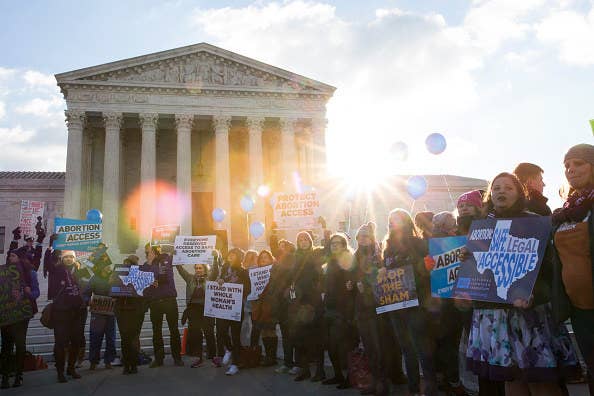
State legislatures across the country are proposing and, in some cases passing, antiabortion bills. (Photo: Getty Images)
More
On Tuesday a bill passed the Illinois State House that would keep abortion legal in the state even if Roe v. Wade were to be overturned by the Supreme Court — but Illinois Gov. Bruce Rauner, a pro-choice Republican, has vowed to veto it.
The events in Illinois today are a perfect example of just why the focus of reproductive justice advocates and supporters needs to be fixed firmly on the states. While all eyes have been focused on the White House and Congress, state legislatures across the country have been proposing and passing bills to make access to abortion care even more difficult for those in need of it.
“Reproductive health and rights continue to be attacked by politicians at the state level,” Diane Horvath-Cosper, MD, the reproductive health advocacy fellow at Physicians for Reproductive Health, tells Yahoo Beauty. “Whether it’s interfering with the provider-patient relationship or trying to limit access to family planning, it is clear that attempts to dismantle access to women’s health care continue during this year’s legislative sessions.”
Or, as Nikki Madsen, the executive director of the Abortion Care Network, tells Yahoo Beauty, “there are some politicians who will stop at nothing to burden abortion care providers and bully people who need this care.”
Here’s a look at some of the bills that are currently moving — and some that have recently passed — and what you need to know about them.
Arizona
In late March, Gov. Doug Ducey signed a number of antiabortion bills into law — including one that would require doctors to do everything possible to resuscitate an aborted fetus that is “born alive,” a term being defined by the state as any fetus born with a heartbeat and respiration, and having movement of voluntary muscles. Yet research shows that a fetus does not develop the nerves and neural capacity to experience pain until the third trimester, and a fetus is not traditionally thought of as viable outside the womb until 26 weeks gestational age. According to the Guttmacher Institute, only 1.3 percent of abortions in 2013 were performed after 21 weeks gestation.
“Arizona politicians need to get out of the exam room and start treating women and families with some basic human dignity,” says Madsen.
Arkansas
Two weeks ago, Gov. Asa Hutchinson signed into law a first-of-its-kind piece of legislation that would require doctors to investigate their patients’ medical histories before being able to provide a pregnant women with abortion care. Doctors who fail to adhere to the law could face up to a year of prison, $2,500 in fines, and civil penalties.
“In Arkansas, politicians want to turn abortion providers into the thought police,” muses Destiny Lopez, the co-director of All* Above All, a grass-roots organization that works to oppose all forms of bans on abortion coverage and to advocate for the repeal of the Hyde Amendment. “It’s insulting, not to mention unworkable.”
Kansas
The Kansas House recently passed legislation that would require women to receive written information — in 12-point type in black ink in the Times New Roman font — about abortion before being allowed to make a decision as to whether to have the procedure.
“Not content to only play doctor, politicians now want to be graphic designers too,” says Lopez.
And yet, as Horvath-Cosper notes, “a bright spot is that there are efforts at the state level to safeguard reproductive health, such as by enshrining the protections of the Whole Woman’s Health v. Hellerstedt decision and protecting funding for the vital services Planned Parenthood provides. As physicians, we know that timely access to high-quality reproductive health care services is essential to women’s health.”
Oklahoma
In March, lawmakers in the Oklahoma House passed a bill that would ban abortion solely on the basis of whether the fetus had a genetic abnormality, with no exceptions made even for cases of rape or incest. Now the Oklahoma State Senate is considering the measure. Should it pass, Oklahoma would be the third state in the U.S. with this kind of abortion ban.
“Abortion care providers treat their patients with compassion and respect; politicians have no place forcing them to target women with needless restrictions,” says Madsen of the Oklahoma bill.
Montana
A bill is headed to Gov. Steve Bullock’s desk to be signed into law that would restrict abortions and criminalize doctors by banning all abortion care performed after 24 weeks gestation, even in the event of a medical emergency. In situations where a woman’s life is endangered, she would then have to undergo a C-section or induced labor should there be at least a 50 percent chance that the fetus might survive outside the womb. Doctors who are found performing abortions after 24 weeks could face homicide charges.
Says Madsen, “It is not always possible for a woman to get an abortion as soon as she has made her decision. With this restriction, politicians are interfering with doctors’ ability to provide care that is right for their patients.”
Texas
A budget bill passed the Texas House two weeks ago that would divert $20 million from environmental regulators and instead direct that funding to “programs that critics accuse of coercing women against having abortions.” It now remains to be seen whether the budgeting provision will pass through the reconciliation process between the state’s House and Senate.
“Texas is in the middle of a maternal health crisis — but instead of funding programs to support women’s health, they’re spending precious resources lying to and coercing women,” notes Lopez.
West Virginia
The West Virginia Legislature is advancing a measure that would require minors to go to court to seek approval before being able to access abortion care. The bill is currently on the floor of the state Senate and is also being considered by a House committee, so it could be approved as soon as this week.
“It’s hard enough for a young person facing an unwanted pregnancy to get care — now they have to go to court?” says Lopez. “For young people from small towns, this undue burden is also a disaster for privacy.”
Restrictions on abortion perpetuate economic inequality.
U.S. Sen. Bernie Sanders, I-Vt, speaks at a Democratic National Committee rally, Friday, April 21, 2017, in Mesa, Ariz. CREDIT: AP/Matt York
Sen. Bernie Sanders (I-VT) took a firestorm of criticism over the weekend for campaigning for an Omaha mayoral candidate who supported abortion restrictions. In the slew of coverage following Sanders’ support of Democratic Nebraska lawmaker Heath Mello, media outlets and Sanders himself framed abortion access as separate from economic issues — when in reality, abortion restrictions hurt low-income people the most.
In 2009, his first year in Nebraska’s state legislature, Mello supported a bill mandating doctors offer an ultrasound before performing an abortion, which he said was a “positive first step to reducing the number of abortions in Nebraska.” Mello also sponsored the final version of a 20-week abortion ban and voted for a law banning insurance plans from covering abortion, Rewire reported. Mello’s campaign manager told The Huffington Post that he received a 100 percent rating from Planned Parenthood, but Planned Parenthood Voters of Nebraska said the statements about a 100 percent rating were misleading.
Understandably, Sanders’ support for Mello was seen as running counter to progressive values.
In response to Sanders’ support of Mello and the resulting criticism from progressives, the Atlantic ran a story with the headline “Rifts over abortion and economic populism threaten to divide Democrats.” In the article, a former Sanders campaign staffer calls the support of abortion rights an unreasonable standard:
I don’t think the senator is anointing anyone or imposing a litmus test on candidates, and I don’t think he sees it that way either. He’s always cared about a core set of economic issues, which is why people flocked to his campaign, and he wants to make sure he supports people who believe in the same things.
The New York Times published a similar piece about how the Omaha election is “pitting abortion rights activists against economic populists.” The Times piece poses this question:
But the ferocity of the dispute this time reveals a much deeper debate on the left: Should a commitment to economic justice be the party’s central and dominant appeal, or do candidates also have to display fealty to the Democrats’ cultural catechism?
Last week, Sanders told NPR that in order for Democrats to get control of the House and Senate, they have to “appreciate where people come from.”
“But I think you just can’t exclude people who disagree with us on one issue,” Sanders said.
The low-income people most affected by abortion restrictions might disagree with Sanders and the media on the characterization that abortion is just “one issue” or a social or cultural issue, rather than an economic one.
Seventy-five percent of abortion patients were poor or low-income in 2014, according to the Guttmacher Institute. Due in part to barriers to contraceptive access, poor women and other people trying not to conceive are three times more likely to get pregnant than higher income people and five times more likely to give birth, according to a 2015 Brookings Institution paper. Abortion rates were also lower for the poor, because although middle-class women abort more of their pregnancies, they have less unintended pregnancies, and thus fewer abortions overall, Slate explained.
With lack of access to affordable abortion options — thanks to the Hyde Amendment, which officially prohibits federal taxpayer dollars from paying for abortions — many women have attempted to induce their own abortion. Only 17 states direct Medicaid to pay for all or most medically necessary abortions, according to the Guttmacher Institute, but the national average for an abortion in the first trimester is around $500 and as much as $2,000 for the second trimester.
The Hyde Amendment has restricted abortion access for many economically distressed groups, such as low-income Washington, D.C. residents, incarcerated people, military personnel, and Native Americans.
Alicia Hupprich, whose husband serves in the military and could not use his insurance to pay for an abortion, shared her story for NARAL Pro-Choice America. She became pregnant in 2015 and after 18 weeks, discovered her baby had fetal hydrops, which has a very high mortality rate. Hupprich and her husband had to travel very far to find a clinic that would provide an abortion.
Because of the Hyde Amendment, my husband’s military insurance would not pay anything towards our termination for fetal anomaly. Though every doctor mentioned that termination was an option in our severe situation, our doctors would not perform the procedure, and they would not point us in the direction of a safe and legal place to have it done. We had to travel over 250 miles to a clinic that could help us.
States continued to pass restrictions on abortion last year. Fourteen states passed 30 laws to make it more challenging to get an abortion in 2016. Today, 31 states have at least one restriction on abortion, including waiting periods, requiring doctors to have admitting privileges, restricting health insurance coverage for abortion, and banning abortion after 20 weeks. And these requirements have very real consequences for low-income women and women of color.
A 2016 University of Buffalo study looked at 3,999 intakes from the George Tiller Memorial Fund, a National Network of Abortion Funds-affiliated nonprofit fund, and found that about half of the women who tried to get assistance from the fund were black, which squares with data on black women facing more health care barriers than white women. Thirty-seven percent of the women already had multiple children. The average distance they traveled to get an abortion doubled from 2010 to 2015.
Low-income people face difficult decisions when they don’t have the resources to get an abortion. Somewhere between 100,000 and 240,000 women of reproductive age living in the state of Texas alone have tried to induce their abortion without any medical assistance, according to a 2015 report from the Texas Policy Evaluation Project (TxPEP), a group of researchers at the University of Texas. Most of the women surveyed said they would have gone to a clinic if they had the option.
Sanders was not the only progressive who faced blowback for his support of Mello. Democratic National Committee Chair Tom Perez, who has been traveling the country with Sanders on what they’re calling a “Unity Tour” to address political differences between Sanders and DNC supporters, did not attend the event but has also supported Mello.
Sanders, Perez, and others who ignore the economic realities of abortion — or pit the two as separate issues — would do better to reconsider.
Clinicians and patients normalize the mental labor of contraceptive use.
The burden of preventing a pregnancy has long fallen disproportionately on those who would actually carry a baby. Yes, there are vasectomies and condoms, but it’s the uterus-owners among us who are tasked with taking pills, getting IUDs, or tracking ovulation in order to control reproduction. But according to a new study published in the Journal of Sex Research, there’s not just a physical burden of not getting pregnant, but a mental and emotional burden that comes along with it. And both clinicians and patients assume that the latter has to go with the former.
The study, done by Dr. Katrina Kimport of Advancing New Standards in Reproductive Health (ANSIRH), a reproductive health research organization based at UCSF, tracked 52 contraceptive counseling visits with women who said they didn’t want children in the future, and for whom all available contraceptive methods were an option. It showed that clinicians “articulated responsibilities associated with contraception that were integral to the physical work of using a method, but still fundamentally mental and emotional tasks.” The study also showed “clinicians generally did not question that these responsibilities were assigned to women.”
The clinicians, most of whom were women, also showed reluctance in offering a permanent option like sterilization, thus legitimizing the assumption that women are responsible for fertility work. “In the visits, clinicians regularly expressed doubt or dismissed women’s desire not to have future children, thereby reifying ongoing fertility, and the attendant mental and emotional burdens of contraception, as normative,” wrote Dr. Kimport.
In an interview with ELLE.com, Dr. Kimport said that often assigning the work of fertility to women seems like common sense. After all, most contraceptive methods work in the female body, and the stakes of pregnancy seem higher for women. However, she says it’s important to distinguish physical work from the mental and emotional labor that we tend to throw in with it. “It’s not just about having the medication in your body, it’s about the time, attention and stress that is associated with it,” she said. Picking up prescriptions, remembering to take the pill, the fear of the side effects. And most clinicians tended to normalize those aspects, figuring it came with the territory of preventing pregnancy. There was no “imagination that you could distinguish the physical experience from that mental and emotional labor.”
As much as women are socialized to assume this labor, men are also socialized against it. Dr. Kimport pointed to the research of Nelly Oudshoorn on clinical trials for male contraceptives, and why, though it is a technical feasibility, there is no male pill yet. Recently, a study for a male pill was halted, after side effects of depression (and one death by suicide) were reported. And though that was serious enough for the study to be halted, many women pointed to initial studies for women’s hormonal birth control having nearly identical results, and to how depression is a common side effect of hormonal birth control women are expected to endure. “That is definitely a manifestation of our social belief,” says Dr. Kimport, “that it’s important enough to women to prevent pregnancy that they would have a higher threshold of acceptability for some of the side effects.”
As for sterilization, Dr. Kimport says that, from a medical perspective, it would make sense for a clinician to favor a long-term, non-surgical option like an IUD rather than sterilization surgery, in terms of going for the least invasive procedure first. However, “a piece of that is a social comfort with the idea that women would continue to do fertility work,” and moving forward, we should be “pushing on how much people are using social criteria instead of medical criteria” to inform their decisions.
In general, Dr. Kimport hopes for an increase in “articulating the ways in which men are involved in some decisions around contraceptives.” That won’t necessarily apply to single women, women with multiple partners, or women who want to make these decisions on their own, but often men just aren’t expected to be part of the conversation. It also means a change in structure, whether that means birth control pills being available over the counter so men can take on the work of refilling them, contraceptive conversations being part of men’s doctor’s visits, or more options for male birth control being researched. “If the structure can be more welcoming, that’s a systemic way of encouraging a shared burden for fertility work.”
Democrats must learn the right lessons from the recent kerfuffle over supporting anti-abortion candidates
Democrat Heath Mello, who has sponsored and voted for anti-choice legislation, is running for mayor of Omaha. Charlie Neibergall/AP
Since we’re apparently doomed to repeat 2016 until the heat death of the universe, Democrats are fighting again about Bernie Sanders and women’s rights. Sanders, along with Democratic National Committee Chair Tom Perez, took some heat last week for making a stop on the DNC’s “unity tour” to support Heath Mello – the Democratic candidate for mayor of Omaha, Nebraska, who turns out to have either sponsored or voted for a long list of anti-abortion bills during his time in the state legislature.
Mello is within striking distance of unseating the Republican incumbent mayor of Omaha, so he may have seemed to the DNC like a good poster boy for how Democrats can reclaim political power in red states. But in light of his voting record, many advocates argued that Democrats were treating women’s basic reproductive freedom as an acceptable bargaining chip to try to win elections in Republican-leaning areas. Again.
They wondered why it was OK for Sanders, that self-styled champion of progressivism, to shrug off Mello’s abortion record by saying, “I am 100 percent pro-choice, but not every candidate out there has my views 100 percent of the time” – while blasting Georgia Democratic congressional candidate Jon Ossoff as “not progressive” because he didn’t use the words “income inequality” on his website.
They wondered when Democrats, beyond Sanders, will live up to their own 2016 platform – which, by calling for the repeal of the Hyde Amendment and the restoration of federal funding for abortion, implicitly recognized abortion as an economic justice issue for poor women in particular. They wondered if Democrats will ever stop automatically treating reproductive freedom like a mere “social issue,” and start recognizing it as critical to women’s economic and social equality.
A number of commentators said these concerns were not just overblown, but also impractical for a party that wants to win elections. Panelists on Morning Joeargued that Democrats have “forgotten how to win,” and that they’ll shrink their tent unnecessarily if they insist on ideological “purity tests” for abortion. On Meet the Press Sunday, Chuck Todd challenged Nancy Pelosi on whether it’s possible to be both pro-life and a Democrat. “Of course,” she said – predictably, given that she has plenty of self-identified pro-life Democratic colleagues in the House.
But the idea that the Democratic Party is somehow “excluding” pro-life Democrats if it takes a hard line against abortion restrictions misses something incredibly important. And if Democrats want to win in 2018, and make good on their commitment to protect reproductive rights, and avoid having the same circular fights over and over again, they need to learn the right lessons from this mini-debacle.
For many Americans and politicians alike, “being pro-life” is an identity. It’s a moral worldview. That moral worldview often – but, crucially, not always – includes a commitment to outlawing or restricting abortion.
Believe it or not, while about 44 percent of Americans tell Gallup pollsters that they’re “pro-life,” only 28 percent of Americans actually want to overturn Roe v. Wade and end legal abortion. When you give people the option to say whether they’re pro-choice, pro-life, both or neither, more Americans say “both” or “neither” than either “pro-choice” or “pro-life.”
We get such conflicted and wide-ranging responses to abortion polling because many Americans feel morally ambivalent about abortion. But for the vast majority of Americans, that moral ambivalence doesn’t translate into a desire to outlaw abortion, or to put medically unnecessary legal barriers in a woman’s way to try to stop her from getting one.
According to a Vox/PerryUndem abortion poll I reported on last year, most Americans have no idea that states are proposing or passing hundreds of new anti-abortion laws every year. But when they learn about those laws – like the admitting privileges or ambulatory surgical center requirements that closed about half of all Texas abortion clinics – and what they actually do to restrict abortion, solid majorities oppose virtually all of the major abortion restrictions pollsters asked about. (The one exception was parental notification requirements.)
But for the modern pro-life movement, and for most Republicans in office, erecting these legal barriers is pretty much the whole point of being a pro-life lawmaker. Their ultimate goal is to outlaw all abortion. The intermediate goal is not to reduce abortions through better birth control access, but to make life more difficult for doctors who perform abortions, and women who seek them, in the hopes that more women who have unintended pregnancies will just decide to carry them to term – despite clear research showing that once a woman has decided to get an abortion, she very rarely changes her mind.
But not every lawmaker who calls themselves “pro-life” shares these goals, especially when it comes to Democrats. Heath Mello now insists that while his faith guides his “personal views,” as mayor he “would never do anything to restrict access to reproductive health care.” If Mello is true to his word, he’d be a “pro-life Democrat” like Joe Biden and Tim Kaine – one who has personal moral qualms about abortion, but still firmly believes that the government has no business telling women and doctors what to do about it.
Still, pro-choice advocates have good reason to be skeptical of Mello from a pure policy perspective. It’s not clear why Mello voted for multiple abortion restrictions from 2009 to 2011 in the state legislature, but now vocally defends Planned Parenthood on the campaign trail. Sure, the same can’t be said for Mello’s Republican opponent – incumbent mayor Jean Stothert, who opposes abortion rights – but that doesn’t mean pro-choice advocates can expect Mello to actively defend their position.
And right now, given the constant barrage of hostile state lawmaking and court battles, active defense is the minimum requirement to protect reproductive rights in America. That’s why many pro-choice groups have started going on the offense, from proposing laws that make it easier to access abortion to having women tell their personal abortion stories in public to fight stigma.
As Perez has now made abundantly clear, the Democratic Party supports abortion rights and opposes unnecessary restrictions, full stop. But to prevent this kind of kerfuffle in the future, the conversation should move away from bickering about who is a “pro-life Democrat” and whether they should be excommunicated from the party. Instead, it should focus very specifically on what those “pro-life Democrats” stand for. Every pro-life politician should be able to explain, in detail, exactly which restrictions – if any – they would ever find it acceptable for the government to impose on women seeking abortions or on doctors who perform them.
Abortion providers have also seen a rise in intimidation and hate speech.
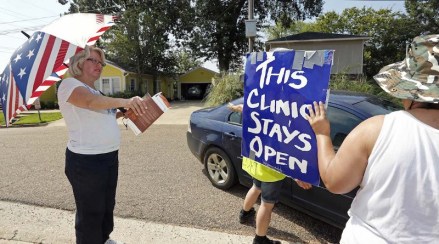
Abortion opponent Mary McLaurin, left, challenges clinic defenders who have blocked her sidewalk access from a car transporting a patient to the Jackson Women’s Health Organization Clinic in Jackson, Miss.
There was an increase in intimidation outside abortion clinics and obstruction of abortion providers in 2016, according to a National Abortion Federation report released on Wednesday.
Although incidents of extreme violence, such as murder, attempted bombings, and arson fell last year, incidents of hate speech and Internet harassment rose, and intensified after the election. Since the election, negative online commentary about abortion care and abortion providers has more than tripled from the pre-election monthly average in 2016.
The reported number of picketing incidents increased sharply and incidents of obstructed access to health care families more than doubled.
Extreme anti-abortion activists can shut down facilities and delay abortion care. For instance, last July a Virginia clinic received a bomb threat, which closed the clinic for the day. Police searched the facility and didn’t find any explosives on the premises. The closure delayed care for 36 patients, according to the report.
There is a long history of anti-abortion activists picketing outside of clinics and intimidating patients walking inside, but the reported number of picketing incidents in 2016 — 61,562 — exceeded those in every year since NAF began tracking incidents in 1977. Last year, there were 21,175 picketing incidents.
Given all of these trends, NAF said it’s important that law enforcement take threats against abortion providers seriously. Although police reacted swiftly to some of the incidents cited in the report, volunteers whose role it is to shield patients from activists’ aggressive tactics say that they wish the police would do more.
Ashley Gray, a clinic volunteer based in New Jersey, told ThinkProgress in 2015, “They’ve pretty much asked us not to call. To deal with it on our own.”
In its report, NAF said it is concerned that Attorney General Jeff Sessions “will not adequately enforce the laws that protect abortion providers and their patients from violence.”
Sessions could dial down enforcement of the Freedom of Access to Clinic Entrances Act (FACE), which prohibits the use of physical force, threat of physical force, or physical obstruction to injure, intimidate and interfere with accessing reproductive health care — as well as the intentional damage or destruction of a health care facility.
Sessions has the ability to use discretion in the prosecution of people who violate FACE. President Bill Clinton’s Department of Justice prosecuted 10 people a year on average under FACE, but those prosecutions dropped 75 percent under the Bush administration, according to Salon. As a United States senator, Sessions also voted against an amendment intended to stop anti-abortion activists from using bankruptcy laws to get out of paying fines for destruction of property.
“I’m in a constant battle to help women and it can get exhausting sometimes, but the good days outweigh the bad ones.”
Forty-four years ago, the US Supreme Court affirmed a woman’s legal right to have an abortion in the Roe v. Wade decision. Today, abortion access is still being fought over in many states — but while you hear all the time from activists on both sides, the doctors who perform these procedures are often left out of the conversation.
BuzzFeed Health reached out to abortion providers across the country to find out what they wish people understood about the job, the procedure, and the women they treat.
We heard from physicians who practice in conservative Southern states, liberal coastal cities, the rural Midwest, and in between. The following is a selection of perspectives and anecdotes from 11 physicians (some of whom asked to remain anonymous) that illustrate their day-to-day and the current landscape of abortion care in the US.
[Editor’s note: This article is meant to be informational and educational, but it does not speak on behalf of all providers or all patients. Although all quotes are from physicians, this is not meant to replace advice from a medical professional. If you are seeking an abortion or have any questions about abortion, talk to your doctor or a health educator.]
1.Abortions are just one part of the job. These are OB-GYNs, family physicians, maternal-fetal medicine specialists, medical directors, and more.
“The majority of my practice is full-scope OB-GYN care, so I provide abortions but I also work in infertility, obstetrics, gynecological surgery such as hysterectomies, family planning, [I treat] abnormal uterine bleeding, and I also work at a local country jail providing gynecological care for incarcerated women. Some people think I terminate pregnancies but I deliver babies too, and I love that part of my job.”
—Dr. Rachna Vanjani, OB-GYN, San Francisco, California, fellow, Physicians for Reproductive Health
“I get to care for women during these monumental times throughout all the stages of their lives. That may mean providing prenatal care, helping a woman through a miscarriage or stillbirth, helping women who choose adoption, providing care during menopause, or safely terminating pregnancies — and for me, it’s a great honor.”
—Dr. Lisa Perriera, OB-GYN, Philadelphia Women’s Center, Pennsylvania, fellow, Physicians for Reproductive Health
Dola Sun for BuzzFeed News
2.Abortion providers don’t feel like they’re on the fringes of the medical community.
“Because of the stigma around the word abortion, there’s this idea that an abortionist is some unprofessional on the fringes of the medical community, but that’s not true at all — I very much tie my identity to professionalism and the tenets of medical ethics and that’s what drew me to this field in the first place.”
—Anonymous OB-GYN, New Mexico, fellow, Physicians for Reproductive Health
3.Most pursued training in abortion care because they wanted to help women.
“I perform a simple medical procedure all day and walk out of work knowing I impacted the lives of 15 to 20 women. In most cases, I took away the biggest worry or obstacle in their lives at that moment so they could follow their dreams or finish their education, get a better job, and have the family they want in future. In that sense, I feel like I get to save women’s lives every day.”
4.Patients should expect to be treated with kindness and compassion when they come in for this procedure.
“I remember the first patient I ever had took my hand during the procedure and said thank you for being there and being so kind and it just broke my heart and still makes me tear up that she was so shocked at our kindness and thought maybe she didn’t deserve that or shouldn’t expect it.
“My patients are the reason why I go to work every day. I know that many of them have experienced so much hostility and judgment and they are very grateful to have a compassionate provider. So if I can do that, if only for a short period of time, it means the so much.”
—Anonymous OB-GYN, Oregon
5.They don’t see their role as judging you or your decision — they just want to give you safe, professional care.
“My patients should never feel like they need to justify their decision to me — if it helps them to talk through it, I am always happy to listen — because I will never judge their reasoning and all I want is for them to be as healthy and safe as possible, regardless of the circumstances.”
—Dr. Raegan McDonald-Mosley, chief medical officer, Planned Parenthood Federation of America, OB-GYN, Maryland
6.Legal abortions are safe and do not affect your ability to get pregnant in the future.
“Abortion is much more common and safe than anybody unfamiliar with the procedure realizes. Medical and surgical abortions do not have any impact on future fertility, and the body goes completely back to normal. It’s a simple medical procedure that doctors have been doing for a long time and it’s very low-risk.”
—Dr. Imershein, Washington, DC
“Abortions are very safe and most are done in a doctor’s office exam room. Any patient can go to a hospital, but they really only need to if they are high-risk or they have a medical condition that requires extra care or monitoring.”
—Anonymous OB-GYN, Michigan
7.In fact, childbirth is riskier than an early (legal) abortion.
“This is one of the safest medical procedures a woman can have. There’s a higher risk of something going wrong when you continue a pregnancy than there is when you get an abortion, especially if the abortion is done early in the first trimester.”
—Anonymous OB-GYN, Oregon
8.The vast majority of abortions occur in the first trimester.
“There’s this perception about abortions among the public and in the media that abortions are always done later in a pregnancy, but that’s not true — most abortions in the US happen before 21 weeks, and the majority of those happen in the first trimester.”
—Anonymous OB-GYN, Oregon
9.The phrase “partial-birth abortion” isn’t actually a medical term used to describe abortions.
“There are a lot of misconceptions about second-trimester abortions and when they are performed. Most happen well before 23 or 24 weeks, because [after] that point we’re getting into the third trimester and the fetus is reaching viability [the point at which it can survive on its own outside the womb, which varies] and most states prohibit abortions this late anyway.
“But even though second-trimester abortions are done later in the pregnancy, the phrases ‘late-term abortion’ or ‘partial-birth abortion’ you hear are not medical terms we use to describe abortion. They often describe a fetus being removed from the womb in the final days of a pregnancy, which is essentially a cesarean section.”[Politicians have used this term] to describe a fetus being removed from the womb in the final days of a pregnancy, which is essentially a cesarean section, [not an abortion].”
—Dr. Perriera, Pennsylvania
10.Surgical abortions aren’t technically surgeries — they require no incisions or sutures — and they usually last around 10 to 15 minutes.
“Surgical abortions should really be called procedural because there’s really no surgery involved — there is no knife involved and no cutting or scraping or sewing incisions back together — all we do is go through a natural orifice in the body and remove the lining of the uterus and everything attached to it, either by using suction or sometimes forceps. And we usually do the procedure in a doctor’s office, not in a surgical center or operating room.”
—Dr. Imershein, Washington, DC
11.They want people to understand what actually happens during an abortion. (Some readers may find these details graphic.)
“The abortion is usually the fastest part of the whole appointment. If it’s early enough in gestation, we can do medical abortion — it’s a two-step pill process. First you take mifepristone, then 24 hours later you take misoprostol — these expel the pregnancy from the uterus and you bleed like you do in a miscarriage.
“First-trimester surgical abortions only take about 2 to 7 minutes and second-trimester abortions take around 10 to 15 minutes. We lightly sedate the patient and insert a speculum, then we numb the cervix with a shot of lidocaine before we dilate it a few millimeters using a tapered metal rod. Then we place a small tube that’s thinner than a drinking straw through the opening in the cervix, and it’s attached to a suction machine so it draws the uterine lining and pregnancy into the tube and out of the body.
“If it’s a second-trimester pregnancy, we dilate the cervix a few centimeters so sometimes we might need to put synthetic dilators in the day before to help the cervix soften overnight. We typically give the patient more anesthesia and we usually have to use forceps in addition to suction to remove the fetus from the uterus. I think it’s important to explain the procedure very clearly, because demystifying what happens can dispel many of the myths and false information.”
—Dr. Deborah Oyer, family physician, medical director of Cedar River Clinics, Seattle, Washington
12.How a patient feels after the procedure varies from person to person.
“After the procedure, some women really grieve the loss of a pregnancy and they’ll ask for an ultrasound picture to take home, but many women also feel very relieved and like a huge weight has been lifted off their shoulders. [Those women may also ask for an ultrasound picture to remember the pregnancy and value it, but not feel like they made the wrong decision.] And whatever a woman feels after the procedure, she is allowed to feel that.”
—Dr. Perriera, Pennsylvania
Dola Sun for BuzzFeed News
13.They don’t see their job as convincing anyone to have an abortion; they simply give them the information they need to make a decision.
“There’s this huge misconception that I make decisions for other people — but I don’t decide anything for anyone. I provide counseling, and support so that they can make the right decision for themselves. As a medical professional, it’s my legal, ethical, and moral obligation to give a patient all the information they need to make informed, competent decisions.”
—Dr. Sarah Wallett, medical director, Planned Parenthood Greater Memphis Region and OB-GYN, Memphis, Tennessee
14.They want to make certain that a patient is 100% sure of their decision and that they made it on their own.
“We don’t perform abortions for woman who seem unsure — we never want a patient to feel like someone talked them into it. If I ever sense that a patient isn’t comfortable with their decision, I’ll stop and make sure they’re ready. So yes, that means some women change their minds at the very last minute. I’ve even stopped a procedure right as I was putting a patient under anesthesia. And if that’s the right decision for them, we always respect it.”
—Dr. Imershein, Washington, DC
15.They don’t all work at Planned Parenthood.
“Abortion care is often synonymous with Planned Parenthood, but that’s not the case. Actually, the majority of abortions are done by independent providers at either private or public clinics. And it’s not as if it’s ‘Planned Parenthood versus independent providers’ or one is better than the other — they are just different, usually in terms of which services they provide.”
—Dr. Oyer, Washington
16.They provide abortions to all different kinds of women, for all different reasons.
“I may perform [multiple] abortions in one day and every single woman will have a different reason why she’s there. For example, on a typical Saturday [I’ve seen] these patients: One woman had her GRE book on her lap and was studying during every free minute of her appointment, and she said she got an abortion so she could go to grad school; one woman really wanted a baby but there was a severe fetal anomaly and the pregnancy wasn’t viable; one woman had been trying to get pregnant with her husband for two years, then she was [sexually assaulted] and didn’t know if the baby was his and was very traumatized, so she chose to get an abortion. There is no one reason why a woman gets an abortion, but every reason is valid.”
—Dr. Vanjani, San Francisco
17.That includes women who identify as “pro-life” or who are very religious.
“I practice in Memphis, where there’s a church on practically every corner and my patients are from the Mississippi Delta region. So most of the women I provide abortions to are religious. Sometimes I think those religious patients feel even more stigma and feel more alone than other patients because society teaches us that religious people just don’t agree with or have abortions. But that’s not true.”
—Dr. Wallett, Planned Parenthood, Tennessee
18.Sometimes they care for women dealing with substance abuse who’ve been using during their pregnancy.
“We have a large population of substance abuse patients who are dependent on illegal drugs [such as heroin] or alcohol, and many are either afraid or know that they’ve caused harm to the pregnancy because of their drug use. They often feel like they need to terminate the pregnancy so they can get sober, because otherwise they’d keep using and harm the baby even more.”
—Anonymous OB-GYN, Michigan
19.Other times that’s mothers who — for whatever reason — cannot have another child at this time.
“We see all different kinds of women, but a lot of them are mothers who know how challenging and expensive raising a child can be. They often decide to get an abortion so they can allocate their resources and care and time toward the children they already have.”
20.And other times patients are ending a desired pregnancy because something went wrong.
“Many of my patients deeply desire to carry their pregnancy to term and to go home with a healthy newborn but complications occur that make the prognosis for the mother and/or the fetus very dire. In those circumstances, some families choose to end the pregnancy, and often to minimize suffering for a baby that will be born very sick with no or minimal chance of survival. For these patients, the decision to end a pregnancy is very difficult and made from a place of love and compassion. The rhetoric on both the pro- and anti-choice sides often overlooks these patients.”
—Anonymous maternal-fetal medicine physician, Utah
21.Those cases can be hard on the doctors, too.
“When a woman or a family hears bad news about a desired pregnancy, it shakes them to their core. The information I need to convey is sometimes the worst news they have ever, or will ever, hear. A woman that goes to the doctor and receives terrible news about a pregnancy is not the same woman that comes home.”
—Anonymous maternal-fetal medicine physician, Utah
22.You probably know someone who’s had an abortion.
“One in three women has had an abortion in America, so statistically, you know someone — she might be your mother or your sister, your aunt, your daughter, your neighbor, your co-worker — there’s this societal sense that any women who have had abortion are the ‘other’ but she is us, she is all of us.”
—Anonymous OB-GYN, New Mexico
“Every woman thinks she’s the only woman she knows who’s had an abortion, but it’s actually very common. We only think it’s rare because it’s taboo to talk about.”
—Dr. Oyer, Washington
Dola Sun for BuzzFeed News
23.False information about abortions can cause unnecessary paranoia and delay care.
“By the time we see patients, they might believe that the procedure will impair them for life or it’ll cause them to get breast cancer or they’ll never be able to have a baby again. It’s very difficult for us as doctors because we only get to see these patients for an hour or two, yet we still have to gain their trust in that time, enough to dispel all of the myths and erase the fear that they’ve caused [patients].”
—Anonymous OB-GYN, Michigan
24.Nobody thinks they’re going to need an abortion — just like no one expects an unplanned pregnancy.
“Nobody thinks it’ll happen to them, just like nobody expects an unplanned pregnancy. You truly don’t think you’ll need an abortion until you need one.”
—Dr. Perriera, Pennsylvania
25.In the providers’ experience, most women who get abortions have carefully thought about their decision for a long time before their first appointment.
“People think because the legislature mandates a waiting period that women haven’t thought carefully about their decision to get an abortion by the time they come into the clinic. But they have thought about it extensively, from the moment their period was late or they saw a positive pregnancy test or the day they called to make an appointment. Most people know pretty immediately if it’s the wrong time in their life to be pregnant.”
—Dr. Imershein, Washington, DC
26.Talking about abortion can help de-stigmatize it, but not every woman wants to talk about her abortion — and that’s okay.
“We want women to feel comfortable enough to talk about their abortions because its real and it happens every day. The silence around abortion can be harmful and increase the stigma, and we need to stop it.”
—Dr. Perriera, Pennsylvania
“A lot of people will say women should talk about their abortions to fight the stigma, but that also might be too much to ask for some women — especially if they have to parade their stories in front of men who don’t understand at all. Abortion, just like any health issue or medical procedure, is still a private matter and we should respect that. There is no one way to de-stigmatize abortions.”
—Anonymous OB-GYN, Michigan
27.Some doctors are open about what they do, some aren’t.
“There’s a spectrum of being ‘out’ as an abortion provider. Some of us are very public about it and some people keep it private, but it really depends on the context — their comfort level, where they live, their family’s beliefs, the threat of harassment around them.
“I’m very open about my work and what I do, despite the risks. One of my favorite stories is about this time I was at a farmers market and I struck up a conversation with this big, burly bearded man covered in tattoos. He asked me about my job and I told him, then there was a nervous pause. Suddenly, his face just lit up and he told me he used to volunteer as a patient escort at a clinic in rural Pennsylvania, and we ended up having this amazing conversation. You can never expect how people will react, but in my experience it’s often positive.”
28.The threats and harassment can be scary, but it doesn’t stop them from doing their jobs.
“People have made postcards with my face and address on them in an attempt to discredit me as a physician or put me in danger. It can get scary, but I really worry more for my partner and my kids. I can’t live in fear every day as a provider.”
—Dr. Perriera, Pennsylvania
“There were fliers in the neighborhood saying I was a murderer, so I had to explain to my kids pretty young that if a pregnant woman isn’t ready to have a baby, I help her get ‘un-pregnant.’ But otherwise, it doesn’t bother me.”
—Dr. Imershein, Washington, DC
29.The protesters outside the clinics don’t make women change their minds, they just make them feel more guilt and self-blame.
“The protesting doesn’t change anyone’s mind, it just makes patients feel terrible and internalize the stigma. I don’t think the protesters realize that they are forcing these women to suffer a trauma, and sometimes they’ll come into the clinic so upset and they’ll think they deserved it. Nobody deserves that. It’s so terrible and unkind. I often try to listen and understand the anti-choice rhetoric because I’d love to engage in a productive dialogue, but I don’t feel like I’m being met halfway. And when they harass or disrespect my patients, that’s just not okay.”
—Dr. Perriera, Pennsylvania
Dola Sun for BuzzFeed News
30.Abortions are not federally funded. Most women pay out of pocket or use their insurance.
“Either the patient pays for an abortion or their insurance pays for all or part of it. The Hyde Amendment makes it illegal to use federal funds for abortion services except to save a woman’s life. We can offer low-income women grants from national funds, for example through the National Abortion Federation — otherwise, it’s really up to the state and insurance companies. Some states will fund ‘medically necessary abortions’ under Medicaid, but there are usually restrictions. In most cases, the patient pays out of pocket,”
—Anonymous OB-GYN, Michigan
31.Some abortion providers also care for undocumented immigrants and people who cross the border to get health care.
“We get to practice global health domestically in border cities, such as San Diego and El Centro, where our clinics are truly steps away from Mexico. At Planned Parenthood, we don’t ask our patients if they are citizens or not — we just provide care to anyone comes through our door. But if we do take care of undocumented immigrants, they pay for services out of pocket, often in cash. And we’ll sometimes have patients come across the border from Mexico just for the day to get an abortion, and go back at night. Regardless of immigration status, we believe women should have access to quality health care.”
—Dr. Sierra Washington, medical director and chief medical officer, Planned Parenthood Pacific Southwest, OB-GYN in San Diego, California
32.State restrictions often act as a barrier to getting safe and timely care.
“Most restrictions are rooted in making abortion inaccessible, not science or medical literature. And it’s very frustrating because they influence what I do — Tennessee state law requires state-mandated counseling and a 48-hour waiting period, so two in-person visits — but I know these extra steps aren’t medically necessary. All they do is make the process seem more scary and confusing, or make it harder for women to get the care they need, when they need it.”
—Dr. Wallett, Planned Parenthood, Tennessee
“The state you practice in can definitely dictate the kind of care you provide to women. I’m very lucky to practice in Maryland where there aren’t many restrictions or non-evidence-based barriers to care — there’s no wait period, we can waive parental consent, and it’s a safe and calm environment. I don’t ever really have to turn women away who desperately want an abortion.”
33.Doctors can’t diagnose many fetal anomalies until later in the pregnancy, which is why many doctors oppose 20-week bans.
“When biology and nature do not work as planned, it is imperative that patients have options available to them, including pregnancy termination. The ways in which a normal pregnancy can go awry are so numerous and varied that even my colleagues and I can’t predict them all, and we are experts! If we can’t predict every complication that can arise, politicians and lawmakers certainly cannot do so.”
—Anonymous maternal-fetal medicine physician, Utah
34.It can be stressful to feel like their job is in constant threat or that the way they care for their patients might change because of new legislation.
“It’s funny because they always say ‘keep politics out of the exam room,’ but [what’s not funny is that] politics are [then] constantly threatening how I do my job and practice medicine. It’s so stressful to think that on a monthly or yearly basis, the way I provide care is threatened.”
—Dr. Vanjani, San Francisco
“It always feels like I’m fighting to defend a procedure that is shown over and over again in the medical literature to be safe and effective and positive for women and families. I’m in a constant battle to help women and it can get exhausting sometimes, but the good days outweigh the bad ones.”
—Dr. Wallett, Planned Parenthood, Tennessee
Dola Sun for BuzzFeed News
35.They think the concept that people will use abortions as birth control is pretty ridiculous.
“Anti-choice individuals will say that ‘people will get abortions over and over again and [better access will allow] them to be irresponsible.’ Never once in my career of being an abortion provider have I ever felt that to be true. I think it’s ridiculous and it’s just a way to stigmatize abortion. Even if abortion is made more accessible, it’s still a difficult thing to go through and no one would want to do it all the time.”
—Dr. Vanjani, San Francisco
36.Many patients choose to go on some form of birth control after their abortion; some even get an IUD during their procedure.
“After a patient gets an abortion, [and she was terminating an undesired pregnancy], it’s a great time to talk about contraception because she already knows she doesn’t want to be pregnant at that time. I’d say [the overwhelming majority] of the women I provide abortions to end up choosing some form of contraception afterward.”
—Dr. Vanjani, San Francisco
“Many of my patients decide they want to prevent pregnancy for several years so they choose to get either a hormonal or copper IUD, and we’ll implant this right after we perform the abortion, while the cervix is still dilated and we have the speculum inside you. We just do it all in one procedure.”
—Dr. Oyer, Washington
37.It’s not as simple as being either pro–abortion rights or anti–abortion rights; there’s a huge gray area in the middle.
“Abortion has become so polarized in US, and people think that there’s only pro-abortion and anti-abortion sides, so the gray area of abortion gets completely lost. It’s honestly a very complex thing, and the reality is that nobody wants to have an abortion — nobody wakes up and thinks, Hey I think I’d really like to get an abortion today.
“So it’s very frustrating when people oversimplify it and think women and doctors are either good or horrible people, and it’s either right or wrong. The reasons why someone chooses to get an abortion are so complex. As a provider, I’m just here to respect women and help them regardless of the circumstances or how I feel.”
—Dr. Washington, Planned Parenthood, San Diego
38.In their eyes, the best way to decrease the abortion rate is to increase access to effective, reliable contraception.
“If more women are able to access highly effective forms of birth control, there will be fewer unplanned pregnancies and fewer abortions — it’s pretty simple. Unfortunately, many states have restrictions not just on abortion but all reproductive health care, which isn’t good for health outcomes.”
—Anonymous OB-GYN, Oregon
39.Being an abortion provider can be incredibly rewarding, especially in the long-term.
“Abortion providers have some of the lowest rates of physician burnout. Medicine can be very frustrating because we try really hard to fix things that are often out of our own control, and some problems like type I diabetes or heart disease we can never fully ‘fix,’ but in this specific aspect of women’s health care, we can do this simple, safe procedure that has the potential to change a woman’s life — and that’s pretty beautiful.”
—Anonymous OB-GYN, New Mexico
40.They are all physicians. But, now, many of them are activists, too.
“Many of us went into the job to take care of women and came out being activists even though some of us are total nerdy introverts and would be happy being quiet. But we see all the setbacks and you feel compelled to stand up and make a difference and defend access to care; and these days I only feel more and more encouraged to speak up.”
41.Abortion won’t stop happening if it becomes illegal.
“No matter how bad the stigma, the protesters, or the barriers, women still come in. There are even women who come in after hearing all these misconceptions who think the procedure is scary or they’ll never get pregnant again — and despite all that, they still show up. It just shows how important this procedure is to women and their lives, that they’re willing to take all of that on. The women who really want abortions will get abortions.”
—Anonymous OB-GYN, New Mexico
“The more restrictions on abortions, the more likely it is for women to resort to illegal and unsafe practices to terminate a pregnancy — abortion has always existed, even when it was illegal, and it will always exist in the future.”
A federal judge ruled that the abortion rights of Missouri women ‘are being denied on a daily basis,’ and blocked two Missouri abortion restrictions.
JENNIFER MORROW | FLICKR
Originally published on April 20, 2017 11:00 am
Updated at 11 a.m. April 20 with Gov. Eric Greitens’ comment — A federal judge on Wednesday blocked Missouri’s restrictions requiring abortion doctors to have hospital admitting privileges and abortion clinics to meet the specifications of ambulatory surgical centers.
U.S. District Judge Howard Sachs said two weeks ago that he planned to enter a preliminary injunction against the requirements, so the ruling came as no surprise.
But in his 17-page decision, Sachs made clear that he was bound by the U.S. Supreme Court’s decision last year in Whole Woman’s Health v. Hellerstedt striking down similar abortion restrictions in Texas.
“The abortion rights of Missouri women, guaranteed by constitutional rulings, are being denied on a daily basis, in irreparable fashion,” Sachs wrote of Missouri’s abortion restrictions. “The public interest clearly favors prompt relief.”
In Hellerstedt, the Supreme Court found that, “in the face of no threat to women’s health,” Texas had required women to travel to distant surgery centers.
The two Planned Parenthood affiliates that challenged the restrictions said that, in the wake of the decision, they would soon be offering four more locations in Missouri where women would be able to obtain abortions. The only clinic in Missouri that currently performs surgical abortions is Planned Parenthood’s facility in St. Louis.
Bonyen Lee-Gilmore, a spokeswoman for Planned Parenthood Great Plains, said the locations that will be offering abortions are in midtown Kansas City, Columbia, Springfield and Joplin.
Mary Kogut, the president and CEO of Planned Parenthood in the St. Louis Region and Southwest Missouri, said it was a “great victory.”
“And what it will do is it will expand access to safe and legal abortion throughout the state of Missouri,” she said.
Attorney General Josh Hawley, who defended the restrictions blocked by Sachs, said he plans to appeal.
“Today a federal court struck down large portions of Missouri law that protect the health and safety of women who seek to obtain an abortion,” Hawley said. “This decision was wrong. I will appeal. Missouri has an obligation to do everything possible to ensure the health and safety of women undergoing medical procedures in state licensed medical facilities.”
Gov. Eric Greitens weighed in on Twitter on Thursday morning, saying: “Missouri is a pro-life state. We will beat this on appeal and keep fighting every day to protect the innocent unborn.”
In his ruling, Sachs said that accepting Missouri’s contention that he should reappraise the abortion safety issue would be akin to trying to undermine the Supreme Court’s 1954 school desegregation decision in Brown v. Board of Education.
Sachs noted that the Supreme Court found that the hospital affiliation requirement in Texas cured no significant health-related problem. And he cited the high court’s finding that tens of thousands of women in Texas would have been forced to travel more than 150 miles to find an open clinic had the affiliation requirement been allowed to stand.
“This case is not a close one in any event, as the absence of a clinic in central Missouri requires hundreds of miles of travel, round-trip, with two trips needed unless a woman has the means and time available for a long stay in St. Louis or other rather distant clinics,” Sachs wrote. He added that the hospital affiliation requirement, rather than furthering women’s safety, probably creates health hazards for them.
Missouri’s hospital affiliation requirement forced the Planned Parenthood facility in Columbia to stop offering abortions there in 2015.
Similarly, Sachs blocked the ambulatory surgical center law requiring abortion clinics in Missouri to have facilities suitable for major surgery. The requirements include wide hallways and other physical specifications.
Sachs pointed out that the law would require Planned Parenthood’s Kansas City facility, which offers only medicinal abortions, to remodel the facility at a possible cost of millions of dollars.
The lack of necessity and “nearly arbitrary” imposition of the requirements, Sachs wrote, “adequately establishes that these plaintiffs are very likely to receive relief” – a requirement for the issuance of a preliminary injunction.
Sachs said the likelihood that the plaintiffs in the case – Planned Parenthood Great Plains and Planned Parenthood of the St. Louis Region and Southwest Missouri – would prevail at trial “is very high.”
“The ability to function as abortion clinics and to perform abortions is crippled in Columbia, Springfield and Joplin, and to some extent in Kansas City, by reason of the statutory and regulatory hospital affiliation requirement for doctors,” Sachs wrote.
“Especially in Springfield and Joplin, but to a lesser extent in Columbia and Kansas City, the ASC (surgery center) requirement imposes burdens that have closed or prevented development of clinics.”
He went on to say that a failure to act promptly would “seriously frustrate the opportunity to open clinics in Springfield and Joplin and the restoration of clinical service in Columbia and Kansas City.”
In a joint statement, the Planned Parenthood plaintiffs said, “Today’s victory means countless Missourians will have expanded access to safe, legal abortion. It is also the resounding affirmation we’ve long awaited – that medically unnecessary restrictions like admitting privileges and ambulatory surgical center requirements are state mandated laws thought up by extremists in Jefferson City. We will continue to fight these restrictions until they are permanently blocked in the state of Missouri.”
An extreme anti-abortion bill in Montana is poised to deal a major blow to abortion rights in the state, should the governor sign it.
The bill, S.B. 282, defines fetal viability at 24 weeks’ gestation and prevents abortions past that point, even in a medical emergency. A pregnant person whose fetus stands a 50 percent chance of survival outside the womb would be forced to undergo a C-section or induced labor. Additionally, under the proposed law, a doctor who provides an abortion past 24 weeks could face charges of homicide.
The bill passed the Montana House on April 6 and enjoyed final passage in the Senate five days later. It will now be sent to Governor Steve Bullock (D).
“It is the policy of the state to preserve and protect the lives all human beings and to provide protection for the viable human life,” said Rep. Theresa Manzella (R), who carried the bill on the floor.
Manzella and her conservative colleagues are leveraging S.B. 282 to advocate for questionably viable fetuses at the expense of (undeniably viable) pregnant women. Most people who have later term abortions do so out of necessity, not flippancy. Discounting this reality oversimplifies the complexities of such a situation and infantilizes people by confiscating their bodily autonomy. What’s more, forcing a patient to undergo a major surgical procedure like a C-section out of political ideology — not medical necessity — is dangerous and unethical.
Not every legislator agrees with Manzella. “I don’t think the legislature should stand in the way of a doctor’s ability to decide what is best for his patient,” Rep. Virginia Court (D) told Montana Public Radio. “This is the right of a woman and her doctor, in the privacy of the doctor’s office. These decisions should be made between the two of them with open, careful, honest, truthful consults. Not by the body of the Legislature.”
It is unclear whether Governor Bullock, a Democrat, will sign the bill. He has previously gone on record in defense of women’s right to choose, saying, “As governor, I will defend a women’s right to choice. I think these are complicated and difficult decisions, but they shouldn’t be made by the government. They should be made by women and their doctors.”
Nevertheless, according to the Guttmacher Institute, Montana “does not have any of the major types of abortion restrictions — such as waiting periods, mandated parental involvement or limitations on publicly funded abortions — often found in other states.” And NARAL Pro-Choice America grades the state as having “strongly protected reproductive rights access.”
In other words, try as they might, Montana legislators haven’t been wildly successful in getting anti-choice laws on the books.
Montana’s anti-abortion crusade (albeit an unsuccessful one) isn’t an isolated case; it fits neatly within an alarming national trend. Legislators across the country, emboldened by an anti-choice president and administration, are doing their best to undermine abortion access however they can.
Dangerous 20-week abortion bans are advancing in several states, including Tennessee, Missouri, Iowa, Ohio, and more. Others are getting more creative with their tactics: Kansas passed a regulation requiring changes to fonts used on abortion information sheets, Arizona will require doctors who perform abortions to try and “revive” fetuses if they show signs of life, and Arkansas will force doctors to investigate abortion patients. Other states, including Florida, Texas, and Oklahoma, have likewise tried to make abortion a felony but failed.
Whether Montana will officially join the ranks of hostile states remains to be seen. But if Governor Bullock signs S.B. 282, he will undoubtedly set a dangerous and irresponsible precedent.













 Abortion - Abortion Clinics, Abortion Pill, Abortion Information