Taking the Abortion Pill Without Visiting a Doctor Is Totally Safe, Study Finds

Taking the Abortion Pill Without Visiting a Doctor Is Totally Safe, Study Finds

PHOTO BY JOSELITO BRIONES

 In the US, women are forced to take the abortion pill in the presence of a healthcare provider. A new study of 1000 women who received the pill in the mail suggests the regulations aren’t neccessary to make sure the procedure safe and effective.

A new study has found that ordering abortion pills over the phone, without a face-to-face doctor’s consultation, is safe and effective. The results of the research, which analyzed the first 1000 women who obtained the abortion pill through the Tabbot Foundation—a telemedicine provider that launched last year in Australia—were presented at the World Congress on Public Health on Tuesday by associate professor Suzanne Belton.

Women in Australia face the some of the same problems as women in the US: Anti-abortion laws, coupled with the fact that many family doctors decline to perform abortions or prescribe the abortion pill, leave women in geographic areas without abortion clinics with very little options when they experience an unwanted pregnancy.

In theory, telemedicine would make it possible for these women to have access to the full range of family planning resources. After a woman calls a toll-free number, the Tabbot Foundation arranges an ultrasound and a blood test for them at a local clinic. A medical professional connected with the Tabbot Foundation then receives the results and, if the patient is approved, consults with the patient by phone about what they are about to experience. The service costs $250.

The patient is then mailed mifepristone and misoprostol—the drugs used in combination to induce abortion—prophylactic antibiotics, painkillers, and anti-nausea drugs. Women can expect a nurse to call one day later to check in, and are given a blood test 10 days later to confirm whether the termination has been successful. Though the abortion pill is recommended for women up to 10 weeks into their pregnancy, the Tabbot Foundation’s service is only offered to women who are less than 63 days pregnant.

The study revealed that, out of 1000 women who received the abortion pill though this method, 717 women reported they took the abortion drugs provided by the foundation, according to the Sydney Morning Herald. The study found that 82 percent of women had a confirmed normal termination; fifteen percent were not able to be contacted.

It is a low-risk procedure. Very few women needed extra support at a hospital for assistance with bleeding or additional pain relief.

“Two women (0.3 percent) still had viable pregnancies after taking the drugs,” the study reported, according to the publication. In addition, “two percent of pregnancies were terminated, but a small amount of tissue remained in the uterus” and only “0.6 percent of pregnancies were non-viable, but were not expelled from the body.”

In these cases, women had the option of taking another dose of misoprostol, undergoing a dilation and curettage procedure, or waiting for the tissue to expel on its own.

The study also found that women in rural areas who lack access to services may still face barriers to accessing the telemedicine procedure. Over 40 percent of patients in the review were from major cities. Thirteen percent were from “outer regional areas,” the Sydney Morning Herald reports, and just over eight percent were from remote or very remote areas. The cost of the procedure and lack of awareness could play a factor; Australia’s universal healthcare system does not cover the cost of telemedicine abortion.

“Essentially, the current system is discriminatory against women… and it doesn’t make sense economically,” Belton, the study’s author, told the publication.

However, for women who are able to have full access to abortion via telemedicine, the procedure is convenient and simple. “Telehealth abortions with tablets are a safe and effective way for Australian women to seek a termination of pregnancy,” Belton said in a press release. “It is a low-risk procedure. Very few women needed extra support at a hospital for assistance with bleeding or additional pain relief.”

Photo by Jovo Jovanovic via Stocksy

This study could prove instructive for the state of abortion access in the US, where it’s currently impossible to access the abortion pill by mail due to strict regulations that were enacted under the guise of keeping women safe.

 When the abortion pill was approved for use in the US, the FDA mandated that it fall under a set of added regulations known as a Risk Evaluation and Mitigation Strategy (REMS), which are typically only required for drugs that cause severe adverse effects. Under those rules, the drug can only be dispensed in clinics or medical offices.

That means telemedicine for abortion looks a lot different here, if it exists at all. In 2008, Iowa pioneered a telemedicine method to circumvent the restrictions that still requires a patient to visit a designated clinic in their area. The patient’s doctor will be in a different city, appearing on a video monitor, to remotely open a drawer in the patient’s exam room that contains the medication and watch them take them ingest it.

And even then, anti-abortion politicians in the state tried to shut down the telemedicine program in 2013, claiming that “the drugs could cause complications and that dispensing them from a remote location was unsafe,” according to the New York Times.

The ban was ruled unconstitutional in 2015, but bans on telemedicine abortion have nonetheless prevented the method from gaining ground—and kept women from a revolutionary method of accessing care. The Guttmacher Institute reports that “19 states require that the clinician providing a medication abortion be physically present during the procedure, thereby prohibiting the use of telemedicine to prescribe medication for abortion remotely.” Earlier today, the state of West Virginia took the first step to explicitly ban telemedicine abortion.

However, studies have proved time and time again that the abortion pill is safe. “We now have huge amounts of clinical data [on mifepristone], and there’s nothing exceptionally dangerous about it,” Beverly Winikoff, the author of a study calling for the removal of the REMS protocols, previously told Broadly. “Many other drugs have far greater risks.”

Elisa Wells, the co-director of the Plan C campaign, which promotes information about the abortion pill, believes that one day access to the abortion pill will be broadened even beyond the Tabbot Foundation’s model.

 “The Tabbot Foundation research demonstrates that a less medicalized model for providing abortion pills is safe and effective. But the model still has barriers to access that are likely not necessary,” she told Broadly in an email, citing the required doctor’s visit for an ultrasound and blood test. “It’s time to reimagine abortion pills as a method women can use themselves independently of the medical system. We believe that research to test direct access to and self-use of abortion pills will ultimately show that this is a method that women can very safely and effectively use on their own.”
Source: Broadly

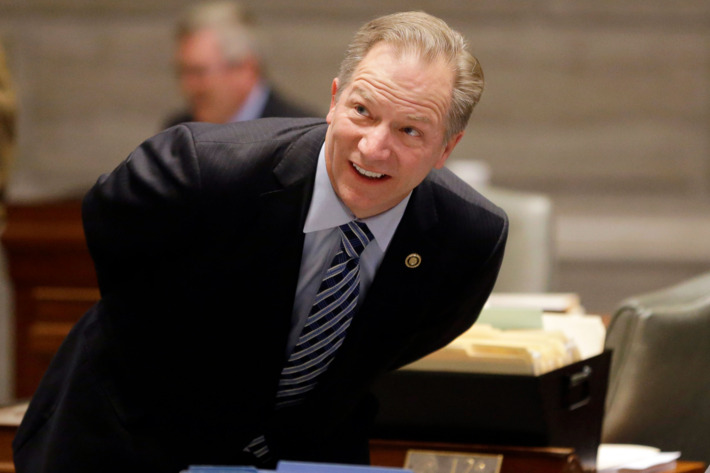
In Missouri, restrictions on abortion providers are so strict that only one clinic in the state can perform abortions: a Planned Parenthood clinic in St. Louis. But on the State Senate floor Wednesday, two Republican lawmakers joked that women seeking abortions should go to the St. Louis Zoo because it’s “safer” and more regulated than abortion clinics.

“The St. Louis Zoo gets inspected once a year,” said State Senator Bob Onder to his colleague, State Senator Wayne Wallingford, who added, “Maybe we should send the people that want an abortion to the St. Louis Zoo, because we know it’ll be safer.”

Onder then pointed out that zoos have a waiting period of five days before euthanizing animals, whereas Missouri requires women to wait three days after meeting with a doctor to get an abortion.

“Let’s think about this. Babies, it’s three days,” Onder said. “So although there are members of this body who don’t agree with that three days, babies are three days. So zoo animals, it couldn’t be more than 24 hours, right?” He went on, “[It’s] five days, Senator. [And] I believe there’s some sort of requirement to notify in case some other zoo wants to adopt that animal. Isn’t that interesting?”

Onder took the floor to oppose a tax hike benefiting the zoo because he’s against a recently enacted ordinance that prevents employers and landlords from discriminating against women who’ve had an abortion, use birth control, or are pregnant (i.e. pretty much every woman ever). Conservative lawmakers are arguing the ordinance “infringes on on the free speech and religious rights of alternatives to abortion agencies or facilities that counsel pregnant women against abortion,” according to the St. Louis Post-Dispatch.

The senator explained the connection between the ordinance and the proposed tax hike benefiting the zoo in a statement posted to Twitter:

Sure, but if you’re going to go with the “senatorial banter” excuse, at least throw in a Quentin Tarantino reference.

Source:  The CUT

http://nymag.com/thecut/2017/04/missouri-lawmakers-women-should-visit-zoo-for-abortions.html

Students United for Reproductive Justice at Berkeley co-directors Marandah Field-Elliot, Adiba Khan and Elizabeth Wells worked to remove financial, logistical, and academic barriers to accessing medication abortion on their campus. (Image: Mikaela Raphael)

For more than a year, there’s been a pioneering effort underway by students at UC Berkeley to dramatically broaden the access that women on campus have to abortion.

 The effort comes from members of a campus pro-choice group called the Students United for Reproductive Justice at Berkeley. They’ve been trying to make medication abortion—colloquially termed the “abortion pill”—available on their campus. They reached out to fellow undergraduate and graduate students and faculty to drum up support through a student government referendum. They even secured funding from the school.

Still, despite petitions demonstrating campus support for providing access to medication abortion–which consists of two pills taken 24 to 48 hours apart, and which can be administered by a nurse practitioner to end a pregnancy within the first 10 weeks–the students say the university administration has yet to follow through and implement the referendum, citing security concerns.

 Now, the issue has spilled over beyond Berkeley.

A California state senator recently introduced a bill which would require University of California, California State University, and community college campuses that use state funding to provide medication abortion at their health centers. If the bill passes, California could become the first state to require campuses to provide medication abortion on campus.

I spoke with the three co-directors of Students United for Reproductive Justice at Berkeley–Marandah Field-Elliot, Adiba Khan, and Elizabeth Wells–about their fight.

“Because I am from Oklahoma, I thought moving [to California] everything was relatively pretty easy in accessing abortion,” Adiba Khan, one of the co-directors of Students United for Reproductive Justice at Berkeley, told me over the phone. “But the reality is that even students here where there are clinics in the area still have to go through all these different bureaucratic hurdles in obtaining an abortion.”

This interview has been edited and condensed for clarity.


When did you become aware of the need for access to medication abortion on Berkeley’s campus?

 Adiba Khan: We first went to our health center and we discovered that the student health insurance plan covers abortion, but they didn’t provide it [on campus]. [I also met] two other peers in one of my classes who have actually attempted to get an abortion through the Tang Center [the on-campus health center] but were met with academic, mental, and financial burdens.

What were those burdens?

Adiba Khan: When a student tries to get an abortion through our health center, they have to do mandatory counseling. The peers that I know that went through this didn’t like it because they didn’t really want to tell any more people that they wanted an abortion.

 Then, you get a referral and have to set up an appointment with an off-campus provider.

What people would do sometimes is just skip going to the health center and just try to go to Planned Parenthood. Planned Parenthood used to be considered out of network. We’ve managed to get rid of the financial burden. Abortion is now 100% covered because of our efforts, but that doesn’t take away from the fact that it’s still not as easily accessible as it should be, like it would be if it were at our health center.

Why did you choose to focus your efforts on access to medication abortion on campus?

 Adiba Khan: We were just wondering why something as simple as a medication abortion, which is just two pills, isn’t also provided when it really could easily be filled because the health insurance does cover it.

Marandah Field-Elliot: It’s only two pills and it can be administered by a nurse practitioner, so we saw that it was really logistically easy and simple for our campus health center to incorporate that into the services it provides.

This all happened last year, but medication abortion still isn’t available on your campus. Can you explain why?

 Adiba Khan: In order to add this service there was going to have to be money allocated–to move things around at Tang and make the health center a little more safe–so we went ahead and applied [to an internal fund called the Wellness Initiative Fund] and we got around $120,000 a year for two years.

While the medical directors were on board with this, they needed approval and support from our administration. We ended up being denied despite all our efforts in mobilizing and finding support from the Berkeley community. The reason was that the costs of upgrading security, because of the uncertainty of what anti-choice protesters would look like, would amount to something that we definitely could not afford.

Marandah Field-Elliot: The other issue was a fear of the university losing out on research funding because now we have Donald Trump as our president, which was a valid concern. But also, at the same time, there’s many other things that this university does that would constitute revoking our research funding by Donald Trump’s criteria. The fear was that doing this on our own without any other university in California would just put Berkeley in a negative spotlight and be even more vulnerable to violence.

Now there’s a new California state senate bill proposed which would require medication abortion to be available not only at Berkeley, but at all UCs, CSUs, and community colleges. Do you have a connection to that bill?

 Elizabeth Wells: I was a community college student before I came to Berkeley. It is very difficult to access and afford services when you’re juggling a family or a job. I know people who have gone to get abortions and they’re faced with huge protests and anti-choicers outside, and if people were able to access abortion on their campuses or the school system was involved, it would make that process much more easy.

Marandah Field-Elliot: We were reached out to about this bill by a couple of organizations that are helping the senator. We were able to give input onto some first drafts of the bill, which was awesome. I think this bill is fantastic politically because it won’t be concentrating all the anti-abortion activists onto one campus. It’ll be spread out throughout California and will drastically increase access to medication abortion throughout the state.

What feedback did you give on the proposed bill?

 Adiba Khan: Originally, the bill just mandated medication abortion to be available at all public universities that have on-campus health centers, but we addressed the fact that doesn’t mean that much if the school doesn’t provide health insurance that actually covers the service. So they included the health insurance component after we talked to them, to make sure that the student health insurance plan also covers abortion.

In addition, there was a reference to counseling and we felt that it was appropriate to change just counseling to “scientifically accurate counseling” because counseling can be arbitrary–that can be actually counseling that tries to talk someone out of getting the service.

What happens next?

Marandah Field-Elliot: We feel that especially with legislation that was inspired by student activism, student activists need to be heard by legislators that are going to be voting on this bill, so we want to bring out as many students as possible to tell their stories.

Adiba Khan: We have started our efforts just at UC Berkeley, but now that our efforts transformed into something that will hopefully impact the entire state if this bill passes, we’re really hoping it won’t just be California. We hope that this project will succeed in changing the way we all look at abortion.


A spokesperson for the University of California Office of the President told me that the office is still reviewing the proposed state bill and has not taken a position on it. Nobody from the Tang Center would speak with me on the phone (they said “scheduling” issues prevented it), but a spokesperson provided me with the following statement:

 Officials at the Tang Center fully support a woman’s right to choose and have long provided contraceptives, including the “morning after pill” (which is not to be confused with the “medication abortion” pills indicated in the proposed bill) as well as referrals to nearby facilities for abortion services. There are four facilities within four miles of the Berkeley campus that provide medication abortion pills or perform surgical abortions.We are aware of the students’ interest in this issue and have been in meetings with them to discuss their concerns. Those meetings and conversations continue. Student leaders we are working with have shifted their current efforts to SB 320. Now that the focus has shifted to legislation that would create a system-wide policy, the UC Office of the President will take the lead on responding to questions, as it does with all matters concerning legislation.

Source: Fusion

http://fusion.net/meet-the-women-trying-to-revolutionize-abortion-access-1793741602?utm_campaign=Feed%3A+gizmodo%2Ffull+%28Gizmodo%29&utm_medium=feed&utm_source=feedburner

View image on Twitter

View image on Twitter
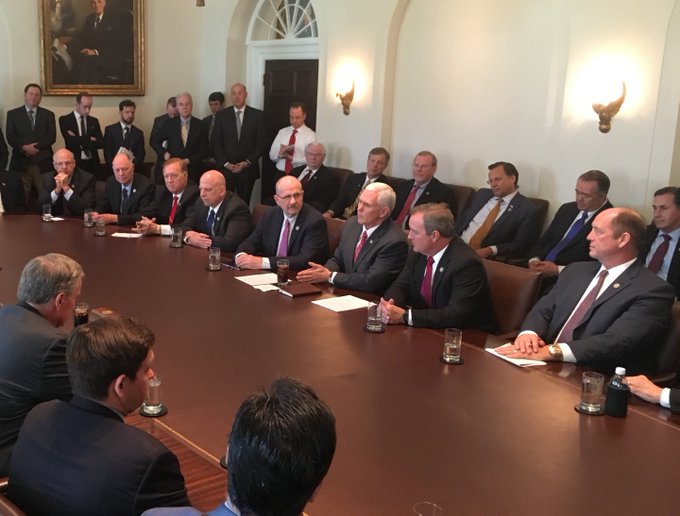
Last month, the White House released a photo of a meeting with lawmakers discussing the proposed health insurance bill — showing 25 white men and not a single woman in the room. That was so even though the bill would have cut such services as reproductive health, maternal health, and breast and cervical cancer screening.

This was not the first time that the Trump administration had shown pictures of all-male groups making policy on women. In January, for instance, the president signed an antiabortion order — reinstating what’s known as the “global gag rule” — surrounded by men.

In both cases, the Internet was atwitter with outrage. At the New York Times, Jill Filipovic even speculated that Trump’s all-male optics were an intentional appeal to his mostly male base of supporters.

Public outrage when groups of men are making decisions about women’s lives has been with us for a while. In 2012, the Internet went into spasms when Rep. Darrell Issa convened a congressional committee hearing on contraceptive coverage with only male panelists. And in 1991, famously, an all-male, all-white congressional committee interrogated Anita Hill — a black woman — about being sexually harassed. The outrage lasted into the next election, buoying more women into office.

Whether the Trump administration has purposely staged and released the all-white-male photos, our research suggests that this approach will backfire. All-male decision-making bodies erode citizens’ confidence in their political institutions. This is true for both men and women — and even for Republicans.

How we studied U.S. public perceptions of all-male decision-making bodies

In November 2016, we ran a series of survey experiments. We asked a representative sample of Americans to read a fictitious newspaper article about an eight-member state legislative committee evaluating sexual harassment policies. We varied the article so that some respondents read about a panel consisting of eight men, while others read about four men and four women. We asked how citizens felt about the panel when it made a decision that either restricted or advanced women’s rights — here, either decreasing or increasing penalties for those found to have sexually harassed others in the workplace.

Nobody likes all-male panels

Here’s what we found: Citizens don’t like all-male panels.

As we show in the figure below, when all-male committees decrease penalties for sexual harassers, U.S. respondents are less likely to say they agree with the decision and less likely to view the outcome as right for citizens or fair to women. They are also more likely to view the procedure as unfair, more likely to think the decision should be overturned, and report less trust in the panel.

When female legislators are involved, respondents view both the decision and the decision-making process much more favorably.

Men especially dislike women’s exclusion

How do American men feel about all-male panels? They dislike them even more than American women do. As you can see, while both men and women think more highly of decisions made by a gender-balanced panel, the effect is much larger for our male respondents. Men increase their agreement with the decision twice as much as women do when the decision is made by a gender-balanced group than when the committee is all male.

Why? Our research shows that women are more likely than men to view sexual harassment as an important issue. Because women have stronger opinions about the outcome than men (whether they’re for or against reducing penalties), the panel’s gender composition is less likely to sway their feelings about the decision itself.

Even Republicans dislike all-male panels

What about Republican respondents? Our findings suggest that if the Trump team is strategically trying to show that men are in charge of the decisions, they’ve taken the wrong approach. As with our broader sample, the figure below shows that our Republican respondents are also less likely to support rolling back women’s rights when an all-male panel makes this decision.

What’s more, leaving women out of decision-making more broadly damages Republicans’ faith in their political institutions.

Republicans might prefer outcomes that restrict women’s rights, but appear to believe that women’s presence helps legitimate these decisions.

Excluding women from decisions makes U.S. citizens distrust their government — even when the decision favors women 

But what if men decided to increase penalties for sexual harassers? In this case, women’s presence doesn’t affect respondents’ perceptions of the decision itself. But having women involved in the decisions significantly improves citizens’ perceptions of the decision-making process and their trust in their political institutions.

In sum, male dominance corrodes citizens’ faith in their political institutions — especially when the group rolls back women’s rights, but even when it doesn’t.

Source: The Washington Post

https://www.washingtonpost.com/news/monkey-cage/wp/2017/04/04/americans-dont-like-it-when-men-and-only-men-make-decisions-about-women/?utm_term=.8c9c17f78d07

The White House confirmed Wednesday that President Trump will sign legislation overturning an Obama administration rule that currently prevents states from blocking federal grants to abortion providers, including Planned Parenthood.

White House legislative affairs director Marc Short said the move will be one of the final actions by President Trump to roll back Obama-era regulations by using the Congressional Review Act. By law, Mr. Trump’s ability to use the previously obscure tool expires on April 28.

Vice President Mike Pence provided the tie-breaking vote last week in the Senate to approve legislation which allows states to withhold Title X family planning funds from providers that also offer abortion services. The federal funding to states amounts to about $300 million annually.

 Late last year, Mr. Obama’s Department of Health and Human Services issued a final rule that prohibited states from withholding Title X money from providers such as Planned Parenthood.

The new legislation overturns the HHS rule by using the CRA, a 1996 law that allows Congress to repeal new regulations within 60 days of their passage.

So far, Mr. Trump has already used the CRA 11 times to repeal Obama regulations, ranging from an Interior Department regulation on stream protection near coal-fired power plants, to restricting hunting on federal lands.

“We inherited, this administration did, the biggest regulatory burden, we believe, of any president in American history,” Mr. Short said. “I think this is a huge accomplishment in the first quarter.”

Previously, only one other president, George W. Bush, had used the CRA to repeal a regulation by a prior administration. Mr. Short said the moves by Mr. Trump will save taxpayers an estimated $10 billion.

Source: The Washington Times

http://www.washingtontimes.com/news/2017/apr/5/donald-trump-sign-rule-abortion-providers/?utm_source=RSS_Feedutm_medium=RSS

INDIANAPOLIS (AP) — A federal judge has blocked an Indiana mandate forcing women to undergo an ultrasound at least 18 hours before having an abortion, ruling that the requirement is likely unconstitutional and creates “clearly undue” burdens on women, particularly low-income women.

 U.S. District Judge Tanya Walton Pratt’s ruling, issued late Friday, grants a preliminary injunction temporarily blocking the ultrasound waiting period. Planned Parenthood of Indiana and Kentucky and the American Civil Liberties Union of Indiana had sued the state last July, contending the mandate was unconstitutional and would prevent some women from getting abortions.
 Pratt’s ruling said the waiting period “creates significant financial and other burdens” on Planned Parenthood and its patients, particularly low-income women who face lengthy travel to one of only six Planned Parenthood health centers that can offer an informed-consent ultrasound appointment.
 The judge, who heard arguments in the case in November, found that Indiana had presented “no compelling evidence” to support its contention that the mandate would further its stated interest of convincing women not to have an abortion.
 “Simply put, the State has not provided any convincing evidence that requiring an ultrasound to occur eighteen hours prior to an abortion rather than on the day of an abortion makes it any more likely that a woman will choose not to have an abortion,” Pratt wrote. She added that the mandate “likely creates an undue burden on women’s constitutional rights.”
 A study of 15,000 women served by Planned Parenthood in Los Angeles is cited in Pratt’s ruling. It found that 99 percent of women proceeded with an abortion after not viewing the ultrasound, compared with 98.4 percent who did view the ultrasound.
 The requirement that women undergo ultrasounds at least 18 hours before having an abortion had replaced a previous Indiana provision that required women to get an ultrasound before having an abortion but did not specify when that had to occur.
 Planned Parenthood said in its lawsuit that under the state’s earlier measure the group performed ultrasounds on women immediately prior to their abortions.
 Betty Cockrum, the CEO and president of Planned Parenthood of Indiana and Kentucky, praised Pratt’s decision, calling it “an incredibly strong ruling” that protects Indiana women’s right to an abortion from needless burdens.
 “I would prefer that the Legislature figure out that it’s not their job to practice medicine, and that we would in fact get politicians out of our doctors’ offices,” she said.
 The ultrasound mandate is part of a wide-ranging abortion restrictions law that took effect July 1, 2016, a day after Pratt blocked the law’s provision that would have banned abortions sought because of a fetus’ genetic abnormalities, such as Down syndrome. The judge also blocked a provision requiring that aborted fetuses be buried or cremated.
 Then-Indiana Gov. Mike Pence, who is now vice president, signed the legislation into law in March 2016.
 Ken Falk, the legal director of the ACLU of Indiana, said only about 25 percent of Indiana women seeking abortions actually agree to see the fetal ultrasound, or hear the fetal heartbeat if it’s present. The remainder signed a form saying they have declined to see that information, he said.
 Falk said Indiana has 30 days to appeal the ruling.
 Indiana Attorney General Curtis Hill released a statement saying his office was considering its next steps in the case.
 Mike Fichter, the CEO and President of the anti-abortion group Indiana Right to life, urged Hill to appeal Pratt’s ruling and to continue to “fight for Indiana’s constitutional right to put a time requirement on our state’s ultrasound law.”

Source: WTop

http://wtop.com/health-fitness/2017/04/federal-judge-blocks-indiana-abortion-ultrasound-mandate/

WASHINGTON — Vice President Pence cast a tie-breaking Senate vote Thursday to pass legislation that will allow states to withhold federal funds from Planned Parenthood and other health care providers that perform abortions.

The measure, which now goes to President Trump for his signature, dismisses an Obama-era rule banning states from denying federal funds to such organizations.

Pence’s vote was needed to break a 50-50 tie. Republicans Susan Collins of Maine and Lisa Murkowski of Alaska broke with their party, voting against the measure.

Republicans have said the Obama rule should be overturned to allow states the right to steer funds away from abortion providers, if they choose.

Sen. Joni Ernst, R-Iowa, said the measure reverses a rule that “attempted to empower federal bureaucrats in Washington and silence our states.”

Democrats condemned the measure throughout the day, with Senate Minority Leader Chuck Schumer of New York calling it “another example of the Republican war on women.”

“It would let states treat women as second-class citizens who don’t deserve the same access to health care as men,” he said.

The House in February had voted 230-188 largely along party lines to reject the rule under the Congressional Review Act, which allows Congress to overturn recently enacted regulations.

The rule prohibits states from withholding family-planning funding from providers for reasons other than their ability to offer family-planning services. It took effect Jan. 18, two days before President Obama left office.

Since 2011, 13 states have restricted access to such grants, disrupting or reducing services in several instances.

Women’s marches across the country have protested cuts to reproductive health care services.

Pence, an evangelical Christian, was a leader in efforts to defund Planned Parenthood while serving in Congress and he co-sponsored “personhood” legislation calling for constitutional rights at the moment of fertilization. As governor of Indiana, he signed several anti-abortion bills, including one that banned abortions solely because of genetic abnormalities — legislation that was suspended by a federal judge.

In January, Pence became the highest-ranking official to appear in person at the annual March for Life demonstration. He told attendees then that the Trump administration would work with Congress to permanently bar taxpayer funding of abortion and abortion providers.

“Life is winning in America,” he said then, to cheers. “And today is a celebration of the progress that we have made in the cause.”

Source: USA Today

https://www.usatoday.com/story/news/2017/03/30/vice-president-pence-breaking-tie-senate-moves-against-planned-parenthood/99820022/


Kentucky’s last abortion provider is suing the state to stay open.

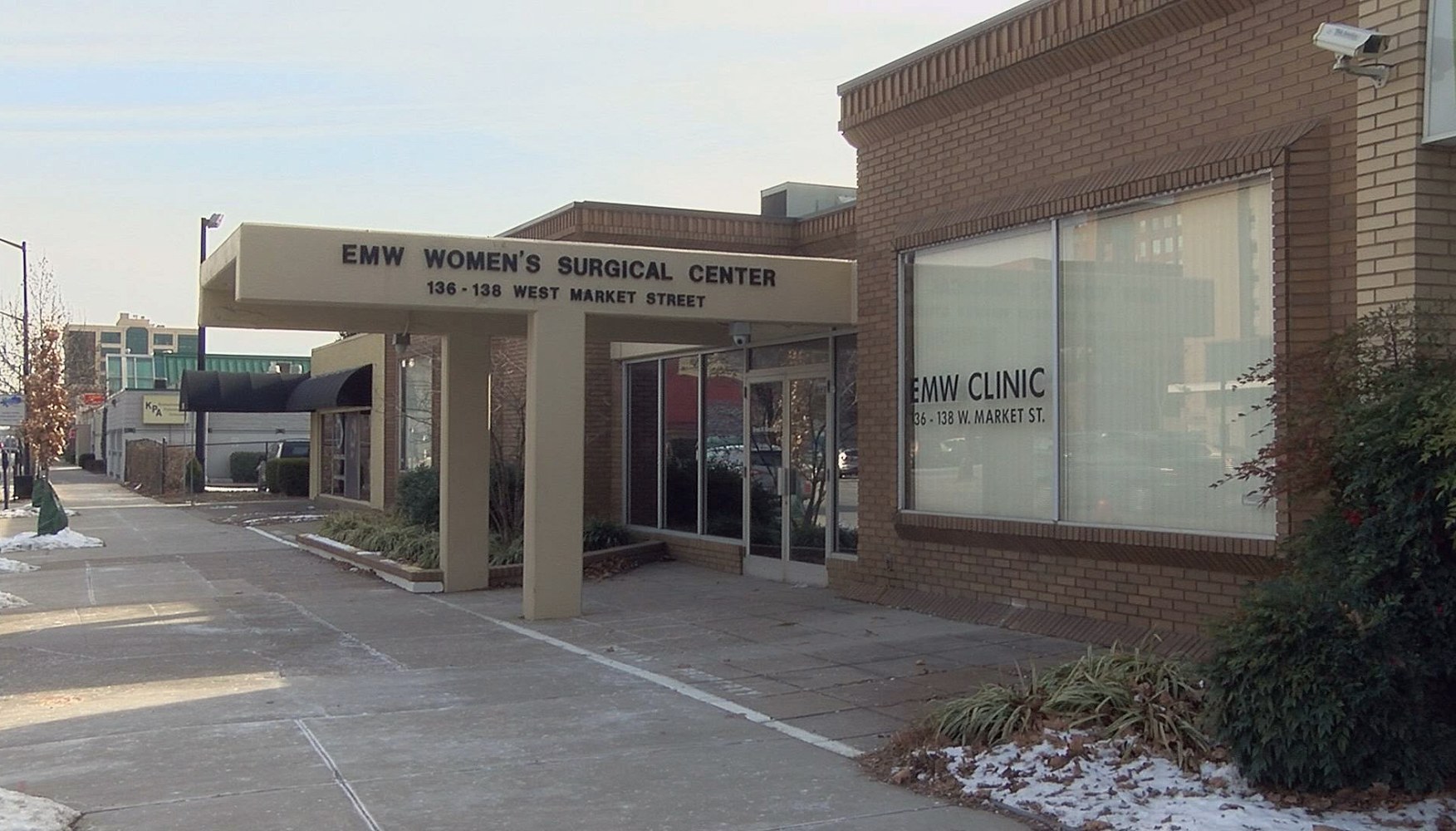
The EMW Women’s Surgical Center in Louisville claims in a federal lawsuit that Gov. Matt Bevin’s administration informed them “out of the blue” that the clinic was not in compliance with state rules and ordered them to stop performing abortions starting Monday, April 3.

“If EMW is forced to close its doors, there will be no licensed abortion facility in the Commonwealth of Kentucky,” the suit states. “Kentucky women would be left without access to a critical and constitutionally protected medical procedure.”

Image:  EMW Women's Surgical Center
The EMW Women’s Surgical Center in Louisville is Kentucky’s last abortion provider. WAVE3

The clinic is seeking an injunction against what it calls Bevin’s “blatantly unconstitutional” move.

“This is absolutely just another attempt to ban abortion in Kentucky,” said EMW attorney Donald L. Cox, adding that the clinic “has been properly licensed for decades.” “The governor’s war plan has some serious deficiencies in them. Other than that, it’s a great plan.”

There was no immediate response from Bevin’s office to the lawsuit.

At issue is the state’s requirement, outlined in the lawsuit, that “an abortion facility maintain agreements with a local hospital and ambulance company to transfer patients in the rare event of an emergency.”

Cox said EMW has had such an agreement in place with the University of Louisville Hospital and a local ambulance company since 2014. The clinic passed its most recent inspection last year and had it license renewed through May 31, he said.

“Despite these facts, out of the blue, on March 13, 2017, the Cabinet for the first time raised technical objections to the Agreements and sent a letter to EMW threatening to shut the clinic down in 10 days,” according to the lawsuit.

EMW charged in the papers the governor was retaliating against them for filing an earlier lawsuit “challenging Kentucky’s new forced ultrasound requirement.”

It’s no secret that the governor — a married father of 10 (four of them adopted) — opposes abortion and has called himself an “unapologetically pro-life individual.”

This year, Bevin signed two bills into law curbing abortion, including one that bans them after the 20th week of pregnancy. And he used tactics similar to the one he’s using on EMW to block abortions from being performed at the company’s other clinic in Lexington and at the Louisville clinic of Planned Parenthood of Indiana and Kentucky.

The Bevin administration is “taking the position that even though EMW signed an agreement with the hospital they say the actual owner of the hospital has to sign it,” said Cox.

Currently, the public hospital is managed by KentuckyOne Health, an affiliate of the Denver-based Catholic Health Initiatives.

“What they appear to be saying is we have to go to the Catholics to get permission to do abortions,” Cox said. “Not a very likely scenario.”

Source: NBC News

http://www.nbcnews.com/news/us-news/kentucky-s-last-abortion-clinic-sues-state-stay-open-n740696

A £250,000 grant to an anti-abortion group – using money raised from the tax on sanitary products – has been criticised.

MPs and campaign groups said it was wrong that Life received one of the largest amounts from the government fund that comes from the 5% VAT on tampons and towels.

Life said the money supported a project for homeless pregnant women in London.

The government said the latest £12m of funding benefitted 70 UK charities.

The Department for Culture, Media, and Sport (DCMS) released the full list of beneficiaries on its website,

‘Must be stopped’

The government has pledged to spend the proceeds from the controversial tax on sanitary products on women’s charities after hundreds of thousands of people signed a petition calling for them to be exempted from tax altogether.

The latest grants also included £200,000 for the Suzy Lamplugh Trust to support women who are stalked, £262,614 for Stepping Stones, Luton, for women facing domestic and sexual abuse, and £354,617 to support the group One Parent Families, which works across Scotland.

But it was the support to the pro-Life charity, using funds raised from a tax on women’s sanitary products that drew fierce criticism.

Stella Creasy, MP for Walthamstow, said: “This fund was supposed to help women, not encourage those organisations who want to control them – completely unacceptable and must be stopped.”

She tweeted to government minister Rob Wilson, who made the announcement: “Hey @RobWilson_RDG can you please cut funding to pro-life orgs and help ensure no young woman goes without tampons in school instead pls?”

Labour’s shadow MP for women and equalities Paula Sherriff said it was “bitterly ironic” to many women to be taxed for their biology “only for the government to hand over that money to organisations that don’t even believe we should have control over our own bodies”.

She called for the money’s allocation urgently to be reviewed.

‘Practical help’

And, Sophie Walker, leader of the Women’s Equality Party, said it was “a shock” to learn the government had used the money to support an anti-choice charity which aimed to “make abortion a thing of the past”.

She said the party appreciated the work Life did with homeless pregnant women and in caring for ill children, but: “We are very disappointed to see the allocation of such significant funds to this one charity while many others struggle, particularly those supporting BAME (Black, Asian, and minority ethnic) women and disabled women – who experience some of the highest rates of violence against them and yet are consistently at the bottom of the list for funding.”

London project

Life said it planned to use the money to develop its services, including “housing, practical help, non-directive counselling and life-skills training for pregnant and homeless women”.

It said it supported women in times of crisis with “care and compassion” and it was “grateful” to the government for the “positive gesture”.

“At Life we see women who are in genuine crisis because of pressures to end their pregnancy coming from partners, parents, employers, and society.

“We are there to empower those women with the support they need to continue with their pregnancy and to equip them with the skills to help them overcome their personal challenges,” a spokesman said.

The DCMS said the money for Life was to fund a specific west London project to help homeless and other at-risk women.

Source: BBC

http://www.bbc.com/news/uk-39472417

Arkansas governor Asa Hutchinson on Wednesday signed a law requiring doctors to investigate women seeking abortions before they can actually receive the procedure. The measure purports to block abortions that are based solely on the sex of the fetus, but actually bans women from getting the procedure until their physician has put in an unspecified amount of “time and effort” obtaining her pregnancy-related medical records.

House Bill 1434 — which creates the “Sex Discrimination by Abortion Prohibition Act” — was passed by the Arkansas House of Representatives and Senate this month, and will go into effect in January 2018. It forces doctors to ask a woman if she knows the sex of the fetus and, if she does, they must then gather all medical records pertaining to her “entire pregnancy history.” Under the law, doctors are prohibited from providing a woman with an abortion until they’ve taken a “reasonable” amount of time to get the records — which could potentially result in an indefinite waiting period, the Center for Reproductive Rights noted in a statement.

“Health-care providers should never be forced to investigate patients for the reasons behind their personal, private decisions,” Lourdes Rivera, a senior vice-president at the Center for Reproductive Rights, said. “When a woman has made the decision to end a pregnancy, she needs high-quality health care, not an interrogation.”

According to the Center for Reproductive Rights, this new law makes Arkansas the first state to require doctors to not only investigate a woman’s reasons for getting an abortion, but also to force them to look at her entire pregnancy-related history. The bill includes some language about sex-selection abortion and states that it mostly affects female fetuses, and briefly cites other countries that have taken steps to end the practice (India, Great Britain, and China). However, it doesn’t provide any data about such abortions in the United States. Under the new law, any doctor that performs an abortion based on the sex of the fetus will be found guilty of a class A misdemeanor.

Source: NY Mad

http://nymag.com/thecut/2017/03/arkansas-law-forces-abortion-doctors-to-investigate-patients.html