‘You cannot get a Covid-19 test if you are asymptomatic and no one is turning tests around in 48 hours,’ says campaigner

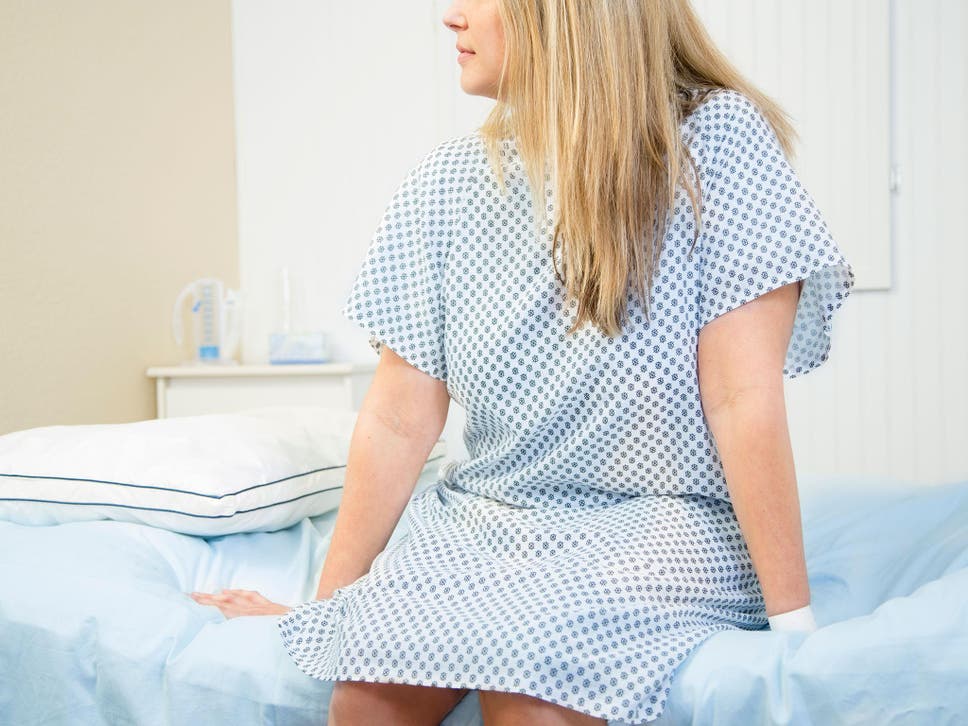
The ACLU argued the new policy could force some women into being forced to postpone their abortion until a date which is beyond the state’s legal deadline for having the procedure ( fstop/iStock )

Women in Arkansas are being blocked from getting abortions due to new rules forcing them to track down a test for coronavirus and get a negative result beforehand.

A federal judge has upheld the rules after the American Civil Liberties Union (ACLU) sued the state over the new policy and stated it infringes the constitutional right to having a pregnancy terminated.

The ACLU, which represents the only abortion clinic in the entire state, argued the coronavirus tests are very difficult to procure and abortions are timely procedures which should not be delayed by the obstacle of obtaining a test.

Holly Dickson, legal director at ACLU of Arkansas, hit out at the judge’s decision to uphold the new rules.

She said: “The urgency of the situation in Arkansas cannot be overstated. People cannot pause their pregnancies, and this politically-motivated restriction is already pushing care out of reach. This ruling will extend that harm.”

The ACLU argued the new policy could force some women into postponing their abortions until a date which is beyond the state’s legal deadline for having the procedure. The cutoff point is 21 weeks and six days after a woman’s last period.

Jennifer Dalven, director of the ACLU’s Reproductive Freedom Project, said: “Make no mistake, Arkansas politicians are outright barring people who have decided to have an abortion from getting one and instead forcing them to stay pregnant and have a child against their will.

“A state should never prevent people from making a decision about a pregnancy that is best for themselves and their families. But doing so during the pandemic, when people are losing their jobs and doing everything they can just to keep their families healthy and make ends meet, is beyond cruel. We will continue to do everything we can to ensure that people can get the care they need.”

Brian Miller, the district judge, concluded the choice was “agonisingly difficult” to reach due to the new rules curbing people’s freedom but argued the need to safeguard public health during a global pandemic made the policy acceptable.

He said: “This directive applies equally to all surgical procedures and does not single out abortion providers or surgical abortions.”

Leslie Rutledge, Arkansas attorney general, said the policy which demands a negative coronavirus test result for women who require abortions was one element of wider state rules which necessitates negative test results for any individual who needs to have any form of elective procedure.

Ilyse Hogue, president of Naral Pro-Choice America, fiercely criticised the policy and argued tests remain out of reach. “In Arkansas, a new law requires a negative #COVID test within 48 hours of a scheduled appointment to be able to get an abortion,” she tweeted. “Also in Arkansas, you cannot get a Covid-19 test if you are asymptomatic and no one is turning tests around in 48 hours. See what they did there? Terrible.”

Lori Williams, director of the abortion clinic, submitted an affidavit which explained she had been striving to help women track down Covid-19 tests for weeks but was struggling.

She said she had got in touch with more than 15 testing services but had not been able to find one which was able to provide tests for patients who are not showing symptoms of coronavirus and give results back in the space of 48 hours. This forced her to turn away eight abortion patients who were unable to conform to the new rules, Ms Williams said.

Arkansas, a state in the south of America, limited elective abortions during the coronavirus crisis but the restriction was relaxed at the end of April.

Politicians and abortion rights campaigners across the US have used the Covid-19 emergency to roll back abortion rights and attack women’s sexual and reproductive freedom. A slew of states have attempted to capitalise on coronavirus to introduce abortion bans.

Source: https://www.independent.co.uk/news/world/americas/coronavirus-abortion-arkansas-negative-test-women-a9510301.html?fbclid=IwAR2hkBSYe5VFDoU-a4IIfV7waUVPALQOmPpiYDZADPzNeC7frG7dBseNIJo

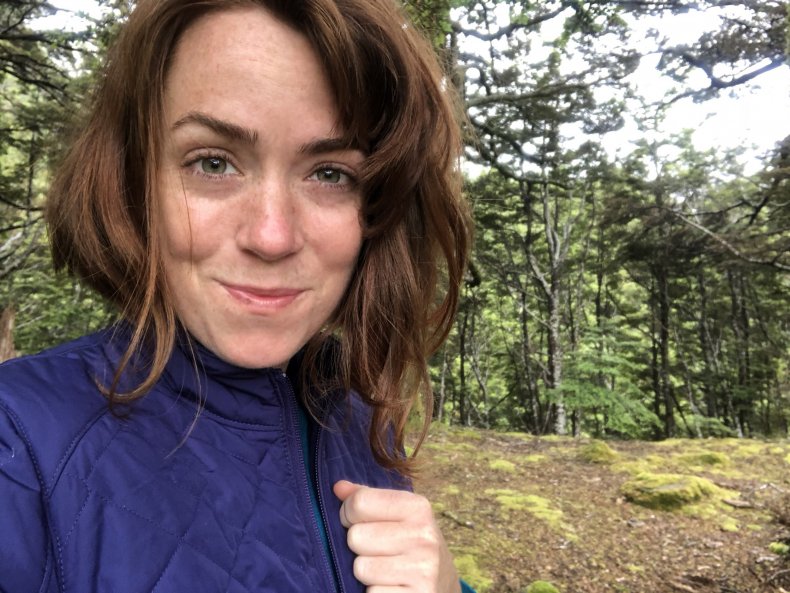
Nik Zaleski underwent a medication abortion in California during the COVID-19 pandemic.NIK ZALESKI

Nik Zaleski underwent a medication abortion in California during the COVID-19 pandemic.NIK ZALESKI

Back in March, I made a difficult decision: whether to go outside—or not—to get an abortion.

The COVID-19 pandemic has drastically changed life for us all, but for me and people across the United States who need abortions, we have yet another decision to make; should we go outside and potentially expose ourselves to the virus or stay home with a pregnancy we don’t want to continue? My abortion was essential, so I went.

On March 16, the day the “shelter in place” order was announced in certain parts of California, I pulled up to the parking lot of my local Planned Parenthood to begin a medication abortion. I glanced at my phone before going in to find a text from a friend, “California is about to announce that six counties, including ours, won’t be allowed to leave our homes until April 7, in the next hour. Get everything you need before mass hysteria.” My heart sank.

In the steps between the car and the clinic doors, I worried: will I get stuck pregnant?

For the past decade, I have been working to protect abortion access as a cultural organizer, facilitator and storytelling advocate; unlike many legislators across the country, I have always known that abortion access is an essential service.

But there I was, alone in my car, four days after Trump declared a national state of emergency on March 13, wondering if the state would consider the procedure I needed to go on with my life, and carry out my purpose, to be essential.

In the steps between the car and the clinic doors, I worried: will I get stuck pregnant?

Could it be possible that although I live in one of the most progressive states in the country—with the resources to end an unwanted pregnancy, the ability to get an appointment within a week at a clinic close to home, a wide ecosystem of support, and an internal compass that was immediately certain of my decision—I would get stuck pregnant during a pandemic?

Abortion, Coronavirus, California, Reproductive rights, Abortion rights

Nik Zaleski underwent a medication abortion in California during the COVID-19 pandemic.NIK ZALESKI

I walked into the clinic and stood behind another woman in line. I listened anxiously to her check in—was she being turned away for services today? Would the government get to decide her destiny, to decide that her needs were non-essential?

When it was my turn, I told the receptionist I had just heard the news about sheltering in place. “Am I allowed to be here?” I asked. “Of course,” she assured me. I closed my eyes, took a breath, and silently thanked God and everyone who ever fought for abortion care before me—then I thanked her.

So while the world was dramatically changing outside, my plan stayed the same. I met with my provider, took the first pill, Mifepristone, to stop the pregnancy from developing, thanked her for her work and went home.

I woke up the next day, worked for a few hours, and took the remaining medication to terminate my pregnancy at home, where I was now observing the “shelter in place” order.

What is this global public health crisis teaching us right now? For me, COVID-19 has provided yet another opportunity to count my privileges.

My sister was with me throughout the day; she made chicken soup with Meyer lemons from our yard for dinner. In an extraordinarily disorienting time, the procedure was remarkably ordinary. I was pregnant, didn’t want to be, and was able to solve my problem safely in my home supported by my favorite person on the planet.

What is this global public health crisis teaching us right now? For me, COVID-19 has provided yet another opportunity to count my privileges; to be accountable to the resources I’ve been handed in this lifetime.

I am white, young, healthy, able-bodied, insured—inadequately, but insured nonetheless—and employed. I have a car to get groceries and money with which to buy them. That same car is the one I used to travel to my abortion appointment.

I have a safe and warm home where I can “shelter in place”; the same home I terminated my pregnancy in. If I contracted COVID-19, I would receive the medical services I need. In the clinic, I was able to get the medical service I needed—an abortion.

Abortion, Coronavirus, California, Reproductive rights

Nik Zaleski underwent a medical abortion in California in March 2020.NIK ZALESKI

I am now thinking about all of the people who are currently trying to get the abortion access they need.

As I read the headlines of politicians in a dozen states using the outbreak of COVID-19 to shutter clinics during the pandemic—forcing people to travel out of state—I think about the dilemma patients are faced with.

Should they follow the CDC’s guidance and cancel travel or get on a bus, plane, train, or car to cross a state line for care? This is care that grows more expensive, more complicated, and harder to find the longer they’re delayed.

For weeks now, people in Texas have been waking up unsure if their appointment will be cancelled as the legal whiplash of federal courts protects appointments one day and prohibits them the next. I am both afraid for those people, being forced to stay pregnant for longer than they’d like, and thankful that I was able to get the care I needed.

I think about young people in America who are currently navigating laws requiring them to go to a judge for permission, and who will now be receiving news alerts of courts shutting down.

I think of everyone who has to travel hundreds of miles because they happen to live in Kentucky, Mississippi, Missouri, North Dakota, South Dakota or West Virginia—states with only one clinic that offers abortion services. And I think of those who may have to travel long distances for a later procedure. They will all have to make the same decision that I did—whether or not to go outside.

On that day in March, I was given a seven minute window into the level of anxiety so many people are experiencing for months on end.

The need for abortions does not subside during a pandemic, because people do not simply change their minds when abortion access gets more difficult. We know what is right for our bodies, our families, and our futures.

Between my car and reaching the reception desk on that day in March, I was given a seven minute window into the level of anxiety so many people are experiencing for weeks and months on end as they try to get the essential reproductive health services they need.

That seven minutes is why I work to ensure everyone who wants an abortion is able to get one—without barriers and without fear.

Nik Zaleski is a cultural strategist, playwright and director who works in the reproductive justice movement. She is a storyteller with We Testify, an organization dedicated to the leadership and representation of people who have abortions.

The views expressed in this article are the writer’s own.

Source: https://www.newsweek.com/abortion-covid-19-pandemic-california-1499410?fbclid=IwAR0jUGlBYhj5BZtqyRPc9W9YyVUBu9zdV6BdeO7n-T6G3jS4ZsEXOhjP7QU

Virginia is turning the page on years of abortion restrictions that have put care out of reach for many.

Here in Virginia, while these cases are being decided and lives hang in the balance, we will continue fighting to do what the people of Virginia elected us to do—take reproductive health decisions out of the hands of politicians and put them back where they belong, with patients and medical professionals.
Shutterstock

When Rachel Scruggs, a waitress and young mother in Manassas, Virginia, decided to have an abortion in 2018, she was forced to make a second appointment and wait 24 hours before coming back to the clinic for a medication abortion.

This delay was medically unnecessary, and it imposed a huge burden on Rachel and her family, forcing her to find transportation, lose wages, and arrange and pay for child care for her five-year-old son. We don’t want to hear these stories anymore in Virginia. Women deserve health care rooted in their best interest and in sound medical advice.

For most of the past two decades, anti-choice legislators controlled the Virginia House of Delegates and state senate, using their majority to introduce over 150 medically unnecessary laws designed to restrict access to safe, legal abortion care. These laws had nothing to do with protecting health and safety and everything to do with shaming patients and preventing families from accessing the reproductive health care they need. These demeaning laws have impacted the most marginalized in Virginia, and have disproportionately affected young people, rural residents, individuals with low incomes, and people of color.

As legislators, women of color, and Virginians, we have fiercely fought these anti-choice laws in the Virginia General Assembly. Now, Virginia is turning the page.

Last month, Virginia Gov. Ralph Northam (D) signed the Reproductive Health Protection Act (RHPA), a common-sense law that rolls back dangerous, politically motivated abortion restrictions that block access to one of the safest and most common medical procedures. We were proud to sponsor this law, which goes into effect July 1.

The evidence is clear: The vast majority of Virginians trust people to make their own reproductive health-care decisions, free from political interference. We agree. These decisions are private and need to remain between a patient, a medical professional, and those they love and trust.

There is no question that reversing decades of restrictions and policies rooted in politics and ideology rather than best medical practices will pave the way for all Virginians to have the ability to make the best decisions for themselves, their families, and their health.

We also know that the RHPA will remove barriers to care that have had an outsized impact on those with the fewest resources, perpetuating the structural economic inequalities that already exist in our society and unfairly harming the most vulnerable members of our communities.

When someone decides to have an abortion, it should be safe, affordable, and free from punishment or judgment. The RHPA rolls back restrictions that make exercising the constitutional right to abortion care nearly impossible for many. Restrictions like the mandatory 24-hour waiting period require patients to take time off work and lose vital income, find affordable childcare, and pay for transportation and lodging.

This can create additional barriers for those who have to travel to obtain abortion care. Around 92 percent of Virginia counties have no abortion care provider. By overturning the mandatory waiting periods and forced ultrasound law, women will be able to access abortion care when they need it and without medically unnecessary delays that disproportionately prevent lower-income women from exercising their rights and getting the health care they need.

Punishing people for deciding when and if to become parents and exercising their fundamental rights is shameful. It’s not who we are as Virginians.

The RHPA also rolls back targeted regulation of abortion providers (TRAP) laws that are solely intended to shut down abortion clinics across the country and in Virginia. Before these laws went into effect, Virginia had 21 health centers that provided abortion services. After the TRAP laws’ implementation, this number was reduced to 15 centers that provide medication and procedural abortion care in a state with nearly 1.7 million women of reproductive age.

These laws require only abortion clinics, and not other similar medical facilities, to meet criteria like having a certain number of parking spaces or hallways of a given width—measures that have nothing to do with patient health and safety. When a facility cannot meet these requirements, which are completely irrelevant to patient care, the laws make these clinics shut down for no reason at all.

Data tells us Black women have the highest rate of pregnancy-related deaths in this country. Racial bias within the health-care system is a major factor, but it is clear that shutting down clinics that are the only place many women have to access care will only make this crisis worse. As leaders, we should be expanding access to health care, not restricting it.

Right now, across the country, all eyes are on the U.S. Supreme Court. The nation is waiting to see how this Court, with the addition of President Trump’s two anti-abortion justices, will determine a case that will set new legal precedent for how far access to safe and legal abortion can be curtailed under the law for generations to come.

The consequences of these decisions, and of our national laws around reproductive health care, cannot be understated. But here in Virginia, while these cases are being decided and lives hang in the balance, we will continue fighting to do what the people of Virginia elected us to do—take reproductive health decisions out of the hands of politicians and put them back where they belong, with patients and medical professionals. That is what the RHPA is about.

Thanks to the countless people who worked to make the RHPA a reality, we are proud to say that for those across the Commonwealth who have suffered because of these anti-choice laws, the right to safe and legal abortion will no longer exist in name only here in Virginia.

Source: https://rewire.news/article/2020/05/15/as-black-women-leaders-we-are-tearing-abortion-restrictions-down-in-virginia/

Despite social distancing orders from the governor and public health officials, protesters are continuing to gather outside a Louisville abortion clinic. On Saturday, about two dozen anti-abortion protesters lined the sidewalk outside EMW Surgical Center in downtown Louisville, one of Kentucky’s two remaining abortion clinics.

Very few were wearing masks or maintaining the six feet of distance the Centers for Disease Control (CDC) says helps prevent the spread of the deadly coronavirus.

While one protester who declined to be identified shouted at women through a bullhorn, Daniel Nolan stood by quietly with a Bible. A member of Sovereign King Church of Southern Indiana, he said he comes here often for these Saturday protests.

“We gotta wear masks, and six foot apart, and social distancing. Hair salon’s everything’s been shut down. But yet this place remains open,” Nolan said.

Nolan said for Gov. Andy Beshear to be “consistent” in measures to protect life, he should shut down the abortion clinic.

Like most of the other protesters Nolan was neither wearing a mask nor standing six feet apart from others. Neither was his friend Jon Faughn, of Immanuel Baptist Church. Faughn said he was skeptical the masks would prevent the spread of the disease, and that social distancing measures were “doing more harm than good.”

Asked if they were worried they may be asymptomatic and possibly spreading the virus, Nolan responded, “What if? We’re basing on a ‘what if?’” He added that “we don’t know a whole lot of information” about the virus.

The CDC reports more than 75,000 Americans have died from COVID-19 since the pandemic began, and scientists say the virus’ death-rate is “substantially higher than the flu.” In Kentucky, nearly 300 people have died, including 115 in Jefferson County.

Meanwhile, COVID-19 has sidelined the volunteer escorts who usually buffer patients from protesters as they enter the clinic. Meg Stern with the Louisville Clinic Escorts said in order to keep themselves safe and follow CDC guidelines, the group has decided not to work the sidewalk during the pandemic. Instead, some volunteers typically observe the protests from their cars across the street. With the volunteers gone, protesters swarmed closely around women as they went in or out of the building. That worried Stern.

“This has always been a public safety hazard. Coronavirus makes it deadly one,” she said.

EMW clinic co-owner Ona Marshall is also concerned about everyone involved, including the protesters.

“They’re putting themselves at risk, they’re putting our patients at risk, they’re putting our staff at risk,” she said.

During the protest, officers in two Louisville Metro Police Department vehicles monitored from across the street.

“We’re always prepared for every situation that may present itself,” LMPD spokesman Dwight Mitchell said, in response to questions about what resources they were providing to protect patients entering the clinic.

Stern is calling on Louisville Metro Council to enact a “safety zone” that would create a clear path to the door for abortion clinic patients. Stern has been advocating for the safety zone for awhile, but she said the pandemic conditions make it even more important.

Source: https://wfpl.org/despite-pandemic-protesters-continue-to-gather-outside-louisville-abortion-clinic/?fbclid=IwAR3ss28Ks_UzXGARs4fAQ-4TOkjJ0hOLVoaqkBnZQcWXxcTNbkx_DzatSS0

States with anti-choice politicians in power could impose unnecessary admitting privilege requirements with little or no resistance.

The conservative takeover of the federal courts means there might not be legal recourse against laws designed to obliterate abortion access. MANDEL NGAN/AFP via Getty Images

The U.S. Supreme Court’s upcoming decision in June Medical Services v. Russo could give anti-choice politicians in 15 states the green light to drastically reduce abortion access.

If the conservative justices ignore precedent to rule in favor of Louisiana’s admitting privileges requirement, a wave of laws designed to shutter abortion clinics under the guise of patient safety could sweep large swaths of the South and Midwest, according to an analysis released Monday by the Guttmacher Institute. The Court’s ruling will come just four years after justices struck down parts of a similar anti-choice law in Texas that shuttered nearly half of the state’s abortion providers.

Guttmacher estimates that the fallout of the abortion rights case could affect more than 19 million women of reproductive age across these 15 states: Alabama, Arizona, Arkansas, Florida, Georgia, Indiana, Iowa, Michigan, Mississippi, Ohio, Oklahoma, South Carolina, South Dakota, Tennessee, and West Virginia.

These states could follow Louisiana’s lead by forcing abortion providers to secure admitting privileges at nearby hospitals, a kind of targeted regulation of abortion providers (TRAP) law. Many abortion providers are unable to comply with the medically unnecessary requirement, since hospitals across the United States refuse because of their religious affiliation or out of a desire to avoid political attacks from anti-choice activists.

Elizabeth Nash, interim associate director of state issues for Guttmacher, said anti-choice lawmakers would “feel emboldened” by a Supreme Court ruling in favor of Louisiana.

“Just look to last month—at the first opportunity, they weaponized the COVID-19 pandemic and tried to shut down abortion access in nearly a dozen states,” Nash said in a statement. “We know the anti-abortion movement takes any opportunity limit or ban abortion—the question that remains is whether the Supreme Court will follow precedent or follow politics.”

Nine states with anti-choice governors and anti-choice legislative majorities could pass admitting privileges laws with little or no resistance. Then there’s Michigan, where anti-choice activists could use a citizen-initiated process to enact an admitting privileges law despite the opposition of Gov. Gretchen Whitmer (D), an abortion rights supporter.

Guttmacher identified another five states that could easily revive admitting privileges laws that have been blocked by the courts.

That list includes Mississippi, where lawmakers passed clinic shutdown regulations in 2012, threatening to shutter the state’s last abortion clinic. While the law never took effect, Mississippi’s only abortion provider had tried and failed to satisfy the admitting privileges regulation before it was held up in the courts. “At least one hospital refused to even provide an application to the provider despite repeated attempts and another hospital would not review a completed application,” according to Guttmacher.

Alabama’s Republican governor could similarly push through a 2013 admitting privileges law that was blocked by a federal judge. In an order blocking the anti-choice law from taking effect, a court determined that none of the abortion providers in three Alabama cities “would be able to obtain privileges and no physician with privileges would start providing abortion care.” That would have left the state with two clinics.

The devastating effects of admitting privileges requirements were evident in Tennessee from July 2012 to April 2017, when the law was in effect. Two clinics in the state closed during that five-year span, while “the remaining seven clinics’ capacity was reduced as existing providers were not able to obtain privileges and clinics had difficulties recruiting new providers,” according to Guttmacher.

Patients in Tennessee were often forced to wait two or three weeks before receiving abortion care during that time. State officials stopped enforcing the law following the Supreme Court’s 2016 ruling against portions of the Texas TRAP law.

A blitz of admitting privileges laws could force abortion patients to travel out of state, or even to a different region.

If neighboring states pass admitting privileges laws, “patients in entire regions of the country may be forced either to travel long distances to obtain abortion services or be left without access to care,” according to the Guttmacher analysis.

The spillover effect would be felt in nearby states where abortion providers would have to “figure out how to care for an influx of patients” from regions where abortion access had been gutted.

Admitting privileges could exacerbate travel time and distance in mostly rural states, such as South Dakota, where the average one-way drive to a clinic is already 92 miles. North Dakota, one of two states with an admitting privileges law in effect, has an average one-way driving distance of 157 miles to a clinic.

But in some states that once passed admitting privileges requirements, Democrats have since broken Republicans’ grip on power. Take Kansas, which passed a clinic shutdown law that was blocked by a federal judge in 2011. The legislature is still controlled by Republicans, but Gov. Laura Kelly (D) isn’t expected to revive the existing restriction.

The same is true in Wisconsin, where Gov. Tony Evers (D) is unlikely to seek to enforce the inactive admitting privileges law on the books.

Heather Shumaker, senior counsel for reproductive rights and health at the National Women’s Law Center, said clinic shutdown laws should be seen as part of a wider coordinated attack on abortion access.

“[Admitting privileges regulations] are based on a fundamental misunderstanding of how abortion care works and these laws exploit that misunderstanding,” Shumaker told Rewire.News.

Abortion rights opponents “frame it as protecting women’s health care and we know it does just the opposite,” she said, adding that the conservative takeover of the federal courts means there might not be legal recourse against laws designed to obliterate access. “It does nothing to further the safety of an already safe procedure.”

Source: https://rewire.news/article/2020/05/12/one-supreme-court-decision-could-shut-down-abortion-clinics-in-15-states/?fbclid=IwAR1jSvYsz5l6_jXg6tyi1C8X1r9GIj2Xn-WYLgz34NoHtKtjZWZY4XMOyz4

Before the pill was approved by the FDA on May 9, 1960, there were few contraceptive options available to young women. It revolutionized family planning and the sex lives of millions of Americans.

Birth control pills in 1976 in New York. The birth control pill was approved by the FDA 60 years ago this week.

As a young woman growing up in a poor farming community in Virginia in the 1940s and ’50s, with little information about sex or contraception, sexuality was a frightening thing for Carole Cato and her female friends.

“We lived in constant fear, I mean all of us,” she said. “It was like a tightrope. always wondering, is this going to be the time [I get pregnant]?”

Cato, 78, now lives in Columbia, S.C. She grew up in the years before the birth control pill was approved by the U.S. Food and Drug Administration, on May 9, 1960. She said teenage girls in her community were told very little about how their bodies worked.

“I was very fortunate; I did not get pregnant, but a lot of my friends did. And of course, they just got married and went into their little farmhouses,” she said. “But I just felt I just had to get out.”

At 23, Cato married a widower who already had seven children. They decided seven was enough.

By that time, Cato said, the pill allowed the couple to avoid having more babies — and she eventually was able to go on to college.

“It was just like going from night to day, as far as the freedom of it,” Cato said. “And to know that I had control, that I had choice, that I controlled my body. It gave me a whole new lease on life.”

Loretta Ross, an activist and visiting women’s studies professor at Smith College, was among the first generation of young women to have access to the birth control pill throughout their reproductive years.

Ross, now 66, said by the time she came of age around 1970, the pill was giving young women more control over their fertility than previous generations had enjoyed.

“We could talk about having sex – not without consequences, because there were still STDs … but at the same time, with more freedom than our foremothers had,” Ross said. “So it changed the world.”

For all it’s done for women, Ross said that the pill has a complex and controversial history; it was first tested on low-income women in Puerto Rico. Ross said the pill also has limitations. She’d like to see it made available over the counter, as it is in some countries — not to mention, a pill for men.

When the pill was approved in 1960, women had few relatively few contraceptive options, and the pill offered more reliability and convenience than methods like condoms or diaphragms, said Dr. Eve Espey, chair of the Department of Ob/Gyn and Family Planning at the University of New Mexico.

“There was a huge, pent-up desire for a truly effective form of contraception, which had been lacking up to that point,” Espey said.

By 1965, she said, 40% of young married women were on the pill.

For Pat Fishback, now 80 and living in Richmond, Va., the newly available pill allowed her to delay having children in her early 20s until she’d been married for a couple of years.

“It also made having children a positive experience,” Fishback said. “Because we had actually, emotionally and intellectually, gotten to the point where we really desired to have children.”

It took a bit longer for unmarried women to gain widespread access to the pill and other forms of contraception: Linda Gordon, 80, a historian at New York University, remembers the stigma around single women and contraception at the time.

“When I was in college, a number of women had a wedding ring — a gold ring — that we would pass around and use when we wanted to go see a doctor to get fitted for a diaphragm,” Gordon said. “In other words, there were people finding their way to do that, even then.”

The pill also gave rise to a variety of other forms of hormonal contraception, many of which are popular today, Gordon said. According to the Centers for Disease Control and Prevention, nearly 13% of American women of reproductive age use the pill — making it the second-most popular form of contraception, after female sterilization.

Gordon said that 60 years after the pill’s approval, contraception remains a contentious political issue.

Just this week, the U.S. Supreme Court heard arguments in a case involving the birth control mandate in the Affordable Care Act. A decision on whether some institutions with religious or moral objections can deny contraceptive coverage to their employees is expected in the months to come.

Source: https://www.houstonpublicmedia.org/npr/2020/05/09/852807455/how-the-approval-of-the-birth-control-pill-60-years-ago-helped-change-lives/

Joyce Schorr (left) with Jane Fonda. (Ed Krieger)

This Mother’s Day, when we talk about bold, intelligent, tough and proactive women leaders, we must talk about Joyce Schorr, founder and president of the Women’s Reproductive Rights Assistance Project (WRRAP).

For many of us, life events impact and even change the trajectory of what is important to us and where are true passion lies.  Schorr is no different.

Having realized the horrors of illegal abortions in 1969 when her best friend was forced to undergo an illegal procedure, she knew something must be done.

That is why in 1991 after years of tirelessly advocating for reproductive justice, Schorr pitched the idea of a national independent fund for poor women who were unable to pay for safe and legal abortions.

“Watching a woman go through an illegal abortion was so overpowering, it propelled me to work on making sure it would one day be legal,” said Schorr. “That was my first step. My second step was to make sure they could pay for it. WRRAP was born.”

As the largest national independent abortion fund, WRRAP has proudly helped thousands of people, funding millions by working with a network of over 700 clinics and doctors.

This past year alone, thanks to WRRAP, over 2,200 people received close to $463,000 in funding for surgical and/or medical abortions. And of them, over 63 percent were women of color.

This year, we project to give out more funding based on barriers to access preventing time sensitive care. And because we are national, we don’t face the restrictions many funds have to provide funding only in their state or county.

Schorr’s best friend’s story is no different than the countless individuals who had to resort to illegal procedures at that time.  And now sadly, we face this issue again with restrictions on abortion as an essential and time sensitive service.

Further restrictions and funding for abortion access with the global health crisis has only magnified the inequalities that exist and has taken its toll on the most vulnerable people and is doing the most harm.  This domino effect also affects clinics and doctors who provide reproductive health care.

Let us not forget stories like this:

“I heard about a Latina woman in the Bronx who performed abortions.  I collected all my change from everywhere I could and ended up with about $60 in pennies and nickels.  She was extremely upset that I had brought her a small suitcase full of change.  She almost turned me away but I begged her to let me stay.  She brought in a big pot of boiling hot water and Ivory soap and a coat hanger.  I took off my clothes from the waist down. She proceeded to insert the hanger into my vagina trying to get it through my cervix. She poked for three hours.  I was bleeding and bleeding and the abortion was a failure.”

As we celebrate Mother’s Day, we must celebrate all the maternal figures in our life who are in this fight for our human rights.  Each of us and all of us must stand together to invest in sexual reproductive health.  After all, over 78 percent of the people we help have had their partner abandon them, leaving the entire cost up to the person seeking an abortion.

For over 29 years, WRRAP has depended on donations—and nearly 90 percent of the funding raised by WRRAP goes to funding procedures.

To donate, visit www.wrrap.org/donate.

Source: https://msmagazine.com/2020/05/09/the-mother-of-the-largest-national-independent-abortion-fund/

This is something worth celebrating—it’s also reproductive justice, actualized.

Like other new parents, I will be experiencing my first Mother’s Day this Sunday under stay-at-home orders.
Courtesy of Regina Mahone

In the past four months, I’ve been more tired than I knew possible, incapable of keeping up with basic personal hygiene practices, and I can no longer remember what I ate for dinner the previous night. But I’ve mastered swaddling, bath time, and anticipating the needs of my newborn, such as why he might not be eating (he’s gassy), why he’s crying (he’s overstimulated), and why he’s still crying (he’s ready for a nap). New motherhood has been a learning experience, for sure, but one where I’m also learning new things about myself—and about parenthood, and what it means to embody the core principles of reproductive justice.

Which leads me to my newfound superhero abilities: my “sleeper breasts,” which can put my son to sleep when his head is nestled on one of them; my “smile switch,” which allows me to turn off any moodiness or fatigue at the sight of my son’s gummy grin; and my “pump and multitask” mode, which involves a hands-free pumping bra and the multitude of chores I can accomplish while also expressing 10 to 14 ounces of breast milk per session.

Like other new parents, I will be experiencing my first Mother’s Day this Sunday under stay-at-home orders.

Since returning to work from maternity leave one month ago, I’ve read countless articles on the challenges and doubts of new parenthood during a pandemic. Those writers—some of whom are questioning whether it’s ethical to have a child now, or who are exposing the trauma many growing families are experiencing at this moment—are spot-on. But not enough articles address what I feel is a pretty important aspect of a new, wanted pregnancy or new parenthood: the remarkable joy the experience can bring, pandemic or not.

Maybe it’s because I want to show my son a world that is more than a hot pile of garbage. But it seems more important than ever to be intentional about reflecting on what’s good even as we’re pushing our government officials to do better than banning people from accessing needed health care during a pandemic, and fighting for a health-care system that centers those most affected by systemic barriers and institutional inequities.

That means acknowledging something significant about new families like mine. We exist not because we were forced to become parents due to antiquated abortion laws, but because we were able to exercise our right to start our family when we felt we were ready. This is something worth celebrating—it’s also reproductive justice, actualized.

Had I continued my first pregnancy seven years ago, my life would have swerved in a direction that may not have ended well, at least for a time. My then-boyfriend (now-husband) and I were not at all prepared, financially or mentally, to start a family. Our relationship and our careers were just beginning.

Because of my abortion, we’ve been able to focus on finding careers we’re passionate about and spend time building a strong foundation for our future together. Today, we are able to raise our son in a stable home environment with confidence in our ability to raise a responsible, well-adjusted human.

We planned for our family, and because of that, there is nothing else we’d rather be doing right now. For us, parenting means giving that level of commitment, and we would not have been able to give it back then.

Even while preparing as much as we could, this pandemic was obviously not a factor we knew to consider. Taking care of a baby has been an all-consuming affair without any of the support we had counted on. Our search for a caregiver ended before it started when our state’s stay-at-home orders came down, affecting not only our ability to access the child care we needed but also disadvantaging domestic workers, many of whom are now unemployed (or in need of stronger protections while working through the pandemic). And when my husband was furloughed from his job, we focused on how this would be an opportunity for him to bond with our son in a way he wouldn’t have otherwise.

Like others, we are trying to focus on all we have to be grateful for in this moment, which is a lot, including our health.

We’ve missed seeing our family and friends. But the separation we’re experiencing is nothing like what immigrant families have endured under our current president, and previous ones. Or what parents who are incarcerated experience.

Or what the grieving parents of children lost needlessly to violence and white supremacist terrorism are experiencing every day.

No one could have anticipated this pandemic (except, well, some scientists). Those of us who are able to are soldiering on the best way we know how to. New parents like us are still finding our parenting groove because our babies could care less about anything else but us, their parents, and eating and sleeping.

We are doing what we can to make the most of these times at home together.

We are being humbled by their developmental milestones and, really, every little thing the baby does for the first time: gripping a rattle or our shirt during a feeding, kicking bathwater, giggling at a funny face.

Moments like this remind me he is at the beginning of his journey. I hope my son—and his baby cousins—are able to take time to appreciate whatever sweetness life brings in times of crisis. As many of us have been surprised to remember, even during this pandemic, the cherry blossoms are in full bloom.

Source: https://rewire.news/article/2020/05/07/why-im-celebrating-reproductive-justice-this-mothers-day/?utm_source=facebook&utm_medium=post&utm_campaign=healthfb&utm_content=mothersday-may19&fbclid=IwAR25qda7HdxdHX5m_kvBtz5qblK6QWlsphmT_U0AUkJ-5AAL-o0TNOGdGbg

In this new monthly column, we examine Trump-appointed judges, including Kyle Duncan, who are upending long-standing civil and human rights.

In the U.S. Court of Appeals for the Fifth Circuit this week, Trump appointee Kyle Duncan helped ensure that Texas’ abortion ban exploiting the COVID-19 crisis took effect.
lambdalegal at YouTube/Rewire.News Illustration

Over the past three years, President Donald Trump has appointed nearly 200 federal judges, to say nothing of his two appointments to the U.S. Supreme Court. In doing so, Trump has reshaped the judiciary, installing conservative jurists who will do his bidding for decades to come.

In this new monthly column, Rewire.News will examine some of those appointees and their jurisprudence, which is already upending long-standing civil and human rights. Trump has appointed 137 judges at the district court level and 51 at the appellate circuit court level. By some estimates, Trump is on track to appoint a quarter of federal judges, who serve life terms, by the end of the year, according to Politico. Combined with his Supreme Court appointees, Justices Neil Gorsuch and Brett Kavanaugh, we are seeing the systematic unraveling of legal precedent and an attack on human rights, including reproductive rights.

We’re kicking off this column with a close look at Kyle Duncan, Allison Jones Rushing, Elizabeth Branch, and Neomi Rao. Collectively, these judges are responsible for the worst decisions of the past two months.

Kyle Duncan, Fifth Circuit

In the U.S. Court of Appeals for the Fifth Circuit this week, Trump appointee Kyle Duncan helped ensure that Texas’ abortion ban exploiting the COVID-19 crisis took effect. Anti-choice Texas officials are using the COVID-19 outbreak to stop abortions, arguing that abortions are nonessential and that providing abortions diverts medical resources away from treating COVID-19 patients.

Born in 1972, Duncan has a long anti-choice history. Prior to joining the bench in 2018, he served as counsel for the Becket Fund for Religious Liberty, which represented Hobby Lobby in its quest to refuse to provide birth control to its employees. He also worked with the Alliance Defending Freedom, an anti-LGBTQ, anti-abortion legal group.

In Texas, a federal district court judge initially issued a temporary restraining order blocking the abortion ban from going into effect, holding that “[t]he benefits of a limited potential reduction in the use of some personal protective equipment by abortion providers is outweighed by the harm of eliminating abortion access in the midst of a pandemic that increases the risks of continuing an unwanted pregnancy[.]”

However, on March 31, Duncan joined with George W. Bush appointee Jennifer Elron in staying the lower court’s order and allowing the ban to go into effect immediately. The Fifth Circuit is notoriously anti-choice, and Duncan is fitting right in.

Allison Jones Rushing, Fourth Circuit

Allison Jones Rushing, one of the youngest federal judges appointed by Trump, was confirmed to the U.S. Court of Appeals for the Fourth Circuit last year. Rushing interned for the Alliance Defending Freedom and has gone on the record opposing the Supreme Court’s 2013 decision in United States v. Windsor, which held that the Defense of Marriage Act was unconstitutional. At only 37 years old at the time she ascended to the bench, Rushing has a long judicial career ahead of her.

From the start, Rushing has worked to enact Trump’s conservative agenda. Shortly after taking the bench, she voted, along with fellow Trump appointee Julius Richardson, to allow the administration’s domestic “gag rule” to go into effect, even though a lower court had enjoined it. The gag rule bars Title X funds from going to any health-care clinic that performs abortions or refers patients for abortion services.

More recently, Rushing has displayed a Trumpian anti-immigrant mindset in two cases. In Bah v. Barr, a case decided in February, she and Richardson upheld the deportation of Hassan Bah, a Sierra Leone native who had been in the United States since 1999, when he entered as a child on a temporary visitor visa. Bah was convicted of possession of a controlled substance, which the government asserted warranted his removal. However, the original conviction was, as the dissenting judge pointed out, “ambiguous.”

That’s because Bah’s conviction was for a substance that, while chemically similar to MDMA, known as ecstasy or molly, was not MDMA, and therefore may not have been properly the sort of conviction that would trigger removal from the country. The dissenting judge noted that Rushing’s analysis rested on one Virginia state court decision that the judge called “ambiguous” and one unpublished Virginia state court decision. The judge said that to allow that flimsy reasoning to lead to Bah’s removal was “too harsh a consequence.” Rushing had no such reservations and upheld Bah’s removal.

Rushing wasn’t in the majority in Perez v. Cuccinelli, also decided in February, instead joining a dissent written by another Trump appointee, Marvin Quattlebaum. In that case, the U.S. Citizenship and Immigration Service (USCIS) denied Felipe Perez special immigrant juvenile (SIJ) status. SIJ status can be granted if reunification with one’s parents is not viable, which was the case for Perez, who had been abused by his parents and was seeking to stay with his brother in the United States. The Fourth Circuit overturned the USCIS decision, holding it had misinterpreted federal law. Quattlebaum’s dissent said the majority, in overturning USCIS, had approved of a “brazen scheme to game our federal immigration system.” This was despite the fact that neither the North Carolina federal court nor USCIS had found Perez acted “dishonestly or corruptly.”

In just a year on the Fourth Circuit, Rushing has already had several opportunities to rule in favor of the Trump administration’s worst impulses, and there’s no reason to think that will change.

Elizabeth Branch, 11th Circuit

Elizabeth Branch, 52, has been on the U.S. Court of Appeals for the 11th Circuit since March 2018. In February of this year, Branch issued a remarkable dissent in Alabama State Conference of the NAACP v. AlabamaThe NAACP had sued the state over its method of electing state judges, arguing it violated the Voting Rights Act (VRA). The state countered that private parties couldn’t sue Alabama under the VRA, despite the fact that every district court and circuit court of appeals that had considered a similar case had previously rejected such an argument. Those courts did so because, as the majority noted, “private parties remain the primary enforcers of [the portion of] the VRA which prohibits states from imposing election practices that result in racial discrimination.”

In spite of this, Alabama argued it was immune from these sorts of suits. However, if a state is immune from private party suits under the VRA, it would be nearly entirely immune, as the only entity that could sue would be the federal government. The majority noted that a different section of the VRA specifically allows for “an aggrieved person” to bring suit under the law.

Branch dissented, pointing out that under the 11th Amendment, citizens cannot sue a state in federal court unless the state explicitly consents. That is generally true, but as the majority held, the VRA itself is “a carefully designed remedial statute—one that is predicated upon suits against States.” Put another way, the VRA is specifically designed to allow states to be sued when they engage in racial discrimination.

In Branch’s view, that’s wrong. And, as Mark Joseph Stern noted at Slate, much of her dissent rested on Congress’ choice of preposition. Branch asserted the text of the VRA allows an aggrieved person to enforce voting rights “in any State” but, if Congress had intended to allow suits, it should have said “‘against’ a State.” Branch’s argument here is a very thin reed on which to base overturning 50-plus years of civil rights actions.

Unfortunately, Branch’s views are not that far outside the mainstream of other judges appointed by Republican presidents. In Shelby County v. Holder, Chief Justice John Roberts, a Bush appointee, in 2013 wrote an opinion that invalidated another part of the VRA—the pre-clearance requirement. That section had required jurisdictions with a history of racial discrimination to submit any proposed revisions to their electoral laws to the U.S. Department of Justice (DOJ) so the DOJ could evaluate those plans to see if they furthered discrimination. Were Branch’s views to take hold more widely, it would be yet another blow to the VRA.

Given that the Trump administration has never filed a new VRA case, there’s clearly no commitment on the part of the federal government to bring cases to enforce voting rights. Branch’s view would remove the right of private parties to bring those cases as well, rendering the law essentially useless.

In a different case, Branch put forth a dissent arguing that the DOJ can’t go to the court to enforce a key portion of the Americans with Disabilities Act (ADA). That’s a stance that would leave people with disabilities vulnerable to discrimination in public services from cities and states. Last year, she wrote a majority opinion that refused to allow a man on death row with an IQ of 78 a hearing on the issue of his intellectual disability. Instead, she held the man, who had also received ineffective assistance of counsel, should be executed.

Branch has made clear that she doesn’t see the importance of protecting people from racial discrimination or discrimination based on disability. She’s well in keeping with the Trump administration’s stances on both of those issues.

Neomi Rao, D.C. Circuit

Neomi Rao, 47, is perhaps the most high-profile of Trump’s recent judicial picks, in part because she had a documented history of blaming sexual assault victims for their own assaults. During college, she wrote that women made sexual assault allegations because they regretted their own actions. She also blamed women for what they might wear or do, saying “misunderstandings occur from subtle glances, ambiguous words.”

While Rao was the administrator for the Office of Information and Regulatory Affairs at the U.S. Office of Management and Budget, she sought to block the collection of pay data. That pay data would help workers fight inequities, including closing the gender and racial pay gaps.

Rao now sits on the D.C. Circuit Court of Appeals. Last year, that court heard Trump v. Mazars, in which Trump sought to block Congress from enforcing a subpoena for financial records from his accountants and bankers. The D.C. Circuit ruled that the subpoena issued by Congress should be enforced because it was for a “valid legislative purpose” and that Congress had the authority to issue the subpoena and therefore Mazars had to comply. The case is now before the Supreme Court.

Rao dissented in the case, arguing for a near-limitless view of presidential power. She wrote that “investigations of impeachable offenses simply are not, and never have been, within Congress’s legislative power.” Rao argues the only way Congress can investigate Trump is via impeachment. Of course, given that the administration stonewalled much of the impeachment proceedings, this view would render it near-impossible to investigate the president.

Rao doubled down in March, when the D.C. Circuit decided In re: Application of the Committee on the Judiciary, U.S. House of Representatives, for an Order Authorizing the Release of Certain Grand Jury Materials. The case concerned the availability of grand jury materials to outside investigators. In particular, it pertained to whether the House Judiciary Committee could access certain grand jury materials from the Robert Mueller investigation as part of an impeachment proceeding.

The D.C. Circuit held that the material should be made available because an impeachment proceeding is a form of a judicial proceeding and there are circumstances in which grand jury materials are available in connection with a judicial proceeding. Rao again dissented, saying that since the materials were currently in the possession of the executive branch, which housed the Mueller investigation under the DOJ, the court couldn’t force the executive branch to give up those materials.

In Rao’s dissent, she argued that because the Judiciary Committee no longer needed the material for impeachment proceedings, it couldn’t have the grand jury information unless it went back to the trial court. This path would allow Trump to drag the proceedings out, likely past the 2020 elections.

No matter the approach Congress takes, Rao appears ready to block Trump from being the subject of any inquiry. Fortunately, the rest of the D.C. Circuit doesn’t seem to agree.

Source: https://rewire.news/article/2020/04/03/meet-the-trump-judge-who-handed-texas-its-abortion-ban/?fbclid=IwAR1bvtDtj166uzrnK3cW0aeHg74TxwUBqMbcjiork5OkE3NQfK0s1RiSBw8

Our total abortion ban is no less dangerous or unhinged (or even idiotic, for that matter) than Donald Trump’s notorious recommendation to ‘drink bleach’ as an antidote to COVID-19

I guess it had to take a major global health emergency to make us finally understand what should really have been obvious all along. Yes, Dr Fearne: our national policies should be based on scientific advice… and not on popular opinion, electoral concerns, or (still less) the demands of powerful lobby groups.

It is, in fact, thanks to the health authorities’ science-based approach that Malta has so far been spared the nightmare scenarios we have seen unfolding almost everywhere else in the world. As Fearne himself put it last Friday: “We are in today’s positive situation because from the very beginning we abided by what science was telling us, and what the numbers were suggesting.”

And it is worth considering, too, how very ‘positive’ our situation really is… and why we have succeeded so admirably, where so many others failed.

After all, it was never something we could take for granted. Judging by the experience of other countries… we could just as easily have had a government urging us all to protect ourselves by ‘drinking disinfectant’, like Donald Trump did in the USA. (Or, for that matter, by keeping the national airport open at all costs… as the European Commission had recommended at the initial stages of the crisis.)

Mercifully, however, Malta took all its COVID-19 policy decisions on the basis of sound scientific advice…. and the results are there for all to see.

While even the most developed countries in the world saw their health services overrun by exponentially-increasing infection rates, and now number their dead by the tens of thousands… we have so far only had four fatalities to date, while successfully containing the spread of the virus within entirely manageable levels.

What more proof do we all need, then, of the benefits of basing our national policies on science… as opposed to political idiocy, economic expedience, or worse?

Erm… well, perhaps we do need a little more proof; seeing as how this ’scientific approach’ we now boast about, has so far been limited only to our policies concerning COVID-19 crisis, and precious little else.

Looking beyond this one issue, however… I’ll be damned if I can see a great many other areas where this government – or any other before it – ever bothered consulting scientific opinion before embarking on major policy decisions.

Even within the same health sector, there are entire areas where science has been markedly absent for decades. Like abortion, for instance.

Yes, yes, I know that the vast majority out there doesn’t seem to realise that it’s even a public health issue at all… preferring to think of it as an instant platform upon which to grandstand their own private views on morality.

But that, like I said earlier, is a matter of popular opinion… not scientific fact. And didn’t Chris Fearne just announce that he bases his health policies on ‘what science tells us’… as opposed to what the vast majority may pressure him to do, for entirely unscientific reasons?

If that were really the case, however, our national abortion policy should also be based on what science has to say on the subject. And yet… well, what do you think really informs the present government’s abortion policy more: science, or popular opinion?

We don’t need to look very far for an answer. Fearne himself told us, in no uncertain terms, in a radio interview on 21 December last year (when, if you’ll remember, he was a major contestant in the Labour Party’s leadership race.)

Asked point-blank if he would ‘introduce abortion’ if elected… his answer was a simple ‘No’.

And that was it. No further elaboration, no reference to any statistics, or scientific research of any kind whatsoever… not a word of explanation, for his dogged defence of an archaic abortion law – unchanged in over a century – which doesn’t even allow for the procedure in cases where the mother’s life may be in danger.

Some ‘scientific approach’, huh? But then again… I suppose it’s also entirely understandable: given that there are, in fact, no scientific studies that Fearne could possibly have cited in defence of such a radical, extremist and woefully unscientific position.

There are, however, plenty of studies which suggest that our approach to this issue is not only harmful to public health….  but even counter-productive to the main aim that it sets out to achieve: in the sense that it causes MORE abortions to take place, and not fewer.

In September 2017, the World Health Organisation – you know, the same global institution we all suddenly take seriously, when it comes to things like a COVID-19 pandemic – published research into global abortion trends. The study found that there were 55.7 million abortions every year between 2010 and 2014 worldwide, and 17.1 million of them were ‘unsafe’.

A further eight million abortions were categorised as ‘least safe’: involving ‘desperate and dangerous backstreet measures, from swallowing toxic substances to inserting wires to try to bring about a miscarriage…’

Interestingly enough, both the 17.1 million ‘unsafe abortions’, and the eight million ‘least safe’ ones, were associated with countries that – like Malta – have blanket abortion bans in all circumstances: mostly in Africa and Latin America.

And it is certainly no surprise that the same study also concluded that “there are fewer abortions in places where abortion is safest, such as in northern Europe and northern America where women can get contraception easily;” and that the lowest numbers were actually found in countries that “have less restrictive laws on abortion, high contraceptive use, high economic development, high levels of gender equality, and well developed health infrastructures.”

That, Dr Fearne, is what ‘science is telling you’ about Malta’s policy on abortion. And you should already know this, because you yourself admitted (in February 2019) that this same policy was also the reason why Malta had dropped 10 places in the Euro Health Consumer Index.

I assume you must therefore have read that report; and are thus aware that it also singled out Malta – alongside Cyprus and Poland – for stinging criticism over our national abortion regime.

Just like the WHO report before it, this scientific study concluded that total abortion bans like ours “do not prevent abortions, but rather turn them into a major health risk, forcing women to go abroad or having an abortion under obscure, insecure conditions.”

I need hardly add that all these concerns, and many more besides, have also been repeatedly expressed by members of the local scientific community, too.  For instance: in its position paper on abortion, ‘Doctors For Choice Malta’ listed out a whole series of ways in which current our abortion laws openly defy world scientific opinion.

Among other things, they argue that: “The complete ban on abortion is a risk to women’s lives”; “The abortion ban in Malta does not stop abortions, it only makes them less safe”; “the abortion ban hampers women from seeking timely medical help and being honest with their doctors”… and that “Due to the lack of abortion services, Malta’s medical authorities are falling short of best practice and the highest standards recommended by international guidelines which are based on evidence-based medicine.”

More to the point: unlike the blanket ‘No’ Dr Fearne gave in that interview… all their scientific arguments are supported by research and studies published by WHO, the International Federation of Gynaecology and Obstetrics (FIGO), the Royal College of Obstetricians and Gynaecologists (RCOG), and the Royal College of General Practitioners (RCGP).

Can Dr Fearne say the same for his own arguments? No, wait, he didn’t actually come up with any… so let me rephrase that.

Can our Health Minister provide any form of scientific justification, of any kind whatsoever, for retaining Malta’s total ban on abortion, in all circumstances?

Of course not. When it came to formulating a national health policy on abortion, Fearne’s government – like all others before it – decided to simply ignore all scientific evidence, in favour of an approach that is clearly tailored to satisfy popular opinion, for equally obvious electoral reasons. (For let’s face it: any politician who openly agrees with any of the above arguments, would also be signing his own political death certificate. Sad, but true.)

As a result, our national approach to abortion is not merely ‘unscientific’… but ‘anti-scientific’, in the most literal sense imaginable. Not only does it disregard all the advice and expertise of every relevant scientific body or institution in the world… but it also deliberately and provocatively contradicts it at every turn.

And much as I hate to say it: this makes our abortion ban no less dangerous or unhinged (or even idiotic, for that matter) than Donald Trump’s notorious recommendation to ‘drink bleach’ as an antidote to COVID-19.

I mean that literally, by the way: after all, wasn’t ‘swallowing toxic substances’ one of the methods identified by WHO as a form of ‘unsafe abortion’ in countries which ban the procedure in all forms? So, by preventing safe abortions from taking place here legally, against the advice of world scientific opinion… what is our government actually doing, if not echoing precisely the same bizarre, idiotic approach advocated by Donald Trump last week, to so much international scorn and derision?

But hey! At least we got it right with COVID-19… and like I said earlier: that is no small achievement by any standard. Just imagine, then, how much more successful all our national policies would be, if they really were based on ‘what science tells us’…

Source: https://www.maltatoday.com.mt/comment/blogs/102116/science_should_guide_all_our_health_policies_including_abortion?fbclid=IwAR0wQxMN4R0G3py6CtTAStNX7VP06OVosmWaHk0rgVthDI5gPoH-wnZH4Y8#.XrWiIaj7Q2x