13-feb-17

Emilee Body had heard much about the protesters outside Albury’s Englehardt Street abortion clinic. Feeling nervous as she approached it, she turned a corner and immediately saw them.

She remembered stories of women being harassed, being filmed and even being handed plastic foetal dolls as they entered the clinic.

Ms Body was stressed enough as it was, and did not want to suffer the indignity of their protests. But as her car entered the clinic’s driveway they started to approach. She locked eye contact with them and panicked.

Zipping past and parking out the back, Ms Body rushed into the building. Once inside, a doctor and nurses reassured her, apologising for the protesters outside. And they also gave her the option to reconsider her choice and leave.

Having made her decision, the procedure was performed under general anaesthetic and afterwards Ms Body went home to rest, supported by her close friends.

Four years later, the issue of abortion law reform has flared once again, with Albury MP Greg Aplin asserting: “abortion can have profound physical or psychological effects and side-effects”.

Upon hearing Mr Aplin’s words, Ms Body said she felt compelled to send a message to NSW politicians who will debate this year whether to decriminalise abortion and enforce safe access zones around clinics, therefore putting an end to the Englehardt Street protesters:

“I have no profound physical or psychological effects or side-effects,” Ms Body said.

“I made a calculated and well thought-out decision that I would never change.

“Yes, some women may experience these effects, but a lot of women won’t, and just because something can be harmful doesn’t mean it should be banned.”

And Ms Body said she is proof that not every woman who has an abortion in a controlled environment suffers long-term side-effects. Three years later, the 27-year-old gave birth to a baby boy in December 2015.

Before her abortion, she had fallen pregnant while on the pill. Her personal and financial situation was totally unsuitable to raise a baby, she said.

As politicians return to Parliament in Sydney this week, some will have in mind the findings of a Lonergan Research poll in 2015 that interviewed 1015 NSW residents about abortion.

It found 83 per cent of Liberal and National party voters supported enforcing safe access zones around clinics as Victoria has already done.

Ms Body said she wants politicians like Mr Aplin to listen to women like her.

“It wasn’t an easy decision, but if someone’s made that decision, don’t try and get in a woman’s way to change it,” she said.

Source: Herald

http://www.theherald.com.au/story/4462632/mum-speaks-out-amid-abortion-reform-fight/?cs=2452#slide=1

2-feb-17

WASHINGTON ― Dr. Yashica Robinson, a 40-year-old gynecologist in Huntsville, Alabama, experiences what she calls a “constant mental beatdown” from protesters every day as she tries to do her job.

At her private practice, Robinson provides birth control, pap smears and maternity care. She also provides abortions at a separate clinic in Huntsville. But throngs of protesters show up daily at both practices to block the entrance and harass her and her patients, including those who are visibly eight months pregnant and just coming in for an ultrasound. Robinson said the protesters sometimes touch or grab the patients, videotape and photograph them, call them “murderers” and leave “WANTED” posters on their cars plastered with photos of Robinson.

“It’s unnerving,” Robinson said. “I call when I get up to my driveway to make sure someone has the door ready for me, so I don’t have to put my head down and take my eyes off the protesters. I never know what they’re going to do.”

“I had a patient who wrecked her car trying to get into the driveway,” she recalled ― a woman in her early 20s who was just coming in for a Depo-Provera birth control shot, and who found herself having to navigate a gauntlet of protesters lining Robinson’s narrow drive. “The protesters pointed and laughed at her.”

Robinson’s patients “come in confused and shaken,” she said. “They’re like, ‘What’s going on out there?’”

The scene outside women’s health clinics has become dramatically more threatening to patients and providers since 2015, when anti-abortion activists produced a series of heavily edited videos that purported to show Planned Parenthood workers negotiating the sale of fetal body parts. The videos have been thoroughly debunked, and Planned Parenthood has been cleared of wrongdoing in multiple investigations. But the percentage of clinics reporting violence and threats by anti-abortion activists nearly doubled after the videos were released, from 19.7 percent of clinics in the first half of 2014 to 34.2 percent in the first half of 2016.

The most common types of violence and intimidation that clinics have reported include stalking, bomb threats, death threats and people blocking access to clinics. In 2015, at one Colorado Planned Parenthood facility, a man broke in and shot 12 people, killing three. He cited the alleged sale of “baby parts” as his motivation. Nearly half of clinics (49.5 percent) reported at least one incident of severe violence or harassment in 2016, such as a break-in, robbery or instance of arson or vandalism. A quarter of all facilities said they experience harassment by anti-abortion protesters on a daily basis.

“This is just not tolerable behavior in a democracy,” said Ellie Smeal, president of the Feminist Majority Foundation, a nonprofit. “This would never happen to men walking into a medical clinic.”

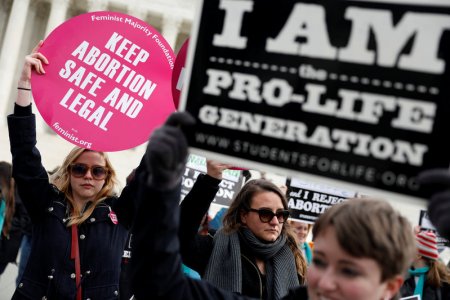
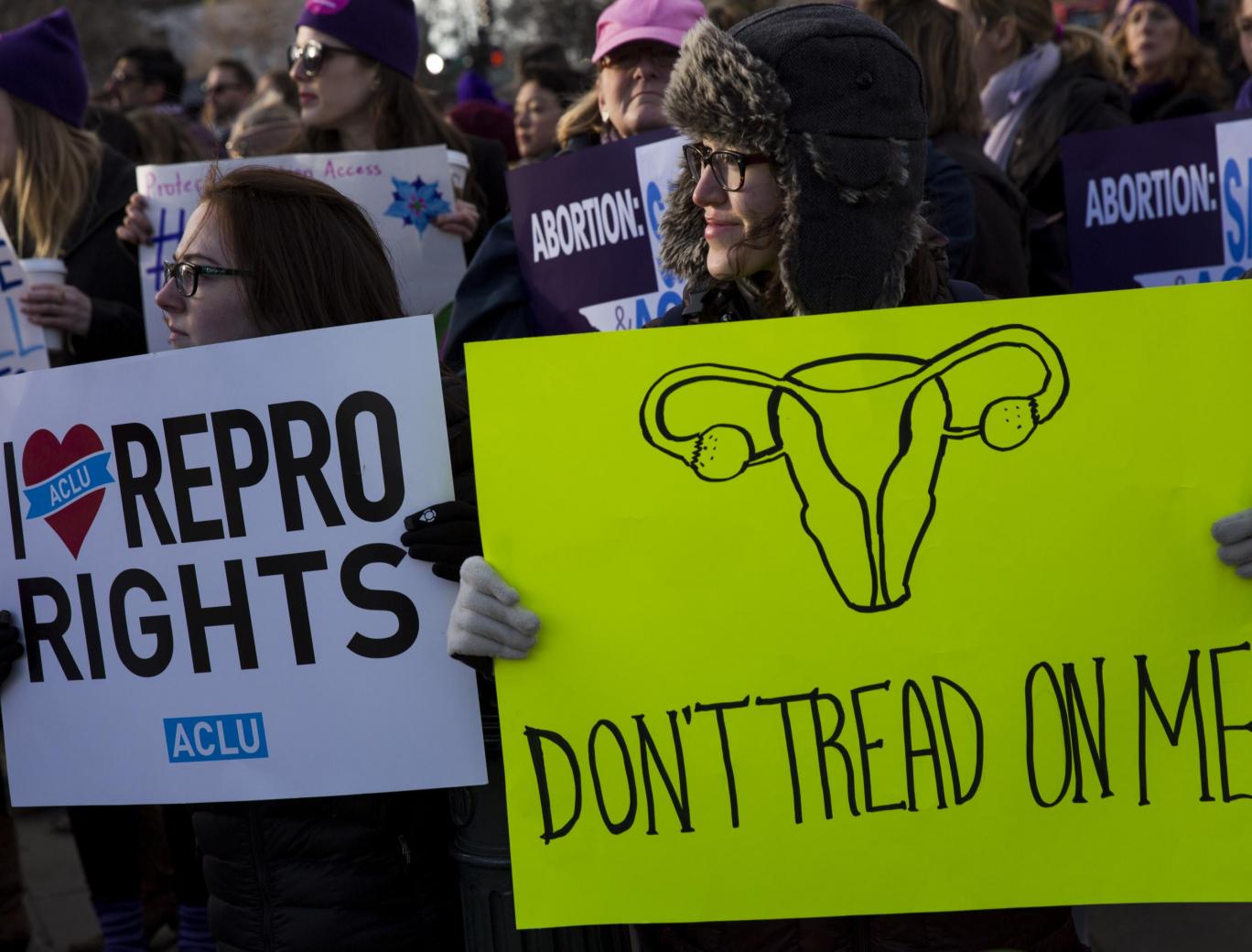
The FMF released a new report ahead of a nationwide protest of Planned Parenthood funding this weekend, which women’s health advocates worry will turn violent. At the “Defund PP” rally on Feb. 11, anti-abortion demonstrators are expected to protest at more than 200 Planned Parenthood health centers in 44 states.

“This weekend, Planned Parenthood is the target,” Smeal said. “The public must be aware that this is no ordinary protesting… This hostile climate at women’s health clinics and towards health care workers is accompanied by an increase in severe violence and threats.”

One of the organizers of the rally, Eric Scheidler of the Pro-Life Action League, said the concerns about violence are unwarranted.

“Of course we say on [our] website we oppose all forms of violence,” he said. “There’s a lot of hype in the media about violence at abortion clinics, but it’s in fact extremely rare. Generally speaking, the experience outside an abortion clinic is, if anything, boring.”

The Feminist Majority Foundation released a video Thursday alongside its 2016 violence report to shed light on the experience of “walking the gauntlet” to get into a women’s health clinic. Watch the video below:

11-feb-17

NEW YORK (Reuters) – Anti-abortion groups have called demonstrations at more than 200 Planned Parenthood locations throughout the United States on Saturday to urge Congress and President Donald Trump to strip the women’s health provider of federal funding.

Planned Parenthood supporters in turn have organized 150 counter-demonstrations outside politicians’ offices and government buildings.

Anti-abortion activists have said they were energized by the election of Republican Trump, who selected their long-time ally Mike Pence as vice president and nominated conservative jurist Neil Gorsuch to the U.S. Supreme Court.

On Jan. 27, tens of thousands converged on Washington for the 44th March for Life, where Pence became the most senior government official to speak in person at the annual anti-abortion rally, organizers said.

“We have the wind in our sails. The election was a real benchmark. Pro-life voters were really a key constituency and the Trump administration has taken note,” said Eric Scheidler, executive director of Pro-Life Action League, one of the main backers of Saturday’s demonstrations.

In Washington, demonstrators will meet at the Supreme Court and march to a Planned Parenthood location. Other demonstrations have been called in 45 states in cities large and small.

Planned Parenthood, a 100-year-old organization, provides birth control and other women’s health services in addition to abortion at 650 health centers, according to its website.

Its leaders say abortions rights supporters have also been energized by Trump’s election, as exemplified by the hundreds of thousands who flooded Washington a day after Trump’s inauguration in favor of women’s rights, including abortion rights.

The pro-Planned Parenthood events were organized spontaneously, without the group’s initiative, a spokeswoman said.

“All across the country, Planned Parenthood supporters are taking it upon themselves to organize in their communities on their own,” Kelley Robinson, a leader of Planned Parenthood Action Fund Support, said in a statement. “Saturday, and every day, Planned Parenthood advocates and activists show that they refuse to be intimidated and they won’t back down.”

Although U.S. law prohibits the use of federal funds for abortions, anti-abortion activists say funding for other purposes acts to subsidize abortions.

Planned Parenthood receives federal funds from Medicaid reimbursements and Title X, a federal program that supports family planning and preventive health services.

Planned Parenthood says cutting off those funds would make it more difficult for women to get birth control, Pap smears or testing for sexually transmitted diseases.

Source: Markets Insider

http://markets.businessinsider.com/news/stocks/r-activists-on-both-sides-of-abortion-issue-to-protest-across-us-2017-2-1001742648

27-october-post

(CNN)A new Arkansas law will let a husband sue a doctor to stop his wife from getting a particular type of abortion. And it makes no exception for cases of spousal rape.

The law, called the Arkansas Unborn Child Protection From Dismemberment Abortion Act, was passed and signed by Gov. Asa Hutchinson, and goes into effect later this year. It prohibits dismemberment abortion, the most common procedure used in second-trimester abortions.
A clause in the law states that the husband of a woman getting the abortion can sue the doctor to stop his wife’s abortion. The husband has to be the father of the child. And because there’s no exemption in the law for rape or incest, a woman’s rapist could theoretically file suit to stop the abortion.
The ACLU of Arkansas claims the law is unconstitutional and plans to challenge it in court before it goes into effect.
One Arkansas lawmaker said there wasn’t much debate about those parts of the law.
“It was not something that was talked about on the Senate floor,” state Sen. Joyce Elliott told CNN affiliate KARK. “If we cannot make headway on something like an exception for rape and incest, I think it just felt kind of fruitless to make some sense out of the rest of what was in the bill.”
Elliott added, “They don’t see the outrage in constantly putting the thumb on women to dictate what they can do and not do.”
But another lawmaker believes husbands should have a voice in these decisions.
“I think a woman does have control over her own body, but when you have created a life, you created a life with someone else,” said state Sen. Missy Irvin.
Kansas and Oklahoma passed similar abortion laws, which are tied up in the courts, according to CNN affiliate KFSM.
A few states, with conservative lawmakers emboldened by President Donald Trump’s election, have passed strict new abortion laws, including Ohio, which passed a measure banning abortion after 20 weeks of pregnancy.
Source: CNN

9-feb-17

Eight countries have joined an initiative to raise millions of dollars to replace shortfalls caused by President Donald Trump’s ban on US-funded groups around the world providing information on abortion, Sweden’s deputy prime minister said.

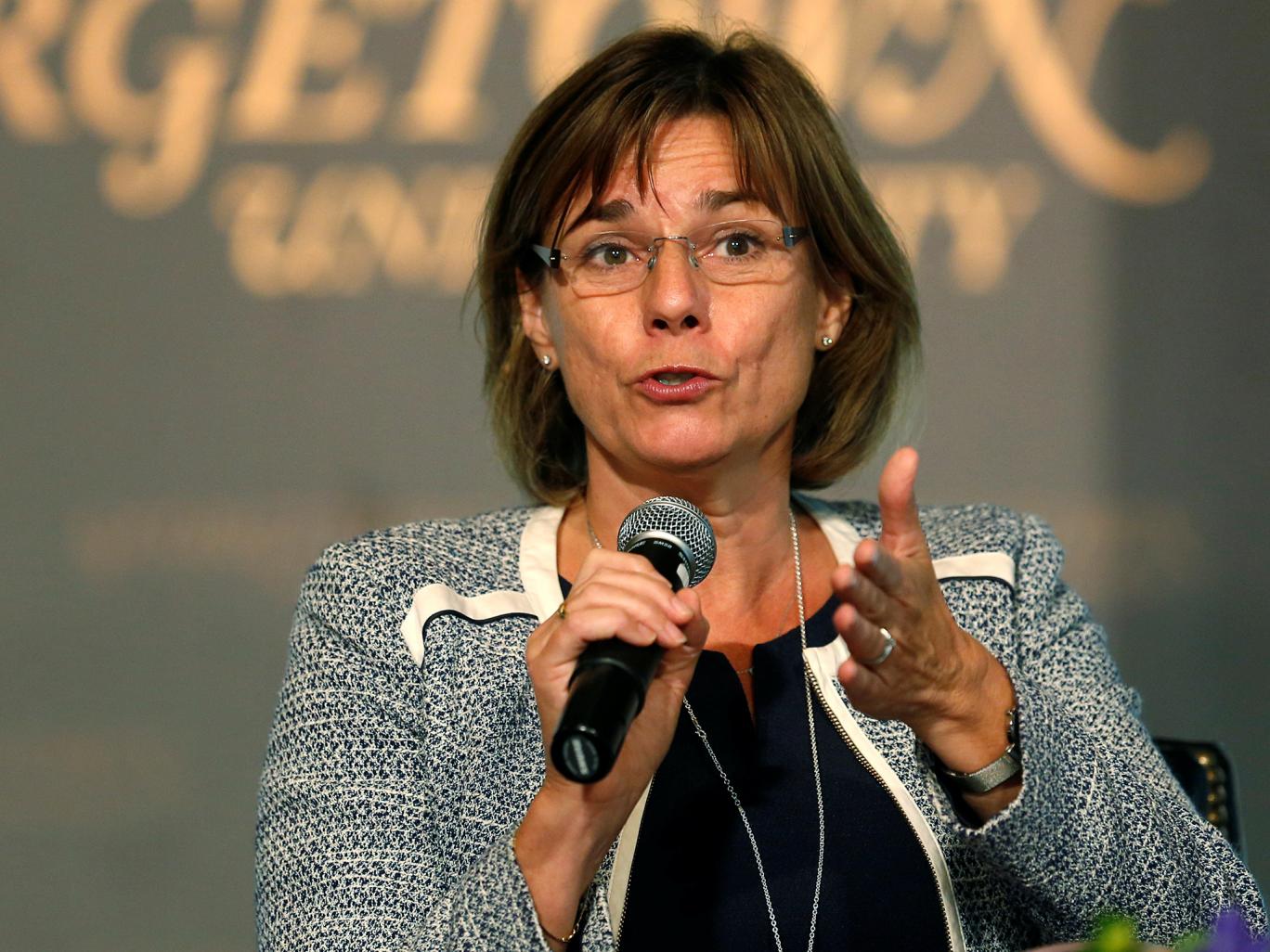
Isabella Lovin told Reuters a conference would be held on March 2 in Brussels to kick-start the funding initiative to help non-governmental organisations whose family planning projects could be affected.

The Netherlands announced in January the launch of a global fund to help women access abortion services, saying Trump’s “global gag rule” would cause a funding shortfall of $600 million over the next four years.

Sweden, Denmark, Belgium, Luxembourg, Finland, Canada and Cape Verde have all lent their support, Lovin said.

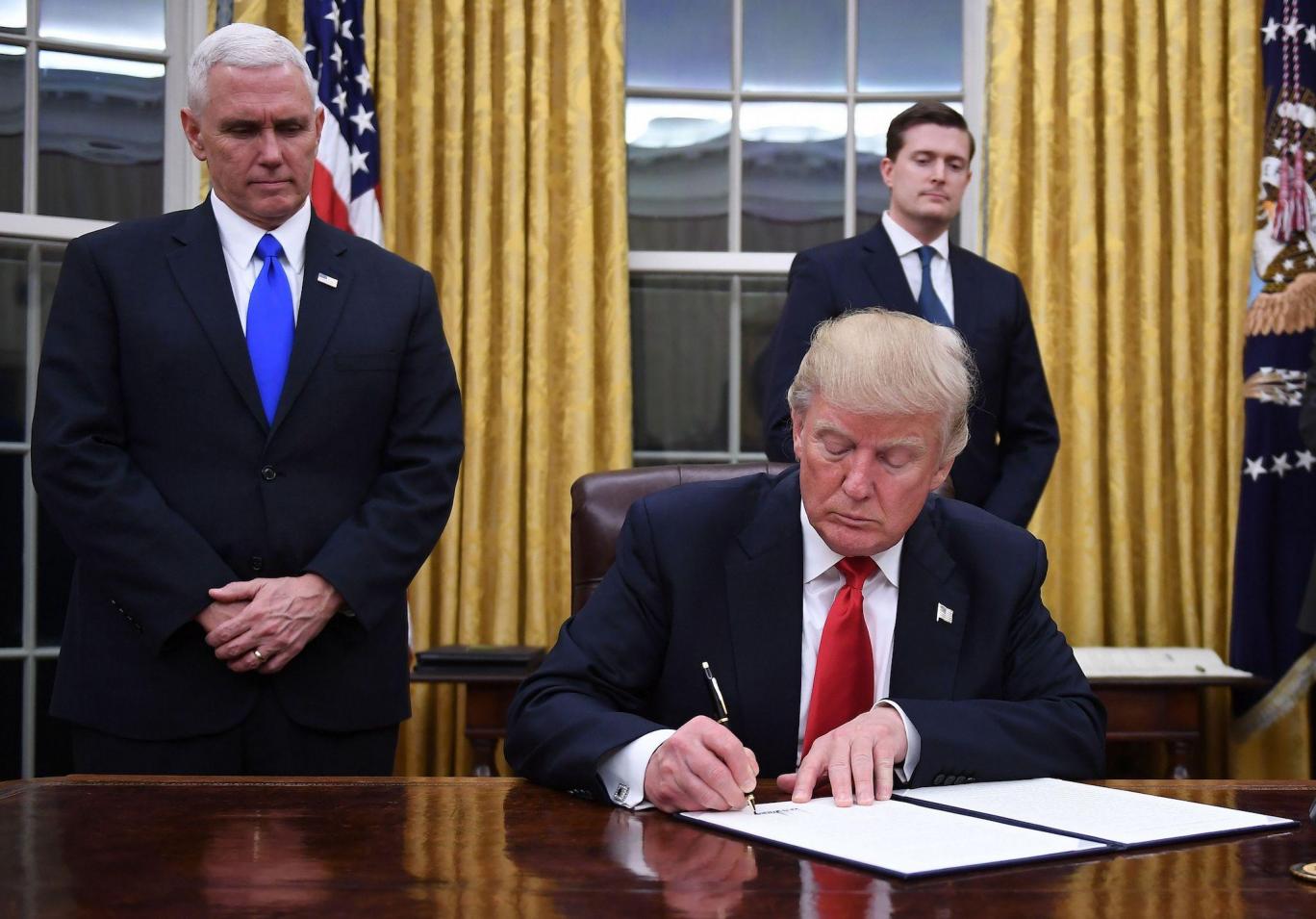
“(The gag order) could be so dangerous for so many women,” said Lovin who posed for a photograph this month with seven other female officials signing an environmental bill, in what was seen a response to a photograph of Trump signing the gag order in the White House with five male advisors.

The global gag rule, which affects US non-governmental organisations working abroad, is one that incoming presidents have used to signal their positions on abortion rights. It was created under US President Ronald Reagan in 1984.

Trump signed it at a ceremony in the White House on his fourth day in office. Barack Obama lifted the gag rule in 2009 when he took office.

“If women don’t have control over their bodies and their own fate it can have very serious consequences for global goals of gender rights and global poverty eradication,” Lovin said.

Source: Independent

http://www.independent.co.uk/news/world/europe/donald-trump-abortion-clinic-funding-cut-global-gag-rule-eight-countries-raise-money-sweden-a7570596.html

8-feb-17

Denmark announces ‘alliance of like-minded countries’ lobbying to support international aid providers after US President withdrew funding

An alliance of European countries is fighting to replace funds for family planning services following Donald Trump’s reinstatement of the “global gag rule” blocking US financing of groups that give women information about terminations.

Denmark’s development aid minister Ulla Toernaes said “an alliance of like-minded European countries” was lobbying the EU to support international aid providers after the US President withdrew funding.

Ms Toernaes said Denmark would give 75 million kroner (£8.6m) to organisations impacted by the US ban in a bid to “reduce the number of unwanted pregnancies, unsafe abortions and deaths due to pregnancy and childbirth”.

The countries involved in the alliance have not been revealed, but it comes just a month after the Dutch government announced a similar measure to finance access to birth control, abortion and education for women in developing countries.

Lilianne Ploumen, the Netherlands’ minister for foreign trade, announced the plan in response to the Donald Trump’s executive order, which was designed to restrict access to information on abortion for women who are in receipt of aid from international development groups.

Known as the Mexico City Policy or the “global gag” rule, the ban was one of Mr Trump’s first actions upon entering office last month.

The rule was first introduced in 1984 by Ronald Reagan. It has been retracted and reinstated numerous times since then by successive governments, with Democrats against the rule and Republicans in favour of it.

However, this time it has been put forward in its most extreme form yet, campaigners say, having been expanded to withdraw funding not only from reproductive health services but from an organisation’s entire health budget if they provide or offer information about abortion.

It also affects civil society programmes, such as contraception provision, and campaigns for LGBT communities and teenage girls and many fear it will have a devastating impact on work to combat HIV, Aids, cervical cancer and Zika.

Ms Ploumen said the Dutch fund could be supported by governments, businesses and social organisations concerned by the US President’s actions in order to “compensate this financial setback as much as possible”.

“This has far-reaching consequences. First of all, for all those women who have to make, if they want to have a child, a choice, but also for their husbands and children and society as a whole,” she said.

“Banning abortion does not lead to fewer abortions. It leads to more irresponsible practices in back rooms and more maternal deaths.”

She also quoted figures from Marie Stopes International, one group which would lose funding under the initiative, suggesting up to 14 women a day could die as a result.

The policy has been criticised by many women’s rights and healthcare groups who fear the lives of women and girls may be put at risk by the policy, either due to continuing risky pregnancies or attempting to perform terminations dangerously.

According to the World Health Organisation, 47,000 women die from complications of unsafe abortion each year, one of the five main causes of maternal mortality worldwide.

Source: Independent

http://www.independent.co.uk/news/world/europe/europe-unites-denmark-netherlands-international-abortion-groups-donald-trump-aid-ban-global-gag-rule-a7568051.html

7-feb-17

Who will be affected?

The primary victims of defunding Planned Parenthood would be women of reproductive age who are on Medicaid, which is the largest source of reproductive health care coverage in the U.S. The Kaiser Family Foundation reported that 17% of all women ages 19-64 are on Medicaid as of 2015, and the insurance provider finances almost half of all U.S. births and 75% of publicly-funded family planning services.

Revoking Medicaid coverage would particularly impact women of color. A 2012 Kaiser study revealed that while only 9% of white women are covered by Medicaid, the insurer covers 21% of African-American women, 18% of Hispanic women, 22% of Native American/Alaskan Native women and 10% of Asian/Pacific Islander women.

Similarly, women who take advantage of Title X programs — who, the National Abortion and Reproductive Rights Action League reported, are often ineligible for Medicaid — are also disproportionately women of color. While African-American and Hispanic women make up 13% and 17% of the total population, respectively, they make up 21% and 30% of all Title X clients, NARAL reported.

Planned Parenthood is not the only publicly funded family planning clinic for these low-income women, but it is the one they depend on the most. Though Planned Parenthood clinics only make up 11% of all publicly-funded family planning health centers, the organization reports that they provide services to 36% of women who need publicly-funded care.

Opponents of Planned Parenthood have pointed to these other clinics as an alternative for low-income women seeking care. That solution, however, seems to be untenable in reality. Funding cuts to Title X have already forced many public clinics to close or reduce their hours, and community health centers, Health Affairs Blog noted, are unprepared to deal with an influx of Planned Parenthood patients and also provide other services that prevent them from dedicating more resources to women’s health.

In many areas, there aren’t many other alternatives to Planned Parenthood to begin with.

“I think the notion that people would automatically have another provider is erroneous,” Planned Parenthood Michigan President and CEO Lori Carpentier told an ABC affiliate in her home state. “By definition, Planned Parenthood’s work to place their health centers in areas where patients are often under served, especially patients who utilize the Medicaid program, so the notion that people can [go] elsewhere is just wrong, so many people will go without care.”

Any possible alternatives Republicans have in mind might also be woefully unequipped to provide reproductive care services. When the state of Louisiana attempted to strip the organization’s funding, the list of alternative providers their attorneys drew up included such inappropriate suggestions as dentists, cosmetic surgeons and nursing home caregivers.

The personal cost of defunding

The greatest impact defunding Planned Parenthood will have, of course, is on the lives of the women it helps. The organization revealed that in 2010, publicly funded family planning services helped to prevent two million pregnancies, and both abortion and unintended pregnancy rates would have been 68% higher without its help.

States that have already made the choice to defund Planned Parenthood have illustrated how disastrous this move can be. Texas, most notably, severely cut its family planning funding and de-prioritized Planned Parenthood in 2011 before going on to completely cut Medicaid funding for the organization in 2013 — and the effects were devastating.

A study published in the New England Journal of Medicine revealed that after Texas excluded Planned Parenthood from its funding, the number of requests for long-acting reversible contraceptive methods, such as IUDs, decreased dramatically in counties that had Planned Parenthood clinics, while the number of childbirths increased among women who previously used these contraceptive methods before the funding cuts.

A separate study published in the American Journal of Public Health found that women’s health organizations served 54% fewer clients in 2012-2013 than they did in 2011, prior to the funding cuts. Title X clinics, such as Planned Parenthood, are also notable in that they allow underage women to obtain care without parental consent or notification, as well as provide coverage to undocumented immigrants. Without this federal funding, the study noted, teenagers and immigrants have fewer options for care.

An analysis conducted by the state’s government, similarly, projected that 283,909 women would lose access to family planning services in 2012-2013 and there would be an additional 20,511 births. Most dramatically, a study published in Obstetrics & Gynecology revealed that the maternal mortality rate in Texas doubled following their funding cuts.

Texas restored much of its funding in 2013, but its effects are still felt by Texan women seeking care. A May 2015 study by the Texas Policy Evaluation Project revealed 55% of women in the state have at least one barrier preventing them from accessing reproductive health care. A January 2016 NPR article reports that only 22% of women who qualify for subsidized women’s health care actually receive it.

Other states, too, have paid a harsh price for their efforts to combat Planned Parenthood. When Kansas took steps to defund Planned Parenthood in 2014 through Title X funding, the number of residents receiving Title X services decreased by 37%. In Indiana, Vice President Mike Pence slashed Planned Parenthood’s funding as governor — and it resulted in a massive HIV epidemic.

Economic impact of defunding

In addition to the personal cost faced by Planned Parenthood’s low-income patients, defunding Planned Parenthood has an economic cost. For every $1 invested in federal family planning services, the Guttmacher Institute revealed that the American taxpayer saves $4 in unintended pregnancy Medicaid costs and $7 in total costs, which includes not only pregnancy and birth costs, but also such costs from such conditions as cervical cancer, HIV and sexually transmitted diseases and infertility.

In total, family planning services save taxpayers $13.6 billion. A 2015 study by the Congressional Budget Office concluded that because of the additional costs that would be incurred by the higher birth rate among women with Medicaid, permanently defunding Planned Parenthood would increase Medicaid spending by $130 million over a ten-year period.

Republican legislators now have to ask themselves: Is denying health care to millions of women worth the cost?

Source: MIC

https://mic.com/articles/167625/this-is-what-happens-once-you-ve-defunded-planned-parenthood#.JsiqNFTBo

6-feb-17

One of the first ways a new president is able to exercise political power is through unilateral executive orders.

While legislative efforts take time, a swipe of the pen from the White House can often enact broad changes in government policy and practice.

President Donald Trump has wasted little time in taking advantage of this privilege.

Given his predecessor’s reliance on executive orders to circumvent Congress in the later days of his presidency, he has a broad range of areas in which to flex his muscle.

Here’s a look at some of what Mr Trump has done so far:

Business regulations

An attempt to cut down on the burden of small businesses.

Described as a “two-out, one-in” approach, the order asked government departments that request a new regulation to specify two other regulations they will drop.

The Office of Management and Budget (OMB) will manage the regulations and is expected to be led by the Republican Mick Mulvaney.

Some categories of regulation will be exempt from the “two-out, one-in” clause – such as those dealing with the military and national security and “any other category of regulations exempted by the Director”.

Immediate impact: Wait and see.

Travel ban

Probably his most controversial action, so far, taken to keep the country safe from terrorists, the president said.

It included:

  • suspension of refugee programme for 120 days, and cap on 2017 numbers
  • indefinite ban on Syrian refugees
  • ban on anyone arriving from seven Muslim-majority countries, with certain exceptions
  • cap of 50,000 refugees

The effect was felt at airports in the US and around the world as people were stopped boarding US-bound flights or held when they landed in the US.

Immediate impact: Enacted pretty much straight away. But there are battles ahead. Federal judges brought a halt to deportations, and legal rulings appear to have put an end to the travel ban – much to the president’s displeasure.

Border security

On Mr Trump’s first day as a presidential candidate in June 2015, he made securing the border with Mexico a priority.

He pledged repeatedly at rallies to “build the wall” along the southern border, saying it would be “big, beautiful, and powerful”.

Now he has signed a pair of executive orders designed to fulfil that campaign promise.

One order declares that the US will create “a contiguous, physical wall or other similarly secure, contiguous, and impassable physical barrier”.

The second order pledges to hire 10,000 more immigration officers, and to revoke federal grant money from so-called “sanctuary cities” which refuse to deport undocumented immigrants.

It remains to be seen how Mr Trump will pay for the wall, although he has repeatedly insisted that it will be fully paid for by the Mexican government, despite their leaders saying otherwise.

Steps before building can start

Immediate impact: The Department of Homeland Security has a “small” amount of money available (about $100m) to use immediately, but that won’t get them very far. Construction of the wall will cost billions of dollars – money that Congress will need to approve. Senator Majority Leader Mitch McConnell has said the Republican-led Congress will need to come up with $12-$15bn more, and the funding fight – and any construction – will come up against issues with harsh terrain, private land owners and opposition from both Democrats and some Republicans.

The department will also need additional funds from Congress to hire more immigration officers, but the order will direct the head of the agency to start changing deportation priorities. Cities targeted by the threat to remove federal grants will likely build legal challenges, but without a court injunction, the money can be removed.

Two orders, two pipelines

On his second full working day, the president signed two orders to advance construction of two controversial pipelines – the Keystone XL and Dakota Access.

Mr Trump told reporters the terms of both deals would be renegotiated, and using American steel was a requirement.

Keystone, a 1,179-mile (1,897km) pipeline running from Canada to US refineries in the Gulf Coast, was halted by President Barack Obama in 2015 due to concerns over the message it would send about climate change.

The second pipeline was halted last year as the Army looked at other routes, amid huge protests by the Standing Rock Sioux Tribe at a North Dakota site.

Steps before it can happen

Immediate impact: TransCanada, the Keystone XL builder, has resubmitted their permit proposal, but the project will likely attract legal battles on the state level. The Army Corps of Engineers will continue its review of the Dakota Access pipeline route, but the executive order could speed up the process – and set the stage for a final route approval by a political appointee.

Instructing federal agencies to weaken Obamacare

In one of his first actions as president, Mr Trump issued a multi-paragraph directive to the Department of Health and Human Services and other federal agencies involved in managing the nation’s healthcare system.

The order states that agencies must “waive, defer, grant exemptions from, or delay” any portions of the Affordable Care Act that creates financial burden on states, individuals or healthcare providers.

Although the order technically does not authorise any powers the executive agencies do not already have, it’s viewed as a clear signal that the Trump administration will be rolling back Obama-era healthcare regulations wherever possible.

Steps before it can happen

Immediate impact: Not much, unless it’s interpreted very broadly by the new Health Secretary and individual states. But it’s probably more likely to influence how Congress proceeds with its repeal efforts.

Re-instating a ban on international abortion counselling

What’s called the Mexico City policy, first implemented in 1984 under Republican President Ronald Reagan, prevents foreign non-governmental organisations that receive any US cash from “providing counselling or referrals for abortion or advocating for access to abortion services in their country”, even if they do so with other funding.

The ban, derided as a “global gag rule” by its critics, has been the subject of a political tug-of-war ever since its inception, with every Democratic president rescinding the measure, and every Republican bringing it back.

Anti-abortion activists expected Mr Trump to act quickly on this – and he didn’t disappoint them.

Immediate impact: The policy will come into force as soon as the Secretaries of State and Heath write an implementation plan and apply to both renewals and new grants. It will be much broader than the last time the rule was in place – the Guttmacher Institute, Kaiser Family Foundation and Population Action International believe the order, as written, will apply to all global health funding by the US, instead of only reproductive health or family planning.

Freezing federal government hiring

On Mr Trump’s first full workday in the White House he issued a directive to federal agencies to halt any new government hiring.

He told reporters who had gathered for the signing that the freeze would not affect military spending.

The directive is part of Mr Trump’s effort to reduce government debts and decrease the size of the federal workforce.

During his campaign, he frequently railed against government bureaucracy, and vowed to “drain the swamp” of corrupt governance.

Immediate impact: A hiring freeze is immediate, and is expected to last 90 days. The order allows exceptions under broad categories, including military, public safety, as well as case by case exceptions by the Office of Management and Budget.

Withdrawing from the Trans-Pacific Partnership

The Trans-Pacific Partnership, once viewed as the crown jewel of Barack Obama’s international trade policy, was a regular punching bag for Mr Trump on the campaign trail (although he at times seemed uncertain about what nations were actually involved).

The deal was never approved by Congress so it had yet to go into effect in the US.

Therefore the formal “withdrawal” is more akin to a decision on the part of the US to end ongoing international negotiations and let the deal wither and die.

Immediate impact: Takes effect immediately. In the meantime, some experts are worried China will seek to replace itself in the deal or add TPP nations to its own free trade negotiations, the Regional Comprehensive Economic Partnership (RCEP), excluding the US.

Source: BBC

http://www.bbc.com/news/world-us-canada-38695593

5-feb-17

This is ending a wanted pregnancy.  This is late-term abortion. It was not wanted. It was not a ‘way out’. It was not birth control.”

A DEVASTATED mum has shared the story of her “late-term abortion” to silence critics who don’t believe in a woman’s right to choose.

Lindsey Paradiso, a photographer based in Virginia, was delighted when she learned she would be having a baby with her husband, Matt.

The couple were delighted when they learned they were having a baby, but the pregnancy ended in heartbreak

But the pregnancy ended in heartbreak, after Lindsey discovered at 18 weeks that something wasn’t right with her daughter Omara.

A routine ultrasound revealed a mass on the baby’s neck, which doctors believed was a rare tumour called a teratoma.

The devastated mum continued with the pregnancy, in the hope that doctors could operate at 27 weeks to remove the tumour and safely deliver the baby, once it had grown enough to survive the procedure.

To the couple’s horror, scans revealed that the baby’s tumour was aggressively growing

But weeks later it became apparent that this was no longer an option, when an MRI scan confirmed that the tumour had tripled in size and was growing all over her baby’s body.

Checking with doctors all over the state revealed that the chance of Omara’s survival had plummeted to less than 1%, with the tumour aggressively growing in her brain.

Doctors believed that the tumour would kill Omara before she reached 27 weeks, at which point the growth would be too large for Lindsey to give birth without surgery.

The couple live in one of many American states with restrictive laws on abortion.

Lindsey said: “I was willing to risk never having kids again with the procedure if it meant Omi could survive, but now that we knew she would probably die before viability, the thought of also being infertile was too much for us.”

The couple chose to have a lethal injection administered to the baby, at which point labour could be induced.

After an induced and painful labour, Lindsey gave birth to her daughter in hospital.

Lindsay said: “Our hospital couldn’t do it, so we traveled about an hour away — and we were lucky, because a lot of parts of Virginia are very restrictive.

“I was in labour for 40 hours, it was so painful and exhausting but I wanted to deliver my daughter so I could hold her and say goodbye.”

Like many American states, Virginia has restrictive abortion laws, which mean it can be hard for women to terminate pregnancies without exceptional circumstances.

The couple had a lethal injection administered before labour was induced

Fearing that reproductive rights would be threatened further under pro-life Donald Trump’s Presidency, Lindsey found the courage to share her story in an attempt to clarify what late-term abortion really is.

A viral Facebook post, which she recently re-shared, details her heartbreaking story, complete with photos of her daughter after the procedure.

Lindsey wrote: “This is ending a wanted pregnancy.  This is late-term abortion.

“It was not wanted. It was not a ‘way out’. It was not birth control.

“The government does not belong here.”

Lindsey’s story went viral after she shared her experiences on Facebook

Lindsey shared her heartbreaking story to raise awareness of the need for more reproductive rights

Source: The Sun

https://www.thesun.co.uk/living/2789427/heartbroken-woman-who-had-abortion-at-23-weeks-shares-her-story-in-response-to-donald-trumps-pro-life-stance/

3-feb-17

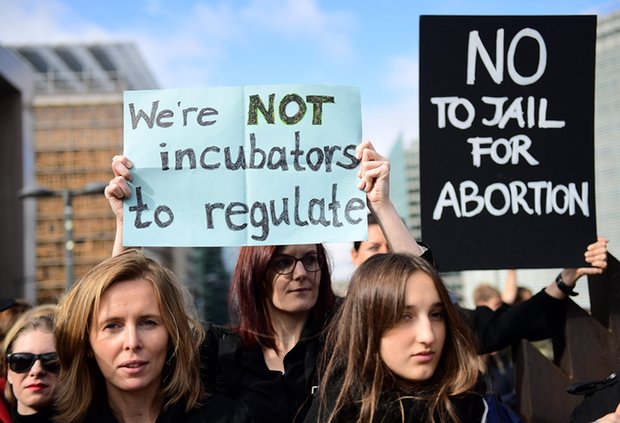
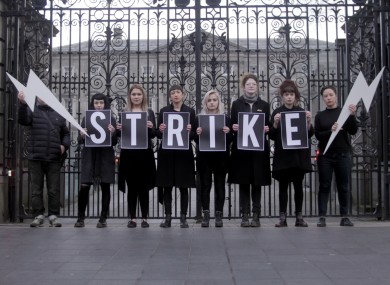
VARIOUS GROUPS REPRESENTING feminist and pro-choice activists are supporting a threat to strike unless a referendum on the Eighth Amendment is called by the government by the 8 March.

‘Strike 4 Repeal’ describe themselves as an “ad-hoc, non-affiliated group of activists, academics, artists and trade unionists”; the groups supporting the strike include the Abortion Rights Campaign, Outhouse, the Anti-Racism Network and Sex Workers Alliance Ireland.

Various college pro-choice groups and feminist societies are also in support.

In a statement, Strike 4 Repeal said the strike would not be an industrial strike in the traditional sense.

[It] could include taking an annual leave day off work, refraining from domestic work for the day, wearing black in solidarity and staging a walkout during your lunch break.
We ask business owners to consider closing their services for all or part of the day as a solidarity action.

Spokesperson Avril Corroon says “We share the concern of many pro-choice groups that the Citizen’s Assembly is no more than a hollow pretense of progress”.

Aoife Frances says that they “believe a national strike is not only possible, but an incredible opportunity to show the sheer power of our movement, and to put pressure on the government to call a referendum.

“In the past five years, support for repeal has grown to a level that the government can no longer ignore.”

In Ireland, the result of a referendum must be then passed into law by government.

Source: The Journal IE

http://www.thejournal.ie/abortion-strike-3200038-Jan2017/