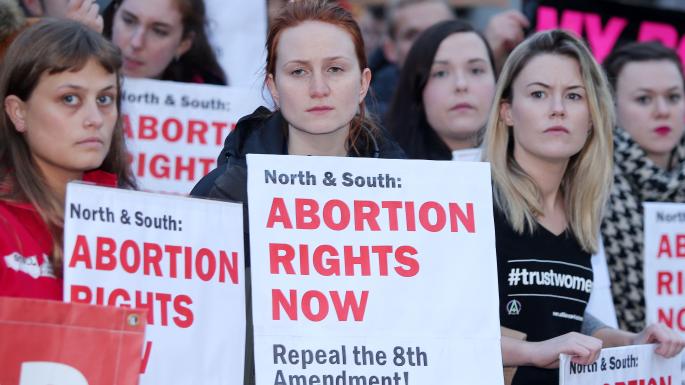
Hundreds of thousands of women gathered in Washington in a kind of counterinauguration after President Trump took office on Friday.

• They were joined by crowds in cities across: In Chicago, the size of a rally so quickly outgrew early estimates that the march that was to follow was canceled for safety. In Manhattan, Fifth Avenue became a river of pink hats, while in downtown Los Angeles, even before the gathering crowd stretched itself out to march, it was more than a quarter mile deep on several streets.

• Begun as a Facebook post just after the election, the march is the start of what organizers hope could be a sustained campaign of protest in a polarized America, unifying demonstrators around issues like reproductive rights, immigration and civil rights. The movement has also encountereddivisions.

Source: The New York Times

20-jan-17

Cabinet approval has been sought to legalize abortions in the instances of rape and incest, underage pregnancies (pregnancy occurring in a girl below 16) and serious foetal impairment, it is learnt.

For this purpose, the government is seeking to draft separate legislations as amendments to the Penal Code and to the Code of Criminal Procedure Act to provide for it.

The Justice Ministry has initiated action in this regard in pursuant to the recommendations on decriminalization of abortion by the Committee on GSP plus and another committee headed by Prof. Savitri Goonesekere. In a report submitted to the Cabinet seeking amendments to the existing laws, recommendations have been made in this respect.

The committee has identified that a similar attempt to decriminalize abortions in such cases in 1995 by introducing a bill. However it was withdrawn due to objections and protests. Currently, abortion or termination of pregnancies is criminalized in the Penal Code except in instances where the mental; and physical well-being of a woman concerned is affected.

The Cabinet report says that septic abortions remain a leading cause of maternal deaths. It says 90 per cent of abortions are performed on married women, and 8.9 percent on unmarried women.

Section 303 of the Penal Code says, “Whoever voluntarily causes a woman with child to miscarry shall, if such miscarriage be not caused in good faith for the purpose of saving the life of the woman , be punished with imprisonment of either description for a term which may extend to three years, or with fine or with both, and if the woman be quick with child, shall be punished with imprisonment of either description for a term which may extend to seven years , and also be liable to fine.”

Source: Daily Mirror

http://www.dailymirror.lk/article/Cabinet-approval-sought-to-legalize-abortions-122469.html

19-jan-2017

On Thursday, Iowa’s Republican Representative Steve King introduced a bill in Congress that would constitute a total abortion ban on a federal level, Rewire reports.

H.R. 490 (legislative text found here) would prohibit abortions as soon as a fetal heartbeat is detected. This can occur as early as six weeks into a pregnancy — a time period before many women know they’re pregnant.

“Since Roe v. Wade was unconstitutionally decided in 1973, nearly 60 million innocent babies’ lives have been ended by the abortion industry, all with a rubber stamp by the federal government,” King said in a Thursday press release from his office. “If a heartbeat is detected, the baby is protected.”

King reportedly worked on the bill with Janet Porter of Faith2Action; per Right Wing Watch, Porter said that “when she recently attended Phyllis Schlafly’s funeral, she was able to speak with King and convince him to introduce a federal version of her bill.”*

H.R. 490 is similar to the Ohio’s “heartbeat bill,” which failed when Governor John Kasich vetoed the portion that would restrict abortion at six weeks (a 20-week ban was still instituted).

As for H.R. 490, it’s unlikely that it will pass in the House and far more unlikely that it would in the Senate. But even the introduction of such extreme legislation points to the increased attempts to dismantle Roe v. Wade we’ll see on a federal level under this administration.

http://nymag.com/thecut/2017/01/new-heartbeat-bill-in-congress-would-constitute-a-total-abortion-ban.html

Source: NY Mag

24-dec

Northern Territory women should be able to get abortions at any stage of their pregnancy, without needing a doctor’s approval, a legal rights advocacy group has said.

The recommendation is one of several made by the Human Rights Law Centre (HRLC) in its response to the NT Government’s proposed pregnancy termination law reforms.

The Government is proposing changes including making it easier to get medical abortions, and requiring women to get counselling on their choices before accessing terminations.

The HRLC submission is broadly supportive of the changes.

But it said the Government’s changes would not alter the present law that forbids a woman to get an abortion after 23 weeks unless it would save her life.

HRLC legal advocacy director Adrianne Walters said that stipulation should be changed.

“What that means is that a woman who has been told that her foetus has a fatal abnormality and won’t survive, she doesn’t have any option — she has to keep the pregnancy,” Ms Walters said.

“If a woman was raped and she’s 24 weeks pregnant and she’s seeking an abortion — the law as it currently stands wouldn’t let her have that.”

The submission makes clear women should have the right to an abortion at any stage of pregnancy, without needing approval.

But it goes on to recommend that if doctor approval is made mandatory, that limit should not apply before 24 weeks.

It recommended the law should allow doctors the discretion to consider broader factors for abortions after 24 weeks, including a woman’s psychological and social circumstances.

“It’s important to bear in mind abortions after 20 weeks are extremely rare — around 1 to 2 per cent nationally — and they often occur in situations that are highly distressing,” Ms Walters said.

“It’s important that the law is broad and accounts for the all the situations that women might find themselves in.”

She disagreed that lobbying for women’s rights to get an abortion at any stage of their pregnancy risked putting off some who supported smaller changes to widen access.

“There’s a model in the ACT that doesn’t require women to have to justify their decision making,” she said.

“It has abortion regulated as any other medical procedure and that operates effectively in the ACT.”

Source: ABC AU

http://www.abc.net.au/news/2017-01-18/calls-for-nt-to-allow-abortion-at-any-stage-of-pregnancy/8192426

17-jan-17

“No man has the right to give his opinion on abortion,” controversial PN candidate Salvu Mallia said on INDEPTH.

Interviewed by The Malta Independent news editor Rachel Attard, Mr Mallia said that, “I should have never pronounced myself against abortion because I am not a woman. The issue of abortion is an issue that only women should speak about.”

Mr Mallia said that abortion is an issue that concerns the woman and the foetus, and the man should have no say in the matter or interfere in the decision. Mr Mallia said that women should stop allowing men to get involved in what is a woman’s right.

Salvu Mallia was confirmed as a PN candidate for the upcoming general elections during a meeting of the Executive Council that was held last October. He will contest the 2nd and 12th electoral districts.

http://www.independent.com.mt/articles/2017-01-17/blogs-opinions/INDEPTH-Salvu-Mallia-does-not-regret-comparing-Muscat-to-Hitler-6736169001

Source: The Independent MT

16-jan-17

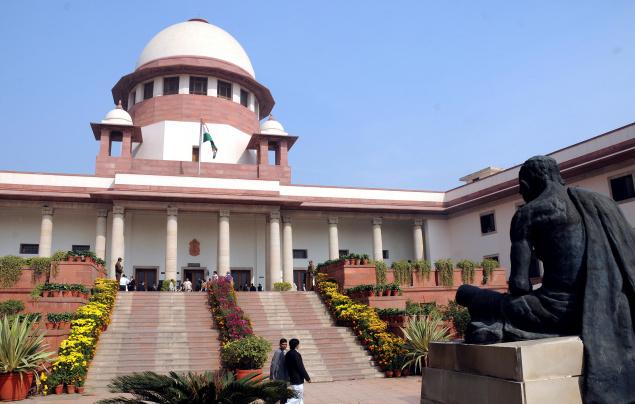
MUMBAI: The Supreme Court permitted a 22-year-old woman in her 24th week of pregnancy to undergo termination of pregnancy after medical reports found the foetus to be without a skull.

The woman had found out about the defect in the 21st week of gestation when she had a sonography done at a private clinic in the western suburbs of Mumbai.

Under the Medical Termination of Pregnancy Act, 1971, abortion is legal in India only up to 20 weeks of pregnancy provided it involves a risk to the life of the pregnant woman or poses a threat of grave injury to physical or mental health, or involves a substantial risk that if the child were born it would suffer from such physical or mental abnormalities.

Recently, in a rare judgment, the Supreme Court permitted a rape survivor to terminate her pregnancy at 24 weeks.

The Supreme Court had asked the same committee of doctors from KEM Hospital that had given its opinion in the rape survivor’s case in July 2016, to look into the current case.

An amendment drafted in 2014 to a 1971 Act sought to increase the abortion time limit from 20 weeks to 24 weeks. Additionally, the draft bill also recommends that termination be allowed without a time limit in cases where doctors detect a foetal anomaly.

http://www.newindianexpress.com/nation/2017/jan/16/supreme-court-permits-termination-of-pregnancy-at-24-weeks-1560127.html

Source: New Indian Expres

14-jan-17

A move to legalise access to abortion for women who experience fatal foetal abnormalities in Northern Ireland will not be considered because of the collapse of the assembly, the Stormont health minister has said.

Sinn Fein has said it will prioritise increasing abortion access and other equality issues if it is in talks with the DUP after a likely election this year.

Abortion is banned in Northern Ireland in all but a small number of circumstances. In December 2015, the Belfast high court ruled that denying access to the procedure in cases of rape, incest and fatal foetal abnormalities was a breach of human rights.

David Ford, who was justice minister at the time, ruled out legislating for terminations for victims of sexual crime but tried to progress a bill for women who experienced fatal foetal abnormalities. An expert group was also established last year to consider the possible change in the law.

If the assembly is dissolved ministers will no longer be able to consider the possible change in the law from the expert commission or Mr Ford’s bill.

“I indicated previously that I would work with the justice minister to bring forward proposals in the new year for consideration by the [ministerial] executive, taking account of the findings of the fatal foetal abnormality working group,” Michelle O’Neill, the Sinn Fein MLA and health minister, said.

“The current situation is that there is no longer an executive in place to consider those proposals, as a result of the fallout over the renewable heat incentive controversy.”

Unlike the Republic, abortion rights could be extended in Northern Ireland through a straightforward legal change without the need for a referendum.

A Sinn Fein spokesman yesterday told The Times that the party would push for legislative changes if it is in talks to form the next Northern Irish government.

The party had said last week that Mr McGuinness’s resignation was partly due to the DUP’s reluctance to progress issues such as abortion and marriage equality.

“The apparent collapse of the executive means that there is now no end in sight to the trauma inflicted on women with fatal foetal diagnoses of being forced to travel to England to seek lawful abortion,” Patrick Corrigan, Amnesty International’s Northern Ireland programme director, said.

“Whoever is in ministerial office after the election must address this disgraceful situation and also that of other women left with a choice between boarding a plane or facing prosecution simply for seeking healthcare available on the NHS in every other part of the UK.”

Northern Ireland has a vocal anti-abortion lobby and Stormont has previously rejected calls to relax abortion laws. Jim Wells, the former DUP health minister, welcomed the delay in considering new abortion legislation.

“The minister is saying that she cannot take this issue forward because there is currently no executive to refer it to,” he said. “If the executive returns then the issue may come back on to the table as it were. I believe that there is no need whatsoever for any change in the current law on abortion in Northern Ireland.”

The 1967 UK Abortion Act effectively made the procedure available to any woman who needed it after a spate of deaths from backstreet terminations. The act was never extended to Northern Ireland, which is still regulated under the 1861 Offences Against the Person Act.

The Republic had operated under the same law until the 2013 Protection of Life During Pregnancy Act was passed which clarified how suicidal women could access a termination.

Performing the procedure or procuring an abortion is punishable by a criminal conviction in both jurisdictions.

Three women have appeared before the courts in Northern Ireland in the last year facing charges relating to ordering abortion pills online.

The most recent case involves a 21-year-old woman and a 22-year-old man. This week, Belfast high court was told that the woman accused of taking drugs to induce a miscarriage would be at heightened risk of suicide if she was identified.

http://www.thetimes.co.uk/edition/ireland/abortion-rights-on-hold-in-stormont-turmoil-ztpp6jk7t

Source: The Times

7-nov

A federal appeals court has upheld a New Hampshire law allowing buffer zones around abortion clinics that supporters say protect women from harassment.

The law allowing buffer zones up to 25 feet has been on New Hampshire’s books since 2014, but no clinic has set up a buffer zone.

The 1st U.S. Circuit Court of Appeals in Boston said in its Wednesday ruling that anti-abortion activists had no standing to challenge the constitutionality of the law because with no buffer zones in place, their protests have not been affected. It said the case was premature.

“The act is not currently preventing the plaintiffs from engaging in expressive activities in whatever public areas they please,” the court wrote.

The court also rejected allegations that the challenge was valid based on fears that protesters could be prosecuted someday if the zones are set up. The ruling called the arguments “overly speculative allegations of injury.”

While supporters say the zones protect women, opponents say they infringe on their free speech rights. An attorney for the plaintiffs said Thursday the group would decide whether to appeal to the Supreme Court.

“An unconstitutional law shouldn’t remain on the books just because abortionists haven’t taken advantage of the power the law gives them to silence speech,” said attorney Michael Tierney.

The Supreme Court struck down a similar law in Massachusetts shortly after New Hampshire’s law took effect. But unlike the Massachusetts law, New Hampshire’s law does not mandate the buffer zones.

Jennifer Frizzell, vice president for public policy at Planned Parenthood New Hampshire Action Fund, called the ruling good news for women seeking reproductive health care in New Hampshire. She said she hopes lawmakers considering proposals to repeal the law will keep it in mind.

“No one should face violence, harassment, or threats when accessing safe, legal health care. New Hampshire women deserve safe passage when entering or exiting reproductive health care facilities,” she said. “Yesterday’s decision preserves the thoughtful law crafted by the (New Hampshire) legislature ….”

Source: ASSOCIATED PRESS

http://abcnews.go.com/Health/wireStory/court-upholds-states-law-buffers-abortion-clinics-44739983


Court rulings in several states have created a patchwork when it comes to what jail and prison administrators are required to do when a woman inmate requests an abortion. Here’s a look at four of the cases that presented that question. Video by Stacey Barchenger / The Tennessean. Wochit

  • A woman has filed a federal lawsuit in Nashville against Maury County Sheriff Bucky Rowland.
  • The woman says she was denied an abortion while in custody, in violation of her constitutional rights.
  • She had the child in April and wants a judge to order the sheriff to pay damages of $1.5 million.
  • Courts have generally recognized an inmate’s right to an abortion, but there is still some gray area.

12-jan-17

A Tennessee sheriff is named in a civil lawsuit after he denied a 29-year-old inmate access to an abortion, saying the woman’s life was not in danger and her pregnancy was not the result of a crime, according to newly filed court papers.

The woman, Kei’Choura Cathey, was not released until it was too late for the procedure and had the child in April, the court filing says. Her lawsuit alleges Maury County Sheriff Bucky Rowland illegally denied her access to an abortion, which the nation’s top court has protected as a woman’s right for decades.

The case, and others around the country, pose questions about what obligations top law enforcement officers have when women who are incarcerated request abortions.

“Courts have generally said prisoners retain their right to access abortion even if they’re incarcerated,” said Brigitte Amiri, senior staff attorney for the ACLU’s Reproductive Freedom Project.

But there’s still some gray area, including on questions of who has to pay and whether a judge’s order is necessary, because each case is different and presents different circumstances for a judge to consider. And the high court has not weighed in.

“The U.S. Supreme Court has not spoken on this issue, so we don’t have a definitive answer on some of these questions,” Amiri said. “Because different cases raise different facts, it’s a little bit of a patchwork.”

More than 10 years ago, in a controversial Knoxville case, a federal judge allowed an inmate temporary release to get an abortion, saying the woman had a constitutional right to the procedure. And in 2008 the nation’s top court let stand a ruling out of Arizona that overturned a county policy banning off-site elective procedures.

Amiri and the ACLU brought that legal challenge in Arizona. The national civil rights organization is not involved in the pending case against Maury County.

A highly publicized case in 2015 in Alabama detailed a sheriff’s refusal to allow a 29-year-old inmate to have the procedure, saying she needed a court order. The ensuing legal battle ended in federal court when the woman decided to keep the child, according to media reports.

Cathey, also 29, was arrested in July 2015 on robbery and murder conspiracy charges and found out weeks later she was pregnant, according to the lawsuit. Columbia police records say she and three others lured Javontay Garrett to a home to steal drugs and money and then shot him. Garrett lived despite the head wound, according to Brent Cooper, the district attorney in Maury and three other counties.

Weeks later Cathey told Rowland, via her lawyer, that she wanted to have an abortion, but Rowland responded that he would not provide funding or transportation for the procedure, the lawsuit states. Rowland said that would not happen unless the abortion was “medically necessary to save the mother’s life or the pregnancy was the result of rape or incest,” according to the lawsuit.

The sheriff did not return an email and several calls from The Tennessean seeking comment, and the county has not yet responded to the lawsuit. Cathey’s lawyer, Lee Brooks of Columbia, also did not respond to calls or an email.

Brooks says in the lawsuit he attempted to get a lower bond, but by the time Cathey was able to post that amount it was January 2016 and too late to have the procedure. The lawsuit does not say whether Cathey also asked a judge to allow her release; a court clerk said no such motion was in the court file.

The child was born in April.

The case was filed Dec. 29 in federal court in Nashville. It argues that the sheriff’s denial, and his failure to have department policies that allowed access to abortions, inflicted cruel and unusual punishment on Cathey in violation of her Eighth Amendment rights. It also says Cathey’s civil rights and 14th Amendment rights to due process were violated.

Now, she wants a judge to order the sheriff and Maury County to pay her $1.5 million in damages.

http://www.tennessean.com/story/news/2017/01/10/woman-denied-abortion-while-jail-sues-tennessee-sheriff/96122846/

Source: The Tennessean

24-dec

She wasn’t trying to start a revolution. But it was September 2015, the House had just voted to defund Planned Parenthood — and Amelia Bonow found the one-sided conversation exhausting.

“Women like myself were feeling so incredibly angry and disillusioned and helpless about the way that our rights were being taken away from us,” says Bonow, a Seattle bartender and grad student at the time. “It was clear to me I was not using the full range of my voice as a feminist and a woman who’d had an abortion.”

On a whim, she made a Facebook post stating that she’d had an abortion and was not only grateful for it but happy about it. “The narrative of those working to defund Planned Parenthood,” she wrote, “relies on the assumption that abortion is still something to be whispered about.”

Her friend, popular Jezebel writer Lindy West, tweeted a screenshot of the post to her 60,000 followers with the hashtag #ShoutYourAbortion — and a movement was born. Within a few days, the hashtag was used 250,000 times as women all over the world tweeted about their own abortion experiences: the good, the bad, and the unapologetic.

There’s the mother of five who didn’t want more kids. The women whose contraceptives failed or for whom Plan B failed. Those who were raped or in abusive relationships. Women with cancer or whose fetuses had fatal abnormalities. Or who simply didn’t want to have a baby.

“It was an organic explosion of ‘We’re not going to be quiet about this anymore,’” says Bonow, 32, pointing out that most Americans identify as pro-choice. “The anti-choice movement has really capitalized on our silence. And I don’t think they can get away with legislating this issue in a way that is so profoundly out of touch with the lives, values, and experiences of mainstream Americans if we’re actually talking about our abortions.”

Of course, the brazenness of the movement enraged opponents. “There were a lot of people saying, ‘How dare you? You should be ashamed of yourselves,’” says Bonow, who moved out of her apartment for a while after receiving personal threats.

But she makes no effort to soft-pedal her stance — and doesn’t much care how others may judge her. In a piece she wrote for Salon.com, she talks about stealing a pregnancy test from Walgreen’s and getting high on pills before her abortion (“because I like getting high, not because I was scared”).

Does she worry that her brash tone might play right into her opponents’ narrative that abortion is a too-easy out for irresponsible — even immoral — people?

“I’m not trying to shock anyone or make anyone uncomfortable,” says Bonow, who insists that she’s merely a conversation starter, not the new voice of the abortion-rights movement. “I’m just helping women talk about their lives, and there are as many kinds of abortion stories as there are individuals in this world. But my experience is well within the range of a normal experience — and we’ve never been told that’s ok. It seems shocking because we’ve never heard a woman talk about her abortion at all, let alone be casual or flippant about it.”

Bonow hopes to reach out beyond the coasts and urban areas to women in red states who are ready to share their abortion stories — without having to apologize for it, finally.

“Abortion is not a ‘necessary evil,’” she says. “It’s a positive component of a society helping women live their best lives. And we can’t fight against what’s being lobbed at us by saying we’re sorry all the time.”

Amelia Bonow will speak on Wednesday, January 18, at the New Vic (33 W. Victoria St.) at 6 p.m. as part of the Santa Barbara Pro-Choice Coalition’s celebration of the anniversary of Roe v. Wade.

http://www.independent.com/news/2017/jan/11/shout-your-abortion/

Source: Independent