30-dec

THIS IS BY far is the worst thing that has ever happened to me.

Three days ago I had to terminate my much longed for and loved pregnancy. Seven days ago we found out that the baby was sick, and it wasn’t fixable.

One week earlier my world started to fall apart, and things became like a dream. A routine scan in Holles Street to confirm my dates was going perfectly until the midwife said, “hang on a second”.  She had noticed something.

She immediately ran upstairs to the high-risk unit and managed to get me an appointment. As I sat waiting for her to come back, she had given me leaflets to read. I looked at them all but couldn’t tell you one word that was on them. I have been working in medicine for the last 14 years. I knew what she had found, I knew what it meant, and I knew what the outcome was.

She came back in panting from running from the unit, an effort I didn’t appreciate at the time due to my dream-like state. She had an appointment for me in an hour’s time.

I left her office spinning. I walked around the city and ended up in a park. It was raining. People were going to work, and I sat alone beside a tree and cried and cried. After about 45 minutes of sitting at this tree, I got in touch with my partner and explained what was happening. He was in shock.

I headed to the appointment, and I waited in a waiting room with all the other pregnant women. The midwife came up to reassure me they knew I was there, and it wouldn’t be too much longer.

When I went to see the specialist, he saw exactly what the midwife saw. Not a surprise to me, my untrained eye could see it.

They explained my options. It was a bad sign but not necessarily the end of the line. These things can disappear.

But I knew for me it wouldn’t. My heart knew. I just needed the confirmation that would come from a blood test. So off to another waiting room I went. With the bloods done, I rang my partner and headed home.

In three and half hours my brief stint in Holles Street was over. I was never going back.

I couldn’t fix it

We tried to be positive as we waited for the results, but again no amount of hope quenched my gut instinct.

Six days later I got a phone call, and it confirmed what I had been waiting for. The baby was abnormal. She had always been and will always be. I couldn’t fix it.

We had made a decision the day of the scan that if the baby was sick and was going to have a life of hospital visits and no independence, we would terminate.

I rang my partner and talked about this and we still both agreed that this was the right choice.

‘The lady said nothing, only apologised’

I started the process. This would now involve taking a trip to another country as my apparent first world country could not help me. My country was happy to provide me with the worst news about the most precious thing but then say ‘you’re on your own now’.

The same cannot be said about a country in which I have never lived nor paid any tax. They welcomed me with kindness and dignity. They sent me to an appointment in Dublin the next morning for a very different scan to the ones I’d had up until then. The screen was pointed away from me.

The same day the week before in Holles Street, I had watched my baby kick about and move around like my wiggly little worm. She looked so comfortable, and I was so proud of myself for providing such a warm and happy place for this little life. I had wondered who she would look like, what parts of us she would get. Would she have the same interests as us? Where we would take her? What we would teach her?

Now the screen was pointed away, and I was looking at the ceiling. The lady said nothing, only apologised and told me she would be as quick as possible.

I started to cry. The whole situation hit me hard. To go from staring in wonder at my growing baby to not being able to see her was horrific.

After the scan, I broke down. This poor woman did what any good Irish person in a crisis would do and got me a cuppa. We chatted about the future; that this was tragic, but we could try again.

‘There’s no baby anymore’

I now needed to ring the UK again to make my appointment. I was going to wait until I got home but I couldn’t. As I waited for my train, I made the call.

They like to get the Irish girls in early so they have recovered enough to fly back the same night. I was booked in for 9.15am the following Saturday. Two more days of having the baby in my belly.

I didn’t know what to do. I thought about bringing the baby to see my favourite places one last time, but that seemed too upsetting. The thoughts of saying goodbye and doing something for the last time was too much. So I stayed at home and hid. Hid from reality, hid from what I had to do.

I kept the lines of communication open with the family and friends we had already told. I had to tell all of them what was happening.  I used it as a way of telling myself that this was real. This was my life.  This was happening. I couldn’t escape it.

Every day was a different letter about appointments, about fees. I had to cancel my scans. This took the most strength. When I did they asked me why I was cancelling. What could I say? I just said, “there’s no baby anymore”. It wasn’t true but it was going to be.

At 4.30am on the Saturday my partner and I woke up to head to the airport.

We knew this was our only option and it was neither of our faults. We have a special bond which is rare and the strength and love I got from him got me through. We used comedy as a coping mechanism. Whatever we needed to survive.

‘Hell on earth’

Arriving at the airport on the other side, we had a taxi booked. It was free of charge – a service they provide for the Irish clients, most likely because they feel bad for us coming from an archaic society.

We weren’t alone in the taxi – two other Irish ladies were with us. The feeling in the taxi was one of acceptance, but there was the shame. It was there throughout the day. For whatever reason each of us were there, none of us deserved to feel shame at any point.

The day went by in a blur, from one waiting room to another. There were more scans where I wasn’t able to see my baby.

They talked to me about what was happening my baby. She was going to be sucked out of me over about 20 mins, just because she was unlucky. A spontaneous random moment in her creation signed her life away before she had chance at an independent life.

There was nothing we her parents who created her out of pure love could do. And we loved her so much. Out of this world love. Maybe that’s why this happened. The world wasn’t ready for her perfection.

They gave me lots of tablets to relax my cervix. I had to wait for two hours in a room that, despite the staff’s best efforts, was hell on earth. A conveyor belt of women being looked after the best they could be. But why we were there was always with us. An instant bond and understanding occurred. We were dealing with this the best we could, women from every background undergoing the same experience.

‘One of the most horrible experiences of my life’

When my time finally came, I was made wait outside the operating room in a hospital gown. I could hear them talking about me. Preparing to suck my baby out of me. I wondered where she would go and tried not to think about it. I told myself to be strong. Deal with the present and worry about the grief after.

After about 10 minutes of me listening to them, I was called in. I was introduced to the team. The doctor didn’t look up from his screen. I had no interest in being introduced to him and he could sense that off me. He never looked at me which I very much appreciated, although that sounds odd. I just wanted it over. I wanted to be back in the arms of my man, where I felt whole and safe, so our healing could begin.

They told me to get up on the table. I had my legs strapped in with my knees behind my head. It was one of the most horrible experiences of my life. The nurse held my hand and I must have squeezed it harder than I’ve ever done anyone’s before.

The next thing I knew I was being woken up in recovery and it was over. My baby was gone.

In one way I was relieved it was over. I hoped my baby wasn’t in any pain anymore. I just wanted to start my life again.

My recovery took about 30 minutes. More painkillers were prescribed and antibiotics for any infection. A cup of tea and some custard creams and I was on my way. I headed upstairs to my man. I needed his touch and to see his face.

The staff in the clinic were so helpful but nothing or no one could have made that day less horrific for me. But they tried their best to make it as comfortable as they could.

‘You let me down’

I am someone’s daughter, sister, cousin, niece and friend. I am your family and your friend.

What I want to say to every person in Ireland is you let me down. Every single one of you turned your back on me the second my plane left the ground in Dublin.

You let every Irish woman down by allowing this to happen, for not talking about this, for not demanding that your sisters, daughters, nieces and friends be treated with dignity and respect in their own country during the worst time in their lives.

For the last few months all I have heard about is the 1916 celebrations and how proud everyone is of Ireland. How our fans at the Euros were such great representatives of our wonderful country. For me, I don’t feel that.

We have come a long way in the last few years, but for women not far enough. I would ask people to not think of termination as something any woman chooses easily. We need to provide our women with the choice to have these procedures at home, surrounded by support and without shame.

It’s not like it’s not happening. In one waiting room, four out of seven women were Irish. All were forced to leave Ireland.

I hope my experience opens minds and lets people know what’s going on. Many people, men and women alike, were shocked I had to go through this and presumed when they heard my news I would be looked after by my own health service. Not the case.

The shame is on you Ireland, for letting this happen day after day.

The author has chosen to remain anonymous.

Source: The Journal

http://www.thejournal.ie/readme/abortion-experience-uk-2909119-Dec2016/

Fifty-six per cent of women of reproductive age taking part in research say they are avoiding pregnancy over health concerns

29-december

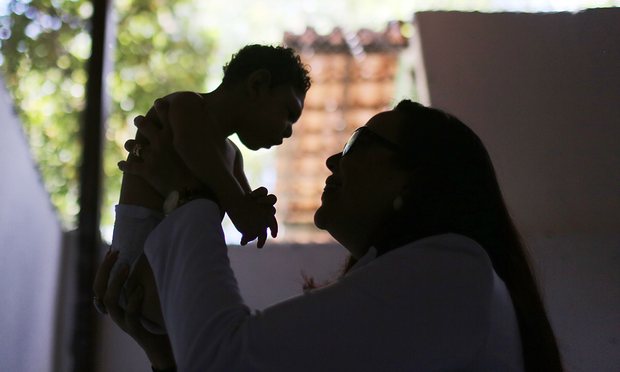
 Brazil has more confirmed malformations of the brain in babies born to mothers who were infected with Zika than any other country. Photograph: Mario Tama/Getty Images

More than half of adult women of reproductive age in Brazil have actively tried to avoid pregnancy because of the Zika virus epidemic, according to a survey carried out there.

Brazil has confirmed far more malformations of the brain in babies born to mothers who were infected with Zika than any other country.

So far, there have been 1,845 confirmed cases of what is now being called congenital Zika syndrome; a further 7,246 cases are suspected but the link to the virus has not yet been firmly established.

The survey carried out in June, led by academics in Brazil, shows that 56% of women who responded have tried to avoid becoming pregnant as a result. The numbers are no different among those who describe themselves as having religious beliefs – 58% of Catholics and 55% of Evangelicals in the survey said they were avoiding pregnancy.

In a letter to the Journal of Family Planning and Reproductive Healthcare, Dr Debora Diniz from the University of Brasilia and colleagues say there is an urgent need for Brazil to reconsider its policies on family planning and abortion, to help women who want to avoid the risk of having a baby with brain malformation.

“As indicated by the high proportion of women who avoided pregnancy because of Zika, the Brazilian government must place reproductive health concerns at the centre of its response, including reviewing its continued criminalisation of abortion,” they write.

The government should ensure better access to contraceptive methods and information, they say, arguing for a wider range of methods to be made available. Long-lasting reversible contraception such as intrauterine devices are scarce, they say, and hormonal implants are unavailable through the public services.

Women’s groups are attempting to challenge Brazil’s abortion restrictions through the courts, arguing that those infected by the Zika virus should be permitted a termination.

The team conducted a face-to-face survey of more than 2,000 women, who are literate and between the ages of 18 and 38, which corresponds to 83% of the female population.

They found that 27% had not tried to avoid pregnancy and 16% were not planning to become pregnant anyway, regardless of the Zika epidemic.

The response reflects the geographical impact of the epidemic, with a higher proportion of women from the hard-hit north-eastern region (66%) trying to avoid pregnancy than in the south (46%).

“Black (64%) and brown (56%) women were more likely to report avoiding pregnancy than white women (51%), which also likely reflects the disproportionate impact of the epidemic among the most vulnerable racial groups,” they write.

An estimated 174,000 Brazilians are said by the ministry of health to have been infected with the Zika virus, although the last updated figure was in early July.

https://www.theguardian.com/world/2016/dec/22/half-adult-women-brazil-pregnancy-zika-virus-survey

Source: The Guardian

3rd-nov-post

NEW YORK (Thomson Reuters Foundation) – Women’s rights face enormous challenges worldwide in 2017 with campaigners expecting fights to keep health clinics open, to save programs preventing unwanted pregnancies and to enforce laws protecting women from violence.

Globally, women’s rights are in the crosshairs of rising isolationism and right-wing politics in Western Europe and the United States, where President-elect Donald Trump has promised to unravel an array of beneficial policies.

“There are major challenges facing women’s rights coming up, not the least of which is a global cultural understanding … that women are in essence second-class citizens,” said Tarah Demant of Amnesty International USA.

“This is a global phenomenon,” said Demant, senior director of Amnesty’s identity and discrimination unit. “We are really worried.”

Here are some of the biggest challenges to women’s rights in 2017:

* Global access to abortion and contraception

A threat to abortion access is the likely reinstatement of the so-called global gag rule under the Trump administration.

First imposed under former President Ronald Reagan, the rule prohibits groups getting U.S. aid abroad from providing abortions or counseling patients about abortions, even if their funds for those activities come from other sources.

The rule was lifted by President Barack Obama in 2009 but can be reinstated with the stroke of a pen.

Under the gag rule, many groups turned down U.S. aid, leaving them short of money for health services from cancer screenings to flu shots, advocates say.

The United States also could pull funding from the United Nations Population Fund, which provides access to reproductive health services but does not fund or support abortion.

* Keeping women’s organizations operating globally

Women’s groups work around the world on such issues as divorce rights, gender wage gaps and child marriage, often operating in hostile environments on shoestring budgets.

Several countries have enacted laws pressuring such groups by making them register as foreign agents if they get funding from international donors, said Janet Walsh, acting director of women’s rights division at Human Rights Watch.

At the same time, funding from U.S. government sources is likely to shrink, she said.

“I’m afraid for those who take a stand for women’s rights, that their security and their ability to register and operate as organizations will be undercut,” she said.

* Violence against women

One in three women has experienced physical or sexual violence, most commonly inflicted by a partner, statistics show.

An estimated one in five will become a victim of rape or attempted rape, according to the United Nations, and high rates of femicide and domestic abuse grip many countries.

“Violence against women is a human rights crisis. It is a health crisis. It is a cultural crisis,” said Amnesty’s Demant.

* Loss of United States as leader in women’s rights

The U.S. government has in recent years played a key role in promoting and supporting women’s rights, especially helping draw up global development goals approved by the United Nations, one of which calls for gender equality by 2030.

“We fear a rollback on international agreements on women’s rights and a rollback of commitments by governments on women’s rights,” said Francois Girard, president of the International Women’s Health Coalition (IWHC).

The IWHC intends to press governments not to cave to U.S. pressure to backpedal on women’s rights, a strategy used during the administration of U.S. President George W. Bush that also sought to undermine women’s rights, she said.

“Governments didn’t like to be bullied,” she said.

* Abortion rights in the United States.

Anti-abortion advocates want to repeal Roe v Wade, the 1972 Supreme Court decision making abortion legal.

Trump will have an opportunity to name one or more justices to the highest court and has vowed they will be abortion opponents.

In the meantime, state laws are chipping away at abortion rights.

Texas lawmakers approved a law requiring burial of aborted fetal tissue, a measure estimated to cost hundreds of dollars per procedure, and Ohio signed into law a ban on abortions after 20 weeks.

“The number of abortions never goes down very much, regardless of the law,” said Terry O’Neill, president of the National Organization for Women. “What does go down is the safety and affordability of abortions.”

* Access to contraception in the United States

Trump has said he would appeal some or all of the Affordable Care Act, which has provided 25 million previously uninsured Americans with health coverage.

Known as Obamacare, it pays for most birth control methods for women.

“That funding, by enabling women to avoid unintended pregnancies, saves the federal government a ton of money that they would otherwise have to pay for medical care, pregnancy care, childcare etc.,” said Ann Starrs, head of the Guttmacher Institute, a leading reproductive rights group.

* Defunding of Planned Parenthood

Defunding Planned Parenthood, which runs about 650 women’s health centers nationwide, was a battle cry of Trump during the presidential campaign and a favorite cause of Vice President-elect Mike Pence.

Planned Parenthood relies on public funding for at least half its revenue, much of it from the Medicaid health insurance program for the poor.

Congress also could stop funding Title X programs that provide family planning services to low-income women and from an array of teen pregnancy prevention programs.

“To eliminate them as a provider either through Medicaid or the Title X family planning programs would leave millions of people in this country without regular health care,” said Gretchen Borchelt, vice president for reproductive rights and health at the National Women’s Law Center.

http://www.reuters.com/article/us-women-rights-idUSKBN14H0BG

Source: Reuters

24-dec

Washington D.C. [USA], Dec. 24 (ANI): Abortion care in the UK is ‘heading towards a crisis’ and reformation of the law is needed to remove stigma, encourage doctors to provide terminations and improve equitable access to excellent, modern abortion services, says a new study.

The study was published in the journal of Family Planning and Reproductive Health Care.

“Among the challenges women seeking abortion face include inequitable access, a lack of trained staff, stigmatisation and a culture of exceptionalism,” said a researcher Dr Sandy Goldbeck-Wood from Cambridge University Hospitals.

The law is, therefore, widely seen by clinicians as “hypocritical and anachronistic,” explains Dr Goldbeck-Wood.

Organisations calling for the law to be reformed include the British Pregnancy Advisory Service, the Royal College of Nursing, the Royal College of Midwives and other women’s health organisations.

And if the law is to be reformed, says Dr Goldbeck-Wood, there will be a strong need for debate which is respectful and acknowledges the ethical complexity in this sensitive area of health care.

Another problem is that abortion care has become artificially separated from the rest of reproductive health care, she adds.

Trainees in obstetrics and gynaecology – among them the potential service providers of the future – have too little opportunity to benefit from the learning environment that abortion care offers.

The lead study author Dr Louise Keogh from the University of Melbourne assessed the decriminalisation of abortion in the Victoria state of Australia in 2008.

The findings indicated that a change in the law has empowered women and increased clarity and safety for clinicians, but has failed to address stigma, access to services and workforce sustainability.

“Removal of specific criminal prohibitions against abortion should not be seen as a panacea, even though it is important to remove criminal law prohibitions and to establish abortion care as a health issue,” said another researcher Sally Sheldon from Kent University in the London.

Much more work is needed to remove stigma, encourage doctors to provide terminations and improve “equitable access to excellent, modern abortion services,” she concludes. (ANI)

http://www.sanjosesun.com/index.php/sid/250427433

Souce: San Jose Sun

7-nov

An Illinois judge has suspended a state requirement that health care providers who oppose abortion must give information or referrals to patients seeking the procedure.

Winnebago County Judge Eugene Doherty granted an injunction Tuesday in a lawsuit brought by medical providers who oppose abortion, saying they “raised a fair question as to whether their right to be free from government compelled speech is violated.” The ruling applies to northern Illinois clinics that brought the lawsuit, including Aid for Women, which has centers in Chicago, Cicero and Des Plaines. The injunction stands until the case is decided or there’s a further court order. Doherty has said he anticipates the case would be appealed regardless of how he ruled.

The group of clinics filed the lawsuit against Republican Gov. Bruce Rauner and the secretary of the Illinois Department of Financial and Profession Regulation in August after a state law was amended in July to include the new requirements. The amended law was slated to take effect on Jan. 1.

The medical providers asked Doherty to prevent the state from penalizing doctors and medical staff who cite objection to abortion as the reason for not providing such information or referrals.

The group’s attorney, Matt Bowman, commended the judge’s ruling and called it a “victory for free speech and the freedom of conscience.” Bowman has noted that the punishment for not providing information about abortion can result in a fine of $10,000 or revocation of a health care provider’s medical license. He said such punishment “chills our speech.”

Terry Horstman, a spokesman for the Illinois Department of Financial and Professional Regulation, said the state could not comment on pending litigation.

Officials with the Illinois attorney general have said the statute is triggered only when a patient asks for information and that the law was amended to ensure a patient’s rights are not violated because of someone else’s religious objections.

Under the amended law, patients who ask for and aren’t provided with information or a pamphlet on abortion may file a complaint with the Department of Financial and Professional Regulation. A complaint must be filed with the department before it can investigate a doctor or clinic.

http://abcnews.go.com/US/wireStory/judge-medical-providers-give-info-abortion-44326321

Source: ABC News

22-dec

In an online survey, 39 percent of 2,000 self-identified Donald Trump voters reported that they thought women should be punished for seeking abortions if the procedure is ever banned in the U.S. A full 60 percent of those polled said abortion should be illegal; 18 percent of all the poll’s Trump voters said it should be illegal without exceptions for rape, incest, or to save a pregnant woman’s life.

The poll, conducted by the Glover Park Group and Morning Consult earlier this month, indicates that a large chunk of Trump voters may take a harder-line stance on legal abortion than the mainstream anti-abortion movement would have laypeople believe.

During his presidential campaign, Trump said that there should be “some form of punishment” for women who obtain an abortion in his ideal America, where abortion is outlawed. He quickly rolled back that statement after learning that most anti-abortion politicians and advocacy groups only publicly endorse punishments for abortion providers, not patients. (For some truly inscrutable reason, punishing women for seeking health care doesn’t play well with the electorate. Weird!) Trump contended that he had meant women who get abortions punish themselves.

But anything more than a cursory look at mainstream abortion policies in the U.S. will reveal and underlying ethos of punishment for women. Anti-choice legislators pass laws requiring women to listen to state-sponsored misinformation and wait days between requesting an abortion and getting one, revealing a fundamental mistrust of women’s capacity to make their own decisions. Laws in many states make women travel to clinics more than 100 miles away for multiple appointments, separated by days, costing them unnecessary time and money. Restrictions on when women can get abortions force some women to carry to term fetuses with no chance of surviving outside the womb. Women are charged with felonies and incarcerated in the U.S. for trying to induce abortions on their own.

The co-sponsor of a recent Ohio bill that would have banned all abortions after six weeks, before many women know they’re pregnant, said the bill would “give people the incentive to be more responsible so we reduce unwanted pregnancies.” Here’s another way to describe that incentive: forced birth as punishment.

It seems only logical that if abortion is truly a murderous crime, a woman who pays someone for that crime should be punished. That’s an understandably disturbing notion for many people, especially women, making it a politically unpopular position. So, anti-abortion legislators and activists try to obscure their logical inconsistency with paternalistic claims that women who seek abortions are “victims” of abortion providers. This gives me a warped, horrified measure of respect for a radical Florida group that’s trying to get abortion classified as first-degree murder, with the potential for jail time or even the death penalty for women and their doctors. If you’re going to try to convince one-issue abortion voters that the procedure is murder and it must be stopped at all costs, at least be honest about the sadistic end where that logic leads.

http://www.slate.com/blogs/xx_factor/2016/12/20/poll_women_should_be_punished_for_abortions_say_39_percent_of_trump_voters.html

Source: The Slate

21-dec

Challenges to Roe v Wade presage battles to come in the Trump era

DONALD TRUMP was once a staunch supporter of abortion rights, declaring in 1999 that he was “pro-choice in every respect”. But Mr Trump campaigned for president as an opponent of Roe v Wade, the Supreme Court’s abortion-rights ruling from 1973. (He had a change of heart when he observed that a child of a friend who “was going to be aborted” was instead brought to term and went on to become a “total superstar, a great, great child”.) In post-election interviews, the president-elect has repeated promises to name pro-life justices to the Supreme Court, starting with a replacement for Antonin Scalia, the justice who died in February. After a couple of nominations, Mr Trump said during a debate in October, Roe will “automatically” be overturned and the question of abortion rights will return to the states.

In recent weeks, several states have signalled how they would handle the matter if the nationwide constitutional standard were to disappear. There is little doubt that many states would quickly criminalise abortion. Fresh from a loss in Whole Woman’s Health v Hellerstedt, a ruling from June that struck down the state’s clinic regulations as thinly disguised attempts to limit abortion access, Texas, for one, would jump at the chance. In the meantime, the Lone Star state has passed a symbolic measure to announce its displeasure toward women who exercise their constitutional right.

On December 19th, the same day the electoral college meets to officially elect Mr Trump as the 45th president, new rules go into effect in Texas. The change, an ostensibly innocuous tweak of the “definition, treatment and disposition of special waste from health-care related facilities”, will require fetal remains from abortions and miscarriages to be interred. No more disposing of the tissue in sanitary landfills, the destination of all other biological waste from hospitals and clinics. The Texas Department of State Health Services will now require fetal remains to be buried.

The tissue-burial idea was the brainchild of Greg Abbott, the Republican governor of Texas. Days after the Supreme Court scolded Texas for cynically citing woman’s health as its excuse for clamping down on abortion clinic regulations—rules that would have shuttered more than half the state’s clinics—Mr Abbott composed a fundraising letter introducing the burial concept. “Human life is not a commodity”, the email stated. Owing to an “imperative” that Texas adopt “higher standards that reflect our respect for the sanctity of life”, Mr Abbott wrote, the state “will require clinics and hospitals to bury or cremate human or fetal remains”. Opponents of the rule, he said, “refuse to recognise ANY rights of the unborn”. Lamenting the “soulless abortion industry” in his state and promising to “turn the tides…in defence of life”, Mr Abbott announced his intention to make Texas “the strongest pro-life state in the nation”.

Unsurprisingly, abortion-rights advocates are expressing alarm at these developments. NARAL Pro-Choice America says the burial bill in Texas “unduly burden[s] both abortion patients and providers without any discernable, proven medical benefit”, thereby violating the Hellerstedt ruling from last summer. The same organisation says the Ohio heartbeat bill is a “drastic” challenge to abortion rights. Planned Parenthood is rallying its troops to oppose both measures, along with laws in Alaska, Missouri and North Carolina that look similar to the onerous regulations the Supreme Court struck down in Hellerstedt.Mr Abbott has a formidable competitor in Ohio, a state whose legislature is apparently emboldened enough by Mr Trump’s victory that it has passed what would be the most restrictive ban since Roe: a prohibition on abortion at the point in pregnancy when a fetal heartbeat can be detected. This threshold means that abortion would be available only until the sixth or seventh week—before some women are even aware they are pregnant. The fetal heartbeat bill is a direct assault on the current constitutional rule permitting abortion until about 24 weeks, the point at which fetuses are “viable”, or able survive outside the womb. The ban makes no exceptions for cases of incest or rape. John Kasich, Ohio’s pro-life governor, has until December 17th to sign or veto the bill; if he does nothing, the bill becomes law—and will immediately trigger lawsuits. Mr Kasich has another option: he can veto the heartbeat bill and sign another bill that bans abortion at 20 weeks. While both are inconsistent with Roe, the latter constitutes a subtler attack.

These are the incipient stirrings of a battle likely to grow after Mr Trump is inaugurated on January 20th. A pro-life ninth justice joining the Supreme Court next year will not, by itself, put Roe in immediate danger: the court’s four liberal members and Anthony Kennedy remain a reliable five-justice bloc that will stand up for Roe and its progeny. But with three members of that group—Mr Kennedy, Stephen Breyer and Ruth Bader Ginsburg—aged 80, 78 and 83, respectively, the future of abortion rights in America is anything but secure.

http://www.economist.com/blogs/democracyinamerica/2016/12/roe-rows

Source: The Economist

20-dec

Legislation forcing rape victims to prove that a crime had occurred before they could have an abortion would be unworkable, Rape Crisis Network Ireland has warned.

The victim’s support group said that women should not be forced to endure a judgmental process to prove they have been raped to access a safe and legal termination if the Eighth Amendment was repealed.

The government set up a citizens’ assembly to consider potential changes to Ireland’s strict anti-abortion laws, particularly in cases of rape.

Almost a quarter of victims who became pregnant after being raped terminated the pregnancy, new research has shown.

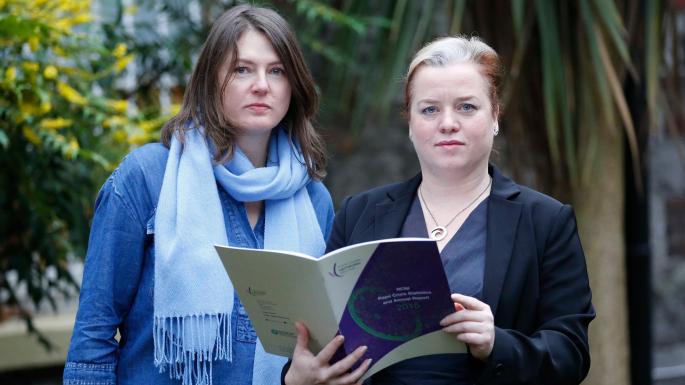
The RCNI annual report, which was launched yesterday by Clíona Saidléar, the executive director, and its secretary Claire Gledhill, said that 5 per cent of the 1,060 female rape victims who attended rape crisis centres last year became pregnant as a result of the crime. Some 24 per cent terminated the pregnancy. More than 10 per cent chose adoption or fostering, while 37 per cent continued with the pregnancy.

Pregnancies resulting from rape ended in a stillbirth or a miscarriage in 28 per cent of cases. The RCNI said it was possible that women who terminated a pregnancy themselves with pills bought online would have claimed it was a natural miscarriage, because of a fear of being arrested.

The citizens’ assembly was set up to recommend whether or not to repeal the Eighth Amendment will report by next June. Polling has indicated that some of the strongest support is for access to abortion in cases of fatal foetal abnormalities and for victims of rape and incest.

In its submission to the citizens’ assembly, the RCNI warned that a law which would grant access to abortion in cases of sexual crime would fail. Ms Saidléar said that access to abortion had to be made available on health grounds, including mental health.

“You have to bear in mind that trauma will impact; the trauma response may mean that they [rape victims] have left it late,” she said. “There will be a range of impacts on them in terms of their capacity to make a choice, which is to get a termination, because in Ireland that involves having to travel. If you look at it in terms of trauma that a survivor experiences and how you support trauma, you are then putting them into a process where they are judged and assessed and maybe fail.

“When we looked at it from all those sides, we just don’t think a rape clause is workable. So we have said it must be under health grounds because a survivor shouldn’t have to prove and be judged to access a choice. A choice that they’re making already; 24 per cent of them already choose [to terminate].”

The Protection of Life During Pregnancy Act sought to clarify the law and make abortion available on grounds where a woman’s life was at risk, including a risk of suicide. A woman must convince three physicians that she is suicidal before she can access the termination. The Irish Family Planning Association had said that all of the women it counselled who qualified for abortion under the PLDPA chose to travel to terminate instead of going through the process of proving their mental health problems to a panel of doctors.

The RCNI has said that the burden of proof would be too great on the rape victim, and would encourage suspicion that women were pretending to be raped to access abortion.

“Look at what we’ve done in terms of suicidal ideation; the idea of having a sort of panel for rape, with someone assessing and judging if you’ve been raped or if you’re simply trying to get an abortion by just lying and saying she was raped [is wrong]. And also, it feeds into that myth about people lying about rape,” Ms Saidléar said.

Northern Ireland, similar to the Republic, enforces a near-ban on abortion. Last year, the Belfast High Court ruled that restricting access to abortion in cases of rape, incest and fatal foetal abnormalities was a breach of human rights.

David Ford, the former Northern Ireland justice minister, refused to consider legislating for access to terminations for sexual crime victims because he said it would be too legally difficult without the woman securing a rape conviction first.

On the Isle Of Man, a rape victim must report the crime and sign an affidavit before she can access a legal termination.

Katherine Zappone, the children and youth affairs minister, said she believed the Irish public strongly supported access to abortion for rape and incest victims. The minister said she was against any laws that would force a victim to report a crime to access an abortion.

http://www.thetimes.co.uk/article/allowing-abortion-in-rape-cases-wont-work-7rbflww30

Source: The Times UK

19-dec

MUMBAI: When 34-year-old Kusum Rao, a Mumbai-based lawyer, was told that the brain of her 19-week-old unborn child didn’t have a membranous partition called the ‘cavum septum pellicidum’, she panicked.

Some websites linked its absence to mental retardation, blindness, learning disabilities as well as an increased risk of schizophrenia. Moreover, she had days before the 20-week deadline for abortion under the Medical Termination of Pregnancy Act expired.

But reassured by recent court interventions that allowed abortions beyond the deadline, she decided to wait and undergo more tests before making her final decision. “Once the pressure of the deadline is removed from women’s mind, they want to make a studied decision vis-a-vis abortion. They feel secure that doctors and the courts will listen to them,” said gynaecologist Dr Nikhil Datar of Cloud Nine Hospital in Mumbai who guided Rao (name changed on request).

He said many pregnancies were unnecessarily terminated on account of “unfounded fears” created by insufficient investigations as the deadline approaches.

In 2008, Datar moved the SC, seeking permission for another patient, Mumbai resident Niketa Mehta, to abort her fetus, which had been found to have cardiac abnormalities, after the deadline. Doctors say that many anomalies in the brain and heart show up around 20 weeks into pregnancy, and that the MTP Act should be tweaked accordingly.

The Centre, a couple of years ago, released the draft of a revised MTP Act that sought to push the deadline to 24 weeks, but there has been no progress since.

In Rao’s case, Dr Datar advised her to undergo an MRI scan and then seek the opinion of at least two paediatric neurologists. The reports showed that while the cavum septum pellicidum was indeed absent, there were no other brain abnormalities. “Its mere absence isn’t significant. But if it is accompanied by other structural anomalies in the brain, it is an indicator of severe problems,” said Dr Datar.
The ‘extra time’ Rao took helped her arrive at a correct decision.

Rao, who is now 27 weeks pregnant, is happy she waited to get the correct picture.

Another city doctor said one of his pregnant patients had a borderline result for the Down’s Syndrome blood test.

“The results say she has a one in 76 chance of delivering a child with Down’s Syndrome. She has opted for more tests to rule out the condition as she was told she could seek permission to terminate if there was confirmation of abnormality. She, too, missed the deadline.”

Priya John, associated with a coalition for health and safe abortion, said, “The MTP Act’s Section 5 can be interpreted…to allow women to undergo a medical termination of pregnancy beyond 20 weeks if there is a danger to their lives.”

http://timesofindia.indiatimes.com/india/moms-on-abortion-deadline-fight-for-ailing-fetuses/articleshow/56055678.cms

Source: Times of India

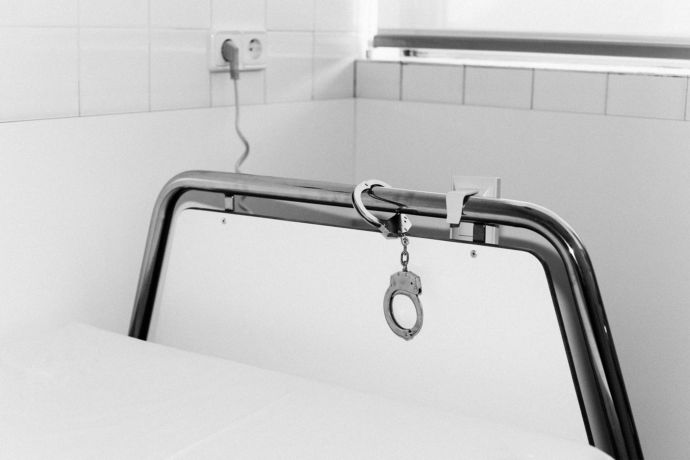
Hippocratic betrayal and obstetric violence On February 2015, a 19-year-old pregnant woman ingested abortive pills in São Bernardo do Campo, Brazil. She started feeling abdominal pains, so her aunt took her to hospital. After she was treated, her doctor called the police, saying he would autopsy the fetus if she did not confess to trying to abort. She was handcuffed to her hospital bed, and freed only after paying a 250€ bail.Denunciation by doctors is not uncommon in Brazil, Peru or El Salvador.  Women who are reported for attempting abortion can be detained in hospitals for weeks or months. Many doctors claim they are legally required to notify authorities when they suspect an abortion, in contradiction of professional codes of doctor-patient confidentiality. Note: photographic reconstruction. Laia Abril / INSTITUTE


In 2006, a Polish woman named Justyna heard a rumor about a new abortion pill. The thirty-year-old mother of three was eleven weeks along in a new pregnancy, and her marriage wasn’t going well. Abortion in Poland is illegal in most circumstances, but after several weeks she was able to get the pills. She took them at home, while her kids were down the hall. She didn’t tell anyone, not even her husband; she’s now divorced. “It took me two weeks to process all the feelings, but then I felt released,” she told the Spanish photographer Laia Abril. “I feel able to make my own decisions.”

Justyna is one of a group of women whose experiences Abril documents in her photo series “On Abortion.” The first installment in a broader project titled “The History of Misogyny,” the series collects artifacts of abortion from across eras and cultures alongside the stories of women who were forced to pursue procedures outside of the law. Justyna’s portrait is shown beside an image of a packet of mifepristone, one of the drugs that she used to abort, and another showing her cell phone resting on a shag rug. She now runs a hotline that Polish women can call before taking abortion pills, to make sure they’re using them correctly. She gets about five calls a day.

Abril’s project makes clear that Justyna was one of the lucky ones. Across the world, millions of women undergo unsafe abortions each year, and tens of thousands die from complications from unsafe procedures. “On Abortion,” which is featured this month in Apertures On Feminism issue, begins at the Museum of Abortion and Contraception, in Vienna, where Abril found centuries-old soap syringes, fish-bladder condoms, and a glass box filled with long reeds and thorns; they were surgically removed from African women who had used them to abort. Other images show the improvised abortion tools that women described to Abril directly: rat poison, a forty-pound rock, a grapevine stalk, bundles of herbs, a clothes hanger, a steaming-hot bath, a flight of stairs. There’s the letter that a twenty-two-year-old Brazilian woman wrote to her boyfriend before an abortion, in 1928, telling him that she might not survive the procedure. (She did not.) And, from El Salvador, whose abortion ban is one of the strictest in the world, there are the fat, spiral-bound court files of the seventeen women, known as “Las 17,” who, between 1999 and 2011, were accused of having abortions and sentenced to up to forty years in prison on charges of homicide, after they lost their babies in obstetric emergencies. (Two of the women have since been freed on parole; the rest remain in prison.) The only bright colors in the series come from a sheet of Peruvian newspaper ads, selling remedies for “menstrual delay” in glaring yellow, red, and blue. The tiny ads all have the same narrow white block lettering, and pictures of unhappy female faces.

Abril has documented abortion both in places where it is entirely prohibited, such as Malta and Chile, and in those where it is ambiguously legal or highly regulated, like Uganda and some parts of the United States. A section of the series labelled “Death Wall” features closeups of the faces of women who died after receiving botched abortions or being denied them, including an Indian dentist living in Ireland, an Indiana teen-ager, and a college student in San Salvador who committed suicide by leaping from the roof of her dormitory. Some of the women documented in “On Abortion” are middle-aged, while others are still children: one image is an ultrasound taken from a pregnant nine-year-old girl in Nicaragua, who was forced to give birth after her father raped her.

Cumulatively, the stories and images collected in the series make inescapably clear how abortion restrictions endanger women. But they are also testaments to endurance, showing us evidence of the lengths that women will go to retain control of their bodies and their lives even when the law stands in their way. One of the longest interviews Abril conducted was with Lucía, a Chilean woman who became pregnant after being raped at the age of twenty-four and chose to have an illegal abortion, in 2003. Chile, like El Salvador, makes no exceptions for pregnancies that result from rape or that threaten the life of the mother, and imposes jail sentences on women who are found to have had the procedure. Still, advocates estimate that between seventy thousand and a hundred and forty thousand clandestine abortions are carried out in Chile each year.

“The whole procedure turned out to be not very medical,” Lucía said, of the operation she underwent at an underground clinic. “You have to go alone and bring five hundred euros in cash.” But, in the end, she was O.K.: “Everything went well and I threw a party to celebrate with the people who helped me.” Two months later, she saw the clinic on the TV news; it had been raided by police. Lucía panicked. “I prayed they wouldn’t find any information about me,” she said. “I hadn’t just risked my life but my freedom.”

http://www.newyorker.com/culture/photo-booth/looking-at-how-abortion-restrictions-endanger-womens-lives

Source: The Newyorker