27-nov

A group that advises the Irish government on abortion has been told poorer women are accepting crisis pregnancies because they cannot afford a legal termination.

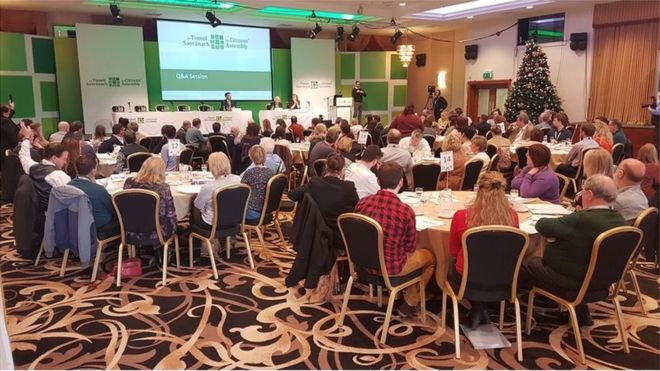
The group was meeting to consider if it should recommend a new referendum on abortion law in the Republic.

Currently abortions are permitted only when the mother’s life is in danger.

The Citizens’ Assembly is meeting for a weekend-long session in Malahide, County Dublin.

Speaking at the meeting, Dr Brendan O’Shea, a member of the regulatory body for general practitioners, said financial constraints were leading some women to carry on with unwanted pregnancies.

Meanwhile, a speaker from the HSE’s Sexual Health and Crisis Pregnancy Programme, Janice Donlon, said that between 2010 and 2012 an average of 821 women on the island of Ireland were sent abortion pills annually.

Cork obstetrician and gynecologist, Professor John Higgins, said over 2014 and 2015, the Protection of Life During Pregnancy Act had facilitated 26 terminations.

Most arose from a mother’s life-threatening physical illness, with just three involving the threat of suicide.

Consultant Perinatal Psychiatrist, Anthony McCarthy, quoted international research on the damaging effects of pressurising women in crisis pregnancies.

The specialist at the National Maternity Hospital said that the surveys consistently found that women who are pressurised to have an abortion, or not to have one, suffer significant mental health problems because of that.

The chair of the assembly, the Supreme Court Judge Mary Laffoy, told members their meetings between now and March will be their most difficult as they debate the issue.

On Saturday morning, the assembly heard an address on the history of the Eighth Amendment.

The amendment, introduced in 1983, essentially gives constitutional protection to an unborn child.

Outside the meeting, a small group of protestors staged a demonstration.

Prof Eoin Carolan of UCD said that although abortion had been illegal in Ireland since 1861, the 1983 amendment made it clear for the first time that the right to life applied to the unborn.

Prof Carolan recalled that in 1992, the Supreme Court ruled in the X case that abortion is allowed where there is a real and substantial risk to the life, as distinct from the health, of the mother and where the risk could only be avoided by the termination of her pregnancy.

He said that the risk could be from either a threat of suicide or because of a physical condition.

http://www.bbc.com/news/world-europe-38117838

Source: BBC

26-nov

The current regime will be laid out but not critiqued.

THE CITIZENS’ ASSEMBLY will today get to down to the business of speaking about Ireland’s abortion regime but will not deal with comments on or criticisms of the current regime.

Instead, this second weekend of the 100 person assembly will hear factual presentations from legal and medical practitioners about abortion in Ireland.

For example, Janice Donlan of the Crisis Pregnancy Programme will give details of the prevalence of terminations amongst Irish women.

Professors John Higgins of Cork University Maternity Hospital and Anthony McCarthy of the National Maternity Hospital will speak about the implementation of the Protection of Life During Pregnancy Bill and how it works in practice.

McCarthy is one of the medical professionals who assesses women in Ireland who are seeking legal abortions on the grounds of being suicidal.

Another speaker tomorrow, Professor Mark Sheehan of Oxford University, will provide the members with different ways of approaching ethical issues.

He will not being dealing with the ethical arguments surrounding the issue at hand.

The Eighth Amendment of the Constitution is the first issue of five to be tackled by the assembly and today’s meeting follows an initial gathering in October in which the members were given a broad outline of the process.

Since that meeting, 11 of the members have been replaced by people from a substitute list of 99 others.

Most have been replaced due to personal commitments while one member said they left because their past advocacy work had not been revealed.

Members have agreed to a request that they will not discuss their work as part of the assembly on social media but no specific sanction has been put in place should this be broken.

The assembly’s proceedings will be streamed online but some of the roundtable discussions involving the members will be kept private.

Question and answer sessions between the members and speakers will however be public.

Supreme Court Judge Mary Laffoy who c

The assembly’s secretariat has outlined that members will make clear during a public session the specific issues they wish to hear about in relation to the Eighth Amendment.

Interest groups who wish to present to the assembly have been asked to indicate their desire to do so during the ongoing submission process.

Their participation or otherwise will, however, be based on requests made by the members and under the discretion of Chairperson of the Assembly Justice Mary Laffoy.

Submissions

The submissions process on the issue of the Eighth Amendment is ongoing until 16 December. So far, about 600 submissions have been made, most of which have come from individuals.

These have not yet been published online but this will be done in due course.

The assembly’s secretariat has made clear that editorial decisions will not be made on these submissions although some may not published if, for example, they are considered offensive.

Specific materials will be sent to the members as part of the process.

One member has requested the materials be sent to them by post while the remaining members will receive their materials electronically.

It’s envisaged that the issue of abortion will be discussed on four separate weekend-long meetings each month until March when a recommendation will be made to the Oireachtas.

This recommendation will be made following a vote or series of votes by the assembly members.

If a change is recommended, the government must decide if a referendum is required.

Whether or not a change is proposed, the assembly’s recommendation will be more precise than simply stating whether or not a referendum should be held.

This weekend’s meeting of the Citizens’ Assembly is being held in the Grand Hotel, Malahide.

http://www.thejournal.ie/citizens-assembly-meeting-3-3102535-Nov2016/

Source: The Journal

chi-la-teen-birthrates-historic-lows-20140821

The birth rate among American teenagers, at crisis levels in the 1990s, has fallen to an all-time low, according to an analysis released Thursday by the Centers for Disease Control and Prevention.

The decline of the past decade has occurred in all regions in the country and among all races. But the most radical changes have been among Hispanic and black teens, whose birth rates have dropped nearly 50 percent since 2006.

Theories on the reasons for the dramatic shift include everything from new approaches to sex education to the widespread availability of broadband Internet. But most experts agree on the two major causes.

The first is the most important and may be obvious: Today’s teens enjoy better access to contraception and more convenient contraception than their predecessors, and more of them are taking advantage of innovations like long-acting injectable and implantable methods that can last years over a daily birth control pill. But the second cause is something that goes against the conventional wisdom. It’s that teens — despite their portrayal in popular TV and movies as uninhibited and acting only on hormones — are having less sex.

“There has been a change in social norms that has happened in the past 20 years, and the idea of not having sex or delaying sex is now something that can be okay,” said Bill Albert, chief program officer for the National Campaign To Prevent Teen and Unplanned Pregnancy.

Veronica Gomez-Lobo, director of pediatric gynecology at Children’s National Medical Center, said the trend of abstinence has been mostly among younger teens rather than older ones. While there’s not good data on why this is happening, she thinks of it as a “contagion” factor. So many teens are waiting to have sex, she suggests, that the peer pressure goes the opposite way than it might have in the past.

“We think this is a very healthy trend,” Gomez-Lobo said.

The decline in birth rates has been going on for most of the past decade but appears to be accelerating. The issue has been important to President Obama, who in 2010 launched a $110 million initiative to scientifically validate prevention programs that work and to replicate them throughout the country.

The nation’s teen birth rate peaked in 1991, a time when posters of sad, pregnant girls were plastered on buses and subway stations and popular culture was filled with references to “babies having babies.” The alarm was backed by evidence showing that having unplanned children at a young age carries numerous negative health and social consequences.

Over the next 23 years, the birth rate plummeted 60 percent from 61.8 births per 1,000 in 1991 to 24.2 births per 1,000 in 2014 — the lowest rate on record. Yet even with the dramatic improvement, studies still estimate that teen births cost taxpayers an estimated $9 billion each year.

It’s impossible to talk about unwanted teen pregnancies without the subject of abortion coming up. While the new CDC report did not address this issue, research by the Guttmacher Institute shows that the decline in births is likely to be unrelated to more terminated pregnancies.

Researcher Isaac Maddow-Zimet said Thursday that teen pregnancies have been declining for 40 years, which by itself could explain the falling birth rates. Likewise, an analysis of 2011 abortion numbers, which represent the most recent and comprehensive data set available, shows that abortion rates in every state but Vermont decreased or remained the same from the previous year.

“Historically, abortion rates and birth rates have not always moved in parallel, but in recent years they have been doing so more,” Maddow-Zimet said.

Various surveys and studies have tried to quantify the impact of different interventions in helping reduce teen pregnancies and birth rates.

One of the most interesting possibilities has been the popularity of MTV’s hit reality show “16 and Pregnant.” The struggles of the young moms in the show – who were often shown in tears-may have served as cautionary tales to millions of viewers their age. A study that came out in 2014 estimated that teen births dropped 6 percent in the 18 months following the show’s first broadcasts.

Another intriguing study looked at the impact of the Internet and concluded that at least 13 percent of the total decline between 1999 and 2007 might be explained by the increasing availability of broadband Internet. Researchers theorized that being online could help provide teens other means of exploring relationships and finding advice about effective forms of contraception, in addition to obtaining information about options for ending unwanted pregnancies.

Sex education programs have also changed a lot over the years. While many programs still use the traditional bananas and condoms that lead to so many giggles and red faces, new curriculums also incorporate lessons on financial responsibility or focus more on overall development of a child’s character — which some research has shown may be more effective.

Albert and other experts think the economic downturn that started around 2006-2007 may have played a role, too. “They are not checking their stock portfolio before they hop in the sack, but teens are keen observers of the world around them, and if their own family had to do more with less it may have fostered less risk-taking and a more cautious attitude about sex,” he said.

But while the overall national trend is positive, the CDC analysis of teens ages 15 to 19 shows that large racial and ethnic, regional and socioeconomic disparities remain. The birth rates for Hispanic and black teens, though lower than in the past, still are twice as high as that of white teens. In some states, the difference is even greater. In New Jersey, for example, the birth rate among white teens was 4.8 births per 1,000, which is well below the national rate of 18 for that group. But the birth rate among New Jersey’s black teens was 27.4 and among its Hispanic teens 31.3 – an almost seven-fold difference.

In addition, some counties still have pockets of high birth rates — even in states with overall low birth rates — and many of them are clustered in the south and southwest. The CDC also noted that the places with the highest birth rates tend to have higher unemployment, lower income and less education. Teen birth rates in 2013-2014 at the county level ranged from 3.1 to 119 per 1,000.

“The United States has made remarkable progress in reducing both teen pregnancy and racial and ethnic differences,” CDC Director Tom Frieden said, “but the reality is, too many American teens are still having babies.”

Copyright © 2016, Chicago Tribune

http://www.chicagotribune.com/news/nationworld/ct-teen-birth-rate-all-time-low-20160428-story.html

Source: Chicago Tribune

23-nov

The leading contender for France’s centre-right presidential nomination, Francois Fillon, is facing tough questions over his stance on abortion and sex discrimination.

His rival, fellow Republican Alain Juppe, has urged him to “clarify his position” on abortion.

Meanwhile, a party colleague restated claims he denied her a ministerial post because she was pregnant.

Supporters will choose between Mr Fillon and Mr Juppe on Sunday.

It is the first time the centre right in France has used a US-style primary contest to select a candidate, ahead of the presidential election in April and May.

In the first round of voting for the Republican nomination on Sunday, Mr Fillon took a clear lead with 44.1% while Bordeaux Mayor Mr Juppe received 28.5%. Five other contestants were knocked out.

As the campaign for the second round gathered pace on Tuesday, the candidates exchanged barbs over Mr Fillon’s stance on abortion.

Mr Juppe claimed his rival had gone back on a previous statement affirming that abortion was a “fundamental human right”.

Mr Fillon, who is personally opposed to abortion but against revisiting its legal status, reacted with fury, saying: “I would never have thought my friend could stoop so low.”

Another former colleague and defeated primary contestant Nathalie Kosciusko-Morizet – who now backs Mr Juppe – has also renewed claims that Mr Fillon denied her a ministerial post because she was pregnant.

Ms Kosciusko-Morizet’s remarks were first reported in 2013 in a profile by US network NBC, when she said she had twice been turned down for ministerial posts when she was pregnant. During her second pregnancy, in September 2009, Mr Fillon was prime minister.

“It’s true,” Nathalie Kosciusko-Morizet told Franceinfo TV. But she said it was a matter from the past, for which Mr Fillon had since expressed regret and which many woman would recognise as a wider problem in French society.

Several French commentators have also made the point that Ms Kosciusko-Morizet was not prevented from taking up a succession of posts in Mr Fillon’s government:

Despite repeated attempts, Mr Fillon’s team could not be reached for comment.

Mr Fillon was also criticised by centrist leader Francois Bayrou for his proposed liberal economic reforms, which include cutting half a million public sector jobs and scrapping the 35-hour work week.

Mr Bayrou called them “dangerous”.

Meanwhile, Russian President Vladimir Putin’s spokesman said Mr Putin had “rather good relations” with Mr Fillon, and that Moscow was closely watching the outcome of the primary.

http://www.bbc.com/news/world-europe-38063622

Source: BBC

22-nov

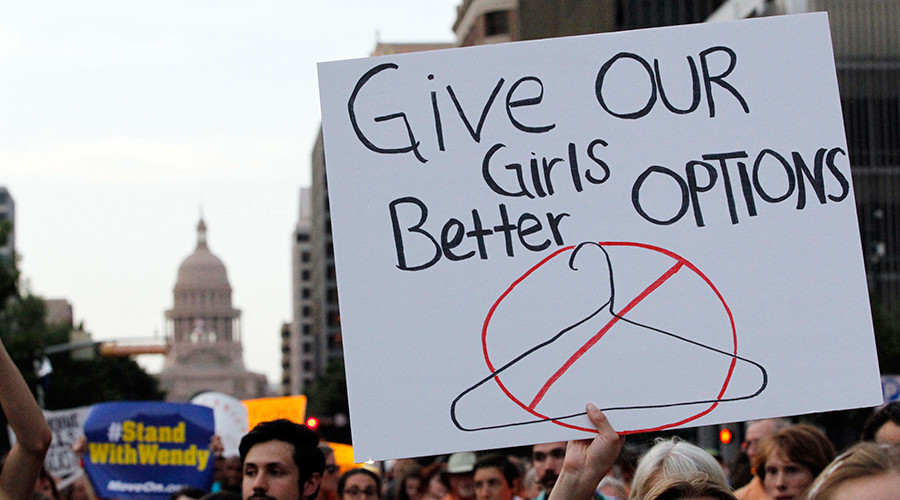
Imagine being so desperate to end a pregnancy that you sit in a bathtub, gird yourself, and stick a wire hanger up your vagina and into your uterus. You don’t have anesthesia, but you do it anyway. You start to bleed, badly. After you go to the hospital for help, you don’t get sympathy – you get arrested.

I don’t describe this horrific scenario to remind you of a time when abortion was illegal and how bad it was for women. Because this didn’t happen in the 1950s; it happened last year.

Just a few months before Donald Trump said women who have abortions should be “punished”, a woman in Tennessee was arrested for trying to end her pregnancy with a hanger. And on Tuesday, a week after Trump was elected to be the next president of the United States, this woman was charged by a grand jury with aggravated assault with a weapon, attempted procurement of a miscarriage, and attempted criminal abortion.

Jessica González-Rojas, executive director at the National Latina Institute for Reproductive Health, said: “These new charges seek to punish her even more severely and are an affront to justice and basic human dignity.

“No woman should fear arrest or jail time because she ends her pregnancy or seeks medical help in this situation.”

This is not an isolated case. Before her conviction was overturned, Purvi Patel in Indiana was sentenced to 20 years in prison for inducing an abortion. Bei Bei Shuai, also in Indiana, was charged with murder after a suicide attempt resulted in her pregnancy ending. So let’s be clear: women, especially women of color, are already being punished for abortion.

This Handmaid’s Tale nightmare will only get worse once Trump takes office. Whatever his personal beliefs on abortion – like everything else, this is a topic he’s flip-flopped on over the years – he has vowed to appoint supreme court justices that will overturn Roe v Wade, leaving the issue up to the states. When questioned about this, he callously remarked that women who live in states where abortion is illegal could just travel to a different state.

Mike Pence, the incoming vice-president, signed one of the most restrictiveabortion laws in the country as governor of Indiana, and has said he wants to see Roe “consigned to the ash heap of history where it belongs”.

These are not men who are thinking about – or who even understand – the consequences of banning abortion.

The woman in Tennessee, who has already been in jail for nearly a year, is one of countless American women who try to self-abort. I say “countless” because we literally do not know the number of people who attempt their own abortions. We just know that it’s a lot.

One study found that in Texas alone, more than100,000 women had tried to end their own pregnancies. You will not be shocked to find out that abortion is extremely difficult to access in Texas. The same is true in Tennessee, where 96% of counties have no abortion provider.

Not all women induce their own abortion because of a lack of access. Some simply want to forgo seeing a doctor, and would prefer home abortions. Last year, Daniel Grossman, an obstetrician-gynecologist and vice-president for research at Ibis Reproductive Health, told me that some women self-induce because they’re “the kind [of person] who like to do herbal treatments or take vitamins for their healthcare in general”.

If reproductive rights were not in such imminent danger, now might have been a good time to start expanding options for women who don’t want clinic care but instead want to end their pregnancies at home. But now it’s hard to imagine that pro-choice organizations will be doing anything other than protecting rights already won.

In fact, women across America are preparing for the worst. The news of Trump’s win sparked an increase in the number of women seeking long-term birth control measures such as IUDs, fearing that their insurance coverage for contraception would soon be a thing of the past.

The defensive crouch right now is a smart strategy. Women and reproductive rights organizations should be doing all they can to steel themselves for the battles to come – not just on a policy level, but in terms of everyday needs. Those of who can afford to do so, for example, might consider buying large quantities of Plan B while it’s still available over the counter – stockpiling the medicine in the event that it becomes inaccessible and other women need it. And if it were not illegal, I might encourage doctors and nurses to start putting aside misoprostol (the drug used in medication abortions) in the event that abortion is banned in their state or others.

Someone who wants an abortion will find a way to get one, no matter what the law is. So let’s make sure they can do that safely, no matter who the president is.

https://www.theguardian.com/us-news/commentisfree/2016/nov/22/abortion-rights-under-siege-roe-v-wade-womens-rights

Source: The Guardian

20-nov

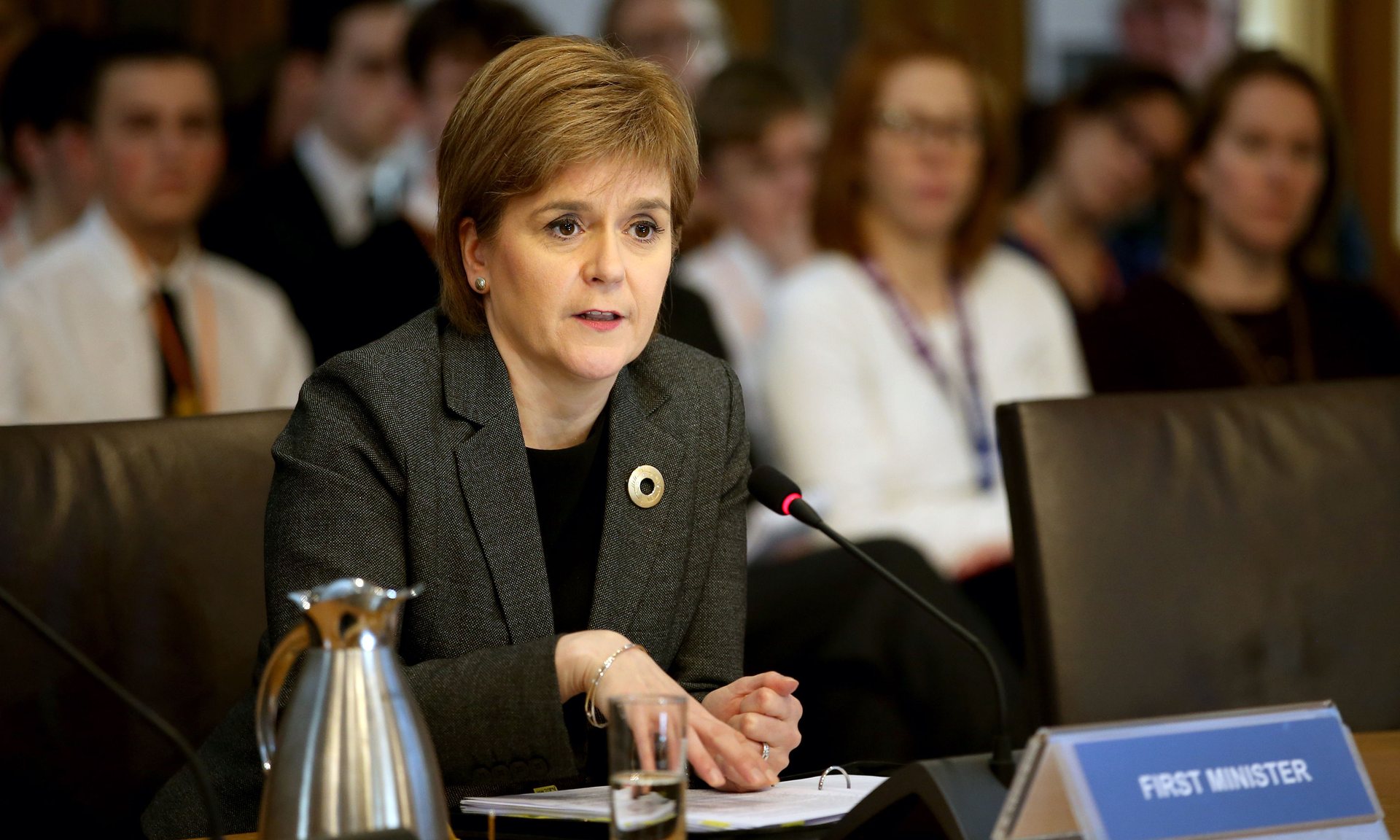
Scotland’s first minister Nicola Sturgeon says she would consider funding abortions for women from Northern Island in the event of split from the UK.

The remarks come after the opening of a Supreme Court case involving a Northern Irish woman who had to pay for an abortion when she travelled to the UK.

Sturgeon told the Scottish Parliament that “women should have the right to choose, within the limits that are currently set down in law”, and that she is “happy to explore with the NHS what the situation is now in terms of the ability of women from Northern Ireland to access safe and legal abortion in NHS Scotland and whether any improvements can be made.”

Abortion is currently illegal in Northern Island, and attempts to liberalise the law have encountered strong resistance.

An estimated 2,000 women a year have to raise the money to travel to private English clinics and hospitals from Northern Ireland to have terminations.

The case currently before the Supreme Court has already been rejected by the High Court and the Court of Appeals; while sympathetic to the woman involved, the courts found that there was no grounds for the claim of discrimination because Northern Island was not covered in the UK’s 1967 Abortion Act.

http://www.bioedge.org/bioethics/scotland-could-offer-northern-irish-women-free-abortions/12093

Source: BioEdge

MARIETTA, OH - OCTOBER 25: Republican Vice Presidential Candidate Mike Pence speaks at a rally on October 25, 2016 in Marietta, Ohio. Ohio has become one of the key battleground states in the 2016 presidential election with both candidates or their surrogates making weekly visits to the Buckeye State. Unlike other parts of America, Ohio has both a rapidly aging and declining population as well as a high degree of residents without a college education. (Photo by Spencer Platt/Getty Images)

A grassroots idea to donate to Planned Parenthood in Vice President-Elect Mike Pence‘s name has spread since the election. The social media campaign encourages citizens to show their support for women’s rights by donating “in honor” of the Indiana governor, who has infamously tried to defund the non-profit organization. For each donation, he receives a thank-you certificate.

Planned Parenthood confirmed that it has received 20,000 contributions in Pence’s name since the election. According to the Indianapolis Star, there have been 160,000 donations to Planned Parenthood in the last week — 12.5 percent in the name of Pence.

While a member of Congress in 2007, Pence was the first to introduce a bill calling for an end to Planned Parenthood funding. Although the bill did not pass, he has continued to fight the non-profit throughout his political career.

“If Planned Parenthood wants to be involved in providing counseling services and HIV testing, they ought not be in the business of providing abortions,” Pence told Politico in 2011. “As long as they aspire to do that, I’ll be after them.”

Several celebrities donated to Planned Parenthood in the seven days since the election, including Katy Perry(who gave $10,000), and Amy Schumer and Amber Tamblyn, who said they donated in Pence’s name.

Planned Parenthood thanked everyone for their support on Saturday.

“Thank you so much! We’ve been blown away by the support we’ve received. Many people are donating in Clinton or Pence’s name. #WeWontGoBack,” the organization tweeted.

http://motto.time.com/4573956/planned-parenthood-mike-pence-donations/

Source: Motto

18-nov

A woman is facing three felony charges after nearly bleeding out from an attempted coat hanger abortion at 24 weeks. Anna Yocca, 32, was arrested in December for attempting to terminate her pregnancy in Tennessee, a state with only seven abortion clinics.

Yocca, of Murfreesboro, has been charged with aggravated assault with a weapon, attempted procurement of a miscarriage and attempted criminal abortion after trying to self-induce an abortion using a coat hanger last September. She was charged after being rushed to the hospital by her boyfriend, who found her experiencing severe blood loss, Slate reported.

When she arrived at the hospital, doctors worked to save the fetus. She gave birth to a 1.5-lb boy who now lives with an adopted family.

She originally faced charges of attempted murder, but the charges were later reduced to aggravated assault. On Thursday, she was indicted on three felony charges.

Yocca is being held at the Rutherford County Adult Detention Center on $200,000 bond. Prior to her arrest, she worked at an Amazon fulfilment center in Lebanon, Tennessee. While wages for that particular location are unavailable, Glassdoor found that Amazon Chattanooga Fulfilment Associates earn $11 to $12 an hour, roughly $24,871 annually.

Yocca was 24 weeks pregnant at the time of her attempted abortion. While 24 weeks is beyond the cutoff for an abortion in most states, 96 percent of counties in Tennessee do not have abortion clinics, and 63 percent of the state’s women live in these counties, according to the Guttmacher Institute. In addition, Tennessee’s abortion restrictions require that women receive state-directed counseling and wait 48 hours before the procedure is provided.

The closest clinic to Yocca seemed to be some 30 miles away from Murfreesboro, coming out to a 40 minute drive or a two-hour bus ride, about the same distance as from her home to her workplace.

Tennessee prohibits insurance companies in the state’s health exchange from covering abortions. Furthermore, funding is only available for abortion in the extreme cases of life endangerment, rape or incest. At the closest center to Yocca, an abortion starts at $625 and ranges up to $1,050.

The closest abortion clinic to Yocca’s hometown operates on a standard 8:00 a.m. to 4:30 p.m. weekday schedule, with Saturday hours of 7:00 a.m. to 1:00 p.m. While the state allows women to have abortions up to viability (on average about 24 weeks), no clinic in the state was found to offer the procedure past 16 weeks, according to the Tennessean.

Abortion remains a hot button issue in the US, particularly with Donald Trump’s victory in the presidential election. The president-elect made a splash when he said he would seek to punish women who had undergone abortions, but later walked back his words and claimed he meant he would punish abortion providers.

President-elect Trump most recently told “60 Minutes” that he would appoint a pro-life justice to the US Supreme Court. He explained that if the 1973 landmark case of Roe v. Wade “were overturned, [abortion rights] would go back to the states.” He acknowledged the burden that this would place on women seeking the service, saying, “they’ll perhaps have to go – they’ll have to go to another state.

Yocca’s case could be a sign of a sea change coming to America, as states such as Indiana and Pennsylvania look to increase abortion restrictions, such as Indiana’s attempts to criminalize abortion per State Rep. Curt Nisly (R-Goshen), who would also seek to have an infant’s life prioritized over a mother’s if the pregnancy put the mother at risk, the Indianapolis Star reported.

As abortion laws are gradually eroded, the rate of self-induced abortion increases. Last year, the Texas Policy Evaluation Project examined the rates of self-induced abortions within their state following the passage of some of the most restrictive abortion laws in the country. The study found that women who were the most likely to induce abortions on their own were Latinas living near the Mexican border, where abortion drugs can be procured without a prescription.

The study also determined that women who “found it difficult to obtain reproductive health services like birth control or Pap smears” were the next most likely group to self-induce. The study concluded that “legal restrictions on abortion tend to increase unsafe abortion, but do not reduce the overall incidence of abortion.

Yocca will stand trial November 28.

https://www.rt.com/usa/367330-tennessee-abortion-woman-coat-hanger/

Source: RT


17-nov

An Indiana lawmaker plans to introduce a bill that would outlaw and criminalize all forms of abortion in Indiana.

State Rep. Curt Nisly said Wednesday he will file so-called “Protection at Conception” legislation when the General Assembly convenes in January.

Under his proposal, all abortions would be a crime and prosecutors could file charges against those who participate in the procedure.

“You would treat the death of an unborn child like you would any other human being,” the Goshen Republican said.

The measure would almost certainly be ruled unconstitutional. The U.S. Supreme Court’s 1973 ruling in Roe v. Wade and subsequent decisions have effectively established a woman’s right to an abortion before viability of the fetus.

“My position is that the Supreme Court is wrong with Roe v. Wade,” Nisly said, “and they don’t have jurisdiction in this manner. This is the state of Indiana asserting the powers that are given to them, specifically in the 9th and 10th Amendments of the U.S. Constitution.”

In situations in which a high-risk pregnancy endangers a woman’s life, he said the proposal would demand that a doctor try to save both mother and child.

“The idea here is always, always try to save the baby,” Nisly said.

Conservative activists emboldened by President-elect Donald Trump’s decisive victory in Indiana are already rallying behind the measure. While they acknowledge the proposal would face legal challenges, they’re holding onto hope that the composition of the bench could change before the case reaches the Supreme Court.

“You don’t know who is going to be there in five years,” said Amy Schlichter, executive director of Hoosiers for Life. “It’s never the wrong time to do the right thing.”

Trump has promised to appoint anti-abortion judges to the high court, and while his own positions on abortion have often shifted, his running mate — Indiana Gov. Mike Pence — has assured abortion opponents that they can trust Trump. The staunchly conservative Pence said frequently during the campaign that he and Trump would send Roe v. Wade “to the ash heap of history where it belongs.”

Whether there is an appetite for legislation at the Statehouse remains to be seen.

Legislative leaders, including House Speaker Brian Bosma and Senate Leader David Long, declined to comment or did not immediately return messages from IndyStar. Gov.-elect Eric Holcomb, who has said he would support anti-abortion legislation if it landed on his desk, also declined to comment.

Ken Falk, legal counsel for the American Civil Liberties Union of Indiana, called the proposal “obviously unconstitutional.”

“I do not think a legislature sworn to uphold the laws of the United States should be introducing laws that are so obviously unconstitutional,” Falk said.

He dismissed the idea that Trump’s Supreme Court picks may eventually overturn Roe v. Wade. While abortion is a polarizing issue, “I’d be surprised if any court would go in and tear down anything that has so clearly and for so long been the law of the land,” he said.

Indiana has been at the center of the abortion debate since Pence signed a measure into law in March that made Indiana’s abortion regulations some of the strictest in the nation. The new law restricts abortions based solely on fetal disability or gender and requires burial or cremation of fetal remains from an abortion or miscarriage.

A federal judge has since suspended the law from going into effect, saying it would likely be found unconstitutional.

The proposal from Nisly is so far-reaching by comparison that it has caused a rift within the anti-abortion movement.

Schlichter’s newly formed group, Hoosiers for Life, is leading the charge for the legislation. Schlichter was the force behind the unsuccessful push last session to ban abortions if the fetus has a detectable heartbeat.

Others lining up behind the bill include Christian speaker Peter Heck and tea party activist Monica Boyer.

“It’s time that Indiana understands that our legislators are not doing all they can to stop abortions in our state,” Schlichter said. “I think it’s time for bold leadership — period.”

But some anti-abortion advocates say the new, hard-charging Hoosiers for Life group is causing a rift in the movement, said Micah Clark, executive director of the socially conservative American Family Association of Indiana.

For example, Indiana’s largest anti-abortion group, Indiana Right to Life, has traditionally advocated a more incremental approach and has yet to support Nisly’s proposal. Mike Fichter, the group’s president and CEO, did not return a phone call from IndyStar.

“They do not think that now is the time for such a move, and that such an effort could set back the life movement,” Clark said. “Hoosiers for Life disagrees and thinks it is time to do everything possible legislatively to protect innocent life regardless of what the courts may or may not do.  Perhaps, it is time to assert state sovereignty and push the question back to the Supreme Court to challenge Roe v. Wade.”

Schlichter said any rift is merely the result of different approaches.

“Whenever you are trying to do anything good, there are always different ways to fight the battle,” she said. “There are different strategies, and that’s OK.”

http://www.indystar.com/story/news/politics/2016/11/16/total-abortion-ban-proposed-indiana/93954670/

Source: IndyStar


Republican vice presidential nominee Mike Pence attends a campaign rally in Manchester, New Hampshire, U.S. November 7, 2016. REUTERS/Carlo Allegri

NEW YORK (Thomson Reuters Foundation) – Thousands of people have made donations to Planned Parenthood in the name of Vice President-elect Mike Pence, an abortion opponent, so that he will receive official acknowledgements from the women’s health care provider, the group said on Tuesday.

The idea of making donations in Pence’s name arose and spread on social media as a protest after Republican Donald Trump won his bid for the U.S. presidency in a surprise victory last week.

Both Trump and Pence, his running mate, have pledged to curtail women’s rights to abortion. Trump said the U.S. Supreme Court ruling Roe v Wade legalizing abortion should be overturned and that he would appoint an anti-abortion justice to the nation’s highest court.

Trump also said women who had abortions should be punished but later said it was doctors who perform abortions who should be punished.

Pence, whose home state of Indiana has restrictive laws regulating access to abortion, has pushed for Congress to defund the nonprofit Planned Parenthood, which performs some abortions.

A number of celebrities have publicized the donation campaign in Pence’s name with posts on social media, including Emmy Award-winning comedian Amy Schumer and actresses Ashley Hinshaw, Jaime Perry and Amber Tamblyn.

They said their donations to Planned Parenthood included the address of Pence’s office in Indiana so it would get the acknowledgement that Planned Parenthood mails to donors.

At least 20,000 people who have donated money since the U.S. election on Nov. 8 named Pence as donor, out of 160,000 people overall, a Planned Parenthood spokesman told the Thomson Reuters Foundation.

Planned Parenthood has reported a surge in donations and demand for long-acting contraceptives since Trump’s election.

Pence signed a law this year that would have banned abortions due to genetic abnormality, criminalized collection of fetal tissue for research, required fetal tissue be buried or cremated and made women look at their fetal ultrasounds before getting an abortion.

A federal judge blocked the law in June.

Pence’s office did not respond to a request for comment.

Planned Parenthood, which has more than 650 health centers nationwide, relies on public funding for about 40 percent of its funding. Private donations comprise about one quarter of its revenue, it said in its 2016 annual report.

http://www.reuters.com/article/us-usa-abortion-donations-idUSKBN13A2L8

Source: Reuters