
But efforts are already underway to paint abortion as “elective” and “nonessential” health care. On Saturday, Ohio Attorney General Dave Yost (R)
ordered clinics in the state to halt abortions, going against the recommendations of medical professionals. Still, clinics and physicians have continued to provide abortion care despite the order. On Monday, Texas Attorney General Ken Paxton (R) followed suit,
ordering a ban on abortions in the state unless the life of the pregnant person is threatened.
In the week leading up to Ohio and Texas’ executive orders, abortion providers presciently expressed their concern that some lawmakers would use the pandemic as an opportunity to further restrict abortion care—and abortion access is already being strained as the full force of the novel coronavirus is unleashed across the United States. Prism spoke to OB-GYNs, clinic directors, and abortion funders from Washington state to Maine to learn more about the concerns of their patients, the challenges providers are facing, and the strategies they’re developing to continue providing abortion care.
‘Oh, shit. This feels totally different.’
In early March,
the first person in North Carolina tested positive for the novel coronavirus. Calla Hales, director of A Preferred Women’s Health Clinic (APWHC) in Charlotte, North Carolina, said that in the days since, “it’s a whole new reality.”
“Ever since there were reported cases in North Carolina, there has been no way to have a solid plan. Things are shifting from day to day. You go to bed and you don’t know what the [Centers for Disease Control and Prevention] will tell you in the morning,” Hales said. “I feel like all of us had that moment where it was like, ‘Oh, shit. This feels totally different.’ We heard for so long that this wasn’t a big deal, and then it was a pandemic.”
In North Carolina, existing
restrictions already make accessing abortion a challenge. For example, a person must receive state-directed counseling that includes information designed to discourage them from having an abortion, and then wait 72 hours before they can access care.
“There are restrictions and then there’s just general life issues that come into play when you’re trying to receive abortion care, like the cost, transportation, logistics, and finding child care. Child care has always been a huge issue for people trying to access care and now schools are closed,” Hales said.
According to the providers who spoke to Prism, continuing to offer abortion care is their primary concern, along with reducing any risk of contracting the virus. Many clinics are implementing new safety measures in the face of COVID-19. APWHC and other clinics have started to stagger their appointments and increase their already stringent cleaning protocols, and staff will now be gloved between patient interactions. Clinics are also rearranging waiting rooms to create more “barrier spaces” and removing chairs so there is more distance between patients. Some safety measures will have a more direct effect on patients’ experiences. Like many health centers, clinics offering abortion care now ask patients not to bring companions with them to the clinic waiting room. APWHC has also added a pre-appointment screening call to their process as a way of learning if a person has any COVID-19 symptoms.
While Hales and her staff are doing everything they can to calm patients’ fears, she told Prism there are some questions she doesn’t have answers for.
“I’ve had patients ask what happens if they change their mind and keep the pregnancy, they want to know what happens [to the fetus] if they get coronavirus. Patients have asked if coronavirus causes miscarriage. It’s such a kick in the teeth that I can’t give them an answer. Because we don’t know, and I’m saying that as someone who is pregnant right now,” Hales said. “I’ve also been asked what happens if you show up to a clinic and you’re exhibiting symptoms and have to quarantine. Abortions are time-sensitive and the longer you have to wait, the more the possibility that the price and the options available change.”
As patients continue to seek out abortion care, increased testing for COVID-19 has revealed cases are exploding nationwide and states, cities, and counties are preparing for the inevitable hospital overcrowding and supply shortages. APWHC’s four locations in North Carolina and Georgia are feeling the squeeze of shortages of personal protective equipment like face masks and disposable gloves. Hospitals are receiving priority for these items, leaving clinic directors like Hales scrambling to find alternate sources.
Patients going to APWHC in Charlotte, North Carolina, also have to contend with the
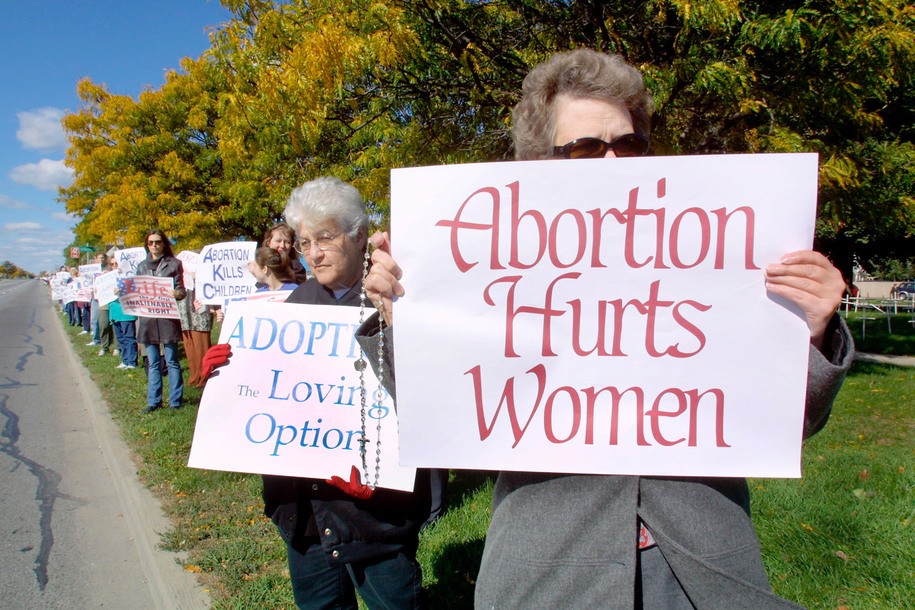
dozens of anti-abortion protestors who congregate outside of Hales’ clinic on a daily basis. On Saturdays, the number of protestors easily rises to hundreds. They yell on loudspeakers, jump in front of cars, and generally harass patients. Even after North Carolina Gov. Roy Cooper (D) banned gatherings of more than 100 people, Hales
reported on social media that anti-abortion protestors were still showing up en masse. In fact, protestors seem to be
encouraging protest during—
and in spite of—the pandemic.
“I wish I could say that [the] pandemic scares people away, but Governor Cooper said there should be no gatherings over a hundred people and there were 151 protesters out on Saturday [March 14]—and that’s actually kind of small for us on a Saturday. We had protesters out [on March 16] that were sticking their heads in cars and holding babies on the sidewalk,” Hales said.
Telemedicine abortion: A game changer
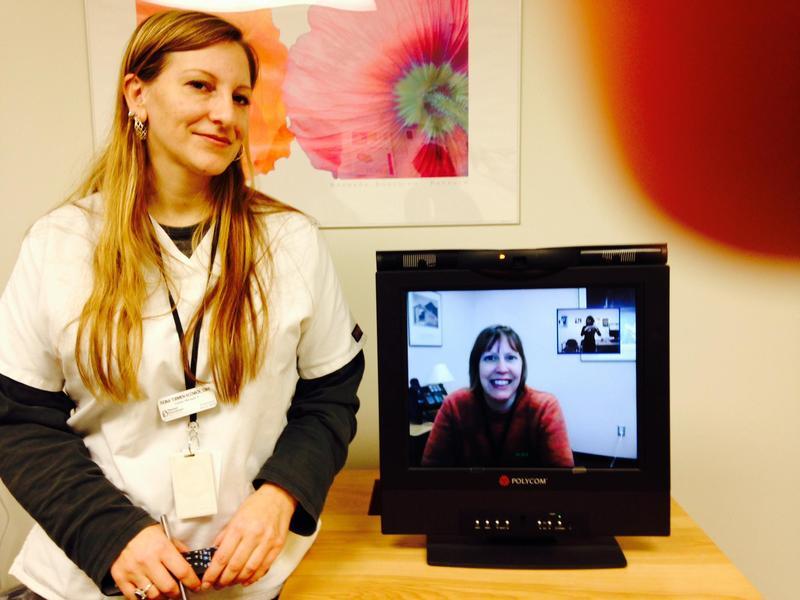
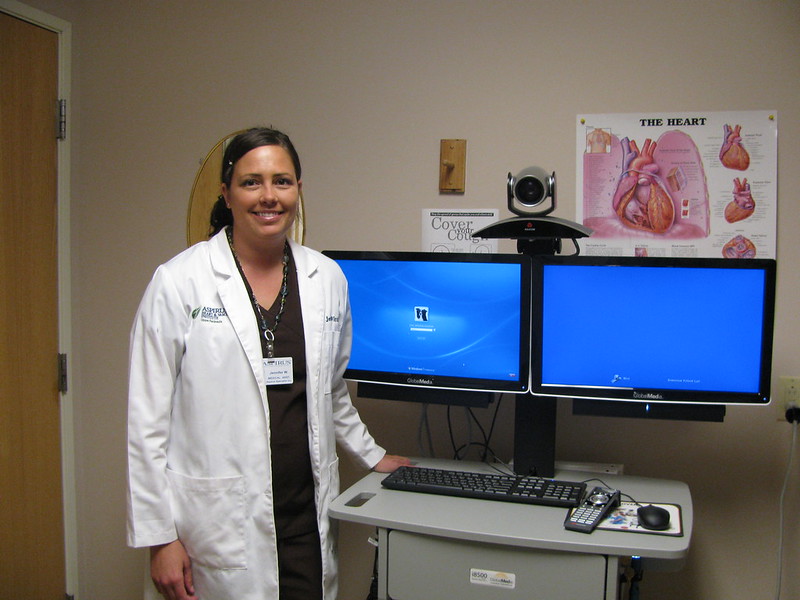
Telemedicine could make abortion more accessible and eliminate potential exposure to COVID-19 while enabling people to maintain a safe social distance. As Christine Grimaldi
reported for Vice, telemedicine would enable providers to prescribe
abortion pills from a distance, but “longstanding federal regulations require that clinics dispense mifepristone, one of the two drugs commonly used together in medication abortions, in person—meaning the drugs can’t be picked up at a pharmacy or sent in the mail.” This means that while a patient can take their medication at home, they can’t get it without leaving their home.
According to the Guttmacher Institute, 18 states “require the clinician providing a medication abortion to be physically present during the procedure, thereby prohibiting the use of telemedicine to prescribe medication for abortion remotely.”
During the coronavirus pandemic, states like Texas are
lifting restrictions on telemedicine, but they are not including abortion in their “emergency adoption” of the technology. Clinic directors and abortion providers told Prism that being able to utilize telemedicine abortion at any time, but especially during a pandemic, would be a “game changer.” As Grimaldi reported for Vice, telehealth and telemedicine abortion can take various forms. “Clinics that practice telehealth may text their patients with instructions before their abortion, whatever type it may be, and with follow-ups after. Under a telemedicine model, medication abortion patients may video conference with perhaps the only provider able to serve multiple clinics across several states,” Grimaldi wrote.
Nurse Leah Coplon uses telehealth for abortion and can attest to the difference it makes. Coplon is the program director at Maine Family Planning, where she runs the clinic’s abortion services. Maine is just one of a
handful of states that offers
telemedicine abortion. When Coplon spoke to Prism on March 16, Maine had 31 cases of the coronavirus. As of today,
it’s more than 100.
“We have a pretty robust telehealth system with medication abortions throughout our state,” Coplon said. “As [much as] possible, we want to limit how much contact patients and staff need to have. If a patient absolutely knows when their last period was, if they don’t have any contraindications, if they are within the gestation that is safe to do a medication abortion, then we don’t need to do an ultrasound. We don’t need to do lab testing. We are actually able to do all of the informed consent pieces via a telehealth video conference prior to their arrival. Then we can actually just pass them the medications, be available to them over the phone if they need us, and do a follow-up via telehealth.”
Maine Family Planning provides medication-based abortions at 18 of their facilities throughout the rural state, and since telehealth patients typically only need to visit the clinic once, it drastically reduces their travel time and expenses.
Coplon said that clinic directors, abortion providers, and abortion funds nationwide are in communication with each other. They’re a “close-knit family,” she said, and trying to strategize about best practices during the coronavirus. The program director said that because of Maine Family Planning’s “unique experience with telehealth,” others have been reaching out for guidance.
“Folks from other states are reaching out to talk about ways they may be able to provide care for their patients, they want to know how we can collaborate or learn from each other,” Coplon said. “I think people are really recognizing the gravity of this situation. They want to make sure that we ensure that people can get abortions who want them. It’s actually the bright side of all of this. Abortion providers care so deeply about patients. That’s really being highlighted right now. What’s paramount to them is making sure people get the care they need.”
Abortion is not elective
Coplon is referring to providers like Dr. Ghazaleh Moayedi, a board-certified OB-GYN and the only actively practicing abortion provider who lives in her Texas community and provides care to the legal limit, which is 20 weeks. When Moayedi spoke to Prism, she was at home with her young child because daycares and schools in the area are closed. Both Moayedi and her partner are physicians caring for vulnerable populations and the pandemic is hitting them hard. Complicating matters further, Moayedi’s mother, who often provides backup child care, is stuck in Iran due to COVID-19.
As a Texas resident and abortion provider, Moayedi has seen how natural disasters highlight the urgency to remove the state’s
targeted regulation of abortion providers (TRAP) laws, which are intended to close abortion clinics through medically unnecessary state-level regulations, like requiring clinics to be outfitted like miniature hospitals. During a pandemic, the doctor said, laws like these “have the potential to harm even more people than they already do.”
But TRAP laws don’t just stop at the clinic building. Texas also has a mandatory in-person follow-up for medical abortion, which Moayedi says isn’t needed.
“This means that rather than providing medical abortion without any in-person contact, which is safe, effective, evidence-based, and would be the ideal option in the setting of a pandemic, we’re instead requiring [providers] to see people three times,” the OB-GYN said, noting that Texas also continues to a ban telemedicine abortion.
“I already see patients every week who drive hundreds of miles for abortion, but encouraging or requiring long distance travel for health care during a pandemic doesn’t make any sense, and it’s dangerous,” Moayedi said.
The Texas provider told Prism that some advocates are worried that during the pandemic, it’s “risky” to even have public conversations about the laws that force people seeking abortion care to make multiple visits to the clinic.
“The fear is that rather than actually loosening these restrictions, it might go the other way and prompt states to further restrict abortion,” Moayedi told Prism. “I definitely understand [the fear], but we have to be bold. We have to be brave. We have to stand up for the people that we serve. There is nothing but fear right now and so we have to act. Our actions should be guided by our mission.”
Nationally, there is growing concern that more state officials will take a cue from Ohio and Texas and pounce on the opportunity to further restrict abortion care by deeming it “elective.” Moayedi said calling abortion care “elective” is an “age-old argument,” though it’s an especially dangerous one now that hospitals nationwide are
canceling nonemergency and elective procedures as they prepare for a spike in coronavirus cases.
Providers know that abortions are time-sensitive, that they are not elective, and that people seeking them need immediate care. But coronavirus may force a conversation in each state about whether abortion is elective and providers are justifiably nervous about where things will land.
Moayedi anticipates there will be “conflicts” during the pandemic at every single hospital or institution that provides abortion care as they weigh whether resources should be used for abortion. The American College of Obstetricians and Gynecologists and other medical organizations released
a statement making it clear that obstetric and gynecological procedures for “which a delay will negatively affect patient health and safety should not be delayed.”
“To the extent that hospital systems or ambulatory surgical facilities are categorizing procedures that can be delayed during the COVID-19 pandemic, abortion should not be categorized as such a procedure,” the statement read.
‘Open and providing care’
Few understand the importance of continuing to provide care during a pandemic quite like Dr. Melissa Paulen, an OB-GYN and a University of Washington family planning fellow who provides abortion care throughout the Seattle area. Until relatively recently, Washington was
considered the coronavirus epicenter in the United States.
Paulen told Prism she feels supported in continuing to provide abortion care through the pandemic, especially because when Washington Gov. Jay Inslee (D) announced new restrictions on nonurgent medical procedures, Paulen’s department chair made it clear that abortion care was not going to be treated as “elective.” Generally, the OB-GYN said one of her biggest concerns is misinformation circulating that hinders people from accessing care.
“I want to make it very clear that abortion does not fall under the category of ‘elective.’ I want people to know that abortion providers, both independent clinics and those housed in other institutions, are open and providing care,” Paulen said. “We are going to do everything possible to make sure patients are still able to receive the abortion care they need. It would take the governor or the president telling us we need to shut down, and even then it would be a fight.”
This was echoed by Dr. Laura Sienas, also a Seattle-based board certified OB-GYN, who told Prism that her hospital is one of the “first line responders” for COVID-19 patients, and it continues to provide abortion care.
Sienas is a maternal fetal medicine specialist who specializes in high-risk obstetric care. Because maternal fetal medicine doctors are usually concentrated in larger cities, patients often have to travel across the state to see her, especially because there are limited providers of second trimester procedures in her state. As many other providers have noted, Sienas said that the pandemic and its requirement of social distancing has shone a “giant spotlight” on all of the barriers that pregnant people experience trying to access abortion care.
“Abortion is an essential part of health care. Unfortunately, it’s often not treated that way,” Sienas said. “Now more than ever, if people are financially able, it’s a great time to donate to abortion funds, especially funds that help people travel long distances for abortions. Those funds are going to become so important as maybe smaller clinics are forced to reduce care during the pandemic.”
‘Abortion matters just as much’
Every clinic director and abortion provider who spoke to Prism discussed the importance of donating to abortion funds in this moment. Not only has the Trump administration worked diligently to
dismantle abortion rights and
attack abortion funding, but Republican elected officials are now attempting to use the pandemic to further restrict care, as we’ve seen in Ohio and Texas. This is also happening federally. As
Rewire.News reported, amid negotiations over a proposed federal coronavirus relief package comes “the White House’s reported insistence that the federal response to a rapidly growing pandemic include ‘Hyde Amendment’ language to ban federal funding of abortion.” The Hyde Amendment bans federal funding for abortion except in cases of rape, incest, and life endangerment.
Abortion funders are already reporting the impact that COVID-19 has had on their fundraising efforts.
Ariella Messing is a doctoral candidate in bioethics and health policy who is writing her dissertation on abortion funds. She is also a volunteer and fundraiser with the Baltimore Abortion Fund (BAF). Each spring, abortion funds nationwide roll out their fundraising campaign, known as the fund-a-thon, and they each set goals for how much money they will raise. BAF, for example, set a goal for $60,000, but Messing made it clear they could use “many multiples of that.” These fundraisers provide a substantial chunk of each fund’s budget for the year and just a few large checks can make “all the difference in the world,” Messing said.
BAF provides financial assistance to people who live in Maryland or are traveling to Maryland for abortion care. Maryland and the Washington metro area are home to
two of the East Coast’s four clinics that provide later abortion beyond 24 weeks, which can cost as much as $10,000. BAF provides just a portion of that funding for their patients, and the rest often comes by way of pledges from abortion funds across the country.
“Because of the pandemic, if people can’t get the abortion they need now, more people will have to travel to Maryland for later abortion at the two clinics here that offer it. That means we’ll need thousands and thousands of dollars more because people couldn’t get the care they needed when they needed it. It feels very bleak,” Messing said.
The doctoral candidate told Prism it simply “feels hard” asking people for money right now, given that so many are now out of work or on the verge of losing their jobs and their homes. The problem is that abortion funds’ inability to fundraise now impacts people seeking abortion care for the rest of the year, and COVID-19 has essentially significantly disrupted people’s ability to access care in a timely manner.
This is reflected in the online postings of pregnant people who have upcoming appointments for abortion care. As co-founder and co-director of the
Online Abortion Resource Squad (OARS), a group of volunteers who organize to ensure every post on Reddit asking for help with an abortion experience gets an accurate response, Messing said that people appear deeply concerned about how the pandemic will impact their ability to access care. In the last week or so, Reddit has been flooded with posts about COVID-19, including posts from people concerned that their packages containing abortion pills may not come in the mail.
Aid Access, one of the only organizations that provide telemedical abortion services to pregnant people, is currently unable to mail the abortion drugs mifepristone and misoprostol because their pharmacy is in India.
All signs point to COVID-19 being a “disaster for abortion access,” Messing said. But providers nationwide are committed to providing care through the pandemic—and for pregnant people who want to access care, that’s a bright spot during an otherwise terrifying time.
“I truly understand that there are life and death problems right now, but abortion matters just as much,” Messing said. “There are people going to the clinic each day risking exposure so that other people can get an abortion. To me, that’s heroic.”
Share what you read here:














 Abortion - Abortion Clinics, Abortion Pill, Abortion Information