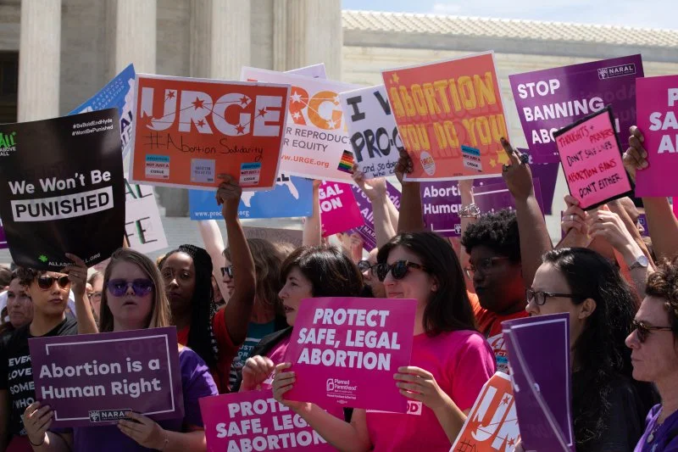
Anti-choice lawmakers in Kansas push a constitutional amendment to ensure abortion restrictions stay in place.

In a 28-12 vote last Wednesday evening, the Kansas State Senate approved a constitutional amendment that would give the legislature the power to regulate abortion access.
Shutterstock

Kansas

Less than a year after the Kansas Supreme Court declared access to abortion a “fundamental right,” the state’s Republican lawmakers are advancing a constitutional amendment to reverse the ruling and ensure they can continue to restrict that right.

In a 28-12 vote last Wednesday evening, the Kansas State Senate approved a constitutional amendment that would give the legislature the power to regulate abortion access. If the ballot measure passes the house with a two-thirds majority, the amendment will go before voters in August. Without the constitutional amendment, state Republican lawmakers fear decades of anti-choice restrictions could be invalidated, along with future efforts to make abortion care inaccessible, the Topeka Capital-Journal reports.

Reproductive rights advocates are urging members of the Kansas House to reject the anti-choice amendment. The house has 84 Republican members, which is the exact number of votes needed for a two-thirds majority: the amendment would need the support of every single Republican, unless it wins over any anti-choice Democrats.

The amendment would not need to be approved by the state’s Democratic governor. Still, Kansas Gov. Laura Kelly, an abortion rights supporter, came out against it in a Thursday press conference, saying the anti-choice amendment would “throw the state back into the Dark Ages,” the Associated Press reported. “I fear for a future in which the legislature chooses to stand between a woman and her doctor,” Kelly said.

The Kansas proposal is modeled on an anti-choice constitutional amendment approved by Tennessee voters in 2014 that opened the floodgates for anti-choice legislation. Five years later, the Tennessee legislature is considering a near-total abortion ban.

“The constitutional amendment to ban abortion approved by the Senate tonight is a vehicle to take away the rights of Kansas women and would put their health and safety in harm’s way,” Julie Burkhart said in a statement Wednesday. Burkhart is founder and CEO of Trust Women Foundation, which operates a clinic in Wichita. “Shame on the Kansas legislators who proposed and supported this flawed and dangerous constitutional amendment.”

Utah

Utah’s Republican-controlled legislature could soon consider a so-called trigger law that would outlaw abortion if conservative justices on the U.S. Supreme Court strike down Roe v. Wade.

State Sen. Dan McCay (R-Riverton) told KUTV that he plans to introduce an anti-choice bill that would ban abortion, except for rare circumstances, and automatically go into effect if the Court overturns Roe. “It will basically say, if the Supreme Court upholds that abortions can be banned at the state level, then we will ban them,” McCay said.

With a state government entirely in the hands of Republicans, Utah could join eight states with “trigger” bans. (Nine additional states have unenforceable pre-Roe abortion bans on the books, according to the Guttmacher Institute.)

Indiana  

An Indiana State Senate committee approved a bill last Wednesday to require medication abortion patients be told they can bring their fetal tissue to a local hospital or clinic for disposal. The bill, SB 299, received the support of every Republican and two of three Democrats on the committee, according to the Times of Northwest Indiana.

A 2016 Indiana law, upheld by the Supreme Court last year, already requires abortion providers to either bury or cremate fetal tissue, instead of treating it like other medical waste. SB 299  would go farther, forcing providers to inform patients receiving a medication abortion that they have the option to collect the tissue they expel and bring it back to the clinic to be buried or cremated. Around 40 percent of Indiana abortions in 2018 were medication abortions, the Times reported.

“I opposed this bill because it is unreasonable to think that women are going to collect the remains from an early-term abortion and bring them back to the clinic. Transporting bodily remains in improper ways is a biohazard,” said state Sen. Jean Breaux (D-Indianapolis), the only committee member to vote against the bill, in a Thursday tweet.

Fetal burial laws stigmatize abortion care and impose medically unnecessary regulations, reproductive rights advocates say. Such legislation can increase costs for abortion care providers, according to an Associated Press report.

South Dakota

In a grim new proposal, South Dakota lawmakers want to give abortion patients the chance to see their aborted fetus. A dozen Republicans introduced the measure, SB 87, last Tuesday. The bill says abortion patients must be informed beforehand that they “may request to view the aborted fetus after the abortion is performed up until the time the hospital, clinic, or medical facility disposes of the aborted fetus.”

The measure would add to the biased counseling that patients in South Dakota are forced to undergo before receiving abortion care.

Source: https://rewire.news/article/2020/02/03/kansas-republicans-fundamental-right-abortion-spotlight-on-the-states/

Jane’s Due Process executive director Rosann Mariappuram and four other reproductive justice leaders break down how we can bring comprehensive and affordable abortion care to the most marginalized among us.

A pro-choice march in Washington, DC, May 4, 1992. One protester carries a placard that reads “My Mind, My Body, My Choice.”Alfred Gescheidt/Getty Images

Earlier this month, we commemorated 47 years since Roe v. Wade legalized abortion in the United States. But those of us in communities and states across the country who are fighting for true reproductive equity and justice know that we can’t just pick up the fight when it’s making headlines. We have witnessed first-hand the escalation of attacks on abortion care and reproductive health even with the landmark ruling in place—and we know that, unsurprisingly, those attacks have disproportionately impacted people struggling to get by, women of color, young people, immigrants and LGBTQ+ folks.

So leaders and activists of color in the reproductive justice space are here, together, reflecting on the barriers to reproductive justice—discriminatory restrictions, financial and geographic barriers, stigmatizing hurdles for young people who need abortion care, mass anti-abortion misinformation campaigns—and on our collective vision for removing them. We refuse to accept Roe alone as the standard for reproductive justice and health equity—instead, we must fight for a future that includes all of us.

Terrelene Massey, Executive Director, Southwest Women’s Law Center, New Mexico

I’ve seen first-hand how Indigenous women and communities face too many barriers to have our basic needs met—and that includes access to reproductive health care. Since 1976, the Hyde Amendment has prohibited the use of federal funds to cover abortions for those who access health care through Medicaid or the Indian Health Service. Hyde and other intersecting, discriminatory policies have worked together to hack away at the full promise of Roe v. Wade for Indigenous people.

We’re fighting for a future that includes all of us, and leaves no one—including Indigenous people and those of us living on reservations, Indian land and in rural areas—behind. Our work must do more than sustain abortion rights as they are. Reproductive health care must be affordable and geographically accessible for the most marginalized communities, and to achieve this vision for all of us, we must follow the lead of the Indigenous women and people most impacted by this fight.

Rosann Mariappuram, Executive Director, Jane’s Due Process, Texas

Despite the legal protections granted by Roe v. Wade, young people in the U.S. still have to navigate a complicated web of restrictions to access abortion care. Anti-choice lawmakers in Texas and other states have put up legal barriers that make teens travel for hours to reach the closest clinic, pay out-of-pocket because of insurance bans on abortion, and force teens to listen to state mandated “counseling” that is medically inaccurate and designed to shame and stigmatize abortion care. And never during the passage of these anti-choice laws are the voices of young people centered. This is what Roe looks like in real life for large swaths of the country. This is why we must do better by young people.

Young people deserve honest, accurate information about sexual health and family planning, as well as access to birth control. When a teen makes the decision to have an abortion, they should be able to access the care they need without facing barriers like parental consent and notification laws. Teens who call or text our 24/7 hotlines receive confidential information on abortion and birth control options, including how to obtain a judicial bypass. As the only organization of its kind in the country, Jane’s Due Process is determined to center the needs of the teens we serve. We are fighting for a future that recognizes the power of young people and centers them in conversations about reproductive health care.

Cherisse Scott, Founder and CEOSisterReach, Tennessee

In my own life and throughout my years as a reproductive justice advocate in the south, I’ve watched and experienced first-hand how anti-abortion extremists have waged an all-out information and public health war targeting vulnerable women, girls and individuals who give birth. On top of abortion bans, coercive birth control practices, mandated policies obstructing access to comprehensive reproductive and sexual health education, and fake clinics target Black and Brown communities intentionally to control our births. Their lies, propaganda and disingenuous care for our lives and families pose one of the most significant threats to abortion access we have seen in my lifetime. As they work to dismantle Roe v. Wade, we continue to educate our base to protect and prepare themselves. It is an important service as our administration refuses to protect the very lives it claims to care for.

Our fight for a Roe v. Wade that works for all of us, no matter where we live, how old we are, or how much we make, must include standing up to the thousands of fake clinics across the country that are targeting marginalized people who seek care. However anyone may feel about abortion, we can all agree that everyone should have access to accurate information, quality medical care and the full range of pregnancy-related services. The decision to become a parent is too important—we can’t allow it to be taken away by politically-motivated bullies and moral scam artists

Nancy Cárdenas Peña, Texas State Policy Associate Director, National Latina Institute for Reproductive Health, Texas

Over the last several years, states have become the battleground for abortion restrictions. The recent wave of abortion bans coupled with existing restrictions like the Hyde Amendment disproportionately impacts people of color and people with low incomes, including Latinas struggling to make ends meet. When Texas passed a law in 2013 that erased a critical health care safety net of clinics across the state, Latinas in border communities lost their access to abortion care and other healthcare. Texas shows us that a right to abortion on paper—what the decision in Roe guaranteed—is not enough.

There is no justice until all of us can get the care we need in our communities with dignity and respect. Our vision for Roe will be realized when all of us—no matter our income level, zip code, or immigration status—have equitable access to health care. Women of color have been organizing in states like Texas for decades to ensure reproductive justice for all and this is a fight we know we can win—and a fight we must win.

Jan Robinson Flint, Executive Director, Black Women for Wellness, California

Across the country, Black women and girls in particular face the most formidable threats to maternal health, health equity and abortion access. We face rising maternal death rates, higher rates of criminalization and incarceration, and far too many additional barriers to freedom and autonomy over our bodies and lives. All of these barriers and oppressions interact to exclude us from the full promise of Roe v. Wade and subject far too many of our families and communities to vast, life-threatening health disparities.

At Black Women for Wellness, our vision of Roe v. Wade is one that guarantees equitable, real access to abortion and reproductive health care for all, and a society in which Black women and mothers can access the full range of resources they need to thrive. This requires a thoughtful, holistic understanding of reproductive health that includes not just pregnancy and abortion, but also maternal health, sexual health, and dignity and justice for incarcerated people. We’re as committed as ever to closing the health disparities gap experienced by Black women and girls, and raising the level of health services for all women.

Source: https://www.colorlines.com/articles/reproductive-justice-advocates-speak-we-must-fight-future-includes-all-us-op-ed

Presidential candidates’ abortion rights stances are top of mind heading into next week’s Iowa Democratic caucuses, according to Google analytics.

In a recent town hall, Pete Buttigieg affirmed his support for abortion rights when an anti-choice activist asked him why Democrats don’t court voters opposed to abortion.
Win McNamee/Getty Images

People in Iowa Are Researching 2020 Candidates’ Abortion Stances

Abortion and health care were the top 2020 election issues Googled by people in Iowa over the past week, as candidates for the Democratic nomination for president make a final appeal to voters before the February 3 Iowa caucuses.

Former Vice President Joe Biden, businessman Andrew Yang, former South Bend, Indiana, Mayor Pete Buttigieg, and billionaire activist Tom Steyer were the candidates whose abortion rights stance were searched the most over the past week, Axios reported. U.S. Sens. Elizabeth Warren (D-MA), Amy Klobuchar (D-MN), and Bernie Sanders (I-VT) were the candidates for whom health care was the top search on Google.

Biden‘s position on abortion rights came into question last year when he went back and forth on the discriminatory Hyde Amendment, which bans federal funding for abortion except in rare circumstances. Eventually, Biden decided to oppose the anti-choice budget amendment. “If I believe health care is a right, as I do, I can no longer support an amendment that makes that right dependent on someone’s ZIP code,” Biden said in June, according to CNN.

The Democratic Party didn’t incorporate Hyde abolition into its official platform until the 2016 election.

In a recent town hall, Buttigieg affirmed his support for abortion rights when an anti-choice activist asked him why Democrats don’t court voters opposed to abortion. He said last year he would back the expansion of medication abortion if elected as president, though he warned of the “unintended consequence of setting people up for a criminal investigation or even jail” since self-administered abortion has been outlawed in some states.

Yang’s reproductive rights platform is unabashedly pro-choice. He pledges to nominate federal judges who support abortion rights, codify Roe v. Wade protections into federal law, undo the Trump administration’s domestic and global “gag rules,” and repeal the Hyde Amendment.

Steyer on his campaign website said his administration would “fight for full reproductive justice.” At a Planned Parenthood Action Fund event in Iowa this week, Steyer said there’s “compromise on [reproductive justice]. There is no middle ground. We need to fight. This is a question of right and wrong.”

What Else We’re Reading 

NARAL President Ilyse Hogue told the Elite Daily she would listen to young people in determining how to defend and expand reproductive rights during the 2020 election cycle and beyond. “The whole idea of reproductive freedom and abortion access—as central to a conversation about how do we create gender equity—came from young people,” Hogue said in a report published this week. “Justice is a journey, it’s not a destination.”

Kaiser Family Foundation research published recently shows “small shares of Democrats (6%), independents (4%), and Republicans (7%) say reproductive health issues such as birth control and abortion are the most important issues for the 2020 presidential candidates to talk about.” Forty-three percent of respondents called abortion and contraception “very important” issues in the 2020 election, while 14 percent called reproductive health care “not important.”

Wisconsin voters believe Sanders and Biden are the two Democratic candidates who could beat President Trump in the 2020 general election, a Marquette University Law School poll found.

Source: https://rewire.news/article/2020/01/31/iowans-want-to-know-where-these-candidates-stand-on-abortion-campaign-week-in-review/

HHS Secretary Alex Azar Image: Associated Press

On Thursday, Alex Azar, the Secretary of Health and Human Services released a statement in which he called his agency the “Department of Life,” an overt nod to the many anti-abortion measures that the Trump administration has championed to weaken abortion and reproductive health access throughout the country and around the world.

Department of Life! It would be laughable if it weren’t so terrifying, or such an accurate description of the anti-abortion policies that the agency has pushed in recent years, from pressuring Title X-funded clinics to stop making abortion referrals to threatening to pull federal funding from states like California if they continue to require health insurance plans cover abortions to eagerly pursuing complaints about abortion providers under the guise of religious freedom and civil rights protections.

“It is really rich for an agency that was a primary architect of putting children in cages at the border to call themselves the ‘Department of Life,’” NARAL Pro-Choice America’s President Ilyse Hogue wrote in a statement. She added, “This is just another in a long line of dark and dystopian moves from Donald Trump and the anti-choice movement attacking our reproductive freedoms.”

Timed to coincide with Friday’s annual anti-abortion March for Life—during which Donald Trump, the first president ever to appear in person at the protest, attempted to pretend that he’s a Christian and again ranted about Democrats wanting to kill babies right after they’re born—Azar’s statement described the Trump administration as “the most pro-life administration in this country’s history.” We are proud to be ‘the Department of Life’ and will continue protecting life and lives while upholding the fundamental freedoms and inherent dignity of all Americans,” Azar wrote. In another sign of how much HHS has embraced the March for Life, an email was recently sent to all HHS staff that glowingly described the March for Life as the “largest annual human rights demonstration in the world.” Per Politico reporter Dan Diamond:

HHS, under the Trump administration, has been stocked with anti-abortion religious zealots, from Azar to Roger Severino, the director of HHS’ Office of Civil Rights and the former director of the DeVos Center for Religion and Civil Society at the Heritage Foundation. In 2018, a moderator at the Evangelicals for Life conference described HHS as “a true bright spot in this administration when it comes to protection of life and protection of conscience.” For everyone who cares about abortion access and reproductive health, they unfortunately weren’t wrong.

Source: https://theslot.jezebel.com/hhs-is-the-anti-abortion-department-of-life-now-accord-1841204285?utm_medium=sharefromsite&utm_source=theslot_facebook&fbclid=IwAR3cDz80M72T6nIa1ibHFrdDF9y66GNK9grw4TfmcJ_3oeNIAEUVg-WA2xI

The 47th anniversary of Roe v. Wade, the Supreme Court decision that legalized women’s right to choose abortion, was Jan. 22. While religious anti-abortion forces have been trying to overturn it ever since, the threat has never been greater —  especially with woman-hater, racist, anti-LGBTQ2+ Trump in control of the state.

Women Strike for Equality Day, Aug. 26, 1970, New York City. Women of Youth Against War and Fascism, including Sue Davis, were in the march.

Women Strike for Equality Day, Aug. 26, 1970, New York City. Women of Youth Against War and Fascism, including Sue Davis, were in the march.

Trump took a bold step on Jan. 24 by being the first acting president to address the so-called “March for Life” in Washington, D.C. The reactionary, white supremacist march has been organized by the Catholic Church-backed, misnamed “Right to Life” for the last 46 years and since 2017 reinforced by white evangelicals.

“Unborn children have never had a stronger defender in the White House,” Trump stated. Too true. Contrast that with his administration’s plan to reduce funding for food stamps, which means free school meals for nearly a million poor children are in jeopardy and up to 5.3 million people, including thousands of children, could be cut from the program. (cbsnews.com, Dec. 10) Other government services which assist low-income children are at risk.

In his attack, Trump made the preposterously false claim that Democrats support infanticide and bragged that he will withhold federal money from California if it does not drop a requirement within 30 days that private insurers cover abortions.

Both the Guardian and the New York Times called Trump’s appearance an election appeal — which ironically coincided with the final formal argument in the Senate for his removal from office. The Guardian, calling it “a sign of desperation,” stated: “Trump is well aware, of course, that evangelicals don’t seem to give a damn about moral deficiencies — just as long as he cracks down on women’s reproductive rights they’ll continue to support him. So that’s exactly what he’s doing.” The Times reported that 80 percent of white evangelical voters helped crown King Trump in 2016.

Refuting Trump, Alexis McGill Johnson, acting president and CEO of the Planned Parenthood Action Fund, said in a counterstatement: “[W]e’ll be standing with the nearly 80 percent of Americans who support abortion access. We’ll never stop fighting for all the people in this country who need access to sexual and reproductive health care, including abortion.”

Protest outside misogynist Supreme Court, May 21 2019.

Protest outside misogynist Supreme Court, May 21 2019.

Right-wing attacks

Meanwhile, there are at least four ways the blatantly patriarchal Trump administration is using state power to attack women and other gender-oppressed people.

On March 4, the legal case, June Medical Services LLC v. Gee, comes before the Supreme Court. The case is identical to one plank of a Texas law the Supreme Court ruled unconstitutional in 2016, Whole Woman’s Health v. Hellerstedt. The disputed Louisiana law, Act 620, would prevent doctors from providing abortion care in the state unless they have admitting privileges at a local hospital. The goal of the law is to limit the number of abortion clinics (as happened in Texas) and restrict access to surgical abortions.

The Center for Reproductive Rights is arguing against the Louisiana law  — backed by dozens of medical, legal and other organizations promoting rights for women, LGBTQ2+, various nationalities and people with disabilities. It seems the Fifth Circuit Court of Appeals flouted the Supreme Court when it upheld the Louisiana restriction. Should the court overturn its own decision — thanks to Trump appointees Neil Gorsuch and Brett Kavanaugh — the case could be used by anti-abortion state legislators to limit access to surgical abortion across the country.

Anti-abortion state legislators introduced a record number of near-total abortion bans, so-called “reversal laws” and other restrictive legislation in 2019. Undoubtedly emboldened by Trump’s braggadocio, they are continuing to introduce bans this year even in states like New Hampshire where there is a strong pro-choice majority.

Another legislative anti-woman ploy is passage of “abortion reversal” laws based on the pseudoscience that medication-induced abortions can be reversed and the myth that people who have abortions often regret their decision. New research, published the week of Jan. 13 by the journal Social Science & Medicine on emotional responses post-abortion, shows that 99 percent of women don’t regret their abortions after five years. The Guttmacher Institute, which conducts in-depth research on reproductive needs, corroborated that no evidence shows abortion is responsible for mental health problems. (rewirenews.com, Jan. 15)

But what cannot be quantified are the effects of Trump’s Department of Health and Human Services, stacked with anti-abortion, misogynist bigots who issue and promote anti-reproductive health care rulings like “conscience clauses” and the “domestic gag rule.” The latter was designed to reduce access to reproductive health care, particularly abortion, by exercising state power over some of the most in-need, vulnerable people in this country: the 4 million low-income women and gender-oppressed people enrolled in Title X.

By significantly adulterating Title X of the Public Heath Services Act, passed in 1970 during the Nixon era, the revamped regulations do not allow Title X providers, as of Aug. 19, to conduct abortions alongside other services or offer patients referrals for abortions. All Title X recipients are poor people of color, youth, rural residents, im/migrants, people with disabilities and survivors of domestic violence. (For background, see WW article, “While rate of abortion declines/Title X gag rule will only increase need for abortion.,” Oct. 4)

The primary target of these changes was Planned Parenthood, the largest private provider of comprehensive reproductive health services, serving about 40 percent of more than 1.5 million women and gender-oppressed people who need contraception, testing for cancers, treatment for sexually transmitted infections and abortions. Planned Parenthood stood up to the Trump-Pence assault by opting out of Title X on Aug. 19.

The most important question is: How is the gag rule affecting Title X patients? The Guttmacher Institute cannot provide such data. It would be difficult, if not impossible, to get DHHS authorization to survey all 4 million Title X patients and clinics that opted in.

How many clinics have been forced out of Title X, denying convenient, timely, affordable access to abortion and other medical services? How many patients are unable to find licensed health centers that address their needs, excluding abortion? How many patients can’t afford to travel for reproductive care? How many need an abortion but can’t afford to travel? (That can cost hundreds of dollars on top of surgical fees.)

Reproductive justice now!

While anti-abortion politicians and activists cite blatant misinformation and outright lies that also stigmatize and slut-shame to promote their views, Guttmacher supplies facts to refute them: (1) Safe, legal abortion is common and at its lowest rate since Roe in 1973. (2) State restrictions are not driving the recent decline in abortion. The decrease is due to long-lasting, more effective contraception.

Many pro-choice groups, promoting medical, legal and civil rights for women and gender-oppressed people, issued statements on Jan. 22 recognizing Roe:

Destiny Lopez, co-director of All* Above All denounced the Dec. 20  DHHS ruling mandating separate billing for abortion care. That ruling and Roe “remind us abortion rights in theory are not enough. We must also fight [for] equitable access to …  safe, healthy and autonomous decisions about our lives, bodies and futures [which are part of] the fight for dignity and equity.” She added: “[R]esearch has shown that someone who wants an abortion but is denied …  leads to a significant increase in household poverty. Health insurance that respects our decisions and upholds our health must cover abortion.”

The struggle for reproductive rights in the early 1970s.

The struggle for reproductive rights in the early 1970s.

Andrea Miller, president of the National Institute for Reproductive Health: “[W]e’re writing a new playbook for abortion access by focusing on passing proactive laws to protect and expand access to abortion at the state level. … In 2019 alone, more states passed proactive protections for abortion rights and expanded access than in any previous year.”

Voto Latino spokeswoman Sandra Sánchez wrote in defense of abortion rights for people of color, low-income folks and the LGBTQ2+ community: “[W]e’re  . . . fighting to ensure that all Latinxs have access to abortion. … Research shows 73 % of Latinx voters want to see SCOTUS uphold the right to abortion, and 87 % say they would support a loved one who received one — because that’s what our community does, we support each other. … No politician should be able to take that away.”

Yamani Hernandez, executive director of the National Network of Abortion Funds: “[H]elp end abortion stigma by sharing loving and bold messages about abortion. It’s up to us to break cycles of shaming and oppression. When we envelop people having abortions in the fierce love and power that’s built in community care, we bring the world one step closer to ending the harmful stigma that isolates us from each other — and our collective power.”

Kimberly Inez McGuire, executive director of youth-focused and -led Unite for Reproductive and Gender Equity, was quoted in Truthout: “McGuire expressed a frustration heard and repeated over and over by activists, advocates and social-justice minded legislators and academics. In real life, the ‘promise of Roe’ never reached those who needed it most: the poor, youth, people of color, LGBTQIA people and rural populations.”

Source: https://www.workers.org/2020/01/45823/

Is this the year when we could lose protection of our abortion rights?
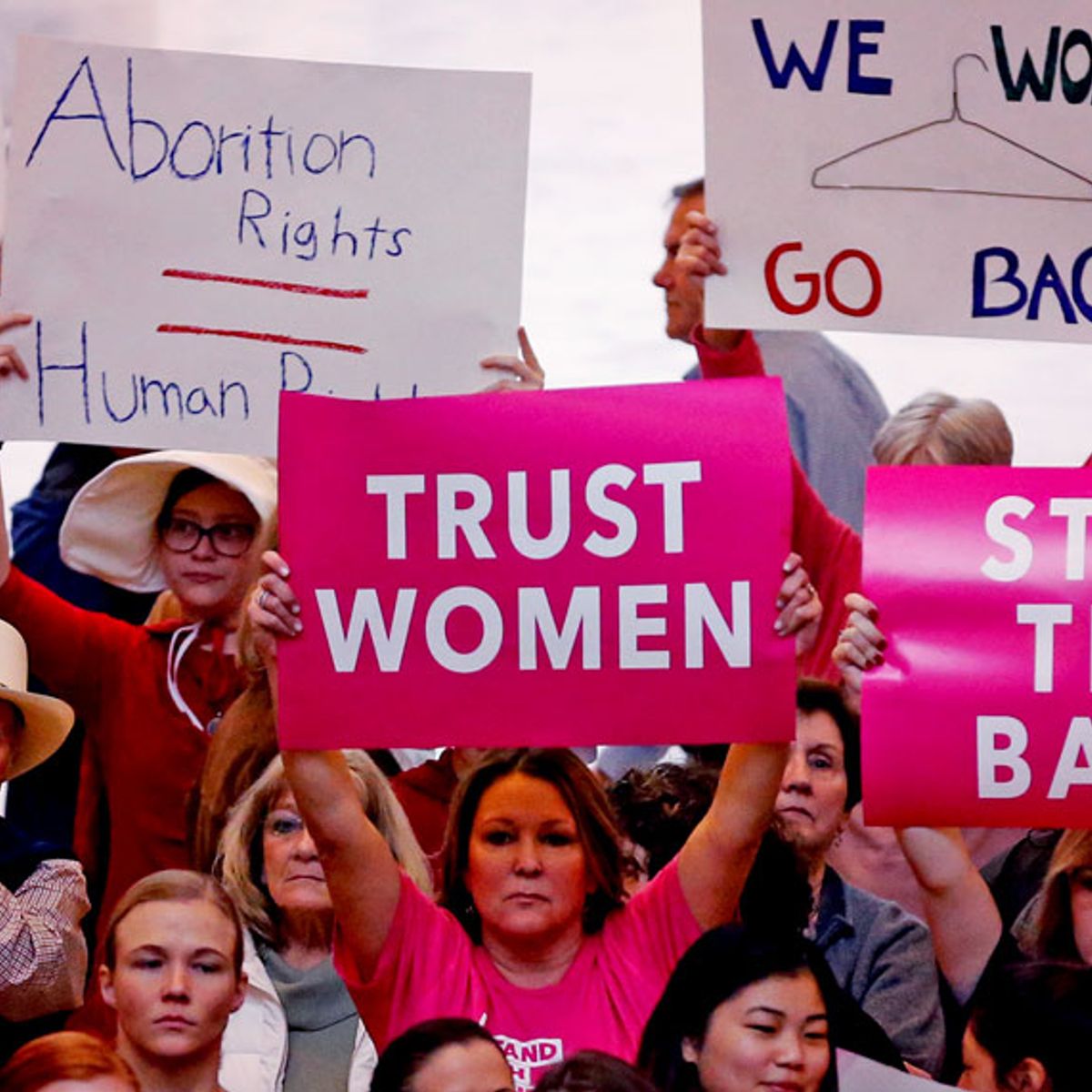
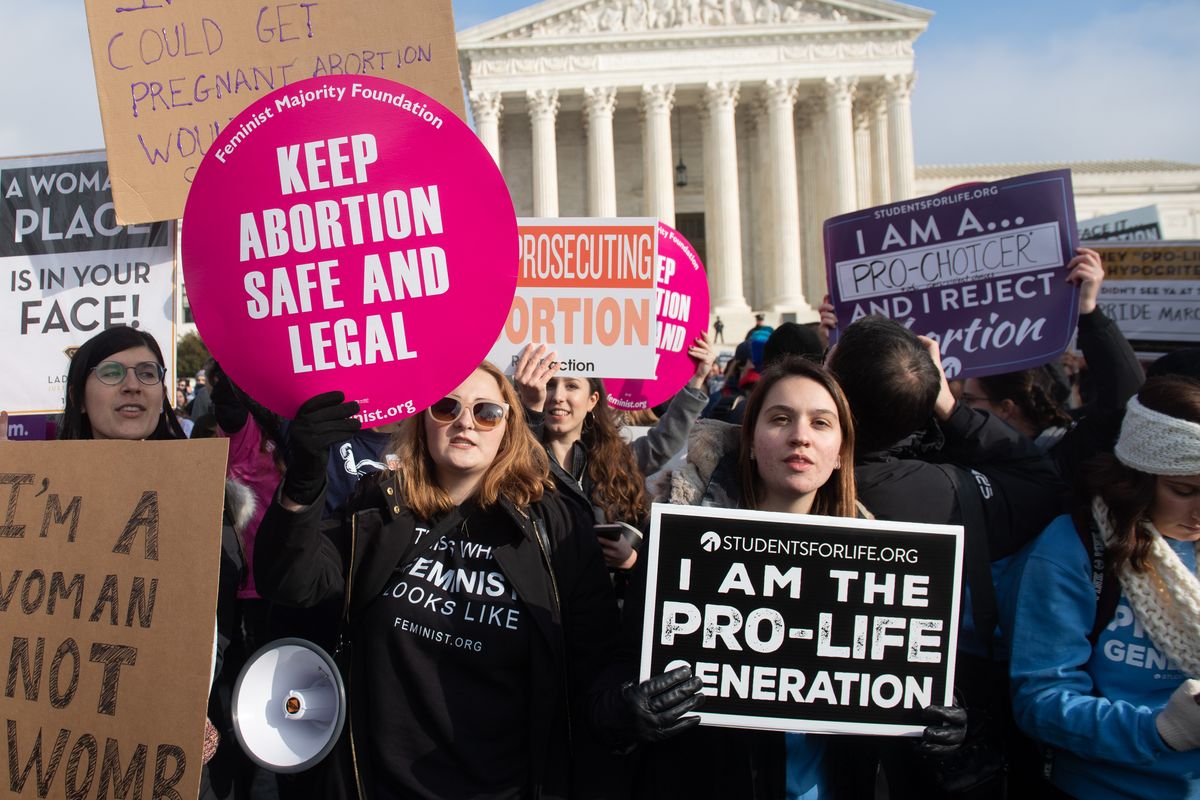
Imagini pentru “Roe v. Wade” is being chipped away. Will we lose it altogether this year?

activists gather in the Utah State Capitol Rotunda to protest abortion bans happening in Utah and around the country, in Salt Lake City. About 39,000 people received treatment from Planned Parenthood of Utah in 2018 under a federal family planning program called Title X. The organization this week announced it is pulling out of the program rather than abide by a new Trump administration rule prohibiting clinics from referring women for abortions. (AP Photo/Rick Bowmer)

Just four years after the Whole Woman’s Health v. Hellerstedt decision strengthened the precedent and promise of 1973’s Roe v. Wade, Louisiana’s medically unnecessary regulation, Act 620, has given the Supreme Court the opportunity to weaken or outright overturn federal protections for abortion care.

Despite Act 620 raising the exact same issue as Whole Woman’s Health — a medically unnecessary requirement that a physician have hospital admitting privileges within 30 miles of the procedure — the outcome of June Medical Services, LLC v. Rebekah Gee is far from certain and unlikely to be as simple as a “win” or “loss.” Instead, experts are watching for a slate of possibilities — most of which are sure to further exacerbate the decade-long, exponential increase in reproductive health clinic closures and burdensome hurdles to abortion care around the country.

As we mark the anniversary of the Roe v. Wade decision, we’re forced to ask: Is this the year when we could lose protection of our abortion rights?

Anti-abortion tactics

Incrementalism, which involves “long game” tactics, has been part of the anti-abortion strategy since Roe decriminalized abortion 47 years ago. Constitutional amendments are famously a long shot (just ask Equal Rights Amendment activists who fell a mere three states short of the required 38), so establishing constitutional rights for fetuses has never been a serious focus of the structured part of the anti-choice movement.

Instead, the movement has been chipping away here and there, adding medically unnecessary requirements and expensive, time-consuming blockades that anti-choice activists knew would go wholly unnoticed by monied constituents. Targeting individual doctors, local legislatures and even individual patients was quietly effective. By the time the Tea Party wave swarmed in and turned up the volume and intensity of its attacks over the past 10 years, the legal landscape throughout our country was set.

Due to this existing landscape and the eccentricities of the Supreme Court itself, all of the legal experts consulted by Truthout on June Medicalexpressed two important caveats to their analyses: One, the Supreme Court can always do whatever it wants as long as it has the votes. Two, neither Roe nor Whole Woman’s Health needs to be directly overturned or even referenced in the decision to do significant damage to the future of abortion access in this country. All of the individual challenges from individual states and cities trying to defend unconstitutional abortion restrictions plus all of those from clinics, doctors or patients trying to strike down those restrictions mean that there is always another case in the circuit court pipeline.

Whatever happens in the month of June when the decision on the June Medicalcase is announced, experts are planning tempered reactions — not just because of the ideological shift on the court since Whole Woman’s Health, but also because the opportunity to hear the next abortion case is never far off. And the Trump-era appointments have provided all the ingredients that lawyer, author and Abortion Care Network board member David S. Cohen explained to Truthout three years ago would be needed to nullify Roe:

While … Cohen conceded that it “wouldn’t be hard at all with committed justices,” he described the path to an ultra-right-wing court as long and challenging. How challenging depends on the timing of potential vacancies and the willingness of Senate Democrats and moderate Republicans to hold up confirmation of any justice who won’t commit to upholding existing precedent, or — in “court speak,” upholding the “rule of law.”

And now?

“There’s no doubt they’re going to do damage,” Cohen told Truthout. “There’s so many different ways this could come out — but we certainly have the justices with beliefs on this court right now that are more likely than not to strip away abortion rights.”

Justices could do that under the specious guise of “protecting the patient’s health,” even though this exact same provision was shown to have zero benefit for patients to outweigh its clear burdens.

In real life, the “promise of Roe” never reached those who needed it most: the poor, youth, people of color, LGBTQIA people and rural populations.

What lay people think of as “settled law” rarely is, according to Diana Kasdan, director for judicial strategy at the Center for Reproductive Rights (the legal team representing the Louisiana clinics and their patients).

“These laws are all modeled on each other,” Kasdan told Truthout of the anti-choice provisions. “The states introduce them for the same purpose: to shut down clinics. And Louisiana knew it would work in shutting down clinics because that’s what happened in Texas.”

Currently, all four remaining Louisiana clinics are open, pending the outcome of June Medical — despite being attacked directly in the justification for the law itself and for the attorney general to fight to reinstate Act 620. In the press release tied to the attorney general’s office following its June Medical brief, AG Jeff Landry pulled an impressive amount of misinformation out of the air to share with constituents:

“Women deserve better than incompetent providers who put profits over people,” said Solicitor General Murrill. “Louisiana is not Texas, and our case is distinguishable from Hellerstedt; our facts, our evidence, and our generally applicable medical standards are all different. This bipartisan legislation is necessary because Louisiana abortion providers have a long documented history of medical malpractice, disciplinary actions, and violations of health and safety standards.”

In his role at Abortion Care Network, Cohen is connected to all the independent (i.e., not Planned Parenthood affiliated) member clinics around the country where over 60 percent of abortions are performed annually — including in Louisiana. His response to the AG’s allegations was clear and brief: “Abortion is just as safe and complications are just as rare in Louisiana as anywhere else.”

Kasdan confirmed that no evidence of unsafe practices was presented to the court.

“In fact, if you look at the record, the provider in this case has been providing abortions for decades and, in all that time, maybe four women had to go to the hospital from some kind of emergency care,” Kasdan said. Statistically, this is on par with the national average of one-tenth of 1 percent of abortion patients ultimately seeking such follow-up care.

None of the experts Truthout consulted were surprised by the specious nature of the “evidence” from the state or by the speed with which the court chose its Whole Woman’s Health follow-up. What’s more, whatever the outcome of June Medical may be, going forward we can expect more of the same from the dozens of state houses hostile to abortion rights.

Kimberly Inez McGuire, executive director of the youth-focused and led URGE: Unite for Reproductive and Gender Equity, says current uncertainties about Roe underscore the importance of building community and increasing access.

“I think that (our) folks are clearer and clearer that we cannot and we will not wait for the courts to deliver justice — especially this Supreme Court,” McGuire told Truthout. “In this moment we know that the Supreme Court is not going to deliver justice to our communities. And, so, what that feels like on the ground? It feels like people who are really sick of low standards — including, frankly, the low standard of Roe v. Wade in the first place.”

McGuire expressed a frustration heard and repeated over and over by activists, advocates, and social-justice minded legislators and academics. In real life, the “promise of Roe” never reached those who needed it most: the poor, youth, people of color, LGBTQIA people and rural populations.

“This was never enough for our communities,” McGuire said, echoing sentiments from Quita Tinsley, co-director of ARC-Southeast, who spoke with Truthout in December. Both advocates audibly sighed when asked about the impacts of Roe. A legal right without access is a fractured, if not broken, promise.

“It was always focused too heavily on this legal right to abortion,” McGuire said, pointing to the fact that despite this right, many people cannot actually obtain the abortions they need. “To be clear, for some people that legal right has saved and changed their lives. And for many people it has been meaningless….We cannot have basic dignity and humanity if we cannot make our own decisions about sex, our bodies and pregnancy.”

The Supreme Court has all the power

Cohen’s career fighting for individuals’ rights to make those decisions for themselves has meant that, when it comes to court cases, he tends not to see the glass as half empty or half full. He’s incredibly mindful of case law history and how past justices have gone off the rails in ways both obvious to the public (such as the Citizens United decision) and in ways that were subtler and more difficult to convey (like the 2013 gutting of the Voting Rights Act).

According to Cohen, the June Medical decision could present an opportunity to further cement past Supreme Court rulings.

“I can see a way that June Medical can win this case by appealing to Chief Justice Roberts [and] maybe Justice Kavanaugh [on the grounds that] lower courts need to listen to the Supreme Court,” Cohen explained. “They can’t ignore Supreme Court precedent [i.e. Whole Woman’s Health]. [They could] appeal to the institutional argument that the Supreme Court having decided something in 2016, you can’t just let the lower courts ignore that. I could see that as a winning argument, but I think it’s incredibly unlikely.”

It is, however, a reminder that any prediction about a win or loss for “either side” following the March 3 oral arguments or the June decision announcement must include context exploring the consequences for low-income and rural folks, the LGBTQIA community, people of color, the undocumented and new immigrants, and other marginalized groups.

Among the practically limitless minutiae of possible outcomes, Cohen is taking his cues from the current political climate (don’t let anyone tell you the Supreme Court isn’t political), the case history and personalities of the sitting justices, and the tea leaves available to the chosen few who have been present at past oral arguments and decisions.

“I think much more likely is that we have the justices with an ideology that says that the Supreme Court has gone too far with its abortion jurisprudence and we need to rein it in,” said Cohen. “[Now], do we need to rein it in by just saying that it really is a state by state analysis on admitting privileges? So, then, admitting privileges are unconstitutional in Texas, but not Louisiana? They could do that. [Or, they] could rule that Whole Woman’s Health was just wrong. They could say Casey [Planned Parenthood v. Casey, 1992] was wrong. They could say Roe was wrong.”

The issue of “standing”

What these decisions come down to, Kasdan explained, is the issue of “standing.”

“What they’ve done — at the last minute, the eleventh hour, at the Supreme Court — is said, ‘Actually, the providers don’t have standing to bring these claims on behalf of [patients]’,” said Kasdan. “That was not raised in Texas in the Whole Woman’s Health case — probably because for over 50 years the Supreme Court has recognized that providers have standing to represent the constitutional rights of the people they care for because it would be incredibly burdensome and impractical to expect a pregnant woman to run out to find a lawyer and bring litigation at the moment [when] she’s also jumping through every hurdle possible to access abortion care.”

It sounds like settled case law. Unfortunately, not only do anti-abortion groups have what McGuire accurately described as “a kind of creepy resilience,” but it’s not hyperbole to expect they’ll use that resilience to keep raising the issue of standing until they get a decision they like. And a decision that strips standing from clinic owners and physicians — who both directly face consequences in the form of expensive regulations imposed on their businesses and in accordance with their position as caretakers for their patients — could conceivably end advocates’ ability to challenge these laws at all once they’re passed. If abortion providers can’t bring lawsuits on behalf of their patients, it’s much less likely that such lawsuits would ever see the light of day.

“It would be a way for them to do something that looks like it’s, you know, wonky and procedural, but really destroy abortion rights in a broad way,” Cohen said. “The third-party standing issue would be a way for them to gut almost all abortion litigation in a way that no one would really understand.”

Roe in real life: a promise that falls short

For all the talk this week about the promise of Roe v. Wade, McGuire sighed when asked what comes to mind when she hears that phrase.

“What comes to mind for me is the clarity that that promise was never for me or my people or my community,” said McGuire. “That promise was not for women of color. That promise was not for poor women. That promise was not for young people. To the extent that it ever has existed, that promise has been broken too many times.”

McGuire added that even with Roe still in effect, “lots of people in Alabama and Georgia and Ohio can’t get an abortion,” adding, “If we didn’t have Roe that would still be true.”

For more than a decade, McGuire has organized with communities located too far from the sanctified Supreme Court building in the capital to be comforted or empowered by a decision that merely decriminalized abortion. While a loss or weakening of Roe would signal to anti-abortion legislators that they can hit the gas on both state and federal laws, nothing in Roe or the subsequent cases that altered or cemented precedent over the ensuing 47 years ensured access to abortion care.

Roe doesn’t open or fund clinics. Roe doesn’t put future abortion providers through medical school. Roe hasn’t stopped state legislators from imposing thousands of restrictions. Roe can’t reach the patients whose actions or bodies have been criminalized by other policies and laws.

Ultimately, it’s not the duty of the Supreme Court to advance abortion access. Under the Constitution, that job belongs to legislators — which means it’s up to communities to organize and demand more than an end to restrictions. Without explicit protections for providers and patients, even a “win” in June leaves the door open to revisit this issue as often as annually.

What good is a promise that can’t be kept?

“I am not sitting with an existential dread over whether or not we will have Roe,” McGuire said. “I am sitting with my fierce determination to fight for something better.”

Source: https://www.salon.com/2020/01/25/roe-v-wade-is-being-chipped-away-will-we-lose-it-altogether-this-year_partner/?fbclid=IwAR3b8Qt5vub3StnH5ZRyX2snQZtu_sQ9_4lZ7CCembgh287921yiwOGj0Ps

Texas has become a notorious battleground over abortion rights. Here’s one person’s story.

Texas is the state with the most cities that are more than 100 miles away from an abortion clinic. Those who have the resources will always be able to get the support they need, while marginalized people continue to be disproportionately affected. The state lost more than half its abortion providers following the 2013 passage of HB2—which imposed medically unnecessary requirements on providers and has since been overturned, though many clinics haven’t re-opened.

What Texas state law says about abortion:

The state bans abortions after 20 weeks of pregnancy unless the pregnant person has a life-threatening medical condition, or if the fetus has a severe abnormality. But some cities, like El Paso and Waco, only have providers that perform abortions until 16 weeks; leaving many with no choice but to travel to get the care they need.

Lawmakers based the gestational limit on the inaccurate idea that a fetus may feel pain by 20 weeks. But the American College of Obstetricians and Gynecologists says that there is no evidence supporting this idea before viability—which occurs around 24 weeks—and ACOG says that the ability to distinguish pain from touch wouldn’t develop until well into the third trimester.

Under The Woman’s Right to Know Act, enacted in 2003 and amended in 2011 and 2017, people are forced to receive biased in-person counseling. The law also requires that:

  • Patients receive inaccurate information about abortion and the development of pregnancy; like a risk of breast cancer, infertility, and the ability of a fetus to feel pain. They must also receive information about alternatives to abortion, including parenting and adoption, as well as their right to receive child support.
  • Patients wait 24 hours between getting the state-mandated counseling and having the abortion, which means most people have to visit the clinic two or more times. (Those living more than 100 miles away from their nearest clinic can have the waiting period waived.)
  • Providers force people to have a mandatory ultrasound 24 hours before the abortion, too—despite this being medically unnecessary for most people. During the ultrasound, the provider must describe what is shown on the screen, and give the pregnant person the option to view the image and/or listen to the heart tone if available.
  • The same doctor who performs the ultrasound must perform the abortion, too, which means people aren’t able to bring an ultrasound they’ve received from their primary care physician or OB/GYN first, and if the abortion provider suddenly becomes unavailable after performing the ultrasound the process must start all over again with a new doctor.
  • Abortions performed beyond 16 weeks must take place at an ambulatory surgical center—which have to adhere to different standards than other abortion clinics, like regulations concerning buildings, equipment and staffing.
  • People under 18 must have parental consent from one parent or legal guardian on the day of the abortion (not the ultrasound), unless they get a judicial bypass from court; a complicated process that must be done in a person’s county of residence. The process can also take weeks, and involves proving to a judge that you are capable of making this decision on your own. (For help getting a judicial bypass in Texas, teens can call or text Jane’s Due Process at 1-866-999-5263.)

Public funding for abortion (including state health plan coverage) is already banned in Texas—except in cases of rape, incest, or life endangerment. But most people can’t use their private health insurance to cover their abortion either, so they pay for the costs completely out of pocket. This is thanks to a 2017 law that banned coverage for “non emergency abortions” and with no exceptions for rape, incest, or fetal abnormalities. People can purchase a costly premium through their private health plan for coverage, but millions of Texans are unable to afford basic insurance as it is. Recent data shows that, for the second year in a row, Texas has the highest rate of uninsured people in the nation.

What it’s like seeking an abortion in Texas:

This is one person’s story.

Nick, who is trans, was 26 when they needed to access an abortion in Houston, Texas. As a storyteller with We Testify Texas—a leadership program that centers the voices of those who have had abortions—they’re committed to ending stigma and shifting the narrative surrounding abortion in the U.S. Nick also volunteers with Clinic Access Support Network (CASN) where they provide transportation to those needing an abortion in the Houston area.

They knew right away abortion was the right decision

“I immediately knew I wasn’t in a position to be pregnant at the time—not emotionally, not financially, and in practical terms I just knew right away,” Nick told VICE. They say the experience taught them a lot about what they wanted for their life; helping them re-examine how they felt about having children. “While I grew up thinking I’d never have an abortion…when the time came, I knew exactly what was right for my life. But I also knew the government wouldn’t make it easy for me,” they said.

They had to call multiple clinics to get an appointment

Nick found out they were pregnant on a Sunday, and the next morning, they immediately called Planned Parenthood. “Planned Parenthood was the first clinic that popped into my head, but they weren’t able to schedule my first ultrasound appointment until the following week,” they told VICE. Although there were multiple abortion clinics in Houston at the time, Nick says they were only able to find two on Google. “The second clinic I called was able to get me in for an ultrasound the next day,” Nick said. “I made sure to read the clinics’ website thoroughly, because I knew about crisis pregnancy centers and I wanted to go somewhere legitimate.”

They were scared of being misgendered

“I told the clinic right away that I’m trans, but I ended up crying on the phone because I was so afraid of being misgendered,” Nick told VICE. They said the patient advocate who answered the phone was completely understanding, and said she’d note everything in the system so the clinic staff was aware. But while people across the gender spectrum have abortions, Nick says gender-affirming care is still a new concept for clinics—even though it’s such a necessary part of healthcare. “For me, I experience gender dysphoria brought on through social settings, which means that the way I’m treated within my community—like being misgendered, or seeking care in a gendered setting—can have a direct impact on how I feel about my body. And in turn, this can actually cause me to experience physical dysphoria, as well, because the way I look is causing people to treat me this way,” Nick said.

They charged the procedure on a credit card

Nick says they paid a total of $550 for the ultrasound, sedation, and the procedure itself—which is around the average cost for a first-trimester abortion. Nick put it on their credit card. And while they didn’t know about abortion funds that could help lower the cost, Nick says they wouldn’t have taken the money. “I know for some people, the cost of an abortion can have devastating effects—some may get caught up in a payday loan cycle, and others may not be able to access the abortion they need at all. For me, it meant paying it off over time. But I wouldn’t want to take away the assistance someone else may need, when—luckily—I had a credit card I could charge it to,” Nick said.

They delayed the appointment until they could get a ride to the clinic

“I actually didn’t know about CASN at the time, and they could have provided me with transportation support. But even though I did struggle with how to get there, I really needed to be around someone I knew and trusted, so I decided to push the appointment for my abortion back a few days so my partner could drive me,” they said. Nick had their abortion about a week after finding out they were pregnant, which is the average time it takes Texans following the passage of HB2, according to one study.

Their counselor was helpful despite having to provide biased information

“My counselor was really great, but it was frustrating that because of regulations, she had to tell me inaccurate information surrounding the procedure,” they said. Nick says their counselor had to provide materials that claimed abortion increased the risk of breast cancer and infertility, but that she went over the materials quickly and still emphasized that abortion is safe. (In fact, it’s 14 times safer than giving birth.) “She respected my name, used my correct pronouns, and really created a safe space for me during a vulnerable time,” Nick said . The counselor also gave them a brochure that the clinic created in response to protestors harassing patients outside. “It said even though the protestors are yelling at me, they don’t know my life or my reasons for being here, and I was a good person who was making the decision that felt right for me.”

The protestors were awful and the ultrasound was humiliating

“The protestors were awful—I always thought that if I was being harassed that I would give them the finger or yell at them. But being in such a vulnerable position where I’m seeking out this really personal medical care, and having half a dozen strangers harassing me, it’s not so easy to shrug off.” They also say the experience made them realize just how invasive and downright abusive abortion laws in Texas actually are. “It’s humiliating to be told what’s on the ultrasound, as if I don’t already know what’s inside my own uterus. It’s humiliating to look a counselor in the eye and listen to things you both know aren’t true. It’s humiliating to feel like I’m put in time out for 24 hours in order to make a decision I already know is right for me.”

They hope for a future with trans-inclusive abortion care

“There’s a lot of language in the pro-choice movement that calls for more inclusive framing, but we also need to focus on making abortion care gender-affirming,” Nick said. Healthcare providers have “dead-named” them, or used their birth name, and while Nick doesn’t believe it’s intended maliciously, they feel providers could still make changes in order to prevent this.

“I’ve visited a doctor’s office that used forms with fields for our preferred name, legal name, and pronouns. It’s a small change that can improve the experience other trans and non-binary folks have—especially for those who experience gender dysphoria that is brought on by social interactions, like me,” they said. Nick also believes providers could consider the messages in their office; specifically the waiting room where decor is often found. Is there gendered imagery in the waiting room, or are there things more neutral as well? Is there an emphasis on women’s services, or is there more inclusive language about reproductive health being used?

On a larger scale, Nick believes providers need to have more conversations with trans folks, including those who experience physical gender dysphoria; which can be influenced by having a vagina or carrying a pregnancy. “Not every trans person is going to feel the way I do, and it’s important to learn more about these experiences in order to make the appropriate changes,” they said.

Source: https://www.vice.com/en_us/article/7kz9wz/what-its-like-to-get-an-abortion-in-texas?fbclid=IwAR3GBKHhDDShXTY_WnueFg7om8wmYj0nu0ZlAHtR2bX0MDqcuXXGdaI-LA8

Anti-choice restrictions could soon fall by the wayside in Virginia and Rhode Island.

After winning control of the Virginia General Assembly in last November’s elections, state Democrats are moving forward with a bill to roll back anti-choice restrictions. WSLS 10 / YouTube

Virginia 

The state’s new Democratic majorities are moving quickly to unravel the web of anti-choice restrictions enacted by Republicans in the past two decades.

Democrats in a Virginia House committee moved a omnibus pro-choice bill, HB 980, to the house floor on a party line vote last Wednesday, the Washington Post reported. A day later, the senate committee on health and education approved a companion bill, SB 733, by a 9-6 vote.

The legislation would make it legal for nurse practitioners and certified nurse midwives to perform first trimester abortions; eliminate the state’s forced 24-hour waiting period and ultrasound requirement; end inaccurate counseling for abortion patients; and make more clinics eligible to provide abortion care by removing targeted regulation of abortion providers (TRAP) laws.

Advocates mounted an unsuccessful legal challenge to these abortion restrictions in 2018. Ninety-two percent of Virginia counties don’t have an abortion clinic, according to Guttmacher.

Before Virginia Democrats won control in last year’s elections, abortion rights advocates told Rewire.News that they hoped the new legislative majority—in addition to undoing the state’s anti-choice restrictions, like the current omnibus bills would do—might codify abortion protections into state law, following the lead of states like Vermont. Codifying abortion rights would ensure abortion remains legal in Virginia should conservative justices on the U.S. Supreme Court overturn Roe v. Wade.

“If ever there is a time to protect a woman’s bodily autonomy, that time is now,” state Sen. Jennifer McClellan (D-Richmond), sponsor of the state senate’s omnibus abortion bill, told the Associated Press.

Georgia 

State Rep. Dar’shun Kendrick (D-Lithonia) introduced a bill that would allow abortion patients to forgo a series of medically unnecessary requirements designed to deter people from obtaining abortion care.

The bill, the “Women’s Right to Immediate Access Act” or HB 746, would allow patients to bypass the state’s 24-hour forced waiting period, mandated ultrasound, and state-approved anti-choice counseling. The bill stands little chance of being debated in the Republican-controlled Georgia House of Representatives, as Republican leaders have said they won’t consider abortion-related bills while the state’s near-total abortion ban is tied up in court, the Atlanta Journal Constitution reported.

Rhode Island

After passing the Reproductive Privacy Act last year, despite pushback from anti-choice Democrats, the Democratic-held Rhode Island legislature will soon consider legislation to ensure state employee health insurance and Medicaid cover abortion care.

State Rep. Liana Cassar (D-Barrington) and state Sen. Bridget Valverde (D-East Greenwich) held a press conference last Wednesday to announce the legislation, which the Providence Journal reports will be introduced this week. Democrats control both chambers of the Rhode Island General Assembly.

The legislation would abolish the ban on state employee health plans and the Medicaid program covering abortion costs.

“Right now, there are people for whom there is a barrier to access to abortion solely as a result of their insurance coverage,” said Cassar, who intends to introduce the bill in the house. “Access to safe, legal abortion includes economic access. Disproportionately, this economic barrier to access impacts poor women and women of color.”

A spokesperson for Rhode Island Gov. Gina Raimondo (D) said she “is open to reviewing any legislation designed to protect Rhode Islanders’ access to safe and affordable health care,” according to the Journal.

Source: https://rewire.news/article/2020/01/27/virginia-democrats-advance-omnibus-pro-choice-bill-spotlight-on-the-states/

Ohio was one of seven states that tried to ban abortion in the first trimester in 2019. This is how one person got care in such a hostile state.

In April 2019, Ohio lawmakers passed a bill that would have criminalized abortion as early as six weeks into pregnancy. It was blocked on July 3—a week before it would have gone into effect—but in November lawmakers introduced another attempt to criminally penalize providers and patients as well.

Under the (blocked) six-week ban, abortion providers could have faced up to a year in prison. The most recent proposed legislation would create new types of criminal offenses such as “abortion murder” and “aggravated abortion assault”; offenses which are punishable by up to life in prison and the death penalty, respectively. It also includes a provision that would require physicians to attempt to re-implant ectopic pregnancies (which can be life-threatening) into the uterus, even though no such procedure exists.

What Ohio state law says about abortion:

As the law stands now, abortions are banned after 20 weeks of pregnancy (from fertilization), which is based on the inaccurate claim that a fetus may feel pain at that stage. There are exceptions if the pregnancy isn’t viable, or if the pregnant person faces irreversible damage to their health, or if their life is in danger, but no exceptions if the pregnancy is the result of rape or incest.

Most Ohio counties don’t have an abortion provider. There are currently just nine clinics in the state; two of which only provide medication abortion, which is only FDA-approved for use up to 10 weeks. Clinics must adhere to medically unnecessary standards, such as having “written transfer agreements” with a hospital that’s within 30 miles of the provider; publicly funded hospitals are banned from entering into such agreements with abortion providers. These rules have affected the operation of clinics, including The Center For Choice in Toledo which had to close after providing care for more than 30 years.

Here’s an overview of other current restrictions in Ohio:

People must receive biased in-person pre-abortion counseling which is designed by the state to influence their decision. Providers are required to inform them of the fetus’s gestational age and the risks associated with an abortion and carrying to term.
Ultrasounds are required before every abortion. The provider doesn’t have to describe what the ultrasound shows, but they do have to offer the option to view the screen, which would include imaging of the heart activity.
People must wait at least 24 hours after the ultrasound before having the abortion; requiring at least two visits to the clinic, and three for those who opt for a medication abortion.
The same doctor who performed the ultrasound must also perform the abortion, which means people can’t use sonograms from their primary physicians or OB/GYNs, and if the doctor intending to perform the abortion suddenly becomes unavailable, the process must start from the beginning with a new provider.
People under 18 must have written consent from one parent or legal guardian to access an abortion, unless they obtain a judicial bypass; or consent from a judge instead. The teen must get a judicial bypass in the same county where they live, and the judge is required to ask a series of questions based on medically inaccurate information. (Minors can contact abortion provider Preterm for help learning about the steps to obtain a judicial bypass; including local courthouses.)
Insurance for public employees and health plans purchased under the Affordable Care Act are banned from covering abortion except in cases of rape, incest, or life endangerment. But some private insurance plans may provide coverage for abortions outside those circumstances, and some state health plans may offer “abortion riders” to purchase for an additional monthly cost. Most people pay for the costs completely out of pocket, or with the help of Women Have Options—Ohio’s statewide abortion fund.

What it’s like seeking an abortion in Ohio:
This is one person’s story.

Kayla, 25, is a working, single parent of two children. She’s also had two abortions at Preterm, one of the largest abortion providers in the state. Several years before her first abortion, Kayla was incarcerated for a crime she says she didn’t commit. She was pregnant and requested an abortion, but the jail refused, so she continued the pregnancy.

She joined Preterm’s advocacy program called Patients to Advocates—a year-long paid fellowship which, according to Preterm, focuses on developing the leadership and engagement of patients who want to share their story. Through this program, Kayla has spoken at juvenile correctional facilities, where she’s provided young people support through sex education (which is often not adequately taught in school) and shared experiences. The interview has been edited for length and clarity.

When did you know having an abortion was the right decision for you?

Kayla: I knew as soon as I found out I was pregnant. There may have been different circumstances with both experiences, but the underlying reasons were the same each time. Not being able to access an abortion when I was incarcerated was awful, because back then I knew that I didn’t want kids because I was in a crazy situation. So when I needed an abortion again, but this time as a parent, I knew immediately that I wasn’t ready for another [child]. I know the responsibilities that come with that. And now that my kids are older, I can’t imagine another running around here .

How long did it take you to schedule an appointment and visit the clinic?

Between the waiting period, the availability of the clinic, and my own schedule—I wasn’t able to just go in and have the abortion. I work and I have kids, but I knew what I needed to do and I wanted to do it immediately. It took me two weeks to get the abortion the first time, and the second time it took me three weeks.

How much did the abortion cost?

The first one, my insurance only covered something like $59, which left me with $300. At that time I didn’t have any money, and it was not easy to come up with that. I borrowed it all until I got paid, but when I got paid that put me all the way in the hole, trying to pay for bills, groceries, and gas. I was struggling to pay for the second abortion, too, and I was able to get some financial assistance [from local groups].

Were there protestors?

There’s always protestors at that clinic. Every single day, whatever day it is, they’re there. As a spiritual person, it was hard not to let it get to me. I almost told my mom, who was with me, that I didn’t want to do it. It almost changed my mind, it was that powerful. I had never been in an abortion clinic before, and I had seen my friend go through a medication abortion when we were teens. Back then, I didn’t even know you could get an abortion from a clinic—I thought it was an underground thing. So even though I now know that bleeding and cramping is normal…what I saw [from her medication abortion] completely terrified me. But I worked up the courage to go inside, and I told myself that my mom wouldn’t let me do something harmful.

What was the counseling like?

I spoke with a counselor who was unbiased, but she still had to tell me things that aren’t accurate, like [that it would cause] an increased risk of infertility. It wouldn’t have stopped me from doing it, though. To me, it’s like being told the risks of any other necessary medical procedure—even childbirth. If this is what I need to do, then it’s what I need to do. But I still know it’s safe.

What else do you remember about your experience?

I [inadvertently] called two crisis pregnancy centers before I found Preterm, and I could tell right away that they sounded off. I know tons of people who’ve visited them. But overall, it was really overwhelming, so for such positivity to come from a vulnerable situation—I can’t believe it. I needed this experience to be who I am today, and I want the things I’ve been through to help someone else .

Is there anything else you’d like to share?

So many things I’ve experienced have shaped what I’m about—like being incarcerated, having two abortions, and raising two kids as a young, single mother. I’m Black. I come from slavery. And I come from not having the choice to make the decisions we need to make. And a lot of people are still raised this way, so I’m just trying to break the cycle of what our ancestors taught us. I’ve went as far as jeopardizing my freedom—I was one of two Black women who were arrested at a peaceful protest [of abortion restrictions]. And I will always strive to do whatever I can to make sure that our abortion experience is not only easier, but more comfortable.

Source: https://www.vice.com/amp/en_us/article/epgzxa/ohio-abortion-laws-what-its-like-to-get-an-abortion-in-ohio

People still use medically inaccurate and stigmatizing terms to talk about abortion. You can help change that.

For decades, conservative politicians and activists have dictated the rhetoric around abortion, and for that reason many of the words we use to talk about the procedure are medically inaccurate, emotionally charged, and suffused with stigma. And that includes even the most basic terms we use to describe the debate over abortion rights: The anti-abortion camp has long described itself as “pro-life” instead, monopolizing a powerful word that advocates say clouds their real intention—to ban abortion. The word “choice,” some say, is an imprecise one as well, creating the impression that one’s ability to get an abortion is simply a matter of choosing to do so, when in fact there are many systematic obstacles in the way that keep people from accessing the procedure.

Other terms are not just imprecise, but flat out incorrect. “Late-term abortion” isn’t a medical term, for example; and embryos don’t have “heartbeats” at six weeks, despite the dozens of bills named for this supposed phenomenon.

This language has not only influenced how we talk about abortion on an everyday basis, but has shaped legislation and policy that affects people’s access to the procedure, and, in some cases, prevented people from seeking the type of abortion care they would prefer to have. In a recent study on self-managed abortion, researchers found that some people chose to end their pregnancies on their own—in private—rather than get an abortion in a clinic “to avoid the stigma or shame of having an abortion.”

Most people don’t intend to harm people seeking abortions when they use medically incorrect terms; often it’s the case that they simply lack crucial knowledge about the procedure that would help them talk about it in a more sensitive way. (A new Kaiser Family Foundation poll found that nearly 70 percent of Americans don’t know how far along in pregnancy most abortions occur.)

Reproductive health experts say that changing the way we talk about abortion can begin to change the realities of the people who need abortions.

“The language that we use in this conversation defines the terms of the debate and defines whether people can access care in a supportive and affirming environment,” said Elisabeth Smith, the chief counsel of state policy and advocacy at the Center for Reproductive Rights. “When we use language that’s stigmatizing, we are simply dividing people and creating additional hurdles or barriers for [patients].”

Here’s how to begin undoing some of the stigma, according to providers, advocates, and people who have received abortion care themselves:

Women aren’t the only people who get abortions. “Pregnant people” or “people seeking abortions” are less stigmatizing terms.

Transgender and nonbinary people experience increased barriers to getting healthcare, and are more likely to face discrimination from providers when they can access it. And when it comes to abortion care, people can unwittingly exacerbate those barriers by implying that it’s only cisgender women who need the procedure.

“It’s not only women who can get pregnant, which means it’s not only women who seek access to care,” Smith said. “Leaving trans men or nonbinary people out of the conversation means that when they try to access care it’s that much more stigmatizing and that much more difficult to access.”

Instead of “heartbeat bill,” use “six-week ban” or simply “abortion ban.”

What might otherwise be called a “six-week” abortion ban has instead become widely known as “heartbeat” legislation, thanks to conservative lawmakers who have used the false claim that six-week embryos have “heartbeats” in order to ban abortion before many people even know they’re pregnant. (Even after a functioning heart does form, a fetus isn’t considered viable until around 24 weeks.)

“There’s no heart [at that stage], there’s only a collection of cardiac cells that pulse,” Smith explained. That pulse—which anti-abortion activists insist is the sound of a “heartbeat”—isn’t actually audible, Smith continued: “The sonogram machine is what makes the pulse,” she said.

Instead of “late-term abortion,” use “abortion later in pregnancy” or “later abortion.”

Over the last year, President Donald Trump and other anti-choice politicians have leaned heavily on the term “late-term abortion,” using it to bolster the false claim that providers perform abortions just before patients’ due dates. “Democrats are … pushing extreme late-term abortion,” Trump said at a 2019 rally, after telling his supporters that fetuses can be “ripped from the mother’s womb moments before birth.”

Not only is this a misleading portrayal of the procedure, and a misrepresentation of the stage at which the overwhelming majority of abortions occur—88 percent are in the first trimester—but the term itself is non-medical and inaccurate, according to experts.

“The term ‘late-term abortion’ was largely created by anti-choice individuals and groups as a way to create more emotion around the process of abortion and make people feel empathy for the fetus,” Anuj Khattar, an abortion provider based in Washington and a fellow at Physicians for Reproductive Health, told VICE last year. “It’s not a medical term used by the medical community.”

This inflammatory language can mean that people who need later abortions (usually because of undetected fetal abnormalities or risks to their life) may find themselves experiencing stigma in already difficult circumstances.

“I kept telling my husband, ‘Please don’t think I’m a horrible person,’” said Dana Weinstein, a woman in Washington, D.C., who needed an abortion after she learned at 29 weeks that her fetus was missing large parts of its brain. “Of course he didn’t—but it was so frustrating that I had this stigma in my face when I was in this devastating situation.”

Avoid claiming that a state has “banned abortion”—and don’t share news stories that say so.

In the first six months of 2019, seven states passed some version of an abortion ban: Georgia, Kentucky, Louisiana, Mississippi, and Ohio passed legislation banning abortion at six weeks, while Missouri banned the procedure at eight weeks, and Alabama passed a near-total ban on abortion. All of these laws were—and are—unconstitutional under Roe v. Wade which says states can’t restrict abortion before a fetus is viable outside the womb. None went into effect right away. Yet at the time, some news outlets ran headlines like “Abortions after six weeks will be illegal under Georgia law,” or failed to mention the inevitable legal challenges the laws would face until readers got several paragraphs in.

Abortion providers have said that circulating this misinformation harms their patients by confusing them about the care they can legally access.

“People are saying, ‘I don’t know if I can make an appointment,’” Calla Hales, the director of a clinic network that oversees two locations in Georgia, told VICE last year amid the spate of bans. “We’re explaining to them, ‘No, abortion isn’t illegal. This ban doesn’t go into effect until 2020, and honestly, it may never get there.’”

Advocates say there’s a way to emphasize the severity of abortion bans, without circulating information that can harm patients: Instead, people who want to share news about new anti-abortion legislation can use words like “could” and “would” instead of “will,” to emphasize that the law is not yet in effect, and stress the law’s unconstitutionality.

Instead of “chemical abortion,” use “medication abortion” or “abortion with pills.”

Medication abortion is an early-abortion procedure that involves taking the drugs mifepristone and misoprostol, which have been proven to be overwhelmingly safe and effective for ending a first-trimester pregnancy. When patients can access medication abortion in a clinic, they receive the medication from a licensed provider, and take the first drug in person and the second drug at home to pass the pregnancy. The Food and Drug Administration continues to require patients to receive the medication in the provider’s office as part of its longstanding restrictions on mifepristone, which much of the medical community has deemed unnecessary.

But in an effort to portray the procedure as risky or illicit, abortion foes sometimes refer to medication abortion as “chemical abortion” instead.

“It’s a very deliberate choice on their part: People think of chemicals as causing harm, or something caustic,” said Elisa Wells, the cofounder of Plan C, a site that rates online abortion-pill sellers for those who can’t access medication abortion in a clinic.

“Medication is something approved and deemed to be safe,” she said.

Use “self-managed” to describe abortions people do themselves—never “back-alley” abortion.

Self-managed abortion in 2020 doesn’t involve a coat hanger or receiving care from an unlicensed provider. It’s the same method as medication abortion, except instead of getting the medications in a clinic, patients usually buy the pills online. And research has shown that the abortion drugs mifepristone and misoprostol remain safe and effective even when administered without medical supervision.

Some people choose self-managed abortion because they don’t have access to in-clinic care, while others prefer it because of the privacy, comfort, and convenience it can offer. Either way, advocates say it shouldn’t be characterized as dangerous or rudimentary so as to avoid stigmatizing the people who choose to self-manage.

“When people use that term ‘back-alley’ it evokes a time when doing your own abortion could be very dangerous,” Wells said.

“That’s not at all the case now with self-managed abortion,” she continued. “We want to get away from the image of the coat hanger and help people associate self-managed abortion with pills and safety.”

Avoid the term “surgical” when referring to abortion—say “in-clinic” or “procedural” abortion.

Last week, New York City-based abortion provider Zoey Thill was explaining an early abortion procedure to a patient when she was faced with a revealing question: “What do you cut with?” Thill had shown the patient the tools she would use, but the patient was confused why there were no sharp instruments Thill could use to make an incision.

As Thill went on to explain, performing an abortion doesn’t involve any incisions or “cutting” of any kind. But she understands why some patients might think so: What Thill refers to as a “procedural abortion” is what most people likely consider a “surgical” abortion. And the term “surgical” can give both patients and lawmakers a misleading idea about what an abortion entails, Thill said: In reality, most abortion procedures involve dilating the cervix, inserting a thin tube into the uterus, and then connecting it to a plastic, syringe-like device known as a vacuum aspirator to extract the pregnancy.

“It’s a very simple in-office procedure that sometimes can last just two or three minutes,” she told VICE. But the term “surgical” can “elevate the perception of the severity of the procedure, which could make patients feel more anxious about it.”

Referring to abortion as surgery can also lend credence to regulations on providers and clinics, like the medically unnecessary and unconstitutional Louisiana law the Supreme Court will take up in March, requiring abortion providers to have hospital admitting privileges. “Rhetoric that associates abortion with danger can serve as their justification,” Thill said.

Source: https://www.vice.com/en_us/article/akwv8b/how-to-talk-about-abortion