Opponents of Proposition 115 have reserved almost $1 million in TV ad time for October, while supporters have launched a social media campaign

Prepare for an onslaught of abortion debate in the next two months on social media, in the mail and on television as Colorado once again prepares to vote on an abortion measure.

A Colorado Springs-based issue committee for Proposition 115 — which would prohibit abortion after 22 weeks of pregnancy — calls itself “End Birthday Abortions” and created a website picturing a cupcake with a single candle sitting on a highchair. The goal is to make people aware that Colorado is one of only seven states with no restrictions on when a woman can get an abortion, right up to the due date, campaign director Marcie Little said.

Supporters of the ban are recirculating an old photo of a woman’s large pregnant belly with a handwritten note attached: “It’s my due date today. My baby’s healthy. I’m healthy. In Colorado it’s legal for me to get an abortion today. Our legislature has failed.”

On the other side, opponents of the ballot measure launched a counterattack Wednesday with the support of 75 organizations, including the National Women’s Law Center and the Women’s Lobby. The issue committee — called Abortion Access for All — has reserved nearly $1 million in television ad time for the month of October, according to campaign filings reviewed by The Colorado Sun.

The group’s main message is that the measure would ban abortion in the second half of pregnancy, even in cases of rape, incest, health risks for the mother and when “a woman receives a lethal fetal diagnosis and her baby could not survive outside the womb,” said Stefanie Clarke, communications director for the “Vote No on 115” campaign. The group went live with a new website Wednesday that includes a section where women who have had abortions later in pregnancy can share their stories.

Similar proposals to ban abortion have failed at the legislature multiple times, and so-called “personhood” measures on the ballot were defeated in 2008, 2010 and 2014. Those ballot questions sought to define fetuses as people or children under the Colorado criminal code.

Proposition 115 will ask voters to ban abortion after 22 weeks except in cases in which the mother is at risk of dying. It would exempt pregnant women and pharmacists who violate the law from prosecution, but doctors who perform an abortion in later pregnancy could face a criminal charge — not punishable by jail time but with fines.

Clarke called this year’s measure a “sneaky, back-door” attempt to ban abortion using scare tactics, such as suggesting that women are getting abortions on what could have been their babies’ birthdays.

“There is actually no factual basis for that,” she said. “They are going to all lengths. It’s really disgusting. That is not how reproductive health care works.”

Women who choose to end their pregnancies after 22 weeks could have just learned about a severe fetal abnormality, or that their pregnancy could cause them to have a permanent disability, opponents of the measure said. In one example, shared by a doctor, the pregnant person seeking an abortion was a 12-year-old child who had been raped by a family member and concealed the pregnancy until after 22 weeks.

“Colorado voters know a ban when they see one,” Clarke said. “They do not believe politicians should interfere in anyone’s personal, private medical decisions, that these decisions should remain between doctors and patients. And just as we have previously rejected attempts to put politics in the middle of health care decisions that belong between a woman and her doctor, we will do it again in 2020.”

But proponents of the ballot measure at the End Birthday Abortions and the Due Date Too Late committees argue in their online materials that a 22-week-old fetus can feel pain, referring to various studies. The “death is excruciating and cruel,” says Due Date Too Late’s website.

The narrative that all later-pregnancy abortions happen because of medical emergencies or fatal fetal abnormalities is “fabricated by abortion rights extremists without any data in order to manipulate public opinion,” Due Date Too Late states. The committee did not respond to a request for an interview for this story.

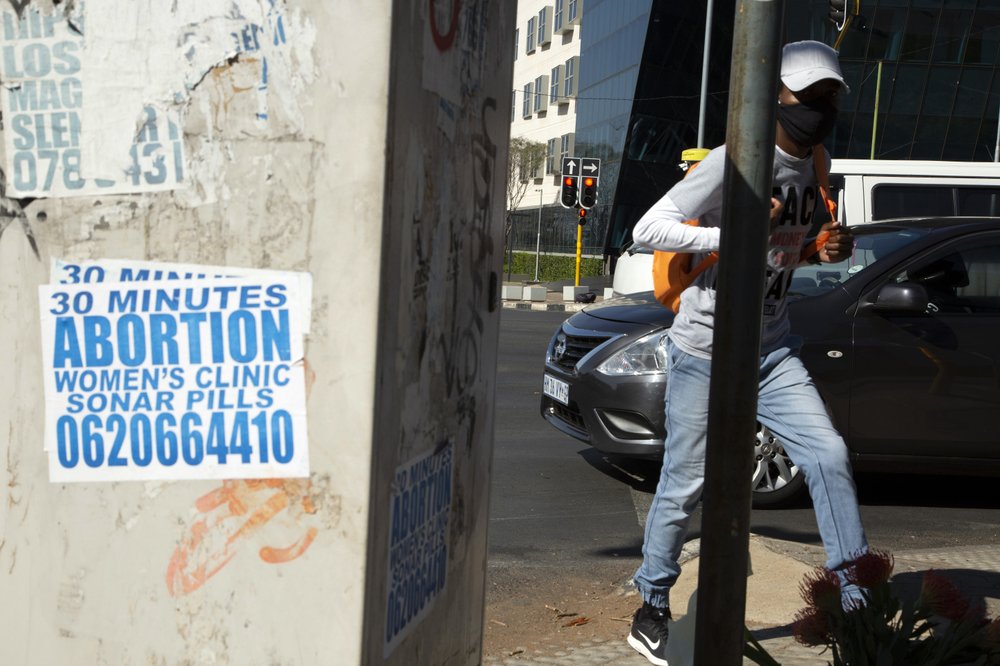
An advertisement for The Resource Center, a Greeley pregnancy center, is posted at 10th Avenue and 20th Street next to the University of Northern Colorado campus in Greeley on Dec. 4, 2019. (Valerie Mosley, Special to The Colorado Sun)

Other facts are also in dispute between the two sides. Due Date Too Late says there were more than 300 “late-term” abortions in Colorado in 2019. But Abortion Access for All says that nationwide, only about 1% of abortions occur after 22 weeks.

The exact percentage for Colorado is unknown but is likely higher than the national average because this state has no restrictions on when during a pregnancy a woman can have an abortion.

Of the 9,002 abortions in Colorado last year, almost 1,000 were for people who traveled from other states, most likely because of Colorado’s less-restrictive laws. The three most common states were Wyoming, New Mexico and South Dakota.

Proponents of the ballot measure have multiple issue committees with slightly different messages. End Birthday Abortions is focused on the Colorado Springs area, delivering flyers door to door and using social media to explain how an abortion in later pregnancy is performed, Little said.

“One of the issues we ran into while working to get the initiative on the ballot is that a lot of people don’t understand what a late-term abortion is,” she said. “They don’t really understand how late that happens.”

The 22-week cutoff is fair, even in cases of rape, incest or fetal abnormalities, Little said. “We are talking five and a half months into the pregnancy,” she said. “That does seem to give women enough time to fully consider what they want to do.”

Despite the track record on abortion votes in Colorado, Little said she believes the campaign has a better shot this time around, in part because of the national potlical climate and also because people are more aware of abortions in later pregnancy, thanks to the sharing of videos and photos on social media.

“There is more momentum now,” she said. “It’s easier to get the word out.”

Others warn that such a law would lead to further restrictions on abortion in Colorado.

“Prop. 115 is just another in a long line of unconstitutional, unpopular and medically unnecessary attacks on abortion,” said Priya Walia at the National Women’s Law Center. “It affects all pregnant people.”

And Wendy Howell, acting state director of the Colorado Working Families Party, called the ballot measure another attempt by “politicians and special interest groups to control women’s bodies in Colorado.”

“Time and time again they have failed,” she said. “And now they are back at it.”

Source: https://coloradosun.com/2020/09/03/colorado-abortion-ballot-measure/?fbclid=IwAR3i5fmguSvCt_IfNLaWH_le4AOaXIqXCKSTPe7Y3WaJH1uSks9E10S1Ee0

NEW DELHI (AP) — Millions of women and girls globally have lost access to contraceptives and abortion services because of the coronavirus pandemic. Now the first widespread measure of the toll says India with its abrupt, months-long lockdown has been hit especially hard.

Several months into the pandemic, many women now have second-trimester pregnancies because they could not find care in time.

Across 37 countries, nearly 2 million fewer women received services between January and June than in the same period last year, Marie Stopes International says in a new report — 1.3 million in India alone. The organization expects 900,000 unintended pregnancies worldwide as a result, along with 1.5 million unsafe abortions and more than 3,000 maternal deaths.

Those numbers “will likely be greatly amplified” if services falter elsewhere in Latin America, Africa and Asia, Marie Stopes’ director of global evidence, Kathryn Church, has said.

The World Health Organization this month said two-thirds of 103 countries surveyed between mid-May and early July reported disruptions to family planning and contraception services. The U.N. Population Fund warns of up to 7 million unintended pregnancies worldwide.

Lockdowns, travel restrictions, supply chain disruptions, the massive shift of health resources to combat COVID-19 and fear of infection continue to prevent many women and girls from care.

A surge in teen pregnancies was reported in Kenya, while some young women in Nairobi’s Kibera slum resorted to using broken glass, sticks and pens to try to abort pregnancies, said Diana Kihima with the Women Promotion Center. Two died of their injuries, while some can no longer conceive.

In parts of West Africa, the provision of some contraceptives fell by nearly 50% compared to the same period last year, said the International Planned Parenthood Federation.

“I’ve never seen anything like this apart from countries in conflict,” said Diana Moreka, a coordinator of the MAMA Network that connects women and girls to care across 16 African countries. Calls have increased to their hotlines, including those launched since the pandemic began in Congo, Zambia and Cameroon. More than 20,000 women have called since January.

Like others, Moreka predicts a coming baby boom in some parts of the world. “The pandemic … has taken us many years backwards” in family planning services, she said.

Some countries didn’t deem sexual and reproductive health services as essential under lockdown, meaning women and girls were turned away. Even after NGOs in Romania pressured the government to declare the services essential, many hospitals still weren’t providing abortions, said Daniela Draghici, a member of the IPPF European network’s executive committee.

“The impact in some cases is like what used to happen to young women during Communism, to get an abortion from somebody who claims to be a medical provider … and pray,” she said.

In India’s megacity of Mumbai, one woman was unable to find a pregnancy testing kit after the lockdown started in March, and then couldn’t find transport to reach care in time, said Dr. Shewetangi Shinde, who attended to her in a public hospital. By then, medical abortion wasn’t an option since the pregnancy was too advanced.

India listed abortions as essential services under lockdown but many weren’t aware, said Shinde, who is part of the India Safe Abortion Youth Advocates organization.

The pandemic has highlighted how difficult it already was for many women to safely access abortion services, said Dr. Suchitra Dalvie, a gynecologist in Mumbai and coordinator of the Asia Safe Abortion Partnership.

“All these people … the marginalized groups, the vast invisible majority. This is how life is,” she said.

In January, India began amending laws to allow certain women to obtain abortions up to 24 weeks instead of 20. But the pandemic interrupted it.

No one expected the lockdown to continue for months, Dalvie said. Now many women face second-trimester abortions, which are more expensive and complicated, especially “because everyone who is involved needs to wear PPE.”

Abortion access has improved in India, but the pandemic resulted in abortion pill shortages in several states surveyed by Foundation for Reproductive Health Services India. Only 1% of pharmacies in northern states like Haryana and Punjab had them, 2% in the southern state of Tamil Nadu and 6.5% in the central state of Madhya Pradesh. In Delhi it was 34%.

Some contraceptives are still delayed by supply chain disruptions, said Chris Purdy, CEO of the DKT International social marketing organization for family planning products. Production is back online, but shipping routes are crowded and ports clogged with back orders, he said.

Meanwhile, women’s health providers have scrambled to find solutions such as telemedicine, home deliveries of contraceptives and home-based medical abortions.

But even now, “we’re hearing everywhere that numbers are down” as public health facilities struggle because thousands of staffers have been infected with the virus, said Marion Stevens, director of the South Africa-based Sexual & Reproductive Justice Coalition. Her group and others wrote to the health minister about women turned away from care.

The real global measure of lockdowns’ effects will come when health ministries report annual data, experts say. But it will be incomplete. In Haiti, the health ministry reported a 74% drop in births at health facilities in May compared to the same period last year. Many women are delivering at home, but deaths there are not reported.

“Small examples can tell us a lot,” said Nondo Ejano, coordinator for the Women’s Global Network for Reproductive Rights Africa. In Tanzania, he said, a major maternity hospital in Dar es Salaam was converted into a COVID-19 response center. “You can ask yourself,” he said of women seeking care, “where would they go?”

At a school he visited last week in the town of Kigoma, five girls had become pregnant in the past few months. “One school. Five girls. Definitely the rate of pregnancy is up,” he said.

“I feel like right now we just have a tip of the situation, and when lockdowns are lifted we will see things clearly,” said Phonsina Archane, a coordinator of the MAMA Network. “We should prepare ourselves for that time.”

Source: https://apnews.com/4f3f067fa843de8d3d6cec5a74581fe5?fbclid=IwAR3q2JZA6gje6Gvo2zGPZ5i0-Kk2DrpViGToZu1_6dZm8TinInJ7yKEJ3QE

Mike Pence to Speak at Crisis Pregnancy Center That Falsely Claims Abortions Cause Breast Cancer

Image: Drew Angerer (Getty Images)

Vice President Mike Pence is scheduled to visit an anti-abortion crisis pregnancy center in North Carolina later this week, CNN reports, as part of Trump’s reelection campaign, which feels as if it has been going on for the last 57 years. The Gateway Women’s Center, which Pence is scheduled to visit, offers pregnancy and STI testing, ultrasounds, “options counseling,” and after abortion care, according to their website—all services typical of crisis pregnancy centers, which attempt to dissuade women from having abortions. GWC also posts on its website that one of the long-term physical risks of abortion is breast cancer and that the best way to avoid the risk is to carry a pregnancy to full term.

The website states:

Medical experts continue to debate the association between abortion and breast cancer. Research has shown the following:

Carrying a pregnancy to full term gives a measure of protection against breast cancer, especially a woman’s first pregnancy. Terminating a pregnancy may result in loss of that protection.

The hormones of pregnancy cause breast tissue to grow rapidly in the first 3 months, but it is not until after 32 weeks of pregnancy that breasts are relatively more cancer-resistant due to the maturation that occurs.

What the website fails to mention is that the study cited has been disproven, and there is no link between abortion and breast cancer, even though it is used as an anti-abortion scare tactic. According to the National Cancer Institute, “in 2009, the Committee on Gynecologic Practice of the American College of Obstetricians and Gynecologists concluded that ‘more rigorous recent studies demonstrate no causal relationship between induced abortion and a subsequent increase in breast cancer risk.’” Conveniently omitting information is so… convenient.

But Pence is likely not interested in misrepresented science and is attending this anti-abortion roundtable to discuss, as the Gateway Women’s Center puts it, the “spiritual consequences” of abortion. In this section of the website, GWC tells abortion seekers to consider three essential questions before requesting service, one of which is, “How does God see your unborn child?” Notably missing from that round of questioning is how God feels about lying about the risks of a medical procedure… but I guess science is not that important when it comes to women’s reproductive health.

Source: https://theslot.jezebel.com/mike-pence-to-speak-at-crisis-pregnancy-center-that-fal-1844918751?fbclid=IwAR3lGLgl7xCnYIaiJCDGlxtgMrFSblPi9FSqj5KU0vuJXxL5VDlriuK48oA

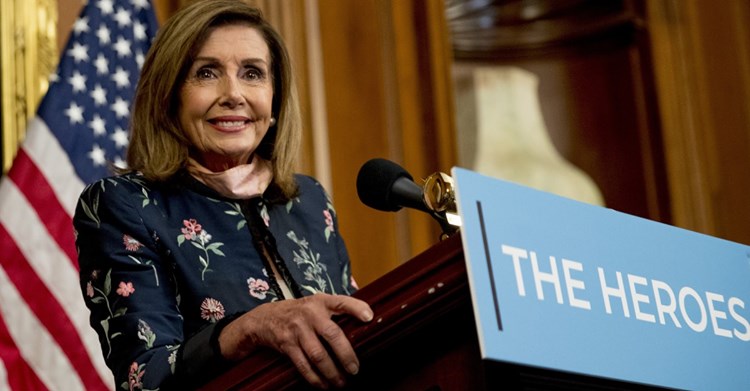
House Speaker Nancy Pelosi is among the Democratic leaders who have begun to signal that a long-standing government compromise on abortion payments will be challenged.(Associated Press)

For more than 40 years, Democrats and Republicans have stuck to a compromise on abortion: No government money would be used to pay for ending pregnancies.

Now, top House Democrats say they plan to challenge that status quo. Beginning next year, Democratic leaders in the House no longer will back the annual move to put the prohibition into law, they’ve told a small group of House Democrats.

The move could spark a major fight over abortion and its intersection with race and class discrimination. If successful, ending the ban, known as the Hyde amendment, would mark one of the most significant changes in abortion policy in decades.

“It’s an issue of racial justice and it’s an issue of discrimination against low-income women, women of color, women who don’t have access to what middle- and upper-income women have in terms of the choice to have an abortion,” said Rep. Barbara Lee (D-Oakland).

The plan to oppose the restriction on government money reflects the dramatic and widespread reversal of opinion on the subject that Democrats have undergone in the last five years. What was once viewed as an acceptable compromise is now widely seen among Democrats as a prime example of systemic racism that unfairly hurts poor women and women of color by banning abortion in most cases for Medicaid patients.

Rep. Rosa DeLauro (D-Conn.), who leads the subcommittee that funds federal health programs, and House Speaker Nancy Pelosi (D-San Francisco) told a small group of lawmakers last month that they would not add the prohibition to any government funding bill beginning next year, according to Lee and Rep. Diana DeGette (D-Colo.), who co-chair the House Pro-Choice Caucus.

Pelosi spokesman Drew Hammill did not comment on the remark. When asked about the prospects for next year, he said: “The House will work its will.”

DeLauro considered removing the ban from a spending bill this year, but the move was considered futile as Republicans hold the Senate and White House.

“Although this year’s bill includes it, let me be clear, we will fight to remove the Hyde amendment to ensure that women of color and all women have access to the reproductive health they deserve,” she said when her subcommittee approved its spending bill.

A move to end the ban on federal funds for abortion would face significant challenges — House Democrats don’t yet have the votes to do so. And it is likely to run into strong opposition in the Senate, even if Democrats control the chamber after the election. Abortion-rights supporters almost certainly won’t have the 60 votes currently needed to overcome a filibuster.

DeGette, who asked House Democrats this summer where they stand on the issue, said her side has more than 200 votes but remains short of the 218 required to pass legislation. She expects Democrats will have 218 by next year.

With a growing abortion-rights majority in the House and the support of Democratic presidential nominee Joe Biden — he reversed his decades-long support of the ban last year amid intense pressure from abortion rights groups — Democrats feel that the time is right to try. Abortion rights groups say they will keep pressure on a Biden administration and congressional Democrats to follow through.

The policy was first adopted in 1976, shortly after the Supreme Court’s Roe v. Wade decision, when former Rep. Henry Hyde of Illinois wrote the amendment banning taxpayer money from being used to pay for most abortions under Medicaid. The policy was attached to a bill to fund the government.

The ban has been renewed annually ever since and covers all federal healthcare programs.

Several states, including California, have adopted laws that allow state money to be used to pay for abortions for low-income women.

Republicans strongly support the ban and ever since it was first adopted have since insisted on its inclusion in any bill that funds the government. They and anti-abortion groups would put up a significant challenge to ending it.

“This is a terribly reckless push on the part of Democrats to force taxpayers to fund abortion on demand,” said Mallory Quigley, spokeswoman for the Susan B. Anthony List, a leading anti-abortion group. “People don’t want to be complicit in abortion with their taxpayer dollars, regardless of how they identify, pro-life or pro-choice.”

Eliminating the policy would provide access to abortion for people enrolled in Medicaid or other government health programs, such as insurance provided to Peace Corps volunteers, members of the military and federal workers. Today, those programs only cover abortion in the cases of rape, incest or to preserve the health of the woman.

If the House is able to act, it would put Senate Democrats in a difficult position. Sen. Patty Murray (D-Wash.), the top Democrat in the Senate committee that funds health programs, opposes the Hyde amendment. But Senate Democrats widely accept that they would not have the votes to undo it.

Murray has “been glad to see growing momentum to repeal Hyde and will continue working alongside many others to build support for getting this done,” said her spokeswoman, Helen Hare.

If they get the policy change through the House but not the Senate, House Democrats would have to choose between insisting on the policy change and shutting down federal health programs, an untenable option.

Lee acknowledged that she doesn’t expect the Senate would move quickly. “We have to make it a priority,” she said. “This is something that we will have to insist on and hold members of the Senate accountable just as with the House.”

Questions remain about how much of a priority a Biden administration would place on ending the policy. Biden was a strong advocate of the funding ban as recently as last summer. But abortion rights supporters say they take his change of position seriously.

“We intend to go in with good faith that when we flip the Senate and the White House, that people need to make good on their commitment on this,” said Ilyse Hogue, president of NARAL Pro-Choice America.

The Democratic party’s changing position on the policy has been swift.

As recently as seven years ago, when the group All* Above All was founded with a goal to end the ban, mainstream abortion-rights groups and many establishment Democrats gave it little notice, unwilling to rock the boat on a long-established compromise. Democrats representing Republican-leaning parts of the country, they reasoned, would never be able to get reelected if they supported it.

Destiny Lopez, co-director of All* Above All Action Fund, called it “truly a third-rail issue both on the Hill and within the reproductive rights movement” at the time.

But the message about the discriminatory nature of the policy took root and spread, particularly in recent months as the country reckons with racial inequity.

Reversing the policy has become a mainstream pro-abortion rights position.

“It’s not just [lawmakers] from safe Democratic districts” who support changing the law, DeGette said. Support comes from “across the entire Democratic caucus.”

“These members are pro-choice and pro-choice to them includes repealing the Hyde amendment.”

Source: https://www.latimes.com/politics/story/2020-08-28/democrats-seek-to-restore-government-funding-of-abortion?fbclid=IwAR3HYWGUb_XpEjCAzq9eyqrKwfJprmhtPhZq8kH7-hcj6xU79xAq1McWQB4

Progressive coalition call for a one-minute delay to allow outlets “to actively correct disinformation”

To prevent "disinformation cesspool," networks urged to run Republican convention on delay

In a letter to the presidents of major news networks Monday, a coalition of progressive groups asked that the airing of the Republican National Convention be delayed by one minute in order to “help prevent the spread of dangerous disinformation in real time.”

Members of the coalition—including UltraViolet Action, ACRONYM, BlackPAC, Color of Change PAC, NARAL Pro-Choice America, and others—warn that a number of scheduled speakers at the RNC, with speeches and prime time coverage kicking off Monday night, have actively spread disinformation about the coronavirus pandemic, police violence, and abortion.

“As our nation battles the dual crises of systemic racism and the coronavirus pandemic, relying on the media for factual, life-saving information is crucial to the health of the American people and our democracy,” the letter to the presidents of CNN, MSNBC, ABC, NBCUniversal and CBS reads.

x

The letter highlights Abby Johnson, an anti-abortion activist who has advocated against wearing masks to curb the spread of Covid-19, Mark and Patricia McCloskey, the couple made famous when a photo of the pair waving guns at Black Lives Matter protesters went viral, and Sen. Joni Ernst (R-Iowa), who has compared Covid-19 deaths to deaths from influenza while pushing the theory that the coronavirus was developed in a lab in Wuhan, China, according to the letter.

The groups called out President Donald Trump for pushing a “birther” conspiracy against former President Barack Obama and, more recently, about Democratic vice presidential nominee Kamala Harris.

“The best way to combat the spread of disinformation is to stop it at its source,” the letter reads. “By putting the Republican National Convention on a one-minute time delay, your network will be able to actively correct disinformation in real time, and prevent the American people from being lied to on your airwaves. The future of our country, our people, and our democracy are at stake.”

CNN’s Brian Stelter warned that news outlets would have to deal with “asymmetric lying” by the nation’s political parties, noting CNN fact-checks of the DNC convention last week showed the Democrats spoke mostly in “generalities or offered subjective opinions” but that factual assertions made by convention speakers “have largely been accurate.”

“We have seen throughout history how false theories and misinformation have been used to justify oppression and racism if they are not countered and debunked in real time,” said Kimberly Peeler-Allen, director of Higher Heights Political Fund. “The rhetoric that is anticipated to come from the RNC will put lives in danger whether it is misinformation about Covid-19 or language that can be used to justify attacks on Black and brown people. We strongly implore all of the major networks to institute a time delay and fact checking because it can and will save lives.”

Bridget Todd, a spokesperson for UltraViolet Action, warned the GOP gathering would be a “disinformation cesspool filled with toxic misogyny, virulent racism, and flat out lies about the coronavirus pandemic.”

Todd said that while it’s not possible to keep the networks from airing the convention, “we can ask that they do their part to correct disinformation in real time and help stop its spread.”

“CNN, MSNBC, ABC, NBC, and CBS have previously cut away or run fact-checks in real-time during coronavirus briefings, and this should be no different,” Todd added. “We’ve seen what happens when disinformation is allowed to spread unchecked, and the risks are just too great.”

Source: https://www.salon.com/2020/08/25/to-prevent-disinformation-cesspool-networks-urged-to-run-republican-convention-on-delay_partner/?fbclid=IwAR07honlGmWkhT2V84Un8ZoE1RINKosLKOv8fjqgZx2d7mT8-naYFrwKB0o

Getty/Jacob Moscovitch
In the wake of Missouri’s controversial abortion legislation, people gather in St. Louis to protest the potential closure of the state’s last remaining abortion clinic, May 2019.

So far in 2020, there have been a number of important wins for abortion rights in the courts. In the U.S. Supreme Court, Louisiana’s unconstitutional admitting privileges law was struck down in June Medical Services v. Russo. In the lower courts, a federal district court in Maryland ruled that the U.S. Food and Drug Administration must suspend enforcement of a medically unnecessary restriction on access to medication abortion until 30 days after the end of the COVID-19 public health emergency. Also in Maryland, a district court vacated and enjoined a Trump administration rule that would have required separate insurance payments for abortion care and all other health care for people insured by certain plans under the Affordable Care Act.3 And a district court in Georgia struck down the state’s six-week abortion ban, which would have banned abortion at a point before most people even know they are pregnant.

Despite these important victories, the right to access abortion established in Roe v. Wade is still under attack. Moreover, meaningful access to abortion has never been a reality for many people in the United States, especially women of color. The courts are by no means saviors of reproductive rights; the June Medical decision preserved a status quo in which hundreds of abortion restrictions remain in place across the country. In Louisiana alone, laws that are still in effect restrict insurance coverage for abortion care, impose medically unnecessary waiting period and biased counseling requirements to access abortion, require parental consent for minors, and more; as a result, abortion access remains out of reach for many state residents.7 Furthermore, in his June Medical concurrence, Chief Justice John Roberts left the door open to upholding future abortion restrictions that come before the court. Conservative courts are already capitalizing on his opinion: On August 7, the 8th U.S. Circuit Court of Appeals cited Roberts’ concurrence as justification to lift an injunction on multiple abortion restrictions in Arkansas. The laws ban the most common procedure for second-trimester abortions, require clinics to report to law enforcement the names of minors who have abortions, and treat fetal tissue as criminal evidence. They also require providers to attempt to obtain patients’ full pregnancy-related medical records before providing care and grant rights over fetal remains to both parents of the fetus as well as to the pregnant person’s parents if the patient is a minor. This final law essentially bans abortion outside of a clinic setting and forces patients to notify the other parent of the fetus before an abortion, including in cases of rape. The court’s ruling sends the case back to the lower courts and, in the meantime, allows the laws to go into effect.

As the conservative justices of the Supreme Court lay the groundwork to undermine abortion rights, and as President Donald Trump and Senate Majority Leader Mitch McConnell stack the courts with political ideologues, anti-abortion legislators at the state level continue to advance dangerous, medically unnecessary abortion restrictions. These laws disproportionately affect those whose access to abortion care is already most limited, including people of color, young people, people with disabilities, people with low incomes, LGBTQ people, and people in rural areas, among others. What’s more, many of these laws were passed and signed during the coronavirus pandemic—a public health crisis that is disproportionately harming many of the same communities whose access to comprehensive reproductive health care, including abortion care, is most threatened, particularly Black, Latinx, and Native American communities, as well as people with disabilities.

These unrelenting state actions demonstrate the need to move beyond reliance on the courts and to advance proactive policies at the state and federal level that ensure true access to abortion rights. This issue brief breaks down the bans and restrictions that state legislatures have passed this year in their ongoing attempts to undermine or eliminate outright the right to access abortion care. It then highlights efforts to protect and advance abortion rights.

Bans and restrictions

Restrictive abortion laws are nothing new. For decades, states have been passing laws designed to limit access to abortion care in an effort to make the right to abortion virtually meaningless. Since 2011 alone, state legislatures have passed more than 400 restrictive laws. These relentless efforts to undermine access to essential reproductive health care are especially egregious in the midst of a global public health emergency, when states should have prioritized controlling the coronavirus pandemic—not restricting access to critical health care services.

Governors have manipulated the pandemic response to restrict abortion

At the outset of the coronavirus crisis in the United States, 11 governors explicitly excluded abortion care from the essential services that were allowed to operate amid shutdowns, essentially manipulating the pandemic response to ban abortion care from being provided in their states. These state leaders ignored what medical and public health experts such as the American College of Obstetricians and Gynecologists and the World Health Organization recognize—that abortion is essential, time-sensitive health care. While courts prohibited most of these state executive actions from going into effect, abortion care services were temporarily interrupted in Arkansas, Ohio, Tennessee, and Texas, forcing people to delay or forgo abortion care or travel out of state to access it, increasing their risk of coronavirus exposure.

Since the Roe v. Wade decision, anti-abortion policymakers have used a variety of types of laws to limit access to abortion care. Among the restrictive laws passed this year are:

  • Gestational bans, which ban abortion after a certain point in pregnancy such as at six or 22 weeks. These laws are frequently unconstitutional when they ban abortion before viability—the point at which a fetus has the capacity for survival outside the uterus, something that must be determined medically and that varies with each pregnancy. Pre-viability bans are prohibited by Roe v. Wade and often mean that a person would be banned from receiving an abortion before they even know they are pregnant.
  • Method bans, which ban particular methods of abortion care. These laws most often impose a ban on dilation and evacuation (D&E) procedures, the safest and most common method of abortion care in the second trimester. Method bans interfere with evidence-based medical decisions and further limit options for abortion care.
  • Medically unnecessary requirements, including waiting periods and biased counseling requirements, which place additional burdens on people seeking abortion care such as added costs, time, and intentionally misleading information.
  • Parental involvement laws, which require parental consent or notification or judicial approval for minors seeking abortion care. These laws limit young people’s bodily autonomy and access to abortion care, and they especially harm immigrants and people of color.
  • Reason bans, which ostensibly restrict abortion if the pregnant person’s decision is based on a fetus’s sex or race or on fetal diagnosis. In reality, these laws are part of the strategy to restrict abortion access and stigmatize abortion decisions, particularly for women of color. They allow politicians to interfere with health decisions that should be made between a pregnant person and their provider, while doing nothing to actually promote gender, racial, or disability justice.
  • So-called “born-alive” laws, which require medical care for a fetus after an unsuccessful abortion. Such legislation is unnecessary, as denying care to fetuses is already illegal. These laws intentionally perpetuate false narratives about abortion later in pregnancy and seek to stigmatize abortion and interfere with evidence-based patient care.
  • Targeted Restriction of Abortion Provider (TRAP) laws, which place medically unnecessary requirements on clinics and providers designed to force them to stop providing abortion care.
  • Trigger bans, which put laws on the books in states to ban abortion if Roe is overturned.

Laws that are currently in effect

Among the state bills passed this year that are already in effect is Florida’s parental consent law, which was signed by Gov. Ron DeSantis (R) in June and took effect in July. The law requires that a minor—someone under the age of 18—receive written consent from their parent or guardian, or that the minor receive a judicial bypass, in order to access abortion care. Parental consent laws such as Florida’s put young people’s health and safety at risk and disproportionately affect young people of color, who are more likely to have an unintended pregnancy as a minor and more likely to live in a state with a parental involvement law in effect, as well as immigrant youth, who may lack necessary documentation and/or be put at risk of immigration enforcement due to parental involvement requirements.

Another restrictive action is Mississippi’s reason ban, which was passed by the legislature in June and took effect in July. It bans abortion based on sex, race, and genetic abnormality, and it requires providers to report to the state confirming that these were not a person’s reason for seeking abortion care. The law, similar to other reason bans, uses feigned concern for gender, racial, and disability justice to interfere with private decisions between patients and providers, drawing on racist stereotypes and harming people of color and people with disabilities by restricting their access to reproductive health care.

Also in effect are TRAP laws in Utah and Indiana, both enacted in March, that impose medically unnecessarily and restrictive requirements around the disposition of fetal remains after abortion, as well as West Virginia’s “born-alive” law. Oklahoma enacted a TRAP law in May that allows the parent of a fetus or the parent of a pregnant person to sue providers for wrongful death after abortion in certain circumstances, including if the pregnant person is a minor or if the pregnant person experiences “physical or phsychological harm” from the abortion. The law seeks to criminalize providers, relying on the dangerous concept of fetal personhood as well as false narratives around the safety and mental health impacts of abortion. That law is scheduled to take effect in November. Most recently, Nebraska’s legislature passed a D&E ban on August 13 that Gov. Pete Ricketts (R) quickly signed into law. Restricting access to this safe and common method of abortion care in the second trimester disproportionately harms women of color, young women, and low-income women, who are more likely to face barriers that cause delays in accessing abortion care.

Laws that have been blocked by the courts

In Tennessee, a law passed by the General Assembly in June and signed by Gov. Bill Lee (R) in July includes sweeping restrictions on abortion access. The law includes gestational bans at six, eight, 10, 12, 15, 18, 20, 21, 22, 23, and 24 weeks; recognizing that the pieces banning abortion extremely early in pregnancy are more likely to be struck down in the courts, the legislature included the later options in an effort to ensure that some form of gestational ban takes effect. In addition, the law includes reason bans based on sex, race, and Down syndrome diagnosis as well as requirements before a person can access abortion care, including false counseling about medically unsupported “abortion reversal.” Finally, the law allows for the parent of a fetus—or the pregnant person’s parents if the person is a minor—to sue providers if they provide abortion care in violation of the law. The law was blocked by a federal district court just hours after being signed. Also stopped by the courts was Iowa’s 24-hour waiting period law, which was passed and signed into law in June but blocked before it could take effect in July. Waiting period laws such as Iowa’s require people to make two trips to their abortion provider, particularly harming people with low incomes and those who have no nearby provider by adding financial and logistical burdens such as travel, child care, and time off work.

Both Idaho and Utah passed trigger bans that would ban abortion with extremely limited exceptions. The laws are designed to go into effect immediately if Roe is overturned or if a constitutional amendment is passed that allows states to outlaw abortion. Abortion would immediately become illegal in all states that have these trigger bans if constitutional protections for abortion rights are removed.

Laws that have been vetoed by governors

Legislatures in Kentucky and Wyoming each passed “born-alive” bills this year, but both bills were vetoed by the states’ respective governors. Wyoming, however, already has a law in effect that gives legal protections to a fetus that is delivered after an unsuccessful abortion.

Proactive efforts to protect and expand abortion rights

Although many states have worked this year to restrict access to abortion care, there has also been action to protect abortion rights and undo restrictive laws. The necessary focus on responding to the coronavirus pandemic has slowed proactive action around abortion rights compared with last year, when more states than ever before passed proactive abortion legislation. Yet Virginia and Washington, D.C., have still made notable progressive changes.

Virginia’s Reproductive Health Protection Act (RHPA), which was signed into law in April and took effect in July, removes restrictions and expands access to abortion care. In particular, the RHPA eliminates barriers, including mandatory ultrasounds and a 24-hour waiting period, and expands which providers can provide abortion care in the first trimester to include nurse practitioners.

In Washington, D.C., the Strengthening Reproductive Health Protections Amendment Act was signed by Mayor Muriel Bowser (D) in March and took effect in May. The law prohibits government interference in reproductive health decisions, ensuring that decisions to access abortion care, as well as birth control and sterilization, remain between patients and their providers. It also prohibits punishing people who self-manage their abortions or experience miscarriage or adverse pregnancy outcomes and prevents employment discrimination against abortion providers.

Finally, New Hampshire’s legislature passed the Reproductive Health Parity Act in July, largely along party lines, which would require health insurance plans that cover maternity benefits to also cover abortion care. However, Gov. Chris Sununu (R) vetoed the bill in August.

Conclusion

Many of the restrictive laws passed this year are already being challenged and blocked in the courts. Abortion remains legal in all 50 states, and the important victories in June Medical and in proactive legislation at the state level should not be discounted. However, abortion remains inaccessible for many people in the United States, especially for people experiencing intersecting forms of oppression and barriers to abortion access. Chief Justice Roberts’ signaled willingness to uphold future restrictive laws that come before the Supreme Court is extremely worrisome and a stark reminder that reliance on the courts is not enough. Attacks on abortion rights are not slowing down—for example, Colorado will vote on a ballot initiative in November that would ban abortion after 22 weeks with extremely limited exceptions. Anti-abortion politicians will continue to adapt their strategy to pursue the laws they think are most likely to hold up in court and successfully erode meaningful access to abortion rights.

States’ ongoing pursuit of laws restricting access to reproductive health care—even in the midst of a global public health emergency—is a clear signal that the federal government needs to act. Congress should pass the Women’s Health Protection Act, which would prohibit laws that ban abortion before viability and that impose medically unnecessary restrictions on abortion care. And policymakers must do more than stop restrictions; they should take action to proactively ensure that access to abortion care is a reality for all—through insurance coverage, access to medication abortion, and more—to fulfill the promise of Roe v. Wade.

Source: https://www.americanprogress.org/issues/women/reports/2020/08/27/489786/state-actions-undermining-abortion-rights-2020/?fbclid=IwAR3wpwJ2LGWdZ4DRj-IJdepxuWYCWPTcjgLVfJv1O9rt_GORFLDqPMKT5pk

Source: https://www.americanprogress.org/issues/women/reports/2020/08/27/489786/state-actions-undermining-abortion-rights-2020/?fbclid=IwAR3wpwJ2LGWdZ4DRj-IJdepxuWYCWPTcjgLVfJv1O9rt_GORFLDqPMKT5pk

No, abortion doesn’t “have a smell.”

And apparently this ludicrous clarification needs to be made, because Tuesday night at the Republican National Convention, a well-known antiabortion activist named Abby Johnson got behind a lectern and told a national audience that, “For me, abortion is real. I know what it sounds like; I know what abortion smells like. Did you know that abortion even had a smell?”

Johnson was a former Planned Parenthood employee until 2009 when, she says, she witnessed an abortion of a 13-week-old fetus. She described the incident in dramatic terms: “The last thing I saw was a spine twirling around in the mother’s womb before succumbing to the force of the suction.”

The clinic has previously said there were no abortions of 13-week-old fetuses on the day she claims. (All procedures that day were at less than 10 weeks, according to records obtained by a Texas Monthly investigative report. In an essay for The Federalist, Johnson later said she believed the records might have been incomplete or falsified.) Nevermind that. On Tuesday, she was given a prime speaking slot to offer one of the more audacious attacks on reproductive rights ever to appear at a political convention.

No, abortion doesn’t have a smell. Like Abby, I think of abortion in very real terms. As a reporter covering women’s health care, I’ve witnessed at least 20. My friends have had them. Your friends have probably had them too, even if they never told you. Considering that 1 in 4 women will have an abortion in her lifetime, according to the Guttmacher Institute, there are an astounding number of women who are in a position to explain that there is no “abortion smell.” Abortion clinics smell like all medical clinics: antiseptic, rubber gloves, bleach — plus the occasional batch of cookies dropped off by a grateful patient. There is a generic medical odor, chemicals and perhaps a whiff of blood, but nothing unique to the procedure.

As for one of her other seemingly horrifying claims, that doctors piece together fetal remains to make sure the abortion is complete — that’s true. But it’s not some ghoulish jigsaw puzzle done on a lark. It’s because an incomplete abortion could be dangerous to a patient’s health, and abortion doctors care about women’s lives.

But Johnson had to describe abortion as a horror show because the alternative would have been too banal to achieve the effect she desired. Americans are no longer as scandalized by the concept of abortion as they once were. A Washington Post-ABC News poll last summer found support for legal abortion the highest it’s been in two decades, with around 60 percent of respondants supporting abortion in all or most cases. Only 14 percent said it should be completely illegal.

Johnson had to make abortions about telltale smells and twisted spinal cords and the rights of fetuses, because it was the only way to hide that what she wants the government to do is ignore the rights of women. She applauded President Trump for “protecting the rights of health-care workers objecting to abortion,” but appears to care not at all about protecting the rights of women to decide what they are willing to carry in their own bodies.

It was an impressive sleight of hand, and she wasn’t the only speaker on Tuesday night to try it.

Cissie Graham Lynch, Billy Graham’s granddaughter, claimed that her speech was about “free exercise of religion,” and about how Christians are “silenced” and “bullied.”

Really it was chockablock full of homophobic, misogynist dog whistles.

“Democrats tried to force adoption agencies to violate their deeply held beliefs,” was a coy way of saying, I don’t think LGBTQ people should be allowed to be parents. “Whether you’re a baker, a florist or a football coach, [Democrats] will force the choice between being obedient to God or to Caesar,” was a coy way of saying, I think businesses should be allowed to turn away LGBTQ people.

She touched on abortion, too: “Democrats tried to make organizations pay for abortion-inducing drugs” is a coy way of saying, I think your boss’s preferred insurance plan should have more of a say in your family planning than your doctor.

Her entire speech was a coy way of saying, I want to have the freedom to discriminate against you.

The Republican National Convention is halfway over, and it’s already clear that someone could have invented a heck of a drinking game based on the phrase “our way of life.” Every other speaker mentions a version of it — how Joe Biden wants to oppress their way of life, how their way of life is being threatened.

But Abby Johnson and Cissy Graham Lynch made their positions perfectly clear: Their way of life is to police other people’s lives and call it freedom. Their way of life is to claim they are being oppressed if they are not allowed to oppress others. That is the way of life they’re trying to protect.

Supreme Court Justice Ruth Bader Ginsburg has been selected as this year’s recipient of the National Constitution Center’s Liberty Medal.

The Philadelphia center said Wednesday that Ginsburg, 87, would be awarded the medal “for her efforts to advance liberty and equality for all.” It plans to honor her through a video tribute September 17, Constitution Day.
It is unclear whether Ginsburg will be present to accept the award. The court did not immediately respond to a request for comment from CNN.
The center made its announcement on Women’s Equality Day, which commemorates the hard-fought victory of the women’s suffrage movement. August 26, 2020, was also the 100th anniversary of the ratification of the 19th Amendment, which guaranteed women the right to vote.
The center noted that this year’s ceremony will be the “pinnacle” of its yearlong initiative to celebrate women’s equality and leadership and the 100-year milestone.
Ginsburg has spent her life fiercely advocating for women’s rights and gender equality, using her sharp arguments and notable dissents to fight back on issues surrounding gender discrimination, abortion and reproductive rights.
Ginsburg’s age and medical history make her health the subject of widespread interest. She announced in July she was undergoing chemotherapy to treat a recurrence of cancer and that the treatment was yielding “positive results,” adding that she remains “fully able” to continue serving on the court.
The Liberty Medal was established in 1988 and honors those “of courage and conviction who strive to secure the blessings of liberty to people around the globe,” according to the center’s website. Some of its recipients include former Presidents Bill Clinton and George H.W. Bush, Nelson Mandela and Malala Yousafzai.
Ginsburg isn’t the first Supreme Court justice to receive the honor. Sandra Day O’Connor, the first woman to serve on the nation’s highest court, received the Liberty Medal in 2003.
Another of Ginsburg’s former colleagues, retired Supreme Court Justice Anthony Kennedy, was the 2019 Liberty Award recipient.

Abby Johnson’s five minutes at the RNC were full of lies about abortion, but what she said about our profession is true.

As I sat at my new desk at West Alabama Women’s Center this morning and watched a clip from last night’s Republican National Convention, I had a sinking feeling in my stomach.

I had been sent a link to Planned-Parenthood-director-turned-anti-abortion-spokesperson Abby Johnson describing her so-called conversion moment, and I was struck by a horrible realization.

Abby Johnson is right.

Oh, she isn’t right about most of the “facts” that she crafted around her fictional conversion during day two of the RNC. We all know that while Margaret Sanger was a eugenicist, her attitudes were similar to most of the upper-class white intellectual and activist leaders of her time, including many of the suffragettes that the anti-abortion movement continues to name themselves after.

We know that “80 percent of clinics” actually aren’t located in “minority neighborhoods.” And while a fetus can have a reflexive reaction to stimuli (just like a person with no brain activity does), that doesn’t mean it “can feel pain” or “can swim away from anything.” She isn’t right about clinic employees “piecing babies back together” in the lab like some sort of Frankenstein’s monsters; in fact, clinicians are checking to ensure every bit of tissue has been removed in order to prevent hemorrhage, infection, and a patient’s potential death.

And while technically abortion has a “smell,” that smell is the same as menstruation (the smell of menstrual blood and uterine lining), the smell of labor (blood and amniotic fluid and fecal matter), or the same as a tubal ligation (a cauterizing smell that is strangely reminiscent of popcorn popping).

Body fluids have smells. Why is she ashamed of them?

But Abby Johnson is right about the problematic issues inherent to the reproductive medical profession. She disclosed the longstanding tradition of male (and primarily white) OB-GYNs who do not see the patients they treat as members of their community, but rather as people they perform medical procedures on in order to earn their salaries.

I have little reason to doubt Johnson’s story of the doctor who said, “Beam me up, Scotty” at the moment of suction, because in my career, I have frequently encountered these men—in my classes, my clinics, and my hospitals. They are the male doctors who speak about their patients to their colleagues as though the patient wasn’t sitting right there. They push unnecessary medical interventions in an effort to hurry along a labor that isn’t progressing quickly. They are the ones who ignore the concerns of their pregnant patients who happen to know something is medically wrong with their bodies. These doctors dismiss patients’ pain and symptoms until it’s too late.

They are the reason mothers—especially Black and Native mothers—are dying. They are the reason our infant mortality rate remains so high despite the extensive advances we’ve made in medical care.

There is very, very little that Abby Johnson said in her five minutes of fantasy that bore any resemblance to reality. Donald Trump can’t be “the most pro-life president in history” when our poor can’t access medical care, and our asylum seekers are in cages. He ignores our prisons and long-term care facilities as they are swept with death from the spread of COVID-19 while he pretends it is still “fake news.” Police are murdering Black people on a weekly basis, and he does nothing.

But Abby Johnson is right about one thing. Our medical profession is drowning in systemic misogyny and racism, and if we don’t address it soon, the most vulnerable Americans will continue to suffer.

And no, that does not include embryos or fetuses.

Source: https://rewire.news/article/2020/08/26/im-an-abortion-provider-and-heres-what-i-want-to-tell-abby-johnson/

Consequences of the novel coronavirus pandemic could force at least 1.5 million more women to seek unsafe abortions worldwide, according to new estimates.

The figure appeared in a Tuesday report published by Marie Stopes International (MSI), a global reproductive care organization that provides contraception and safe abortions to women in 37 countries. As lockdown measures implemented in response to COVID-19 made accessing the organization’s usual services more difficult, almost 2 million women and girls were left without options for legitimate reproductive care.

Data included in MSI’s report suggested that lost services between January and June could lead to as many as 900,000 unintended pregnancies and 3,100 pregnancy-related deaths across the world, in addition to unsafe abortions. Those numbers compound the incidences of each circumstance that existed prior to the global health crisis, and only account for barriers to accessing MSI’s programs.

Women in India felt the most significant impacts of lost services previously offered by MSI. Tuesday’s report noted 1.3 million fewer women had access to reproductive care, and roughly 920,000 fewer women had access to safe abortion and post-abortion services, due to the nation’s lockdown. The organization expects an additional 1 million women will undergo unsafe abortions in India as a result, and an estimated 2,600 more will die from complications related to pregnancy.

“Women’s needs do not suddenly stop or diminish during an emergency—they become greater. And as doctor I have seen only too often the drastic action that women and girls take when they are unable to access contraception and safe abortion,” said Dr. Rashmi Ardey, the director of clinical services for MSI’s initiatives in India, in a statement alongside the organization’s most recent report.

“This pandemic has strained healthcare services all over the world, but sexual and reproductive healthcare was already so under prioritised that once again women are bearing the brunt of this global calamity,” Ardey continued.

MSI partnered with governments and non-profit organizations in several nations in efforts to expand access to reproductive care during the pandemic, advocating for safe abortion and post-abortion services to be classified as essential work. Still, with laws heavily restricting abortion access, or banning altogether, still effective in dozens of countries, the organization said global leaders need to do more to protect women’s health.

“Governments need to take immediate action to overturn the restrictive, and colonial, penal codes which restrict women’s legal access to abortion,” Bethan Cobley, director of policy and partnerships at MSI, said in a statement to Newsweek on Wednesday. “Until these legal barriers are overturned health systems will be unable to adapt to respond to pandemic such as Covid-19 and women will have to endure the indignity of unintended pregnancy or risks their lives seeking unsafe procedures.”

Planned Parenthood

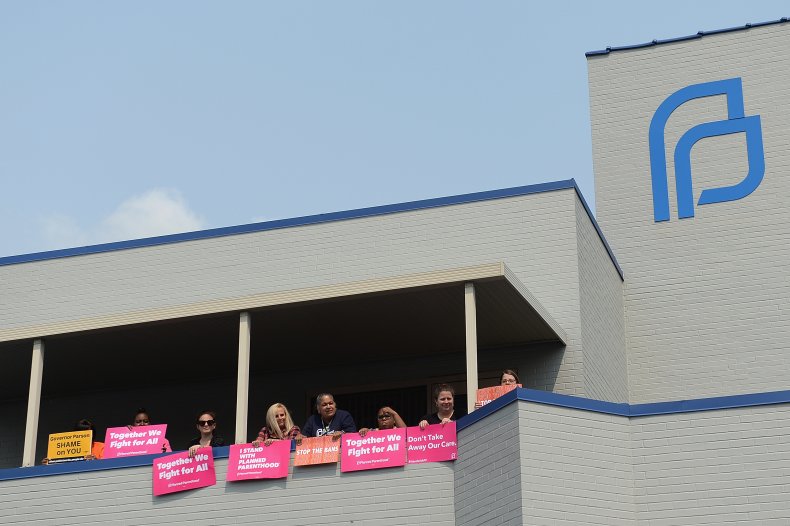
Demonstrators participate in a rally held outside a Planned Parenthood in St. Louis, Missouri, in May 2019. A new report from global reproductive care organization Marie Stopes International estimated at least 1.5 million additional women will undergo unsafe abortions as a result of services lost due to the novel coronavirus pandemic.MICHAEL THOMAS/GETTY

The pandemic has affected a number of leading reproductive care organizations. Planned Parenthood, the largest reproductive health care provider in the United States, shifted many of its services to prioritize remote consultations as clinics closed earlier this year.

“This global health crisis has highlighted the reality that sexual and reproductive health care is essential and time-sensitive,” Dr. Krishna Upadhya, a senior medical advisor at Planned Parenthood, said in a statement sent to Newsweek.

“Even as some state politicians use the COVID-19 pandemic as an excuse to attack safe, legal abortion, Planned Parenthood has adapted quickly to ensure patients can still access critical care and information, while keeping both patients and health center staff safe,” Upadhya added, referencing the wave of state regulations blocking abortion access during the COVID-19 outbreak.

Some Planned Parenthood sites cut hours or suspended walk-in appointments as the national outbreak persisted, while others closed entirely and began referring patients to different locations or providers instead. The organization outlines procedures still offered and shares resources about how and where to receive contraception and safe abortion services in guidance shared to its website.

Source: https://www.newsweek.com/coronavirus-could-result-15-million-unsafe-abortions-worldwide-report-finds-1526155?fbclid=IwAR0UyaZB7rDNk9RLkGJahSpDCuMxq4htBU56w6HtCMKwPt26hop47Wp0nWI