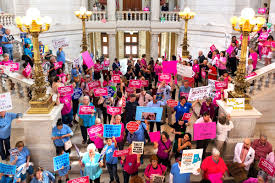
Wisconsin Gov. Tony Evers (D) followed through on his long-voiced promise and vetoed a slate of measures designed to restrict access to abortions.

“Everyone should have access to quality, affordable healthcare, and that includes reproductive healthcare,” Evers said in a statement on Friday. “Politicians shouldn’t be in the business of interfering with decisions made between patients and their healthcare providers.”

The move comes after the GOP-led Wisconsin Senate and State Assembly passed four measures that would further restrict abortions.

The measures included the so-called “born alive” legislation, which requires health care providers to give care to babies who survive abortion attempts. If it became law, the “born alive” bill would reportedly enforce criminal penalties on doctors who did not provide necessary medical care to babies who survived abortion attempts.

Both bodies passed three additional measures related to abortion, including one that bars a woman from having an abortion based on the  fetus’s race, sex or defects. They also voted to cut off Medicaid funding for Planned Parenthood.

Wisconsin Assembly Majority Leader Jim Steineke (R) criticized Evers’s vetoes, saying in a statement that he was “incredibly saddened, though not surprised.”

Evers in May vowed to veto the abortion-related bills if they reached his desk.

“We shouldn’t be limiting the right for women to make their own healthcare decisions,” Evers said on Twitter at the time. “That’s why I’ll veto the bills passed by the Assembly last week if they arrive on my desk. It’s time to listen to women. 

The governor has previously argued that the state’s existing protections and criminal penalties addressed issues related to babies surviving abortion attempts.

Source: https://thehill.com/homenews/state-watch/449907-wisconsin-governor-vetoes-abortion-restrictions?fbclid=IwAR2UygY3jwNFxON-p0Fvlsqq4qiENVxMgnF-Cf6BR2kIxHx9Qukj7NZP_sA

Protesters opposed to Missouri’s restrictive abortion law gathered at the St. Louis arch and marched to Gov. Mike Parson’s office on May 30. JILL TOYOSHIBA JTOYOSHIBA@KCSTAR.COM

The state health department will no longer require Missouri’s sole abortion provider to perform pelvic exams on patients at least three days prior to receiving an abortion, it announced Friday.

The practice has drawn major backlash nationally and been called “dehumanizing” by the clinic’s operator, Planned Parenthood clinic of St. Louis. The clinic has always performed a pelvic the same day a patient receives a surgical abortion, and the requirement means two invasive vaginal exams per patient days apart. The clinic told the state Tuesday it would not comply.

Missouri Department of Health and Senior Services (DHSS) Director Dr. Randall Williams told reporters Friday that the agency would issue an emergency rule to relieve Planned Parenthood of the requirement.

“In looking at what they are doing and the fact that they think that causes a burden for patients to do (the pelvic exam) twice…as a clinician who practiced for 30 years, I’m sensitive to that,” Williams said.

Williams said the rule would allow physicians to conduct pelvic exams the same day of a surgical abortion.

Physicians could also forgo the exam if it is deemed not “medically indicated,” according to a lettersent to Planned Parenthood Friday morning notifying it that the agency would deny its licenserenewal application.

Planned Parenthood is in the midst of fighting DHSS in St. Louis Circuit Court after the agency allowed the clinic’s license to lapse May 31. Judge Michael Stelzer ordered the agency to officially act on the application by Friday.

Even though Planned Parenthood has officially denied the license, the clinic can still offer abortions because of a preliminary injunction issued by Stelzer. He is deliberating on what will happen next in the case and has promised to issue an order in the coming weeks.

The issue of pelvic exams first arose after the clinic’s annual inspection in March. DHSS cited the clinic for not performing a pelvic during the informed consent portion of the process, which comes at least 72 hours prior to the procedure.

During informed consent, physicians are required to discuss, or counsel, patients on the complications of abortion and read state-mandated literature.

DHSS has maintained that pelvic exams guide doctors in choosing the correct procedure so that it can be discussed with the patient during the informed consent period.

In the denial letter, DHSS said Planned Parenthood choosing to not perform the exam during informed consent is a “conflict with current law.”

“Nevertheless, the Department believes that this issue may be resolved in a manner that promotes the Department’s goals of quality patient care and safety,” the letter stated.

Planned Parenthood held that the violation was a new interpretation by DHSS of a regulation to perform a pelvic exam prior to an abortion. In the last week of May, it reluctantly agreed to comply in the face of losing its license and has only performed two pelvic exams per patient since then, according to Planned Parenthood spokesperson Jesse Lawder.

Dr. Colleen McNicholas, a physician with the clinic, called for Gov. Mike Parson to remove Williams from office over the flip-flop.

“Williams abused his authority as a doctor and a health department director and traumatized over 100 women who were forced to undergo this exam,” McNicholas, a physician with the clinic, said in a statement.

Pelvic exams will still be required for medication abortions, because they provide information needed by physicians to make medical decisions, Williams said.

Planned Parenthood has stopped offering medication abortions in Missouri, saying that performing pelvic exams for patients who take an abortfacient orally to be unethical. It has instead directed patients to its clinic across the border in St. Clair County, Ill.

Source: https://www.kansascity.com/news/politics-government/article231835048.html?fbclid=IwAR0orYgskxH-8y-anH7-c7QQcGDm3b2UdmSyr9WLEqLVR0WjAgoPNomLDBE

Passing the Reproductive Privacy Act has been an uphill battle for advocates in Rhode Island, a Catholic Church stronghold where some Democratic legislators oppose abortion rights.

“This is a truly historical moment in Rhode Island. After decades of advocacy, conversation and compromise from activists, lawmakers and organizations, Rhode Island has proven that it values the reproductive rights of all its residents,” the Rhode Island Coalition for Reproductive Freedom said.
Brittanny Taylor Photography

Lawmakers in Rhode Island, the most Catholic state in the nation, made history this week by passing legislation protecting abortion rights, one month after a Democratic state senator tanked a more comprehensive bill protecting and expanding access to abortion.

Rhode Island Gov. Gina Raimondo (D) signed the Reproductive Privacy Act(RPA) into law Wednesday night, calling it “the product of an important and vigorous debate and a great deal of public scrutiny.”

The RPA codifies Roe v. Wade by preventing interference in reproductive health care in Rhode Island. It will ensure residents access to abortion if the landmark 1973 U.S. Supreme Court decision is ever reversed. On Wednesday, the state senate voted 21 to 17 to pass the bill, and the house of representatives reconvened to pass it in a 45-29 vote. Democrats control both chambers.

This is the first time the state senate has voted to advance a pro-choice bill, state Sen. Gayle Goldin (D-Providence) told Rewire.News in an interview. Goldin was a sponsor of the Reproductive Health Care Act, a senate companion bill to RPA that was blocked in May by Sen. Stephen R. Archambault (D-Smithfield), a lawmaker who claims to be pro-choice but has lauded “reasonable restrictions on abortions.”

The RPA is 46 years in the making and “acknowledges that women have the moral agency to make their own decisions, including when and whether to become a parent. While this bill maintains the current status quo on access to abortion, the passage of this legislation is about far more than the law it will create. It is about showing that Rhode Island finally recognizes a pregnant person’s right to make her own health care decisions,” Goldin said in a statement.

The Rhode Island Coalition for Reproductive Freedom, a group of organizations that advocated for the law, called the bill’s passage “a truly historical moment in Rhode Island.”

Protecting Roe has been an uphill battle for advocates in Rhode Island, a stronghold of the Catholic Church where several Democratic legislators oppose abortion rights and have not allowed a reproductive rights bill to be voted on in the senate in more than a quarter century. Church groups have packed the state house at abortion bill hearings this year.

Abortion rights activists told Rewire.News that recent controversies played a part in garnering more support for the RPA among Catholic lawmakers. Bishop Thomas J. Tobin of the Roman Catholic Diocese of Providence, who opposed the RPA, drew criticism recently after saying Catholics should not support Pride Month events and refusing to let a local arts publication use a diocese-owned auditorium for an annual awards ceremony after it published an opinion piece criticizing him.

Passing the pro-choice bill into law required a circuitous route. Republican lawmakers tried to foil the RPA’s passage, with state Sen. Elaine Morgan (R-Hopkinton) calling the legislation “legal murder,” the Boston Globe reports. Seeing that senate Republicans planned to sink the legislation, Senate Judiciary Chair Erin Lynch Prata (D-Warwick) used her power to transfer the bill to the Health and Human Services Committee in an unusual last-minute move. That committee recommended its passage, and the legislation then received a full senate vote.

Advocates celebrated Rhode Island joining the list of states that have shored up abortion rights in 2019.

“For us, this is not about politics: it’s about our health and our ability to control our own futures. We believe that people should be able to get an abortion without barriers or judgment,” said Jocelyn Foye, co-director of The Womxn Project, a group that started in Rhode Island two years ago to advocate for reproductive rights in the state.

Source: https://rewire.news/article/2019/06/21/rhode-island-legislators-overcome-anti-choice-democrats-to-pass-roe-protections/

Romania under Ceausescu created a dystopian horror of overcrowded, filthy orphanages, and thousands died from back-alley abortions.

1989: Romanian orphans in a Bucharest orphanage shortly after the December Revolution in 1989. (Photo by Kevin Weaver/Getty Images)

As lawmakers in Alabama this week passed a bill that would outlaw abortion in the U.S. state entirely, protesters outside the statehouse wore blood-red robes, a nod to Margaret Atwood’s dystopian novel The Handmaid’s Tale, in which childbearing is entirely controlled by the state. Hours later, the book was trending on Twitter.

But opponents of the restrictive abortion laws currently being considered in the United States don’t need to look to fiction for admonitory examples of where these types of laws can lead. For decades, communist Romania was a real-life test case of what can happen when a country outlaws abortion entirely, and the results were devastating.

In 1966, the leader of Romania, Nicolae Ceausescu, outlawed access to abortion and contraception in a bid to boost the country’s population. In the short term, it worked, and the year after it was enacted the average number of children born to Romanian women jumped from 1.9 to 3.7. But birthrates quickly fell again as women found ways around the ban. Wealthy, urban women were sometimes able to bribe doctors to perform abortions, or they had contraceptive IUDs smuggled in from Germany.

Yet Romania’s prohibition of the procedure was disproportionately felt by low-income women and disadvantaged groups, which abortion-rights advocates in the United States fear would happen if the Alabama law came into force. As a last resort, many Romanian women turned to home and back-alley abortions, and by 1989, an estimated 10,000 women had died as a result of unsafe procedures. The real number of deaths might have been much higher, as women who sought abortions and those who helped them faced years of imprisonment if caught. Maternal mortality skyrocketed, doubling between 1965 and 1989.

“Sometimes a woman couldn’t even tell her husband or best friend that she wanted to have an abortion as it would put them at risk as well,” said Irina Ilisei, an academic researcher and co-founder of the Front Association, a Romanian feminist group, and the Feminist Romania website.

“For many women, sexuality represented a fear and not a part of life that can be enjoyed,” Ilisei said.

Another consequence of Romania’s abortion ban was that hundreds of thousands of children were turned over to state orphanages. When communism collapsed in Romania in 1989, an estimated 170,000 children were found warehoused in filthy orphanages. Having previously been hidden from the world, images emerged of stick-thin children, many of whom had been beaten and abused. Some were left shackled to metal bed frames.

Nor did the Romanian law do much to achieve Ceausescu’s goal of dramatically increasing the population. “Making abortion illegal will not lead to women having more babies. So if the goal is to bring about more lives and to protect more lives, this is not the instrument to use,” said Maria Bucur, a professor of history and gender studies at Indiana University.

Born and raised in Romania, Bucur describes herself as a product of the abortion ban, after her mother twice failed to have an abortion.

On Wednesday, a day after it was passed by the legislature, Alabama Gov. Kay Ivey signed into law the country’s strictest abortion law, which bans the procedure at every stage of pregnancy and could send doctors who carry out the procedure to prison for life.

Alabama’s law goes even further than Romania’s, which in principle at least allowed for exceptions in cases of rape, incest, or congenital defect. The new law allows for abortions only when there is a serious threat to the mother’s health.

Romania’s abortion ban was compounded by a ban on contraception, which was not mentioned in the Alabama bill. But the Trump administration took a swipe at birth control in 2017 when it allowed employers to opt out of providing it as part of employee insurance plans on the grounds of religious belief. This decision was halted by a federal judge in January of this year.

The legal tussle between the courts over abortion looks set to continue as anti-abortion groups seek to push through laws they hope will be upheld by a newly conservative Supreme Court, to which U.S. President Donald Trump has appointed two new members. So far this year, over a dozen other states have attempted to outlaw abortions after six weeks of gestation—before many people even realize they are pregnant. Last week, Georgia became the sixth state to successfully pass such a bill. Already, six states in the United States have only one abortion clinic left.

Although the laws may be struck down by the courts, anti-abortion advocates hope that they will eventually reach the Supreme Court to challenge the precedent set by the 1973 Roe v. Wade decision, which enshrined the right to seek an abortion.

Alabama State Rep. Terri Collins, a co-sponsor of the bill, which is now the most restrictive in the country, told the news site AL.com, “My goal with this bill, and I think all of our goal, is to have Roe vs. Wade turned over.”

On the campaign trail in 2016, Trump promised to appoint conservative justices with a view to overturning Roe v. Wade. The confirmation of Brett Kavanaugh in October 2018 gave conservative justices a solid majority on the bench, raising the hopes of anti-abortion advocates.

If the Supreme Court were to change its mind on abortion, it would become the prerogative of individual states to decide how to regulate the procedure.

“We need to take into consideration the long-term consequences of legislation like this,” said Charles Nelson, a professor of pediatrics at Harvard Medical School and the author of Romania’s Abandoned Children.

Starting in 2000, Nelson examined the impact that Romania’s orphanages had on children in post-communist Romania and found that many were left with severe developmental impairment and mental health issues. For some, their confinement in orphanages even had a physical impact on the size of their brains.

Nelson said that Romania offers a cautionary tale of what happens when a state tries to control reproductive rights. The new Alabama law raises questions about what kind of support the state would provide if someone doesn’t have the option of ending a pregnancy when the fetus is found to have profound birth defects.

“Does the state have the bandwidth to take care of those kids and support the families?” he said in an interview.

When communism collapsed in Romania in December 1989, one of the first acts of the transitional government was to overturn the ban on abortion. Romania remains a highly conservative country, and in recent years there have been renewed calls to outlaw abortion, spearheaded by the influential Orthodox Church and other religious groups.

Bucur, the author of Birth of Democratic Citizenship: Women and Power in Modern Romania, is skeptical that the new movement will gain any political momentum.

“I think the real, raw firsthand memory is still too present in still too many voters. I don’t think there’s any intelligent politicians who would make it happen,” she said.

Ilisei, the Romanian activist, said that she was worried to see parts of the United States—a country that Romania had once looked to as an example—now pursuing new restrictions on abortion. “In 1989, we aspired to build a stable democracy, a pluralistic society, with equality between men and women, and the United States was the main source of inspiration,” she said. “Now that is not the case any more.”

Source: https://foreignpolicy.com/2019/05/16/what-actually-happens-when-a-country-bans-abortion-romania-alabama/?fbclid=IwAR34EAvrlZ8aqdx_e6uKgVyv0I4IExNAfkiQxtw0LAuOAv7VaKkeE4bBxRE

While he supported repealing antiquated anti-choice laws, Gov. Charlie Baker (R) has not come out in support of legislation that would expand access to later abortion care.

Baker has claimed to be pro-choice but said in April he does not support expanding access to later abortion care in Massachusetts, mirroring a “dangerous trope” employed by anti-choice groups to prevent people from accessing abortion services beyond 20 weeks into pregnancy.
Marla Aufmuth / WireImage

Massachusetts Gov. Charlie Baker (R), who has pushed back against recent federal attempts to curtail family planning funding, told reporters Monday he’s concerned about protections for later abortion care, taking a page from President Trump’s anti-choice playbook.

Prior to a hearing Monday on the Remove Obstacles and Expand (ROE) Abortion Access Act that packed the state house, Baker said he had concerns about the legislation nixing parental notification requirements, adding that “the language here matters a lot, which is why this conversation is important with respect to changing the terms and conditions associated with late-term abortions in Massachusetts.”

Baker has claimed to be pro-choice but said in April he does not support expanding access to later abortion care in Massachusetts, mirroring a “dangerous trope” employed by anti-choice groups to prevent people from accessing abortion services beyond 20 weeks into pregnancy.

In states where lawmakers have proposed protecting and expanding abortion rights since Trump appointed two conservative justices to the U.S. Supreme Court, anti-choice politicians and activists have trotted out well-worn propaganda equating later abortion care to infanticide. In Virginia, where Democrats pushed a bill that would loosen restrictions around later abortions, abortion rights foes cried infanticide, repeating talking points from the White House. Baker has not equated later abortion care with infanticide, but his opposition to allowing abortion later in pregnancy remains.

To suggest later abortion care includes the “execution” of healthy infants, as Trump did in April, is “an intentionally dishonest, cruel, and unusual accusation,” Julia A. Pulver, a former NICU nurse, wrote for Rewire.News. “These tragedies are never chosen, and every parent going through it suffers greatly. I know, because I’ve seen it.”

“The idea that someone would go through the physical, personal, and emotional commitment of pregnancy and parenthood to just flippantly decide to choose an abortion moments before birth or to commit infanticide is ludicrous,” Pulver wrote. “It is an invented crisis being pushed by extreme anti-choice activists and politicians. It does not exist in real, actual medical practice.”

The right to have an abortion would still exist in Massachusetts if Roe v. Wade was overturned, but current law includes restrictions that legislators are looking to remove with the ROE Act (HD 2548/SD 109) this year. It has 114 cosponsors in the house and state senate and support from more than 50 organizations, including the American College of Obstetricians and Gynecologists, Planned Parenthood, and the League of Women Voters in Massachusetts.

While he supported repealing antiquated anti-choice laws last year, Baker has not come out in support of the ROE Act. He has said he would not be in favor of expanding abortion rights.

“I support current law in Massachusetts,” he said in April, MassLive reported. “It’s worked well for decades for women and families here in Massachusetts, and that’s what we support.”

Current law includes restrictions like parental consent for teens, lacks respect for the patient-provider relationship, forces many to cross state lines to access care, and allows abortion after 24 weeks only if the health or life of the pregnant person is in danger. The ROE Act aims to remove those restrictions and expand access to abortion after 24 weeks in cases of fatal fetal anomalies.

Baker’s office wouldn’t directly answer Rewire.News’ questions about whether the governor will support the ROE Act if the legislation clears the Democratic-majority state senate and house.

Meanwhile, the Joint Committee on the Judiciary hearing Monday pitched bill sponsors, health-care professionals, and pro-choice advocates against growing anti-choice forces in the Bay State who took issue with the 24-week extension, bandying terms like “late-term abortion” and “infanticide.”

State Sen. Harriette L. Chandler (D-Worcester), who sponsored the bill, did not hesitate to call them out in her testimony.

“Much has been said about this bill that I care not to repeat,” she said. “The motivated misinformation is pervasive across every news story, every phone call, and every social media post. The organized opposition to this legislation makes the conscious choice to lie because medical and legal facts do not fit their narrative. They have chosen to incite fear and try to intimidate. They use mistruth as a weapon to defeat a bill that protects many and empowers the vulnerable.”

With the Trump administration’s continued attack on abortion rights and a conservative majority in the U.S. Supreme Court, states with Democratic majorities have to fight to pass Roe protections, advocates say.

“Abortion opponents have been misrepresenting efforts to protect access to abortion care, using inflammatory language to score political points,” said Rebecca Hart Holder, executive director of NARAL Pro-Choice Massachusetts that recently launched its latest abortion care guide for Massachusetts. “These lies are being pushed by Trump and politicians, like Jim Lyons, who want to push abortion out of reach.”

“The truth is that the ROE Act will allow abortion care after 24 weeks in the case of lethal fetal diagnosis,” Holder continued. “The bill does nothing to change the medical standard of care that all clinicians must comply with when providing abortion care. These can be complex medical and deeply personal decisions. I trust patients and their doctors to make them without interference from anti-woman, anti-science politicians.”

Holder said she’s “cautiously optimistic” the law will pass. After all, more than 8 in 10 Massachusetts voters support the right to safe, legal abortion care, including those who identify as Catholic.

“As the national political fight around access to reproductive health care heats up, now is the moment for Massachusetts to lead again by removing unnecessary, burdensome, and unjust restrictions that delay and deny care,” Holder said. “Passage of the ROE Act will help us secure a future that safeguards abortion care, upholds basic rights and justice, and respects decision-making.”

Source: https://rewire.news/article/2019/06/20/massachusetts-governor-says-hes-pro-choice-but-he-might-not-sign-a-pro-choice-bill/

A former judge who has urged people to donate to a group that opposes abortion rights could have a say in whether Missouri’s last abortion clinic remains open.

Gov. Mike Parson (R), on June 3 appointed former Macon County Associate Circuit Judge Philip Prewitt to the state’s Administrative Hearing Commission, a body that might determine the licensing of Missouri’s last clinic, according to an Associated Press (AP) report.
Jacob Moscovitch / Getty Images

A former judge who advocated for an anti-choice organization could determine the fate of Missouri’s only standalone abortion clinic as it fends off a regulatory attack from the state’s health department.

Gov. Mike Parson (R) on June 3 appointed former Macon County Associate Circuit Judge Philip Prewitt to the state’s Administrative Hearing Commission, a body that might determine the licensing of Missouri’s last clinic, according to the Associated Press (AP). Attorneys for the state have argued the commission should resolve the dispute between Missouri health department officials and the state’s last standalone clinic.

The Missouri Supreme Court reprimanded Prewitt in 2015 for asking people online to donate to Ray of Hope Pregnancy Care Ministries, which operates two anti-choice crisis pregnancy centers. A state oversight organization determined Prewitt, who was on the bench at the time, had violated a rule barring judges from “personally [participating] in the solicitation of funds or other fundraising activities.”

Prewitt told the Macon County Home Press in October 2016 that the state supreme court’s reprimand against him “does not make it unfair for me to hear legal matters,” claiming “every judge brings biases to the bench.” Prewitt ran for a seat in the state legislature in 2000 as a Republican, receiving a $250 donation from Missouri Right to Life PAC, according to the AP. Prewitt said he would “consider recusing himself if requested by a party in the case,” the report said. He denied there would be a conflict in adjudicating the case.

He lost his most recent election bid and stepped down in December 2018.

The legal effort to save Missouri’s last standalone clinic has lasted weeks. A judge on June 10 ruled that the Planned Parenthood facility in St. Louis could remain open “until further order of this court.” Missouri’s health department has refused to renew the clinic’s license, claiming the organization has not complied with a web of rules created by anti-choice lawmakers. A status conference is set for Friday, when the state will update the court on the licensing efforts. Missouri’s last abortion clinic was slated to shut down after May 31, when health department officials were going to revoke its license to provide abortion services.

Pamela Merritt, co-director of Reproaction, a direct action group advancing reproductive justice, said Parson’s appointment of an anti-choice judge to the Administrative Hearing Commission was only the latest example of how the governor has “weaponized government to attack people trying to access abortion care.”

“This latest move comes after Parson’s [health department] head issued a rule mandating medically unnecessary invasive pelvic exams prior to abortion care,” Merritt told Rewire.News, referring to a state regulation that can be traumatic for survivors of sexual assault. “Missourians already face state-mandated assault when seeking abortion care, and now we are forced to question the integrity of the institutions established to protect the people from radical ‘leaders’ like Gov. Parson.”

“The only appropriate move is for Missouri to stop using government as a tool of oppression, and immediately renew [the Planned Parenthood clinic’s] license,” she said.”

This is just the latest example of Republican governors placing abortion rights foes on bodies that could sway abortion policy. Pro-choice advocates in 2012 decried Ohio Gov. John Kasich’s (R) appointment of an anti-choice activist to the Ohio State Medical Board and to a panel that would help choose a judge for the Ohio Supreme Court. Iowa’s Republican governor appointed members of a state medical board that implemented a rule in 2013 that would have effectively have banned the use of Planned Parenthood’s telemedicine abortion system. The Iowa Supreme Court later overturned the anti-choice rule.

Source: https://rewire.news/article/2019/06/19/heres-how-missouris-governor-weaponized-government-against-the-states-last-abortion-clinic/

Most people who have the procedure are already parents.

Photo illustration by Amanda Northrop/Vox

“For me, terminating my pregnancy was not an easy choice, but it was my choice.”

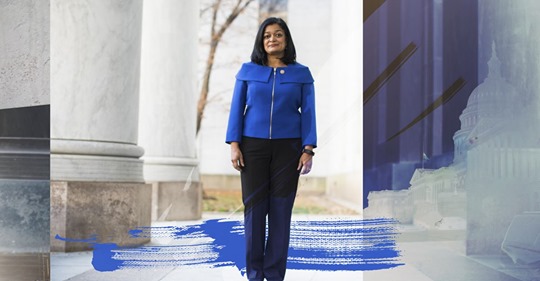
So wrote Rep. Pramila Jayapal, a Democrat from Washington state, in an intensely personal op-ed published in the New York Times on Thursday.

Jayapal’s child, Janak, was born premature, weighing less than 2 pounds, the Congress member wrote. Janak needed intensive care for months and was in and out of emergency rooms for years afterward due to lung problems. Jayapal developed postpartum depression and post-traumatic stress disorder.

Jayapal initially wanted more children, she wrote, but knew that any subsequent pregnancy could put her and her family through the same experience again. So when she became pregnant unexpectedly, she chose an abortion.

“I decided I could not responsibly have the baby,” Jayapal wrote. “It was a heartbreaking decision, but it was the only one I was capable of making.”

Jayapal’s story adds the personal experience of a woman of color to a debate that, she pointed out to BuzzFeed News, is sometimes dominated by white men. It’s also a reminder of something that’s often forgotten in that debate: The majority of people who have abortions already have at least one child.

Pop culture depictions of abortion — even those that take a sympathetic view — typically show childless women getting the procedure. Meanwhile, abortion opponents sometimes frame the decision to terminate a pregnancy as a choice between parenthood and a childless life, perhaps one focused on career. But stories like Jayapal’s are a reminder that people who get abortions are often making a more complex choice, taking into account not just their own needs but those of their families. As more people like Jayapal tell the stories of their abortions, they can help break down some of the many misconceptions surrounding the procedure.

Nearly 60 percent of people who get abortions are already parents

In her op-ed, Jayapal wrote of the heart-wrenching process of watching her child struggle in the months after birth.

“Janak went through multiple blood transfusions and was unable to eat because their internal organs were not developed enough to take in or process milk,” she wrote. “They were kept in a small translucent box in the neonatal intensive care unit and were stuck with needles constantly, each time emitting a painful bleating sound because their vocal cords were simply not developed.”

Meanwhile, Jayapal herself was struggling. She contracted a life-threatening infection after an emergency C-section and lived with undiagnosed depression for years afterward.

She and Janak’s father eventually divorced, and after years as a single parent, she remarried. “I wanted more children,” she wrote, “but in numerous conversations with my doctors, they told me that any future pregnancy would be extremely high-risk and could result in a birth similar to Janak’s.”

So when Jayapal got pregnant unintentionally, she was faced with a difficult choice: “I would be the one to potentially face another emergency cesarean section, and I would be the one whose baby could suffer the serious, sometimes fatal consequences of extreme prematurity.”

Ultimately, Jayapal chose an abortion, supported by both her husband and her doctor: “The network around me helped me to exercise my own choice, rather than imposing someone else’s views on me.”

Today, Janak is thriving, having recently graduated from college, and Jayapal also has a stepson.

The particulars of her experience are unique, but the general outlines are common. Often in TV and film, the person getting an abortion is childless — this includes both anti-abortion films like the 2019 biopic Unplanned, and TV shows with pro-abortion rights views like Hulu’sShrill. Sometimes, the decision is framed as a choice between family or career — in Unplanned, for instance, the main character’s icy boss suggests she get an abortion and implies that having a child will make her worse at her job.

Of course, many childless people have abortions — Unplanned and Shrill are both based on true stories.

But it’s not, in fact, the norm. As of 2014, 59 percent of people who got abortions already had children, according to the Guttmacher Institute. And parents who terminate a pregnancy may be making decisions based not just on their own lives but on the needs of their existing families.

“I knew that I simply would not be able to go through what I had gone through again,” Jayapal wrote of her decision not to have more children. “Janak was far from out of the woods, and I needed to preserve my strength for them.”

Jayapal is one of a growing number of people — including fellow Rep. Jackie Speier (D-CA) — who have begun speaking openly about their abortions in recent years in an effort to destigmatize the procedure. These stories can help counter some of the misconceptions that still surround abortion.

These misconceptions include the idea that the typical abortion patient is a teenager (only about 4 percent of people who get abortions are under 18), and that America’s abortion rate is increasing (it’s at an all-time low). And they include the idea that abortion is always a choice between having a child and having no children. Jayapal’s story illustrates that, as with so many things about the abortion debate, the reality is more complicated than that.

Source: https://www.vox.com/identities/2019/6/14/18678970/pramila-jayapal-abortion-parents?fbclid=IwAR22vQQsstgu05CqQm0KDI_P8GhGu04VjKKVhebL4GuKiBT4X3mWb_QhGIY

In the face of increasing attacks on abortion access throughout the country, New York City’s commitment to funding abortion sends a powerful message.

We are especially grateful to City Comptroller Scott Stringer and Council Members Helen Rosenthal, Carlina Rivera and Margaret Chin, who made abortion funding one of their top priorities in the city budget.
Steven A Henry/WireImage, Taylor Hill/Getty Images, Ilya S. Savenok/Getty Images

Last week, abortion access advocates in New York made history. When the ink dries on next year’s budget, New York will become the first city in the country to directly fund abortion by allocating $250,000 to the New York Abortion Access Fund (NYAAF), which supports anyone who is unable to pay fully for an abortion and is living in or traveling to New York state by providing financial assistance and connections to other resources. This funding will help ensure that every person is able to decide when and whether to become a parent regardless of their income, type of insurance, or citizenship status.

In the face of increasing attacks on abortion access throughout the country, New York City’s commitment to funding abortion sends a powerful message—one that activists in other cities and states can push for.

This is an essential step as we work toward ending the Hyde Amendment, which bans federal funding for most abortions. And we know it won’t be the last: Advocates in progressive cities like ours can seize the opportunity to turn supporters into champions, to advocate for policymakers who talk the talk about abortion access to also walk the walk. Even in progressive states, people face barriers to abortion access. Some people have federal insurance coverage that does not cover abortion care (including members of the military, veterans, and other federal employees), cannot use their insurance for privacy or safety reasons, or cannot afford an abortion despite insurance coverage (such as due to a high deductible). For individuals with low incomes, additional expenses such as travel, unpaid time off work, and child care can push abortion care entirely out of reach, and/or force them to choose between basic necessities (like rent and food) and paying for an abortion. Due to systemic barriers in health care, this especially impacts individuals who are Black, Latinx, immigrants, refugees, or transgender/gender nonconforming.

Directly funding abortion care is a concrete action to support people who need abortions and an important statement that the cruel and unjust Hyde Amendment can no longer stand. As New York City Council Member Carlina Rivera tweeted after the funding was announced, “Before Roe v. Wade, NYC was a haven for women who wanted the freedom to choose. It’s time for our City to be that beacon for the country once again.”

We are celebrating this week thanks to a strong coalition of advocates working together to develop a grassroots and political strategy. NYAAF could not have accomplished this victory without the leadership of the National Institute for Reproductive Health (NIRH), the consistent vision and bold messaging of All* Above All, the grassroots mobilization of WHARR: Women’s Health and Reproductive Rights, and the contributions of many others committed to lifting barriers to abortion care.

The Fund Abortion NYC coalition first came together in fall 2018, led by NYAAF and NIRH, to develop a strategy to pursue City Council funding for abortion care. This campaign grew out of informal conversations with the New York City Department of Health and Mental Hygiene about the possibility of funding, which led to the decision to launch an official campaign. With our combined political savvy, grassroots power, communications strategy, and understanding of the abortion funding landscape, we created a powerful force that offered a concrete policy action for policymakers who had long supported abortion access with their words. We found a champion in Council Member Helen Rosenthal, who helped us navigate the City Council budget process. Through lobbying and grassroots mobilization, we laid the groundwork and got our message in front of as many City Council members and citywide elected officials as we could.

The Fund Abortion NYC coalition built a powerful infrastructure. So when six-week abortion bans in Ohio, Mississippi, and Georgia and a near-total ban on abortion in Alabama galvanized New York policymakers to protect access to local care, we were well poised to connect them to direct action. We are especially grateful to City Comptroller Scott Stringer and Council Members Carlina Rivera and Margaret Chin, the co-chairs of the NYC Council Women’s Caucus, who made abortion funding one of their top priorities in the city budget. NYAAF and the Fund Abortion NYC coalition spoke at rallies, recruited new supporters, circulated a petition with thousands of signers, spoke with the press, and mobilized our base to make calls and send emails to council members.

In the end, the New York City Council was willing to help make abortion a reality for all of us, not just some of us. New York City’s fiscal year 2020 budget will include $250,000 for the New York Abortion Access Fund to support people facing financial and logistical barriers to abortion care.

Politicians and advocates across the country should look to local abortion funds and abortion access advocates to guide the way and identify ways to fund abortion in their own cities and states. We hope New York is just the beginning, and we invite organizers to look to organizations like All* Above All for a justice-oriented vision to repeal Hyde, and the National Institute for Reproductive Health for proactive local policy models.

The momentum to repeal Hyde goes beyond direct abortion funding: In the same week that New York made history by funding abortion, Maine also became the latest state to stand up to the Hyde Amendment by passing a law that requires both public and private insurance that covers prenatal care to also cover abortion care.

Let’s keep up the momentum. Our collective power can shift resources and culture, and create greater access to abortion care.

Source: https://rewire.news/article/2019/06/17/new-york-is-the-first-city-to-fund-abortion-directly-lets-make-sure-its-not-the-last/

Gov. J.B. Pritzker displays the newly-signed Reproductive Health Act as supporters look on. From left, Senate sponsor Melinda Bush (D, Grayslake) and House sponsor Rep. Kelly Cassidy (D, Chicago)
REBECCA ANZEL / CAPITOL NEWS ILLINOIS

Illinois Governor J.B. Pritzker has signed a controversial bill expanding access to reproductive healthcare, including abortions. The move comes as several other states have all but banned the procedure.

Dozens of advocates surrounded the governor as he signed what they’re calling the “most progressive” abortion law in the nation, cementing it as a “fundamental right” under Illinois law.

Supporters say they were prompted to pass what they called the Reproductive Health Act by a nationwide effort to overturn the U.S. Supreme Court case Roe v. Wade. Neighboring states Indiana and Missouri have joined that effort by restricting the procedure and, in Missouri’s case, refusing to relicense the only clinic where abortions are available.

Governor Pritzker says those who have been cut off elsewhere are welcome in Illinois.

“Let the word go forth today from this place: If you believe in standing up for women’s fundamental rights, Illinois is a beacon of hope in the heart of this nation,” he told a crowd gathered for the signing.

Older Illinois laws that restrict abortion access have been blocked, and have now been repealed altogether as part of the new law. Supporters of the legislation say they could have been brought back if the U.S. Supreme Court overturns Roe v. Wade.

Jennifer Welch, an executive at Planned Parenthood of Illinois, says Pritzker is keeping another of his campaign promises.

“Today, Illinois sends a very clear message: a woman, not politicians, should make decisions when it comes to her own pregnancy,” she told the crowd.

Away from the joy of supporters gathered to watch the bill signing in a Chicago ballroom, protestors like nurse Emily Kelly stood just one floor below, in a very different kind of mood.

“I’ll be damned if you tell me that, before exiting the miraculous home that is her mother’s womb, that she’s not a living, breathing human person,” Kelly told reporters.

The law took effect immediately. Among other things, it redefines a viable pregnancy as one in which a fetus can survive apart from its mother without life support.

Abortion-rights supporters say they’ll next look to repeal Illinois’ parental-notification law, which requires a minor to notify her parents when she seeks an abortion. A bill to do away with that provision stalled during the spring legislative session.

State Sen. Melinda Bush, a Democrat from Grayslake, says state lawmakers may try to bring the measure to the floor as soon as the fall veto session.

“It didn’t get done this year, [but] I’m sure that [they’re] going to want to see those bills called,” she said.

Meanwhile, the Thomas More Society, a Roman Catholic legal group, says it’ll be challenging the new law in court.

“We have now gone way beyond Roe v. Wade in terms of post-viability abortions,” said attorney and former Republican legislator Peter Breen. “It’ll now be A-B-C: abortion, bankruptcy and corruption in the state of Illinois.”

Source: https://www.nprillinois.org/post/pritzker-signs-bill-making-abortion-fundamental-right-illinois?fbclid=IwAR19App3bTSoCUgVeazCG2c4JH-ZqX6-o5Fr5gS7sKvso_TDnswQ3XAD6p8#stream/0

An aerial view of U.S. Naval Base Guam September 20, 2006. U.S.

  • Women living in the US territory of Guam must travel elsewhere if they want to get an abortion due to lack of abortion providers on the island.
  • While the island’s laws do permit abortions in the territory by a licensed doctor within 13 weeks, the island’s last abortion provider, Dr. William Freeman, retired in May 2018. The doctor who took over his practice is against abortion.
  • Since May 2018, when Freeman retired, no abortions have been reported on the island, according to Guam’s Office of Vital Statistics.
  • Lack of abortion access in Guam comes as heated debates about the procedure continue to unfold across the US, with a slew of stringent measures passed by states in recent months.

A 12-year-old girl in the US territory of Guam who was allegedly raped and impregnated will have no choice but to give birth to the child — due to lack of abortion providers on the island.

Bureau of Women’s Affairs Director Jayne Flores shared the girl’s story with The Pacific Daily News. “It breaks my heart that the 12-year-old girl who got raped… has to have a baby,” Flores said, adding that the man was recently charged in court. “It breaks my heart that that girl will have to go through with her pregnancy because there’s no one on island that will help her.”

While the island’s laws do permit abortions in the territory by a licensed doctor within 13 weeks, the island’s only abortion provider, Dr. William Freeman, retired in May 2018. Women who try to terminate their pregnancy without the assistance of a doctor can be charged with third-degree felony.

As a result, women who want an abortion will have to travel elsewhere to seek the procedure — a costly and unfeasible option for many on the island. Anita Arriola, an attorney and longtime abortion advocate in Guam, told The Pacific Daily News in June 2018 that while women who have resources can travel off-island for illegal or legal abortions, many women cannot afford to do so.

She said there are few options for women across the region: abortions are banned in the Philippines and the Commonwealth of the Northern Mariana Islands; the procedure is only permitted in Japan under limited circumstances when the women’s health is at risk or if she is raped; and in Singapore, abortions are limited to the country’s citizens.

Hawaii, another option, is around 4,000 miles away and a nearly eight hour flight from Guam.

Since May 2018, when Freeman retired, no abortions have been reported on the island, according to Guam’s Office of Vital Statistics. The doctor who took over Freeman’s practice is against abortion and has made clear he won’t offer the procedure.

“I am deeply concerned for the people in Guam left without needed access to safe, legal abortion care, leaving no options for people who need care,” Dr. Leana Wen, president of Planned Parenthood Federation of America, told INSIDER in a statement. “I’ve seen what happens when people can’t access the care they need — their heath suffers and they go without life-saving care. Health care must be recognized as a human right for all.”

“Our legislators and governor created an environment that has driven legal abortion providers away from Guam, and they’re setting up a system where women will perform their own abortions or travel at great lengths and great risk to get legal or illegal abortions,” Arriola told the Associated Press.

Heated debates about the procedure continue to unfold across the US, with a slew of stringent measures passed by states in recent months.

In April and May alone, the governors of Louisiana, Ohio, Georgia, Mississippi, Missouri, and Alabama signed some of the country’s most restrictive abortion bans. Anti-abortion measures so far this year in Alabama, Kentucky, Louisiana, Mississippi, Missouri, Ohio, and Utahdon’t allow exceptions for rape or incest.

None of these laws have formally gone into effect, and they are being challenged in court.

“This horrifying example is a heartbreaking reminder of the high price women and survivors pay when draconian policies outlaw abortion,” Amanda Thayer, NARAL Pro-Choice America Deputy Communications Director, told INSIDER in a statement. “The wave of abortion bans sweeping states across the US, several of which exclude exceptions for rape or incest, illustrates an ideology that shows absolutely no regard for the actual lives, health, or wellbeing of women.”

Source: https://www.insider.com/teenage-girl-raped-impregnated-guam-abortion-lack-providers-us-territory-2019-6?fbclid=IwAR3TuQkxTR0Q_2VwBv6feYCSCGUluKremoJCrUtaILEi0oQlqnjK0FDbGZ4&utm_medium=referral&utm_content=topbar&utm_term=desktop&referrer=facebook