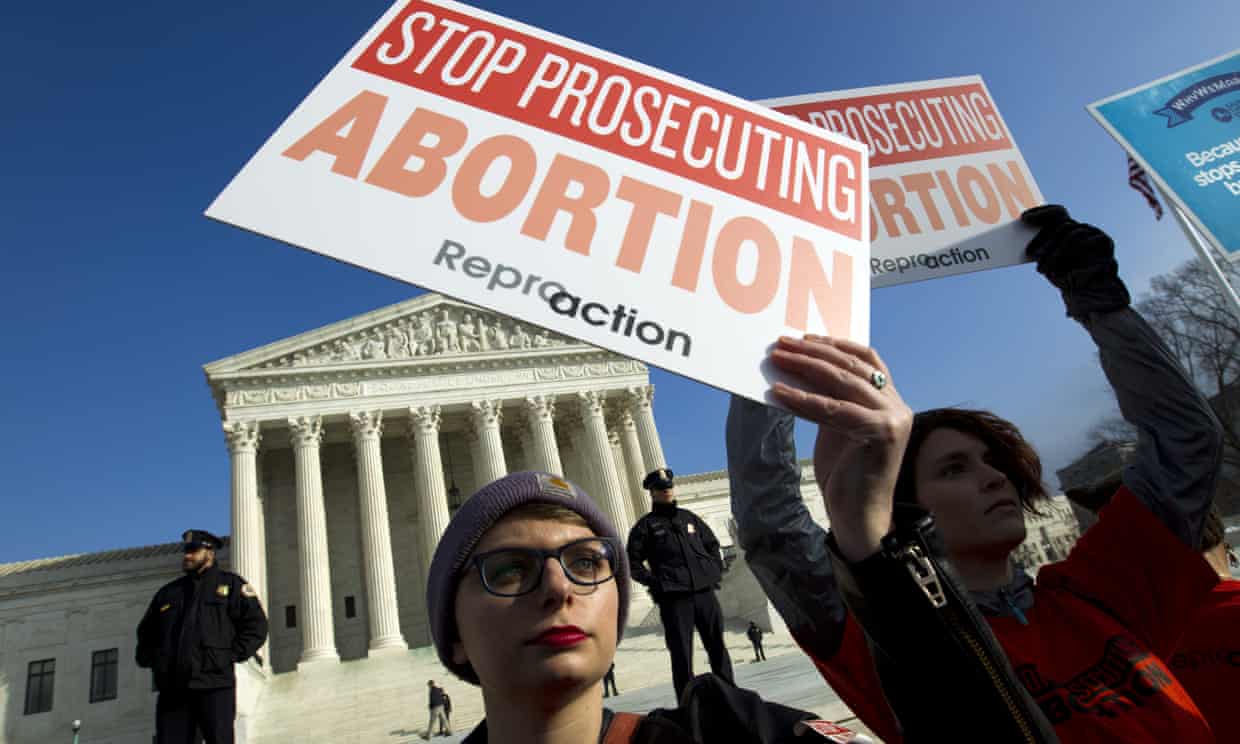
Pro-choice advocates have called on North Carolina Gov. Roy Cooper (D) to investigate anti-choice clinics and stop public funding for groups that operate the facilities.

North Carolina Republicans lost their veto-proof supermajority in last year’s midterm elections, meaning Gov. Roy Cooper (D) could now have more sway in budget negotiations.
Joseph Sohm

North Carolina lawmakers have drafted a state budget for 2019-21 that awards more than $1.2 million per fiscal year to an organization that operates anti-choice pregnancy centers, four times the funding the group received in the previous budget.

Pro-choice advocates, led by the group Reproaction, have lobbied top North Carolina officials to halt public funding for anti-choice clinics, including those run by the Human Coalition, which misleadingly advertises its clinics as offering a full range of reproductive health-care options. In a letter to North Carolina officials sent before the legislature’s budget was released this week, the pro-choice organizations said that Human Coalition has “been known to change the name of the fake clinics they operate to evade detection [by] the women they aim to trick out of procuring abortions.”

The state’s proposed 2019-21 budget has yet to pass either chamber of the GOP-held legislature, though it’s widely expected to clear the house on Friday. North Carolina Republicans lost their veto-proof supermajority in last year’s midterm elections, meaning Democratic Gov. Roy Cooper now has more sway in budget negotiations.

Reproaction has called on Cooper and his administration’s health department officials—such as Health and Human Services Secretary Mandy Cohen—to investigate the Human Coalition and stop state funds from pouring into organizations that operate anti-choice pregnancy centers.

“Until North Carolina taxpayers know what Human Coalition is doing with state money, there should be no funding increases. Certainly not to the tune of millions of dollars that should be allocated to real, comprehensive reproductive health care,” Shireen Rose Shakouri, senior campaign lead for Reproaction, told Rewire.News.

“The legislature directed these funds [to] go specifically to this group,” Ford Porter, a spokesperson for Cooper, said in an email to Rewire.News. “Neither the governor nor his administration requested or supported this funding.”

But Rose Shakouri said Cooper “is perfectly within his ability to direct his administrators at North Carolina’s Department of Health and Human Services to investigate and terminate their contract with the anti-abortion fake clinic chain Human Coalition.” In his response to Rewire.News, the governor’s spokesperson did not say whether Cooper has the ability to stop the funding.

The proposed state budget also includes funding for anti-choice groups like Mountain Area Pregnancy Services and Carolina Pregnancy Care Fellowship (CPCF). The Mountain Area Pregnancy Services website includes misinformation about so-called abortion reversal—a medical procedure pushed by abortion rights foes and unrecognized by legitimate medical organizations—and the supposed risks of abortion care, which is overwhelmingly safe.

Rewire.News reported in 2018 that for years the North Carolina legislature has directed part of its federal Maternal and Child Health block grant to CPCF. The state budget mandates that public “funds shall be used for nonreligious, nonsectarian purposes,” but the Rewire.News investigation showed that clinics subcontracted by CPCF have used federal funding to purchase religious materials “with approval from state regulators.”

Many states with Republican-majority legislatures funnel taxpayer funds into pregnancy clinics operated by anti-choice activists who often lie to pregnant people about their health-care options and don’t offer a full range of reproductive health-care options, like contraception and abortion care.

Public funding of clinics run by anti-choice activists often comes at the expense of families with low incomes: nine of 14 states that distribute taxpayer money to these clinics do so with federal dollars from the Temporary Assistance for Needy Families (TANF) program, according to a 2018 Rewire.News analysis. North Carolina is one of those nine. In 2018, more than $13.4 million in federal funding earmarked for families with low incomes was used for programs that direct money to anti-choice pregnancy centers. Many anti-choice clinics receiving taxpayer dollars, according to the 2018 analysis, operate with almost no transparency or government oversight.

Source: https://rewire.news/article/2019/05/03/north-carolina-legislature-seeks-to-quadruple-taxpayer-funding-for-anti-choice-clinic-group/

Some GPs providing abortions services are being “intimidated” outside their practice “every single day.”

Since the Eighth Amendment was repealed and legislation came into force, 317 GPs have been contracted to provide termination of pregnancy (ToP) services in Ireland, as of January 2.

“Some of our colleagues, of all opinions, have been under a lot of pressure and it’s been difficult, but particularly colleagues who have decided to conscientiously support this service. Some of them have been under immense pressure locally,” said Dr Mark Murphy, at the Irish College of General Practitioners (ICGP)’s annual conference this evening.

“Some practices in Dublin have had protests every day at the weekend. Some practices in the north-west, every single day there are people outside that practice intimidating staff and intimidating the patients. It is not good enough.”

He was speaking in support of a motion that called for the provision of safe access zones for people accessing abortion services at their GP practices.

Following the unanimous passing of the motion, the ICGP will now call on the Minister for Health Simon Harris, to provide safe access zones for all patients attending their GP.

Of 13 motions on the ICGP’s agenda, three of them related to the reality of general practice following the repeal of the Eighth Amendment.

One of those motions asked that the role and views of conscientious objectors to the termination of pregnancy be a respected part of the core GP training curriculum.

While not speaking on the motion, the ICGP’s honorary secretary Dr Eamonn Shanahan, stated emphatically that all views “will be respected.”

To be absolutely clear, the views of every person will be respected and no trainee is expected to do any specific training in termination of pregnancy delivery if that is not their wish.

“There is a need for every trainee to be aware of the law of the land, but apart from that there is no obligation on anybody to have to provide a service they are uncomfortable with,” Dr Shanahan said.

A further motion related to free contraception, which members of the ICGP extended to include the provision of free vasectomies, was also passed. The ICGP will now lobby Minister Harris on this motion.

The reason behind the motion was on the back of the repealing of the Eighth Amendment and the subsequent legalising of abortion in Ireland up to 12 weeks of pregnancy. The provision of free contraception and vasectomies would reduce the incidences of crisis pregnancies in the first place.

It was also decided by the college, that a report would be commissioned into the ICGP’s representation at the Citizens’ Assembly and the Oireachtas Committee on the Eighth Amendment.

“This report should also include recommendations on how any identified pitfalls and negative outcomes can be avoided, should a similar situation arise in the future e.g. concerning any potential legislation for euthanasia or medically -assisted dying,” read the motion.

Source: https://www.irishexaminer.com/breakingnews/ireland/some-gps-intimidated-outside-practices-providing-abortion-services-every-single-day-922121.html?fbclid=IwAR0sP3dZPZaw0i8unIPYAotfMxSKb1YDk1fe6HAxx3noX3SthAC-WgVLVgA

Friday’s ruling by U.S. District Judge Edward Chen in Northern California followed a similar decision by a federal judge in Washington state to bar the government from imposing the new restrictions there. (Getty Images)

A federal judge in San Francisco decided Friday to block the Trump administration from denying federal funds to family planning clinics in California that make abortion referrals.

The ruling by U.S. District Judge Edward Chen followed a similar decision by a federal judge in Washington state to bar the government from imposing the new restrictions there.

A judge in Oregon also has indicated he would rule similarly in a challenge brought in that state.

Chen said the new rule, which was to take effect next Friday, “commands medical professionals to provide incomplete and misleading information to women seeking to terminate their pregnancies.”

The funding at stake is delivered under a 1970 law, Title X of the Public Health Service Act.

It was intended to make family planning services available to the poor and those in isolated rural regions. The funds have never been allowed to be used to pay for or subsidize abortions.

In March, the Trump administration added more restrictions. It said clinics that make abortion referrals would no longer be entitled to the federal funds and recipients could not share office space with abortion providers.

The new rule also would require clinics to refer pregnant women to a healthcare provider for prenatal health services, even if the client wanted an abortion.

Critics said the restrictions were intended to steer women to faith-based family planning services.

California, which serves 1 million patients annually under the Title X program, and Essential Access Health Inc., a nonprofit group that administers the state’s Title X program, sued to block the rule in California.

In issuing a preliminary injunction, Chen said the restrictions would “compromise providers’ ability to deliver effective care and force them to obstruct and delay patients with pressing medical needs.”

“Abortion is a time-sensitive procedure,” Chen wrote. Medical risks and costs rise with delay, he said.

The new rule “erects barrier after barrier between patients trying to make an informed decision about whether to continue their pregnancies and their clinicians,” Chen said.

If the rule were to take effect, many providers would drop out of the program, and the amount and quality of family planning services in California would decline, he said.

Chen did not issue a nationwide injunction, saying the challengers were both based in California and had not cited sufficient evidence of harm in other states.

“Judge Chen’s ruling affirms that in 2019, denying women the medical information and services they want and need is a losing proposition,” said Julie Rabinovitz, president and chief executive of Essential Access Health.

The U.S. Department of Justice could not be reached for comment.

Source: https://www.latimes.com/local/lanow/la-me-ln-injunction-title-x-california-20190426-story.html?fbclid=IwAR2sEOF70yoTD7u9tAfujxtQGeUID5kCzdW0RXryVf8ooUmFNMd_3WhJqPk

Friday’s decision means the Kansas State Constitution protects abortion rights more vigorously than the U.S. Constitution.

Kansas’ Republican-majority legislature was the first in the country to pass a D and E ban, based on legislation pushed by the National Right to Life Committee. Friday’s decision is the first the state supreme court has recognized abortion rights under the state constitution.
Nagel Photography / Shutterstock.com

After considering the issue for more than two years, the Kansas Supreme Court on Friday declared the Kansas State Constitution recognizes the right to an abortion independent of federal law. 

“Section 1 of the Kansas Constitution Bill of Rights provides: ‘All men are possessed of equal and inalienable natural rights, among which are life, liberty, and the pursuit of happiness,’” the opinion states. “We are now asked: Is this declaration of rights more than an idealized aspiration? And, if so, do the substantive rights include a woman’s right to make decisions about her body, including the decision whether to continue her pregnancy? We answer these questions, ‘Yes.’”

The decision came in the case of Hodes & Nauser MDs, PA, et al v. Derek Schmidt et al, a challenge to SB 95, a 2015 Kansas law that bans dilation and evacuation (D and E), the most common form of second-trimester abortion care.

Kansas’ Republican-majority legislature was the first in the country to pass a D and E ban, based on legislation pushed by the National Right to Life Committee. Friday’s decision is the first the state supreme court has recognized abortion rights under the state constitution.

In June 2015, advocates sued in state court to block SB 95, arguing the law unconstitutionally burdens abortion rights and should be blocked. Kansas Judge Larry Hendricks agreed, ruling the measure likely violated the Kansas Constitution as well.

The 199-page decision discusses at length the state constitutional source of abortion rights, grounding it in the state’s protection of “natural rights” and concluded those rights include personal autonomy and bodily integrity, of which the right to make decisions about parenting and procreation. 

“At the heart of a natural rights philosophy is the principle that individuals should be free to make choices about how to conduct their own lives, or, in other words, to exercise personal autonomy,” the decision states. “Few decisions impact our lives more than those about issues that affect one’s physical health, family formation, and family life.”

Nancy Northup, president and CEO of the Center for Reproductive Rights, said in a Friday statement that the court’s decision makes Kansas one of ten states “whose highest courts have affirmed at the state level what the U.S. Supreme Court has upheld for more than four decades: that every woman has a right to make her own decisions about her health and family free from political interference.”

“As this decision makes clear, attempts to undermine that fundamental right by banning safe and accepted methods of abortion cannot stand,” Northrup said.

The decision protects abortion rights in a broader sense than federal law by going beyond the undue burden standard and ruling strict scrutiny, the highest constitutional threshold for judging state actions, applies in these situations instead. “Simply put, the undue burden standard—both as set out in Hellerstedt, and in the concurring opinion, lacks the rigor demanded by the Kansas Constitution for protecting the right of personal autonomy at issue in this case,” the opinion states.

“At issue here is the inalienable natural right of personal autonomy, which is the heart of human dignity. It encompasses our ability to control our own bodies, to assert bodily integrity, and to exercise self-determination,” the opinion continues. “Imposing a lower standard than strict scrutiny, especially mere reasonableness, or the dissent’s ‘rational basis with bite’—when the factual circumstances implicate these rights because a woman decides to end her pregnancy—risks allowing the State to then intrude into all decisions about childbearing, our families, and our medical decision-making.”

“It cheapens the rights at stake.”

Justice Caleb Stegall issued a dissenting opinion, deriding the majority opinion as one that “fundamentally alters the structure of our government to magnify the power of the state—all while using that power to arbitrarily grant a regulatory reprieve to the judicially privileged act of abortion.”

Dr. Leana Wen, president of Planned Parenthood Federation of America, said in a statement that the Kanas Supreme Court ruling should serve as a “strong message” to anti-choice legislators backing unconstitutional restrictions on abortion rights.

“Today’s Supreme Court ruling reaffirms what we in medicine and public health know to be true—abortion is a safe, standard medical procedure that one in four women will have her in lifetime, and is part of the full spectrum of reproductive health care,” Wen said.

Friday’s decision means advocates have a new tool in challenging abortion restrictions in the state. It also means SB 95 will remain blocked while the case returns to the trial court, where the challenge to the merits of SB 95 will continue.

Doctors argue that the bans, known as ‘fetal heartbeat’ bills, are medically inaccurate and use misleading language

Abortion rights activists protest outside the US supreme court in January 2019. Photograph: José Luis Magaña/AP

High-profile gynecologists are criticizing the framing of six-week abortion bans, known as “fetal heartbeat” bills, as medically inaccurate.

The bans, now moving through nearly a dozen state legislatures, propose the strictest limitations on the right to abortion as established by the US supreme court case Roe v Wade in 1973.

“These bills present the idea that there’s something that looks like what you or a person on the street would call a baby – a thing that’s almost ready to go for a walk,” said Dr Jen Gunter, a gynecologist in Canada and the US who runs an influential blog. “In reality, you’re talking about something that’s millimeters in size and doesn’t look anything like that.”

That early in a pregnancy, Gunter said, an embryo does not have a heart – at least, not what we understand a human heart to be, with pumping tubes and ventricles. At six weeks, a human embryo throbs, but those tissues have not yet formed an organ, so the pulsing should not be confused with a heartbeat.

“When throbbing of some tissue begins, it’s not a heart,” said Dr Sara Imershein, a gynecologist and obstetrician in Falls Church, Virginia. “Really, we call it an embryo until about nine weeks from last menstrual period,” or roughly three weeks after the new laws prohibit termination of pregnancy.

Abortion opponents rally on the steps of the Capitol in Richmond, Virginia.
Pinterest
 Abortion opponents rally on the steps of the Capitol in Richmond, Virginia. Photograph: Steve Helber/AP

It would be more accurate to call these bills “fetal pole cardiac activity” measures, said Gunter. Though it doesn’t roll off the tongue, the term would capture the state of an embryo at six weeks, which appears more fish-like than human baby.

“It’s a process – the heart doesn’t just pop up one day,” said Imershein. “It’s not a little child that just appears and just grows larger”, in contrast to imagery often invoked by anti-abortion campaigns of embryos as tiny, miniaturized infants.

Misleading names like “heartbeat”move the debate away from medical considerations for a woman’s decision to get an abortion, said Gunter.

Similarly, the phrase “late-term” is misleading. A normal human gestation is 40 weeks. Medically speaking, “late-term” means 41-42 weeks.

But anti-abortion activists twisted the phrase into a political construct understood to be any abortion after the 21st week, late in the second trimester. “Nobody is doing late-term abortions – it doesn’t happen,” said Gunter of the medical definition. “But it’s become a part of our lexicon now.”

She recalled an instance when she worked in Kansas, where abortions were banned at publicly funded medical centers. She had a first trimester patient with a serious and deteriorating medical condition. Her doctor recommended termination. In order to get clearance, Gunter was patched through to the state senator who sponsored the law. “I had to explain [it] to him. I had to ask him permission to do the abortion.”

Clinic escort Kim Gibson assists a driver while an abortion opponent protests nearby. The facility is the only one in Mississippi that performs abortions.
Pinterest
 Clinic escort Kim Gibson assists a driver while an abortion opponent protests nearby. The facility is the only one in Mississippi that performs abortions. Photograph: Rogelio V Solis/AP

“What was really shocking to me was that when I called him – I had researched everything so that I could give him all the statistics – and I barely said two lines and he said, ‘Oh doctor, do whatever you think is necessary’,” she said. “If doing what I thought is necessary is what you believe in, why have the law?”

Gunter said six weeks is not enough time to make informed medical choices. It’s before most women know they’re pregnant, and before fetal malformations can be diagnosed. The risks of medical conditions, such as lupus, won’t be apparent that early. There are some heart conditions “where we say, you should not be pregnant”, said Gunter. “The risk of death is 50%. We know that the second the pregnancy test is positive. But what if that person doesn’t seek medical care until they’re eight weeks?”

“The whole point [of these bills] is to introduce terminology that makes people think differently about pregnancy,” said Gunter.

In practice, she said, six-week measures are effectively abortion bans – a fact that misleading names such as “heartbeat bill” could obscure. “We can’t use the incorrect language in the bills,” said Gunter. “Because once you start using incorrect language, you’ve basically conceded.”

Source: https://www.theguardian.com/world/2019/apr/24/its-not-a-little-child-gynecologists-join-the-fight-against-six-week-abortion-bans?CMP=fb_gu&utm_medium=Social&utm_source=Facebook&fbclid=IwAR2Wb9Sfk05iIPS82CDPWzn_XqD3ZtHBtY240Z6LILVF9aVwCTrC4AywQVA#Echobox=1556113321

U.S. District Judge Michael J. McShane issued a preliminary ruling from the bench Tuesday in federal court in Portland, after hearing three and a half hours of oral argument on the Title X Family Planning program rule changes.

U.S. District Judge Michael J. McShane late Tuesday said he’ll grant a preliminary injunction against new federal restrictions that bar taxpayer-funded family planning clinics from referring patients to abortion providers, calling the rule a “ham-fisted approach to public health policy.”

Oregon is one of 20 states and the District of Columbia that challenged the Trump administration’s changes to the Title X family planning program in U.S. District Court in Oregon, along with Planned Parenthood affiliates and the American Medical Association.

They sought a national injunction. But the judge said he’s reluctant to set “national health care’’ policy and would describe the scope of his injunction in a formal written opinion soon. The U.S. Justice Department urged any injunction apply only to the plaintiffs in this case, noting at least four similar suits pending in other states.

McShane said the so-called “gag rule” — barring physicians from referring patients who don’t want to continue their pregnancies to an abortion provider — prevents doctors from behaving like medical professionals.

The judge also found that it would create a class of low-income women who couldn’t receive a full range of medical care options, foster a “geographic vacuum” in reproductive health care clinics and likely cause an increase in abortions due to more unwanted pregnancies.

He said the rule, which is set to go into effect May 3, represents an “arrogant assumption” that government is better suited to direct health care instead of providers.

The judge said he’d also grant a preliminary injunction to stop another change — the so-called “separation” rule prohibiting federally funded family planning clinics from being housed in the same place as abortion providers.

The judge’s decision from the bench followed three and a half hours of oral argument in federal court in Portland, with Oregon’s Attorney General Ellen F. Rosenblum leading off the hearing.

“Title X grant funds are a true safety net for low income individuals and those who would not be able to access care, due to a lack of insurance or other barriers,” Rosenblum said. “Put simply, this is an attempt to politicize what has been a successful, nonpolitical public health program for 50 years.”

Attorney Andrew M. Bernie, for the federal government, countered that there had been no showing of “irreparable harm” from the rules and nothing in the administrative record to suggest a political motivation for the changes.

The rules are supported by 14 other states and are in line with the 1991 U.S. Supreme Court ruling in Rust v. Sullivan, which upheld prior U.S. Department of Health and Human Services regulations that prohibited employees in federally funded family-planning facilities from counseling a patient on abortion, Bernie argued.

But the judge wasn’t swayed by Bernie’s argument, particularly the Justice Department’s reliance on a nearly 30-year-old Supreme Court case.

“We are looking for good health outcomes. Are these rules going to bring about good health outcomes?” McShane repeatedly asked Bernie.

McShane presented a hypothetical scenario, saying if he went to his doctor and asked for a vasectomy and his doctor referred him only to a fertility clinic, “that would seem insane to you, right?”

The judge said the government hadn’t provided him with any data to counter medical experts’ assertions that restricting medical professionals from discussing all reproductive health options with patients would result in increases in unwanted pregnancies, use of ineffective contraceptives and increases in sexually transmitted diseases and HIV.

Attorney Alan Schoenfeld, representing the Planned Parenthood Federation of America and the American Medical Association, said all Planned Parenthood providers will leave the Title X program as a result of the “gag rule” as it requires them to practice unethically.

Schoenfeld said the rules would cause a public health crisis, with no other clinics able to fill the gap in certain communities, reducing access to early cancer screening and other health care services for low-income women. Planned Parenthood operates about 40 percent of the Title X clinics in the country.

Bernie, in response, said Planned Parenthood is entitled to its views about medical ethics, but it’s “not allowed to set the parameters for the Title X program.”

The judge said he didn’t want to get into a political discussion, but then asked the Justice Department lawyer, “Is it a political motivation to defund Planned Parenthood, regardless of health outcomes?”

Bernie said the Department of Health and Human Services believes the rules best reflect Section 1008 of the Title X statute, which prohibits abortion as a method of family planning.

Schoenfeld argued there was no example cited of any misuse of Title X funds in the last half century.

“This is a victory for patients and doctors in this country,” said Dr. Leana Wen, president of the Planned Parenthood Federation of America, after the judge’s ruling from the bench.

But Wen added that since the relief is preliminary, Planned Parenthood “will continue to fight the Trump-Pence administration in court and in Congress to ensure our patients’ health and rights are protected.”

Source: https://www.oregonlive.com/news/2019/04/federal-judge-in-oregon-to-grant-preliminary-injunction-against-trumps-title-x-rules-restricting-abortion-access.html?fbclid=IwAR2kDanQzStszsyxOecUk68DyPZ5uRG-0dtYC9YmgqLxlfQ5Y_oYnYGa5HQ

Ohio became the latest state on Thursday to sign into law one of the country’s most stringent abortion laws, joining a league of states that are set to ban or have already banned abortion at six weeks. So, which states have banned abortion at six weeks? Here’s what you need to know.

The abortion law, dubbed “heartbeat bills” by advocates, prohibits abortions after detection of a fetal heartbeat during an ultrasound, which doctors say can be as early as five or six weeks into the pregnancy. This is oftentimes before women, trans, and non-binary individuals know they are pregnant. Ohio’s version of the bill would subject doctors who perform an abortion after the detection of a fetal heartbeat would be subject to a $20,000 fine from the state medical board, could have their medical licenses suspended or revoked, and could face up to a year in prison, according to The Hill and NPR.

The ban, signed into law by Gov. Mike DeWine of Ohio — in stark contrast to the two-time veto of a similar bill by his predecessor former Gov. John Kasich — late last week is part of a wide-sweeping effort at the state level to ban abortion. States like North Dakota, Arkansas, Kentucky, Iowa, and Mississippi have also passed similar laws, according to The Hill, however, many of the passed abortion bans in these states have been reviewed or thrown out by the courts. Mississippi’s law is set to take effect in July, according to the Associated Press.

Meanwhile, similar heartbeat bills have advanced in one chamber of state legislatures in Missouri and Tennessee, according to USA Today, and may be on their way to pass in the near future. The legislation has been introduced in Florida, South Carolina, Louisiana, Minnesota, Illinois, Maryland, New York, and West Virginia.

For many anti-abortion activists and conservative leaders, this is an opportunity that could eventually lead to a Supreme Court challenge of the 1973 Roe v. Wade decision.

Indeed, human-right groups including the ACLU and Planned Parenthood have already promised legal action to challenge the bills. “Gov. DeWine just signed the Ohio law that virtually bans all abortion care. We’ll see you in court,” the ACLU tweeted following Ohio’s decision on Thursday.

Planned Parenthood promised eventual Supreme Court action to battle out the national issue. “If this is what it takes, we will see you at the Supreme Court,” the organization’s Ohio president Iris Harvey said at a rally on Wednesday, NPR reported.

Those looking to join the fight can contribute in a multitude of ways. Currently, House Republicans are attempting to advance a bill in Congress that, if passed, would be a federal restriction on abortion after six weeks. While a bill like this one is likely to face considerable obstacles, considering Democrats currently control the House of Representatives, you can sign this petition by NARAL that would firmly oppose any anti-abortion legislation before it even gains traction.

Be sure to contact your representatives to make your pro-choice stance clear and affect legislation on a local level before it can advance to policy. Begin by going to this guide, which will direct you to your state assembly or legislature website, and then navigate to find your state website’s page to identify your representatives. To find your governor’s information, go to this website and simply choose your state from the drop-down menu.

To find out who represents you in Congress, you can visit the House and Senate’s websites and then enter your zip code or state name. Once you find the names of your representatives, you can locate their contact information through the House and Senate directories.

If you’re looking to support organizations that are gearing up for legal battles, donations can go a long way. Oftentimes, nonprofit organizations benefit the most from monthly donations of any amount. Organizations that could benefit from your donations to fight abortion laws include NARAL, state offices of the ACLU, and the national ACLU organization.

Outside of donating, you can also raise money for these organizations by teaming up with the organization and creating your own personal fundraising campaign. If you have a birthday coming up, you can ask family and friends to donate the amount of your age to a selected organization as your birthday gift. If you’re planning on getting hitched, you can make an organization like the ACLU a part of your wedding registry and ask your guests to donate to the cause instead of giving traditional gifts. Here are do-it-yourself fundraising tipspublished by the ACLU that can get you started.

With an overwhelmingly conservative Supreme Court bench and multiple states rallying to fight the good fight on abortion laws, it is now more important than ever to take action to preserve women’s rights.

Source: https://www.romper.com/p/which-states-have-banned-abortion-at-6-weeks-heres-how-you-can-fight-heartbeat-bills-17036259

A Republican lawmaker in Delaware has introduced two anti-abortion bills in his state because he believes abortion is contributing to the declining birth rate in the U.S. Rep. Richard Collins is the co-sponsor of HB52, which would ban abortion after 20 weeks, and HB53, which would require women to see an ultrasound before getting an abortion. Currently, Delaware bans abortion after 24 weeks.
“God is moving in strange and wonderful ways, folks,” Rep. Collins said in an interview with Delaware radio station WGMD, first reported by Raw Story. “These gun bills that we talk about will save essentially no lives because it will have no impact on criminals getting [or] keeping their guns. But every single year, we kill hundreds of people in abortions.”
Collins then cited the country’s declining birth rate — it dipped 2% from 2016 to 2017 and is at a 30-year low — as a reason for restricting abortion. “You know, we have a massive problem in this country. Our birthrate is way, way below replacement [levels]. You know, we are just not having enough babies,” he said. Collins continued that he believes these bills are “very, very minor” and that laws requiring women to see an ultrasound and hear a fetal heartbeat will stop “75% of women” from going through with an abortion. Refinery29 could not find any study or source to back up his claims.
There are many factors at play as to why American women are having less children, including reduced teen pregnancy rates, women having children later in life thanks to improved fertility treatments, and the astronomical costs of childcare. Additionally, Collins failed to mention that abortion rates are at their lowest ever since the landmark decision Roe v. Wade was issued in 1973, according to the CDC.
Collins is just one of many anti-choice lawmakers determined to undermine and chip away at a woman’s right to choose. As Refinery29 has previously reported, since the start of the year, more than 250 abortion restrictions have been introduced across the country, many of which ban abortion before most women even know they are pregnant. The end goal is to eventually trigger a Supreme Court battle that could end in Roe v. Wade being overturned. “The idea is to…ultimately to get this before the U.S. Supreme Court with the anticipation that the court is looking to undermine or overturn Roe v. Wade,” Elizabeth Nash, senior state issues manager at the Guttmacher Institute, told Refinery29. “Conservatives are very eager to get that ball rolling.”

In a letter sent to the Washington state Democratic house leadership, a pro-choice coalition withdrew its support for a new version of a reproductive rights bill.

Governor Jay Inslee, who supports reproductive rights and has criticized President Trump’s gutting of the Title X family planning program, has not commented on the latest RHAA changes but advocates expect he would not sign the current version of the bill.
Getty images

Washington state Democrats blindsided pro-choice advocates on Tuesday by passing a version of the Reproductive Health Access for All Act (RHAA) that didn’t include provisions that would have extended reproductive rights to vulnerable communities like undocumented immigrants.

The Democratic house majority made changes to the bill passed earlier by the state senate (SB.5602). NARAL and Planned Parenthood are part of the multi-organization Health Equity and Reproductive Rights Organizations (HERRO) coalition that has condemned the removal of provisions in the RHAA that would have ensured gender-neutral language and anti-discrimination protections for LGBTQ residents, and expanded coverage of cancer screenings and birth control for all, including undocumented people.

Many are calling on state senate leaders to refute the changes, which they find “discouraging” in a progressive state like Washington, Tiffany Hankins, executive director of NARAL Pro-Choice Washington, told Rewire.News.

“I’m furious that the so-called pro-choice Democrat majority…in the Washington state house cannot summon the courage to hold together a community-driven reproductive health equity bill. It is an appalling injustice that these communities face barriers to accessing health care at all, and that marginalized communities are then the first to be sacrificed,” she said.

“No one’s health should be compromised because of their immigration status,” Lili Navarrete, manager of the Raiz program, Planned Parenthood’s Latino community outreach effort, said Thursday in a statement. “This is the opposite of putting people first, especially with so much alarming rhetoric against immigrants today.”

In a letter sent to the Democratic house leadership Wednesday, the coalition withdrew its support for the watered down version of the legislation; several members who have fought for reproductive rights and the RHAA expressed their outrage.

“The last-minute removal of family planning coverage for undocumented immigrants from RHAA targets the rights of the most marginalized communities in Washington state,” Rosann Mariappuram, If/When/How reproductive justice fellow at Surge, told Rewire.News in an email. “Surge stands with people whose bodies, lives, and families have been subject to state and social control. Access to reproductive health care is a human right. It is not determined by immigration status. We are thankful to our allies in the HERRO coalition, especially Gender Justice League, which represents trans and gender diverse people in Washington, for rejecting political compromises that abandon our communities.”

“When the House Democrats have a 16-seat lead, but they still don’t feel secure enough to vote in support of immigrant communities, we have to question if they will ever be willing to do so,” Gender Justice League co-executive director Tobi Hill-Meyer said in the statement. “The trans community knows what it’s likely to be cut out of a bill to make it more palatable. We need to be clear that removing protections for the most vulnerable is not an acceptable tactic.”

The bill now goes back to the state senate. If lawmakers there don’t agree with the changes, it will go to a joint committee.

Gov. Jay Inslee (D), who supports reproductive rights and has criticized President Trump’s gutting of the Title X family planning program, has not commented on the latest RHAA changes, but advocates expect he would not sign the current version of the bill. Inslee’s office said the governor, a Democratic presidential candidate, has “not reviewed the latest version” of the pro-choice legislation. Inslee will have five days to take action on the bill once it reaches his desk.

“With a national landscape of states working to criminalize people who have abortion, the president’s attacks on Title X funding, and anti-choice fake health centers, I hope that Washington State lawmakers can correct what they have broken and have the courage to close gaps in access to reproductive health care,” Hankins said.

Source: https://rewire.news/article/2019/04/18/washington-state-democrats-are-watering-down-pro-choice-legislation/

House Democrats are launching a probe of the Trump administration’s decision to fund an anti-abortion group through a federal family planning program while cutting government support for Planned Parenthood.

The Trump administration announced last month that four Planned Parenthood affiliates would not be awarded Title X family planning grants this year, despite receiving them in the past. The administration also announced that, for the first time, it would fund Obria, a chain of anti-abortion clinics that don’t provide contraception.

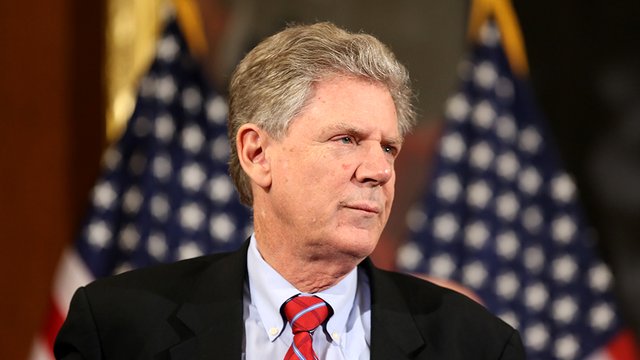
Democrats, led by Energy and Commerce Committee Chairman Frank Pallone Jr. (N.J.), wrote in a letter to Health and Human Services Secretary Alex Azar that the changes don’t meet the goals of the program, which is to fund clinics that provide low-income women access to reproductive care.

“In eliminating longstanding comprehensive sexual and reproductive health centers from the Title X network and directing funding to grantees that will not guarantee access to contraception or HIV and other STI prevention services, the funding decision contradicts the program’s longstanding purpose of ‘providing individuals with comprehensive family planning and related preventive health services,’ ” Pallone wrote in the letter with Rep. Anna Eshoo (D-Calif.), chairwomen of the Health Subcommittee, and Diana DeGette (D-Colo.), chairwoman of the Oversight and Investigations Subcommittee.

Obria will oversee the work of seven clinic partners, including three of its affiliates that don’t provide contraceptives or perform abortions, in four California counties.

Of the other four clinics under Obria’s oversight, two will provide contraceptives, but won’t be allowed to use Title X family planning grant program funds to pay for it, a spokesperson told The Hill last month.

The Democrats argue this arrangement violates congressional intent for the program. 

“The shift of funding toward [crisis pregnancy centers] that will not offer patients direct access to a broad range of contraceptive care and counseling is alarming,” they wrote. 

The Democrats said they were “alarmed” by emails obtained by The New York Times that showed Health and Human Services (HHS) officials communicating with Orbia about funding opportunities.

The Democrats asked HHS to provide all documents and communications between HHS and Obria regarding the Title X program over the past two years and its applications for funding.

Democrats are also asking HHS for more information about its decision to fund Beacon Christian Community Health Center, a faith-based organization in New York, for the second year in a row. 

Source: https://thehill.com/policy/healthcare/439356-house-democrats-probe-trump-administrations-funding-of-anti-abortion-group