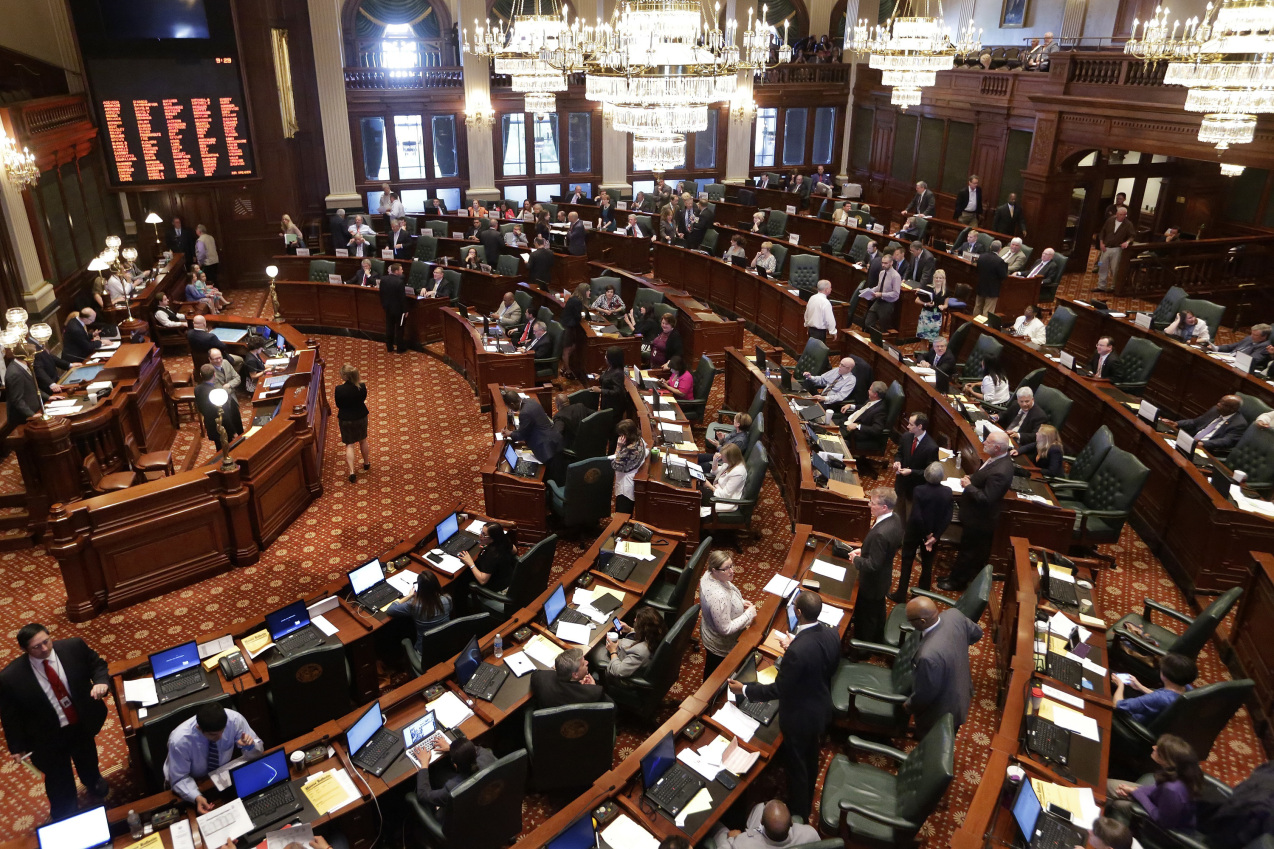
Lawmakers convene on the House floor during a session at the Illinois State Capitol in Springfield. | Seth Perlman/AP file

There is a lot of noise these days about abortion. Tweets and speeches from partisan places bounce around in our heads, creating doubt and replacing facts with lies. This OB-GYN would like to set the record straight: No one is murdering newborns or ripping them out days before birth. Contrary to the way some headlines are presented, 88 percent of all abortions occur in the first trimester. Only 1.3 percent occur after 20 weeks gestation, and the vast majority of these are for dangerous fetal or maternal medical conditions I wouldn’t wish on my worst enemy.

I should know. I ended a loved and wanted pregnancy in 2009 in the second trimester, after learning my son, Thomas, would have suffocated to death had he been born. For my family, this was intrauterine palliative care. I am on the front lines of women’s health care. I have story after story of women and families who have ended pregnancies. It is never simple, never flippant.

It is always health care. It is always personal. It is never a place for government.

As a mother and OB-GYN, I strongly support HB 2495: The Illinois Reproductive Health Act. This bill would repeal the outdated and unenforceable criminal penalties for abortion care. It is terrible legal design to have multiple, contradictory laws on the books.

Counseling women on their pregnancy choices is my job. I trained long and hard for it. I spend sleepless nights worrying about moms and their babies. I have always found it ironic that those who call for the smallest government want to squeeze it into my exam room and uterus. Medical providers, like me, are the ones to listen to for health care guidance — not politicians.

Abortion is health care and has been since ancient times. It has no place in the criminal code.

Dr. Cheryl Axelrod, Wilmette

Repeal parental notification of abortion

I commend the Sun-Times for its editorial “For safety’s sake, repeal the Illinois Parental Notification Act” (Tuesday). I also commend our state legislators for advancing SB 1594, the bill to repeal the act and, in doing so, protect the health and safety of the young women of Illinois.

State law cannot dictate family dynamics. Young women who may decide to have an abortion will tell a parent, if they can. For those who can’t, they must have the ability to make their own decisions about their own future. Requiring judicial intervention is an extraordinary obstacle and punishment. Please contact your legislators now and entreat them to vote yes on SB 1594.

Source: https://chicago.suntimes.com/opinion/repeal-outdated-unenforceable-criminal-penalties-abortion-care-cheryl-axelrod/

The Trump administration is trying to exclude abortion providers, so the state is trying to fund its own Title X program.

On Saturday, the Maryland House of Delegates passed a bill that would end the state’s participation in Title X, if the administration prevents the program’s federal family planning funds from going to clinics like Planned Parenthood that provide abortion or refer patients for abortion elsewhere. Instead, beginning in 2021, the governor would be instructed to set aside more state dollars to effectively create its own family planning program.

In 2017, Gov. Larry Hogan (R) signed a bill that created a state-based family planning program, in case the federal government decided to impose a gag rule. This new bill takes an additional step, declaring Maryland would not participate in a program that provides substandard care, explained Robyn Elliott, lobbyist for Planned Parenthood of Maryland.

“This is really about equity across Maryland,” Elliott told ThinkProgress. “Maryland has worked for many years to ensure everyone has access to a broad range of evidence-based contraception…. Why would we leave a part of Maryland out in terms of having access to the same high standard of care?”

The Maryland Department of Health receives between $3 million and $4 million dollars annually from the federal government under the Title X program, Elliott said. The state doles out these federal dollars to various providers, including eight Planned Parenthood clinics. Should the administration’s rule barring abortion providers from participating in Title X take effect, the state would no longer be able to dispense federal dollars to these clinics.

Under current law, federal dollars can’t pay for abortion services. Providers use Title X dollars to pay for other health services like contraception, pelvic exams, and cervical or breast cancer screenings. In 2010, Title X clinics prevented 53,450 cases of chlamydia, 8,810 cases of gonorrhea, 250 cases of HIV, 1,900 cases of cervical cancer, and 6,920 cases of pelvic inflammatory disease, according to the National Family Planning and Reproductive Health Association.

But the Trump administration argues that by allowing providers like Planned Parenthood to participate in the Title X program, federal officials are basically subsidizing abortion. (It’s worth noting Title X-funded clinics receive more money from Medicaid, a federal-state insurance program for low-income people.)

The administration’s new rule, issued in early March, fundamentally reshapes the country’s sole grant program dedicated to family planning. The grant program would require providers to physically and financially separate abortion from other medical services. Providers wouldn’t even be able to provide abortion referrals during pregnancy counseling. The administration is also giving crisis pregnancy centers an opportunity at receiving federal dollars, even though these centers have a history of misleading patients. Under the Trump administration, the Title X program would emphasize fertility awareness and abstinence education.

The administration is mirroring what conservative states have long tried to do. In 2011, Texas excluded Planned Parenthood from a Medicaid-based program that served around 244,000 women. Within a year, 82 clinics closed, a third of them run by Planned Parenthood.

“The exclusion of Planned Parenthood affiliates…in Texas was associated with adverse changes in the provision of contraception,” a 2016 study published in the New England Journal of Medicine found. “For women using injectable contraceptives, there was a reduction in the rate of contraceptive continuation and an increase in the rate of childbirth covered by Medicaid.”

Under the proposed bill, Maryland would create a state-based family program that continues to include abortion providers like Planned Parenthood.

“We want to make sure Marylanders who get family planning services under Title X have access to the very same methods as people with private insurance. It’s that plain and simple,” said state Rep. Shane Pendergrass (D), sponsor of the Maryland Title X bill.

“… Because of the federal rules, they will no longer have that access under Title X. So it’s time to walk away from the federal Title X dollars,” she added.

ThinkProgress reached out to the governor’s office for comment on the bill, but did not hear back by the time of publication.

Maryland is likely the first state aiming to mitigate the gag rule’s damage through legislative action. The state is also one of 21 others suing the administration over the rule. There are currently at least six lawsuits challenging the administration’s changes to the Title X program.

“We are singularly focused on and confident that the courts will block this unlawful regulation. Communities across the country recognize the peril that will befall their most marginalized residents if this rule takes effect. We are all fighting to protect providers and their patients however possible, and our hope is that our legal action will make it so that states don’t have to bear this burden, and many will be unable to do so,” Jessica Marcella, vice president of advocacy and communications at the National Family Planning & Reproductive Health Association, said in a statement to ThinkProgress.

Most legal experts think these lawsuits will have a tough time prevailing in federal court, as the Supreme Court previously upheld a similar Regan-era regulation.

Source: https://thinkprogress.org/maryland-bill-could-become-first-state-to-stop-participating-in-title-x-program-after-trump-gag-rule-abortion-a262ae1a3ad9/

In the most restrictive nations, women who terminate their pregnancies face lengthy jail terms

Women in England and Wales have had the right to seek an abortion since 1968, but more than 50 years on, many women around the world do not have the same choice.

A 2017 report by the Guttmacher Institute, which studies reproductive health laws, found that 42% of women of reproductive age live in countries where abortion is either banned or only allowed in specific circumstances.

The most common legal grounds for abortion worldwide is to protect the life of the mother, followed by serious risk to her physical or mental health.

Around half of the countries in the world allow abortion in cases where the pregnancy was the result of rape or incest, and a similar proportion recognise serious foetal abnormality.

However, in a few countries, abortion remains the ultimate taboo.

Which countries have the strictest abortion laws?

All but a handful of countries allow an abortion to be performed when the life of the mother is at risk. The exceptions are Malta, El Salvador, Nicaragua and Dominican Republic

Strongly Catholic Malta is the only European country to have a total ban on abortion, and a survey carried out last year by Malta Today suggests that liberalisation is a long way off.

Overall, 95.2% of those surveyed were opposed to abortion by request – known as elective abortion – even if it were restricted to the first 12 weeks of pregnancy. Less than half said that abortion should be allowed to save the life of the mother.

El Salvador’s harsh anti-abortion laws have come into the international spotlightin recent years, due to high-profile cases of women imprisoned for terminating their pregnancies, some of whom claimed to have actually suffered a miscarriage.

Unsurprisingly, abortion is also totally banned in Vatican City – however, given that the Holy See’s 800-strong population is overwhelmingly made up of Catholic clerics, this prohibition is largely theoretical.

Where is elective abortion legal?

At the other end of the scale, 63 countries and territories permit women to terminate their pregnancies at their request, although usually with some conditions – most commonly, a time limit on when the procedure can be performed.

Canada is the only Western nation where a woman can seek an elective abortion at any time in her pregnancy, although in practice only a handful of terminations occur during the third trimester, HuffPost reports.

What about the UK?

In all parts of the UK except Northern Ireland, women can freely obtain an abortion up to 24 weeks into their pregnancy. Terminations can be performed after this limit in exceptional circumstances, such as to save the life of the mother or due to a severe foetal abnormality.

Office for National Statistics and Department of Health and Social Care figures show that in 2017, 192,900 abortions were performed in England and Wales, compared to 679,106 live births.

Figures like these are often used to claim that more than 20% of all pregnancies are terminated. However, The Journal points out that this statistic is misleading as it does not take into account the thousands of pregnancies which end in miscarriage every year.

Source: https://www.theweek.co.uk/100132/countries-where-abortion-is-legal-and-where-it-is-totally-illegal?fbclid=IwAR1AVp4nUYyPq01LeyDm65IiRCg59lzmH_q2xXbM8YI2vXsx9A9g-EMK0bw

Democrats on the HELP committee join a growing chorus of congressional criticism of the “gag rule,” which is set to go into effect on May 3.

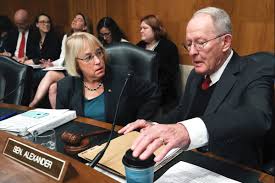
Sen. Patty Murray (D-WA), the committee’s ranking member, voiced support for a hearing.
Mark Wilson / Getty Images

A group of Senate Democrats sent a letter on Monday to committee leadership demanding a hearing on the Trump administration’s newly finalized rule restricting family planning funding, dubbed the domestic “gag rule” by opponents.

Democrats on the U.S. Senate Committee on Health, Education, Labor, and Pensions (HELP) explained their concern that the anti-choice restriction would force providers to violate medical ethics by banning referrals for abortion care. The letter also says that the rule’s requirement that clinics physically and financially separate Title X-funded family planning services from abortion services “appears to be aimed at and would disproportionately affect Planned Parenthood health centers, which currently serve over 40% of Title X network patients.” The letter says this could present a burden to other providers if Planned Parenthood, the country’s largest provider of Title X services, is cut from the program.

“The effects of this requirement would be devastating nationwide and in our home states,” the senators wrote. “We urge you to hold a hearing so we can fulfill our responsibility to scrutinize the policy with the due diligence it deserves …. The Committee should hear from patients, providers, entities receiving Title X funds, and state and local health departments, so we can directly assess the impact this final rule will have on people with low incomes’ ability to access high-quality family planning services.”

The letter was addressed to Committee Chair Lamar Alexander (R-TN) and Sen. Patty Murray (D-WA), the committee’s ranking member. It was signed by Sens. Elizabeth Warren (D-MA), Doug Jones (D-AL), Sen. Bernie Sanders (I-VT), and the seven other non-ranking Democrats on the HELP committee.

Murray voiced support for a hearing in a statement to Rewire.News. “I’m incredibly alarmed by President Trump’s rule that jeopardizes care for millions of women and families by undermining the historically bipartisan Title X program, and I support my colleagues’ request for greater scrutiny of this alarming plan,” she said. “Republicans should listen to the women, men, health care providers, city and county health officials, religious groups, and many other people across the country who have spoken up in opposition to President Trump’s harmful rule.”

Alexander did not respond to a request for comment from Rewire.News by the time of publication.

Democrats on the HELP committee join a growing chorus of congressional criticism of the gag rule, which is set to go into effect on May 3. Democrats on the U.S. House Energy and Commerce Committee sent a letter to U.S. Health and Human Services Secretary Alex Azar earlier this month questioning the rule’s legality.

Lawsuits seeking to prevent the rule’s implementation are starting to pile up. The American Civil Liberties Union filed a lawsuit in early March on behalf of the National Family Planning & Reproductive Health Association (NFPRHA) and Cedar River Clinics, a family planning provider based in Washington state. The Center for Reproductive Rights filed its own lawsuit on behalf of Maine Family Planning, the state’s sole recipient of the Title X family planning funds targeted by the administration. Attorneys general from 21 states are also filing suit against the rule.

NFPRHA Communications Director Audrey Sandusky expressed gratitude for congressional pushback against the gag rule in a statement to Rewire.News. “The Title X rule comes with enormous risk and sacrifice to the public’s health,” she said. “It attacks highly qualified providers and threatens the health and wellbeing of those served by this critical program. We are grateful to our champions on the Hill who can help shine a harsh light on the deeply troubling provisions and justifications of the rule that will directly impact the provision of family planning care in this country.”

Source: https://rewire.news/article/2019/03/20/senate-democrats-call-for-hearing-on-trumps-domestic-gag-rule/

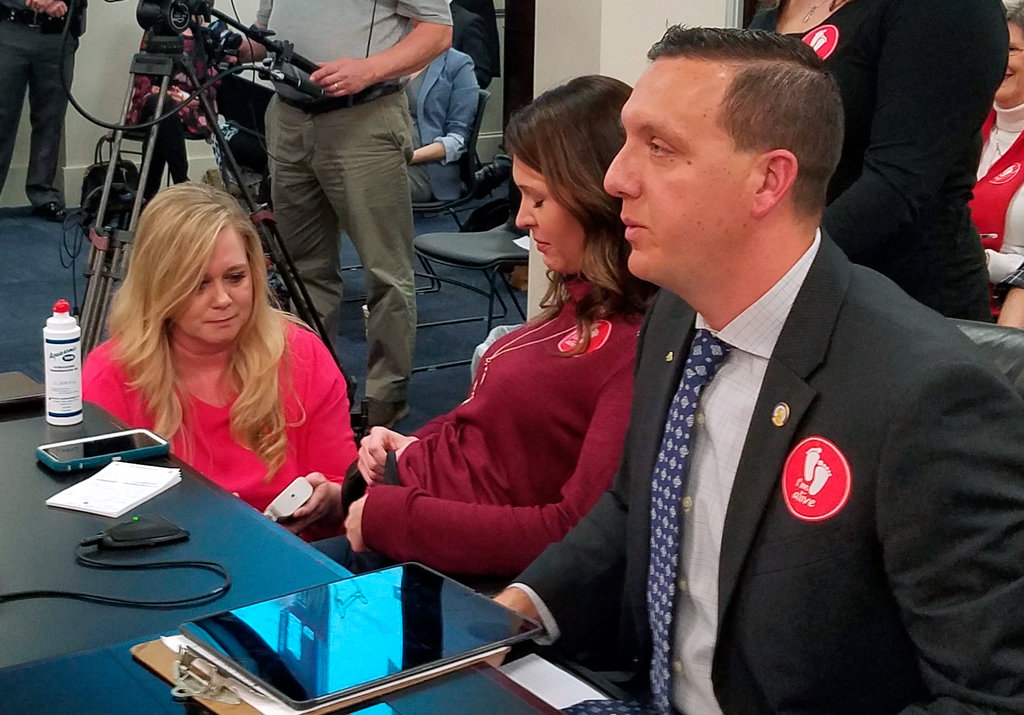
April Lanham, center, allowed attendees at a legislative meeting in Frankfort, Ky., to listen to her fetus’s heartbeat.CreditCreditTom Latek/Kentucky Today, via Associated Press

A federal judge on Friday temporarily blocked a Kentucky law that prohibits abortion after a fetal heartbeat is detected, which typically happens around six weeks into pregnancy, before many women know they are pregnant.

The measure, which was signed into law on Friday by the state’s Republican governor, Matt Bevin, and was set to take effect immediately, was poised to become one of the strictest anti-abortion laws in the country.

But late on Friday, the judge, David J. Hale of the Western District of Kentucky, ruled the law was potentially unconstitutional. He halted enforcement for at least 14 days to “prevent irreparable harm” until he could hold a hearing.

The ruling came amid a yearslong effort to curb abortions in Kentucky, which has one remaining abortion clinic. Several other states are considering similar measures, known as heartbeat bills, as states move to restrict — or shore up access to — abortion in anticipation of a more conservative Supreme Court possibly ruling on the issue.

The Kentucky law was one of two measures seeking to restrict abortion that were passed by the state’s Republican-controlled legislature this week but are now being contested. The other, a bill that prohibits abortion if a woman wants to end her pregnancy because of the diagnosis of a disability in the fetus, among other reasons, is awaiting approval from the governor.

The American Civil Liberties Union challenged both measures in a lawsuit filed this week on behalf of EMW Women’s Surgical Center, the state’s only licensed abortion clinic.

“We think this is a very straightforward legal issue,” Brigitte Amiri, deputy director of the A.C.L.U.’s Reproductive Freedom Project, said on Saturday. “States can’t ban abortion. It has been well settled over 40 years ago in Roe v. Wade.”

The judge on Friday did not address the second bill and Ms. Amiri said the group planned to ask the judge for a ruling on it after it was signed into law.

Steve Pitt, general counsel to the governor, said on Saturday that ruling was not unexpected “given the minimal amount of briefing that has occurred.”

“This case or others like it from other states will result in major changes in abortions in the U.S. in the near future,” he said. “The A.C.L.U., Planned Parenthood and others favoring unlimited abortions know this and are in a panic.”

The governor has made anti-abortion legislation a priority of his administration and has welcomed the chance to fight for protections in court.

In a video message on Friday, he chided his “good friends at the A.C.L.U.” for challenging the second bill, which would ban abortions based on a fetus’s disability, sex or race, before it had been signed into law and suggested they needed a civics refresher from “Schoolhouse Rock!” on how legislation works.

“They frankly don’t care whether they are following the law or not,” said Mr. Bevin, who has expressed support for the bill. “They simply want to push their ideology.”

The landscape of the Supreme Court changed last year after Justice Brett M. Kavanaugh, seen as a reliable conservative, replaced the court’s longtime swing vote, Justice Anthony M. Kennedy, who retired. The change added urgency to the question of whether Roe v. Wade, the landmark 1973 ruling that made abortion legal nationwide, would survive the Trump administration.

But legal experts have suggested that any developments, at least in the near term, will most likely come at the state level, with states succeeding in smaller cases that limit — but not eliminate — the right to an abortion. Other states, including Iowa and North Dakota, have passed similarly prohibitive fetal heartbeat measures only to have them swiftly voided by the courts as unconstitutional.

Supreme Court decisions have given women a right to abortion until a fetus is viable outside the womb, usually around 24 weeks into pregnancy.

Ms. Amiri said the fetal heartbeat bill would effectively eliminate abortion in Kentucky. About 90 percent of abortions in the state are performed after six weeks, according to the lawsuit. The law would make an exception for procedures that were necessary to prevent death or serious risk to the woman.

She said Judge Hale’s ruling came as a “tremendous relief.”

“The clinic sees patients today, and before we got the ruling yesterday, they were in the process of canceling appointments,” Ms. Amiri said on Saturday. “It means they will be able to provide care today and that is incredibly important to every person who comes to the clinic.”

Source: https://www.nytimes.com/2019/03/16/us/kentucky-fetal-heartbeat-abortion-law.html?fbclid=IwAR1zE8SoNVNFw7EL8szMWBfcuZ2B7N50vgrPSDslHhjCL-EsTCfWAzFRuWU

Tennessee City Officials Are Using Zoning Rules to Erode Access to Abortion

Carafem opened the Mt. Juliet clinic after seeing a spike in Nashville visitors to their Atlanta location. Last year, Nashville’s last two abortion clinics closed.
CityofMtJuliet / YouTube

The day after carafem, a provider of reproductive health-care services, opened in Mt. Juliet, Tennessee, a city council meeting was called. The lone council agenda item: a zoning amendment restricting surgical abortions to industrial areas.

The new carafem clinic, located in a commercial area, would be affected. The amendment passed unanimously. The hastily scheduled meeting lasted a grand total of four minutes.

Carafem hasn’t released a statement regarding what threat the zoning could pose to surgical abortions, which are not yet offered at the Mt. Juliet location, outside Nashville. The clinic today offers medication abortion and plans to offer abortion procedures.

“Writing zoning laws to deny access to essential health care is unfair and mean-spirited,” said Ashley Coffield, president and CEO of Planned Parenthood of Tennessee and North Mississippi. “I’m not aware of any other community in Tennessee that has used this approach to hurt a qualified medical provider that is just trying to help women get the care they need.”

Carafem opened the Mt. Juliet clinic after seeing a spike in Nashville visitors to their Atlanta location. Last year, Nashville’s last two abortion clinics closed. The Women’s Center closed in August, and Planned Parenthood temporarily stopped providing abortion care in December. While Planned Parenthood has resumed abortion services, the clinic is taking on fewer appointments but plans to ramp up soon. Meanwhile, Tennessee Republicans recently passed a so-called heartbeat bill—amounting to a total abortion ban—through the state house. The legislation would make abortion illegal as early as six weeks, before some people know they’re pregnant.

Reproductive rights and health care are under fire and Mt. Juliet officials are testing the legal temperature.

Ed Hagerty, the mayor of Mt. Juliet, is adamant that the last-minute zoning amendment had nothing to do with boxing out the new abortion clinic. When asked about the relation, he demurred. “All the city officials did was to amend the zoning ordinance, which all municipalities do from time to time,” he said. “The zoning ordinance exists to provide for the health, safety, and well-being of all citizens of Mt. Juliet, including those who are not yet citizens, whether they are visitors traveling through our city or those who may be moving here in the future.”

While Hagerty hasn’t shared his personal views on abortion, in 2015, he served as a judge for an annual anti-choice oratory contest for high school students, put on by the Tennessee chapter of the National Right to Life, the nation’s oldest and largest anti-choice organization.

Some Mt. Juliet city commissioners are more open about the intent of their zoning amendment. “If there is anything we can legally do to keep them [carafem] from opening in Mt. Juliet we will do it. I realize they have rights, but my constituents and I don’t want it here,” commissioner Brian Abston told local television station WTVF.

Commissioner James Maness agreed, sharing his thoughts on Facebook, “I am pro-life. The taking of innocent life is called murder. Abortion is not a matter of choice, it’s a matter of life and how we value life.” Hinting at the legal battle to come, Maness added: “Please don’t think this is over.”

Efforts to restrict access to abortion aren’t new in Tennessee. After Republicans gained a legislative supermajority in 2012, attempts to erode access soared. In the years following the Republican takeover, anti-choice bills, including a law requiring state-directed counseling and a 48-hour forced waiting period, entered the Tennessee legislature. The biggest change to abortion rights came in 2014 when Amendment 1, an amendment giving the state power to create and alter abortion laws, passed and added the following language to the state’s constitution: “nothing in this Constitution secures or protects a right to abortion or requires the funding of an abortion.” Its passage opened the floodgates for GOP-backed anti-choice legislation.

Despite the effort to drive out abortion providers, carafem is ready to provide health care services to those in need.

“Our doors remain open, as we continue to provide much needed reproductive health-care services, including access to abortion and contraception, to the women in and around the Nashville area,” said Melissa Grant, carafem’s chief operating officer. “We are overwhelmed by the number of clients who have expressed their gratitude for having access to the much-needed products and services we provide without having to travel hours to another clinic or state. We remain committed to serving women and couples in Tennessee, who truly need access to safe, affordable reproductive health care and family planning.”

Mt. Juliet residents are torn about the action taken against the abortion provider by the mayor and council.

“I can see why they want to [push out the abortion clinic], because we don’t want to be known as ‘Mt. Juliet, the place where you go to get an abortion,’ but at the same time, it is a medical procedure. There are a lot of components to it,” Tammy Drake, 49, a Mt. Juliet resident, told Rewire.News. “I try not to judge anyone because you don’t know what they’re going through, but on the other hand, I am a God-fearing woman.”

Another Mt. Juliet resident, Linda Sloan, 70, was happy to hear about the effort to drive out an abortion care provider. “I’m very proud to live in a community where abortion is a concern of the mayor and city council members. I’m glad I live in a conservative area where we stand up for unborn babies,” Sloan said.

Kevin Williams, also a city resident, told Rewire.News the city council’s decision “sounds contradictory.”

“If the clinic was permitted initially, then it should stay. I don’t like that—the backtrack. It seems like they made a last-minute change, perhaps due to pressure. And as far as the clinic, I don’t see a problem with it being there,” Williams, 25, said. “It’s up to the woman. A woman has to go through the nine months, the pain that me as a guy will never experience, so I don’t have any problem with the clinic. It’s totally the woman’s decision.”

Source: https://rewire.news/article/2019/03/15/tennessee-city-officials-are-using-zoning-rules-to-erode-abortion-access/

Maine Democrats are pushing legislation to allow qualified advanced practice clinicians such as nurse practitioners, physician assistants, and certified nurse-midwives to provide abortions.

Scores of nurses across the United States are equipped to provide abortion services.
Shutterstock

Maine’s ban on non-physicians providing abortion care may soon be scrapped thanks to a bill introduced by Democratic House Speaker Sara Gideon and Gov. Janet Mills (D-Freeport).

Announced Thursday, LD 1261 would allow qualified advanced practice clinicians (APCs) such as nurse practitioners, physician assistants, and certified nurse-midwives to provide abortion care. “Physician-only” laws are among the barriers aimed at curbing access to abortion; Maine’s physician-only law leaves only three publicly accessible health centers where patients can receive in-clinic abortion care—in Augusta, Bangor, and Portland. Patients in rural areas often travel hours for care even though there are qualified, experienced practitioners in their own communities. Such restrictions particularly affect people who already face systemic barriers to health care, including those with low incomes, people of color, and young people.

Mills introduced a similar bill last year when she was attorney general. Advocates are hopeful it will pass now that the state has a pro-choice governor and Democratic legislative majorities.

This could be significant in the underserved state, said Alison Bates, a nurse practitioner (NP) in Maine with Planned Parenthood of Northern New England.

“About 80 percent of counties in Maine have no abortion provider. So you can imagine the burden that is placed on patients seeking that care when they can’t afford it in their own communities,” Bates told Rewire.News. “This is an opportunity for us to align state law with the necessary scope of practice that’s within my purview as an APC and, in doing so, affords patients in Maine access to this service more broadly.”

If someone comes to her clinic seeking an abortion, Bates said she’s forced to turn them away, as per state law, because she has an NP and not an MD after her name. Yet scores of nurses across the United States are equipped to provide abortion services. Laws that prevent qualified nurses from providing such care have been challenged by providers in a handful of states, including in Maine.

The American Civil Liberties Union (ACLU) and Planned Parenthood filed a federal lawsuit in 2017 challenging the Maine ban on behalf of Planned Parenthood of Northern New England, Maine Family Planning, and several nurse practitioners. Bates is a plaintiff in the case, which is pending in the U.S. Court for the District of Maine.

“Enough is enough,” Oamshri Amarasingham, ACLU of Maine’s advocacy director, said in a statement. “Limited transportation options, brutal winters, and a shortage of health care providers—Mainers face more than enough obstacles to accessing needed health care without having medically unjustified laws piled on top. We’re thankful to Gov. Mills and Speaker Gideon for introducing this bill, which would dramatically improve Mainers’ access to safe abortion care in their own communities.”

Maine lawmakers in 1979 passed a law allowing only physicians to provide abortions. The law was drafted to protect women from back-alley abortions but has not kept pace with technology and practitioner abilities, according to Planned Parenthood.

Maine is one of ten states facing lawsuits to eliminate “physicians-only” laws, ThinkProgress reported. Thirty-three states bar advanced practice clinicians from providing abortion care.

The American College of Obstetricians and Gynecologists and the World Health Organization support allowing APCs to perform abortions in early pregnancy.

“Every woman in Maine should be able to access reproductive health care when and where she needs it, regardless of her zip code,” Gov. Mills said in a statement. “Allowing advanced nurse practitioners and physician assistants to perform medication-administered abortions, which are already permitted in other states, will ensure Maine women, especially in rural areas of our state, can access reproductive health care services. It is time to remedy this inequity that negatively impacts too many Maine women.”

Advocates are hopeful the bill will pass. Hearings are expected to be held in April.

“For patients and families in Maine, this is a huge gain towards de-stigmatizing abortion and making accessible and feasible holistic and comprehensive reproductive health care. It would be a remarkable success for the state of Maine,” Bates said.

Source: https://rewire.news/article/2019/03/14/abortion-care-is-about-to-get-much-more-accessible-in-maine/

How does this government fail Northern Irish women? Let me count the ways.

While all eyes were on Strasbourg and the result of Brexitnegotiations over the Northern Irish backstop, the committee for the UN convention on the elimination of all forms of discrimination against women (CEDAW) published its concluding observations. The committee’s final report reiterated its belief that the UK government violates the rights of women in Northern Ireland by unduly restricting their access to abortion.

The convention is one of seven international human rights treaties the United Kingdom has ratified. By ratifying the treaty in 1986, it committed to taking action to end discrimination against women in all forms and, in light of this commitment, this week’s report makes clear that current abortion law is in breach of human rights. Devolution can be no excuse for denying women in Northern Ireland these fundamental rights.

Yet the committee’s continuing assertion that the government must act on abortion rights is once again coming up against politicians’ need to overlook women’s rights for the sake of political expediency. During oral questions 6 March, Karen Bradley, the Northern Ireland secretary, was asked what steps she would be taken in light of the concerns raised by Northern Ireland’s women’s sector during evidence sessions for CEDAW. Her response was almost entirely ignored as it came mere minutes after the morally and politically irresponsible claim that killings by police and the army during the Troubles were “not crimes”. That remark received the criticism it deserved, but Bradley’s comments demonstrated the same sleight of hand with statistics and an utter failure to grasp the reality of women’s lives in Northern Ireland.

She reiterated the assertion that “many of the matters raised by CEDAW need to be legislated for in Stormont, which is why we need devolved government in Stormont sooner rather than later.” However the concluding report from CEDAW now indicates that the Good Friday Agreement gives a clear pathway to intervene on abortion access to ensure the UK’s “international obligations are met in respect of Northern Ireland.”

In an attempt to strengthen this assertion, Bradley quoted polling figures suggesting that “64 per cent are very clear that they want those changes to be made in Stormont.” What she neglected to mention, however, was that these figure came from a poll produced by the campaign group Both Lives Matter, and are in direct opposition to recent figures found by Amnesty International. Amnesty’s polling suggested that in fact 66 per cent of Northern Irish adults think that, without their own government, Westminster should act to change the law. This would suggest that it is Northern Irish laws, rather than the views of its public, that are out of step with the rest of the UK.

Debate around polling figures and samples can circle round endlessly, but what is always important not to lose sight of is the people behind these figures. With one in three UK women having an abortion in their lifetime, most people in Northern Ireland will know someone who has travelled to England for a termination or bought abortion pills illegally online.

The pro-choice movement across the island of Ireland has tried many approaches in its calls for free, safe legal and local access to abortion, from high court rulings and UN reports on human rights violations to public protests to highlight the cruelty of forcing women to travel to receive medical care. They were hugely successful in winning the 2018 referendum in the Irish Republic, but it is vital to ensure no one north of the border is left behind.

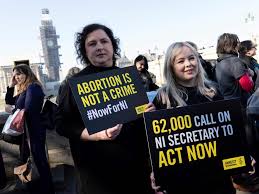
Recently, 28 women, including the Labour MP Stella Creasy and the stars of Channel 4 TV series Derry Girls, wheeled suitcases across Westminster Bridge to highlight the 28 women a week who have to travel from Northern Ireland to access safe and legal abortions in England. In the suitcases were 62,000 signatures calling for the decriminalisation of abortion. Siobhan McSweeney, who plays Sister Michael in the comedy drama, commented that it was a sorry state of affairs when somebody from the telly has to tell [politicians] how to do their job.

But it’s been her from the telly plus thousands of people taking to the streets and signing petitions – and now a United Nations committee too. The calls are overwhelmingly clear: the government can no longer hide behind the claim that abortion is a devolved issue: it is a women’s right and a human right, and they must end the disgraceful inaction on providing abortion healthcare in Northern Ireland.

Source: https://www.independent.co.uk/voices/abortion-northern-ireland-un-women-human-rights-a8819306.html?fbclid=IwAR1Mc8JMz0JlQW1DOvKFKm9cJnvevGmQmAg8fcfxbJiAve8QSqN7bvIX6Zg

“About 90% of US counties don’t have an abortion clinic, and it shouldn’t be a privilege to live somewhere that does.”

Throughout our lives, we rely on different clues and impressions to help us determine what is right, and what is wrong. These clues may be large or small, and take many forms; in select cases, they can even appear as financial figures. For while it may be impossible to put a price on human health and happiness, the cost of neglecting them is becoming all too clear.

In the case of Americans’ reproductive health, such numbers clearly show that denying women contraceptives and wanted abortions has a substantial toll on their lives and livelihoods, their children and families, and society as a whole. Evidence in favor of giving women full access to family planning is extensive and varied, with many pragmatic aspects, from the costs of Medicaid-paid births to combating environmental threats.

However, those who have dedicated themselves to tracking the effects of reproductive policy say that the most compelling data of all — gathered from patients and families across the country — suggest that if we truly mean to value human life, we must allow people to choose when to create it.

According to Dr. Diana Greene Foster, Director of Research at UCSF’s Advancing New Standards In Reproductive Health program (ANSIRH), the financial and social costs of restricting abortion and contraceptive access are objective, but are nevertheless “a controversial topic” in our politically charged climate.

At the same time, “People who don’t think about reproductive health as a rights issue might understand that it’s also an economic issue,” Foster said in a phone interview.

Over the past several years, Foster and her team have researched a range of economic and social outcomes relating to abortion, as well as other methods of family planning. During that time, Foster has also penned a number of op-eds addressing common misconceptions in these areas, and spoken to Congress about the need to recognize the effects of restrictive abortion laws on women’s lives “as determined by sound empirical research.”

Pro-choice activists, politicians and supporters of Planned Parenthood gather for a news conference and demonstration at City Hall against the Trump administrations Title X rule change on February 25, 2019 in New York City. The proposed final rule for the Title X Family Planning Program, called the “Gag Rule,” would force a medical provider receiving federal assistance to refuse to promote, refer for, perform or support abortion as a method of family planning. (Credit: Spencer Platt/Getty Images)GETTY

The Guttmacher Institute has reported that among the one quarter of US women who have an abortion in their lifetimes, more than half of them already have children at the time of their abortion, and are often concerned about the impact that raising another child would have for extant ones.

According to research conducted by Foster, those mothers’ worries aren’t misplaced: her review of women who wanted abortions, were turned away, and who carried those pregnancies to term found that their other children subsequently had lower developmental scores. Such families were also more likely to receive federal assistance, “but not enough to keep women and their children from being poor,” Foster said.

Mothers who carried unwanted pregnancies to term also showed lower levels of bonding with infants, and were noticeably more financially insecure following such births. Among women polled who wanted an abortion, the top reasons given were not being able to afford a(nother) child, and not being ready for one.

Women who wanted abortions and got turned away for waiting a few weeks or days too long under local laws — typically because they had to spend significant time and money, or because pregnancy symptoms aren’t always clear, especially to younger or recently pregnant women — also had lower incomes than those who received abortions.

After being turned away, regardless of whether they later obtained an abortion, women further reported having lower levels of self-esteem, and more anxiety. On the other hand, women who received wanted abortions were more likely to have a wanted pregnancy in the next five years.

“We also found that when women are able to access an abortion, they are able to continue on a path of working or going to school. When they are denied an abortion, we see an immediate drop in employment,” Foster said.

And for the past ten years, despite the evidence around this kind of care, legal conditions for women’s reproductive rights in this country have steadily gotten worse.

Many states have repeatedly sought to restrict the window when women can legally have abortions, to minimize the number of clinics that provide or make referrals for abortions, to pile on waiting periods and extra consults, and to end or re-appropriate funding for these services at various levels. Federal lawmakers have floated similar ideas, while President Trump has personally moved to restrict federal funds for abortion providers, referrers, and the other forms of contraception they dispense on multiple occasions.

“If the focus were really on trying to make abortions happen as early as possible, then every state would pay for them,” Foster said. “Trying to raise the money is a major cause of delay. And by time you’ve raised that money, it’s [become] a different procedure, and it costs more.”

Regarding the president and others’ attempts to limit funding for contraceptives like birth control (both with and without ties to abortion facilities), she added, “Contraceptives prevent unintended pregnancies, and lots of studies show that the easier you make accessing contraception, the fewer abortions are needed. Making birth control harder to get will absolutely increase the number of unwanted pregnancies and abortions.”

According to advocates for women’s rights and health, such laws generally make it clear quite quickly that improving the lives of women and children is not the goal.

In this July 19, 2017 file photo, an abortion opponent stands beside a truck covered in signs during a rally in downtown Louisville, Ky. Attorneys for Kentucky’s last abortion clinic said as a federal trial opened Wednesday, Sept. 6, that state regulators are using “onerous” rules to try to shut it down, predicting some women would “take the matter into their own hands” to end unwanted pregnancies if the state succeeds. (Credit: AP Photo/Dylan Lovan, File)

Yamani Hernandez, Executive Director for the National Network of Abortion Funds (NNAF), commented by phone that laws preventing Medicaid funds from being used for abortions, for example, are a way of “coercing people into continuing pregnancies they don’t want to have.” Like Foster, she also believes that people “are being pushed into later abortions because they can’t afford it earlier.”

At NNAF, Hernandez oversees employees and volunteers working in 41 states to disperse financial support from over 70 funds to US women, particularly those seeking second-term abortions, which cost $2100 on average just for the procedure. “There are so many other costs that are not talked about more widely,” she said. “There’s transportation and traveling within a state or across state lines, medically unnecessary waiting periods, having to miss work, finding childcare, and having somewhere to stay.”

“About 90% of US counties don’t have an abortion clinic, and it shouldn’t be a privilege to live somewhere that does.”

“The fact that there’s such a venomous debate about it completely stigmatizes the issue, and makes people confused about whether they even could or should access the care they need,” Hernandez said. Much of the work her group does, she said, is helping people “navigate the complexities” of that care, from process to payment.

Hernandez also pointed out that even unsuccessful legislation can have a significant negative impact on women’s health and well-being. “There is already a public perception and stigma issue when the president gets on TV and talks about executing babies,” she said, referring to a recent Republican bill that effectively proposed to force doctors into treating non-viable, late-term fetuses rather than let mothers — often in great physical and emotional distress themselves — hold them quietly before they pass, for example.

“It confuses the public,” she continued. “Many people aren’t sure if abortion is legal right now. They call us and have to ask, which is really disturbing, because this a constitutional right.”

In some ways, perhaps it isn’t surprising that the national conversation around women’s reproductive health is both low on facts and extremely contentious in our country.

As journalist Amy Westervelt reflected for The Guardian last year, “The reality is, for all its pro-family rhetoric, the US is a remarkably harsh place for families, and particularly for mothers.” Quite frankly, medical science is still struggling to make up the research gap on women and people of color, too, including in the reproductive realm.

The state of research on women’s reproductive health and well-being is improving, however, and data suggest that it is vital to Americans’ health and bottom lines to acknowledge and move forward with what we do know.

After all, presumably all of us want to be good and thoughtful stewards and see future generations thrive on this planet we must share. And the time has never been better to honor that future by making thoughtful choices, and by allowing others to do the same.

Source: https://www.forbes.com/sites/janetwburns/2019/02/28/the-endless-costs-of-maligning-abortion/?fbclid=IwAR1a1ksOHUssRUJh9Jqtjk91-QArFhRxfi5N2vSHwWQWO6GnVd84ygyoYZI#2267cf407b17

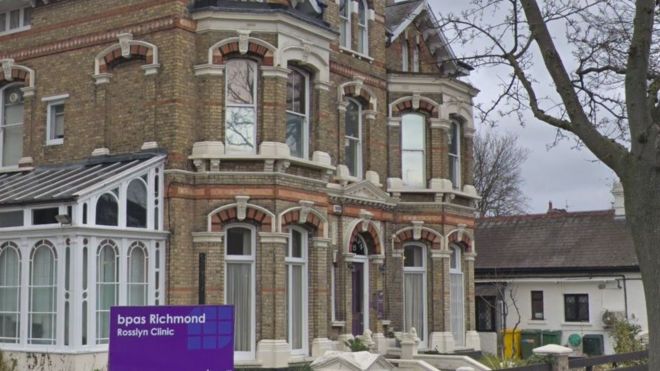
Image copyrightGOOGLEImage captionRichmond Council said protests near an abortion clinic in Rosslyn Road had a “detrimental” effect on patients and staff

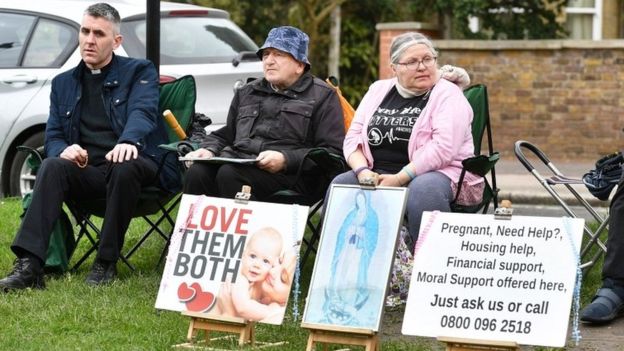
Abortion protests will be banned outside a south-west London clinic, a local council has decided.

Richmond councillors approved the order for sections of six streets near the British Pregnancy Advisory Service clinic in Rosslyn Road.

The ban prohibits protesters from trying to engage people attending the clinic in “any form of counselling or interaction” in relation to abortion.

A councillor said the order would protect patients’ human rights.

Councillor Liz Jaeger said: “Following a thorough consultation, there was overwhelming feedback that the vigils were having a detrimental effect on [patients] or others in the local area.”

Image copyrightPAImage captionProtesters were stopped from holding daily vigils outside the Marie Stopes clinic in Ealing in 2018

The Public Space Protection Order (PSPO), made under anti-social behaviour legislation, will last for a preliminary period of three years.

Ms Jaeger said the PSPO “strikes the right balance, protecting the human rights of the patients and staff of the BPAS Clinic to use the services and go to work without fear and in privacy”.

The Society for the Protection of Unborn Children said there had been “no evidence of harassment” outside the clinic.

In an online article, the society said the ruling was the “latest example of official intolerance towards pro-lifers”.

Last year an order came into force to stop anti-abortion and pro-choice campaigners from standing within 100m of a clinic in Ealing, west London.

After the ban was imposed at the Ealing centre, the home secretary rejected calls for buffer zones to be introduced across the country.

Source: https://www.bbc.com/news/uk-england-london-47476911?fbclid=IwAR2rwwFAr3hwC04xrUcJ-aMG1327JH6GsQ8WUXOEe1CXIKCMgl6uZ_jNUyE