A new law and a governor’s comments prompted the mention.

President Donald Trump brought up “late-term abortions” during the 2019 State of the Union, and it’s left doctors scratching their heads.

“As a board-certified Ob-Gyn, I wish people understood that the term ‘late-term abortion’ is not remotely a medical term. In fact, even Ob-Gyns don’t know what people are referring to when we hear this term,” said ABC News chief medical correspondent Dr. Jen Ashton.

The phrase has come up recently as a result of the passage of a law in New York concerning reproductive rights in the state, as well as comments made by the now-embattled governor of Virginia describing a hypothetical situation.

During his speech Tuesday night, Trump described how the New York law would “allow a baby to be ripped from the mother’s womb moments before birth” and said that “these are living, feeling, beautiful, babies who will never get the chance to share their love and dreams with the world.”

That description made no mention about the rare circumstances that would lead to an abortion happening later in a pregnancy — which includes spinal and genetic anomalies that would prevent a viable life, rather than just a decision by the mother that she does not want the child — and the misconception has caused outrage and misunderstanding that doctors have tried to clear up.

The American College of Obstetricians and Gynecologists (ACOG) released a fact sheet in early February about abortions that take place later in a pregnancy. It begins by noting that “politicians should never interfere in the patient-physician relationship.”

Dr. Sarah Horvath, an OB-GYN who is in a family planning fellowship at ACOG, told ABC News that the phrase “late-term abortion” is “inaccurate and purposefully confusing language that’s used for political reasons.”

 Anti-abortion rights activists pass the Capitol building during the 2018 March for Life, Jan. 19, 2018 in Washington, D.C.

(Alex Wong/Getty Images. FILE)  Anti-abortion rights activists pass the Capitol building during the 2018 March for Life, Jan. 19, 2018 in Washington, D.C.

Why abortions take place later in pregnancies

Horvath said that there is no set time limit for what is considered “late” in a pregnancy. The average pregnancy spans 40 weeks.

States differ as to whether or not they set a time limit — typically either 20 or 24 weeks — as to when an abortion can be obtained, with exceptions, or if their limit is set to fetus “viability” which allows for individual case considerations to be taken into account.

Ashton explained that “there is a difference between first trimester terminations (up to 12 to 13 weeks) and second trimester terminations (generally up to 24 weeks).”

“In general, we use 24 weeks as the threshold for viability: the age at which a fetus can survive outside the uterus. But there are cases in which fetuses at 23 weeks can survive, and those in which fetuses of 25 weeks do not,” Ashton said.

More conservative states have been pushing for so-called “heartbeat” bills, where an abortion is banned, with exceptions, once a fetal heartbeat can be detected, which can occur as early as six weeks into a pregnancy when some women may not even know that they are pregnant.

The CDC reported in 2015 that 1.3 percent of abortions took place at or after the 21st week of a pregnancy, and Horvath said that fewer than 1 percent of abortions happen after 24 weeks of a pregnancy.

“In terms of second trimester terminations, there are often cases where serious anomalies are not detected in the fetus until the second trimester. There are also cases in which the life or medical condition of the woman is at serious risk if the pregnancy were to continue,” Ashton said.

Horvath said that she has had patients who face the “devastating” situation of having an abortion later in their pregnancy, including one patient who lived in New York.
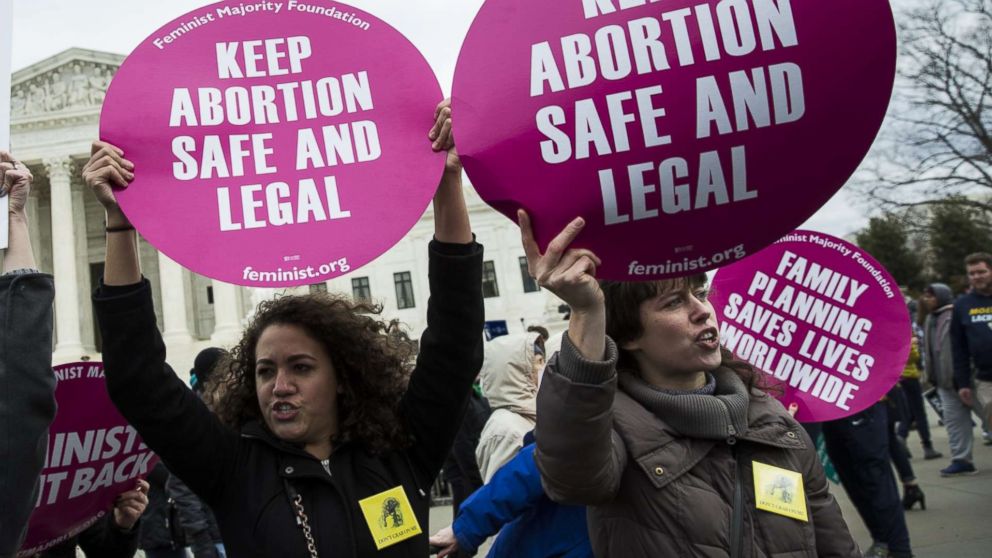
 Pro-abortion rights activists try to block anti-abortion rights activists in front of the Supreme Court during the annual March for Life on the anniversary of the historic Roe v. Wade Supreme Court ruling, Jan. 27, 2017.

(Samuel Corum/Anadolu Agency/Getty Images)  Pro-abortion rights activists try to block anti-abortion rights activists in front of the Supreme Court during the annual March for Life on the anniversary of the historic Roe v. Wade Supreme Court ruling, Jan. 27, 2017.

Horvath described how the patient, whose name she did not share, had a “very wanted pregnancy” and everything “looked like it was going to be a normal pregnancy” until the 26th week. It was at that point that the woman was diagnosed with a “lethal fetal skeletal anomaly.”

“It develops later in pregnancy. She had an ultrasound at 20 weeks that had shown a healthy pregnancy and it was only after 24 weeks that this was actually diagnosed,” Horvath said of the situation. “This is completely incompatible with life outside the uterus.”

The new law in New York

The situation with this patient occurred before New York Gov. Andrew Cuomo signed the Reproductive Health Act into law on Jan. 22 of this year. The law adjusted the legal framework for abortions in the state, setting it to a fetus viability standard as opposed to a set gestational age, and changing laws that criminalized certain later abortions.

Horvath said that the viability standard “is a much more accurate way of determining whether a fetus can live outside of the uterus.”

The ACOG, which is a nonprofit association with more than 58,000 members, uses viability as their standard as well.

“Viability is the capacity of the fetus for sustained survival outside the woman’s uterus. Whether or not this capacity exists is a medical determination, may vary with each pregnancy and is a matter of judgement of the responsible health care provider,” the ACOG wrote in a statement about their position on abortion.

In the case of the patient Horvath treated, because the new law was not yet in place in New York, and because when she was diagnosed with the lethal fetal skeletal anomaly her own life was not in danger, she “had no ability to obtain abortion care in her home state.”

“She was forced to continue to carry a pregnancy that she knew was never going to be able to survive and become a healthy baby,” Horvath said. “Several weeks later it demised in utero and she was then able to have the procedure to remove it from her uterus.”

The difference that the new law would have made in that patient’s case, Horvath said, was that she would have been able to be treated in her home state and not have to “wait with the knowledge that she was carrying a doomed pregnancy.”

“It’s really important to remember that every one of these situations is complicated and difficult for the woman and that’s why it’s much better that its left for her to discuss with her physician and the people in her life who can love her and support her and help her make the right decision for her,” Horvath said.

Political posturing

While the passage of the law in New York has prompted some discussion about abortion laws, Virginia Gov. Ralph Northam, who previously worked as a pediatric neurologist before entering politics, also waded into the fray by talking about the issue during an appearance on a radio show.

 President Donald Trump delivers the State of the Union address, with Vice President Mike Pence and Speaker of the House Nancy Pelosi, at the Capitol in Washington, Feb. 5, 2019.

(Doug Mills/Pool via Reuters)  President Donald Trump delivers the State of the Union address, with Vice President Mike Pence and Speaker of the House Nancy Pelosi, at the Capitol in Washington, Feb. 5, 2019.

Speaking to radio station WTOP about aborting a fetus later on in a pregnancy on Jan. 30, Northam said “it’s done in cases where there may be severe deformities, there may be a fetus that’s non-viable. So in this particular example, if a mother is in labor, I can tell you exactly what would happen. The infant would be delivered. The infant would be kept comfortable. The infant would be resuscitated if that’s what the mother and the family desired, and then a discussion would ensue between the physicians and the mother.”

During the State of the Union, Trump said “the governor of Virginia … stated he would execute a baby after birth.” Trump also said that the law in New York would “allow a baby to be ripped from the mother’s womb moments before birth.”

Horvath said that Trump’s characterizations are inaccurate.

Source: https://abcnews.go.com/Health/explaining-trumps-talk-late-term-abortions-state-union/story?id=60883835

© Greg Nash

President Trump called on lawmakers during his State of the Union address Tuesday night to ban “late-term” abortions, a policy that won’t pass a divided Congress.

“To defend the dignity of every person, I am asking the Congress to pass legislation to prohibit the late-term abortion of children who can feel pain in the mother’s womb,” Trump said during his speech.

The White House has said Trump backs legislation that would ban abortions after 20 weeks. Senate Democrats blocked such a measure in January 2018.

Trump in his speech referenced bills in Virginia and New York that would ease abortion restrictions, measures that have faced backlash from anti-abortion groups in recent weeks.

“Let us work together to build a culture that cherishes innocent life,” Trump said.

“And let us reaffirm a fundamental truth: all children — born and unborn — are made in the holy image of God.”

Planned Parenthood President Leana Wen, a guest of Speaker Nancy Pelosi (D-Calif.), knocked the president’s comments on Twitter.

“Restrictions on abortion later in pregnancy prevent health care providers from giving their patients the best care possible. It’s my job to provide my patients with the information they need to make the best decision for themselves. I trust my patients; I trust women,” she tweeted.

The New York bill signed into law last month by Gov. Andrew Cuomo (D) allows abortions after 24 weeks if a doctor determines the woman’s life or health is at stake, or if the fetus is not viable.

A bill in Virginia would have made it easier for women to get abortions in the third trimester of pregnancy by requiring the approval of only one doctor instead of the three mandated under current law.

Source: https://thehill.com/policy/healthcare/428647-trump-calls-on-congress-to-ban-late-term-abortions

© Getty Images

The demand for long-acting reversible contraception increased after the election of President Trump in November of 2016, according to a new study released Monday.

The study, published in the Journal of the American Medical Association, found a 21.6 percent increase in the insertion rates of long-acting reversible contraception, like IUDs and implants, in the 30 days after Trump was elected.

The authors of the study said the increase could be attributed to fears that Trump would follow through on his campaign promise to repeal ObamaCare, which requires employers cover 18 types of contraception in their insurance plans with no copays for beneficiaries.

The cost of an IUD without insurance coverage can range from $500 to $1,000, according to Planned Parenthood.

While the GOP’s efforts to repeal ObamaCare have failed, the administration has tried to issue rules broadening exemptions for employers that have moral or religious objections to providing contraception for their employees.

Those rules have been blocked from taking effect while they are challenged in court.

The study examined insertion rates among women 18-45 years old enrolled in commercial insurance during the 30 days before and after Nov. 8, 2016, and compared it to the same time frame the year prior.

If the study’s findings were projected to the 33 million women between the ages of 18 and 45 with employer-sponsored health insurance, the rate would be an additional 700 insertions per day in association with the 2016 election, the authors say.

Source: https://thehill.com/policy/healthcare/428373-study-demand-for-iuds-implants-increased-after-trumps-election

Leading conservative figures have used legislation proposed in Virginia and passed in New York to spread lies about abortion.

Democrat Kathy Tran, of Virginia’s House of Delegates, introduced and testified in favor of HB 2491. All Virginia’s bill would do is end the burdensome 24-hour waiting period, remove the state-mandated ultrasound law, and require one doctor—instead of three—to approve a request for third-trimester abortions. Why VA Matters 2017 / YouTube

As an OB-GYN, an abortion provider, and a researcher who studies abortion and contraception, the work I do is fundamentally rooted in medical evidence and science. That’s why I’ve been so frustrated to see a conversation about abortion dominated by ideologically driven misinformation rather than facts unfold over the last week.

Leading conservative figures have used legislation proposed in Virginia and passed in New York to spread lies about abortion. In fact, all Virginia’s bill would do is end the burdensome 24-hour waiting period, remove the state-mandated ultrasound law, and require one doctor—instead of three—to approve a request for third-trimester abortions. The bill also says the doctor approving the request would no longer need to certify that the harm to the patient’s health would be “substantial and irremediable.” In New York, the law simply removes abortion from the criminal code, codifies Roe v. Wade, and allows patients who need later abortions to get care in their home state rather than travel across the country.

But conservatives have perpetuated dangerous, malicious tropes about patients who seek abortions later in pregnancy and the doctors who provide them—all to advance a political agenda.

One popular talking point from anti-abortion activists, echoed by The View co-host Meghan McCainamong others, is that the United States is one of a handful of countries allowing abortion after 20 weeks’ gestation. This is flat-out wrong. In fact, around 65 countries allow abortion at this stage of pregnancy in cases of fetal malformations and anomalies.

McCain is right, in a way, when she portrays the United States as out of step with the rest of the world on abortion policies. But the reasons are different from ones she claims. As my research shows, unlike 78 percent of high-income countries, the United States does not provide public funding for abortion, making us a global outlier in this area. By international standards, the Hyde Amendment—which bans all federal funding of abortion care—is a truly radical and damaging policy, one that disproportionately affects patients of color.

So why do patients seek abortions after 20 weeks? There are many, often intersecting reasons. It is the tragic reality that complications may arise as the pregnancy progresses, some of which may affect the health of the patient or the fetus. And parents may choose to end the pregnancy—a decision that is personal and should not be subject to political interference.

But there’s another factor that exposes exactly why attempts to restrict abortions later in pregnancy for political or ideological reasons are so harmful to patients. Many other countries, including those whose laws about abortions later in pregnancy are more stringent than those in the United States, offer widespread access to early abortion. In contrast, abortion access in the United States largely depends on where you live.

I’ve seen patients who need abortions after 20 weeks because restrictive laws in their state—unnecessary waiting periods, ultrasound mandates, needless and burdensome requirements for providers that cause clinics to close—forced them to delay seeking care. In Texas, after a restrictive law went into effect that led to the closure of half of the state’s abortion clinics, the overall number of abortions dropped—but the number of second- and third-trimester abortions increased, likely because of the delays people faced accessing care earlier in pregnancy.

If conservatives are genuinely opposed to abortions later in pregnancy, they should be doing everything they can to expand access to earlier abortion. Instead, they’re doing the exact opposite; state legislatures across the country are proposing outrageous and unconstitutional bans that could outlaw abortion as early as six weeks into pregnancy, often before patients even know they’re pregnant. If these individuals believe abortion should be illegal entirely—a position dramatically at odds with the views of most people in the United States—they should be truthful about that belief, rather than using patients who need later abortions as a prop to advance their ideology.

Whether we ourselves would have a later abortion is not the question. The question is whether we’re able to show empathy for the patient making that decision. It’s my job as a doctor to support my patients in making the decisions that are best for their situation. When we have this debate, we must center the patients in the conversation, and use evidence-based research and facts to inform policy. I truly hope that Meghan McCain and others fanning the flames of outrage around this issue will take a step back, look at the evidence, and recognize the ways that their rhetoric puts patients and their doctors at risk.

In the meantime, those of us who believe in science should continue to advocate for abortion policies that are grounded in it. That’s the best way forward for patients, providers, and a society that enables its people to live healthy, free, dignified lives.

Source: https://rewire.news/article/2019/02/04/conservatives-are-perpetuating-dangerous-tropes-about-patients-who-need-later-abortions/

Republicans at the national level this week jumped into the firestorm surrounding a Virginia abortion-rights bill, marking a rare instance in which a state issue has drawn harsh rebukes from members of Congress and the White House.

The bill, proposed by a Democratic state lawmaker, would have made it easier for women to get third trimester abortions if their health was threatened by pregnancy.

While the same measure was introduced without controversy in recent years, comments from the bill’s author and Virginia Gov. Ralph Northam (D) provoked outrage among anti-abortion groups, lawmakers on Capitol Hill, and even the president and vice president, with some saying the bill’s supporters were embracing infanticide.“To support, let alone cheer, late-term abortions not only marks a disturbing step backward by so-called ‘progressives’ — it also violates every demand of human decency,” Vice President Pence said in a National Review editorial published Thursday. “There’s another word for this: infanticide. And it is morally reprehensible and evil.”

In a video that went viral this week, bill sponsor Kathy Tran acknowledged that the legislation would allow a woman who is dilating to request an abortion if a doctor determined that childbirth would impair her mental health.

“It would allow that, yes,” Tran said in response to questions from House Majority Leader Todd Gilbert (R) during a committee hearing.

The measure failed to make it out of committee.

Virginia doesn’t have any time constraints for those seeking abortions, but Tran’s bill would have made it easier for women to get abortions in the third trimester by requiring the approval of only one doctor instead of the three mandated under current law.

By the time Northam was asked about the bill on a local radio show Wednesday, the controversy had already erupted on social media.He then added fuel to the fire when he said that third-term abortions are rare and typically occur when an infant is severely deformed or unable to survive after birth.

“In this particular example, if a mother is in labor, I could tell you exactly what would happen: the infant would be delivered; the infant would be kept comfortable; the infant would be resuscitated, if that’s what the mother and the family desired. And then a discussion would ensue between the physicians and the mother,” Northam said.

“I think this was really blown out of proportion,” he added.

The governor later found himself at the center of a controversy after admitting he had appeared in a racist photo from when he was in medical school.

Republicans argue that Northam’s comments regarding the abortion bill were an endorsement of infanticide.

“Let’s be really clear about what we’re talking about here. We’re talking about fourth trimester abortion, or what anyone in the normal world calls infanticide,” Sen. Ben Sasse (R-Neb.) said Thursday on the Senate floor after reading Northam’s comments aloud.

“We’re talking about killing a baby that’s been born,” he said, pointing to Northam’s comments about the “discussion” between the mother and the doctors.

“And then a decision or debate would be had about whether or not you could kill that little baby,” Sasse said, offering his interpretation of Northam’s comments.

Sasse said he will expedite a bill for consideration on Monday that requires medical care for babies that survive abortions.

President Trump, GOP Sens. Bill Cassidy (La.) and Marco Rubio (Fla.) and Republican National Committee Chairwoman Ronna McDaniel were among those who criticized Northam’s comments.

“I’m surprised that he did that,” Trump said in an interview with the Daily Caller, referring to Northam. “This is going to lift up the whole pro-life movement like maybe it’s never been lifted up before.”

A White House official on Friday said Trump would address “the fundamental importance and Respect of human life” in his State of the Union speech on Tuesday.

“I never thought I would see the day America had government officials who only support legal infanticide,” Rubio tweeted.

Northam’s office said the governor’s comments were not referring to infanticide, and that critics were making “bad faith” arguments.

“[Northam’s] comments focus on the tragic and extremely rare case in which a woman with a nonviable pregnancy or severe fetal abnormalities went into labor,” said Northam spokeswoman Ofirah Yheskel on Twitter.

“Extrapolating otherwise is bad faith and why health decisions should be between a woman and her doctor,” she added.

National anti-abortion groups like the Susan B. Anthony List and the National Right to Life have energized their supporters over the controversy, saying it’s an indication of where the Democratic Party is heading.

They drew comparisons to a New York bill signed into law last week by Gov. Andrew Cuomo (D) that allows abortions after 24 weeks if a doctor determines the woman’s life or health is at stake, or if the fetus is not viable.

“On the heels of New York’s radical expansion of abortion, Delegate Tran’s bill and Governor Northam’s statements reveal with alarming clarity what the modern Democratic Party stands for and their agenda for our nation – abortion on demand, up until the moment of delivery and even beyond,” said Marjorie Dannenfelser, president of the Susan B. Anthony List. “This position is irreconcilable with the beliefs, values, and desires of most Americans.”

Northam’s defenders contend that abortion opponents are misleading the public.

“The misinformation being spewed by anti-choice politicians, right-wing media and Trump around VA and NY’s abortion bills is egregious and we must set the record straight and remember the anti-choice movement has one goal: ban abortion and criminalize women and doctors,” tweeted Ilyse Hogue, president of NARAL Pro-Choice America, which worked to elect Northam in 2017.

“To work towards this goal, they must deceive the public and twist the facts, especially when it comes to women who need abortion later in pregnancy,” she added.

Source: https://thehill.com/policy/healthcare/428130-virginia-abortion-bill-reignites-national-debate?fbclid=IwAR30NaMWte5q_m3eUV9wjELU1-31HS-aFoAJN1iyNkox4O8k3q4jBuS0JQA

Human Life International, an anti-choice group based in Virginia, allegedly endorsed anti-choice political candidates in the Philippines in violation of its tax-exempt status.

The complaint to the IRS accuses Human Life International of violating its tax-exempt status by lobbying for laws prohibiting abortion and campaigning for anti-choice political candidates in the Philippines.
DINESH B RAUT / Shutterstock.com

Watchdog groups claim Human Life International (HLI), a little-known nonprofit, has illegally funded anti-choice campaigns in developing countries that criminalize abortion care.

Campaign for Accountability (CfA) filed a complaint this week asking the Internal Revenue Service (IRS) to investigate HLI’s activities in the Philippines, alleging the anti-choice group blatantly violated tax laws by engaging in undisclosed political lobbying in a country where abortion care has been illegal for decades.

“HLI should not be able to benefit from its 501(c)(3) status here in the United States while simultaneous flouting IRS rules prohibiting its involvement in partisan politics abroad,” CfA Counsel Alice Huling told Rewire.News in an email. “This is all the more egregious when the foreign country is one with such high maternal mortality rates and where abortion is illegal and highly stigmatized. A tax-exempt public charity like HLI should be working to solve these issues, not exacerbate them.”

Equity Forward released its own report Wednesday accusing HLI of promoting laws that harm and imprison women for their reproductive health-care decisions. Equity Forward says that HLI spent more than $1 million in the Philippines since 2000 and led the charge against the country’s 2012 Reproductive Health Bill, which funds free contraceptives, supports reproductive health services in government hospitals, and requires public schools teach sex education. The law passed in December 2012 after being stuck in the Philippine Congress for 14 years.

HLI claims to be “the world’s largest pro-life and pro-family educational apostolate,” with affiliates in more than 100 countries. Its headquarters in Virginia works on “a complex web of anti-abortion causes, organizations, businesses and even a private school,” according to Equity Forward.

“HLI portrays itself as compassionate and uninterested in criminalizing women for their reproductive health care decisions, but these bombshell developments revealing their influence overseas tell a drastically different story. Their role in working to jail women in El Salvador, the Philippines, and elsewhere cannot be ignored,” Mary Alice Carter, executive director of Equity Forward, said in a statement.

CfA’s January 30 letter to the IRS says HLI violated its tax-exempt status by advocating for laws prohibiting abortion and endorsing anti-choice political candidates in the Philippines in 2010, 2011, and 2012, while failing to report those expenses on tax forms.

Abortion has been criminalized in the Philippines for more than a century, and the procedure is banned there with no exceptions. Despite this, clandestine abortions are conducted widely because of the high level of unintended pregnancies and low contraception use, according to the Guttmacher Institute; the illegal and unsafe nature contributes to the country’s high maternal mortality rate. Even doctors in the Philippines report being biased against women who have undergone abortion care, Guttmacher reports.

About 1,000 Filipino women die each year from abortion-related complications, and an untold number suffer from untreated complications, according to Guttmacher. Abortion stigma prevents Filipinos from seeking medical care after receiving a clandestine abortion, Guttmacher notes. Projections based on data from 2000 show that 100,000 people were hospitalized for abortion complications in 2012.

HLI’s tax forms show it regularly makes grants to organizations in East Asia, including the Philippines, to promote anti-abortion measures and anti-choice candidates. The CfA complaint names Rene Bullecer, a physician who serves as the HLI country director in the Philippines, and Ligaya Acosta, HLI’s regional director of Asia and Oceania and a resident of the Philippines.

HLI’s grants to organizations in the Philippines significantly decreased in tax year 2014, according to CfA, coinciding with HLI’s failure to block the Reproductive Health Bill in December 2012 and to elect more anti-choice candidates to the Filipino Congress in May 2013.

HLI also organized anti-choice rallies, lobbied local politicians, targeted reproductive health agendas, and directed representatives to vote against progressive bills, including abortion rights measures, the letter notes.

HLI is known to have “ties to violent anti-abortionists and extreme tactics [that] made it too controversial for the UN,” and HLI was denied consultative status to the UN in 1993, according to the Southern Poverty Law Center (SPLC) in 2014. In 1997, the group set up C-FAM, an SPLC-designated hate group, as its United Nations lobbying arm, and “shifted its rhetoric to include vague terminology like ‘traditional values’ and ‘respect for sovereignty,’ (useful for countries that employ repressive policies and wish to avoid scrutiny for human rights violations).”

HLI was founded by an ultra-conservative D.C.-based Catholic priest who long claimed the pro-choice movement was full of Jews perpetrating another Holocaust. HLI shares its office building in Virginia with LifeSite, a Catholic anti-choice website, Salon reported this week. Salon reports that an HLI spokesperson has denied CfA’s allegations. HLI did not respond to Rewire.News by press time.

“HLI should be investigated and held accountable for its actions,” CfA’s Huling said a the press release.

Source: https://rewire.news/article/2019/01/31/anti-choice-group-broke-tax-laws-to-back-brutal-abortion-laws-overseas-watchdogs-say/

The abortion debate erupted anew this week after a video surfaced showing the Democratic sponsor of a Virginia abortion proposal acknowledging it could allow women to terminate a pregnancy up until the moment before birth, for reasons including mental health.

“First New York, and now a proposed Virginia bill that would legalize abortion up to the moment of birth,” tweeted Kentucky Republican Gov. Matt Bevin. “This is a sad commentary on the culture of death that continues to creep insidiously into the laws of our [country].”

Virginia Democratic Del. Kathy Tran is the sponsor of The Repeal Act, which seeks to repeal restrictions on third-trimester abortions. The bill — which was tabled in committee this week — has the support of top Democrats in the state, including Gov. Ralph Northam.

The bill would remove a number of restrictions currently in place regarding late-term abortions, including doing away with the requirement that two other physicians certify a third-trimester abortion is necessary to prevent the woman’s death or impairment of her mental or physical health. The third trimester lasts until 40 weeks.

Todd Gilbert, the Republican House majority leader, questioned Tran about the bill during a hearing Monday. He asked Tran if a woman who has physical signs she is about to give birth could request an abortion if a physician said it could impair her “mental health.”

“Where it’s obvious that a woman is about to give birth. She has physical signs that she is about to give birth. Would that still be a point at which she could request an abortion if she was so-certified — she’s dilating,” he asked.

“Mr. Chairman, that would be … a decision that the doctor, the physician and the woman would make at that point,” Tran replied.

“I understand that,” Gilbert replied. “I’m asking if your bill allows that.”

Tran replied: “My bill would allow that, yes.”

Virginia Republicans shared video of the exchange, posting, “Heartbreaking… This isn’t in New York, this isn’t in California, this happened just this week right here in Virginia.”

“Virginia House Democrats proposed legislation to allow abortions up to just seconds before that precious child takes their first breath…Thankfully, our strong conservative majority was able to defeat this bill,” the Virginia House of Delegates Republican Caucus posted on Facebook.

In promoting the bill, Tran has said it “eliminates medically unnecessary and unduly burdensome requirements that make it difficult for women to access abortions,” recognizing that “women have the constitutional right to make healthcare decisions about their own bodies.”

The effort in Virginia follows New York passing a bill last week loosening the restrictions on abortion, as New Mexico, Massachusetts, Rhode Island, Virginia, and Washington also pass new laws expanding abortion access or move to strip old laws from the books that limit abortions.

The loosening of the laws comes as pro-choice activists fear the newly conservative Supreme Court will overturn the 1973 ruling that made abortions legal.

New York Gov. Andrew Cuomo last week directed the One World Trade Center and other landmarks to be lit in pink Tuesday to celebrate the passage of “Reproductive Health Act.”

Under the Reproductive Health Act, non-doctors are now allowed to conduct abortions and the procedure could be done until the mother’s due date if the woman’s health is endangered or if the fetus is not viable. The previous law only allowed abortions after 24 weeks of pregnancy if a woman’s life was at risk.

If Roe v. Wade were overturned, 16 states could take steps to ban abortion. Four have laws that would trigger bans, while 12 others have anti-abortion laws on the books that have been ruled unconstitutional by courts or have not been enforced due to the 1973 Supreme Court decision, according to the Guttmacher Institute, a pro-choice research organization.

Source: https://www.foxnews.com/politics/outrage-after-virginia-abortion-bill-sponsor-admits-pregnancies-could-be-terminated-up-until-birth?fbclid=IwAR3xE38ub5Wmv4yO2GdJUQJGDSscfZNk8g–sC8JCBR2zqWyqAEwmWM5Jd0

It is monumental that we have removed antiquated laws that criminalize the provision of routine medical care.

Previously, under New York’s outdated abortion law, those seeking abortion care later in pregnancy had to travel out of state to receive the procedure. Alex Wong / Getty Images

On Tuesday, the 46th anniversary of landmark court decision Roe v. Wade, which legalized abortion in the United States, New York state lawmakers passed their own historic legislation—the Reproductive Health Act (RHA). The RHA enshrines the protections of Roe into state law, removes abortion from the criminal code, and clarifies that trained health-care providers acting within their scope of practice can provide abortion care.

As an abortion provider at Planned Parenthood of New York City, I’m thrilled to see our legislators recognize how critical abortion access is to the health and well-being of our communities, especially with mounting attacks on our care from Washington.

The vast majority of abortions in the United States take place early in pregnancy. According to the Guttmacher Institute, only slightly more than 1 percent of abortions are performed at 21 weeks or later. Often (but not always), patients at this stage choose abortion after a doctor has detected a life-threatening fetal abnormality.

Previously, under New York’s outdated abortion law, those seeking abortion care later in pregnancy had to travel out of state to receive the procedure. This is often a logistical nightmare that includes the stress of finding a provider out of state, raising funds for the procedure itself and the associated travel, and dealing with insurance coverage. These issues are particularly difficult, and often insurmountable, for those with low incomes.

The decision to end a pregnancy is deeply personal. It is often tied to complex variables in a person’s life related to their socioeconomic status, whether or not they already are a parent, if they’re in a stable relationship, or have achieved certain personal goals in life yet, like education or career success. Terminating a later pregnancy can also have an added layer of emotional and personal complexity when the pregnancy was very much wanted.

Take, for example, the case of reproductive health activist Erika Christensen, who, at 31-weeks pregnant, carrying a pregnancy she and her husband desperately wanted, learned that her baby would be unable to survive outside the womb. Due to New York’s abortion law at the time, which housed the procedure in the criminal code, Christensen had to travel to Colorado. The procedure alone cost her $10,000. This is an unthinkable amount for most, even for a necessary medical procedure.

It’s unacceptable that up until now, some people in New York seeking abortion care later in pregnancy had to go through what Christensen went through. What’s also unacceptable is that so many have been unable to access the abortion care they needed at all due to New York’s laws.

As a medical provider, I firmly believe that sexual and reproductive health decisions should be made by no one but a patient and their doctor, certainly not politicians. What can already be a complicated experience for many is made that much more difficult by a culture that shames people for making their own decisions about their bodies, and a government that seeks to control our reproductive futures.

With passage of the Reproductive Health Act, New York can finally grow to be a model of what sexual and reproductive health care should be. This legislation is a resounding endorsement of an individual’s autonomy to determine if and when to parent. It is also monumental that we have removed antiquated laws that criminalize the provision of routine medical care.

I’m grateful about how this positions providers like myself to be able to continue offering high-quality, evidence-based care while minimizing the impact of the potential overturning of Roe v. Wade. This legislation now enables us to function as a potential sanctuary for those who need this care should the landscape become even more restrictive. Moving forward, to make good on the promise of expanded access that the RHA provides, we must tackle issues of affordability, insurance coverage, and comprehensive provider training when it comes to abortion.

Our patients do not come to us with a political agenda. They just want support, resources, and medical care. Thanks to the progressive leaders in office, New York providers are one step closer to creating the community we all deserve—one where every person is able to make the best sexual and reproductive health decisions for themselves and their families.

Source: https://rewire.news/article/2019/01/25/im-an-abortion-provider-this-is-what-new-yorks-reproductive-health-act-means-to-me/

“We’re back in hushed tones,” Erin Darcy, an abortion rights activist, said at her home near Galway, Ireland.CreditCreditMary Turner for The New York Times

DUBLIN — The abortion clinic’s website pops up at the top of a Google search for “free ultrasound,” its content and color scheme mimicking the government’s new support service for unplanned pregnancy.

“Looking for abortion advice?” “How far along am I?” The bright orange speech bubbles attached to stock images of smiling medical experts purport to inform women about abortion options that became legally available in Ireland on Jan. 1.

The brick-and-mortar version of the Dublin clinic, however, is less inviting. Its true purpose is to obstruct abortions: Hanging out front, like a graphic warning on a cigarette pack, is a giant poster of a 15-year-old girl who died after receiving an abortion in London. Inside sits an ultrasound machine in a small, narrow room that has the air of a back alley medical facility.

In May, Ireland voted decisively to cast aside one of the world’s most restrictive abortion bans, approving a new law that guarantees unrestricted abortion up to the 12th week of pregnancy, and longer in situations in which there is a serious risk to the life or health of a woman, or in which there are fatal fetal abnormalities.

The historic result was hailed as an extraordinary victory for women’s rights, sealing a pronounced shift toward social liberalism — including in recent years the approval of same-sex marriage and the election of a gay prime minister — in a society that had long been dominated by the Roman Catholic Church.

A crowd in Dublin cheered the landslide approval in May of a referendum legalizing abortion.CreditPaulo Nunes dos Santos for The New York Times

But as Irish women are now discovering, the mere passage of a law cannot wipe away deeply held beliefs. Women seeking abortions are finding they must still contend with a deeply ingrained opposition that is hobbling the government’s efforts to make safe and efficient abortion services readily available.

An emboldened anti-abortion movement has started employing United States-style tactics like fake abortion clinics and protests outside legitimate ones. But it is not just the anti-abortion activists who are limiting women’s options.

Worried about the stigma attached to abortion, doctors have been slow to sign up to provide the service, and hospitals have lagged in establishing facilities. Women seeking abortions say that the entire process is still hush-hush, and some say they do not feel comfortable discussing it with their family physician.

“I spent three days on the phone before I found both a doctor willing to do it and a clinic which had the medicine,” said one woman who did manage to have an abortion this month. She gave only her middle name, Arlene, so that her family would not find out. “I felt quite scared and alone. It felt like what I imagine it was like before the referendum, like you’re doing something underground and illegal.”

Last month, she had considered traveling to Britain for the procedure, as generations of Irish women did before her, but opted to wait for the free service at home. As the days passed, though, she grew increasingly concerned that the stigma and deep divisions surrounding the issue would result in a rocky introduction of the service.

The referendum result was the latest turn away from the Roman Catholic Church’s longstanding domination of Irish society.CreditMary Turner for The New York Times

The hardest part of the process for her was having to travel to another town to see her doctor and wait for three days as part of a mandatory “cooling off” period that has no medical basis but was written into the law to placate anti-abortion politicians.

“I could have gone back home for those days, it was only a 40-minute drive, but I didn’t want to be around anyone that I knew,” she said. “I was worried that if anyone found out they would try to change my mind, and I suppose that’s what those three days are for.”

One of the biggest complaints about the new legislation is that it requires doctors who agree to perform abortions to opt in to the service, rather than having doctors opt out if they object to it.

So far, in a country with over 4,000 general practitioners of medicine, more than 200 doctors have signed up to provide the procedure — enough to meet current demand, health executives say — but the system has left women having to guess whether their local doctors are for or against the service.

“We’re back in hushed tones,” Erin Darcy, an abortion rights activist, said in an interview at her home near the harbor city of Galway on Ireland’s west coast. In those days, she said, it was taboo even to utter the word abortion.

The Galvia West Medical Center, which offers abortion services, has been targeted by protesters.CreditMary Turner for The New York Times

Sitting across from her at the kitchen table, her friend Gina recalled going to a family planning clinic in Galway 13 years ago and saying, “I’m pregnant and I need to not be.”

In secrecy, Gina ended up traveling alone to the Netherlands to get the procedure. Even when she came back and developed a post-abortive infection that caused her to hemorrhage at work and spend four days in the hospital, she told no one.

“Now, we’re in a position where we have to approach our doctors in a nice, smiley way and try and figure out what side they are on, if we can talk about it,” she said with a sarcastic laugh. “Will they help me knowing I’m pro-choice, or am I going to have to find a new G.P. because now I can’t trust them to care for me?”

Irish women are not entirely on their own. The government has set up an anonymous support line to help them navigate the new system. But even that service got off to an unsteady start after the lines were jammed by anti-abortion activists posing as women seeking abortions so they could identify doctors willing to assist in the procedures and picket their clinics.

“Generally speaking, women’s health services in Ireland have been underfunded for many years,” said Dr. Peter Boylan, an adviser to the Irish Department of Health. “This is a new service that is coming in on top of an already existing service, which is stretched, so that’s causing challenges.”

Eamonn Murphy, an abortion opponent, runs a clinic in Dublin called My Options, the same name as the government’s abortion information service.CreditMary Turner for The New York Times

At the fake abortion clinic in Dublin with the giant poster out front — a place called My Options, the same name as the government’s abortion information service — its director, Eamonn Murphy, recalled the shock of the referendum and how it spurred him into action.

“It was kind of a crucifixion moment,” he said. “But there was a resurrection the same day,” when he decided to establish his operation on an inner-city street, where it is often confused with a women’s health center next door.

“This is new life,” he continued, as he shuffled through pictures of dead fetuses and studies purporting to link abortion to breast cancer that he shows to women seeking abortions. “This meant more women than ever would be saved from cancer and suicide and depression and drug addiction and abandonment than ever before this law came in.”

In recent weeks, anti-abortion activists have staged a series of “silent protests” outside medical centers.

Maria Mahoney, an anti-abortion activist and classics teacher, participates in protests outside the Galvia West Medical Center in Galway several times a week in hopes of persuading some of the women to bring their baby to term.

Audience members listened to Peadar Toibin, an anti-abortion politician, during a public meeting in Galway.CreditMary Turner for The New York Times
Image

Audience members listened to Peadar Toibin, an anti-abortion politician, during a public meeting in Galway.CreditMary Turner for The New York Times

“We are hoping that the women will engage with us like they do in other countries,” she said. “Sometimes they are just looking for someone to tell them not to do it and show them a better way.”

The stakeouts have spread so widely that abortion rights groups have begun calling for “exclusion zones” around abortion facilities.

Dr. Caitriona Henchion, the medical director of the Irish Family Planning Association, which provides legitimate abortion services, said the main aim of the protests was to intimidate doctors.

“People are really afraid, I think particularly in rural parts,” she said at her clinic, which has been at capacity since the service started at the beginning of the year. “Doctors sending their kids to the local school don’t want them to be abused or shouted at because it becomes known that their mother or father is offering abortion services.”

The clinic has been working around the clock to ensure that women do not miss the 12-week mark that would force them to go abroad for the procedure. Although the services are running far more smoothly now than they were at the beginning of the month, Dr. Henchion said, many women still worry about the limited options in some facilities, especially at hospitals, and the continuing difficulty in getting an abortion.

“I was one of the first women to get an abortion in Ireland,” Arlene, the woman who had to travel to a town 40 minutes away for the procedure, said. “I know this is huge, but my case was pretty straightforward, and even then it was complicated.”

“The fact that women are still traveling shows that there are problems with the legislation,” she said. “I’m sure that once everyone catches their breath from the referendum, there will be protests.”

And abortion rights groups fear they can already see the first stirrings of a sustained effort to overturn the results of the referendum, along the lines of the anti-abortion movement in the United States. Earlier this month, Peadar Toibin, a former member of the Sinn Fein party who left over his stance on abortion, established an anti-abortion party that aims to give political representation to the movement.

“We know that opposition will continue, as it does in other countries,” said Ailbhe Smyth, a co-director of the Together for Yes campaign in support of the referendum. “However, given the overwhelming majority for ‘yes,’ we are not concerned about a serious threat to the legislation in the foreseeable future. The longer future, though, that’s always another matter.”

Source: https://www.nytimes.com/2019/01/28/world/europe/ireland-abortion.html?smid=fb-nytimes&smtyp=cur&fbclid=IwAR2Y9eOsG2DpikCAgceTnDh43k_-b-NHqQc4glB-RXCMUlkRKLj3Pin5GV4

Health-care providers would be able to refuse to provide treatment, referrals, or assistance with procedures if these activities would violate their stated religious or moral convictions.

Discrimination already discourages LGBTQ people from seeking health care, which exacerbates their health disparities; LGBTQ people are more likely to experience HIV infection, mental health conditions, and complications related to deferred preventive care.
Shutterstock

The Department of Health and Human Services (HHS) announced last week that it is close to finalizing a conscience protection rule that would allow people to discriminate in health-care settings under cover of law.

The final rule is at the Office of Management and Budget for review and not available to the public. But under the draft rule, which has been made public, health-care providers would be able to refuse to provide treatment, referrals, or assistance with procedures if these activities would violate their stated religious or moral convictions. The deliberately vague language could apply to everyone from receptionists refusing to book appointments to scrub nurses refusing to assist with emergency surgery.

This could be devastating for many marginalized people in the country seeking health care. But it could be especially dangerous for LGBTQ people, who have fought hard to establish legal protections that would guard them against exactly these kinds of denials. When your very body and existence are considered objectionable, seeking health care at the best of times can be dangerous.

“Trans and gender nonconforming people already face really severe discrimination in health-care settings,” said Bridget Schaaff, If/When/How’s reproductive justice federal policy fellow at the National LGBTQ Task Force. Rules like these “are going to make this even harder.”

HHS already finalized two rules that would allow businesses and other entities, like churches, to refuse to pay for insurance coverage that includes birth control or abortion services if it violates their religious or moral convictions. Enforcement of these rules is currently on hold due to legal decisions, with judges in Pennsylvania and California ruling in favor of challengers. The agency also recently proposed another rulethat would create a significant administrative burden for insurance companies that include abortion in their policies, effectively incentivizing them to drop this coverage.

Now, this latest regulation would “ensure that persons or entities are not subjected to certain practices or policies that violate conscience, coerce, or discriminate.” These updates to existing precedent spread across 25 laws and regulations would substantially extend the reach of “conscience protections.” A doctor might, for example, refuse to give a pregnant patient information about an obstetrician if they suspect the patient might request an “objectionable” treatment like abortion from that obstetrician. The HHS Office of Civil Rights would be responsible for enforcing what critics call a “right to discriminate.”

The draft rule draws on laws like the Religious Freedom Restoration Act to argue that health-care providers and other entities should not be compelled to participate in activities like performing abortions or sterilizations, providing birth control, participating in physician-assisted suicide, or being “morally complicit” in other health care that violates religious beliefs. This includes activities like requiring crisis pregnancy centers to post signage with comprehensive information about full-spectrum reproductive health services. The extension of conscience protections to moral attitudes as well as religious ones offers even more ammunition for those who want to refuse health care.

The Family Research CouncilAmericans United for Life, and United States Conference of Catholic Bishops have all identified regulations like the draft rule as a priority. Lobbying from groups like these led HHS to develop an entire division on “conscience and religious freedom” that focuses explicitly on the concerns of a vocal minority of conservative Christians. A 2017 National Women’s Law Center survey found that 61 percent of voters oppose religious exemptions like these.

Reproductive rights and justice communities are concerned about the clear implications of a rule that could exacerbate an already-documented problem: health-care refusal for people seeking reproductive health services, including abortion and birth control. This issue is particularly extreme at Catholic hospitals, which are experiencing explosive growth around the United States. Abortion in particular has been repeatedly targeted for “conscientious objection,” for example by nurses who refuse to assist in abortion and sometimes even miscarriage care.

And for members of the LGBTQ community, especially trans people, the stakes of this rule are high. One in four respondents to the 2015 Trans Survey had experienced insurance denials associated with their gender, while one in three encountered “negative experiences” like being refused treatment. In a 2017 Center for American Progress survey, 8 percent of LGBQ people were denied care because of their perceived sexual orientation.

The “conscience protections” outlined in the draft rule could include things like a pharmacist refusing to fill a prescription for hormones or a surgeon declining to perform a transition-related procedure. But they could technically apply even more widely, and the lines may only become clear in court. As long as a provider could come up with a “moral” reason to decline care, it might be hard for someone to push back, whether it’s a tooth cleaning or breast cancer treatment. A pediatrician could refuse to care for the child of lesbian parents. The rule as drafted did not contain guidance about emergency situations, raising concerns that a lethal refusal of care—such as an ambulance crew leaving a trans woman to die—could be justified.

Discrimination already discourages LGBTQ people from seeking health care, which exacerbates their health disparities; LGBTQ people are more likely to experience HIV infection, mental health conditions, and complications related to deferred preventive care. Disability is also more prevalent in the trans community than the cis population, including disabilities that may require complex, lifelong care, like mental illnesses.

Thanks to systemic prejudice, LGBTQ people are also much more likely to live in poverty, especially trans women of color; the majority of Black trans people in Washington, D.C., earn less than $10,000 annually. Poverty is a known driver of health-care disparities. Trans people are also un- or under-insured at much higher rates than the general population—one reason Section 1557 of the Affordable Care Act, which bars discrimination on the basis of race, sex, disability, age, or national origin, was so important. The Obama administration interpreted Section 1557 to mean that insurers could not deny coverage to transgender people on the basis of their gender identity.

Section 1557, said Schaaff, is directly at risk from rulemaking like this. “It’s a back door to discriminate,” they say, noting that the Obama administration very deliberately did not include religious exemptions in its rulemaking on discrimination in health-care settings, while it did explicitly include gender identity.

Within months of Donald Trump’s inauguration, the HHS had removed the “gender identity” language from its website and indicated an intent to stop enforcing gender identity discrimination complaints.  By tasking its civil rights office with enforcement of this rule, HHS effectively says enshrining the right to refuse care is a civil rights matter—for the person denying the care, not the vulnerable patient.

Even if the rule didn’t allow objectors to deprive patients of access to information about health-care providers who will treat them, people limited by geography, insurance coverage, the inability to pay out of pocket, and emergency situations may be unable to find anyone else. This could be particularly dangerous for those with urgent needs, like people seeking abortions in states with narrow legal windows to do so, trans people in mental health crisis, or patients experiencing emergent complications from chronic illnesses or disabilities.

“By giving legal cover for discrimination, the Trump-Pence administration is encouraging providers to deny people health care based on their own homophobia or misogyny, while worsening health care access and forcing some to forgo care altogether,” Dr. Leana Wen, president of Planned Parenthood Federation of America, told Rewire.News in a statement.

Source: https://rewire.news/article/2019/01/28/the-trump-administration-is-trying-to-make-it-easier-for-doctors-to-deny-care-to-lgbtq-people/