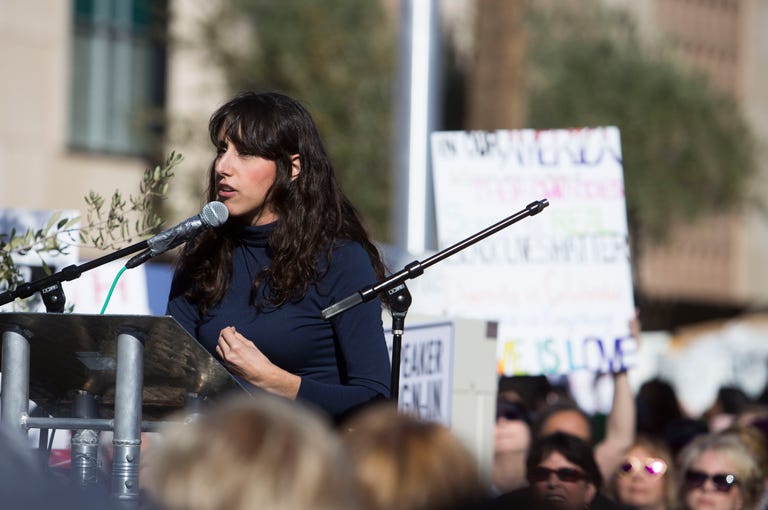
A group of women graduate students in Texas knew not getting pregnant was key to getting their education. When they started a network to help women get birth control via a public phone, they unleashed something even bigger.

The road to Roe v. Wade arguably started in the living room of University of Texas at Austin (UT) science graduate student Judy Smith in the fall of 1968. As the late Smith’s longtime boyfriend Jim Wheelis joked, “If I had known this would be historical, I would have taken notes.”

In 1965, the Supreme Court ruled in Griswold v. Connecticut that a constitutional right to privacy protected a married couple’s right to purchase birth control, overturning the state law that prohibited the use of contraceptives. Similar protection was extended to single women in Eisenstadt v. Baird seven years later, in 1972.

But married or not, young UT students sought the pill in the late 1960s from doctors on and off campus. Smith and another UT graduate student, Victoria Foe, met in early 1968 while working with one of the few male faculty who accepted female students. Both had a hard time finding an advisor in the science program. Male faculty refused to take on female students, arguing that women would become pregnant and drop out of school. Smith and Foe quickly realized that control over reproduction directly affected a woman’s education.

While the pill was available to married women in the late 1960s from private doctors and at the UT health center, doctors did not prescribe it freely. According to Foe, some doctors believed a “woman who was taking birth control pill was willing to sleep with you or that you could fondle her.” Foe remembered that there were “doctors who would do one of two things: They would either give you a lecture on morality as if it was any of their business or they felt they could make a pass at you.”

Smith saw the demand for easily accessible contraception as a starting point for a women’s rights organization in Austin.

Early in the semester, Smith approached Foe and explained that she was holding a meeting at her house to discuss women’s issues. That night was the first meeting of the group Austin Women’s Liberation, and the women agreed their first goal was to compile a list of doctors who prescribed birth control without harassing women.

By November, the Birth Control Information Center (BCIC) was operating in the University YMCA in a tiny, closetlike space next to the underground radical newspaper The Rag. According to Foe and Wheelis, the women tracked which doctors were accused of sexual harassment and advised women on who willingly prescribed the pill. The group ran advertisements in The Rag, which listed the BCIC’s number as the pay phone in the hallway of the Y. The birth control service had office hours where people could drop in or call, and if no volunteers were available, the newspaper’s staff would take messages and get them to the BCIC.

A Birth Control Information Center advertisement that the Austin Women’s Liberation group placed in a local radical newspaper


Soon after opening the BCIC, Foe and Smith began to receive calls from women seeking abortions. Abortion had been illegal in Texas since the mid-19th century. Texans with means in the late 1960s traveled to New York or England for the procedure. However, broke college students and working-class women in the larger Austin area couldn’t just pick up and travel for an already expensive medical procedure. According to articles in The Rag, abortions cost anywhere from $150 to $1,000 in Texas. Many women opted to travel to England, where they were sometimes guaranteed their abortion would be performed by a medical professional. But the airfare alone cost hundreds of dollars.

Foe herself had an abortion along the Texas-Mexico border and knew that doctors paid local officials to look the other way. As a result, Smith and Foe traveled to the Mexican town of Piedras Negras across the U.S. border to assess which doctors performed the procedure. As Foe recounted, the BCIC gave women access to licensed doctors operating out of medical clinics in Mexico, complicating the idea that dirty and corrupt back-alley abortionists performed all abortions before legalization.

Once the women located and vetted doctors, the BCIC evolved to include abortion referrals. Women anonymously called the Y payphone and left a message with a BCIC volunteer or a Rag staffer who happened to answer.

As Wheelis, Foe, and former Rag staffers recalled during interviews, the students who rented space in the university Y knew the payphone was bugged. Because The Rag published socialist, radical, and New Left articles that often directly challenged the leadership of then-President Lyndon B. Johnson, the UT Board of Regents—the university’s governing body—and the FBI kept a close eye on the groups organizing out of the space across the street from campus.

Smith returned calls from a secure line, sometimes adding her home phone number to the newspaper ads. As Wheelis recalled, women called Smith at home to set up an appointment. Smith then borrowed Wheelis’ truck to transport the women to the clinics, occasionally in San Antonio, Waco, or Dallas, but mostly in Mexico.

Although the handful of BCIC volunteers kept records, they did not preserve them over the years and there’s no way to know how many women the BCIC served between 1968 and 1973. While the majority of the women successfully ended their pregnancies, volunteers at the BCIC remembered the occasional failed abortion, such as that of one woman who remained pregnant after the procedure; however, the activists excused this error, thinking she must have been carrying twins.

The women continued to help other people access abortion into the 1970s, but Smith and Foe took different paths in their continued activism. Smith continued to focus on helping women on a community level, and Foe began to work at the Texas legislature to help representatives tasked with rewriting the Texas abortion laws.

While the women at the BCIC continued the referral service, the UT Board of Regents took The Rag to court in an attempt to ban the sale of the paper on campus. The volunteer student- and community-operated staff challenged the university head on and won its case in September 1970. A group of 20-something-year-old college students won in court, and Judy Smith believed women could follow their lead by challenging the Texas restrictions on abortion.

Smith met Sarah Weddington, the attorney who would argue Roe v. Wade before the Supreme Court, through their boyfriends, who were law school classmates. Weddington could not find work as a lawyer after graduation, and Smith needed someone willing to take on the case for free.

This moment is where the well-known narrative of Roe (which was decided on January 22, 1973), begins. Weddington agreed to file the case, and the trio worked with Linda Coffee of Dallas, who was Weddington’s former law school classmate and clerk to U.S. District Judge Sarah T. Hughes. They were hoping that filing the case in Dallas, against District Attorney Henry Wade, would land them in front of Hughes, who they hoped would be friendly to their case.

Their gamble paid off. Foe, Smith, the other BCIC volunteers, and Weddington were in their 20s when Roewas filed. Most of them were students.

Speaking about today’s young activists in a phone interview for my research about Texas abortion organizing, Foe added that it often only takes a small group of people working hard to make change.

“The worst thing you can do is think, ‘There is nothing I can do about this.’”

Source: https://rewire.news/article/2018/01/19/how-roe-started-pay-phone/

The decisions that these zealots make will affect the lives of millions of women decades from now
Judges need to be fair-minded thinkers able to consider legal questions without bias, not narrow-minded ideologues working to curtail reproductive rights at any price.

Iwas 19 years old when I first visited a Planned Parenthood health center. It was 1973, the same year the supreme court recognized a constitutional right to abortion in the landmark Roe v Wade decision. Decades later, who possibly could have thought that my daughter’s generation would still be fighting for the legal right for women to control our own bodies?

Anti-choice activists and lawmakers have been systematically chipping away at reproductive freedom at all levels of government, and too often doing so under the radar so that few will notice. In my travels I have met educated, successful women who have no idea of the restrictions being enacted in their own states. I’ll never forget a woman I met in Houston who, after I mentioned that Texas had passed a mandatory waiting period for abortions, responded: “No, I would know that.” But we don’t always know – and that’s part of the success of the anti-choice movement.

After years of this type of erosion, the Trump administration is now taking big and permanent swings at reproductive rights by nominating extreme anti-choice figures to serve as judges in lifetime positions.

The first attack came in the form of the supreme court justice Neil Gorsuch, who has a disturbing record of ruling against women’s rights, but it goes far beyond the high court. At all levels of the federal judiciary, Republicans are pushing through Trump’s staunchly anti-abortion judges at a rapid clip and putting reproductive rights in jeopardy for generations to come.

These men (yes, his nominees are mostly men and overwhelmingly white) are the textbook definition of extreme. Consider Mark Norris, whom Trump nominated for a lifetime position on a district court in Tennessee. Norris is an anti-choice Republican state senator who believes that a woman’s right to access abortion should be “very limited”. He co-sponsored a proposal to empower that state to ban abortion even when a woman’s life is at risk, a position considered fringe even among the anti-choice crowd. And now Trump wants him to become a federal judge.

Judges need to be fair-minded thinkers able to consider legal questions without bias, not narrow-minded ideologues working to curtail reproductive rights at any price.

Other Trump nominees, including Howard Nielson and Kyle Duncan, have supported laws aimed at shutting down abortion clinics through medically unnecessary regulations. Another, Matthew Kacsmaryk, disputes the reasoning of the Roe decision and uses quotation marks when writing about the “fundamental right” to abortion, presumably to emphasize his disdain for such an outrageouscharacterization.

For these nominees, the Senate still can, and absolutely should, reject their nominations. But many of Trump’s disturbing picks have already been confirmed by the Senate – a fact that Trump likes to brag about during news conferences. John Bush, a Trump nominee who is now a judge on a powerful appeals court, has compared abortion to slavery, calling them “the two greatest tragedies in our country”.

Steven Grasz, now an appellate court judge, wrote a law review article on “Why There is No Constitutional Right to Kill a Partially-Born Human Being” and has argued that Medicaid coverage should be denied to women seeking abortions after surviving rape. He was confirmed by Republicans for a lifetime position as a federal judge despite being rated unanimously as “not qualified” by the American Bar Association. After another Trump nominee memorably could not answer even the most basic legal questions during his Senate hearing, it’s clear that Republicans are selling out our judicial system with embarrassingly unfit nominees to get the agenda they want.

To say that our reproductive rights are not safe in these hands is a wild understatement, and the decisions that these zealots make will affect the lives of millions of women for decades to come.

This month marks the 45th anniversary of the Roe v Wade decision. I wish we could rest on our laurels and celebrate the progress that has been made, but the reality is that Trump filling the judiciary with anti-choice judges could reverse all of that progress, leaving a destructive legacy that will far outlast his presidency. Executive orders and even legislation can be undone, but judges are there for a lifetime. Senators only have one opportunity to put the brakes on Trump’s anti-choice court-packing campaign – and it’s right now.

  • Kathleen Turner is an advocate and Academy Award-nominated actor and serves on the board of People For the American Way’s affiliated PFAW Foundation.

Source: https://www.theguardian.com/commentisfree/2018/jan/17/trumps-judges-threaten-reproductive-rights-for-generations-to-come

“This decision—not so coincidentally timed around the March for Life—is a cheap attempt by President Trump to pander to ultraconservative special interests that got him into power.”

The U.S. Department of Health and Human Services (HHS) is doubling down on so-called conscience protections that give an out to health-care providers who don’t want to treat LGBTQ patients or provide reproductive health care, including contraception, miscarriage management, and abortion care.

The Trump-era HHS, stacked with anti-choice extremists, on Thursday announced the launch of the Conscience and Religious Freedom Division, a wing of the agency’s Office of Civil Rights. The division is a precursor to an imminent rule expected to bolster such “religious freedom,” or religious imposition, measures at the expense of vulnerable patients. Its launch comes a day before Friday’s annual March for Life in the nation’s capital.

Politico first reported the news of the rule, which is listed as pending review within the White House’s Office of Management and Budget—the final regulatory step before its release. A new “conscience and religious freedom” landing page within HHS’ sprawling online presence already allows people to file complaints about alleged violations. The landing page includes a photo of a person who appears to be a female Muslim doctor—even though patients living at the intersections of, say, a marginalized religion and race, gender, sexuality, income, ability, and immigration status are most likely to bear the consequences of the agency’s actions in their health-care access and outcomes.

Roger Severino, the virulently anti-LGBTQ head of the HHS civil rights office, said the new division would “help guarantee that victims of unlawful discrimination”—health-care providers with objections to caring for disproportionately vulnerable patients—”find justice.”

“No one should be forced to choose between helping sick people and living by one’s deepest moral or religious convictions,” Severino said in a statement. He emceed a ceremony unveiling the agency’s plans at HHS headquarters on Thursday morning.

Severino’s assessment is notable in two respects. First, the HHS civil rights chief omitted the fact that LGBTQ people are most often the real “victims of unlawful discrimination” in the health-care arena. LGBTQ people routinely face “discrimination and mistreatment” from their providers, according to new data from the Center for American Progress. The discrimination and mistreatment results in “delays or denials of medically necessary care”:

For example, after one patient with HIV disclosed to a hospital that he had sex with other men, the hospital staff refused to provide his HIV medication. In another case, a transgender teenager who was admitted to a hospital for suicidal ideation and self-inflicted injuries was repeatedly misgendered and then discharged early by hospital staff. He later committed suicide. Discrimination affects LGBTQ parents as well: In Michigan, an infant was turned away from a pediatrician’s office because she had same-sex parents.

Second, the HHS-led rollback of the birth control benefit created a hotly contested moral exemption for reproductive health care. Severino is now further opening the door for doctors, clinicians, pharmacists, and other providers to turn away patients based on who they are, including their gender identity and sexual orientation, and what care they require.

This kind of state-sanctioned discrimination won’t be easy for the administration to pull off.

“Thankfully, HHS cannot eliminate the right of individuals to sue or to challenge discrimination in court,” Harper Jean Tobin, director of policy for the National Center for Transgender Equality, told Rewire. “What they can do is promote the belief that discrimination is legal. And encourage providers to discriminate and discourage patients from standing up for their rights.”

The Conscience and Religious Freedom Division’s statement of organization dates to December 2017. Additional documents from the same time outline the division’s legal authority to enforce and investigate both the Religious Freedom Restoration Act (RFRA), including religious imposition claims, and the Affordable Care Act section that outlines coverage of abortion services.

Under the Affordable Care Act, Section 1557 expressly prohibits anti-transgender discrimination and refusals to provide reproductive health care. The Trump administration stopped defending Section 1557 from GOP state-level legal challenges, but the underlying law remains in effect. It’s an important tool in combating discrimination in the delivery of health-care services.

“Ultimately, 1557 and our other civil rights laws that apply to health care, they give rights to patients that HHS can’t take away,” Tobin said. “The courts, when it comes to discrimination against transgender people, have been quite clear. The courts overwhelmingly say discrimination against a transgender patient is illegal.”

Expect the administration to push the boundaries of law, according to Gretchen Borchelt, vice president for reproductive rights and health at the National Women’s Law Center.

Trump-era officials “have been willing to take the law as far as they can and then violate the law [in order] to enshrine one set of religious beliefs,” Borchelt said in an interview. “They don’t care what the harm is to individuals. Whatever the [George W.] Bush administration did, I think we would expect to see it taken at least one to two steps further, if not as far as possible beyond that.”

At HHS headquarters, Severino credited President Trump’s religious imposition executive order in May with setting the stage for the wide-scale discrimination now coalescing under his watch.

Acting HHS Secretary Eric Hargan also paid homage to Trump. With the Conscience and Religious Freedom Division, “we’re taking a significant step to implement President Trump’s vision,” Hargan said at the ceremony.

Hargan promised the administration would “vigorously enforce federal laws [in the form of] robust protections for religious freedom.”

Federal and state laws already provide a web of conscience protections for health-care workers. For example, the “Church Amendments” allow people and entities to raise religious or moral objections to performing or assisting in abortion or sterilization procedures. The Weldon Amendment protects physicians, hospitals, and insurance plans from repercussions for refusing to pay for, provide, or offer referrals for abortions. Another law, the Public Health Service Act, prohibits “abortion-related discrimination in governmental activities regarding training and licensing of physicians.”

Even the Affordable Care Act contains provisions protecting the conscience rights of health-care providers.

Conscience protections have long undermined reproductive health care, whether that’s in the form of contraception or common medications and procedures to facilitate a miscarriage or an abortion.

Source: https://rewire.news/article/2018/01/18/trump-carves-health-care-discrimination-wing-civil-rights-office/

Health Minister Simon Harris Photo: Frank McGrath

Abortion is already a reality in Ireland and needs to be dealt with through legislation, Health Minister Simon Harris will tell the Dáil today.

The minister is to lead the Government side of the Eighth Amendment debate in the absence of Taoiseach Leo Varadkar, who is still refusing to offer an opinion on the issue.

Two days of statements will get under way this evening with all 157 TDs entitled to speak for up to 20 minutes on the Oireachtas committee report, which recommended allowing terminations up to 12 weeks into a pregnancy.

Sources say Mr Harris will plead with deputies to set a “respectful” tone for the months ahead.

The Irish Independent understands he will use the opportunity to argue that abortion is already a reality for women in Ireland today.

The minister will point out that while it has been long known that Irish women travel abroad to end pregnancies, the growth of abortion pills now needs to be acknowledged.

A source said: “The minister will make the point that as a State it’s time to take action to protect women and look after their healthcare needs with care and compassion.”

Unusually for such a debate, Mr Harris told his advisers and department officials that he wants to write his own speech.

It comes as pressure mounts on the Taoiseach to offer clarity about his own position.

Mr Varadkar has been accused of “undermining” the work of the all-party committee on the Eighth Amendment by sending out mixed messages.

He has publicly warned that allowing unrestricted abortion up to 12 weeks may be “one step too far”, but has also told Fine Gael TDs it is the “strong option” on the table ahead of a referendum.

In the Dáil, he said he was committed to having a referendum in May or June.

Mr Varadkar said he was not prepared to state his personal opinion until he knew exactly what question is being put to the people.

He said there was uncertainty about whether it would be a simple case of asking whether people want to repeal the Eighth, or if it should be repealed and replaced with a line giving the Oireachtas sole power to legislation for abortion.

“We are awaiting advice from the Attorney General about that because we would find ourselves in a very strange situation if we repealed the Eighth Amendment only to find out that other rights to life exist in other parts of the Constitution that might then make any legislation we pass unconstitutional,” he said.

On the type of abortion regime that might be introduced, Mr Varadkar said draft legislation should be prepared before a referendum but “the legislation would then be in the purview of the Oireachtas and this Government does not have a majority in the House”.

Labour Party leader Brendan Howlin criticised Mr Varadkar for not stating his view on the committee’s report, which was published before Christmas.

“I think that’s unfortunate. I think it is not giving leadership. We need clarity,” he said.

Fianna Fáil’s health spokesman Billy Kelleher accused the Taoiseach of “undermining” the process.

However, he defended his own party leader, Micheál Martin, for stalling on making his own position clear.

“When you’re telling [doctors] they need to provide [abortions] a certain way but not telling them how, it’s going to scare them away from providing care at all.”

Republicans in the U.S. House of Representatives are preparing to ram through another anti-abortion measure based on junk science and scare tactics.

The “Born-Alive Abortion Survivors Protection Act” is based on the myth that infants are “born alive” after abortions—and that abortion providers routinely murder them. The GOP-held House vote is timed around Friday’s March for Life and next week’s 45th anniversary of the Roe v. Wade Supreme Court decision legalizing abortion care.

“The point of this kind of legislation—it’s for shock value,” said Diane Horvath-Cosper, an OB-GYN, abortion provider, and fellow with Physicians for Reproductive Health. “It’s not medically accurate, [and] it’s not founded in any kind of actual science.”

The Born-Alive Infants Protection Act of 2002 already defines an infant “born alive” following “natural or induced labor, cesarean section, or induced abortion” as a person with corresponding legal protections, according to President George W. Bush’s remarks upon signing it. The “Born-Alive” bill, written in the mold of Americans United for Life copycat legislation, would add criminal penalties for abortion providers and clinicians in the form of fines and up to five years in prison, along with potential criminal prosecution for murder. Patients who undergo an abortion could separately file a civil lawsuit.

The consequences could be dire, according to Amy Friedrich-Karnik, senior federal policy adviser for the Center for Reproductive Rights (CRR).

“What’s interesting to know about this bill is that it describes something that is relatively vague,” Friedrich-Karnik said in an interview. “It requires providers to act in a certain way without any specificity, but then it couples that with criminal penalties for failing to comply.”

Friedrich-Karnik described a “chilling effect” on abortion providers.

“When you’re telling them they need to provide [abortions] a certain way but not telling them how, it’s going to scare them away from providing care at all,” she said. At the same time, she added, the bill “grossly interferes in medical practice” by bringing politicians into the exam room.

There are no indications that the U.S. Senate will follow the House’s vote anytime soon, if at all. The bill would almost certainly fail to meet the upper chamber’s 60-vote threshold to advance most controversial legislation.

But there’s more at stake than an individual legislative victory or defeat. Anti-choice advocates, for example, have urged Senate Majority Leader Mitch McConnell (R-KY) to bring up a similarly doomed, House-passed 20-week abortion ban to test vulnerable Senate Democrats from red states ahead of the midterm elections. Their goal: Strengthen Republicans’ Senate majority and end the legislative firewall between a nationwide prohibition on legal abortion care at 20 weeks—and eventually, on legal abortion care entirely.

Their strategy isn’t infallible. McConnell told reporters gathered at the White House in October 2016 that the 20-week ban is “supported by virtually all of my members, and we expect to have a vote on it at some point,” but he still hasn’t scheduled it. And Rep. Steve King (R-IA), a prominent white nationalist, recently told LifeSiteNews that there’s a “turf battle” brewing among anti-choice groups. King resents that House Majority Whip Kevin McCarthy (R-CA) and the prominent anti-choice group National Right to Life are prioritizing the 20-week ban and the “Born-Alive” bill over his total abortion ban.

Junk Science Defines Bill—and Defies Reality

Kristyn Brandi’s first thought as she read the bill was that “clearly, this person [who wrote it] has no idea of what an abortion procedure actually is.”

Most abortions occur within the first trimester—“nowhere near the viability this bill describes,” Brandi, a California-based family planning doctor and abortion provider, said in a phone interview.

Indeed, 89 percent of all abortions occur within the first trimester, according to a 2017 fact sheet from the Guttmacher Institute, a research and policy organization that supports reproductive rights. Abortions are increasingly shifting earlier within the first trimester; per the same data, 66 percent occur in the first eight weeks.

The majority of second-trimester abortions similarly take place prior to viability, which differs for each pregnancy, but generally occurs around 24 weeks. And for second-trimester abortions that are “even close to viability,” Brandi said abortion care providers typically inject a patient’s stomach with medication prior to the procedure, typically a dilation and evacuation, or a D&E, to induce fetal demise and avoid a live birth.

“Usually, patients will not proceed with the abortion unless we’ve confirmed that fetal demise has happened,” Brandi said. “So really, this is not happening if you’re providing safe, legal care.”

Republicans, then, are trying to punish providers for a problem that doesn’t exist.

“It just shows how much they are not familiar with what’s actually happening in abortion care,” Brandi said.

CRR’s Friedrich-Karnik agreed.

“First and foremost, it is not about legislating to fix a problem,” she told Rewire. “And this timing makes clear that it’s all about anti-choice leaders giving something to their base on the anniversary of Roe. What this bill really does is stigmatize health-care providers and shame women who are seeking safe, legal abortion care.”

Scare Tactics Endanger Health

Until recently, the “Born-Alive” bill was most closely associated with Rep. Trent Franks (R-AZ), a proponent of racially biased anti-abortion myths and the lead sponsor of the 20-week abortion ban that actually prohibits abortion at 22 weeks’ gestation. Franks has long mischaracterized and conflated the medical realities of abortion with convicted rogue abortion provider Kermit Gosnell’s crimes.

Enough House Republicans nevertheless joined Franks in 2015 to pass the bill. An identical Senate version from Sen. Ben Sasse (R-NE) failed to gain traction across the Capitol.

Franks and Sasse again offered up the measures at the start of the 115th Congress in January 2017. By December, Franks resigned from the House following the sexual harassment revelation that he had asked female staffers to bear his child via surrogacy. Rep. Marsha Blackburn (R-TN) subsequently reintroduced the bill under a new bill number, HR 4712. Blackburn is perhaps best known for collaborating with anti-choice extremists in an inflammatory, taxpayer-funded crusade against Planned Parenthood. She’s lifting much of the same rhetoric in her campaign for the Senate.

Rep. Diana DeGette (D-CO), co-chair of the House Pro-Choice Caucus, described the bill’s resurgence as “alarming.”

“The bill bullies abortion providers, imposing draconian and unnecessary standards of care enforceable with criminal penalties,” DeGette told Rewire via email. “It’s no wonder most doctors’ advocacy groups oppose it; if this legislation becomes law, it will irreparably damage the critically important relationship between them and their patients.”

The head of the American College of Obstetricians and Gynecologists said the “Born-Alive” bill “should never become law.”

“HR 4712 is a disservice to America’s women and gross legislative interference into the practice of medicine, putting politicians between women and their trusted doctors,” Executive Vice President and CEO Dr. Hal Lawrence said in an email. “This bill and others like it are part of a larger attempt to deny women access to safe, legal, evidence-based abortion care. We call on every member of the United States House of Representatives to stand with women and stand up for safe medical care.”

Ultimately, the bill and its anti-abortion scare tactics could endanger patient health.

“It’s just trying to frighten people that abortion doctors are doing things that are unethical when in actuality we’re providing safe and legal care. And it’s trying to push doctors to not provide care,” Brandi, the family planning doctor and abortion provider, told Rewire. “And with less and less doctors being able to provide these services, eventually no one will be able to provide this care for women and then we’re going back to before Roe v. Wade when people were dying from abortion[s].”

Source: https://rewire.news/article/2018/01/17/house-republicans-vote-shock-value-abortion-bill-anti-choice-protesters-descend-d-c/

A new effort from the progressive State Innovation Exchange aims to put reproductive rights at the forefront of the country’s agenda.

MURPHY BANNERMAN

Renitta Shannon has never regretted her abortion.

Growing up, Shannon, who’s now a state representative in Georgia, never got any guidance from her well-meaning, very religious parents about sex. She knew birth control existed but didn’t know anything about it. She found out she was pregnant one day during her senior year of college, when she was studying for finals at the University of Florida.

“I knew it would unravel my life,” she says. “And ultimately, I knew that at 22, I was not ready to become a parent.”

Shannon — who has never before spoken publicly about her abortion — made her choice. She decided to talk about it now, 15 years later, she says, because she’s tired of keeping quiet about something she believes is so vital to women’s freedom.

“Abortion is only ever talked about when conservatives are trying to strip away rights,” she says. “It’s almost like nobody wants to talk about abortion until it’s time to defend it.”

Amid crackdowns on abortion access nationwide, Shannon and more than 200 other state legislators across the country have signed on to a new Reproductive Freedom Leadership Council launched on Thursday by the State Innovation Exchange (SiX), a nonprofit policy and resource center for progressive state legislators. The council’s objective is to put reproductive rights at the forefront of progressives’ — and the country’s — agenda.

“The goal is to send the message that despite the 401 state-level abortion restrictionsthat have been passed into law since 2011, we do have leaders at the state level who are willing to stand up and fight for our rights,” says Kelly Baden, SiX’s director of reproductive rights.

The council aims to bring state legislators from Oregon to Virginia together in pursuit of that common goal, and ensure that liberal legislators in Alabama — who might not have as many allies in the statehouse — are connected to progressives in states like Vermont. The alliance hopes to keep lawmakers updated on the latest reproductive rights legislation and other related news, as well as help them talk about the issue differently. A big focus, Baden says, is reframing the issue of reproductive rights as not just a constitutional right, but a personal one, too.

According to the Pew Research Center, about 7 in 10 Americans oppose overturning Roe v. Wade, the landmark Supreme Court decision that made access to abortion the law of the land. “Between local, state, and national laws — and this chaotic news culture — it’s hard for people to be fully informed of every attempt to restrict their reproductive rights,” Baden says. “But when people do hear about them, they don’t want them.” The council, she says, will encourage state legislators to speak out about their commitment to the issue in order to “ramp up the public opposition to bad bills and help reverse the trend.”

Last year, some Democrats, including Vermont Sen. Bernie Sanders and House Minority Leader Nancy Pelosi, faced backlash when they suggested that there shouldn’t be a litmus test on abortion rights and the party should be open to anti-abortion politicians. SiX categorically decries progressives who claim reproductive rights aren’t a necessary component to membership in the Democratic party. “Reproductive freedom is a central and necessary component of an inclusive progressive agenda,” reads the new council’s platform.

Athena Salman, a state representative in Arizona who has signed onto the effort, says reproductive rights is one of the main reasons she decided to run for office in 2016. On Thursday, she plans to submit legislation that would repeal major restrictions on abortion access in the state, such as the mandatory 24-hour waiting period and the ban on state insurance coverage for the procedure.

“I think what happens, unfortunately, in the past, is that we let the other side drive the debate and change the debate,” says Salman, who believes women have been cut out of the conversation. “I’m hoping we can successfully shift the narrative and actually talk about the real reality that women face and also put the focus on respecting women’s decisions and not judging them.”

She likens the state legislators’ efforts on reproductive rights to the #MeToo movement. “The only reason that the support for the victims of sexual harassment has gained traction is because not just in one instance, not just in one state, but women across sectors, and men across sectors in our society, are speaking out,” she says. “And now you have this huge echo chamber and you’re actually seeing some policy shift as a result.”

This new coalition of progressive legislators, says Shannon, represents something of an offensive strike. “We are saying and affirming up-front: These rights are important to us. We want to advance reproductive rights. And we will not apologize for that.”

Source: http://www.cosmopolitan.com/politics/a15060139/reproductive-rights-council-state-innovation-exchange/

Attorneys for the State of Indiana want a federal appeals court to revive a law mandating doctors disclose a minor’s abortion to their parents.

Welcome to Gavel Drop, our roundup of legal news, headlines, and head-shaking moments in the courts.

A three-judge panel of the U.S. Court of Appeals for the Seventh Circuit heard Indiana’s appeal to breathe life into SB 404, a law that bans doctors from performing abortions on teenagers without informing their parents first. A decision on the challenge, parts of which were barred from taking effect by another court, is expected within three months.

Do you want to watch Ginni Thomas interview her husband, U.S. Supreme Court Justice Clarence Thomas, for her “Daily Caller News Foundation Series”? You do? OK. Here you go. Talk about #FakeNews.

Remember Google Bro James Damore? He’s the guy who got fired over the summer once his controversial Bro Manifesto about how gender difference means women aren’t cut out for the tech industry went viral. Since then, he has remained unemployed and dabbled with the alt-right, even admitting that he admires the titles, like “grand wizard,” that the KKK uses. He turned out to be a real gem. Well, he filed a class action lawsuit against Google last week alleging that Google discriminates against white conservative man. Yes, it’s OK to laugh.

A Nebraska couple’s malpractice lawsuit against a Boulder, Colorado, clinic and doctor began last week over a later abortion gone awry. The couple alleges the doctor missed part of the fetus’ skull, which was found embedded in her uterine wall more than a year later and, according to another physician, required a hysterectomy to remove.

A Wisconsin school district agreed to pay Ash Whitaker, a former Tremper High School student, $800,000 to settle Whitaker’s discrimination suit. Whitaker, who is transgender, was barred from using the boys’ bathroom when he attended Tremper High and was subjected to surveillance and disciplinary action stemming from his use of the boys’ bathroom. As part of the settlement, Kenosha Unified School District withdrew its U.S. Supreme Court appeal and has agreed to allow Whitaker to use the men’s bathroom if he returns to the school as an alumnus or as a community member.

The fight over an amendment—Amendment 1—that would strip the right to an abortion from the Tennessee Constitution has come to an end: A federal appeals court last week upheld the 2014 vote that adopted the amendment, paving the way for the Republican-dominated legislature to enact stricter abortion restrictions.

Native American tribes in Minnesota, Wisconsin, and North and South Dakota have been filing lawsuitsagainst opioid manufacturers and distributors in an effort to hold them responsible for the addiction epidemic in indigenous communities. The lawsuits seek compensation for costs they have incurred due to the crisis.

The U.S. Supreme Court heard oral arguments in two Fourth Amendment cases that will determine the boundaries of warrantless searches. One will decide whether police authority to search vehicles without warrants extends to vehicles kept on private property, including, potentially, those housed in a garage. The other will decide whether a person driving a rental car can be subjected to a warrantless search if their name is not listed on the rental agreement.

The federal judiciary is not immune from the #MeToo movement: Sen. Mazie Hirono (D-HI) said that she will be asking all federal judiciary nominees whether they ever committed sexual misconduct. While we admire the idea, it’s not like people tend to tell the truth about these things.

https://rewire.news/article/2018/01/16/gavel-drop-appeals-indiana-parental-abortion/

Trump admin moves to block abortion for fourth undocumented minor
© Getty

The Trump administration has moved to block a fourth undocumented minor from receiving an abortion, according to the American Civil Liberties Union (ACLU).

The woman, known to the court as Jane Moe, has requested an abortion but has been prevented from getting one by the Office of Refugee Resettlement (ORR), an office within the Department of Health and Human Services.

A spokesperson said HHS does not believe it is required to facilitate the abortion.

“The Jane in this case, Jane Moe — who entered the country illegally — has the option to voluntarily depart to her home country or find a suitable sponsor. If she chooses not to exercise these options, HHS does not believe we are required to facilitate Jane Moe’s abortion, out of concern and responsibility for the mother’s best interests.”

The ACLU asked the U.S. District Court for the District of Columbia on Thursday for a temporary restraining order for Moe so she could obtain an abortion.According to court documents, Moe is a 17-year-old unaccompanied immigrant minor living in a government-funded shelter. Moe is in her second trimester of pregnancy.

She first requested an abortion two weeks ago, but her request has been denied.

This is the fourth time the ORR has tried to block immigrant minors in the care of the U.S. from getting abortions.

In the previous cases, the minors have been eventually allowed to obtain abortions.

In March, the administration established a policy of prohibiting all federally funded shelters from taking “any action that facilitates” abortion access for unaccompanied minors without the approval of ORR Director Scott Lloyd.

The ACLU argues the policy is unconstitutional.

http://thehill.com/policy/healthcare/368482-trump-administration-moves-to-block-abortion-for-fourth-undocumented-minor

“Someone does not lose the constitutional right to end a pregnancy simply because they are a college student.”

When Angelina discovered she was pregnant as a freshman at San Francisco State University, she wanted an abortion, but the student health center offered little more than flu shots, cold remedies, and condoms.

A grocery store cashier, Angelina lacked health insurance. After a hard conversation with her Greek immigrant parents, she drove across the bay to a Marin County Kaiser facility, where her abortion would be covered by her parents’ health plan. Then things got worse.

“I think I was asked upward of six times in a ten-minute appointment whether I was sure I wanted an abortion,” Angelina, now 25, recalled. Rewire is withholding her last name for privacy.

The earliest date she could get the procedure was ten days away. The delay put her at 12 weeks’ gestation—too far along to get the medication abortion she’d wanted.

State lawmakers could soon provide a new choice for people in Angelina’s position. A first-of-its-kind bill in the California legislature would require student health centers at California public colleges and universities to dispense medication abortion, a safe non-surgical regime of two drugs taken before ten weeks’ gestation. The service would phase in starting in 2022, affecting more than 400,000 students.

No public colleges in the state offer medication abortion, nor do any around the country, but the author of SB 320 aims to change that.

“Someone does not lose the constitutional right to end a pregnancy simply because they are a college student,” said state Sen. Connie Leyva (D-Chino).

The bill cleared the state senate’s education committee on Wednesday in a party line vote, and heads next to the senate appropriations committee.

Angelina, now a pre-med student at Mills College in Oakland, supports SB 320 because she thinks it would remove the emotional and logistical barriers she encountered getting an abortion as a college student.

“It was almost like every week I had to jump through a hoop,” she recalled. “It was a whole domino effect.”

Each month, more than 500 students at California’s 34 public college and universities leave campus to seek medication abortions, according to a recent analysis by Advancing New Standards in Reproductive Health (ANSIRH) at the University of California, San Francisco. The service requires two office visits. But more than two-thirds of University of California (UC) students and one-third of California State University (CSU) students don’t have a car, and half of the student body qualifies as low income. At 22 campuses, the nearest abortion provider is more than 30-minutes away on public transit. At CSU Stanislaus, the trip on public transit takes 92 minutes.

Given the safety and effectiveness of medication abortion, “there is no reason to exclude it from services provided at the student health center,” said Dr. Daniel Grossman, director of ANSIRH.

Opponents argue the bill ignores a growing unmet need on campus for services like mental health care, dental care, affordable child care, shelter, and pregnancy support services. A Google maps analysis by anti-choice group Californians for Life showed abortion providers were an average of 5.97 miles from UC and CSU campuses.

“This bill falls short of even pro-choice expectations in that it does nothing to address the comprehensive needs of women on campus,” said Wynette Sills, director of Californians for Life. “It exclusively focuses on abortion, abortion, and more abortion—when not every woman wants to make that choice. This creates a legislative mandate on our already over-stretched university system.”

The legislation, which was held over from last year and heavily amended, still faces hurdles. It must clear the full state senate by the end of this month. Its implementation hinges on full funding.

State Sen. Connie Leyva said expanding abortion access at California’s public colleges and universities will come at no cost to taxpayers. Video by Nicole Knight.

Leyva said taxpayers will not foot the bill for implementation. Instead, two foundations and a private donor have agreed to pay set-up costs for staff training and equipment such as sonograms. Dr. Ruth Shaber, president of Tara Health Foundation, one of the funders, said they do not yet have an estimate of the total costs.

In the end, Angelina had a surgical abortion. It wasn’t the medication abortion she’d wanted the day she walked into the student health center at San Francisco State.

She missed three days of work, and a week of school. The toll, she said, felt like more.

Source: https://rewire.news/article/2018/01/12/california-campuses-soon-see-expanded-abortion-access/

If enacted, the ‘stop abortion’ bill would outlaw terminations carried out because of a congenital disorder of the foetus

Protesters spell out the phrase ‘women’s rights’ in Polish at a rally outside parliament in Warsaw
 Protesters spell out the phrase ‘women’s rights’ in Polish at a rally outside parliament in Warsaw on Wednesday. Photograph: Agencja Gazeta/Reuters

The Polish parliament has rejected proposed legislation to liberalise abortion laws, voting instead to pass proposals for tough new restrictions to a parliamentary committee for further scrutiny.

Poland already has some of the most restrictive abortion laws in Europe, with terminations permitted only when the life of the foetus is under threat, when there is a grave threat to the health of the mother, or if the pregnancy resulted from rape or incest.

If enacted, the “stop abortion” bill – a so-called citizens’ initiative proposed by hardline conservative groups – would outlaw abortions carried out because of a congenital disorder of the foetus.

Such cases account for about 95% of legal abortions in Poland. It is estimated that tens of thousands of illegal terminations occur in Poland each year, and many Polish women seeking abortions also go abroad, or order abortion pills online.

“This is a black day for Polish women,” said Krystyna Kacpura, an executive director of the Federation for Women and Family Planning. “If the bill is passed, Polish women will die. We are treated as unneeded – we are just there to give birth, and if we give birth to a very sick child, we are left to bring the child up by ourselves without any help.”

In 2016, Poland’s ruling Law and Justice party (PiS) was forced to back away from a blanket ban on abortion when the proposal’s passage to the committee stage provoked mass street demonstrations that came to be known as the “black protests”.

But the rightwing party’s leader, Jarosław Kaczyński, indicated that the government would continue to seek to tighten the law. He said: “We will strive to ensure that even in pregnancies which are very difficult, when a child is sure to die, strongly deformed, women end up giving birth so that the child can be baptised, buried, and have a name.”

Introducing the proposed restrictions on Wednesday, Kaja Godek of the anti-abortion Life and Family Foundation told MPs that “we have come to parliament today because we don’t want hospitals turning into abattoirs”.

Since assuming office in 2015, PiS has ended state funding for IVF treatment and restricted access to emergency contraception, introducing a requirement for a prescription in order to obtain the morning-after pill.

Łukasz Szumowski, appointed health minister during a government reshuffle this week, is one of almost 4,000 Polish doctors to have signed a “declaration of faith” committing not to participate in “abortion, euthanasia, contraception, artificial insemination, and/or in vitro fertilisation” on the grounds that such acts “not only violate the basic commandments of the Decalogue, but reject the creator as well”.

MPs considered a proposal to liberalise abortion laws. The “save women” bill would allow abortion until the 12th week of pregnancy and provide for better access to emergency contraception, medical care and sex education.

But its progress to the committee stage was rejected by eight votes, prompting recriminations as pro-choice activists accused opposition MPs of betraying Polish women by failing to show up. Dozens of opposition MPs who were present abstained.

“Many politicians believe their careers depend on the Catholic church,” said Kacpura. “But we will continue to fight this, because we are fighting for our lives.”

Source: https://www.theguardian.com/world/2018/jan/11/polish-mps-reject-liberalised-abortion-laws-but-back-new-restrictions