“We were incredibly critical of how the Obama administration expanded detention and deportation, but the biggest difference under the Trump administration is what appears to be a total lack of concern for the welfare of immigrants in custody.”

Immigration and Customs Enforcement (ICE) in August 2016 issued a policy recommending that pregnant people “generally not be detained.” Aside from incidents of mandatory detention or extraordinary circumstances, ICE followed that strategy.

But there are indications that the federal immigration agency has revoked that policy and is now detaining pregnant people “at the rate of one per day,” according to advocates.

These are women like Sara, a 27-year-old Honduran woman, and Emma, who migrated to the United States from El Salvador with her five-year-old son. Both were detained at the South Texas Family Residential Center in Dilley, Texas, one of the nation’s three family detention centers. After being raped, Sara fled Honduras with her 8-year-old daughter. After experiencing violence and receiving death threats in El Salvador, Emma was raped and tortured in Mexico while en route to the United States. Upon being taken into custody, both women informed immigration officials that they were pregnant, yet they remained detained by ICE. Sara was released after a week, while Emma and her child were detained for at least 20 days.

Cases like Sara’s and Emma’s have been detailed in an administrative complaint filed with the Department of Homeland Security (DHS) on behalf of pregnant people detained by ICE. The organizations behind the complaint assert that ICE has failed to implement its policy limiting the detention of pregnant people, while subjecting them to inhumane conditions and inadequate medical care. These organizations include the American Civil Liberties Union, the American Immigration Council (AIC), the American Immigration Lawyers Association, the Center for Refugee and Gender Studies, the Northwest Immigrant Rights Project, Refugee and Immigrant Center for Education and Legal Services (RAICES), and the Women’s Refugee Commission.

Emma, in the complaint, details her fears concerning her pregnancy and her experiences in the U.S. immigration system after presenting herself as an asylum seeker at the port of entry, in accordance with asylum law:

I wanted to explain to the immigration officer who processed me about my rape and show him that my fingernails were missing [as part of the torture inflicted on her], but he said, “No, don’t tell me anything. You all say the same thing.” I told the immigration officials at the border that I might be pregnant but that I was bleeding. They took me in a car to a hospital. I was given two ultrasounds: one of my stomach and one of my vagina. The doctor told me that I was pregnant and that my pregnancy was high risk. He told me that I have an infection, and gave me pills.

I was taken back to the border, where we slept in the cold on very thin mattresses. Most people were given only aluminum blankets but I as given a real one. I still could not sleep, however, because there were so many children crying. I could not eat because the smell of food makes me want to vomit.

All of these experiences have been very traumatizing for me. I have not heard any news of my four children, but am afraid to try to contact them because of my husband. I also know that my husband will kill me if he ever finds out that I got pregnant by another man. At the same time, I do not want to have this baby, and especially not from rape. However, I am from a Christian church and know that it would be a sin not to have the baby and am afraid of having a miscarriage due to my big-risk pregnancy. It is very stressful for me to be in detention while going through all of these difficult emotions, and not feeling well.

Katie Shepherd, the national advocacy counsel for the Immigration Justice Campaign at AIC, said ICE detaining pregnant women on a daily basis becomes “more significant” if the context is understood: Many of the women are pregnant as a result of rape. Eighty percent of Central American girls and women crossing Mexico en route to the United States are raped along the way, according to a 2014 report from Fusion.

Beginning in the fall of 2015, Shepherd spent nearly a year working as AIC’s managing attorney at Dilley. If members of AIC encountered a pregnant person in the detainee population, they would notify ICE if the agency hadn’t caught it during the medical screening at intake. Those people, almost immediately, would be transferred out of Dilley.

In November 2016, Shepherd noticed a shift. This was during the time when Haitian immigrants were being detained in large numbers and Shepherd experienced difficulty securing the release of a pregnant Haitian woman. In early 2017, pregnant people were “sporadically being detained,” but the national advocacy counsel said that in recent months there has been a “huge uptick” in the number of pregnant people detained. Shepherd says it’s her estimation that one new pregnant woman a day is being detained and unlike before, women aren’t being released until after they pass their credible fear interview. Pregnant people were once released immediately no matter where they were in the asylum process, which includes a credible fear interview with an asylum officer to determine if they have legitimate reasons to fear returning to their country of origin. If they fail this interview, they are deported.

“Not only have women experienced a lot of trauma from being raped, from the violence they are fleeing [in their countries of origin], but then they have the experience of being detained while pregnant and the pressure of having to pass this life-altering interview while enduring all of this. It can’t be overstated how these conditions have a negative impact on their case and impact their ability to present their case,” Shepherd said.

Amy Fischer, policy director at RAICES, told Rewire that ICE’s policy regarding pregnant people in detention likely came about because of the type of concerns advocacy organizations outlined in their complaint to DHS.

“As our complaint details, women are currently experiencing miscarriages because of terrible medical care, as well as complications to their pregnancy because of inadequate medical care. In 2016, ICE recognized there were dangers associated with detaining women who are pregnant. Its policy was an attempt to address this, but now we’re seeing them backtrack on it,” Fischer said.

Fischer, whose organization RAICES primarily works with women in family detention, said that until very recently, ICE had a clear policy on how it treated women in the detention system: Girls and women ages 10-56 were given pregnancy tests upon intake into a facility. If they were found to be pregnant, they were released from detention within 24 hours. The complaint details multiple instances in which pregnancy tests issued by ICE came out as negative, though the women were later found to be pregnant. Shepherd said this is illustrative of the care that people in detention receive, but nevertheless, when advocacy organizations who were working directly with women in detention suspected a woman was showing signs of pregnancy, she was referred to ICE, who issued another pregnancy test. If the results were positive, she was released.

“Everyone who is part of the complaint has had different experiences with ICE as it relates to its policy concerning pregnant women, but what we all had in common was the experience that getting a pregnant woman out of detention wasn’t hard. All of our experiences over the last couple of months seems to indicate that there may have been an internal memo or communication of some kind that informed staff ICE’s previous policy was being changed or revoked because the new approach of holding women who were pregnant until after they passed their credible fear interviews appears widespread. We’re seeing this at Karnes and Dilley [family detention centers] and at detention centers around the country,” Fischer said.

There has been a sizable increase in the detention of women migrants under President Trump. As of April 2016, around 4,829 women were detained in ICE facilities, including family detention centers, constituting 14.6 percent of the total detained population in ICE custody that day, according to information obtained through a Freedom of Information Act (FOIA) request on file with the Women’s Refugee Commission. Immigration arrests of women increased by 35 percent in the first four months of 2017, compared to the same period in 2016, KUOW reported, and “292 pregnant women were held in ICE detention centers nationwide” during the first four months of this year.

ICE told Reveal that as of September 13, it was holding 33 pregnant people in custody.

Shepherd told Rewire that none of the pregnant people in detention she has encountered were subject to mandatory detention or being held because of “extraordinary circumstances,” which translates to being considered flight risks or having criminal histories. That means there’s no reason ICE should have held them after confirming they were pregnant, Shepherd said.

By holding pregnant people, ICE is in direct violation of its own memo and of “accepted medical standards and practices concerning pregnant women,” according to the organizations behind the complaint. But ICE is also in violation of larger standards of care, including the Performance Based National Detention Standards (PBNDS) addressing medical care for women and ICE Family Residential Standards.

Family Residential Standards are vague, saying only that “female residents will have access to pregnancy testing and specified pregnancy management services.” Under certain circumstances, abortion care is provided in the PBNDS, but abortion is not outlined in the Family Residential Standards that apply to family detention centers, which is where Central American asylum seeking women who migrated with their children are detained. In other words, the people most likely to experience rape migrating to the United States may not have abortion as an option once they are inevitably funneled into family detention.

Shepherd said ICE should immediately release anyone found to be pregnant, but if the agency is going to revoke its policy, the least ICE officials could do is offer specialized care and all of the services outlined in the PBNDS and Family Residential Standards, as well as counseling.

“One thing that’s not stressed enough in any of the standards is access to psychological services,” Shepherd said. “There is overlap between a person’s mental state and the physical symptoms they are experiencing, all of which translate to additional obstacles women face when presenting their cases.”

Shepherd has encountered numerous cases in which people in detention have had to ask for specialized care repeatedly, including when they were bleeding, experiencing back and stomach pain, or showing other signs of complications. In some instances, it was known by ICE that these people had high-risk pregnancies.

Advocates said ICE is attempting to justify detaining pregnant people by claiming it’s an effort to give them access to counsel. Fischer told Rewire that an attorney with RAICES working at Karnes, a family detention center in Texas, was told by ICE that pregnant people were being detained “to help them have their credible fear interview, because they were previously missing out on that process.” Anyone with a valid asylum claim can apply for asylum without ever being detained, so ICE’s assertion is “dishonest at best,” according to Fischer.

“One of my biggest concerns is that under Trump, the detention system will only expand and there has already been a lot of talk about reducing the standards in these facilities. We were incredibly critical of how the Obama administration expanded detention and deportation, but the biggest difference under the Trump administration is what appears to be a total lack of concern for the welfare of immigrants in custody,” Fischer said. “We’re already seeing a lot of in-custody deaths. Our fear is that no concern will be shown regarding the fact that ICE is detaining vulnerable pregnant women who have experienced a great deal of trauma already. Not only will they be detained, but they are being detained in facilities under inhumane conditions with substandard medical care, and they have very little recourse to hold anyone accountable.”

Source: https://rewire.news/article/2017/09/28/ice-going-pregnant-people/

“Public health is one of these disciplines where nobody really thinks about it until there is a crisis,” says Caitlin Gerdts, vice president for research at Ibis Reproductive Health.

The Trump administration announced in early July that Brenda Fitzgerald, a Georgia OB-GYN and the state’s commissioner of public health, would head the Centers for Disease Control and Prevention (CDC), raising questions about the potential effects of politically-charged decisions by the critical agency.

Researchers who track the relationship between public health policy and reproductive rights said a CDC chief’s actions can have wide-reaching consequences.

“Public health is one of these disciplines where nobody really thinks about it until there is a crisis,” says Caitlin Gerdts, vice president for research at Ibis Reproductive Health.

Gerdts, a reproductive epidemiologist, told Rewire that while many don’t consider the importance of public health until there is “some kind of disease outbreak or a public health system failure … we are all, every single day, living with the benefits of centuries now of important public health interventions—anything from refrigeration, to vaccination, to sanitation has all come from public health.”

That is just one of the reasons why the work the CDC does is so important. Among its public health initiatives are programs that focus specifically on reproductive health research. According to Gerdts, “paying attention to and advancing the science around preventative health care and reproductive health, and access to reproductive health, is a critical function of the CDC.”

Lawrence B. Finer, vice president for domestic research at the Guttmacher Institute, told Rewire that the CDC’s work “makes contributions to not just health treatment, but health research in a very broad range of areas,” including reproductive health. Citing the National Center for Health Statistics (NCHS) as an example, Finer explained that the program functions as “an incredibly important source of information on data on health in the U.S., specifically with regards to reproductive health.”

The NCHS collects data used to drive policy, and one of those data sets—the National Survey of Family Growth—is “probably the most important survey of reproductive health behaviors” in the country, Finer said.

That survey is “the best source of information in the U.S. on sexual activity, contraceptive usage, behavior and pregnancy intentions, pregnancies and their outcomes—the full range of reproductive health behaviors in the U.S.,” he said.

The CDC also houses a division that oversees reproductive health and, according to its website, “provides technical assistance, consultation, and training worldwide to help others identify and address male and female reproductive issues, maternal health, and infant health issues.”

While these programs exist within the agency, how they function and are prioritized can change at the discretion of presidential administrations. Gerdts pointed to the CDC’s work on abortion under the Reagan administration as an example. In the aftermath of Roe v. Wade, there was “a push towards monitoring of abortion and … a great deal of interest in tracking maternal mortality throughout the country,” including the “negative health effects of unsafe abortion in our country,” she said.

“During the Reagan administration, that work really came to a halt because the administration was anti-choice and it was not a priority.”

In 1989, a congressional committee alleged that the Reagan administration had “suppressed research on abortion because they opposed the procedure,” according to an article published that year in New Scientist. The magazine reported that David Grimes, who had worked as chief of the Abortion Surveillance Branch at the CDC, testified about the work the Republican administration had done to push its anti-choice agenda:

According to Grimes, in 1983, the White House wanted Willard Cates, then in charge of the reproductive health division of the CDC, to be fired or transferred because he appeared to back abortion. Cates was demoted and moved to the section on sexually transmitted diseases.

Grimes also told the committee that the CDC censored two articles he had written for medical journals, one because it mentioned the word abortion twice in a manuscript of approximately 5000 words. In 1985, the CDC assembled a group of experts to write guidelines to prevent transmission of AIDS from mother to fetus. ‘It was tacitly understood by everyone present that the word ‘abortion’ could not appear in a federal document during the Reagan administration,’ Grimes told the committee. The published guidelines made no mention of abortion as an option for a pregnant woman infected with HIV.

Even under pro-choice administrations that have primarily relied on evidence-based decision-making, how the president handles abortion and reproductive health can have an outsized effect on CDC policy. “I think it is particularly challenging to be a CDC employee in a country where, you know, they are charged with advancing science but there are laws on the books—I can think specifically of the Helms Amendment—that can often be misinterpreted,” said Gerdts.

Though President Barack Obama largely supported abortion access, he never clarified if the Helms Amendment, which bans foreign assistance for abortion, applied to cases of rape, incest, and life endangerment.

“While [the Helms Amendment] is really meant to prevent any funding from going to provide abortions, many of the federal agencies interpreted it as sort of a muzzle, and really shy away from even talking about scientific evidence around abortion,” said Gerdts. “So the Zika advisory and sort of guidance the CDC issued for clinicians really didn’t include pregnancy options counseling.”

Under an administration hostile to abortion and evidence-based science, things could get even worse—a major concern given the Trump administration’s embrace of anti-choice activism and disregard for science on abortion and contraception.

A science-averse CDC director could “bring back into the public eye sort of sham science,” Gerdtz said. “You can think of in the reproductive health realm …. connections between abortion and breast cancer, which have been highlighted by ‘scientists’ who are anti-choice and who review things not using rigorous methods but who are advocating for propagating these sham connections as a way of stoking fear in the public around the safety of abortion.”

Health and Human Services Secretary Tom Price in a press release announcing her appointment said he believed Fitzgerald would bring her knowledge of medicine to the CDC.

“Having known Dr. Fitzgerald for many years, I know that she has a deep appreciation and understanding of medicine, public health, policy and leadership—all qualities that will prove vital as she leads the CDC in its work to protect America’s health 24/7,” he said.

Fitzgerald discussed her vision for the future of public health in an interview this year with the Association of State and Territorial Health Officials. “A strong, capable, and fully functional public health system is essential for this country to have a sufficient and effective healthcare system,” she said. “Public health does those things that the private sector simply does not, and quite possibly cannot, do.”

Though Fitzgerald’s most recent position was as Georgia’s public health commissioner, she also worked as an advisor on health care to Republican Newt Gingrich and mounted two failed Congressional campaigns in the early 1990s.

A 1994 news report describing Fitzgerald’s position on abortion said she believed “the federal government should not fund abortion and opposes the freedom of choice act, but says the ultimate decision should be made by a woman in consultation with her doctor.” The Freedom of Choice Act, introduced in the U.S. House of Representatives in 1993, said that states “may not restrict the right of a woman to choose to terminate a pregnancy” before fetal viability or “if such termination is necessary to protect the life or health of the woman.”

During her unsuccessful 1994 bid for the GOP nomination to represent Georgia’s 7th Congressional District in the U.S. House, Fitzgerald’s position on abortion rights became a contentious issue. Though Fitzgerald reportedly advocated for some abortion restrictions at the time, she did not endorse an “effort to outlaw abortions through a constitutional mandate,” leading several anti-choice groups to target her by distributing thousands of voter cards saying she was opposed to a “sanctity of life amendment,” according to the Atlanta Journal-Constitution.

One of Fitzgerald’s opponents in the race suggested that she had performed abortions in her capacity as an OB-GYN, another article from the Journal-Constitution reported. Fitzgerald reportedly denied the claim.

Fitzgerald worked in private practice before being tapped by Georgia Gov. Nathan Deal (R) to serve in the state’s health department. While working as health commissioner, Fitzgerald launched an anti-obesity program in partnership with Coca-Cola.

As the Intercept reported, “Muhtar Kent, the chief executive and chairman of Coca-Cola Company, appeared with the governor and Fitzgerald to promote the initiative, along with a pledge of $1 million from his company to fund it. Clyde Tuggle, a Coca-Cola executive responsible for the company’s lobbying strategy, was initially appointed to the board overseeing the state anti-obesity strategy, including Fitzgerald’s SHAPE initiative.”

Unlike many other programs designed to curb obesity, “the Georgia SHAPE program notably eschewed another well-known step toward healthier living: curbing sugary beverage consumption,” the Interceptnoted.

Screenshots of Fitzgerald’s biography from the Georgia health department show she identified herself as having worked in “anti-aging medicine,” according to a report from Forbes. And in screenshots from 2010, the doctor’s medical practice boasts that along with “seeing traditional gynecologic patients, we see both men and women for hormonal, nutritional, and other anti-aging concerns.”

“I’m so disappointed that the first female OB-GYN picked to head the CDC is someone who embraces the unproven and anti-scientific claims of the so-called anti-aging movement,” Cindy Pearson, executive director of the National Women’s Health Network, told Forbes.

While she didn’t comment on Fitzgerald’s appointment, Gerdts told Rewire she has a “deep respect” for those who work at the CDC. “Ensuring that they are able to do the job that they are there to do, to help the public understand what science really is and how to advance public health, is so so important,” she said.

“And reproductive health is such a crucial part of that,” she continued. “I am hopeful that any new Trump [appointment] to the CDC also adheres to the long-standing principles” of the agency.

Source: https://rewire.news/article/2017/07/24/trump-run-cdc-mean-sham-science-government-policy/

The reality is that 10 per cent of all Irish women will experience penetrative sexual violence in their lifetime and a proportion of them will become pregnant as a result

I left Ireland at age nineteen, thinking that by the time I was “old” – that is in my thirties – abortion would have been made legal in the country. I am now in my thirties and it is still very much illegal.

However, things might be changing. Ireland is preparing for a referendum on abortion in May or June 2018. Yesterday, the terms were voted by the Eighth Amendment committee in favour of a motion to recommend making the termination of pregnancy lawful with no restriction up to twelve weeks. The terms will be published on 20 December.

Never more than now, the country will need the support to campaign for the clearing of the law on abortion.

Ireland to hold abortion referendum in 2018

As it stands, the 8th amendment of the Irish constitution equates the life of a pregnant woman with that of an embryo or foetus and criminalises any woman or doctor that will carry out an abortion. Abortion pills are illegal, termination is also not permitted if foetal abnormalities are detected, if the woman’s health is affected, or in cases of rape or incest. A woman who seeks an abortion after rape can face an equal or longer prison sentence than her rapist – up to 14 years in prison.

Many rape pregnancy survivor cases have been cast into the public eye. The Miss X case (1992), the Miss C case (1997), the Miss D case (2007), the Miss Y case (2014). These women, some teenagers, were either granted to travel abroad to terminate their pregnancy due to their threat of suicide, or forced to continue their pregnancy.

The reality is that 10 per cent of all Irish women will experience penetrative sexual violence in their lifetime and a proportion of them will become pregnant as a result. In 2013, 8 per cent of females attending a Rape Crisis Centre reported they became pregnant as a result of rape, representing 75 women.

The prohibitive culture against abortion in Ireland is further exemplified by the death of Savita Halappanavar and Bimbo Onanugam. Savita was a 31-year-old Indian dentist who was denied an abortion at Galway hospital, despite her miscarriage of an unviable foetus. The reason given: “Ireland is a Catholic country”.

Groups like MERJ (Migrants and Ethnic-minorities for Reproductive Justice) have brought to light the true discriminating character of Ireland’s abortion law. Emily Waszak, co-organiser, mentioned 40 per cent of birth deaths are migrant deaths. These are women born outside of Ireland, some of whom would have been denied travel due to their “status” as migrant ethnic minorities, such as the case of Nigerian born Bimbo Onanugam, who died at the Mater Hospital in 2010, due to a ruptured uterus caused by induced labour.

Catholicism has a lot to do with this law, but it’s not the only driver behind it – the situation is far more complex and full of contradictions.

Even when the World Health Organisation’s best practice on abortion states that abortion services must be regulated to prevent unsafe terminations, the pro-life side will condemn a woman for “killing babies”. This pro-life narrative has always been one of shame – the vocabulary is punitive, and years of this mindset has not made it easy for Irish people.

There is no consideration from the pro-life side for the trauma that women deal with in relation to unwanted pregnancy and the process of abortion – let alone pregnancies as a result of sexual assault and rape itself.

Of course, misogyny reigns, but considering the last Magdalene Laundry closed in just 1996, this does not come as a surprise. The laundries kept women confined in working institutions, some for their whole life, because of their “sins” – having children out of wedlock or prostitution. In some cases, these women were victims of sexual assault. Apparently that counted as a sin.

Travelling has been the other focal issue alongside health care. Women seeking medical assistance travel, ironically, to the country that brought in the law against abortion in Ireland in the first place in 1861 – Britain.

In 2016 only, 3,265 women have travelled from Ireland to the UKfor abortion services. And this number is an underestimation, as not all women will provide their Irish addresses at UK abortion clinics.

Travelling is a further financial, psychological and emotional burden. Women who need visas to travel abroad and re-enter Ireland may have to wait six to eight weeks for the necessary documents, or in some cases may not be able to travel. Asylum seekers must apply and pay for an emergency re-entry visa from the Department of Justice and a visa to enter the UK or the Netherlands. In this case, Brexit might only create a further barrier.

Nevertheless, as Ailbhe Smyth (Convenor of the Coalition to Repeal the Eighth Amendment), put very well, in the past 40 years Ireland has pulled itself out of a very traditional and patriarchal frame of reference when it comes to women.

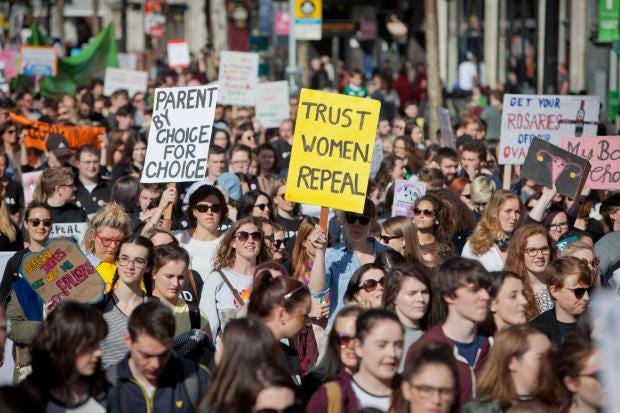
Things are changing. The mobilisation of the last few years has seen up to 30,000 people take to the streets with an enormous increase in visibility compared to the last referendum in 2002, with #repealthe8th becoming the number one hashtag in Ireland in 2017. Organisations such as Strike 4 Repeal, the London Irish ARC and the Abortion Rights Campaign in Ireland are ready to campaign, canvass and mobilise people now more than ever to put an end to what is clearly a dehumanisation of women.

Women in Ireland are tired of being treated as second-class citizens. If abortion was to become safe, free and legal it would be an incredible win.

There are more factors to be implemented on the agenda, in my opinion. Psychological training will be needed for doctors who up until now, have had no preparation, as well as support for women having abortions. The country is still divided over the matter. Women might still have to face discrimination and shaming. The fight won’t stop at the legislation – we has to continue to build a safe culture for women who have been mistreated for centuries.

Traditionally, when Ireland wants a revolution, she gets one. Let’s hope this will be the next.

Source: http://www.independent.co.uk/voices/ireland-abortion-referendum-illegal-legal-rape-vote-may-june-2018-20-december-decision-a8110706.html

In a state that may soon become the first without an abortion clinic, the Kentucky Health Justice Network is connecting women with safe reproductive healthcare, no matter what.

Escort volunteers outside EMW Women’s Surgical Center. AP Photo/Dylan Lovan

When Emily, a 41-year-old from Louisville, Kentucky, found out she was pregnant earlier this year, she decided to get an abortion. (Her name has been changed because she fears retribution at work if her colleagues found out.) Confident in her decision, she wanted to move through the process quickly―but soon realized that living in Kentucky, that wouldn’t be possible.

Since he took office in 2015, Kentucky’s Republican governor, Matt Bevin, has ushered in some of the most restrictive abortion legislation in the country. This year, the legislature approved a ban of abortion when the pregnancy reaches 20 weeks; a requirement for a vaginal ultrasound before a patient’s abortion was recently struck down after being contested by the American Civil Liberties Union.

For over a decade, Kentucky had just two abortion clinics, both owned and operated by EMW Women’s Surgical Center. At the end of 2016, the Bevin administration blocked a license for Planned Parenthood to perform abortions at its Louisville location, citing a new regulation requiring facilities to have transfer agreements with a nearby hospital and ambulance service. In January, the Lexington EMW clinic officially shuttered after a year-long legal battle. The administration denied a request to renew its license, and according to an EMW Facebook post, the landlord refused to renew its lease.

So when Emily called to schedule her appointment at EMW in Louisville, she was contacting the last abortion provider left in the state.

EMW sits in the middle of bustling downtown Louisville. Emily planned to schedule the appointment on a weekday, when it was less likely she would be seen en route. It was also when the sidewalk outside EMW would be less likely to be swarming with anti-abortion protesters. She’d initially called around to other clinics in the region, trying to get an appointment out of state, but OhioIndiana, and Tennessee have waiting periods or other restricting laws that would require her to spend at least two days away from home and miss too much work.

Though EMW is only 20 minutes from her house, Emily didn’t have someone who could drive her to and from the procedure, which the clinic requires. Her boyfriend couldn’t get off work to take her, and she didn’t feel comfortable asking other friends or family members to do it. Worried she was running out of options, she started to panic. An EMW employee told her to call the Kentucky Health Justice Network (KHJN), a nonprofit that advocates for reproductive justice and has an abortion support fund. One of 70 abortion organizations that belongs to the National Network of Abortion Funds, KHJN is a lifeline for Kentuckians trying to access the medical procedure, using its volunteer network and donations to help with transportation, gas money, lodging, and payment for abortions.

She scheduled the appointment, and the day of, a KHJN volunteer showed up at her doorstep and drove her. Emily still had to face protesters outside of EMW. “They’re basically, without touching you, assaulting you,” she said. She made it safely inside, and after the procedure was finished, the volunteer dropped her off at home, and called to check on her a few days later.

Months later, Emily still thinks often about the help the volunteers at KHJN provided, at absolutely no cost to her. “At every turn [in this process], there’s a barrier, but this was one less to worry about,” she said.

The Louisville clinic is currently in the midst of a trial that will determine whether Kentucky becomes the only state in the nation without an abortion provider. The trial wrapped up in early September, and a verdict is expected at any moment. With just one clinic left in Kentucky, and few left in surrounding states, the work of organizations like KHJN is becoming more expensive and logistically challenging.

“There’s a lot of pressure at this moment,” said Meg Stern, the Abortion Support Fund director for KHJN. “The clinic could close, and here we are with all these people who still need access to abortion. What’s going to happen?”

Since 1976, when the Hyde Amendment was signed into law, the US government has banned federal funding for abortion, and many states have followed suit. Abortion funds cropped up to help people overcome logistical and financial barriers to the procedure. “They were an underground railroad of sorts,” said Marcie Crim, KHJN’s executive director.

Founded in 2013, KHJN now has five full-time employees and around 60 volunteers. Until now, the organization has attempted to keep a low profile. But as GOP lawmakers further diminish access to reproductive healthcare by introducing targeted regulation of abortion provider (TRAP) laws, fund leaders like Crim are speaking to the public and press more often.

“People didn’t know we existed, so they weren’t asking us for our services,” Crim said. “My goal [since coming on in 2016] was to raise our profile.”

According to the Guttmacher Institute, a research and policy organization focused on reproductive health in the US, more than a third of state abortion restrictions instituted since the 1973 Supreme Court decision legalizing abortion in Roe v. Wade have been enacted within the last six years.

“It’s this cumulative impact from restrictions and lack of access that creates such a dire situation for some women,” said Elizabeth Nash, senior state issues manager for Guttmacher. “The distances they have to travel—to be able to climb that mountain is very hard. And then they have to think about raising money for the procedure and the travel.”

At EMW, a medical abortion costs $750, and a surgical abortion can reach up to $2,250. The costs of abortion procedures vary widely by clinic, state, and how far along the pregnancy is. KHJN, which is funded largely through individual donations, typically pledges up to $500 a week total per patient, which goes toward gas cards, hotels, and procedures, then works with other abortion funds to help fund the rest if necessary. But most clinics require patients to pay for a portion of the procedure themselves, so Stern and volunteers have to ask uncomfortable questions: can the patient in need of an abortion use someone’s credit card? Can she pawn belongings?

“By far, that’s the worst part of this job,” Stern said.

With the increased restrictions, the organization is stretching itself thin. Before 2016, Crim said KHJN got 11 requests for financial or transportation help a week. Within the last year, she said, they’ve started getting up to 30. Part of that is because the organization is becoming more well-known, Crim said, and part of it is because people have to travel farther now that there is only one clinic. About 95 percent of people KHJN assists―many of whom live four to six hours away, in rural Kentucky—go to EMW, she added. But the 20 week ban in the state has made that more difficult.

Stern said KHJN volunteers pick people up in gas station parking lots and outside abandoned homes because patients fear repercussions in their personal and professional lives for their decision. Many of them, she added, find themselves at risk of longer wait times because there are so few providers left, or due to abrupt changes in state laws.

“Losing one clinic in Kentucky would be additional motivation for abortion opponents to try to close other clinics, or adopt so many restrictions that abortion is impossible to access,” Nash said.

This year, Crim said a pregnant 16-year-old girl drove an hour to Louisville with her mother to EMW. She was two days over the 20-week limit, and got turned away. When they reached out to KHJN for help, Crim took the case on herself. After days sorting out logistics, KHJN forked over $1,750 to fly the girl and her mother to a clinic in Maryland—since closed—as a last resort to obtain the procedure.

Situations like that are already becoming more common for Kentuckians, Crim said. Out-of-state travel is something KHJN is increasingly unable to afford, but she said they exhaust all possibilities until patients get what they need. Otherwise, the consequences can be grim.

“The girl was in the backseat, telling me she googled how to give herself an abortion because she didn’t think she was going to be able to get it done,” she said. “But I hear this a lot now.”


Along with limited abortion access, many in Kentucky, especially those living in rural areas, lack resources for women’s health, including contraceptives and family planning services. According to a 2014 study by the American Congress of Obstetricians and Gynecologists, 76 of the state’s 120 counties don’t have an OB-GYN. And Kentuckians need care: according to the most recently available data from Guttmacher, there were 7,220 pregnancies among teens aged 15 to 19 in Kentucky in 2013, making it the state with the eighth highest rate of teen pregnancy in the country.

This summer, Crim helped launch an initiative to improve birth control access in Eastern Kentucky. The two-year program, in partnership with the National Campaign to Prevent Teen and Unplanned Pregnancy and Appalachia-based media center Appalshop, combines educational outreach, storytelling, and local policy change to make sure people in the region have access to all types of contraceptives.

For now, KHJN and pro-choice advocates are anxiously awaiting the ruling on EMW. “This case is incredibly important,” Nash said. “It also puts on the court not only what kind of regulation is appropriate, but how important is it to protect access.”

If the Kentucky judge rules for EMW to stay open, it would set a precedent that may mean Planned Parenthood could resume abortion services as well. In the worst-case scenario, if the clinic is closed, KHJN will have to transport people out of state, which means more money for travel, lodging and gas, and more logistics to sort out with other clinics. “Paying for the procedures will be easy at that point,” Stern said.

The battle over abortion access in Kentucky has emboldened people like Stern and Emily to advocate more strongly for reproductive justice. “The time to remain neutral and not choose a side has passed,” Stern said. “For me it feels necessary now, which makes it a little easier to have these conversations.”

For Stern, that means pushing harder to raise KHJN’s public profile. For Emily—who says she will never forget the help she received from the organization when she needed it most—it means sharing her story and offering up her time to the cause; her experiences have made her consider becoming a KHJN volunteer herself. “I have a hard time with them trying to pass the laws they’re trying to pass, not for my sake but for others,” she says. “I wouldn’t want someone not to have these resources like I did.”

Source: https://www.vice.com/en_us/article/mb97zq/the-volunteers-helping-women-get-abortions-against-all-odds

 Doug Jones is greeted by a supporter before speaking during an election-night watch party Tuesday, Dec. 12, 2017, in Birmingham, Ala. Jones has defeated Republican Roy Moore, a one-time GOP pariah who was embraced by the Republican Party and the president even after facing allegations of sexual impropriety. (AP Photo/John Bazemore)

ATLANTA (AP) — Alabama, one of the most conservative states in the country, with one of the most evangelical electorates, is sending an abortion-rights supporter to the U.S. Senate, despite GOP efforts to paint Democrat Doug Jones as an unacceptable extremist on the issue.

Certainly, any analysis of what Jones’ upset over Roy Moore means for other races involves a caveat: The Republican nominee was twice ousted from the state Supreme Court and stood accused of sexual misconduct with minors, baggage that gave Jones an opening in a state that hadn’t elected a Democratic senator since 1992.

Yet Jones could not have won without crossover votes from conservative Republicans who oppose abortion, and that’s just what he did.

Exit polls show Jones won a third of voters who said abortion should be illegal in most cases, and 27 percent of those who want it outlawed completely.

These numbers suggest that abortion may not necessarily be a defining issue in the 2018 midterm elections.

Abortion is “still a dividing line in American politics,” said Republican pollster Greg Strimple, who surveys voters for the Congressional Leadership Fund, the political action committee backed by Speaker Paul Ryan that is helping defend the GOP’s House majority.

But a candidate’s stand on abortion mobilizes only slices of the two parties’ bases, and for most every voter in between, “it’s a secondary issue,” Strimple said.

There’s an argument that this contest was unusually unsavory for conservatives, making them choose between a man accused of preying on girls, and a Democrat. But it’s clear that Jones’ support of legalized abortion wasn’t a deal-breaker for just enough Republicans to give Democrats a 20,000-vote margin, out of more than 1.35 million votes cast.

That’s heartening for Democrats looking to dent Republican domination in Congress and statehouses by targeting voters dissatisfied with President Donald Trump and unhappy over Republican moves to roll back Democrats’ 2010 health insurance expansion and push tax cuts tilted to corporations and wealthy individuals.

“We are competing on a massive offensive battlefield, in districts that went for both Donald Trump and Hillary Clinton, and that are suburban, rural and urban,” said Meredith Kelly of the Democratic Congressional Campaign Committee. “Regardless of where they are running, (our) candidates have no reason to compromise on their support for a woman’s health care, her right to choose, and her economic security.”

Nationwide, polling suggests that a majority of Americans avoid taking an absolutist stance on abortion. According to a Pew assessment in July, the largest plurality is the 33 percent of voters who say abortion should be legal in most cases. The next largest segment, at 25 percent, says it should be legal in all cases. Twenty-four percent say abortion should be illegal in most cases, while just 16 percent say it should be illegal in all cases.

Of course, those voters aren’t distributed proportionally across state and congressional boundaries, and partisan leanings are much more intense: 65 percent of self-identified Republicans say abortion should be illegal in all or most cases, while 75 percent of Democrats say it should be legal in most or all cases. Independents lean in favor of access, with 60 percent saying it should be legal.

Religious influence sharpens voters’ leanings further. White evangelical protestants are the most likely religious group to oppose abortion rights: 70 percent say it should be illegal in most or all cases. Majorities of Catholics, black protestants and mainline protestants all support more access, while unaffiliated voters lean overwhelmingly toward legality.

A state like Alabama, where Republican nominees usually win at least 60 percent of the vote and where half the population is white evangelical protestant (as opposed to a quarter nationally), is more fundamentally anti-abortion than many other states now under Republican control, such as Ohio or Wisconsin, which have far fewer evangelicals proportionally and are typically presidential battlegrounds.

It’s also true that nearly all the 91 House districts that national Democrats are targeting are less Republican than Alabama. Democrats need to flip 24 GOP-held seats for a House majority. In the Senate, Republicans will have a narrow 51-49 advantage when Jones is sworn in, meaning they need a net gain of two seats to regain control. Democrats also must defend 10 seats in states where Trump won, but all these states are less conservative than Alabama, perhaps with the exception of North Dakota.

In Alabama, Moore and his supporters certainly tried to make abortion a dividing line. Republicans circulated an interview in which Jones affirmed his position. After losing, Moore highlighted the issue again in a video to supporters explaining his refusal to concede. “Abortion, sodomy and materialism have taken the place of life, liberty and the pursuit of happiness,” he said, lamenting that “we have killed over 60 million of our unborn children.”

Yet throughout the campaign, including the months before the sexual misconduct allegations surfaced in early November, Jones stood his ground, certainly not emphasizing abortion rights, but not denying his views when asked.

“Everyone felt like I needed to be someone I was not to try to get votes,” he told The Associated Press the day after his election. “I promised myself I would not do that.”

Source: https://www.yahoo.com/news/alabama-abortion-may-backseat-issue-2018-races-142035537–election.html

A judge in Pennsylvania put a temporary, nationwide block on Trump’s rules creating exceptions for no-cost contraception coverage, saying that they could potentially cause women “enormous and irreversible” harm.

Mark Wilson / Getty Images

A federal judge in Pennsylvania has temporarily blocked the Trump administration’s new rules allowing employers and universities to opt out of covering contraception for their employees due religious or moral reasons.

The Trump administration rules, implemented by the Department of Health and Human Services in early October, allowed entities with “religious or moral” opposition to contraception to stop providing coverage, or participating in an Obama-era federal program that separately provided contraception coverage.

US District Judge Wendy Beetlestone heard arguments in Philadelphia Thursday in the case brought by Pennsylvania Attorney General Josh Shapiro. The following day, she agreed to grant Shapiro’s motion for a preliminary injunction, saying that the Trump administration’s rules could potentially cause the women of Pennsylvania “enormous and irreversible” harm. The injunction applies nationwide.

The injunction will stay in place as the trials continue, keeping the Obamacare requirement that employers provide no-cost contraception, while the arguments for and against the Trump administration’s rules are heard in Pennsylvania.

Department of Justice spokesperson Lauren Ehrsam told BuzzFeed News in a statement that the administration “disagrees with the court’s ruling and are evaluating next steps.”

“This administration is committed to defending the religious liberty of all Americans and we look forward to doing so in court,” she added.

The Pennsylvania case is one of many lawsuits filed by states and organizations, more than dozen of which were filed in the days following HHS’s ruling. California’s lawsuit had its first hearing earlier this week.

“This is just the first step, but today is a critical victory for millions of women and families and for the rule of law,” Shapiro, Pennsylvania Attorney General, said In a press conference following the ruling.

“We’re pleased we’ve won the first battle in our fight today and look forward to the next steps.”

Judge Beetlestone explained in her written opinion that a preliminary injunction can only be granted if it is determined that the plaintiff, in this case the state of Pennsylvania, is likely to “suffer irreparable harm.” Beetlestone said she believes that it is likely Pennsylvania would suffer two kinds of harm: financial harm to the state, and “harm to the health, safety, and wellness of the Commonwealth’s female residents,” she wrote.

Based on the testimony of doctors that Pennsylvania brought before the court, Beetlestone wrote she was convinced that women who could no longer receive cost-free birth control from their employers or schools were likely to either turn to “state and local programs” that provide free contraceptives, thereby costing the state money, or to forgo contraception altogether, thereby increasing the likelihood of unintended pregnancies and imposing “additional costs on Pennsylvania’s state funded health programs.”

The judge summarized the Trump administration’s arguments against Pennsylvania’s assertions — that the state could not identify any woman who lost contraceptive coverage since the new rules were rolled out in October.

Following the release of the rules, BuzzFeed News reached out to more than twenty Catholic colleges and universities and around a dozen small businesses that had previously expressed interest in dropping contraception coverage, to ask if they had done so. While many did not respond, and several of the colleges said they do not provide any health insurance to their students, none of the entities told BuzzFeed News that they planned to take advantage of the new rules.

Notre Dame University initially announced it they would stop participating in the Obama-era federal program that enabled their insurance company to provide separate contraception coverage for their students and employees, but following uproar from students and faculty, the school reversed its decision.

Despite the lack of evidence of harm caused by the rules so far, Beetlestone wrote, “there is no need to wait for the axe to fall before an injunction is appropriate.” Especially, she added, since January 1 is the deadline for many insurance plans to change benefits enrollment.

California had also sought a nationwide temporary injunction to block to the contraception rules, but U.S. District Judge Haywood Gilliam Jr. has not yet ruled. Gilliam said in the hearing this week that he was also likely to grant the preliminary injunction because the Trump administration bypassed normal protocol for agency rules; instead of waiting for the designated public comment period before enacting the rules, they went into effect instantly.

The comment period went forward, however, ending in early December. HHS is required to review the comments and consider making changes to the rules, leaving employers who wanted to take advantage of them uncertain about the policies’ future. HHS has not announced how long it will take for them to review the comments, or whether they plan on making any changes the rules.

A Justice Department lawyer argued in the California hearing earlier this week that the rules needed to be implemented quickly, due to legal uncertainty over who Obamacare’s contraception mandate applies to. But Gilliam questioned that reasoning, Reuters reportedTuesday.

“I don’t know why that could not be done consistent with the standard notice and comment period,” the judge said.

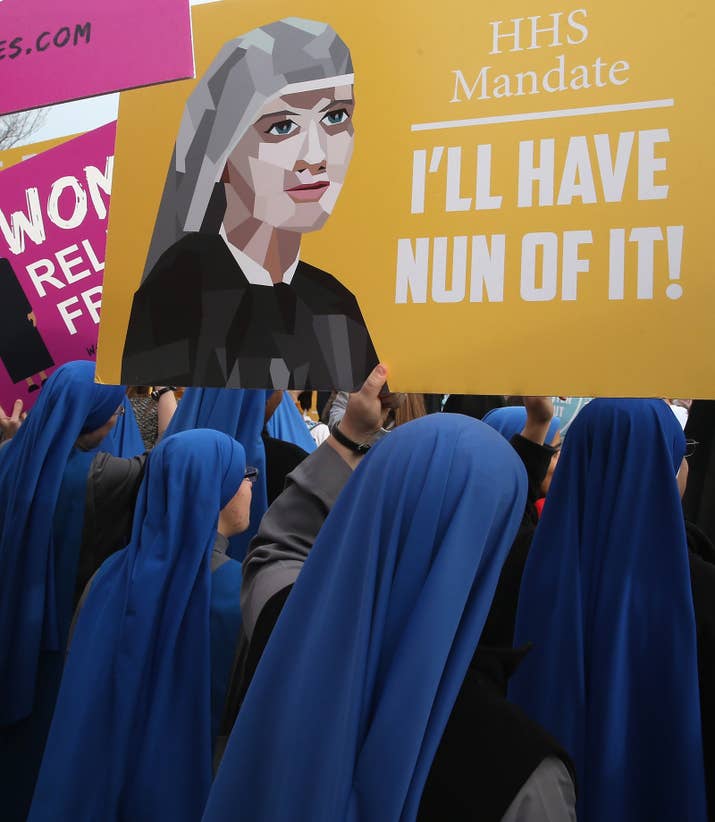
The Catholic organization Little Sisters of the Poor, filed motions to join in on the lawsuits in California and Pennsylvania to help defend the Trump administration’s decision. The California judge granted Little Sisters’ request to join the suit, and heard their arguments. But the Pennsylvania judge denied Little Sisters’ motion to join the case. Mark Rienzi, a lawyer for The Becket Fund, which has helped defend Little Sisters of the Poor, told BuzzFeed News that they appealed this decision and expect their appeal to go to the Supreme Court.

“It doesn’t make sense to have these two secular governments fighting over the rights of religious parties,” Rienzi said. “This directly affects the Little Sisters.”

The organization, which is comprised mostly of nuns and cares for the elderly, have been at the forefront of the opposition to Obamacare’s contraception mandate since it was implemented. They participated in a lawsuit that went before the Supreme Court in 2016, before it was sent back down the the district courts for The injunction will remain in place as the court continues to hear Pennsylvania’s arguments against the rule.

Source: https://www.buzzfeed.com/emaoconnor/a-federal-judge-just-blocked-trumps-contraception-coverage?utm_term=.gekNxxX52#.rwaPQQDr9

“I did my part, but we need to have higher birth rates in this country,” said the father of three.

CREDIT: SCREENGRAB

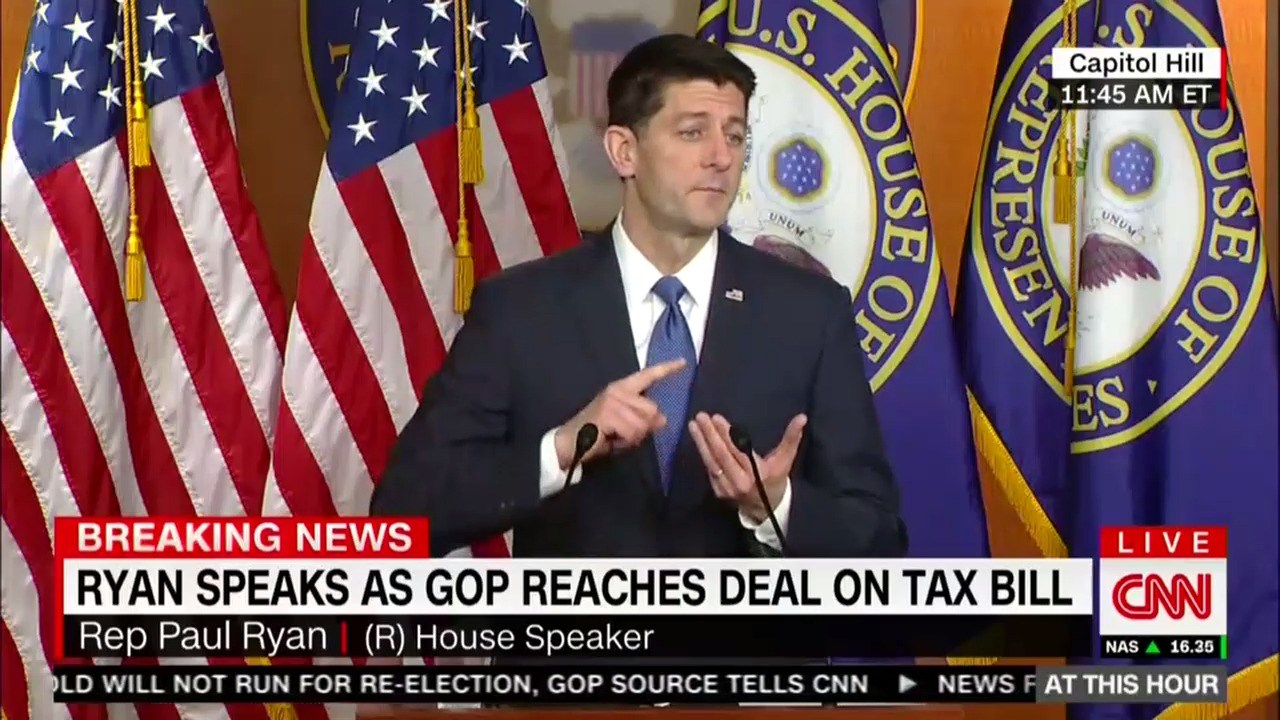
During a news conference on Thursday, House Speaker Paul Ryan urged American women to have more babies, saying their lack of procreation was stunting economic growth.

“People — this is going to be the new economic challenge for America. People,” Ryan said, in response to a question about entitlement reform.

Alluding to the fact that he’s a father of three, Ryan added, “I did my part, but we need to have higher birth rates in this country. Meaning, baby boomers are retiring, and we have fewer people following them in the work force.”

“We have something like a 90 percent increase in the retirement population in America, but only a 19 percent increase in the working population in American,” the Speaker continued. “So what do we have to do? Be smarter, more efficient, more technology — still going to need more people. And when we have tens of millions of people right here in this country falling short of their potential — not working, not looking for a job, or not in school getting a skill to get a job — that’s a problem.”

While it is true that birth rates in the U.S. have been declining, that’s not necessarily bad news — for instance, birth rates for teenagers hit a record low last year. Ryan’s comments also overlook the possibility that people may not share his belief that economic growth is a goal to be pursued at any and all costs.

Furthermore, there’s an obvious solution to the problem that Ryan completely ignores — allowing more immigrants into the country to fill the jobs being vacated by retiring baby boomers. But instead of using his position as House Speaker to pursue immigration reform, Ryan has instead indicated he’s on board with Trump’s hardline anti-immigration positions, including the president’s insistence on spending billions of dollars on a border wall.

Ryan isn’t alone among male Wisconsin Republicans in believing that women should have more babies for the good of the economy. On the floor of the Wisconsin State Assembly last month, Wisconsin state Rep. Scott Allen (R) argued on behalf of a bill that would prevent health insurance plans for state employees from covering most abortions, saying more births are needed to spur economic growth.

“Labor force shortages are tied to population declines. Labor force shortages are a limiting factor in economic growth,” Allen said. “And limited economic growth poses a problem when government tries to pay for public services and infrastructure. In spite of this Mr. Speaker, ironically, the Democrats continue their effort to support the abortion industry.”

Source: https://thinkprogress.org/paul-ryan-says-american-women-need-to-have-more-babies-dc45cb1afec2/

Many leaders in the movement to outlaw abortion care in the United States continued to support the Republican Senate candidate in the face of sexual misconduct allegations.

Anti-choice activists are baselessly questioning election results and lamenting a massive blow to their agenda after Democrat Doug Jones’ stunning victoryagainst Republican Roy Moore in Alabama’s special election for the U.S. Senate Tuesday.

Many in the media suggested Jones’ pro-choice views could keep him from winning the race, and Moore attempted to use the issue to distract from allegations that he sexually abused a minor and engaged in inappropriate behavior with other young women. Moore’s radical views on abortion, which include support for so-called personhood legislation that would criminalize abortion and ban some forms of contraception, made him a favorite of anti-choice advocates. Many leaders in the movement to outlaw abortion care continued to support him in the face of the allegations of sexual misconduct.

As Moore refuses to concede the race to Jones, many in the anti-choice community are grappling with the ramifications of losing Jeff Sessions’ former Senate seat.

Troy Newman, president of Operation Rescue, blamed Sen. Mitch McConnell (R-KY) for Moore’s loss in a Wednesday press release, calling on the Senate majority leader to step down and claiming that Congress would no longer be able to pass anti-choice legislation after Moore’s defeat.”It is my opinion that Sen. Mitch McConnell heavily contributed to Moore’s defeat, and because that led to giving a seat away to a pro-abortion Democrat, he should resign immediately,” he said.

“McConnell has ensured that pro-life legislation will never pass, Planned Parenthood will never be defunded, and babies that can feel pain will continue to be aborted after the mid-point of pregnancy,” Newman said in his statement, referring to the GOP’s attempts to pass a 20-week abortion ban based on the unsupported claim that a fetus feels pain at that point in a pregnancy.

Newman, who is notorious for using violent and extreme rhetoric to discuss abortion and for co-founding the discredited anti-choice front group known as the Center for Medical Progress, was a vocal supporter of Moore’s campaign. He stood by the Alabama Republican amid allegations that Moore sexually abused a minor and behaved inappropriately with other young women.

Rusty Thomas, national director of Operation Save America—the group that made headlines this year when it spent a week protesting in front of Kentucky’s last abortion clinic—said the race may not be over. “Apparently, Alabama did not count all the votes, like the military vote that is traditionally Republican,” Thomas wrote in a Wednesday post to his Facebook page. “As a result, Roy Moore will not concede until there is a recount. This may not be over brethren.”

Thomas spoke on Moore’s behalf at a November press conference, telling the crowd that he continued to support the Republican “without hesitation” despite the flood of allegations against him.

Matt Trewhella, whose endorsement was touted on Moore’s campaign site, took to social media to encourage supporters not to give up the cause. “The Democrats and Republicans are all happy by the Potomac – Moore has lost and Bannon suffers a blow in his cause to destroy the GOP Establishment,” he wrote in a post to his Facebook page. “Business as usual in DC. – status quo maintained. Don’t lose your fight however – stay true to Christ and rally the lesser magistrates! Tomorrow’s another day.”

Trewhella signed a statement in the early 1990s saying the murder of an abortion care provider was “justifiable.” Though he later withdrew his name from the statement, a 1994 investigation by Newsweekdescribed Trewhella as “a mentor for potentially violent anti-abortion extremists.”

Cal Zastrow, an anti-choice activist connected to Operation Save America and co-founder of Personhood USA, claimed—without evidence—that voter fraud could have played a role in the results. “Please pray with us that all voter fraud will be exposed during the recount,” he wrote on his Facebook page. Voter fraud has been proven tonot be prevalent in the United States, and it is often used as a baseless excuse to erect barriers to the ballot box.

American Family Association Action and the Family Research Council, both of which supported Moore’s campaign, did not respond to Rewire’s requests for comment.

Source: https://rewire.news/article/2017/12/13/abortion-rights-foes-flail-finger-point-mourn-roy-moore-falls-alabama/

Protesters with shirts saying "Stop the Bans" gathered in the Ohio Senate chamber after legislators passed a bill banning abortions based on a Down syndrome diagnosis.

The GOP-led Ohio state Senate on Wednesday passed a ban on abortions based on a diagnosis of Down syndrome, and Republican Gov. John Kasich has sent signals that he will soon sign the measure into law.

Lawmakers voted 20-12 in favor of the ban, which would prohibit doctors from performing an abortion if doctors know that it is being sought, “in whole or in part,” to avoid a Down syndrome pregnancy.

Doctors who violate the ban would lose their medical license and face a fourth-degree felony charge, including up to a $5,000 fine and 18 months in prison. Mothers would not be punished by the law.

Three Republicans voted against the measure, which was opposed by all of the state Senate’s Democratic lawmakers.

The bill has also divided the disability community in Ohio, with some disability advocates testifying against the proposal because, they said, it prioritizes Down syndrome over other disabilities.

“This bill sends a very clear message, that some disabilities are more worthy of life than others and that one disability — Down syndrome — is the most worthy,” Jane Gerhardt, a woman whose daughter suffers from Down syndrome, testified Tuesday, according to local reports.

The ACLU has characterized the bill as an unconstitutional effort to usurp well-established abortion rights.

A group of abortion-rights activists staged a silent protest in the Senate chamber after the Down syndrome bill’s approval, standing in a row wearing T-shirts that spelled out “Stop the Bans.”

The legality of aborting fetuses with Down syndrome, a genetic abnormality that causes developmental delays and other serious medical problems, has recently been debated in other states. Indiana and North Dakota already have passed laws like the one that Ohio is advancing.

The Indiana measure, enacted in 2016, was blocked by a federal judge on constitutional grounds after a lawsuit by the ACLU. An appeal by state officials is pending.

The 2013 North Dakota law has not been challenged, so courts have not yet had the ability to rule on its constitutionality. The state’s sole abortion clinic, in Fargo, says the issue hasn’t arisen under its policy of not performing abortions after 16 weeks into a pregnancy.

The Ohio vote was a key policy victory for Ohio Right to Life, the state’s oldest and largest anti-abortion group.

“Both the House and the Senate sent a loud message that we are a society built on compassion, love, equality,” said president Mike Gonidakis. “We expect Governor Kasich will sign this legislation, as he said he would in 2015. Every Ohioan deserves the right to life, no matter how many chromosomes they have.”

Kasich’s spokesman declined to say what the governor would do. Kasich has said in recent weeks that he thought the measure seemed “appropriate,” but that he would review it when he received it.

Last December, Kasich vetoed the so-called “Heartbeat Bill,” which would have banned abortions after a heartbeat is detected — typically about six weeks into a pregnancy.

Source: http://www.foxnews.com/politics/2017/12/14/bill-banning-down-syndrome-abortions-passes-in-ohio-heads-to-kasichs-desk.html

Oireachtas committeeImage copyrightRTÉ
Image captionThe cross-party committee was set up to assess abortion law in Ireland

A parliamentary committee in the Republic of Ireland has voted to recommend changes to abortion law.

The committee was set up to consider a report by the Citizens’ Assembly on abortion law in Ireland.

The cross-party group is in favour of repealing the 8th amendment to the Constitution of Ireland.

The 8th amendment acknowledges “the right to life of the unborn and with due regard to the equal right to life of the mother”.

Committee members voted 14-6 to recommend to the Oireachtas (parliament) to repeal the 8th amendment, and voted 12-5 to recommend to allow terminations without restrictions up to 12 weeks.

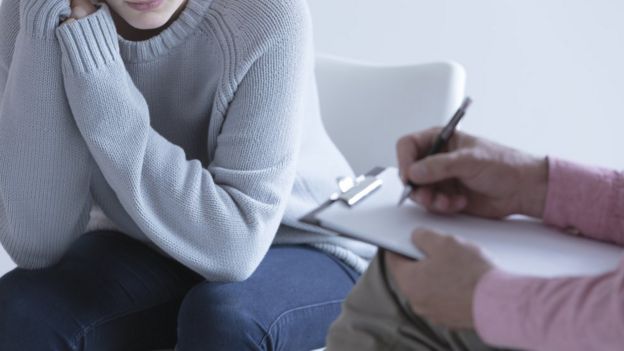
Woman with hand and clipboardImage copyrightKATARZYNABIALASIEWICZ
Image captionThe Republic of Ireland has a near total ban on abortion

The constitutional article reads: “The State acknowledges the right to life of the unborn and, with due regard to the equal right to life of the mother, guarantees in its laws to respect, and as far as practicable, by its laws to defend and vindicate that right.”

The committee also voted on numerous scenarios which would provide guidance on parameters for abortion legislation.

This included a vote which supported the decriminalisation of women who seek to procure an abortion, when a termination is carried out in a hospital or licensed clinic.

The committee will publish its final report on December 20.

Speaking in the Dáil Taoiseach Leo Varadkar said he intends to hold a referendum on the issue next May.

Presentational grey line

Abortion in the Republic of Ireland

The Republic of Ireland has a near total ban on abortion.

In 2013, abortion was legislated for under certain conditions – when doctors deem that a woman life’s is at risk due to medical complications, or if she is at risk of suicide.

The law does not allow for terminations in cases of rape or incest, or when there is a fatal foetal abnormality.

The law was introduced in the wake of the case of Savita Halappanavar who died in a Galway hospital in 2012 after she was refused an abortion.

In what was known as the X Case of 1992, a 14-year-old rape victim was prevented from travelling to England to terminate her pregnancy by the High Court.

This ruling was overturned by the Irish Supreme Court and a referendum approved a further update to the constitution, stating that the eighth amendment did not restrict the freedom to travel to another state.

Source: http://www.bbc.com/news/world-europe-42344858