• The GOP has included a very strange clause in their proposed tax plan.
  • Hidden among massive corporate tax breaks is a provision allowing families to open 529 educational savings accounts for “unborn children” – essentially college plans for fetuses.
  • This dangerous “personhood” language needs to be highlighted. The conversation about when life begins belongs with our scientists, our clergy, and our families. The last place it belongs is in our tax code.

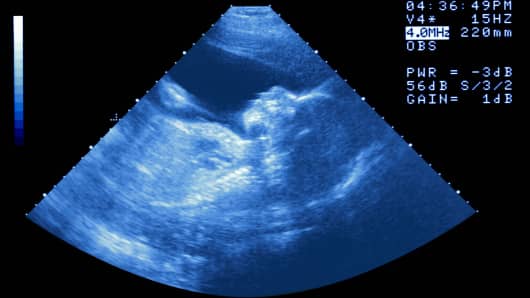
Ultrasound scan

Peter Dazeley | Photographer’s Choice RF | Getty Images
Ultrasound scan

Legislative progress has been rough going for Republicans in their first year in control of the house, senate and the presidency. Despite repeated efforts, they have failed to deliver on their most significant promise to their base: their complete failure to repeal the Affordable Care Act.

And given the indictments for former GOP campaign officials, infighting made public via Twitter, and cabinet and White House officials resigning from their posts on a regular basis, it’s clear the GOP is moving into the tax bill debate with some desperation to deliver a win to a lot of different constituencies.

That may explain why the GOP has included a very strange clause in their proposed tax plan. Hidden among massive corporate tax breaks and the other items on their long standing wish list is a curious provision allowing families to open 529 educational savings accounts for “unborn children” – essentially college plans for fetuses.

As a parent, I am deeply sympathetic to the spiraling costs of college and the constant worry of being able to afford higher education for kids. But this provision is so bizarre that the Brookings Institute calls it “not an economic one, but an existential one.”

Affirming this language through the tax code would lay the foundation for “personhood,” the idea that life begins at conception thus granting a fetus in utero legal rights. It’s long been the holy grail of the anti-choice movement, since it would be the basis on which they would argue to outlaw abortion entirely.

But they have a problem: “personhood” is so unpopular, it has lost every time it has been on the ballot, even in deep red states like Mississippi and North Dakota. When Cory Gardner ran for Senate in Colorado, he had to spend a considerable amount of time distancing himself from his prior support for personhood measures, even going so far as to claim the bill he cosponsored did not exist.

So to throw their base a bone, the GOP has chosen to hide this deeply unpopular and extremely dangerous provision deep in the tax code where they think no one will find it. And if it goes unnoticed and passes into the final bill, it will have succeeded where they have always failed: in establishing a definition of when life begins that goes against legal precedent, science, and public opinion.

Never mind that the provision is unnecessary: Americans can already set up 529s for the children they wish to have. A 529 that’s already seeded with capital in a parent’s name can be transferred to a child once that child is born. And never mind that the implementation would be a mess begging all sorts of questions as to when you get social security numbers and other identifying factors for children.

The anti-choice movement knows this, but they simply don’t care as their real intent was never to provide hard working families a tax break. It was something else entirely: As Jeanne Mancini of March for Life told Politico:

A child in the womb is just as human as you or I yet, until now, the U.S. tax code has failed to acknowledge the unborn child—all while granting tax breaks for those seeking an abortion under the pretense of ‘healthcare.’… The proposed tax plan is a huge leap forward for an antiquated tax code, and we hope this is the first step in expanding the child tax credit to include unborn children as well.

And here’s the kicker: this same crew is absolutely fine with the fact that this bill actually cuts the modest student debt relief provision that exist in current tax laws to help struggling young people. Bizarrely, it also cuts the adoption tax credit, only allowing biological parents to get a break for having kids.

The tax bill is a horror in many different ways that will be publicly debated over the next days and weeks. But the dangerous “personhood” language needs to be highlighted, as it has the potential to dramatically shift the ideological underpinnings of our laws and our culture while having nothing whatsoever to do with helping middle class Americans get ahead.

We should be raising the alarm and shouting this from the rooftops. The conversation about when life begins belongs with our scientists, our clergy, and our families. The last place it belongs is in our tax code.

https://www.cnbc.com/2017/11/14/gop-tax-bill-is-no-place-to-address-rights-of-the-unborn-commentary.html

Sen. Chuck Grassley (R-IA) last year directed his staff on the powerful Senate Judiciary Committee to investigate false claims that Planned Parenthood profited from fetal tissue donations.

Congressional Republicans are again pressuring Attorney General Jeff Sessions to open a criminal investigation into Planned Parenthood based on allegations stemming from a debunked anti-choice propaganda campaign launched in 2015.

The latest move occurred Tuesday during a hearing in the U.S. House of Representatives. Sessions traveled to Capitol Hill to testify before the House Judiciary Committee, which split along party lines over Sessions’ changing account of what he did and didn’t knowabout the Trump presidential campaign’s ties to Russia. Enter Rep. Trent Franks (R-AZ), a vocal proponent of racially biased anti-abortion myths. Franks followed up on the Hill newspaper’s Monday report that relied on “sources,” without any further attribution, claiming the Federal Bureau of Investigations (FBI) asked the U.S. Senate for unredacted documents obtained from abortion care providers.

Senate Judiciary Committee Chair Sen. Chuck Grassley (R-IA) last year directed his staff on the powerful committee, now known for rubber-stamping President Trump’s far-right judicial nominations, to investigate discredited claims that Planned Parenthood profited from fetal tissue donations. Republicans’ subsequent 547-page report failed to provide evidence substantiating those claims, but that didn’t stop Grassley from asking the Obama-era U.S. Department of Justice (DOJ) to prosecute the targeted Planned Parenthood affiliates and tissue procurement companies. Grassley in April resurrected his request with Sessions’ DOJ, which includes oversight of the FBI.

Back in the House Judiciary Committee, Franks asked Sessions if, “generally speaking, are findings made by any Senate investigation, any subsequent referral, sufficient evidence for the Justice Department to bring charges up on any party guilty of violating federal law?”

“Well, it depends on the substance of those congressional findings, but they certainly can provide a basis for starting an investigation, to verifying the findings of the Congress, and could provide a basis for charges,” Sessions replied. “I think that’s an appropriate way for us to relate to one another.”

“Well, I hope the Justice Department obviously will take a very close look at the evidence that the Senate is providing to the FBI,” Franks said.

The Hill‘s story on Monday and Franks’ questioning on Tuesday each quickly circulated on anti-choice social media, including mentions from the head of the anti-choice front group known as the Center for Medical Progress (CMP), which coordinated its propaganda campaign with GOP lawmakers.

Operation Rescue, a radical anti-abortion group that has long pushed violent rhetoric, used Sessions’ answer to fuel the allegations against Planned Parenthood, even though three Republican-led congressional committee investigations13 states, and a Texas grand jury have disproved them. The litany doesn’t count Grassley’s staff-level investigation and the House’s so-called Select Investigative Panel on Infant Lives, which concluded in January with a similar baseless report echoing the CMP smear campaign that first made the allegations.

But Operation Rescue has reason to be hopeful, given Sessions’ opposition to a broad range of rights, including access to abortion care. Troy Newman, Operation Rescue’s president and a CMP ally, cheered Sessions’ nomination last November. Anti-choice protesters have mobilized in an effort to dare Sessions to enforce federal law designed to protect access to abortion clinics.

Grassley in October used a separate Senate Judiciary Committee hearing to ask Sessions about the status of his criminal referrals.

Planned Parenthood Federation of America (PPFA) condemned the most recent partisan outcry against the organization.

“Planned Parenthood has never, and would never, profit while facilitating its patients’ choice to donate fetal tissue for use in important medical research,” PPFA Vice President of Government Affairs Dana Singiser said in a statement. “Planned Parenthood strongly disagrees with the recommendations of the Senate Republican staff to refer this matter to the Justice Department.”

https://rewire.news/article/2017/11/15/republicans-ask-sessions-prosecute-planned-parenthood-using-discredited-anti-choice-smear-campaign/

It’s only become a hot-button issue in recent decades. For America’s first century, abortion wasn’t banned in a single US state.

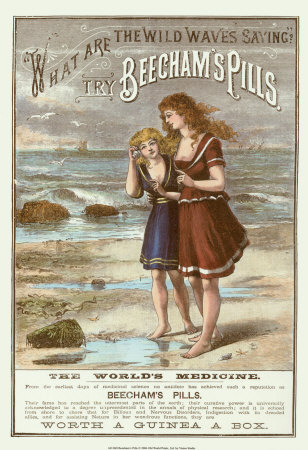
Advertisement for Beecham’s pills, late 19th century

When US states did begin banning abortion in the 19th century, doctors seeking to drive out traditional healers, or in their words, quacks, often led the way. They had help from nativists who were concerned about women’s growing independence and the country’s growing diversity. Contemplating the colonization of the West and South in 1868, anti-abortion campaigner Dr. Horatio R. Storer asked if these frontiers would be “be filled by our own children or by those of aliens? This is a question our women must answer; upon their loins depends the future destiny of the nation.” Who would control those loins, and indeed whose childbearing is considered desirable, lay at the heart of regulations on abortion and contraception across the centuries.Even the definition of abortion was different. In early America, as in Europe, “What we would now identify as an early induced abortion was not called an ‘abortion’ at all,” writes Leslie Reagan in When Abortion Was a Crime: Women, Medicine, and Law in the United States, 1867-1973. “If an early pregnancy ended, it had ‘slipp[ed] away,’or the menses had been ‘restored.’ At conception and the earliest stage of pregnancy before quickening, no one believed that a human life existed; not even the Catholic Church took this view.” Abortion was permissible until a woman felt a fetus move, or “quicken.” Back then, Reagan notes, “the popular ethic regarding abortion and common law were grounded in the female experience of their own bodies.”

The laws every state passed by 1880 banned abortions in all cases but for “therapeutic reasons” that were largely left up to the medical practice and the legal system to determine. In practice, that meant wealthier women with better access to doctors had abortions, while other women bled. “One stark indication of the prevalence of illegal abortion was the death toll,” writes Rachel Benson Gold of the Guttmacher Institute. “In 1930, abortion was listed as the official cause of death for almost 2,700 women—nearly one-fifth (18 percent) of maternal deaths recorded in that year.” Fatalities began decreasing with the advent of antibiotics to treat sepsis, but this too depended on one’s status. “In New York City in the early 1960s,” Benson Gold notes, “1 in 4 childbirth-related deaths among white women was due to abortion; in comparison, abortion accounted for 1 in 2 childbirth-related deaths among nonwhite and Puerto Rican women.”

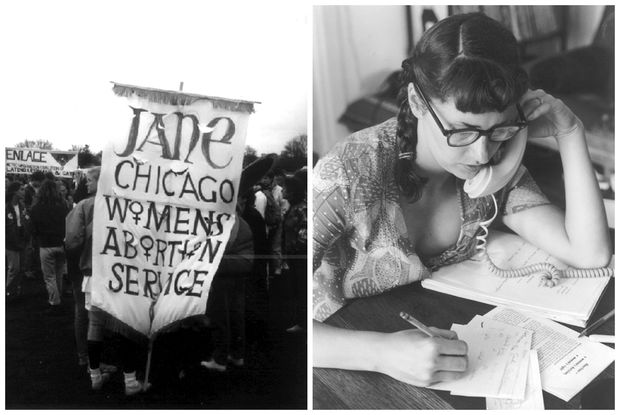
As other countries began liberalizing their abortion laws, women who could afford it began circulating pamphlets on how to make the trip. At least hundreds of women went to Mexico, England, Sweden — even Asia. The California-based Society for Humane Abortion, founded in 1961, explained how West Coast women could go as far as Japan to terminate: “If they want to know why you want to get the passport in a hurry, tell them you are meeting a tour group in Japan and you didn’t know you could go till just now….Try to get the price reduced. Tell them you are a student or a poor working girl and don’t have much money.” The Chicago-based Jane, founded in the late 1960s, famously had a hotline where women could ask for “Jane” to be referred to an illegal abortion, and eventually members began performing abortions themselves. By 1973, these women had performed an estimated 11,000 abortions. “The women in the service were bold, and there was a growing women’s movement which was about taking our lives into our own hands,” recalled Jane co-founder Heather Booth.

Images from the Jane Collective, which helped women obtain “underground” abortions in a safe manner when it was illegal. (Courtesy Women Make Movies)

Some feminists historically had been ambivalent about abortion. The move to repeal the abortion bans was initially driven by doctors appalled at the women with perforated uteruses lining up at emergency rooms and a budding environmentalist movement worried about population growth. “Feminists sought to free women to participate fully and equally in the workplace, calling for contraception and abortion rights that would give women control over the timing of motherhood, at the same time that the movement sought public support for child care,” write Linda Greenhouse and Reva Siegel in Before Roe v. Wade: Voices That Shaped The Abortion Debate Before the Supreme Court’s Ruling. “Only gradually, against the backdrop of the 1960s’ understanding that sexual expression was a good independent of its procreative aims, did abortion rights migrate to the top of the women’s rights agenda.”

There were no paeans to sexual expression or women’s freedom in Roe v. Wade. Nixon appointee Harry Blackmun wrote mostly about doctors’ rights, ignoring arguments about women’s equality but concluding that “the right of personal privacy includes the abortion decision, but that this right is not unqualified and must be considered against important state interests in regulation.” The effect was sweeping: On a single day in 1973, all those 19th-century bans were wiped out, and states could only ban abortion at fetal viability.

Though history has nearly obscured it, Blackmun did not go out on a partisan limb. Five of the justices in the seven-justice majority in Roe v. Wade were appointed by Republicans. As recently as 1972, a Gallup poll had found that a majority of Americans (64 percent) thought “the decision to have an abortion should be made solely by a woman and her physician.” Republicans, at 68 percent, supported abortion rights most firmly of all.

Even the most casual news consumer knows that’s no longer the case, as abortion has become hopelessly partisan. Among most people, if not politicians, abortion is not nearly as controversial as the headlines might suggest. Around 1 in 4 women will have an abortion by the age of 45; until recently, the number was closer to 1 in 3.

The most recent Gallup data shows that exactly half of Americans say abortion should be “legal only under certain circumstances,” while a third say it should be legal in all circumstances. If you’re keeping track, that means that only a minority — 18 percent — want abortion banned entirely. And yet that view is represented by the president (who promised during the campaign to appoint justices who would overturn Roe v. Wade, and has already appointed one likely Roe skeptic) and majorities in Congress and statehouses. Indeed, “since Roe v. Wade,” says Guttmacher analyst Elizabeth Nash, “there have been 1,187 restrictions enacted at the state level.”

These days, not only do anti-abortion activists want the procedure to be illegal at any stage of pregnancy, they even want to redefine common forms of birth control, like the intrauterine device, or IUD, and emergency contraception as abortion. This view has quickly reached the mainstream. In 2012, the Republican nominee for president declared, “Contraception, it’s working just fine. Leave it alone.” Today, an opponent of contraception, Teresa Manning, heads the federal family planning program. Manning has said, “family planning is what occurs between a husband and a wife and God” and has opposed the use of contraceptives for years. America has come a long way since the days of “quickening.”

A Brief History of Abortion Law in America

EMW Women’s Surgical Center is the only abortion clinic in Kentucky, and its fate is currently uncertain.
 What will happen to women in the state if it’s forced to shut its doors for good?

Photo by Bloomberg via Getty Images

It’s an early Saturday morning at the EMW Women’s Surgical Center in Louisville, Kentucky—the last abortion clinic in the state. Already, the hallways are bustling with staff streaming in and out of rooms, efficiently moving patients about. There are about 15 women seated inside the clinic waiting area, waiting to meet with doctors or counselors so they can get ultrasounds or go ahead with their procedures. A few of them are having open, friendly conversations with one another. The majority, however, seem exhausted, some with the hoods on their jackets pulled over their heads as if to block out the reality of their surroundings.

Diane is one of the quieter patients but becomes very forthcoming once we sit down to speak. (The names of every patient interviewed have been changed in order to protect their privacy.) She is a 29-year-old single mother with three young children at home, who is working two jobs to support her family. Diane is pregnant, she tells Broadly, because she was raped by an acquaintance. “I didn’t go to the hospital or report it or anything, because more than anything I was embarrassed,” she says, her voice measured and stoic. “I felt dirty. I was ashamed.”

The abortion procedure will cost as much as a month’s rent, but Diane is “focused on taking care of my children,” she affirms, and knows this is what’s best for her emotionally and financially.

Women in Kentucky who are pregnant and don’t want to be already have few options. If Republican legislators have their way, they’ll be forced into far more desperate circumstances. In March, Gov. Matt Bevin’s administration notified EMW that the clinic had failed to meet a set of onerous health regulations requiring abortion providers to have transfer agreements with local hospitals. The clinic, they said, would have to forfeit its license and close its doors. In response, EMW Women’s Surgical Center—and later Planned Parenthood—filed a federal lawsuit, arguing that the attack was politically motivated. There is “no medical justification for the standards,” they argued.

While a federal judge deliberates, with no clear timeline on when a final decision will come down, EMW’s fate remains uncertain. And while Kentucky politicians use the clinic as a political football, women’s health and safety hangs in the balance.

Read more: A State-by-State List of the Lies Abortion Doctors Are Forced to Tell Women

Women “will always continue to get abortions no matter what, and that will become dangerous,” says Crystal, a 20-year-old nursing student who is also waiting to get an abortion. She has elected to get the procedure because “now is just not the right time,” she says. She’s been having surmounting anxiety over the past few years, and she’s deep in a particularly difficult semester of nursing school; carrying a pregnancy to term would derail her schooling and potentially wreak havoc on her mental health.

According to the World Health Organization (WHO), up to 68,000 women will die every year from an unsafe abortion. It is both one of the leading causes of maternal mortality and one of the easiest preventable causes of maternal death. (In stark contrast, legal abortions have a fatality rate of less than one death per 100,000 procedures.) Of those women that survive unsafe abortions, up to seven million will suffer long-term health complications including infection, significant blood loss, and internal injuries such as damage to the uterus, bowel, or bladder.

Studies have shown that restriction abortion does not make it any less frequent—the world’s lowest abortion rates are in Europe, where abortion is legal and widely available. And copious evidence shows that women throughout history have had abortions, whether or not abortion is legal, and that they will always continue to do so despite existing laws or religion.

Contrary to claims often made by anti-abortion groups that abortion is “the easy way out,” none of the women in the waiting room are getting abortions out of convenience. They’ve endured emotional hardship, stigma, and financial strain throughout their ordeals, and many of them have chosen abortion because it’s what’s best for their family. Another patient in the waiting room, Lauren, says she decided early on that she couldn’t keep her pregnancy: The man who’d gotten her pregnant, who was also the father of her other two children, struggles with addiction issues, she explains, and is “not someone you want to have kids with.”

“I just can’t have him around my children anymore,” she emphasizes. “I’ve tried to help him in the past, and you can’t help someone who can’t help themselves.”

Another woman, Brittany, tells Broadly the main reason that she’s choosing to get an abortion is because of finances. She’s a single mother with a three-year-old son, and she’s also the primary caretaker for her young cousin, whose mother is chronically ill; she simply can’t afford another child. “You gotta save money for a rainy day. When [my son] gets older, he’s got [to have] choices, he’s got to go to school,” she says.

If EMW Surgical Center closes, women will have to travel as far as 200 miles to a neighboring state such as Ohio, Tennessee, or Indiana in order to obtain an abortion. This could prove very difficult for a woman of lower socioeconomic standing. Such a long trip would require more money for transportation, possibly for overnight lodging, for lost wages from increased time off work, and for potential childcare costs. In the state of Kentucky, close to one-fifth of the residents are considered poor.

I don’t ask any of the women I meet at the clinic what they would do if they couldn’t obtain a safe and legal abortion. Because every single one of them tells me that she simply cannot have a baby right now, I already know the answer.

https://broadly.vice.com/en_us/article/qv3mpw/talking-with-women-in-the-waiting-room-at-the-last-abortion-clinic-in-kentucky

Anti-abortion demonstrators and volunteer clinic escorts are seen outside the EMW Women's Surgical Center in Louisville, Ky. on Aug. 26, 2017. The volunteer escorts wear vests to identify themselves.

Louisville, Kentucky (CNN)Dona Wells vividly remembers when abortions were illegal. When women had little choice after their contraceptive failed.

When some took their chances on dangerous abortions performed by amateurs or even themselves.
That could become reality again in her home state of Kentucky.
“I think we’ve just come in a full circle,” said Wells, who worked at Kentucky’s first recognized abortion clinic in 1974 — one year after Roe v. Wade legalized abortions nationwide.
Dona Wells co-founded EMW Women's Surgical Center in Louisville in 1981. EMW is now the last abortion clinic in Kentucky.

Yet states across the country have added more restrictions on abortion access and clinics. And one by one, clinics have shut down under the weight of hefty regulations, threats to doctors’ safety and violence.
In Kentucky, the only abortion clinic still standing is the EMW Women’s Surgical Center in Louisville — co-founded by Wells in 1981. But the state is threatening to shut it down, claiming deficiencies in its licensing paperwork.
That would make Kentucky the first state with no abortion clinics.
Now, a federal district judge is considering whether the state’s requirements are constitutional. And that decision could get appealed all the way up to the Supreme Court — raising implications for women nationwide.

The showdown at Kentucky’s last clinic

The sun is barely up this Saturday morning, and 24 women are heading to the EMW Women’s Surgical Center for their abortions. They vary widely by age and race, arriving in cars ranging from clunkers to luxury vehicles.
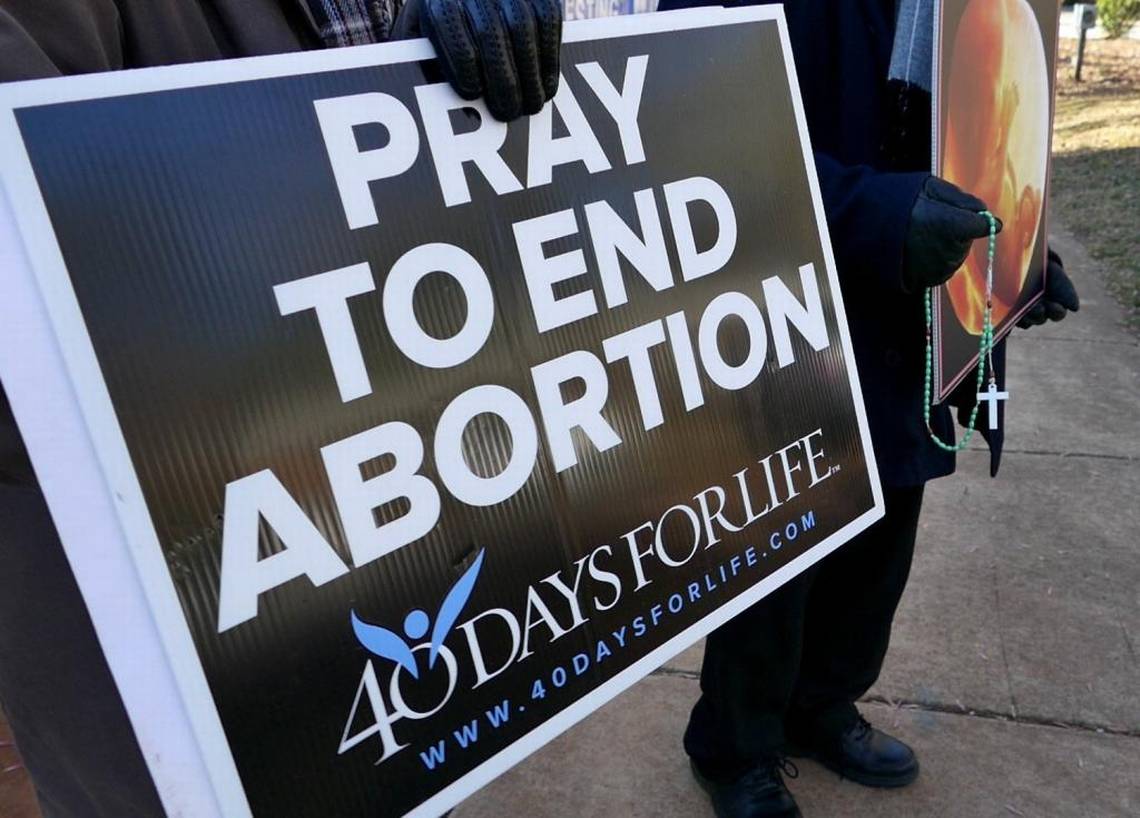
As each woman speedwalks to the front of the clinic, she faces a gauntlet of protesters holding giant posters of aborted fetuses.
“Murder in the first degree!” one protester screams. Another pleads, “Honey, change your mind. Darling, you don’t want to do this.”
David Street drove more than two hours from Kentucky Mountain Bible College to confront the women with his sign: “Babies are murdered here.”
David Street demonstrates against abortion outside the EMW Women's Surgical Center in Louisville.

“I don’t protest. I stand for life,” the theology professor says.
He doesn’t mind waking up at 3 a.m. for the 150-mile road trip from Jackson to Louisville because he said the progress is real: clinic after clinic is shutting down.
“There were five abortion mills in Kentucky when we started back in the early ’90s. And now the Lord has answered — this is the last remaining abortion mill, not only in Louisville, but also in Kentucky,” Street says.
“The conscience is being raised. People are embarrassed over the fact that this sin and murder has gone on.”

‘You’re going to hell!’

A few yards away from the protesters, Emory Williamson tries to ignore the vitriol hurled at him. As a volunteer escort, he acts as a shield between the protesters and patients, helping ensure the women get to the clinic door safely.
“You’re going to hell!” a protester once screamed as Williamson walked with a client. Another told escorts to stop bowing down “to lesbian feminists.”
Williamson, who is white, says he was once called “a reincarnation of a plantation slave owner” after escorting a black couple to the clinic. He’s also had his feet stomped on by protesters enough times that he had to buy steel-toe Timberland boots.
“They could literally push me on the ground,” he said. “But I’m not to respond with any anger or any emotion, because that’s what they want.”
Emory Williamson volunteers as a patient escort outside the EMW Women's Surgical Center.

The 31-year-old said he became an escort after hearing horror stories about what friends endured when they tried to walk into the clinic.
“I cannot even imagine what that is like. Especially as a male, I cannot imagine what that is like,” Williamson said. “So many of them (protesters) are white men. I want to be a voice of reason on the other side.”
Williamson said he’s baffled by how often protesters invoke religious songs and prayers during the protests.
“They’ll sing the ‘Ave Maria’ song a lot, and they’ll do the Lord’s Prayer a lot. I grew up in the church, so I’m familiar with all of it,” he said.
“I just can’t imagine that the Jesus I grew up with believing in that. The Jesus I grew up with would be walking with the client. I grew up knowing that Jesus was about compassion and love and understanding. He was always willing to be with those who might be dealing with hardships in life — and being able to always walk beside them.”
But the protests do create converts. Donna Durning is living proof of that.
She’s stood outside EMW clinic every morning, five days a week, for the past 21 years. The petite redhead offers brochures about abortion alternatives and clutches a decade-old photo of a girl named Donisha — a tangible reminder of her success stopping abortions.
“I’ll show you one that’s been saved,” she said, proudly holding up the photo. “This is my little namesake, Donisha. Isn’t that cute?”
Donna Durning holds a rosary and a counter to count the number of women who walk into the clinic.

She recalled the day Donisha’s parents came to “the abortion mill” 18 years ago, overwhelmed by the financial implications of having a fifth child.
“I talked to them, and I was able to take her to get a free ultrasound,” Durning said. “And when she saw that baby on the screen, heard its little heartbeat, she knew that she could not abort.”
Now, Durning’s 21-year mission is only one abortion clinic away from becoming reality in her state.
“I would rejoice. I’d be very happy, because that means no more babies are going to be ripped apart and thrown in the garbage,” she said.
“I’ll stay until it closes — and then some. I will initiate a great big block party with all the pro-lifers that want to come, and we’ll have a celebration that they’ve closed.”

The dwindling number of abortion clinics

What’s happening in Kentucky is representative of a nationwide trend: The number of abortion clinics is declining.
In 1996, the country had 452 abortion clinics, according to the Guttmacher Institute, which advocates for reproductive rights.
In 2005, that number had dropped to 381. And by 2014, the latest year of available data, the number had dwindled to 272.
“Since 2014, there have been even more clinics that have closed,” said Rachel K. Jones, principal research scientist at the Guttmacher Institute.
Guttmacher defines abortion clinics as facilities where half or more of the patient visits are for abortion services. There are other clinics that provide abortions, called nonspecialized clinics, but fewer than half of the patient visits there are for abortion services.
Abortion rights advocates say “TRAP” laws — or targeted regulation of abortion providers — have resulted in fewer abortion clinics.
“Some TRAP laws require that abortions be performed in far more complicated and expensive facilities than are necessary to ensure the provision of safe procedures,” the Center for Reproductive Rights said.
“These requirements may require costly and unnecessary facility modifications, which may not even be feasible in existing facilities, or impose unnecessary staffing requirements that are expensive or impossible to meet.”
Jones said there’s another issue: finding enough doctors willing to perform abortions. Since 1994, anti-abortion extremists have killed at least 11 doctors and attempted to kill 26 doctors, the National Abortion Federation said. Arsonists have set fire to at least 39 clinics, and several others have been bombed.
“If a physician retires, it might be difficult to find another physician who is willing to take over, potentially putting their life and the lives of their family members at risk — risk of harassment, risk of stigma and risk of violence,” she said.
Six states are now down to one abortion clinic — Kentucky, Mississippi, North Dakota, South Dakota, West Virginia and Wyoming, according to the Guttmacher Institute.
Demonstrators protest outside the EMW Women's Surgical Center in Louisville.

Kentucky could become the first with zero abortion clinics due to alleged shortcomings with the Louisville clinic’s “transfer agreement.” Transfer agreements are written agreements between an abortion clinic and a hospital, saying the hospital agrees to accept the clinic’s patients in case of emergency.
In the past, the EMW Louisville clinic’s transfer agreement was signed by the head of a hospital’s obstetrics/gynecology department. But now, the state says that signature isn’t good enough — the clinic needs the signature of a hospital president or CEO. And so far, no local hospital president nor CEO has agreed to sign a transfer agreement.
“The standards are just outrageous,” said Wells, who co-founded the EMW Louisville clinic.
Wells and other critics of the state law say it’s unnecessary because federal law requires emergency rooms to accept anyone who shows up — with or without a “transfer agreement.” They believe the restriction is actually an attempt by Gov. Matt Bevin’s administration to eliminate abortion services in Kentucky.
But Doug Hogan, spokesman for the Kentucky Cabinet for Health and Family Services, said the regulations are about women’s health and safety.
“The Bevin Administration is working diligently to protect the health, welfare and lives of women in Kentucky,” Hogan said in a written statement.
“The statutory requirement for transfer agreements — which was enacted in 1998 and not questioned for 19 years — is necessary to ensure women have access to life-saving procedures in the event of an emergency.”
When asked why EMW’s transfer agreements were considered adequate in years past, but not this year, Hogan and a state health department spokeswoman did not respond to multiple requests for comment.
Anti-abortion demonstrators protest outside the EMW Women's Surgical Center in Louisville.

A federal judge is now considering whether requiring a hospital transfer agreement — and a related ambulance transport agreement — are constitutional. Whichever way US District Judge Greg Stivers decides, the outcome could get appealed, potentially to the Supreme Court.
And that could have a chilling effect across the country.

The growing pleas for help

The emails, phone calls, and texts rarely stop in Marcie Crim’s office. She’s the executive director of the Kentucky Health Justice Network, a non-profit that helps Kentuckians pay for abortions and the related travel expenses — which keep rising as the number of clinics keep declining.
“Just this morning we bought a ($662) plane ticket to fly someone to New Mexico,” said Crim, who became KHJN’s first executive director last year.
The group regularly helps fly clients to New Mexico because there, women can get abortions after 22 weeks of pregnancy. In Kentucky, abortions are legal until 20 weeks after fertilization or 22 weeks from the first day of the last menstrual period.
That limit can make a huge difference — especially since the results of genetic abnormality testing might not come back until well into the second trimester.
“The majority of folks who get a late-term abortion are for high-risk (cases) or for fetal abnormalities,” Crim said.
Those aren’t the only reasons for late-term abortions. In February, Crim helped fly another woman to New Mexico after she had been repeatedly raped by the same attacker.
“She finally figured out she was pregnant. She didn’t realize how far along she was because she was raped repeatedly,” Crim said. The woman tried to get an abortion at the EMW Louisville clinic, but was denied because it turned out she was 24 weeks pregnant.
“So we flew her to New Mexico … that was really heartbreaking,” Crim said. “We get cases of rape and incest more often than we’d like.”
The majority of KHJN Support Fund clients are Kentuckians who can’t afford to get abortions in their own state due to “constant barriers,” Crim said.
One of those barriers is Kentucky’s 24-hour waiting period — meaning a patient must consult with the clinic at least 24 hours before the procedure.
It’s not a big deal for women who work salaried jobs and can easily take time off work, drive across the state and pay for a hotel during that waiting period. But it’s a huge deal for hourly employees who have no sick days and don’t even have a car to drive across the state to get to a clinic.
Kentucky does allow the 24-hour consultations to take place by videoconference, but that still doesn’t help rural, impoverished women, Crim said.
“We like to think everyone has high-speed internet access in their homes, but not everyone does,” she said.
While the KHJN helps women with transportation and lodging costs, the most common request is for help paying for the actual procedure.
About 95% of KHJN’s clients go to the lone clinic in Kentucky, where a medical abortion (for up to nine weeks of pregnancy) is $750. The cost of an abortion near the legal limit is $2,050, Crim said.
And the need for KHJN’s financial aid, which is funded by donors, would “skyrocket” if 100% of the clients had to go out of state, Crim said.
She recalled the haunting words of a 16-year-old who couldn’t afford to travel and was denied an abortion in Kentucky because she was almost 23 weeks pregnant.
“Fine, I’ll just do it myself,” Crim recalled the teen saying. “I’ve looked it up online. I can do it myself.”
Crim’s agency managed to find the funding to help the girl get an abortion. But as a woman who has had an abortion herself, Crim said she’s terrified of what will happen if the EMW clinic shuts down.
“It makes me want to cry,” she said. “It takes me to an emotional place, because of my own experience with abortion and trying to put myself in the shoes of somebody who’s pregnant and scared and … feel like they have absolutely no option.”

The options at A Woman’s Choice

Some abortion critics have actually had abortions — and they want to tell other women it’s not the best choice.
“If I could go back and change my decision, I would,” said 36-year-old Nici, who asked that only her first name be used.
“I chose abortion because I didn’t see any other way out. It seemed like my only option.”
Nici said she was traumatized after getting an abortion in her early 20s. She now helps other women in similar situations.

She was about 23 when it happened.
Her boyfriend’s mother paid for the abortion. And for the next decade, Nici said, she suffered a horrific mix of guilt, shame, “cold sweat nightmares and anger — just unexplainable anger.”
“It’s just a really dark place to be in,” Nici said. “It’s all because I took that life, I severed that connection. And you feel it. You know. It’s not just a glob of tissue. There is a connection. I could feel the heartbeat.”
Sherri Churchill’s mother forced her to have an abortion at age 15. For most of the last three decades, she said, the psychological trauma has been relentless.
“We had no idea what the side effects and the outcome would be after an abortion,” Churchill said. “And what I know now that I didn’t know then is abortion hurts women. Abortion psychologically hurts women. And I know that for myself because I went through it.”
Churchill said she tried to ease the pain with drugs, alcohol and physical relationships. “I was in very, very unhealthy relationships, and the drugs and alcohol was to stuff the pain,” she said.
Now 48, Churchill is a counselor at A Woman’s Choice Resource Center, which counsels women to choose alternatives to abortion.
Sherri Churchill said she just recently made peace with her mother, who forced her to have an abortion when she was 15.

The facility is right next to Kentucky’s lone abortion clinic. A large sign in front of A Woman’s Choice advertises free pregnancy testing, pre- and post-abortion counseling and ultrasounds.
Given its name and proximity to EMW, patients might confuse A Woman’s Choice for the abortion clinic. That’s not a coincidence.
“We’re definitely pro-life,” said Monica Henderson, executive director of A Woman’s Choice and Necole’s Place — a sister facility that offers parenting classes and other life skills courses.
Both facilities are merging this month under a new name, BsideU for Life Pregnancy & Life Skills Center. They’re expanding to a new location, but will keep a facility next to the abortion clinic.
“We located strategically near EMW so that women would know there’s another option,” Henderson said.
A Woman's Choice Resource Center, right, has been located next to the EMW abortion clinic for seven years.

When one client, Cassandra, walked into A Woman’s Choice pregnant and panicked, she did not have the means to raise a child.
“I came here with nothing. I didn’t know how I was going to make it work,” said Cassandra, who only wanted to be identified by her first name.
“I didn’t have a chair to sit in when I was pregnant. I came to A Woman’s Choice asking, ‘Do you all have a chair? Can you get me a chair for my house?’ “
Cassandra decided against having an abortion and wants other women to know they can handle motherhood, too.

April Hickman was in a worse predicament — she was homeless when she went to an emergency room to take a pregnancy test.
A doctor broke the news: “You’re pregnant. Do you want to be pregnant? … If you don’t, we have a pill that you can take.”
Hickman said she considered it. But that night, she had a dream about a little girl with a bright smile. And the next morning, she went to A Woman’s Choice.
“When I got in for the orientation, it was then that I decided I’m going to keep this baby,” Hickman said. “I took parenting classes to learn how to be a better parent. … I was afraid of having this baby because I screwed up so bad, and I was so afraid. But everybody loved me when I came and needed wipes or Pampers.”
April Hickman was asked if she wanted an abortion when she was pregnant with Marlee, right. Marlee now has a 2-year-old sister, Michilee.

Hickman is now the mother of a 3-year-old girl, Marlee. Cassandra also has a 3-year-old — a son named Theodore, which means “a gift from God.” Both mothers, along with Nici, now help other women at Necole’s Place.
“Coming here helped me enjoy being a mom even more because I know I’m not alone,” Cassandra said. “The responsibility of being a mother is not all on my shoulders.”
Nici and Cassandra declined to say whether they want Kentucky’s last abortion clinic to close. But Cassandra said that outcome would allow her to help more women at Necole’s Place.
“I think we would have more women to support,” she said. “And we’d have to start planning to help more people.”

‘It’s more common than people believe’

Anna Collins, 32, is a successful business owner, homeowner and philanthropist. She says none of that would have been possible if she hadn’t had an abortion.
Collins was 20 years old, working a “very low-level, non-skilled labor job” in a cafe. She made about $9 an hour — barely enough to support herself.
The financial stress was compounded by emotional stress when her boyfriend broke up with her. Shortly after that, she learned she was pregnant.
“We were using contraceptives. We were not intending to get pregnant,” she said. “The only thing that I can come up with is that the condom broke. We just didn’t realize it.”
It took Collins several days before she decided to have an abortion.
Anna Collins said her abortion allowed her to finish massage therapy school and start her own business.

“The longer I thought about it, the more I didn’t want to bring a child into this world that I couldn’t financially support, that I couldn’t emotionally support,” Collins said. “I would definitely have had to go on government assistance at that time.”
So she went to the EMW clinic. And to this day, she says it was one of the best decisions of her life.
“In the last 12 years, I’ve been able to go to massage school, buy a house, start my own business,” she said. “I’ve been able to donate my time and money to organizations that I believe in.”
Collins has housed friends who have fallen on hard times and regularly shelters rescue animals. She used to volunteer as an escort at the EMW clinic, but her massage therapy business is doing so well that she no longer has time to volunteer on Saturdays.
“I think of all the wonderful, beautiful things that I’ve been able and lucky enough to do in life, and I can’t imagine doing any of those with a child — or especially having a child before I was able to go to school,” she said.
Now, she worries the freedom she enjoyed is eroding. Collins said she’s “ashamed” that her state could become the first with no abortion clinics.
“I love my country, I love my state. I want Kentucky to be known for things that I’m proud of, and not for being the first state to take accessibility to abortion away from women,” she said.
According to the Centers for Disease Control and Prevention, more than 5,000 abortions took place in Kentucky and more than 650,000 took place nationwidein 2013, the latest available year of data.
The demographics may be surprising: More than half the women who get abortions are Catholic, mainline Protestant or evangelical Protestant, according to the Guttmacher Institute.
“I think that it’s more common than people believe,” Collins said. “And I think that if people were more open to hearing personal stories, that they would realize how many people they know have had abortions. … If you haven’t had one, you know somebody who has. You just don’t know that you know (them).
They even include women who have protested outside the EMW abortion clinic. During her time as a clinic escort, Collins said she was surprised to see a woman who had frequently protested walk into the clinic herself.
Collins said she didn’t judge.
“We walk everyone in just the same, whether we recognize them or not,” she said. “I’d like to believe that made her realize that this is something that can happen to anybody.”

‘Shut it down’

Across the state, in rural Warren County, Jennifer Fink sells clothes, furniture and appliances next to a gas station. With seven children, she’s had to get creative about making ends meet.
Jennifer Fink and her boyfriend JayJay Wilson sell some of Fink's belongings in Rockfield, Kentucky. (Holly Yan/CNN)

“I had to do what I had to do. I was a dancer for a little while,” she said. “You figure it out. When you love ’em, and you’re a mom, you figure it out.”
Fink knows how challenging motherhood can be, but she’s thrilled about the possibility her state will have no more abortion clinics.
“I think it’s awesome, because I would consider it murder,” she said. “Shut it down.”
That shouldn’t stop with Kentucky’s last clinic, she said. “I would be happy if all of them were gone, everywhere.”
While opinions run the gamut in both rural and urban parts of the state, Fink’s sentiment is a common one in southern Kentucky.
Fink said she knows contraceptives can fail — some of her own pregnancies were unexpected — but that’s still no excuse for an abortion.
“Don’t have sex if you can’t have a baby,” she said.

The possible end of an era

Before abortion was legalized nationwide in 1973, Dona Wells was already helping Kentuckians get abortions. She shuttled women to the airport so they could fly to New York, where abortions were already legal.
Then, not long after Roe v. Wade, Wells started working as a counselor at Kentucky’s first recognized abortion clinic in 1974.
The demand for services was immense.
Dona Wells shows a model of the female reproductive system used in explaining abortion procedures.

“When I was at RELSCO (abortion clinic), we used to see about 400 patients a month,” said Wells, now 75. “We were the only people doing abortions in Louisville.”
The need was so severe that new clinics popped up across the state. And over the next four decades, Wells counseled thousands of women in several clinics.
“I would say that I have probably … provided abortion services in this country as long or longer than anybody has,” she said.
She retired from her role as executive director at the EMW Louisville clinic in 2006. The clinic still performs about 250 abortions per month — roughly half of which are medical abortions.
Wells knows she doesn’t fit certain stereotypes about abortion rights activists. She’s a mother of two who never wanted to have an abortion herself. She grew up Southern Baptist and attended Baptist and Catholic colleges.
“I took a lot of theology and religion and philosophy in school,” she said. “I do still call myself Southern Baptist.”
But she said religion and abortion rights aren’t mutually exclusive.
“I think this is the Christian thing to do. We’re all put here on this Earth to help each other,” Wells said. “And that’s what I’m doing. That’s my mission in life — to be a support system for whatever people need.”
Wells said when she co-founded the clinic in 1981“little did we know that they were going to figure out how to restrict (abortions) in a million different ways.”
Wells said Roe v. Wade doesn’t need to be overturned to eliminate legal abortions in the country. All it takes is more state restrictions.
“They’re trying to restrict it in so many ways that you won’t be able to get an abortion,” she said. “There will be nobody — no clinics, no doctors, nobody to do abortions.”
The Supreme Court on Monday agreed to consider the constitutionality of a California law requiring, among other things, that so-called crisis pregnancy centers disclose to patients when they are unlicensed.

The U.S. Supreme Court on Monday agreed to hear a challenge to a California lawrequiring so-called crisis pregnancy centers (CPCs) disclose to patients that their facilities do not offer comprehensive reproductive care, including contraception and abortion.

The conservative litigation mill Alliance Defending Freedom (ADF) brought the lawsuit on behalf of these fake clinics, arguing the law violates their First Amendment free speech rights. Passed in 2015, the law requires the state’s licensed pregnancy centers to display a brief statement with a number to call for access to free and low-cost birth control and abortion care.

Unlicensed centers must disclose that they are not medical facilities.

The challengers argue the disclosure violates their First Amendment free speech and religious exercise rights because it requires the religiously affiliated institutes send a message that conflicts with their mission of promoting childbirth—despite misleading clients in the process.

A crisis pregnancy center in Massachusetts demonstrates how far anti-choice groups may go to dupe patients into believing a fake clinic offers the services they are seeking, as Rewire Investigate Reporter Amy Littlefield has found in a recent investigation.

Attorneys on behalf of the State of California argue the law is within the state’s power to regulate the medical profession. They note state lawmakers passed the law in response to legislative hearings and findings that showed more than 200 CPCs in the state misled potential clients into believing the clinics provided comprehensive reproductive care, including abortion.

Attorneys for ADF sued before the law could take effect in January 2016. Both the lower court and the U.S. Court of Appeals for the Ninth Circuit ruled in favor of the disclosures, holding they fell within California’s broad power to regulate medical providers to protect patients. The Ninth Circuit also said that the disclosures did not violate the First Amendment because they stated facts and did not “encourage” people to seek an abortion as attorneys for ADF claim.

The CPC challenge is not the first time the federal courts have stepped into the fight over free speech rights and regulating abortion clinics or procedures. In 2015, the Supreme Court left intact a decision from the U.S. Court of Appeals for the Fourth Circuit blocking North Carolina’s mandatory ultrasound law. That law required a physician (or qualified technician) to perform an ultrasound on a patient needing an abortion at least four hours, and no more than 72 hours, before the patient has an abortion.

Under the law, the physician or technician must display and describe the ultrasound image whether or not the patient objects, and even if the patient seeks to avoid the state-mandated speech and image by covering their ears and eyes. The law mandated these “display and describe” ultrasounds take place with no exceptions for pregnancies resulting from rape or incest, those that posed serious health risks to the patients, or instances of severe fetal anomalies.

The Fourth Circuit said North Carolina’s ultrasound law was unconstitutional because it violated the First Amendment free speech rights of doctors, by mandating an anti-abortion message promoted by the state.

The Roberts Court in November 2013 also refused to review a similar law from Oklahoma. That refusal left in place a ruling from the Oklahoma Supreme Court permanently blocking the measure as unconstitutional.

There is a difference between truth-in-advertising laws that have been upheld and the mandatory ultrasound laws that have not. As the Ninth Circuit noted in upholding the California law, disclosing that a CPC does not offer abortion, that the State of California provides comprehensive reproductive health care counseling should the patient want it, and that unlicensed clinics are just that—unlicensed—is not coercive. The CPCs could meet those disclosure requirements and still pressure patients into carrying pregnancies to term. Laws like California’s just prevent such centers from doing so in a fraudulent and misleading fashion—by hiding facts from patients.

Courts have distinguished between compelled speech and speech that is misleading and therefore not constitutionally protected when considering whether to block mandatory ultrasound laws under the First Amendment. As the Fourth Circuit observed when permanently blocking North Carolina’s ultrasound mandate, that law compelled “a health care provider to act as the state’s courier” and to “disseminate the state’s message discouraging abortion, in the provider’s own voice, in the middle of a medical procedure, and under circumstances where it would seem the message is the provider’s and not the state’s.”

Unlike truth-in-advertising laws regulating CPCs, these mandatory ultrasound laws conveyed a specific anti-abortion message and used doctors as a mouthpiece. Requiring an unlicensed fake clinic to disclose that it is unlicensed is simply stating a fact. It is not compelling the CPC to deliver a pro-abortion message from the state.

These cases share another thing in common, beyond generally falling in the category of free-speech challenges to abortion rights regulations. In both instances anti-choice advocates have tried to advance their agenda through deceiving patients. But the cases the Court agreed to hear Monday go one step further than just deceiving patients. The question the Roberts Court will now consider is whether CPCs have a religious right to deceive patients.

That framing—one of a religious objection to abortion rights— could be a tempting one for the Court. It falls in line with the Hobby Lobby v. Burwell reasoning that businesses and their owners can raise religious objections to reproductive health-care services. In the case of Hobby Lobby, it was its employees’ access to contraception through the Affordable Care Act. That framing privileged the rights of corporations over the rights of working people. These cases give the Court the opportunity to balance the rights of patients not to be lied to against the rights of religiously affiliated CPCs to promote an anti-abortion agenda by failing to disclose information to help a patient make an informed decision about their care.

Will the Roberts Court center patients’ rights in these cases? Or, like it did in the Hobby Lobby case, will the Court barely acknowledge those rights in favor of creating more legal protections for businesses under the guise of promoting religious freedom? My guess is the latter. We’ll know for sure this summer when the Court issues its decision. A date for arguments has not yet been set.

https://rewire.news/article/2017/11/14/supreme-court-grant-anti-choice-fake-clinics-right-lie/


It is a surprisingly difficult case, in large part because of past cases involving laws intended to discourage abortion.

“Crisis pregnancy centers” are anti-abortion organizations that often masquerade as reproductive health clinics in order to lure pregnant people away from clinics that will provide them with abortion care. As the California legislature determined in a law intended to prevent these centers from deceiving people, “CPCs ‘pose as full-service women’s health clinics, but aim to discourage and prevent women from seeking abortions’ in order to fulfill their goal of ‘interfer[ing] with women’s ability to be fully informed and exercise their reproductive rights.’”

The fate of this law will now be decided by the Supreme Court. The Court announced Monday that it will hear NIFLA v. Becerra, which claims that California’s law violates the First Amendment’s free speech guarantee.

The law has two relevant parts. It requires state-licensed facilities that provide certain health or counseling services to post a notice informing patients that “California has public programs that provide immediate free or low-cost access to comprehensive family planning services (including all FDA-approved methods of contraception), prenatal care, and abortion for eligible women,” as well as a phone number that patients can call to inquire about these services. Meanwhile, it requires unlicensed facilities to display a notice that “this facility is not licensed as a medical facility by the State of California and has no licensed medical provider who provides or directly supervises the provision of services.”

The plaintiffs are anti-abortion groups — one of which represents over a hundred pregnancy centers in California — who claim that the law requires them to convey a message that they would prefer not to convey, in violation of the First Amendment. It is a surprisingly difficult case, in large part because of past cases involving laws intended to discourage abortion.

Broadly speaking, the First Amendment does place strict limits on the government’s ability to force people to speak when they would prefer to remain silent, but these limits are far less strict in the commercial context. That’s why, for example, the Food and Drug Administration can require food manufactures to display nutritional information on their labels, or why a city can require buildings to display information about how to escape the building in the event of a fire.

The United States Court of Appeals for the Ninth Circuit, which rejected an effort to suspend the California law, held that the law should not be subject to the strictest constitutional scrutiny because it regulates speech by professionals. As the court explained:

…[T]he idea that the speech that occurs between a professional and a client is distinct from other types of speech stems from the belief that professionals, “through their education and training, have access to a corpus of specialized knowledge that their clients usually do not” and that clients put “their health or their livelihood in the hands of those who utilize knowledge and methods with which [they] ordinarily have little or no familiarity.”

When a person goes to a medical clinic (or something they assume to be a medical clinic), they are vulnerable. They place themselves in the care of a professional who has deep subject-matter knowledge (or, at least, someone who appears to have such knowledge) and on whom they must rely to make difficult personal decisions. It is very easy for a doctor or other professional to abuse this relationship. So the government has more authority to regulate speech between a doctor and a patient then they would to regulate other kinds of speech.

According to the Ninth Circuit, this need to protect women from medical professionals (or medical “professionals”) who may seek to take advantage of them was sufficiently weighty to overcome the crisis pregnancy center’s interest in not being required to display certain notices.

The case, however, now advances to a very conservative Supreme Court with a majority that is often very tolerant of anti-abortion regulations.

In its seminal Planned Parenthood v. Casey decision, the Supreme Court upheld several provisions of a Pennsylvania law targeting abortion, including an “informed consent” provision requiring abortion providers to give women certain information that might discourage them from having an abortion. The Court treated a First Amendment challenge to this provision very dismissively: “the physician’s First Amendment rights not to speak are implicated,” Casey explained, “but only as part of the practice of medicine, subject to reasonable licensing and regulation by the State.”

“We see no constitutional infirmity in the requirement that the physician provide the information mandated by the State here,” the opinion concluded.

So when states require clinics that do provide abortion to convey a message that they would prefer not to convey, courts have often been very tolerant of such laws (though it is worth noting that the lower courts have reached wildly divergent views on the significance of this passage in Casey).

Now, the Supreme Court will have to decide what happens when a state requires crisis pregnancy centers that do not provide abortion to comply with a similar regulation.

Untying this knot will not be easy. Historically, liberal judges who favor abortion have been protective of abortion providers’ First Amendment rights, while conservative judges have been far less protective of these rights. NIFLA takes this legal issue and turns it on its head — suddenly, liberals find themselves wanting a less-protective rule while conservatives want the opposite.

Whatever decision the Supreme Court reaches, however, it must be mindful of applying the law evenly. It would be inappropriate — and it would raise the specter of improper partisan motivations — if the Supreme Court announces that crisis pregnancy centers have more First Amendment rights than abortion clinics.

https://thinkprogress.org/supreme-court-deceptive-cpc-97bb4f8f133b/

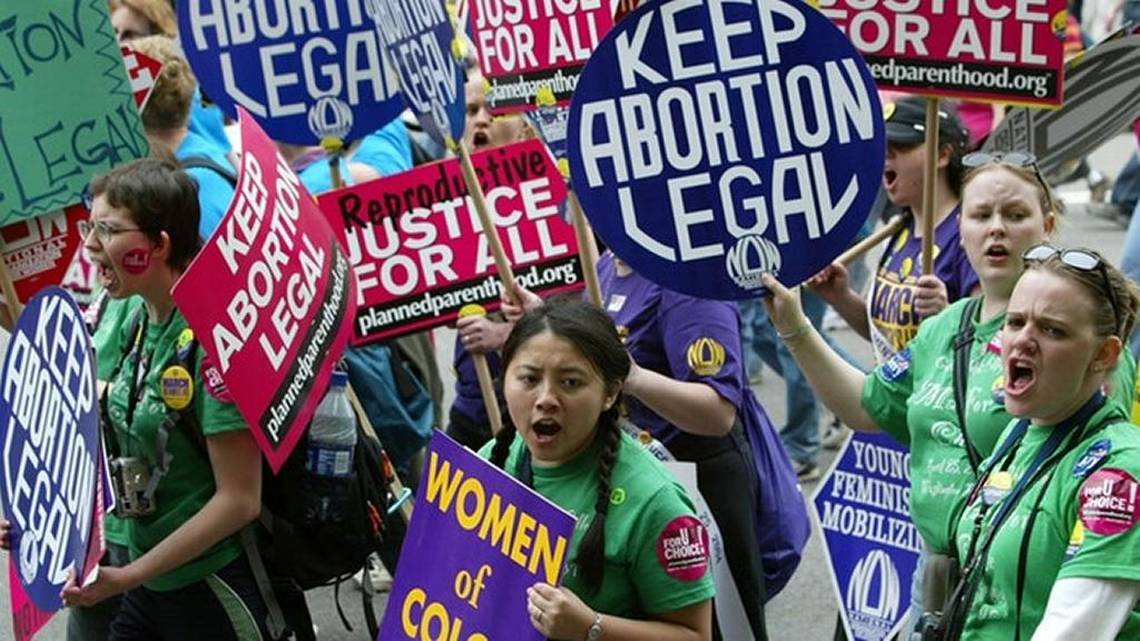
Women march in protest of efforts to curtail access to abortion. Alex Wong Getty Images

Publicly-funded family planning services are front and center.

While the Trump administration and Republican lawmakers have failed to restrict abortion providers (in the United States, that is) from receiving any federal funds, it doesn’t mean they’ll stop trying.

The Department of Health and Human Services (HHS) will likely release funding notices for the Title X program — which funds family planning services to nearly four million, mostly low-income people — next week, according to the Washington Post. Health clinics that provide abortion are currently eligible for Title X grants, as these providers also offer a range of medical services like contraception, breast and cervical cancer screenings, and pregnancy counseling.

Although federal law bars Title X and Medicaid federal dollars from funding the procedure, new notices may include rules that prohibit new applicants from using private dollars to provide abortions. In April, Trump quietly signed a law that gave states the authority to deny Title X funds to abortion providers.

Additionally, new rules could include provisions that cherry-pick birth control options that Title X funds and prioritize abstinence-only initiatives, according to the Post. Today, 4,000 health centers nationwide rely on Title X funding, includingPlanned Parenthood clinics.

The annual grant program — which totals $280 million and has historically garnered bipartisan support — is the latest vehicle with which this administration can undermine access to reproductive health. The administration has already influenced the reproductive care of many women and gender minorities by makingit easier for employers to deny birth control coverage. (Already, one university took advantage of the rule.) Administration officials defended the decision, saying people who need contraception can turn to the Title X program. Additionally, the White House rolled back the Teen Pregnancy Prevention Program, a grant directed at ending teen pregnancy.

The White House’s faith-based, anti-choice approach should come as no surprise. A draft of HHS’ priorities for this administration defines life “beginning at conception,” language often used by anti-abortion groups. HHS is also packed with appointees who’ve lobbied or advocated for anti-abortion, abstinence only programs. In fact, the person who oversees the Title X program is Theresa Manning, a former employee of the pro-life organization the National Right to Life Committee.

Already, seven states restricted officials from issuing family planning grants to clinics that provide abortions or are “affiliated with agencies” that provide these services. Like Trump’s April Title X law, these state laws had minimal effect. In Arizona, for example, state officials don’t directly distribute the funds but instead are allocated through nonprofits, so the state and federal legislation didn’t affect the grant beneficiaries. The anticipated change first reported by the Washington Post would be more problematic, but also subjected to lawsuits.

If contraception options are scaled back, that too presents a problem. “Without the contraceptive care provided by these health centers, the U.S. rates of unintended pregnancy and abortion would have been 31% higher, and the teen unintended pregnancy rate would have been 44% higher,” according to the Guttmacher Institute.

https://thinkprogress.org/what-you-need-to-know-about-the-trump-administrations-next-anti-abortion-push-c501c204a6a4/

Colleen KrajewskiImage copyrightALICIA ROMANO PHOTOGRAPHY

Like many women, Colleen Krajewski finds first dates a bit awkward but until recently she had the additional pressure of trying to dodge the question of what she does for a living.

“Once you tell a guy you’re an abortion doctor, that’s usually it,” said Dr Krajewski, a gynaecologist in Pennsylvania, US.

“There was one guy who was being very forward at the end of a date and I told him I had to work the next day.

“He was surprised and asked who for. I told him what I did and he instantly said, ‘I’m a Catholic’ and backed off.”

Fed up with the stress of trying to draw a line between her private and professional lives, Dr Krajewski decided to face the issue head-on.

Colleen Krajewski's 'Never Again' tattooImage copyrightALICIA ROMANO PHOTOGRAPHY

She had a coat hanger and the words Never Again tattooed on her arm.

It’s the symbol of pro-choice supporters who want women to have easy access to medical terminations rather than rely on unqualified backstreet practitioners.

“I decided I needed to make a moral stand and be more open about what I am and what I do,” she said.

“I keep my tattoo covered at work but occasionally people see it and comment.”

‘Friends judge me’

Abortion has been legal in the US since 1973 but because of rulings in individual states it can be difficult for women to access.

A recent study published in the medical journal the Lancet found that in 2014, 20% of American women had to travel a distance of 42 to 54 miles (68-86km) or more to get to their nearest clinic. This increased significantly for women living in rural areas, with at least half in Wyoming, North Dakota and South Dakota having to travel more than 90 miles (145km) to get to abortion services.

Abortion doctors in the US regularly find their names, addresses and phone numbers published on websites by those who oppose their work but Dr Krajewski refuses to be intimidated.

“I’m not going to live in fear. I’m more likely to encounter common violence than something to do with my job,” she said.

“I had one boyfriend who considered moving in with me until his mother got concerned about his safety.”

Colleen Krajewski and her pet dogsImage copyrightALICIA ROMANO PHOTOGRAPHY

And it’s not just the potential partners who treat her differently from other women.

“Even friends judge me,” she said.

It’s not unusual at a party for her to be taken to one side by a stranger who then quietly recounts the tale of their own abortion.

“How does she know what I do?” Dr Krajewski protested. “They must have had a conversation about me before I got there.

“People don’t want to talk about the other things I’m passionate about, like my dogs.”

Dr Krajewski is fiercely loyal to her patients, whom she describes as “fascinating, strong and complicated”.

Six out of 10 of the women who come to her for terminations are already mothers who want an abortion for a range of reasons, including no support from their partner, a lack of money, and occasionally foetal abnormalities.

For Dr Krajewski her office is always a “judgement-free zone” but sometimes her patients’ attitudes to each other can shock her.

“What makes me saddest is when my patients judge each other,” she said. “That just hits me in the gut.

“Some women are not able to differentiate herself from others on a moral basis and say things like, ‘My abortion is necessary.’ They need to make their abortion different, special or morally correct because abortion is still stigmatised and shamed.

“Sadly we are going backwards in this country in terms of abortion because people are so afraid to talk about it.”

http://www.bbc.com/news/world-us-canada-41525400