Minister ‘grappling’ with legislation and says Constitution not place to address abortion

Minister Simon Harris said he had heard very difficult and upsetting cases and met people “who have felt this country has been a very lonely place that has left them feeling very isolated” in difficult circumstances. Photograph: Dara Mac Dónaill

Minister Simon Harris said he had heard very difficult and upsetting cases and met people “who have felt this country has been a very lonely place that has left them feeling very isolated” in difficult circumstances. Photograph: Dara Mac Dónaill

The Eighth Amendment is not working in this country and should be repealed, Minister for Health Simon Harris has said.

Referring to Article 40.3.3 of the Constitution, which put the life of a woman on equal footing with the life of the foetus she is carrying, the Minister said it was his personal view that no new restrictions on abortion should be enshrined in the Constitution.

“I don’t believe the Constitution is the best place to address this issue,” he said.

He said when the Eighth Amendment was enshrined in the Constitution it had unintended consequences.

“I don’t think it in any way has worked for women, has worked for infants, and … it has limited our ability to actually make laws to look after women, their health and infants as well,” he said.

The Minister said he was currently “grappling” with the issue of legislation. People of his generation and a generation older never had an opportunity to have a say, he said. He had heard very difficult and upsetting cases and met people “who have felt this country has been a very lonely place that has left them feeling very isolated” in difficult circumstances.

“I have met women and their partners overjoyed to find out they are pregnant, only to be hit with a terrible tragedy . . . when they find out their expected child has fatal foetal abnormality; I want to see this addressed,” he said.

‘Intrigued’

Referring to an appearance before the Oireachtas Committee on the Eighth Amendment by Dr Peter Boylan, former master of the National Maternity Hospital, Mr Harris said he was “somewhat intrigued as an observer of the committee” why medical experts were being asked about “ethical or moral views”.

“I attach a greater degree of weight to any medical advice given at an Oireachtas committee, particularly when I’m not a clinician and most of my colleagues in the Oireachtas aren’t either,” he said.

He also said he believed if the Irish people made a decision to make a health service available, it should be available in the public health service.

“Hospitals in this country are funded to operate under the law of the land and to deliver our public health services,” he said.

Mr Harris welcomed the “degree of clarity” provided by the committee on Wednesday when it agreed the Eighth Amendment should not be retained in full. He also said the Oireachtas and the committee would very shortly find “it’s gone as far as it can with this matter and it will ultimately be a matter for the Irish people”.

Launch

The Minister was speaking in Dublin on Thursday at the launch of the implementation plan for the National Maternity Strategy.

The strategy, launched in 2016, centres on providing nationally consistent, high quality and women-centred maternity care. It plans to replace the current model of obstetrician-led services with midwife-led care for women with low-risk pregnancies, and obstetrician care for women with medium and high-risk pregnancies.

Services will be organised in maternity networks, in the same way that centres of excellence and networks were established under the cancer strategy. The changes will be overseen by the National Women and Infants Health Programme Office, which began its work in March this year.

The implementation plan sets out a 10-year time line for the strategy, and includes 230 actions. Detailed costing to implement the first year of the plan was not available on Thursday, and projected staff numbers were also not available. They will be included later in the year when the health service plan is published.

Killian McGrane, programme director, said over the 10-year life cycle of the plan “a very significant number” of additional staff will be required, including 100 additional obstetricians.

https://www.irishtimes.com/news/health/no-new-restrictions-on-abortion-should-be-in-constitution-harris-1.3262442

“President Trump wants to make birth control about ideology, but let’s be clear: For women and their families in the 21st century, birth control is about being healthy and financially secure.”

Congressional Democrats have introduced legislation to block the Trump administration from unilaterally undermining a signature Affordable Care Act feature—widely guaranteed contraception without a co-pay.

Under the Protecting Access to Birth Control Act, the administration’s bombshell rules providing religious and moral exemptions for any employer “shall have no force or effect, and shall be treated as though such rules had never taken effect,” according to yet-to-be-filed bill text. An estimated 62.4 million cisgender women and an untold number of transgender and gender nonconforming people rely on the popular birth control benefit as of 2017, at a $1.4 billion savings on birth control pills alone in 2013.

Democrats in the GOP-controlled U.S. Congress can’t stop the Trump administration from axing the birth control benefit and pursuing other discriminatory reproductive health-care policies through their regulatory war; that’ll be up to the courts, where lawsuits challenging the administration are underway. But through legislation, Democrats can publicly oppose such policies and foment public opinion against them. In the first days of the Trump administration, Rep. Nita Lowey (D-NY) and Sen. Jeanne Shaheen (D-NH) introduced the Global Health, Empowerment, and Rights (HER) Act to repeal Trump’s expanded global gag rule prohibiting U.S. foreign aid to organizations that provide abortion care abroad using their own funds.

Now, the Protecting Access to Birth Control Act puts members of Congress on the record against unraveling one of the law known as Obamacare’s most popular provisions. A new Politico/Morning Consultpoll found that 46 percent of registered voters strongly support and 20 percent somewhat support requiring health insurers to cover contraceptive care. Such findings are consistent over time. In 2015, the National Campaign to Prevent Teen and Unplanned Pregnancy found that 86 percent of adults across party lines backed policies that ease access to “the full range of birth control methods” for people aged 18 and older; 71 percent backed the same for teens.

The Democratic legislation brings together lead sponsors Reps. Diana DeGette (CO), Louise Slaughter (NY), Judy Chu (CA), and Lois Frankel (FL) in the House of Representatives and Sens. Patty Murray (WA) and Bob Casey (PA) in the Senate. DeGette and Slaughter co-chair the House Pro-Choice Caucus; Murray is a vocal advocate of reproductive rights, while Casey, an anti-abortion Democrat, typically supports contraception.

“President Trump wants to make birth control about ideology, but let’s be clear: For women and their families in the 21st century, birth control is about being healthy and financially secure—and that’s why Democrats are going to keep fighting back against his shameful attacks on women with this bill and any other way we can,” Murray, the top Democrat on the Senate Health, Education, Labor, and Pensions Committee, said in a statement.

https://rewire.news/article/2017/10/19/congressional-democrats-tell-trump-nope-shameful-birth-control-interference/


TD Ruth Coppinger. Photo: Colin O'Riordan1
TD Ruth Coppinger. Photo: Colin O’Riordan

“I believe if the people make a decision about a health service, it should be available in the public service,” he added.

Mr Harris also said he did not believe that religious ethos would see some hospitals opting out, pointing out the experience of the operation of the Protection of Life During Pregnancy Act is that publicly funded facilities operate under the law of the land.

He was speaking after the Oireachtas committee on abortion voted not to retain the Eighth Amendment in full.

However, internal divisions within the committee continued to rage after it emerged Solidarity TD Ruth Coppinger had written to other members urging them to take another vote and clarify the recommendations of the committee.

She claimed Wednesday’s vote was “not a vote for repeal or even for a repeal referendum and potentially leaves the way open for little or no change”.

Mater Hospital psychiatrist Dr Patricia Casey has also withdrawn from giving evidence to the committee next week, saying the process has become “deeply imbalanced”.

“There are 25 on the pro-choice side with four on a pro-life or neutral perspective.

“Ireland deserves better than that,” she said.

Mr Harris said his personal view is that the Eighth Amendment should be repealed – but he declined to reveal how far he believes any legislation on abortion should go.

The views of Mr Harris were echoed by Children’s Minister Katherine Zappone yesterday, who also said it should be removed from the Constitution with the issue of abortion dealt with by legislation.

Responding to reporters’ questions, Taoiseach Leo Varadkar said the committee vote gave him “some assurance” that the cross-party group of TDs would be able to come to conclusions on the matter by the end of December.

He was “confident” that the committee would reach conclusions that the Government could then take forward in the new year.

The December deadline is important to allow enough time to organise a referendum on abortion as planned by May of June next year.

Mr Harris also said he and his officials welcomed the “direction of travel” following the committee’s vote as they have to start the work of preparation for potential legislation, reviewing various scenarios.

“I have been tasked to prepare for a referendum. I am very conscious of that, without wishing to pre-empt the work of the Oireachtas committee,” he added.

“I am in favour of a referendum being held on the issue.”

The Eighth Amendment had led to a lot of unintended consequences for women, the minister added.

He had been told of parents who had been left “lonely” and “isolated” by the current restrictions.

Mr Harris was speaking at the launch of the implementation plan for the National Maternity Strategy.

The wide-ranging strategy, which was launched nearly two years ago, aims to put more measures in place to safeguard safety and also provide women who are pregnant with more choice.

Dr Peter McKenna, a former master of the Rotunda Hospital who is clinical director for the strategy, said it was too early to say how services would respond in the event of a referendum to widen the grounds for abortion.

Currently, the proposals are too “nebulous” to give any firm picture, he added.

Questioned by reporters, he said: “Our role is to implement the law of the land as safely as possible.”

http://www.independent.ie/irish-news/health/the-state-will-fund-abortions-if-people-vote-for-change-harris-36244824.html

MANOOCHER DEGHATI/AFP/Getty Images

The abortion pill was used in for 43 percent of abortions in Planned Parenthood clinics in 2014, a number that Reuters reports has most likely gone up in the last three years. It can be used to terminate a pregnancy up to 10 weeks. It’s also safe — safer than a lot of over-the-counter drugs, including Tylenol. In the first 18 months after it was approved in the United States, 80,000 women used it to terminate a pregnancy, according to the association of Reproductive Health Professionals. The same report found that of those women, only 139 — or 0.17 percent — “experienced an adverse effect.” Even more striking, in the first eight years, 850,000 women used the abortion pill to terminate a pregnancy and seven women died. However, there was no causal relationship found between their deaths and the abortion pill. In comparison, in the seven years between 1993 and 2000, the FDA received more than 4,000 reports of adverse effects — including 55 deaths — from Claritin.

Phil Walter/Getty Images News/Getty Images

Julia Kaye, a staff attorney with ACLU’s Reproductive Freedom Project, told NPR that many women prefer the abortion pill to a surgical abortion because it “feels more natural to them, like a miscarriage.” Women can take the pill in the comfort of their own home, surrounded by loved ones if they choose. They don’t have to undergo a surgical procedure, which can feel scary and daunting.

“The abortion pill is safe, effective, and legal. So why is the FDA keeping it locked away from women who need it?” Kaye said in a press release about the lawsuit. “The FDA’s unique restrictions on medication abortion are not grounded in science — this is just abortion stigma made law.”

Currently, the abortion pill has to be administered by a doctor, in a medical facility. However, the woman doesn’t even take the pill at the doctor’s office — she takes it at home. Or, you know, not in the presence of a medical provider.Dr. Chelius’ lawsuit says that the rules stating that abortion pill has to be administered by a medical professional who has the pill in stock, is able to perform a surgical abortion in case of complications, and that providers have to be pre-registered with the drug manufacturer are placing an “undue burden” on women who want to access abortion services. The “undue burden” requirement comes from the landmark 2016 cases Whole Woman’s Health v. Hellerstedt, which found that restrictions on abortion clinics in Texas made it nearly impossible for women to access safe and legal abortion in parts of that state.

For Dr. Chelius, the undue burden comes from the fact that there are people in his practice who have objections to abortion and refuse to sign off on the abortion pill. As a result, women who are seeking abortion services have to take a 300 mile round trip to another Hawaiian island. For many women on Kauai, the cost and travel time are prohibitive, making it impossible for them to get an abortion.

“I believe it’s my moral obligation to provide my patients with the care they need — whether that’s maternity care or abortion,” said Dr. Chelius in the press release. “Unfortunately, because of the FDA’s restrictions, my patients are forced either to fly to a different provider on another island — resulting in serious delays — or to carry a pregnancy to term against their will.”

No woman should ever be forced to carry a pregnancy to term against her will. Women are no safer when a medical professional hands them a (scientifically proven to be safe) pill to take at home than they are when a pharmacist hands them that same pill. Here’s to hoping Dr. Chelius’ lawsuit is successful and women in Kauai — and across the United States — can access their right to safe and legal abortion.

https://www.bustle.com/p/a-hawaiian-doctor-the-aclu-are-suing-for-increased-access-to-the-abortion-pill-2780300

STORY HIGHLIGHTS

  • The stay stops a ruling that would have allowed the teenager to get an abortion
  • The teenager is an undocumented immigrant in detention in Texas

Washington (CNN)The US Court of Appeals has issued an administrative stay against a ruling that would have allowed an undocumented teenager in detention in Texas to obtain an abortion.

On Wednesday, a federal judge ordered the government to allow the pregnant teen to get an abortion after the Trump administration denied her access to one.
In a two-page decision, DC District Judge Tanya Chutkan ordered officials at the Department of Health and Human Services to allow the girl, identified only as Jane Doe, to be transported by a guardian or attorney “promptly and without delay” to an abortion provider to obtain state-mandated counseling and then to obtain the abortion.
The order also barred those officials from “interfering or obstructing” the girl’s access, from forcing her to make her decision known to anyone and from “retaliating” against her and the facility where she is in regards to her decision.
However, the Court of Appeals issued a stay on the ruling Thursday to “give the court sufficient opportunity to consider the emergency motion” filed by the government, the court ruled.
The teen can still receive the counseling that is required by Texas state law before a woman has an abortion, however, the latest ruling delays the actual procedure until the court has reviewed the case. The appeals court will hear oral arguments in the case Friday morning.
The ACLU, which is representing the girl, filed a lawsuit late last week against the administration.
“This administration has no shame and no regard for a woman’s health or decisions,” said Brigitte Amiri, senior staff attorney with the ACLU Reproductive Freedom Project. “Weeks ago, our client decided to end her pregnancy. Her decision has been disregarded and she’s now been dragged into a protracted legal battle over her ability to get the care she needs. The abuse of power is appalling.”
According to the lawsuit, the unaccompanied 17-year-old is staying in a Texas shelter under the Office of Refugee Resettlement of HHS, which takes custody of undocumented immigrant minors that come to the US without any parents or guardians. She is not able to leave, except to leave the US entirely.
While the teen had judicial permission, in the place of parental consent, and the funds to the get the abortion, the ACLU said, officials refused to transport her for the procedure or allow anyone else to do so. The lawsuit also alleged the girl was forced to visit a “religious, anti-abortion” center and her mother was notified over her objections.
In a statement, the Administration for Children and Families at HHS said the ruling was “troubling,” “exceeds the US Constitution and sets a dangerous precedent by opening our borders to any illegal children seeking taxpayer-supported, elective abortions.”
HHS is considering its next steps, the statement said.
“We are disheartened the ruling rewards ideologically motivated lawsuits filed in multiple courts by the ACLU and abortion advocates,” the statement said. “Though the order overrides the policies and procedures of the Office of Refugee Resettlement designed to protect children and their babies who have illegally crossed the border, we will continue to provide them with excellent health care and protect their well-being in all our facilities.”

WASHINGTON, DC – OCTOBER 05: Sen. Lindsey Graham (R-SC) introduces the Senate version of the ‘Pain Capable Unborn Child Protection Act’ during a news conference with Family Research Council President Tony Perkins (L) and leaders from other anti-abortion groups in the Dirksen Senate Office Building on Capitol Hill October 5, 2017 in Washington, DC. Sen. Graham introduced the companion legislation to House of Representatives’ version, which passed earlier this week by a vote of 237 to 189. (Photo by Chip Somodevilla/Getty Images)

At age 40, after being blessed with three beautiful, healthy children, I was overjoyed to discover I was pregnant with a son. I began to blog about my pregnancy and post pictures from our ultrasounds.

And then everything changed.

At 16 weeks, my husband and I learned our unborn son had a heart condition. We scheduled tests and we tried to learn everything we could, but by 20 weeks, his heartbeat had stopped. I will never forget the experience in the ultrasound room with his body floating, protected by my womb and my love, but he was no longer alive.

Devastated by this incomprehensible reversal of fate, we were referred to another provider at a different clinic because my doctor was unable to perform the procedure due to the late stage of my pregnancy. Not knowing the procedure was considered an abortion, my husband and I arrived and learned that the clinic could not accept my insurance, forcing us to pay out of pocket for the loss of our son.

I have been a supporter of a woman’s right to choose since I was young. Having spent much of my life studying the Torah, I know that my faith recognizes that women have the moral right and capacity to make our own personal health decisions. I never imagined I would one day need a late-term abortion. No one does.

Abortions after 20 weeks are relatively rare, less than 5 percent of the total. But as in my case, many fetal anomalies are not discovered until the 20-week ultrasound. It is cruel enough to be facing that decision. It is even crueler for a politician to presume to make that decision for me and my husband.

Instead of political grandstanding, we should listen to physicians like Dr. Rebecca Cohen from Aurora, an ob-gyn and an abortion provider. As she puts it, “The 20-week abortion ban is intrusive, based on lies, and serves only to further stigmatize reproductive choice, not to protect women or children. Denying women this safe, legal, merciful option and instead forcing them to suffer a stillbirth or carry a terminally ill pregnancy through their due date is cruel and misguided.”

My experience has illuminated how important it is that women and their families have the right to make their own choices safely and privately. Everyone has the right to their own opinions and to make their voice heard, but the policies proposed in these types of bills are meant to vilify and intimidate women and their health care providers. The rhetoric we’ve heard in Congress is not the way to have a constructive conversation about reproductive health choices.

And outside the political rhetoric, intimidation tactics are increasingly used on patients and providers nationwide. According to a recent survey from the Feminist Majority Foundation, threats and violence against clinics have skyrocketed since 2014, from 19.7 percent to 34.2 percent, with half of the clinics in the U.S. experiencing at least one incident of severe violence and/or harassment — including the attack in Colorado Springs.

For some politicians, these assaults on a woman’s right to an abortion are an opportunity to stand on a moral soapbox. But for me, as a legislator who has had an abortion, these attacks are personal.

When we talk about the importance of electing women and their lived experiences, I know what it means. I understand why being pro-choice isn’t a hypothetical and that 20-week abortion bans aren’t an abstract concept. It was a decision I had to make with my physician and my family. And it was the right one to make.

I believe in love and compassion. My lost son and my experience showed me that. I stand with all women who need access to reproductive health care, and those who provide it compassionately without judgment.

Sens. Bennet and Gardner, out of respect for me and for Colorado women and families, if this legislation comes up for a vote, please vote “no.”

Banning late-term abortions is cruel. I know because I’ve had one.

Proposal made by SF, seconded by FF; McGrath, Mullen, Fitzpatrick vote against

The Oireachtas Committee on the Eighth Amendment has tonight voted not to retain Article 40.3.3 of the Constitution (another term for the amendment) in full.

The proposal was made by Sinn Féin and seconded by Fianna Fáil.

Independent TD Mattie McGrath, Senator Ronan Mullen and Fine Gael TD Peter Fitzpatrick voted against the proposal.

Two Fianna Fáil members, James Browne and Anne Rabbitte, abstained in the vote.

Fianna Fáil TD Lisa Chambers said the vote demonstrated the status quo is not acceptable and change was required.

Earlier, the committee had been told making abortion illegal only served to promote illegal abortions.

Professor of Obstetrics and Gynaecology Sabaratnam Arulkumaran, who authored the report examining the death of Savita Halappanavar, said abortions can be life-saving in certain conditions.

Prof Arulkumaran said making abortion illegal serves only to promote illegal abortions.

Financial resources

“Those women with influence and financial resources will get it performed in a safe environment. Those who are poor with less influence will resort to unsafe methods.”

Prof Peter Boylan, the former master of Holles Street and chairman of the Institute of Obstetricians and Gynaecologists of Ireland, addressed the committee, stressing the Eighth Amendment is “unworkable”.

Ireland and Malta are the only countries in the European Union which do not allow for terminations when there is a risk to the health of the mother, in the cases of rape, and in the cases of foetal abnormalities.

Prof Boylan said the Eighth Amendment was enacted 34 years ago when the world wide web and abortion pills had not been invented.

Without access to abortion in the United Kingdom, it is inevitable Ireland would have an epidemic of illegal abortions and a massive increase in maternal mortality, Mr Boylan added.

What recommendation to make

The Oireachtas Committee on the Eighth Amendment was this afternoon holding its first public discussion on what recommendation it would make on the position of the Eighth Amendment.

Several members of the committee submitted motions to recommend the repeal of the Eighth Amendment in a private session last week, rather than replacing or amending the article in the Constitution.

The constitutional amendment places an equal right to life on the pregnant mother and the unborn child.

https://www.irishtimes.com/news/politics/committee-votes-not-to-retain-eighth-amendment-in-full-1.3260573?mode=amp

“These are the positions we find ourselves in as women. We might advocate for access to reproductive health care, but when we need it we find ourselves alone.”

When labor rights activist Gina needed abortion care, she felt she had to hide it from her employer. Blindsided with an unplanned pregnancy despite having an IUD inserted a few months earlier, Gina kept her circumstance a secret.

“I’ve never wanted children,” said Gina, a 35-year-old woman from Lebanon, Missouri whose name has been changed to protect her identity. “That’s why I had an IUD, because it was one of the most effective forms of birth control.”

Gina had recently been approved to take vacation time for a trip abroad and didn’t feel like she could ask for more time off from work. Not only was she dealing with the dilemma of needing to miss work to receive the procedure, but she had to travel several hours to a Planned Parenthood in St. Louis, the only clinic performing abortions in Missouri at the time. She was able to adjust her schedule and take a day off, but she didn’t discuss her situation with anyone at the labor union for which she works.

“Even though I work for a progressive organization that supports reproductive rights, there is still a culture of shame,” Gina said. “It’s a personal decision with very intense personal feelings and I don’t want that to affect my career. Abortion is stigmatized so heavily. It’s difficult to have these open conversations.”

People face many barriers when accessing abortion, including taking time off work, getting to a clinic that offers abortion services, paying for the procedure, and, in some cases, arranging child care. Many like Gina also fear retaliation at work.

“We know women are being discriminated against in the workplace and in housing when it comes to their reproductive health care choices, and they need to be protected,” said Alison Dreith, executive director of NARAL Pro-Choice Missouri.

The St. Louis City Board in February passed a reproductive health anti-discrimination ordinanceprotecting people in employment and housing. The ordinance offers protection against discrimination for any reproductive health choice including abortion care, fertility treatments, birth control, and pregnancy.

Despite the ordinance, the work of protecting women in St. Louis isn’t over. The St. Louis Archdiocese is challenging this ordinance in court on the basis that the policy is an infringement on religious liberty, despite the law offering exemptions for religious organizations.

Municipalities nationwide have been slow to act in protecting people from this type of discrimination. Along with St. Louis, only Boston, Washington, D.C., and Delaware have ordinances on the books to protect people from discrimination based on their reproductive health choices. The Democratic-held California General Assembly recently passed a similar ordinance, but it was vetoed by Gov. Jerry Brown (D) on Sunday.

Gina is protected at her job by a collective bargaining agreement requiring her employer to give her time off for illness or medical procedures, but she thought she may experience repercussions other than termination if she were open about her abortion.

“There are other ways bosses can make your life difficult other than just being fired,” she said, citing examples such as receiving a bad assignment or being moved to a different department.

Not only can stigma cause workers to fear workplace repercussions, but missing work to receive reproductive health procedures can also affect employment.

One 22-year-old mother of four living in Blue Springs, Missouri lost her job after taking three days off work to receive and recover from an abortion. Amanda, whose name has been changed to protect her identity, was working full time as a night closing manager for Dollar Tree when she unexpectedly became pregnant. With four children under the age of five, she knew she couldn’t support a fifth.

She gave her employer two weeks’ notice that she would need time off, made sure her shifts were covered and provided a doctor’s note that mentioned she needed the time off without giving details about the medical procedure. When she showed up for her next shift, she was greeted with the news that she had been fired because she had missed too much work. Despite working at Dollar Tree for six months as an hourly worker, she had not earned enough time to be absent for three days.

“I was infuriated,” Amanda said. “Sometimes women have to take off work for unexpected medical reasons and employers need to be considerate of that.”

Out of work for about five months and reeling financially, Amanda returned to a serving job she had years ago, where she makes $3.75 an hour. Amanda’s situation was not surprising to Dreith of NARAL. “A majority of workers in this country don’t have paid sick leave or paid leave in general,” Dreith said. “It’s the low-wage workers who suffer the most when they have to take time off work. They can get fired even though they should be protected.”

Access to paid sick leave varies widely among employers, said Alex Granovsky, an employment lawyer in New York City who focuses on discrimination cases. Only 13 percent of private industry workers are able to access paid leave through work, according to the Bureau of Labor Statistics. One of the only protections available to many workers is the Family Medical Leave Act (FMLA), which protects a person’s job without pay for up to 12 weeks. Even then the benefits are limited, as FMLA applies to companies with 50 or more employees, and an employee must be working for the same employer for at least a year to qualify.

“Some states have sick leave protections, but in general there aren’t many protections for employees missing work,” Granovsky said.

It can be hard to distinguish discrimination based on reproductive health choices from employers enforcing a sick leave policy. Granovsky said inconsistent treatment can expose a bigger issue.  “If one employee misses two days due to an illness or medical procedure and it isn’t a big deal, but then someone else misses the same amount of work for a D&C [abortion procedure], and then loses her job, that might be something worth looking into,” he said.

There are some federal protections for pregnant workers, such as the Pregnancy Nondiscrimination Actand the Americans with Disabilities Act, which require employers to make accommodations for pregnant workers. No such protections exist for people seeking abortion care, leaving many struggling to balance their personal reproductive health choices with their jobs.

“These are the positions we find ourselves in as women,” Gina said. “We might advocate for access to reproductive health care, but when we need it we find ourselves alone.”

https://rewire.news/article/2017/10/16/many-keeping-job-means-hiding-abortion/

Recordings of California nursing courses reveal the extent to which students were taught about dubious anti-choice myths pushed by organizations opposed to abortion rights.

Nurses and other attendees had just settled in for the lecture, The Latest Research on PTSD and Abortion, when the instructor raised the specter of death.

“There are some women who almost die on the table,” Dr. Martha Shuping, a licensed psychiatrist from North Carolina, told the class. “I know one woman whose daughter did die on the table.”

Shuping taught the course this April at the annual conference of Heartbeat International, a multi-million-dollar anti-choice organization based in Columbus, Ohio. Heartbeat International is known for its worldwide network of 2,200 anti-abortion crisis pregnancy centers, or fake clinics. Less well known is the organization’s role as a nursing educator.

“How many of you are here for nursing [continuing education units]?” said Shuping, asking for a show of hands in the room at a Chicago-area Hyatt Regency hotel. “Okay, quite a few.”

Heartbeat International in 2012 won the approval of the California Board of Registered Nursing, the state’s chief nursing oversight body, to teach continuing education (CE) courses. Because other states accept CE units from California-approved providers, Heartbeat International can educate nurses from around the country.

Shuping read a passage in which a woman described her distress after her abortion procedure: “I started having nightmares in which I saw myself in a baby parts cemetery and holding a dead baby in my arms and crying for the ones I lost.’”

‘I Want to Be With My Babies’

California nurses must take 30 hours of CE courses every two years to maintain licensurenearly 3,000 California-approved CE providers offer this training. Heartbeat International markets its CE-provider status at conferences and online.

Rewire purchased an audio recording of Shuping’s course via the Heartbeat International conference website.

In it, Shuping introduced herself as a medical doctor, adding, “I’ve been helping people recover from abortions since 1985.” Shuping, who is known for making unsubstantiated claims about abortion’s links to mental illness, co-authored a flawed study suggesting abortion caused anxiety, mood, and substance-abuse disorders.

While Shuping spent much of the 70-minute lecture describing research on trauma related to pregnancy loss and abortion, she devoted about 20 percent of the time to anti-abortion anecdotes:

Here’s British artist Emma Beck, [she] committed suicide after an abortion in 2007. And she wrote, “I told everyone I didn’t want to do it. Even at the hospital. Now it is too late. I want to be with my babies.” So that was in a newspaper article. Again, sometimes people would like to say it’s not the abortion. It’s something else. And it’s not always something else. It might be the abortion, and there it is.

Shuping told attendees how Sheila Harper, founder of the abortion recovery ministry Save One, weighed whether to end her life after an abortion.

She went home from work early one day for the purpose of killing herself because of distress related to abortion. She got out her roommate’s gun. She was sitting with a gun in her hand kind of thinking how she was going to do this and kind of get psyched to pull the trigger. And the roommate came home early, providentially, and so she decided not to kill herself because that would be a mess for the roommate to find, and it kind of just made her stop. So again going back, that’s self-destructiveness, obviously.

Shuping then read excerpts from the book Forbidden Grief, written by Theresa Burke, who co-runs the “post abortion healing” ministry known as Rachel’s Vineyard.

That Shuping’s class didn’t hew to science is no surprise.

In January 2016, Rewire reported that Heartbeat International taught the course “Abortion Pill Reversal and Your Clinic” to nurses for CE credit. So-called abortion pill reversal is an experimental treatment advanced by the the anti-choice movement without rigorous peer-reviewed research to back it up. The American Congress of Obstetricians and Gynecologists in 2015 condemned abortion pill “reversal,” saying it is “not supported by the body of scientific evidence.” A month after Rewire‘s reporting on the abortion “reversal” class, state Sen. Jerry Hill (D-San Mateo) introduced legislation to require CE courses to be based on science and the nursing board to routinely audit CE providers—something it said it hadn’t done due to a shortage of resources and staff. Gov. Jerry Brown (D) signed the bill last fall.

The nursing board began an audit of Heartbeat International on January 29, 2016.

The board seemed galvanized to crack down on Heartbeat International’s unscientific curriculum. But what emerged over more than 18 months was akin to regulatory Whack-A-Mole.

‘Insufficient Scientific Evidence’

Rewire obtained a copy of the audit last month through a public records request. The trove of documents revealed Heartbeat International offered not one course—as previously reported—but three courses related to abortion pill “reversal.”

Included in the documents were descriptions of courses titled “Women’s Mental Health and Abortion” and “Breast Cancer Risks of Induced Abortion and Hormonal Contraception.” When Rewire showed the curriculum for the two courses, which included research citations, to Dr. Daniel Grossman, a leading reproductive health researcher and director of the University of California, San Francisco, research group Advancing New Standards in Reproductive Health, he said Heartbeat International “cherry-picked the references and ignored the most recent and rigorous data on these topics.” 

The weight of evidence has long disputed a link between abortion care and breast cancer or mental illness. In 2003, more than 100 experts convened by the National Cancer Institute rejected claims that abortion causes breast cancer, while an extensive review in 2008 of the “best scientific evidence” by the Task Force on Mental Health and Abortion of the American Psychological Association found abortion was not a threat to women’s mental health.

For much of 2016, Susan Engle, a registered nurse and auditor, probed the extent to which Heartbeat International’s courses were based on science, according to documents reviewed by Rewire.

In a letter dated October 11, 2016, Engle asked Susan Dammann, a registered nurse with Heartbeat International, to provide scientific evidence to back up its courses. Two months later, on December 27, Engle again wrote to Dammann, ordering Heartbeat International to suspend the three “abortion reversal” courses for “insufficient scientific evidence.”

Then, on January 17, 2017, Engle cracked down on the abortion pill “reversal” courses, writing:

…content related to medications used to reverse abortion, including but not limited to, Update on Abortion Reversal Abortion, Abortion Reversal and Your Clinic, and Reversing RU-486 does not meet the scientific knowledge required for the practice of nursing in accordance with CCR section 1456.

Engle warned Dammann not to offer the courses as a California-approved provider.

But three months later, at its April conference, Heartbeat International unveiled a slightly different course: “What Can Go Wrong with RU-486.” RU-486, or mifepristone, is one of the two drugs used in medication abortion, a regimen that abortion rights foes believe is reversible with a dosages of the hormone progesterone.

Had Heartbeat International tweaked the name to comply with Engle’s demand? The organization did not respond to a question about the course, but Heartbeat International’s president, Jor-El Godsey, offered a blanket statement in support of so-called abortion pill reversal:

As Yale School of Medicine’s Dr. Harvey Kliman told the New York Times this summer, the Abortion Pill Reversal is a proven medical intervention that, “makes perfect sense” and “is actually totally feasible.” Not only so, but Dr. Kliman—a pro-choice researcher and physician—said in the same interview that he would prescribe the Abortion Pill Reversal treatment to his own daughters.
Abortion Pill Reversal is the application of a safe, FDA-approved medical treatment that doctors and nurses have used for over 50 years in order to maintain safe pregnancies up until childbirth. No woman should be forced to complete an abortion she doesn’t want. It is the very essence of nursing and medical care to give a woman all the information she needs to make the healthiest choice for everyone involved in an unexpected pregnancy.

What Can Go Wrong with RU-486

Rewire purchased a recording of “What Can Go Wrong with RU-486.” Like the course on abortion and PTSD, the RU-486 course was taught by Shuping. An attendee can be heard asking Shuping about abortion pill “reversal.”

“Ok, ok, here’s a question about the reversal,” Shuping responded. “And the thing I have to say is that it’s not actually an accepted procedure.”

When Rewire asked Engle, the nursing auditor, a series of questions though an agency spokesperson, including whether she was aware of the course on PTSD and abortion and “What Can Go Wrong with RU-486,” Engle said she was not. She declined to speculate about whether the courses meet state regulations. The audit, Engle noted, covered the time period up to December 31, 2015—meaning recent courses, including those offered in April, were left out of the audit.

This summer, the nursing board flip-flopped on whether Heartbeat International can teach abortion pill “reversal.” In late July, the board initially said abortion pill “reversal” met scientific standards for nursing education. Less than two months later, the chief of the nursing board, Dr. Joseph Morris, sent Dammann a cease-and-desist letter to force Heartbeat International to stop abortion “reversal” instruction.

Heartbeat International is appealing the decision. Godsey, the organization’s president, in an op-ed last month in Newsweek called the decision a “naked political assault.”

Asked what it would take to revoke Heartbeat International’s status as a nursing educator, Engle cited state regulations. Among the reasons a provider can be removed: a felony conviction or material misrepresentation of fact.

Shuping told the class a story of a woman in England who wanted to reverse her medication abortion. “For instance I know a woman who was in England who had an RU-486 abortion and when she got partway through—she had taken her first tablet—but then she didn’t want to finish it up and take her additional medicine. And she really wanted her child and she was told, ‘No, no, you must continue.’”

A few minutes later, Shuping handed the class over to Heartbeat International’s Dammann, who told the nurses about abortion pill “reversal.”

https://rewire.news/article/2017/10/17/women-almost-die-table-inside-look-anti-choice-nursing-education/

“There is no medical justification for the FDA’s restrictions.”

Bill Grenblatt/Getty Images

If you want to get Viagra in the United States, the process is pretty straightforward. You go to your regular doctor, she calls in a prescription to your local pharmacy, and you pick it up when it’s ready. With a few exceptions, this is how it works for most prescription medications.

But if you want the abortion pill, it’s a completely different story. For starters, you can’t get it at any pharmacy. Your regular doctor might be able to prescribe and dispense it to you, but you probably won’t be that lucky. You might be so unlucky that the nearest doctor who can actually prescribe you the medication is 150 miles away, which means you’ll spend hours on the road and possibly stay overnight. And if you’re really unlucky you might live in Hawaii, where those 150 miles include an ocean.

This last scenario is all too familiar for Graham Chelius, a family medicine doctor in Kauai, Hawaii. Kauai has no abortion clinics, and Chelius says he wants to be able to prescribe medication abortion so his patients don’t have to waste precious time and money booking a flight to the next island with a clinic.

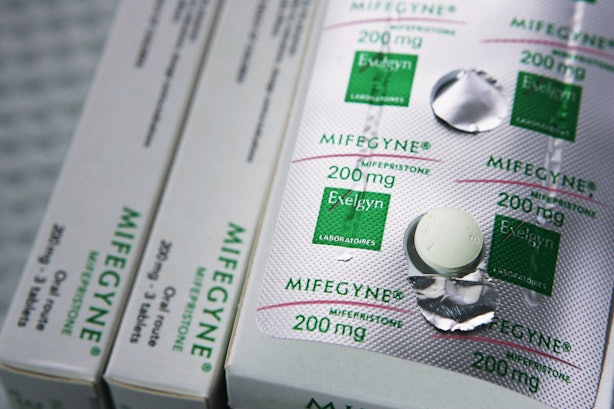
But his hands are tied due to restrictions the Food and Drug Administration has placed on mifepristone, also known as RU-486, a drug that induces miscarriage in pregnancies up to 10 weeks along when taken with the drug misoprostol. Patients can’t get the medication from a retail pharmacy; they can only get it from a clinic, medical office, or hospital. Not only that, but the medical facility dispensing mifepristone has to register with the drug manufacturer in advance, and agree to order and stock the medication on-site.

These are major administrative burdens that many medical facilities just don’t want to bother with—and being added to a list of abortion providers can cause political headaches and fears of anti-abortion harassment. In Chelius’s case, he is unable to stock the medication because of his colleagues’s opposition to abortion.

So Chelius is suing the FDA, with the help of the American Civil Liberties Union, to try to force the agency to lift the restrictions and allow mifepristone to be distributed at pharmacies. If the lawsuit succeeds, it could dramatically transform early abortion access in the United States.

https://tonic.vice.com/en_us/article/kz7vjz/aclu-lawsuit-could-dramatically-expand-access-to-the-abortion-pill