A Planned Parenthood building is pictured. | AP Photo
The Planned Parenthood defunding goes beyond previous GOP restrictions aimed at the group, which supports abortion rights and has long been the object of government shutdown fights. | AP Photo

Democrats are vowing to block the slew of long-sought conservative priorities.

House Republicans are demanding a series of controversial abortion and health care policies in the annual health spending bill, setting up a showdown with Democrats and threatening passage of an omnibus spending package to keep the government open.

Democrats are vowing to block the slew of long-sought conservative priorities. The riders would cut off federal funding to Planned Parenthood, eliminate a federal family planning program and ax the Teen Pregnancy Prevention Program, according to sources on Capitol Hill. Republicans also want to insert a new prohibition on funding research that uses human fetal tissue obtained after an abortion.

The dispute has stalled negotiations on other health issues, such as how much to spend on the opioid epidemic and prompted discussions about buying negotiators more time, with short-term government funding set to expire on March 23 and many of Congress’ other spending panels nearly finished with their bills.

Democrats say an agreement was near on overall funding levels for the fiscal 2018 Labor-Health and Human Servies funding measure, typically one of the most contentious spending bills. But when top appropriators met to finalize the numbers, the Democrats said Republicans reneged on women’s health issues, according to Democratic sources familiar with the talks.

Those sudden demands stunned the top Democrats in the room, Rep. Rosa DeLauro of Connecticut and Sen. Patty Murray of Washington, who until then thought they were having productive talks with their GOP counterparts.

Rep. Tom Cole (R-Okla.), who leads the House Labor-HHS spending panel, has acknowledged that a delay in talks could force another short-term spending patch. Congress must approve new government funding by March 23 or risk a third shutdown this year.

That breakdown would be a blow to House GOP leaders, who have worked closely with appropriators to ensure each of the 12 panels in charge of discretionary spending finish ahead of that deadline to avoid any eleventh-hour brinkmanship.

Top Democrats, including Murray, say they will block the GOP women’s health riders.

“President [Donald] Trump and Vice President [Mike] Pence have made absolutely clear they intend to interfere every way they can with a woman’s freedom to make the health care decisions that are right for her, and I’ve consistently made clear that undermining women’s health and expanding restrictions on women’s access to the full range of reproductive health care — including at trusted providers like Planned Parenthood — is a complete nonstarter,” Murray said.

House Appropriations Committee spokeswoman Jennifer Hing declined to comment on the policy riders. “The committee does not comment or speculate on funding or policy items that may or may not be included in future bills,” she said.

Sen. Roy Blunt (R-Mo.), Cole’s counterpart in the Senate, confirmed to reporters this week that he was pushing for the conservative language on women’s health issues. But he also suggested that House Republicans may have to stand down and accept the conditions of last year’s spending package, which didn’t include the riders.

“I’d like most of the House language better on those issues. But you could go back to last year’s language and resolve most of those issues as well,” Blunt said.

Most appropriators, including Republicans, thought that they could sidestep the most contentious policy fights, believing the Trump administration could codify through regulations those policies that couldn’t get past congressional Democrats.

The Trump administration has already eliminated funding for the Teen Pregnancy Prevention Program, prompting a lawsuit from health care providers.

But the administration signaled just last month that it wants to preserve the Title X family planning program — a portfolio the House GOP wants to kill.

Senior Trump health officials at HHS released the new application for Title X funding and stressed the program’s importance. The administration wants to expand the program to abstinence education programs and faith-based groups,reversing the Obama administration’s goal of providing all FDA-approved forms of contraception.

The Planned Parenthood defunding goes beyond previous GOP restrictions aimed at the group, which supports abortion rights and has long been the object of government shutdown fights. The organization would be cut off from all forms of federal funding, including Medicaid, Title X and maternal health programs. Republicans previously tried to exclude Planned Parenthood only from Medicaid.

The proposed fetal tissue ban could have an impact on research into Zika, some of which relies on tissue of fetuses that had microcephaly, the disease caused by the Zika virus.

Republicans also want to use the funding bill to go after Obamacare. They would prohibit funding for administering or enforcing the health care law, bar the administration from collecting a fee from insurance companies to run the insurance exchanges and eliminate more than half a billion dollars in funding for managing the program at the Centers for Medicare & Medicaid Services.

https://www.politico.com/story/2018/03/07/planned-parenthood-defunding-government-spending-package-392513

JACKSON, Miss. — Mississippi lawmakers on Thursday passed what is likely to be the nation’s most restrictive abortion law, making the procedure illegal after 15 weeks of pregnancy.

The House voted 75-34 in favor of the measure, and Gov. Phil Bryant has said he will sign it.

The owner of Mississipi’s only abortion clinic has said she’ll sue if the bill goes into law — a move lawmakers not only know to expect, but seem to be encouraging, in hopes of eventually getting the nation’s highest court to revisit its rulings and allow states to begin restricting abortion earlier in pregnancy.

“It seems like a pretty simple bill designed to test the viability line that the Supreme Court has drawn,” said David Forte, a law professor at Ohio’s Cleveland State University.

There are two exceptions to House Bill 1510: if the fetus has a health problem that would prevent it from surviving outside the womb at full term, or if the pregnant woman’s life or a “major bodily function” is threatened by the pregnancy. Pregnancies as a result of rape and incest are not exempt.

A number of states, including Mississippi, have already tiptoed up to the viability line with 20-week bans, although the U.S. Senate earlier this year rejected such a ban nationwide when supporters couldn’t reach a 60-vote supermajority to act.

An appeals court in 2015 struck down efforts in North Dakota to ban most abortions after six weeks, when a fetus develops a detectable heartbeat, and in Arkansas after 12 weeks. Abortion rights supporters are dubious that the outcome in Mississippi would be any different.

“The Supreme Court has said and resaid again and again that states cannot prohibit women from obtaining abortions prior to viability, which is what a 15-week ban would do,” said Hillary Schneller, staff attorney for the Center for Reproductive Rights. The New York-based group, which advocates for free access to abortion, called the bill unconstitutional and “medically unsound.”

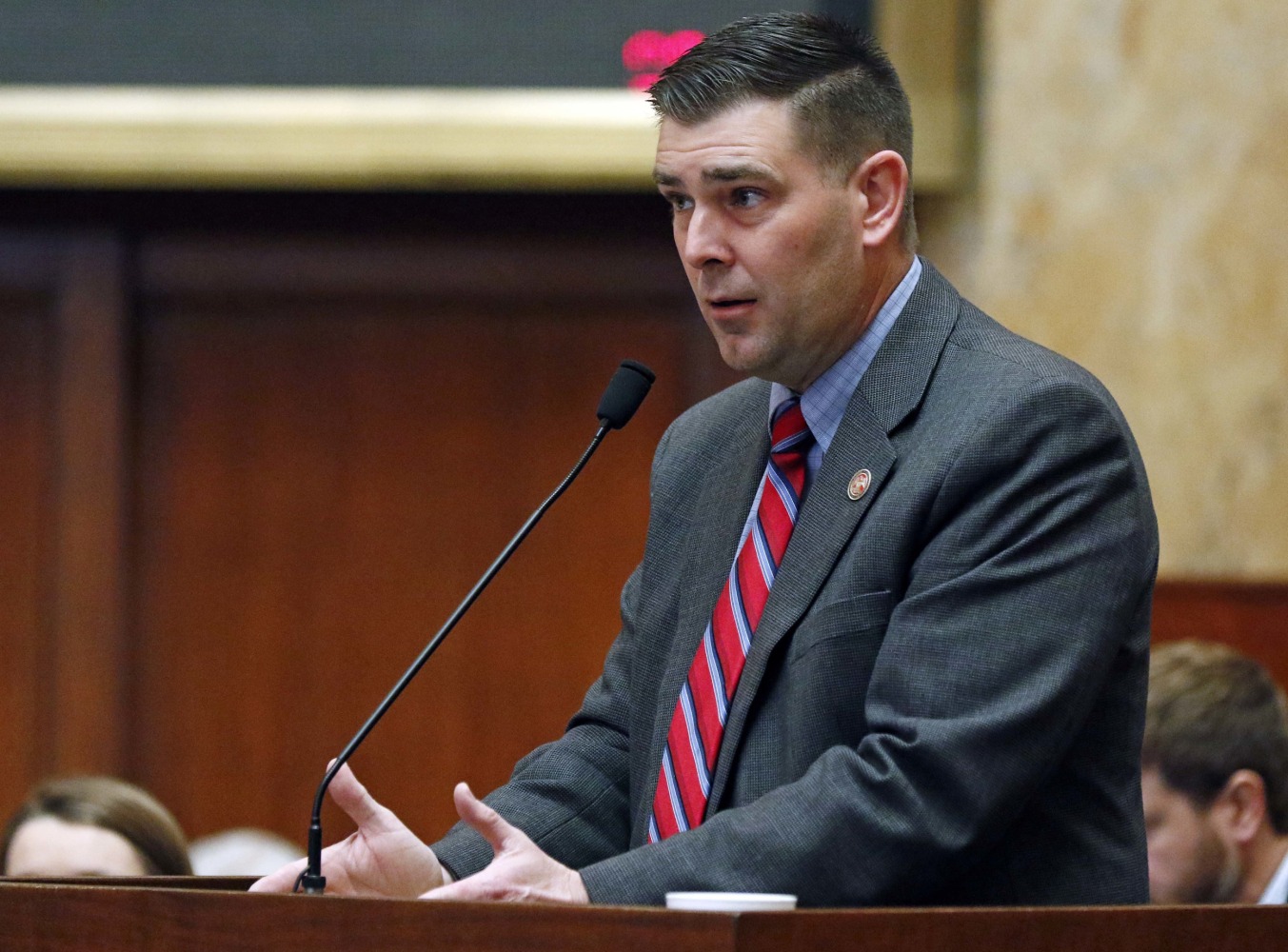
Image: Andy Gipson

House Judiciary B Committee Chairman Andy Gipson, R-Braxton, answers questions from lawmakers, about House Bill 1510, on what is likely to be the nation’s most restrictive abortion law on March 8, 2018, at the Capitol in Jackson, Mississippi. Rogelio V. Solis / AP

Mississippi’s own 20-week ban has never been legally challenged, in part because the state’s only abortion clinic, the Jackson Women’s Health Organization, doesn’t perform abortions that late in pregnancy. According to state Department of Health statistics, 85 percent of abortions in Mississippi took place before 12 weeks in 2016.

But Diane Derzis, who owns the clinic, has said the clinic does provide abortions until about 18 weeks after pregnancy. Most of Mississippi’s 2,500 abortions in 2015 took place at the clinic.

Source: https://www.nbcnews.com/news/us-news/mississippi-passes-law-banning-abortion-after-15-weeks-n854941

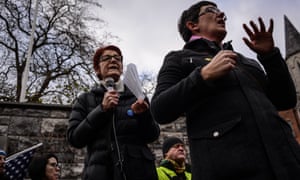
Ailbhe Smyth, who leads the Coalition to Repeal the Eighth Amendment, says it is time for change

Demonstrators let off flares during a march in Dublin for more liberal Irish abortion laws
 Demonstrators light flares during a march in Dublin for more liberal Irish abortion laws. Photograph: Clodagh Kilcoyne/Reuters

In 1983, Ailbhe Smyth was spat at and denounced as a “baby murderer” in the street as she campaigned for Irish women to have the right to abortion.

Thirty-five years later, the activist is still at the heart of Ireland’s abortion battle, fighting for her daughter, granddaughter and other women to get control over their bodies.

This time, she is hopeful that the country’s prohibition of abortion, even in cases of rape or fatal foetal abnormality, which is enshrined in the constitution, may be overturned in a referendum expected to be held on 25 May.

The Irish government was expected to confirm the date and wording of the referendum on the eighth amendment – the clause in the constitution that gives foetuses and women equal right to life – on Tuesday, but the move has been delayed by a forthcoming Supreme Court judgement that has repercussions for the rights of an unborn child.

If the vote is in favour of repeal, the government is expected to introduce legislation permitting unrestricted abortion during the first 12 weeks of pregnancy.

Smyth, who leads the Coalition to Repeal the Eighth Amendment, said: “We are absolutely determined to win this campaign, but we have learned that you should never try to second-guess the people in a referendum.

“We know that a majority of people want change. Ireland is a different country today, a more equal society. This is the logical next step.”

About 3,500 Irish women travel to the UK each year to terminate their pregnancies, incurring large costs, facing logistical difficulties and undergoing emotional strain.

Another estimated 2,000 women a year end pregnancies by taking the abortion pill, illegally obtained online, without medical supervision.

“We need to be honest with ourselves. The reality is that abortion does happen, but we can’t go on exporting it,” said Smyth. The present situation adds “layers of psychological stress” to women who need to end pregnancies, she said.

Ailbhe Smyth
Pinterest
 Ailbhe Smyth, left: ‘I have fought on this all my adult life. I will go on as long as I have a voice.’ Photograph: Lauren Crothers/Anadolu Agency/Getty Images

The eighth amendment was inserted into the constitution under pressure from the Catholic church, according to Smyth. “There was no abortion in Ireland. There was already a stringent law against it. It was a crime punishable by life imprisonment,” she said.

“But rightwing forces, rooted in the Catholic church, moved to enshrine it in the constitution, to copper-fasten it. They said ‘If we don’t act, abortion will become rampant’, that abortion is evil, a mortal sin. They used very violent language.”

The amendment was intended to make the issue of abortion untouchable. “The constitution should be the place for the values and aspirations of a society, not a place where you deal with the complexities and messiness of everyday life. That’s a matter for legislation,” Smyth said.

In 1983, the former academic and other activists held rallies, marched and canvassed door to door. “It was a very bitter and divisive campaign. I was spat at many times,” Smyth said.

Although one in three voters rejected constitutional change, the amendment was backed by a large majority.

But there have been significant social and demographic changes in Irish society over the past 35 years. The influence of the church has waned after sexual abuse scandals and cover-ups in the 1990s. Although 78% of the population identified as Catholic in 2016, the proportion is significantly smaller among under-35s. Between 1972 and 2011, weekly church attendance fell from 91% to 30%. In Dublin, it dropped to 14%.

Immigration has produced a more diverse society and people who left Ireland to find work elsewhere have returned, often with a more liberal outlook. The internet and social media have challenged the authority of the pulpit.

Three years ago, Ireland became the first country in the world to back same-sex marriage in a referendum, against the church’s exhortations. The vote had an empowering effect; people realised they could force change.

In January, a poll found 56% would vote in favour of repealing the eighth amendment and allowing unrestricted abortion up to the 12th week of pregnancy, with 29% against and 15% undecided or unwilling to say. Among those aged 18 to 24, support for change was at 74%, compared with 36% among over-65s.

According to Smyth, many of those yet to make up their mind “feel a real moral dilemma about the legislation that will follow repeal. You have to remember that almost everyone voting in this referendum has been through an education system run by the church, which has taught that abortion is murder”.

“It’s very important to listen to their fears and to explain that women need to be able to access early, safe abortions without restriction,” she said.

Smyth said she and other repeal campaigners have “a huge ground campaign planned, and we’ll be using all the social media tools at our disposal” in the coming weeks.

Volunteers are being trained to canvass people door to door. Rallies and street stalls will give the repeal campaign a high degree of visibility. Attention will be focused on undecided voters in small towns.

“I have fought on this issue for all my adult life,” said Smyth, who will turn 72 a few days after the vote. “And I will go on fighting just as long as I have a voice.

“If we don’t have the capacity and right to make decisions about our own lives as women, we don’t have equality.

“And if by some great misfortune we don’t win this battle, we’ll be back on the streets. Maybe not the very next day, but the day after. We will not stop now.”

Source: https://www.theguardian.com/world/2018/mar/05/ireland-abortion-campaign-activist-ailbhe-smyth

Story highlights

  • Mississippi Senate passed bill to ban abortions at 15 weeks
  • If it becomes law, it would be the earliest abortion ban passed in the US

(CNN)The Mississippi Senate moved one step closer Tuesday to passing a law that would prevent women from getting abortions after they are 15 weeks pregnant. If the law passes, it would be the earliest abortion limit measured in weeks of pregnancy to become law in the US.

The Senate passed a version of House Bill 1510, known as the gestational age act, with minor changes regarding the penalty to providers who break the law. In its current form, doctors would lose their license to practice medicine and face civil penalties. The bill was sent back to the House for another votewhich is considered procedural. If this version passes the House vote, the bill would move to the governor’s desk.
Mississippi Gov. Phil Bryant will sign the bill into law if it reaches his desk, his spokesperson told CNN.
After the bill’s vote, Bryant tweeted, “As I have repeatedly said, I want Mississippi to be the safest place in America for an unborn child. House Bill 1510 will help us achieve that goal.”
Lt. Gov. Tate Reeves said in a statement, “Mississippians are committed to protecting the lives of unborn children, and this law will be a major step in accomplishing that goal.”
Mississippi currently prohibits an abortion after 20 weeks of pregnancy unless “the woman’s life is endangered, her physical health is severely compromised or there is a lethal fetal anomaly,” according to the Guttmacher Institute.
In all, 24 states have laws that ban abortions after a designated duration of pregnancy. Seventeen states, including Mississippi, ban abortions at about 20 weeks post-fertilization, according to Guttmacher.
Follow CNN Health on Facebook and Twitter

See the latest news and share your comments with CNN Health on Facebook and Twitter.

Planned Parenthood Director of State Policy Media, Danielle Wells, said she believes the law is unconstitutional. She cited a similar law in Arkansas that banned abortions at 12 weeks of pregnancy if a heartbeat was detected, which was struck down by a federal appeals court.
“Already, far too many women cannot access safe, legal abortions in Mississippi because of existing barriers and restrictions. If this measure passes, it would make a bad situation even worse for women,” Wells told CNN.
The bill was held on a procedural motion before returning to the House. The next House vote on the bill has not been scheduled yet.
Source: https://edition.cnn.com/2018/03/06/health/mississippi-abortion-law/index.html?sr=fbCNN030718mississippi-abortion-law0645AMVODtop

Officials from Equity Forward are aiming to shed light on how an anti-choice group has used tens of millions in state funding.

A nonpartisan watchdog group in Pennsylvania is challenging the national trend of siphoning taxpayer money from essential human services to fund the anti-abortion activities of fake clinics.

Equity Forward has filed a lawsuit against the Pennsylvania Department of Human Services, asking to access records related to state contracts with Real Alternatives, which received a $32.5 million, five-year grant administering an anti-choice “Alternatives to Abortion” program.

While reproductive health clinics and providers like Planned Parenthood are under scrutiny from Republican legislators, organizations like Real Alternatives, which uses state funds to support anti-abortion counseling centers, avoid public oversight, Equity Forward officials told Rewire.News.

“For too long, Real Alternatives has been allowed to fly under the radar without fully answering to the taxpayers who fund the organization,” Equity Forward Executive Director Mary Alice Carter said in an email. “As far as we can tell, there has not been a formal oversight process of the Real Alternatives program. Real Alternatives leadership routinely put forward only their lobbyist or attorney to the press and do not appear in public forums. The same cannot be said for reproductive health care centers that regularly submit to oversight.”
Pennsylvania is not the only state in which lawmakers are using public funds to deceive people seeking abortion care. A recent Rewire.News analysis found little transparency and limited oversight of the similarly unregulated organizations receiving millions of public dollars across 14 states.

An investigation by Pennsylvania’s auditor general last year found that Real Alternatives had misused state grants by diverting federal tax dollars from the Temporary Assistance for Needy Families (TANF) program to fund its fake clinics and anti-choice activities outside the state.

The audit found an estimated $497,368 in misused money between 2012 and 2015.

Real Alternatives, which is 99.9 percent funded by taxpayer dollars, has held state contracts for more than 20 years and received $83 million in public money since 2003.

Equity Forward fought for months to obtain the records, but both the health department and Real Alternatives refused to turn over documents that should be publicly available, according to a press release from the organization. “Equity Forward is taking action to access Real Alternatives’ records as this anti-abortion organization continues to stonewall all efforts to shed light on their taxpayer-funded operations,” Carter said in the release.

The lawsuit seeks access to records dealing with Real Alternatives’ practice of recouping 3 percent of funds from the local service providers with which it subcontracts, a practice state Auditor General Eugene DePasquale last year called an “egregious violation” of the multimillion dollar grant.

Equity Forward estimates that Real Alternatives has taken $3.19 million in public money through its Program Development & Advancement agreements since July 1997, according to the release.

“In this case, these financial records are a basic public record that may shed light on Real Alternatives’ decades-long practice of hiding their use of public funds, which could top millions of dollars,” said Terry Mutchler, Equity Forward’s transparency counsel.

The lawsuit is an important step to hold publicly funded groups accountable and “take aim at organizations and individuals working to limit access to reproductive health care,” Carter said in the release.

Source: https://rewire.news/article/2018/03/05/anti-abortion-group-forced-show-spending-millions-taxpayer-money/

Washington state legislature votes to require insurers to cover abortion: report
© Getty Images

The Washington state Legislature on Saturday voted in favor of a measure requiring the state’s insurers to cover abortions and birth control.

The Senate voted to pass the measure by a 27-22 vote, according to The Associated Press, after concurring on changes made in the House. The Senate passed an earlier version of the bill in January.

The bill requires any insurers that offer maternity care to include elective abortions in that coverage. It also requires any plans renewed or issued after Jan. 1, 2019, to provide deductible-free coverage for contraceptives, as well as procedures like voluntary sterilization.

The bill now heads to Gov. Jay Inslee (D) for his signature.

The bill’s sponsor, state Sen. Steve Hobbs (D), told The Seattle Times in January that the coverage “should be part of basic women’s primary health.”

“No woman should have to seek or pay for an additional rider or co-pay or have any other means of delay or financial burden for this coverage,” he said.

Source: http://thehill.com/policy/healthcare/376609-washington-state-legislature-votes-to-require-insurers-to-cover-abortion

Before the Supreme Court legalized abortion in 1973, scores of women died from illegal abortion care.

If history repeats itself, women will needlessly die because of people like Mike Pence.  Shawn Thew / EPA

Speaking at an event hosted by an anti-abortion group in Nashville on Feb. 27, Vice President Mike Pence delivered a speechhighlighting the numerous anti-choice initiatives the Trump administration has launched and suggesting (hoping?) that legal abortion will end “in our time.”

“I truly do believe, if all of us do all that we can, that we will once again, in our time, restore the sanctity of life to the center of American law,” Pence said. “I just know in my heart of hearts that this will be the generation that restores life in America.”

There’s only one problem: Making abortion illegal will not in fact end abortion in America. Doing so will merely drive it underground, making it unsafe and unregulated, and will result in the needless deaths of women. How’s that for restoring the sanctity of life?

I just know in my heart of hearts that this will be the generation that restores life in America.

I just know in my heart of hearts that this will be the generation that restores life in America.

Pence’s dream of returning America to a pre-Roe dystopia, in which forced pregnancy and birth is the law of the land, comes as no surprise. His extreme anti-abortion record is well documented and bereft of consideration for women’s lives, health or history.

Because we know what will happen if we make abortion illegal. Before the Supreme Court legalized abortion in its historic Roe v. Wade decision in 1973, scores of women died from illegal abortion care. According to the Guttmacher Institute, a research and policy organization that focuses on reproductive health, the death toll associated with illegal abortions was significant: In 1930, abortion was listed as the official cause of death for almost 2,700 women, or 18% of maternal deaths recorded in that year. In 1965, death-by-illegal-abortion accounted for 17% of all deaths attributed to pregnancy and childbirth that year. And those are just the reported cases.

Even when women didn’t die from their illegal abortions, injury was not uncommon. As the Guttmacher Institute explained, “In 1962 alone, nearly 1,600 women were admitted to Harlem Hospital Center in New York City for incomplete abortions…In 1968, the University of Southern California Los Angeles County Medical Center…admitted 701 women with septic abortions.”

Pence’s dream of returning America to a pre-Roe dystopia, in which forced pregnancy and birth is the law of the land, comes as no surprise.

The situation was indeed bleak. Dr. David Grimes, a retired OB-GYN and pre-Roe abortion provider, detailed his experience treating women with back-alley abortion complications in a recent TIME interview: “I got called down to the emergency department to a see a young woman, a coed from on campus, who was in septic shock. She had virtually no blood pressure. And on examination, I found a dead fetal foot protruding through her cervix at about 17 weeks of pregnancy and [under] suspicious circumstances.”

Then there are the many women who have bravely shared their own experiences, describing painful kitchen-table abortions, waking up in pools of blood and having coat hangers inserted into their wombs.

Desperation drove up to 1.2 million women per year to terminate their pregnancies in the 1950s and 1960s, even though it meant putting their lives and health at risk. Where there is a will, there’s a way. And this pattern will surely repeat if Pence gets his way.

Conversely, legalized abortion saves women’s lives. Deaths from abortion declined fivefold between 1973 and 1985 (an immediate, positive impact of the Roe v. Wade decision), and they are now a rarity. What’s more, legal abortion enables women to obtain abortions earlier in pregnancy — when it is safest — thereby reducing the risk of complications.

Desperation drove up to 1.2 million women per year to terminate their pregnancies in the 1950s and 1960s, even though it meant putting their lives and health at risk.

For Pence to deliver a triumphant speech exalting the efforts of anti-choice legislators and activists — and encouraging them to “do the work” until abortion is outlawed — is essentially promoting the injury and death of women.

One cannot claim to respect the sanctity life and also be willing to impose deadly consequences on a large faction of the population. While abortions are generally on the decline, which is good news, studies suggest between one third and one quarter of women will have an abortion during their reproductive years. Stripping away the legal right to abortion care won’t save lives. It will only jeopardize women’s health and wellbeing.

If Pence was really serious about women’s health, he would be talking about improving access to contraception — something that is believed to be a driving force behind the decline in unplanned pregnancies. But that’s not his style.

Make no mistake: If history repeats itself, women will needlessly die because of people like Mike Pence.

Source: https://www.nbcnews.com/think/opinion/mike-pence-says-making-abortion-illegal-saves-lives-history-proves-ncna853031?cid=sm_npd_nn_fb_ma

Putting my body in the street has raised the stakes for me.

Before I joined NYC for Abortion Rights (NYC4AR), I didn’t know the location of my nearest abortion clinic, or any abortion clinic at all.

I work in publishing, not health care; I hadn’t been active in any reproductive rights organizing before; and I’ve never needed to go to an abortion clinic for health care. In a way, that made me more like anti-choice activists than other members of NYC4AR. Our members are reproductive health-care workers, clinic escorts, abortion doulas, and patients. Anti-choicers are none of the above. But they can all point to their local abortion clinics on a map; they’ve even compiled an extensive national database. They know, of course, because they’ve made it their business to know by showing up at clinics to systematically harass patients.

Many who believe in abortion rights, meanwhile, have been like me—ideologically correct and physically inert, even as members of the anti-choice movement have effectively claimed the space in front of abortion clinics as their territory.

There’s a good example of this right here in the middle of Manhattan, spitting distance from the Housing Works Bookstore and Whole Foods. Every first Saturday of the month, protesters gather inside the Basilica of St. Patrick’s Old Cathedral and then walk to Planned Parenthood’s Margaret Sanger clinic a few blocks away. They line up on the sidewalk in front of the facility, hold mass, and try to dissuade patients from getting to their appointments. According to clinic staff, the church has been doing this for years. Their tactics are different from those of the anti-choice activists on trial right now—pray-and-shame doesn’t look exactly like scream-and-shame or harass-and-shame. But the effect is more or less the same: In both cases, accessing abortion care entails submitting yourself to humiliation from a small contingent who believes that patients have no right to make decisions about their own future.

The most recent monthly anti-abortion mass was on a cold morning in early February. This time, as the sun rose, we began gathering at the gated entrance of the church and formed a walking picket line. If there is any church member who hasn’t thought critically about what it means for a church to protest a women’s health center, we thought, maybe a protest at their own gates would be instructive. Parishioners arrived in ones and twos and picked their way through the line to get to the entrance. Safely behind the gate, some turned and stared or shouted before going inside. One woman fell in with the picket line for a few rounds of a chant (“Pro-life? That’s a lie! You don’t care if women die!”) before she realized her mistake and hurried into the church. A woman walking a dog across the street pumped her fist. “Yes! Thank you!” she shouted.

Just before 9:00 am, the church doors opened. A procession of about 65 priests and parishioners filed into the street and we swarmed to meet them. Walking quickly, we spread out between them, chanting “stop harassing women”; they avoided eye contact. We were outnumbered by nearly two to one, but any moment spent rebuffing us, we thought, was a moment not spent in front of the clinic.

The walk was two short blocks. At Planned Parenthood, they lined up on the sidewalk across the street and we lined up in front of them, face to face, our bodies between them and the clinic like a shield. “They held up large crosses and attempted to ask women passing by … if they were going into Planned Parenthood for services,” Delicia Jones, a founding member of NYC4AR and one of the coordinators of the action, told me afterward. Throughout the mass, recounted Jones, “we used our signs and our bodies to block them from view of patients. They prayed and sang. We held our ground, and the antis left the space.”

This was one morning in front of a clinic that has experienced monthly—sometimes daily—anti-choice harassment for years. We don’t have any delusions that what we did that morning effectively preempted future protests, but I can say this: Attending that action and other clinic defenses with NYC4AR has transformed my relationship to the abortion rights movement. Putting my body in the street has raised the stakes for me. And watching the surprise and distress on the faces of anti-choicers as they realized that clinic harassment would not be so comfortable for them this time has given me a different vision for what the future of abortion access in this country could look like.

For NYC4AR, this is the future of clinic defense—organizing the grassroots and showing up. We show up to vote and to donate and to campaign for legislation, yes, but also to reshape the discourse around abortion in front of clinics every Saturday morning. And a quick word about showing up: This has been the common denominator of the anti-choice movement for years. Whether with rosaries and religious icons or with graphic signssound systemsholy waterplastic baby dollstheir own children, and notepads for writing down the license plate numbers of clinic staff, anti-choicers show up. If this were not an effective strategy, we would not have lost so much ground in the fight for abortion access.

Underlying this persistent, pernicious organizing is a belief that the complete criminalization of abortion in this country is actually possible. Anti-choice activists and their allies in Congress and the White House are not wrong about that, of course; that’s why they stole a U.S. Supreme Court seat. Meanwhile, the Democratic Party does not seem to be so sure that their base cares very much about abortion rights anymore, and the New York Times is paying a man to float the idea of just forgetting about abortion rights as a fresh new Democratic electoral strategy. The outrage in response to that David Brooks column was swift, but Sen. Bernie Sanders (I-VT) has effectively voiced the same thing; in his words, supporting anti-abortion candidates is just what it will take to become a “50-state party.”

Our backs are against the wall. We’re too busy updating our count of the number of states with just one remaining clinic (six, as of January) to nourish a bold vision of our own. We can’t imagine a world in which accessing abortion care is exactly like accessing any other health care, where we don’t have to be grateful that protesters are just praying (because at least they’re not dousing patients in holy water or carrying graphic signs or physically blocking the entrance or invading clinics or firebombing clinics or killing doctors).

But I believe a world in which we have accepted that a church can effectively claim clinic entrances as their own is a world in which the groundwork for those more violent acts has been laid.

The strategy of clinic defense reclaims the space outside of clinics, resisting the normalization of the shame and stigma that anti-choicers have brought to this space for years. “We’ve been on the defense for so long,” said Lizzie Stewart, a member of NYC4AR since its first action a year ago and a member of the International Socialist Organization. “The strategy of playing nice and not engaging has given way too much ground to the right. No one should have to put up with organized street harassment when they’re trying to access health care.”

More than that, clinic defense mobilizes the visible grassroots expression of support for abortion rights that makes real political gains possible. We have made this argument again and again.

It’s important to acknowledge that some clinics and reproductive health organizations disagree, preferring a strategy of political advocacy alone and of non-engagement with clinic protesters. We argue that this is a false choice—from SNCC to ACT UP, political engagement and protest have been inextricable in the history of progressive organizing in this country. And we point to the enormous spike in support for Planned Parenthood and the clinic escort program in New York following the 2016 election: NOW’s clinic escort program has nearly 1,000 members, up from a few hundred in 2014. Those numbers speak to an energy to put our bodies between protesters and patients in defense of clinics. By showing up at clinics every time the antis do, as we did on February 3 and will again on March 3, we are manifesting our vision for the world that we want to live in—our clinics, our bodies, our lives in our hands.

Source: https://rewire.news/article/2018/03/02/believe-important-reclaim-space-front-abortion-clinics/

Vice President Pence predicted Tuesday that legal abortion would end in the U.S. “in our time.”

“I know in my heart of hearts this will be the generation that restores life in America,” Pence said at a luncheon in Nashville, Tenn., hosted by the Susan B. Anthony List & Life Institute, an anti-abortion organization.

“If all of us do all we can, we can once again, in our time, restore the sanctity of life to the center of American law.”

Pence has long championed anti-abortion policies, as a congressman, as the governor of Indiana and as vice president.

He told the crowd he has seen more progress in the Trump administration’s first year in office than he has in his entire life.

Since President Trump took office last year, he has signed legislation reversing an Obama-era rule that blocked states from defunding Planned Parenthood and reinstated a ban on federal funds for global health programs that cover or promote abortions.

But the political reality in the Senate has made it difficult for Congress to accomplish big priorities like defunding Planned Parenthood and banning abortions after 20 weeks of pregnancy.

“Let me admonish you as we go forward in this cause in 2018 to understand while we have made great progress, we have much work left to do,” Pence said.

He noted that while a ban on 20-week abortions passed the House last year, it failed in the Senate in January, where Republicans have a slim majority.

All but three Democrats blocked the bill and two Republican senators also voted against it.

Pence said future success depends “not so much on those of us who have the privilege of serving in public life as it does on all of you.”

Source: http://thehill.com/policy/healthcare/375852-pence-says-abortion-will-end-in-us-in-our-time

Trump official says unaccompanied minors don't have constitutional right to abortions

© Getty

The Trump administration official who has denied abortions to unaccompanied minors in U.S. custody said he does not believe they have a constitutional right to the procedure.

Scott Lloyd, the director of the Department of Health and Human Services’s Office of Refugee Resettlement (ORR), which cares for minors who enter the country without their parents, denied seven abortion requests between March and Dec. 19, 2017, according to documentsreleased by the American Civil Liberties Union (ACLU), which is suing the administration over the policy.

In a deposition Lloyd gave in December, he replied “yes” when asked if he believed unaccompanied minors have “no constitutional right to abortion.”The ACLU has battled the Trump administration over the policy, representing four pregnant unaccompanied minors who had been blocked from getting abortions.

In three cases, the girls were able to get abortions while the fourth was released to a sponsor.

Lloyd previously worked for the Knights of Columbus, a group that opposes abortion.

The new policy represents a significant departure from how previous administrations handled pregnant unaccompanied minors in U.S. custody seeking abortions.

Under former Presidents Obama and Bush, the ORR director only had to sign off on abortions when federal funds were requested for the procedure, often in cases of rape or incest.

Jonathan White, deputy director of the ORR, said in his deposition also released by the ACLU that the new policy was made by political appointees, including Maggie Wynne, a counselor at Health and Human Services, and Lloyd.

ORR staffers were notified that all abortions required the director’s approval unless the minor’s life was in danger.

Lloyd also directed shelters funded by the ORR to give minors asking for abortions “life-affirming” counseling.

Lloyd also denied an abortion for a minor that was raped.

“Certainly, it is understandable that a woman who is pregnant from the vile actions of a criminal would want to terminate her pregnancy,” Lloyd wrote in a Dec. 17 memo. “But I cannot authorize our program to participate in the abortion requested here, even in this most difficult case.”

According to the dispositions, Lloyd has never approved an abortion during his tenure as ORR director.

White also testified that under the direction of Wynne, ORR staff were instructed to look into the possibility of reversing a medication abortion.

Source: http://thehill.com/policy/healthcare/376181-trump-official-says-undocumented-minors-dont-have-constitutional-right-to