Harassment at clinics from “sidewalk counselors” is just one more hurdle to accessing abortion care for those in St. Louis, Missouri.

I wake up early and drive across St. Louis, Missouri, to the Planned Parenthood clinic in the Central West End one Saturday each month, rain or shine. I sign in, wave hello to the clinic staff, and slide on a neon-colored vest emblazoned with the words “Pro-Choice Volunteer” on the front. My only job that day is to walk with patients from their cars, into the clinic and back, to ensure their emotional and physical safety.

It’s because of this work that I fully support buffer zones, like the one up for a vote in St. Louis on Friday, March 2. Buffer zones provide a safe space for patients and staff to enter and exit clinics: an area where they can be free of harassment from people who have shown up to yell at them, demean them, and shove their anti-choice beliefs on them. And I’ve seen firsthand how big of an effect buffer zones would make on St. Louis clinics.

When I started volunteering for NARAL Pro-Choice Missouri’s clinic escort program (I now work at the organization as its communications and digital strategy manager), the Planned Parenthood at which I volunteered was the only clinic offering abortion services in the entire state, meaning patients were driving from all over Missouri—sometimes upwards of four or five hours—to access the constitutionally protected health care they needed, wanted, and deserved. Since then, two more clinics have opened, but additional barriers to access haven’t made obtaining an abortion any easier.

In addition to state-mandated restrictions on abortion such as medically inaccurate counseling and an unnecessary 72-hour waiting period, women face another intimidating barrier before they even walk into the clinic: protesters—the so-called prayer warriors and “sidewalk counselors,” all there in hopes of stopping patients from receiving the care they seek.

These anti-choice protesters show up every day of the week, but, on Saturdays in particular, they gather around the driveway and swarm the clinic. Since they’re not allowed inside the gated lot, this is the best they can do to get close to the patients.

Some protesters hold signs. Some stare at you, holding a rosary and whispering prayers to themselves. Some stand on stepstools so they can yell at patients and staff over the fence.

I’ve seen men yell at women and throw baby clothes at them. “You’ll always be a killer,” they shouted.

While the harassment at large is terrible, among the worst of it may be the “sidewalk counselors,” who wear vests that look like our clinic vests and hold up signs saying “Check-In Here.” In all of our Midwestern politeness, most cars stop in the driveway to check in, though of course all they will receive are pamphlets filled with anti-choice propaganda shoved through the window and an invitation to receive a free pregnancy test in a “crisis pregnancy center” RV parked across the street.

These fake clinics frequently pose as actual medical centers, even though they usually are not staffed by medical personnel; the anti-choice centers are simply fronts meant to provide a space to lie to women and convince them to carry a pregnancy to term. We don’t need people trying to deceive women at such a personal and vulnerable time in their lives.

Buffer zones have been shown to work in cities and states that have already enacted them. A 2013 survey from the National Abortion Federation of clinics found that 75 percent of clinics with a buffer zone reported that it improved ease of patient and staff access to the clinic.

In 1973, the U.S. Supreme Court protected a woman’s right to choose in its landmark Roe v. Wade ruling. We have a right to access abortion care, yet “sidewalk counselors” who believe they know our situations better than we do are allowed to deceive those seeking access to reproductive health care. It’s time we take action to protect women as they make a deeply personal decision, so they can take advantage of their constitutionally protected care free of harassment.

Source: https://rewire.news/article/2018/03/01/st-louis-clinics-deserve-buffer-zone/

This is the first bill introduced in the United States that prohibits abortions after 15 weeks’ gestation, and appears to be the first bill introduced as part of a legislative effort by the Alliance Defending Freedom, which aims to “eradicate Roe.”

Mississippi lawmakers on Tuesday advanced a first-of-its-kind proposal to prohibit abortion care after the first trimester, as the Republican-controlled state Senate Public Health and Welfare Committee voted to approve the bill.

HB 1510, sponsored by Rep. Becky Currie(R-Brookhaven), would prohibit abortion care after 15 weeks’ gestation. The bill, which could receive a vote in the full GOP-majority state senate as early as next week, includes an exception in the case of a medical emergency or severe fetal abnormality.

The bill defines a medical emergency as an abortion necessary to save the life of the pregnant pregnant person if there is a “life-endangering physical condition” caused by the pregnancy or if carrying the pregnancy to term will “create a serious risk of substantial and irreversible impairment of a major bodily function.”

HB 1510 was passed February 2 by the GOP-controlled house in a 80-30 vote, with 12 Democrats joining the Republican majority and a single Republican joining the Democratic minority.

Gov. Phil Bryant (R) told Mississippi Today that if the 15-week ban is approved by the legislature, he will sign the bill into law. “As I have repeatedly said, I want Mississippi to be the safest place in America for an unborn child,” Bryant said. “House Bill 1510 will help us achieve that goal, and I am grateful the House passed it. I look forward to signing it once the senate follows suit.”

This is the first bill introduced in the United States that prohibits abortions after 15 weeks of gestation, and appears to be the first bill introduced as part of a legislative effort by the Alliance Defending Freedom (ADF), which aims to “eradicate Roe” and pass laws banning legal abortion at the state level.

ADF, a Christian legal advocacy firm classified as an anti-LGBTQ hate group by the Southern Poverty Law Center, has typically focused legislative lobbying efforts on religious imposition laws.

Felicia Brown-Williams, Mississippi state director at Planned Parenthood Southeast Advocates, told Rewirethat the 15-week abortion ban is “unspeakably dangerous” for the women and families in Mississippi and a waste of taxpayer dollars.

“HB 1510 is part of a strategic attack on Roe v. Wade and a blatant attempt to chip away at women’s rights,” Brown-Williams said. “Mississippi legislators know that if it passes, HB 1510 will be the subject of a lengthy and expensive legal battle, with Mississippi taxpayers footing the bill. The thing is, they don’t seem to care.”

https://rewire.news/article/2018/02/27/unprecedented-abortion-rights-attack-moving-fast-mississippi-legislature/

Opponents of the Wyoming bill called it a veiled attempt to give legal rights to fetuses.

A panel of male Republican lawmakers in Wyoming unanimously advanced legislation permitting death certificates for miscarriages, after hearing from nearly a dozen women who’d reportedly had miscarriages and opposed the bill.

The new certificates would apply to a nonviable birth, which the bill defines as an “unintentional, spontaneous demise of an unborn child” between nine and 20 weeks’ gestation.

Being offered such a certificate, a series of women testified in person and in writing, would make them feel a “range of emotions from awful to infuriated,” according to Better Wyoming, a progressive blog. But the five GOP committee members reportedly said they believed the death certificates, which are voluntary, would provide “comfort.”

The sponsor of the bill, state Sen. Brian Boner (R-Douglas), reportedly said the measure was inspired both by a friend and by a recent Florida law, which allows the state to issue “certificates of nonviable birth.” The advent of such certificates is rare, but growing. Idaho provides miscarriage certificates on a voluntary basis, and Arizona furnishes voluntary “fetal death” certificates.

The Wyoming bill is in the same vein as the “Unborn Infants Dignity Act,” copycat legislation by the anti-choice group Americans United for Life (AUL) that recommends states also issue death certificates in cases of abortion. But unlike the AUL legislation, the pending bill doesn’t include death certificates in cases of abortion.

Opponents of the Wyoming bill called it a veiled attempt to give legal rights to fetuses, as Better Wyoming reported. A Laramie OB-GYN estimated that 1,000 of her patients had lost pregnancies over the past decade, and she reportedly told lawmakers that not one had asked for a death certificate for the fetus. She suggested the bill could worsen the state’s shortage of doctors.

Under the Wyoming bill, the name of the “miscarried child” would be included on the certificate. Other options are “Baby Boy,” “Baby Girl, or “Baby,” along with the last name of the requesting parent.

Wyoming already allows certificates in cases of stillbirth, which is generally defined as a loss after 20 weeks.

Republicans control the state legislature and governor’s office. If the legislation clears both chambers and is signed by the governor, it would go into effect July 1. Last year, Gov. Matt Mead signed into law the state’s first abortion restrictions in nearly three decades.

Source: https://rewire.news/article/2018/02/26/wyoming-gop-pushes-death-certificates-miscarriages/

Critics compared the new draft rules to Targeted Regulation of Abortion Providers laws, favored by anti-choice state legislators, that often have the effect of shutting down abortion clinics.

The Arizona health department has issued draft rules requiring doctors to perform life support on a fetus in the exceedingly rare case that one is born alive during an abortion procedure.

Published this month, the proposed rules require clinics and hospitals that provide abortion care after 20 weeks’ gestation to be outfitted with equipment to administer oxygen, monitor heart functions, and perform neonatal resuscitation measures. After the procedure, staff must document whether a fetus was delivered alive, among other requirements.

Critics compared the draft rules to Targeted Regulation of Abortion Providers(TRAP) laws, favored by anti-choice state legislators, that often have the effect of shutting down abortion clinics.

“They’re trying to make it impossible to provide care,” Kat Sabine, executive director of NARAL Pro-Choice Arizona, said of the proposed rules. “Honestly I don’t see a medical provider who’s not impacted.”

The new rules come out of Republican-led legislation in 2017, SB 1367, that was modeled on the Born-Alive Infant Protection Act from Americans United for Life, an anti-choice legislation mill. Passed in nearly half of U.S. states, the anti-choice legislation mandates an “affirmative duty of physicians to provide medical care and treatment to born-alive infants.”

A tiny fraction of “induced terminations” result in infant death, according to the U.S. Centers for Disease Control and Prevention. An estimated 143 infant deaths occurred nationally between 2003 and 2014, and most involved pregnancy complications.

The Arizona Medical Association and American Congress of Obstetricians and Gynecologists in Arizona opposed the GOP’s controversial “born alive” bill.

“Doctors take life saving measures if a viable infant is truly ‘born alive,’” the Arizona chapter of the American Congress of Obstetricians and Gynecologists said in a statement against SB 1367. “Before viability, resuscitation is not recommended by most doctors,” the statement noted.

Dr. Peter Stevenson, an Arizona neonatologist, said the standard of care for fetuses delivered before 22 weeks’ gestation is “comfort measures,” not resuscitation.

Even so, state Sen. Steve Smith (R-Maricopa), the bill’s sponsor, told Rewire last year that state and federal laws offered inadequate protection in the rare cases of infant death related to a termination. “All we’re saying is if this is happening, we want to make sure that the baby is taken care of,” Smith said.

Arizona Gov. Doug Ducey (R) signed the legislation in March 2017. Now, the proposed rules will implement the new law in affected health-care facilities.

Abortions after 20 weeks’ gestation accounted for 1 percent of abortions in Arizona in 2016, according to the most recent figures from the state health department.

NARAL’s Sabine said she’s concerned about language in the draft rules striking a reference to “nationally recognized medical journals,” and replacing it with “peer-reviewed medical information.” She said the state was one of the first to push unproven abortion “pill” reversal, and fears the health department is trying “to get rid of scientifically and medically accurate information.”

“They want to keep pushing bunk science like abortion reversal … and ideology about care,” she said.

Written comments on the proposed rules can be submitted to the Arizona Department of Health Services.

Source: https://rewire.news/article/2018/02/21/arizona-gop-trying-make-impossible-provide-abortion-care-new-rules/?utm_content=buffere26da&utm_medium=social&utm_source=facebook.com&utm_campaign=buffer

Trump cheered on the GOP’s overhaul of the federal judiciary and piecemeal attacks on the Affordable Care Act, but he failed to acknowledge their human cost. Here, Rewire accounts for it.

President Trump’s Friday morning address to the Conservative Political Action Conference (CPAC) included a series of conservative dog whistles lauding his administration’s regressive victories at the expense of reproductive health.

Trump cheered on his overhaul of the federal judiciary and piecemeal attacks on the Affordable Care Act (ACA), or Obamacare. But he failed to acknowledge their human cost. Here, Rewire accounts for it.

What Trump said:

“We’ve confirmed a record number—so important—of circuit court judges, and we are going to be putting in a lot more, and they will interpret the law as written.”

What’s really happening:

Trump and Republicans in the U.S. Senate have partnered to remake the federal judiciary in their anti-choice, anti-LGBTQ image. Leonard Steven Grasz, an abortion rights foe and “conversion therapy” ally, was “so far outside the judicial mainstream” that the American Bar Association rated him as “not qualified” to serve on the U.S. Court of Appeals for the Eighth Circuit, Rewire’s Jessica Mason Pieklo noted in an analysis.

Senate Judiciary Committee Chair Chuck Grassley (R-IA) nevertheless pushed through Grasz and other radical nominees, including birth control benefit opponent Amy Coney Barrett, to the Senate floor for final confirmation. Senate Republicans have easily confirmed these nominees to lifetime slots on the federal bench, thanks to a rule change under the chamber’s former Democratic majority leader, Sen. Harry Reid (NV), who “nuked” the filibuster and allowed a simple 51-vote majority to confirm most presidential picks.

What Trump said:

“And we’ve confirmed an incredible new Supreme Court justice, a great man, Neil Gorsuch.”

What’s really happening:

Neil Gorsuch has broken with professional norms while advancing his far-right ideology in the time since he was confirmed to the U.S. Supreme Court last April. Rewire reported on Gorsuch’s parade through small-town Colorado and his Trump Tower address to a conservative group funded by the Koch brothers and dark-money organization Donors Trust. The associate justice stands to do damage to civil rights in the current Supreme Court term’s cases, among them partisan gerrymanderingvoter purgesunion feesimmigrant detention and removal rights, and religious refusals to serve LGBTQ couples.

Trump had promised to appoint Supreme Court justices who would overturn Roe v. Wade, the court’s 1973 decision that established the right to abortion care until fetal viability. Conservative leaders worked with Trump and his senior advisers on Gorsuch’s nomination, per White House pool reports.

Those leaders included National Rifle Association Executive Vice President and CEO Wayne LaPierre, a CPAC headliner who addressed the conference little more than a week after a mass shooting at a Parkland, Florida, high school left 17 students dead, and Concerned Women for America CEO and President Penny Nance Young, who addressed a CPAC panel that revealed conservative divisions in anti-choice legislative strategy. Senate Majority Leader Mitch McConnell (R-KY) then triggered the nuclear option to pave the way for Gorsuch’s confirmation with just 51 votes. (McConnell blocked President Obama’s nominee, Merrick Garland, allowing Trump to later fill the open seat.)

What Trump said:

“I think we may be better off the way we’re doing it. It’s piece by piece by piece. Obamacare is just being wiped out.”

What’s really happening:

Trump and congressional Republicans repeatedly failed to repeal Obamacare and in doing so, also failed to defund Planned Parenthoodend the law’s birth control benefit, and ban abortion coverage even in private insurance plans. But all along, Trump’s virulently anti-choice, anti-LGBTQ federal agencies were waging a stealth regulatory war on health-care benefits and protections for women and vulnerable populations.

In October, Trump officials created broad exemptions for the ACA’s birth control benefit that guarantees no-copay contraception for some 62.4 million cisgender women and an untold number of transgender and gender non-conforming people.  And last month, the U.S. Department of Health and Human Services created a new health-care discrimination wing, complete with regulations bolstering its power to support health-care providers who don’t want to treat LGBTQ patients or provide reproductive health care, including contraception, miscarriage management, and abortion care. The office could, among other things, undermine the protections outlined by the ACA to protect LGBTQ patients.

After congressional Republicans were unable to defund Planned Parenthood through repealing Obamacare, HHS coordinated with a prominent hate group to undermine family planning access for people with low incomes, the majority of whom are women of color and women in rural areas.

Source: https://rewire.news/article/2018/02/23/translated-trumps-top-cpac-dog-whistles-undermining-reproductive-health/

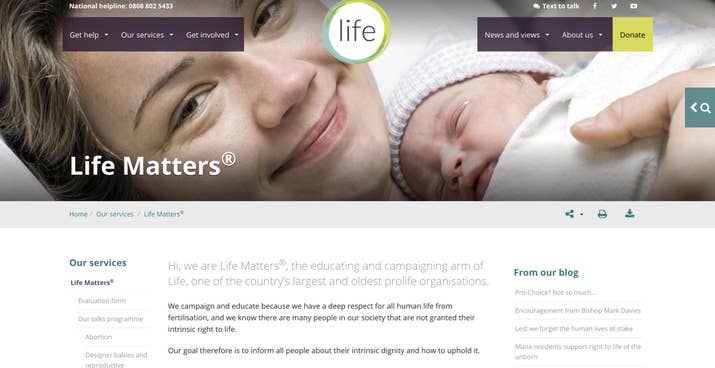
Life, an organisation which has incorrectly linked abortion to breast cancer, ranks highly in several searches relating to seeking abortion services.

Jacob Sacks-Jones for BuzzFeed

Anti-abortion groups that have incorrectly linked abortion to breast cancer, infertility, depression, and drug abuse have paid to appear in the top results for common Google searches seeking abortion services.

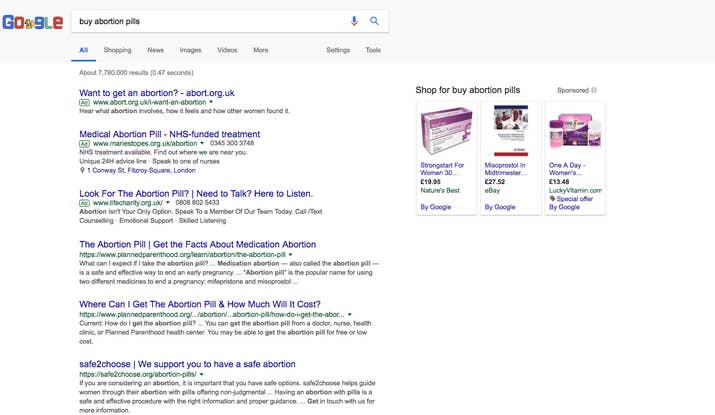
A search for “buy abortion pills online” conducted by BuzzFeed News this week produced sponsored links for religious anti-abortion group Abort.org and Life, an anti-abortion group that offers accommodation to women facing crisis pregnancies. Marie Stopes – one of the UK’s leading abortion providers – also appeared in the top three results.

Google says the wording of the links that appear in the search results, and the information contained on the landing pages they lead to, means that the anti-abortion groups are not in breach of any of their policies.

Non-sponsored links for international sexual health group Planned Parenthood; another of the UK’s leading abortion service providers, BPAS; and Women on Web, which provides abortion pills to women in countries where abortion is illegal, appear further down in the results for “buy abortion pills online”.

While it is illegal to access the drugs for medical abortion outside of licensed settings, the number of women in the UK seeking to buy them online has increased steadily in recent years.

BuzzFeed News

BuzzFeed News analysis found sponsored links for Life also appeared in the top three results for the following searches: “abortion pills”, “I need an abortion now”, “I need an abortion asap”, and “abortion pills price”. In 2017, Life received £250,000 of government funding from the “tampon tax”, after it was confirmed that funds raised by the 5% levy on sanitary products would be used to support women’s charities.

Sponsored and unsponsored links to BPAS and Marie Stopes also regularly appeared in the top three results for those searches. An unsponsored link for NHS abortion guidelines appeared as the third result for “I need an abortion now” – but ranked lower on the other searches.

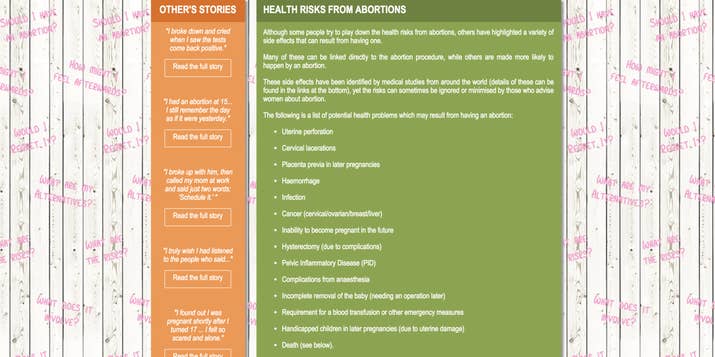
One sponsored search result for Abort.org that reads “want to get an abortion?” leads to a page offering to “tell you more about what an abortion actually involves, and to share others’ experiences with you”.

The page offers links to stories from women, all of whom either regretted their abortion or chose not to go through with it and encouraged those reading to do the same, and a “help page” that states abortion could lead to depression, anxiety, low self-esteem, flashbacks, and eating disorders.

The search result for Life reading “Look for the abortion pill” leads to a page with contact links to its counsellors, who offer “a safe place for you to explore your situation and talk through your feelings – free and in complete confidence”.

On a page describing its services, Life states an outright opposition to abortion. “Our goal therefore is to inform all people about their intrinsic dignity and how to uphold it,” the page reads. In educational materials designed to be distributed in schools, Life also claims that an abortion could lead to a decline in mental health.

A variety of peer-reviewed research has disputed any link between abortion and worsened mental health, according to the Royal College of Gynaecologists and Obstetricians and NHS guidance.

Elsewhere on its website, Abort.org lists infertility, cancer, and death as risks of abortion, and in 2011 Life published material that claimed abortion can lead to breast cancer. NHS guidance states that risks of infertility following abortion are small, and only likely if the procedure results in an infection that is left untreated. NHS guidance also disputes any link between abortion and cancer.

Both Life and Abort.org say they offer women facing unwanted pregnancies impartial advice, and say abortion providers such as Marie Stopes and BPAS will only ever encourage a woman to have an abortion. They also claim that abortion providers fail to support women who may be pressured into a termination by a coercive partner.

A disclaimer on Abort.org, however, states that information on its site “does not constitute medical advice, and is not a substitute for medical consultation or treatment”.

“We would always recommend that you consult a qualified health professional straight away for advice on your individual health needs, and would never endorse delaying such a consultation for any length of time,” the disclaimer adds.

Marie Stopes and BPAS told BuzzFeed News that Care Quality Commission regulation requires them to offer pre-procedure counselling, from registered practitioners, which explores options including abortion, adoption, fostering, and continuing with the pregnancy, and that around 1 in 20 women who book appointments for abortion do not go ahead with it.

Both organisations say they also work to identify when women are experiencing domestic violence and signpost them to the relevant support services.

“Informed choice is at the heart of our charity’s mission, and every woman we serve is talked through her options before booking an appointment and once again at the clinic,” a spokesperson for Marie Stopes told BuzzFeed News.

Marie Stopes was last year accused of incentivising staff to encourage women to go ahead with abortions after a CQC report suggested staff’s pay was linked to performance targets. Marie Stopes said that targets were linked to encouraging women to have IUDs – considered to be one of the most effective forms of contraception – fitted following abortion procedures.

A Marie Stopes spokesperson added that options discussed with women “include whether to continue with the pregnancy and raise the child, continue with the pregnancy and opt for adoption or fostering, or to end the pregnancy with an abortion”.

“In 2017, around 1 in 22 of our clients did not proceed with a procedure after booking an appointment, either because she changed her mind or because we weren’t assured that she was certain of her decision,” the spokesperson continued.

“If a woman makes the decision not to continue with her pregnancy, our staff will explain the medical and surgical options available to help her make the decision that is right for her.”

Life

A spokesperson for BPAS also emphasised the impartiality of their service. “BPAS clinics, unlike crisis pregnancy centres, are regulated by the CQC,” the spokesperson said.

“The CQC provides a series of standards against which it inspects the quality and safety of an abortion service, and the CQC has the power to enforce improvements, suspend services and ultimately pursue criminal prosecutions against providers for failing to provide treatment or care in a safe way.”

BPAS’s spokesperson said that a trained member of staff would discuss several options, including continuing the pregnancy and becoming a parent, having the child fostered or adopted, or ending the pregnancy by abortion, with anyone who made an appointment at one of their clinics.

“Women who remain undecided will be given all the time they need to arrive at a decision, and offered additional time to discuss their options further with a trained member of staff if they wish,” they added.

“As part of standards set by the CQC, abortion services must be able to prove they have processes in place to ensure that all women and girls are seeking services voluntarily.”

A spokesperson for Google did not believe that Life or Abort.org’s sponsored ads and associated landing pages were in breach of their advertising policies.

“In order to protect people from misrepresentative or misleading ads, we have a strict set of policies that govern the types of ads that we allow on Google,” they said in a statement to BuzzFeed News. “If we discover an ad that breaks our policies, we quickly take action.”

While Google’s spokesperson did recognise a grey area around whether a sponsored ad could be considered a health risk when the page it linked to led to incorrect information published by the organisation elsewhere, they said that verifying health claims made by an organisation as a whole was beyond the remit of ensuring a specific ad and its landing page adhered to its advertising polices.

They did, however, say that it could consider revising its guidelines in future.

“Our polices aren’t static; in order to be useful and relevant, we ensure they remain fluid and adaptable,” the spokesperson added. “So we constantly review our policies and work with industry experts to better understand the key issues.”

A spokesperson for Life said that where their sponsored ads ranked in searches was down to Google.

“We have no control over how Google search algorithms work but we are entitled to reach out as best as we can to vulnerable women facing crisis pregnancy including those considering abortion, with offers of counselling and support,” the spokesperson said.

The spokesperson said that while they would never support abortion as an option in the event of an unwanted pregnancy, they said their service was impartial.

“Life is an associate member of the British Association of Counselling and Psychotherapy and is bound by their professional code of practice,” the spokesperson said.

“Our counselling service is client-led. We provide a safe space for women to explore all their options and empower themselves in their decision-making process.

“It is true that we do not refer people for abortion or give information on abortion providers and this is made clear in our terms of service.”

Abort.org did not respond to a request for comment by the time of publication.

Source: https://www.buzzfeed.com/laurasilver/anti-abortion-groups-are-paying-to-appear-near-the-top-of?utm_source=dynamic&utm_campaign=bffbbuzzfeedhealth&ref=bffbbuzzfeedhealth&utm_term=.ynYaxJQ86#.nfPpO2Ezm

 “In some cases, dollars are directly diverted from public funds allocated to feed hungry children, all so that a woman looking for an abortion clinic can be told lies about abortion in a setting that often purposefully deceives her into thinking she’s walking into an abortion clinic.”

Florida GOP lawmakers sent a bill last week to Republican Gov. Rick Scott that would require the state to permanently contract with an organization funneling taxpayer dollars to so-called crisis pregnancy centers, fake clinics that use anti-choice propaganda to dissuade peoplefrom seeking abortion care.

But Florida is far from the only state to fund fake clinics. Anti-choice clinics will receive an unprecedented $40.5 million in taxpayer dollars from 14 states this fiscal year—even as lawmakers in these states slash funding for public health initiatives and increase requirements for people with low incomes to access public assistance programs.

An analysis by Rewire of state budgets, agency contracts, and other public documents found little transparency and limited oversight of the essentially unregulated organizations receiving millions in funding from Florida, Georgia, Indiana, Kansas, Louisiana, Michigan, Minnesota, Missouri, North Carolina, North Dakota, Ohio, Pennsylvania, Texas, and Wisconsin.

“It’s an abuse of public funds to provide even a penny to anti-abortion fake clinics that systematically deceive and shame people seeking abortion care,” said Erin Matson, co-founder and co-director of ReproAction, a pro-choice organization.

Fake clinics have come under increased scrutiny in recent years, as investigations revealed they disseminate misinformation to people seeking abortion care and neglect to follow proper medical protocols.

Matson questioned why these types of organizations need millions of dollars, especially considering most are staffed by volunteers and provide little if any medical care. “If these operations care about babies and poverty and prenatal care, why aren’t they organizing for Medicaid expansion?” Matson asked.

Legislators in seven of the 14 states that fund fake clinics have not expanded Medicaid under the Affordable Care Act, according to the Kaiser Family Foundation.

Texas accounts for nearly half of the $40.5 million in state funding of fake clinics. Over the past decade, Texas Republicans have annually increased funding for the state’s “Alternatives to Abortion” (A2A) program.

In June 2017, Texas Gov. Greg Abbott (R) signed an appropriations bill that allocated $38.3 million over two years for the A2A program, after the state’s GOP-held legislature approved an amendment to more than double the program’s funding.

The A2A program is administered by the state’s health and human services commission, which contracts with an outside organization to distribute the funds. The Texas Pregnancy Care Network, an Austin-based nonprofit, was awarded a contract to distribute funds to the subcontractors the network selects and oversees.

Rewire investigation found that state-funded fake clinics provide limited services to clients and measure success only by the number of clients served. Public health programs are typically evaluated on measures of health-care outcomes or cost savings incurred by the state.

The Texas program is similar to the one in Florida, where the Department of Health awarded a $3.95 million contract to the Florida Pregnancy Care Network for providing pregnancy support and wellness services through 61 subcontractors operating 105 facilities.

This type of scheme has been replicated by several states that directly fund fake clinics.

Georgia Republicans last year passed a budget that included $2 million in funding for the Positive Alternatives for Pregnancy and Parenting grant program; the Georgia Department of Public Health contracted with Life Resources of Georgia to distribute the funds to organizations that promote pregnancy and parenting services as alternatives to abortion care.

A study published last year found that most anti-choice clinics in Georgia offer few services beyond pregnancy testing and counseling, and a majority of these facilities promote false or misleading information to pregnant people.

Indiana, Michigan, and Pennsylvania have similar programs and have each awarded contracts to Real Alternatives, a nonprofit organization that distributes state funding to a combined 144 fake clinics.

An investigation by Pennsylvania’s auditor general last year found that Real Alternative has misused state grants by spending a cut of the money on its network of fake clinics and anti-choice activities outside the state.

Pennsylvania funded Real Alternatives by diverting federal tax dollars from the Temporary Assistance for Needy Families (TANF) program.

Nine of the 14 states pumping taxpayer money into fake clinics—Indiana, Louisiana, Michigan, Missouri, North Carolina, North Dakota, Ohio, Pennsylvania, and Texas—siphon off federal funds from the TANF program to fund programs that funnel money to fake clinics. This year more than $13.4 million in federal dollars earmarked for families with low incomes will be used to fund programs that direct money to fake clinics that often provide minimal services.

“In some cases, dollars are directly diverted from public funds allocated to feed hungry children, all so that a woman looking for an abortion clinic can be told lies about abortion in a setting that often purposefully deceives her into thinking she’s walking into an abortion clinic,” Matson said.

“We need audits and investigations on how public dollars to fund fake women’s health centers are being used.”

Source: https://rewire.news/article/2018/02/16/state-level-republicans-pour-taxpayer-money-fake-clinics-unprecedented-pace/

Anti-choice leaders at a Conservative Political Action Conference panel had conflicting opinions on whether Senate Republicans should do away with the filibuster to force through bills to restrict or end abortion access.

High-profile women at the annual Conservative Political Action Conference (CPAC) didn’t convey a unified strategy about how to pass anti-choice bills in the absence of a GOP supermajority in the U.S. Senate.

The four activists gave their input on Senate rules that have so far stood between them and their legislative victories during the late Thursday afternoon “Are Conservatives Serious about Defunding Planned Parenthood?” panel.The Senate’s 60-vote threshold in January stopped an unconstitutional 20-week abortion ban from advancing to a final vote and onto President Trump’s desk for his promised signature into law.

Triggering the “nuclear option” would get rid of the threat of a filibuster, or unlimited debate on an issue, and allow a simple 51-vote majority for a bill’s passage. Former Senate Majority Leader Harry Reid (D-NV) triggered the nuclear option to confirm most presidential picks, and current Senate Majority Leader Mitch McConnell (R-KY) followed suit for U.S. Supreme Court justices.

McConnell has so far resisted President Trump’s calls to completely end the filibuster. Rep. Trent Franks (R-AZ), the original lead sponsor of the 20-week ban passed by the U.S. House of Representativesfrequently criticized both the filibuster and McConnell. Franks, however, resigned in December when news broke that he had asked female staffers to bear his child via surrogacy, and other congressional Republicans haven’t expressed the same zeal for eliminating the filibuster.

The CPAC panelists had different takes on the filibuster in response to a question from the white nationalist publication Breitbart News.

Concerned Women for America CEO and President Penny Young Nance took a measured approach.

“I’m a survivor of the Obama years, and we stopped a lot of bad stuff [thanks to Senate rules],” Nance told the audience. “As much as I’d like to think that Republicans, and conservatives in particular, will hold the Senate forever—probably not. And so, I don’t know. I don’t know what the answer is. It’s a hard one.”

Nuking the filibuster was seemingly not a priority for Kelly Marcum, a government affairs office coordinator for the Family Research Council, a Southern Poverty Law Center-designated anti-LGBTQ hate group.

“There’s frustration, but there’s also a lot of strategy obviously that goes on in those conversations about what merits that decision,” Marcum told the audience.

While Marcum said she shared the frustration that Breitbart News referenced in its filibuster question, she lauded McConnell’s “very useful, very strategic move” to bring up the 20-week ban, forcing red-state Senate Democrats to “have that negative vote on record” as they head into the midterm elections.

The strategy Marcum outlined doubled down on one that Susan B. Anthony (SBA) List President Marjorie Dannenfelser detailed to Rewire in 2017. The groups hope to increase Republicans’ Senate majority and end the legislative firewall between a nationwide prohibition on legal abortion care at 20 weeks, further eroding access as they work to do away with it entirely.

At CPAC, Marcum name-checked Sen. Heidi Heitkamp (D-ND), falsely claiming that she high-fived Senate Majority Leader Chuck Schumer (D-NY) over her nay vote on the 20-week ban. Marcum also mentioned Sens. Claire McCaskill (MO) and Sherrod Brown (OH); both, along with Heitkamp, are targets of SBA List ad campaigns against the pro-choice Democrats in states that Trump won in 2016.

“We’re kind of just bringing these bills, and [the] Senate is putting these bills on the floor, so that we can actually get that bigger majority.”

That plan, however, could just as well backfire, according to a Rewire analysis following the failed Senate vote on the 20-week ban. Recent polling indicates that Democrats across the board could benefit at the ballot box from embracing abortion rights, rather than running from them.

Day Gardner, founder and president of the National Black Pro-Life Union and associate director of the National Pro-Life Center, was the only CPAC panelist to endorse nuking the Senate’s filibuster for the sake of immediate anti-choice victory.

“In understanding that you can’t get the 60 votes right now, my first thought was then, ‘Let’s just kind of go nuclear,’” Gardner said.

Americans United for Life President and CEO Catherine Glenn Foster didn’t remark on the filibuster.

Source: https://rewire.news/article/2018/02/23/cpac-anti-choice-leaders-split-strategy-ram-restrictions/

Lawmakers in more than a dozen states with TRAP laws have imposed no regulations on office-based surgeries like liposuction, breast augmentation, and vasectomies.

Nearly two years ago, the U.S. Supreme Court decision in Whole Woman’s Healthheld that outfitting abortion clinics like mini-hospitals did nothing to improve patient’s health and safety, although the backers of the Texas provisions had argued otherwise.

The Texas law, Justice Stephen Breyer wrote, targeted abortion care for harsher treatment than far riskier forms of health care. “Childbirth is 14 times more likely than abortion to result in death, but Texas law allows a midwife to oversee childbirth in the patient’s own home,” Breyer wrote.

Breyer’s example illustrated a stark and unexplored divide between laws governing abortion and other health care. A paper published Thursday in the American Journal of Public Health is the first to systematically examine the disparity.

“I was interested to see: Where there any other laws that singled out particular procedures for regulation?” said lead author Bonnie Jones, an attorney and senior policy advisor with the research group Advancing New Standards in Reproductive Health (ANSIRH) at the University of California, San Francisco. “The results on this are very emphatic. What we’re seeing is there is separate and unequal treatment of facilities that provide abortions and facilities that provide services other than abortions.”

The study team included Sara Daniel of ANSIRH and Lindsay K. Cloud of the Policy Surveillance Program of the Center for Public Health Law Research at Temple University. By combing through laws in all 50 states and the District of Columbia, the authors found more than twice as many TRAP laws compared to laws regulating office-based surgeries. Some 34 states have enacted 55 TRAP laws.

In contrast, lawmakers in more than a dozen states with TRAP laws have imposed no regulations on office-based surgeries (OBS), such as liposuction, breast augmentation, and vasectomies. The laws in these states only regulate abortion procedures, the authors found.

“It’s very stark how clear the discriminatory treatment of abortion is,” Jones noted.

Abortion care, the authors suggest, is subject to strict laws even when no surgical procedure is involved. Eighty-percent of TRAP laws apply to clinics that dispense abortion pills, which does not require surgery. Only 12 percent of OBS laws apply to non-surgical procedures.

“It just so clearly is not connected to the nature of the procedures involved,” Jones said.

TRAP laws predominate in states with Republican-majority legislatures in the deep South and Midwest, but can also be found in states like New York, the authors noted. Nearly 40 percent of states have both TRAP and OBS laws on the books. Close to a third have only enacted TRAP laws.

The team compared architectural and facility requirements in TRAP laws and OBS laws. They found TRAP laws subject abortion clinics to stricter physical requirements than OBS facilities. By comparing a sample of TRAP and OBS laws, the team found 36 percent of TRAP laws required specific widths for doors and hallways, while only 8 percent of OBS laws did. More than 90 percent of TRAP laws required a facility license and 51 percent required a separate recovery room, compared to 16 percent of OBS laws.

TRAP laws impose harsher penalties when facilities fail to meet state standards, the authors noted. Ninety-five percent of TRAP laws imposed criminal penalties, fines, or licensing sanctions, compared to 28 percent of OBS laws.

“To the extent that TRAP laws reduce access to health care services in the absence of countervailing benefits, they threaten to undermine public health,” the authors observed.

HB 2, the strict Texas GOP law that was partially struck down in Whole Woman’s Health, is a testament to this, Jones told Rewire. “In the case of Texas laws, we know from some existing evidence that TRAP laws … stop some women from getting abortions and delay others,” Jones said.

Soon after the passage of HB 2, more than one-third of the 41 abortion clinics in Texas either shut down or stopped offering abortion services. Few have reopened, as Rewire reported.

The authors urge policymakers and politicians to treat abortion care the same as other health care.

“You are doing harm,” Jones said of the TRAP laws, “without doing any good.”

Source: https://rewire.news/article/2018/02/22/trap-laws-ensured-separate-unequal-treatment-abortion-care/

Northern Irish women who have been raped, are victims of incest or have fatal foetal abnormalities are not allowed abortions.

Northern Ireland abortion laws are violating women's human rights, the UN has said
Image:Northern Ireland abortion laws are violating women’s human rights, the UN has said

The United Nations has accused the UK of violating women’s human rights by restricting access to abortions in Northern Ireland.

While abortions are provided for free in the rest of the UK, they are only allowed in Northern Ireland if a woman’s life is at risk or there is a serious risk to her mental health.

Women who have been raped, are pregnant due to incest or whose baby has a fatal foetal abnormalities cannot have a legal abortion.

Many Northern Irish women travel to England, Scotland and Wales to have legal abortions on the NHS.

The UN Committee on the Elimination of Discrimination Against Women said the law causes “great harm and suffering” to “women and girls who carry pregnancies to full term against their will”.

In a report published by the 23-expert committee, it said: “The committee assesses the gravity of the violations in Northern Ireland in light of the suffering experienced by women and girls who carry pregnancies to full term against their will due to the current restrictive legal regime on abortion.

“It notes the great harm and suffering resulting from the physical and mental anguish of carrying an unwanted pregnancy to full term, especially in cases of rape, incest and severe foetal impairment.

“The situation gives Northern Ireland women three deplorable options: (a) undergo a torturous experience of being compelled to carry a pregnancy to full term; (b) engage in illegal abortion and risk imprisonment and stigmatisation; or, (c) undertake a highly stressful journey outside Northern Ireland to access a legal abortion.

“Women are thus torn between complying with discriminatory laws that unduly restrict abortion or risk prosecution and imprisonment.”

In 2015 it was ruled the Northern Ireland Assembly was responsible for abortion laws
Image:In 2015, it was ruled the Northern Ireland Assembly was responsible for abortion laws

The report makes 13 recommendations, including repealing the criminalisation of abortions in the 1861 Offences Against the Person Act.

It said terminations should be allowed in Northern Ireland in cases of fatal foetal abnormality, sexual crime and when there is a threat to a woman’s health that is not permanent.

UN Human Rights Commission chief commissioner Les Allamby said the situation in the devolved country was wrong and violated women’s human rights.

Mr Allamby said: “Today’s report is timely as the commission is waiting for the outcome of our own legal challenge.”

The report comes as the UK’s Supreme Court is considering whether abortion laws in Northern Ireland are incompatible with international human rights.

Grainne Teggart, Amnesty International’s campaigns manager in Northern Ireland, said: “This damning report from the United Nations confirms what Amnesty has long said, Northern Ireland’s draconian abortion laws are a daily violation of the rights of women and girls.

“The UN committee is very clear that it is the UK Government which is responsible for ensuring that our laws are in line with the state’s international human rights obligations.

“Devolution, even if functioning, does not relieve the UK Government of their responsibility to uphold human rights in Northern Ireland.”

Nola Leach, chief executive of Christian Action Research and Education said the current laws provide “support for the unborn child” and that protection should not be undermined or removed.

In 2015, Belfast’s Court of Appeal ruled it was not up to courts to decide on the country’s abortion law, but up to the Northern Ireland Assembly.

A year later, the Assembly voted against legalising abortion in cases of fatal foetal abnormality by 59 votes to 40 and in cases of sexual crime by 64 votes to 30.

Last June, Westminster announced women from Northern Ireland were entitled to free NHS abortions in England.

Source: https://news.sky.com/story/un-accuses-uk-of-violating-human-rights-over-ni-abortion-laws-11263896