GOP Politician Says Pregnancy from Rape or Incest Is Like 'Beauty from Ashes'

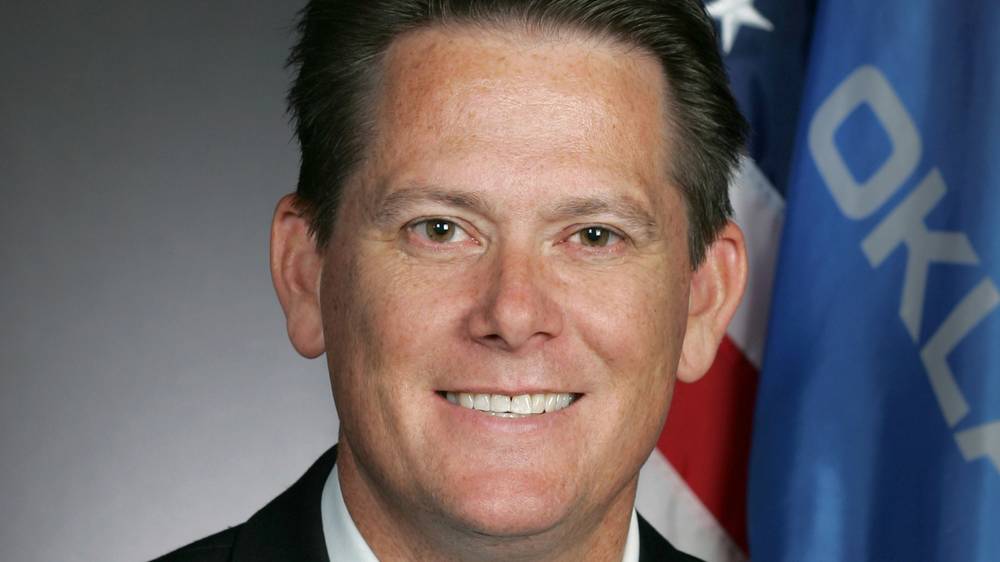
PHOTO VIA OKHOUSE.GOV

Invoking God, the Oklahoma House of Representatives just passed a bill outlawing abortion in cases of fetal abnormality—with no exception for rape or incest.

Republican politicians frequently have to say dumb and vile things to justify abortion bans that don’t allow exceptions under any circumstances—including pregnancies resulting from rape or incest, or if the woman’s life is in danger. The latest example comes from an Oklahoma state representative, George Faught, who introduced a bill that would ban abortions due to fetal genetic abnormalities or Down syndrome. The bill would make it illegal for doctors to perform abortions under that criteria; those who refuse to comply could have their licenses suspended or revoked and face fines of up to $100,000.

Defending the fact that the ban would have no exceptions, Faught suggested that “rape and incest could be part of God’s will,” according to the Huffington Post. And when Democratic members of the state’s House challenged him, asking him directly if rape was the will of God, he seemed to imply that, since rape was in the Bible, it’s just a natural part of life that women have to deal with.

“If you read the Bible, there’s actually a couple circumstances where that happened, and the Lord uses all circumstances,” Faught said. “I mean, you can go down that path, but it’s a reality, unfortunately.” Regarding incest, he said, “Same answer.”

When Faught added that the line of questioning from the Democrats “doesn’t deal with this bill,” they made clear to him that it does. “You won’t make any exceptions for rape, you won’t make any exceptions for incest in this, and you are proffering divine intervention as the reason why you won’t do that,” Rep. Cory Williams said. “I think it is very important. This body wants to know, myself personally, whether you believe rape and incest are actually the will of God.”

Faught responded by doubling down on his claims that rape and incest are part of God’s grand design, and victims of rape and incest can “use” the experience. “It’s a great question to ask, and, obviously if [rape and incest] happens in someone’s life, it may not be the best thing that ever happened,” he said. “But, so you’re saying that God is not sovereign with every activity that happens in someone’s life and can’t use anything and everything in someone’s life, and I disagree with that.”

 Apparently the floor was moved by this testimony, as the bill passed in the House with 67 votes. In a statement to a local NBC station after the vote, Faught spoke of the “beauty” of pregnancy that results from rape or incest. “Life, no matter how it is conceived, is valuable and something to be protected. Let me be clear, God never approves of rape or incest. However, even in the worst circumstances, God can bring beauty from ashes,” he said.

Even in the worst circumstances, God can bring beauty from ashes

Faught’s statement, and the the bill—which was authored at the request of an anti-abortion group—have been condemned by doctors and healthcare advocates. “This bill is a deeply damaging to reproductive healthcare, as well as the doctor-patient relationship,” the Oklahoma Coalition for Reproductive Justice said in a statement. “Further, we find it absolutely unacceptable and inappropriate that the bill’s author, George Faught, argued on the House floor that sexual assault is the will of God. Oklahoma women and families deserve better than a politician that uses his personal dogma to explain away violent crimes against women.”

Faught tried to pass a bill like this last year, but it failed after Senate amendments. According to the Guttmacher institute, only one other state—North Dakota—has a law that bans abortion on the basis of fetal abnormalities. Two other states have attempted to institute similar legislation, but federal courts have intervened, temporarily blocking the laws from taking effect; pro-choice advocates say Oklahoma will face similar legal challenges if the bill becomes law.

“It’s interesting that the bill is drawn so that it only impedes access for one group of people, and, frankly, folks who have fetal abnormalities are in desperate situations themselves,” Julie Burkhart, the founder and CEO of one of only three abortion clinics in the state, told a local news outlet. “So it really works to penalize women, their partners, their families for just trying to make good decisions for themselves.”

Indeed, there are many reasons women choose to terminate their pregnancies when they learn the fetus they are carrying has a genetic abnormality. In some instances, the abnormality may be so severe that it will be incompatible with life. It’s also often the case that severe conditions are detected late in pregnancy, so many late-term abortion restrictions already pose hurdles to women in these situations. But no matter the circumstance, bills like the one proposed in Oklahoma tell women that they don’t have the right to decide what’s best for their families and their own bodies—only God and old white men do.

Source: Broadly

https://broadly.vice.com/en_us/article/gop-politician-says-pregnancy-from-rape-or-incest-is-like-beauty-from-ashes

The activists were protesting several anti-abortion measures.

On Monday, the Texas Senate considered several abortion-related bills, including Senate Bill 415, a regulation that would effectively ban a safe and common procedure used for second trimester abortions, which anti-choice legislators have taken to calling a “dismemberment abortion ban.” It passed and will now head to the House.

The Senate also inched forward with SB 25 ― a bill that would effectively allow doctors to lie to pregnant women if they detect a fetal anomaly and are concerned their patients might opt for abortion. It will likely head for a final vote on the floor this week.

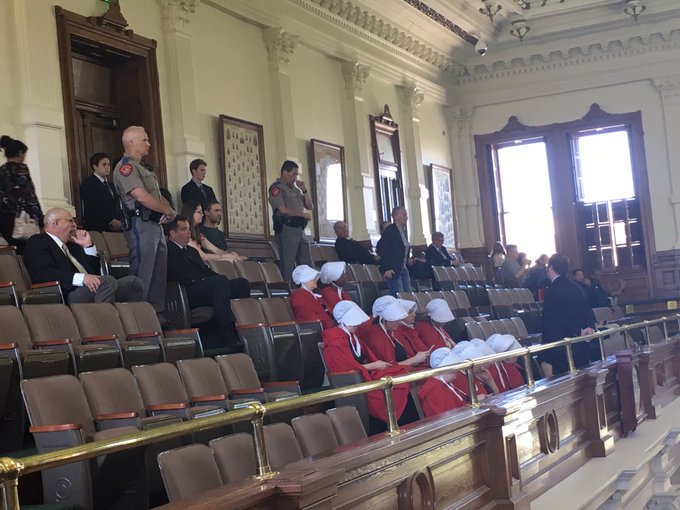
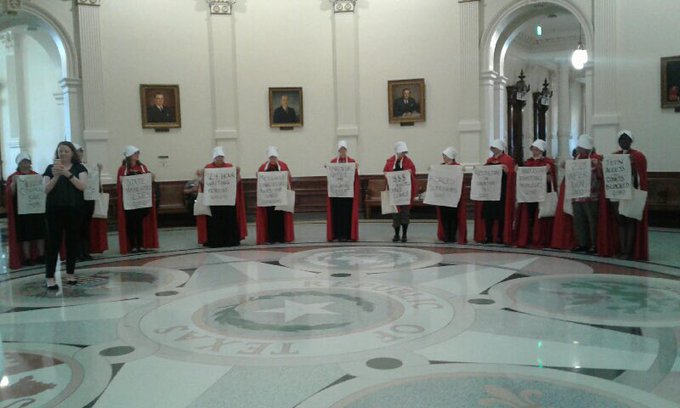
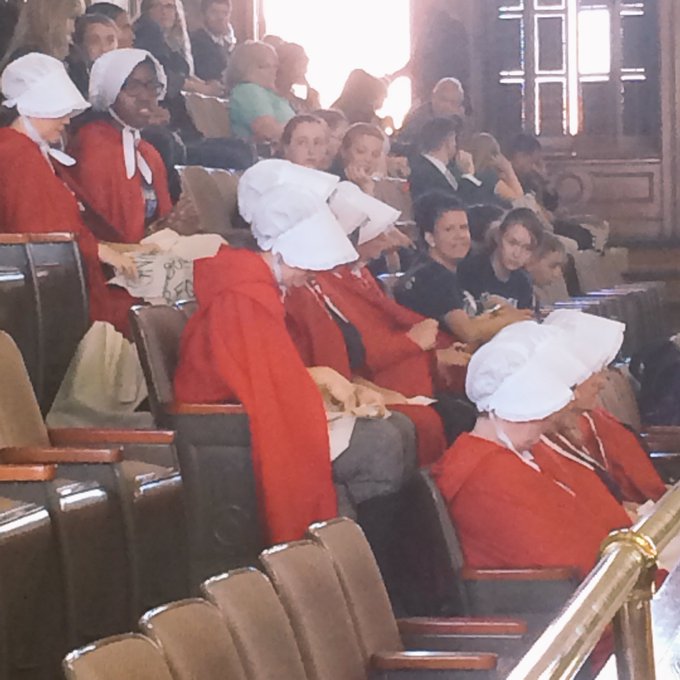
But in the Senate chambers on Monday, a group of Texas women were having none of it. The activists arrived decked out in full red robes, an homage to characters in “The Handmaid’s Tale,” Margaret Atwood’s classic (and distressingly relevant) feminist tome.

View image on Twitter
 The scene in Texas sent a quiet warning to legislators that women are ready to push back against the recent increase in anti-choice legislation in states across the country. Pictures of the sheroes quickly made the rounds on Twitter with the hashtag #FightBackTX.

It’s not the only recent example of women using clothing to broadcast a message in legislative quarters. Democratic women wore white to hear President Trump’s first address to Congress last month, a nod to the suffragists and a rebuke of misogynistic policies.

Texas senators voted 19-10 on Wednesday afternoon to require women to pay a separate premium if they want their health plan to cover an elective abortion.

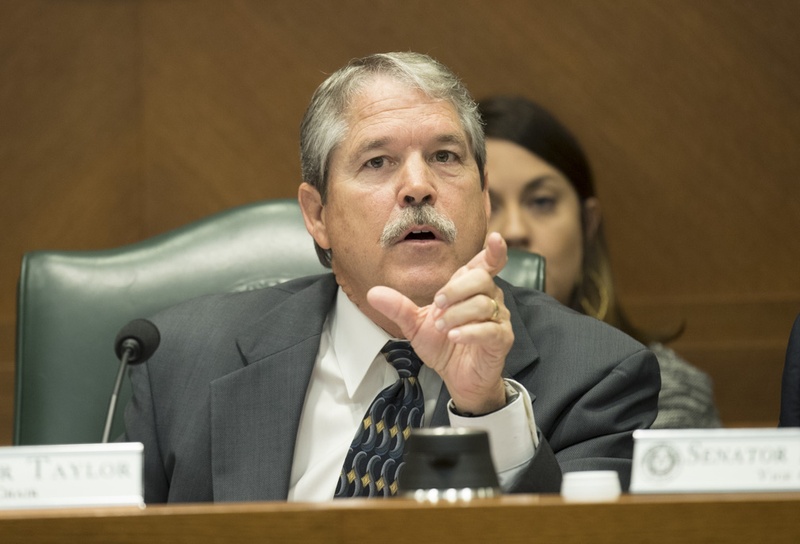
State Sen. Larry Taylor, R-Friendswood, chair of the Senate Education Committee, directs a witness during testimony on March 21, 2017.   
State Sen. Larry Taylor, R-Friendswood, chair of the Senate Education Committee, directs a witness during testimony on March 21, 2017. Bob Daemmrich for The Texas Tribune

The Texas Senate on Wednesday gave initial approval to a measure that would require women to pay a separate premium if they want their health plan to cover an elective abortion.

Under Senate Bill 20, health plans would still be allowed to cover abortions that are deemed medically necessary. The measure does not make exceptions for cases of rape or incest.

The vote was 19-10. The measure will get a final vote before heading to the House.

“If you go back to the basics of insurance, it’s to cover large, unexpected expenses,” said the bill’s author, state Sen. Larry Taylor, R-Friendswood. “In the case of abortion, you’re electing to have that procedure done.”

The bill is one of a number of abortion restrictions the Senate has approved recently. Earlier this week, the chamber passed Senate Bill 25, which would preventing parents from suing doctors if their baby is born with a birth defect and Senate Bill 415 which would require doctors to make sure a fetus is deceased before performing a certain type of abortion. Last week, Texas senators passed Senate Bill 8, which would  ban what opponents call “partial-birth” abortions and put restrictions on donating fetal tissue.

Critics of SB 20 say Texans should not have to pay for supplemental coverage for abortions. Heather Busby, executive director of NARAL Pro-Choice Texas, said in a news release that the measure jeopardizes Texans’ health care options and would have a heavy impact on low-income Texans, people of color and young people.

“Having insurance coverage for abortion is important to ensure that every Texan can access the care they need in a timely manner,” Busby said. “It is wrong for the government to place restrictions on private health insurance companies looking to offer a full range of reproductive health services, including abortion.”

But Taylor told senators that his legislation would allow women to have their abortion covered while not forcing other policyholders to pay for it. He argued that people who are anti-abortion should not have to pay for abortions if they don’t believe in them.

“This is giving the people who support pro-choice the choice to buy that coverage separately and leave everyone else out of it,” Taylor said.

Taylor said he was inspired to push the measure because of his daughter’s recent pregnancy. He recently welcomed a new grandson born with Down syndrome and heart problems. When his daughter found out what her baby’s condition would be, he said, she knew she would not have an abortion. Taylor says his daughter’s situation is why he believes women know deep down if they would want to keep or terminate a pregnancy.

But reproductive rights advocates say no one can anticipate needing an abortion and forcing people to pay for it as supplemental coverage is wrong.

And Sen. Sylvia R. Garcia, D-Houston, told Taylor that the bill “is just trying to tell business what to do with insurance coverage they want to provide.”

Taylor pointed to the 2010 federal health law as part of his reasoning behind the bill. The Affordable Care Act allows states to choose how to regulate abortion coverage. Twenty-five states have opted to ban abortion coverage through health insurance plans, according to a 2016 report from the Kaiser Family Foundation.

Melissa Conway, director of external relations for Texas Right to Life, said in a news release Taylor’s bill “would protect the freedom of all Texans to abide by their consciences.”

“Texans deserve the right to decide where their insurance and tax dollars go, and they should not be forced to fund the elective abortions of others,” Conway said. “The majority of Texans are pro-life and neither want nor need insurance coverage for elective abortion.”

Source: The Texas Tribune

https://www.texastribune.org/2017/03/22/senate-passes-restrictions-abortion-insurance/

Opponents say it would let doctors lie to parents-to-be.

Senate Bill 25, which will now be sent to the Texas House, prevents parents from suing their medical provider if their baby is born with disabilities, even if that doctor discovered the condition during routine prenatal testing and failed to inform the parents.

The architects of the so-called “wrongful-birth” bill have argued it would protect children with disabilities and prevent doctors from facing unnecessary lawsuits. “It is unacceptable that doctors can be penalized for embracing the sanctity of life,” Senator Brandon Creighton (R-TX) said in a press release when he introduced the legislation last fall.

But reproductive rights advocates have been relentless in their criticism of the measure, arguing that it would effectively make it lawful for a care provider who is opposed to abortion to avoid prenatal testing, downplay test results or even lie to patients about results if they believe those patients might consider terminating a pregnancy.

“SB 25 would allow doctors to lie to their patients,” Heather Busby, executive director at NARAL Pro-Choice Texas, the reproductive healthcare advocacy group, told The Huffington Post earlier this month.

“[It] is another thinly veiled attempt to prevent Texans from accessing their constitutional right to abortion,” Busby reiterated Tuesday.

Sen. Creighton has argued that the bill does not let doctors off the hook for negligent behavior, and emphasized that patients can still bring malpractice suits against care providers. He has said reporters and reproductive rights advocates have mischaracterized the nature of the bill, and derided an earlier HuffPost article on the measure as “fake news.”

The final Senate vote on Tuesday split 21-9, largely along party lines. During an earlier period of debate on the Senate floor, Senator Jose Rodriguez (D-TX) expressed concern that the bill was simply a means of chipping away at women’s rights, The Houston Chronicle reports.

“It seems to be all about restricting and further limiting a woman’s right to exercise her choice as to what she’s going to do in the case of serious defects in the fetus, congenital defects in the fetus,” said Sen. Rodriguez.

SB 25 was not the only abortion bill to move quickly through the Texas Senate this week.

On Monday, in front of a gallery that included a handful of activists dressed in costumes from “The Handmaid’s Tale, legislators passed Senate Bill 415, effectively banning dilation and evacuation, a safe and common procedure used in many second trimester abortions except when a woman faces a health emergency.

Source: Huffington Post

http://www.huffingtonpost.com/entry/texas-senate-passes-bill-allowing-obs-to-keep-info-from-pregnant-women_us_58d0870fe4b00705db521fb2

A pro-choice protest On International Women’s Day in London.
A pro-choice protest On International Women’s Day in London. ‘It is time for women to be treated as autonomous adults capable of making their own decisions,’ writes Wendy Savage. Photograph: Wiktor Szymanowicz/Barcroft

We congratulate Diana Johnston for introducing her bill (New bill to challenge UK’s Victorian-era abortion law, 14 March) and are delighted it was passed by 172 to 142 votes. As a 10-minute rule bill, it has no chance of becoming law, but it is important in starting the debate about whether, after 50 years, it is time to revisit the 1967 Abortion Act. It is time to treat abortion like any other medical procedure, and control it with regulation and the GMC. It is wrong that three women have been jailed or had a suspended sentence, and that doctors responding to women’s requests may face criminal prosecution. Many people (and even some gynaecologists) do not realise abortion is a criminal offence unless it conforms with the conditions set out in the Act. Up to 80% of people polled believe the woman should make the decision in consultation with her doctor and 90% of a random sample of gynaecologists surveyed in 2015 said that the woman should make the decision to end her pregnancy. It is time for women to be treated as autonomous adults capable of making their own decisions about continuing a pregnancy, a view that the some tabloid newspapers seem incapable of understanding.

Source: The Guardian

https://www.theguardian.com/world/2017/mar/20/women-are-capable-of-choosing-whether-to-continue-a-pregnancy

Wellington High School students protesting outside Wellington Hospital in support of women wishing to have abortions in 2014.

KEVIN STENT/FAIRFAX NZ

Wellington High School students protesting outside Wellington Hospital in support of women wishing to have abortions in 2014.

 EDITORIAL: Abortion law in New Zealand seems to be one of those areas where Government thinking is observably out of step with public opinion. Recent polling by Curia, carried out for the Abortion Law Reform Association of New Zealand, found majority public support for the legality of abortions in a range of situations. Support was as high as 77 per cent if a pregnant woman was likely to die without an abortion, down to 54 per cent if the woman cannot afford another child and 51 per cent if she simply does not want to be a mother.

These numbers reveal the existing law is archaic and farcical, and that most agree that abortion should be considered a health issue not a criminal one. Abortion is covered by laws that have not been updated for 40 years. They say that two consultants need to agree that the woman’s mental or physical health is at risk or the baby would be seriously disabled before an abortion can be approved.

In most cases, it is merely a rubber-stamping exercise. Of the 13,000 abortions that were performed in New Zealand in 2015, nearly all were approved on mental health grounds (in 2014, that covered 97 per cent of abortions). Does anyone believe that more than 12,000 New Zealand women risked severe mental health outcomes if their pregnancies went full-term?

Bill English and Paula Bennett hold different views on abortion, but his view will prevail for the time being.

CAMDERON BURNELL/FAIRFAX NZ

Bill English and Paula Bennett hold different views on abortion, but his view will prevail for the time being.

 That said, abortions are sometimes declined. It was reported that 252 “not justified abortion” certificates were issued in 2016. It is a reminder that while our system appears to operate as abortion on demand as long as doctors agree to bend the rules, they still have the authority to deny abortions without giving reasons.

The fact that one in four New Zealand women have had an abortion suggests it has become mainstream, though it is a difficult personal decision that is rarely taken lightly and often at times of considerable distress. Some noted that even the language of the law reflects earlier, less enlightened times. Doctors are routinely referred to as “he” and the abhorrent term “subnormal” is used in a mental health context. This is what Abortions Supervisory Committee chair Dame Linda Holloway meant when she told Parliament last week that parts of the law seem “offensive” to us now. It also uses outdated medical terminology.

The committee’s appearance before the Justice and Electoral Select Committee put the otherwise dormant issue of abortion law under the spotlight. It made it political. For Opposition, there is the happy coincidence of having a conservative Catholic Prime Minister, Bill English, who refuses to back liberalisation and a Deputy Prime Minister and Women’s Affairs Minister, Paula Bennett, who has said she is “pro-choice” but is toeing the party line this time.

Act leader David Seymour identified that the current law is a “charade” from his party’s liberal perspective. But it is a charade we will keep playing for the time being. Despite such pressure, there is little political will for change and it is unlikely English and Bennett will be embarrassed into reversing their public positions on what remains a private and morally subjective area.

Source: Stuff

http://www.stuff.co.nz/the-press/opinion/90539750/editorial-is-it-time-to-update-new-zealands-abortion-law

The abortion pill would be on hand at virtually every public college in California under legislation introduced Friday in the state Senate.

The bill’s inception comes amid renewed attempts to slash funding for Planned Parenthood, which would no longer receive Medicaid reimbursements under the Republican-backed American Health Care Act.

If the health care plan were passed in its current form, $174 million would be slashed from the budget of California’s Planned Parenthood clinics. Although Planned Parenthood is the largest single provider of abortions in the country, it does not use federal money to provide the procedure.

“If those cuts are made, then I do believe this bill takes on a heightened sense of urgency,” state Sen. Connie Leyva, D-Chino (San Bernardino County), who put forth the bill, told The Chronicle. “Women in 2017 shouldn’t be fighting for access to their bodies.”

The American Health Care Act, a Republican bill to repeal and replace the Affordable Care Act, is making its way through the House legislative process. As it does, a somewhat surprising group is reportedly hoping the bill fails.
Leyva’s legislation — which doesn’t cover surgical abortions — would make the pregnancy-terminating pills available at all University of California, California State University and California Community College campuses that have a student health center that gets funding from the state.

The medication, two pills ingested orally, can be taken only within 10 weeks of a woman’s last period.

Kathy Kneer, president of Planned Parenthood Affiliates of California, said the medication is safe and effective. Since the Food and Drug Administration approved the pill 16 years ago, 3 million women have taken the abortion pill, she said. Of those, 19 died from complications related to the medication — a mortality rate lower than that of giving birth.

“There’s no reason why it shouldn’t be readily available in student health centers,” Kneer said. “There’s no medical justification.”

The availability of the abortion service on campuses would be the first in the nation. Last year, the elected student leaders of UC Berkeley lobbied the administration to provide the abortion pill at the campus health center, but their demands never came to fruition. UC Berkeley spokespeople said they weren’t available to discuss the matter.

“Because our health center includes a pretty comprehensive amount of sexual and reproductive services, not providing abortions reinforces the idea that abortion is not a part of women’s health, when it absolutely is,” said Adiba Khan, 20, a student who pushed for the service to be offered on campus. “For undergrads and graduate students, abortion is part of their life. It’s normal and should be available as easily and cheaply as possible.”

Khan said friends of hers who took the abortion pills were initially met with financial and academic roadblocks. Those who got their health insurance through the campus first had to meet with a counselor before they could be referred to an outside provider — a potential obstacle for the time-sensitive medication — and often missed class or work to travel to an abortion provider off campus, she said.

Marandah Field-Elliot, a student senator who helped organize the campaign to get the abortion service on campus, said an added bonus if the bill passes the state Legislature would be that UC Berkeley wouldn’t be the sole object of antiabortion activists. Already this year, UC Berkeley’s progressivism put the campus in the crosshairs of President Trump’s tweets when violent protests forced an event featuring controversial speaker Milo Yiannopoulos to be canceled.

“This bill would be so amazing, because it would spread the impacts rather than putting a target right on Berkeley,” Field-Elliot said.

Source: SFGate

http://www.sfgate.com/politics/article/Bill-would-make-abortion-pill-available-at-state-11010665.php

The Women’s Centre used Google to target woman researching abortionsDADO RUVIC/REUTERS

Google has blocked an anti-abortion group from using advertisements on its search engine that encourage women to visit their rogue crisis pregnancy agency.

Last year The Times exposed how The Women’s Centre on Berkeley Street in Dublin was advising women that abortion caused breast cancer and could turn them into child abusers.

Despite claiming to be an objective source of information, The Women’s Centre is linked to The Good Counsel Network, an extreme Catholic group that has compared abortion to terrorism. The group paid Google so that its website, abortionadvice.ie, was the first or second result when a woman searched for information on how to access a legal abortion abroad. Women who call its “national helpline” are offered appointments at The Women’s Centre or one of the other clinics it claims to run across the country.

Google offers paid advertisements which can present a website as the first result under certain search terms. This week the company blocked The Women’s Centre from using its adverts because it had been found to be deceptive.

“We have a set of strict policies which govern what ads we do and do not allow on Google. We do not allow fraudulent or misrepresentative ads and when we discover ads that break our policies, we quickly take action,” a spokesman for Google said.

The site had specifically targeted women using Irish IP addresses who were entering search terms indicating that they were looking for information about how to access an abortion in the UK. Since the site’s removal from the top search results it has been replaced by a HSE website and the British Pregnancy Advisory service.

The Women’s Centre is facing closure after Simon Harris, the health minister, committed to pass legislation to regulate crisis pregnancy agencies that were offering misinformation. Mr Harris said that he was hoping to pass the law this summer.

Other anti-abortion groups and campaigners have also sought to use Google adverts to campaign ahead of a possible referendum on the Eighth Amendment. Over the course of the last meeting of the citizens assembly, a website alleging bias on the part of the forum paid to be the top search result.

Citizensassembly.info is a site registered through a proxy. On the site it is stated that it was set up by Josiah Burke, a business student from NUI Galway. Mr Burke is one of ten children in the Burke family in Castlebar. Members of the family are well-known as anti-abortion and anti-marriage equality campaigners. The family linked homosexuality to paedophilia during the marriage equality campaign, sparking a protest at the NUIG campus.

The website claims that the citizens’ assembly, which is considering the need to change Ireland’s abortion laws, is biased in favour of a repeal of the Eighth Amendment. At its last meeting, members of the assembly reacted angrily when Family and Life, an anti-abortion campaign group, used its presentation to claim that the assembly was biased and hearing evidence from “the abortion industry”. The 99 citizens had requested to hear from healthcare professionals who offered legal abortions to Irish women in the UK.

Family and Life has since sponsored its social media posts on sites like Facebook to claim that the assembly is biased.

Ms Justice Mary Laffoy, the assembly’s chair, has repeatedly defended the forum as being balanced and fair. At its next meeting in April the assembly members will ballot on what change, if any, should be made to Ireland’s constitutional near-ban on abortion. The assembly has considered leaving the Eighth Amendment as it is, amending it or replacing it with new legislation.

Source: The Times

http://www.thetimes.co.uk/article/google-blocks-adverts-for-anti-abortion-group-t3fgtcrgd

A Whole Woman’s Health abortion clinic in Texas is reopening four years after an unconstitutional law caused it to close. This is a great sign for the rebuilding of abortion access in Texas since a restrictive law was ruled unconstitutional by the Supreme Court last summer.

House Bill 2 said clinics had to meet the requirements of an ambulatory surgical center and that providers had to have admitting privileges at hospitals.

These terms are very difficult for clinics to fulfill, and would involve construction for many clinics. After the law was put into effect, half of Texas’s abortion clinics were forced to shut down. The number of clinics in the state dropped from 41 to 19 from 2013 to 2016.

But Whole Woman’s Health fought the law, taking it to the Supreme Court. Last June, the Supreme Court ruled Texas’s law was unconstitutional.

This was a cause for celebration for Whole Woman’s Health and pro-choice women across the country.

The Supreme Court said the burdens on women clearly outweighed the health and safety benefits of the law.

Ruth Bader Ginsburg wrote in a concurrence opinion, Given those realities, it is beyond rational belief that H. B. 2 could genuinely protect the health of women, and certain that the law ‘would simply make it more difficult for them to obtain abortions.’

Before the Supreme Court ruled, these clinic closures caused problems for women seeking abortions.

Many women had to travel further for abortions with local clinics closed — and Texas is a big state.
Meanwhile, because there were fewer clinics, the remaining ones were experiencing long wait times for procedures. Delaying an abortion by a few days is significant as the pregnancy moves along.

Even with a positive Supreme Court ruling, Whole Woman’s Health knew it would take time to rebuild their service.

Clinics can’t just reopen with a snap of the fingers. It takes time and money for space, for rehiring staff, for setting up the medications and materials.

Andrea Ferrigno, Vice President of Whole Woman’s Health, told Elite Daily last year before the decision, The damage that these laws have caused, it’s going to take years to repair. In a statement on Thursday, Amy Hagstrom Miller, President and CEO of Whole Woman’s Health, said she was committed to reopening the Austin clinic as soon as possible.

The Austin clinic was Whole Woman’s Health flagship clinic.

Abortion advocates are celebrating the reopening of the Austin Whole Woman’s Health clinic.

Greg Casar, a council member in Austin, said in a statement that “our community suffered a loss” when the clinic was forced to shut down. With the reopening of the Austin Whole Woman’s Health clinic, the residents of North Austin and beyond will have expanded access to safe, legal abortion care right here in our community. Stephanie Toti, the attorney who argued for Whole Woman’s Health in front of the Supreme Court, said, Today’s clinic reopening not only improves health care access for millions of Texas women, it shows the power of legal advocacy to move us toward a more just world.

This is great news for women in Texas, as it shows the clinics are recovering from the damage of the unconstitutional HB 2. With one more clinic open, the others will have less of a burden and more clients will be able to get responsible care.

Source: Elite Daily

http://elitedaily.com/news/politics/texas-abortion-clinic-reopening/1827206/?utm_campaign=anshare&utm_medium=referral&utm_source=applenews


As a referendum seems tantalisingly close, BuzzFeed News went on the road with Ireland’s growing pro-abortion rights movement.

“Hands up who’s ever had sex?” Sean Shinners, a man in his sixties from Limerick, shouted across the road to a row of anti-abortion rights protesters.

The group of around twenty protesters – men and women in their sixties and seventies, some wearing cheerfully coloured woolly hats and tasteful floral scarves – stood silently behind banners depicting graphic photographs of aborted foetuses. Looking stony-faced and sombre outside Limerick’s branch of the Bank of Ireland on Tuesday, they refused to engage with the heckler.

“Do you think any of them have even had sex before, let alone impregnated anyone or been pregnant?” Shinners went on, addressing a growing group of passersby who had gathered to see what all the fuss was about.

“Why is it the ones who know nothing about the subject are always so passionate about it?” he continued. “You’re looking at the residual effect of the Catholic Church in Ireland. It’s residue. It’s what’s left at the end of the pot when you’re cooking.”

“Bunch of bastards,” he added under his breath.

The protesters had arrived earlier that day to oppose an abortion rights rally by Rosa (for reproductive rights against oppression, sexism and austerity), who were making a lunchtime stop-off with the “Bus4Repeal.”

Shinners wasn’t invited to speak at the rally; he was merely a passerby who felt incensed enough by the anti-abortion campaigners opposing the group to speak out.

BuzzFeed News joined 48 abortion rights activists and their supporters on the bus, as they spent three days driving around Ireland this week protesting against the country’s highly restrictive abortion laws.

The eighth amendment of the Irish constitution states that abortion is illegal in all circumstances except when a pregnant woman’s life is seen to be in immediate danger. Undergoing or carrying out the procedure is punishable by up to 14 years in prison.

Around 10 representatives of the Irish Centre for Bioethical Reform (ICBR), a recently formed group affiliated with UK-based anti-abortion rights group Abort67, trailed the bus throughout our trip, setting up counterprotests at its stop-offs in Waterford, Cork, Limerick, Galway, Maynooth, and Dublin.

One of them, Christian Hacking, had prompted Shinners’ outburst, by calling out to Limerick locals going about their lunchtime errands for a “dialogue” on “the scientific precedent of whether the unborn is a human being” through his megaphone.

ROSA / Facebook / Via Facebook: ROSAwomen2014

He also turned his attention to four mums at the rally with their babies, assuming that, as parents, they were there in support of the anti-abortion movement. He became visibly irritated when they informed him they were not.

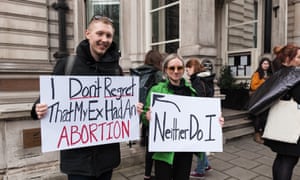
“Just because we’re mothers and pro-motherhood doesn’t mean we’re anti-abortion,” one of the women told BuzzFeed News. “I don’t have a right to tell anyone what they should do with their bodies in the same way that I wouldn’t expect anyone to tell me what’s right for me.”

Nurphoto / Getty Images

“I am saddened to see mothers of young children in support of ending the life of an unborn child and refusing to engage with the simple scientific argument,” said Hacking in response. “That the unborn child is a human being. It has the exact same DNA as you or me. The only difference between the unborn child and you is time.”

“When have you ever been pregnant?” Shinners hissed, intervening.

He told us he was “absolutely 100%” pro-abortion rights. “I’m pro minding your own bloody business,” he added, and encouraged Hacking and his followers to do the same.

The group on Rosa’s “Bus4Repeal” included men and women, several students, a secondary school teacher, and a representative for Women on Web, a charity that provides safe abortion pills to women in countries where the procedure is illegal. Representatives for local Rosa groups got on and off the bus that sped through the grey and green Irish countryside, to join protests calling for the eighth amendment to be repealed, coinciding with International Women’s Day.

The atmosphere on board was urgent, frustrated, and fired up but also often jovial. Rita Harrold, one of Rosa’s organisers, gave updates on the campaign over the coach stereo, interspersed with blasts of Beyoncé and self-care tips. Chat ranged from sex to studies, and everything was politicised. One student, whose seatmate took an unflattering Snapchat selfie, told her to “repeal your face”.

Despite the large groups cheering on the Bus4Repeal on at each of its stops, smaller numbers of anti-abortion activists were a constant presence. In Galway, local police asked them to take down their banners after receiving numerous complaints from members of the public about the images of foetuses. “We’ll consider making arrests if they continue to refuse to get rid of them,” one officer sighed as he took notes in the freezing rain. He told us that he dealt with this kind of thing quite regularly.

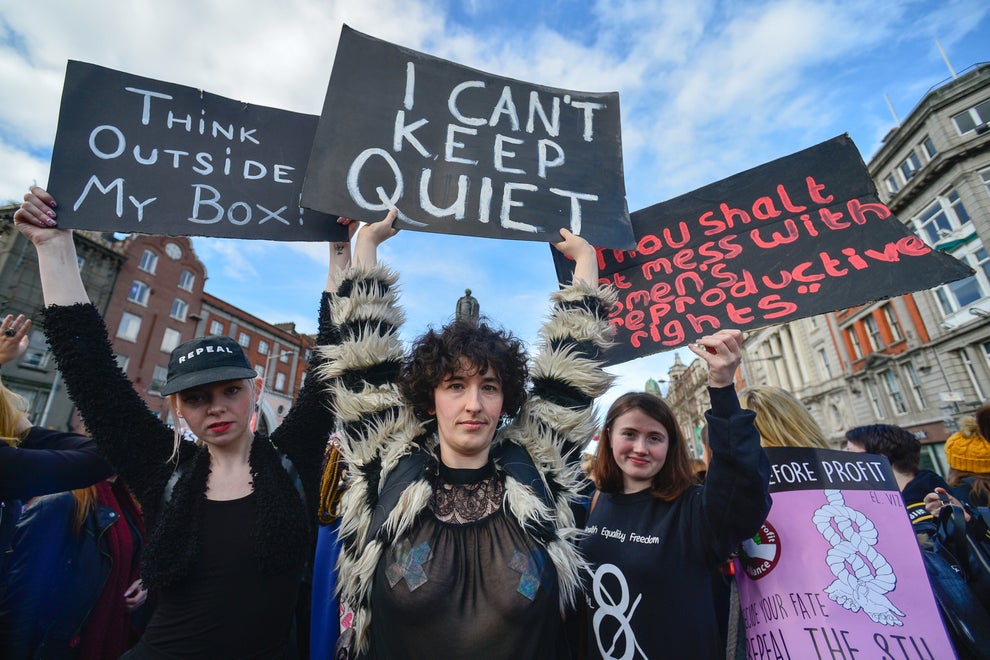
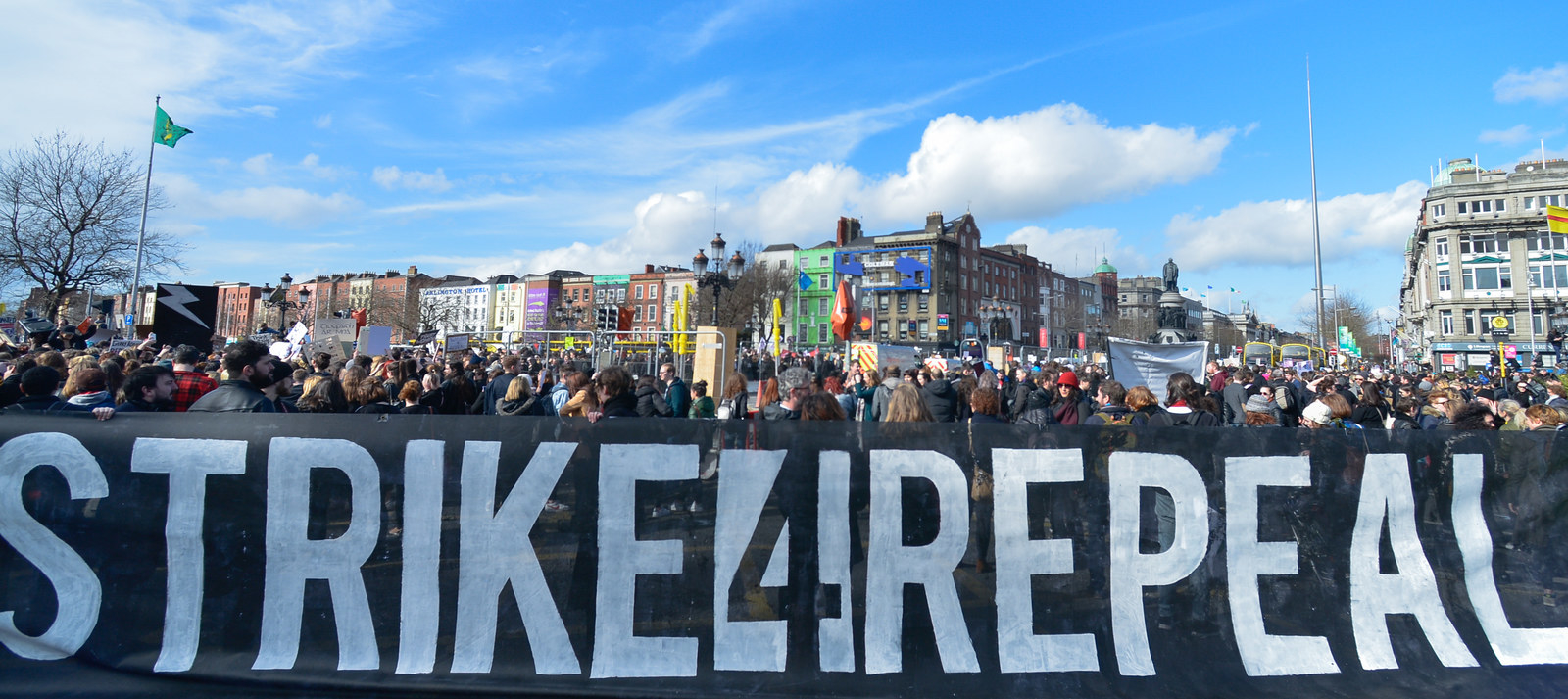
Protesters and members of the Strike 4 Repeal campaign gather on O’Connell Bridge in Central Dublin on 8 March. Nurphoto / Getty Images

“People find your images offensive and frightening,” another officer told protesters, who had barricaded themselves behind their banners.

“The Germans found pictures of the Holocaust very frightening,” one protester snapped back, making a comparison often drawn upon by the anti-abortion rights movement, before the rain got the better of them and they dispersed.

Other than Hacking, the ICBR campaigners seemed unwilling to engage one-on-one when BuzzFeed News approached them, preferring to convey their messages through their megaphones.

Harrold had warned Rosa volunteers to be careful when talking to ICBR activists, all of whom wore body cameras.

Hacking told us they wore the cameras for their own protection and safety. “As you can imagine, people accuse us of all sorts of false allegations, such as harassment of women, following them, hate speech, so we wear cameras so that we have a definitive account,” he said.

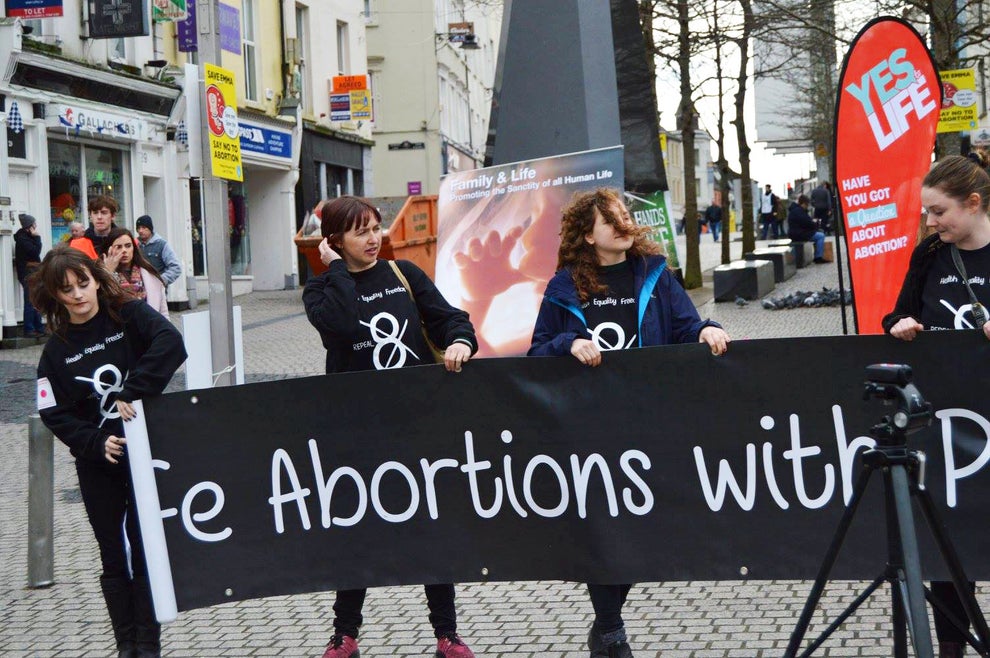
In Cork, where the bus had its biggest turnout of supporters, an elderly woman clutching rosary beads walked up and down a row of around 30 women in witch’s hats, who held signs like riot shields, depicting an 8 crossed through with knitting needles.

She was faced with increasingly urgent chants of “our bodies, our choice” by the witches, a local group of abortion rights activists who came out to create a “protective circle” around the stand where Women on Web shared information about medical abortion and one Rosa volunteer took a call from a woman who was worried she might require their services.

Alongside them, a man shouted his support for Trump’s crackdown on American women’s reproductive rights, and another anti-abortion rights supporter wore a fluorescent vest decorated with cherubic babies, chanting “lies, lies, lies” into his megaphone.

During the Cork rally, Rosa raised over 1,000 Euros selling jumpers baring the slogan “health, equality, freedom” and in cash donations from the public.

Their supportive reception showed how the balance of public opinion seemed to be shifting. “It’s been a long time coming,” one Cork local and a mother of two teenage daughters told us. “When I was a teenager in the ’90s, we had to put up with a lot of this,” she said, gesturing to aborted foetus banners. “But we didn’t have people standing up for choice,” she continued. “I think it’s amazing.”

“I don’t normally like to take a stance on these kinds of things, but it’s really up to an individual person what they do with their body,” a young man, working behind the counter in a newsagents next to the rally, told us.


As the bus pulled up at each new town, Rosa organiser Harrold would pull out her megaphone and chant to get her volunteers riled up ahead of the rally. “Not the church, not the state!” she shouted, receiving a chorus of “women must decide their fate!” in response, before the group stomped off the bus calling: “Get your rosaries off our ovaries!”

ROSA / Facebook / Via Facebook: ROSAwomen2014

Both slogans, along with numerous other religious wordplays, have become synonymous with campaigns to repeal the eighth. At Dublin’s March4Repeal on Wednesday night, one woman held a protest sign that read: “If I wanted religion in my vagina, I’d fuck a priest.”

The entanglement of church and state never seemed to be far from discussion around abortion both on the bus and on the street.

“I just don’t understand how the pro-lifers can talk about the suffering of unborn babies when we’re making women suffer so much by not allowing them to get an abortion,” one student on the bus said while sweets were passed around on a stretch of motorway between Dublin and Cork. “Yeah, but Catholics think suffering is a virtue,” her seatmate retorted, reaching into a bag of big pink marshmallows. “They want women to suffer.”

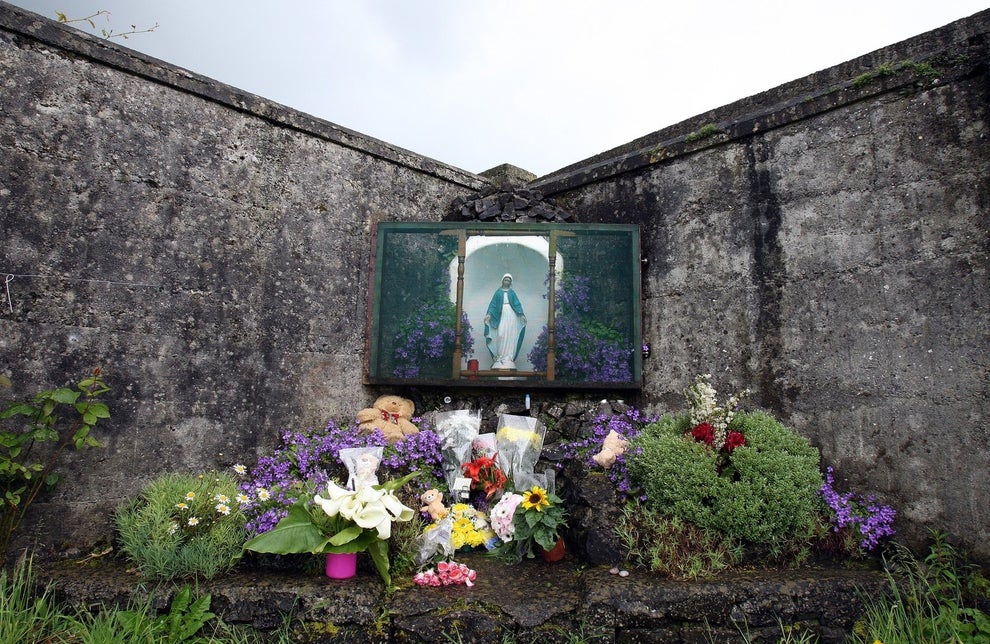
Critics’ increasing distrust of the Catholic influence on state affairs was further exacerbated when the remains of more than 700 babies and children under 3 were discovered in a septic tank beneath a former mother and baby home in the town of Tuam, just days before the Bus4Repeal set off on its trip.

A shrine in Tuam, County Galway, erected in memory of up to 800 children who were allegedly buried at the site of the former home for unmarried mothers run by nuns. Paul Faith / AFP / Getty Images

From 1925 to 1961, around 35,000 unmarried pregnant women were sent to the institution run by the Bon Secours order of nuns in county Galway.

Almost everybody we asked about their opinion on abortion around Waterford, Cork, Limerick, and Galway mentioned Tuam. The shocking discovery showed that women and their children faced serious neglect and distress, a reminder of Ireland’s long history of abandoning its “fallen women”. Magdalene Laundries, where women who were thought to have engaged in sexual activity outside marriage were sent, operated from the 18th century until 1996. Mass graves have been discovered where they stood.

For many, that children, and often their mothers too, were neglected to the point of death when under the care of the church only highlights the hypocrisy of its stated wish to protect the rights of the unborn child by opposing abortion.

“To hear the bishops acting the high moral ground about women’s bodies, women’s lives, and women’s futures is absolutely disgusting,” Ruth Coppinger, the Irish Anti-Austerity Alliance TD [the Irish equivalent of an MP], said during Rosa’s rally in Cork on Monday. “As long as the church and state combine to control and determine the lives of women, their reproductive lives and their futures, we will have the horrors such as we had in the homes.”

“The scandal in Tuam exposes hypocrisy to a huge extent,” a man in Galway told us when asked whether he would support the repealing of the eighth amendment.

One woman in Limerick said it was important that Ireland took the opportunity to learn from the discovery. “We forget very quickly as we move from one scandal like that to the next,” she said. “In a few years that will all be forgotten, but then there will be another Tuam.”

ROSA / Facebook / Via Facebook: ROSAwomen2014

Another, on her way to meet her son for lunch in Limerick, said that even though she didn’t necessarily like the idea of abortion, Tuam proved that preventing it had far worse consequences. “Anything is better than that,” she said.

Ireland’s reputation as one of Europe’s last socially conservative stalwarts, frozen in a time when you wouldn’t admit to doing anything you wouldn’t tell the priest at confession, seems to be thawing. “Twenty-three years ago when I came to Ireland, abortion was a word that people wouldn’t even say,” Stella, a woman in her sixties who was selling “repeal the eighth” badges during the “March4Repeal” in Dublin on Wednesday told us. “I am happy about the way things are changing. The time has come.”


The 2015 referendum on marriage equality, a groundbreaking victory for LGBT rights, represented a massive sea change in progression for the country. Almost everyone BuzzFeed News spoke to during the Bus4Repeal’s tour also cited the Irish government’s recent scrapping of controversial water charges following social-media-led grassroots campaigns as proof that ordinary people could be empowered to shape government policies.

For many, campaigning to legalise abortion is a logical next step for those striving to modernise Ireland. An estimated 12 women per day travel from the country to the UK to access abortion at private clinics, and a further three women per day illegally purchase abortion pills online.

“The Dail [Ireland’s parliament] is a conservative, cowardly institution that does not represent the huge sea change in attitudes there has been on abortion,” Coppinger told the rally at Cork. The crowd, who ranged from students to pensioners, cheered.

ROSA / Facebook / Via Facebook: ROSAwomen2014

Many have been advocating for a repeal of the eighth amendment since it was introduced through a referendum in 1983, but the death of Savita Halappanavar in 2012 lent the battle a new urgency. Halappanavar asked for an abortion as she had severe back pain and was miscarrying, but was told abortion laws meant doctors were unable to terminate her pregnancy. She had a septic miscarriage, and died days later.

“Everyone in the city felt that,” a young woman listening to speakers at Rosa’s rally in Galway, where Halappanavar died, told us. “It was horrific what happened to that woman.”

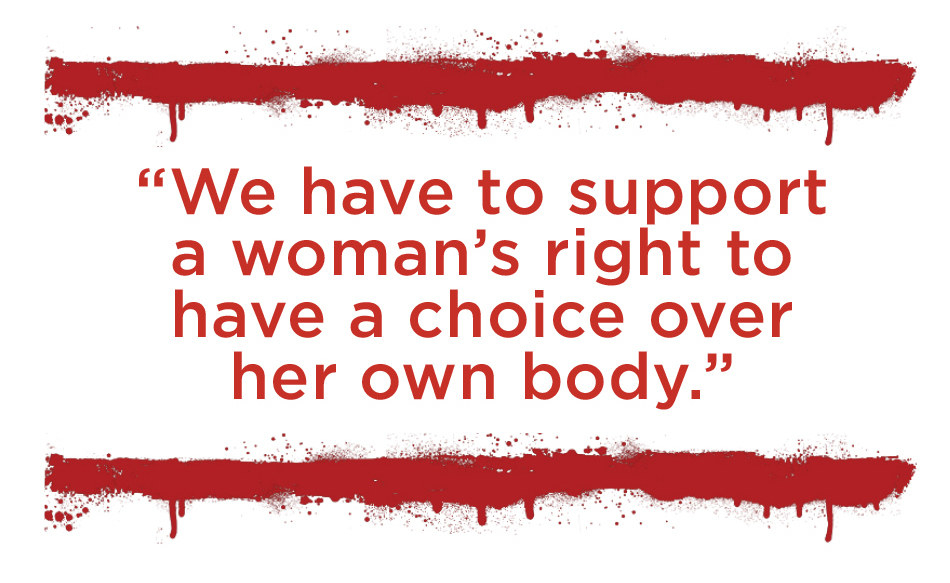
“The eighth amendment has to be repealed and women need to be allowed access to abortion,” she continued, huddled under her umbrella during an especially dreary early-evening downpour. “We have to support a woman’s right to have a choice over her own body.”

Two other young women in Galway also told us the shadow of Halappanavar’s death had played a huge part in shifting opinion on reforming abortion rights in Ireland. “I think the public wants this,” one said.

As the bus set off from University College Dublin on Monday morning, Niahm Plunkett, who is studying biomedical science, told us she had become interested in campaigning for abortion rights as a teenager when she learned what had happened to Halappanavar: “I just remember coming home from school and hearing about it on the news and feeling like, how can this happen?”

In Limerick, a woman rushing to collect her grandchildren from school told us she had campaigned in the 1983 referendum, and worried there was “still quite a big hill to climb” in winning abortion rights now. “There are politicians who just think women should have lots of babies,” she said.

But she remained positive that change could be on the horizon. “I’m delighted to see so many young women out there and involved in this, and quite a few women of my own age who are really supportive too,” she continued. “Older women especially are sympathetic because of what they’ve suffered in Ireland. They don’t want the same for young people.”

But while recent polling by Ipsos Mori for the Irish Times showed that 67% of people would vote for abortion laws to be relaxed in some circumstances, one man we spoke to in Galway worried many might not be so ready for change. “I think a lot of people are just ignorant about what it means not to have access to abortion and have already made up their minds,” he told us.


Education around abortion, both for members of the public and women in crisis, is key to Rosa’s objective. As the bus drove out of Cork on Tuesday, Harrold gave an interview over the phone to a local radio station during which she was confronted by a vehemently anti-abortion rights caller. Later she told us she welcomed the opportunity to debate openly on the subject.

“Radio is so important, people here listen all the time, so we’re very happy to be part of that discussion,” she said. “When we talk to ordinary people about abortion in an understanding way, we come from a place of wanting to keep people safe. Most people in society do not hold the views of the past.”

The radio appearance was also a success for Rosa for another reason. After hearing about the bus, two women from Cork who believed they were pregnant drove to meet it at its next stop in Limerick to seek advice on medical abortion. There, Harrold was able to connect them with Women on Web.

“They are now doing consultations with Women on Web, and if they choose to go ahead and use that method, they should get pills by the end of the week,” Harrold said.

Harrold said she’d spoken to a further 12 women seeking abortion pills during the bus’s three-day journey, either in person or on the phone. On Wednesday a spokesperson for Women on Web told us that they had seen online requests from Ireland increase “significantly” since the bus had set off on Monday.

“This has without a doubt been a successful campaign,” Harrold told us as the bus made its way towards its final stop at Dublin’s central bank. “Independent Women” by Destiny’s Child was blaring from the stereo. It was greeted by hundreds of cheering students, who earlier in the day had completely blocked the city’s central O’Connell bridge during a mass walkout to demand abortion rights.

A sense of urgency filled the streets of the capital as protesters wearing black “repeal” jumpers began to congregate at the Garden of Remembrance for Wednesday night’s major march, the setting sun turning a few lingering rain clouds a vibrant pink.

ROSA / Facebook / Via Facebook: ROSAwomen2014

Megan, 19, a student and Rosa activist who traveled on the Bus4Repeal, told us that she felt growing up during such a tumultuous era – the start of which she pinpointed as 9/11 – meant her generation couldn’t help but be politicised. “So much has already been changed in my lifetime,” she told us at a social organised for abortion rights supporters in Cork on Monday night. “We have to stand up and speak out to repeal the eighth too.”

Seventeen-year-old Grace, who wore a “Repeal” sweatshirt with her school uniform at the Dublin march, agreed that young people were key to driving change around abortion. “The eighth amendment was introduced in 1983 so the youngest person who could have voted for it is now 51,” she said. “Nobody of child-bearing age has had a say, so we’re here today to say this is a law that affects us, and we’re not going to take this ban on abortion any more.”

“It’s really important for women to come out in solidarity and show that we have strength in numbers. We need to say we’re not standing for this any more,” Ailbhe O’Connor told us, as she arrived at the protest with a group of friends.

A referendum on repealing the eighth amendment could be imminent, after the Citizens’ Assembly – a body set up to consider constitutional questions – holds its final session on the topic in April. Until then, uncertainty remains about the future of abortion in Ireland. Will it ever be fully legalised or only made available in certain circumstances? Will the influence of the Catholic Church loosen enough to make way for the wave of change the younger generation is powering, to override decades of doctrine around women’s reproductive rights?

As Wednesday’s march closed in on Dublin’s official government buildings, the chanting crowd demanded to be heard by prime minister Enda Kenny. There was only one question on thousands of people’s lips: “Enda, Enda, where’s our referenda?”