Guterres pointed to extremists subjugating women and governments curtailing women’s freedoms and rolling back laws against domestic violence
More
(UNITED NATIONS) — Secretary-General Antonio Guterres warned Monday that women are suffering “new assaults on their safety and dignity” around the world, pointing to extremists subjugating women and governments curtailing women’s freedoms and rolling back laws against domestic violence.
He told the opening session of the Commission on the Status of Women that educating and empowering women will unleash their potential and prevent “challenges that arise from violent extremism, human rights violations, xenophobia and other threats.”
While Guterres didn’t name any countries or groups, his message was clearly aimed at the Islamic State extremist group which sells women and girls as sex slaves. It also appeared directed at U.S. President Donald Trump’s expansion of a ban on federal aid to international organizations that provide abortions or abortion information — and to Russia for new legislation decriminalizing some forms of domestic violence.
The U.N. chief said men still dominate in every country of the world and male chauvinism blocks women from getting ahead.
“Our world needs more women leaders,” Guterres said. “And our world needs more men standing up for gender equality.”
The executive director of U.N. Women, the United Nations agency promoting women’s rights, told the commission that changing discriminatory laws in over 150 countries “could affect more than three billion women and girls in the world.” Phumzile Mlambo-Ngcuka also said that “advancing women’s equality in total could bring a potential boost of 28 trillion U.S. dollars to global annual GDP by 2025.”
But, she added in an echo of Guterres, while there has been some progress toward gender equality, gains have eroded and “the much needed positive developments are not happening fast enough.”
“With the global pay gap at an average of 23%, women are clearly earning consistently less than men,” Mlambo-Ngcuka said.
“Women regard this as daylight robbery,” she said. “Each year they work three months more than men for equivalent pay.”
She said over half of all women workers around the world — and up to 90% in some countries — are informally employed, such as low-cost farm workers, street food vendors and care workers, almost all without legal or social protection. In India alone, this sector accounts for 190 million women, she said.
“They are the under-the-radar and under-valued cogs in the bigger wheels of the formal economy,” Mlambo-Ngcuka said.
At an event Monday night on women’s economic empowerment, the theme of this year’s commission meeting, which ends March 24, UN Women and the International Labor Organization announced a group of equal pay “champions” to mobilize global action to achieve equal pay for work of equal value.
Oscar-winning actress Patricia Arquette, one of the champions, said last year that women were at “breaking point” when it comes to equal pay and this year she said it is “worse than breaking point.”
“Women have waited since the beginning of time to be treated equally,” she said. “I think the time has come now when we can’t wait any more.”
Retired American soccer star Abby Wambach, a two-time Olympic gold medalist and another equal pay champion, said there is definitely a gender pay gap in professional sports, but “it’s about every single industry in every single country.”
“It’s so near and dear to my heart,” she said, “because since retiring I’ve noticed that looking across the aisle, the Kobi Bryants, the Peyton Mannings, they’re having a much different conversation with themselves in retirement than I am.”
“I have to worry about paying my bills — and enough finally has to be enough,” Wambach said.
Iceland co-sponsored the event and Minister of Social Affairs and Equality Thorsteinn Viglundsson said he expects the country to be the first in the world to eliminate the gender pay gap by its target of 2022.
“We are really turning the table and saying to management and the institutions, you bear the responsibility, it is your task to make sure the gender pay gap is eliminated,” he said. “And the Equal Pay Standard that we are implementing is a perfect tool for it.”
Offences Against the Person Act 1861 makes a woman’s decision to terminate her own pregnancy punishable by life in prison
The ten-minute rule bill was introduced by the Labour MP for Hull North, Diana Johnson. Photograph: Josh Kearns/Rex
MPs have won the right to introduce a bill to parliament which would decriminalise abortion for the first time by repealing a law that dates back to Victorian times.
A ten-minute rule bill introduced by Diana Johnson, the Labour MP for Hull North, sought permission of the House to change two sections of a law passed in 1861, before women had the vote. It succeeded by 170 votes to 142, a margin of 32.
As the law stands, doing so is technically punishable by life imprisonment under sections 58 and 59 of the 1861 Offences Against the Person Act – both for the woman and for anyone, including a doctor, who helps her.
“This is the harshest criminal penalty of any country in Europe, underpinned by a Victorian criminal law passed before women had the right to vote, let alone sit in this place,” Johnson told MPs.
Poland, a traditional Catholic country, does not criminalise women for having an abortion, she said. In the United States, when the current president suggested women should be criminalised, he was forced to backtrack, she added.
Abortion is legal in England and Wales in restricted circumstances, which were laid down in the 1967 Abortion Act introduced by the then Liberal MP David Steel to stop women dying in large numbers as a result of backstreet abortions.
The 1967 legislation allows a termination before 12 weeks with the approval of two doctors and in the interests of the woman’s health. In rare circumstances, including foetal abnormality, later abortions are permitted.
The new bill will be brought forward by a cross-party group of MPs.
Johnson said in the debate that abolishing criminality need not change the current restrictions, which can be enshrined in regulations. The change in the law would not increase the number of late abortions. “It will not lead to a free for all,” she said.
The pills that bring about early abortion, before 12 weeks, are prescription only, so their use is governed by the Human Medicines Regulations 2012. It would not be any easier for couples to seek abortion for sex-selection purposes. And, she added, the current law did nothing about people who tried to coerce women into having a termination.
Abortion is widely available under the law, she argued, and the wider availability of the abortion pills online “should motivate greater concern for women’s health and make us wary of greater liberalisation of the law”. Removing the criminal sanction “would embolden men to pressure women into abortions they do not wish to have”. Ensuring that the woman must have the consent of two doctors meant that she would have the chance to speak to somebody who could help her, Caulfield said.
Watching my new colleagues calm patients disturbed by protesters, I knew this work was more important than any other job I have ever had.
On an afternoon walk with my best friend, we saw a group of people protesting near her workplace. When I asked her what was going on, she said, “That’s the Hope Clinic for Women.” I knew it was an abortion clinic; I had brought a friend there once. But I had never heard the protesters telling men and women entering the clinic they would burn in hell.
There was even a sign showing a woman lying naked on an examining table, bruised from head to toe. It hurt me to look at it. I thought, “Come on now, really! How disrespectful”—especially if you claim to be concerned about women.
So that’s when my life changed. That day, I had been out dropping off résumés and looking for a new job. I had worked as a certified nursing or medical assistant in many different settings. I knew what I wanted to do: helping and caring for people. But I was lost and unfulfilled, and hated to go to work.
I walked right through those anti-choice protesters and gave them my résumé.
Today, I am a proud abortion provider. My first day at the clinic, I knew it was where I wanted to be. All the employees introduced themselves, smiled, and asked about my family. I felt truly welcomed.
I observed and watched patients coming in. Some were physically shaking and crying, angry, or agitated from all that judgmental nonsense being screamed at them. My new co-workers calmed those same patients down with kindness and reason. I knew this was different and more important than any other job I have ever had.
Though anti-choice activists try to say that abortion providers don’t care about women, babies, or families, I consider my co-workers an extended family. When so many Americans dislike their jobs, I love coming to work every day, even on Saturdays. Seeing the most helpful, fun, and loving people every day doesn’t seem like work. We work together—not just in the same place, but collaboratively and with the greater purpose of helping women in need.
I am lucky to have been empowered by so many people in this movement, especially my colleagues in the Abortion Care Network. I was chosen for a program called Uniting Our Voices, which helps train advocates to communicate with media. This group gave me the tools and courage to step out of my box, though it didn’t feel like that at first. I knew no one at the meeting, and I was very much out of my comfort zone.
I remember telling two other people in the program that “I am just a medical assistant, I think they chose the wrong person.” I didn’t realize they were board members. They stopped me right there and said, “No, we chose you because you are a medical assistant.”
This group helped me realize I am not just a medical assistant. I am an advocate for all women. I can help our patients with my voice, but also others who have not had to make the choice to have an abortion and those who have made that choice before.
Our patients endure a tremendous amount of stress just to walk in our door. They are targeted by awful, mean anti-choice protesters. When they come into our clinic, we know something of what they are going through—and respect the choice they’ve made with family, friends, genetic counselors, physicians, or just by themselves.
I share words of support, love, and laughter with our clients. Yes, that’s possible in an abortion clinic. Actually, I think it’s essential. We try to make this long process of paperwork, counseling, and lab tests a more enjoyable experience. I can honestly say these women support me just as I support them.
I come to work knowing that abortion providers do amazing work. We don’t just perform medical services. We help many people achieve goals, follow dreams, and stay true to self. I can’t imagine doing anything else.
A new study shows that widely available contraception lowers abortion rates. (Photo: Getty Images)
More
A just-released study commissioned by the Planned Parenthood Action Fund and conducted by researchers at Child Trends, an independent nonprofit research organization that specializes in child health and development, found that if the full range of contraception options available to women through Planned Parenthood health centers were used by all U.S. women ages 15 to 39 who were not seeking pregnancy, the unintended-pregnancy rate would be reduced by 64 percent, the unintended-birth rate would decrease by 63 percent, and the abortion rate would drop by a staggering 67 percent.
All of this, researchers found, would translate into $12 billion in public health care cost savings annually, reducing the public costs of unintended pregnancy by half.
The findings are all the more staggering on the heels of this weeks news that the Trump administration made an informal proposal to Planned Parenthood that their place as a provider of Medicaid and Title X — the federal family planning program — services could remain intact if the reproductive and sexual health care provider would stop providing abortion care. Further complicating the issue is the Affordable Care Act (ACA) replacement bill finally introduced by House Republicans last night, which would both roll back Medicaid expansion and also cut off all funding to Planned Parenthood for a year, a one-two punch to those who rely on Planned Parenthood as a safety-net provider for their reproductive health care and family planning.
Jamila Taylor, a senior fellow with the Center for American Progress (CAP) who is an expert on women’s health care policy, tells Yahoo Beauty, “If you take into account the fact that Planned Parenthood serves about 2.5 million people each year with essential health services and that many of those folks are on Medicaid or accessing services through Title X, that’s extremely problematic.”
According to Planned Parenthood, close to 60 percent of their patients participate in Medicaid or Title X.
Taylor continues, “When you consider the fact that for these same patients, Planned Parenthood often serves as the single access point for their health care, a restriction like this is only going to further disservice disadvantaged communities.”
Taylor also notes that given the fact that 70 percent of the American public believes that Roe v. Wade should be maintained and that abortion should remain safe and legal in the United States, “asking Planned Parenthood or any other provider that may be receiving federal funding to not provide this service is just placing barriers on important health care.”
She continues, “Based on the profile of what we know about the folks Planned Parenthood serves, slashing their funding from the Medicaid program in particular is going to have a harmful effect on low-income people, people of color, and LGBT young people. These are communities that disproportionately rely on essential health care through Planned Parenthood. So, when we talk about stripping their funding, this isn’t about Planned Parenthood per se, but about taking away essential health coverage to these people.
“Politically, I know everyone is honing in on Planned Parenthood, but at the end of the day, this is just going to harm the patients who need health care the most — patients who rely on Planned Parenthood,” Taylor says. “These are groups that also experience health disparities and health inequities, and any efforts to restrict their health coverage will only exacerbate their health and well-being disparities.”
Rep. Judy Chu, D-Calif. tells Yahoo Beauty, “While claiming to try to improve access to health care, Republicans couldn’t resist another opportunity to attack women by doing the complete opposite. Far from helping more people make their own health care choices, this bill defunds Planned Parenthood, denying millions of women access to preventative care, cancer screenings, and affordable contraception. Although abortion care is constitutionally protected, Republicans are using their opposition to it as an excuse to deny comprehensive health care to women. But this cannot just be about ideologies when lives are at stake, and we know the dangers facing women when these safe options are taken away.”
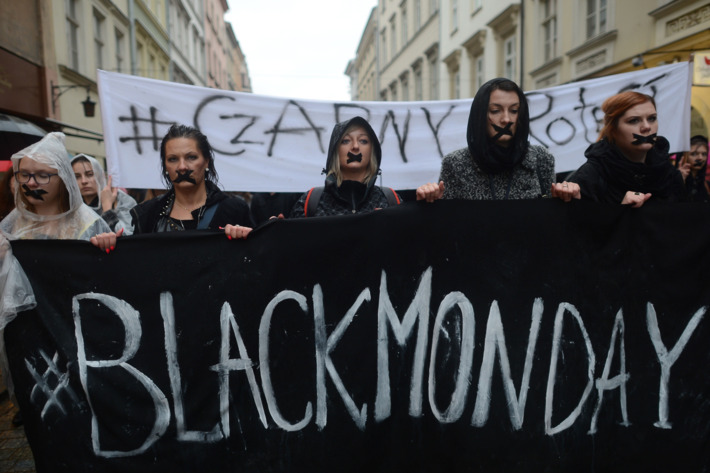
On October 4, 2016, tens of thousands of women in Poland took to the streets to protest against new legislation introduced by their far-right government that would put a total ban on abortion. Poland’s abortion laws are already incredibly restrictive: Abortion is only permitted in cases of rape and sexual abuse, if there is a threat to the mother’s life, or if there’s evidence of severe fetal anomalies. Two days following the momentous protests, the legislation was voted down 352 to 58. Women had won some of their rights back.
In the U.S., though abortion is (currently) a protected right, even more restrictions on access and threats to funding at Planned Parenthood are attempts by the new administration to roll back to a pre–Roe v. Wade era. Ahead of Wednesday’s International Women’s Strike, Polish women who participated in the Black Monday protests wrote to the Cut with their advice for how to fight for the essential reproductive rights that the government is so keen on taking away.
Aleksandra Knapik, 33, Lodz, Poland “It is important to stick together in solidarity — with other American women, as well as with women worldwide. It’s important to show that you are ready to fight for your rights, the rights that could be taken away, on all levels. To take part in street protests, online campaigns, education, political lobbying, worldwide networking. I hope that this protest will show the strength and unification of American women, and that the Trump administration won’t try to proceed bills that are reducing your laws.”
Katarzyna Pierzchala, 50, Warsaw, Poland “I was in New York for a few days once and that’s all. But I think that you are in much better situation than we are. Although your new president also has dangerous ideas, your democracy is much stronger, your law system does not allow any fanatics to deprive your rights. Or at least I hope so. I believe it’s important for you to protest. It’s necessary to show your power, to warn your government: ‘Do not even think about it.’”
Zofia Marcinek, 23, Warsaw, Poland “The United States claims to be a crib of modern democracy. Just make these white (or occasionally orange) guys in suits realize that this democracy is yours, too, and that the only people to decide about women are women themselves. Without them, there is no country and there is no freedom. Realize that — willing or not — America sets standards for more than just itself. Women and girls all over the world are fed your movies, your celebrities, your powerful women. Make brave women. And make this country great again for every girl who ever lives in it. Get angry. Get proud. Basically, do everything the conservative farts would call ‘unladylike.’”
Zuzanna Zwierzchowska, 22, Gdynia, Poland “I’m not sure I’m qualified to answer this, but the reason I’m protesting on March 8 is to not blame myself when everything crumbles. It is very important to not be idle, to fight for each other even if there is no hope, to be proud and try as hard as you can. Even if you can’t win now, you can remain a decent human being for yourself and the people close to you.”
Agnieszka Maciuszek, 20, Stary Sącz, Poland “The main motivation for this strike is to show solidarity, to show that there are many of you. Show them that you are the force that cannot be stopped so easily.”
Agnieszka Sarna, 43, Olsztyn, Poland “I couldn’t help but think after Black Monday I, women, we, women, need to be more active if the change is to happen. There are some great, well-educated, strong, brave, intelligent and successful women in the world. But as long as we do not connect with each other, this potential will be wasted. If I want future generations to [live] in peace on this planet, there is no other way, but to wake up and make women rise and unify with other women against destruction, violence, hatred, avidity, and wild competition.
I do not plan to [go] into politics, but together with my female friends we form a circle and work on a very basic level, on our own. We open up and take inspiration from global sisterhood offering what we have to those in need. Inspiring one another. Learning from each other. Supporting each other without judgment. Letting our female wisdom unfold and benefit others.
I want you to know how important for us all it is to see Americans, women of the country which was for decades an inspiration, and which is such a big country, to unify, gather, and express dissent against this expired world order. To know that the movement goes global really makes a difference. We should all continue this way and be ready for change. Nobody will labor and push change through instead of us, so let’s do it, so that the dark womb of the today’s world gives life to new better civilization, just as your filmmaker and lawyer Valarie Kaur said in one of her speeches.”
Magdalena Walczak, 26, Leszno, Poland “I feel like the only thing we can do is to let us be seen and heard. We need to be loud and united. That is the [attainable] goal, letting the authority know that we are not happy about current situation and we are ready to fight to change it.”
The money will also provide support to other health initiatives.
Canadian Prime Minister Justin Trudeau announced yesterday that his government will spend $650 million on sexual and reproductive initiatives worldwide. That money will go in part to fighting global anti-abortion laws.
“For far too many women and girls, unsafe abortions and a lack of choices in reproductive health mean that they either are at risk of death, or simply cannot contribute and cannot achieve their potential,” Trudeau said Wednesday at an International Women’s Day event, reports Canada’s Globe and Mail. “The right of women to choose when, how [and] with whom to start a family is one that we all must fight for and defend.”
The initiative would try to reduce the estimated 22 million unsafe abortions that happen annually in countries where there’s no access to legal abortion, the paper reports. The pledge is a continuation of Trudeau’s conservative predecessor’s foreign-aid program for maternal and child health—but that plan specifically prohibited the funds from going towards abortion-relation services and less than 2 percent of its budget was allocated for contraception services.
This news comes on the heels of President Donald Trump’s executive order to reinstate a federal ban known as the global gag rule on U.S. funding for international health organizations which counsel women on family planning options that include abortion. That gap in services could be filled in part by the Canadian initiative.
Trudeau was busy on International Women’s Day—when he wasn’t signing major, multi-million-dollar pledges, the self-proclaimed feminist was delivering video messages. Here, you know you want to take another watch:
And a group of experts wants you to know that federal regulatory policy is partly responsible.
Thirty-seven states currently have medication abortion restrictions on the books. Six, like Oklahoma’s outright ban on medication abortion, are temporarily or permanently enjoined by court order. Newsmakers / Getty
Texas has seen some of the nation’s most regressive abortion restrictions in recent years. This series chronicles the fall-out of those laws, and the litigation that has followed.
New year, same as the old year: Republicans in statehouses across the country followed January 2016’s 147 anti-choice bills with a record-breaking 167 anti-choice bills introduced in the first month of 2017. Among those bills is a spate of proposals aiming to limit access to medication abortion. While nearly every aspect of abortion care is threatened, the multifaceted attack on medication abortion is particularly troubling in light of last year’s Food and Drug Administration (FDA) update to the label of the medication abortion drug Mifeprex, and a recent New England Journal of Medicine commentarythat explains how the update barely scratched the surface of needed changes.
The ten authors—a multidisciplinary group of clinicians, public health and legal experts, and researchers—of “Sixteen Years of Overregulation: Time to Unburden Mifeprex” detailed the ways in which the ongoing over-regulation of Mifeprex is not just unnecessary, but harmful to patients considering or seeking medication abortion.
The new label introduced a host of changes for Mifeprex use, including new dosages and an important revision that allows it to be administered later into pregnancy. These changes are expected to “reduce confusion among women, providers, and policymakers about the appropriate use of the drug,” according to the authors, who also anticipate abortion becoming “less expensive, more convenient, and more widely available.” When used with the drug misoprostol, mifepristone is a very effective and safe way to end an early pregnancy.
But the drug is still restricted through what’s called the Risk Evaluation and Mitigation Strategy (REMS). These are additional rules implemented through the federal Food, Drug, and Cosmetic Act (FDCA) when the Food and Drug Administration suspects a drug has serious adverse effects. Mifeprex’s REMS regulations determine where, how, and by whom the medication can be prescribed and administered—despite its proven efficacy and safety. The drug cannot be sold at pharmacies and must be dispensed by a certified prescriber in a clinic, medical office, or hospital. To become “certified,” a physician must submit a form to the drug’s maker declaring that he or she can date a pregnancy, diagnose ectopic pregnancy, and provide surgical intervention if needed, either personally or by referral. All of this, of course, adds additional hurdles for the patient and provider.
“The REMS places medically unnecessary burdens on patients and providers, and keeps mifepristone [the generic name of Mifeprex] from being prescribed by clinicians and then obtained in retail or mail-order pharmacies, alongside hundreds of other medications,” said Dr. Beverly Winikoff, president of Gynuity Health Projects. “The negative impact from over-regulation of medical abortion with the REMS, like other abortion restrictions, can fall hardest on poor women, rural women, women of color, undocumented women, and young women.”
Winikoff told Rewire that the growing percentage of patients who choose Mifeprex as their preferred abortion method—from 6 percent of all abortions in 2001 to 31 percent in 2014 and nearly half of those before nine weeks’ gestation—means that the REMS restrictions affect a significant number of people.
Thirty-seven states currently have medication abortion restrictions on the books. Six, like Oklahoma’s outright ban on medication abortion, are temporarily or permanently enjoined by court order. Oklahoma’s legislature is doubling down by introducing new legislation to make a violation a felony with a possible $100,000 fine and attempting to reduce the window patients have to access abortion altogether to six short weeks. Oklahoma’s fixation on medication abortion isn’t an outlier; a full 15 percent of the 288 abortion-restricting laws passed from 2011 to2015 concerned medication abortion.
Having official federal restrictions like REMS lends credibility to these legislative efforts.
“It’s unconscionable that the REMS restrictions remain after 16 years of data showing mifepristone is an exceedingly safe and effective abortion method,” said Winikoff. “The restrictions on mifepristone are a shameful example of regulation run amok—and they’re harming women’s health. Women and their health providers shouldn’t have to jump through hoops to get a medication that’s been safely and effectively used in this country for a decade and a half.”
The commentary’s authors also point out the contradictions between the purpose of REMS (public safety) and unnecessary regulations. For example, there’s no risk of overdose when each patient only receives a single dose of Mifeprex. Also, even if there was a high rate of complication (mifepristone is less risky than over-the-counter pain relievers like Tylenol), requiring the medication to be taken in a doctor’s office wouldn’t prevent infection or bleeding.
They wrote:
“[T]he pharmacologic effects do not begin for hours after ingestion. If a serious complication were to occur, the location where the woman had obtained the tablets would be entirely irrelevant to her clinical outcome. In fact, recent research has shown that allowing each woman who has a medical abortion to take the mifepristone in the place of her choosing is safe and is preferred by many women.”
They also outlined other potential harm caused by requiring dispensing providers to have special certification. Being certified means creating a public record as an official abortion provider; the risk of harassment and threat can understandably discourage Mifeprex provision.
The hoops created by REMS are especially burdensome in rural America. For physicians outside urban settings, there is a greater risk of not being able to treat an unexpected patient because they are not certified and therefore are unable to stock the medication ahead of time—and being unable to refer a patient to another health-care provider. Where clinics have closed en masse, distances to the nearest provider can be hundreds of miles, and the availability and legality of telemedicine can’t be guaranteed due to legislative attacks. For example, the Utah Telehealth Amendments (HB 154) bill that just passed the state house would make medication abortion by telemedicine illegal except in cases of rape, incest, or threat to the life of the patient.
Cristina Aguilar, executive director of the Colorado Organization for Latina Opportunity and Reproductive Rights (COLOR), told Rewire about the importance of medication abortion in her state.
“In a rural state like Colorado, health care can be difficult for people to obtain,” she said. “Medication abortion is an option that many providers offer to expand access, including in smaller clinics outside of urban areas.”
In addition to attempting to put it literally out of reach, legislators are still advancing bills requiring doctors to tell their patients that medication abortion can be reversed—which is scientifically incorrect. Lawmakers in Colorado, Georgia, Indiana, North Carolina, and Utah have introduced “abortion reversal” bills like the ones in place in Arkansas and South Dakota (and successfully challenged in Arizona last year).
Aguilar connected “abortion reversal” with the history of medical experiments performed on marginalized communities.
“Looking at the so-called research on the idea of reversing medication abortion shows that this is a refuted theory based on the anecdotal experiences of physicians who were willing to do experimental treatment on pregnant women, without the usual research safeguards to protect their health and safety. Women of color have seen this before,” she said. “There is a long history of women of color being coerced and abused within the scientific and medical profession.”
SisterSong Executive Director Monica Simpson told Rewire that requiring doctors to lie to patients is bad medicine and a violation of trust.
“When women make a decision to have an abortion, they are clear about their decision and it should be respected. It’s cruel to tell women something that undermines their decision and isn’t even backed up by science.”
Simpson also echoed Winikoff’s concerns about who is most affected by these restrictions.
“When medication abortion is restricted, the most marginalized communities are most affected, those who are oppressed by systemic and historical barriers, including low-income folks, people of color, Black women, undocumented folks, young people,” said Simpson, stressing that abortion is an important part of reproductive health care in her community.
The experts cited social justice concerns like Simpson’s, agreeing that decisions on when and whether to parent should be left to the patient and the medical community’s best practices and that medication abortion restrictions impose harm. In their article, they said that the REMS requirements to “assure safe use plainly impede women’s access to the drug …. Considering the severe shortage of abortion providers in many parts of the United States and the long distances that many women must travel to obtain abortion services, we contend that any barrier to access that has no demonstrated benefit is excessive.”
People encouraged to take day off to protest restrictive abortion laws or show solidarity by wearing black, posting on social media and staging walkouts
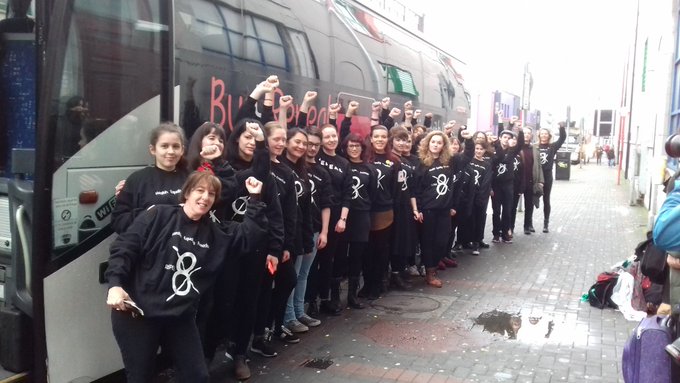
Women and pro-choice campaigners in Ireland are going on strike to protest the country’s strict anti-abortion laws.
Protesters will gather at O’Connell Bridge in central Dublin and in other cities across Ireland and worldwide to demand a referendum on abortion, which is a criminal offence under the Irish constitution.
Organiser Avril Corroon told The Independent the event was not a form of industrial action but a ‘social strike’, inspired by mass protests in Poland that led the government to reject proposals for a near-total ban on abortion.
She said people had been encouraged to take a day off to take part in demonstrations, but those unable to do so could show support for the cause by wearing black, posting on social media and staging coordinated walkouts at 12pm.
“Abortion is a workplace issue,” said Ms Corroon. “Not everyone is in a position to take a day off work, which is why we need new reproductive health laws.”
It is estimated that 12 women travel from Ireland to Great Britain every day to access a safe and legal termination.
Women who have abortions in the Republic of Ireland face up to 14 years in prison.
This is the case for all pregnancies, including those conceived as a result of rape or incest, or where the foetus cannot survive outside the womb due to a fatal abnormality.
Ms Corroon said protesters were calling for a referendum on whether Ireland should repeal the 8th amendment of its constitution, which recognises the right to life of an unborn child.
The Citizens’ Assembly, a group of 99 unelected representatives, are currently debating the future of the amendment. The results of a ballot next month will be given as a recommendation to parliament.
But Ms Corroon said this was not good enough: “Why would you ask 99 people when you could ask all of us?”
Student walkouts and demonstrations have also been planned at Irish universities including University College Dublin, where Kim Harte is a student.
Ms Harte, dressed in black for the protests, told The Independent she and her classmates planned to walk out of lectures at 12.30 to join a rally on campus, before travelling to the city centre for the march.
“Women should have access to free, safe and legal abortion. Bodily autonomy is a right,” she said. “The 8th has already caused women, such as Savita Halappanavar, to lose their lives and this is why it must be repealed.”
Ms Halappanavar died in October 2012 at a hospital in Galway after she was refused an abortion despite complications to her pregnancy.
Similar protests have also been planned at universities in the UK such as Royal Holloway, Oxford and Cambridge and in other cities across the world, including Melbourne, Berlin, Lyon and at the Irish embassy in London.
Around 100,000 women dressed in black staged an all-out strike and joined protests in more than 60 cities around Poland last October.
Women in the US are also taking part in a ‘day without women’ on International Women’s Day, following mass protests on 21 January, the day after Donald Trump’s inauguration as President.
Abortion has been a divisive issue for decades in Ireland where, after large street protests from both sides of the debate, a complete ban was only lifted in 2013 when terminations were allowed if a mother’s life was in danger.
However governments have been reluctant to tackle an issue they fear may alienate conservative voters, despite a waning of the influence of the catholic church.
In 2015, Ireland became the first country to adopt gay marriage by popular vote.
Icelandic women first staged a strike in 1975, with 90 per cent of the country’s female population refusing to work, do childcare or housework as they demanded equal rights with men.
Dutch politician Lilianne Ploumen is taking on President Donald Trump’s ban on providing federal money to international organizations that perform or provide information about abortion.
In his first few days in office, President Trump reinstated the Mexico City Policy, which prohibits the United States from giving federal aid to any nongovernmental organization abroad that performs or informs peopleabout the procedure. Ploumen, the Dutch Minister for Foreign Trade and Development Cooperation, subsequently said she wanted to set up an international fund to help expand contraception and abortion access to women in developing countries.
“This is a time to really act. We hear a lot of talk about what President Trump does or doesn’t do and his decisions,” Ploumen told Refinery29 in an interviewpublished this week. “But if we all just listen to that and not act, many women will suffer because of those decisions. I didn’t want to let that happen.”
Ploumen’s fund, called She Decides, has since raised over 200,000 euros in donations alone, according to Refinery29. She’s also gotten the support from Canada, Denmark, Estonia, Sweden, Belgium and Norway, which pledged to donate roughly $10 million to the initiative. Ploumen is now working to get more countries to sign on to support She Decides.
“To be able to decide if you want to have sex, with whom and have babies, these matters all define who you are as a person,” she said. “In many countries of the world, there’s a lack of services to help women make those decisions for themselves, which is why these health organizations are so crucial.”
“SB 25 would allow doctors to lie to their patients.”
JOHN FEDELE VIA GETTY IMAGES
The Texas Senate Committee and State Affairs voted this week to advance a controversial bill that would prevent parents from suing their care provider if their baby is born with disabilities, even if their doctor discovered the fetus’ condition and failed to disclose it.
Proponents say Senate Bill 25 protects doctors and children with disabilities, but opponents have slammed it as a thinly veiled attempt to curb abortion rights by extending protections to doctors who mislead their patients.
“SB 25 would allow doctors to lie to their patients,” Heather Busby, executive director at the advocacy group NARAL Pro-Choice Texas, said in a statement to The Huffington Post.
If, for example, an OB-GYN discovered during an ultrasound that a fetus had severe abnormalities and failed to inform his or her patient ― knowing the mother might chose to terminate the pregnancy ― that mother would be prevented from later bringing what is known as a “wrongful birth” suit.
“Pregnant Texans deserve to feel like they can trust their doctor to provide them with all the information and when the doctor does not do that, those families deserve to have a legal avenue to seek compensation to care for special needs children,” Busby said.
Doctors who treat pregnant women have expressed their concern.
“Unanticipated fetal anomalies can be devastating in pregnancy. In those tragic moments, it is of vital importance that the patient be able to consider all of her options and decide what’s best for her and her family,” Dr. Lauren Thaxton, an OB-GYN in New Mexico and a fellow with Physicians for Reproductive Health, told HuffPost.
“The concept of a physician not offering patients a full spectrum of options is unacceptable. It’s not about us as providers and our personal beliefs, it’s about the patient,” she continued.
Now that SB25 has been voted through committee, it will move onto the state’s full senate for a vote.
But this is not the first time Texas legislators have attempted to pass a “wrongful birth” lawsuit. A similar2015 bill failed to become law that year.












 Abortion - Abortion Clinics, Abortion Pill, Abortion Information