When I was the Executive Director of the National Coalition of Abortion Providers, one of the more controversial things that I did was have regular conversations with anti-abortion leaders.  We would usually find a neutral location, some restaurant, and split the bill.  My purpose was not to try to convert them – that would have been a waste of time.  Instead, my hope was that if they really had a better idea of why women were seeking abortions, then maybe they would just be a little more understanding and less likely to go out and scream at the women as they entered abortion facilities.

One of the antis that I met with regularly was with a group called Priests for Life, one of the more aggressive anti-abortion groups in the country.  He was a rather vocal advocate for his side and did spend a lot of time in front of clinics all across the country spewing his ugly stuff.  One day during a lunch at a small café in Alexandria, I asked him if he had ever been in an abortion clinic.  He almost choked on this peanut soup.  “Of course not,” he said.

So, I asked the question:  “Well, would be you interested in visiting a clinic and talking to the women and staff?”   Much to my surprise, he did not hesitate and quickly accepted my offer.

A few weeks later, I arranged for him to privately visit an abortion facility in Pennsylvania.  The clinic was a very special one in that the counselors really sought to delve into the hearts of the women who were seeking abortions.  In fact, one wall in the waiting room was adorned with letters from the women, some of which were addressed to their “baby” that they could not have.  I always choked up when I entered that room.

The priest went to the clinic and spent a lot of time with the staff and owner.  I don’t know all of the details of the visit.  In fact, I didn’t want to know too much because I wanted to keep it as quiet as possible to respect the priest’s delicate position.  If his anti-abortion colleagues found out that he had visited an abortion clinic, it would have raised quite the ruckus.

Interestingly, after his visit he told me he was touched by the letters and the women and over the next few weeks, I may have imagined things but I thought I saw a decided toning down of his rhetoric.  For a while, I did not hear him talk about “murder” and “baby killing.”  He was clearly against abortion but I actually wondered if that visit had had an effect on him.

That was 14 years ago.

Then, a few weeks ago, I was channel surfing when saw him on some talk show, probably FOX or something of that ilk.  And, much to my consternation, he was back to his old self, ranting and raving about the “abortionists” who were “killing babies.”   I was a certainly disappointed but I guess I wasn’t that surprised.  As I thought it through, most organizations cannot raise money by being moderate, by being open to ideas from the other side.  They gotta get out there and pander to the extremes to raise big money.  You need to get in the newspapers and on television and for that to happen, you have to be positioned on one the wings of your issue.

I’m reminded of an organization that was formed years ago called “Common Ground.”  One of their goals was to bring the anti-abortion and pro-choice folks together at a table to try to find items of mutual agreement.  They got a grant or two from some foundations but after just a few years, they quietly dropped the abortion portion of their portfolio.  No one was interested.

So, I sit here and wonder what the visit to the abortion clinic was all about.

Pregnancy as an “inconvenience”

One of the greatest falsehoods of the pro-life movement is that pregnancy is merely an inconvenience, a period of temporary discomfort. This is more than a mere talking point; it’s a dangerous lie. Pregnancy is actually a life-threatening condition for many women.

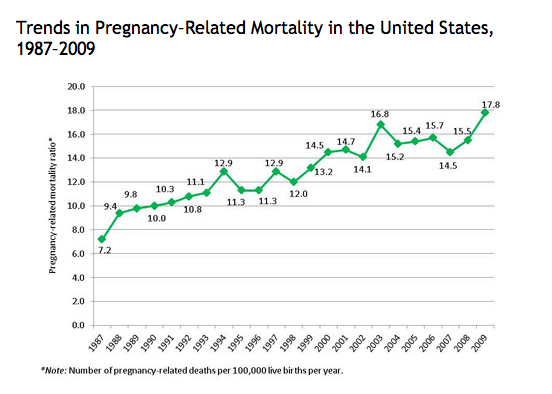
The maternal mortality rate (MMR) is significantly higher in the US than in other developed countries, and the number gets even more pronounced when divvied up into demographics. The 2010 MMR in the US was 21 maternal deaths out of 100,000 live births, a number higher than 47 other countries listed by the CIA’s WorldFact report on maternal mortality. Compare this to the US Dept. of Health and Human Services’ goal for 2010 of 3.3 deaths per 100,000, and about seven times as many women are currently dying from pregnancy-related causes in the US than should be.

Shockingly, not only has the maternal mortality rate not fallen since the mid-1980s, it has actually steadily risen (the MMR in 1987 was 6.6!). But racial disparities in the MMR reveal even more appalling numbers: in 2007, black women were 2.7 times more likely to die of pregnancy-related causes than white women. A 2005 paper on the preventability of pregnancy-caused deaths in North Carolina showed that while 33% of deaths among white women were preventable, a full 46% of deaths among black women were preventable.  This is probably reflective of wider disparities: minority women are more likely to experience an unintended pregnancy, to be poor, and to receive care at lower quality medical centers than white women.

Image

Even worse, most of these figures are likely underestimated. A 2005 study compared actual rates of pregnancy-caused death to purported rates on death certificates in four regions and found a prevalent underestimation of pregnancy as a cause of death. In Massachusetts, death was inaccurately accorded to a cause other than pregnancy in 93% of the cases studied.

While the maternal mortality rate is increasing, the rate of severe pregnancy complications is also increasing. A 2009 study analyzing trends in the rates of severe obstetric complications showed a “20% increase in rates of renal failure, respiratory distress syndrome, shock, ventilation, and an approximately 50% and 90% increase in pulmonary embolism and blood transfusions, respectively” from 1998-2005. Although there was a correlation between increasing rates of (often unnecessary) caesarian section and severe complications, this only partially explained the dramatic rise in severe obstetric problems experienced by American women since 1998.

In addition, the infant mortality rate is also relatively high in the US compared to other developed countries. Despite substantial decline over the course of the 20th century, the rate of infant death has stagnated in recent years and the US international ranking for infant mortality fell from 12th place in 1960 to 30th in 2005. Abysmally, a Save the Children report recently showed that the US has the highest first day infant death rate of all industrialized nations studied in the report, 50% more than all other industrialized nations combined. And, as with the maternal mortality rate, racial disparities in the infant mortality rate are stark: according to the National Vital Statistics Reports for 2009, the mortality rate for black infants was 12.71per 1,000 live births, compared to 5.32 for white infants (and the report noted that the former is likely an underestimation).

And yet, as part of so-called “informed consent,” pro-life groups routinely tout the fallacious risks of abortion with pseudoscientific claims (e.g. increased risk of breast cancer, infertility, depression, and death) while understating the risks of childbirth. Among first trimester abortions, which comprise the vast majority of abortions, the risk of serious complications is less than .5%.  However, more than 50,000 women per year suffer from severe maternal morbidity (SMM), potentially life-threatening conditions associated with pregnancy. The rate of SMM is also increasing over time, more than doubling from 1998 to 2011. This does not include more minor complications, which are far more common in pregnancy (94.1% of the pregnancies in 2008) than first trimester abortion (2.5%).

Image

What should we be doing?

 First, and perhaps most importantly, we need to gather information. Why, besides increased caesarian sections, are the rates of severe obstetric complications increasing? Why is the maternal mortality rate increasing so steadily despite the $86 billion spent on pregnancy and childbirth in the US per year? How can we standardize data collection to ensure accurate information on maternal health outcomes across the board? What programs can hospitals institute to reduce the rate of mortality for women and infants?

Although we have some notion of risks associated with maternal and infant death, our data is far from complete. In 2011 the Maternal Health Accountability Act was introduced to provide grants to create state-level maternal mortality review committees to standardize data collection and eliminate disparities in health outcomes. The bill unfortunately died in a Republican-controlled committee.

Otherwise, we are aware of many of the risks and should be able to address at least some with public policy. Higher risk of infant mortality is associated with preterm birth, which is associated with teen pregnancy, unplanned pregnancy, and poor/minority mothers.

These risk factors overlap significantly; for instance, teen mothers are more likely to be poorer, less educated, and to receive less prenatal care than mothers in other groups, and 70% surveyed in a 2004-2006 North Carolina study indicated that their pregnancies were unintended. Similarly, poor and minority women are less likely to receive prenatal care, and minority women are more likely to be poor and have higher rates of unintended pregnancy than other women as well. As for maternal mortality, disparities in access to prenatal and labor care and family planning; poverty; and minority status are all major risk factors, and these also often overlap.

While the problem is systemic, it can be tackled in very specific ways. One of the most important steps in tackling poor health outcomes for mothers and infants is to reduce unplanned pregnancy, which is indirectly associated with both infant and maternal mortality, since the groups at highest risk of dying of pregnancy complications and/or losing an infant are also at very high risk of unintended pregnancies. The major means of accomplishing this goal are to offer comprehensive sex education to adolescents, to increase public funding to family planning clinics, and to make access to reliable contraceptives as universal as possible.

Every one of these things has been directly evidenced to reduce the rate of unintended pregnancy. Comprehensive sex education is associated with reduced rates of teen pregnancy. Conversely, abstinence-only education has not been correlated with lower rates of vaginal intercourse, and states with abstinence-only or non-requisite sex education programs consistently have some of the highest rates of teen pregnancy in the nation. But that doesn’t stop pro-life politicians from routinely insisting on abstinence-only programs, despite their marked failure year after year.

Image

For six in ten patients using publicly funded family planning services, it is their primary source of health care. An estimated 1.94 million unintended pregnancies and 810,000 abortions are prevented each year by use of public family planning clinics, but as I noted in my last article, they only meet a paltry 40% of the need. Increasing funding to family planning clinics, and therefore access to preventive services and contraceptives, would further decrease the rate of unplanned pregnancy. However, Republican politicians in numerous states consistently cut funding to family planning and women’s health services.

To give an example of the cognitive dissonance so prevalently present between stated pro-life ideology and the consequences of implementing pro-life laws, let us take Texas for an example. In 2011, as part of a sweeping pro-life agenda to shut down Planned Parenthood (the ultimate abortion scapegoat, despite 97% of its services being non-abortion related), Texas slashed family planning funds by 2/3 and barred Planned Parenthood from receiving funds from the Texas Women’s Health Program, resulting in a 77% reduction in the number of patients using family planning clinics, in a state that ranks first in the nation for the number of uninsured, 8th for poverty, and 3rd for teen pregnancy.

The maternal mortality rate has quadrupled in Texas in the last 15 years to 24.6, and even after improvement from 2009, the 2010 demographics are abysmal and much higher than the national average (27, down from 30.8, for white women, and 53.9, down from 66, for black women). For reference, that means black women are statistically better off giving birth in Mexico or Kazakhstan than Texas, and that white women would be better off in Saudi Arabia.

In addition, despite the incredibly high teen pregnancy rate, Texas schools stress abstinence education, do not require contraceptive education, and do not require that sex education be medically accurate. The budget cuts for women’s health care have also decreased the number of clinics that offer preventive healthcare for sexually active teens without parental consent or notification.

Every policy outlined above is one that increases the rate of unintended pregnancy, especially in populations more highly prone to infant mortality (teens) and maternal mortality (poor and minority women). Far from being “pro-life,” Texas has implemented a set of policies that will result in the unnecessary deaths of women and infants. It has instituted legislation that directly decreases access to contraceptives, preventive screenings, checkups, and prenatal care. These in turn lead to increased rates of poor health outcomes for pregnant women, as well as unintended pregnancy among the groups least likely to want or afford pregnancy or children. Simultaneously Texas has instituted sweeping anti-abortion policies that vastly remove access to abortion for women who can’t afford prenatal care or postpartum checkups.

The state ironically takes no responsibility for its own role in making women’s lives worse, exhibiting Orwellian double-speak about personal responsibility even as politicians systematically remove the resources women would otherwise use to BE personally responsible for their reproductive destinies.

All of Texas’ legislative actions aimed at shuttering the Planned Parenthoods in the state are particularly cruel considering they have also declined to expand Medicaid, leaving many poor and minority women nowhere to turn for contraceptives, preventive healthcare, and prenatal care. The Texas Policy Evaluation Project’s survey of low-income women following Texas’ 2011 budget cuts found that “now more than ever disadvantaged women must choose between contraception and meeting other immediate economic needs.”

Texas, sadly, is not alone. Many other states are likewise instituting anti-abortion restrictions while failing to address the unmet need for family planning, expand Medicaid, increase access to prenatal and postpartum care, or offer comprehensive or medically accurate sex education. Far from being an “inconvenience,” pregnancy is a condition fraught with major risks of health complications for both mother and infant. And when legislators intentionally limit abortion access while failing to address the increased risks of maternal and infant death that accompany high unintended pregnancy in poor, uneducated, teen, and minority women, they really don’t deserve to be called “pro-life.”


Sources:

1) “Deadly Delivery: The Maternal Health Care Crisis in the USA.” Amnesty International.  http://www.amnestyusa.org/sites/default/files/pdfs/deadlydelivery.pdf

2) Berg CJ, Harper MA, et al. Preventability of pregnancy-related deaths: results of a state-wide review. http://www.ncbi.nlm.nih.gov/pubmed/16319245

3) Hasnain-Wynia R, Baker DW et al. Disparities in health care are driven by where minority patients seek care: examination of the hospital quality alliance measures. http://www.ncbi.nlm.nih.gov/pubmed/17592095

4) MacDorman MF, Mathews, TJ. The Challenge of Infant Mortality: Have We Reached a Plateau? http://www.ncbi.nlm.nih.gov/pmc/articles/PMC2728659/

5) “Surviving the First Day: State of the World’s Mothers 2013”. Save the Children: http://www.savethechildrenweb.org/SOWM-2013/files/assets/common/downloads/State%20of%20the%20WorldOWM-2013.pdf

6) CIA World Factbook rankings of countries by maternal mortality rate: https://www.cia.gov/library/publications/the-world-factbook/rankorder/2223rank.html

7) Kochanek, K., Xu, J., et al. Deaths: Preliminary Data for 2009; National Vital Statistics Reports. http://www.cdc.gov/nchs/data/nvsr/nvsr59/nvsr59_04.pdf

8) Xu, J., Kenneth, D., et al. Deaths: Final Data for 2007; National Vital Statistics Reports. http://www.cdc.gov/nchs/data/nvsr/nvsr58/nvsr58_19.pdf

9) Gaskin, Ina. Maternal Death in the United States: A Problem Solved or a Problem Ignored? Journal of Perinatal Education, 2008.  http://www.ncbi.nlm.nih.gov/pmc/articles/PMC2409165/#citeref9 

10) Deneux-Tharaux, C, Berg, C, et al. Underreporting of Pregnancy-Related Mortality in the United States and Europe. 2005: http://opac.invs.sante.fr/doc_num.php?explnum_id=4060

11) CDC fact sheet on Severe Maternal Morbidity in the US: http://www.cdc.gov/reproductivehealth/MaternalInfantHealth/SevereMaternalMorbidity.html

12) National Abortion Federation fact sheet on the risks of abortion: https://www.prochoice.org/about_abortion/facts/safety_of_abortion.html#n5

13) Elixhauser A, Wier M. Complicating Conditions of Pregnancy and Childbirth, 2008. http://www.hcup-us.ahrq.gov/reports/statbriefs/sb113.pdf

14) “Unintended Pregnancies: 2004-2006 N.C. Pregnancy Risk Assessment Monitoring System (PRAMS)”  http://digital.ncdcr.gov/cdm/ref/collection/p249901coll22/id/22589

15) An epidemiological review of the effects of comprehensive, abstinence-only, and lack of sexual education on the likelihood of teen pregnancy and rate of intercourse: http://www.jahonline.org/article/S1054-139X(07)00426-0/abstract

16) Teen pregnancy rates by state: http://www.livescience.com/27417-teen-pregnancy-rates-by-state.html AND, for comparison, a brief on state policies on sex education: https://www.guttmacher.org/statecenter/spibs/spib_SE.pdf

17) Guttmacher news release on unintended pregnancies and abortions prevented by the use of publicly funded family planning services: https://guttmacher.org/media/nr/2009/02/23/index.html

18) 77% fewer Texas clients for family planning clinics: http://rhrealitycheck.org/article/2013/11/21/after-budget-cuts-texas-family-planning-program-serving-77-percent-fewer-clients/

19) Texas has highest uninsured rate and ranks 8th for poverty: http://dfw.cbslocal.com/2013/09/17/texas-has-highest-uninsured-rate-high-poverty/

20) “Republicans Offer an Obamacare Alternative,” Time Healthcare online: http://swampland.time.com/2014/02/03/obamacare-republican-alternative/

21) The Texas Policy Evaluation Project, “Low-Income Women’s Attitudes About Affordable Family Planning Services” http://www.utexas.edu/cola/orgs/txpep/_files/pdf/TxPEP-ResearchBrief-WomensAttitudesAboutFPServices.pdf

Part 2 of 3

By K.J. Farrell

In Part 1 of this three-part series, the focus was concern that the anti-abortion movement has with numbers in the claims that the media discriminates against them. News coverage and extremist branding are the focus of Part 2.

News Coverage Generally

Anti-abortion complaints about the lack of media attention to their annual 1/22 protest against Roe v. Wade were not justified. As noted in Part 1, there was coverage by all major media sources. The annual Roe v. Wade protests are predictable. Given the intense, real-time competition for consumers of print, online, and broadcast news, priority is given to issues of concern to the market – frigid weather and sports this year. There was no ideological media bias involved.

In addition to the Roe protest, anti-abortion groups do not think that their so-called “pro-life” bills are receiving proper attention. Media coverage of restrictive abortion legislation is newsworthy given the impact on social policy and law.  Even pro-choice bloggers have observed that basketball has received more media attention. After the media reports the initial announcement of the legislation, though, how many repetitions of predictable responses are necessary or beneficial?  Image

Why is it that anti-abortion organizations make such a fuss about media discrimination or bias but, aside from some random pro-choice blogs, there is little complaint from the pro-choice organizations? Why do they think the media favors the pro-choice position, especially given the lack of attention to the restrictive abortion legislation and its intent to erode reproductive rights for women?

One reader raised an interesting point: Any ideological bias on the part of the media could actually be steeped in religious views that favor the anti-abortion position.  Consider a 12/13  Harris Poll that revealed that 74% of U.S. adults believe in God; 54% believe in God with absolute certainty. In another survey, “only 21% of Americans believe humans beings evolved without involvement from God.”  When press coverage is poor or unfavorable, pro-choice supporters could make the claim that ideological bias towards the religious leanings of the anti-abortion movement is responsible.  What I do hear from the anti-abortion community regularly is reference to the religiosity of “most Americans” and message-manipulated polls that “most Americans” support the anti-abortion position. Thus, it would seem a bit of a contradiction: “Most Americans” would include the media. Therefore, if most Americans are religious and against abortion, media discrimination would be against the pro-choice position. Right? This premise takes me back to the questions, “Why all the fuss? Is there discrimination?”

Abortion-Related News and the Marketplace

Let’s look beyond the annual Roe v. Wade events. The criminal trial of former Dr. Kermit Gosnell is continually cited as evidence of media bias favoring abortion rights. I addressed media coverage of the case and will only say here that as egregious as the case was, the media did cover it fully, beginning with the indictment. It is insulting for anyone to suggest that the pro-choice community wanted it kept quiet – if anything, they wanted it exposed to illustrate what can happen when abortion is inaccessible, especially to poor women.

At this writing, there are 261,000 search engine results for the “Gosnell case” – 551,000 for his name alone. There are 86.5 million for “George Zimmerman case”, 12.5 million for “Jodi Arias case”, and 38 million for “Casey Anthony case” – exponentially more for each when “case” is excluded. Yes, the media responds to the marketplace.

Although anti-abortion groups claim that Americans are on their side, they clearly had/have more interest in cases unrelated to abortion or Gosnell. It would be the same situation if a fertility doctor or OB/GYN was found to be violating standards and law, or an adoption lawyer lost his license due to fraud. Media has ethical and practical responsibilities that are more important than the wishes of activists dedicated to a polarized issue. (Does anyone recall the name of the fertility doctor and the professional consequences he had as a result of his involvement in the Nadya Suleman multiple pregnancy? Probably few of you…but you know the names of all others referenced here.)

ImageThe recent “No Taxpayer Funding for Abortion Act” (NTFAA) that the House of Representatives recently passed will not likely be introduced in the Senate and, even if it was, President Obama would veto it. The Hyde Amendment already ensures that federal dollars cannot be spent on abortion. Prior versions of the NTFAA included language that introduced the political nuances to the legal term of “forcible” rape. This version is really about stopping insurance companies (private) from providing abortion coverage even though more than 80% include it with other reproductive services, including fertility services. The media knows that it will never be passed. Will coverage benefit their advertisers? No. Editors clearly decided that the coverage provided was sufficient to inform the public.

Contrast the coverage of the NTFAA to the political-conservative-initiated boycott of Girl Scout Cookies that began when the Girl Scouts supported Texas Senator Wendy Davis as someone who could be considered a Woman of the Year. Davis is pro-choice so, naturally, that means the Girl Scouts include abortion rights as part of their agenda. They actually have no position on abortion. Their agenda is developing girls into strong, independent women. Period. Role models are from all political and professional backgrounds.Image

The Girl Scout cookie boycott is newsworthy because the cookies are such an icon of Americana. Few have not had the pleasure of Thin Mints or Trefoils.  Most organizers of boycotts want news coverage.  Media did not create the news – press releases did! But, anti-abortion strategists realize that this is not the kind of news that will help their cause. That leads to the matter of branding with extremism.

 The Branding of the Anti-Abortion Movement by Extremists

Think about the purpose of news – to inform so that readers can form their own opinions. At times, the “goal to be truthful and objective can be at odds with journalistic ethics“ (Carole Rich, PracticalBioethics.org 1994). Those reporting the news must be responsible.

In the summer of 1991, when the notorious Operation Rescue was protesting outside of the clinic of the late Dr. George Tiller in Wichita, Kansas, a human fetus was pulled out of a jar to illustrate what a late term abortion produces. Responsibly, the media refused to show the dead fetus because there was no evidence that it was connected to Dr. Tiller. Neither the age nor the source of the prop could be verified. Reporting about the fetus took place but without visuals and with context provided to avoid implying that the fetus was from the clinic (Rich).

Operation Rescue was upset that photos of the fetus were not shown. Some anti-abortion groups were upset that it was reported at all because they believed that the media was conspiring to paint all anti-abortion activists as radicals.

To be fair, during the very contentious post-Roe era of Supreme Court decisions, in the late 80’s and early 90’s, the media did seem to provide more coverage of anti-abortion activities that involved violence or highly charged characteristics. Various surveys of abortion news concluded that while most likely not intentional, the pro-choice perspective had more column inches about their activities as well as more positive coverage. This prompted news organizations to initiate policies about abortion coverage that remain in place. That said, violence is newsworthy. The media doesn’t control absurd anti-abortion strategies staged for press. Through violence and shock tactics, the anti-abortion movement has branded itself. They have themselves to blame for the media coverage that they find unfavorable. By no means is it discrimination for the media to cover unusual tactics.

When conservative politicians try to justify anti-abortion legislation, they often mention that their constituencies are “everyday” people, not wild eyed religious zealots. It is hard to be convincing when, for example, a person interviewed about traveling to a protest refers to busloads of traveling companions as “die-hard Catholics” and “soldiers of Christ” or when an organizer for an event to celebrate the closing of a clinic in Missouri states that credit for the closure goes to God and those who pray daily.  Worse for politicians is when their colleagues, in promoting the anti-abortion position, discount rape or imply that the sex lives of women are the problem.  It is also challenging to justify public policy dependent on falsehoods.

No organization appreciates it when an inappropriate source is interviewed or a representative performs poorly. It happens. Among the anti-abortion representatives, there seems to be a preference for people who have no capacity to listen, an inability to be or sound reasonable, and talk over people with unproven, false talking points. In July, 2013, should the media have ignored it when former Pennsylvania Senator Rick Santorum “criticiz[ed] the media for portraying the [extremely restrictive abortion] legislation as radical instead of…part of a movement of love”? Had the media not reported, it then would have been accused of withholding media criticism from the public.

ImageThe media is not discriminating when religious zealots, ignorant politicians, and inarticulate organizers who alter or deny facts serve as contacts. Years ago, anti-abortion supporters complained that the very articulate, attractive, African American President of Planned Parenthood, Faye Wattledon, was quoted or interviewed so often. Their position was represented by James Dobson of the Family Research Council or Gary Bauer of Focus on the Family. NARAL’s Kate Michelman and NOW’s Molly Yard also spoke to the national media on the pro-choice side. Eagle Forum’s Phyllis Schlafly, National Right to Life’s John Wilkes or Wanda Franz, and religious leaders Jerry Falwell and Pat Robertson did for the anti-abortion side. Criticism about higher quality spokespeople on the opposing side was an internal issue in the anti-abortion movement – it was not discrimination.

Many of us supporting the pro-choice position are ardent supporters of free speech. We do not want a part of any discrimination towards an opposing view. It is safe to say that there is no discrimination in the news coverage of anti-abortion views or activities.

Stay tuned for Part 3, which will focus on the semantics of the abortion issue and the real discrimination that exists in the media coverage of abortion.

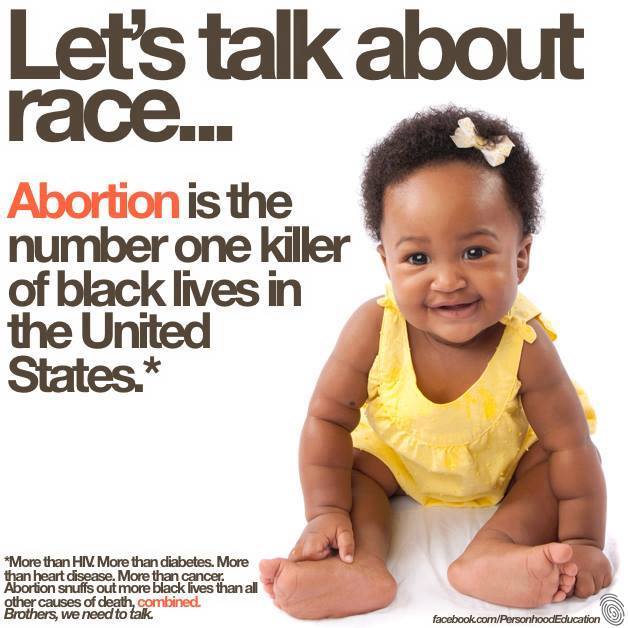
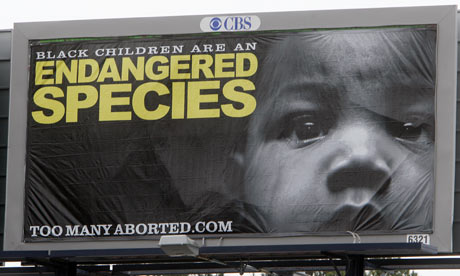
In the last several years it seems that there have been increasing efforts to portray abortion as a form of racial genocide, with pro-life institutions claiming the relatively high percentage of abortions among black and Hispanic women compared to white women is apparently evidence of some conspiracy to “kill off” minorities.

This effort has gained major traction among the general pro-life community in what appears to be an effort to appeal to the “rights” of minorities (at the same time as it advocates the restriction of women’s rights). The cry has even been taken up by certain black pundits and clergymen.

Herman Cain came under attack for blatantly false accusations he made about Margaret Sanger in 2011, when he referred to Planned Parenthood as a bastion of “planned genocide” and claimed that Margaret Sanger’s motivation for founding PP was “to prevent black babies from being born.” Pastor Clenard H. Childress, Jr, quoted as saying that “the most dangerous place for an African-American is in the womb,” founded blackgenocide.org specifically to bring awareness to the plight of black Americans under a regime of extreme genocide.

Image

It’s too bad that this genocide is completely imaginary.

The black genocide argument usually brings up one of several points:

1) Margaret Sanger was a racist and a proponent of eugenics.

Ah, the Margaret Sanger argument. Only rarely does any debate involving the merits of Planned Parenthood’s mission fail to bring up controversy over Sanger’s motives in founding it, her involvement with the eugenics movement, or something very loudly touted by pro-lifers as “the Negro Project.”

Doubts pertaining to Sanger’s supposedly racist motives usually center around one of several quotes widely disseminated on pro-life websites. First is the claim that Sanger described blacks (in some cases this is expanded to include other groups such as Jews, Catholics, and Hispanics) as “human weeds,” a term she purportedly used in her book “The Pivot of Civilization.”

Fortunately, this book is available for free online, and nowhere does it include the term “human weeds.” There is one section in which Sanger uses a similar term (“human undergrowth”) but it doesn’t actually refer to any minority. Sanger uses it as a metaphor to describe how it is unfair to blame the victims of overpopulation (the poor in particular) for “the indomitable but uncontrolled instincts of living organisms.” This is in keeping with Sanger’s career advocacy for birth control education and use.

Another quote commonly espoused by the pro-life movement to discredit Sanger is the following, disseminated widely via pro-life websites and texts as evidence that “The Negro Project” meant to annihilate the black race: “We do not want word to go out that we want to exterminate the Negro population…if it ever occurs to any of their more rebellious members.” This was taken from a letter sent by Sanger to a doctor in reference to her plans to educate black communities with sex education and to provide them birth control. It was also taken out of context, to imply the precise opposite of her meaning in the original letter. Here is the entire quote, in its full contextual glory:

“I note that you doubt it worthwhile to employ a full time Negro physician. It seems to me from my experience where I have been in North Carolina, Georgia, Tennessee and Texas, that while the colored Negroes have great respect for white doctors they can get closer to their own members and more or less lay their cards on the table which means their ignorance, superstitions and doubts. They do not do this with the white people and if we can train the Negro doctor at the Clinic he can go among them with enthusiasm and with knowledge, which, I believe, will have far-reaching results among the colored people. His work in my opinion should be entirely with the Negro profession and the nurses, hospital, social workers, as well as the County’s white doctors. His success will depend upon his personality and his training by us.


“The ministers [sic] work is also important and also he should be trained, perhaps by the Federation as to our ideals and the goal that we hope to reach. We do not want word to go out that we want to exterminate the Negro population and the minister is the man who can straighten out that idea if it ever occurs to any of their more rebellious members.”

Clearly the quote, when taken out of context, implies that Sanger’s intent was to “exterminate the Negro population.” With the context, however, it is clear that she feared her attempts to educate blacks about sex and to provide them with birth control might be perceived as an attempt to exterminate them, and so wished to hire black physicians and ministers to preemptively discourage such unwarranted suspicions.

Another effort to discredit Sanger often lies in linking her to the eugenics movement of her period.  Sanger was associated with the eugenics movement, and her appointment of several prominent members of the movement to a predecessor of Planned Parenthood might raise eyebrows, if she had given any indication that the movement targeted minorities. Sanger did support sterilization of people with low intelligence, deformity, other incapacities, and those “who have as many children as they believe they can rear” (Sanger, “Sterilization”). But her writings give no indication that she viewed blacks or other minority religious or ethnic groups as genetically inferior. She also vehemently opposed programs of forced sterility.

In “Pivot of Civilization” she writes of the merit of the eugenics movement that it is “valuable in its critical and diagnostic aspects, in emphasizing the danger of irresponsible and uncontrolled fertility of the ‘unfit’ and the feeble minded” (104). She speaks rather extensively of “the menace of the moron to human society…[a problem which requires] an immediate, stern and definite policy” (97).

Lastly, the idea that Sanger supported eugenics of any kind via abortion is simply not the case. Sanger not only never advocated for abortion whatsoever, she actually wrote against it.  An ad for the first clinic Sanger opened and secretly operated, in Brooklyn, included the text “Mothers: Can you afford to have a large family? Do you want any more children? If not, why do you have them? Do not kill, do not take life, but prevent.” The full extent of the mission of the clinics she opened was to educate and provide birth control only.

Her first clinic had to operate secretly because birth control education and the provision of contraceptives for reasons other than STIs were illegal at the time. It was forced closed by authorities and re-opened three times between October 26 and November 16, 1916, when her landlord was forced to evict her and her staff. Nonetheless, it was extremely popular during its brief stint, serving an estimated 400 patients in its first ten days.

Image

Unless the proponents of the idea that the founding of PP was a conspiracy to commit black genocide, including Herman Cain (who claimed that Sanger’s “objective was to put these centers in primarily black communities so they could help kill black babies before they came into the world”) conflate contraceptives with abortion, their case simply has no leg to stand on. It should be noted that Cain was also wrong about the locations of the clinics. The first, in Brooklyn, catered to Jewish and Irish women; the second, in Harlem, catered to a half-white, half-black clientele.

While it is important to note that the reasons used to justify Sanger’s (and, by proxy, Planned Parenthood’s) vilification are actually false, in the end they are actually irrelevant to the abortion argument today. Even if these false accusations were all true—that Sanger was a racist, that her eugenics goals targeted minorities, that she viewed minorities as “human weeds” and abortion and forced sterilization as a means to eliminate “inferior” races—it would not have any bearing on Planned Parenthood’s mission today.

It is an organization that does not discriminate based on race or ethnic background, and which provides far more STI screenings and treatment, cancer screenings, women’s health services, and contraceptives than abortions. It benefits the poor the most, with 75% of its clientele having “incomes below 150 percent of the poverty line” (“What Planned Parenthood Actually Does”).

 2) A far higher rate of abortions among black (and Hispanic) women compared to white women points to racial genocide.

It is absolutely true that Hispanic and black women have higher rates of abortion than white women. For women aged 15-44, that means an incidence of 40/1,000 for black women and 29/1,000 for Hispanic women, as opposed to 12/1,000 for white women.

Not only is it extremely disingenuous to say that this is reflective of some sort of racial genocide, it also betrays a severe lack of critical thinking ability. Portraying abortion rates as a form of racial decimation (blackgenocide.org directly compares it to slavery and to Hitler’s “Final Solution” and asks “Are we [black people] being targeted?”) necessarily assumes that the agent of action in any abortion is someone other than the mother.

This is anything but the case. Forced abortions and sterilizations are not a problem in the U.S., and it is routine medical practice to give pregnancy options counseling to women considering abortions.

Rather, the higher rates of abortion among black and Hispanic women reflect higher rates of unintended pregnancies in these groups. In addition to having more than twice as many abortions of unintended pregnancies as white women, minority women also have more than twice as many births of unintended pregnancies as white women.

Image

The unintended pregnancy rate in North America—across all subgroups—is significantly higher than that of Northern, Southern, and Western Europe, and it is the only region (counting both developed and developing regions) in which unintended pregnancy rates have not declined between 1995 and 2008. In the US specifically, rates of unintended pregnancy among poor to low-income women have increased to some of the highest levels of all subgroups, a trend that is especially troubling considering that taxpayer-funded family planning clinics only meet “about 40% of the need for publicly subsidized care” (Singh, “Unintended Pregnancy”).

The Contraceptive CHOICE study showed that when financial hurdles are removed as a barrier to care and women are educated on the relative efficacy of different birth control choices, they are most likely to use long-term methods (e.g. the IUD) which are up to 20 times more effective than short-term contraceptive methods like the pill, vaginal ring, and condom.

What do all of these things mean? For one, they mean that when given a choice and financial capability, women opt for the most efficacious birth control methods, leading to lower rates of unintended pregnancy and lower rates of abortion. It also means that many women aren’t currently given that education, that publicly funded family planning clinics don’t meet the needs of a whopping 60% of the women in income brackets at very high risk of experiencing an unintended pregnancy, and that the US has not only fallen behind most of the developed world, but has stagnated for decades in its progress addressing the needs of women–even as undeveloped nations improve.

Lastly, it means that any accusations of racial genocide are myopic and ignorant at best. The abortion rate among minorities in the US is a reflection of the unintended pregnancy rate in these populations, something that can and should be addressed not by restricting abortion but by addressing the needs of women—especially poor women and minorities. That means increased sex education and increased access to the most effective, long-term forms of birth control, both incidentally things provided by the very organization being smeared as a proponent of “genocide” in the US. It means we do have a problem, but abortion and racism aren’t at the root of it.


Sources:

 1) A Politifact Georgia article tackling Herman Cain’s remarks regarding Planned Parenthood’s mission of “planned genocide” (it got a “Pants on Fire” rating): http://www.politifact.com/georgia/statements/2011/apr/08/herman-cain/cain-claims-planned-parenthood-founded-planned-gen/

 2) The “Planned Parenthood” page of blackgenocide.org: http://blackgenocide.org/planned.html

 3) “The Demonizing of Margaret Sanger,” an entry from the blog “Fundamentalist Deceit: an American Tradition,” which goes into much more detail than I have debunking lies and edited misquotations attributed to Sanger: http://fundamentalistdeceit.blogspot.com/2008/01/demonizing-of-margaret-sanger.html

 4) A free, full online-available text of Sanger’s “The Pivot of Civilization”, which is also searchable by keywords (if anyone wishes to double-check that it does not, in fact, include the term “human weeds,” much less as a reference to blacks): https://openlibrary.org/books/OL7206135M/The_pivot_of_civilization

 5) Copy and transcript of Sanger’s letter to Dr. Gamble regarding “The Negro Project”: http://news.rapgenius.com/Margaret-sanger-letter-from-margaret-sanger-to-dr-cj-gamble-annotated

 6) The Margaret Sanger Papers Project, including information on the first clinic Sanger opened: http://sangerpapers.wordpress.com/2010/10/26/sangers-first-clinic/

 7) “Sterilization (A Modern Medical Program for Health and Human Welfare)” by Margaret Sanger, from NYU’s collection of Sanger’s public writing and speeches: http://www.nyu.edu/projects/sanger/webedition/app/documents/show.php?sangerDoc=239501.xml

 8) “Repost: What Planned Parenthood actually does, in one chart,” from the Washington Post: http://www.washingtonpost.com/blogs/wonkblog/post/what-planned-parenthood-actually-does/2011/04/06/AFhBPa2C_blog.html

 9) Guttmacher’s “Facts on Induced Abortion in the United States”: http://www.guttmacher.org/pubs/fb_induced_abortion.html

10) Finer, Zolna, “Unintended pregnancy in the United States: incidence and disparities, 2006,” Guttmacher: http://www.guttmacher.org/pubs/journals/j.contraception.2011.07.13.pdf

11) Singh, Sedgh, Hussain, “Unintended Pregnancy: Worldwide Levels, Trends, and Outcomes”: http://mpts101.org/docs/SinghSFP-UnintendedPregnancy.pdf

12) Paper detailing the results of the three year Contraceptive CHOICE project: Winner et al, “Effectiveness of Long-Acting Reversible Contraception,” New England Journal of Medicine: http://www.nejm.org/doi/full/10.1056/NEJMoa1110855


Abortion, Contraception, Rape, and Free Speech:

Stop the Politics Please
Image

In the almost 50 years since the Supreme Court established the constitutional right to privacy for married couples through the Griswold vs. Connecticut case involving contraception for married couples and Eisenstadt vs. Baird (1972) for all individuals, it would seem that contraception would be understood as an integral part of reproductive healthcare for women. In the 41 years since the Supreme Court affirmed the right of privacy relative to reproductive decisions of the individual through the Roe vs. Wade decision, it would seem that abortion would be an accepted medical procedure for women faced with an unwanted or medically compromised pregnancy. The numerous court decisions in the decades after Roe vs. Wade (see Supreme Court Abortion Cases and Key Abortion Rulings) have affirmed abortion rights repeatedly and yet here we are, on the anniversary of Roe, with a political landscape in which a minority of elected officials, typically Republicans, prioritize abortion for their legislative legacies (see State Policies).

The politicians choose to ignore the verified experiences of reproductive health complications before Roe (see Repairing the Damage, Before Roe) in the United States or what is happening globally as factually reported by the New York Times, World Health Organization, and Guttmacher Institute. Instead, they grandstand women who regret their abortions and mislead the public with terms like “post-abortion syndrome” that no professional medical or mental health organization recognizes, and fairly addressed by the American Psychological Association.

There are women who regret abortions just as there are women who regret childbirth and adoption choices; no legislator would ever get away with identifying the latter two regrets as pervasive syndromes. What is most striking is that the first point of contact suggested for women suffering from the supposed syndrome is none other than a Crisis Pregnancy Center – nonprofits established to dissuade women from choosing abortion. While medical practices that provide abortions must meet rigorous government and professional standards, CPCs are not required to be staffed with medically trained personnel. They are unregulated and the one certification many of them acquire is from the Evangelical Council for Financial Accountability which is committed to “establishing and interpreting standards of accountability that are biblically based”. They do not share scientifically or medically verified information; they impart information that is steeped in religious and personal perspective.

Particularly disturbing are the other issues that have become part of the abortion debate over the past 41 years.

Rape laws – and perceptions of rape –have become murky. If anti-abortion legislators allow abortion at all, it is for rape – which they are also redefining – and maybe incest (see “Legitimate Rape”, “Men Defining Rape: A History”, and “Rape Pregnancies are Rare”). Anti-abortion legislators, with the help of material from organizations such as Georgia Right to Life, minimize rape or pregnancy resulting from rape.  The fetus is far more important than the rape victim in their world.

Some would argue that a generally bizarre cultural attitude about rape has evolved among Republicans. The recent statement by Virginia State Senator Dick Black that “spousal rape is not a crime” or Michigan lawmakers discussing the option of abortion insurance in their healthcare program in the event a woman gets pregnant from rape is abhorrent.  Texas anti-abortion legislator Jodie Laubenberg dismissed the need for a rape exception to a restrictive abortion proposal, claiming that rape kits “clean out” women.

So frequent the Republican comments about rape and abortion are, a website was established to track the comments. It indeed appears as if many Republicans have a goal to further stigmatize rape so that women will return to a time in which underreporting and unfair scrutiny of the victim were the norm and all claims about pregnancy resulting from rape were questioned. The perception many political moderates have of the Republicans is that their ongoing references to rape when abortion is discussed implies that they have a basic distrust of any woman who claims to have been raped and certainly any woman who claims that her pregnancy resulted from rape. A Mother Jones summary of the rape related commentary from politicians across the country during 2013 can be found here.

Free speech is another area that has become front and center in the abortion debate, especially over the past ten years or so. Last Imageweek the Supreme Court heard arguments in a Massachusetts case in which anti-abortion activists claim that restricting protesters to a 35-foot buffer zone impedes their free speech. As a fierce advocate of free speech I want anti-abortion people to have the right to express their views. I genuinely believe that all issues achieve a certain balance in large part due to the ability of all views to be heard. I am torn, however, on their right to “in-your-face” share selective, or outright incorrect and unscientific, information with patients who did not ask them for their view. These protesters claim to be “counselors” seeking to share information about abortion alternatives.  In my own experience and observations of more than three decades, “counseling” is not what happens. Nonconsensual delivery of harsh judgments and rhetoric about the choice of abortion is what is typically conveyed.

There are indeed some protesters who are kind, gentle, and truly express their convictions about abortion in a meaningful way. But, no one asked them to do so. As an editorial in a Boulder publication stated, “Unless you consent to it, no one can run up scream in your face that you shouldn’t be getting your Viagra any more than they counsel you from obtaining birth control…” Would this “sidewalk counseling” be protected speech, or tolerated at all, if it concerned some other medical procedure, like plastic surgery or immunizations, both of which can invite controversy? What is okay ever about showing up at a medical practice to talk with people you think are patients? Specific to abortion clinic buffer zones, there is a public interest to be served by upholding the current Massachusetts law. If the zones are removed, women will be prevented from exercising their constitutional right to abortion if they do not feel that they can enter the clinic safely or comfortably. Period. At the moment, the anti-abortion speech is protected – there is nothing interfering with the protesters praying loudly, holding graphics depicting their views, or being heard. The only difference to their prior speech is that the buffer zones appear to have impeded them from forcing their unrequested, nonconsensual “sidewalk counseling” on patients entering the clinic.

Continuing with free speech, how ironic is it that anti-abortion/anti-contraceptive people want restrictions placed on sharing abortion information with indigent women (Rust vs. Sullivan), advertising reproductive healthcare, sharing family planning information with high school students, using established medical protocol to inform abortion patients about the procedure, and the like, but they don’t believe they should be restricted in any way whatsoever in their efforts to dissuade women from obtaining an abortion by stating falsehoods about abortion?Image

Anti-abortion politicians want to enjoy free speech to the extent that it conveys their personal and religious opinions through laws dictating what abortion providers must say to patients and yet they oppose the inclusion of medical facts if the facts are not aligned with their views. So many of these politicians seem to think that upon election to office, they acquire medical degrees; they know exactly what doctors should say to abortion patients through scripted dialogues, such as that in South Dakota, or forced and narrated ultrasounds like the one thankfully just struck down in North Carolina. A Missouri state Senator’s social media rant that late term abortions are for convenience more often than to protect the life or health of the mother is an example of a politician wanting his free speech protected as he attempts to stifle the facts another person tried to convey about late term abortion. The saddest aspect of it all is that these politicians expect their views to be included as fact in public policy debates and proposals.

Time and again Republican lawmakers claim to want smaller government. Some even claim that they oppose President Obama’s Affordable Healthcare Act because they “don’t think the government should be in between you and your doctor.”  This issue can begin in Texas. As you read this post, there is a family grieving over the loss of their loved one, Marlise Munoz, who was declared brain dead in late November. Because she was 13-15 weeks pregnant at the time of her death, the hospital determined that despite the wishes of her family, she must be kept on life support technology (see The Cruelest Pregnancy) due to the abortion law enacted in Texas in 2013. Small government, eh? I guess this case also illustrates how much Texas wants the government out of the doctor-patient relationship — unless it involves a fetus, regardless of probable outcome for that same fetus.

It is acceptable that many oppose abortion or contraception on the basis of their personal religious or moral views, which are different than mine and roughly half of all other Americans. Unbiased polling consistently illustrates that most of us want abortion to remain legal; whatever variations exists in the conditions placed on legal abortion, most do not want Roe vs. Wade overturned (see Abortion and Birth Control polling). I understand and respect strong opinions and convictions. I do not understand the form of absolutism that imposes one set of convictions on others.

The United States has continuously grappled with costly court cases, polarized debate often void of indisputable scientific facts and full of outrageous claims, and public policy proposals that are frequently deceptive and attached at the last minute to unrelated legislative packages or bills. In recent years, state legislatures have introduced a myriad of anti-abortion laws – in 2011 a whopping 92 were proposed! During 2013, almost 50 new restrictions were placed on abortion in 17 different states by midsummer, with other restrictions making it through one court or another. Make no mistake; the efforts at the state level are ultimately targeting Roe vs. Wade. The constitutional right to abortion may continue but as all readers here are aware, if there is no access, what exactly is the right?

On this 41st anniversary of the Roe vs. Wade decision, it would be fitting for pro-choice people to take a look back and ask how such extensive erosion to abortion rights happened? How did rape and free speech become so intertwined with the politics of abortion that we now see the public manipulated at times by the anti-abortion messaging? It is time to stop the politics and return to the facts alone. The anti-abortion politicians, if you think about it, have given the pro-choice cause a few gifts with their ridiculous behaviors, proposals, and words. Now is a good time to begin reversing the damage that happened as so many of us thought the Constitution and the courts offered protections.

Well, suppose it’s time for me to give the obligatory “Year in Review” report on abortion rights.    

I’ve always been a bit of an optimist when it comes to the future of Roe and access to abortion, but I’m not so sure anymore.  Sure, when it comes to the basic right to abortion, we’re still in decent shape in the Supreme Court.  They don’t have the votes to overturn Roe.  But all we need is an anti-abortion President to be elected in 2016 and, without the threat of a filibuster (thanks to the Democrats in the Senate), it may be a little more difficult to stop an extremist from being appointed to the Court.   And, depending on which legal authority you subscribe to, all the antis need is maybe one vote to reverse Roe.  Indeed, I really wish some of the older more liberal justices would resign now so Obama can at least make those seats secure.

But when it comes to access issues, there is no doubt the anti-abortion movement is on a legislative roll.  In 2013 alone, 22 states adopted 70 different restrictions, including late-abortion bans, doctor and clinic regulations and limits on the use of the abortion pill. Twenty-four states have barred abortion coverage by the new health exchanges and nine of them forbid private insurance plans, as well, from covering most abortions. A dozen states have barred most abortions at 20 weeks of pregnancy, based on a theory of fetal pain that has been rejected by major medical groups. Such laws violate the viability threshold and have been struck down in three states, but proponents hope the Supreme Court will come up with a new standard.

What’s most frightening, however, are the laws that on their face seek to “protect the health of women seeking abortions” by imposing severe regulations on the clinics.  Such regulations include absurd requirements like mandating that hallways be a certain width (to get the gurney out when a woman has an emergency).  Personally, I have never heard of a patient getting stuck in a hallway and it might not sound like a big deal to some to widen the hall, but when you think about how much it might actually cost to get the necessary permits, hire construction crews, etc., it’s an onerous and very expensive proposition.   Some of the new laws also require the clinic to provide more parking spaces, as if that’s an easy thing to do, especially in a more urban environment. 

We know that this is all a bunch of crap, that the antis do not give a hoot about making the abortion experience “safer,” but the anti-abortion legislators, like those in my home state of Virginia, are buying it. They just get their marching orders from their local “Right to Life” chapter and vote in lock step.  Chalk up another victory for “women’s health!” 

But, truth be told, these regulations are starting to severely restrict access to abortion services.  For example, there is now only one clinic left in the state of Mississippi and in North Dakota and both of them are hanging by their fingernails in the face of a legislative onslaught led by the local anti-abortion forces. 

The bottom line is that more and more clinics are closing and women are now travelling further to get abortions.  Please note what I said – many of them are STILL getting abortions, even if it means having to miss several days of work to travel to another state.  On the other hand, many other women are simply deciding to give birth to an unwanted child instead of losing three days of pay. 

The only thing we can hope for is that ultimately there will be a backlash in this country on the political front and there is some evidence that that may be occurring.  For example, right here in Virginia we recently elected an outspoken pro-choice Governor who will hopefully reverse some severe clinic regulations that were passed two years ago that threaten the existence of several clinics in the state. And the National Abortion and Reproductive Rights Action League points to other recent successes on the political front.

Let’s hope it is not too late.

There are antiabortion activists who stand outside abortion clinics with the genuine belief that their presence helps women, that they are prayerful warriors against abortion, and that their help will solve all of life’s little unwanted pregnancies. But their beliefs and women’s realities are, as the saying goes, a horse of a different color.Screen Shot 2013-12-23 at 9.34.05 PM

After watching and listening to antiaborts for nearly a decade, I realize that most claim women choose abortion solely for financial reasons, so they offer free housing, free medical care, free baby showers and financial support. Some even make bogus claims that 1) clinics only want women’s money and that 2) clinics don’t want to help women. Of course, the obvious response to this illogical claim is that they, instead, want to help, want to tell women that God loves them and want to show women that all that is wrong in their lives (and in this world) can be solved with their financial support and with carrying the pregnancy to term.

But, let’s set aside abortion and finances momentarily to look at what the government’s latest statistics reveal about annual child-rearing expenses. For the average middle-income, two-parent family the expenses range from $11,650 to $13,530, depending on the age of the child. Imagine, a single parent of one child, pregnant with a second child, who is considering her options for raising a second child on a salary of $18,700. The annual expenses for the first child, according to the government’s calculator, are $7,410; the second is $7,188.  So, where does that leave the mother? What are her options for education, being promoted beyond her entry-level position, helping her children become first generation college students?  The antiaborts’ claim that their money and help, tied with strings of obligations and guilt, will solve a woman’s unintended pregnancy. But such “help” fails to acknowledge women’s intellectual and moral capabilities for decision making, fails to respect her bodily and emotional autonomy and fails to value her own value and belief systems. The antiaborts’  failures illustrate how little they care about the details of women’s lives. Women choose abortion for many reasons–reasons that are not directly or soley related to finances. For example, the Guttmacher Institute finds 74% of women chose abortion because having a child would interfere with their education, work or ability to care for dependents. So, let’s look at a few details about why women choose abortion.

Educational goals, like continuing with coursework your senior year in high school or completing your master’s degree unencumbered by pregnancy and motherhood, are legitimately and morally sound reasons to terminate an unwanted or ill-timed pregnancy. The sad fact that women earn less than men for doing the same work translates to an even stronger rationale for women to attain higher levels of education. Pregnancy interferes with attainment of these goals. Motherhood surely messes things up big time.

As for work or career related reasons for abortion, the realities are evident in all walks of life. Working as a volleyball coach in a private college, an Air Force sergeant responsible for delivering meals to the airmen in Iraq, a hair colorist in a competitive salon in Manhattan or a change management consultant in a prestigious consulting firm all require devotion to the career and not to a fetus. It’s harsh but it’s reality. A fetus gets in the way. And don’t think for a moment that the simpleton who offers to help you keep your baby will be there to help you with nighttime feedings, with a presentation to a new client, with an out-of-town business trip or with a parent-teacher conference. Not gonna happen.

And for women with children, only they know whether they can commit to another child in the family. Paying for maternity care and delivery does not account for the physical and psychological costs to a woman and to her family. As I’ve written elsewhere, pregnancy carries a lot of risks that are silenced by all the mythology around the rapturous joys of motherhood including those illustrious Hallmark moments of Mother’s Day and Baby’s First Birthday (smash cake and all). In fact, the United States’ dismal maternal mortality and morbidity statistics rank 50th in the world. Women deserve to know the inherent dangers of carrying a pregnancy to term without the lure of money and misinformation from some oddball who hangs out on a sidewalk outside an abortion clinic. Women who are unfortunate enough to venture into a crisis pregnancy center deserve the truth about the risks of pregnancy, for certain, but they also deserve to know that the CPC will not be there for the woman and her baby after the first year of birth.

Screen Shot 2013-12-24 at 6.53.26 AMA few examples about pregnancy and parenthood that antiaborts ignore, drawn from real life stories, seems in order here. In Louisiana, over 30 years ago, a young pregnant African American teen, fully insured, presented at an Air Force hospital with  eclampsia that killed her fetus and nearly killed her.  While eclampsia is rare because of prenatal monitoring and medical care, it still occurs especially in poor, underserved populations and particularly in young pregnant teens.  All the money and support an antiabort might be willing to offer cannot work against the fact that pregnancy is not without its risks.

In another real life example, a family with a child with Asperberger Syndrome had to sell their home in one school district to move to another district because there was no support in their former school district for their child. No freebies from a well-intended baby shower would suffice for a family with such a complicated life. Where will these “love the mom, love the baby” antiaborts be when the fetus they claim they “saved” needs braces, a counselor for an eating disorder or bail money for their fourth underage DUI? Where will they be when the woman must run for her life, with her children, when the man in her life threatens her life?  Don’t expect antiaborts to help folks with stuff like this. The details are too deep; their offers of help too shallow.

As I said, the antiaborts’ beliefs and women’s realities are often worlds apart. At a surface level, tossing money to women to is easy. Respecting women in all their decisons, ranging from choosing to remain childless to all aspects of pregnancy and motherhood, takes hard work, relentless dedication and compassion. Unlike the pamphlet-pushing, cheap-talking, god-deluded antiaborts who spew superficial sound-bytes, compassionate folks know that decisions about unplanned pregnancies are based on many details. We must respect each and every woman and her decision about her pregnancy because the details of her life matter.

The Hobby Lobby v Sebelius case is extremely important in its determination of whether business owners, acting as corporate agents, have a right to freely exercise religion through their companies. However, since its inception the case has been riddled with misconceptions about everything from precedents of corporations to exercise religion to whether Plan B is an abortifacient. The following is an attempt to clear up some of the more confusing and pervasive misperceptions surrounding the case.

 Image

This case is about individual rights, not corporate rights.

Hobby Lobby’s challenge to the birth control mandate has often been portrayed as an unprecedented case of government encroachment on individual religious rights, with more conservative outlets going so far as to represent the case as a determination of whether “[business owners] have a right to run their business in a manner consistent with their moral beliefs,” but that is a mischaracterization of the case.

The case would determine whether a business itself is capable of exercising a religious right, and insofar as Hobby Lobby’s owners are individuals, FreedomOutpost.com may have a point. But it ignores the legal precedent that separates individuals from corporations, and accords individuals while acting as corporate agents the rights accorded only to the business, rather than those that would otherwise be accorded to the individuals personally (see below). Therefore, the question of whether a for-profit, secular business can exercise religion under the Free Exercise clause is actually completely germane, not a “smokescreen.” So what rights are purely personal, and what corporate?

It is inaccurate to say that secular, for-profit corporations hold no rights guaranteed under the First Amendment, but whether the application of the Free Speech clause to corporations as decided by the Citizens United ruling also necessitates an extension of the Free Exercise clause depends on whether the latter is considered a “purely personal” right. From the First National Bank of Boston v. Bellotti (1978) ruling, “Certain ‘purely personal’ guarantees, such as the privilege against compulsory self-incrimination, are unavailable to corporations and other organizations because the ‘historic function’ of the particular guarantee has been limited to the protection of individuals…Whether or not a particular guarantee is ‘purely personal’ or is unavailable to corporations for some other reason depends on the nature, history, and purpose of the constitutional provision.”

Whether the extension of the Free Exercise clause extends to corporations, then, depends on whether they are capable of exercising religion and the extent to which legal precedent upholds their right to do so. According to the Third Circuit opinion on the Conestoga Wood Specialties Corp. v. Sebelius case, there is a “total absence of caselaw … in which a for-profit, secular corporation was itself found to have free exercise rights.” It additionally notes that the Supreme Court has previously specified the Free Exercise Clause as an “individual” liberty. In a related case, the Sixth Circuit sided with the Third Circuit in Autocam Corp. v. Sebelius with a unanimous decision that Free Exercise does not extend to secular, for-profit corporations.

However, the water has been muddied by a Tenth Circuit opinion, in which a majority decided that Hobby Lobby has grounds to challenge the birth control mandate of the PPACA under the Religious Freedom Restoration Act for two reasons. First, in the RFRA, the term “person” was not explicitly defined to exclude corporations and so, by the Dictionary Act, could be assumed to include them, as the court did not interpret the context to indicate otherwise. Second, the RFRA did not explicitly exclude for-profit, secular businesses from consideration, and the court’s opinion indicated that Congress would have been capable of specifically excluding secular for-profits in the wording of the RFRA had it intended to do so.

Seemingly in response to this opinion, the Amicus Curiae brief filed close to 4 months later by the Constitutional Accountability Center addressed these arguments. It noted that the word “person” in the RFRA should necessarily have been taken to exclude for-profit businesses because of precedent set in the Braswell v. United States case, in which the 5th Amendment right to not be compelled to self-incriminate did not extend to a business owner’s refusal to produce (incidentally incriminating) corporate records. Importantly, the brief notes from the Braswell opinion that those acting in an official capacity as agents of a corporation “cannot be said to be exercising their personal rights and duties, nor to be entitled to their purely personal privileges, [but instead] assume the rights, duties, and privileges of the artificial entity.”

Like the Third Circuit court, the CAC’s Amicus brief noted the complete absence of precedent for treatment of secular, for-profit businesses as capable of exercising religion. Most importantly, in terms of the context of “person” in the RFRA, “constitutional text and history, as well as settled law, give a special status to churches and other religious institutions [such that …] religious institutions receive many types of legal protections for religious exercise rightly considered inapplicable to business corporations.” This long history is implied to be sufficient to provide the context to the word “person” that the Tenth Circuit opinion stated was lacking in the RFRA.

It’s important to note that where the “religious institution” line is drawn in the sand is also in heavy dispute. An Amicus brief filed by The Association of Gospel Rescue Missions (AGRM) contests that “the Mandate unilaterally re-defined most religious employers to be non-religious employers [such that…only] churches, their integrated auxiliaries, conventions or associations of churches, or religious orders’ exclusively religious activities fall within the Mandate’s exemption.”

The brief filed by the CAC, however, notes that the separation of corporations into “ecclesiastical and lay” has been distinct since the founding era, with the former defined as “’those of which not only the members are spiritual persons, but of which the object of the institution is also spiritual.’” (from Stewart Kyd’s A Treatise on the Law of Corporations, 1793). For instance, business corporations (even those with institutionalized actions accordant with Christian principles) are not exempt from federal anti-discrimination laws, unlike religious institutions. Between this and the complete lack of legal precedent for businesses to be granted rights under the Free Exercise clause of the First Amendment, it seems that the ACA mandate does not in fact “unilaterally re-define” what a religious employer is.

 Image

Businesses should not be expected to have to cover abortifacients.

This is perhaps the biggest misperception in this entire case. Allow me to set the record straight. This lawsuit does not involve abortifacients. None of the contraceptives in dispute can end an existing pregnancy.

The main issue at stake here is where Hobby Lobby’s business owners’ beliefs clash with existing medical definitions. Medically, a pregnancy is taken to extend from implantation to birth. Although difficult to determine, estimates of the number of embryos lost pre-implantation without contraception range from half to between 60%-80%. Contraceptives that prevent a fertilized egg from implanting are not, therefore, abortifacients, a term defined by drugs that can disrupt the uterine lining already containing a fertilized embryo. None of the contraceptives at dispute in this lawsuit are capable of this.  A major problem in the depiction of this case in the media is the conflation of the Greens’ beliefs about when pregnancy begins with when pregnancy actually begins.

This is a problem that extends even to the case’s legal treatment. While the Brief for Respondents is sometimes careful to differentiate between abortion and “what [the Greens] believe to be an abortion,” both it and the brief filed by the AGRM inaccurately label the contraceptives as abortifacients multiple times. Unfortunately, whether something is an abortifacient or not is not an opinion, but a medical fact. Labeling contraceptives as abortifacients in court proceedings inappropriately extends a religious belief to a redefinition of a medical term, and in the process fuels politically and emotionally charged misconceptions surrounding this case.

However, even by the Greens’ incorrect definition of what they feel to be abortifacients, only one of the two forms of IUD they oppose covering can even prevent implantation. Emergency contraceptives (as well as the levonorgestrel-releasing IUD), which the company also opposes covering, cannot prevent implantation. The FDA’s product label for emergency contraception (used by Hobby Lobby’s defense to justify their opposition to covering it) was approved in—and has not been updated since—1999, and included a list of possible mechanisms by which the contraception was thought to work before it was fully investigated. Since then, however, strong and repeated evidence has shown that emergency contraception only works by preventing ovulation; for already-fertilized eggs, it has no effect whatsoever.

The evidence is so strong, in fact, that the International Federation of Gynecology and Obstetrics has issued the definitive statement that Plan B’s active ingredient (levonorgestrel, or LN)”do[es] not inhibit implantation.” The other form of emergency contraception (commonly known as Ella), which uses ulipristal acetate rather than LN as an active ingredient, also cannot prevent implantation.

Likewise, the hormonal LN-IUD cannot prevent or disrupt implantation, but rather prevents sperm from reaching eggs and may also inhibit ovulation.  Even the copper IUD does not work primarily by preventing implantation; its primary mechanism is spermicidal. However, some evidence does suggest it can prevent implantation when inserted as a form of emergency contraception.

While the argument over whether emergency contraception and IUDs are “abortifacients” is irrelevant to other challenges to the birth control mandate by businesses which oppose coverage of all forms of birth control, it’s important to note that Hobby Lobby’s arguments aren’t even factually based. They are so wrong, in fact, that three of the four types of contraceptives Hobby Lobby opposes covering don’t even work in a way that could even justify its objection! Essentially, Hobby Lobby’s opposition to covering emergency contraception relies on both the belief that pregnancy occurs prior to the medical definition of the beginning of pregnancy, and that emergency contraception and the LN-IUD work in a way they don’t actually work.

 Image

Hobby Lobby’s owners would not be preventing employees from getting birth control. They merely wouldn’t cover them under the group plan.

Hobby Lobby supporters point out that employees can obtain birth control on their own, outside the company health plan. They argue that by not providing birth control, the Greens are remaining true to their religious precepts without actually invading their employees’ reproductive freedom. This argument is disingenuous because it incorrectly implies the Green family’s lack of involvement in their employees’ birth control decisions. Far from being the case, explicitly excluding a form of birth control from insurance coverage places the onus of affording it onto employees. Where such excluded birth control is prohibitively expensive for an employee, the company has effectively prohibited the employee from procuring the birth control, not the precise opposite. Lack of “cash on hand” combined with the urgency of procurement may easily limit employee access to OTC Plan B One-Step (average cost is close to $50); exorbitant upfront costs may do the same for IUDs (which cost from around $500 to over $1,000).

Which brings me to…

Hobby Lobby isn’t excluding all forms of birth control. Employees could get a different type of birth control under the group plan still.

This last argument ignores two very important points.

First, the forms of birth control Hobby Lobby would specifically exclude from coverage are two of the most crucial to prevent unwanted pregnancies (and therefore—ironically—abortions).

A 2012 study published in the New England Journal of Medicine, which followed 7,486 women over three years, found that the IUD (along with implants and hormone injections) is twenty times more effective than more popular short-term birth control methods such as the Pill, patch, and vaginal ring because it eliminates human error. Emergency contraception, on the other hand, prevents pregnancy after birth control failure or unprotected sex.

Removing a birth control method from coverage that is massively more effective than the most common method used is extremely counterproductive of the Greens if their stated intent is to reduce abortions. So is removing the only birth control method that may be used after unprotected sex or birth control failure.
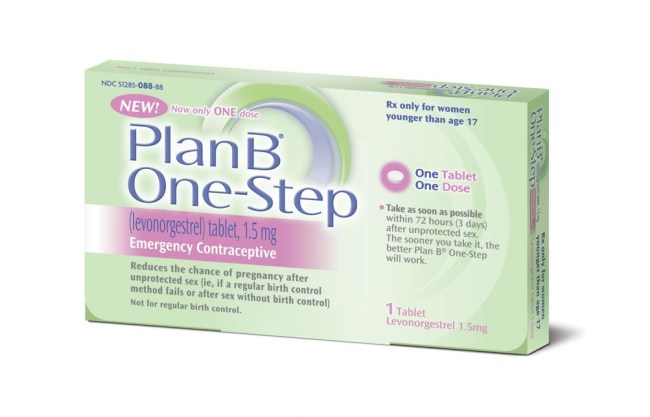
 Image

Secondly, and more importantly, as the Amicus brief by the AJC notes, if the courts rule with finality that a corporation has rights under the Free Exercise clause, it would either create a precedent that would allow religious objections by corporations to any extent under the mandate (even beyond these two forms of birth control, or, indeed, beyond birth control whatsoever), or put the justice system in the awkward position of appearing to favor one religion over another (e.g. Protestantism, which opposes emergency contraception as the Greens do, over Catholicism, which opposes all contraceptives and sterilization procedures).

In the former case, a decision that corporations can exercise religion would create precedent for Jehovah’s Witness business owners to refuse to cover blood transfusions or hematopoietic stem cell transplants, for Christian Scientist business owners to refuse to cover any healthcare, for Scientologist business owners to refuse to cover medication or therapy used to treat psychological illnesses, etc.

When I have brought up this point before, the most common argument I have encountered can be paraphrased by: “It’s different. Medicine that has to do with the beginning of life, especially that terminating life, is very different from life-saving medical treatments.” Again, this argument inaccurately conflates beliefs about how these forms of contraception work with how they actually work, as they are not abortifacients.

But far more importantly, it loses sight of the fact that it is only the purview of the justice system to determine whether a corporation has religious rights under the Free Exercise clause, not to make ethical judgments about the relative morality of the decisions it would make if it did. In fact, if businesses have a right to freely exercise religion, then preventing business owners of other faiths than the Greens from refusing to cover other forms of medical treatment they disapprove of for religious reasons (including any treatments that have nothing to do with birth control), would actually directly infringe on their rights.

It seems that the support of people who think the Greens should be able to refuse birth control coverage for religious reasons only extends to coverage exemptions their views just happen to agree with. But extend the religious right of businesses to refuse coverage for treatments most people don’t oppose (like, say, blood transfusions) and suddenly many Hobby Lobby supporters are going to be much less enthusiastic about the consequences of this case, if Hobby Lobby wins it.


Misunderstanding abounds in the discussion of the Hobby Lobby v Sebelius case. While Hobby Lobby supporters have portrayed the challenge to the birth control mandate as a crusade for individual religious rights, they ignore the complete lack of precedent for granting secular businesses religious rights as well as the precedent treating people acting as corporate agents differently than as individuals.  When they appeal to the emotions of people who oppose abortion by re-defining Plan B and IUDs as “abortifacients,” they demonstrate that they feel their beliefs trump facts. And when they claim that refusing to cover birth control is somehow “different” than refusing to cover any other medical treatment for religious reasons, they appear unaware of the actual implications of this case. A judgment in favor of Hobby Lobby would set a very dangerous precedent: it would empower corporations to mandate their beliefs, while simultaneously ruling that those beliefs trump medical facts, even when used to make decisions about medical coverage.


Sources:

1) The FreedomOutpost article “Hobby Lobby Case against Obamacare is About Rights, not Contraceptives.” http://freedomoutpost.com/2013/12/hobby-lobby-case-obamacare-rights-contraceptives/

2) SCOTUSblog, Sebelius v. Hobby Lobby Stores, Inc. http://www.scotusblog.com/case-files/cases/sebelius-v-hobby-lobby-stores-inc/

3) Amicus Curiae brief on behalf of the Constitutional Accountability Center: http://sblog.s3.amazonaws.com/wp-content/uploads/2013/10/13-354-Amicus-OK-TO-PRINT.pdf

4) Amicus Curiae brief on behalf of 11 professional medical organizations including ACOG, Physicians for Reproductive Health, and the American Medical Women’s Association: http://sblog.s3.amazonaws.com/wp-content/uploads/2013/10/13-354-BRIEF-OF-AMICI-CURIAE-PHYSICIANS-FOR-REPRODUCTIVE-HEALTH-et-al….pdf

5) Amicus Curiae brief of the American Jewish Committee: http://sblog.s3.amazonaws.com/wp-content/uploads/2013/11/13-354-13-356-Brief-of-Amicus-Curiae-American-Jewish-Committee.pdf

6) Third Circuit opinion on the Conestoga v Sebelius case: http://www2.ca3.uscourts.gov/opinarch/131144p.pdf 

7) Sixth Circuit opinion on the Autocam Corp. v Sebelius case: http://www.ca6.uscourts.gov/opinions.pdf/13a0278p-06.pdf

8) Tenth Circuit opinion on Hobby Lobby v. Sebelius:  http://www.ca10.uscourts.gov/opinions/12/12-6294.pdf 

9) “The Good Egg,” a 2004 Discover article on the beginning of pregnancy: http://discovermagazine.com/2004/may/cover#.UrSsaGiARUQ

10) Durand, et al. “On the mechnaisms of action of short-term levonorgestrel administration in emergency contraception.” http://www.ncbi.nlm.nih.gov/pubmed/11747872

11) International Federation of Gynecology and Obstetrics Statement on Mechanism of Action of LN-EC: http://www.cngof.asso.fr/D_TELE/081022FIGO.pdf

12) “What Birth Control Works Best? (Hint: It’s Not The Pill)” http://healthland.time.com/2012/05/24/iuds-and-implants-beat-the-pill-in-preventing-pregnancy/

13) Winner, et al. “Effectiveness of Long-Acting Reversible Contraception,” New England Journal of Medicine. http://www.nejm.org/doi/full/10.1056/NEJMoa1110855

14) On the Religious Freedom Restoration Act of 1993: http://www.justice.gov/jmd/ls/legislative_histories/pl103-141/pl103-141.html

15) Human Reproduction Update, “Intrauterine devices and intrauterine systems” http://humupd.oxfordjournals.org/content/14/3/197.abstract 

16) First National Bank of Boston v. Bellotti: http://caselaw.lp.findlaw.com/scripts/getcase.pl?court=US&vol=435&invol=765