North Carolina lawmakers agreed on a state budget with no Medicaid expansion—but over $15 million in funding for deceptive anti-choice pregnancy centers.
Last Thursday, Democratic Gov. Roy Cooper signed North Carolina’s first state budget in his five years as governor, insisting that the “good outweighs the bad” in a bill that passed with veto-proof majorities in the Republican-controlled legislature. But there’s a lot of bad.
While the budget increased the child tax deduction, it didn’t expand Medicaid, which would have allowed more than 500,000 people in North Carolina to become eligible for health insurance, according to Planned Parenthood.
“State lawmakers have again put politics before the health of North Carolinians by rejecting federal dollars to expand Medicaid, throwing away the most significant step state leaders can take toward getting the coverage people need to live healthy, productive lives, and lowering infant and maternal mortality in the state,” Alison Kiser, executive director of Planned Parenthood Votes! South Atlantic, said in a press release.
The budget does, however, include more than $15.6 million for deceptive anti-abortion “crisis pregnancy centers.” North Carolina has 83 of these in the state, compared to just 15 abortion clinics.
CPCs are more than just a money-draining nuisance—for many patients, a CPC can delay access to actually having an abortion at, you know, a real clinic. The federal money these fake clinics receive is a blatant affront to the separation of church and state as, unsurprisingly, many are religiously affiliated.
Not to mention, They are part of a grander scheme of anti-abortion culture that perpetuates violence against patients and providers. And they do it all under the guise of “pregnancy counseling” or some other vague phrase they know will mislead people into thinking they actually provide care.
Abortion is severely restricted in North Carolina, with parental notification laws and provider requirements that shame and hinder pregnant people seeking abortions. The new budget even excludes abortion providers from state funding for family planning, pregnancy prevention, and teen parenting programs.
North Carolina has the country’s 30th highest maternal mortality rate, according to Planned Parenthood. At least nine maternity units in the state have closed since 2013. It’s pretty clear what North Carolina lawmakers’ priorities are, and Black women—who are three to four times more likely to die due to pregnancy-related complications than white women—are not one of them.
On May 15, 2019, Alabama Governor Kay Ivey signed a near total abortion ban, criminalizing abortion at all stages of pregnancy with very limited exceptions. A key component of the law, which has been blocked by a federal judge, was that any doctor who performs a banned abortion in the state would be guilty of a Class A felony and could be sentenced to life in prison.
A little over a year later, Dr. Leah Torres, an OB-GYN and proud abortion provider, packed her bags and moved to Tuscaloosa, Alabama, to take over as medical director at the West Alabama Women’s Center. Torres had been recruited to work there by the Yellowhammer Fund, an abortion fund that purchased the clinic, which was otherwise facing closure due to the retirement of its longtime owner and medical director. That Torres decided to leave her job in New Mexico, a state that has some of the most liberal abortion laws in the country, and move to a heavily restrictive state, was unusual to say the least. Abortion providers are being pushed out of states like Alabama; few are moving in. “Traveling in and out is one thing,” says Torres. “But not many people are willing to move here like I did.”
Nearly 90 percent of U.S. counties currently have no abortion provider. Even in states with fewer abortion restrictions, those living in rural areas rarely have a provider in their community. According to the Guttmacher Institute, which compiles data from every known abortion provider in the U.S. including clinics, hospitals, and doctors’ offices, the number of facilities in the U.S. peaked at 2,900 in 1981; in 2017, the most recent year for which statistics are available, there were 1,587.
Many abortion clinics in the South and Midwest rely on physicians who travel in from out of state—a precarious arrangement that often means clinics can only offer abortions a few days a week or even a few days a month. The pandemic revealed the worst vulnerabilities of such a system: For seven months in 2020, South Dakota went without an abortion provider when the pandemic prevented out-of-state doctors from traveling to the state.
Five states have only one clinic remaining, meaning one doctor’s departure could cut off abortion access for an entire state or region.
Some abortion providers have held their own in hostile states for decades. Take Dr. Alan Braid, the Texas OB-GYN who has been practicing for 45 years and recently defied the state’s near-total abortion ban. Doctors like Braid will need to retire eventually, but many feel they can’t as their retirement could mean the loss of a clinic. Five states have only one clinic remaining, meaning one doctor’s departure could cut off abortion access for an entire state or region. In 2020, one of Ohio’s nine abortion clinics closed due to a doctor’s retirement. A decade ago, the state had 15 abortion providers. Now it has only eight. Had Yellowhammer not purchased the Alabama clinic and recruited Torres, it, too, might have closed, leaving the state with just two clinics. “The weight of doing abortions in rural areas is falling upon the shoulders of very few people,” said Dr. Iman Alsaden, medical director of Planned Parenthood Great Plains and fellow with Physicians for Reproductive Health. “People who do family planning fellowships tend to stay in big urban academic centers because they are then training other fellows, and they want to do research.”
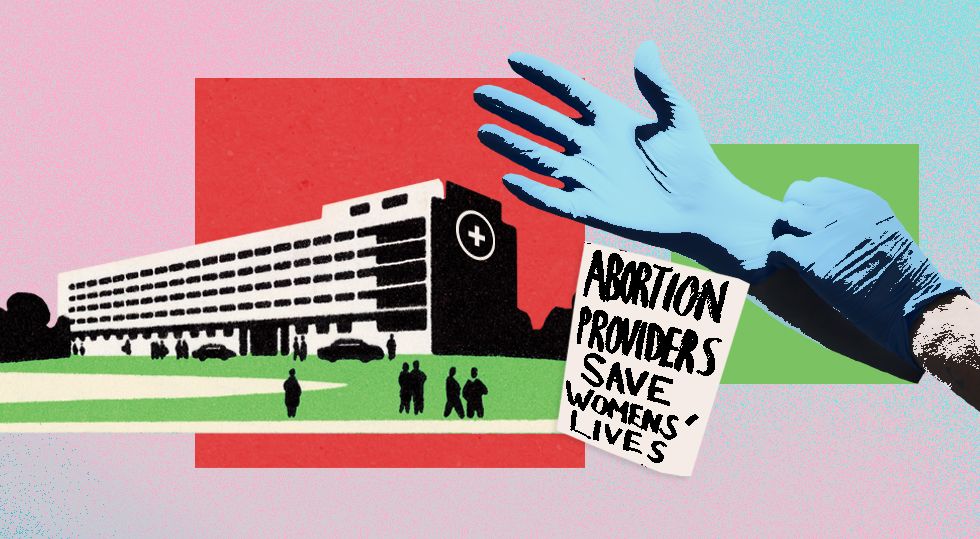
To truly address the abortion provider shortage, Torres said, would require a complete overhaul of the medical system. However, people need abortion providers in their communities now, and improvements in training, removal of unnecessary regulations, and stronger protections for OB-GYNs practicing in hostile states would go a long way toward meeting this need. Here’s what could help:
More doctors need to be taught to perform abortions.
The provider shortage begins with training. Less than half of medical schools offer students hands-on clinical experience with abortion. Even post-graduate training for OB-GYNs often fails to include abortion: A 2018 survey found that only 64 percent of OB-GYN residencies include routine abortion education, despite the fact that they are required to do so in order to be accredited by the American Council for Graduate Medical Education (ACGME). Students who are interested in abortion care but in residencies where such training isn’t offered often have to pursue special fellowships after they graduate. Additionally, “many state institutions have in their charters that they cannot teach about abortion and other forms of comprehensive reproductive health care,” Alsaden said. The result: Even though 97 percent of OB-GYNs in private practice say they encounter patients seeking abortion, only 14 percent offer abortion care.
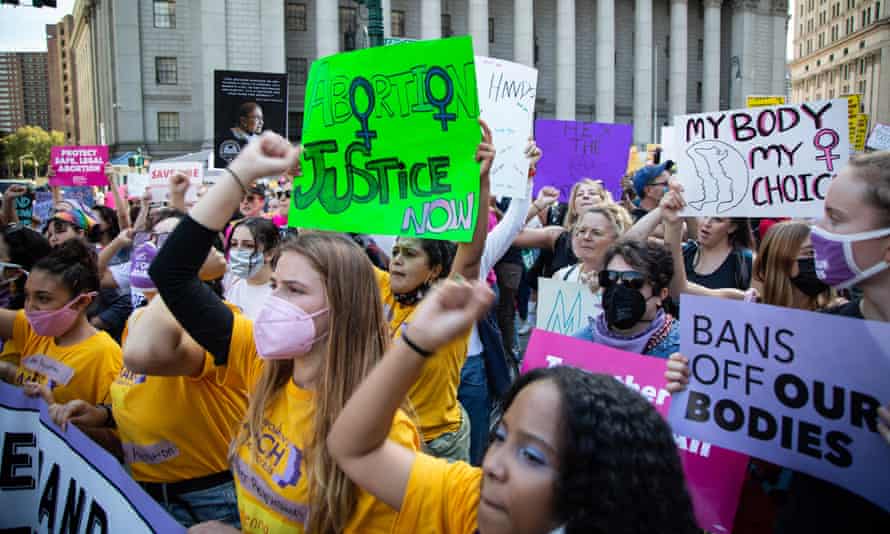
A 2019 protest at the Georgia State Capitol building.GETTY IMAGES
Further, at least nine states have laws that prohibit government employees from providing abortions, meaning faculty at public universities and teaching hospitals can’t perform such procedures or instruct students. A 2020 study found that 57 percent of teaching hospitals, concentrated in the Midwest and South, have policies that limit abortion even beyond what state law dictates. Additionally, one in six hospital beds in the U.S. are now in Catholic hospitals, which prohibit doctors from performing nearly all abortions. And 95 percent of abortions happen in standalone clinics, while medical students and residents are typically trained in hospitals. All of these factors taken together make it difficult for doctors-in-training to get direct experience with abortion.
Even though 97 percent of OB-GYNs in private practice say they encounter patients seeking abortion, only 14 percent offer abortion care.
Alsaden said the organizations that accredit medical schools and residency programs should do more to require and standardize abortion training. “I would love to see it be more challenging to pursue a medical degree while trying to avoid abortion training than it currently is to get training in abortion,” said Pamela Merritt, executive director of Medical Students for Choice. She said accreditation standards should specify how many hours of abortion education a medical student needs. “Medical schools are part of big university systems, and accreditation can incentivize them to hold the line and flex some of their power, rather than take the path of least resistance and cave to this empowered minority that is about to make it very dangerous to be pregnant in the United States,” Merritt said. State governments can help with this, too. California, for example, has a law requiring that OB-GYN residency programs adhere to the ACGME requirements.
Additionally, medical schools and residency programs that do include abortion training usually allow students to opt out—a practice Torres said should end. “Someone in psychiatry residency can’t say, ‘I don’t want to learn about bipolar disorder,’” she said. “You can’t just decide to not learn something that is standard care. And yet we’ve allowed this to happen in medical training when it comes to abortion, and it’s not right.”
Change the definition of who can be an abortion provider.
Advanced practice clinicians, or APCs, including nurse midwives, nurse practitioners, and physician assistants, have masters or doctoral degrees. They can prescribe medications, diagnose and treat illnesses, and perform examinations and medical procedures. They can also safely provide medication abortion (by pill) and aspiration abortion, a simple in-office procedure that only takes about five minutes and is highly similar to other procedures APCs do, including IUD insertion. However, 38 states have laws making it so that only physicians can provide abortions. A handful of states allow APCs to provide medication abortions, but not aspirations.
“There’s been support for APCs being able to provide abortions since the mid-90s,” said Julie Jenkins, a sexual and reproductive health nurse practitioner and leader of the APC Cluster of the Reproductive Health Access Project (RHAP), a group of APCs who provide sexual and reproductive healthcare. “The American Public Health Association, American College of Obstetricians and Gynecologists, the World Health Organization—all of those folks recognize that abortion care is within our scope of practice.”
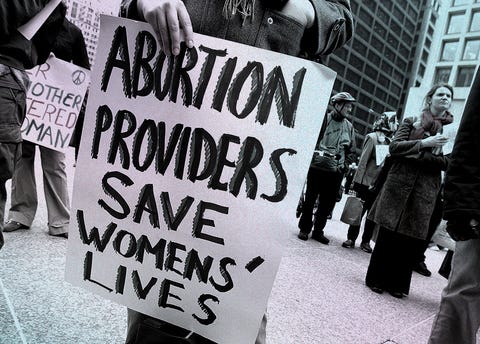
An International Women’s Day march on March 8, 2006, in Chicago, Illinois.GETTY IMAGES
Allowing APCs to provide abortions would be especially helpful in rural areas. “We know that in rural places, APCs tend to be the primary care providers,” said Jenkins. “Doctors in general are not moving to those areas and staying there. So to improve abortion access in those communities, it would need to be the APCs that people are already seeing for their care.”
Several states—most recently New Jersey—have changed their laws to allow APCs to provide first trimester abortions. A bill called the Women’s Health Protection Act, first introduced in 2013 and reintroduced this year, would invalidate physician-only requirements and ensure all qualified health care providers can perform abortions. It would also remove medically unnecessary requirements including mandatory ultrasounds, waiting periods, and biased state-mandated counseling. The bill passed in the House of Representatives this year and is supported by President Biden, but faces an uphill battle in the Senate. (Filibuster reform would be required to secure its passage.)
The excessive regulations on medication abortions have to go.
Mifepristone, one of two drugs used for medication abortion, is regulated under an FDA program called Risk Evaluation and Mitigation Strategies, or REMS. These tight regulations disincentivize doctors from stocking abortion pills in their offices, leaving patients to seek care in abortion clinics, which may involve significant travel or harassment from anti-abortion protesters. “Part of the promise of medication abortion was that you would just be able to get it from your local provider in their office discreetly, privately,” Jenkins said. “The REMS have really wreaked havoc on that idea.”
Facing these barriers, a growing number of people are ordering pills online to self-manage their abortions outside medical settings. Before the pandemic, these orders were usually fulfilled by overseas pharmacies. However, during the pandemic, the FDA has suspended some of the REMS requirements, allowing U.S. providers to legally mail abortion pills to their patients. Now, the FDA is reviewing all of the restrictions on mifepristone and considering permanent changes. Medication abortion by mail could become a permanent option, or the REMS requirements could be removed altogether, allowing retail pharmacies to stock mifepristone. This would make it easy for nearly any doctor—or APC, in 18 states—to offer medication abortion. But medical providers will have to take the initiative to do so, said Torres, and push back against hospital and practice administrators who may not want them to offer such care.
Abortion providers need personal and professional protections.
What happened to Torres after she moved to Alabama brings up another problem: it’s really hard to be an abortion provider. In August 2020, just weeks after granting Torres a temporary medical license, the Alabama State Board of Medical Examiners suddenly revoked it and refused to give her a permanent license. Medical boards are technically nonpartisan, but their members are appointed by elected officials. In Alabama, some members are appointed by the governor and some by the lieutenant governor, both of whom are fervently anti-abortion, and some by the House of Representatives, which has an overwhelming Republican majority.
In revoking her license, Alabama’s medical board alleged that Torres lied in response to questions on the application. She says she answered truthfully, and that when asked for additional information, she provided it promptly. Torres believes she was targeted because she is an abortion provider. Due to the history of violence against abortion providers in the U.S.—another major deterrent—Torres said she’s used to managing concerns about her personal safety. But she never imagined that her integrity as a physician would be called into question. “It was not even on my radar,” she said. She fought the Board’s decision, and won, ultimately receiving a permanent license. But during the seven months of her suspension, she was unable to work in Alabama, and the Board’s action jeopardized her licenses in other states as well. While raising funds to cover over $100,000 in legal fees, Torres has also had to take on a second job as a traveling physician.
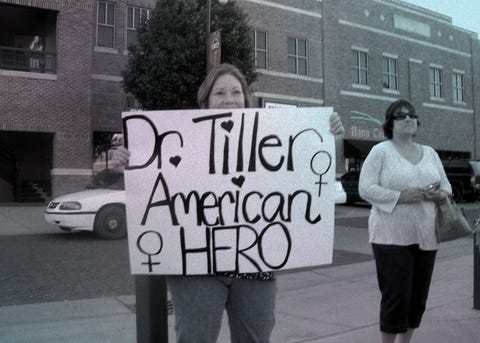
A candle light vigil for Dr. George Tiller, a doctor who performed abortions later in pregnancy, who was killed in May 2009 in Wichita, Kansas.GETTY IMAGES
While she was unable to work, the clinic relied on other doctors who traveled in from out of state. Even that was difficult to arrange, because other physicians were afraid that what happened to Torres could happen to them. “It was a deterrent, plain and simple,” she said. “I think state medical boards probably have too much unchecked power.” The federal government could also do more to deter violence against abortion providers by reviving the underused Freedom of Access to Clinic Entrances Act, which prohibits injuring, intimidating, or interfering with abortion clinic staff. RELATED STORYSCOTUS Is Taking Up a Challenge to Roe v. Wade
With the Supreme Court poised to overturn or significantly weaken Roe v. Wade, it’s especially critical to take proactive steps to widen the pool of abortion providers. If abortion becomes illegal in large areas of the country, states where it remains legal will need even stronger abortion care infrastructure. “We shouldn’t have to relearn in a repressive environment that abortion is essential,” Merritt said.
For her part, now that she has an Alabama license, Torres is determined to keep providing abortions there for as long as she can. She says everything the state put her through, including the $100k she spent in legal fees, only increased her fortitude to practice there: “They’ve bought themselves a permanent abortion provider in Alabama.”
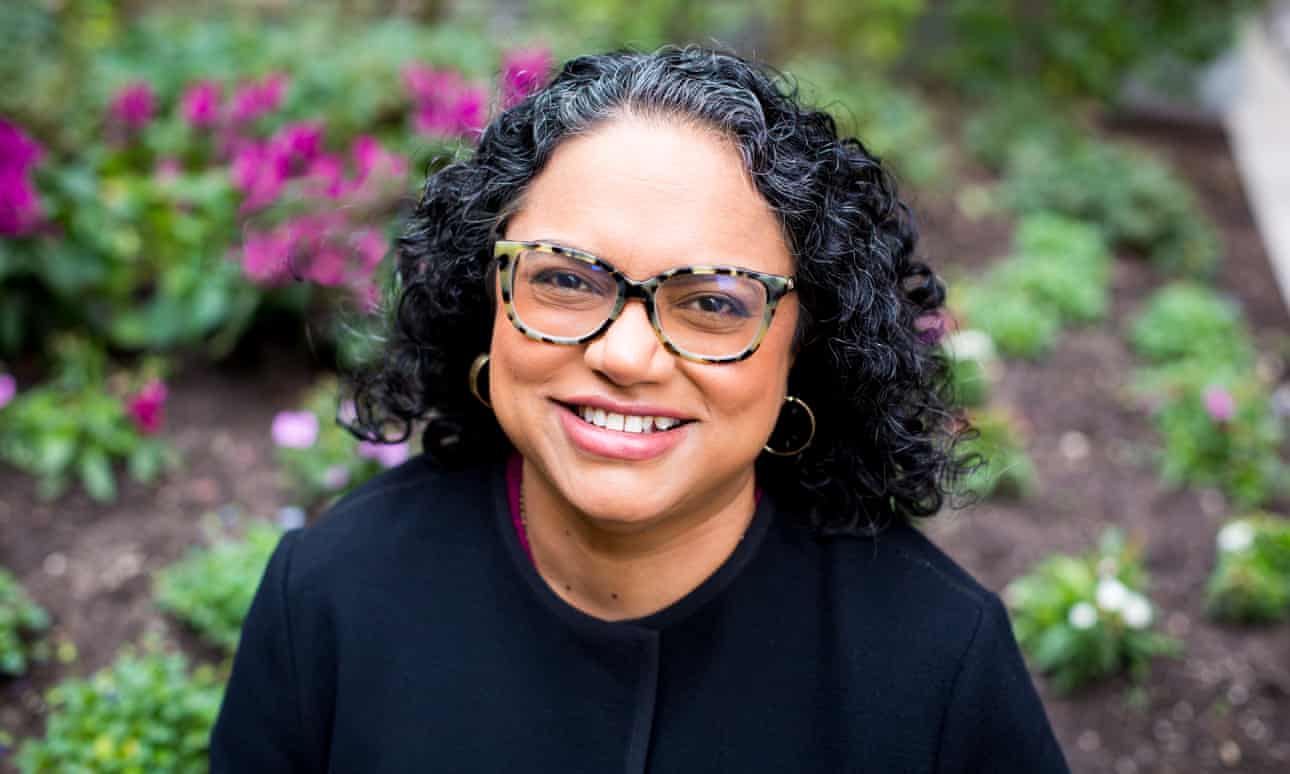
Mini Timmaraju, president of Naral Pro-Choice America: ‘“It can be the bleakest of times and it can be terribly scary. It can also be an incredible opportunity.’ Photograph: Les Talusan/Naral Pro-Choice America
Mini Timmaraju, president of Naral Pro-Choice America, braces for an era in which the federal right to an abortion may no longer exist.
Born a month after the landmark 1973 supreme court decision establishing a constitutional right to abortion, Mini Timmaraju has never lived in an America without the rights enshrined by the landmark Roe v Wade supreme court ruling.
Now she is helping lead the reproductive rights movement into an uncertain, “frightening” future where the federal right to an abortion may no longer exist.
Just days into her new role as president of Naral Pro-Choice America, a conservative supreme court will hear arguments in a case that many advocates fear will be the death knell for Roe v Wade.
“It’s frightening times for advocates of reproductive freedom – for all Americans,” she said in an interview. And yet, Timmaraju sees reason for optimism.
“It can be the bleakest of times and it can be terribly scary,” she said. “It can also be an incredible opportunity.”
Earlier this month, the supreme court took up two separate challenges to a Texas law effectively banning abortions in the second most populous state in the nation. But the more direct threat to Roe comes on 1 December, when the court will consider the constitutionality of a Mississippi law that bans abortions after 15 weeks of pregnancy – about two months earlier than Roe and subsequent decisions allow.
These are the first abortion cases to be considered by the expanded, 6-3 conservative majority, which includes three appointees of Donald Trump, who had promised to nominate only “pro-life” justices.
If Roe were to be overturned, there are 26 states that are “certain or likely” to ban the procedure, according to the Guttmacher Institute. The list includes nine states with abortion bans still on the books from before Roe, and 12 states with so-called “trigger” laws, which would be enacted if Roe is overturned.
“With Scotus in mind and with the midterms at play,” Timmaraju said, “we have a real opportunity to wake up a big majority of the electorate that we know supports reproductive freedom and double down and ramp up that work to meet the moment we’re facing right now, this moment of crisis.”
‘We have a real opportunity to wake up a big majority of the electorate,’ Timmaraju said. Photograph: Karla Ann Cote/NurPhoto/REX/Shutterstock
Timmaraju, the daughter of immigrants from India, is the first woman of color to lead the organization, which is one of the nation’s oldest and most powerful abortion advocacy groups.
Most recently, she worked as a senior adviser for the Biden administration on diversity, equity, inclusion and accessibility. In 2016, she led efforts to mobilize female voters as a director for Hillary Clinton’s presidential campaign. She also led diversity efforts at Comcast Corporation, held leadership roles with Planned Parenthood and served as the national director of the National Council of Asian Pacific Americans.
“I feel like I’ve been at the intersection of race and gender my whole career,” she said.
Timmaraju said it was time to “raise the alarm” on the “very organized, concerted effort by the extremist right to whittle away at reproductive rights since the minute Roe became law of the land”.
Exposing these tactics, she believes, will help energize voters, especially those who support abortion rights but may not have realized the extent to which abortion access is under threat, particularly at the state and local level.
At the federal level, she called for the immediate passage of the Women’s Health Protection Act, which would effectively codify Roe and counter state-level restrictions on abortion. The House passed the bill in September, but it faces daunting odds in the Senate, where a Republican filibuster awaits.
Naral has been outspoken in calling on Democrats to eliminate the filibuster, which requires 60 votes to pass most legislation.
Yet it’s unclear the legislation would pass with just a simple majority, as two Democratic senators, Joe Manchin and Bob Casey, have not yet signed on to a Senate version of the bill. Nor have the two pro-choice Republican senators, Lisa Murkowski and Susan Collins.
Mini Timmaraju. Photograph: Les Talusan/Naral Pro-Choice America
Nevertheless, Chuck Schumer, the Senate majority leader, has promised to bring the measure to the floor for a vote – a sign, Democrats believe, that abortion could be a potent issue in next year’s election.
In her new role, Timmaraju hopes to build on the solidarity between progressive organizations, leveraging their collective power to resist the tide of abortion restrictions and voting rights restrictions, while fighting for LGBTQ rights and climate justice.
“We know there’s a throughline of white supremacy throughout,” she said. “These are not new playbooks.”
Furthermore, she said that overturning Roe would have a disproportionate impact on people of color, low-income people and people who live in rural areas, all of whom already experience higher barriers to accessing reproductive and maternal health services.
Despite the myriad political and legal setbacks, she said the reproductive rights movement has made critical gains.
Abortion is no longer a “taboo” topic, Timmaraju said, crediting the decades of work by activists and a new generation of female lawmakers who have publicly shared the story of their decision to have an abortion.
“We need to not be afraid of talking about it. When we become afraid or we get, you know, uncomfortable with it,” she said, “that’s when we give all this opportunity for our opponents to push and spread misinformation.”
Timmaraju said pro-choice advocates must be prepared to forcefully counter attempts by anti-abortion activists to portray the fall of Roe as “reasonable”, by pointing to medical advances or the availability of birth control, for example.
“They’re going to downplay it,” she said. “And we’ve got to be very ready to say, absolutely not.”
While the nation awaits a ruling from the supreme court next year, Timmaraju’s message to the movement is to keep the faith.
“We may have some short-term losses – and we’re gonna fight like hell to avoid them,” she said. “But we also have some really significant long-term gains, the seeds [of which] are being planted now.”
Thanks to birth control, we have the ability to plan and design our family and trajectory. But we must also break down systemic barriers to increase access for all. Shutterstock
By strengthening the family planning infrastructure like increasing birth control access, we can help ensure everyone’s reproductive well-being.
I have been a practicing OB-GYN for nearly two decades, caring for the reproductive health of people from all walks of life. People’s reasons for needing reproductive and contraceptive care range from managing medical needs to preventing a pregnancy. It is unfortunate that when educating my patients on their contraceptive options, in addition to medical considerations, they too often have to consider such factors as their access to transportation, insurance status, and ability to pay.
It’s even more unfortunate when you consider that the public supports birth control as a part of the basic health care people need to live life on their own terms.
A recent poll for Thanks, Birth Control Day, which is today, confirmed that there continues to be strong support for the use of birth control. Per the poll, 85 percent of respondents—including 93 percent of independents, 85 percent of Democrats, and 76 percent of Republicans—believe that all people deserve access to all methods of birth control, regardless of who they are, where they live, or their economic status. The poll was commissioned by the organization I’m the CEO of, Power to Decide.
Further, a significant majority of adults (76 percent), believe that birth control is a basic part of women’s health care. One reason for this strong support is that a majority of people have benefited from the ability to delay or prevent pregnancy through the use of birth control. As the data indicates, nearly all women (99 percent) who have ever had sex have used a method of contraception at some point in their lives.
In addition, people understand the broad benefits of access to birth control. The poll found that more than half of people (including 59 percent of Democrats, 53 percent of independents and 51 percent of Republicans) agree birth control allowed them to manage health conditions.
Meanwhile, 67 percent (including 72 percent of Democrats, 68 percent of independents, and 60 percent of Republicans) agree birth control has helped them work toward educational or professional goals. Finally, 76 percent (including 79 percent of independents, 75 percent of Democrats, and 74 percent of Republicans) are thankful birth control allowed them to decide if, when, and under what circumstances to get pregnant and have a child.
Sadly, despite the data underscoring the importance of birth control in people’s lives and the significant support it enjoys as a basic part of health care, access is not guaranteed equally to all people. Today, more than 19 million women of reproductive age live in contraceptive deserts. In these areas, people lack reasonable access in their county to a health center that offers the full range of contraceptive methods.
Public concern over the lack of access to birth control is also reflected in the data, and it cuts across the political spectrum. Specifically, the poll found Democrats (74 percent), independents (72 percent), and Republicans (55 percent) are all concerned about access to birth control. Critically, the public’s concern over access has grown significantly when compared to polling data from 2020. The concern over access to birth control grew from 51 percent in 2020 to 69 percent this year.
Of course, the data doesn’t tell the whole story. What often gets lost in polls and surveys is the impact of birth control access for real people. In my experience, I have seen how access to quality affordable care has allowed a 17-year-old to finish high school and go on to higher education and a 25-year-old to space and plan her next pregnancy for a time that worked for her and her family.
Having the ability to plan and design your family and trajectory can be life changing. We must not forget that this is not yet a reality for far too many people who live in certain ZIP codes or do not have the ability to pay for the care and services they need.
Their stories are too often about opportunity lost and dreams deferred. From my experience working as a physician in reproductive health for most of my career, I believe there is no more compelling work at this time than increasing access to quality contraceptive care for all.
So today, as we proudly celebrate birth control for affording us the opportunities to realize our goals for ourselves and our families, we must also look for ways to break down systemic barriers and adopt a comprehensive approach to increase access for all. By strengthening the family planning infrastructure and increasing awareness and quality of services, we can help ensure the reproductive well-being for all.
The ability to plan and space out a pregnancy and pursue one’s goals should belong to all people, regardless of who they are or where they live.
The future of abortion access in the United States depends on independent clinics and providers to provide health care. Kena Betancur/AFP via Getty Images
Independent clinics provide three out of every five abortions in the United States every year, a new report by the Abortion Care Network found.
With Roe v. Wade on the line at the Supreme Court and state lawmakers restricting access in new and increasingly radical ways, abortion providers and clinics have never been so vulnerable. The national conversation surrounding abortion access may often center on well-known mainstream organizations, but the reality of care looks different for patients on the ground.
Independent clinics are the heart of abortion care in the country, and a new report from the Abortion Care Network, a national association for independent abortion providers, illustrates how, as restrictions on access tighten, patients rely more and more on the critical care these clinics provide.
According to the report, independent clinics provide three out of every five abortions in the United States every year. Of the six states that have only one abortion clinic remaining, four rely on independent clinics: Mississippi, North Dakota, West Virginia, and Wyoming.
“Independent clinics like Women’s Health Center of West Virginia—the only clinic remaining in the entire state—are vital to the landscape of abortion care because we are embedded in our local landscape,” said Katie Quinonez, executive director of Women’s Health Center of West Virginia. “As the only abortion clinic in the entire state of West Virginia, the stakes could not be higher. … We know that no matter what happens with Roe, our community will be looking to us and local abortion funds to help them get the care they need. And, we’ll be there to answer the call.”
Patients who need later abortion care also rely heavily on independent clinics, which make up 60 percent of all clinics providing abortion care after the first trimester, and nearly 80 percent of all clinics providing abortion care at or after the 22nd week in pregnancy. The ACN report found that all clinics that provide abortion care after 26 weeks are independent.
In the wake of Texas SB 8, which bans all abortions after embryonic cardiac activity can be detected—around six weeks’ gestation—independent clinics are showing up for the patients flooding other states to seek care.
Rebecca Tong, co-executive director of Trust Women in Oklahoma City, said the clinic has “always seen patients from Texas.”
“But in September—after SB 8 went into effect—we saw ten times as many patients from Texas as in the month before; that number increased even more in October,” Tong said. “Everyone at Trust Women has stepped up to meet this challenge and provide abortions to as many people coming from Texas as we can.”
And for independent providers in Texas, like Whole Woman’s Health, attacks on abortion access are nothing new.
“We have taken down egregious attacks before, and we have the expertise and grit to take on the biggest ones yet, like Senate Bill 8,” said Amy Hagstrom Miller, the founder, president, and CEO of Whole Woman’s Health. “Independent providers like Whole Woman’s Health have learned to be innovative and nimble to survive.”
Independent providers are also on the forefront of ensuring patients have access to the full spectrum of abortion care, including both medication abortion and in-clinic abortion care. According to the ACN report, 71 percent of independent clinics offer patients both, compared to 49 percent of Planned Parenthood affiliates that offer patients a choice. What’s more, of the 306 independent clinics that operate in states where telemedicine abortion is legal, 34 percent provide telemedicine care.
“We hear every day from people who tell us they would not have been able to have an abortion if telemedicine was not an option,” Dr. Jamie Phifer, medical director and founder of Abortion on Demand, said. “Whether it’s because of distance to a clinic, busy work schedules, or caring for young children at home, telehealth can help overcome these obstacles.”
Independent providers are the backbone of abortion care in the United States, but they’re also some of the hardest hit by restrictions and bans. According to the ACN report, over the last decade the number of independent clinics nationwide has decreased by 30 percent. Twenty clinics have closed this year, and a whopping 113 have shuttered since 2016.
The fight for abortion access is more urgent than ever, and ACN’s report makes clear that the future of abortion access in the United States depends on independent clinics and providers. The report identifies key areas for advocacy, including ending abortion restrictions, repealing insurance coverage bans on abortion, and lifting regulations on medication abortion.
Beyond that, they urge advocates to raise awareness of the vital role independent clinics play in abortion care. They suggest donating or volunteering with a local abortion clinic, and, on a personal level, showing support for the people in your life who provide abortions and the people who have them.
Abortion rights activists rally at the Texas State Capitol on September 11, 2021, in Austin, Tex. (Jordan Vonderhaar / Getty Images)
Clinic staff are “very worried” about the stability of their jobs, explained one provider. And turning away patient after patient is taking its toll.
AUSTIN, TEX.—Months before Senate Bill 8 (SB 8) went into effect, staff and providers at Whole Woman’s Health—a network of abortion clinics—anxiously braced for the impact of one of the most extreme anti-choice laws in the United States. They spent countless hours in meetings strategizing how best to comply with the onerous Texas law, which bars abortion care once embryonic cardiac activity is detected, typically around six weeks of pregnancy. As more than 80 percent of pregnant people in the state receive care past this time frame, the law amounts to a near-total abortion ban.
However, nothing—not even the state’s roughly one-month Covid-19 abortion ban last year—could quite prepare the staff for the deep trauma they would face turning away hundreds of patients indefinitely over the next several weeks.
“My staff is dealing with emotional and psychological exhaustion as they are forced to be agents of the state against their will and comply with a remarkably cruel law they fundamentally disagree with,” said Amy Hagstrom Miller, Whole Woman’s Health president and founder. “This law is taking a huge toll on them—they are facing day-to-day trauma.”
Clinic staff find themselves on the other end of understandably angry and anguished daily calls from patients who are blocked from receiving the timely care they need in their home state. Whole Woman’s must also resist the desperation of some patients, past the six-week mark, who plead with clinic staff to meet them in the parking lot for abortion-inducing pills or for an after-hours procedure. Staff don’t give in; however, many are reaching their emotional thresholds.
“Our staff are compassionate people but are being forced to constantly say ‘no’ to patients under the law—and they are hitting their limits,” said Hagstrom Miller. “I’ve heard some say: ‘I’ve said as many “no”s as I can, I don’t know how much more I can take.’”
In effect since September 1 because the US Supreme Court refused to intervene, SB 8 has forced most abortion care in the second-largest state in the country to cease, pushing pregnant people to venture out of state for care—that is, only if they are able to secure the resources to do so—or carry unplanned pregnancies to term.
In a scathing ruling on October 6, US Judge Robert Pitman paused SB 8 in response to a legal challenge from the US Department of Justice, deeming the law an “offensive deprivation” of constitutional rights. However, the largely conservative Fifth Circuit Court of Appeals, appeasing Texas officials, reinstated the law just two days later. The dizzying legal volley while the bill moves through the courts adds to the uncertainty and anxiety felt by patients, providers, and clinic staff.
Compounding the daily trauma for staff is the threat to their livelihoods: In addition to barring the overwhelming majority of abortion care, the law includes a novel legal provision that empowers private citizens to sue abortion providers or anyone who “aids or abets” abortion care. And those who sue are incentivized by a $10,000 award if the suits prove successful. As a result, the law opens the door for an army of anti-choice vigilantes to sue providers—or potentially those tangentially supporting abortion—at any point, leaving clinics deeply vulnerable.
Additionally, a provision in the law says that even if a temporary injunction is in place, providers could still be subject to retroactive litigation if the legal pause on the law is eventually stayed. (Malpractice insurance does not cover her providers for this kind of suit, stressed Hagstrom Miller.) And even if a lawsuit against an abortion provider is found to be frivolous, physicians would still need to disclose that they had been sued when applying for licenses, certifications, or hospital admitting privileges, potentially jeopardizing their careers.
Hagstrom Miller says of her 17 physicians at four centers across Texas, only half have felt comfortable continuing abortion care within the confines of the law; the other half fear liability and will resume procedures only if the law is permanently blocked. The majority of providers are young women—some who fly in from out of state—and are still paying off student loans and building their nascent careers. Her clinic staff similarly are largely women of color—many are parents and must weigh the risk to their livelihoods. While a handful of clinic staff have exited since the law was passed in May, the majority have stayed on.
But those who have stayed on remain “very worried” and “extremely anxious” about the stability of their jobs. Since the law took effect, clinics are seeing fewer patients, which has the effect of severely straining their incomes.
“If we can’t see patients, we don’t have income—so by default this could be a clinic closure law,” Hagstrom Miller said, adding that Whole Woman’s clinics are only seeing about 20 percent of the patients they normally do.
Hagstom Miller is all too familiar with the possible outcome of Texas anti-abortion laws intentionally meant to strangle clinics financially and operationally. Following the passage of 2013’s House Bill 2, a Targeted Regulation of Abortion Provider, or TRAP law, three Whole Woman’s Health clinics were forced to shutter their doors, along with half the state’s clinics overall, dropping the number from around 40 to less than 20. It took one year for Hagstrom Miller’s McAllen location to reopen; three years for the Austin flagship center; and the Beaumont clinic never opened its doors again. Even after the US Supreme Court struck down two key portions of HB 2 in 2016, most abortion clinics in Texas have not been able to reopen.
While no Texas clinic so far has indicated it is at risk for immediate closure, independent providers face a greater threat than nationally affiliated organizations like Planned Parenthood, as they lack the name recognition and fundraising and mobilizing power, said Nikki Madsen, executive director of the Abortion Care Network, the national association for independent, community-based abortion care providers.
“We know that all abortion clinics need the support of their communities to weather these storms, but, unfortunately, fewer people know about indies—and that means that fewer donations, volunteers, and other forms of support are directed their way,” said Madsen.
Fourteen of the 20 clinics in Texas are independent providers, and in the United States generally, indies provide three of every five abortions, making up the majority of clinics that provide care after the first trimester. Because indies are so fundamental to abortion access in this country, the threat of closure also represents a “disproportionate threat to meaningful abortion access overall,” stressed Madsen. That’s why her group created Keep Our Clinics, a centralized fundraising program, to help independent clinics, which need tens of thousands of dollars each month to stay afloat.
“While advocates on the ground and legal experts across the country work to defeat the current abortion ban in Texas, we are working collectively to keep Texas clinics open and support clinics in surrounding states,” said Madsen.
Although providers at bigger institutions may benefit from the support of a national network, they have not been immune to the stress SB 8 has created for clinic staff. Dr. Bhavik Kumar, a physician at Planned Parenthood Center for Choice in Houston, said SB 8’s potential to increase harassment and threats of litigation has only amplified the jarring feeling he has felt practicing abortion care in a conservative state hostile to abortion rights. The law has prevented the Houston clinic from providing abortion care to nearly 500 patients, which is “disturbing,” to Kumar personally and professionally.
The Houston clinic is also experiencing difficulty in hiring new staff and, like the staff at Whole Woman’s Health, its current team is concerned about their financial stability, he said. Some are in debt; some are caretakers; some are parents; and their livelihoods and futures are compromised because of SB 8.
“There is a heavy cloud of uncertainty above all of us,” said Kumar. “It’s unsettling that our jobs are so in flux. We are human. We have lives—we have partners, family members, children. The threat of SB 8 has a ripple effect. It changes not just how we interact with our patients but how we interact with friends and family, how we plan for our lives and futures. It is draining us every day.”
The Supreme Court will review the enforcement mechanism that allows any private citizen to sue. Kevin Dietsch/Getty Images
In just one week, the Supreme Court will hear two cases related to Texas’ near-total abortion ban.
“I’m being forced to inflict pain on my patients when the reason I became a doctor was to help and to heal them.”
Dr. Amna Dermish, the regional medical director at Planned Parenthood of Greater Texas, was describing the times she’s had to turn patients away since Texas’ near-total abortion ban, SB 8, took effect in September. Dermish broke down in tears during a press call Friday, just hours after the Supreme Court announced it would hear two challenges to the law on November 1—while allowing the ban to stay in effect until then.
By refusing to block the ban, the justices are already indicating a degree of sympathy toward the law. It’s particularly devastating considering the immediate, day-to-day impact SB 8 is having on Texans.
Now that the Supreme Court has fast-tracked a Texas SB 8 hearing onto the docket—it usually takes months from when the justices agree to hear a case to the actual arguments—it’s setting up to be a huge term for abortion rights. The Court had already set December 1 as the date to hear Mississippi’s 15-week ban, Dobbs v. Jackson Women’s Health Organization.
How we got here
Back in May, Texas Gov. Greg Abbott signed SB 8 into law, banning abortions as soon as embryonic cardiac activity is detected, typically around six weeks. This is well before viability, and pre-viability abortion bans are unconstitutional under Roe v. Wade. But that didn’t stop Texas lawmakers in their quest to punish anyone who provides an abortion or who “aids and abets” someone in getting an abortion, including anyone who drives a patient to a procedure or helps them pay.
And as if a six-week abortion ban with virtually no exceptions isn’t ghoulish enough, the law’s enforcement mechanism deputizes anyone to sue people who violate the law, essentially putting a bounty on anyone who helps someone access abortion.
Abortion providers and advocates sued in an attempt to block the law from going into effect on September 1, and SB 8 has been ping-ponging around the courts since then.
And now here we are—the fate of abortion access lies in the hands of a Supreme Court with a conservative supermajority.
What’s at issue
The Court will review the enforcement mechanism that allows any private citizen to sue. You see, the anti-choice lawmakers who drafted SB 8 devised the law to circumvent the judicial precedent that the state cannot interfere with abortion before viability. Their logic is that by shifting that responsibility of enforcement onto citizens, they can basically render the constitutionality of abortion moot.
It’s actually two cases that the justices will hear: Whole Woman’s Health v. Jackson, the case brought by the providers, and United States v. Texas, a lawsuit brought by the Department of Justice.
Marc Hearron, senior counsel for the Center for Reproductive Rights, said Friday on the press call that if the Supreme Court were to approve of a law like SB 8, the decision would essentially dismantle the Court’s authority to enforce protections of constitutional rights going forward.
“Every individual constitutional right is at stake,” he said.
What’s next
The justices will hear oral arguments in the two cases a week from today. Advocates say a ruling from the Court could come anytime, including as early as Friday, November 5.
A new Texas law abortion law is having ripple effects far outside the Lone Star State with clinics as far as Las Vegas booked out for weeks amid a rapid influx of patients seeking care.
The Texas statute, known as S.B. 8, is one of the most restrictive abortion bans in the nation. It effectively prohibits the procedure when a “fetal heartbeat”—a term that medical professionals and abortion rights activists assert is misleading—can be detected, usually around six weeks of pregnancy.
Enforcement of the ban is up to private citizens, who can receive as much as $10,000 for every successful lawsuit they bring against a doctor or anyone involved in aiding or abetting an abortion.
Since S.B. 8 went into effect on September 1, abortion providers in neighboring states have reported a drastic increase in patients from Texas.
There are typically 55,000 people in Texas who get abortions each year, which means there are now roughly 1,200 people a week no longer able to access those services in their home state.
“We are currently booked out into the first or second week of November, which is really significant,” Zach Gingrich-Gaylord, the communications director at Trust Women, told Newsweek.
Trust Women operates clinics in Oklahoma and Kansas. In the month of August, Trust Women’s Wichita location saw just one patient from Texas. In October, that number skyrocketed to 51.
Planned Parenthood Rocky Mountains, which covers New Mexico, Colorado and southern Nevada, has seen a 50 percent increase in patients from Texas across all of their health centers.
Adrienne Mansanares, the chief experience officer for the Planned Parenthood Rocky Mountain region, told Newsweek that their centers are also booked out for as long as two weeks due to the “tremendous demand” for reproductive and sexual healthcare.
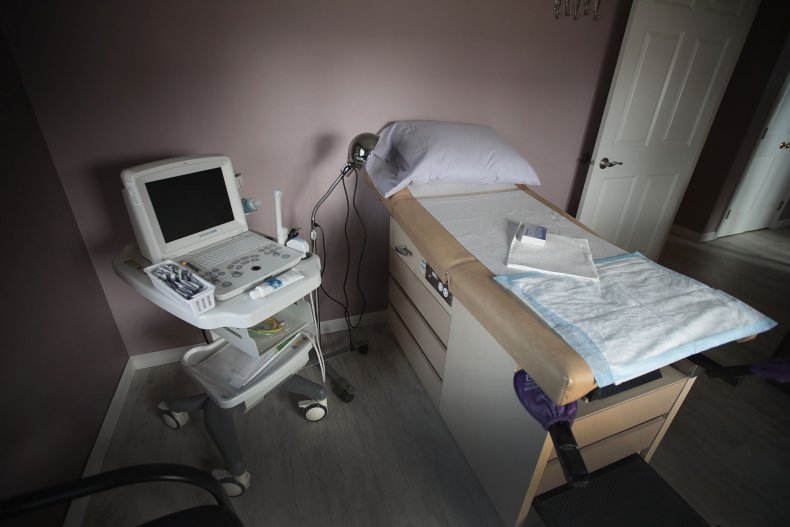
A new Texas law abortion law is having ripple effects far outside the Lone Star State with clinics as far as Las Vegas booked out for weeks amid a rapid influx of patients seeking care. In this photo, Aan ultrasound machine sits next to an exam table in an examination room at a Whole Woman’s Health clinic in Indiana.SCOTT OLSON/GETTY IMAGES
The flood of patients traveling from Texas is causing capacity issues for other states that have smaller or less clinics. Dallas–Fort Worth, for example, has more clinics in its metropolitan area than the entire state of Oklahoma.
Trust Women said it’s Wichita clinic is seeing an increase in Oklahoma patients who are being displaced by Texas patients. Planned Parenthood described a “migration” pattern where if their Albuquerque location fills up, local residents then have to travel north to Farmington or even across state lines to Durango, Colorado for appointments.
The result is longer wait times for time-sensitive issues ranging from pregnancies to annual health screenings.
“This is not just about abortion, and it’s bad enough that it would just be about abortion,” Mansanares said, “but it’s also about family planning, cancer screenings, STI testing and treatment, refilling birth control pills. There’s a big physical push of patients across this whole region that’s delaying care for other residents.”
Multiple legal challenges have been filed against S.B. 8. Earlier this month, a federal judge temporarily blocked the statute, allowing one reproductive healthcare provider to resume abortions for patients. But the pause only lasted two days before the largely conservative Fifth U.S. Circuit Court of Appeals sided with Texas lawmakers on the issue.
Now, the Department of Justice is asking the Supreme Court to temporarily block the Texas law. The department called the law “plainly unconstitutional.”
The high court agreed Monday afternoon to expedite a separate request from abortion providers that the justices consider the case.
“The longer this goes on, of course, the more people are going to be confronted with a choice—not even the choice but the possibility that they will have to carry a pregnancy that they can’t afford or that they don’t want and it’s a very serious health crisis,” said Gingrich-Gaylord.
The night before Julie Rikelman was scheduled to argue before the Supreme Court for the first time, she hardly slept at all. But it wasn’t nerves that kept her up. It was a persistent fire alarm at the Washington, D.C. hotel where she was staying. It went off again and again for hours on end, she remembers, laughing.
Despite the mayhem, Rikelman, the litigation director at the Center for Reproductive Rights who colleagues describe as “unflappable,” stood before the high court the next day to argue the first abortion-related case since Trump-appointed conservative Justices Neil Gorsuch and Brett Kavanaugh arrived on the bench. She left the oral arguments feeling confident and several months later, she learned she’d tallied up another win. The court sided with the Louisiana abortion clinic that Rikelman represented, holding that the state’s law put an undue burden on those seeking abortions—as was the case when they struck down a nearly identical Texas law in 2016. Abortion rights advocates breathed a sigh of relief.
But all the drama of that March 2020 argument—which unfolded just before COVID-19 shut the country down—pales in comparison to the pressure Rikelman and the Center for Reproductive Rights are facing now. On Dec. 1, Rikelman will again appear before the Supreme Court to argue against yet another state law, this one from Mississippi, that represents the biggest threat to abortion access that the country has seen in decades.
Dobbs v. Jackson Women’s Health Organization centers on a 2018 Mississippi law that would prohibit almost all abortions after 15 weeks of pregnancy. Unlike the Louisiana case that Rikelman successfully argued before SCOTUS in 2020, this law does not add requirements for those providing abortions; it seeks to outlaw the procedure entirely. The Mississippi law represents a direct, unalloyed challenge to the Supreme Court’s 1973 landmark decision in Roe v. Wade, in which the court found that people have the constitutional right to an abortion until the point when a fetus can survive outside the womb, or about 24 weeks into pregnancy.
That the Supreme Court agreed to hear Dobbs v. Jackson Women’s Health Organization at all came as a shock to Rikelman and her colleagues. But then the news got worse: the Court announced it would not only hear the case, it would consider the question of whether all laws that ban abortion pre-viability are unconstitutional. In other words, the Supreme Court, with its 6-3 conservative majority featuring Amy Coney Barrett in place of Ruth Bader Ginsburg, is prepared to review the precedent of Roe v. Wade itself.
“It’s been clear for 50 years that a ban like Mississippi’s is unconstitutional,” Rikelman says. “If the Supreme Court upholds this ban, it will have effectively overturned Roe v. Wade.”
The case comes at a delicate political moment. In the past year, state legislatures have passed a record-breaking 106 new laws restricting abortion and, in September, Texas implemented the nation’s single strictest abortion law since 1973, banning nearly all abortions after six weeks of pregnancy. The Texas law may also come before the Supreme Court this term. The stakes of this moment, Rikelman says, are “monumental.”
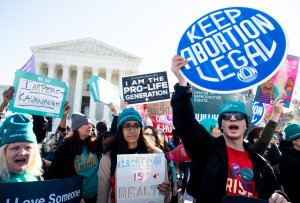
Abortion rights activists protest outside the U.S. Supreme Court in Washington, D.C., March 4. Saul Loeb—AFP/Getty Images
A grounding in human rights
Rikelman has been preparing for this fight for decades. Born in Kyiv, she immigrated to the U.S. with her parents in 1979 after they experienced severe discrimination in the former Soviet Union for being Jewish. Her mother was blocked from medical school because of her religion, and when her parents arrived here barely speaking English, they had to restart their careers from scratch. Rikelman herself learned English as a second language, and says seeing her family’s struggle shaped her interest in civil rights from an early age. “I definitely grew up thinking about how important it was for people to be able to make personal decisions about their lives for themselves,” she says, “and not have the government make those decisions for them.”
In school, Rikelman sometimes felt like an outsider. But in college, she found her niche. She remembers taking a class on sex discrimination that introduced her to Supreme Court cases about reproductive rights. She’d found her calling. She still keeps that college textbook in her office. Some of the cases she reads now in her work at the Center for Reproductive Rights are the same ones she underlined as a 19-year-old. After falling in love with constitutional law, Rikelman clerked for a judge at the Third Circuit Court of Appeals and the first female judge on the Alaska Supreme Court, then accepted a fellowship at the Center for Reproductive Rights, the powerful non-profit that was founded in 1992 to represent the abortion clinic at the heart of Planned Parenthood v. Casey, the lesser-known Supreme Court case that upheld the right to abortion that year. After a stint as vice president of litigation at NBC Universal, Rikelman returned to the Center in 2011 and has been there ever since.
In years after the Center for Reproductive Rights was founded, it grew quickly into a legal powerhouse, employing 75 lawyers and wielding a $40 million budget to fight many of the country’s high-profile abortion legal battles, often alongside Planned Parenthood and the American Civil Liberties Union. More recently, its role has become even more outsized. In the decade since Rikelman joined the Center as a senior attorney, the types of lawsuits aimed at abortion access have changed. “We were always fighting restrictions that are burdensome and make it harder to access reproductive health care,” says Nancy Northup, the president and CEO of the Center for Reproductive Rights. “But not flat out bans. The boldness of the restrictions, the fact that we are litigating at the Supreme Court the question about whether Roe v. Wade should be overturned, was nowhere on the horizon 19 years ago.”
As the challenges to abortion access have become more pronounced, Rikelman’s experience has accumulated. “Julie has a first rate legal mind. But she doesn’t have a trace of arrogance about it,” Northup says. “It makes her an incredibly effective advocate because she is not letting any kind of ego get in the way of the way that she argues in the courtroom.”
Rikelman speaks to abortion rights supporters after the U.S. Supreme Court heard oral arguments on March 4, 2020 Alyssa Schukar—Center for Reproductive Rights/AP
‘Concerning for the rule of law’
For decades, abortion opponents have worked closely with conservative lawmakers at the state level to limit abortion in a variety of ways. They have, for example, put in place an array of requirements ostensibly aimed at protecting patient safety but that really make it difficult for doctors to practice and for clinics to stay open. Abortion rights advocates call those TRAP laws: Target Regulation of Abortion Providers laws. But over the years, efforts to reduce and ban access to abortion have gotten less subtle. Instead of adding facility requirements or mandating hospital admitting privileges—the subjects of the past two abortion-related Supreme Court cases—lawmakers recently have sought to impose gestational bans and to revisit the idea of when life begins. Those laws go straight at the question of whether, and at what point, abortions should be legal at all.
Changing the viability standard, the central holding in Roe, would not only upend the 1973 decision, it would also give states a green light to revisit dozens of other abortion laws that have been blocked over the years. “One of the basic principles of the rule of law is stare decisis,” says Rikelman. “You don’t change precedent unless there’s a really good reason, unless there’s been some really fundamental shift, a real change in facts, a major change in the law—and none of that has happened. For the court to reverse itself here for this right would just be deeply concerning for the rule of law.”
That’s exactly what this Mississippi case is asking the Supreme Court to do. In a brief this summer, Mississippi Attorney General Lynn Fitch asked the Court to overturn Roe, arguing that changes in science and society have rendered the precedent “decades out of date,” and that the controversy over Roe has damaged the Court. “The national fever on abortion can break only when this Court returns abortion policy to the States,” the brief said.
Rikelman and other abortion rights advocates disagree with that logic. If Roe were overturned, abortion would become illegal—either immediately or very quickly—in roughly half the states in the nation. The Center is currently litigating 32 cases and has clients in 25 states. Without the viability line, state legislatures would likely pass more laws restricting abortion and this work would multiply exponentially, Northup says, creating even more unequal access between conservative and liberal states. She notes that the Casey decision opens with the line “Liberty finds no refuge in a jurisprudence of doubt.” In other words, “the more imprecise the constitutional standard,” she says, “the more that opens the door for chaos and thus no refuge, no safety, no guarantee of liberty.”
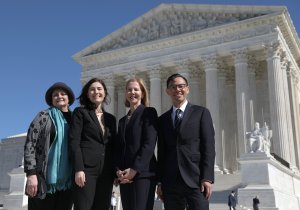
Kathaleen Pittman, of Hope Medical Group for Women, Rikelman, senior director of the Center for Reproductive Rights, Nancy Northup, center president, and T.J. Tu, the center’s senior council for U.S. litigation, stand outside the U.S. Supreme Court after oral arguments in June Medical Services v. Russo on March 4. Alyssa Schukar—Center for Reproductive Rights/AP
‘Always another road to go down’
Texas’s recent, ultra-strict abortion law represents a cautionary tale for the abortion rights movement. The law not only bans most abortions, but also deputizes private citizens to enforce the ban and gives them a bounty to do so. Some clinics in the state have stopped offering abortion services altogether, while the law has forced other abortion providers into tough legal corners. In the weeks since the law passed, Texans have flood surrounding states in search of abortions. “Texas has given us a preview of what we could see on a much bigger scale in many states around the country if Roe is overturned,” Rikelman says.
She knows that her ability to argue effectively before the Supreme Court in December comes with huge stakes. Women still make up only a fraction of advocates before the Supreme Court—often less than 20%—and now Rikelman will be appearing again in a case that could have historic implications for the future of how women are able to live in the U.S. She and her co-lead counsel Hillary Schneller often work 13- or 14-hour days preparing for oral arguments. By the time Dec. 1 comes, their team will have spent thousands of hours on the case.
The arguments themselves will look very different from the past. Due to the ongoing pandemic, only the main lawyers from each side and press will be allowed inside. Everyone else, including Northup, will have to wait outside. Rikelman isn’t even sure her husband will make it this time, as the family has been careful about traveling since their younger daughter isn’t yet eligible for the COVID-19 vaccine. Rikelman plans to listen to music—maybe some U2—to steady herself before the arguments and meditate on the extraordinary work that her clients do to keep their clinics open.
She and Northup are realistic about the outlook for their cause. The Supreme Court already allowed the Texas law to go into effect earlier this fall, and despite the Justices recently professing that they want to remain apolitical, the conservative Justices have all expressed clear opposition to abortion over the course of their careers.
“I have never been as concerned about the constitutional protections for abortion rights as I am today,” Northup says.But, she adds, she remains optimistic about the fight for abortion access going forward. “There’s always another road to go down,” Northup says. “If the Supreme Court slams the door, reverses Roe vs. Wade, we have the U.S. Congress, we have fighting state by state. We have mobilizing people, like perhaps had not been necessary before.”“There is always, always an opportunity to fight on a different front,” she adds. “And that’s what we’ll do.”
The criminalization of Brittney Poolaw’s pregnancy forewarns of a system where all pregnancies that do not end in a live birth can be deemed suspicious. Getty Images
National Advocates for Pregnant Women painted a grim picture of pregnant people increasingly being prosecuted around the country for a miscarriage.
In January 2020, then-19-year-old Brittney Poolaw was pregnant and needed urgent medical care. She called 911 and was taken to the hospital in an ambulance. She was having a miscarriage at 17 weeks.
Two months later, she was arrested and charged with first-degree manslaughter under Oklahoma law. Earlier this month—after spending 18 months in jail because she could not afford her $20,000 bond—Poolaw, now 21, was sentenced to four years in prison for her pregnancy loss. National Advocates for Pregnant Women (NAPW), which represents Poolaw, say this case is not an outlier—it’s one of over 1,000 such cases across the country in recent years.
The criminalization of adverse pregnancy outcomes—arresting, charging, and incarcerating pregnant people for miscarriages and stillbirths—might seem dystopian, like a plot point from a horror or sci-fi movie. Occasionally, cases like Poolaw’s make national headlines and are rightly judged as ghastly violations of human rights and autonomy. But that laser focus on individual cases can give the impression that these are isolated incidents.
They are not.
NAPW say cases like Poolaw’s have been on the rise in recent years. According to their analysis, from 1973 to 2005 there were at least 413 cases in which a woman’s pregnancy loss was a determinative factor in her loss of liberty. Since 2005 that number has tripled to over 1,200, indicating a rapid escalation of these types of arrests.
This is despite every major medical organization in the country opposing the use of the legal system to penalize pregnancy loss, and despite studies showing that criminalization of adverse pregnancy outcomes may actually deter pregnant people from seeking medical care, which in turn puts them and their pregnancies at greater risk.
Speaking to Rewire News Group, Dana Sussman, NAPW’s deputy executive director, and NAPW staff attorney Cassandra Kelly painted a grim picture of pregnant people increasingly being prosecuted for charges involving fetal demise. This is happening across the country, in states like Wisconsin, Alabama, and California; for the latter, they cited the cases of Chelsea Becker, who spent over a year incarcerated after being charged with murder for experiencing a stillbirth, and Adora Perez, who is serving an 11-year sentence for a similar charge.
An even more radical framework for criminalizing miscarriage
Describing Poolaw’s case, Sussman said, “I’m not sure if I have the words to describe frankly how problematic this case has been from start to finish.”
Prosecutors argued that Poolaw’s drug use was to blame for her pregnancy loss. When she sought medical attention for her miscarriage, she told hospital staff that she had used meth and marijuana. The medical examiner’s report listed maternal meth use as a contributing factor to fetal demise, but didn’t determine it was directly responsible. And even an OB-GYN testifying for the prosecution said that while drug use can have an effect on pregnancy, it’s unclear what caused the miscarriage in this case.
Under Oklahoma law, manslaughter and murder laws can be applied to a viable fetus, as can child abuse and neglect laws. But Poolaw’s miscarriage occured when she was 17 weeks pregnant, long before a fetus reaches viability. NAPW advocates say Poolaw’s case is one of the earliest they’ve seen; by prosecuting a pre-viability miscarriage as manslaughter, Oklahoma prosecutors are pushing the law’s bounds, indicating a shift toward an even more radical framework for criminalizing pregnancy loss.
NAPW is a nonprofit organization that does pro bono criminal defense, advocacy, public education, and organizing around the criminalization of pregnancy loss.
The particulars of Poolaw’s case are a web of legal booby traps. “There has to be a causal link when we’re talking about manslaughter,” Sussman said. “In Brittney’s case, it was ‘possession of an illegal substance.’ Of course, possession on its own, even by their framing, wouldn’t cause fetal demise. It’s the consumption, but in Oklahoma, from what we understand, possession has essentially been construed as also covering consumption.”
What we see happening with the criminalization of pregnancy loss is not unlike what we see with the increasingly volatile state of abortion access in the country. Lawmakers and prosecutors start by encroaching on the bodily autonomy of pregnant people in a way they know will be most palatable to society. They target circumstances most fraught with stigma and taboo: later abortion bans, restrictions on young people accessing abortion, criminalization of drug use during pregnancy. But Sussman says they will not stop there.
It comes down to prosecutors claiming the pregnant person put the fetus at “risk of harm,” she said, a measure of liability with drastic potential for expansion.
“We’ve tracked all cases that we can find in which someone has been arrested and/or prosecuted or experienced another deprivation of liberty in relation to their pregnancy, and the vast majority of those cases involve drug use,” Sussman said. “It’s not all though. So, we do see cases where someone fell down a flight of stairs and was charged with some criminal allegation creating a risk of harm to the fetus.”
But NAPW wants to make clear that pushing back against the criminalization of pregnancy loss isn’t about viability or substance use; pointing out these legal intricacies is not to concede that viability or the pregnant person’s behavior should be used to determine whether manslaughter or other criminal charges are appropriate.
Instead, NAPW staff stress that the criminalization of any pregnancy loss is wrong. If lawmakers and prosecutors intended to stop with cases involving post-viability pregnancies, or miscarriages involving allegations of drug use, that would still warrant the abject horror that Poolaw’s case has been greeted with.
“It is a slippery slope. We are on the slope.”
A critical part of this case is Poolaw’s Indigenous background—she is a member of Comanche Nation; the history of the criminalization of adverse pregnancy outcomes is, unsurprisingly, deeply rooted in racism and classism.
“So much of this has its tentacles in the ‘crack baby’ obsession in the ‘80s and ‘90s targeting poor Black women,” Sussman said. She cites a 1989 policy in which the Medical University of South Carolina entered into an agreement with local law enforcement to surreptitiously drug test and report pregnant women, so that police could arrest them days and sometimes just hours after giving birth. The population that the hospital was serving at the time was predominantly Black and lower income.
According to the Center for Reproductive Rights, which challenged the policy in court:
Some women were taken to jail while still bleeding from giving birth. Others were arrested and jailed while they were pregnant, even though the prison could not provide prenatal care or drug treatment. When the incarcerated women went into labor, they were returned to the hospital in shackles. One woman was handcuffed to her bed throughout her delivery.
The Supreme Court heard the Center’s challenge to the policy and, in 2001, ruled in their favor. But the same type of disparate impact remains the reality of criminalized adverse pregnancy outcomes today. Sussman stresses that cases like Poolaw’s will affect marginalized pregnant people most—Black, trans and nonbinary, disabled, undocumented, and lower income pregnant people are all at an increased risk of having their pregnancy losses criminalized.
“We all know that pregnancy is grossly understudied and there’s so much still unknown,” Sussman says. “Exercising too vigorously, going downhill skiing, a lot of things [involve risk], but because of the war on drugs and because of racism and because of classism and lots of other things, the focus has been disproportionately on drug use. But it is a slippery slope. We are on the slope.”
Criminalization of pregnancy loss is rapidly expanding in scope, in ways that continue to target marginalized people. Sussman said NAPW is now seeing cases where a pregnant person faces allegations of lack of prenatal care as part of a larger charge. This is particularly insidious considering which communities lack access to proper prenatal care, and the fact that for low-income families, accessing prenatal care means interacting with a state system that has the potential to surveil them, which in turn leaves them vulnerable to prosecution if they experience pregnancy loss. NAPW is even starting to see cases where parents of newborns become ensnared in the legal system for allegations of drug use during breastfeeding.
Poolaw’s case forewarns of a system where all pregnancies that do not end in a live birth can be deemed suspicious. As Texas SB 8, which bans nearly all abortions after a fetal heartbeat is detected, dominates headlines, it’s critical to understand how criminalizing abortion and criminalizing pregnancy loss intersect. Conservatives in Texas have been quick to assure voters that pregnant people themselves cannot be charged under the anti-abortion law, but the reality is that pregnant people around the country are already being charged for not carrying a pregnancy to term. And while medication abortion is safe and effective, an increased demand for it presents unique challenges to populations of pregnant people who are more likely to have their pregnancy losses criminalized.
The increasing criminalization of adverse pregnancy outcomes also speaks to a deep-seated stigma and taboo surrounding miscarriage and infertility.
“It’s premised on this false notion that everyone can guarantee a healthy pregnancy and that it is somehow your failure, your incapacity, your fault, something you did or something you didn’t do, that caused the pregnancy loss,” Sussman said.
“We of course know how common pregnancy loss is and how it’s been really sort of understudied, as so many sort of health issues that predominantly affect women are, and thinking about sort of all of the economic, social, structural reasons why people might experience pregnancy loss … And yet here we are holding women criminally liable when they can’t guarantee a healthy pregnancy.”
Sussman said Poolaw now has a short window of time to decide whether to appeal. Four years is the minimum sentence for manslaughter in Oklahoma, and she could have gotten life in prison, Sussman said.
“I think she has been through a deeply, deeply traumatic experience,” Sussman said. “It’s trauma layered upon trauma. And so we’re going to be driven by what she wants. But regardless of what decision she makes, it’s not the end of our fight in Oklahoma because more cases are coming.”












 Abortion - Abortion Clinics, Abortion Pill, Abortion Information