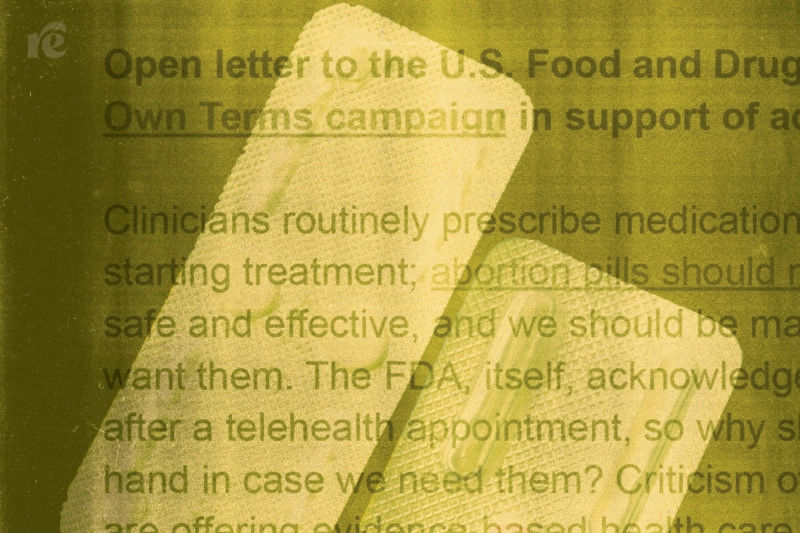
Providers, researchers, and advocates from the Abortion on Our Own Terms campaign are showing their support of advance provision of abortion pills. Austen Risolvato/Rewire News Group illustration
“The FDA, itself, acknowledges that people can safely use abortion pills prescribed after a telehealth appointment.”
Two weeks ago, I wrote in this space about what I see as a misstep on abortion access by the Biden administration, namely efforts by the Food and Drug Administration to curb advance provision of abortion pills. Well, today, I have an exclusive update for y’all.
Abortion providers are clapping back.
In an open letter to the FDA first sent to Rewire News Group, providers have made it clear to the Biden administration that advance provision of abortion pills is quite simply good medicine.
“Abortion pills are safe and effective, and we should be making it easier to get them in the hands of people who want them,” the letter states. “The FDA, itself, acknowledges that people can safely use abortion pills prescribed after a telehealth appointment, so why shouldn’t we have the option to have abortion pills on hand in case we need them?”
We are in the throes of an escalating human rights crisis thanks to the Supreme Court, and if the midterm elections proved anything, it is that protecting abortion rights and access is more popular than ever. Democrats and the Biden administration have one really good shot to immediately tackle the harm that conservatives and the Supreme Court have unleashed. Why would they squander that chance with half-measures and narrow-minded thinking?
It’s because of abortion stigma—and the providers’ letter to the FDA says as much:
Criticism of advance provision of abortion pills by clinicians—who are offering evidenced-based health care options—is yet another example of regulators treating abortion differently from other types of health care.
My hope is that White House officials, with the midterm election results fresh on their minds, take this letter in the spirit it was intended and back away from critiquing the advance provision of abortion pills.
A fear of an unwanted, even dangerous pregnancy is kind of a mood killer, sex therapists told VICE News.
In Missouri, a couple of non-monogamous women have stopped inviting partners with penises into their bedroom, because they’re too worried that one of them will get pregnant and be unable to end the pregnancy.
Some Floridians are having less penetrative sex or cutting down on sex entirely—including among couples.
A few polyamorous people in Wisconsin are even asking potential partners to have a vasectomy before sex.
Roe v. Wade’s overturning is, arguably, the greatest earthquake in Americans’ sex lives in generations. And these accounts, recounted to VICE News from sex therapists across the country, are just a snapshot of how the overturning is already rewriting people’s approach to sex, dating, and intimacy writ large.
“This alarm bell is above all of our beds right now,” said Dr. Justin Garcia, the executive director of the Kinsey Institute at Indiana University and a scientific advisor at Match.
The fear of an unintended or even dangerous pregnancy that ties your life to a less-than-ideal partner is making it difficult for people to not only want to head to the bedroom, but to even have a good time once they’re there. In a survey of 5,000-plus single Americans, conducted by Match and released Tuesday, nearly 80 percent of singles of reproductive age also said that the end of Roe has changed their sex life, with 20 percent saying they’re more hesitant to have sex at all. Gen Z respondents were particularly nervous: 27 percent said that they’re more hesitant about sex now.
Thirteen percent said that they’re more hesitant to date. Given that there are more than 75 million single people in the United States, according to Match, Roe could have changed the dating habits of almost 10 million people.
Sex therapists are now hearing many of the same sentiments, they told VICE News, although not everybody is responding the same way. The degree to which clients feel affected varies by their gender, demographics, and geography. Therapists in the abortion-haven states of New York and California, for example, said their clients remained relatively unconcerned about Roe’s impact on their own lives. People with the ability to have babies, particularly single people, tend to be more worried than people who don’t.
Sex therapist Lexx Brown-James treats clients in Missouri, which has banned abortion, and Pennsylvania, which has not. She’s noticed a difference in how often people in Missouri bring up Roe, compared to those in Pennsylvania.
“I literally just had a client this week who’s polyamorous and is like, ‘Nobody wants to get pregnant. We have to be on with our birth control, because none of us in this relationship and none of our metas—our partners of our partners—want to usher in a new baby,’” Brown-James said. “Some type of barrier method is super important for her right now. And I hear that more from, I will say, the Missouri folks than I do from the Pennsylvania folks.”
Black and queer people are also feeling extra cautious, Brown-James said. The national maternal mortality rate among non-Hispanic Black women is almost three times the rate among white women. “Often, my clients say, ‘What hope do I have of possibly surviving this process?’” Brown-James said. “And that’s really scary, because it’s factually sound.”
Having these kinds of life-altering concerns hanging over a bedroom, let alone the fear of pregnancy, is something of a mood-killer. Almost every sex therapist who spoke to VICE News said that their clients felt like the decision had ripped away control of their bodies, which can lead to a struggle to get aroused. It’s simply not fun to have sex if you’re feeling crushed by consequences.
“Sex is one of the most vulnerable things that you can do with another person, if not the most vulnerable,” said Madelyn Esposito-Smith, a sex therapist in Wisconsin, where nearly all abortions are now banned. “Eroticism is less reachable when there’s a sense of fear, a sense of trepidation. They can’t stay in the moment and experience pleasure and mindfulness and eroticism if their brain is thinking about, ‘I could die from this. I could have a baby with this person. Do I want to have a baby with this person?’ It’s hard to stay present and be erotic and connected with your body if there’s fear of how that behavior will result in in pregnancy.”
All of Esposito-Smith’s clients are now grappling with this problem, including men, she said. She anticipates that the orgasm gap—the gulf between how often men and women orgasm—will stay the same, given how fraught ejaculating now is and how much that may weigh on people with penises.
However, Garcia, of the Kinsey Institute, believes it will widen.
“If it’s going to have any effect that’s going to be widening and potentially severe,” Garcia said. “There’s some old studies that with young women, condom use is associated with slightly higher orgasm than non-condom use, in terms of recent sexual events. The thought being that it might be because you’re not as worried. So if you’re in a worried state, you can’t focus on the sexual event.”
A quarter of respondents to the Match survey said that they plan to use condoms more often. The shift in contraceptive habits is perhaps unsurprising, since Americans have a history of changing their birth control based on political events. After all, when former President Donald Trump won the 2016 election, IUD installations surged by more than 20 percent. (An IUD is a long-acting and reversible contraceptive that’s implanted behind the cervix and can last for years.) In the days after Roe’s June overturning, searches for terms like “IUD,” “Plan B,” and “contraception” all spiked.
Doctors and patients have also recently reported rising interest in more permanent forms of birth control, like vasectomies and tubal ligations. One doctor in Wisconsin told VICE News that, in the last seven years, she had tied the tubes of just one patient who wanted the procedure for contraceptive reasons. In the two months after the Roe decision, the doctor performed tubal ligations on four patients who simply did not want to have kids.
But the quality and quantity of post-Roe sex is far harder to track, given all the subjectivity, shame, and secrecy embedded in sex. In fact, the relationship between people’s sexual activities and the availability of abortion has long been under-researched and poorly understood.
“Which is a little bit strange, when you think about it. Abortion has to be preceded by a pregnancy, and most pregnancies are the result of sex,” said Dr. Katrina Kimport, a sociologist at the Bixby Center for Global Reproductive Health, which is part of the University of California, San Francisco. “So it is in some ways just a very strange phenomenon that our research, social, and political conversations about abortion have such a small engagement, if any, with thinking about sex and sexuality.”
Kimport has studied this gap and found that people, including scholars, tend to think about abortion as a standalone occurrence, rather than a domino that falls after a chain of events that includes sex. “It’s interrelated with sex and sexuality,” Kimport said. “But because of the way we talk about and think about abortion, it’s almost impossible to have a conversation about how it’s interrelated.”
This bizarre disconnect is likely due, in part, to the fact that sexual education in the United States is chiefly concerned with preventing sex itself. Thirty-nine states require that information about abstinence be taught in sex ed, while only 20 states mandate that students learn about contraception, according to the Guttmacher Institute, which tracks restrictions on reproductive rights. Twenty-nine states also require that abstinence be “stressed” during sex education classes. Pregnancy is then framed as a failure, a sign that you didn’t live up to the standards set by some of your earliest teachers and mentors in life
One of the few ways that people do connect abortion and their own sexuality, Kimport said, is by believing that abortion as a refusal to accept the consequences of having sex. Kimport has previously interviewed people who considered but didn’t obtain an abortion—not because they wanted to have a baby, but because they felt that doing so would be abdicating their responsibility.
“The people I interviewed didn’t say and that responsibility also falls to my partner in that sex act. Most of the people I talked to were continuing this pregnancy without the support of the man involved,” Kimport said. “So we have a very selective and very gendered version of who is responsible in the event of an unexpected pregnancy. And it’s a story that overrides somebody’s personal desire about whether or not they want to have a baby.”
There are signs that people are changing the stories they tell themselves and their partners about how their political stance on abortion dovetails with their sex lives. Two out of three single women will not date someone who doesn’t share their views on abortion, the Match survey found. After Roe’s overturning, Tinder let users add the words “pro-choice” to their profile. People are also now four to five times more likely to mention “abortion” in their profile.
“We also scraped bios for mentions like pro-choice, abortion, vasectomy,” said Stephanie Danzi, Tinder’s senior vice president of global marketing. “We’ve seen an incredibly huge spike across all of those. This is clearly something that’s very, very important to daters. And we’re seeing that really across both men and women across the entire U.S.”
Sex therapist Marissa Nelson’s clients in Washington, D.C., are now being more open about having had past abortions, she said. One woman, in particular, has now been able to talk more candidly about how her abortion made her resist sex and pleasure with her husband. She hadn’t realized that she still felt resentment over the abortion. (In a study of more than 600 women who underwent abortions, 99 percent said that having the procedure was the right choice five years afterward. The most common emotion among these women was relief, but reckoning with the aftermath of an abortion can still be an emotional rollercoaster.)
“We compartmentalize intimacy, we compartmentalize sexuality. And something like this decision happens and boom, it’s in the forefront again. And everybody’s coming to it from their different perspective,” Nelson said. “What does this mean for my sexuality? What does this mean for what I want my future to be like? What is the impact of this on my relationship?”
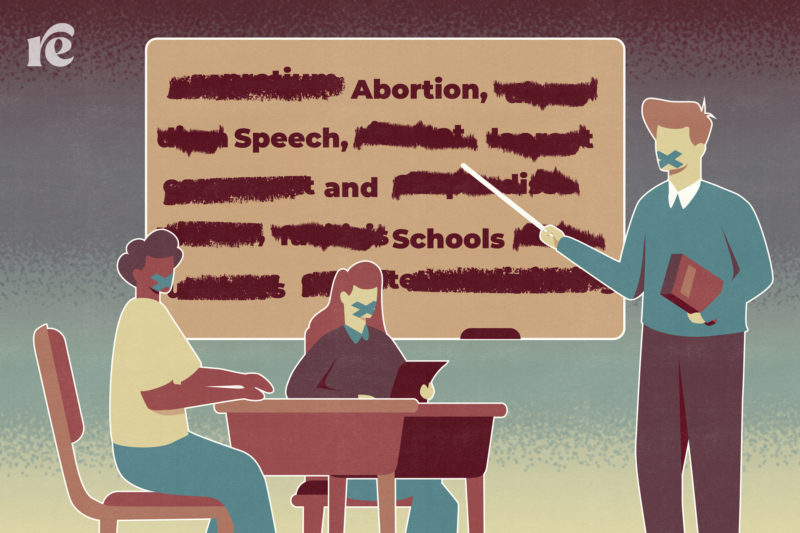
As we’ve seen in Idaho and Florida, expect more public university systems in red states to start being tentative, worried, and self-censored when talking about reproductive rights. Cage Rivera/Rewire News Group illustration
Seeking to control what can be taught at public universities—including abortion—is dystopian and grim. It’s what conservatives have always wanted.
With the overturning of Roe v. Wade, conservatives scored a victory decades in the making: controlling pregnant people’s bodies. They’re not satisfied with just that, though. The next step is to control any speech they don’t like.
Just as ever-shifting abortion bans leave people unsure as to the laws that govern them, there’s now a distinct lack of clarity as to what can and can’t be said—and what can and can’t be taught—in schools.
Witness the dual speech and behavior controversy that has roiled the University of Idaho. In 2021, the state passed the “No Public Funds for Abortion” law, prohibiting public university employees from “counseling in favor of abortion.” That’s painfully vague, but definitely inhibits speech. For instance, can you talk about ectopic pregnancies in a biology class without implying abortion? Things got even more opaque following the reversal of Roe in June, when Idaho’s near-total abortion ban kicked in. The university provided guidance to employees that they could now face felony charges if they provided birth control to students.
Two weeks later, everything got reversed. Sort of. University President Scott Green complained that the memo issued to employees “quickly took on a life of its own with misinformation.” He then proceeded to, ostensibly, reassure employees, but those reassurances were vague. To his credit, Green made clear that the university can continue to offer birth control, but he didn’t directly address whether people could or could not “counsel in favor” of abortion. All he really said was that current academic freedom policies had not been changed and that the university cannot and does not prosecute people.
Neither of those reassurances gets at the heart of the issue: Can employees talk about abortion without running afoul of state law?
A similar story is unfolding at the state university system in Florida. The University of Florida may be hiring Sen. Ben Sasse (R-Neb.) to be its president. Sasse is a big fan of “religious liberty” when it comes to dismantling the line between church and state, so his hiring likely doesn’t bode well for a university already under siege by conservative elected officials. The state recently asserted in a court document that curriculum and in-class instruction are government speech—not individual speech—and therefore it can regulate what public university teachers say.
The document was filed in a lawsuit regarding the constitutionality of the state’s “Stop WOKE Act,” which at root prohibits professors from teaching about the country’s pernicious history of racism. The state even tried to extend these speech restrictions to private companies, but that got tossed out by a federal court.
Seeking to control what people teach at public universities is impossibly dystopian and grim. It’s also the logical endpoint of what conservatives have wanted forever: public money free from the conditions that used to go along with taking public money—that religious institutions shouldn’t be funded with taxpayer dollars and groups that receive public money shouldn’t be able to discriminate.
Dismantling that line between church and state and enshrining bigotry into law has been quite a successful project of religious conservatives. They prevailed in an Iowa case where a student group at a public university, taking public dollars, excluded a gay student from leadership and won in court. They scored their biggest victory this past Supreme Court term in Carson v. Makin: The justices ruled that K-12 private religious schools can get public tuition money. And it’s just this sort of thing that allows a Christian K-12 school in Florida to take $1.6 million in public money while having a policy that they will expel LGBTQ students.
Conservatives have always embraced schools like Bob Jones University and Liberty University that completely control their students’ behavior and speech. The former went up to the Supreme Court in 1983 to fight for the right to receive IRS tax-exempt status while maintaining a policy of only admitting white students. The university lost. Bob Jones University also banned interracial dating until 2000.
Rolling back abortion rights is just the latest weapon in the religious right’s ever-growing arsenal. When you control what people can do, it’s just a short hop to controlling what they can say. When bans prohibit “aiding or abetting” an abortion, such as that in Texas SB 8, it directly leads to controlling speech. For example, can you donate to an abortion fund if you live in Texas? In theory, that should never be restricted. Donating money is free speech and is therefore protected under Citizens United v. FEC and is one of the sacred tenets of modern conservatism.
But modern conservatism has become very comfortable with “free speech for me, but not for thee,” and they’ve captured enough of the federal courts that they’ll continue to get their way. Meanwhile, expect more public university systems in red states to start being tentative, worried, and self-censored when talking about reproductive rights or racial justice. Idaho and Florida may have started this trend, but it certainly won’t end there.
MARJORIE TAYLOR GREENE (JOE RAEDLE/GETTY IMAGES), LAUREN BOEBERT (JOE RAEDLE/GETTY IMAGES), AND JIM JORDAN (JEFF SWENSEN/GETTY IMAGES)
Including a self-described “pro-life extremist” and a Jan. 6 attendee who referred to abortion as “genocide.”
Marjorie Taylor Greene, Jim Jordan, and the rest of the most extreme GOP members of the U.S. House are going to have some new far-right friends joining them when the 118th Congress is sworn in in January—even as the Republican Party itself appears to have severely underperformed its expectations for the midterms.
The House was still up for grabs as of Wednesday morning. But while several of the party’s far-right candidates flailed in swing districts, the GOP was guaranteed to pick up a few extremists in safer districts.
There’s a self-described “pro-life extremist” from Florida, a Tennessee mayor who said conservatives were in a “spiritual war” against liberals, and a Jan. 6 marcher from Wisconsin who flipped a Democratic-held seat Tuesday. And if the GOP does ultimately take the House of Representatives, they’re all likely to play a big role in charting the path of the next Congress.
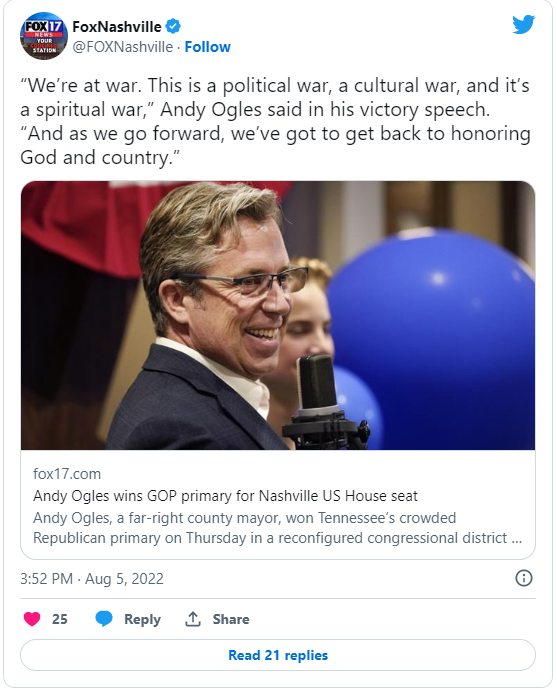
Andy Ogles, the mayor of Maury County, Tennessee, won in that state’s 5th congressional district, a formerly Democratic seat that was carved up by the supermajority GOP legislature in redistricting. In an interview in September, months after the Supreme Court struck down Roe v. Wade, Ogles waved off concerns about rape and incest exceptions to abortion bans as a “red herring.”
“Statistically, those are not even part of the conversation,” Ogles told local TV station WKRN. “That is a red herring used by [the] left and radicals to try and taint the conversation.” He’s wrong: In 2017, there were nearly 4,500 pregnancies in children under the age of 15, nearly half of which ended in abortion, according to the abortion think tank the Guttmacher Institute.
After the self-described “most conservative mayor in Tennessee” won his primary, Ogles compared the ongoing political debate in the country to a “war.”
“We’re at war. This is a political war, a cultural war, and it’s a spiritual war,” Ogles told his supporters after winning the primary. “And as we go forward, we’ve got to get back to honoring God and country.”
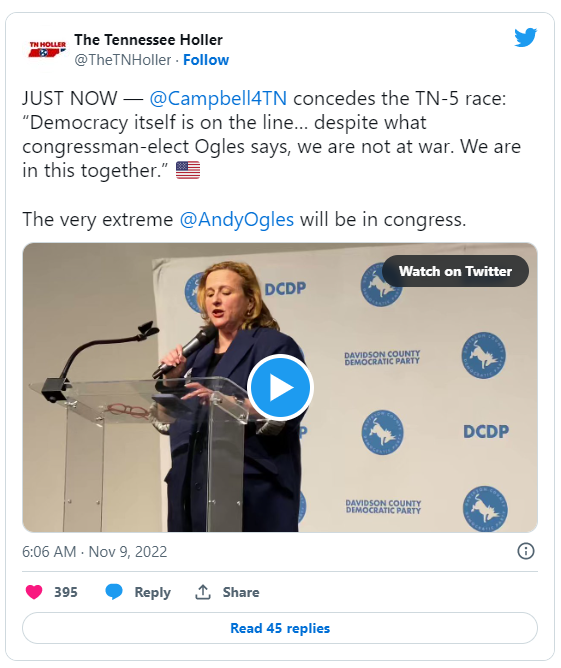
Ogles’ opponent, state Sen. Heidi Campbell, referenced the remarks in her concession speech Tuesday. “Despite what congressman-elect Ogles says, we are not at war,” Campbell said. “We are in this together.”
Anna Paulina Luna also won in Florida’s redrawn 13th Congressional District. Luna is an Air Force veteran who later worked at the right-wing youth organization Turning Point USA, and she’s appeared on talk shows hosted by far-right figures including election-denying MyPillow CEO Mike Lindell and former White House chief strategist Steve Bannon, according to the Washington Post.
“MTG did endorse me, and I was raised as a Messianic Jew by my father,” Luna told Jewish Insider. “I am also a small fraction Ashkenazi. If she were antisemitic, why did she endorse me?”
Luna’s opponent, Democrat Eric Lynn, released an ad in August with clips showing Luna describing herself as a “pro-life extremist” and claiming that “obviously, I believe the election was stolen.” Luna told the Post that she was mocking an attempt by Lynn to “stereotype” her, and said her opponent is “lying about me and my positions to distract from the fact that he’s just another liberal rubber stamp for the reckless Biden/Pelosi agenda.”
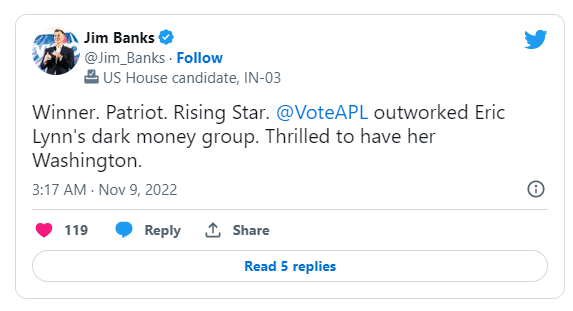
Luna ultimately won easily, as Florida was the only state where a Republican “red wave” truly materialized. Rep. Jim Banks, an Indiana Republican who chairs the right-wing Republican Study Committee, said Tuesday night that Luna was a “rising star” and he was “thrilled to have her [in] Washington.”
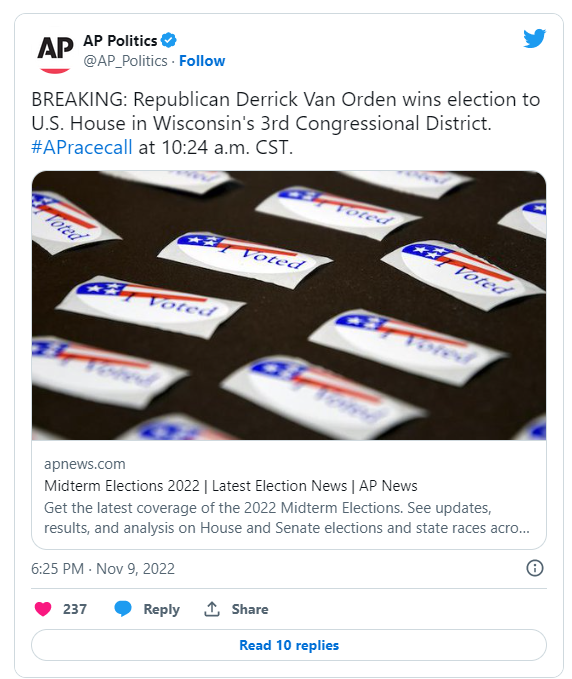
And in Wisconsin, Derrick Van Orden, a former Navy SEAL who narrowly lost in the same district in 2020,won an open seat against state Sen. Brad Pfaff Tuesday. Van Orden traveled to D.C. for former President Donald Trump’s “Save America” rally on Jan. 6—which later led to the Capitol riot—and Pfaff made Van Orden’s involvement in the rally a key component of his campaign message.
Van Orden has said he did not enter to Capitol building on Jan. 6 and wrote in an op-ed after the attempted insurrection that he went to D.C. that day “for meetings and to stand for the integrity of our electoral system as a citizen and at the behest of my neighbors here in Western Wisconsin.”
After that trip Van Orden reimbursed himself with donor money for $4,000 in transportation and lodging expenses for himself, his wife, and a campaign staffer, the Daily Beast reported last year. In September, the Federal Election Commission dismissed a complaint alleging that Van Orden’s use of the campaign funds was unlawful.
“The only people I’ve heard during this entire campaign [talk about him marching on Jan. 6]…I’ve heard Brad Pfaff bring this up, and activist journalists,” Van Orden told Spectrum News last week. “That’s it.”
During the 2020 campaign, Van Orden referred to abortion as “genocide.” Van Orden was winning by more than 13,000 votes when the AP called the race Wednesday.
More than 160 election deniers on the ballot for federal or statewide office won their races Tuesday, while more than 85 were projected to lose, according to the Washington Post. Several far-right Republican hopefuls for Congress, furthermore, lost extremely winnable races against liberal and moderate Democrats.
In a Raleigh-area North Carolina district, 26-year-old Bo Hines lost toDemocratic state Sen. Wiley Nickel. Hines, a Trump-endorsed election denier and former GOP political staffer, proposed last month that victims of rape and incest who are seeking abortions should go through “a community-level review process outside the jurisdiction of the federal government,” according to WRAL.
Former Trump assistant press secretary Karoline Leavitt also lost, toRep. Chris Pappas, in her race for one of New Hampshire’s two congressional districts. Leavitt, who at 25 years old would have been the youngest person ever elected to Congress, has appeared on Bannon’s radio show multiple times and said during a primary debate that she was the only candidate in the race who believed that “the 2020 election was undoubtedly stolen from President Trump.” During the general election, she said that she “recognizes that President Biden was certified.”
Pappas easily won his third term, as expected Republican gains in the Northeast largely fell flat.
And Virginia Democratic Rep. Allison Spanberger prevailed Tuesday against Yesli Vega, a Republican cop endorsed by Trump.
Vega suggested during a campaign stop earlier this year that it was unlikely rape victims could become pregnant as a result of their assaults, falsely saying that the body rejects it “because it’s not something that’s happening organically,” according to Axios. This claim has no scientific basis.
And in a race that wasn’t remotely considered competitive in Colorado, Rep. Lauren Boebert is on the precipice of falling in an enormous upset to Aspen City Council member Adam Frisch. With 90 percent of the vote counted, Frisch maintained a slim 3,500-vote lead Wednesday morning.
Asked at her victory party if she would accept the result if she loses, Boebert “walked away without answering,” according to Colorado Newsline.
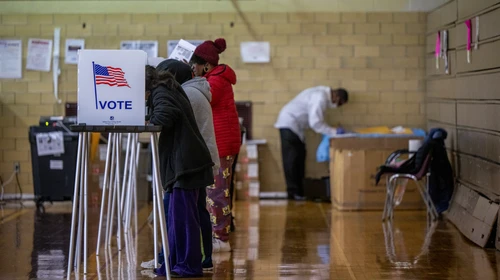
PEOPLE CAST THEIR BALLOTS ON NOVEMBER 8, 2022 IN DETROIT, MICHIGAN. (PHOTO BY BRANDON BELL / GETTY IMAGES)
In the midterm elections on Tuesday, Michigan will become one of the first states to vote on abortion since the Roe’s overturning.
DETROIT — There was just one day left to vote to enshrine abortion rights in the Michigan state constitution, and staffers at a local abortion clinic wanted to make sure patients knew it.
“YES ON PROP 3: RESTORE ROE IN MICHIGAN,” blared one sign, hung beneath the flat-screen TV in one waiting room of Northland Family Planning, where visitors were sure to see it. Every patient was handed a clipboard with a brochure describing Proposition 3, the ballot measure to protect abortion rights. Multiple staffers were even decked out in orange and purple, the colors of the Proposition 3 campaign. The clinic manager’s glasses were purple, her purple shirt read “Reproductive Freedom for All,” and her purple hair was pinned back with two orange butterfly pins.
In the midterm elections on Tuesday, Michigan will become one of the first states to vote on abortion since the Roe’s overturning. Although abortion is currently legal in Michigan, the state still has a 1931 abortion ban on the books, and abortion rights supporters and foes have spent the past several months locked in a legal battle over whether to bring that ban back to life. Without protections in the state constitution, that ban could take effect, or the Republicans who currently control the state legislature could try to pass a new one.
“In the past, I’ve really never heard patients ask about the laws or what’s going to happen three months from now,” said the manager, Sarah F. (For privacy reasons, VICE News is not publishing her last name.) But that all changed after the Supreme Court overturned Roe v. Wade this summer. “There’s been a lot more people asking about the proposition and what’s going to happen here if the proposition doesn’t pass,” Sarah added.
After Roe’s overturning, much of the Midwest banned abortion. If Michigan joins those states and its abortion clinics are forced to go dark, Midwestern abortion seekers will have to travel further and likely pay more money for the procedure—if they can get one at all.
“I can’t even imagine it. I really can’t. Especially after all of this time and devoting our lives to this,” said Tania, who has worked at Northland Family Planning, which has three clinics in the Detroit area, since 1994. (VICE News is also not publishing her last name.) “It just seems really unreal.”
Northland was practically besieged by patients right after Roe fell. The clinics started seeing roughly double the number of patients they had seen during the Roe era; staffers pulled 13-hour days. At one point during the legal ping-ponging over the 1931 ban, Tania said, Northland Family Planning had to close one of their clinics for a day, because it wasn’t clear whether providers could perform the procedure without being prosecuted.
Despite working in this field for almost three decades, Tania had never seen anything like it before.
“Just really awful, sad stories about people trying to get from here to there with no money. People who don’t have cars, they’re like, ‘How am I going to get from Cleveland to Detroit?’” Tania recalled. “If we had to turn patients away—which we did have to do, when we had 30 patients and we knew we were going to be here all night—I mean, we just cannot do it all. And we cried with the patients.”
That onslaught eased after abortion rights supporters in Ohio secured a court order to suspend the state’s six-week abortion ban. Although 26 states are ultimately expected to outlaw abortion, many red and purple states will likely spend months, if not years, litigating and legislating over whether the procedure should be legal. Those fights will likely come down to whether state constitutions include abortion protections; while Proposition 3 is one of the country’s most high-profile abortion ballot initiatives this year, it’s almost certainly far from the last.
The ballot measure was in the works long before the Supreme Court even took the case that its conservative majority would use to overturn Roe. The ACLU of Michigan first started looking into the possibility of adding abortion rights to the state constitution way back in 2019, said Bonsitu Kitaba, the organization’s deputy legal director. But there’s no doubt that the overturning upended the race.
Julie Falbaum, an Ann Arbor, Michigan-based canvasser for the Proposition 3 campaign, said that before a draft Supreme Court opinion overturning Roe leaked in May, she used to have to explain the ballot measure to people. “And after the leak, people were looking for me,” she said.
The first Saturday after the leak, Falbaum said she started collecting signatures at a farmer’s market. People lined up to sign up, she said.
In order to get the midterms ballot, the Proposition 3 campaign needed to gather 425,059 valid signatures. They turned in 750,000.
On Monday, the day before the midterm elections, Kitaba and Falbaum trekked back and forth across a quiet Ann Arbor neighborhood to knock on doors. Many of the front lawns were already littered with orange and purple signs urging people to “vote yes” on Proposition 3. “Vote no” signs were practically nonexistent. “This house is secure!” one smiley man told the canvassers, reassuring them that the voters inside planned to support them.
“I never thought we’d actually see that get reversed. Like it was just something that always felt like it was there,” Kevin Yanos, a 27-year-old “yes” voter, told VICE News of Roe. “Also, as a male, I don’t feel like it’s really my decision to make those calls, right?”
Yanos also dismissed abortion foes’ argument—as seen on a few “vote no” signs—that Proposition 3 is “too complex, too extreme.” “I just thought that was ridiculous,” he said.
One Northland Family Planning clinic seemed busy but far from overrun on Monday, with a handful of patients watching TV silently in the clinic’s two waiting rooms and staffers regularly pulling them into side rooms for consultations. Like in many abortion clinics, the walls were covered in inspirational art, from the classic “You Can Do It!” Rosie the Riveter poster to an edgier “Big Uterus Energy” sticker.
Yet, despite the productive hum of the clinic, the providers spoke openly about the toll that Roe’s overturning, the threat of the 1931 ban, and the uncertainty of the election has taken on them.
“I’ve never felt like this before, never, never,” Tania said. “Just all of this weight.”
“It’s been comparable to a constant ache that hasn’t gone away for our patients, for ourselves, for our families, for women or pregnant people everywhere. It’s been life-changing,” said Jackie Davis, the manager of another Northland Family Planning location. “Because not only are we mourning, we’re mourning for our patients and it’s—it’s a lot.”
“That’s just too much to wrap my mind around right now, if that doesn’t pass,” Sarah said of the ballot measure. Her hands sometimes shook as she spoke. “If it doesn’t pass, we’ll be able to still provide care. But I honestly haven’t thought too much past if it doesn’t, because I just—I mentally can’t handle that right now.”
Abortion rights supporters are cautiously optimistic about their chances of winning. Nancy Northrup, president of the Center for Reproductive Rights, told VICE News that she was feeling “bullish.” Tania promised that, even if they lose in the midterms, they’ll continue to fight the 1931 ban in the courts.
All three providers said they weren’t sure what they would do if Michigan banned abortion. They are all Michigan natives, with families in the state, but they are now weighing the possibility that they might have to move out of the state if they want to continue providing abortions.
After Davis took the job at Northland Family Planning, some of her family stopped speaking to her. In response, Davis had a burning bridge tattooed on her arm, complete with a matchbox emblazoned with the outline of a coat hanger. She now has no less than three coat hanger tattoos, including one on her middle finger. “It’s on my middle finger for a specific reason,” she laughed.
“We just have to be here today. We’re living for today. We’re taking care of patients today,” Davis said. “And what happens tomorrow, happens tomorrow. You’ve got to try to compartmentalize those feelings, because it would just take you over—the fear.”
The upcoming midterm elections will affect abortion access in the battleground state of Pennsylvania. Cage Rivera/Rewire News Group
The upcoming midterm elections hold high stakes for abortion access in the Keystone State.
This week, we’ll take you to one of the major battleground states for abortion access and reproductive rights in the post-Roe era: Pennsylvania, where the political landscape is poised to shift after the midterm elections this November.
Last Wednesday, the Pennsylvania Supreme Court heard oral arguments in a case in which advocates are seeking to establish protections for abortion under the state constitution. A law dating back to 1982 prevents Medicaid funding from being used for abortions, and providers are arguing that it violates the Keystone State’s Equal Rights Amendment.
“Not allowing Medicaid to pay for abortion is essentially an abortion ban for those already overwhelmingly living in poverty or disabled and it would only serve to further this economic and wealth divide,” Kelly Davis, executive director of New Voices for Reproductive Justice, said in a press conference following the arguments.
The Medicaid fight isn’t the only battle abortion advocates face in Pennsylvania. This summer, Republican lawmakers in the state House and Senate approved an anti-abortion amendment, which needs to be approved by the state legislature a second time before voters decide whether it gets added to the Constitution of Pennsylvania.
Meanwhile, the state’s abortion clinics have been reporting an increase in out-of-state patients, from next door in Ohio to as far as Texas, seeking reproductive health care.
“We really have been able to meet the demand, but we are seeing an increase, and we know that the demand is going to continue to grow,” Melissa Reed, CEO and president of Planned Parenthood Keystone, told WHYY.
Advocates and providers are preparing for all outcomes, even as they seek to expand telehealth options and access to medication abortion. With the election just over a week away, the future of abortion access in Pennsylvania hinges on the gubernatorial and legislative races, in addition to a major U.S. congressional race that will help determine the national landscape.
The biggest leaps in requests for help came from states that have outlawed most abortions.
In the months since the Supreme Court overturnedRoe v. Wade, the number of Americans asking one organization for help ending their pregnancies at home nearly tripled, according to a study released Tuesday.
Conducted by researchers from the University of Texas, Austin, the study examined requests for abortion-inducing pills sent to Aid Access, an organization that mails the pills across the country. The study found that before Roe was overturned, Aid Access received an average of roughly 82 requests per day, according to data from 30 states. After a Supreme Court draft opinion overturning Roe leaked in May, that average spiked to 137.
Finally, after Roe was overturned in late June and as at least 13 states implemented near-total abortion bans, the average number of daily requests shot up to about 214.
“This is a real increase driven by state policy,” said Abigail Aiken, the lead author on the study. “I think that’s quite clear from the results. There’s definitely a correlation just by the numbers. But then when you look at people’s actual reasons, they’re actually telling you, yes, this is because of those laws.”
The biggest leaps in requests for help came from people in Louisiana, Mississippi, Arkansas, Alabama, and Oklahoma—all states that have outlawed most abortions. In requests from people living in states with abortion bans, just under a third said that they wanted to induce their own abortions due to “current abortion restrictions.”
The data from Aid Access is only a snapshot of the rapidly shifting landscape of abortion. Although Aid Access may be the most well-known source of abortion-inducing pills, it is far from the only one. People can still access telemedicine abortion services in states where the procedure remains legal, and they can order pills from international pharmacies in states where it is not. Abortion clinics may also offer both medication abortions, which rely on the same drugs often used by people who self-manage their abortions using pills, or surgical abortions.
But the Aid Access data remains the best source of insight into people’s approach to self-managing their abortions, according to Aiken. (The definition of what constitutes a “self-managed abortion” can be a bit fuzzy, but it can generally be defined as an abortion that takes place outside of the formal U.S. healthcare system—and under that definition, Aid Access would qualify.)
Aiken was not surprised by the increase in requests to Aid Access. Having tracked those requests for years, Aiken has found requests often spike when access to abortion clinics is cut off. After Texas passed a law in September 2021 that banned abortion as early as six weeks into pregnancy, Texans’ requests for help rose by 1,180 percent. During the height of coronavirus lockdowns, when it became extremely difficult to access clinics and some states even moved to temporarily shutter them, the rate of requests for help increased by 27 percent.
Expects have widely declared that self-managing an abortion in the first trimester of pregnancy can be safe, but it’s not without legal risk, especially in the post-Roe United States. Although self-managing your abortion is only explicitly illegal in a handful of states, prosecutors who are determined to go after you for doing so will likely find a statute that’s pliable enough to fit the supposed crime, according to experts from the organization If/When/How, which advocates for people’s right to self-manage abortions.
At least 61 people across 26 states faced criminal consequences linked to alleged self-managed abortions between 2000 and 2020, If/When/How found.
A significant number of people who wanted help from Aid Access said that they wanted to take the pills at home, rather than go to a clinic, out of a desire for privacy, Aiken said. But while some people may simply be choosing to self-manage an abortion because they prefer it, they may also feel too ashamed to go to a clinic.
“When you make something illegal, it’s now something bad, and people feel that stigma,” Aiken said. “This internalized feeling that you’re doing something wrong can also lead people to wish for privacy.”
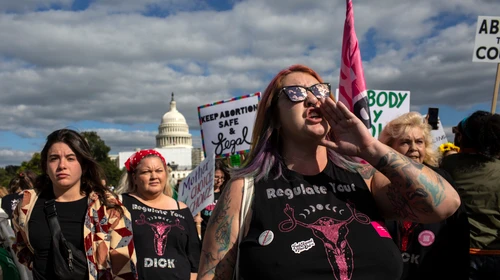
ABORTION-RIGHTS ACTIVISTS RALLY ON CAPITOL HILL IN WASHINGTON, D.C. (PHOTO BY PROBAL RASHID / LIGHTROCKET VIA GETTY IMAGES)
Just 30 percent of all men said abortion was an “important issue” for them when thinking about the election.
Half of women between the ages of 18 and 29 say abortion will matter to them in the midterms—but less than a quarter of men say the same, according to a new VICE News/YouGov poll commissioned by VICE News.
Forty-six percent of all women said that when thinking about the next election, abortion was an “important issue” for them, according to the poll conducted in mid-October, four months after the Supreme Court overturned Roe v. Wade. But just 30 percent of all men said the same.
Although men and women differed on the importance of several issues, including guns and inflation, no other issue opened up such a wide gap.
Historically, abortion tends to be an afterthought for most voters. But at least 13 states have banned abortion since the Supreme Court’s decision, although legal battles over those bans can make abortion access complicated. The midterms will be key to determining just how many states will be added to that tally. In some states, like Michigan and Kentucky, voters are being asked to decide directly on the constitutional status of abortion rights, while in others, Democrats need to hold onto their seats or gain some if they want to fend off further abortion restrictions.
In the YouGov poll, women across all ages say they’re more concerned about abortion than men in their age groups.
These findings in this poll, which looked at the responses from 3,000 U.S. adults, are consistent with other polling in recent months showing women have consistently said they cared more about abortion than men. In a poll published in August, the Kaiser Family Foundation found that 71 percent of women disapproved of the Supreme Court overturning Roe. In contrast, 58 percent of men said the same.
In the VICE News-commissioned YouGov poll, 54 percent of women said they disapproved of the decision. Forty-five percent of men agreed—but 44 percent said they approved of it, compared to just 29 percent of women.
Women’s voter registration and political activism is also reportedly surging in the wake of the Supreme Court’s decision. But the YouGov poll found that although 38 percent of women said the decision would make them “much more likely” or “somewhat more likely” to vote in the midterms, 42 percent said it made no change on their decision on whether to vote.
Half of men said it made no difference in their decision on whether to vote. Only 30 percent said it made them more likely to.
Cascading abortion bans and ongoing legal battles have left patients in the Southeast little choice but to travel for care—if care is available at all.
It’s been four months since the fall of Roe v. Wade, and abortion access isn’t guaranteed anywhere in this country. This is particularly true in the Southeast, where cascading abortion bans and ongoing legal battles have left patients little choice but to travel for care—if care is available at all.
This photo essay is a snapshot of what it might look like for folks making that journey and for those staying behind to deliver whatever care they can.
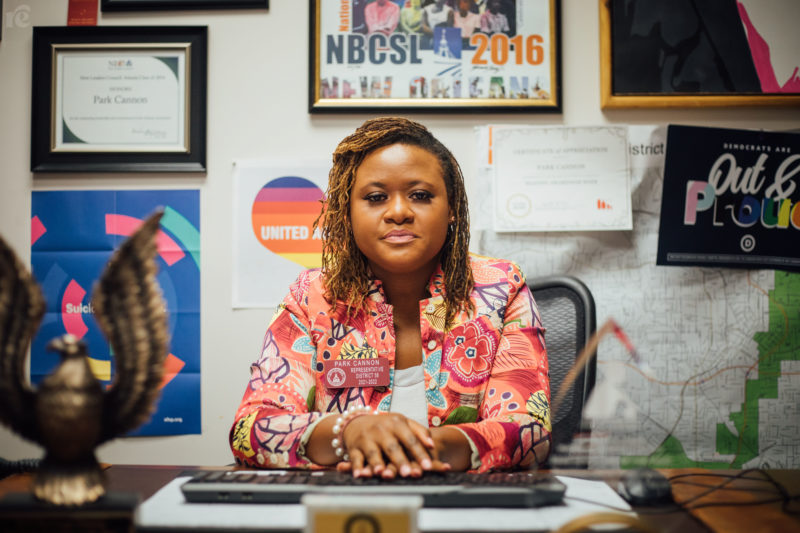
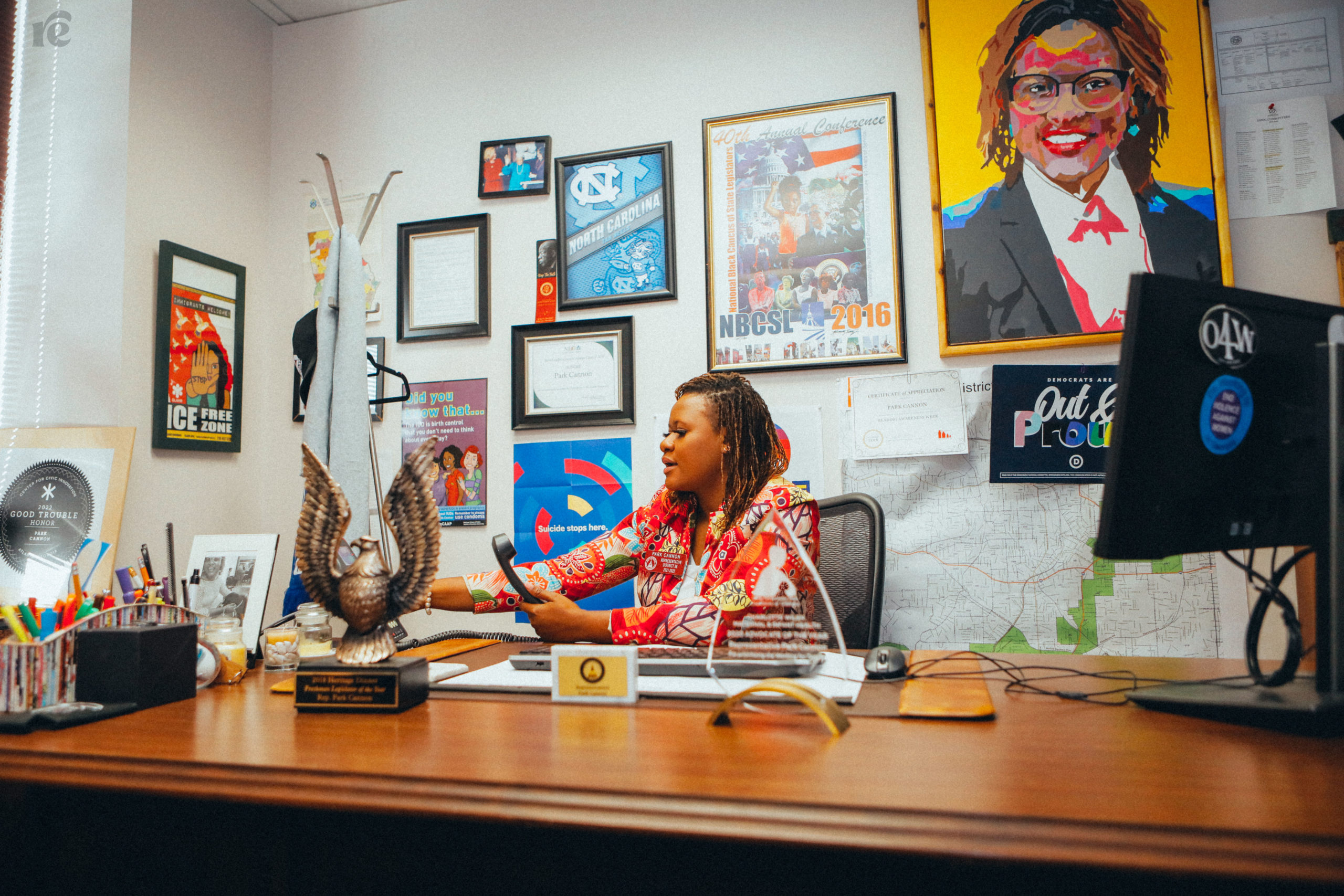
Park Cannon (pictured at top, in her office) is a Georgia state representative and former board member of the reproductive justice organization SisterSong who was arrested in March 2021 for knocking on the door to Gov. Brian Kemp’s office in the Georgia State House as he signed a bill that further restricted voting for Georgians.
“In 2019, when … SisterSong decided to be the lead plaintiff to sue the Georgia government over the ‘heartbeat’ bill, we were really clear at that moment that reproductive justice was our only option because it expands the conversation beyond access to the medical procedure. … We’ve helped people to see that these stories are not in silos.”
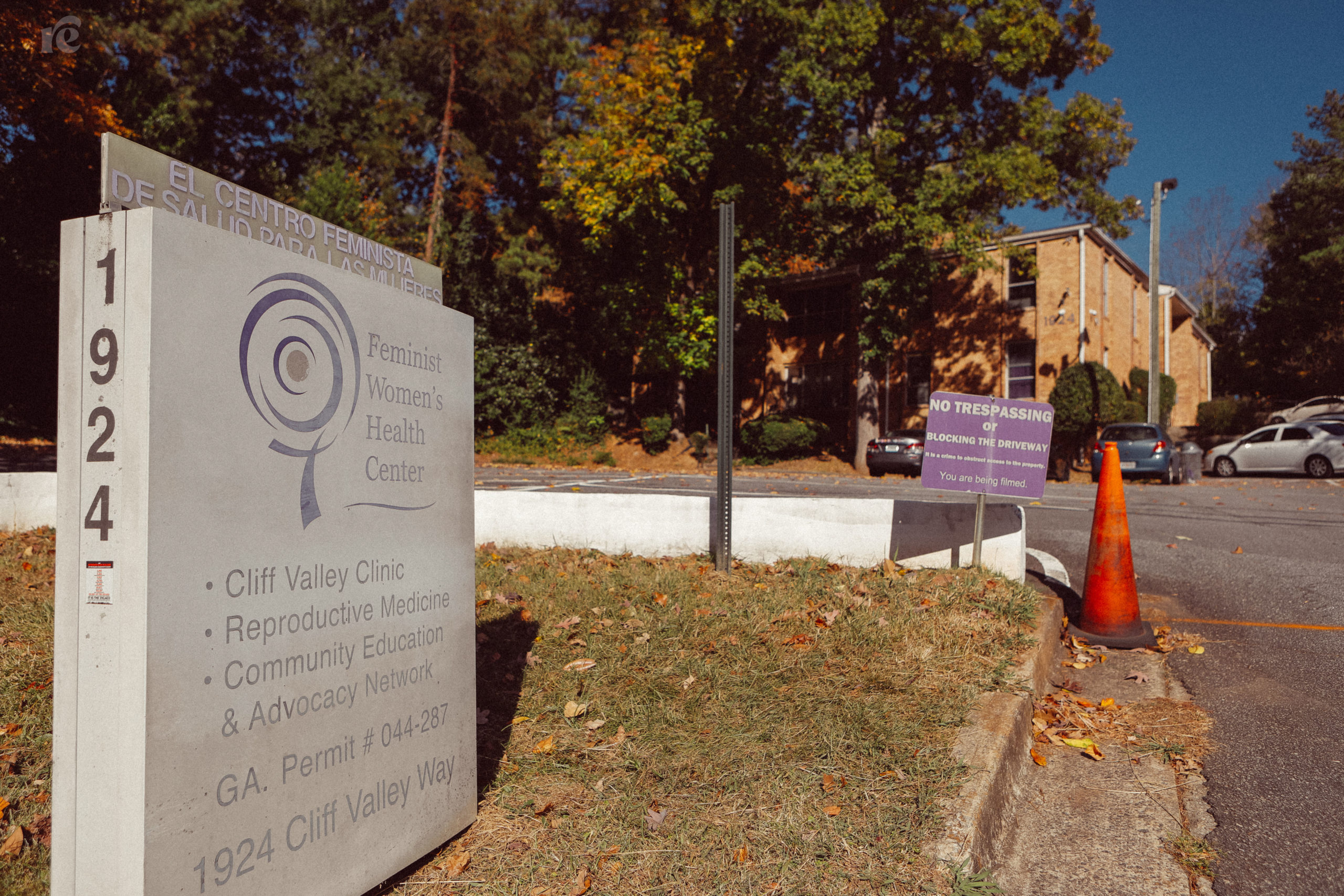
Feminist Women’s Health Center, an Atlanta reproductive services clinic providing care since 1976, recently purchased its building through fundraising. Now, the center can bar anti-abortion protesters from its property; clinics that lease their buildings don’t get a say on who is trespassing on property owned by a landlord.
“We want to make sure that our community has access to the care that they need,” said Kwajelyn Jackson, the executive director of Feminist Women’s Health Center. “I want to make sure that Georgia—that the Southeast, that Atlanta—has a clinic that will be able to stand to the test of time.”
A Tennessee welcome center and rest area at the northwestern Georgia and Tennessee state line features displays and tributes to the state’s role and involvement in the Civil War.
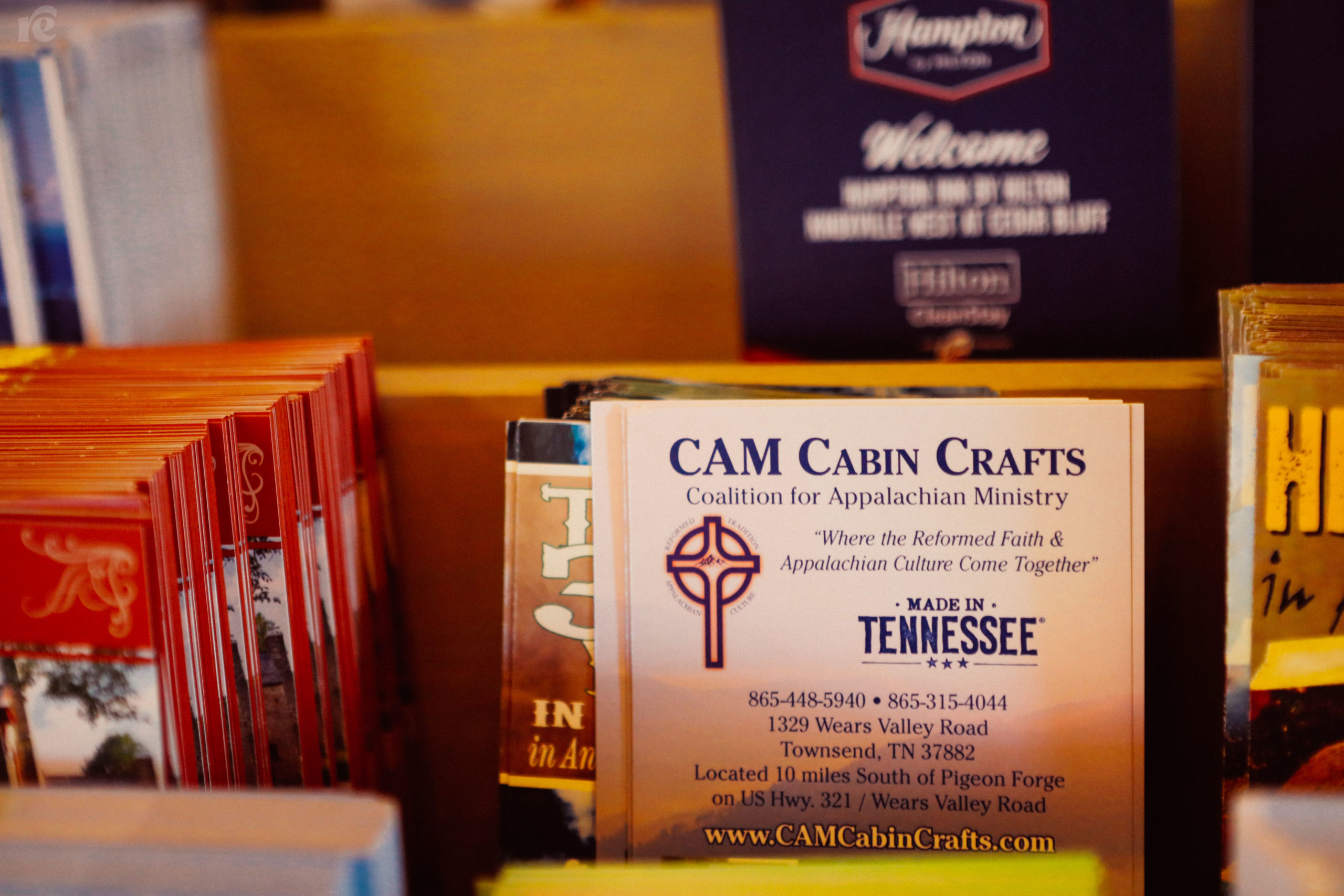
Brochures in the state-funded rest area advertise Christian activities and camps in the local vicinity.
The Victory Baptist Church cross looms from Interstate 81 in Bristol, Virginia, heading north toward Washington, D.C. On Tuesday, the Bristol City Council voted to ban new abortion clinics in the city.
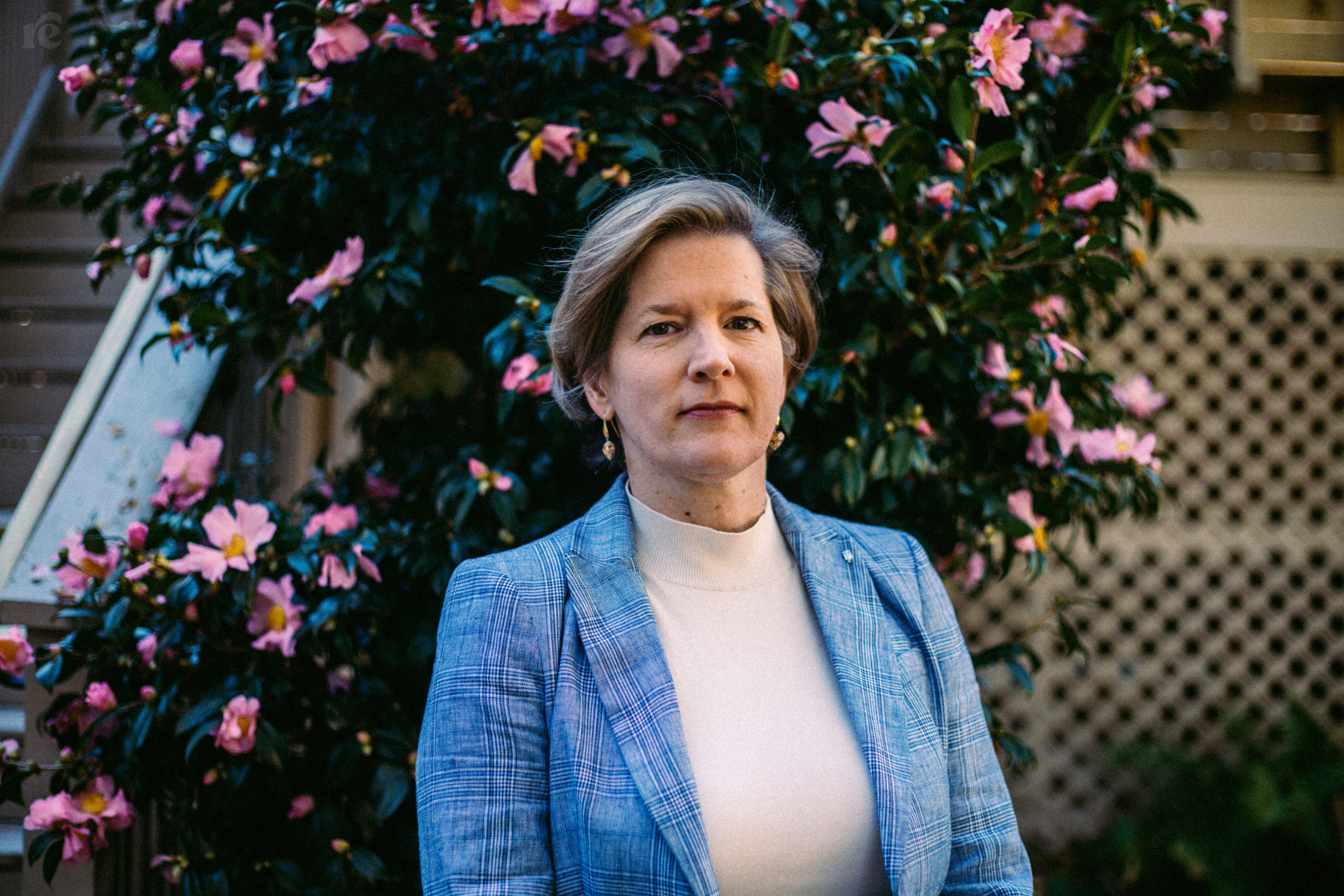
“Saying that [the Supreme Court is] sending the decision for reproductive rights to state legislatures while also turbo-charging one party to be able to have basically in-state minority rule—it’s the same fight,” said Sara Tindall Ghazal, minority caucus policy director for the George House and a member of the state election board.
“It’s the same fight for the same values, which is making sure that everybody has the agency to decide their own future, whether it’s who is governing them, making decisions on their behalf or over their own bodies.”
Heading east on I-40 across Tennessee as the drive begins to point north, the evangelical billboards become ever present, mocking those who might find terror in their message as they seek the safety of reproductive care outside their region.
“The day that I knocked on [Kemp’s] door, I understood that my act was nonviolent. And I’m a product of Dr. King’s nonviolence teachings as a member of his and Raphael Warnock’s church,” Cannon said. “It’s something that is ingrained in me, but I also understand how, to others, knocking could seem violent, it could seem intrusive—it could seem as if I wasn’t staying in my place. It was me trying to enter some place that I didn’t have access to. And I think that it’s really a perfect example of [how] there are so many places where we can’t actually knock because of the ways that they’re constructed.”
“There are so many different versions of doors of injustice that exist, and we are knocking on them to create accountability,” Cannon added.
A North Carolina welcome sign designates the state as the nation’s most military-friendly state, but the state does not currently offer unfettered access to reproductive care to the families who are stationed there.
“We know that abortion is not the only thing that our folks need. And so we’re really invested in making sure that reproductive justice is accomplished,” Kwajelyn Jackson said.
A week after the Supreme Court overturned Roe v. Wade, the 23-year-old woman decided that she couldn’t wait any longer. She needed a pregnancy test.
She hadn’t had a period in weeks, but that hadn’t triggered any alarm bells. The young woman, who VICE News is identifying by the initial R. for privacy reasons, said her period frequently goes missing.But then the evidence started to mount. R.’s breasts started to swell and ache. On July 1, R. said, she went to Walgreens with her friend and picked up two boxes of pregnancy tests.
Six tests later, R. couldn’t deny the truth any longer. She was pregnant.
“I just wanted to jump down some stairs,” she recalled.
R. is already the single mother of a rambunctious 2-year-old. A nursing assistant, she dropped out of college to take care of her daughter and relies on food stamps. She also has an irregularly shaped uterus, which renders any pregnancy deeply complicated. Even though R. gave birth to her daughter through a scheduled caesarean, she ended up losing 40 percent of the blood in her body during birth, said R., who said she got pregnant this time despite being on the pill.
When R. considered the prospect of giving birth again, “I was worried about hermorrhaging again. I was worried that this time I wouldn’t actually make it.”
R. never imagined she would get an abortion. But when she discovered she was pregnant, getting out of her home state and into an abortion clinic suddenly seemed like more than a matter of her own life and death. It felt like the best chance she had to give her child a better future.
“I just wanted to jump down some stairs,” she recalled.
R. lives in Missouri, the first state to announce that it would ban almost all abortions after the overturning of Roe v. Wade. To end her pregnancy, she had to join the wave of people fleeing their home states in search of abortions at the relatively few clinics left in the United States. Like R., many of those patients are likely to be poor, young parents who will struggle to pay for that exodus—but giving birth is probably even more expensive and dangerous.
In Missouri, abortions are only permitted “to avert the death of the pregnant woman” or if there is a “serious risk of substantial and irreversible physical impairment of a major bodily function of the pregnant woman.”
Specifically, R. said she has what’s known as “bicornuate uterus,” a congenital abnormality that makes a uterus look heart-shaped (as opposed to pear-shaped). People who have bicornuate uteruses face significant risks of miscarriages, going into labor early, and giving birth to babies that weigh too little. They also have a heightened risk of perinatal mortality, meaning that their babies are in greater danger of dying until a week after birth.
When R.’s doctor confirmed her pregnancy, R. said, the doctor made no mention of abortion. Instead, R. said, the doctor immediately started making R. pick out a hospital where she wanted to give birth. On an ultrasound image of R.’s fetus, viewed by VICE News, there is a typed message: “BABY!!”
“I wasn’t given an option but to have it,” said R., who provided records and photos to back up her account. She was afraid to even broach the subject of abortion with her doctor; the abortion ban was like the maw of some mysterious animal, ready to devour her if she made a wrong move. “I didn’t know what to do. What happens if you get abortion? Do you get arrested? Is there a fine? Like what? Why is it illegal? What happens if you do it?”
R.’s uterus may be unique, but her circumstances are not. In many ways, R. resembles the typical Roe-era abortion patient. Most were in their 20s, according to the most recent data collected by the CDC before Roe’s fall. Sixty percent had already given birth at least once, meaning they’re likely parents already. The vast majority were poor: In 2014, 75 percent of all abortions occurred among low-income patients, according to the Guttmacher Institute, which tracks abortion restrictions. One survey of about 1,200 abortion patients found that more than 70 percent said that having a baby would interfere with their work, education, or ability to care for their dependents, and that they could not afford to have a baby.
R. started calling out-of-state abortion clinics almost immediately after discovering she was pregnant, but they were all booked up, R. said. (In the wake of Roe’s overturning, blue-state abortion clinics have reported being swamped by patients fleeing abortion bans.) She started to look into back-up plans, but they all seemed to come with a catch. She put herself on a callback list at an Illinois abortion clinic, but she wasn’t sure whether she would actually get an appointment in time. She thought about flying out to her sister, who lives in a state where abortion rights are protected, but she wasn’t sure how she would coordinate childcare. She started looking up natural ways to make herself miscarry, trawling through online instructions about how to turn mugwort, Queen Anne’s lace, and wormwood into teas. But she had no idea where to find those herbs.
“You’re forcing all these females to have these babies, but you walk to the store and there’s barely any fucking formula anywhere,” R. said. “So you’re forcing us to have these kids, but you guys can’t even provide the stuff for us to take care of those kids.”
Have you struggled to get an abortion since Roe v. Wade was overturned? Have you had your medical care delayed or denied because of Roe’s overturning? Have you decided to continue a pregnancy after being unable to get an abortion? Reach out to carter.sherman@vice.com, or DM her on Twitter at @carter_sherman for Signal.
R.’s sister, N., corroborated much of R.’s account. N. said she even went to a doctor in her own state and asked for abortion-inducing pills that she could mail to R. The doctor refused, N. said.
As the days passed, R. said her morning sickness became unbearable. “I would throw up brushing my teeth. I would throw up drinking water,” she recalled. “Everything made me gag.”
People who have bicornuate uteruses face significant risks of miscarriages, going into labor early, and giving birth to babies that weigh too little. They also have a heightened risk of perinatal mortality, meaning that their babies are in greater danger of dying until a week after birth.
In mid-August, roughly seven weeks after she said she first learned of her pregnancy, R. finally got an appointment at an Illinois abortion clinic.R. lied to her ex to get him to watch their daughter, because she didn’t trust him to not hold the abortion over her head, she said. As she made the hour-plus drive to the clinic, R. was terrified. She worried that someone would discover what she was doing; N. warned her to make sure no one followed her from the clinic.
The anti-abortion activists outside the Illinois clinic didn’t make R. feel any better. The protesters held an enormous banner that urged her to talk to God and reevaluate her options, R. recalled, and handed out brochures claiming that medication abortions—which are induced using pills—could be “reversed.” (That claim remains unproven. The only randomized, controlled clinical study on “abortion reversal” ended prematurely when three women started hemorrhaging.)
“It was just like them trying to cram down my throat, ‘This is wrong, what you’re doing is wrong, blah blah blah.’ I already know what I’m doing is maybe in my own eyes not the best, but I have my own reasons for doing it. So I don’t need you to sit here and tell me that I’m a piece of shit for doing this,” R. said. “I get that you have your own opinions, but just keep to your fucking selves or go to Facebook, like everybody else does, and put it out there, but leave people alone.”
The abortion appointment itself took hours, R. said, as she had to wait in a series of rooms while clinic staffers made sure that she wanted to get an abortion. If Missouri hadn’t banned abortion, R. said she would have chosen to a surgical abortion; with the ban, though, she worried that a Missouri doctor would be able to tell that she’d had an abortion. Instead, R. opted to induce her abortion using pills, because she could pass it off as a miscarriage if she needed to.
The abortion cost $495, records show. R. said she paid out of pocket.
Weeks after the procedure, R. still has a thorny relationship with the fact that she had one. Missouri’s ban kaleidoscoped her sense of guilt and shame. It made R. feel like a criminal, like the state was trying to punish her for having the audacity to get pregnant.
“I know it sounds stupid, but I feel like I murdered my own kid,” R. said. “I feel even worse that I had to hide it. I couldn’t even get help from the place [where] I live.”
“The state is trying to tell us what to do with our frickin’ bodies,” she said, “and it’s bullshit.”
For the most part, R. doesn’t pay much attention to the news or politics; they give her too much anxiety. She said she voted third party in the last election. R. does identify as “pro-choice,” but her opinion on abortion is more complicated than that political label might suggest.
“I always had the mindset of, even if you make a mistake, you own up to your mistakes,” she said. “So you accidentally get pregnant, well, guess what? You have to raise it.”
R. doesn’t regularly attend church anymore, but she grew up steeped in Christianity. No one at her childhood church even breathed the word abortion, she said. “That word was never brought up in the church. That wasn’t even a thought,” she said. “You never spoke of it. That act was so sinful and terrible.”
Still, R. doesn’t think the state should have the ability to utterly ban abortions.
“The state is trying to tell us what to do with our frickin’ bodies,” she said, “and it’s bullshit.”
Regardless of the shape of someone’s uterus, the dangers of birth are real—and disproportionately high in a country that’s supposed to be the envy of the planet. The United States has the highest maternal mortality rate among high-income countries, even though U.S. women spend far more money on health care.
Between 2017 and 2019, an average of 61 Missouri women died each year while pregnant or within a year after pregnancy due to pregnancy-related complications, according to a 2022 report by the state’s health department. Three-quarters of those deaths have been determined to be preventable. As they do in much of the rest of the country, Black women in Missouri face staggering risks: Their pregnancy-related mortality rate is more than three times that of white women in Missouri.
In the United States, the risk of dying during childbirth is 14 times higher than the risk of dying during an abortion.
N.,who is 27, is planning on moving back to Missouri to be with her boyfriend and family. She wants to have kids, but she also has a heart condition and knows that any pregnancy will be risky, she said.
“It’s very scary and I want to be able to do it when I choose to,” N. said of pregnancy. “I’m a sexual assault victim from when I was young, as a child. It really affected me. Years of therapy for that. I think about how different it would have been if I had had to have my rapist’s child. That really makes me fear for my daughters and my niece.”
N. plans to once again leave Missouri when she decides to have kids. R. said that she, too, wants to move. Although Roe’s overturning isn’t her only reason for wanting to leave, it was the final push.
When R. found herself pregnant a few years ago, there was no chance she would have an abortion. She had already suffered through one miscarriage, she said, and she considered her baby a miracle. Looking at her daughter now, R. can’t imagine having made another choice but to go through with the pregnancy.
But having a baby totally changed R.’s life. Parenting and going to school, on top of working a full-time job, just became too much. “I stopped going to college,” R. said. “I can’t travel. I can’t just up and do anything I want, especially being a single mom. Her dad only takes her maybe three or four times a month.”
“I do regret having her sometimes,” she added. “But she is one of the biggest and best blessings of my life, and I wouldn’t change it.”
For now, R. said, her daughter is her priority.
“I want her to have my full attention and love and know that she’s loved, because I can give her enough love to make up for the family and people that don’t want to be in her life,” R. said. “Another kid would just take that away from her.”



















 Abortion - Abortion Clinics, Abortion Pill, Abortion Information