Abortion Provider Whole Woman's Heath Alliance Prepares To Open A New Clinic In Indiana

SOUTH BEND, INDIANA – JUNE 19: An ultrasound machine sits next to an exam table in an examination room at Whole Woman’s Health of South Bend on June 19, 2019 in South Bend, Indiana. The clinic, which provides reproductive healthcare for women including providing abortions is scheduled to open next week following a nearly two-year court battle. Part of the Texas-based nonprofit Whole Woman’s Health Alliance, the clinic will offer medication-induced abortions for women who are up to 10 weeks pregnant. (Photo by Scott Olson/Getty Images)Getty Images

One year after the state passed a law banning nearly all abortions, an Alabama legislator is trying for a second time to pass a bill that would require doctors to perform life-saving measures on a fetus born alive after a surgical abortion, a bill doctors called medically implausible.

Rep. Ginny Shaver, R-Leesburg, introduced HB248 or “Gianna’s Law” in February, which would require a physician to “exercise reasonable care to preserve the life of a child born alive after an abortion or attempted abortion in an abortion or reproductive health center,” and would establish criminal penalties for violating the law.

Dr. Morissa Ladinsky, associate professor of Pediatrics at UAB Medicine said the bill is not based in medical fact. Clinics in Alabama perform abortions up to 21 weeks gestational age. Ladinsky said the latest a doctor in the United States will attempt to sustain the life of a baby is 22 gestational weeks due to a lack of ability for a fetus outside the womb to survive at that gestational age.

Ladinsky acknowledged that an infant delivered before 22 weeks gestational age may have a heartbeat for a short time, but “no matter what we do or try to do, [with] the technology we have and our knowledge in the United States today,” doctors are unable to keep an infant alive if born before prior to 22 weeks in utero.

“The bill itself asks our legislature to affirm something that is a fallacy — that is a medical impossibility,” Ladinsky said. “This whole bill is not in accordance with medical fact. It’s basically a theoretical scenario that is medically implausible.”

Shaver named her bill Gianna’s Law after Gianna Jessen, a woman who survived an instillation abortion procedure in 1977. Today, instillation procedures are rarely used in the United States. None were performed in Alabama in 2018 according to ADPH.

By law, Alabama doctors who provide abortions are required to date a pregnancy using an ultrasound. Shaver claims clinics in Alabama routinely fail to test for gestational age, but refused to provide evidence of those claims.

Health department inspections since 2009 of the only three Alabama reproductive health clinics that provide abortions show no indication that clinics have failed to measure gestational age with ultrasound, according to state records.

In 2015, the Alabama Department of Public Health noted a doctor at West Alabama Women’s Clinic in Tuscaloosa failed to document the fetal viability in 16 medical records, however according to an ADPH investigation none of the fetuses were above 19 weeks gestational age.

Pregnancies are measured in two ways: Doctors can date a pregnancy by gestational age, which is the time between the first day of the last menstrual period and the day of delivery. Or, pregnancies can be dated by fetal age or post fertilization (PPFA), which is two weeks later than gestational age. The Alabama Department of Public Health uses both measurements in their statistical reporting on abortions within the state.

In 2018 there were four abortions in Alabama at or past 20 weeks PPFA or 22 weeks gestation, according to the ADPH. The ADPH documented the reasons for the abortions past 22 weeks was severe risk to the mother’s health including severe preeclampsia/eclampsia, ruptured membrane and no amniotic fluid.

According to the Centers for Disease Control and Prevention, 1.3 percent of all abortions performed in the United States are performed after 21 weeks gestational age.

When Shaver introduced the same legislation last year, she said she did not seek medical expertise in wording the bill, but that she modeled it after a similar bill in Texas. Shaver’s Alabama bill passed in the House with a 66-18 vote along party lines, but never made it to the Senate.

“A baby outside the womb— it’s living and should be afforded the opportunity to have care given to it to try to preserve the baby’s life,” Shaver said. “It has nothing to do with any legality of a woman’s right to choose.”

Shaver rejects medical professionals’ arguments that a baby cannot survive outside the womb prior to 22 weeks gestation, and also rejects the ADPH’s reporting that these cases do not exist.

Staci Fox, President and CEO at Planned Parenthood Southeast Advocates said bills like Shaver’s “born alive” bill perpetuates myths about abortion.

“Politicians in Alabama have already passed countless anti-women’s health measures in recent years, including an outright ban, Fox said in a statement. “This bill is just another tactic in their quest to make abortion illegal in the state.”

Shaver’s born-alive bill is scheduled to be introduced in the House Judiciary committee on Wednesday.


Source: https://www.al.com/politics/2020/03/doctors-call-new-alabama-abortion-bill-medically-implausible.html?fbclid=IwAR08WottD4lg1E4G0Wewc9iK8x22loJDx7HVi0CPil_vkQGTN9O_QfAkVxM

Trump would rather stall efforts to mitigate the coronavirus’ impact in order to appease the anti-choice radicals that make up his political base.
Drew Angerer / Getty Images

The Trump administration apparently held a coronavirus aid package hostage in order to push its radical anti-abortion agenda. It was cynical and dangerous.

The Trump administration tried to use its anti-abortion obsession to deny millions of people the resources they need to survive the coronavirus pandemic and slow the virus’ progression.

As Democratic House Speaker Nancy Pelosi spent Thursday negotiating with Trump’s treasury secretary over a coronavirus relief package, talks reached a few sticking points—including the White House’s reported insistence that the federal response to a rapidly growing pandemic include “Hyde Amendment” language to ban federal funding of abortion. By Thursday night, the two sides seem to have come to an agreement on that issue at least, with Politico reporting that “the two sides resolved issues over federal funding of abortion in a separate bill that will also hit the floor.”

But we shouldn’t lose sight of what happened here. Trump’s stalling of the coronavirus relief bill was a blatant attempt to further his political agenda and appeal to his following of anti-choice extremists in an election year. It’s cynical and dangerous.

Trump would rather stall efforts to mitigate the coronavirus’ impact in order to appease the anti-choice radicals that make up his political base.

That tells us he’s fine with gambling with the lives of the disabled, elderly, and immunocompromised communities who are most at risk of developing complications when contracting coronavirus. That tells us that not only does Trump believe a fetus has rights, but he believes those rights matter more than anyone else. That tells us Trump believes it’s acceptable for us to contract or spread the coronavirus as long as people can’t use government funds for abortion care.

I find this both maddening and unacceptable. And I’m not the only one.

“It’s immoral to use the declaration of a global pandemic to turn people who need abortions into pawns for cheap political points,” Yamani Hernandez, executive director of the National Network of Abortion Funds, said Thursday in a statement. “In a moment when legislators need to turn towards science and data to stem the tide of a public health crisis that threatens the most vulnerable among us, anti-abortion extremists are instead using fear to opportunistically sneak through ideologically cruel and medically unsound restrictions.”

Kelsey Ryland, director of federal strategies for All* Above All, called Trump’s decision to delay approval of the coronavirus funding package an “unconscionable, shameful low.”

Ilyse Hogue, president of NARAL Pro-Choice America, said Trump’s prioritizing of anti-choice ideology over public health and safety is “an abhorrent move that puts us all at risk.”

The discriminatory Hyde Amendment bans federal funding for abortions through Medicaid—but “Hyde language” has been incorporated into government health programs for years to prohibit abortion coverage, including the Indian Health Service, Medicare, the Children’s Health Insurance Program, the Affordable Care Act, TRICARE, federal prisons, the Peace Corps, and the Federal Employees Health Benefits Program.

White House officials reportedly claimed that part of the coronavirus relief package could “open the door to federal funds for abortion,” and that leaving out the proposed language would “set a precedent of health spending without protections outlined in the Hyde Amendment.” But including the language would definitely set a precedent, as demonstrated by the health-care programs affected by this kind of anti-abortion language.

Trump accused Democrats of using the bill as a chance to “get some of the goodies” they want. When he’s talking about “goodies,” I can imagine he’s trivializing efforts like those made by U.S. Sen. Patty Murray (D-WA) and Rep. Rosa DeLauro (D-CT), who have repeatedly introduced paid sick leave proposals that congressional Republicans have ignored since 2004.

We’ve seen the Trump administration’s anti-abortion obsession seep into much of its policymaking, so perhaps it should come as no surprise that something as critical as coronavirus funding would be held hostage over the administration’s Hyde demands. After all, this is the same administration that won’t let health clinics receiving federal funding provide abortion care referrals, even if that’s what the patient wants.

Hopefully, this provides an opportunity for people in the United States to see just how beholden Trump is to the powerful anti-abortion lobby. The consequences are plain to see.

Source: https://rewire.news/article/2020/03/13/in-coronavirus-funding-talks-trumps-anti-abortion-extremism-is-laid-bare

The Oklahoma Senate approved legislation Thursday to essentially prohibit abortions in Oklahoma after six weeks of pregnancy.

OKLAHOMA CITY (AP) — The Oklahoma Senate approved legislation Thursday to essentially prohibit abortions in Oklahoma after six weeks of pregnancy.

The Senate voted 36-8 for the bill, which now heads to the House for consideration.

The bill by Republican Sen. Paul Scott of Duncan would prohibit doctors from performing an abortion, beginning at six weeks of pregnancy, if a fetal heartbeat or brain waves are detected.

“Doctors take an oath to protect life, so this will also hold them accountable for that oath by taking away the licenses of any who violate this law,” Scott said in a statement.

But many women are unaware that they are pregnant at six weeks, said Tamya Cox-Toure, a spokeswoman for Planned Parenthood Great Plains Votes.

“The purpose of this bill is to deny access to a legally protected right to abortion,” Cox-Toure said.

Cox-Toure said there are also no exceptions in the bill for cases of rape, incest or potential harm to the mother.

Oklahoma currently prohibits abortions after 20 weeks, according to the Guttmacher Institute, a research group that supports abortion rights.

Source: https://www.kswo.com/2020/03/13/oklahoma-senate-votes-ban-abortions-after-weeks/?fbclid=IwAR2eGuBaepjcoRV9VakzYVVxxrEGOyjl-k_s9MuF1Bcmgw32Z0Xi_hI38W8

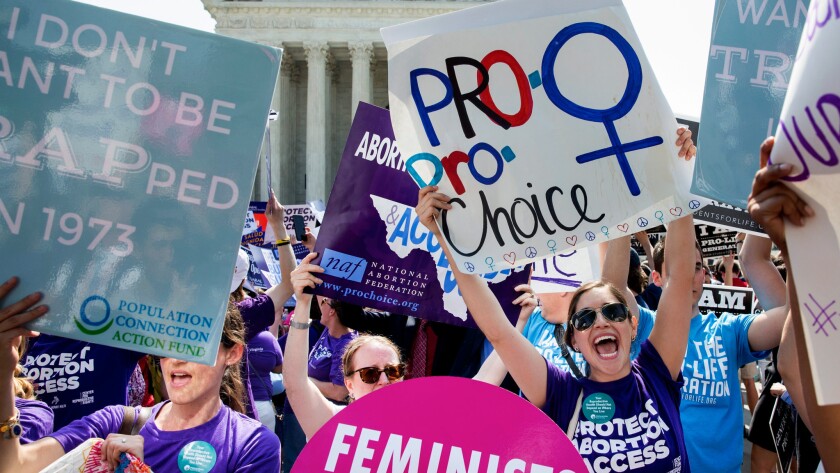
Abortion-rights supporters celebrate outside the Supreme Court in 2016 after the ruling in Whole Woman’s Health vs. Hellerstedt was announced.

Abortion-rights supporters celebrate outside the Supreme Court in 2016 after the ruling in Whole Woman’s Health vs. Hellerstedt was announced.(Michael Reynolds / EPA)

Opponents of a woman’s right to an abortion are so relentless that nothing seems to stop them. Even a clear Supreme Court precedent doesn’t serve as a deterrent.

Four years ago, the court took on one of the favorite tropes of abortion opponents — that to ensure women’s safety, doctors providing abortions need to have admitting privileges at hospitals near the clinics where they work. In that 2016 decision, Whole Woman’s Health vs. Hellerstedt, the justices struck down a Texas law that required abortion providers to have admitting privileges, finding that it was an unnecessary obstacle (or “undue burden” in court parlance) to women seeking abortions and did not enhance the safety of an already very safe procedure. According to a comprehensive review of published studies, office-based abortion clinics reported a less than 0.5% risk of hospitalization followed a first-trimester abortion, the most common type. But because many abortion providers could not obtain such privileges, the requirement would have shut down clinics across the state.

Yet Louisiana passed a law identical to the unconstitutional Texas statute, prompting a lawsuit by several abortion providers. The Louisiana law, which required doctors to have admitting privileges at hospitals within 30 miles of the clinics where they provided abortions, was struck down by a federal district court judge, but then upheld by the Fifth Circuit Court of Appeals. On Wednesday, the Supreme Court heard arguments in the case, June Medical Services L.L.C. vs. Russo.

Nothing has changed, medically, since the Supreme Court decided the Texas case four years ago. Abortion remains one of the safest medical procedures — in Louisiana and the rest of the country. As attorney Julie Rikelman of the Center for Reproductive Rights argued for the medical center and doctors who filed the suit, not only is the complication rate for abortion low, “but when complications do occur, it’s almost always after the woman has left the clinic.” At that point, a woman would go to the hospital nearest her home. Also, 40% of abortions in Louisiana are medication-induced, so any complications from those will happen when the patient is at home, anyway.

What has changed since the Texas decision in 2016 is the make-up of the court, with a key swing vote — Justice Anthony Kennedy — departing. Abortion opponents hope the new majority will decide that the situation in Louisiana is somehow different from Texas and uphold the Louisiana law.

But it isn’t, and they should not. Louisiana has an extremely safe rate for abortion care. The district court judge who ruled against the law found that the Hope Medical Group for Women — a Shreveport clinic run by the company that brought the petition before the Supreme Court — sees over 3,000 patients a year, and in the past 23 years, only four patients were sent to a hospital with complications.

In fact, of the handful of doctors providing abortions at the time this case was filed, only two had admitting privileges — one of whom is expected to retire if the law goes into effect. The remaining doctors tried to get admitting privileges and could not. They were turned down mainly because they weren’t doctors who had a lot of patients to admit to hospitals — not because they were bad doctors.

Not only does the law do nothing for the safety of patients, it only ends up hindering their access to abortion. Both the American Medical Association and the American College of Obstetricians and Gynecologists have said there is no health reason for admitting privileges. If the law were to go into effect (it is currently stayed pending the decision of the Supreme Court), the district court found that Louisiana would probably be left with only one clinic and one abortion provider. That, in essence, would decimate abortion care in a state that already has the most abortion restrictions of any state: 89.

The law is unconstitutional anyway because the burdens it would place on abortion rights outweigh the (non-existent) medical benefits it would provide. Like so many laws passed in states hostile to abortion rights, it is simply intended to thwart access to abortion. The Supreme Court decided that in the Texas case in 2016. It should decide the exact same thing in this Louisiana case in 2020.

Source: https://www.latimes.com/opinion/story/2020-03-05/editorial-without-action-from-the-supreme-court-getting-an-abortion-in-louisiana-may-become-impossible?fbclid=IwAR2ttD4WltuLjyK9gJBB5DsMVMrYJkx3UjkHbCnDlJ2OctDbqvyr0Bhnp_A

The Trump administration had one job on Wednesday: to deliver John Roberts’ vote for onerous abortion restrictions.

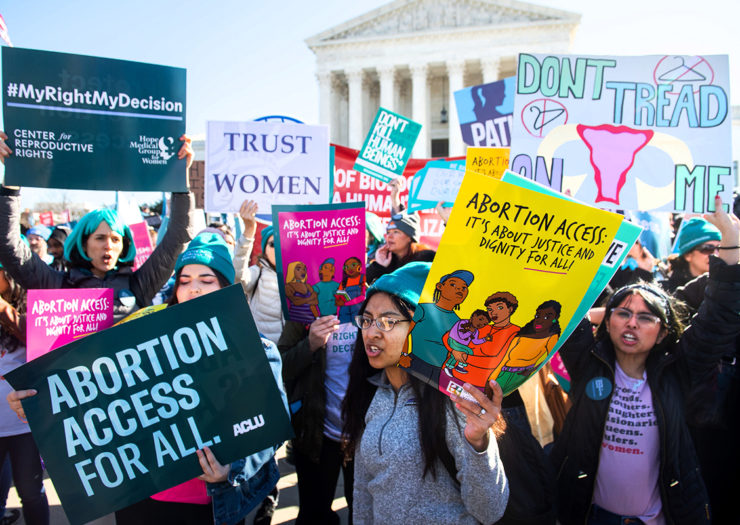
Pro-choice advocates rally outside the U.S. Supreme Court during arguments in June Medical Services v. Russo.
SAUL LOEB/AFP via Getty Images

There is no good reason why U.S. Deputy Solicitor General Jeffrey Wall should have been defending a Louisiana abortion restriction at the U.S. Supreme Court Wednesday, but there he was.

And his participation in oral arguments in June Medical Services v. Russo shows that the Trump administration has few priorities of greater significance than eroding abortion rights whenever and wherever it can.

June Medical Services involves a challenge to Act 620, a Louisiana law that mandates abortion providers maintain admitting privileges at hospitals within 30 miles of the clinic where they provide abortions. Attorneys from the Center for Reproductive Rights (CRR) challenged Act 620 on behalf of providers in the state, while the Louisiana solicitor general’s office has defended the law for the five years the litigation has been pending.

Yet on Wednesday, Louisiana Solicitor General Elizabeth Murrill stepped aside after 20 minutes of defending Act 620 so that Wall, on behalf of the Trump administration, could do the same.

There are two central issues the Supreme Court must answer in June Medical Services. First, do abortion providers have legal standing to challenge certain types of abortion restrictions? And second, did the Fifth Circuit Court of Appeals get it wrong when it ruled Act 620 could take effect?

First the qualified good news: It appears that there aren’t five votes on the Supreme Court to rule that abortion providers can’t sue on behalf of their patients in cases like this. Justice Samuel Alito was the most focused on the standing question, aggressively questioning attorney Julie Rikelman from CRR. That suggests that at least he is willing to upend over 40 years of case law holding abortion providers have legal standing to challenge abortion restrictions on behalf of their patients.

But are there the five votes needed to actually reverse that precedent? That’s unclear. Neither Justice Neil Gorsuch nor Chief Justice John Roberts asked a question related to standing during Wednesday’s arguments. In fact, neither Justice Clarence Thomas nor Gorsuch asked a single question during the entire hour of arguments.

But Roberts’ silence on the standing issue was the most curious. Gorsuch is unlikely to veer from his fellow conservatives in June Medical Services, including on the question of provider standing. And Roberts is considered somewhat of a standing hawk. During his time as chief justice, Roberts has consistently voted to limit legal standing, so it’s reasonable to think he’s at least tempted to do the same in June Medical Services.

“This case is about respect for precedent,” Rikelman said as she opened her argument for ruling against Louisiana’s anti-abortion law.

That respect for precedent includes the precedent of third-party standing in abortion cases. As Justice Stephen Breyer noted, the Supreme Court has recognized the rights of abortion providers to sue on behalf of their patients in at least eight cases. A vote against standing in June Medical Services is a vote against precedent. It’s a vote for a radical reinterpretation of abortion rights law that might be too much for Roberts to endorse in this case.

That’s especially true when the Supreme Court could end up crafting a decision that effectively guts the other precedent at issue in this case, Whole Woman’s Health v. Hellerstedt. That brings us to the bad news portion of Wednesday’s arguments, since the results of such a decision would be disastrous, for both Louisiana and abortion access nationwide.

In 2016, the Supreme Court struck as unconstitutional parts of a Texas admitting privileges law identical to the Louisiana law at issue in June Medical Services. In upholding the Louisiana requirement, the Fifth Circuit Court of Appeals in September 2019 ruled that Whole Woman’s Health is basically limited to the facts and circumstances of Texas. The effect of that decision is to make it functionally impossible to strike as unconstitutional entire categories of abortion restrictions—a point Justice Brett Kavanaugh picked up on during his only line of questioning Wednesday.

Does Whole Woman’s Health mandate that all admitting privileges requirements are unconstitutional, or is it possible that those medically unnecessary requirements could be unconstitutional in one state, but constitutional in another?

The answer to this question also rests with Roberts, his fidelity to precedent, and his willingness to accept the mountain of lies Louisiana served up in defense of Act 620. In Whole Woman’s Health, the Supreme Court found that admitting privileges laws serve no medical benefit and that the rule would force many clinics to close, substantially burdening abortion rights. The Supreme Court declared the Texas requirement unconstitutional, but did that decision declare all admitting privileges requirements unconstitutional? We’ll find out that answer when the Court releases its decision later this year.

And it’s the chief justice’s potential pliability in this case that best explains Wall’s participation in oral arguments Wednesday. We all know the Trump administration is vehemently anti-choice. Trump campaigned on a promise to appoint judges that would overturn Roe v. Wade, and he’s made good on that promise. It’s not uncommon for the U.S. Department of Justice to weigh in on cases when it’s not a party.

But it’s not routine. So we should ask why this case and why now.

We should ask why the DOJ is also chiming in to defend other state-level abortion restrictions like Ohio’s abortion ban. In that case, the Trump administration said it wants to participate in oral arguments and help defend Ohio’s ban because “the United States has an interest in the scope of the Supreme Court’s undue-burden standard applied in the context of abortion regulations and has participated in cases involving state abortion laws.”

That statement signals we should expect to hear more from the Trump administration as litigation challenging extreme abortion bans works its way through the federal courts.

On Wednesday, Wall was before the Supreme Court to get the justices used to the fact that they will likely be hearing a lot from the Trump administration on abortion rights in the coming years. Wall played cleanup for Murrill, making a substantive defense of Louisiana’s law and attacking the rights of abortion providers. But he was making that argument almost exclusively for Roberts’ benefit. Wall told the justices that they could rule in favor of Louisiana without overruling Whole Woman’s Health, giving a nod to the lingering concern Roberts may have about the damage his reputation would take if the Supreme Court reverses course on abortion rights after less than five years.

Wall told the justices that this was the first time the Court had been faced with the kind of allegations of conflicts of interest between abortion providers and patients like the kind lobbed by Louisiana and anti-choice activists here. That gives the justices a fresh opportunity to revisit legal standing precedent, Wall said, again speaking almost exclusively to Roberts.

Wall added nothing substantive to Wednesday’s arguments. His job was all political—to deliver the chief justice’s vote for anti-choice activists and to make it clear that the Trump administration would spare no resource in attacking abortion rights. We’ll know later this summer if it worked.

Source: https://rewire.news/article/2020/03/04/the-trump-administration-defended-louisianas-clinic-shutdown-law-will-it-sway-john-roberts/

“I remember one woman who arrived and asked, ‘Is this the clinic?’ And we were like, ‘What clinic?’”

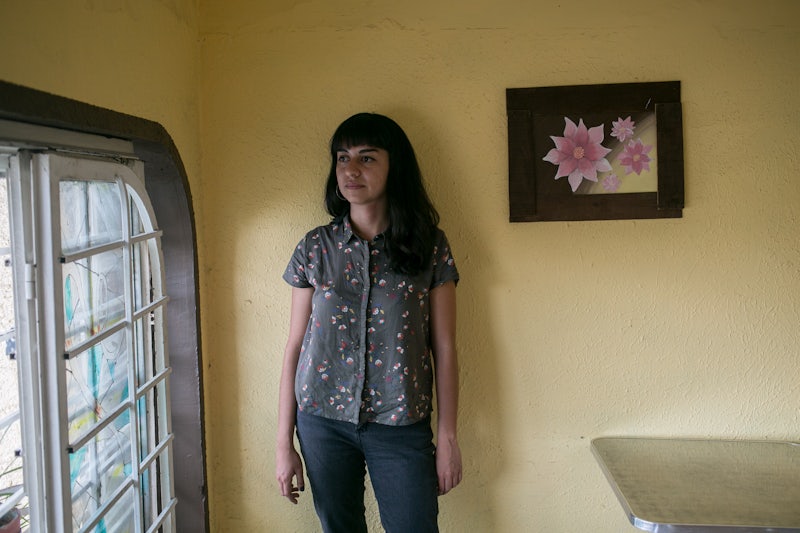
Lizy and the woman who helped her to end her pregnancy met at a Starbucks in León, the largest city in the central Mexican state of Guanajuato. Then a 20-year-old social-work student with curly hair and a heart-shaped face, Lizy, which is a nickname we’ve used to help protect her identity, felt nervous about discussing her pregnancy in such a public place. She was afraid she could be jailed for even considering an abortion, which is a crime in most cases in the heavily Catholic and conservative state. Enrolled in an exchange program in a city where she knew few people, she had no way to make the hours-long trip to Mexico City, the only place where abortion was legal at the time. She and her partner felt hopeless. “We were dying from fear, really, we were two frightened children,” she said later, seated in a park in her home city of Guadalajara. Finally, she had confided in a professor who told her about Rosalía.

Rosalía Cruz Sánchez had chosen the location for the meeting. Her organization, Las Libres, favors in-person meetings in public settings as a way to show people that abortion is normal and should be discussed in the open. Lizy was grateful that Rosalía didn’t ask her to explain why she wanted an abortion; she only asked whether she had made her decision. Then in a quiet but clear voice, she explained how to take a regimen of misoprostol, an ulcer medication available over the counter in Mexico that is also part of the FDA-approved protocol for medication abortion used in the United States. “She told me: Here’s how to do it, and here’s my number; you can call me at one in the morning or two in the morning, and I’m going to listen to you,” Lizy remembered.

After buying the pills at Walmart, Lizy placed four of the chalky tablets under her tongue and began to bleed. She called Rosalía to give her an update. After the second dose, her symptoms increased: a feverish chill, vomiting, and diarrhea. Rosalía reassured her that this was normal. Finally, Lizy went to the bathroom and saw a little gray mass on her pad. She touched it and felt a wave of relief.

Lizy self-managed her own abortion with the help of the activist group Las Libres. Amy Littlefield and Laura Gottesdiener

Las Libres is one of dozens of groups across Mexico that help people induce their own abortions. Some, including Las Libres, provide the pills directly when they can. Others offer instructions and around-the-clock counseling, fielding questions about how much bleeding is safe, how to dispose of pregnancy tissue, and, in rare cases of complications, how to speak to hospital staff without risking imprisonment. In their public life, these activists are students and newspaper editors, secretaries and teachers, office workers and doctors. The people they accompany are teenagers and college students, mothers and grandmothers, indigenous people and government officials. The activists use the word “accompaniment” to describe the work of being with people during an abortion—whether they are helping someone travel to Mexico City or texting with someone like Lizy in the middle of the night. This quiet and often clandestine work has not only helped countless people survive in a landscape of restricted access. It has also fueled a historic mobilization demanding the legalization of abortion in one of the world’s most Catholic countries. In a series of landmark victories for this “Green Tide” movement, the state of Oaxaca legalized abortion in September 2019, and the lower house of Congress recently passed federal legislation that could grant amnesty to women jailed for abortions.

Meanwhile, the U.S. has moved swiftly in the opposite direction. As states emboldened by the two Trump nominees on the Supreme Court have passed increasingly extreme restrictions, interest in self-managed abortion has surged. Even before President Trump’s election, grassroots groups in the U.S. quietly disseminated instructions and pills in states where laws have shuttered clinics and rendered abortion inaccessible for many people. As in Mexico, the work is legally risky in the U.S., where abortion-inducing medications are heavily regulated and advocates say at least 21 people have been arrested for self-induced abortions since 1973. The group Aid Access, which says it prescribed medication abortions over the internet to more than 7,000 women in the U.S. between March 2018 and August 2019, sued the Food and Drug Administration last year for seizing some of its shipments and blocking payments. In another case, a New York City woman who sold abortion pills was indicted on federal conspiracy and drug charges last year. As the burgeoning self-managed abortion movement here braces for a Supreme Court decision that could close even more clinics, U.S. activists are learning from their counterparts in Mexico and from the long history of self-managed abortion in Latin America.


Many sources trace the history of self-managed medication abortion to the 1980s in Brazil, when pharmacies began selling misoprostol with the warning that it could cause a miscarriage. It didn’t take long for women to figure out they could use the pills to induce abortions. Studies estimated that hundreds of thousands used the pills to circumvent the country’s abortion ban before Brazil restricted sales in 1991. Still, the underground use of misoprostol to self-induce abortions spread throughout Latin America and the Caribbean, where more than 97 percent of reproductive-age women live in countries with restrictive abortion laws.

In the Mexican state of Guanajuato, Las Libres never intended to become Mexico’s most high-profile and brazen accompaniment group. In 2000, Verónica Cruz, the founder of Las Libres, and a handful of her friends started talking about creating a feminist organization that would offer sexual education. “We wanted to create a small organization, nothing scandalous,” Cruz said. She and the other initial members of Las Libres had all engaged in activism and feminist work for years. Cruz, an energetic woman with a warm smile and a commanding presence, began her political organizing in elementary school, when she mobilized her classmates to stage plays to raise money for poorer children.

But their plans changed when Guanajuato state lawmakers tried to revoke rape survivors’ right to an abortion—which is the only exception to abortion bans recognized by all Mexican states. “We said, ‘They are crazy! We’re not going to allow this,’” Cruz explained. The idea of a small and low-profile organization was dashed; Las Libres rapidly mobilized massive protests that attracted international media attention and helped force the governor to veto the anti-abortion legislation.

But, in Mexico—as in the U.S.—there’s often a wide gap between reproductive rights under the law and actual access to abortion, particularly in highly conservative states like Guanajuato. So, Las Libres’ members began knocking on the doors of medical offices to find doctors willing to carry out the procedure. Their aim: to ensure that every person in the state who sought an abortion under the rape exception could, in fact, obtain one. One of the doctors they met was a gynecologist, who said she would not only perform the abortions herself, but that she would also show Las Libres members how to induce an abortion with misoprostol on their own.

As the news of the group’s activities spread, women flocked to Las Libres’ office asking for help accessing an abortion. “I remember one woman who arrived and asked, ‘Is this the clinic?’ And we were like, ‘What clinic?’” said Rosalía Cruz Sánchez.

Some of these women who came to Las Libres had been raped, but many wanted to end pregnancies for other reasons. “We said to ourselves, ‘It’s logical that if the medicine works for rape victims, it must also work for women who are not victims of rape, right?’” recounted Cruz. That’s when they started offering abortion accompaniment to everyone.

Since then, Las Libres estimates it has helped 10,000 women, some of whose numbers are saved on Rosalía Cruz Sánchez’s cell phone under names like “Acompañamiento 567,” the Spanish word for accompaniment. The group has continued to work in public, even as many Mexican states sought to further restrict abortion access as part of a backlash that followed Mexico City’s decision to legalize abortion in 2007. “People always ask me, ‘Aren’t you worried that your telephone is tapped?’ And I say, ‘Of course my phone is tapped—and isn’t it great that whoever is listening is learning about medical abortions?’” joked Verónica Cruz.

Despite its public profile, or perhaps because of the protection afforded by it, Las Libres has never been targeted by law enforcement. It argues that providing publicly available information about misoprostol to people who manage their own abortions is not illegal. But Las Libres is well acquainted with the Mexican justice system. Over the years, it’s helped free multiple women who were jailed on suspicion of having an abortion. “We’re the organization that best knows how to defend women who have been criminalized,” said Cruz. “And for that reason, we know how to beat the system.” In fact, Cruz said the group would welcome a legal case against it because that would allow it to mount an argument that could lead to the decriminalization of abortion across Mexico. “We have our legal strategy prepared to go all the way to the Supreme Court,” she said.

Many of Mexico’s accompaniment groups, however, operate in the shadows. (For that reason, we’ve withheld last names or used pseudonyms upon request.) Sofía, a philosophy student in her early twenties in Aguascalientes, is part of an anonymous online team that supports four or five women through their abortions every single day across Mexico and other parts of Latin America. She joined after the group’s founder—who had started by simply offering advice to her close friends—found herself so inundated with requests that she needed help. Sofía says the goal is to offer support to low-income women who cannot afford to travel to Mexico City for an abortion and may be forced to resort to unsafe measures. “The refrain that’s often repeated in Mexico is that the rich girls get abortions and the poor girls die,” she said. Members of the team have received rape and death threats and take care to conceal their identities. “We know that what we do makes a lot of people uncomfortable, and this puts us in danger,” she said.

Fernanda, a secretary who runs a website that sells abortion pills, also keeps her identity hidden as she counsels people through their at-home abortions and ships misoprostol pills across the country concealed inside magazines and newspapers as if they were ordinary documents. Over a decade ago, she had an unwanted pregnancy during college and struggled to find a source for the pills that she felt confident was safe. A few months after her self-induced abortion, a friend needed one too. “I told her what my experience was like and where I got the medication,” Fernanda recalled. “And from there the word spread, first to another friend, then to the friend of a friend, then to a cousin, and a neighbor. The news traveled quite fast.”


Misoprostol is widely available over the counter in Mexico. It’s usually sold in 28-pill packages, which is typically enough to end multiple pregnancies. “This is how some of the first accompaniment networks were formed: Women passed the pills between each other,” said Verónica Cruz. Yet with an average of one person reported to authorities every day for the crime of abortion in Mexico, many people eschew pharmacies and opt for street markets or websites instead. In Guadalajara, for example, a former car salesman named Lalo hawks exorbitantly priced misoprostol in an area well known for clandestine drug sales. Some peddlers charge even more, he adds, because they know women will pay. The problem with the black market, however, is that you never quite know what you’ll get. An advertising agency assistant named Lorena says she once paid a website $70 for eight pills that ended up being confectioners’ sugar. The black market for surgical abortions, meanwhile, can be more dangerous. Another woman, named Magda, says she once fled an illegal clinic after the doctor told her boyfriend that Magda might bleed to death during the procedure: “My boyfriend felt like the doctor had said, ‘Well, she could die, but nothing’s going to happen to me.’”

Social worker Ana Mares’s experience with a self-induced abortion inspired her to fight for other women’s reproductive rights.Meghan Dhaliwal

With appropriate support and information, however, experts say that self-managed medication abortions are extremely safe. And for some of the women who undergo them, the process can be a transformative experience that spurs them to activism. Ana Mares, a 27-year-old social worker, was raised by a catechist mother and grew up believing that abortion was the worst of all sins. But when Mares became pregnant as a university student, she knew she wasn’t ready to have a child. She searched online for help but instead ended up at the offices of an anti-choice group, whose members refused to let her leave the building until she threatened to call the police. She later bought abortion pills at a street market. “Instead of blaming myself and feeling like a victim,” she said, “I realized that these types of things happen, and will continue happening, precisely because women are second-class citizens, because they control our bodies, and because religion is in Mexico and our culture down to our veins.” Mares joined a feminist organization and graduated with a degree in social work. She now works with accompaniment groups to offer psychological and emotional support to people during their own extra-legal abortions.

It’s this type of political shift that Las Libres seeks to inspire during accompaniments. The activists always ask women two questions: whether they are sure they want an abortion and what they think of abortion. The latter offers Las Libres members an opportunity to try to dispel the procedure’s deeply ingrained religious and social stigma. “We want every woman we accompany to mobilize for the decriminalization of abortion for everyone,” said Verónica Cruz. That’s because abortion accompaniment groups, no matter how successful, are not a replacement for legalized abortion across Mexico and Latin America. “We can accompany five or ten thousand women. But in every country, there are at least four hundred or five hundred or nine hundred thousand abortions each year,” she said. “We’re never going to reach that.”

Hundreds of women wearing green handkerchiefs and T-shirts fill the streets of Guadalajara on International Safe Abortion Day on September 28, 2018. Amy Littlefield and Laura Gottesdiener

Months after her abortion, Lizy joined a group of hundreds of women wearing green handkerchiefs and T-shirts who filled the streets of Guadalajara to demand legalization of abortion. She gripped a banner that read, “Sister, get angry!” as they marched. “I don’t want other women to go through what I went through,” she said. Even though her abortion itself was successful, afterward she had bleeding and cramps for weeks but was too afraid to go to a doctor. Even with Rosalía’s support, the fear was still there. “I want there to be comprehensive medical care; I want it to be legal and for us not to be criminalized, so we’re not afraid to go to a gynecologist and worry we could end up in jail.”

Several weeks after the march, the feminist collective Lizy had joined put out a call for help with an unexpected request for accompaniment. An uninsured woman living in Texas needed an abortion, and she was having trouble accessing one. Lizy was surprised to learn that in Texas, where a medication abortion cost hundreds of dollars, a state law required most patients to have an ultrasound 24 hours before the procedure, during which a provider had to make any fetal cardiac activity audible and display and describe the image. “I read that abortion is legal in the United States, but I didn’t know there were these kinds of restrictions,” Lizy said. “It’s like it’s not actually legal at all.”

This reporting was supported by the International Women’s Media Foundation as part of the Adelante Latin American Reporting Initiative.

Source: https://newrepublic.com/article/156667/radical-future-self-managed-abortion-already

States have largely relied on nullification to uphold white supremacist and patriarchal systems.

If conservatives spent the decades since Roe v. Wade chiseling away at abortion access, they’re now going for the jugular with these bills.
Shutterstock

Since the start of the new year, anti-choice state legislators have introduced bills to abolish abortion in their states by invalidating—or nullifying—federal law. If the decades since Roe v. Wade were about chiseling away at abortion access, these bills are now going for the jugular.

Abortion rights are being attacked on a federal level in the June Medical Services v. Russo U.S. Supreme Court case. Meanwhile, some Republican lawmakers are attempting to criminalize abortion in their states—domestic terrorist Washington Rep. Matt Shea (R-Spokane Valley) of Washington and Rep. Heather Scott (R-Blanchard) of Idaho who’s white nationalists are trying for the second time—by combining fetal personhood with the Confederate-era theory of nullification.

Bills like HB 2154 in Washington, HB 1089 in Indiana, HB 361 in Idaho, SB 13 in Oklahoma, and HB 1075 in Colorado have all been introduced in the first 60 days of this year seeking to override Roe. These nullification bills can look like pure political theater as they have little legal foundation—but they’re actually deviously clever. Because neither access to abortion nor a definition of life is explicitly referenced in the U.S. Constitution or federal law, the sponsors of these bills make their case that states have the power to legislate both, per the Tenth Amendment‘s granting of state authority.

Nullification as a tactic is not newDavid S. Cohen, an associate professor at Drexel University and a gender and constitutional law expert who’s contributed to Rewire.News, said that Republican lawmakers who have proposed these recent bills are “keeping the company of the worst in this country’s history in terms of slavery and segregation.”

As far back as the Founding Fathers, some state lawmakers have fought for states’ rights to decide what is constitutionally valid within their state’s borders. States have largely relied on nullification to uphold white supremacist and patriarchal systems. Leading up to the Civil War, Southern state lawmakers used the argument of nullification to try to kick Native Americans off their land, to refuse to enforce federal tariffs, and secede from the Union. Southern states also used the nullification argument in the wake of Brown v. Board of Education in an attempt to avoid racially integrating schools.

So how did these tactics make a comeback? Over the last decade, alongside the rise of the Tea Party movement, nullification enthusiasts have organized in states’ rights groups like the Tenth Amendment Center (TAC), as well as far-right extremist groups like Oath Keepers. Since its formation in 2007, TAC has emerged as the thought leader on modern-day applications of nullification. The group’s model legislation has informed recent nullification bills, like those introduced during the multistate legislative campaign to reject the Affordable Care Act, and the ongoing wave of bills to thwart federal gun regulations.

For these self-described tenthers, nullification acts as a cudgel against any federal law they don’t want to uphold, judicial review and federal supremacy be damned.

To apply nullification to abortion regulations, state lawmakers have to get around the fact that the U.S. Supreme Court ruled access to abortion as a constitutional right with Roe v. Wade.

Each of the five bills introduced this year do so in the following ways:

  1. assert that states have a compelling interest in protecting the right to life of the unborn;
  2. provide that the life of unborn begins at conception;
  3. make a Tenth Amendment claim to deem any federal law that contradicts what is written in the bill as “null, void, and unenforceable”; and
  4. provide some sort of threat of retaliation should the federal government choose to enforce federal law in those states.

“It’s a really important strategy for them,” Jessica Mason PiekloRewire.News‘ vice president of law and the courts, said. “In order to get around abortion rights precedent, these bills have to do a few things… They have to clearly assert a source of state power, [show that the state] has a compelling interest [in passing the law], and that the restriction has to substantially further that compelling interest… and still pass that undue burden test.”

The level of constitutional scrutiny for abortion regulations has been whittled down from “strict scrutiny” in Roe, to “compelling scrutiny” and an “undue burden” test in Planned Parenthood v. Casey and then Whole Woman’s Health v. Hellerstedt. By using the nullification language and asserting Tenth Amendment authority, “these laws are trying to … restart that conversation and change the terms of it,” Mason Pieklo said. Under these new terms, “abortion isn’t a fundamental right, so states only need a rational basis—not a compelling interest—to legislate around it. The point of these laws is to say … the federal laws don’t apply here,” she added.

Yasmine Ergas, director of the gender and public policy specialization at Columbia University, described the novelty of these bills like this: “In the third trimester, there’s a compelling state interest in the life of the fetus. But that trimester framework gets changed in Casey. Nonetheless, women’s rights are predominant,” and the undue burden test, if applied to these bills, would remain the same, “although what [these bills are] saying is, ‘We don’t care about your test.’”

Even if the state lawmakers concede that their bills are in fact subject to the type of constitutional scrutiny determined by the Court, they maintain they “have a compelling interest in litigating on behalf of the unborn,” according to Pieklo Mason.

But how can a state assert a compelling interest in protecting the life of the unborn under the 14th Amendment when neither the Court nor federal law has agreed that a fertilized egg is a person? Nullification, of course.

While anti-choice lawmakers have long claimed that they must protect the inalienable rights of the “unborn” from the time of conception via fetal personhood bills, tenthers assert that state lawmakers get to define what constitutes a “person.”

Oklahoma’s SB 13 states that “a living human child, from the moment of fertilization… is entitled to the same rights, powers, privileges, justice and protections as … any other human person.” Idaho’s HB 361 aims to make abortion illegal, “regardless of any contrary or conflicting federal statutes, regulations, executive orders, or court decisions.”

Sometimes, the bills go even further and criminalize people who infringe on the rights of fetuses they deem as people. Indiana’s HB 1089 goes as far as to threaten federal agents who enforce the Constitution within Indiana’s borders: “A federal officer or agent who arrests any Indiana government official for compliance with this article … shall be subject to arrest by Indiana law enforcement.”

We have already seen states criminalize pregnant individuals—disproportionately women of color—who experience pregnancy loss. The state lawmakers who want to use nullification and fetal personhood to ban abortion want to prioritize the rights of a fertilized egg over the pregnant person carrying it.

“Women have a right to life, and a right to health … doesn’t life imply a certain amount of health?” Ergas said. “Certainly life is not simply a positive heartbeat.”

If these bills became law, the only recourse for pregnant individuals in those states would be federal law enforcement intervention, which is exceedingly unlikely given the current state of our federal executive and judicial branches.

Source: https://rewire.news/article/2020/03/09/anti-choice-state-lawmakers-want-to-criminalize-abortion-through-nullification/

Unnecessary restrictions on abortion pose undue burden to women's constitutionality

© Greg Nash

This week the Supreme Court for the second time in four years considered a case that will national implications for abortion providers and their patients. The core question — whether state laws that impose medically unnecessary restrictions on clinics and force them to shut down pose an undue burden to the constitutional right to abortion.

In 2016, it was an independent abortion provider Whole Woman’s Health that initially took this fight from Texas to the highest court in the nation. With this year’s case — June Medical Services v. Russ — it’s an independent abortion clinic Hope Medical Group for Women going to bat to protect abortion access for the entire country.

Whether it’s fighting for their patients in local communities, state legislatures, or all the way to the Supreme Court, independent abortion providers — or, “indies” as so many of us lovingly refer them — have been taking on these fights for years as attacks targeting them and their patients continue to ramp up.

Independent abortion providers in Georgia fought back tirelessly last year against that state’s six-week ban. Year after year, in addition to serving their state as the only abortion provider in Kentucky, EMW Women’s Surgical Center is also fighting for their patients in court, challenging the onslaught of state restrictions intended to push care out of reach entirely.

In Ohio, where clinics have been closing at an alarming rate for the last decade, anti-abortion extremists regularly harass patients and staff. When protesters dramatically vandalized Preterm, an independent provider in Cleveland, the community rallied around the clinic and its staff, showing an outpouring of love and support amid the threats.

And although these providers are as resilient and courageous as ever, the constant and persistent extremism they face to protect our basic human rights feels particularly salient in this current moment.

Since 1973 when Roe v. Wade legalized abortion in the United States, politicians have been relentless in attacking the constitutional right to abortion. Though abortion remains legal in all 50 states, nearly 1,200 laws restricting abortion rights have been enacted on the state and federal levels: more than a third of these laws have been enacted in the seven years between 2011 and 2018 alone. Unsurprisingly, many of these laws have targeted clinics specifically, especially in the South and Midwest.

Less often discussed but equally important is the fact that independent clinics and their patients are disproportionately impacted by these attacks. Across the U.S., independent clinics provide the majority of abortion care — providing care to three out of five people who have abortions — but they continue to close at alarmingly high rates. Since 2012, the number of independent clinics has declined by more than 32 percent, and the ones that remain operate in some of the most politically hostile regions in the country.

In four of the six states with just one abortion clinic remaining, that last clinic is independent, and providers are often targeted by the most aggressive protesters and anti-abortion legislation in the nation.

Clinic closures are often the result of anti-choice legislation that imposes medically unnecessary regulations on abortion clinics, many of which lack the resources to meet these onerous requirements.

However, these regulations — as well as the extremist legislators who impose them — ignore the fact that abortion is safe, and as clinics close, more and more patients are forced to travel outside of their communities for care, often taking on additional expenses like hotel stays and transportation.

In my almost five years as executive director of the Abortion Care Network, over and over, I’ve watched independent providers across the country rise to the challenge. When the stakes are high and the political landscape is stacked against them, indies stand their ground and refuse to let anything stop them from putting their patients first.

Independent clinics play an integral role in ensuring everyone has access to the reproductive health care they need to thrive and be healthy and to make the choices that are right for them and their families.

Now is the time we all must show appreciation for abortion providers. Reach out to the clinic in your local community. Volunteer, or support in whatever way is needed. Be an advocate for providers and patients as the threats to abortion access escalate.

Source: https://thehill.com/opinion/healthcare/486188-unnecessary-restrictions-on-abortion-pose-undue-burden-to-womens?fbclid=IwAR1Bk4vY_fhZLyLyNJX-_ltHGgqvrcosxmeI2GbHARKRmclcNO99A15mia8

A longtime Minnesota legislator was one of many members of Congress to throw their support behind Joe Biden this week.

In February, Biden received endorsements from a Louisiana state senator who voted for a near-total abortion ban and a Texas lawmaker who voted to fund a program run by anti-choice activists. JIM WATSON/AFP via Getty Images

Longtime abortion rights opponent backs Biden 

Rep. Collin Peterson (D-MN), among the last anti-choice Democrats in the U.S. House of Representatives, this week endorsed former Vice President Joe Biden for the Democratic presidential nominee, calling him “a strong voice for rural America in the White House.”

Last April, Peterson was one of three House Democrats to join Republicans in pushing for a vote on legislation based on the myth that abortion providers routinely commit infanticide during “failed” abortions. He has the backing of Democrats for Life of America (DFLA), a group that supports anti-choice Democrats.

Peterson, who represents a part of rural Minnesota that’s solidly Republican, also opposed the impeachment inquiry into President Donald Trump, and later voted against both articles of impeachment.

Peterson, a congressman since 1991, is the latest anti-choice legislator to back Biden’s presidential campaign. In February, Biden received endorsements from a Louisiana state senator who voted for a near-total abortion ban and a Texas lawmaker who voted to fund a program run by anti-choice activists.

This week, Biden also received a number of endorsements from pro-choice legislators, including U.S. Sen. Tammy Duckworth (D-IL) and Michigan Gov. Gretchen Whitmer (D), a pro-choice stalwart.

How Super Tuesday candidates fared among people of color, LGBTQ people

Exit polling from Super Tuesday states showed voters of color were largely split between Biden and U.S. Sen. Bernie Sanders (I-VT), who won 513 and 435 delegates, respectively, in Tuesday’s primaries.

Fifty-eight percent of Black voters supported Biden on Super Tuesday, while 17 percent backed Sanders, according to exit data based on median support complied by the Washington Post. Sen. Elizabeth Warren (D-MA), who ended her presidential bid on Thursday, received 5 percent of the vote from voters who are Black. Biden dominated among voters who named race relations their top issue.

Sanders won 35 percent of the vote from people who are Latino on Super Tuesday, 9 points higher than Biden’s share. Forty-two percent of Asian voters backed Sanders, and 17 percent voted for Biden.

Biden won the largest share of voters who identified as female in the exit poll, with 37 percent. Sanders drew 25 percent, and 15 percent voted for Warren.

While exit poll data from LGBT voters wasn’t available on a national scale, state-by-state statistics showed LGBT voters supported Sanders in large numbers. In Texas, they backed Sanders over Biden, 49 percent to 21 percent, according to exit polling compiled by the New York Times. Sanders won 36 percent of the vote from LGBT voters in California’s primary to Biden’s 16 percent.

Source: https://rewire.news/article/2020/03/06/biden-gets-support-from-one-of-the-last-anti-choice-congressional-democrats-campaign-week-in-review/

Virginia’s General Assembly passed a bill that repealed many of the State’s restrictions on abortion on Wednesday.

House Bill 980, also known as the Reproductive Health Protection Act, received final passage from the House of Delegates and was sent to Governor Ralph Northam for final approval on Wednesday. HB 980, which had initially passed the House of Delegates on a 52-45 vote, passed the Senate through Lieutenant Governor Justin Fairfax’s tie-breaking vote after it had been amended, and, on Wednesday, received final passage after the House of delegates adopted the Senate’s amendments.

The bill effectively revokes many of Virginia’s restrictions on abortion. It expands who can perform first trimester abortions by allowing physician’s assistants, nurse practitioners and certified nurse midwives to perform them and removes the 24-hour mandatory waiting period imposed on women before getting an abortion. It also removes the requirement that women receive an ultrasound and counseling before getting an abortion.

Driven by Virginia’s democrats, the bill seems to be the lawmakers’ direct response to the many cases challenging Virginia’s laws on abortion.

Moreover, the General Assembly’s decision to pass the bill comes at a time when pro-choice groups are worried about the possibility that the US Supreme Court could overturn or significantly repeal Roe v. Wade, a 1973 case which established that the right to abort fell within a woman’s fundamental right of privacy and that a State’s undue restrictions on that right were unconstitutional .

Pro-choice advocates have praised the passage of the bill. As Senator Jennifer McClellan, sponsor of a similar bill originating in the Senate, said: “if ever there was a time to protect a woman’s bodily autonomy, that time is now.”

Pro-life advocates, on the other hand, have expressed their disapproval for the bill, arguing that the bill has lowered the standard of care and is thus dangerous for women.

Source: https://www.jurist.org/news/2020/02/virginia-lawmakers-pass-bill-repealing-abortion-restrictions/