1-dec

Lawsuits in Alaska, Missouri and North Carolina include one against 20-week ban on abortions, a challenge that could have national repercussions

Reproductive rights advocates announced a significant slate of challenges to anti-abortion laws on Wednesday, taking aim at major restrictions in three states which advocates say are unconstitutional.

Planned Parenthood, the American Civil Liberties Union, and the Center for Reproductive Rights, a legal advocacy group which argued a landmark abortion case earlier this year, filed three lawsuits in Alaska, Missouri and North Carolina. In Missouri, the groups will challenge a pair of abortion restrictions that have reduced the number of abortion providers to just one. They are taking aim at a similar clinic restriction in Alaska. In North Carolina, they will mount a challenge to a 20-week ban on abortion that has some of the nation’s strictest exceptions.

The two Missouri restrictions are highly similar to laws in Texas that the US supreme court struck down in June. They require abortions to be performed in expensive, hospital-like facilities and require abortion providers to have certain professional relationships with a local hospital.

The supreme court ruled that such restrictions served no medical purpose and were unconstitutional. But similar restrictions remain on the books in several states. In Missouri, where 1.2 million women of reproductive age live, the laws have forced two Planned Parenthood clinics, in Columbia and Kansas City, to stop providing abortions in recent years. The only remaining clinic is located in St Louis, forcing many Missouri women seeking an abortion to travel long distances.

“Because of laws like the ones we are challenging today, for too many women across our country the constitutional right to have an abortion is more theoretical than real,” said Jennifer Dalven, the director of the ACLU’s Reproductive Freedom Project.

But it is the North Carolina challenge that may have the bigger impact on abortion rights nationwide. This is only the second time reproductive rights advocates have challenged a 20-week ban on abortion in federal court – potentially setting the table for these restrictions to go before the supreme court.

North Carolina’s law bans abortions after 20 weeks except in a medical emergency where a woman’s condition is so grave that she requires an abortion immediately. That is stricter than other 20-week bans, which have health exceptions but don’t require there to be a medical emergency.

The bill defines medical emergency as a condition which “so complicates the medical condition of the pregnant woman as to necessitate the immediate abortion of her pregnancy to avert her death or for which a delay will create serious risk of substantial and irreversible physical impairment of a major bodily function” not including mental health.

In their lawsuit, the ACLU, Planned Parenthood and the Center for Reproductive Rights argue that the language essentially forces women having an abortion for health reasons to wait until she becomes gravely ill.

Laws banning abortion several weeks before a fetus is viable outside the womb are increasingly common. Across the country, more than a dozen states ban abortion two weeks before viability on the medically dubious grounds that the fetus can feel pain.

But despite the fact that Roe v Wade prohibits states from banning abortion before the point of viability, most of those laws have not faced a legal challenge. Only Arizona’s 20-week ban, passed in 2012 and struck down permanently over the next two years, was ever the subject of a legal battle in federal court.

Advertisement

The challenge is especially significant now that Donald Trump has been elected president. Trump, in a wholesale embrace of the anti-abortion movement’s top priorities, has promised to sign into law a nationwide ban on abortion at 20 weeks.

One reason is that very few abortion providers have standing for such a challenge. “To challenge these laws, you would have to be actually doing abortions after 20 weeks,” said Priscilla Smith, an abortion rights advocate and a senior fellow at Yale law school. “And there are just so few states where you can obtain abortions at that stage of pregnancy. Despite the anti-abortion world’s focus on post-20-week abortions, they’re very rare.”

But another reason may be that reproductive rights advocates have been hesitant to launch a lawsuit that could reach the supreme court. In the past several decades, many such legal challenges have resulted in the supreme court chipping away at abortion rights.

That changed this summer, when the court ruled 5-to-3 to strike down a set of harsh Texas abortion restrictions. The ruling prohibited states from enacting abortion restrictions based on medically questionable arguments about protecting women’s health. Justice Anthony Kennedy, who is often skeptical of abortion rights, joined the majority.

With Trump potentially empowered to shift the balance of the court rightward, Smith said, reproductive rights advocates are probably facing the friendliest bench possible under the new president.

Courts have struck down early bans on abortion before, including an Arkansas law banning abortion at 12 weeks and a North Dakota law banning abortion at six weeks – before many women realize they are pregnant. In defense of 20-week bans, abortion foes commonly argue that fetuses at that stage of development will feel pain during the procedure. But the evidence is slim. While select studies have found evidence for this, the most recent systematic review of studies on this topic concluded that the fetal nervous system is not developed enough to feel pain until the third trimester.

Still, bans on abortion at 20 weeks occupy fraught emotional territory. Public support for abortion restrictions grows with gestational age, and a substantial portion of Americans are ambivalent or opposed to abortion rights in the second trimester.

Anti-abortion activists place an emphasis on these cases, even though they account for only 1% to 2% of all abortions in the US. Abortion rights advocates argue that many women obtaining later abortions are doing so for health reasons or after discovering a severe or fatal fetal anomaly – although the evidence suggests these are not the majority of cases.

On Wednesday, representatives for Planned Parenthood, the ACLU and the Center for Reproductive Rights said the three lawsuits were the beginning of a spate of legal challenges the groups would mount jointly.

“We are going to fight back state by state and law by law until every person has the right to pursue the life they want,” said Dr Raegan McDonald-Mosley, Planned Parenthood’s chief medical officer.

https://www.theguardian.com/world/2016/dec/01/planned-parenthood-aclu-challenge-abortion-ban

Source: The Guardian


17-nov

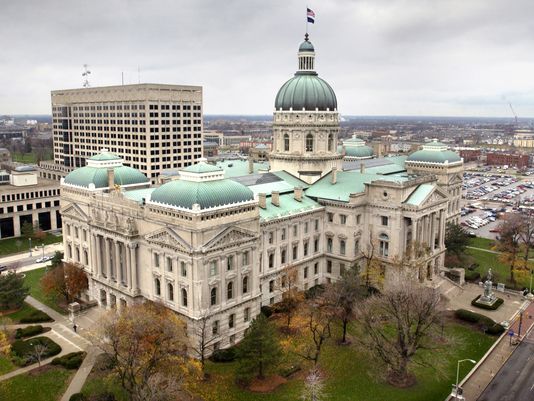
An Indiana lawmaker plans to introduce a bill that would outlaw and criminalize all forms of abortion in Indiana.

State Rep. Curt Nisly said Wednesday he will file so-called “Protection at Conception” legislation when the General Assembly convenes in January.

Under his proposal, all abortions would be a crime and prosecutors could file charges against those who participate in the procedure.

“You would treat the death of an unborn child like you would any other human being,” the Goshen Republican said.

The measure would almost certainly be ruled unconstitutional. The U.S. Supreme Court’s 1973 ruling in Roe v. Wade and subsequent decisions have effectively established a woman’s right to an abortion before viability of the fetus.

“My position is that the Supreme Court is wrong with Roe v. Wade,” Nisly said, “and they don’t have jurisdiction in this manner. This is the state of Indiana asserting the powers that are given to them, specifically in the 9th and 10th Amendments of the U.S. Constitution.”

In situations in which a high-risk pregnancy endangers a woman’s life, he said the proposal would demand that a doctor try to save both mother and child.

“The idea here is always, always try to save the baby,” Nisly said.

Conservative activists emboldened by President-elect Donald Trump’s decisive victory in Indiana are already rallying behind the measure. While they acknowledge the proposal would face legal challenges, they’re holding onto hope that the composition of the bench could change before the case reaches the Supreme Court.

“You don’t know who is going to be there in five years,” said Amy Schlichter, executive director of Hoosiers for Life. “It’s never the wrong time to do the right thing.”

Trump has promised to appoint anti-abortion judges to the high court, and while his own positions on abortion have often shifted, his running mate — Indiana Gov. Mike Pence — has assured abortion opponents that they can trust Trump. The staunchly conservative Pence said frequently during the campaign that he and Trump would send Roe v. Wade “to the ash heap of history where it belongs.”

Whether there is an appetite for legislation at the Statehouse remains to be seen.

Legislative leaders, including House Speaker Brian Bosma and Senate Leader David Long, declined to comment or did not immediately return messages from IndyStar. Gov.-elect Eric Holcomb, who has said he would support anti-abortion legislation if it landed on his desk, also declined to comment.

Ken Falk, legal counsel for the American Civil Liberties Union of Indiana, called the proposal “obviously unconstitutional.”

“I do not think a legislature sworn to uphold the laws of the United States should be introducing laws that are so obviously unconstitutional,” Falk said.

He dismissed the idea that Trump’s Supreme Court picks may eventually overturn Roe v. Wade. While abortion is a polarizing issue, “I’d be surprised if any court would go in and tear down anything that has so clearly and for so long been the law of the land,” he said.

Indiana has been at the center of the abortion debate since Pence signed a measure into law in March that made Indiana’s abortion regulations some of the strictest in the nation. The new law restricts abortions based solely on fetal disability or gender and requires burial or cremation of fetal remains from an abortion or miscarriage.

A federal judge has since suspended the law from going into effect, saying it would likely be found unconstitutional.

The proposal from Nisly is so far-reaching by comparison that it has caused a rift within the anti-abortion movement.

Schlichter’s newly formed group, Hoosiers for Life, is leading the charge for the legislation. Schlichter was the force behind the unsuccessful push last session to ban abortions if the fetus has a detectable heartbeat.

Others lining up behind the bill include Christian speaker Peter Heck and tea party activist Monica Boyer.

“It’s time that Indiana understands that our legislators are not doing all they can to stop abortions in our state,” Schlichter said. “I think it’s time for bold leadership — period.”

But some anti-abortion advocates say the new, hard-charging Hoosiers for Life group is causing a rift in the movement, said Micah Clark, executive director of the socially conservative American Family Association of Indiana.

For example, Indiana’s largest anti-abortion group, Indiana Right to Life, has traditionally advocated a more incremental approach and has yet to support Nisly’s proposal. Mike Fichter, the group’s president and CEO, did not return a phone call from IndyStar.

“They do not think that now is the time for such a move, and that such an effort could set back the life movement,” Clark said. “Hoosiers for Life disagrees and thinks it is time to do everything possible legislatively to protect innocent life regardless of what the courts may or may not do.  Perhaps, it is time to assert state sovereignty and push the question back to the Supreme Court to challenge Roe v. Wade.”

Schlichter said any rift is merely the result of different approaches.

“Whenever you are trying to do anything good, there are always different ways to fight the battle,” she said. “There are different strategies, and that’s OK.”

http://www.indystar.com/story/news/politics/2016/11/16/total-abortion-ban-proposed-indiana/93954670/

Source: IndyStar


9-nov-3

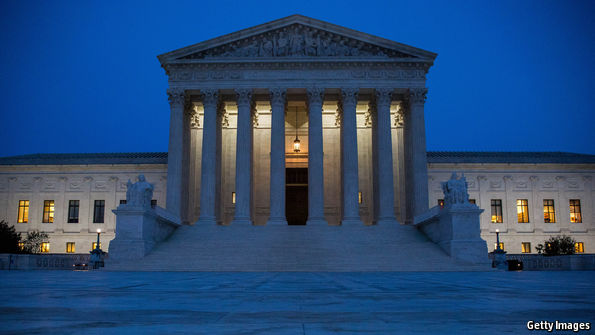
THERE are two ways to think about the future of the Supreme Court in the wake of last night’s stunning upset in the presidential race: taking Donald Trump at his word when he says he will load the bench with conservatives, or, in view of his penchant for changing his mind, taking these promises with a shaker full of salt. Neither offers much solace to liberals.

Mr Trump has pledged to appoint highly conservative justices who will uphold gun rights, walk back the 18-month-old decision allowing gays and lesbians to wed and “automatically” overturn Roe v Wade, the 1971 ruling recognising a right to abortion choice. On the campaign trail, Mr Trump provided more information about his intentions with regard to the nation’s highest court than any presidential candidate has ever divulged: not one list of potential nominees but two, totalling 21 souls he says merit a shot in one of the Supreme Court’s nine seats.

That is 21 more names than previous applicants for the White House—including Hillary Clinton—have made public. Mr Trump released his first list of 11 names in May to shore up support for his budding nomination and to reassure conservatives that he could take just as hard a line on replacing Antonin Scalia, the arch-conservative justice who died in February, as his nearest rival, Ted Cruz. Publicising the roster, which was curated with the help of the Federalist Society and the Heritage Foundation, two solidly conservative think tanks, was a highly unorthodox move, and it’s likely Mr Trump knew very little about any of the potential nominees. But the stunt had its intended effect: the conservative base coalesced around Mr Trump and the real-estate magnate took the mantle of the Republican party.

The original Trump Eleven were all white judges, six sitting on federal circuit courts and five on state supreme courts. In line with what would become a promise to “drain the swamp” in the final weeks of his campaign, none hailed from inside the Washington beltway. That is a remarkable slight to the DC Court of Appeals, an institution where many presidents have fished for nominees. Of the eight justices currently on the Supreme Court, three once served on the DC court: the liberal Ruth Bader Ginsburg and conservatives Clarence Thomas and John Roberts, the chief. Barack Obama’s pick to replace Mr Scalia, Merrick Garland, is the DC circuit court’s chief judge.

Late in September, Mr Trump added ten more potential picks to his Supreme Court wish list. This list was more diverse. It included more women and three people of colour, including Amul Thapar, a Detroit-born judge of South Asian descent; Federico Moreno, a Florida judge who hails from Venezuela; and Robert Young, the black chief of Michigan’s supreme court. It also featured Mike Lee, a senator from Utah who refused to endorse Mr Trump and who called on him to quit the race following revelations about his treatment of women in October. Mr Lee has said he is happy serving in the Senate and is not interested in taking a seat on the Supreme Court.

Nobody knows who Mr Trump will actually tap for Mr Scalia’s empty seat. Mr Trump himself might have little clue. In the course of his business career, the president-elect has shown a remarkable ability to dodge and parry and reverse himself on everything from the war in Iraq to immigration policy to Mr Obama’s birthplace. Notably, Mr Trump never said he would choose one of the 21 people on his lists: he said the names should be viewed as “a guide” he would consult when sitting down to make his selection. They are “representative of the kind of constitutional principles I value”, he said. Time will tell whether those principles make their way into an actual Trump nominee.

But with Republicans in control of both houses of Congress and the White House, there is only one barrier to Mr Trump seating a justice of his choice: the Senate filibuster, a maneouver that permits the minority party to prolong debate and block votes as long as the majority is weaker than 60 votes. Senate leaders told The Economist over the summer that this last line of defence will be erased no matter which party takes the chamber in the November election. With their successful nine-month stonewall of Mr Garland now looking like a brilliant move to preserve a half-century-long conservative tilt on the Supreme Court, Republicans will have no reason to bow to a Senate rule that hamstrings their new president. Expect the filibuster to dissolve and Mr Trump to have his way with the empty chair—one way or another.

Meanwhile, last night’s vote may have changed retirement plans for Ruth Bader Ginsburg, 83 and Stephen Breyer, 78, the elder liberals on a court that is destined to swing to the right. If they hang up their robes over the next four years, the Supreme Court may be unrecognisable a generation down the road.

http://www.economist.com/blogs/democracyinamerica/2016/11/nominator-chief

Source: The Economist

9-nov

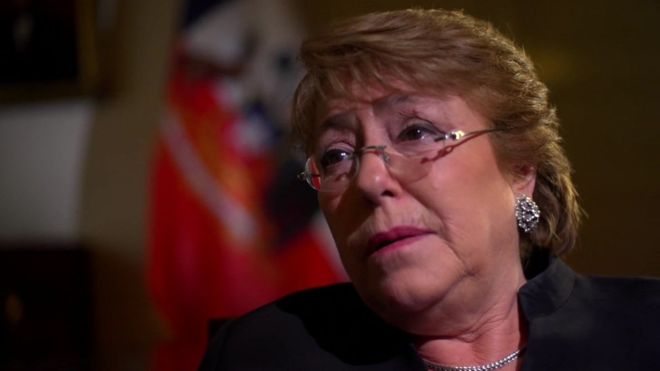
Chile is one of only six nations in the world where a woman can be prosecuted for having an abortion whatever the circumstances. Its first female president, Michelle Bachelet, is trying to change that, against stiff opposition.

“I believe that women should have legally the possibility of making their own choices. In this country until now this is criminalised – if you interrupt your pregnancy, you will go to jail. And I believe this is not fair,” Ms Bachelet told me.

“Women could be in an unhealthy situation because of rape, et cetera, and there might be women who don’t want babies in that situation.”

First elected in 2006 and now back as president after Sebastian Pinera took the reins for four years, Ms Bachelet has made it her mission to change her country’s restrictive abortion laws.

The changes would decriminalise abortion at up to 12 weeks:

  • if the mother’s health was at risk
  • if the foetus would not survive the pregnancy
  • if the mother had been raped

And if the mother was under 14 years old, the limit would be extended to 18 weeks.

The proposal has been passed by the country’s Congress, but needs Senate approval to become law.

‘Powerless’

Urban Chile seems a modern and sophisticated place.

You see gay couples holding hands and a strong alternative street culture.

But some old attitudes endure.

Despite being illegal in Chile, abortions do take place.

Those who can afford it turn to underground private clinics or personal contacts to get them Misoprostol, known as the abortion drug.

But if you are poor, your options are limited.

Paola and Andrea, in their early 40s, both had planned pregnancies and then found they were carrying fatally damaged foetuses.

Paola said she had felt “like a walking corpse, and like my son’s coffin. It was torture”.

She said abortion must be a very painful experience, but not as much as forcing that baby to be born.

The best advice Paola’s doctor could give her was to pray.

She was not allowed an abortion; neither was Andrea, even though her life was under threat.

Both had to carry their babies for months and give birth to them – without any hope they would live.

Andrea told me: “I felt powerless, having to live this process after having my daughter declared unviable.

“I suffered unnecessarily and so did my family.”

Later, the president told me she had watched some of her friends go through the same thing.

“There are some people who might be able to live with that, and that’s OK, but there’s a lot of people who really are destroyed emotionally afterwards, and their lives are changed forever. So that’s why we do believe they should have the possibility to decide by their own, what they prefer.”

States where abortion is completely illegal:

  • Chile
  • The Dominican Republic
  • El Salvador
  • Malta
  • Nicaragua
  • The Vatican

Previous governments have tried to liberalise the law, but President Bachelet’s bill has already gone much further down the legislative process than any before.

But the proposal remains very controversial, with opposition led by the Church.

At the beginning of September, it organised a rally in the capital, which attracted support from tens of thousands of people.

One of them, Gloria, was raped at the age of 12 by a cousin, and made to have an abortion by her family.

She never recovered, and has tried to take her own life several times.

Gloria told me: “In my case, if I had the choice, I would have had my daughter. But it wasn’t my choice.

“Abortion scars you for life – before and after.

“Nothing good comes out of abortion – nothing, nothing.”

‘Women are still dependent’

In Chile, many conversations lead back to the country’s violent past, when the democratic government of Salvador Allende was overthrown by a coup led by Gen Augusto Pinochet.

The general banned abortion in 1989, in one of the last acts of his military government.

Despite being predominantly Catholic, Chile had allowed pregnancy terminations until then.

Human rights lawyer Lorena Frias told me the military dictatorship still cast a shadow over Chile’s attitude to personal freedom and to abortion.

“Even 20 years after the dictatorship, human rights is not part of the political agenda,” she said.

“This makes it more difficult to argue in terms of international standards in favour of women.

“In Chile, women are still dependent.

“Women do not have the decision over their bodies, over their own financial things, over their own liberty, so it is more difficult to push forward the abortion agenda.”

Despite the controversy, President Bachelet appears to have most of the public behind her.

And she is hopeful Chile’s women will soon have choices available to them that their mothers were denied.

http://www.bbc.com/news/world-latin-america-37336279

Source BBC

Polish lawmakers approved Friday a government plan of bonuses for families that have a disabled child born to them, as part of a policy aimed at curbing the number of abortions.

The “For Life” plan, to take effect next year, provides for a one-time payment of 4,000 zlotys ($1,000) upon the birth of a disabled child or one with a life-threatening disease.

Government member Elzbieta Witek said the money is intended as the “first step” of government support for families with disabled children. Such families have long been demanding higher government provisions, which currently stands at 1,300 zlotys a month for a parent taking care of the child full-time.

The conservative Law and Justice government, under the influence of the Catholic church, is seeking to ban abortions of deformed or sick fetuses, or even those with no chance of survival, to make possible their baptism and burial.

Poland’s law bans abortions except for cases when the woman’s life or health is threatened, the pregnancy results from rape or incest or the fetus is irreparably damaged. But under the general anti-abortion climate and threat of prison terms, doctors often refuse to perform the admissible abortions.

Government figures say that 1,040 abortions were performed last year, while experts say some 150,000 abortions are done illegally and secretly.

The government says that most of the legal abortions are performed on fetuses with genetic defects like Down syndrome and says that should be stopped.

The parliament, dominated by the ruling party, voted 267-140 in favor of the plan with 21 abstentions.

By: THE ASSOCIATED PRESS

http://abcnews.go.com/International/wireStory/anti-abortion-poland-offers-payments-disabled-newborns-43299898

Source: ABC News

3rd-nov-post

Women from Northern Ireland who seek abortion are “second-class citizens”, the Supreme Court has been told.

On Wednesday, the court heard a legal challenge brought by a mother and daughter who want women from Northern Ireland to be allowed access to NHS-funded abortion care in England.

Women from Northern Ireland are not entitled to free NHS abortions in England.

Judgement in the case has been reserved until a later date.

In Northern Ireland, unlike the rest of the UK, abortion is only allowed if a woman’s life is at risk or there is a permanent or serious risk to her physical or mental health.

‘Desperate and stressful practices’

The case at the centre of the hearing was originally brought in 2014 by a young woman, A, and her mother, B.

The young woman was 15 when she and her mother travelled to Manchester to have an abortion, at a reported cost of £900.

According to the British Pregnancy Advisory Service (BPAS), last year 833 women were recorded as having travelled from Northern Ireland to England and Wales for abortion care.

Analysis: Clive Coleman, BBC legal affairs correspondent

If A succeeds it could open the way for women from Northern Ireland to be permitted abortions on the NHS in England.

She argues that the Secretary of State for Health failed to discharge his duty under section three of the NHS Act 2006 to “meet all reasonable requirements” in England for services – including abortion.

A also argues that her human rights under Article 8 and Article 12 of European Convention of Human Rights, have been breached and she has been discriminated against – by reason of being treated differently from other women in England.

However, the fact that abortion is illegal in Northern Ireland – save in exceptional circumstances – remains a major obstacle.

Their challenge against a ruling that prevents women from Northern Ireland having free NHS abortions in England was unsuccessful at the High Court and the Court of Appeal, but they were granted permission to appeal to the Supreme Court.

In court, a lawyer for the two women said that women in A’s position “find themselves in desperate and stressful practices and become second-class citizens in abortion”.

He added that B said it was “more stressful, humiliating and traumatic for a 15-year-old girl than it needs to be”.

Lady Hale, the deputy president of the Supreme Court, told the women’s lawyers that she was far more interested in the human rights arguments in the case than the NHS Act arguments.

http://www.bbc.com/news/uk-northern-ireland-37837283

Source: BBC


2nd-november

Despite numerous protests, the Northern Ireland assembly has refused to relax abortion legislation. Photograph: Charles McQuillan/Getty Images


Teenager is taking NHS to supreme court over its refusal to fund abortions for woman from Northern Ireland

Northern Irish teenager who as a fifteen year old had to go to England to terminate a pregnancy, is challenging the NHS’s refusal to fund abortions for women from the region in the supreme court on Wednesday.

The health service has so far refused to pay for abortions for women from Northern Ireland who travel to England for terminations.

The girl, identified as “A”, and her mother are appealing to the supreme court to force the NHS to fund abortions. Their lawyers have described the refusal to financially help women from Northern Ireland who are in crisis pregnancies as “perverse and unlawful”.

Abortion is only available in Northern Ireland’s hospitals when there is a direct threat to the mother’s life if the pregnancy continues. In all other cases abortion is illegal.

Last November, a high court judge ruled that, as it stands, Northern Ireland’s abortion laws violate the rights of women and girls in cases of fatal foetal abnormalities or where a pregnancy is the result of a sexual crime.

An estimated 2,000 women travel to English hospitals and clinics from Northern Ireland every year to have terminations. All of these women have to raise money to go to private clinics in England for abortions.

There is strong opposition to liberalising the province’s strict anti-abortion laws across the floor of the Northern Ireland assembly. The 1967 Abortion Act was never extended to Northern Ireland, and a bid to ease the country’s termination laws to include cases of fatal foetal abnormalities and pregnancy via sexual crime was rejected earlier this year.

In the supreme court on Wednesday judges will be told that in 2012, then 15-year old “A travelled to Manchester from Northern Ireland with her mother (B), where she paid £600 for an abortion, on top of £300 in travel costs.

They received charitable assistance from the Abortion Support Network in the sum of £400 without which they could not have afforded the treatment. A and B have since argued in the high court and court of appeal that the cost of the treatment should have been free for them as UK citizens, and that by not enacting this change, Jeremy Hunt, the secretary of state for health, has failed in his duty to make NHS procedures reasonably available.

Angela Jackman, a partner at law firm Simpson Millar, has been representing A & B throughout the legal process.

Jackman said: “For women in Northern Ireland who are pregnant and seek a termination, the status quo is almost unbearable. I believe the legal arguments of the secretary of State are perverse and contrary to its international obligations. Many women face the choice between an unlawful termination using dangerous and illegal pills, with the prospect of prosecution to follow, or a costly journey to England where they must pay privately for an abortion. For many women, those costs are prohibitive.”

She continued: “This is the end of a long and significant domestic journey. I am pleased that the issue is finally being given due consideration by the supreme court, the importance of which cannot be underestimated.”

The supreme court has recently granted six national charities the right to intervene in the A and B case.

The British Pregnancy Advisory Service, the Family Planning Association, Alliance for Choice, Abortion Support Network, Birthright and the British Humanist Association have been granted permission to provide their perspectives on the issue in the supreme cCourt hearing.

Jackman added: “I am pleased that the court has permitted these six charities to provide submissions in this case. Through their efforts in providing advice and assistance to women like ‘A’, and campaigning for the reproductive choices of women, these charities can offer invaluable insight into the reality of the situation for the court’s consideration.”

The British Humanist Association’s director of public affairs and policy, Pavan Dhaliwal, said denying women from Northern Ireland in crisis pregnancies support was putting their lives at risk.

“Our government’s stance in refusing women from Northern Ireland safe and legal abortion on the NHS is shameful and we believe it is a breach of human rights laws. The supreme court judges have an opportunity to rectify a situation which currently causes undue distress to hundreds of women and leaves many more with no choice but to buy illegal abortion pills online,” he said.

The case will concern A and B versus the secretary of state for health. The arguments will be heard in front of five judges at the one-day hearing.

https://www.theguardian.com/world/2016/nov/02/northern-ireland-nhs-abortions-supreme-court-law

Source: The Guardian

Demand for abortion pills on the rise

American women are ending pregnancies with medication almost as often as with surgery, marking a turning point for abortion in the United States, data reviewed by Reuters shows.

The watershed comes amid an overall decline in abortion, a choice that remains politically charged in the United States, sparking a fiery exchange in the final debate between presidential nominees Hillary Clinton and Donald Trump.

When the two medications used to induce abortion won U.S. approval 16 years ago, the method was expected to quickly overtake the surgical option, as it has in much of Europe. But U.S. abortion opponents persuaded lawmakers in many states to put restrictions on their use.

Although many limitations remain, innovative dispensing efforts in some states, restricted access to surgical abortions in others and greater awareness boosted medication abortions to 43 percent of pregnancy terminations at Planned Parenthood clinics, the nation’s single largest provider, in 2014, up from 35 percent in 2010, according to previously unreported figures from the nonprofit.

The national rate is likely even higher now because of new federal prescribing guidelines that took effect in March. In three states most impacted by that change – Ohio, Texas and North Dakota – demand for medication abortions tripled in the last several months to as much as 30 percent of all procedures in some clinics, according to data gathered by Reuters from clinics, state health departments and Planned Parenthood affiliates.

Among states with few or no restrictions, medication abortions comprise a greater share, up to 55 percent in Michigan and 64 percent in Iowa.

Denise Hill, an Ohio mother who works full time and is pursuing a college degree, is part of the shift.

Hill, 26, became extremely ill with her third pregnancy, sidelined by low blood pressure that made it challenging to care for her son and daughter. In July, eight weeks in, she said she made the difficult decision to have a medication abortion. She called the option that was not available in her state four months earlier “a blessing.”

The new prescribing guidelines were sought by privately-held Danco Laboratories, the sole maker of the pills for the U.S. market. Spokeswoman Abby Long said sales have since surged to the extent that medication abortion now is “a second option and fairly equal” to the surgical procedure.

“We have been growing steadily year over year, and definitely the growth is larger this year,” Long said.

Women who ask for the medication prefer it because they can end a pregnancy at home, with a partner, in a manner more like a miscarriage, said Tammi Kromenaker, director of the Red River Women’s Clinic in Fargo, North Dakota.

GAME CHANGER

Medication abortion involves two drugs, taken over a day or two. The first, mifepristone, blocks the pregnancy sustaining hormone progesterone. The second, misoprostol, induces uterine contractions. Studies have shown medical abortions are effective up to 95 percent of the time.

Approved in France in 1988, the abortion pill was supposed to be a game changer, a convenient and private way to end pregnancy. In Western Europe, medication abortion is more common, accounting for 91 percent of pregnancy terminations in Finland, the highest rate, followed by Scotland at 80 percent, according to the Guttmacher Institute, a nonprofit research organization that supports abortion rights.

In the United States, proponents had hoped the medication would allow women to avoid the clinics that had long been targets of protests and sometimes violence.

But Planned Parenthood and other clinics remain key venues for the medication option. Of the more than 2.75 million U.S. women who have used abortion pills since they were approved in 2000, at least 1 million got them at Planned Parenthood.

Many private physicians have avoided prescribing the pills, in part out of concern that it would expose their practices to the type of protests clinics experienced, say doctors, abortion providers and healthcare organizations.

At the same time, the overall U.S. abortion rate has dropped to a low of 16.9 terminations per 1,000 women aged 15-44 in 2011, down from 19.4 per 1,000 in 2008, according to federal data. The decline has been driven in part by wider use of birth control, including long lasting IUDs.

In March, the U.S. Food and Drug Administration changed its prescribing guidelines for medication abortion. The agency now allows the pills to be prescribed as far as 10 weeks into pregnancy, up from seven. It cut the number of required medical visits and allowed trained professionals other than physicians, including nurse practitioners, to dispense the pills. It also changed dosing guidelines.

The changes were supported by years of prescribing data and reflect practices already common in most states where doctors are free to prescribe as they deem best.

Ohio, Texas and North Dakota took the unusual step of requiring physicians to strictly adhere to the original guidelines. Many abortion providers were reluctant to prescribe the pills under the older guidelines, which no longer reflected current medical knowledge, said Vicki Saporta, President and CEO of the National Abortion Federation.

Randall K. O’Bannon, a director at the anti-abortion National Right to Life organization, criticized the new guidelines but said his organization had no plans to fight them.

“What they did was make it more profitable,” O’Bannon said. “It will increase the pool of potential customers.”

Planned Parenthood said both types of abortion typically cost from $300 to $1,000, including tests and examinations. The group charges a sliding fee based on a patient’s ability to pay, regardless of which type of abortion they choose.

VARIED ACCESS

Despite a landmark U.S. Supreme Court ruling that abortion is a woman’s right, access varies widely by state. Some states maintain restrictions on both surgical and medication abortions; others have worked to increase access.

In rural Iowa, where clinics are few and far between, Planned Parenthood is using video conferencing, known as telemedicine, to expand access.

The way it works is, a woman is examined in her community by a trained medical professional, who checks vital signs and blood pressure and performs an ultrasound. The information is sent to an off-site doctor, who talks with the woman via video conference and authorizes the medications.

Since the telemedicine program began in Iowa in 2008, medication abortions increased to 64 percent of all pregnancy terminations, the highest U.S. rate.

In New York, Hawaii, Washington and Oregon, a private research institute, Gynuity Health Projects, works with clinics to send abortion pills by mail to pre-screened women.

“Medication abortion is definitely the next frontier,” said Gloria Totten, president of the Public Leadership Institute, a nonprofit that advises advocates.

And in Maryland and Atlanta, the nonprofit organization Carafem opened centers in the last 18 months that offer birth control and medication, but not surgical, abortions. It promotes its services with ads that read: “Abortion. Yeah, we do that.”

(Reporting By Jilian Mincer; Editing by Michele Gershberg and Lisa Girion)

http://www.reuters.com/article/us-usa-healthcare-abortion-exclusive-idUSKBN12V0CC

Source: Reuters

Do any of the Presidential candidates give a crapola about abortion?

I watch a lot of television coverage of the campaigns (CNN and Fox) and I have yet to hear either Hillary or Trump even say the word “abortion.”  Remember in years past it was a pretty hot issue?   Well, this year you don’t hear a peep about it.

Well, maybe every once in a while one of them mentions the Supreme Court and I think I heard Trump say he will appoint pro-life judges but it clearly was not the main message of his speech.  Actually, I’m never sure what his main message is, come to think of it.

screen-shot-2016-09-06-at-12-05-49-pm

Trump

Trump does intrigue me, however.   Billion dollar “playboy,” three wives, the Big Apple.  Are you telling me that he’s never been personally involved someway in the procurement of an abortion?  Now that would be a story, wouldn’t it?  Indeed, out of curiosity I called a doctor friend of mine at a large clinic in Manhattan and I asked him if he ever saw Trump come through his doors.  To his credit, however, he said “well, if I did, I could never tell you.”   Oh yeah, I forgot about that confidentiality thing.

The pro-choice folks know Hillary is clearly on their side and has, in fact, come out in favor of taxpayer funded abortions.  But as for Trump, I know a number of pro-lifers are skeptical of his position on abortion.  Like me, they look at this high-flying jet setter and it spells “I knocked someone up and I took care of it.”

But the pro-lifers have nothing to worry about.   Even if he has some pro-choice in him personally, if he became President here’s what will happen.  First of all, if he becomes President that means the U.S. Senate will remain in Republican hands.  So, he would right off the top have Justice Scalia’s seat to fill – and who do you think he would nominate?  Well, he is going to have to nominate a pro-lifer.  If he doesn’t, if he tries to play games, that person will not be confirmed.  Simple as that.  The Senate Republicans will be in no mood to accept any kind of moderate.  And you know what?  Trump will go along with them because he honestly could give a shit about the Supreme Court.  That’s not his thing.  It takes too much thought to consider the ramifications.  He’ll be busy trying to build his wall and would rather not be spending any time talking about Supreme Court cases.

screen-shot-2016-09-06-at-12-06-21-pm

Trump

Now, when Hillary wins, the Senate might go back to the Democrats.  But she will not have 60 or more Democrats needed to stop a filibuster of her nomination.  Indeed, the MINUTE she nominates a pro-choice justice, the likes of Ted Cruz, Marco Rubio and other would be candidates will be lining up for the microphone to lead the “historic filibuster” against the nominee.  So she is going to have to be very clever – nominate someone who is pro-choice but whose position on the issue is unknown.  And how she does that is anyone’s guess.


Fetal parts are for sale. Yep, the terrible Planned Parenthood abortionists found and tapped into a profitable market for fetal parts, especially intact forms.

This is the basic narrative inserted into the talking points of anti-abortion politicians these days after edited videos between Planned Parenthood representatives and imposter biomedical tissue brokers surfaced. Ignored was the benefit fetal tissue provides to medical research. Disregarded was the selectivity used to decide what was fit for public consumption. Much has been made of interactions that might be suspicious to outsiders of medical and scientific research environments or appeal to the emotions of the uninformed.AR headline

Planned Parenthood can sufficiently respond to the “undercover sting videos” of its medical staff discussing fetal tissue donation. The rest of us need to respond to this attempt by anti-abortion dogmatists to impose their view of the world into public policy.  The states that have initiated investigations based on the videos found Planned Parenthood in compliance with regulations. Even if one state, or several states, unsuccessfully takes action for political value or reject continued contracts with Planned Parenthood for health services, it would be a measurement of success for this false narrative. Planned Parenthood will remain open to provide important health services, but there are other issues of which we should all have concern.

Deception and Ethics

The videos were created by the Center for Medical Progress (CMP), which claims to be “…citizen journalists dedicated to monitoring and reporting on medical ethics and advances.”  Their website appears to be focused only on promoting anti-abortion viewpoints, no other medical ethics issues. End-of-life treatment, organ donation processes, and equality in accessing medical care are among the top ethical issues one would expect to see mentioned.ethics

Why the deception when it would have been perfectly acceptable for CMP to identify itself as abortion opponents with specific, legitimate ethical questions pertaining to abortion and fetal tissue?

Honesty and integrity are critical to discussions about ethical issues.  Would abortion clinic representatives talk openly with abortion opponents? I and many others certainly have on many occasions in our roles as reproductive healthcare professionals. Did the CMP even attempt to arrange a discussion? If the intent of the “undercover” effort was to learn about the involvement of some Planned Parenthood affiliates with fetal tissue procurement, it was not necessary for CMP to engage people by misrepresenting themselves as biomedical professionals. Why just Planned Parenthood and no other providers of elective, therapeutic, and emergency abortions? Hospitals and other medical facilities play a significant role in tissue procurement, which can seem quite unsavory to outsiders.

abortion safeApparently deception and fabrication are a preferred method of operation within anti-abortion activism. Deception and fabrication are the hallmarks of Crisis Pregnancy Centers, also known as fake abortion clinics because of the their strategy to appear as if they are abortion clinics and use misinformation to dissuade women from abortion once they arrive for their “abortion appointment.”  Anti-abortion literature distributed to Congress, the media, and the public also contains incorrect, distorted, and often manufactured information. This is how the public at times believes that most abortions are late term. Or have murky ideas about parental consent for abortion in which it is compared to unrelated issues that are often guided by business policies, not laws.

It is no surprise that deceptive tactics were used to generate the storyline about fetal tissue procurement. It is nonetheless striking that there is not outrage about the deception, especially when ethics is the alleged target. Clearly, acquiring and providing information about fetal tissue procurement would not generate outrage if done without the theatrics of imposter biomedical professionals and video editing skills. Do we really want topics of importance to be introduced to public discourse in this manner? Of course not. The media would serve the public well to fully investigate the “investigators” and bring political balance to that part of the story. The notion that an organization like CMP, with a Postal Annex rented address no record of prior work as a nonprofit in the medical ethics arena, and leadership comprised of people connected to anti-abortion groups like Operation Rescue, can have traction in promoting political ideology as if it was credible news or journalism is frightening. The media failed by not scrutinizing the source before doing the reporting, especially since another group, Life Dynamics, attempted to do the same in the late nineties.

For the record, pro-choice people resorted to deception to “out” the Crisis Pregnancy Center’s fake abortion clinic charades. Why? Because CPCs claimed that they informed women that they did not perform abortions, provided factual information, and other practices did not square with what women had shared with actual medical professionals.  A hidden camera sent in by the media with a young woman proved that the experiences of other women were accurately presented.

Using the Mistruths as Truths to Further the Mistruths

Talk radio stars Laura Ingraham, Sean Hannity, and Rush Limbaugh all regularly speak of the CMP as if it is a credible nonprofit out there doing good work.  Politicians, including U.S. Speaker of the House John Boehner and those running for president, refer to the videos time and again as if they were part of a documentary. Absolutely nothing revealed in the videos is evidence of anything sinister. At worst, the videos illustrate the seeming insensitivities that can develop when people work in medical settings. wd

Right wing websites are having a great time exaggerating the video content and piling on more false or misleading information. Red State claims that Planned Parenthood was “…caught…appearing to haggle over the sale of aborted baby parts.” Haggling? Not hardly. The videos revealed explanations, in clinical and business tones, about how tissues and parts are procured. Bear in mind that CMP presented themselves as biomedical professionals interested in obtaining fetal tissue. Would it have somehow been acceptable for responses to exclude information about quality of parts and associated costs?

Comments made by elected officials can be perceived as the truth. Thus, when Senate newcomer Joni Ernst (R-Iowa) states, “Planned Parenthood is harvesting the body parts of unborn babies,” to explain her sponsorship of a bill to defund Planned Parenthood, perceptions are broadly formed and shared throughout every possible medium. The tone of Ernst’s statement can conjure so many images that only perpetuate incorrect information. When Breitbart News quotes a Ted Cruz comment that the videos show Planned Parenthood representatives “confessing to multiple felonies,” it misleads, misinforms, and further polarizes people on the basis of ideology as opposed to facts. Shame on all who have made, and are continuing to make, comments implying that the videos exposed evidence of crime. Shame on all who are giving the CMP credibility, so much credibility that there are threats to shut down the government if Planned Parenthood is not defunded.

Fetal Tissue Research is Ethical and Beneficial

There has always been a market for anatomical and biological goods, including human fetal tissue and parts.  Specific companies respond to the demand for human and animal parts. College psychology departments buy brains to teach students. Medical and scientific researchers need specimens in order to learn more about genetics or real and prospective treatment options for a range of diseases, for example. Fetal tissue/parts obtained from miscarriages and abortions have been used for decades and have led to a number of medical breakthroughs, including rubella and polio vaccines. Kimberly Leonard wrote an excellent article in the August 4, 2015 online issue of US News about the contributions of fetal tissue research. Many of us are grateful for those contributions. In the August 12, 2015 New England Journal of Medicine, lawyer R. Alta Charo stated, “A closer look at the ethics of fetal tissue research…reveals a duty to use this precious resource in the hope of finding new preventive and therapeutic interventions for devastating diseases. Virtually every person in the [United States} has benefited from research using fetal tissue.”  Quite simply, it would be unethical for medical researchers to suddenly discontinue use of fetal tissue due to politically extreme ideology.

research petri dishFetal parts are not allowed to be sold – they can only be donated with consent from pregnant women after they are removed.  If profit for fetal parts is the actual concern of CMP, their time would be better spent honestly working with regulatory agencies to determine with certainty if any inappropriate financial transactions between abortion providers and biomedical tissue businesses exist. It is certain that people of all political views on the issue would abhor such a practice.

As the dribble of videos continues, no evidence of illegal activities will be presented. Instead, ideology will be promoted with the intent to cause some to rethink their views about abortion and try to stop an organization that serves the healthcare needs of so many low-income women. The effort will fail, but in the meantime, we will all have to witness the nonsense and speak up about reality when we can.