“Would be a shame if I was sick.”

Love Life insists their prayer marches outside clinics are “essential and vital work”—even during the COVID-19 pandemic. Love Life

Abortion clinic staffers and patient escorts watched in horror last weekend as anti-abortion protesters in North Carolina continued to gather in large numbers, hold hands, invade others’ physical space, and—in at least one instance I witnessed—joke about spreading the coronavirus while the government pleaded with people to do what they can to stop the spread of COVID-19.

And even now, they don’t plan to stay home.

The Triangle Abortion Access Coalition in Raleigh, North Carolina, met and continued our normal clinic defense and escorting services on Saturday, March 14, even though the realities and concerns of the rapidly developing COVID-19 outbreak were on our minds. We took extra precautions, such as sanitizing the vests and equipment we share.

We arrived to smaller numbers of protesters, took our normal positions, and began the morning as usual.

Many of the regular protesters began to arrive, and our hopes for physical distance began to diminish. A protester whom I’ll call Sally took a position by the clinic driveway, a spot allowing her to wave away cars. While this might seem like a minor disruption, rerouting patients from entering our private parking lot allows other anti-abortion protesters to confront the parked car and pass along a pamphlet or “blessing bag,” a gift bag filled with scripture, brochures for local anti-choice clinics, and often a single diaper, described by our protesters as a “diaper of remembrance.”

We often station a volunteer on that corner (but not in the protester’s immediate space), and task them with showing cars where to safely park to avoid anti-abortion harassment. This particular morning, a newer volunteer who can handle the direct harassment took the spot and stood stoically, ignoring the protesters and hoping to provide support and guidance to patients navigating a chaotic scene. Protesters will often move their bodies as close as possible to our volunteers, crying foul about their personal space being violated. Our volunteer was ignoring the taunts and holding ground as he has a right to do, especially when standing on clinic property.

I watched in shock as Sally pressed closer to this volunteer, a man in his late 60s or early 70s. The poster she carried was pressed against his arm, leaving her face eight to ten inches away from his face. Sally began to cough without covering her mouth in the direction of this volunteer, whose space she had already invaded.

“Would be a shame if I was sick,” she said, before coughing a few more times in the direction of a man who is clearly in the at-risk groups you hear about in the news.

It was 8:15 a.m. and already I was witnessing an unthinkable scenario: A “pro-life” protester was either making jokes about spreading COVID-19 or, even worse, was possibly trying to get us sick. While I’d like to say I was surprised by these actions, anti-choice protesters were once again demonstrating the true nature of their beliefs.

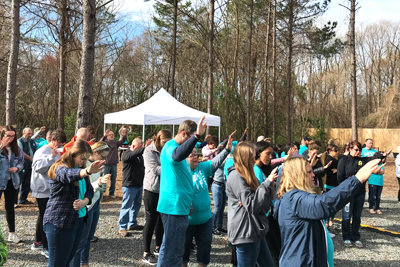
The morning had just begun and already we were facing an uncertain danger, one we had no guidance or advice on how to handle. We knew the worst was yet to come. Later that morning, a “prayer march” that often numbers between 50 and 100 people was expected to arrive. This group has turned out in large numbers in terrible weather, heat waves, and more. “Love Life,” as this protest movement calls itself, would be at our doorstep before we knew it.

Clinic escort groups across North Carolina faced the same problem. While Raleigh has a robust showing for the “Love Life” prayer marches, this is not a local movement. Love Life has roots in Charlotte, North Carolina, where their prayer marches have happened for years, often in ways that shut down physical access to the clinic. The protests have become so abusive they resulted in the city drafting a new sound ordinance to cut down on the disturbances created by these protests. Love Life expanded to Greensboro and Raleigh in 2018, and began organizing mass prayer marches across the state in 2019.
(Source: Love Life)

As our morning went on in Raleigh, escorts in Charlotte and Greensboro faced their own uncertainty created by anti-abortion protesters and the Love Life prayer marches.

In Charlotte, clinics were open as usual, and clinic escort groups were volunteering as usual.

Angela Anders, director of Charlotte for Choice Clinic Escorts, told Rewire.News she counted the anti-abortion group at well more than 100 people at its peak, and that the group was in no way practicing physical distancing: She said they were holding hands, forming prayer circles, and engaging in other forms of bodily contact (Love Life did not respond to Rewire.News‘ request for comment.)

Anders said the clinic escorts in Charlotte regularly witnessed people with symptoms of illness (sniffling, running noses, coughs) handing out pamphlets and sticking their hands and heads into stopped cars in an effort to “counsel” patients about their options and to share stigma and shame around abortion.

An hour away from Raleigh and two hours from Charlotte, another major metropolitan area was facing a similar reality. Greensboro has only one clinic regularly hounded by protesters. With a particularly rough clinic setup due to neighboring businesses allowing protests to occur on their property, protesters often divert and stop cars, shoving unwanted pamphlets and gift sacks into confused patients’ hands.

Volunteers in Greensboro had already been anxious about the effect of these intrusions on patients’ emotional health, but now these one-on-one interactions could spread a dangerous virus. Greensboro volunteers reported the anti-abortion group grew as large as 80 people this past Saturday, down from 400 the previous weekend. Despite the smaller numbers, volunteers said protesters were still shoving pamphlets into car windows and making direct contact with patients and their companions.

After our shift concluded this past Saturday, I checked out chatter from Love Life and other protester groups on their public social media accounts. What I found was not comforting. While I had been watching a protester in Raleigh cough in a clinic escort’s face, the leaders of Love Life were outside the Charlotte clinic, broadcasting on Facebook Live under the heading, “Bold Christians Witness despite coronavirus.”

In the Facebook Live video that morning, Love Life founder Justin Reeder asked one of the leaders of the Charlotte’s clinic protest movement, Daniel Parks, to speak to supporters who could not attend because they were sick or in an at-risk category.  “With the fears of the virus, we have to use wisdom; we get that,” Parks said. But then he reminded them that they are “called as believers in Jesus to lay our lives down … and that involves risk.” He told listeners, “We have to look past the fear,” said protests would continue as long as the clinics remain open.

While I hoped Love Life might reconsider as the week went on, in a video posted to Facebook the morning of Thursday, March 19, Love Life confirmed they will continue to host prayer walks and “sidewalk outreach” as long as abortion providers remain open. Reeder, the Love Life founder, explained that this should be considered “essential and vital work,” not a social gathering.

“The ministry must go on,” he said, though he clarified that they planned to operate under the CDC recommendations, would split into “very small groups” to gather, and had spoken to the local police departments. And while Reeder told supporters to practice physical distancing, he also encouraged people to do “prayer walks” outside hospitals and nursing homes to pray for people vulnerable to COVID-19.

Our concerns are not only rooted in the risks these groups present to patients, staff, and volunteers at clinics but also to the risks they pose in their own communities—especially to the children that often get dragged along to the protests and are forced to share close quarters with people outside their immediate family, exposing them to COVID-19. And then there are the risks these folks bring back into their immediate communities. When sharing my frustrations with my friend and fellow volunteer Raquel, she said something that has stuck with me: “It speaks volumes about how not pro-life our protesters actually are when they still choose to come out in large numbers, despite all warnings and guidance from local and federal officials, endangering everyone in their own communities without a single moment of consideration.”

One of the most important roles we have as clinic escorts is doing what is needed for our most vulnerable and marginalized communities. Clinic escort groups are being faced with decisions they often don’t feel prepared to make. As the week progressed, we learned of more restrictions being put into place by our local and state governments, had emergency virtual meetings, and met with clinic staff.

Thankfully, the clinics are doing everything they can to support us. Clinics are stepping up and offering training in how to use protective gear like gloves and masks, offering sterilizing wipes and sprays to escorts to help keep common areas as clean as possible, and responding quickly when volunteer groups have questions or concerns. Despite all of this, some clinics have suspended escort services, and some clinic escort groups have suspended services on their own.

Anders in Charlotte and the volunteers in Greensboro said they’re taking many of the same steps we’re taking to stop the spread of COVID-19: monitoring the size and risks presented by our protester groups, increasing our own awareness around sanitizing shared equipment and shared vests, and encouraging volunteers who are at risk or folks who have had potential exposure to stay home. As a leader in the Raleigh clinic escort group, I scheduled a virtual check-in after our shift last Saturday and asked our clinics, which have the ear of local government and local law enforcement, to reach out to find out what can be done if protesters continue to gather in groups large enough to violate the statewide executive order banning gatherings of more than 100 people.

While we wait to learn more about what, if anything, can be done, it’s hard to ignore the anger and frustration that many of us who do this work are left with. We want to stay home. We want to keep our communities safe. We want to keep our families safe. We also want to keep ourselves healthy. I have no idea what this coming weekend will look like for our clinic escort team in Raleigh; I heard much the same from the organizers across the state. We are planning to operate on a skeleton crew, avoiding any spaces where protesters can get close enough to cause problems, and hoping our limited presence will be enough to keep the most abusive anti-abortion protester behavior at bay.

Over the coming weeks, our volunteer group may be preparing to head out into the world, or we may be sitting at home, anxious about what patients will face that day. No matter what, we hope abortion clinics stay open.

Source: https://rewire.news/article/2020/03/20/i-saw-an-anti-abortion-protester-cough-and-joke-about-covid-19/

“The abortion industry is still doing abortions…we are not going away unless we’re banned.”

RICHARD MAHONEY HOLDS A CRUCIFIX DURING A PROTEST VIGIL SPONSORED BY THE CHRISTIAN DEFENSE COALITION AND PRIESTS FOR LIFE OUTSIDE OF THE PLANNED PARENTHOOD OF METROPOLITAN WASHINGTON, D.C. ON JANUARY 17, 2019. (PHOTO BY ZACH GIBSON/GETTY IMAGES)

Across the U.S. and in many other parts of the world, cities and towns that only two weeks ago were bustling with people have since emptied as people try to “flatten the curve” or slow the spread of the novel coronavirus. For millions of people, life as they know it has come to a halt. But there is one group that is relentless in continuing business as usual: anti-abortion protestors.

Those belonging to one group in particular, 40 Days for Life, are committed to disrupting people who wish to enter reproductive health clinics through April 5, despite the possibility of contracting the potentially deadly virus or passing it along to someone else. The organization operates in hundreds of cities across the U.S. where it rallies people to show up in protest outside of clinics and dissuade pregnant people from continuing with their abortions.

“The abortion industry is still doing abortions…we are not going away unless we’re banned,” said CEO & President of 40 Days for Life Shawn Carney in a video titled “Coronavirus and Abortion” posted to the organization’s website on March 18.

Holding a bottle of hand sanitizer in the video, Carney encourages people to show up to vigils (how the organization refers to displays that it places outside of abortion clinics) and comply with the CDC at the same time so that “participating in 40 Days for Life is a safe and healthy thing to do.” But days before 40 Days for Life posted the video, the CDC had already warned the public that social distancing and self-isolation were necessary to slow the spread of the virus. On Sunday, the CDC also recommended that people avoid gatherings of 50 or more people for the next eight weeks.

40 Days for Life did not respond to VICE’s request for comment.

On Thursday, Reproaction, an organization that fights for reproductive justice, called on 40 Days for Life to cancel protests immediately in light of the health dangers posed by the gatherings.

“It is a public health hazard,” co-founder of Reproaction Erin Matson told VICE. “It is the opposite of a ‘pro-life’ effort to encourage large groups of people to gather in direct contradiction of the orders of governors around the country.”

“By their very nature, it is unlikely that the protests outside of health centers that provide abortion care are able to abide by these national rules and therefore are posing a risk of infection spread to the community,” said Jen Villavicencio, an ob/gyn in Michigan and a fellow with the Physicians for Reproductive Health.

Matson also worries about the health risks that protesters pose to others, as clinics that provide abortions are often located inside buildings with other businesses. By blocking sidewalks and or attempting to speak with people entering these buildings, protesters could potentially transfer the virus to passersby, people entering the clinic, and one another.

Villavicencio is also concerned about how protesters will increase panic among providers and patients during an already stressful time. “In the time of a pandemic, anxiety and fear are at an all-time high for both health care providers and patients, and protestors are only adding to that, all while putting themselves at risk of contracting a potentially dangerous infection,” she said.

In the 40 Days for Life video, Carney—who says that he just prayed at the vigil outside of a Planned Parenthood in Houston with his wife and eight children during the coronavirus pandemic—seemed sure that supporters could continue the protests despite the CDCs warnings and avoid coronavirus by taking precautions.

“Be sure to be safe, be healthy, keep a distance, use your hand sanitizer, and pray for an end to abortion,” he said.

40 Days for Life has yet to respond to Reproaction’s call.

Correction 3/20/20: We’ve removed a reference to a photo posted by 40 Days for Life on March 19 showing protesters standing in close contact as 40 Days for Life said it was taken before the coronavirus outbreak.

Source: https://www.vice.com/en_us/article/5dm4ed/anti-abortion-groups-are-still-holding-protests-during-the-coronavirus-outbreak?fbclid=IwAR0b-hae3jeypPWv1g5kEPHPoCsF5d9GkSxjRwzGWUaMRO-6cPPOYTORYBE

Campaigners hail move that will reclassify abortion as a health issue rather than a crime

The justice minister, Andrew Little, speaks in parliament after MPs voted in favour of a bill to decriminalise abortion. Photograph: Nick Perry/AP

New Zealand has passed a landmark bill to decriminalise abortion after decades of campaigning. Andrew Little, the justice minister, said it was long overdue that the procedure would become classified as a health matter and not a criminal one.

The issue was scheduled to be put to a public referendum, but the government scrapped that option late on Wednesday.

“For over 40 years, abortion has been the only medical procedure considered a crime in New Zealand. But from now abortions will be rightly treated as a health issue,” Little said in a statement.

“The previous law required a women seeking an abortion to go through many hoops. That resulted in delays to access a procedure, and that was less safe. The changes agreed to by parliament will better ensure women get advice and treatment in a more timely way.”

Key elements of the bill that passed through parliament included removing abortion from the Crimes Act, allowing women to choose abortion up to 20 weeks after consultation with a GP, and promoting counselling options for women choosing an abortion.

Terry Bellamak, the director of Alranz Abortion Rights Aotearoa, celebrated the move, saying it heralded a progressive step forward for New Zealand.

“Finally the New Zealand parliament has brought abortion legislation into the 21st century – it only took 44 years,” Bellamak said. “Finally after 44 years, New Zealand parliament has recognised that women have bodily autonomy – and that is huge. Being able to control one’s fertility is key to one’s life – it is hard to see how we could achieve equality without that.”

Previously under New Zealand law, abortion was allowed only in cases of incest, “mental subnormality” or foetal abnormality, or where the physical or mental health of the mother was at serious risk. Other factors that were taken into consideration but were not grounds in themselves included “sexual violation” and “extremes of age”.

Jail terms of up to 14 years for those who procured a termination were possible under the Crimes Act, but the law was never enforced and women who underwent abortions were not liable for prosecution. But Little said the change was nevertheless needed.

Source: https://www.theguardian.com/world/2020/mar/18/new-zealand-passes-landmark-law-decriminalise-abortion?fbclid=IwAR1-9jtud-URZ-czmSn3TOFK_C1pPVfbljkB1yMLAZQlm4zyD81ao8iHYN0

I feel that every day is National Day of Appreciation for Abortion Providers because of the immense appreciation I receive from my patients, day in and day out.

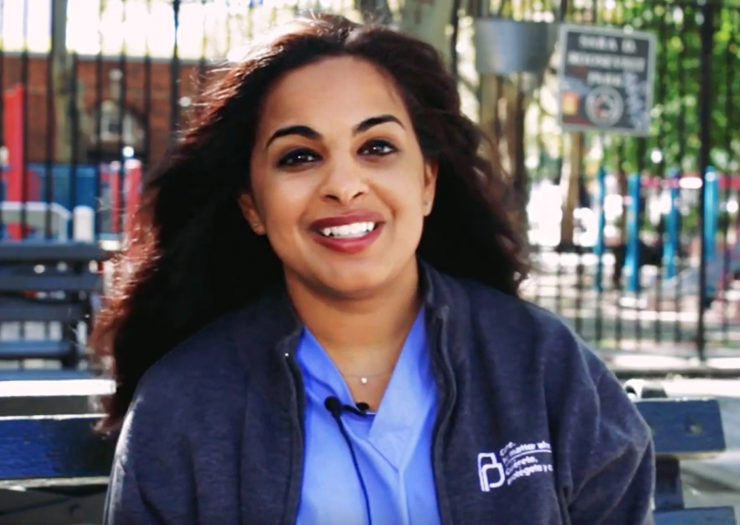
Sunny Soroosh is a registered nurse at Planned Parenthood of Greater New York. For her, being an abortion provider is more than a job. It’s a deeply personal commitment to helping people prioritize their health care needs and determine the future they want.
PPGNYAction / YouTube

Every day, I walk through the doors of the Planned Parenthood health center where I work with a smile, often singing along to a song playing on my headphones. Many find this surprising considering there are usually anti-abortion protesters outside the health center taunting me and my patients or trying to convince me to “find a better job.”
They fail to realize I’m proud to be an abortion provider who puts patients first.

I’m a registered nurse at Planned Parenthood of Greater New York. I work with people who need compassionate, high-quality abortion care. I’m completing my master’s degree to become a nurse-midwife and nurse practitioner. My work at Planned Parenthood has given me not only the clinical skills to pursue a higher education, but also the confidence to support patients during a deeply personal experience.

Abortion is health care, and health care is a fundamental human right that needs to be accessible for everyone. The unfortunate reality is racism, economic inequalities, and hateful biases block people from getting vital health care—including safe, legal abortion care.

Women of color, transgender men, and gender-nonconforming people suffer the most from these systemic injustices that are exacerbated by lawmakers who oppose abortion rights. That’s why I show up to work every day. Despite bullying from anti-choice lawmakers and protesters, health care happens at Planned Parenthood.

Unfortunately, the Trump administration, through its domestic “gag rule,” has forced health-care providers to stop offering a full range of reproductive health options if they are to continue receiving Title X family planning funding. That means Title X recipients can’t refer patients for abortion care even if that’s the option they want. But in the medical community, there’s no debate—everyone deserves accurate information about their health-care options so they can make their own, fully informed decisions.

People must have the freedom to decide on their own if, when, and with whom to have a family, without interference from politicians or anti-abortion extremists fixated on stripping people of their bodily autonomy. I trust my patients to make their own sexual and reproductive health-care decisions, and in return, they trust me to be honest and deliver care with dignity and respect. I will never cower from my vow to my patients or my community.

Today is National Day of Appreciation for Abortion Providers, which was started in memory of Dr. David Gunn, the first provider killed by an anti-abortion activist in the United States. Threats and violence persist against doctors who provide abortion care: The National Abortion Federation (NAF) in 2018 reported a record number of violent incidents at clinics, while incidents of activists obstructing health-care facilities almost doubled from 2017 to 2018. Providers have seen an unprecedented surge in picketing outside clinics, according to NAF, as anti-choice activists are emboldened by an onslaught of legislative attacks against reproductive health care.

Nevertheless, I feel that every day is National Day of Appreciation for Abortion Providers because of the immense appreciation I receive from my patients, day in and day out.

Being an abortion provider is more than a job for me. It’s a deeply personal commitment to helping people prioritize their health care needs and determine the future they want. Providers are here, protecting the lives and health of millions of people and their families—and we will be here for generations to come.

Source: https://rewire.news/article/2020/03/10/im-a-proud-abortion-provider-heres-why/

Utah anti-choice lawmakers are passing a bevy of abortion restrictions over the objections of voters. Why?

Utah Republicans like state Senate President J. Stuart Adams, state Sens. Dan McCay and Allen Christensen, and state Rep. Francis Gibson have supported radical anti-abortion bills in the 2020 legislative session.
Utah Senate at YouTube/KUTV 2 News Salt Lake City at YouTube/ abc4utah at YouTube/Shutterstock/Rewire.News Illustration

Hey, Utah. It’s Jess. Do you have a minute?

I’m hoping we can chat because, well, I’m a little concerned. OK, I’m a lot concerned. What exactly is happening over there? No, I’m not talking about your women’s soccer team—though I have a few questions there too. I’m talking about the attacks on abortion rights and access that have reached a fevered pitch in the closing days of your legislative session.

Is it the upcoming election? The fact that Justice Brett Kavanaugh is now on the U.S. Supreme Court? For real—what gives?

I suspect the reason your conservative lawmakers are as focused on rolling back abortion rights as my dog is on that squirrel living in the garage next door has something to do with the ideological shift in the federal courts. One in four appellate court judges is a Trump appointee who has pledged to overturn Roe v. Wade. If I were a conservative lawmaker with a particularly regressive anti-abortion itch to scratch, I know I’d be looking at all these young, eager, unfit judges with lifetime appointments and think, “Carpe diem, Jess! Let’s go pass some abortion restrictions!”

What else would explain why your state’s anti-choice lawmakers have pushed a bill that mandates doctors show patients an ultrasound before an abortion? Like every other forced ultrasound law, HB 364 serves no legitimate medical purpose and offers no medical benefits. The purpose of these mandatory ultrasound laws is to shame patients and pressure them into continuing their pregnancies, while creating logistical and financial barriers to care. These requirements are so offensive that even some Republican lawmakers in the state walked out of the vote in protest.

I don’t need to tell you this, Utah. You were there!

HB 364 is essentially the same terrible ultrasound law as a Kentucky restriction the Supreme Court allowed to take effect late last year. And it’s essentially the same awful ultrasound law that is working its way through statehouses in MissouriIowa, and Maryland.

That’s a lot of copycat bills running around so soon after the Roberts Court blessed Kentucky’s mandatory ultrasound law. And with the Tenth Circuit Court of Appeals now even more conservative, thanks to appointments like Judge Allison Eid, maybe you can you can see why I suspect that Utah lawmakers are legislating with their eyes to the courts rather than constituent need. After all, new polling suggests a majority of Utahns, like a majority of people in the United States, support abortion rights. And they don’t just support abortion rights—they also don’t want Utah lawmakers restricting access any further.

So I have to ask you again, Utah. What gives?

Because it’s not just your mandatory ultrasound law I’m talking about. What on earth is going on with this fetal burial bill? SB 67 mandates burial or cremation of fetal remains following an abortion. This law is modeled after an Indiana measure the Supreme Court recently allowed to take effect and, like other fetal burial requirements, is really about establishing a backdoor for fetal “personhood.” And once fetal personhood is established, recriminalizing abortion and many kinds of contraception is possible.

But seriously. What is going on with SB 67? Do your lawmakers even know?

OK, Utah. You know I have to ask you about this abortion ban. What are your lawmakers thinking passing SB 174?  The bill bans all abortions, with a narrow exemption that allows for an abortion to avert the death of the pregnant person or the “serious risk of substantial and irreversible impairment of a major bodily function” of the pregnant person. The bill has an exception that allows for an abortion in cases where two doctors practicing in maternal fetal medicine agree, in writing in the patient’s medical record, that the fetus “has a defect that is uniformly diagnosable and uniformly lethal” or has a “severe brain abnormality that is uniformly diagnosable.”

The rape and incest exception in SB 174 also requires two doctors who practice maternal fetal medicine verify in writing, in the patient’s medical record, that the pregnancy was the result of rape or incest. If it was, and if those two specialists agree in writing, then before the patient can have an abortion, the doctor who performs it— who may or may not be the maternal fetal health practitioner who certified the rape in the medical records—must independently verify that that the rape or act of incest has been reported to law enforcement.

The penalty for violating the measure—including for patients who self-manage their own abortion—would be second-degree felony, punishable with a prison sentence of up to 15 years and a fine up to $10,000.

SB 174 has a trigger clause and would only go into effect should the Supreme Court overturn Roe. Yay, I guess?

Seriously Utah, SB 174 is way out of character for you, which is why I wanted this check in. SB 174 is dangerous. It’s mean and Utah, you and I may not agree on everything, but you are not a mean-spirited state. I don’t understand how a state could expand Medicaid (albeit with that weird work requirement) in part to help pregnant Utahns in one breath and turn around and threaten vulnerable pregnant Utahns with 15 years in prison for self-terminating a pregnancy in another.

Explain this for me because I can’t make any sense of it whatsoever.

Utah already mandates patients wait 72 hours and watch a state-approved “information module” that presents adoption as the state’s preferred “choice” for a patient prior to abortion care. Just a reminder: Adoption is not an alternative to pregnancy; it’s an alternative to parenting. And Utah requires abortion providers maintain admitting privileges at a nearby hospital, which, again, is an abortion restriction that sounds preeeeetty familiar.

Let’s not forget that last session, lawmakers passed an 18-week ban in addition to a ban on abortions based on a possible fetal Down syndrome diagnosis. The 18-week ban is on hold while a lawsuit challenging it proceeds. But maybe those bills from last session, both of which should unquestionably be declared unconstitutional, were early cries for help.

Anyways, Utah, it seems like things there have been escalating, and I’m worried because it’s so out of character and out of step with your residents. So I just had to stop and ask if you are OK. Because it seems like something’s up.

Source: https://rewire.news/article/2020/03/17/mandatory-ultrasounds-abortion-bans-utah-are-you-okay/?fbclid=IwAR0ph5fnjY8anI2okH5tei7h3EISqsvIpzsjP9KuldvqtJEqUZNaHw7HKJs

Abortion Provider Whole Woman's Heath Alliance Prepares To Open A New Clinic In Indiana

SOUTH BEND, INDIANA – JUNE 19: An ultrasound machine sits next to an exam table in an examination room at Whole Woman’s Health of South Bend on June 19, 2019 in South Bend, Indiana. The clinic, which provides reproductive healthcare for women including providing abortions is scheduled to open next week following a nearly two-year court battle. Part of the Texas-based nonprofit Whole Woman’s Health Alliance, the clinic will offer medication-induced abortions for women who are up to 10 weeks pregnant. (Photo by Scott Olson/Getty Images)Getty Images

One year after the state passed a law banning nearly all abortions, an Alabama legislator is trying for a second time to pass a bill that would require doctors to perform life-saving measures on a fetus born alive after a surgical abortion, a bill doctors called medically implausible.

Rep. Ginny Shaver, R-Leesburg, introduced HB248 or “Gianna’s Law” in February, which would require a physician to “exercise reasonable care to preserve the life of a child born alive after an abortion or attempted abortion in an abortion or reproductive health center,” and would establish criminal penalties for violating the law.

Dr. Morissa Ladinsky, associate professor of Pediatrics at UAB Medicine said the bill is not based in medical fact. Clinics in Alabama perform abortions up to 21 weeks gestational age. Ladinsky said the latest a doctor in the United States will attempt to sustain the life of a baby is 22 gestational weeks due to a lack of ability for a fetus outside the womb to survive at that gestational age.

Ladinsky acknowledged that an infant delivered before 22 weeks gestational age may have a heartbeat for a short time, but “no matter what we do or try to do, [with] the technology we have and our knowledge in the United States today,” doctors are unable to keep an infant alive if born before prior to 22 weeks in utero.

“The bill itself asks our legislature to affirm something that is a fallacy — that is a medical impossibility,” Ladinsky said. “This whole bill is not in accordance with medical fact. It’s basically a theoretical scenario that is medically implausible.”

Shaver named her bill Gianna’s Law after Gianna Jessen, a woman who survived an instillation abortion procedure in 1977. Today, instillation procedures are rarely used in the United States. None were performed in Alabama in 2018 according to ADPH.

By law, Alabama doctors who provide abortions are required to date a pregnancy using an ultrasound. Shaver claims clinics in Alabama routinely fail to test for gestational age, but refused to provide evidence of those claims.

Health department inspections since 2009 of the only three Alabama reproductive health clinics that provide abortions show no indication that clinics have failed to measure gestational age with ultrasound, according to state records.

In 2015, the Alabama Department of Public Health noted a doctor at West Alabama Women’s Clinic in Tuscaloosa failed to document the fetal viability in 16 medical records, however according to an ADPH investigation none of the fetuses were above 19 weeks gestational age.

Pregnancies are measured in two ways: Doctors can date a pregnancy by gestational age, which is the time between the first day of the last menstrual period and the day of delivery. Or, pregnancies can be dated by fetal age or post fertilization (PPFA), which is two weeks later than gestational age. The Alabama Department of Public Health uses both measurements in their statistical reporting on abortions within the state.

In 2018 there were four abortions in Alabama at or past 20 weeks PPFA or 22 weeks gestation, according to the ADPH. The ADPH documented the reasons for the abortions past 22 weeks was severe risk to the mother’s health including severe preeclampsia/eclampsia, ruptured membrane and no amniotic fluid.

According to the Centers for Disease Control and Prevention, 1.3 percent of all abortions performed in the United States are performed after 21 weeks gestational age.

When Shaver introduced the same legislation last year, she said she did not seek medical expertise in wording the bill, but that she modeled it after a similar bill in Texas. Shaver’s Alabama bill passed in the House with a 66-18 vote along party lines, but never made it to the Senate.

“A baby outside the womb— it’s living and should be afforded the opportunity to have care given to it to try to preserve the baby’s life,” Shaver said. “It has nothing to do with any legality of a woman’s right to choose.”

Shaver rejects medical professionals’ arguments that a baby cannot survive outside the womb prior to 22 weeks gestation, and also rejects the ADPH’s reporting that these cases do not exist.

Staci Fox, President and CEO at Planned Parenthood Southeast Advocates said bills like Shaver’s “born alive” bill perpetuates myths about abortion.

“Politicians in Alabama have already passed countless anti-women’s health measures in recent years, including an outright ban, Fox said in a statement. “This bill is just another tactic in their quest to make abortion illegal in the state.”

Shaver’s born-alive bill is scheduled to be introduced in the House Judiciary committee on Wednesday.

Source: https://www.al.com/politics/2020/03/doctors-call-new-alabama-abortion-bill-medically-implausible.html?fbclid=IwAR08WottD4lg1E4G0Wewc9iK8x22loJDx7HVi0CPil_vkQGTN9O_QfAkVxM

Trump would rather stall efforts to mitigate the coronavirus’ impact in order to appease the anti-choice radicals that make up his political base.
Drew Angerer / Getty Images

The Trump administration apparently held a coronavirus aid package hostage in order to push its radical anti-abortion agenda. It was cynical and dangerous.

The Trump administration tried to use its anti-abortion obsession to deny millions of people the resources they need to survive the coronavirus pandemic and slow the virus’ progression.

As Democratic House Speaker Nancy Pelosi spent Thursday negotiating with Trump’s treasury secretary over a coronavirus relief package, talks reached a few sticking points—including the White House’s reported insistence that the federal response to a rapidly growing pandemic include “Hyde Amendment” language to ban federal funding of abortion. By Thursday night, the two sides seem to have come to an agreement on that issue at least, with Politico reporting that “the two sides resolved issues over federal funding of abortion in a separate bill that will also hit the floor.”

But we shouldn’t lose sight of what happened here. Trump’s stalling of the coronavirus relief bill was a blatant attempt to further his political agenda and appeal to his following of anti-choice extremists in an election year. It’s cynical and dangerous.

Trump would rather stall efforts to mitigate the coronavirus’ impact in order to appease the anti-choice radicals that make up his political base.

That tells us he’s fine with gambling with the lives of the disabled, elderly, and immunocompromised communities who are most at risk of developing complications when contracting coronavirus. That tells us that not only does Trump believe a fetus has rights, but he believes those rights matter more than anyone else. That tells us Trump believes it’s acceptable for us to contract or spread the coronavirus as long as people can’t use government funds for abortion care.

I find this both maddening and unacceptable. And I’m not the only one.

“It’s immoral to use the declaration of a global pandemic to turn people who need abortions into pawns for cheap political points,” Yamani Hernandez, executive director of the National Network of Abortion Funds, said Thursday in a statement. “In a moment when legislators need to turn towards science and data to stem the tide of a public health crisis that threatens the most vulnerable among us, anti-abortion extremists are instead using fear to opportunistically sneak through ideologically cruel and medically unsound restrictions.”

Kelsey Ryland, director of federal strategies for All* Above All, called Trump’s decision to delay approval of the coronavirus funding package an “unconscionable, shameful low.”

Ilyse Hogue, president of NARAL Pro-Choice America, said Trump’s prioritizing of anti-choice ideology over public health and safety is “an abhorrent move that puts us all at risk.”

The discriminatory Hyde Amendment bans federal funding for abortions through Medicaid—but “Hyde language” has been incorporated into government health programs for years to prohibit abortion coverage, including the Indian Health Service, Medicare, the Children’s Health Insurance Program, the Affordable Care Act, TRICARE, federal prisons, the Peace Corps, and the Federal Employees Health Benefits Program.

White House officials reportedly claimed that part of the coronavirus relief package could “open the door to federal funds for abortion,” and that leaving out the proposed language would “set a precedent of health spending without protections outlined in the Hyde Amendment.” But including the language would definitely set a precedent, as demonstrated by the health-care programs affected by this kind of anti-abortion language.

Trump accused Democrats of using the bill as a chance to “get some of the goodies” they want. When he’s talking about “goodies,” I can imagine he’s trivializing efforts like those made by U.S. Sen. Patty Murray (D-WA) and Rep. Rosa DeLauro (D-CT), who have repeatedly introduced paid sick leave proposals that congressional Republicans have ignored since 2004.

We’ve seen the Trump administration’s anti-abortion obsession seep into much of its policymaking, so perhaps it should come as no surprise that something as critical as coronavirus funding would be held hostage over the administration’s Hyde demands. After all, this is the same administration that won’t let health clinics receiving federal funding provide abortion care referrals, even if that’s what the patient wants.

Hopefully, this provides an opportunity for people in the United States to see just how beholden Trump is to the powerful anti-abortion lobby. The consequences are plain to see.

Source: https://rewire.news/article/2020/03/13/in-coronavirus-funding-talks-trumps-anti-abortion-extremism-is-laid-bare

The Oklahoma Senate approved legislation Thursday to essentially prohibit abortions in Oklahoma after six weeks of pregnancy.

OKLAHOMA CITY (AP) — The Oklahoma Senate approved legislation Thursday to essentially prohibit abortions in Oklahoma after six weeks of pregnancy.

The Senate voted 36-8 for the bill, which now heads to the House for consideration.

The bill by Republican Sen. Paul Scott of Duncan would prohibit doctors from performing an abortion, beginning at six weeks of pregnancy, if a fetal heartbeat or brain waves are detected.

“Doctors take an oath to protect life, so this will also hold them accountable for that oath by taking away the licenses of any who violate this law,” Scott said in a statement.

But many women are unaware that they are pregnant at six weeks, said Tamya Cox-Toure, a spokeswoman for Planned Parenthood Great Plains Votes.

“The purpose of this bill is to deny access to a legally protected right to abortion,” Cox-Toure said.

Cox-Toure said there are also no exceptions in the bill for cases of rape, incest or potential harm to the mother.

Oklahoma currently prohibits abortions after 20 weeks, according to the Guttmacher Institute, a research group that supports abortion rights.

Source: https://www.kswo.com/2020/03/13/oklahoma-senate-votes-ban-abortions-after-weeks/?fbclid=IwAR2eGuBaepjcoRV9VakzYVVxxrEGOyjl-k_s9MuF1Bcmgw32Z0Xi_hI38W8

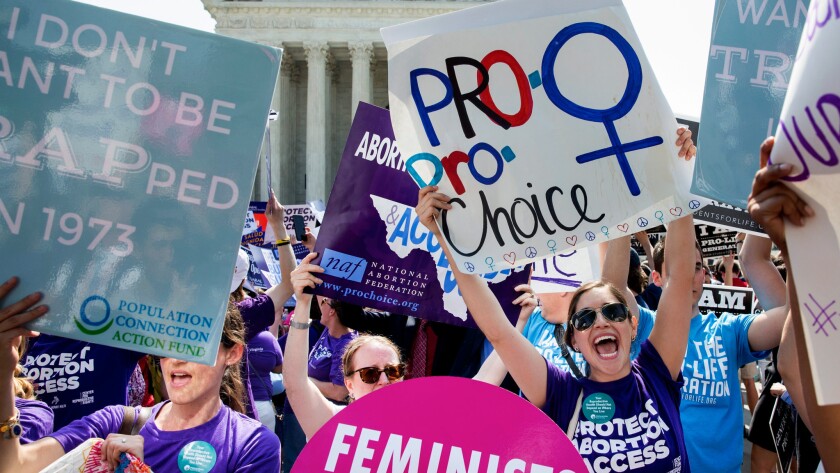
Abortion-rights supporters celebrate outside the Supreme Court in 2016 after the ruling in Whole Woman’s Health vs. Hellerstedt was announced.

Abortion-rights supporters celebrate outside the Supreme Court in 2016 after the ruling in Whole Woman’s Health vs. Hellerstedt was announced.(Michael Reynolds / EPA)

Opponents of a woman’s right to an abortion are so relentless that nothing seems to stop them. Even a clear Supreme Court precedent doesn’t serve as a deterrent.

Four years ago, the court took on one of the favorite tropes of abortion opponents — that to ensure women’s safety, doctors providing abortions need to have admitting privileges at hospitals near the clinics where they work. In that 2016 decision, Whole Woman’s Health vs. Hellerstedt, the justices struck down a Texas law that required abortion providers to have admitting privileges, finding that it was an unnecessary obstacle (or “undue burden” in court parlance) to women seeking abortions and did not enhance the safety of an already very safe procedure. According to a comprehensive review of published studies, office-based abortion clinics reported a less than 0.5% risk of hospitalization followed a first-trimester abortion, the most common type. But because many abortion providers could not obtain such privileges, the requirement would have shut down clinics across the state.

Yet Louisiana passed a law identical to the unconstitutional Texas statute, prompting a lawsuit by several abortion providers. The Louisiana law, which required doctors to have admitting privileges at hospitals within 30 miles of the clinics where they provided abortions, was struck down by a federal district court judge, but then upheld by the Fifth Circuit Court of Appeals. On Wednesday, the Supreme Court heard arguments in the case, June Medical Services L.L.C. vs. Russo.

Nothing has changed, medically, since the Supreme Court decided the Texas case four years ago. Abortion remains one of the safest medical procedures — in Louisiana and the rest of the country. As attorney Julie Rikelman of the Center for Reproductive Rights argued for the medical center and doctors who filed the suit, not only is the complication rate for abortion low, “but when complications do occur, it’s almost always after the woman has left the clinic.” At that point, a woman would go to the hospital nearest her home. Also, 40% of abortions in Louisiana are medication-induced, so any complications from those will happen when the patient is at home, anyway.

What has changed since the Texas decision in 2016 is the make-up of the court, with a key swing vote — Justice Anthony Kennedy — departing. Abortion opponents hope the new majority will decide that the situation in Louisiana is somehow different from Texas and uphold the Louisiana law.

But it isn’t, and they should not. Louisiana has an extremely safe rate for abortion care. The district court judge who ruled against the law found that the Hope Medical Group for Women — a Shreveport clinic run by the company that brought the petition before the Supreme Court — sees over 3,000 patients a year, and in the past 23 years, only four patients were sent to a hospital with complications.

In fact, of the handful of doctors providing abortions at the time this case was filed, only two had admitting privileges — one of whom is expected to retire if the law goes into effect. The remaining doctors tried to get admitting privileges and could not. They were turned down mainly because they weren’t doctors who had a lot of patients to admit to hospitals — not because they were bad doctors.

Not only does the law do nothing for the safety of patients, it only ends up hindering their access to abortion. Both the American Medical Association and the American College of Obstetricians and Gynecologists have said there is no health reason for admitting privileges. If the law were to go into effect (it is currently stayed pending the decision of the Supreme Court), the district court found that Louisiana would probably be left with only one clinic and one abortion provider. That, in essence, would decimate abortion care in a state that already has the most abortion restrictions of any state: 89.

The law is unconstitutional anyway because the burdens it would place on abortion rights outweigh the (non-existent) medical benefits it would provide. Like so many laws passed in states hostile to abortion rights, it is simply intended to thwart access to abortion. The Supreme Court decided that in the Texas case in 2016. It should decide the exact same thing in this Louisiana case in 2020.

Source: https://www.latimes.com/opinion/story/2020-03-05/editorial-without-action-from-the-supreme-court-getting-an-abortion-in-louisiana-may-become-impossible?fbclid=IwAR2ttD4WltuLjyK9gJBB5DsMVMrYJkx3UjkHbCnDlJ2OctDbqvyr0Bhnp_A

The Trump administration had one job on Wednesday: to deliver John Roberts’ vote for onerous abortion restrictions.

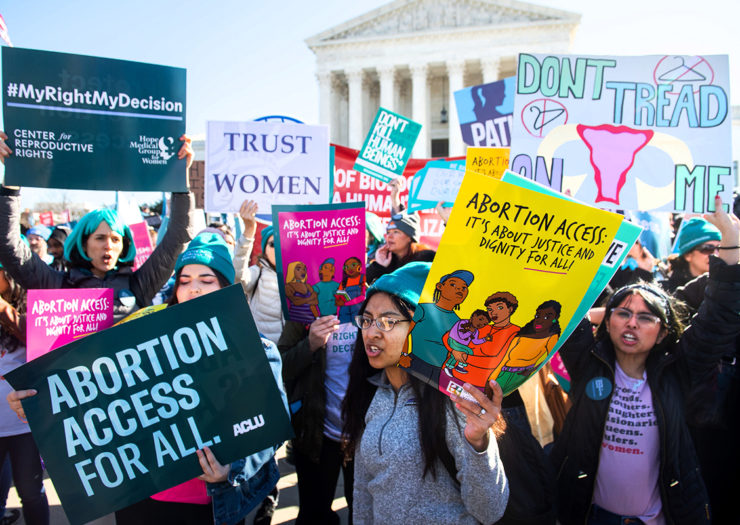
Pro-choice advocates rally outside the U.S. Supreme Court during arguments in June Medical Services v. Russo.
SAUL LOEB/AFP via Getty Images

There is no good reason why U.S. Deputy Solicitor General Jeffrey Wall should have been defending a Louisiana abortion restriction at the U.S. Supreme Court Wednesday, but there he was.

And his participation in oral arguments in June Medical Services v. Russo shows that the Trump administration has few priorities of greater significance than eroding abortion rights whenever and wherever it can.

June Medical Services involves a challenge to Act 620, a Louisiana law that mandates abortion providers maintain admitting privileges at hospitals within 30 miles of the clinic where they provide abortions. Attorneys from the Center for Reproductive Rights (CRR) challenged Act 620 on behalf of providers in the state, while the Louisiana solicitor general’s office has defended the law for the five years the litigation has been pending.

Yet on Wednesday, Louisiana Solicitor General Elizabeth Murrill stepped aside after 20 minutes of defending Act 620 so that Wall, on behalf of the Trump administration, could do the same.

There are two central issues the Supreme Court must answer in June Medical Services. First, do abortion providers have legal standing to challenge certain types of abortion restrictions? And second, did the Fifth Circuit Court of Appeals get it wrong when it ruled Act 620 could take effect?

First the qualified good news: It appears that there aren’t five votes on the Supreme Court to rule that abortion providers can’t sue on behalf of their patients in cases like this. Justice Samuel Alito was the most focused on the standing question, aggressively questioning attorney Julie Rikelman from CRR. That suggests that at least he is willing to upend over 40 years of case law holding abortion providers have legal standing to challenge abortion restrictions on behalf of their patients.

But are there the five votes needed to actually reverse that precedent? That’s unclear. Neither Justice Neil Gorsuch nor Chief Justice John Roberts asked a question related to standing during Wednesday’s arguments. In fact, neither Justice Clarence Thomas nor Gorsuch asked a single question during the entire hour of arguments.

But Roberts’ silence on the standing issue was the most curious. Gorsuch is unlikely to veer from his fellow conservatives in June Medical Services, including on the question of provider standing. And Roberts is considered somewhat of a standing hawk. During his time as chief justice, Roberts has consistently voted to limit legal standing, so it’s reasonable to think he’s at least tempted to do the same in June Medical Services.

“This case is about respect for precedent,” Rikelman said as she opened her argument for ruling against Louisiana’s anti-abortion law.

That respect for precedent includes the precedent of third-party standing in abortion cases. As Justice Stephen Breyer noted, the Supreme Court has recognized the rights of abortion providers to sue on behalf of their patients in at least eight cases. A vote against standing in June Medical Services is a vote against precedent. It’s a vote for a radical reinterpretation of abortion rights law that might be too much for Roberts to endorse in this case.

That’s especially true when the Supreme Court could end up crafting a decision that effectively guts the other precedent at issue in this case, Whole Woman’s Health v. Hellerstedt. That brings us to the bad news portion of Wednesday’s arguments, since the results of such a decision would be disastrous, for both Louisiana and abortion access nationwide.

In 2016, the Supreme Court struck as unconstitutional parts of a Texas admitting privileges law identical to the Louisiana law at issue in June Medical Services. In upholding the Louisiana requirement, the Fifth Circuit Court of Appeals in September 2019 ruled that Whole Woman’s Health is basically limited to the facts and circumstances of Texas. The effect of that decision is to make it functionally impossible to strike as unconstitutional entire categories of abortion restrictions—a point Justice Brett Kavanaugh picked up on during his only line of questioning Wednesday.

Does Whole Woman’s Health mandate that all admitting privileges requirements are unconstitutional, or is it possible that those medically unnecessary requirements could be unconstitutional in one state, but constitutional in another?

The answer to this question also rests with Roberts, his fidelity to precedent, and his willingness to accept the mountain of lies Louisiana served up in defense of Act 620. In Whole Woman’s Health, the Supreme Court found that admitting privileges laws serve no medical benefit and that the rule would force many clinics to close, substantially burdening abortion rights. The Supreme Court declared the Texas requirement unconstitutional, but did that decision declare all admitting privileges requirements unconstitutional? We’ll find out that answer when the Court releases its decision later this year.

And it’s the chief justice’s potential pliability in this case that best explains Wall’s participation in oral arguments Wednesday. We all know the Trump administration is vehemently anti-choice. Trump campaigned on a promise to appoint judges that would overturn Roe v. Wade, and he’s made good on that promise. It’s not uncommon for the U.S. Department of Justice to weigh in on cases when it’s not a party.

But it’s not routine. So we should ask why this case and why now.

We should ask why the DOJ is also chiming in to defend other state-level abortion restrictions like Ohio’s abortion ban. In that case, the Trump administration said it wants to participate in oral arguments and help defend Ohio’s ban because “the United States has an interest in the scope of the Supreme Court’s undue-burden standard applied in the context of abortion regulations and has participated in cases involving state abortion laws.”

That statement signals we should expect to hear more from the Trump administration as litigation challenging extreme abortion bans works its way through the federal courts.

On Wednesday, Wall was before the Supreme Court to get the justices used to the fact that they will likely be hearing a lot from the Trump administration on abortion rights in the coming years. Wall played cleanup for Murrill, making a substantive defense of Louisiana’s law and attacking the rights of abortion providers. But he was making that argument almost exclusively for Roberts’ benefit. Wall told the justices that they could rule in favor of Louisiana without overruling Whole Woman’s Health, giving a nod to the lingering concern Roberts may have about the damage his reputation would take if the Supreme Court reverses course on abortion rights after less than five years.

Wall told the justices that this was the first time the Court had been faced with the kind of allegations of conflicts of interest between abortion providers and patients like the kind lobbed by Louisiana and anti-choice activists here. That gives the justices a fresh opportunity to revisit legal standing precedent, Wall said, again speaking almost exclusively to Roberts.

Wall added nothing substantive to Wednesday’s arguments. His job was all political—to deliver the chief justice’s vote for anti-choice activists and to make it clear that the Trump administration would spare no resource in attacking abortion rights. We’ll know later this summer if it worked.

Source: https://rewire.news/article/2020/03/04/the-trump-administration-defended-louisianas-clinic-shutdown-law-will-it-sway-john-roberts/