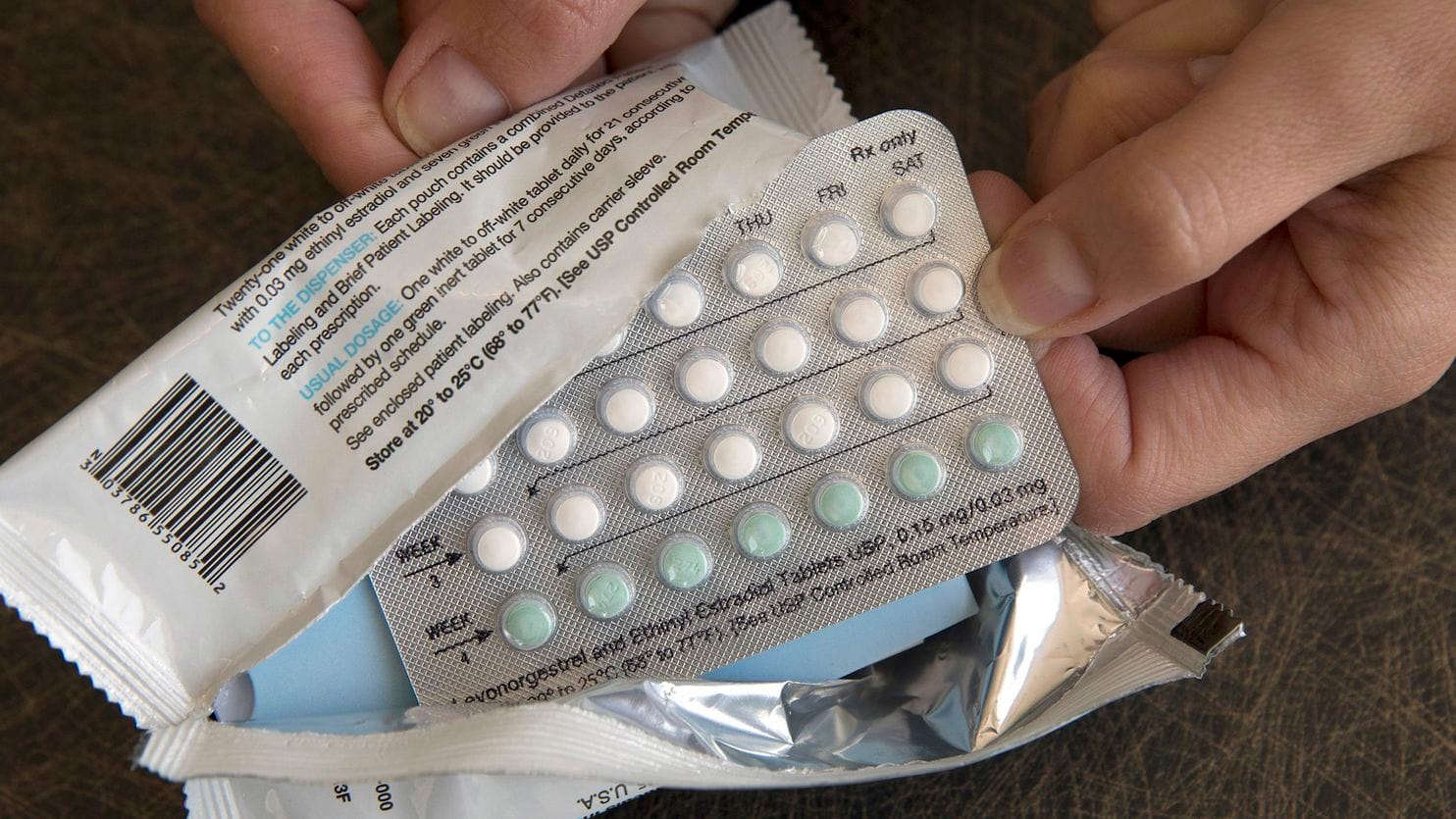
A one-month supply of birth-control plils. (Rich Pedroncelli/AP)

Kathleen Sebelius served as secretary of health and human services from 2009 to 2014.

Congressional candidates have deluged voters in recent weeks with debates about the Trump administration’s efforts to peel away protections for Americans with pre existing health conditions. Yet there is another, equally insidious effort from the administration that could undermine access to health care, and Americans have no idea it is happening: a proposal to drastically reduce information on and access to contraception.

Decades of health data make it clear that helping young women avoid unwanted pregnancies can be a critical factor in their success in life. With freedom from an unexpected pregnancy, they can finish school, pursue a career and better prepare for parenting. Even people who believe that abortion services should be legally available also believe that abortion is not the preferred method of family planning. We are making considerable progress in the United States in reducing teen pregnancies and abortion rates, thanks in large part to the availability of birth control.

But pending rules from the Department of Health and Human Services would dramatically limit access to contraception for low-income women, “gag” health providers from discussing or referring women to abortion services and divert taxpayer resources now used to provide access to contraception to largely ineffective abstinence-only programs.

The proposal targets Title X, the federal grant program enacted in 1970 that supports family planning services and contraceptive care to about 4 million low-income women at little or no cost — though federal law bars any federal funds from being used to provide abortion services. The $260 million program helps to fund services in about 4,000 health clinics throughout the country.

The draft rules, issued in June, not only would block any federal funding for family planning clinics that also offer abortion services, such as Planned Parenthood, but also would eliminate the current requirements that all health clinics receiving federal family planning funds offer a broad range of approved family planning methods, including prescription contraception. It excludes all reference to contraception or the federal government’s clinical guidelines for quality family planning, stressing instead “natural family planning.”

Under these rules, women — particularly low-income and younger women — will likely never learn what affordable options, depending on their insurance, are available to them. And for the first time, women’s health providers could exclude any discussion of contraception choices other than less-reliable “natural methods.”

With this rule change to Title X, the government would impose significant barriers for contraception and could rapidly undermine the significant progress made on teen pregnancies and reduced abortion rates. According to the Guttmacher Institute, U.S. teen pregnancy rates have fallen to historic lows. Compared with 1990, only a third as many young women ages 15 to 19 became pregnant in 2013. Abortion rates also declined by 74 percent over the same period. Health experts say this correlates with improvements in contraception use in the United States, particularly among younger and lower-income women.

Millions of women now have private health plans that cover, with no out-of-pocket costs, all forms of contraception approved by the Food and Drug Administration. And with expanded Medicaid plans across the country, low-income women also have access to family planning choices, including long-lasting contraception.

But for women without that coverage, the pending Title X rules could have a devastating impact for generations. Either HHS must abandon this ill-advised move or Congress needs to act to curtail this destructive new proposal. The United States still lags behind other developed countries in terms of teen pregnancies, but real progress has been made. This is the wrong time to undermine those proven successes.

Source: https://www.washingtonpost.com/opinions/low-income-womens-access-to-contraception-is-under-attack/2018/10/23/f9e696f4-d2e0-11e8-a275-81c671a50422_story.html?fbclid=IwAR25nd1UoUnkZLKvIsqNXodzjULe2H6OedpTfbqN2xk18NEbZlV4VvBt05E&noredirect=on&utm_term=.f5221f949451

Mary Mayhew could block women from using their Medicaid insurance at reproductive health clinics for birth control and STD testing if the clinic also provides abortion.
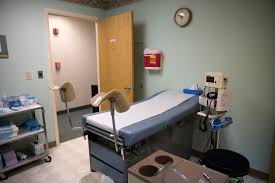
Erin Hooley/Chicago Tribune/TNS via Getty Images

The Trump administration announced last Monday that it had appointed former Maine health commissioner Mary Mayhew to run Medicaid, the government-run health insurance program for people with low incomes, people with disabilities, some pregnant women, and more.

Mayhew is known for her “aggressive” conservative reforms to the program that lead to enrollment dropping by almost 25 percent under her watch. As other outlets have pointed out, she’s a Medicaid critic in charge of Medicaid, which is the single largest source of health insurance in the US—a program whose budget the GOP has already said they plan on cutting.

Mayhew’s appointment has received considerable press for its potential to affect health coverage, but less discussed is the impact her hiring could have on access to reproductive healthcare. In addition to supporting conservative policies like work requirements for Medicaid, Mayhew has also been vocal about her anti-choice views and her disdain for Planned Parenthood in particular.

When she was running for governor in Maine earlier this year, Mayhew said “I will support legislation that protects the lives of the unborn…and I am also proud to say I implemented a policy that stopped the use of tax dollars for abortions by Planned Parenthood.”

Reproductive health advocates find these views concerning given that Medicaid is critical for access to family planning: According to the Guttmacher institute, the program covered nearly 13 million women of reproductive age in 2015 and accounts for 75 percent of all publicly funded family planning services.

Mayhew’s appointment has renewed long-held concerns that the Trump administration may let states exclude clinics that provide abortions from their Medicaid programs (even though such a move doesn’t appear to be legal—more on that below). What that would mean, in effect, is blocking women from using their Medicaid insurance at highly-qualified reproductive health clinics that provide services like birth control and STD testing if the clinic also provides abortion services. Recent news reports show that similar provider exclusions in Texas and Iowa led to fewer people getting family planning care than before changes were implemented.

“The administration seems open to and, in fact, encouraging states to try to exclude abortion providers from their Medicaid programs,” says Kinsey Hasstedt, a senior policy manager with the Guttmacher Institute. “There are real concerns for people’s access to the family planning services that they need, particularly for marginalized communities, low-income individuals, uninsured folks and real concerns for the quality of care patients would ultimately receive by excluding these highly qualified providers.”

What does Planned Parenthood have to do with Medicaid?
Republican legislators have long tried to “defund” Planned Parenthood by proposing amendments to exclude it from federal programs like Medicaid and Title X, though these amendments have ultimately failed or been vetoed.

“Defunding” is a misnomer anyway: There is no line item in the budget for abortion providers like Planned Parenthood. Clinics only receive federal funds in exchange for providing services like birth control, STD testing, and cancer screenings to people with Medicaid (just like it works with any other kind of insurance), or by winning grants earmarked for family planning. Medicaid funds can’t be used to pay for abortions except in the cases of rape, incest, or danger to the mother’s life; and family planning grants from the program known as Title X can’t be used for abortion under any circumstances.

Since federal lawmakers have been unsuccessful in “defunding” women’s health clinics that also provide abortion, some states are trying to get approval from the government to exclude these clinics from Medicaid at the state level—it’s a backdoor way to accomplish what Congress has been unable to do.

Texas, for example, has submitted a special waiver to exclude abortion providers from its Medicaid program, and that application been pending since July 2017. In January, Governor Greg Abbott personally wrote to President Trump asking him to approve the request. (The Obama administration had rejected Texas’ request to do exactly this in 2011, so the state turned around and set up its own state-funded program that excluded abortion providers as of 2013. It’s hoping a different administration will reinstate its federal Medicaid funding.)

Is it legal to exclude abortion providers from Medicaid?
In a word, no. Medicaid has special rules for family planning services which state that people with this insurance have their choice of family planning provider, so long as the provider takes Medicaid. It’s literally called the “free choice of provider” provision. Back in 2016, the Obama administration reminded states that they can’t block providers from Medicaid for any reason other than their ability to provide care. But in January 2018, the Trump administration rescinded that Obama-era guidance, signaling to some the administration’s possible willingness to approve requests like those from Texas.

“Ultimately, we have been concerned about the administration’s efforts to try to promote this [kind of exclusion] and just because they say they can doesn’t mean they can legally,” Hasstedt says. “Regardless of what the Trump administration is saying or may say in the future, states still do not have the authority to oust otherwise qualified family planning providers from their Medicaid programs just because those providers are in some way associated with abortion.”

Even if Mayhew did approve these requests, the Trump administration would very likely get sued, Hasstedt says—but then it’s up to the courts to decide the outcome. “What would happen from there is harder to predict. But we have seen so far is that courts have overwhelmingly found in favor of the providers,” she says.

But the Trump administration is quickly leaving its imprint on courts nationwide. According to the Pew Research Center, Trump has appointed more federal appeals court judges so far in his presidency than Obama and George W. Bush had appointed at the same point in their first terms combined.

Not only does the Medicaid statute make very clear that people have their free choice of provider, but the type of waiver Texas submitted (known as an 1115) is specifically meant for programs that will promote the objectives of Medicaid. “Waivers are intended to be experiments in order to help make health coverage better for people in this country,” Hasstedt says. “The idea of using the waiver process to exclude providers just doesn’t jive—that’s not what it’s intended for.”

What would these possible changes mean for people with Medicaid?
Whether the administration and courts allow these Medicaid requests or states simply choose to reject federal funds to set up their own programs, evidence shows that people’s access to care will be impacted. A Guttmacher analysis of Texas’ state-run program found that it actually provided less access to family planning services in 2015 than it did in 2011, before it had excluded abortion providers like Planned Parenthood. Hasstedt says there have been big drops in the number of clinics in Texas that can serve high volumes of patients (read: thousands per year), and these clinics tend to be providers that focus on reproductive health. Excluding these providers from the program has a huge impact on patients, she says.

“Those types of sites that are really focused on that service are able to see a lot more patients than, say, private providers that the state ends up trying to fill the gap with,” she says, adding, “Just because a provider who has not previously done family planning services now gets money to do that that doesn’t mean that overnight that provider’s going to be able to go from zero to offering a full range of [birth control] methods to 3,000 women every year. It takes time.”

A recent report in the Texas Observer bears this point out: Of the approximately 5,400 providers in Texas’ program, almost half didn’t see a single patient in 2017, and more than 700 providers saw just one patient each. Twenty-seven providers served more than 1,000 people, but 11 of those were labs, which don’t actually see patients.

Separately, the Center for Public Policy Priorities found that after Texas excluded Planned Parenthood from its health program for low-income women, the number of women getting health services in the program fell by 39 percent (from 115,226 women in 2011 to 70,336 in 2016). And the state recently announced that it was canceling its contract with The Heidi Group, an anti-choice reproductive clinic chain, after it failed to serve the number of patients it claimed it could.

“One of our big concerns over and over with this funding restrictions is it doesn’t take very long to exclude providers and damage a state safety net, it takes a long time to build it back up,” Hasstedt says.

Programs like this aren’t just in Texas. The Des Moines Register reports that after Iowa banned abortion providers from Medicaid via state legislation, its state-funded program provided 73 percent fewer services. Here’s what that looks like: In the last three months before the altered program launched (April to July 2017), the state covered 3,637 family planning services, and over that same period one year later, it only covered 970 services. The health department says providers have up to a year to submit claims for reimbursement so the numbers could rise, but the fact is that the program now includes providers, like a Catholic health system, that don’t offer contraception.

In a statement, Dawn Laguens, executive vice president of the Planned Parenthood Federation of America, compared Mayhew’s hiring to a fox guarding the hen house, adding “We have no doubt that Mary Mayhew will advance the Trump-Pence agenda of attacking women’s health and rights. When Texans were blocked from accessing care at Planned Parenthood health centers, people went without the care they needed. This is a dangerous policy that we must not take nationwide, yet that is what Mayhew is poised to do. Women make up the majority of people who rely on Medicaid—and it is women and families who will suffer the most from Mary Mayhew’s policies.”

Hasstedt stresses that the importance of Medicaid for people’s access to family planning services cannot be underestimated. “People deserve to be able to make their own family planning decisions and in order to do that, they need affordable access to high-quality care. Medicaid is a program that helps many people get there,” she says. “We should be helping people have access to that program and expanding that access rather than jeopardizing it.”

Source: https://tonic.vice.com/en_us/article/qv99qq/mary-mayhew-medicaid-abortion-planned-parenthood

Without government support bill unlikely to become law

The first reading of the Abortion Bill was passed by 208 to 123, majority 85 in the Commons on Tuesday.

Six of the DUP MPs voted against the bill. They were Gregory Campbell, Jeffrey Donaldson, Gavin Robinson, Jim Shannon, David Simpson and Sammy Wilson. MP Emma Little Pengelly was a teller meaning she counted the votes but could not take part.

It was listed for a second reading on November 23 but is unlikely to become law in its current form without Government support or sufficient parliamentary time.

The private member’s bill  was tabled by Labour MP Diana Johnson aiming to remove sections of the 1861 Offences Against the Person Act that make abortion a criminal offence in England, Wales and Northern Ireland.

The 1967 Abortion Act in England and Wales provided for exemptions to the 1861 Act, enabling legal abortions.

On Wednesday, fellow Labour MPs will attempt to amend a bill the Government is tabling in response to the ongoing power-sharing crisis.

The amendments proposed by MPs Stella Creasy and Conor McGinn aim to use the bill to compel the Government to push through changes to abortion and same sex marriage laws in Northern Ireland.

Abortions in Northern Ireland are currently illegal in all but exceptional medical and mental health circumstances.

The Government has so far resisted pressure to step in to legislate for reform in the wake of a recent Supreme Court judgment that found the current legal framework incompatible with human rights laws.

In June, a majority of Supreme Court judges said the ban on terminations in cases of rape, incest or fatal foetal abnormality needed “radical reconsideration”.

Given there are no ministers at Stormont due to the power-sharing impasse, pro-choice campaigners have demanded the laws are changed at Westminster.

Maryland Democrat Ben Jealous wants to cover abortion as part of his Medicare for All plan and protect the reproductive rights of incarcerated women.

Ben Jealous already scored an upset when he won the Democratic primary over establishment candidate Rushern Baker by ten points this summer. Alex Wong/Getty Images

You won’t find reproductive health explicitly discussed in Maryland Democrat Ben Jealous’ Medicare for All plan, but that doesn’t mean it won’t be covered if he wins November’s gubernatorial contest against Republican Gov. Larry Hogan and implements the policy.

“Reproductive health care would be treated like any other health care under the plan,” Jealous told Rewire.News in an interview, confirming that these services would include abortion. “Because there are no specific limitations contemplated, there’s no mention of it. Just like there’s no mention of many other types of health care under the plan that would be covered.”

Jealous’ Medicare for All plan is a key element of the progressive Democrat’s platform. It would, according to an outline released by the campaign, help provide health insurance for the more than 350,000 people in the state who lack coverage and eliminate out-of-pocket health costs for Maryland residents.

Both health insurance access and abortion care have become increasingly fraught issues as the 2018 midterm elections near. Though the Maryland General Assembly is dominated by Democrats who defeated all anti-choice bills introduced in its last legislative session, the Republican governor isn’t an advocate for abortion. It was a key issue during Hogan’s 2014 race, when Democratic U.S. Rep. Anthony Brown sought to frame Hogan as a threat to reproductive rights, citing the Republican’s record.

As the Baltimore Sun reported at the time, Brown released ads “based on Hogan comments from 1980 and 1981 in which he supported a ban on abortions at a Prince George’s County hospital except to save the life of the mother, as well as a ‘human life amendment’ that would have barred abortions while possibly outlawing some forms of birth control. By 1992, Hogan had modified those positions and said abortion should remain legal.” After Brown highlighted Hogan’s record on the topic, the Republican vowed that he would not act to restrict women’s reproductive health if elected.

Now, as Hogan faces a nationally watched battle for re-election, abortion has once again been an issue on which the Republican governor faces criticism. When Trump nominated Justice Brett Kavanaugh to the U.S. Supreme Court this summer in what many advocates fear could be a death blow to Roe v. Wade, Jealous criticized Hogan for not affirming that he would move to protect abortion in Maryland by enshrining the right into the state constitution.

In response, Hogan’s office pointed to the governor’s earlier promise not to enact restrictions on reproductive rights. “The governor’s record is clear, four years ago he pledged that he would never alter Maryland’s reproductive health laws and he hasn’t,” Hogan spokesperson Scott Sloofman told the Baltimore Sun in July. “Maryland state law protects a woman’s right to choose, and that will never change under Larry Hogan regardless of any Supreme Court decision.” A Hogan spokesperson later said that the Republican governor would support a ballot initiative to let voters decide on whether to codify abortion rights in the state.

Diana Philip, executive director of NARAL Pro-Choice Maryland—whose PAC has endorsed Jealous—suggested to Rewire.News that Hogan’s position on reproductive rights has dual connotations. “I think that Gov. Hogan is in a position with his party that he can say he is not going to restrict abortion rights, but it also means that he is not going to make any moves or support efforts to advance abortion rights,” she said.

Philip pointed to two laws Hogan declined to sign during his tenure as governor. In 2017, he declined to sign a measure to reimburse Planned Parenthood for Medicaid funding should congressional GOP’s attacks on the provider prove successful. But Maryland law allows bills neither signed nor vetoed by the governor to go into effect, so it was enacted without his action.

Then earlier this year, after the state’s General Assembly passed a series of bills addressing the reproductive health care of incarcerated women, Hogan signed a measure mandating that a sufficient supply of free menstrual hygiene products be provided in prison, but did not act on a separate measure that would, as Rewire.News reported at the time, require “every correctional facility in the state to have a robust policy in place for the medical care of pregnant inmates, including prenatal testing, labor and delivery, abortion care, postpartum care, access to child placement services, and counseling.”

That measure went into effect without Hogan’s signature on October 1. Hogan’s campaign did not respond by publication time to a question from Rewire.News about why he did not approve the measure.

Philip said Hogan’s decision not to sign those bills “indicates to us that he is in a political position in which … the administration is not able to address the real needs that patients have in access to abortion care and eliminating the barriers that do exist in our state.”

Hogan has, however, approved legislation requiring state health insurance plans to cover more expansive contraceptive options.

Jealous, meanwhile, has pledged to take a more proactive approach to reproductive health and rights. Reproductive health services are explicitly mentioned in Jealous’ criminal justice reform plan, which vows to provide people in prison or jail with “full access to adequate and humane reproductive health services.”

“[Incarcerated] women should have convenient, adequate, and free or low-cost access to the full range of needed reproductive health services, including menstrual hygiene products, contraceptive care, and access to abortion, and community-based or other postpartum services that eliminate the trauma of postpartum separation,” the plan explains.

“We have to create a criminal justice system that returns people to society more whole, more healed, better able to reintegrate and be a productive member of society,” Jealous told Rewire.News. “And [there are] a number of indignities that happen to women behind bars related to their reproductive health that have profound effects on their emotional well-being both in prison and when they get home.”

Jealous noted that he had “heard reports from women inmates over the years that included them being denied sanitary napkins” and that “the ways in which women inmates are abused are manifold and some of them are specific to them being women.”

Addressing these concerns came naturally, Jealous suggested, noting his professional background having “worked in the criminal justice reform community since I was 18 years old.” Jealous previously served as the president of the NAACP and as a visiting professor at Princeton. “I knew that no criminal justice plan would be complete if we didn’t speak to specific issues experienced by women behind bars, including their need for reproductive health care,” he said.

Jealous also plans to safeguard abortion rights in the state constitution, as he urged Hogan to do.

Jealous says his views on reproductive rights have been influenced by his family’s experience, including his grandmother’s time at Planned Parenthood in Baltimore during the 1940s. “When you grow up with a grandmother who worked for Planned Parenthood when she was young, and parents who are both feminist activists, it has a real impact on how you see the world,” he said.

“My grandmother’s story is where my life-long support for a woman’s right to choose and total access to reproductive healthcare originates,” Jealous further explained in a post on his campaign site. “But it doesn’t stop there. I grew up knowing my mother had had an illegal abortion in the 1960s. I grew up knowing that it was luck that kept her alive, luck that her doctor knew what he was doing and that she didn’t develop any life-threatening complications. Luck that I was even alive to have her tell me this story.”

“Women who need abortions, get abortions. If we make them affordable, safe, and legal, we protect women,” Jealous continued.

But to implement his progressive platform, Jealous first needs to win. It could be a tall order given Hogan’s high approval ratings, but Jealous already scored an upset when he won the Democratic primary over establishment candidate Rushern Baker by ten points this summer. Speaking to voters in the state earlier this year, Jealous said that he was “not going to win [this election] by tacking towards the middle,” according to the Atlantic.

“Republicans win when Democrats don’t show up,” in Maryland, Jealous told Rewire.News. “The only way to win this election is to run right towards the people of the state, to give voice to their pain and put real solutions on the table that are capable of solving the problems all of our families face. Whether that’s surging health-care costs … public universities [becoming] too expensive, or an economy that’s stuck.”

Source: https://rewire.news/article/2018/10/22/as-concerns-around-roe-v-wade-grow-ben-jealous-says-hell-safeguard-abortion-rights-in-maryland/

Rules about to be issued by the Trump administration may allow more employers to opt out of covering birth control as a preventive benefit for women under the Affordable Care Act. (Rich Pedroncelli/AP)

The Trump administration is expected to soon issue regulations that would expand religious and moral exemptions for covering birth control in employer health insurance plans, a move that critics say would limit women’s access to contraception.

The rules would probably roll back a controversial Obama-era mandate in the Affordable Care Act that required employers to cover birth control. The regulations were filed last week for review with the Office of Management and Budget, indicating that the administration is in the final stages of issuing the expanded exemptions.

The exact details of the exemptions, and when they would take effect, remain unclear. But women’s health advocates are bracing for a legal fight. They expect the rules to mimic earlier regulations enacted by the Trump administration last year before being blocked by federal judges.

The rules allowed nearly any employer — nonprofit or for-profit — with a religious or moral objection to opt out of the Affordable Care Act provision requiring the coverage of contraception at no cost for the employee. The rules vastly expanded which companies could be exempt from the mandate and why, including a broad exemption for a “sincerely held moral conviction” not based in any particular religious belief. Perhaps most significantly, it required employers to provide no other accommodations for employees seeking birth control coverage.

The Trump administration rules were “nothing short of radical,” American Civil Liberties Union Deputy Legal Director Louise Melling said in a phone call Thursday with reporters. “There’s no backstop to ensure coverage for employees.”

The number of companies that would opt for such exemptions is unclear. An employee’s coverage would depend largely on the employer’s insurance plan, as well as the state’s laws. Thirty states and the District of Columbia require insurance plans to cover contraceptives to some extent, with certain exemptions, according to the Kaiser Family Foundation. But state laws in those places do not have authority over all plans. Meanwhile, 20 states have no contraception requirements for insurance plans.

The birth control rules are part of a broader effort by conservatives inside and outside of the White House to prioritize what they call religious liberty. It also comes in the midst of an ongoing court battle.

Before President Trump took office, the Obama administration was facing scores of lawsuits from organizations, such as Hobby Lobby, arguing that the free-contraception mandate violated their religious beliefs. The mandate required employers to cover the full range of contraceptive services approved by the Food and Drug Administration, including emergency contraception and IUDs, without cost-sharing.

After a Supreme Court decision in the Hobby Lobby case, the Obama administration allowed religiously affiliated nonprofits and certain private, for-profit corporations to opt out of the coverage, as long as their employees were provided with an accommodation. The accommodations allowed for affected women to still get the coverage they needed for birth control, but the company’s insurer would pay, not the company itself.

Then, in October 2017, the Trump administration issued its directive significantly expanding those exemptions. “It drives a Mack truck” through the Obama-era rules, said Mara Gandal-Powers, director of birth control access and senior counsel for the National Women’s Law Center. “We’re really concerned about how far it goes.”

Several states and advocacy groups quickly sued, arguing in part that the Department of Health and Human Services enacted its rules without the notice and comment period required by federal law.

In December 2017, federal judges in California and Pennsylvania issued preliminary injunctions blocking the rules from taking effect. The Trump administration appealed both injunctions, and the cases are ongoing; a hearing in the California case is scheduled Friday.

Now, a year after the first attempt to pass the controversial exemptions, the Trump administration appears to be trying again.

“It’s hard for me to imagine them stepping back from those much,” said Gandal-Powers, who has been checking the Federal Register multiple times a day, awaiting the rule.

Advocates believe the new rules will be released any day now, said Robert Boston, a senior adviser for Americans United for Separation of Church and State. “This administration can’t expect to deny women access to critical health care without facing legal challenges — and we’ll be front and center.”

A spokeswoman for the Department of Health and Human Services declined to provide any updates or timeline on the rules. Jeff Wu, a health insurance specialist at HHS, said only that the rules have been sent to the Office of Management and Budget for interagency review, “which tends to happen in late stages.”

Melling, of the ACLU, predicted the Trump administration would try to argue that its rules should stand now that they have undergone a comment period. But she said other arguments in the ongoing lawsuits would still apply.

California Attorney General Xavier Becerra, for example, has arguedthat the birth control regulations would violate the First Amendment by allowing employers to use religious beliefs as a right to discriminate against employees in denying them a health benefit federally entitled to them in the Affordable Care Act. Becerra also argued the rules violate the Equal Protection Clause of the Fifth Amendment by specifically targeting and harming women.

The attorney general claims the regulations could cause millions of women in California to lose access to contraceptives, forcing the state to shoulder the burden.

One of the groups appealing the injunction in California is the Little Sisters of the Poor, a 179-year-old religious order that refused to comply with the Obama administration’s contraceptive coverage mandate. The group took the fight to the Supreme Court, which ultimately sent the decision back to the lower courts.

Lori Windham, a lawyer at the Becket Fund for Religious Liberty who represents the Little Sisters, said the legal team doesn’t know what will be in the Trump administration’s final rules, but they are hopeful they will continue to protect religious ministries like the Little Sisters.

“We hope that the courts will dismiss these politically motivated cases and ensure that the Little Sisters are free to serve without the threat of fines,” Windham said.

Windham argued that states such as California have not been able to identify anyone who would lose contraceptive coverage, and said women would still have many options available. HHS has claimed that the rules issued last year will not affect more than 99.9 percent of women across the United States.

But women’s health advocates argue that access to safe contraceptives is essential in preventing unintended pregnancies, and has contributed to a decline in teenage births and abortions.

The American College of Obstetricians and Gynecologists has adamantly supported the Affordable Care Act’s mandate for birth control coverage, saying access to contraception is “a medical necessity for women during approximately 30 years of their lives.”

“Denying women access to contraception is discrimination, plain and simple,” said Boston, of Americans United. “Obviously, religious freedom is an important value for all Americans, but it should never be used as a weapon to take away someone else’s health care or subject them to discrimination or harm.”

Source: https://www.washingtonpost.com/religion/2018/10/19/trump-administration-set-expand-religious-exemptions-birth-control-coverage/?fbclid=IwAR2zsNXJgZQl9SUNDH5DlSi7g-oFpupmLZU1N7IxRbZrf_MXzxjQsWvGH_A&noredirect=on&utm_term=.3c8357663713

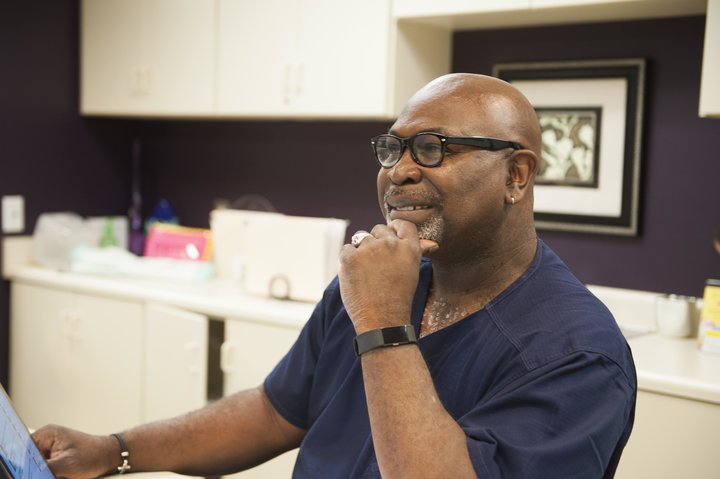
Every time I am in the clinic, I see women of all different backgrounds who need abortions, women of every race, culture, religious background and class status.

I believe the most important thing you can do for another human being is to help them in their time of need. That’s why I am proud to be an abortion provider. I wake up every day knowing that I am helping patients make decisions that are right for their health, their lives and their families.

Because I am a Black man, a physician and an abortion provider, anti-abortion activists have called me many ugly things. Protestors have hurled racial epithets at me and accused me of being a “race traitor.” They have also called me “Kermit Gosnell.”

Gosnell was a physician who, in 2013, was rightly convicted of three counts of murder, as well as numerous other felonies. By the time his clinic was raided and he was arrested, his facility in a poor neighborhood of Philadelphia had not been inspected in over a decade. He was sentenced to life in prison. We in the reproductive health community were glad that he was convicted, given the danger his actions posed to vulnerable people seeking vital health care, but anti-choice opponents across the country have exploited the criminality of his actions to stigmatize abortion and intimidate abortion providers.

One of their latest efforts is the movie ”Gosnell: The Trial of America’s Biggest Serial Killer.” The movie’s title, and the inflammatory and dehumanizing rhetoric of its promotional materials are disturbing. The film is deeply offensive and exploits the pain and suffering of women. The project seems designed to arouse outrage against doctors who provide safe and legal abortion care, and I believe it creates a safety risk for physicians, clinicians, clinic staff, clinic escorts and my patients.

Kermit Gosnell, an abortion doctor, was <a href="https://www.huffingtonpost.com/2013/05/13/kermit-gosnell-guilty-verdict_n_32

ASSOCIATED PRESS
Kermit Gosnell, an abortion doctor, was convicted of three counts of first-degree murder and one count of involuntary manslaughter in 2013.

The Gosnell film is part of an ongoing effort to target abortion providers and stigmatize the health care we provide. It is a ripe opportunity for anti-choicers to peddle a familiar conspiracy theory about abortion clinics in impoverished communities of color making it convenient for Black women to kill themselves and their “babies.” In reality, abortion is one of the safest procedures for women who need it, especially in light of the escalating risks of maternal mortality in this country for Black women. The clinics I work in, where I treat women from Alabama, Mississippi, Louisiana, Tennessee and northern Florida, are lifelines for women and their families — providing a range of reproductive health care in areas that lack other types of providers.

What Kermit Gosnell did was outside of the bounds of medicine and the law. His actions were horrific and cruel. He harmed women when they were most vulnerable and in need of help. And what he did bears no resemblance to the quality abortion services delivered by ethical, trained providers every day in too few places in this country.

Anti-abortion lawmakers are pushing abortion care into the shadows. They’re doing it by inflicting more and more restrictions on clinics and doctors, by making abortion more expensive, by denying insurance coverage for reproductive health care, by closing clinics, by harassing those of us who provide care and those who seek it from us. In some states, patients have to travel 300 miles to get care. Approximately 90 percent of counties in the U.S. don’t even have a provider. Where I practice in the South, the combination of restrictions and barriers create a nearly insurmountable blockade for patients seeking abortion care. These burdens and barriers to care fall hardest on those struggling financially, who are disproportionately likely to be women of color and immigrants.

The film seems designed to arouse outrage against doctors who provide safe and legal abortion care.

Gosnell capitalized on the shame and desperation the system creates for women, and worked outside of ethical standards of care. To prevent that from happening again, we must tear down unjust and unnecessary barriers and end the stigma with medicine of providing abortion care and the stigma of seeking it.

Every time I am in the clinic, I see women of all different backgrounds who need abortions, women of every race, culture, religious background and class status. They all deserve safe, respectful, affordable and accessible health care, whether it’s prenatal care or abortion care. Abortion is a part of medical care, and the further it is pushed out of mainstream medical care, the riper conditions become for exploitative bad actors like Gosnell.

With the recent addition of a fifth conservative justice to the Supreme Court, it’s more important than ever that we shine a light on the good work of abortion providers and push back against the hateful propaganda of extremists. We can trust women to make the decisions that are best for them. They should be able to trust us as a society to make sure that they have safe places for the care that they need. There’s too much at risk for the lives and well-being of my patients for us to listen to lies when the truth will do.

Dr. Willie J. Parker is a board-certified obstetrician-gynecologist who provides abortion care in the South. He is the author of Life’s Work: A Moral Argument for Choice, the Board Chair of Physicians For Reproductive Health and vice-Chair of the Religious Coalition for Reproductive Choice.

Source: https://www.huffingtonpost.com/entry/opinion-willie-parker-kermit-gosnell-abortion-movie_us_5bc62cd3e4b0d38b587268e1?fbclid=IwAR34q7kvIel7hz4hSFk8rAEMet0i-NibNo0PFvspxbOFSNlYkyZXvu86uWM

A new service will deliver abortion medication to U.S. addresses for $95.

Once only possible through shady websites with no real safety promise, a new service now makes it safer and easier than ever to get abortion medication by mail in the United States.

Rebecca Gomperts, the founder of Women on Web—an international organization that provides safe, miscarriage-inducing medication by mail—has launched a similar service in the United States. As reported by the Atlantic, the organization is called Aid Access. It’s just like Women on Web, only it ships to addresses in the United States. For $95, people seeking a safe, at-home medication abortion can have the medication shipped directly to them. Aid Access also helps to provide funding assistance to anyone who can’t afford the service.

Aid Access screens each person’s eligibility through a quick, online process to make sure they’re not more than nine weeks pregnant (the medication is less effective after that time). And as the Atlantic reports, Gomperts, who’s a medical doctor, fills each prescription for misoprostol and mifepristoneherself. When taken correctly, these two medications are at least 96 percent effective in causing an abortion at nine weeks or earlier. And complications are rare—fewer than 0.4 percent of people who have a medication abortion experience serious complications, according to the Guttmacher Institute.

Similar to Women on Web, the pills shipped by Aid Access come with instructions, and Gomperts makes herself available to answer questions via phone or Skype. Though experts say this service is very safe, anyone who experiences heavy bleeding is advised to go the hospital and say they’re having a miscarriage.

Gomperts told the Atlantic that she hadn’t previously worked within the United States, because she worried the American anti-abortion movement would shut the service down. She said she only started doing so now because she was “being inundated with requests from women in countries such as the United States, where abortion is technically legal but growing more difficult to access.”

As Gomperts tells the Atlantic, everything Aid Access is doing is technically legal—U.S. citizens can import medicines for their own personal use, per the FDA, and Gomperts has the prescriptions filled by a pharmacy in India.

There’s been increasing interest in telemedicine for abortion, or a service where physicians consult patients over the phone and send medication to them at a remote location, saving a trip to a clinic that may be hours away. But current FDA regulations still require people to be in a medical center for the administration of the first pill, making telemedicine abortion still impossible in the U.S.

“I would hope the FDA would look at the science behind this and make an evidence-based decision,” Dan Grossman, a physician and researcher on abortion pill safety, previously told the Los Angeles Times on the subject of abortion pills being so severely regulated. “This shouldn’t be a political decision. It should be based on science, which has very clearly shown this is a very safe drug, safer than ones that don’t have this restriction.”

Source: https://www.cosmopolitan.com/sex-love/a23900324/abortion-pill-by-mail-united-states-aid-access-women-on-web/?utm_source=facebook&utm_campaign=socialflowFBCOS&utm_medium=social-media&fbclid=IwAR0Lj1VAdb9KxlFpruT-Jub6BEeFOM1lYe4Y9IfCDAbH1nCyuBszTJGplYc

Women in Queensland will now be able to access abortion up to 22 weeks into the pregnancy. Other states have different rules.

Abortion has finally been legalised in Queensland, following a historic vote in parliament that will see the law changed for the first time in 119 years. Women in the state will now be able to request an abortion up to 22 weeks into the gestation period. An abortion will also be allowed to take place after 22 weeks in the event that two separate medical practitioners, including the one who is performing the termination, agree that “in all circumstances” it should be performed. “Safe access zones” of 150 metres will be also put in place around termination and fertility clinics.

All MPs were given a conscience vote, and the motion passed through state parliament with a margin of 50 to 41. Queensland Premier Annastacia Palaszczuk celebrated the change to the legislation, suggesting that the Termination of Pregnancy Act 2018 is long overdue and will finally give women the opportunity to access abortions without fear, the ABC reports.

Attorney-General Yvette D’Ath also declared that the change in legislature would bring Queensland into the 21st century.

“I am so proud, as the Attorney-General of this state, as a woman, as a mother, to witness this significant reform which provides long-needed clarity,” she said. “We’ve done this for our mothers, our sisters, our daughters, our friends. For women who have fought long and hard for the right to autonomy over their own bodies.

“Termination is never an easy option for any woman, and no one ever makes this decision lightly, but all women across Queensland should have the right to make the decision for themselves and without fear of criminal prosecution.”

Given that abortion in Australia is a matter of state rather than national law, the grounds on which it’s permitted—as well as the cost and availability of the procedure—depend on where in the country you live. In New South Wales it’s still considered a criminal offence, and both women and doctors who take part in a termination run the risk of criminal charges and up to 10 years’ imprisonment, unless special circumstances apply.

In Victoria, abortion is legal in the first 24 weeks of pregnancy, after which the approval of two separate medical practitioners is required. In Tasmania this period is 16 weeks—although a lack of relevant health professionals means women seeking a termination are often referred to Melbourne, as the ABCreports. Both states also have safe access zones of 150 metres established around termination and fertility clinics.

Abortion is legal up to 28 weeks in South Australia, but only in the event that two doctors agree the woman’s physical or mental health is at risk, or that there is a strong chance the child will be born with a serious abnormality. Any woman who pursues an “unlawful” abortion runs the risk of being charged.

In Western Australia it’s legal to have an abortion up to 20 weeks, after which a woman needs approval from at least two doctors who must agree that the woman or her foetus face a “serious medical condition” in order for the procedure to be justified. In the Northern Territory abortion is legal up to 23 weeks, after which the woman’s life has to be endangered for the procedure to be justified. Approval by one doctor is required for a termination up to 14 weeks; for any terminations after that period, two doctors need to give their approval.

Abortion is completely legal in the ACT, provided it’s performed by a medical doctor in an approved medical facility. The ACT Greens have also made a push for women in the state to be able to perform at-home medical abortions, using drugs that they’d be able to order over the phone or through their GP.

Data from the Australian Institute of Health and Welfare estimates that more than 80,000 abortions take place in Australia every year. Abortion education service Children by Choice estimates that Queensland is responsible for between 10,000 and 14,000 of those terminations.

Source: https://www.vice.com/en_au/article/qv95zd/queensland-just-legalised-abortion-so-what-about-the-rest-of-australia?fbclid=IwAR3EzocbwlhYKkRVIqSUyUwttdlILya_ehAGDByqJvJWi2-v2VJ_MuYsiKE&utm_source=vicefblocalau

The founder of Survivors of the Abortion Holocaust admitted to conspiring to defraud Affordable Care Act programs of more than $27 million.

The founder of a radical anti-choice organization known as Survivors of the Abortion Holocaust pleaded guilty last week to defrauding the Affordable Care Act (ACA) marketplaces of at least $27 million.

The U.S. Department of Justice (DOJ) announced the guilty plea on October 12, detailing the charges against Jeff White, a longtime anti-choice activist based in California, and his son, Nicholas White. The Whites, according to the DOJ, conspired to defraud ACA marketplaces “by fraudulently enrolling individuals in ACA plans in states where the individuals did not live.”

Jeff and Nicholas White created “phony residential leases using fictitious landlords in various states” to defraud the ACA, also known as Obamacare, according to the DOJ. They used an online application to secure “false cell phone numbers for the individuals with area codes that made it appear that the individuals lived at the fictitious addresses, and provided the false cell phone numbers to the ACA plans.”

The Whites were paid thousands for each referral to an addiction treatment program, while they “enrolled the individuals in ACA plans in states that paid the highest amount for substance abuse treatment, even though the individuals did not live in those states,” according to the DOJ.

“This case is believed to be the first of its kind involving fraudulent enrollment of individuals in ACA plans on a national scale,” U.S. Attorney John H. Durham said in a statement, adding that fraud schemes can result in higher insurance premiums in the ACA marketplaces.

Jeff White, who has railed against Obamacare in online posts, claimed in a recent Facebook post that the reason he defrauded the Obamacare marketplace was to help addicts receive medical care. Writing that he placed more than 300 people into addiction treatment through the defrauding scheme, he claimed the ACA fraud did not “line my own pockets.”

“It was a criminal conspiracy I owned up to and, therefore, I freely entered a plea,” he wrote on Facebook.

The Whites, who were released on bond, face up to ten years in prison. Their sentencing is scheduled for January 4.

According to the Survivors of the Abortion Holocaust website, Jeff White was a member of Operation Rescue—an anti-choice group with a long history of encouraging violence against abortion care providers—from 1988 to 1998. He founded the American Anti-Persecution League, which provides legal help to anti-choice protesters, according to the organization’s website.

Source: https://rewire.news/article/2018/10/17/anti-choice-activist-pleads-guilty-to-defrauding-obamacare/

Indiana is asking the U.S. Supreme Court to hear arguments over a law that bars women from having abortions based on gender, race or disability.

Vice President Mike Pence signed the law in 2016 when he was Indiana’s governor. But federal courts have blocked it, saying it violates a woman’s right to end her pregnancy.

Attorney General Curtis Hill on Friday asked the Supreme Court to take the case. He acknowledged a right to abort but says it’s “not a right to decide which child to bear.”

Ken Falk of the American Civil Liberties Union of Indiana says Indiana’s petition is an attempt to infringe on women’s rights.

The law also requires abortion providers to dispose of aborted fetuses in the same way as human remains. That section also was blocked.

Source: https://abcnews.go.com/US/wireStory/supreme-court-asked-review-abortion-law-signed-pence-58508069