Congressman Ron Wyden

Abortion Clinics & Congressman Wyden & Abortion CPCs

Sometimes one person can make a difference.

Her name was Shannon Locke.  In 1991, she was living in Arkansas when she discovered she was pregnant.  She decided to have an abortion.  So, she picked up her Yellow Page book and under the “Abortion” category she saw an ad for the “Central Arkansas Crisis Pregnancy Center.”   What attracted her attention was that they offered “free pregnancy tests.”  She called the clinic and, when she asked how much the abortion cost, the receptionist said she wasn’t at her desk and couldn’t check the price.  Still, Shannon made the appointment.

When she arrived at the facility, Shannon was greeted by several people wearing white lab coats.  She filled out some paperwork and was escorted to a waiting room where she was told she had to watch a tape about abortion.  Shannon sat there for about ten minutes, watching a film replete with pictures of mangled fetuses.  At some point, Shannon realized she was not in an abortion clinic and left in an almost traumatized state.  Ultimately, she obtained her abortion in Little Rock.

Months later, in my capacity as a staff person for the National Coalition of Abortion Providers, I met Kim Farrell, the administrator of Little Rock Family Planning Services.  At one point, Kim told me about Shannon Locke’s story (without revealing her real name).  I had no idea there were such things as “phony abortion clinics” but Kim gave me a good education.    The next day, I started calling random clinics and discovered that these facilities were all over the country.  We soon discovered an actual manual published by the Pearson Foundation, an anti-abortion group, which gave instructions on how to set up a “crisis pregnancy center.”   Among some of the tips were: adopt a name similar to the real abortion clinic, get a building as close as you can to the real clinic, wear clothing that makes your office look like a medical facility.

About a week later, Congressman Ron Wyden of Oregon told me he had just become the chairman of a committee that had jurisdiction over consumer protection issues.  I immediately thought about how “consumers,” i.e., patients, were being defrauded by these anti-abortion clinics.  I told him about this national problem and we devised a plan to hold a congressional hearing to expose the existence of these facilities.  And, to get us as much national exposure as possible, I knew we needed a “star witness.”  That’s when I thought of the young woman in Little Rock.

Working with Kim, we convinced Shannon, who was 19 at the time, to fly to Washington to testify.  I met her at her hotel that morning and she was understandably very nervous.  I have to admit I felt like I was using her, but I kept thinking of the greater good.  That morning she was the lead witness at a packed hearing.  This is an excerpt from her testimony:

I thought it was an abortion clinic because the ad said “free pregnancy testing, abortion information.”…I was taken to a small room and the lady explained to me that I was about to watch a film on abortion and I would enjoy it. I felt forced to view the film in order to know the result of my pregnancy test. The film showed very pregnant women entering clinics and showed abortions in the late stages of pregnancy. The film said the abortions were on women who were 8 to 10 weeks pregnant, but all of the women had cantaloupe-size bellies. The films said that abortion caused women to bleed to death, never have children again, and many women had hysterectomies….the lady started telling me I was killing a life that is God-given and that a fetus is a baby at the time of conception. . .One week after I received my abortion, a person from the Central Arkansas Crisis Pregnancy Center called my mom’s home. I had listed her number as an emergency contact on the medical form (Shannon did not want her mother to know about her abortion).   I advocate against the businesses existing because women like me will continue to look in the Yellow Pages and be fooled.. .Women who look in the Yellow Pages for abortion want an abortion and not harassment.

There was not a dry eye in the house.

The hearings made national news.  Shannon Locke had told millions of women of the existence of these phony abortion clinics.  On a side note, she had also told the world that she had had an abortion and when she got back to Arkansas, being a national “celebrity,” she faced incessant harassment from the local anti-abortion movement.   It was an unbelievably courageous act.

A few days later, I got a call from the lobbyist who represented the Yellow Pages.  He said that they had no idea that these facilities were not real clinics and that they wanted to correct the situation.  About a month later, the Yellow Pages established a new category for these anti-abortion centers called “Abortion Alternatives.”  Under the heading, they put in language warning consumers that the facilities listed in that category did not perform abortions.

Over the years, these crisis pregnancy centers have continued to ply their trade (as evidence by the recent HBO documentary).  But, after all the publicity generated by this congressional hearing, the number of women who unwittingly went to the anti-abortion centers dropped dramatically.  Hundreds of thousands of women were now educated about these facilities.

Go pick up your Yellow Page book and see the “Abortion Alternatives” category.

Then, take a moment to thank Shannon Locke.

Pendergraft Abortion

Pendergraft Abortion

A Florida abortionist’s medical license has been suspended a fourth time — and a prominent pro-life group is outraged the man hasn’t been drummed from the practice altogether.

Operation Rescue president Troy Newman has tracked abortionist James Pendergraft — a “proven quack,” as Newman describes him — for years and tells OneNewsNow that a fourth suspension is not enough. The medical board, says the pro-life spokesman, is apparently missing the point: the impact on people.  “[He has] endangered women [and] killed women,” Newman states. “And so Operation Rescue is calling for not just a suspension of his medical license, but finally and completely an absolute revocation of his license before more women and children die.”

The pro-life leader describes Pendergraft’s five abortion clinics in Florida as “a menace to the public” that should be shut down. “The Florida Board of Medicine seriously dropped the ball by not revoking Pendergraft and forcing the closure of his clinics,” he says in a press release.

While outraged that Pendergraft’s license was not permanently revoked, Newman says people can have the last word on the subject.

Operation Rescue’s website contains contact information for Florida officials, and Newman is urging people nationwide to use that information to deliver a clear message to the Florida Board of Medicine that Pendergraft should be pushed out of the profession for good.  According to Operation Rescue, Pendergraft’s clinics — manned by other abortionists — continue to operate while he is on suspension.

Cranston Abortion

Cranston Abortion

This past weekend, I got a great treat.  I was alone in my house.

Now, don’t get me wrong – I absolutely love my family.  But I have to admit it was fun to just putter around the house, drinking wine at 1:00 in the afternoon, taking a nap, drinking wine at 5:00.  At one point, however, I found some old newspaper clippings and noticed an article about something I was involved in when I worked for the National Coalition of Abortion Providers.

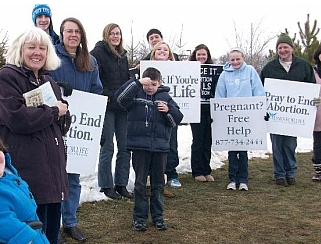
In the 1990’s the anti-abortion movement would hold massive demonstrations in front of abortion clinics.  It seemed like they could get hundreds of people at the drop of a hat to converge on a local facility.  They would march to the front door and sit down, preventing women from entering the clinic.  Of course, the clinic staff would immediately call the police but in conservative cities like Fort Wayne, Indiana or Birmingham, Alabama the police would just watch the demonstration.  That’s right – they would do absolutely nothing.  Hundreds of protestors were clearly trespassing but the police would just sit on their hands and let the demonstrators do their thing.  It was totally outrageous.

One day I was talking to a friend of mine who worked for Senator Alan Cranston of California and I told her about this problem we were having.  We started to think about how we could get local police to enforce the trespassing laws in those cities.  We came up with a brilliant idea.

In those days, just about every city in the country received “Community Development Block Grant” (CDBG) funds from the federal government.   These CDBG dollars were used for all kinds of projects:  to build affordable housing, construct new sewer lines, repair roads, etc.  Cities got millions and millions of these dollars (I know, those were the good ole days).

So, one night, when the U.S. Senate was in session Senator Cranston proposed an amendment to a bill saying in so many words that if the police did not do their job and arrest the trespassers, then that city would lose its CDBG funds.  Before the anti-abortion Senators knew what was going on, the amendment passed and ultimately became law.

The first thing we did was write a letter to every mayor of every major city in the country to tell them about this new law, just to put them on notice.  Our announcement caused an explosion around the country.  For example, within two days of the letter going out, I got a call from the Mayor of Philadelphia asking me about the new law.  No, that’s not entirely accurate.  What he actually said was “What the *%$)(#*@&% is this new law all about?   What the *#%()@#*%$# are you doing?”

After picking myself off the floor, I politely told him that he just had to make sure the police did their job and he would have nothing to worry about.  “*$()@*@(#%$,” he concluded and hung up the phone.  We never had a problem in Philadelphia again with protestors.

Also, whenever we heard about a demonstration that might take place, just to make sure I would call the Mayor of that city and warn him or her that they stood to lose a crap-load of money if the police ignored the protestors.  All of a sudden, police started making arrests in the most conservative of cities.

A lot of people are down on government.  They say there’s too much of it, it’s broken, keep it out of my face.  I get the argument.  But there are times like this one when government actually helped us guarantee that women would be able to exercise their constitutional right to have an abortion.

Is this a great country, or what?

Aborticentrism –

Learn More

Abortion.com
FaceBook Page


http://www.FaceBook.com/abortion.com.opine

http://www.Abortion.com


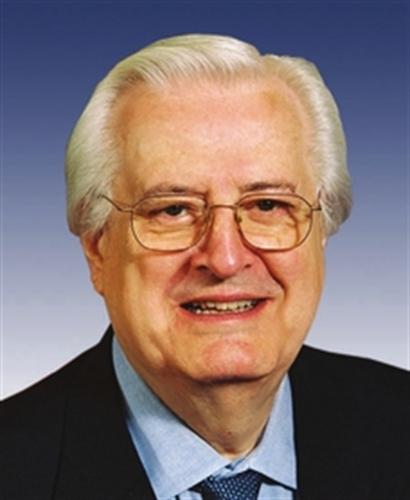
Henry Hyde Abortion

Henry Hyde Late Abortion Creator

The anti-abortion movement thinks abortion should be illegal.  Good for them, go for it, knock yourself out.

I would guess, however, that if they had their druthers, the anti-abortion crowd would also say that if you’re gonna have an abortion you should have it as early as possible.  I mean, it goes without saying that if you wait too long, the fetus will grow and grow and grow.  And no one likes the idea of abortion at 23 or 24 weeks.  Meanwhile, the vast majority of women who get “later” abortions are minors or poor women.  But here’s the irony – it might be the anti-abortion movement that is responsible for a lot of these late term abortions.

Hey, Pat, are you off your rocker?   Have you totally lost it?

Chill out, folks, lemme explain.

A woman receiving Medicaid assistance gets pregnant and decides to have an abortion.  She calls the local clinic and they tell her that the price for a first trimester abortion is $400.  That’s a lot of money for this woman.   Years ago, the anti-abortion movement enacted the “Hyde Amendment” which says that you cannot use your Medicaid card to get an abortion unless your life was endangered.   Now, if there was no such thing as the Hyde Amendment, this woman would just go to that clinic, give them her Medicaid card and have the abortion right away.    But, instead, she is now looking for $400 that she didn’t anticipate needing.  She doesn’t have a credit card, no bank account to speak of, no rich friends.   So, she has to spend precious time finding the $400 somewhere.  Meanwhile, the baby is growing.  Ultimately, she might get the $400 but by that time she is more advanced and abortions cost more money the later they are performed.   It’s a viscous cycle.  Ultimately, she might get the cash but she’s now in her 19th week.

Were it not for the Hyde Amendment, the abortion would have been performed within days of her discovering her pregnancy.

Then there are the minors.    A 15 year old girl discovers she is pregnant.  Now, at that age she might delay any conversation about her situation because she just might not be sure that she is pregnant.  But once she verifies it, the chances are that she lives in a state that requires her to get the permission of her parents.   These laws, of course, are all courtesy of that anti-abortion movement again.   But the girl’s family is not Ozzie and Harriet land.  In fact, she is petrified of going to her parents, one of whom beats her on a regular basis. So she waits and waits, perhaps thinking she might have a miscarriage and the issue will just go away.  In denial, she remains mum.  Then, her stomach starts to expand and, despite her wearing loose clothes, she ultimately is panicking that her parents will notice.  Only at that point, perhaps now in her 18th week, does she reluctantly go to her parents to give them the news and, hopefully, get their permission for an abortion.

If there were no parental consent laws in her state and she felt she could not talk to her parents, she would have found a good friend or close relative that she could confide in and secured the abortion much earlier.

Ironic, isn’t it?

Abortion Dunkle

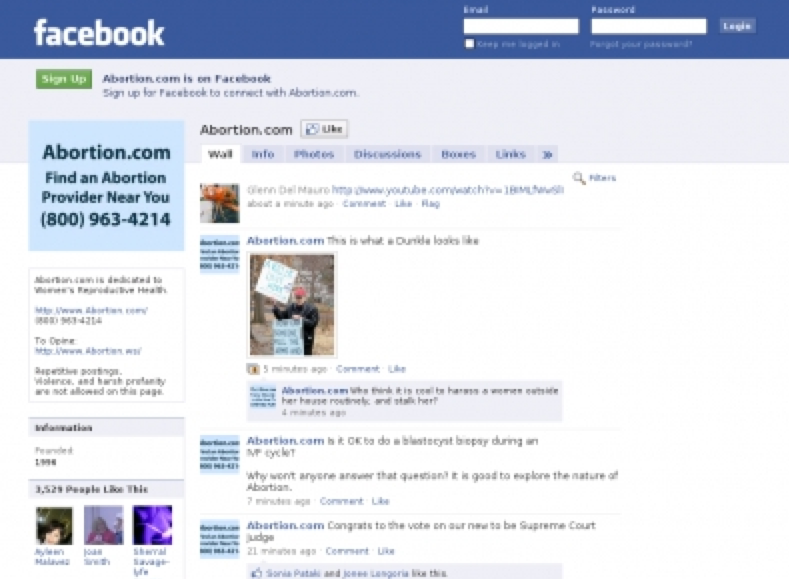
Abortion Dunkle with a sign, he burned an American flag he said to honor a convicted murderer.

This is what a Dunkle looks like on FaceBook.

John, get with the program and Join!!

Abortion

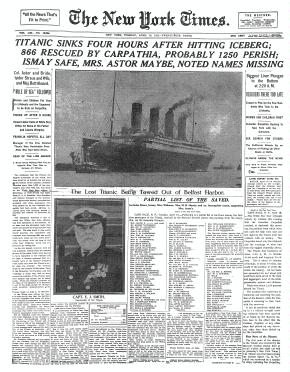
Abortion NYT

This Sunday’s New York Times featured a story about the next generation of abortion doctors.  Generally speaking, it was a rather positive report on how more doctors are incorporating abortion services into their regular practice.  Good stuff.

I always found the discussion of the declining number of abortion doctors very interesting.  We all know that for many years, pro-choice groups were very concerned about the “graying” of the abortion doctors, i.e., how so many of them were getting up there in years.  Working in the field, I was aware of those doctors and, frankly, sometimes it almost scared me to see how old some of them were.

Some of those doctors were hanging in there because they knew that if they left, the clinic would close.  Or at least they thought that’s what would happen.  But other doctors kept performing abortions because that was all they knew and it just kept them busy.  Like so many American workers, they did not want to retire and fade into the distance.  And, yes, some abortion doctors still wanted or needed to make money, so they kept putting off retirement.

Now, when a doctor did retire it may have resulted in a clinic closing.  But, that doctor may have retired because the number of patients going to that clinic kept decreasing and it was getting hard to make ends meet.   That clinic may have soon closed anyway.  And in my experience it was very rare that a doctor retired and the clinic wound up closing because they could not find a replacement.

Indeed, there was the other side of the coin – cities where there were too many abortion doctors.  I can recall vividly getting calls from doctors who were looking for work in abortion facilities in cities like New York, Chicago, and Los Angeles.  In those parts of the country, there was a surplus of doctors.  At times, I was able to convince those doctors to take a position on some more isolated area and fly in for two or three days work.  But others just couldn’t find work.

One interesting thing to me regarding this whole debate was the statistic put out by the pro-choice groups which said something like “87% of the counties in the country do not have an abortion provider.”    Well, that was probably true, but abortion is such a specialized field and it should come as no surprise that you’re not going to find a doctor or a clinic in every Podunk town in America.  After all, think about other specialties.  Do you think there are retinal surgeons in every town or even a dermatologist?

To me, the issue was always access.  If a woman wanted an abortion, could she get one?  Of course it is hard to prove how many women did not get an abortion because there wasn’t a doctor nearby but my educated guess is that most women who wanted an abortion got one.  Yes, they may have had to travel a few hours to a clinic, like in states like North Dakota, but my sense also is that these women also often had to travel great distances for other services.  That is just the nature of the beast in rural parts of the country.

So, I’m certainly encouraged that there may be more abortion doctors coming up the chain but I also have the sense that they might wind up gravitating to where the patients are.  Meanwhile, we will still have issues in Idaho, Wyoming, South Dakota, but for the most part women who are looking for abortion services will be able to get them.

In my last blog, I wrote about my relationship with Mr. Guy Condon, an anti-abortion activist who ran a number of crisis pregnancy centers across the country.  I noted that we had been brought together by an organization called “Common Ground,” which has since closed its doors.

The folks at Common Ground had a very ambitious and, yes, “sexy” agenda.  Their goal was to bring together parties on both sides of controversial issues in an effort to find areas of possible agreement.  So, for example, with the abortion issue, they tried to craft an agreement on how to reduce the number of abortions.   I don’t think they ever succeeded in that particular quest but for a while, this group was much in vogue, they got tons of publicity and lots of money from certain foundations.  Ultimately, however, they were forced to shut their doors.  Honestly, I don’t know what happened and I don’t have the energy to try to research the rise and fall of Common Ground.  Suffice it to say that they are gone.

What many people never realized, however, was that every day there were similar efforts taking place on a smaller scale at the abortion clinics.  No, anti-abortion and pro-choice folks were not sitting down and hashing out peace agreements or crafting joint legislation.   But activists on both sides of the abortion issue were talking and have been talking for years.

The dynamic at an abortion clinic is fascinating.   Generally speaking, the clinic staff people will arrive at the same time and they always know when their local protestors will be out there.  Saturday is usually the biggest day as more women are able to get away from work to have an abortion.  Normally, you would think that the staffers would just walk in and exchange harsh glances or even harsh words with the protestors.   And, yes, in some cases the two sides just didn’t talk and, indeed, there was great animosity.  But there were so many other instances where the clinic staff developed some kind of relationship with their protestors.

Over the years, clinic staffers would tell me how they would bring coffee out to their protestors on cold, winter days or ice tea in the middle of the summer.  Others would actually invite their protestors into the clinic for a tour of the facility.  Several clinic administrators told me that on occasion they would have lunch with the lead protestor in an effort to develop a mutual understanding of their work.  Some clinic staff told me that they would have conversations with the director of the local anti-abortion crisis pregnancy center and even refer women to them if they felt it would be helpful.   It was as if there was a general truce at these clinics and even a curiosity about that person on the other side of the fence.

I’ve already talked about how my relationship with Paul Hill might have saved the lives of a number of abortion providers in Pensacola in 1994.   Of course, no one can prove that talking to the other side might prevented some kind of tragedy but many of the clinic administrators (or doctors) who regularly engaged with “the enemy” told me that the conversations resulted in a less tense environment outside the clinic.  They said that after the protestors got to understand a little more about what motivated the clinic workers and the mindset of the women, the protestors were inclined to be less “angry.”

The fact is that activists on this controversial issue, and that includes abortion clinic staff, are usually pretty myopic when it comes to listening to arguments from the other side.   They usually just listen to their leaders of their own movements, cite their studies, and regurgitate their talking points.  They think that the other side could not possibly have anything meaningful to say, that they are all just out to lunch.  So, both sides stick their heads in the sand, become intractable and, as a consequence, the tensions increase.

But because of the bravery of some people on both sides of the issue, peace broke out years ago at some of the clinics that slowed abortion providers and protestors to continue their work in a less-than-hostile environment.

In that regard, I think “Common Ground” worked.

In the mid-1990’s, as a staff person for the National Coalition of Abortion Providers, I met a young, affable man named Guy Condon.  Guy was the Executive Director of Care Net, a chain of anti-abortion “crisis pregnancy centers” that were located in all parts of the country.

Yes, Guy was the enemy.

And, about a year later, his wife reserved for me a space in the front pew at their church for his funeral service.

Guy and I met as part of a national effort called “Common Ground,” a well-funded organization that brought together adversaries on controversial topics in the hopes of reaching a mutual understanding or, in rare cases, agreement, on certain issues.   In my case, I was asked to join a group of three pro-choicers and three pro-lifers around a table to talk once a month.   As you can imagine, the meetings were very tense at first, as the years and years of hatred made it difficult to trust the process or to not think you were being set up.  Still, I basically trust people so I jumped right in.  From the beginning, I shocked everyone (including my “side”) by candidly addressing the tough issues on abortion (as I do in this blog on a regular basis).  Guy reacted well to my approach and he followed suit.

We continued our conversations over the phone, on line, in separately arranged lunches.  He admitted to me that he was very concerned that some of the other crisis pregnancy centers were luring women into their facilities under false pretenses or giving them incorrect information.  He invited me to visit his centers, which I did, and, unless they were very clever, I got the clear sense that these folks really just wanted to help women in their time of need.  And the help that they offered extended after the women decided to have a child in the form of job counseling, computer training, day care at reduced fees, etc.  Sure, they couldn’t take care of the kid from cradle to grave, but at least they were trying to help.

Meanwhile, I talked to Guy about our clinics, about why women came to us, their decision making process, what motivated our doctors to provide abortions.  Eventually, after months of conversations, he told me that he wanted to write an article for “Christianity Today” about our relationship and asked my permission, which I readily gave.  I didn’t even ask him what he was going to write, I trusted him that much.  Still, he volunteered that he wanted to convey how I had made him understand more about the abortion process and the women who were in that difficult situation.

Two days later, Guy Condon was killed in a car accident, leaving behind three beautiful girls and his wife.

When I heard the news, I was stunned.  I was equally shocked when I got a call from Guy’s assistant  who invited me to his funeral.  I struggled for a day, knowing that if I went I would be surely going into some kind of “lion’s den” of pro-life leaders.  And what would my pro-choice colleagues think when they heard I had attended the funeral?   Surely, I could not explain to all of them that we had been friends.  Ultimately, however, I decided our friendship came first, not the politics of abortion, so that Saturday morning, I drove out to Manassas to the funeral.

As I entered the church and looked around, it felt like I had entered the National Right to Life Annual Meeting.  I quickly noticed Joe Scheidler, one of the founders of the protest movement, and Father Frank Pavone, the head of Priests for Life.  I didn’t know what to do or where to go, how to act, whether or not to make eye contact.   Ultimately, however, someone rescued me and escorted me through the crowd to the front pew.  I was dizzy, I felt all of those eyes on me and I started to wonder if I had done the right thing.

After the ceremony, a reception line formed and I got in line, trying to think of what I would say to his wife.  When I got up to her and extended my hand, I stumbled.   “Hi, my name is Pat Richards and I knew Guy…”   Before I could explain my relationship with Guy, his wife hugged me and said “Oh, Pat, he talked about you all the time!”   I started to cry.   I am almost in tears at this very moment thinking of her gracious welcome.  Then, I shook the hands of his three children and one of them said “My Daddy said you were very funny.”   I totally lost it.

I made it to the punch and cookies table and was surrounded by the pro-life movement.  They were all thanking me for coming, but I didn’t know them and  couldn’t trust them.  But I trusted Guy and that’s why I was there.  I practically ran outside to my car and broke down.

Okay.  This one may piss off a bunch of my friends, but here it goes…

We recently commemorated the one year anniversary of the murder of Doctor George Tiller.  And I think it’s kind of sucky that a number of national pro-choice organizations used the occasion to try to raise money “in honor” of this wonderful man.  For example, just go to the NARAL Pro Choice America website and look at the first page.  In big bold letters, there it is for all to see:  “Donate in Memory of Doctor Tiller.”  Then, towards the top of the page in smaller letters is another fundraiser:  “Buy the ‘Trust Women’ wristband….”

In the early 1990’s, a handful of independent abortion providers got together in Washington, D.C. to form the National Coalition of Abortion Providers.  Doctor Tiller was not in the original group but he quickly joined the organization.  One of the main reasons why NCAP was formed was the concern that  the major pro-choice groups were not representing the unique interests of abortion providers and, worse, were reluctant to associate with the doctors and the staff who actually performed the abortions.  Oh, sure, they’d take their donations contributions but ask them to testify before Congress?  No way.  “They make their money off of abortions, so their testimony would be tainted,” one pro-choice leader told me years ago.

After NCAP was formed (to the chagrin of several pro-choice groups), abortion providers became much more vocal and aggressive.  They embarked on a campaign urging their colleagues to not shy away from the “A” word.  Doctor Tiller was part of that effort.   Still, over the years, the groups not only continued to avoid talking about abortion but they took steps to get as far away from the issue as possible.   For example, the organization that was formerly known as the National Abortion Rights Action League changed its name to the less strident “NARAL Pro Choice America.”   It was always my feeling that they did that in the hope that over time people will totally forget what “NARAL” stood for and so the word “abortion” would be totally obfuscated.

Meanwhile, George Tiller and his colleagues were out there on the front lines, being unapologetic about performing abortions, sending their message through NCAP and, to some extent, the National Abortion Federation.

And now that George is dead, they are using his memory to raise money.  It makes my stomach flip-flop a little, but it’s hard to articulate why.  After all, I am sure that George gave money to all the groups but…

I am reminded of an incident that occurred soon after the murder of Doctor David Gunn in Pensacola in 1993.  I was sitting in a restaurant in New York City with Doctor Gunn’s son, David Gunn, Jr., just before he was scheduled to do a major television interview.    It was about 6 days after his father’s murder.  Waiting for our coffee, I started skimming the New York Times and on the fifth or sixth page there was a full page advertisement sponsored by a major pro-choice group with a picture of Doctor Gunn and a headline that read something like “He Died to Protect Your Rights.”   And, of course, it was asking for contributions for some kind of abortion provider “protection fund.”  I folded the paper and handed it to David.

“Well, David, so it begins.”

David looked at the ad and started to choke up.  He then said, “Who said they could do this?   I didn’t give them permission.  Geez, my Dad didn’t even like __________ (the national organization).”

Of course, there was nothing David, Jr. could do about the ad and we ultimately heard it raised an incredible amount of money.  And it also inspired David, Jr. to do an ad for the National Coalition of Abortion Providers, the association that his father was actually associated with.  Unfortunately, by the time that ad was done, other groups had jumped on the bandwagon and basically tapped out all the contributions.

Over the years, each time another doctor was killed, there were bets within the abortion provider community as to which pro-choice group would be the first to get an ad out asking for money.

And so, David, Jr., it continues.